Our Top Picks


What's inside
- Why an Acoustic Guitar Needs Its Own Kind of Amp
- How Much Power Do You Actually Need, From 15W to 100W?
- The Eight Acoustic Combo Amps in This Guide at a Glance
- Flatsons Crush20 20W Rechargeable Acoustic Guitar Amp
- Fender Acoustasonic 40-Watt Acoustic Guitar Amplifier
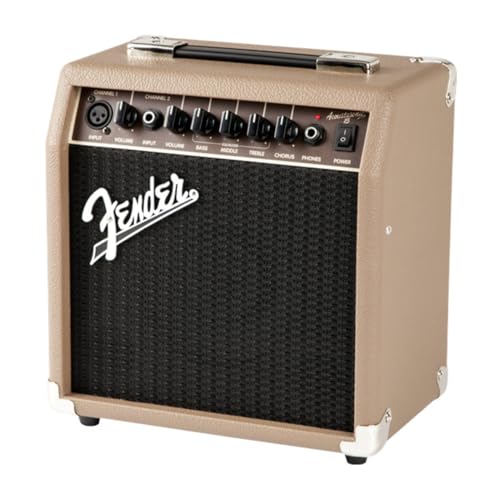
- Fender Acoustasonic 15 Acoustic Guitar Amplifier
- Fishman Loudbox Micro 40-Watt 1 x 5.25-Inch Acoustic Combo Amp
- Fishman Acoustic Guitar Amplifier (PRO-LBT-500) in Brown
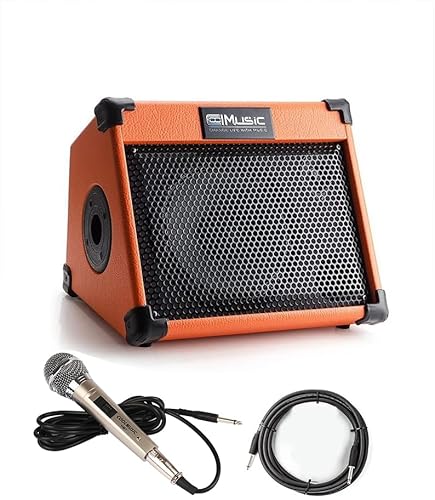
- Coolmusic Acoustic Guitar Amplifier, 20 Watt Bluetooth Amp
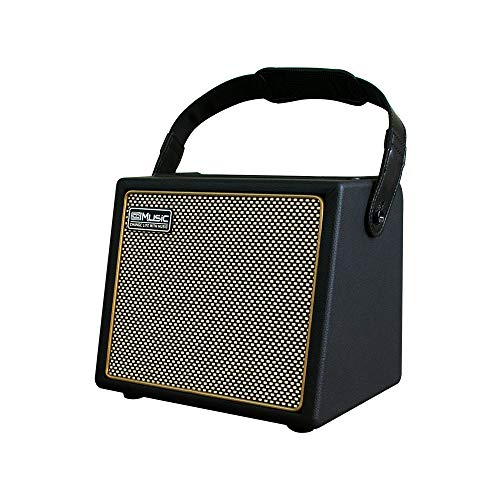
- Coolmusic Acoustic Guitar Amplifier, 30 Watt Bluetooth Rechargeable
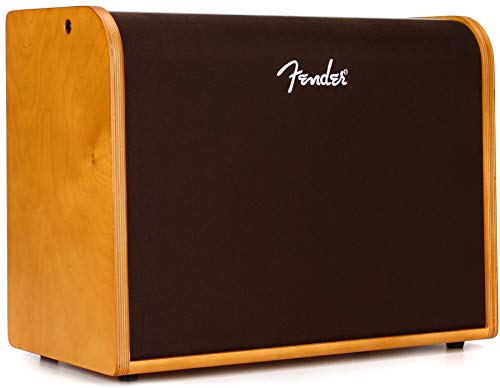
- Fender 100W Acoustic Guitar Amp with Bluetooth Speaker
- Singing and Playing Through One Amp: Channels, Mics, and Balance
- Effects, EQ, Bluetooth, and Batteries: What the Extras Really Do
- Placement, Connections, and Caring for an Acoustic Combo
- How to Choose: Matching the Amp to Your Music
- Check prices on Amazon
- Disclosure
As an Amazon Associate I earn from qualifying purchases. This post may contain affiliate links at no extra cost to you.
Why an Acoustic Guitar Needs Its Own Kind of Amp
An acoustic guitar does not want to sound like an electric guitar, and that simple fact explains why acoustic amp speakers exist as a separate category. An electric guitar amp is designed to color the sound, to add grit, compression, and character as the volume rises. An acoustic combo amp is designed to do almost the opposite. Its job is to take the delicate, detailed signal from an acoustic-electric guitar, with its fingerpicking transients, open-string shimmer, and low-end warmth from the body of the instrument, and reproduce that signal as faithfully and as cleanly as possible, only louder. If you plug a fine acoustic guitar into an amp voiced for electric guitar, the result is often harsh in the high frequencies, boxy in the midrange, and prone to a hollow, unnatural quality that no amount of knob turning fully corrects.
That difference starts with frequency response. Acoustic amps are built with a flatter, wider response, closer in spirit to a small public address system than to a traditional guitar amp. The goal is to carry the full range of the instrument, from the deep thump of a low E string played with the thumb to the airy harmonics above the twelfth fret. Many acoustic combos also pay close attention to the vocal range, because so many players who use them are singer-songwriters who need their voice and their guitar to sit together in one box, balanced and intelligible, without one masking the other. A well-designed acoustic amp keeps those two sources distinct, even when they share a single cabinet and a single speaker system.
Read the guide in two passes if you can. First, work through the sections on power, channels, and effects to decide what kind of amp your playing actually requires. Second, read the eight product profiles with that short list of requirements in hand. Most buyers discover that the right choice is not the most powerful or the most feature-rich model, but the one whose wattage, inputs, and portability match the rooms they play in most often, week after week.
How Much Power Do You Actually Need, From 15W to 100W?
Wattage is the number most buyers look at first, and it is also the number most often misunderstood. Wattage describes power, not a guaranteed level of loudness, and two amps with similar ratings can feel quite different in a room depending on speaker size, cabinet design, and how cleanly the amp holds together as the volume rises. For acoustic playing, clean headroom matters more than raw aggression. You want the amp to stay clear and unstrained at the volume you actually use, with room to spare for a louder chorus or a more forceful strumming passage, rather than an amp that is already working hard at your normal playing level.
At the lower end of this guide, 15 watts and 20 watts cover quiet, close-up use very comfortably. A 15-watt or 20-watt acoustic combo is a natural fit for a bedroom, a small practice room, a lesson studio, a living room gathering, or a very small cafe corner where listeners sit close and background noise is low. In those settings, clarity at modest volume is worth more than sheer output, and a smaller amp is easier to carry, easier to store, and often easier to dial in because you are not fighting excess power in a reflective little room. Several models in this guide sit in exactly that bracket, including rechargeable and Bluetooth options that trade maximum output for portability.
Step up to 30 watts and 40 watts and you enter the most versatile middle ground for many solo performers. An amp in this range can usually handle a small coffeehouse, a restaurant set, a house concert, a worship space of modest size, or an outdoor patio gathering where the audience is near and attentive. This is also the range where a dedicated microphone channel becomes especially valuable, because the player is no longer only practicing. They are presenting songs to listeners, and the voice needs the same clean headroom as the guitar. The 40-watt models in this guide, from Fender and Fishman, are aimed squarely at that kind of work.
The Eight Acoustic Combo Amps in This Guide at a Glance
The eight models below fall naturally into three groups. The portable group includes the rechargeable Flatsons Crush20 at 20 watts, the Coolmusic 20-watt Bluetooth amp, and the rechargeable Coolmusic 30-watt Bluetooth model. These emphasize freedom from a fixed power outlet, easy movement between rooms, and simple wireless playback for backing tracks or break music. The compact gigging group includes the Fender Acoustasonic 15 at 15 watts, the Fishman Loudbox Micro at 40 watts with a 5.25-inch speaker, and the Fishman PRO-LBT-500, a brown acoustic guitar amplifier from a brand closely associated with acoustic instruments. The larger performance group includes the Fender Acoustasonic 40 at 40 watts with dual 6.5-inch speakers and the Fender 100-watt acoustic amp with Bluetooth and an 8-inch speaker.
Brand background helps frame expectations, as long as it stays general. Fender is one of the longest-established names in guitar amplification, and its Acoustasonic line has long been aimed at acoustic players and singer-songwriters rather than electric guitarists. Fishman is a company whose reputation was built specifically around acoustic instrument amplification and pickup systems, so its Loudbox family addresses players who think about amplified acoustic tone as a specialty in itself. Coolmusic and Flatsons represent the newer portable end of the market, where rechargeable operation, Bluetooth audio, and compact multi-input designs are the headline attractions. None of that guarantees a particular model suits you, but it explains why the feature lists differ so much across a single category.
If your research setup at home involves long comparison sessions at a desk, a comfortable workstation matters almost as much as the amp short list, and it is worth browsing best 15 inch laptops for the machine you use to organize recordings, set lists, and product notes before a purchase.
Flatsons Crush20 20W Rechargeable Acoustic Guitar Amp
The Flatsons Crush20 is the most self-contained portable idea in this guide. Its full published title describes a 20W rechargeable acoustic guitar amp with a 6.35mm mic and acoustic guitar dual input, reverb, a 2-band EQ, an 8-hour battery life, and an advanced dual-chip wireless portable speaker design. Read that title carefully, because it tells you exactly who this amp is for: a player who wants to sing and play through one small box, in places where plugging into a wall outlet is inconvenient, impossible, or simply one cable too many. Busking spots, garden gatherings, rehearsal corners, classrooms, and travel all come to mind.
The dual input is the heart of the concept. A combined microphone and guitar input arrangement, using the familiar 6.35mm connector size stated in the title, means a solo performer can arrive with a guitar, a microphone, and this amp, and be set up in minutes. For a singer-songwriter who performs informally, that simplicity is a genuine feature rather than a compromise. There is no separate mixer to carry, no second speaker to position, and no tangle of equipment between the idea of playing and the act of playing. The fewer pieces in the chain, the more likely the amp is to be used often, and an amp that gets used often is the one that earns its place.
Rechargeable operation with a stated battery life of 8 hours changes how and where you rehearse as well as how you perform. Practice is no longer tied to the room with the convenient outlet. You can take the amp to a porch, a park shelter, a friend’s house, or a community hall and play a full session without thinking about power. An 8-hour figure, as published, comfortably covers a long rehearsal day or several shorter performances between charges, provided you build the sensible habit of charging after use rather than gambling on whatever charge remains from last week. Battery-powered gear rewards routine, and the routine here is simple.
Fender Acoustasonic 40-Watt Acoustic Guitar Amplifier
The Fender Acoustasonic 40 is described in its published title as a 40-watt acoustic guitar amplifier and portable amp combo, with dual 6.5-inch speakers, built-in reverb, an XLR mic input, a singer-songwriter focus, a Brown and Wheat finish, and a 2-year warranty. That is a complete small-performance specification in a single sentence, and it explains why this model sits near the center of the guide. Forty watts is enough clean power for small venues, and the combination of a proper microphone input and built-in reverb addresses the two needs a singing guitarist has every single time they perform.
The XLR mic input deserves emphasis. XLR is the standard balanced connector used by stage microphones, and its presence tells you the amp expects a real vocal microphone, not an afterthought adapter. A balanced mic connection is the professional norm for a reason: it is secure, it is widely compatible, and it supports the clean, low-noise vocal reproduction that a singer-songwriter set depends on. If you already own a stage vocal mic, or plan to buy one good mic and keep it for years, an amp with a proper XLR input respects that investment. If you perform with vocals at all, this single feature can reasonably decide a purchase.
Dual 6.5-inch speakers give the Acoustasonic 40 a different physical approach from single-speaker compact combos. Two drivers sharing the work can present guitar and voice with a sense of breadth that suits a performer whose entire show comes from one cabinet. Fingerpicked detail, strummed rhythm, and a sung melody all occupy the same box, and the dual-speaker layout described in the title is part of how this amp is positioned to keep that presentation open rather than congested. In a coffeehouse or small hall, that openness translates into an audience hearing lyrics clearly without the guitar disappearing behind them, or the guitar ringing through without the vocal feeling buried.
Fender Acoustasonic 15 Acoustic Guitar Amplifier
The Fender Acoustasonic 15 is the smallest Fender in this guide, described as a 15-watt portable combo amp with mic and instrument channels, a chorus effect, a singer-songwriter and small gigs focus, and a 2-year warranty. Do not let the modest wattage mislead you into thinking of it as a toy. Fifteen clean watts, in a small room, with listeners nearby, is a perfectly serious amount of acoustic amplification, and the separate mic and instrument channels show that this little amp was designed for real singing and playing, not merely for making a guitar louder in isolation.
Separate channels are the key idea. A channel for the instrument and a channel for the microphone means each source gets its own level control and its own place in the amp, so the balance between your voice and your guitar is set deliberately rather than inherited from a single shared input. That balance is the whole craft of a solo acoustic performance. The guitar supports the song, the voice carries it, and the amp should let you decide, song by song, which sits forward. A quiet fingerstyle ballad might want more guitar presence. A story song with dense lyrics wants the vocal clearly on top. Separate channels make those adjustments quick, repeatable, and calm, even mid-set.
The chorus effect is the Acoustasonic 15’s signature color. Chorus works by blending a slightly shifted, modulated copy of the signal with the original, producing a shimmering, widened sound that has been associated with acoustic guitar for decades. On slow arpeggios and open chords, a gentle chorus can make a single guitar feel spacious and polished. On vocals it is rarely needed, which is another argument for separate channels: the effect can serve the guitar while the voice stays plain and direct. As with reverb, moderation is the craft. Chorus set too deep turns precise fingerpicking into a wobble, so the best use is a subtle sheen you would miss if it vanished, rather than an obvious special effect.
Players building a small, organized music corner at home often store charts, spare strings, and session files alongside the amp, and anyone expanding that storage can look at best 1 tb hard drives for room to keep recordings and backing tracks in one place.
Fishman Loudbox Micro 40-Watt 1 x 5.25-Inch Acoustic Combo Amp
The Fishman Loudbox Micro makes the most interesting physical argument in this guide. Its published title is admirably precise: a 40-watt acoustic combo amp with a 1 x 5.25-inch speaker configuration. Forty watts is solidly mid-range power, the kind associated with small-venue performance, yet the speaker is just 5.25 inches, which points to a cabinet built for compactness. That combination, real working power in a deliberately small format, is the entire identity of this amp, and it will either fit your life beautifully or not at all, depending on how much you value space and portability.
Start with what a small speaker does well. A compact driver in a compact cabinet produces a focused, articulate presentation that can flatter the detail of fingerstyle playing, where the separation between bass notes, melody, and inner voices matters more than sheer low-end weight. For practice, for recording-adjacent work at home, for teaching, and for intimate performance, focus and clarity are often the qualities a player actually hears and appreciates. A small amp also sits comfortably on a desk, a shelf, or the floor of a crowded stage corner, and it disappears into a small apartment in a way that larger combos simply cannot.
Then consider the 40 watts behind that speaker. Power in a compact amp buys composure. The amp does not need to strain to reach a useful small-room volume, and a composed amp keeps the guitar’s transients clean, which is where acoustic tone lives. A picked note should begin with a clear attack and decay naturally, and an amp working within its comfortable range preserves that shape. So the Loudbox Micro’s published pairing of 40 watts with a single small speaker reads as a design decision: prioritize a tidy, portable cabinet, and give it enough power that the small format never feels like a struggle.
Fishman Acoustic Guitar Amplifier (PRO-LBT-500) in Brown
The Fishman PRO-LBT-500 presents a different kind of buying decision, because its published title is deliberately brief: Fishman Acoustic Guitar Amplifier (PRO-LBT-500) in Brown. No wattage is stated in the title, no speaker size is stated, and no effects or connectivity features are listed. A responsible guide must respect that brevity rather than fill it with guesses. The model designation contains letters that might tempt a reader to assume wireless features, but a model name is not a specification, and this guide does not treat it as one. What can be said rests on the maker, the model identity, the finish, and the category itself.
What the maker tells you is still meaningful. Fishman is a specialist in acoustic amplification, a company whose work centers on making acoustic instruments sound natural when amplified. For many acoustic players, that specialization is the reason to consider the brand at all. A generalist maker divides attention across electric amps, modeling products, and many other categories. A specialist’s acoustic amp line reflects years of focus on the particular problems of this instrument: piezo pickup character, feedback sensitivity, the balance between string detail and body warmth, and the needs of performers who play quietly and listen closely. Buying into that focus is a legitimate, rational preference.
The PRO-LBT-500 designation places this amp within Fishman’s Loudbox family naming, as the model code itself indicates, which helps a buyer research it precisely. When you compare listings, search for support material, or talk to a dealer, use the full model code rather than a vague description. Exact model identification matters in this category because acoustic amp lines often contain several similar-looking products at different sizes and power levels, and the differences between them are the differences that determine whether an amp suits your rooms and your repertoire. The brown finish stated in the title also helps confirm you are looking at the correct variant when listings show multiple options.
Coolmusic Acoustic Guitar Amplifier, 20 Watt Bluetooth Amp
The Coolmusic 20-watt acoustic guitar amplifier builds its case around versatility at a modest power level. Its published title describes a 20-watt Bluetooth amp for acoustic guitar with reverb and chorus effects, a 3-band EQ, and a microphone and audio cable included. Each element of that list solves a small, real problem, and together they describe an amp aimed at a player who wants to open the box and start making music, voice included, without a separate shopping list of accessories and add-ons.
Bluetooth is the headline convenience. Wireless audio streaming into an acoustic amp serves several everyday purposes. You can play along with recordings of the songs you are learning, at a volume balanced against your own guitar, which is one of the most effective practice methods there is. You can use backing tracks for solo performance, turning a single guitar and voice into a fuller presentation for a party or a small event. You can stream reference tracks while you work on arrangements, and play music through the amp between sets. In every case, the phone or tablet stays in your hand or pocket rather than tethered by a cable across the room, which keeps a small performance space tidy and a practice session relaxed.
Having both reverb and chorus on board, as the title states, gives this 20-watt amp a wider palette than many small combos. Reverb supplies space and polish for both guitar and voice, while chorus adds the shimmering width that suits slow songs, open tunings, and fingerpicked accompaniment. Used one at a time and in moderation, they cover the two most requested acoustic effects without any external pedals, power supplies, or patch cables. For a player building a first performance setup, that built-in completeness simplifies everything: fewer purchases, fewer connections, fewer things to forget when packing for a gig.
Long practice sessions at home are easier on the body when the rest of the room is set up well, and players who spend hours seated with a guitar may also want to review best gaming chairs under 150 dollars for supportive seating that works just as well in a music corner as at a desk.
Coolmusic Acoustic Guitar Amplifier, 30 Watt Bluetooth Rechargeable
The second Coolmusic in this guide steps up in power and adds the freedom of rechargeable operation. Its published title describes a 30-watt Bluetooth speaker and rechargeable portable acoustic guitar amp with reverb and chorus effects and 3 inputs, finished in black. That is a lot of intent in one title: more power than its 20-watt sibling, wireless playback, battery portability, both classic acoustic effects, and a generous input count for a compact combo. For a solo performer who plays in varied places, this combination addresses nearly every practical request on the checklist.
Thirty watts is a meaningful step for a portable acoustic amp. It moves the amp from purely close-up use toward genuine small-venue capability: a cafe set, a farmers market stall, a wedding ceremony in a garden, a busking pitch where you compete with street ambience, or a community event in a hall where the audience is spread out. Clean headroom at this level means your strumming can rise for a chorus without the sound tightening up, and your voice can project to the back of a modest room while the guitar remains full underneath it. Yet the amp remains, by category standards, a portable one-person carry, which is exactly the balance many working solo players are looking for.
Rechargeable operation multiplies the places that extra power can be used. A battery-powered 30-watt amp can perform where there is no outlet at all, which describes a surprising number of real performance situations: outdoor ceremonies, park gatherings, market pitches, schoolyards, campsites, and street corners. It also simplifies the places that do have power, because setup becomes a matter of placing the amp and switching it on. Fewer cables across a floor means fewer trip hazards, faster changeovers between performers at shared events, and a cleaner look for occasions like weddings where presentation matters. The discipline required is the same as with any rechargeable gear: charge it fully before a performance day and treat the battery as part of your instrument preparation.
Fender 100W Acoustic Guitar Amp with Bluetooth Speaker
At the top of this guide in power sits the Fender 100-watt acoustic guitar amp with Bluetooth, described in its published title as a 100W acoustic amp with built-in Bluetooth, an 8-inch speaker, a live performance and singer-songwriter focus, stereo SFX, a Natural Blonde finish, and a 2-year warranty. Every element of that description points the same direction: this is the amp for the acoustic performer whose rooms are bigger, whose audiences are louder, and whose show needs to arrive complete, with effects and wireless playback built in rather than added on.
One hundred watts of clean acoustic power is about authority in difficult spaces. A full restaurant, a wedding reception before the dancing starts, a hotel lounge, a larger place of worship, or an outdoor event all share the same challenge: ambient noise and distance eat into a small amp’s output until the music becomes background texture. A high-power combo with headroom to spare keeps the guitar’s low end solid and the vocal intelligible at the back of those rooms, without being pushed into strain. Strain is the enemy of acoustic tone, because an acoustic amp that is working too hard loses the clarity that justified choosing an acoustic amp in the first place. Power, used responsibly, is really a clarity feature.
The 8-inch speaker stated in the title is the largest driver in this guide, and speaker size shapes the physical feel of the sound. A larger speaker moves air with less effort in the low frequencies, which suits the body and warmth of an acoustic guitar played in a big space, and it supports a vocal with a sense of weight that helps it carry. Paired with the available power, the 8-inch configuration is the natural choice in this lineup for a performer who wants one amp to cover the largest rooms a solo or duo acoustic act typically plays, rather than owning a small amp for practice and hoping a venue provides something bigger for the show.
Singing and Playing Through One Amp: Channels, Mics, and Balance
More than half the models in this guide are explicitly described as singer-songwriter equipment, and that phrase should be taken seriously as a technical requirement, not a marketing mood. Singing and playing through one amp means two very different sources, a guitar pickup and a human voice through a microphone, must share one power amplifier and one speaker system without either compromising the other. The products here approach that challenge with mic and instrument channels on the Acoustasonic 15, an XLR mic input on the Acoustasonic 40, a dual mic and guitar input on the Flatsons Crush20, included microphone provision on the Coolmusic 20-watt model, and 3 inputs on the Coolmusic 30-watt model. The variety of approaches reflects a shared conclusion across makers: the singing guitarist is the central user of this category.
Microphone choice and technique matter as much as the amp. A standard dynamic vocal microphone is the usual partner for an acoustic combo, valued for durability and for its controlled pickup pattern, which hears the singer close up and rejects much of the room. Sing close to the mic, at a consistent distance, and the amp rewards you with a stable vocal level that needs little adjustment. Sing far away or off to the side and you will be tempted to turn the mic channel up, which invites feedback and makes the guitar seem quiet by comparison. Good mic habits let a modest amp sound generous, while careless habits can make a powerful amp sound troublesome.
Anyone who keeps a growing library of rehearsal recordings, backing tracks, and lyric files will eventually think about portable storage for moving that library between home, lessons, and venues, and best 500gb sd cards is a useful place to compare options for that job.
Effects, EQ, Bluetooth, and Batteries: What the Extras Really Do
Reverb appears across this guide, on the Flatsons Crush20, the Acoustasonic 40, and both Coolmusic models, and its popularity is no accident. An amplified acoustic guitar reproduced with complete dryness can sound unnaturally close and small, because in everyday life we always hear instruments in spaces that reflect sound. Reverb synthesizes that reflection. A short, subtle setting suggests a pleasant room. A longer setting suggests a hall and suits slow, spacious material. The setting should serve the song and the actual room together: a naturally reflective venue needs little added reverb, while an outdoor performance, with no reflections at all, often needs more than you expect. Change one variable at a time and listen from where the audience sits, not only from behind the amp.
Chorus, offered on the Acoustasonic 15 and both Coolmusic models, is the other classic acoustic effect in this guide. Its gentle pitch-modulated doubling makes single notes bloom and strummed chords shimmer, and it can help a solo guitar arrangement feel complete. Its weakness is excess. Too much chorus blurs fingerpicking, detunes the perceived pitch center, and tires listeners over a long set. Many experienced players use chorus on selected songs, perhaps the slow ones, and play the rest of the set clean, which makes the effected songs feel like events. An amp with chorus built in gives you that choice without a pedalboard, which for a mobile solo performer is a real simplification.
Placement, Connections, and Caring for an Acoustic Combo
Where an amp sits changes its sound as surely as any control on its panel. Placed on the floor in a corner, an acoustic combo gains boomy low end from the room boundaries and loses clarity. Raised on a stand or a sturdy chair, angled slightly upward toward the listeners, the same amp projects its clearest range directly to the audience and usually needs less volume to do it, which in turn reduces feedback risk. If you are also the performer, a common arrangement is the amp beside and slightly in front of you, so the audience hears the direct sound and you hear enough of it to perform confidently. Experiment during rehearsal, because the best position depends on the room, and small movements of a foot or two can matter more than small movements of any knob.
Connections should be treated as part of the instrument. Use sound, undamaged cables of sensible length, and coil spares neatly so a failure mid-set is a thirty-second swap rather than a crisis. Keep connectors clean and fully seated. For microphone connections, the XLR input described on the Acoustasonic 40 represents the standard to prefer when you have the choice, because balanced connections are secure and quiet. For guitar, a reliable instrument cable and a pickup system in good health, with a fresh battery where the guitar requires one, prevent the mysterious crackles and weak signals that are so often blamed on amps. Most amplification problems at small gigs are cable, battery, or placement problems wearing a disguise.
How to Choose: Matching the Amp to Your Music
If your playing life is mostly at home, in lessons, and in small rooms with close listeners, start with the Acoustasonic 15 for its separate mic and instrument channels and chorus, or the Coolmusic 20-watt model for Bluetooth, both effects, 3-band EQ, and the included microphone and cable. If battery freedom defines your playing, the rechargeable Flatsons Crush20, with dual input and a stated 8-hour battery life, and the rechargeable Coolmusic 30-watt model, with 3 inputs, are the two designs built around that priority, with the Coolmusic offering more power and input flexibility and the Flatsons offering the most compact dual-input concept.
If you perform regularly for small audiences and sing, the middle of the guide is your territory. The Acoustasonic 40 pairs 40 watts with dual 6.5-inch speakers, built-in reverb, and a proper XLR mic input. The Loudbox Micro offers the same 40-watt class in a far more compact 5.25-inch speaker format for players who prize space and focus. The PRO-LBT-500 suits the buyer who values Fishman’s acoustic specialization and will confirm its detailed specifications from published manufacturer material. If your rooms are large and your audiences lively, the Fender 100W with its 8-inch speaker, stereo SFX, and Bluetooth is the one model here designed to stay composed at that scale.
Check prices on Amazon
Live listings for the shortlist in this guide are pulled from Amazon below, so prices and availability are always current at the moment you look.

Fishman Loudbox Micro 40-watt 1 x 5.25-inch Acoustic Combo Amp

Fishman Acoustic Guitar Amplifier (PRO-LBT-500) Brown
Disclosure
This article is published by a site that is an Amazon Associate and earns from qualifying purchases made through links to Amazon, which is how the site is supported at no additional cost to readers. The products in this guide were selected and described based on published specifications and manufacturer descriptions, including the product titles supplied by the manufacturer or seller, together with general knowledge of acoustic guitar amplification. Selection was based on relevance to acoustic guitar players and singer-songwriters, coverage of a range of published power ratings from 15 watts to 100 watts, and the availability of clear published information about each model. Where a published title did not state a specification, this article did not invent one. Readers should confirm current specifications, features, and included accessories from the manufacturer’s published material before purchasing, because product details can change.


