What's inside
As an Amazon Associate I earn from qualifying purchases. This post may contain affiliate links at no extra cost to you.
Rock music is a genre that is built on guitars, drums and vocals, with a rhythm guitar that drives the song, a lead guitar that sings, and a vocal that has to sit on top, and the best studio monitors for mixing rock music are the nearfields that keep rock guitars, drums and vocals clear, punchy and balanced, without the guitars blurring together, without the drums losing their punch, and without the vocal being buried. A monitor with a muddy midrange will hide the guitars, and a monitor with a harsh treble will make the vocal sound bad, while a monitor with a clear midrange and a smooth treble will show the mix as it is, and this guide covers six monitors that suit mixing rock music, from the Yamaha HS8 that is the standard eight-inch monitor to the Genelec 8030C that is the best compact pro option.
The reason a monitor matters for mixing rock music is that the genre is built on the balance between the guitars, the drums and the vocal, and a monitor that cannot show the balance will make the mix sound wrong, while a monitor that can will reveal each element, so the mixer can hear the exact guitars, the timing, and the vocal, and mix them accurately. The monitors in this guide are all nearfields with a flat response, a clear midrange, and a bass that is deep and tight, and they are the monitors that the community recommends for mixing rock music, with the differences being in the size, the midrange clarity, and the price, and the buying guide explains how to choose between them, how to position them, and how to keep the vocal on top.
The six monitors in this guide cover the whole rock range, from the Yamaha HS8 that suits a home studio to the Genelec 8030C that suits a professional room, and each one is judged on the same things: midrange clarity, vocal clarity, bass tightness, and whether it can show a rock mix clearly. An eight-inch monitor is the right choice for rock music, a five-inch monitor is the right choice for a smaller room, and a subwoofer is the right choice when the bass has to go even lower, and the buying guide at the end explains how to choose between them, how to set up the triangle, and how to use headphones to check the mix.
The monitors in this guide are all studio monitors that a rock mixer can use, with a sound that is accurate, a midrange that is clear, and a vocal that is clear, which is the sound that a rock mix needs. A mixer who mixes rock on a monitor with a clear midrange will hear the guitars separately, and a mixer who mixes on a monitor with a muddy midrange will guess, and the monitor is the tool that makes the mix possible, because a mix that is heard clearly is a mix that can be made accurately, and a rock mix that is balanced is a mix that hits hard.
Quick picks: best studio monitors for mixing rock music
| # | Product | Where to buy |
|---|---|---|
| 1 | Yamaha HS8 | Check on Amazon |
| 2 | JBL 308P MkII | Check on Amazon |
| 3 | Adam Audio T8V | Check on Amazon |
| 4 | Focal Alpha 80 Evo | Check on Amazon |
| 5 | Genelec 8030C | Check on Amazon |
Quick Comparison
| Product | Key Specs | Best For |
|---|---|---|
| Yamaha HS8 | 8-inch nearfield, 120W, white cone, flat response | Best overall studio monitor for mixing rock music |
| KRK Rokit 8 G4 | 8-inch nearfield, 100W, front port, DSP EQ | Best home studio monitor for mixing rock music |
| JBL 308P MkII | 8-inch nearfield, 112W, Image Control Waveguide | Best value studio monitor for mixing rock music |
| Adam Audio T8V | 8-inch nearfield, 120W, U-ART ribbon tweeter | Best ribbon studio monitor for mixing rock music |
| Focal Alpha 80 Evo | 8-inch nearfield, 110W, Slatefiber woofer | Best pro studio monitor for mixing rock music |
| Genelec 8030C | 5-inch nearfield, 50W, compact, Iso-Pod stand | Best compact pro studio monitor for mixing rock music |

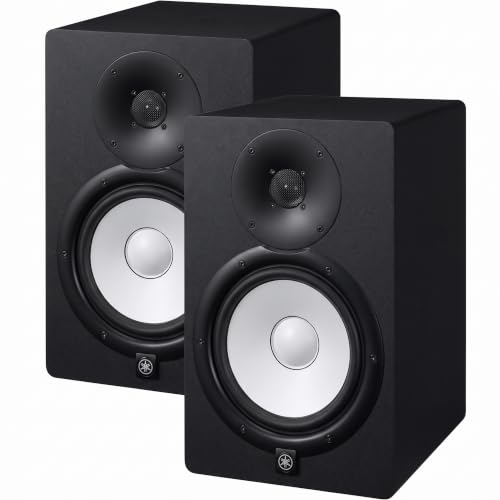
Yamaha HS8
The Yamaha HS8 is the best overall studio monitor for mixing rock music in this guide, and it is the monitor that rock mixers reach for first, because Yamaha built the HS8 as an eight-inch nearfield with a 120-watt amplifier, a white cone, and a reputation for honesty that goes back to the NS-10, with a bass that is deep and tight, and a midrange that is detailed. The HS8 is the monitor for a rock mixer who wants the truth, and it is the reason it is the best overall in this guide.
The flatness is the reason the HS8 is the standard, with a response that is flat from the bass to the treble, so the rock mix is heard as it is, without colour, and an eight-inch woofer that is rigid, so the bass is clean, and a tweeter that is clear, so the high frequencies are detailed. The HS8 has a room control that adjusts the bass for a desk against a wall, and a high trim that adjusts the treble, and it has a rear port, so it should sit a little away from the wall, although it can still work close to it. The HS8 is the monitor that a mixer buys when the goal is a monitor that does not flatter the mix, and it is the monitor that proves a flat monitor is the best tool for mixing rock music.
The practical details are built for a mixing desk. The HS8 is an eight-inch monitor, which fits on a desk or on a stand, and it has a sturdy cabinet that does not resonate, and it has a white cone that is the most recognisable in the studio, and it has a power switch on the back. The HS8 is the monitor that a mixer buys when the budget is moderate, and the goal is a monitor that tells the truth, and it is the monitor that is the most recommended flat eight-inch monitor in the world.
The trade-offs are that the HS8 is an eight-inch monitor, so it is larger than a five-inch monitor, and it needs more desk space, and it has a rear port, so it should sit a little away from the wall. The HS8 is also a flat monitor, so it may sound less exciting than a coloured monitor, although that is its job, because a monitor that flatters the mix will hide the problems. But as a studio monitor for mixing rock music, the HS8 is the best in this guide, and it fits a mixer who wants the truth, a home studio, and anyone who wants a monitor that does not lie about the mix.
Check price on Amazon: Yamaha HS8
KRK Rokit 8 G4
The KRK Rokit 8 G4 is the best home studio monitor for mixing rock music in this guide, and it is the monitor that home studios reach for first, because KRK built the Rokit 8 G4 as an eight-inch nearfield with a 100-watt amplifier, a front port, and a yellow woofer that is the most recognisable in the studio, with a bass that is deep and tight, and a sound that is clear at volume. The Rokit 8 G4 is the monitor for a home studio rock mixer, and it is the reason it is the best home studio option in this guide.
The bass is the reason the Rokit 8 G4 is the standard, with an eight-inch Kevlar woofer that moves a lot of air, so the low guitars and the kick are deep and clear, and a front port that lets the monitor sit close to a wall without the bass becoming boomy, and a 100-watt amplifier that gives the monitor enough power for a home studio. The Rokit 8 G4 has a DSP with 25 EQ settings, which lets the monitor be tuned to the room, and a boundary control that adjusts the bass for a desk against a wall, and a volume control on the front, which is convenient. The Rokit 8 G4 is the monitor that a mixer buys when the goal is a deep, tight bass that shows the mix at volume, and it is the monitor that proves an eight-inch monitor can be the best for mixing rock music.
The practical details are built for a home studio. The Rokit 8 G4 is an eight-inch monitor, which fits on a desk or on a stand, and it has a front port, so it can sit against a wall, and it has a sturdy cabinet that does not resonate, and it has a power switch on the back, with an auto-standby mode that saves power. The Rokit 8 G4 is the monitor that a mixer buys when the budget is moderate, and the goal is a monitor that will stay clear at volume, and it is the monitor that is the most recommended eight-inch monitor in the world.
The trade-offs are that the Rokit 8 G4 is an eight-inch monitor, so it is larger than a five-inch monitor, and it needs more desk space, although it has more bass, and it is a home studio monitor, so a professional room may want a larger model, although the Rokit 8 G4 is accurate enough for most rock mixing. But as a home studio monitor for mixing rock music, the Rokit 8 G4 is the best in this guide, and it fits a rock mixer, a home studio, and anyone who wants the standard eight-inch monitor.

JBL 308P MkII
The JBL 308P MkII is the best value studio monitor for mixing rock music in this guide, and it is the monitor to choose when the budget is tight and the mix still has to stay clear at volume, because JBL built the 308P MkII as an eight-inch nearfield with a 112-watt amplifier, an Image Control Waveguide, and a sound that is detailed and a stereo image that is wide. The 308P MkII is the monitor for a mixer on a budget, and it is the reason it is the best value in this guide.
The waveguide is the reason the 308P MkII is the standard value monitor, with an Image Control Waveguide that controls the dispersion of the tweeter, so the stereo image is wide and stable, and the listener can move without the image collapsing, and an eight-inch woofer that is rigid, so the bass is deep and clean, and a 112-watt amplifier that gives the monitor enough power for a home studio. The 308P MkII has a boundary EQ that adjusts the bass for a desk against a wall, and a high-frequency trim that adjusts the treble, and it has a rear port, so it should sit a little away from the wall, although it can still work close to it. The 308P MkII is the monitor that a mixer buys when the goal is a value monitor that stays clear at volume, and it is the monitor that proves a budget eight-inch monitor can still be accurate.
The practical details are good for a value monitor. The 308P MkII is an eight-inch monitor, which fits on a desk or on a stand, and it has a sturdy cabinet that does not resonate, and it has a power switch on the back, with an auto-standby mode. The 308P MkII is the monitor that a mixer buys when the budget is the limiting factor, and the goal is still a clear mix at volume, and it is the monitor that is the best value for an eight-inch nearfield.
The trade-offs are that the 308P MkII has a rear port, so it should sit a little away from the wall, although it can work close to it, and it is a value monitor, so the finish is less refined than the KRK, although the sound is as good. But as a value studio monitor for mixing rock music, the 308P MkII is the best in this guide, and it fits a mixer on a budget, a student, and anyone who wants a clear mix at volume for the lowest price.
Check price on Amazon: JBL 308P MkII

Adam Audio T8V
The Adam Audio T8V is the best ribbon studio monitor for mixing rock music in this guide, and it is the monitor to choose when the goal is an eight-inch monitor with a ribbon tweeter, because Adam built the T8V as an eight-inch nearfield with a 120-watt amplifier, a U-ART ribbon tweeter, and a sound that is detailed, with a bass that is deep and a treble that is airy. The T8V is the monitor for a mixer who wants a ribbon tweeter, and it is the reason it is the best ribbon option in this guide.
The ribbon tweeter is the reason the T8V is the standard, with a U-ART ribbon that moves air faster than a dome tweeter, so the high frequencies are more detailed, with a clarity that a dome cannot match, and an eight-inch woofer that is rigid, so the bass is deep and clean, and a 120-watt amplifier that gives the monitor enough power for a home studio. The T8V has a rear port, so it should sit a little away from the wall, and it has a high-frequency control that adjusts the treble, and it has a sturdy cabinet that does not resonate. The T8V is the monitor that a mixer buys when the goal is an eight-inch monitor with a detailed treble and a deep bass, and it is the monitor that proves a ribbon tweeter can make a difference in a rock mix.
The practical details are good for a home studio. The T8V is an eight-inch monitor, which fits on a desk or on a stand, and it has a front-facing volume control, which is convenient, and it has a power switch on the back, with an auto-standby mode. The T8V is the monitor that a mixer buys when the budget is moderate, and the goal is a monitor with a detailed treble and a deep bass, and it is the monitor that is the best value for an eight-inch ribbon nearfield.
The trade-offs are that the T8V has a rear port, so it should sit a little away from the wall, and it is an eight-inch monitor, so it is larger than a five-inch monitor, and it needs more desk space, although it has more bass. But as a ribbon studio monitor for mixing rock music, the T8V is the best in this guide, and it fits a mixer who wants a ribbon tweeter, a home studio, and anyone who wants a detailed treble with a deep bass.
Check price on Amazon: Adam Audio T8V

Focal Alpha 80 Evo
The Focal Alpha 80 Evo is the best pro studio monitor for mixing rock music in this guide, and it is the monitor to choose when the goal is a professional sound in a home studio, because Focal built the Alpha 80 Evo as an eight-inch nearfield with a 110-watt amplifier, a Slatefiber woofer, and a reputation for accuracy that comes from Focal's professional range, with a sound that is detailed, a bass that is tight, and a stereo image that is stable. The Alpha 80 Evo is the monitor for a pro who works at home, and it is the reason it is the best pro option in this guide.
The Slatefiber woofer is the reason the Alpha 80 Evo is the standard pro monitor, with a cone made from recycled carbon fibre and a polymer, which is rigid and light, so the bass is clean and the midrange is detailed, and a tweeter that is clear, so the high frequencies are airy. The Alpha 80 Evo has a front port, so it can sit against a wall without the bass becoming boomy, and it has a low-frequency control that adjusts the bass, and a high-frequency control that adjusts the treble, and it has a sturdy cabinet that does not resonate. The Alpha 80 Evo is the monitor that a professional buys when the goal is a pro sound in a home studio, and it is the monitor that proves an eight-inch monitor can be a pro tool for mixing rock music.
The practical details are built for a professional home studio. The Alpha 80 Evo is an eight-inch monitor, which fits on a desk or on a stand, and it has a front port, so it can sit against a wall, and it has a power switch on the back, with an auto-standby mode. The Alpha 80 Evo is the monitor that a pro buys when the budget is moderate, and the goal is a monitor that will translate, and it is the monitor that is the most recommended pro nearfield for a home studio.
The trade-offs are that the Alpha 80 Evo is an eight-inch monitor, so it is larger than a five-inch monitor, and it needs more desk space, although it has more bass, and it is more expensive than the KRK Rokit 8 G4, although it is more accurate. But as a pro studio monitor for mixing rock music, the Alpha 80 Evo is the best in this guide, and it fits a professional who works at home, a home studio that wants a pro sound, and anyone who wants the best eight-inch monitor in this guide.
Check price on Amazon: Focal Alpha 80 Evo
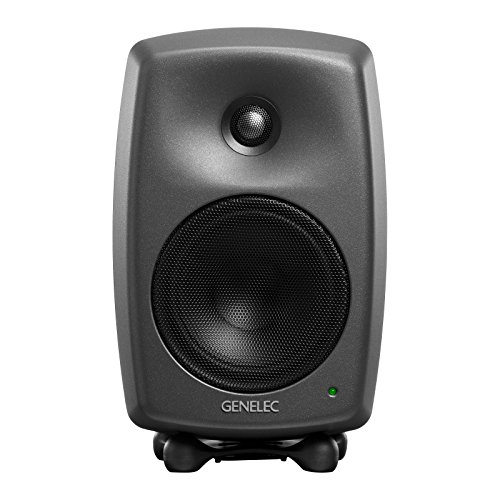
Genelec 8030C
The Genelec 8030C is the best compact pro studio monitor for mixing rock music in this guide, and it is the monitor to choose when the desk is small and the monitor has to be compact but professional, because Genelec built the 8030C as a five-inch nearfield with a 50-watt amplifier, a compact cabinet, and an Iso-Pod stand, with a sound that is clear and a size that fits anywhere. The 8030C is the monitor for a small professional desk, and it is the reason it is the best compact pro option in this guide.
The size is the reason the 8030C is the standard compact pro monitor, with a five-inch woofer that fits on a crowded desk, and a three-quarter-inch tweeter that is clear, and a 50-watt amplifier that gives the monitor enough power for a small room, and a compact cabinet that does not take up much space. The 8030C has an Iso-Pod stand that isolates the monitor from the desk, and angles it toward the listener, and it has a directivity control waveguide that makes the stereo image stable, and it has a bass that is tight, because the small woofer does not excite the room modes. The 8030C is the monitor that a professional buys when the goal is a compact monitor that is accurate, and it is the monitor that proves a five-inch monitor can still be a pro tool for mixing rock music.
The practical details are built for a small professional desk. The 8030C is a five-inch monitor, which fits on a crowded desk, and it has a compact cabinet that does not take up much space, and it has a power switch on the back, with an auto-standby mode. The 8030C is the monitor that a professional buys when the desk is tiny, and the goal is a monitor that will not overwhelm the room, and it is the monitor that is the best value for a compact Genelec.
The trade-offs are that the 8030C is a five-inch monitor, so the bass does not go as low as an eight-inch monitor, although a subwoofer can be added, and it is a compact monitor, so the sound is less detailed than a larger monitor, although it is clear enough for a nearfield. But as a compact pro studio monitor for mixing rock music, the 8030C is the best in this guide, and it fits a professional with a tiny desk, a mobile setup, and anyone who wants a small monitor that is accurate.
Check price on Amazon: Genelec 8030C
Buying Guide
Keep the vocal on top of the mix, or it will be buried
A rock vocal has to sit on top of the mix, with the guitars underneath, and the drums around it, and a mix in which the vocal is buried will sound muddy, while a mix in which the vocal is clear will sound professional, so the mixer should cut the low end from the vocal, leave space in the midrange, and keep the guitars from masking the vocal, because that lets the vocal be heard. A mixer who keeps the vocal on top will make a mix that is clear, and a mixer who does not will make a mix that is muddy, and the monitors are the tool that shows whether the vocal is clear, because a mix that is clear on the monitors will be clear everywhere.
An eight-inch monitor is the right size for rock music
An eight-inch monitor is the right size for rock music, because it has enough bass to show the low guitars and the kick clearly, without overwhelming the room, while a five-inch monitor will not show the low end, and a larger monitor will have too much bass, and the bass will build up. An eight-inch monitor is the standard for rock music, and a five-inch monitor is the right choice for a smaller room, while a subwoofer is the right choice when the bass has to go even lower, because a subwoofer can be placed and tuned separately. A mixer who is unsure should buy an eight-inch monitor first, because it is the standard, and it can be supplemented with a subwoofer later, when the bass has to go lower.
Separate the guitars, or the mix will be a wall of noise
A rock mix has layers of guitars, and a mix in which the guitars are not separated will sound like a wall of noise, while a mix in which they are separated will sound clear, so the mixer should pan the guitars left and right, cut the low end from the rhythm guitars, and leave space for the bass, because that lets each guitar be heard, and the mix stay clear. A mixer who separates the guitars will make a mix that is clear, and a mixer who does not will make a mix that is muddy, and the monitors are the tool that shows whether the guitars are separated, because a mix that is clear on the monitors will be clear everywhere.
Set up the triangle, and the mix will be stable
A studio monitor should be set up in a triangle, with the two monitors and the listener forming an equilateral triangle, with the monitors at ear height, and the tweeters pointing at the ears, because a triangle that is correct will give a stable stereo image, while a triangle that is wrong will give an image that is narrow or unstable. The monitors should be at arm's length, with the listener sitting upright, and the monitors should be angled inward, so the tweeters point at the ears, and the distance from each monitor to the listener should be the same, because a triangle that is uneven will give an image that is off-centre. A monitor that is set up correctly will sound better than the same monitor set up wrong, and the triangle is the first thing to check.
Use a front port when the desk is against a wall
A monitor with a rear port should sit a little away from the wall, because the port needs space to breathe, and a monitor with a rear port against a wall will have a boomy bass, while a monitor with a front port can sit against a wall, because the port faces the listener, not the wall, and the bass will be tight. A desk that is against a wall should have a front-ported monitor, such as the KRK Rokit 8 G4 or the Focal Alpha 80 Evo, and a desk that is away from the wall can have a rear-ported monitor, such as the Yamaha HS8, the Adam T8V or the JBL 308P MkII, and a mixer who checks the port before buying will not be surprised after.
Test the mix on other systems, and check that it translates
A rock mix that sounds good on the monitors should be tested on headphones, on a car stereo, and on a phone, because a mix that translates will sound good everywhere, while a mix that does not will sound good only in the studio, and the test is the way to check. Play the mix on the monitors, then on headphones, then in the car, and note what changes, because a bass that is too loud on the monitors will be too loud everywhere, and a vocal that is too quiet will be too quiet everywhere. A mix that is tested on other systems will be a mix that can be trusted, and a mix that is not tested will be a guess, and the monitor is the tool that makes the mix, but the test is the tool that checks it.
Frequently Asked Questions
What is the best studio monitor for mixing rock music?
The Yamaha HS8 is the best overall studio monitor for mixing rock music, because its eight-inch nearfield has a 120-watt amplifier, a white cone, and a flat response that shows the mix as it is, with a midrange that is detailed and a bass that is deep and tight. The KRK Rokit 8 G4 is the best home studio monitor, the JBL 308P MkII is the best value, the Adam Audio T8V is the best ribbon, the Focal Alpha 80 Evo is the best pro, and the Genelec 8030C is the best compact pro, and the right choice depends on the room size, the budget, and whether the goal is a flat response or a compact monitor.
What size studio monitor do I need for mixing rock music?
An eight-inch monitor is the right size for mixing rock music, because it has enough bass to show the low guitars and the kick clearly, without overwhelming the room, while a five-inch monitor will not show the low end, and a larger monitor will have too much bass. An eight-inch monitor is the standard for rock music, and a five-inch monitor is the right choice for a smaller room, while a subwoofer is the right choice when the bass has to go even lower, because a subwoofer can be placed and tuned separately, and a mixer who is unsure should buy an eight-inch monitor first.
Do I need a subwoofer for mixing rock music?
Not necessarily, because an eight-inch monitor has enough bass for most rock mixes, although a subwoofer is useful when the bass has to go lower, such as for a very deep bass, or a large room, and a subwoofer can be added later, when the budget allows. A subwoofer should be placed carefully, and tuned to the monitors, because a subwoofer that is too loud will make the mix boomy, and a subwoofer that is too quiet will not help, and a mixer who adds a subwoofer should calibrate it with the monitors, so the bass is balanced, and the mix translates.
How do I keep the vocal on top of a rock mix?
A rock vocal has to sit on top of the mix, with the guitars underneath, and the drums around it, and a mix in which the vocal is buried will sound muddy, while a mix in which the vocal is clear will sound professional, so the mixer should cut the low end from the vocal, leave space in the midrange, and keep the guitars from masking the vocal, because that lets the vocal be heard. A mixer who keeps the vocal on top will make a mix that is clear, and a mixer who does not will make a mix that is muddy, and the monitors are the tool that shows whether the vocal is clear, because a mix that is clear on the monitors will be clear everywhere.
Can I mix rock on five-inch monitors?
Yes, but it is harder, because a five-inch monitor does not show the low end as clearly as an eight-inch monitor, and the mixer may miss a low guitar, or mishear the weight, although a five-inch monitor with a subwoofer can work, because the subwoofer fills in the low end. A mixer who mixes on five-inch monitors should check the bass on headphones as well, because headphones will show the low end more clearly, with no room modes, and a mixer who mixes on eight-inch monitors will hear the low end more clearly, and the mix will be more accurate.
How do I keep rock guitars from blurring together?
A rock mix has layers of guitars, and a mix in which the guitars are not separated will sound like a wall of noise, while a mix in which they are separated will sound clear, so the mixer should pan the guitars left and right, cut the low end from the rhythm guitars, and leave space for the bass, because that lets each guitar be heard. A mixer who separates the guitars will make a mix that is clear, and a mixer who does not will make a mix that is muddy, and the monitors are the tool that shows whether the guitars are separated, because a mix that is clear on the monitors will be clear everywhere.
Conclusion
The best studio monitor for mixing rock music is the eight-inch nearfield with a clear midrange that keeps the guitars, the drums and the vocal balanced, and in this guide the Yamaha HS8 is the best overall choice, because it is the standard for a flat, honest sound. The KRK Rokit 8 G4 is the best home studio monitor, the JBL 308P MkII is the best value, the Adam Audio T8V is the best ribbon, the Focal Alpha 80 Evo is the best pro, and the Genelec 8030C is the best compact pro. Keep the vocal on top, separate the guitars, use a front port against a wall, and test the mix on other systems, because a mix that is heard clearly is a mix that can be made accurately, and a rock mix that is balanced is a mix that hits hard.