What's inside
- Key Takeaways
- Quick Picks
- How We Chose These Picks
- Comparison: Ranked by Image Quality
- What Does Image Quality Mean in the Best 5 Compact Cameras by Image Quality?
- How Much Does Sensor Size Really Matter in a Compact?
- How Do You Get the Best Files From a Compact Camera?
- How Do These Compacts Handle Printing and Cropping?
- Which Compact Is Best for Low-Light Quality?
- How Important Is Colour Science to Image Quality?
- What About Video Quality in These Compacts?
- How Do You Choose Between the Two Ricohs?
- Is a Premium Compact Worth It Over a Phone?
- How Does Handling Affect the Quality You Actually Get?
- What Should You Know About Buying These Cameras?
- How Will These Files Age?
- Which Accessories Protect a Premium Compact’s Quality?
- How Should You Test a Compact Before Committing?
- Common Mistakes When Choosing a Compact for Image Quality
- Final Recommendation
- Frequently Asked Questions
- Related Guides
As an Amazon Associate I earn from qualifying purchases. This post may contain affiliate links at no extra cost to you.
widgetverdict.com is reader-supported. When you buy through links on our site, we may earn an affiliate commission.
Where to buy: the five ranked cameras below carry verified Amazon listings — check price on Amazon on each product page — and the sixth camera, the one that missed the cut, is covered prose-only. Ranking the best 5 compact cameras by image quality requires saying what image quality means when sensors are small and lenses are fixed: resolution that survives cropping, colour that needs no apology, high-ISO files that degrade gracefully, and lenses sharp enough that the sensor, not the glass, sets the limit.
Five cameras meet that standard, and they divide by sensor. Two Ricohs and the Fujifilm carry APS-C sensors — the same class found in interchangeable-lens cameras — behind fixed prime lenses, which is why they lead this ranking. Sony’s RX100 VII and Canon’s G7 X Mark III answer with 1-inch sensors and zoom lenses, trading some ultimate quality for framing freedom. A sixth camera, Leica’s D-Lux 8, is reviewed after the five as the near-miss: a beautiful object whose Four Thirds sensor and zoom place its image quality a step behind the ranked five, and its review explains that judgement rather than hiding it.
One discipline governs the ranking: it is about image quality alone. Autofocus speed, video features, price and charm all appear in the reviews, but the order follows the files — what a photographer gets at base ISO in good light, what remains at high ISO in bad light, and how the lens renders the scene in front of the sensor. Readers who weight those virtues differently will find the evidence here to re-rank the five for themselves.
Key Takeaways
- The Fujifilm X100VI ranks first: a 40MP APS-C sensor and a superb fixed 23mm f/2 lens produce the richest files in this guide.
- Ricoh’s GR IV and GR IIIx put APS-C quality in a true pocket camera, differing mainly in lens — 28mm versus 40mm equivalents.
- The Sony RX100 VII is the highest-quality zoom compact here, its 1-inch sensor and 24–200mm lens buying versatility at a quality discount.
- Canon’s G7 X Mark III trades a little sharpness for the brightest zoom lens and the friendliest colour for people.
- Leica’s D-Lux 8 missed the cut on image quality per size — lovely files, but its sensor and lens place it sixth.
- Fixed prime lenses are the pattern at the top: quality follows glass that never has to zoom.
Quick Picks
| Rank | Pick | Badge | Why it ranks here |
|---|---|---|---|
| 1 | Fujifilm X100VI | Best image quality overall | 40MP APS-C detail with film-simulation colour and a fine f/2 lens. |
| 2 | Ricoh GR IV | Best pocket image quality | APS-C files from a camera that truly fits a pocket, 28mm lens. |
| 3 | Ricoh GR IIIx | Best 40mm street quality | The GR formula with a 40mm-equivalent lens for tighter framing. |
| 4 | Sony RX100 VII | Best zoom image quality | 1-inch sensor quality across a 24–200mm range, with elite autofocus. |
| 5 | Canon PowerShot G7 X Mark III | Best bright-lens quality | f/1.8–2.8 zoom and flattering colour from a 1-inch sensor. |
| — | Leica D-Lux 8 | Prose-only: the one that missed the cut | Beautiful camera, Four Thirds files a step behind the five. |
How We Chose These Picks
Image quality was assessed the way photographers experience it: files examined at full size, in good light and bad. We weighted base-ISO resolution and lens sharpness first, because a compact’s best work happens there; high-ISO behaviour second, because evenings test small sensors hardest; and colour rendition throughout, because a fixed-lens camera’s JPEG character is part of its image quality, not a garnish. Dynamic range — the ability to hold a bright sky and a shaded face in one frame — separated several close contenders.
Eligibility was strict. A camera had to be a true compact — fixed lens, pocketable or near it — and current enough to buy with confidence. That excluded superb larger cameras and left the field where the interesting fight is: APS-C primes against 1-inch zooms. Five cameras earned ranking. The Leica D-Lux 8 was assessed with the same rigour and placed sixth, and we include its review because a ranking that hides its nearest miss teaches less than one that shows the gap.
Verification followed our house rule. The five ranked cameras hold listings confirmed in our product pool; the D-Lux 8 does not, so it is prose-only, with no ASIN invented and no link attached. Readers will find it at any Leica dealer, and its review below is written to help them decide whether its charms outweigh its sixth place.

Fujifilm X100VI — Rank 1: best image quality overall
The X100VI wins this guide the way its predecessors won their generations: by putting a serious sensor behind a serious lens and refusing to compromise either. The 40.2MP APS-C sensor resolves detail that survives confident cropping — a safety net that partly answers the fixed lens’s single focal length — and the 23mm f/2 lens (35mm equivalent) is sharp into the corners at apertures where lesser compacts are still waking up. In-body stabilisation, new to this generation, extends the quality advantage into slow-shutter territory: sharp handheld files at speeds that would blur its rivals.
Colour is the X100VI’s second engine of quality. Fujifilm’s film simulations are not filters in the phone sense; they are carefully modelled renderings — the muted documentary tones, the vivid slide-film look, the soft portrait palettes — that make JPEGs from this camera feel finished rather than processed. The hybrid viewfinder, optical and electronic in one housing, frames the world both ways. Files at high ISO hold a fine, film-like grain that photographers accept as texture rather than noise, which is the highest compliment a small camera’s bad-light files can earn.
The costs of first place are known: the lens never zooms, demand has kept the camera scarce and priced as the cult object it is, and the fixed 35mm view will frustrate photographers who think in telephoto. But this guide ranks image quality, and on that measure the X100VI’s files — detailed, characterful, printable large — stand at the top of the compact class. It is the camera whose photographs most often make viewers ask what it was taken with.
Build and handling reinforce the ranking’s confidence. The aluminium body, aperture ring and shutter dial make exposure a physical pleasure, the leaf shutter is nearly silent and syncs flash at any speed, and a built-in ND filter opens the lens wide in bright sun. Quality, in this camera, is a system: sensor, lens, colour and craft all pulling the same way.
Print-makers should hear the X100VI’s case in their language. Its files hold together at exhibition sizes that embarrass other compacts, with fine detail in foliage and fabric that does not dissolve into the watercolour smearing of lesser sensors. Skin tones under the portrait simulations print with a subtlety that once required a medium-format rental. A compact whose files can hang in a gallery is a rare thing in any era; that this one also fits a coat pocket is why its waiting lists became a news story.
- Sensor: APS-C, 40.2MP
- Lens: fixed 23mm f/2 (35mm equivalent)
- Stabilisation: in-body, up to 6 stops
- Viewfinder: hybrid optical/electronic
- Colour: Fujifilm film simulations
Strengths
- The most detailed files of any camera here
- Film-simulation colour that finishes JPEGs in-camera
- Stabilisation and leaf shutter extend quality into hard light
Trade-offs
- Fixed focal length — your feet are the zoom
- Scarce and priced like the icon it is
- Larger than the true pocket cameras below
Best for: 35mm thinkers who want the finest files a compact can produce.
Not suited for: anyone who needs zoom flexibility, or a camera that vanishes into a shirt pocket.
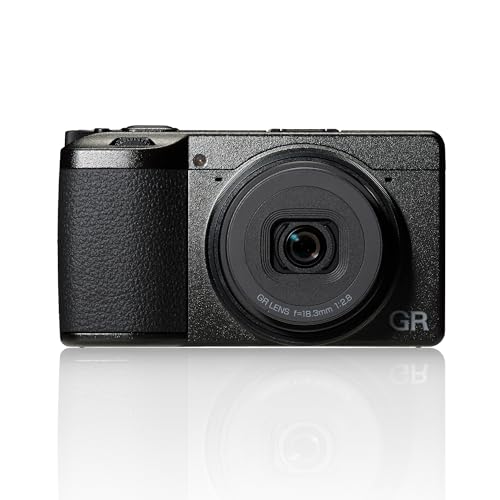
Ricoh GR IV — Rank 2: best pocket image quality
The GR IV performs the category’s most improbable trick: APS-C image quality from a body that fits a trouser pocket without argument. Its 25.7MP sensor and fixed 18.3mm lens (28mm equivalent) deliver files with the resolution, dynamic range and high-ISO grace of an interchangeable-lens camera, because in every way that matters to the file, that is what the sensor is. The lens is the GR line’s legend — edge-to-edge sharp, resistant to flare, and focused with a snap mode that pre-sets distance for instantaneous street shooting.
Ricoh’s updates in this generation refine the formula rather than disturb it: improved stabilisation, faster operation, and the line’s signature controls — a single dial, a rocker, and menus that stay out of the way. The GR’s JPEG rendering has its own devotees, with positive-film colour and high-contrast black-and-white modes that street photographers treat as house styles. At high ISO the files grain gracefully, and the raw files reward editing with more latitude than any 1-inch camera can offer.
Why second rather than first? The X100VI’s sensor resolves more, its lens opens wider, and its stabilisation and viewfinder make its quality easier to realise in difficult light. The GR IV’s counter-argument is presence: it is the camera actually in the pocket when the moment happens, and a slightly lesser file of a real moment outranks a perfect file never taken. For street and everyday-carry photographers, that argument often reverses the ranking — and this guide respects it enough to say so.
Ownership has its disciplines. There is no viewfinder, so composition is at arm’s length; the fixed wide lens demands closeness to subjects; and the battery is small, sized by the body it must fit. GR owners accept all three as the price of the pocket, and the camera’s cult following — the most loyal in this guide — suggests the price is fairly set.
Documentary photographers prize one GR behaviour above the specifications: it does not change the room. A GR raised to the eye reads as a tourist’s snapshot machine, subjects continue their lives, and the APS-C file that results has the resolution of a camera three times its presence. Whole photo books have been shot this way, on trains and in markets where a larger camera would have ended conversations. Image quality, in that context, includes the quality of the moments a camera is permitted to witness — and by that measure the GR IV outranks cameras with better sensors and worse manners.
- Sensor: APS-C, 25.7MP
- Lens: fixed 18.3mm (28mm equivalent)
- Stabilisation: in-body, improved generation
- Focus: snap focus distance presets
- Carry: true pocket size
Strengths
- APS-C quality in the smallest body here
- Lens sharpness that embarrasses larger cameras
- Snap focus makes it the fastest street tool
Trade-offs
- No viewfinder; screen-only composition
- Fixed wide lens requires photographic closeness
- Small battery for long days
Best for: street photographers and everyday carriers who refuse to trade quality for pocketability.
Not suited for: telephoto thinkers, viewfinder traditionalists, or anyone who fears a fixed lens.

Ricoh GR IIIx — Rank 3: best 40mm street quality
The GR IIIx is the GR idea re-aimed. Where the GR IV’s 28mm lens takes in the scene, the IIIx’s 26.1mm lens (40mm equivalent) selects from it — a focal length closer to natural vision, kinder to portraits, and better suited to photographers who found the classic GR’s width demanding. The 24.2MP APS-C sensor behind it produces files of the same family quality: sharp, flexible raw material with the GR line’s admired rendering, in the same pocketable body with the same snap-focus party trick.
Street photographers divide honestly over the two lenses, and the division is the review. At 28mm the photographer must step in and the frame gains energy and context; at 40mm the frame calms, subjects separate, and a portrait’s proportions stay honest. Image quality per se is a near-tie with the GR IV — a fraction less resolution, a generation older stabilisation and processing — which is why the IIIx ranks third: not for its lens, which many will prefer, but for the small cumulative distance between its sensor generation and the newer camera’s.
Everything else is GR orthodoxy, which is praise: the lens is superb, the body disappears, the controls fall under the thumb, and the files print far beyond what the camera’s size promises. Buyers choosing between the Ricohs should choose by focal length, not by rank — the ranking reflects sensor generations, while the lens decides every photograph. A 40mm thinker with a IIIx will out-shoot a 28mm thinker with a GR IV every day of the week.
Value adds a footnote. As the older model, the IIIx is often the gentler purchase, and its files are close enough to the newer camera’s that the saving can be defended purely on quality grounds. In a guide ranked by image quality, it is the value pick hiding in plain sight at rank three.
There is a portrait argument for the IIIx that its street billing undersells. Forty millimetres equivalent is close to the classic reportage portrait length, and the GR lens at that framing renders faces with a naturalness that wide lenses distort and telephotos flatten. Environmental portraits — a craftsperson in their workshop, a grandparent in their kitchen — are this camera’s secret genre, and its files have the resolution to print them large. Owners who bought it for the street often report that the portraits are what they keep.
- Sensor: APS-C, 24.2MP
- Lens: fixed 26.1mm (40mm equivalent)
- Stabilisation: in-body
- Focus: snap focus presets
- Carry: true pocket size
Strengths
- 40mm framing flatters subjects and calms compositions
- Same GR lens excellence and pocketability
- Often the gentler price of the two Ricohs
Trade-offs
- A sensor generation behind the GR IV
- No viewfinder, small battery — the family traits
- Fixed lens discipline still applies
Best for: street and everyday photographers who see the world at 40mm.
Not suited for: wide-angle landscape thinkers, who should take the GR IV instead.

Sony RX100 VII — Rank 4: best zoom image quality
The RX100 VII is where this ranking changes its terms. Its 1-inch stacked sensor cannot match the APS-C cameras’ ultimate resolution or high-ISO cleanliness, and it does not pretend to: what it offers is the finest image quality available across a zoom range, 24–200mm, in a body the size of the Ricohs. At base ISO in decent light its files are genuinely excellent — sharp, detailed, with Sony’s accurate colour — and its lens maintains that quality through most of its range, softening only modestly at the 200mm extreme where no rival in this guide can follow at all.
Sony surrounds the sensor with the best supporting technology here. The autofocus — real-time tracking and eye autofocus inherited from the company’s flagship line — means more frames arrive in focus, and a focused frame at a slightly smaller sensor outranks a blurred one from a larger sensor every time. Burst shooting at extraordinary rates with blackout-free viewing serves action the primes cannot chase. Image quality, honestly measured across a whole day’s shooting rather than a single test frame, includes all of this.
The ranking’s discipline places it fourth because the guide’s question is file quality at its peak, and there the APS-C trio stands clear. Low light widens the gap: the 1-inch sensor’s noise arrives earlier, and the lens’s maximum aperture narrows as it zooms. But a traveller who can carry one camera and needs a portrait at 85mm, a detail at 200mm and a landscape at 24mm — all at quality no phone approaches — will rank this camera first in their own list, and will not be wrong.
Video extends the same argument: 4K with excellent autofocus and a microphone input makes it the strongest moving-image tool in this guide. If your compact must do everything, the RX100 VII is the quality ceiling of everything-ness.
Parents of fast-moving children form an RX100 VII constituency that quality charts never interview. For them, image quality is a hit-rate statistic: the fraction of a birthday, a match or a recital that comes home sharp. Sony’s tracking autofocus, inherited from professional sports bodies, posts a hit rate the primes cannot approach on moving subjects, and its burst modes let a parent choose the expression from a sequence rather than hoping a single frame caught it. Judged on the album rather than the test chart, this camera’s quality case is formidable.
- Sensor: 1-inch stacked, 20.1MP
- Lens: 24–200mm equivalent zoom
- Autofocus: real-time tracking and eye AF
- Video: 4K with microphone input
- Viewfinder: pop-up electronic
Strengths
- Best quality available across a true zoom range
- Autofocus that maximises the number of sharp files
- 4K video and mic input broaden the craft
Trade-offs
- 1-inch sensor trails APS-C at high ISO
- Lens aperture narrows toward 200mm
- Menus and handling are dense for casual users
Best for: travellers and hybrid shooters who need zoom range without surrendering serious quality.
Not suited for: photographers who live in low light, or prime-lens purists who never zoom.

Canon PowerShot G7 X Mark III — Rank 5: best bright-lens quality
Canon’s G7 X Mark III earns fifth place with a lens the other zoom compact cannot match for light: a 24–100mm zoom opening at f/1.8 at the wide end. That brightness is an image-quality feature, not a specification flourish — it keeps ISO lower in the evening light where 1-inch sensors struggle, and it gives portraits a background separation the RX100’s slower lens cannot reach at the same framing. Canon’s colour, particularly for skin, is the friendliest in this guide straight from the camera.
The 1-inch sensor’s files follow the class pattern: excellent in good light, with resolution and dynamic range that shame phones; grainier as ISO climbs, though Canon’s processing keeps the grain’s character pleasant. The lens is sharpest in its middle range and softens at the extremes, a common zoom compromise the primes above do not make. Video creators know this camera well — 4K recording, a microphone input and streaming-friendly features built its following — and its stills ride on the same sensor and lens.
Fifth place is a ranking, not a dismissal. For the creator whose quality test is a face in evening light, the G7 X III’s bright lens and colour may outrank the Sony’s reach and the primes’ resolution in any honest personal list. It is also the most approachable camera here — the one a talented beginner will grow with rather than fight. Image quality has a human component: the camera whose files please its owner gets carried, and carried cameras produce the best photographs of all.
Handling supports that accessibility. The tilting screen serves self-recording and low angles, the control ring gives exposure a physical dial, and the body is compact enough for a jacket pocket. Canon built this camera for the creator economy, and its image quality — bright, warm, forgiving — is tuned for exactly the people that economy is made of.
Streamers and vloggers measure the G7 X III’s quality in a currency the other reviews slight: the quality of a face at arm’s length, lit by a bedroom window, delivered live. There the bright lens, the flattering colour and the tilting screen combine into the most forgiving creator image in this guide, and its stills inherit the same virtues. A generation of creators learned their craft in front of this camera’s predecessors, and the stills photographers who share their households benefit from glass and colour tuned for the hardest subject there is — people who must look like themselves, only better.
- Sensor: 1-inch stacked, 20.1MP
- Lens: 24–100mm equivalent, f/1.8–2.8
- Video: 4K, microphone input, streaming features
- Screen: tilting, creator-friendly
- Colour: Canon JPEG rendering, kind to skin
Strengths
- Brightest zoom lens here — a real low-light advantage
- Flattering colour for people, straight from the camera
- Creator video features broaden its quality story
Trade-offs
- Lens softens at its range extremes
- High-ISO files trail the APS-C trio clearly
- Zoom range is the shortest of the five
Best for: creators and portrait-leaning shooters who value bright glass and kind colour.
Not suited for: reach-hungry travellers, or resolution maximalists.
Leica D-Lux 8 — Prose-only: the one that missed the cut
The D-Lux 8 is reviewed here because a ranking should show its workings. Leica’s compact pairs a Four Thirds sensor — 17MP used of a 21MP chip — with a 24–75mm equivalent zoom, and dresses the result in the company’s design language: milled controls, restrained styling, an ownership experience no other camera in this guide attempts. Its files are good. They are detailed, its lens is capable, its colour has a following, and in isolation nobody would call its image quality a weakness.
The cut is comparative, and the comparison is unforgiving. Against the APS-C trio, the Four Thirds sensor resolves less and handles darkness worse, while the camera is no smaller than the GRs. Against the 1-inch zooms, it offers less reach than the Sony and less lens brightness than the Canon, at a size larger than both. Its zoom’s aperture narrows quickly, its autofocus is a generation behind the leaders, and its quality-per-size — the metric this guide ultimately ranks — lands sixth of six. A beautiful sixth, but sixth.
None of that makes the D-Lux 8 a bad purchase; it makes it a purchase for other reasons. Buyers who value Leica’s design, its interface minimalism and the pleasure of the object itself may rationally rank it first in a list ordered by ownership joy. This list is ordered by image quality, and honesty about that ordering is the guide’s whole purpose. The D-Lux 8 is prose-only in our pool as well, so it carries no link here; Leica’s dealers will happily demonstrate the charms this ranking could not reward.
There is a lesson in its near-miss for the whole category. Sensor class sets a compact’s quality ceiling more than brand prestige does, and a fixed prime lens defends that ceiling better than a zoom. The five ranked cameras each maximise one of those truths; the D-Lux 8, compromising elegantly on both, shows what the compromise costs.
Owners asked to defend the D-Lux 8 rarely talk about files at all. They talk about the aperture ring’s click, the shutter dial’s certainty, the way the camera slows a walk down into looking. That defence is not foolish — a camera that changes its owner’s behaviour toward deliberation will produce better photographs than its sensor predicts, because deliberation is the rarest image-quality feature of all. It simply does not change this ranking, which promised to judge the files and keep the promise even against a camera this likeable.
- Sensor: Four Thirds, 17MP effective
- Lens: 24–75mm equivalent zoom
- Design: Leica minimalism, physical dials
- Video: 4K as a supporting mode
- Status: sixth place — missed the ranked five
Strengths
- The finest industrial design in this guide
- Capable files with a loyal colour following
- Physical controls that reward deliberate shooting
Trade-offs
- Sensor and lens place quality sixth of six here
- Autofocus trails the ranked five
- No verified listing, so no link in this guide
Best for: design devotees who rank ownership pleasure alongside file quality.
Not suited for: buyers following this guide’s ranking strictly — the five above out-shoot it.
Comparison: Ranked by Image Quality
| Rank | Camera | Sensor | Lens | Quality signature |
|---|---|---|---|---|
| 1 | Fujifilm X100VI | APS-C 40.2MP | 35mm equiv. f/2 prime | Detail plus film colour |
| 2 | Ricoh GR IV | APS-C 25.7MP | 28mm equiv. prime | Pocket APS-C sharpness |
| 3 | Ricoh GR IIIx | APS-C 24.2MP | 40mm equiv. prime | Natural-framing APS-C |
| 4 | Sony RX100 VII | 1-inch 20.1MP | 24–200mm zoom | Quality across range |
| 5 | Canon G7 X III | 1-inch 20.1MP | 24–100mm f/1.8–2.8 | Bright lens, kind colour |
| 6 | Leica D-Lux 8 | Four Thirds 17MP | 24–75mm zoom | Design over file rank |
Read the sensor column as the ranking’s skeleton. APS-C occupies the podium because sensor area is destiny at the extremes of light and cropping; the 1-inch cameras follow because their zooms buy back in versatility what they surrender in peak quality; and the D-Lux 8’s Four Thirds sensor, squeezed between the classes, explains its near-miss. Lens type is the second skeleton key: every prime outranks every zoom here, because glass designed for one focal length can simply be better.
What Does Image Quality Mean in the Best 5 Compact Cameras by Image Quality?
Four measurable things and one immeasurable one. Resolution decides how much detail survives printing and cropping. Dynamic range decides whether a bright window and a shaded face can share a frame. High-ISO behaviour decides what evening photographs look like. Lens sharpness decides whether the sensor’s resolution is real or theoretical. The immeasurable fifth is rendering — the way a camera’s colour and contrast make a photograph feel — and it is why the X100VI’s film simulations and the GR’s black-and-white modes appear in a guide nominally about quality: a technically perfect file that feels dead has failed its only job.
Buyers should also separate peak quality from average quality. A test chart at base ISO measures the peak, where the APS-C trio dominates. A day’s shooting measures the average, where autofocus hit rate, stabilisation and handling join the calculation — and where the RX100 VII closes much of the gap. This ranking weights the peak first, as its title promises, but the reviews report the averages honestly so readers can re-weight for their own days.
How Much Does Sensor Size Really Matter in a Compact?
Enough to structure this entire ranking, and less than forum culture claims. The APS-C sensor in the Fujifilm and Ricohs has roughly three times the area of a 1-inch sensor, which buys cleaner high-ISO files, more dynamic range and shallower depth of field at the same aperture. In daylight at base ISO, the gap narrows to a connoisseur’s margin — the RX100 VII’s sunny files are excellent by any standard — and in darkness it widens into the obvious. Sensor size is therefore best understood as insurance: it pays out at the edges of the day and the edges of the frame.
Lens speed is the counterweight. The G7 X III’s f/1.8 wide end lets its smaller sensor work at lower ISO than a slower APS-C zoom could, which is why bright glass appears in this guide as a quality feature in its own right. The primes sidestep the whole negotiation — fast and fixed — which is the deepest reason they hold the podium. When a compact’s lens is both fast and fixed, sensor and glass stop trading against each other and start compounding.
How Do You Get the Best Files From a Compact Camera?
Shoot raw when the light is hard, and let the JPEGs reign when it is kind. Every camera here produces raw files with more recoverable highlight and shadow than its JPEGs keep, and the APS-C models’ raw latitude is genuinely interchangeable-lens class. Expose for the highlights — small sensors forgive lifted shadows better than clipped skies — and use the exposure compensation dial these cameras all provide as a physical control. At high ISO, expose generously: a brighter file with noise reduces more cleanly than a dark one lifted later.
Hold the camera like quality matters. Compacts invite one-handed casualness that their resolution does not forgive; two hands, a braced elbow and a half-pressed shutter settle both the frame and the focus. Learn each camera’s sweet aperture — typically a stop or two down from wide open for the zooms, nearly anywhere for the GR and X100 lenses — and favour it when depth of field allows. Quality in a compact is a collaboration between an excellent little machine and an operator who treats it as one.
How Do These Compacts Handle Printing and Cropping?
Printing is where the ranking stops being theoretical. The X100VI’s 40MP files crop to half the frame and still print handsomely, which converts its fixed lens into a mild zoom for composition after the fact. The Ricohs’ files print large from the full frame and tolerate moderate crops; their lens sharpness means the detail is real rather than interpolated. The 1-inch cameras print beautifully at the sizes family photographs actually take, and their files should be cropped gently and printed honestly — the RX100 at 200mm needs no apology at album size.
Cropping discipline separates the classes more than any other habit. A photographer who composes with the sensor’s full frame keeps the quality they paid for; one who habitually crops a third away has quietly demoted their camera by a class. This is why the guide weighs the fixed focal lengths as quality features rather than limitations: the X100VI and the GRs force full-frame composition in the field, where it belongs, and their rankings are partly a reward for that discipline.
Which Compact Is Best for Low-Light Quality?
The X100VI, by combining the largest effective package of advantages: a big sensor, an f/2 lens, and stabilisation that lets still subjects be shot at improbably slow speeds. The Ricohs follow, their f/2.8 lenses gathering less light but their sensors holding quality as ISO climbs, and their grain rendering staying honest. The G7 X III is the zoom compact’s low-light champion on lens brightness at the wide end, while the RX100 VII’s aperture narrows with zoom and its low-light work is best done wide.
Expectations should be set by subject. Still scenes — city nights, interiors, architecture — belong to the stabilised primes and will astonish. Moving subjects in dim rooms remain hard for every camera here, because shutter speed cannot be borrowed from stabilisation; the honest advice is to move closer, use the fastest lens setting, and accept grain as the texture of the evening. Photographers whose work is mostly nocturnal and mobile should be shopping for a larger system, and this guide’s candour on that point is part of its ranking’s value.
How Important Is Colour Science to Image Quality?
More than the specification culture admits, because most photographs are never raw-edited by their makers. Fujifilm’s film simulations are the industry’s benchmark for in-camera colour — decades of film heritage encoded into renderings that photographers choose by name and mood. Ricoh’s positive film and black-and-white modes have their own devotees, and its monochrome rendering in particular has a depth that converts colour shooters. Canon’s colour for skin is the creator economy’s default for a reason, and Sony’s accuracy serves those who prefer to impose colour later in editing.
The mature way to choose is by looking at photographs, not charts: spend an hour with unedited samples from each camera, of subjects like your own, and notice which rendering you would hang on a wall. Colour is the quality dimension a camera imposes on every single frame, including the ones shot in perfect light where resolution differences vanish. In a ranking of image quality, it is not a soft factor. It is the factor most often seen.
What About Video Quality in These Compacts?
Video rearranges the ranking without overturning it. The RX100 VII becomes the leader — 4K with superb autofocus, a microphone input and a pop-up viewfinder — because moving images punish focus errors more than sensor size rewards stills. The G7 X III follows on creator features and its bright lens. The X100VI records strong 4K with its film simulations as a look baked in, which filmmakers either love or route around. The Ricohs treat video as a courtesy feature; their stills are the point, and buyers who film seriously should weight that honestly.
The lesson generalises: image quality is not one ladder but several, and this guide’s ladder is stills. A buyer whose compact must film a wedding should re-rank by the video evidence in the reviews — the order is recoverable from the text, which is why the reviews report more than the ranking strictly needs. Guides that pretend one order serves every purpose serve none of them well.
How Do You Choose Between the Two Ricohs?
By standing in a favourite place and looking. At 28mm the world includes its context — the market around the stallholder, the street around the stranger — and the photographer must be close enough to be part of the scene. At 40mm the world edits itself: the subject steps forward, the edges calm down, and portraits stop exaggerating noses. Neither is better photography; they are different temperaments wearing the same pocketable body, and most photographers know their temperament within one honest walk with a phone’s two lenses as a rehearsal.
Practicalities whisper at the margins. The GR IV is the newer sensor and stabilisation generation, and the safer long-term hold. The IIIx is often gentler on the budget and its lens suits the portrait-leaning. Resolution differs by a margin few prints will reveal. Choose the focal length first and the generation second, and the decision will survive contact with your own photographs — which is the only test any of these rankings ultimately answers to.
Is a Premium Compact Worth It Over a Phone?
For image quality as this guide defines it, yes, and the margin is not subtle once the photographs are printed, cropped or taken after dark. A phone’s computational pipeline produces a brilliant rendition of a small file; these cameras produce the file itself — optically gathered, honestly resolved, editable without the pipeline’s guesses baked in. The difference shows in hair and foliage, in skies that grade instead of banding, in black-and-white conversions with real tonal depth, and in every print larger than a postcard.
The honest counterweight is that the phone is present, connected and effortless, and it wins the photographs that happen by accident. The compact wins the photographs that happen on purpose. Photographers who shoot deliberately — who walk with a camera in hand and a subject in mind — will feel the premium compact’s quality in every frame. That is the reader this guide ranks for, and for that reader the five cameras above are not luxuries but instruments.
How Does Handling Affect the Quality You Actually Get?
A camera’s ergonomics are an image-quality specification in disguise. The X100VI’s aperture ring and shutter dial keep exposure decisions tactile and eyes-up, so its quality is realised at the speed of thought. The GR’s snap focus removes focusing from the equation entirely at set distances — the sharpest autofocus is the one that was never needed. The RX100 VII’s dense controls reward the learned owner and tax the occasional one, which is why its average-day quality trails its peak-day quality by more than its sensor predicts.
Buyers should therefore audition handling as seriously as files. Ten minutes holding each candidate, raising it, framing, changing exposure, will reveal which camera’s quality you will actually collect in the field. Reviewers call this preference; photographers should call it what it is — the difference between the quality a camera has and the quality its owner gets, which is the only quality that ever reaches a wall.
What Should You Know About Buying These Cameras?
Demand distorts this market. The X100VI has spent much of its life in short supply, and buyers should purchase only from authorised dealers at sane terms rather than feeding scalpers — or take the GR IV, whose quality is close and whose availability is sane, as the market’s own corrective. Ricohs sell steadily and hold value; the Sony and Canon are mature models whose prices soften periodically, rewarding patience. In every case, buy the camera you can also buy a case, a spare battery and a fast card for on the same day, because an unprotected premium compact is a quality risk no ranking can offset.
Used examples of the earlier generations — the X100V, the GR III — deserve mention as the budget route into this guide’s quality tier. Their files sit close to their successors’, and a careful used purchase teaches the fixed-lens discipline before the flagship money is committed. Check shutters, screens and lens glass as with any used camera, and the podium’s quality becomes available at a fraction of its launch cost.
How Will These Files Age?
Well, because they are honest files. Photographs built on optical quality and sensor area improve as displays and printers improve, since the information is really there; photographs built on computational enhancement are frozen at the taste of their year’s algorithms. The archives shot on GRs and X100s over the past decade have aged gracefully for exactly this reason, and there is no cause to expect the current generation to age worse. A compact bought for image quality is, among other things, a bet that real information outlasts clever processing — a bet that has paid out for a century of photographic technology.
That is the deepest answer to the phone question, and a fitting place for this guide’s argument to rest. The five ranked cameras make files that will still be respectable when their successors are antiques. Choose among them by sensor, lens and temperament, and the photographs will look after the rest.
Which Accessories Protect a Premium Compact’s Quality?
Very few, chosen well. A wrist strap or neck strap prevents the drop that ends quality arguments permanently. A soft case or wrap keeps pocket lint and keys away from the lens, since a fixed lens cannot be swapped when its front element scars. A spare battery matters more than it sounds — the GRs’ small cells in particular reward a pocketed second — and a fast memory card keeps burst buffers clearing at the speed the Sony’s autofocus creates opportunities. Beyond that list, restraint is the accessory policy: every filter, grip and gadget added to a compact spends the pocketability that justified it.
One exception deserves its own sentence. A simple UV or protection filter, fitted via the adapter rings the X100 and GR lines offer, is cheap insurance for a lens that must last the camera’s life, and modern coatings cost no measurable quality. Purists debate it; owners who shoot at beaches and building sites settle the debate with one grain of sand.
How Should You Test a Compact Before Committing?
Rent or borrow for one ordinary weekend rather than one spectacular hour. Shoot your own subjects — your street, your family, your evening light — and print the two best frames at a size you would actually hang. The ranking in this guide predicts what you will find: the primes will astonish in the prints, the zooms will impress across the weekend’s variety, and your own temperament will cast the deciding vote between them. Specifications cannot cast that vote, and neither can reviewers; only your photographs can.
During the test, note the frames you missed and why. Missed for reach argues for the Sony. Missed for darkness argues for the Fujifilm’s lens or the Canon’s brightness. Missed because the camera was at home argues, decisively, for the Ricohs. A weekend of honest misses is the most reliable buying instrument in photography, and it costs nothing but attention.
Common Mistakes When Choosing a Compact for Image Quality
The first mistake is ranking by megapixels alone. The X100VI leads this guide on resolution, but the GR IV’s 25.7MP files outrank 1-inch cameras with similar counts because sensor area and lens quality decide what those pixels contain. The second mistake is ignoring the lens: a superb sensor behind a mediocre zoom produces mediocre files with high resolution. Third, buyers test quality only in daylight, where every camera here shines, and discover the ranking’s real separations on the first evening out.
A fourth mistake is buying a prime-lens camera for a zoom-lens life. The podium cameras demand a fixed-focal-length temperament; a photographer who constantly wishes the frame were tighter will crop, and cropping spends the very resolution that justified the purchase. Finally, some buyers dismiss the near-miss category entirely — yet the D-Lux 8’s sixth place in this guide would be first place in a ranking by design, and a camera loved is a camera carried. Match the ranking’s criterion to your own before treating its order as gospel.
Final Recommendation
For the finest files a compact can make, buy the Fujifilm X100VI and learn to see at 35mm; it is this guide’s clear first place. For quality that travels in a pocket, the Ricoh GR IV and GR IIIx split the honours by focal length — 28mm energy against 40mm calm — and either will astonish anyone upgrading from a phone. If your photography needs a zoom, the Sony RX100 VII is the quality ceiling of the versatile compacts, with the Canon G7 X Mark III as the brighter, friendlier alternative. And the Leica D-Lux 8 remains the connoisseur’s sixth: beaten on files, unbeaten on charm. Image quality brought you to this guide; let the reviews’ evidence, not the badges alone, settle which expression of it you carry.
One last perspective before the questions. Rankings like this one are snapshots of a moving frontier — a new sensor generation can reorder them in a season — but the principles underneath move slowly: sensor area, lens quality, and the discipline of a fixed focal length have predicted compact image quality for twenty years, and they predicted this order. Buy on the principles and the specific model becomes almost a detail; buy against them and no badge on any box will rescue the files. The five cameras ranked above, and even the sixth that missed, all honour at least two of the three principles — which is why this was a ranking worth arguing about at all.
Frequently Asked Questions
Which compact camera has the best image quality overall?
The Fujifilm X100VI, on the evidence of its files: the highest-resolution APS-C sensor in the class, a superb fixed lens, stabilisation to realise that quality handheld, and colour rendering that finishes photographs in-camera. The Ricoh GR IV follows closely and wins outright on pocketability.
Is APS-C much better than a 1-inch sensor in a compact?
At base ISO in good light, the difference is modest and the 1-inch cameras’ files are excellent. As light falls or cropping begins, the APS-C advantage grows into the decisive one — cleaner high-ISO files, more dynamic range, more resolution in reserve. Sensor class is the ranking’s skeleton for exactly this reason.
Why do fixed-lens cameras outrank zooms for quality?
A lens designed for one focal length can be optimised without compromise — sharper, faster and smaller than a zoom covering many. The podium here is all primes for that reason. Zooms answer with versatility, and the RX100 VII shows how good that answer can be, but glass physics keeps the primes ahead on pure file quality.
Should I shoot raw or JPEG with these cameras?
Both, by condition. JPEGs from the Fujifilm and Ricohs are good enough — and characterful enough — to be the final product in kind light. Raw earns its file size in contrasty scenes, at high ISO, and whenever a photograph matters enough to edit deliberately. Most serious compact shooters record raw plus JPEG and decide per frame.
Was the Leica D-Lux 8 excluded unfairly?
No — it was assessed and placed sixth, with its review published in full above. Its sensor and zoom place its file quality behind the APS-C primes and, on balance, the two 1-inch zooms, while its price and prestige sit higher. Buyers who value its design may still choose it happily; they will do so knowing exactly what the ranking found.
Can a compact camera really replace an interchangeable-lens camera?
For photographers whose subjects live at one or two focal lengths, the X100VI and the GRs already do — their sensors are the same class, and their lenses are better than most kit zooms. What they cannot replace is range: the moment a subject demands 85mm or 16mm, the fixed-lens compact is a spectator. The RX100 VII exists for exactly that anxiety, trading a class of sensor for a range of view, and many professionals carry one of each kind, letting the assignment choose. The honest summary is that a compact replaces a system when the photographer’s seeing has settled, and complements one while it is still exploring — and knowing which season you are in is worth more than any single specification in this guide. Photographers who misjudge their season buy twice; those who judge it well buy once, shoot for years, and let the rankings argue among themselves without them. There is no shame in either season — exploration and settlement are both honourable phases of a photographic life — but the camera should be bought for the season you are actually in, not the one you imagine, because it is the present season’s photographs that will fill your albums. Years from now, nobody will ask which ranking the camera topped; they will look at the pictures, and the pictures will either be there, sharp and honest, or they will not.
Related Guides
Quality is one axis of camera choice; explore the others in travel zooms with 10x optical reach, at the extreme in superzooms beyond 60x, and on the instant side in our fifteen instant cameras compared.


