What's inside
- Key Takeaways
- Quick Picks
- How We Chose These Picks
- Comparison Table
- How Do You Choose Between the Best 4K Cameras Travel Shooters Actually Pack?
- What Is the One-Lens Travel Discipline and Why Do Photographers Swear by It?
- How Do You Keep Travel Footage Safe and Finished?
- What Should a Travel Kit Weigh, in Total, Charger and All?
- How Do You Photograph People Respectfully While Travelling?
- How Should You Pack the Camera for Flights and Rough Roads?
- What Is the Best Focal Length Strategy for a Whole Trip?
- How Do You Come Home With a Story Instead of an Archive?
- What About Phones — When Is the Phone Honestly Enough?
- How Do Seasons and Destinations Rewrite the Choice?
- What Small Accessories Earn Their Grams on the Road?
- How Should Couples and Families Share One Travel Camera?
- How Do You Learn a New Travel Camera Before the Trip?
- What Will You Print, Post and Keep — and How Should That Decide the Camera?
- How Does Travel Video Differ From Travel Photography on the Same Trip?
- Common Mistakes
- Final Recommendation
- Frequently Asked Questions
- Related Guides
As an Amazon Associate I earn from qualifying purchases. This post may contain affiliate links at no extra cost to you.
widgetverdict.com is reader-supported. When you buy through links on our site, we may earn an affiliate commission.
All six cameras here carry verified Amazon listings in our pool, so check price on Amazon for the configurations that interest you — then do the thing this guide exists to make you do: weigh them. Literally. The best 4k cameras travel shooters actually use are not ranked by image quality in what follows, because on the road a different hierarchy rules. The first criterion is what the camera does to your bag — its weight, its bulk, the lens it demands, the charger it adds — and only after the luggage verdict does the image get its hearing. A magnificent camera left in the hotel safe photographs nothing, and travel photography’s oldest law is that the carried camera wins.
This is deliberately a different argument from our reference guide to the best 4K cameras, where hybrid professionals were ranked by capability. Some bodies appear in both conversations — Sony’s ZV-E1 and Panasonic’s S5 II travel here too — but the reasoning is rebuilt from the suitcase outward: the ZV-E1 arrives as the lightest full-frame route to serious 4K, the S5 II as the heaviest concession this guide is willing to defend, and between them sit the 1-inch compacts and the fixed-lens Fujifilm that most travellers, honestly assessed, should probably buy. If the reference guide is about what cameras can do, this one is about what travellers will carry — up the hill, through the airport, around the city for the ninth hour.
The six divide by packing philosophy. The RX100 VII and G7 X Mark III are pocket cameras: true pockets, jacket or trouser, no bag required. The ZV-1 II is the creator’s pocket variant, wider and more video-fluent. The Fujifilm X100VI is the shoulder camera — one fixed lens, one deliberate pace, a cult that travels the world proving its point. The ZV-E1 and S5 II are the system cameras for travellers who accept a small bag as the price of interchangeable lenses and full-frame light. Each review states its luggage facts before its image facts, in keeping with the guide’s founding rule.
A note on honesty about 4K and travel: you will shoot less of it than you plan. Travel video competes with travel itself for your hours, files accumulate against hotel Wi-Fi, and the travellers who return with finished films are the ones whose cameras made filming effortless at the size they carried. That is not an argument against 4K — every pick here shoots it well — it is an argument for choosing the 4K camera whose weight your itinerary, not your ambition, selects.
Key Takeaways
- Rank by luggage first: the camera in the bag you actually carry beats the flagship in the safe.
- The Sony RX100 VII is the pocket champion — 24–200mm zoom and serious 4K in a coat pocket.
- Canon’s G7 X Mark III is the creator’s pocket pick, with vertical video and streaming manners.
- The Sony ZV-1 II is the widest pocket camera here, built for presenters who travel alone.
- The Fujifilm X100VI trades zoom and video ambition for the most joyful stills travel experience available.
- The ZV-E1 and S5 II are the full-frame options — one bag, chosen knowingly, buys their light.
Quick Picks
| Pick | Badge | Why it made the cut |
|---|---|---|
| Sony RX100 VII | Best pocket travel camera | 24–200mm zoom, 1-inch sensor, real 4K, genuinely pocketable. |
| Canon PowerShot G7 X Mark III | Best pocket pick for creators | Bright lens, vertical video, live streaming, 4K. |
| Sony ZV-1 II | Best wide pocket camera | 18–50mm-equivalent width for solo presenters, 4K, 1-inch sensor. |
| Fujifilm X100VI | Best fixed-lens travel experience | 40MP-class stills joy, film simulations, one-lens discipline. |
| Sony ZV-E1 | Best full-frame travel video | Lightest full-frame 4K60 route, low-light sensor, compact lenses available. |
| Panasonic Lumix S5 II | Best system camera for serious trips | Unlimited 10-bit 4K and stabilisation, if the bag allows. |
How We Chose These Picks
Selection started with a scale and a tape measure, because this guide’s premise is that travel merit is physical before it is optical. Cameras were grouped by carry class — pocket, shoulder, small bag — and judged first against their class: a pocket camera that needs a case has failed its class, and a system camera was only admitted if its image advantage could plausibly repay its bag across a two-week itinerary. The verified pool supplied the candidates; the itinerary supplied the verdicts.
Within each class, 4K competence was audited the way the reference guide audits it — codec honesty, recording behaviour, stabilisation, autofocus temperament — because a travel camera that overheats at a festival or hunts focus in a market is luggage without a purpose. Lens reality counted double: the compacts’ fixed zooms were assessed as the complete system they are, while the interchangeable pair were assessed with the lenses a traveller would genuinely pack, not the lenses a studio would.
Finally, the list was tested against the three journeys readers actually take: the city break, where the pocket class reigns; the grand tour, where the shoulder and small-bag classes earn their keep; and the working trip, where a creator’s camera must produce publishable 4K nightly. Every pick owns at least one of those journeys outright.

Sony RX100 VII — Best pocket travel camera
Luggage facts first, per this guide’s law: the RX100 VII rides in a jacket pocket, weighs about as much as the phone in the other pocket, and asks for no bag, no lens decision and no negotiation with an airline’s cabin allowance. Its verified listing describes the machine inside that pocket — a premium compact with a 24–200mm zoom lens and a 1-inch sensor — and that zoom range is the review in miniature: wide enough for the cathedral interior, long enough for the wildlife boat and the distant tower, in a body that never once makes you choose between carrying a camera and carrying anything else.
The 4K is a grown-up implementation: oversampled, stabilised, served by autofocus inherited from Sony’s professional line that tracks faces and eyes with a tenacity absurd in this size class. Travellers shoot street scenes, market details and family moments with a tool that responds like a system camera and disappears like a phone — except that its files, its zoom and its handling leave phone footage in a different and lesser category. For the grand tour where photography matters but luggage is law, this remains the benchmark pocket instrument.
The costs of smallness are known and should be accepted knowingly: the 1-inch sensor concedes low light to the full-frame pair below, the battery is a one-per-day proposition with a spare advised, and the menus reward a weekend’s learning before departure. None of these has dethroned it, because the competition is not the perfect camera — it is the camera you left behind, and against that rival the RX100 VII is undefeated.
Street photographers add a social observation that seals its case: a small silver-and-black compact does not change a room. Markets, cafés and family gatherings continue at their natural temperature around it, where a system camera with a fast zoom announces a professional and quietly rearranges everyone’s behaviour. Travel photography is half access, and access is often just the absence of intimidation — a specification no datasheet prints and every experienced traveller prices in.
- Carry class: jacket pocket; no bag required
- Lens: 24–200mm-equivalent zoom, fixed
- Sensor: 1-inch stacked design with professional-line autofocus
- Video: 4K with stabilisation and eye tracking
- Power: compact battery — carry a spare
Strengths
- The zoom range covers a whole holiday from one pocket.
- Autofocus performance embarrasses cameras three times its size.
- Always carried, therefore always photographing — the travel virtue.
Trade-offs
- Night scenes concede to the full-frame picks.
- Battery life demands a spare and a nightly charge.
- Small controls reward practice before departure.
Best for: grand tours, city breaks and photographers who travel light on principle. Not suited for: night-first shooters or dedicated video productions.

Canon PowerShot G7 X Mark III — Best pocket pick for creators
The G7 X Mark III packs like the Sony — a true pocket body — and then angles itself at a different traveller: the one who publishes from the road. Its verified listing confirms the essentials — the G7 X Mark III with Wi-Fi and 4K video — and Canon built this generation around the creator’s itinerary: vertical video for the platforms travellers actually post to, live-streaming ability for the hotel-room broadcast, a microphone input for voices that matter, and a bright, wide lens whose low-light manners flatter cafés and evening streets.
That lens is the camera’s personality. Faster at the wide end than the RX100’s, it trades telephoto reach for light — the right trade for the creator whose subjects are themselves, their companions, their food and their city at dusk. Canon’s colour, particularly in faces, remains the friendliest in the pocket class straight from the camera, which matters enormously when the edit suite is a phone on a night train. The flip screen completes the solo kit: frame, record, post, pocket.
Concessions are the mirror of its rival’s: the zoom stops where the Sony’s is getting started, so wildlife and distant architecture belong to the other pocket. Autofocus, while capable, lacks the Sony’s eerie persistence. Choose between these two pockets by subject, not by brand — reach for the Sony, light for the Canon — and either way your luggage never learns a camera exists.
There is a family-holiday argument for the Canon that deserves its own sentence: its friendly colour and forgiving automatic behaviour make it the camera that can be handed to a partner, a parent or a teenager and return with the day’s story intact. A travel camera’s second operator is a real use case, and the G7 X’s manners under delegation are the best in this guide — no small virtue when the alternative is the good camera staying in one pair of hands while the trip happens elsewhere.
- Carry class: true pocket; no bag required
- Lens: bright wide zoom, optimised for low light over reach
- Sensor: 1-inch class
- Video: 4K, vertical video and live-streaming features, microphone input
- Screen: flip-up for solo presenting
Strengths
- Creator tooling — vertical, streaming, mic input — leads the pockets.
- Bright lens and friendly colour flatter evenings and faces.
- Flip screen makes it a complete solo studio.
Trade-offs
- Zoom reach is short beside the RX100 VII.
- Autofocus persistence trails Sony’s best.
- Pocket-class battery discipline still applies.
Best for: travelling creators, vloggers and social-first storytellers. Not suited for: wildlife, sport or long-lens travel subjects.

Sony ZV-1 II — Best wide pocket camera
The ZV-1 II is the pocket camera redesigned around one traveller: the solo presenter in a small room in a foreign city. Its verified listing gives the design away — a 20.1MP 1-inch sensor with an 18–50mm-equivalent lens and 4K video for vlogging and travel. That 18mm wide end is the widest in this guide, and width is the solo traveller’s scarcest resource: it fits the presenter and the room, the traveller and the landmark, at arm’s length, without a selfie stick’s negotiation or a companion’s help.
Everything else serves that central use. Creator modes automate the product-showcase focus pull and the background-blur portrait look; the directional microphone hears the presenter over the street; the whole package still vanishes into a pocket when the filming ends and the travelling resumes. For the growing class of one-person travel channels, this is not a compromise camera but the correctly specified one — the reference guide’s heavy artillery would only slow the production down.
Its limits are the honest inverse of its width: 50mm at the long end is a portrait, not a telephoto, so the distant detail and the shy wildlife stay distant. Stills are competent rather than inspiring beside the Fujifilm below. Buy the ZV-1 II when the film is the trip’s product and you are its cast; buy elsewhere when the trip’s product is photographs.
Hotel-room economics complete the case. The solo creator’s production office is a desk, a lamp and whatever the bag contained, and a camera that needs no rig, no lens swap and no second pair of hands converts that desk into a studio in ninety seconds. Channels are built or abandoned on exactly that friction, repeated nightly for a month — and the ZV-1 II is engineered, more completely than any pick here, to make the nightly answer easy.
- Carry class: pocket; solo-creator optimised
- Lens: 18–50mm-equivalent — the widest here
- Sensor: 20.1MP 1-inch per the verified listing
- Video: 4K with creator focus and blur modes
- Audio: directional onboard microphone for presenting
Strengths
- Arm’s-length width no other pick matches.
- Creator automation genuinely saves solo shooting time.
- Pocketable despite its production ambitions.
Trade-offs
- No telephoto reach of any kind.
- Stills play second fiddle to video.
- Wide lens flatters rooms, not distant subjects.
Best for: solo travel presenters and one-person channels. Not suited for: stills-led travellers or long-lens subjects.

Fujifilm X100VI — Best fixed-lens travel experience
The X100VI packs as a shoulder camera — flat, elegant, worn rather than carried — and its verified listing’s plain description, a digital camera in silver, conceals the most argued-about travel instrument of its generation. A fixed 23mm lens (35mm-equivalent), a high-resolution 40MP-class sensor, in-body stabilisation and Fujifilm’s film simulations define it. It shoots 4K video capably and appears in this guide honestly: as the pick whose stills experience is so good that travellers reorganise their expectations of video around it, not the reverse.
The fixed lens is the philosophy. One focal length teaches a traveller to move, to compose with feet and patience, and to return with a body of work that has a single coherent eye — the opposite of the zoom tourist’s miscellany. The hybrid viewfinder, the aperture ring, the film simulations that make JPEGs worth keeping unedited: these produce the most enjoyable photographic days available in a travel camera at any price, which is why the X100 line’s waiting lists are measured in seasons. Its 4K serves the trip’s video needs respectably — clips, scenes, the moving postcard — without pretending to a creator’s toolkit.
Buy it with both eyes open: no zoom means the mountain detail stays small, the video feature set is a guest in a stills house, and availability has historically required patience. For the photographer-traveller whose films are garnish and whose photographs are the point, nothing else in this guide — nothing else anywhere, its owners will tell you — travels like it.
Its owners also report the strangest benefit in this guide: other photographers keep stopping them to talk. The X100VI is a conversation instrument as much as a camera, and travel — the kind measured in people met rather than sights collected — runs on conversations. A tool that opens the world while photographing it earns its shoulder space in a currency the other picks cannot mint, and for the social traveller that may be the most practical feature on this entire page.
- Carry class: shoulder-worn flat body
- Lens: fixed 23mm (35mm-equivalent), no zoom by design
- Sensor: 40MP-class APS-C with in-body stabilisation
- Video: 4K capable, secondary to the stills mission
- Character: film simulations and analogue-style controls
Strengths
- The most pleasurable stills travel experience in this guide.
- One-lens discipline produces coherent, personal work.
- Film simulations make unedited files worth keeping.
Trade-offs
- Fixed lens excludes telephoto subjects entirely.
- Video tooling is modest beside the creator picks.
- Demand has historically outrun supply.
Best for: photographer-travellers and one-lens minimalists. Not suited for: video-led trips or zoom-dependent subjects.
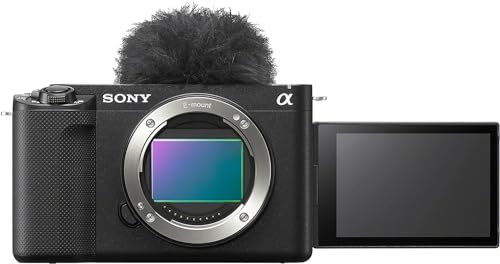
Sony ZV-E1 — Best full-frame travel video
Now the bag class — and the ZV-E1 is the lightest way into it. Its verified listing states the traveller’s bargain precisely: a full-frame body with a 12.1MP sensor, 4K up to 60p and 5-axis stabilisation, in the smallest full-frame video body Sony makes. Paired with one compact prime, the whole system rides in a sling that a mirrorless kit of a decade ago would have laughed at, and it delivers what no pocket camera can: full-frame low-light 4K, with the fast sensor readout that keeps travel pans honest and night streets clean.
The creator tooling from the reference guide travels with it — AI auto-framing for the solo presenter in a rented apartment, breathing-compensated focus, product modes for the market haul video — and on the road those automations substitute for the crew you did not bring. This is the camera for the working trip: the documentary segment, the client film, the channel whose quality must not dip just because the office is now a train compartment. Its files grade like a cinema camera’s because its sensor philosophy is one.
The luggage ledger still collects its tolls: lenses, however compact, are separate objects with caps and consequences; the single card slot asks backup discipline nightly; and the stills resolution forbids the cropping habits travel photographers use to rescue distant details. Pack it when video is the trip’s deliverable and the light will be difficult. The pockets above will handle the holidays.
Airports offer a footnote in its favour: the ZV-E1 kit passes security theatre with the least drama of any system here, its small lenses reading as a hobbyist’s rather than a production’s, and more than one documentary traveller has chosen it precisely for borders where a large rig invites questions, forms and delays. Discretion is a logistical feature, and on difficult itineraries it can be the decisive one.
- Carry class: small sling bag with one or two compact lenses
- Sensor: 12.1MP full-frame, video-optimised per the verified listing
- Video: 4K up to 60p, 5-axis in-body stabilisation
- Creator tools: AI auto-framing and presenter-focused modes
- Mount: Sony E — deep compact-prime selection
Strengths
- Full-frame night video at the lightest system weight here.
- Fast readout keeps travel pans and movement clean.
- Solo-creator automation replaces a travelling crew.
Trade-offs
- A bag is now mandatory — the pocket era ends here.
- Stills resolution limits cropping rescues.
- Single card slot demands nightly backup discipline.
Best for: working trips, documentary travel and low-light filmmakers. Not suited for: pocket-only packers or stills-led holidays.

Panasonic Lumix S5 II — Best system camera for serious trips
The S5 II is this guide’s defended concession: the heaviest, largest system here, admitted because for one traveller in five its virtues repay the bag. The verified listing restates them — 24.2MP full frame, phase hybrid autofocus, Active I.S. stabilisation and unlimited 4:2:2 10-bit recording. Translate those into travel terms: the stabilisation walks through old towns without a gimbal, the unlimited recording films the entire ceremony, concert or interview without a thermal negotiation, and the 10-bit files grade the trip’s mixed lighting — tungsten cafés, neon streets, alpine noon — into one coherent film back home.
L-Mount economics matter on the road more than in the studio: the alliance’s lenses let a traveller build a two-lens kit — a standard zoom and a fast prime — at a total weight and cost the premium mounts struggle to match, and every gram saved in glass is a gram of camera the itinerary forgives. For the long expedition with a film as its deliverable — the overland journey, the documentary trek, the sabbatical project — the S5 II is the system whose capabilities stop negotiating with the trip.
Be honest about the ledger’s other column: this camera plus two lenses is a dedicated camera bag, a carry-on negotiation and a daily weight on the shoulder that the pocket picks’ owners will never feel. It earns that weight only when the film matters as much as the journey. When it does, nothing lighter in this guide will do what it does; when it does not, everything lighter will do more, because it will be there.
Expedition crews add the cold-weather testimony: on long winter journeys the S5 II’s combination of stabilisation, sealing and unlimited recording has made it a quiet favourite for aurora and mountain work, where gloved operation and a camera that simply keeps rolling outweigh the gram-counting that rules summer travel. Weight judgments are seasonal, and the traveller whose year bends toward winter should re-read this review with January in mind.
- Carry class: dedicated small camera bag
- Sensor: 24.2MP full frame with phase hybrid AF per the verified listing
- Video: unlimited 4:2:2 10-bit recording
- Stabilisation: Active I.S. for gimbal-free walking shots
- Mount: L-Mount alliance — value-conscious travel glass
Strengths
- Unlimited 10-bit 4K for ceremonies and long events.
- Stabilisation removes the gimbal from the packing list.
- L-Mount lens value keeps the whole kit’s weight and cost sane.
Trade-offs
- The largest carry commitment in this guide.
- Overkill for trips where video is a garnish.
- Two-lens kits still demand bag discipline daily.
Best for: expedition filmmakers and sabbatical projects with a film deliverable. Not suited for: light packers or stills-only holidays.
Comparison Table
| Camera | Carry class | 4K character | Watch out for |
|---|---|---|---|
| Sony RX100 VII | Oversampled, long zoom | Night light, battery | |
| Canon G7 X Mark III | Creator-first, bright lens | Short zoom reach | |
| Sony ZV-1 II | Widest solo framing | No telephoto at all | |
| Fujifilm X100VI | Shoulder | Capable, stills-led | Fixed lens discipline |
| Sony ZV-E1 | Sling bag | Full-frame 4K60, low light | 12MP stills, one slot |
| Panasonic Lumix S5 II | Camera bag | Unlimited 10-bit | Heaviest commitment |
How Do You Choose Between the Best 4K Cameras Travel Shooters Actually Pack?
Answer with the trip’s hardest day, not its easiest. The itinerary that includes a ten-hour walking city, a sleeper train’s luggage rack and a mountain path on the same ticket has already chosen the pocket class — the only debate left is which pocket. The itinerary built around a base — one hotel, day trips, a car — can honour the bag class, because the camera’s weight is paid in short instalments rather than a daily lump sum. Travellers lie to themselves at exactly this junction, packing for the photographer they are at home and meeting the traveller they become by day four, when the heavy camera starts spending afternoons in the room.
Run the honest rehearsal: load the candidate kit into its bag, carry it through one ordinary full day at home — commute, errands, an evening walk — and notice when it starts being set down. That set-down moment is the camera’s true travel weight, and it predicts the holiday more faithfully than any scale. The picks above are ordered so that each class’s champion waits at the weight where its owner stops setting it down.
What Is the One-Lens Travel Discipline and Why Do Photographers Swear by It?
The X100VI’s fixed lens is the extreme form of a discipline many system travellers adopt voluntarily: one focal length for the whole trip. Its gifts are real — a coherent visual signature across the journey’s album, decisions made once rather than at every scene, and the peculiar attention that grows when the frame cannot be zoomed into compliance. Photographers return from one-lens trips with stronger bodies of work and lighter bags, a combination so suspicious that the rest of the industry keeps trying to disprove it and failing.
The discipline scales down gracefully: the pocket zooms can be lived at one end of their range for a day as an exercise, and the system pair can travel with a single prime mounted and the zoom left at the hotel for the walking hours. Try it for one day of your next trip. The photographs will tell you whether the constraint is a cage or a lens — and for a striking number of travellers, it turns out to be the sharpest tool they packed.
How Do You Keep Travel Footage Safe and Finished?
With a nightly ritual scaled to the trip’s ambition. Pocket-class shooters can lean on the phone: transfer the day’s keepers over the camera’s Wi-Fi, let the cloud carry them home, and sleep with the day’s work existing in two countries. System-class shooters need the grown-up version — card to laptop or drive, verified, with the second copy in a different bag — because a trip’s 4K archive is too large for hotel Wi-Fi heroics and too precious for a single card in a single pocket. Fifteen minutes nightly, traded against the catastrophe it prevents, is the best exchange rate in travel photography.
Finishing matters as much as safety. The travellers whose films exist — rather than whose footage exists — edit in transit: the train hour, the rainy afternoon, the flight home. Every camera in this guide feeds a phone editor adequately, and a trip edited by the return flight is a story; a trip awaiting an edit is an obligation. Pack the small tripod, the cable and the intention, and let the journey home be the edit suite it secretly wants to be.
What Should a Travel Kit Weigh, in Total, Charger and All?
Count honestly, because cameras travel as systems. The pocket class totals under half a kilogram with its spare battery and case — a figure that disappears into any itinerary ever written. The X100VI’s shoulder class sits not far above it. The ZV-E1 with one compact prime, charger and spare crosses into the low one-kilogram region; the S5 II with two lenses, charger and media lives nearer two. Set those totals against your total luggage allowance and your daily walking distance, and the right class usually identifies itself before image quality gets a vote — which is this guide’s thesis expressed as arithmetic.
Chargers deserve their own audit, because the modern traveller’s real luggage tax is electronic: camera charger, phone charger, laptop brick, cables for each. Several picks here charge over USB, which lets one power bank and one cable serve the whole electronic household, and that consolidation — unglamorous, unreviewed, decisive — is worth checking for any finalist. A camera that shares the phone’s charging ecosystem travels lighter than its body weight suggests; one that demands a proprietary dock travels heavier than its specifications confess.
How Do You Photograph People Respectfully While Travelling?
With the same rule in every country: the camera’s smallness is not a licence. Ask where asking is possible, accept refusal with the photograph unmade and the encounter intact, and remember that the pocket cameras’ discretion cuts both ways — it protects the scene’s naturalness and obliges the photographer’s conscience. Markets, ceremonies and children are the three subjects where travellers most often confuse access with entitlement; the photographers whose work endures are the ones whose subjects, shown the picture, would smile rather than flinch.
Technically, respect and quality align more often than beginners expect. The portrait made after a conversation, at the subject’s ease, outshines the snatched frame in everything but adrenaline. The X100VI’s conversation-opening charm, the pockets’ unthreatening size, the ZV-E1’s quiet operation — each pick here offers a temperament for the human side of travel, and choosing among them by the encounters you hope for is as rational as choosing by any specification in this guide.
How Should You Pack the Camera for Flights and Rough Roads?
Batteries travel in the cabin, always — regulations insist, and the camera should keep them company, because checked luggage is a temperature and impact regime no precision instrument deserves. The pocket class makes this effortless: camera in the jacket, battery in the pouch, and the flight is a non-event. System travellers earn their discipline here: lenses capped at both ends, bodies in padded wraps rather than a rigid case that eats the carry-on’s geometry, and the whole kit arranged so that security’s inspection does not become a juggling act over a hard floor.
On rough roads the enemies are vibration and dust, in that order. A camera riding in a padded bag inside the vehicle survives what a camera in the door pocket does not, and a humble zip bag between the camera and a dusty day pays for itself at the first lens inspection. Travellers who photograph for decades develop a tell: their gear looks used but never abused, because the protection rituals are boring, brief and absolute — the same rituals, scaled down, that the trail-camera and sports guides on this site keep recommending in their own dialects.
What Is the Best Focal Length Strategy for a Whole Trip?
Cover the story’s three distances and resist the fourth. Wide — for rooms, streets and the sense of being somewhere. Standard — for people, food and the trip’s daily texture. Moderate telephoto — for the compressed mountain layers, the shy detail, the face across the square. The fourth distance, the extreme telephoto of distant wildlife and sport, is the one that costs a kilogram and serves an afternoon; rent it at the destination, borrow it from the tour operator, or let it go, and the bag stays honest for the other twenty-nine days.
Map the picks onto that strategy and the guide’s logic completes itself: the RX100 VII covers all three distances from a pocket, which is why it tops a travel list despite conceding light to larger sensors. The G7 X and ZV-1 II cover the first two distances beautifully and concede the third. The X100VI perfects the second and redefines the first as an exercise. The system pair cover everything — at the price the comparison table states. There is no wrong answer here, only answers whose costs the traveller has or has not counted.
How Do You Come Home With a Story Instead of an Archive?
By editing with the ruthlessness of a traveller rather than the sentiment of a participant. Each evening, mark the day’s few frames that would survive a stranger’s indifference — the test is brutal and clarifying — and let the rest exist as backup rather than as burden. Photograph less as the trip matures: by the second week the experienced traveller shoots a third of the first week’s volume at three times the quality, because the eye has learned the trip’s actual subjects and stopped insuring against every possibility.
Sequence the story while the journey can still supply its missing chapters. The album or film needs an establishing wide, a human middle and a closing image, and travellers who review with that skeleton in mind can still go out and shoot the gap on the final evening. The camera that makes this possible is whichever one is still being carried in week two — the founding law of this guide, arriving, as it should, at the end of the argument as well as the beginning.
What About Phones — When Is the Phone Honestly Enough?
More often than camera guides enjoy admitting, and honesty here strengthens every other claim in this one. For the traveller whose photography is sharing — the family group chat, the social feed, the message home — a current phone is a superb travel camera that is already charged, already backed up and already in the pocket. The cameras in this guide earn their luggage only when the trip asks for what phones cannot give: real zoom reach, low-light files that survive printing, video that grades, or the deliberate photographic experience that is itself a reason some people travel.
Use the phone as the system’s scout and safety net regardless: it geotags the day, photographs the menus and timetables, and stands ready when the dedicated camera is packed, charging or simply too much for the moment. The mature travel kit is not camera versus phone but camera for the photographs and phone for everything else — and the traveller who assigns those roles clearly packs lighter and returns richer than the one still fighting the last decade’s war.
How Do Seasons and Destinations Rewrite the Choice?
A winter city break argues for light-hungry lenses and gloves-friendly controls — the G7 X’s bright glass and the ZV-E1’s low-light sensor rise; a summer island itinerary argues for pocket discretion and water-adjacent care, where the RX100’s zoom covers the boat trips and its size survives the beach bag. Safari and mountain wildlife invert the guide’s usual order entirely, because the telephoto distance stops being the fourth distance and becomes the first — on those trips, and only those, the system pair with a long lens, or a destination rental, outrank every pocket in this guide.
The habit to build is itinerary-first shopping: name the trip before naming the camera, and let companions, climate and transport vote alongside the sensor. Travellers who buy this way accumulate a small shelf of specialised tools across the years, each beloved on its own journeys. Travellers who buy by specification accumulate one heavy compromise that is almost right everywhere and exactly right nowhere — the most expensive outcome in travel photography, paid in money and in afternoons the camera spent in the room.
What Small Accessories Earn Their Grams on the Road?
Five, and only five, survive every audit this guide’s logic applies. A wrist strap for the pocket cameras, because the drop is the pocket class’s one true predator. A mini tripod the size of a pen, which turns hotel desks, café tables and rocks into the long-exposure and group-shot platform every trip eventually needs. A cloth and a small blower, because travel light is dusty light. A card reader that speaks directly to the phone, for the nightly transfer ritual. And a pouch — soft, unbranded, unremarkable — that lets any of these cameras ride in a day bag without announcing itself to a crowd or a baggage carousel.
Everything beyond those five must argue its grams against a named day of the itinerary. The gimbal argues for the working trip and loses on the holiday; the flash loses almost everywhere; the second system lens wins only when its focal length has a named subject waiting. Accessories bought by argument travel; accessories bought by anxiety accumulate, and the difference is visible in the bag by day three of any journey.
How Should Couples and Families Share One Travel Camera?
Choose for the least technical operator, because the shared camera’s archive is written by whoever is holding it when the moment happens — and the moments do not check credentials. This is the G7 X’s delegation virtue and the RX100’s automatic excellence earning their keep in real families: both produce honourable files in fully automatic hands, while the X100VI and the system pair reward — and require — the enthusiast’s attention. A household that contains one photographer and one happy snapper should buy the camera the snapper cannot defeat, and let the photographer enjoy the discipline of simplicity for a fortnight.
Agree the custody rhythm before departure: who carries it on which days, where it sleeps, whose pocket holds the spare battery. The small diplomacy prevents the large resentments — the camera that was always in the other bag becomes a travel story of the wrong kind. Shared cameras also solve the photographer’s oldest exclusion: with a camera anyone can operate, the person who documents every family journey finally appears in one.
How Do You Learn a New Travel Camera Before the Trip?
In the fortnight before departure, not in the departure lounge. Carry it through three ordinary days at home — the commute, the market, an evening with friends — and shoot the subjects your trip will actually contain: faces at café distance, streets at noon and dusk, one interior by window light. Review those files on the screen you will judge the trip by, and let the disappointments happen where the manual, the charger and the returns window all still live. The goal is a camera whose three essential operations — expose, focus, transfer — are muscle memory before the first foreign morning, because travel spends attention like currency and a new camera is an extravagant way to spend it.
Save the settings that survive those rehearsals into the camera’s custom mode if it offers one, photograph the camera’s serial number and your settings screens with your phone, and pack the charging cable you tested rather than the identical-looking stranger from the drawer. None of this is photography. All of it is what makes the photography possible at the pace a journey moves.
What Will You Print, Post and Keep — and How Should That Decide the Camera?
Work backwards from the wall. If the trip’s photographs are destined for a book, a wall or a portfolio, the file quality hierarchy reasserts itself and the X100VI’s resolution or the system pair’s light begin to outrank grams. If the destination is the family screen and the group chat, the pockets’ files are not merely sufficient but indistinguishable in situ from their heavier rivals’. Most travellers overbuy for a printing destiny they will never execute and underbuy for the carrying reality they will live daily — name the true destination of your photographs, in writing if necessary, and let that sentence arbitrate between this guide’s classes.
Keeping is the third destiny and the least discussed. A decade from now, the archive’s value will be its completeness and its findability, not its resolution: the trip where every day exists, labelled and backed up, outranks the trip of masterpieces with the middle missing. Every camera here can produce the complete archive; the traveller’s nightly ritual decides whether it happens. Choose the camera whose ritual you will actually perform in a small hotel room at midnight — and you have chosen correctly, whatever its class.
How Does Travel Video Differ From Travel Photography on the Same Trip?
Photography harvests instants; video occupies intervals, and the traveller feels the difference in their feet. A photograph asks for a viewpoint and a second; a film asks for a position, a duration and a silence — your own — while the scene performs. Trips have a finite budget of such intervals before companions begin to experience the camera as an absence, which is why the travellers whose films succeed ration their video to the scenes that move: water, markets, transport, weather, work. The still scenes they photograph, and the ratio keeps both the film and the friendships alive.
This is also why the creator picks’ automation matters more on the road than in the studio. Auto-framing, reliable eye focus and stabilisation that forgives a walking shot compress the interval a scene demands — the presenter talks for thirty seconds rather than directing for five minutes — and the trip resumes. Judge the video features in this guide by that measure, minutes of journey returned, and their rankings explain themselves.
Common Mistakes
The travel classic is packing the reference guide instead of this one: the flagship hybrid, three lenses and a gimbal, carried heroically for two days and resentfully for twelve, while the phone — the camera that was actually there — takes the trip’s real photographs. The second mistake is the opposite vanity: deciding the phone is enough, then meeting the northern lights, the safari morning or the old town at dusk with a device whose files cannot honour them. Between those vanities lies this guide’s whole argument — match the camera’s weight to the itinerary’s hardest day and its quality to the trip’s best light.
Logistics mistakes follow: no spare battery for a pocket camera that eats one daily, no backup habit until the card fails in week two, and lenses — for the system pair — chosen by home-studio logic rather than by the two focal lengths the road actually uses. Pack for the trip you booked, not the photographer you are at home.
Final Recommendation
For most travellers, the answer is the Sony RX100 VII: it is the camera that will be in your pocket at the moment the trip produces, with a zoom for the landmark and the wildlife and 4K for the film, and its luggage cost is a rounding error. Creators travelling to publish should take the Canon G7 X Mark III for its light and its streaming manners, or the ZV-1 II if the production is one person wide. Photographers should take the Fujifilm X100VI and accept its beautiful discipline.
One last calibration for the undecided: borrow or rent the finalist class for a weekend at home if you possibly can. Two days of carrying the pocket against the sling will settle arguments that a month of reading cannot, because the deciding variable in this entire guide — the weight your own days tolerate — is the one specification no review can measure for you. The right travel camera is the one whose absence from the bag feels, by the second morning, like leaving the house without your keys.
Take the full-frame pair only when the trip has a film-shaped deliverable: the ZV-E1 when the light will be low and the bag must stay small, the S5 II when the recording must never stop and the grading will be serious. Ranked by the suitcase, as promised — and every camera on this list, carried, will out-photograph the finer camera that stayed home.
Frequently Asked Questions
Is a pocket camera really enough for a once-in-a-lifetime trip?
For most travellers, genuinely yes — the RX100 VII’s combination of a 1-inch sensor, a 24–200mm zoom and oversampled 4K covers the overwhelming majority of travel subjects, from the dawn market to the last train home, at a quality phones cannot approach, and it does so while being present for all of them. The exceptions are specific and nameable: serious night work, professional video deliverables and wildlife that demands real telephoto. If your trip contains none of those, the pocket is not the compromise; it is the answer. And it is an answer that keeps working on the tenth trip as well as the first, because a camera this easy to carry becomes a habit rather than a decision — and habits, not decisions, are what fill archives.
How many batteries do I need for travel?
Pocket cameras: two, rotated daily without exception, because their compact cells are one-day propositions under holiday use from dawn to dinner. System cameras: two as well, with the charger living in the hotel rather than the day bag. The deeper rule is that a battery routine — charge nightly, swap at midday if the day is heavy — matters more than the count, and a power bank that the phone and camera can share is the modern traveller’s quiet insurance.
Cold destinations rewrite the arithmetic: mountain mornings and winter cities can take a visible share out of any lithium battery’s day, so the winter traveller carries the spare in an inside pocket, warmed by the body it serves, and treats the summer range printed in reviews as a fair-weather promise rather than a guarantee.
Should I shoot travel video in 4K or save space in HD?
Shoot the moments that matter in 4K — the cameras here all handle it, and the archive will thank you for a decade — and let the in-between clips live at whatever setting keeps the day flowing. Your future self, opening the folder in ten years, will not ask what the resolution was; they will ask whether the moment is there, and the traveller who kept the camera light enough to carry is the one who can answer yes. Storage discipline is nightly offloading rather than resolution rationing. The exception is the genuinely long, static recording, where HD’s endurance and file manners serve the traveller better than a 4K file nobody will grade.
What about travel insurance and security for the camera?
At the pocket end, the camera’s discretion is its security — it looks like nothing and lives against your body. At the system end, treat the kit as the asset it is: named on the travel insurance, serial numbers photographed, bag never unattended, and a strap worn across the body in crowds. A camera strap that does not advertise a brand is worth more than a lock in most cities you will visit.
Hotels deserve one specific habit: the camera sleeps in the closed bag, in the same place, every night, rather than migrating around the room’s surfaces. More travel cameras are lost to the traveller’s own morning — left on a bathroom shelf, under a café chair, beside a train seat — than to any thief, and a fixed sleeping place is the cheapest anti-loss system ever devised.
Can these cameras handle rain, dust and beaches?
The pocket trio and the X100VI are not weather-sealed expedition tools; they tolerate travel’s ordinary insults — a drizzle dash, a dusty road, a splash at the harbour wall — with basic care, a cloth and a dry pocket when the weather turns serious. The system pair’s bodies offer stronger sealing, lens-dependent. In all cases, the beach rules are eternal: sand is the enemy of every zoom mechanism, and the camera that goes to the shore goes in a sealed bag between shots.
Related Guides
Keep exploring: our guide to the best 4k cinema cameras, the best 8k cameras for future-proof capture, and the best 1080p capable cameras with headphone and microphone jack.



[…] exploring: the best 4k cameras travel shooters actually pack, our guide to the best 4k cinema cameras, and the best 8k cameras for maximum […]