What's inside
- Where to Buy
- Key Takeaways
- Quick Picks
- How We Chose These Picks
- Comparison
- How to Choose a Bridge Camera for Eyepiece Shooting
- Why Does Bright Sunlight Ruin Rear Screens but Not Eyepieces?
- How Does Bracing a Camera to Your Face Steady a Long Zoom?
- What Should Glasses Wearers Check Before Buying an Eyepiece Camera?
- How Long Does It Take to Get Used to Eyepiece Shooting?
- Common Mistakes When Buying a Viewfinder Bridge Camera
- Final Recommendation
- Frequently Asked Questions
- Related Guides
As an Amazon Associate I earn from qualifying purchases. This post may contain affiliate links at no extra cost to you.
widgetverdict.com is reader-supported. When you buy through links on our site, we may earn an affiliate commission.
Where to Buy
All six cameras are listed on Amazon, each under its own page. The Nikon COOLPIX P1100 bundle leads the set, and its product page is the place to check price on Amazon for the full kit with bag, tripod and filter set. Next, the Nikon COOLPIX P950 carries a bare listing title, so read its Amazon page carefully for the current figure and full description. The Panasonic 4K point and shoot (DC-FZ80D) shows its bundle-free price on its own listing. For the Sony RX10 IV, Amazon’s page holds today’s price for the fast-focus flagship of this group. The Sony HX400V listing is where to confirm what its 50x package costs now. And the Panasonic Lumix FZ85D bundle spells out its five-item kit on Amazon, price included, before you compare it with the rest.
Searching for the best bridge cameras with viewfinder usually begins with a frustration: a rear screen that washes to silver in sunlight, at the exact moment a bird, a boat or a grandchild does something worth photographing. An eyepiece solves that old problem in an old way. You raise the camera, the world goes quiet and bright inside a small window, and your own head shades the view. This guide gathers six bridge cameras bought largely for that experience, and it handles one awkward fact about them head-on, in the next paragraph.
Almost none of the listing titles below actually mention a viewfinder. Read them closely and you will find zoom figures, video resolutions, bundle contents and autofocus claims, but the eyepiece — the very feature organising this guide — goes unnamed by the sellers. That silence is itself useful information. It means the spec box in every review here records the viewfinder line honestly as not stated in the listing title, and the buying advice leans on what an eyepiece-centred shooting style demands from the rest of the camera: stability, reach, and controls that fall under the fingers while your eye stays at the window.
Why shoot through an eyepiece at all, in an age of excellent screens? Three reasons survive every technology cycle. Bright light defeats rear screens and never defeats an enclosed eyepiece. A camera braced against the face gains a third point of contact, steadying long zooms in a way no stabilisation menu fully replaces. And an eyepiece excludes the world, which changes the photographer’s attention: distractions at the frame’s edge vanish, and composition becomes a private act. The six cameras below were chosen by people who value those three things, and the reviews judge them in that spirit.
Key Takeaways
- No listing title in this set names its viewfinder, so every spec box records the eyepiece line with the standard not-stated wording; verify eyepiece details in the manufacturer documentation before ordering.
- The two Nikons bookend the information spectrum: the P950’s title is a single short line, while the P1100 bundle title inventories a bag, tripod, filters, charger and two memory cards.
- Sony’s RX10 IV makes the only autofocus speed claim here, 0.03 second, which matters greatly when an eye is at an eyepiece tracking movement.
- Panasonic appears twice with the same underlying camera family, the FZ80D/FZ85D, once as a plain 4K listing and once as an 18.1MP bundle with a stated 20-1200mm equivalent range.
- Eyepiece shooting and long zoom belong together: bracing a camera to the face is the cheapest stabilisation upgrade in photography, and every pick here zooms at least 25x.
Quick Picks
| Pick | Badge | Why it earns a place |
|---|---|---|
| Nikon COOLPIX P1100 bundle | Full kit for eyepiece days | The big-zoom Nikon sold with bag, tripod, filters, charger and two 64GB cards. |
| Nikon COOLPIX P950 | The quiet listing | A superzoom Nikon whose title says almost nothing, bought on the model’s eyepiece reputation. |
| Panasonic 4K point and shoot (DC-FZ80D) | 60x travel eyepiece | 4K video, 60X optical zoom and stabilisation in a travel and vlogging frame. |
| Sony RX10 IV | Speed at the eyepiece | 0.03 second autofocus with a 25x zoom, for subjects that will not wait. |
| Sony HX400V | 50x in a compact body | A long 50x optical zoom in Sony’s compact bridge shape. |
| Panasonic Lumix FZ85D bundle | Stated numbers, bundled | 18.1MP MOS sensor, 60x zoom to a 20-1200mm equivalent, 4K30 and Power O.I.S. |
How We Chose These Picks
The selection began with the shooting posture rather than the specification sheet. A viewfinder camera earns its place in a bag when its owner spends long sessions with an eye pressed to the body — watching a nest, following a match, waiting for light on a landscape — so the shortlist favoured bridge models with the reach and endurance for those sessions. Compact cameras with token zooms were excluded even when their eyepieces are pleasant, because an eyepiece you raise for a 5x lens solves a problem most photographers do not have.
Title honesty then shaped the presentation of every review. Because the sellers leave the eyepiece unnamed, this guide refuses to invent eyepiece resolutions, sizes or types for individual models. Where general knowledge of the class helps — for instance, that bridge cameras in this tier are built around electronic eyepieces as a category pattern — the prose says so as a pattern, plainly labelled, and never converts it into a per-model claim. Readers deserve to know exactly which facts came from the listing in front of us and which are context.
Bundle contents received unusual weight in this guide, for a practical reason. Eyepiece photographers work outdoors, in glare, for hours, and the accessories that support that work — a bag that shades the camera at rest, a tripod for long watches, spare cards for long days — are not luxuries. Two listings here bundle exactly those items, and the reviews credit them for it, while also warning that bundle contents must be confirmed on the live listing because kits change without renaming the camera.
Finally, the set was arranged to show the full spread of buying styles in this corner of the market: the fully-kitted Nikon, the nearly undescribed Nikon, the plainly listed Panasonic, the specification-rich Panasonic bundle, and two Sonys at opposite ends of the speed spectrum. A reader who understands why those six listings differ understands the viewfinder bridge market itself.

Nikon COOLPIX P1100 bundle — Full kit for eyepiece days
This P1100 listing sells an expedition rather than a camera alone. Alongside the camera itself, the title inventories a camera bag, photo software, two 64GB memory cards, a tripod, a filter kit and a charger. Read that list through the eyes of an eyepiece photographer and it stops looking like padding: the tripod is for the long, patient watches at full zoom, the second card is for the day that runs long, the bag is what the camera lives in between hides and harbour walls. The kit anticipates the way this class of camera is actually used.
The camera at the centre is Nikon’s superzoom flagship shape, the 26541 model code stated in the title, built around the premise that the photographer composes through the body rather than at arm’s length. The title does not repeat the zoom or video figures here, so the spec box below records those lines as the listing presents them and refers detailed confirmation to the manufacturer’s documentation — a discipline this guide applies to every pick, and one that matters most on bundle listings where the accessories crowd the camera’s own facts out of the headline.
Shooting style is where this Nikon justifies itself. An eyepiece session at extreme magnification is a physical discipline: the body tucked in, elbows down, the scene held in a small bright window while the minutes pass. A camera bought for that discipline benefits from arriving complete, and the included tripod in particular acknowledges that the longest reaches of a superzoom are tripod territory, whatever the marketing implies about handheld freedom.
For the photographer equipping from zero — no bag, no tripod, no spare cards in a drawer — this bundle is the most complete single purchase in the guide. For someone already equipped, the plain camera listings elsewhere in the market will read as better value, and the review of the P950 below shows the same family philosophy in its barest form.
- Model code: 26541, stated in the listing title
- Bundle contents: camera bag, photo software, 2x 64GB memory cards, tripod, filter kit, charger
- Viewfinder: Not stated in the listing title — verify with the manufacturer documentation
- Optical zoom: Not stated in the listing title — verify with the manufacturer documentation
- Video: Not stated in the listing title — verify with the manufacturer documentation
- Sensor resolution: Not stated in the listing title — verify with the manufacturer documentation
Strengths
- The tripod and twin cards in the box suit long eyepiece sessions from the first day.
- A bag and charger are included, so the outfit is complete without a second order.
- The model code 26541 is printed in the title, making exact-match verification easy.
Trade-offs
- The title omits the camera’s zoom, sensor and video figures entirely.
- Bundle items add cost that an already-equipped photographer does not need to pay.
- Filter kits in bundles vary, so the live listing must be checked before ordering.
Best for: a from-scratch superzoom outfit for outdoor eyepiece work, tripod included. Not suited for: an owner who already keeps a tripod, bag and spare cards, since the bundle charges again for equipment already on the shelf.
One caution governs this purchase: photograph the unboxing. Bundle listings occasionally substitute an accessory between order and delivery, and a quick phone picture of everything laid out on the table makes any later conversation with the seller simple. With that small ritual done, the kit can get on with its real job — being forgotten, item by item, in the boot of the car and the bottom of the bag, ready for the long bright days it was assembled for.
There is also a learning argument for beginning an eyepiece habit with a complete kit. New superzoom owners typically discover their needs one frustration at a time — the trembling frame that asks for the tripod, the full card that asks for the spare — and each discovery costs an outing. Arriving with the answers already in the bag compresses that education into the first weekend, letting the photographer’s attention go where it belongs: into the small window, and onto the subject holding still inside it.
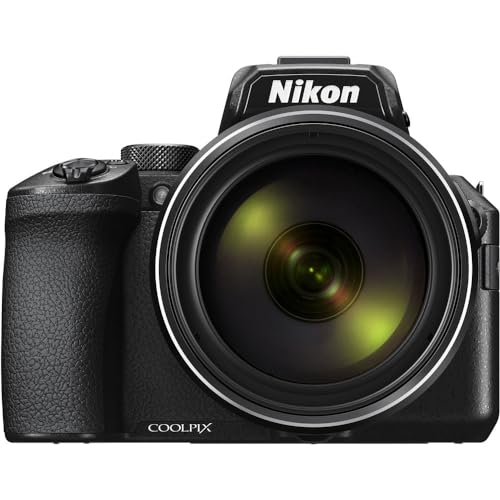
Nikon COOLPIX P950 — The quiet listing
No title in this guide says less than this one. Five words — Nikon COOLPIX P950 Digital Camera — and nothing else: no zoom figure, no bundle, no video claim, no sensor count. In a market where sellers shout, the silence is almost elegant, and it forces an honest review to do two things at once: describe the role this camera plays for eyepiece photographers as a class, and refuse to pin any specification on this listing that the listing itself does not state.
The P950’s role in the bridge landscape is well established by its position between Nikon’s smaller superzooms and the range-topping P1100: a long-zoom body in the SLR-shaped mould, designed for photographers who compose at the eyepiece and chase subjects at distance. That is context, offered as context. The spec box below therefore reads as a column of not-stated lines, which is not a judgement on the camera — it is a faithful portrait of this particular listing, and a reminder that the manufacturer’s documentation, not a marketplace headline, is where this model’s numbers should be confirmed.
Who buys a camera from a five-word title? Usually, someone who already knows. The P950 is a research-first purchase: its buyers arrive having read the documentation, watched the comparisons, and settled the question elsewhere, using the listing purely as a checkout. For that reader, the absence of bundle clutter and marketing adjectives is a virtue, and the absence of kit means the price being paid is for the camera alone — verify that on the live page, where the current figure and any included accessories will be shown.
Treated that way, this listing is the guide’s control sample: proof that a buying decision can rest on documentation and reputation rather than on a headline. Everyone else — anyone still comparing, still unsure — should read the fuller listings in this guide first, and return to this one only when the homework is done.
- Product name: Nikon COOLPIX P950 Digital Camera
- Viewfinder: Not stated in the listing title — verify with the manufacturer documentation
- Optical zoom: Not stated in the listing title — verify with the manufacturer documentation
- Sensor resolution: Not stated in the listing title — verify with the manufacturer documentation
- Video: Not stated in the listing title — verify with the manufacturer documentation
- Bundle contents: Not stated in the listing title — verify with the manufacturer documentation
Strengths
- A camera-only listing, with no bundle padding inflating the purchase.
- The P950 name carries a clear, researchable position in Nikon’s superzoom line.
- Nothing in the title overpromises, so nothing needs to be discounted as hype.
Trade-offs
- Every key specification must be confirmed in manufacturer documentation before buying.
- No accessories are named, so bag, cards and spares are separate purchases.
- First-time buyers get no guidance from the listing about what the camera suits.
Best for: a researched purchase by a photographer who has already settled on the P950 from documentation. Not suited for: comparison shopping from listing titles alone, because this title supplies no figures to compare.
The practical routine for this buy is simple and worth stating for every quiet listing in the market: open the manufacturer’s documentation in one tab and the listing in another, confirm the model name matches character for character, and check the live page for what the box contains on the day you order. Five careful minutes convert a five-word title from a gamble into a straightforward transaction, and the camera that arrives will be exactly the one the documentation described.
It is worth adding that quiet listings age differently from loud ones. A bundle can quietly change its contents; a software offer can expire; a card size can shrink. A listing that promises only a named camera has very little that can drift, which gives this P950 page a kind of stability the kitted listings cannot match. For a patient buyer watching for the right moment to purchase a known model, that stability is a genuine, if unglamorous, advantage.

Panasonic 4K point and shoot (DC-FZ80D) — 60x travel eyepiece
Panasonic’s listing describes a point and shoot digital camera for travel and vlogging, built around 4K, a 60X optical zoom and image stabilization, and the model code at the end — DC-FZ80D — identifies it as the FZ80D in plain clothes. For the eyepiece-minded reader, this is the travel branch of the viewfinder family: a camera carried all day through bright foreign streets, where a rear screen is at its weakest and an eyepiece earns its keep at every sunlit viewpoint.
The 60X zoom is the specification that defines the travel case. Sixty times magnification from a single fixed lens replaces a bag of alternatives, and it pairs naturally with eyepiece composition, because the longest settings are exactly where bracing the camera against the face pays for itself. Image stabilization, named in the title, works alongside that brace; the two together — electronic help and physical posture — are what make a 60x travel camera usable at the far end rather than merely impressive on paper.
Video at 4K serves the vlogging description in the title, and it hints at this camera’s double life: eyepiece for stills in harsh light, screen for video at arm’s length. Travellers who film as much as they photograph will recognise that rhythm immediately. The title gives no sensor figure and no eyepiece details, and the spec box records both gaps in the standard wording rather than borrowing numbers from the bundled FZ85D listing reviewed later in this guide, even though the family resemblance is strong.
As a travel purchase, this plain listing has a clarity the bundles lack: what you see described is the camera, and the accessories are your own affair. Photographers with a favourite bag and a drawer of cards may prefer it for exactly that reason.
- Model code: DC-FZ80D, stated in the listing title
- Optical zoom: 60X
- Video: 4K
- Stabilisation: image stabilization, as worded in the listing title
- Described uses: travel and vlogging
- Viewfinder: Not stated in the listing title — verify with the manufacturer documentation
- Sensor resolution: Not stated in the listing title — verify with the manufacturer documentation
Strengths
- A 60X zoom covers a whole holiday’s subjects with one fixed lens.
- 4K video supports the travel-and-vlogging role the title claims.
- The model code is printed, so the exact variant can be verified before ordering.
Trade-offs
- No megapixel figure appears in the title, so resolution checks need the documentation.
- No bundle is included, leaving bag and cards as separate decisions.
- The eyepiece itself is unnamed in the title despite organising this guide.
Best for: travellers who compose at an eyepiece in bright climates and film in 4K between stills. Not suited for: judging sensor resolution from the listing alone, since this title never states the figure.
Travel tests this class of camera in ways a home trial cannot: glare at altitude, dust on a viewpoint path, a battery asked to last a full day’s wandering. The FZ80D family’s long production run in this segment is part of its quiet appeal — a traveller can find advice, cases and familiarity for it almost anywhere. Buy it, carry it daily for a fortnight before the trip, and let any surprises happen at home, where they are cheap.
One habit separates travellers who return with sharp long-zoom pictures from those who return with regrets, and it costs nothing: every time the zoom passes the halfway mark, find something to lean on. A wall, a companion’s shoulder with permission, the camera bag itself set on a railing — any third support point transforms the far end of a 60x lens. The eyepiece brace starts the job, and the found support finishes it.

Sony RX10 IV — Speed at the eyepiece
Every guide has one pick that changes the terms of discussion, and here it is a number: 0.03 second. That is the autofocus speed Sony prints in this title, and for an eyepiece photographer it is the most consequential figure in the entire set, because an eyepiece commits you. With your eye at the window and the world narrowed to the frame, a subject that moves must be seized instantly or not at all — there is no stepping back to a big screen, no second glance. Autofocus that locks in three-hundredths of a second is what makes that committed style of shooting viable on moving subjects.
The zoom is 25x, the shortest reach in this guide, and the pairing is deliberate rather than deficient. Sony built the RX10 IV, model DSC-RX10M4 as the title notes, around responsiveness across a moderate range instead of spectacle at an extreme one. Birds in flight, dogs at the turn, a striker’s volley — these are subjects where the frame is filled by anticipation and the decisive variable is how fast the camera agrees with your eye. Twenty-five times magnification, instantly focused, outperforms a hundred times magnification still hunting.
The Cyber-shot branding and the model’s long tenure in this premium tier carry their own message: this is the eyepiece camera for photographers whose subjects refuse to pose. Nothing else in the title competes for attention — no bundle, no card, no software — and the spec box records the resulting gaps honestly, including the viewfinder line, which even Sony’s flagship listing leaves to the documentation.
Choose the RX10 IV if your eyepiece time is spent on action. Its premium positioning means the decision should be made with the live listing open and the documentation read, but for the photographer it suits, no other pick in this guide does its particular job.
- Autofocus: 0.03 Second Auto-Focus, as stated in the listing title
- Optical zoom: 25x
- Model code: DSC-RX10M4
- Viewfinder: Not stated in the listing title — verify with the manufacturer documentation
- Sensor resolution: Not stated in the listing title — verify with the manufacturer documentation
- Video: Not stated in the listing title — verify with the manufacturer documentation
Strengths
- The 0.03 second autofocus claim is unmatched anywhere else in this guide.
- A 25x range keeps the camera responsive and handlable during fast eyepiece work.
- The listing is camera-only, with no bundle padding to pay for.
Trade-offs
- Its 25x reach is less than half the zoom of the 60x Panasonics here.
- Sensor and video details are absent from the title and need documentation checks.
- It sits in the premium tier of this class, a commitment for a first bridge camera.
Best for: eyepiece tracking of fast subjects — flight, sport and play — where focus speed decides the frame. Not suited for: stationary subjects at extreme distance, where a 25x ceiling leaves a heron across a wide lake too small to fill the frame.
Owners of fast cameras develop a distinctive discipline: they pre-focus on the place where action will happen — the branch a bird returns to, the goalmouth, the bend in the track — and let the subject arrive inside an already-alert camera. The RX10 IV’s speed rewards that discipline lavishly, because the final lock, when the moment lands, is effectively instant. Photographers who learn that anticipation habit find their hit rate transformed, and they rarely go back to slower tools willingly.
There is a second, quieter benefit to that speed at an eyepiece: confidence changes posture. A photographer who trusts the focus stops jabbing at the shutter and starts waiting, camera raised and steady, which steadies the frame and calms the subject. Animals notice frantic movement; they tolerate a still figure with a camera at its face far longer. Speed, paradoxically, buys slowness — and slowness at an eyepiece is where the best wildlife frames in this class come from.

Sony HX400V — 50x in a compact body
Sony’s second entry in this guide could hardly differ more from its first. Where the RX10 IV shouts about speed, the HX400V title offers a single calm fact — a compact digital camera with 50x optical zoom, in black — and stops. That restraint suits the camera’s place in the market: a long-serving compact bridge design whose buyers typically want generous reach in a body smaller than the SLR-shaped flagships, for days when the big camera would stay at home.
Fifty times zoom in a compact body is a specific and appealing compromise. It covers the eyepiece photographer’s core territory — garden birds, zoo enclosures, coastal views, a stage from the back of a hall — while remaining the sort of camera that fits a jacket-adjacent bag and gets carried on spec. The eyepiece question matters here precisely because compact bridge bodies are screen-first in many buyers’ minds; the photographer who chooses this Sony for eyepiece use is choosing posture and glare-immunity in a smaller package.
Because the title is so brief, the spec box below is mostly not-stated lines, and the honest advice mirrors the P950’s: confirm sensor, video and eyepiece details in Sony’s documentation for the HX400V before ordering, and check the live listing for the current figure and box contents. The camera’s long presence in the market is an asset for that homework — documentation and owner experience for this model are abundant and easy to find.
In the shape of this guide, the HX400V is the modest, portable option: less reach than the Nikons and Panasonics at their peaks, less speed than its RX10 sibling, and less bulk than all of them — which, on the days when photography competes with everything else in a bag, is its own decisive specification.
- Optical zoom: 50x
- Body description: Compact Digital Camera, as worded in the listing title
- Colour: Black
- Viewfinder: Not stated in the listing title — verify with the manufacturer documentation
- Sensor resolution: Not stated in the listing title — verify with the manufacturer documentation
- Video: Not stated in the listing title — verify with the manufacturer documentation
- Stabilisation: Not stated in the listing title — verify with the manufacturer documentation
Strengths
- A 50x zoom in a compact body is the portability pick of this guide.
- The single-fact title makes the listing easy to verify against documentation.
- Its long market tenure means documentation and accessories are easy to source.
Trade-offs
- Almost every specification beyond zoom must be confirmed outside the listing.
- No stabilisation claim appears in the title, a notable gap at 50x.
- No bundle is offered, so the working kit is assembled by the buyer.
Best for: eyepiece shooters who prioritise a compact body that still reaches 50x. Not suited for: handheld shooting at full zoom in dull light without checking the documentation first, because this listing makes no stabilisation claim to rely on.
Compact bridge cameras reward a particular carrying habit: keep the camera at the top of the bag, lens cap off during a walk, screen dimmed. The HX400V’s appeal is readiness — it is the camera most likely in this guide to be present for the unplanned moment, the kingfisher that appears on a canal walk nobody brought a tripod for. Presence beats specification in those seconds, and a compact 50x body is a considered answer to the oldest problem in photography: the best camera is the one that came along.
Glasses wearers, who form a large share of eyepiece photographers, should add one check to the documentation list for this and every pick here: the eyepiece’s adjustment range and eye point, which decide whether the full frame is visible with spectacles on. Titles never print these figures, and they matter more to daily comfort than several specifications that titles do print — one more reason the documentation pass recommended throughout this guide is worth its ten minutes.

Panasonic Lumix FZ85D bundle — Stated numbers, bundled
After several listings that withhold their facts, this Panasonic bundle reads like a relief. The title states an 18.1MP MOS sensor, a 60x optical zoom spanning a 20-1200mm equivalent range, 4K30 video and Power O.I.S., then adds a five-item bundle built around a 64GB memory card and a cleaning kit. For an eyepiece photographer comparing listings at midnight, this is the rare page that answers most questions before the documentation is even opened.
The camera is the FZ85D, the FZ80D’s twin designation, and its specification describes the classic long-watch instrument: enormous reach for subjects across water or fields, stabilisation named and branded for the shake that reach invites, and 4K30 video for the moments that move. Composing those watches at an eyepiece is the natural way to work — hours pass, the light changes, and the small bright window keeps the subject framed while the rest of the scene falls away.
The bundle’s cleaning kit deserves its mention, because eyepiece and outdoor work soil cameras in a specific way: the eyepiece cup gathers dust, the front element gathers spray and fingerprints from being carried at the ready. A kit in the box acknowledges that reality. The 64GB card, meanwhile, is correctly sized for a camera whose owner shoots bursts at distant subjects and deletes later — the standard workflow at the long end of a 60x lens.
Between this listing and the plain DC-FZ80D listing reviewed earlier, the choice is packaging rather than camera: numbers stated and kit included here, bare camera there. Eyepiece buyers who want the fullest information at the point of purchase will land on this one.
- Sensor: 18.1MP MOS Sensor
- Optical zoom: 60x, 20-1200mm Equivalent
- Video: 4K30 Video
- Stabilisation: Power O.I.S.
- Bundle: 64GB Memory Card, Cleaning Kit and More (5 Items)
- Viewfinder: Not stated in the listing title — verify with the manufacturer documentation
Strengths
- The fullest specification in the guide: sensor, range, video and stabilisation all stated.
- Power O.I.S. directly supports the braced, eyepiece style at 60x.
- A 64GB card and cleaning kit match the real workflow of outdoor long-zoom work.
Trade-offs
- Even this complete title leaves the viewfinder itself unnamed.
- Bundle contents beyond the card and kit are summarised as more, requiring a listing check.
- The 20-1200mm span is an equivalent figure, which newcomers sometimes misread as physical lens size.
Best for: an eyepiece photographer who wants specifications stated up front and a starter kit in the box. Not suited for: close-range indoor events as the main use, because a 20-1200mm instrument is built for distance and its wide end is its shortest story.
A final note on the equivalent figure, since it confuses more buyers than any other line in this guide: 20-1200mm equivalent describes the field of view the lens delivers, translated into the familiar full-frame scale. It is the right number for judging what the camera sees — a very wide 20mm to a very long 1200mm — and the wrong number for judging the lens’s physical size, which remains that of a compact bridge barrel you can wrap two hands around. Read it as a promise about pictures, not about hardware, and it is an honest one.
Set beside its plain-listed twin earlier in this guide, this bundle also demonstrates how the same camera can serve two different buyers equally well. The twin listing suits the equipped photographer; this one suits the starter. Neither is the better camera — they are the same instrument wearing different packaging — and recognising that pattern is the single most useful skill a marketplace shopper can develop in this category.
Comparison
| Camera | Zoom stated | Video stated | Headline fact | Viewfinder in title |
|---|---|---|---|---|
| Nikon COOLPIX P1100 bundle | Not stated in the listing title | Not stated in the listing title | Tripod, filters and two 64GB cards bundled | Not stated in the listing title |
| Nikon COOLPIX P950 | Not stated in the listing title | Not stated in the listing title | Camera-only listing, five-word title | Not stated in the listing title |
| Panasonic DC-FZ80D | 60X | 4K | Travel and vlogging point and shoot | Not stated in the listing title |
| Sony RX10 IV | 25x | Not stated in the listing title | 0.03 second autofocus | Not stated in the listing title |
| Sony HX400V | 50x | Not stated in the listing title | Compact body | Not stated in the listing title |
| Panasonic Lumix FZ85D bundle | 60x (20-1200mm equivalent) | 4K30 | 18.1MP MOS sensor, Power O.I.S. | Not stated in the listing title |
How to Choose a Bridge Camera for Eyepiece Shooting
Begin with your light, not with a model name. Eyepiece shooting earns its premium in glare — midday coasts, snowfields, water, pale deserts — so count how much of your photography happens in those conditions. If most of your photography happens in those conditions, the eyepiece is your primary interface and should drive the whole purchase. If your work is mostly overcast woodland and indoor events, the eyepiece is a pleasant extra, and the other axes in this guide — reach, speed, bundle — deserve the deciding votes instead.
Next, match the camera to your subject’s behaviour. Patient subjects at distance — nests, landmarks, anchored boats — reward reach and stability, pointing toward the 60x Panasonics or the kitted Nikon. Subjects that move on their own schedule reward focus speed above all, and the RX10 IV’s stated 0.03 second autofocus stands alone in this set for that work. Subjects encountered opportunistically on walks reward presence, which is the compact HX400V’s whole argument. Naming the behaviour honestly prevents the common error of buying reach for action or speed for stillness.
Then do the documentation pass this guide keeps recommending, because the eyepiece is precisely where listings are silent. Open each candidate’s manufacturer documentation and find the eyepiece type, its resolution if published, and its eye point if you wear glasses. Ten minutes there will tell you more about your daily experience of the camera than an hour of listing comparison, since the titles in this entire category decline to describe the feature you are buying.
Do not skip the question of session length, either. Eyepiece cameras are bought for watches that last hours, and hours multiply small ergonomic facts — the weight carried at the face, the position of the zoom control under a finger that cannot leave the grip, the ease of swapping a card with cold hands. A camera that delights in a five-minute shop demonstration can tire its owner across a dawn chorus. Wherever possible, judge candidates by imagining the third hour of use, not the third minute, and favour the body whose controls and balance sound sustainable across that span.
Finally, audit what you already own before choosing a listing. A photographer with a tripod, cards and a good bag gains nothing from the P1100 bundle’s completeness and should price the camera-only listings against it. A photographer starting from nothing should do the reverse arithmetic, adding the cost of the missing kit to every bare listing until the comparison is honest. The camera is the same; the true price of using it is not.
Why Does Bright Sunlight Ruin Rear Screens but Not Eyepieces?
A rear screen competes with the sun for your eyes, and it loses on physics: ambient light floods the panel faster than its backlight can assert the image, contrast collapses, and colours wash toward grey. Photographers respond by guessing — shading the screen with a hand, tilting the camera, reviewing shots later in shadow — and every guess costs frames. An enclosed eyepiece removes the contest entirely. The small display inside sits in permanent shade, lit only by its own image, so the scene you compose at noon looks the same as the scene at dusk.
That consistency has a subtler benefit than visibility alone. Exposure judgement depends on seeing the preview honestly, and a screen whose brightness swings with the weather teaches its owner to distrust every preview. An eyepiece’s stable little window restores that trust, which is why photographers who switch to eyepiece-first shooting often report that their exposure consistency improved before their composition did. The tool changed less than the feedback loop did.
How Does Bracing a Camera to Your Face Steady a Long Zoom?
A camera held at arm’s length is a weight on two levers, free to sway in every direction your pulse and breathing suggest. Pressed to the face, the same camera gains a third support point, and the head itself — heavy, stable, and equipped with its own fine stabilising reflexes — becomes part of the mount. At moderate zooms the difference is a comfort; at 60x, where a fraction of a degree moves the frame by metres at the subject, it is the difference between a usable shot and an abandoned one.
Technique completes what posture starts. Tuck the elbows into the ribs rather than winging them out, let the strap take tension if you use one, and time the shutter press to the quiet bottom of a breath. Combined with the stabilisation systems named in several titles here — Power O.I.S. on the Panasonic bundle, image stabilization on its twin listing — a braced eyepiece hold routinely buys several stops of effective steadiness, which at long zoom translates directly into lower sensitivity settings and cleaner files.
What Should Glasses Wearers Check Before Buying an Eyepiece Camera?
Two figures decide comfort, and neither appears in any title in this guide. The first is eye point — how far behind the eyepiece your eye can sit while still seeing the whole frame — because spectacles hold the eye back by exactly the distance that matters. The second is the dioptre adjustment range, which lets some wearers shoot without glasses at all by correcting the eyepiece to their prescription. Both figures live in manufacturer documentation and in shop demonstrations, and both deserve checking before money moves.
Practical workarounds exist when the fit is imperfect. Folding rubber eyecups, shooting with contact lenses on big days, and reviewing on the rear screen while composing at the eyepiece all soften the problem. But they are compensations, and a photographer who wears glasses permanently should treat eyepiece ergonomics as a first-order buying criterion, tested in person where possible, rather than discovering a vignetted little window after the return window closes.
How Long Does It Take to Get Used to Eyepiece Shooting?
About a fortnight of regular outings, judging by the pattern most converts describe. The first sessions feel slower than screen shooting: the camera must come up to the face, the eye must find the window, and the world outside the frame disappears, which initially feels like losing information rather than gaining focus. Photographers who persist through those sessions report a crossover point where the eyepiece becomes the faster tool, because framing decisions happen inside a private, distraction-free view and the hands learn the controls by touch while the eye never leaves the subject.
There is a social dimension to the apprenticeship as well, worth knowing in advance. A photographer with a camera pressed to their face looks, to bystanders and to wildlife alike, like a person aiming at something specific, and that reads as more serious — sometimes more welcome, sometimes less — than a person holding a screen at arm’s length. Street photographers learn to lower the camera and smile at the right moments; wildlife photographers learn that a raised, still figure is tolerated while a moving one is not. The eyepiece changes how the world sees you while you see the world, and settling into that exchange is part of the fortnight’s education.
Two exercises shorten the apprenticeship. The first is a seated watch — an hour at a harbour, a feeding station or a sports field — where the camera stays at the face for long stretches and the muscles of the posture learn themselves. The second is a walk shot entirely through the eyepiece, including shots that a screen would have made easier, purely to build the raising-and-finding reflex. After both, most photographers stop thinking about the eyepiece at all, which is the true sign the habit has formed: the window becomes transparent, and only the subject remains.
Common Mistakes When Buying a Viewfinder Bridge Camera
The defining mistake in this category is assuming the listing describes the eyepiece. As this guide’s spec boxes demonstrate at length, titles in this market simply do not mention it — not its type, not its size, not its resolution. A buyer who orders on the assumption that an unnamed eyepiece must be a good one has outsourced the most important decision of the purchase to hope. Read the documentation, or handle the camera, before committing.
A second mistake is buying the bundle without pricing the parts. Kits like the P1100’s can be excellent value or quiet padding, and the difference is only visible if the tripod, cards and bag are priced separately and compared. The same discipline in reverse catches the opposite error: rejecting a bundle as padding when its contents are precisely the items a new owner would buy within the month anyway.
Third, photographers over-buy reach for eyepiece work and under-buy speed. An eyepiece commits your attention to a narrow window, and subjects crossing that window at 125x-equivalent fields of view cross it very fast indeed. Many owners discover that a responsive 25x, like the Sony here, produces more keepers of moving subjects than an extreme zoom they cannot swing onto the action in time. Match the magnification to the subject’s pace, not to the landscape’s size.
A fifth mistake is subtler: judging an eyepiece camera entirely by a bright showroom or a bright product page. The eyepiece’s virtues appear outdoors, at noon, on water and pale ground, and its drawbacks — a smaller apparent view than a big screen, the need to raise the camera for every glance — appear in armchairs and cafés. Buyers who test only in the second set of places systematically underrate the tool. If a shop demonstration is all you can manage, at least stand facing its brightest window while you compose, and notice how the little shaded view inside the eyepiece refuses to wash out. That single observation predicts real-world satisfaction better than any specification parade.
Fourth, do not ignore the screen you are supposedly replacing. Every camera here still reviews pictures, navigates menus and shoots video on its rear display, so a model whose screen you dislike will irritate you daily even if its eyepiece delights you. The eyepiece is the headline of this guide, not the whole of any camera in it.
Final Recommendation
For the fullest information at the point of purchase, the Panasonic FZ85D bundle leads this guide: sensor, range, video and stabilisation all stated, with a card and cleaning kit in the box. For moving subjects, nothing here answers like the Sony RX10 IV and its 0.03 second autofocus claim. The kitted P1100 suits the from-scratch expedition buyer, the P950 the researched minimalist, the plain FZ80D listing the travelling minimalist, and the HX400V the photographer who values a compact body above peak figures. Whichever you choose, do the one thing this guide has repeated in six different voices: open the manufacturer documentation and read the eyepiece section before you pay, because the feature that brought you here is the one feature no seller in this set describes — and the photographer who verifies it in advance is the one composing happily at noon, in full glare, while the screen-only crowd squints and guesses.
Frequently Asked Questions
Do all bridge cameras have a viewfinder?
No. The bridge shape only guarantees a fixed long-zoom lens and SLR-like styling; some models in the wider market are screen-only. That is exactly why this guide treats the eyepiece as a documentation question for every pick rather than assuming it from the body style.
Why do the listings not mention the viewfinder?
Marketplace titles are written around searchable numbers — zoom, megapixels, video resolution, bundle contents — and eyepiece specifications are harder to compress into a headline. The information exists, but it lives in manufacturer documentation, which is where this guide directs every reader to confirm it.
Is an eyepiece really steadier than a screen for long zoom?
Yes, measurably in practice. Bracing the camera against the face adds a third support point and recruits the head’s stability, which matters more as magnification rises. Combined with a named stabilisation system, it is the cheapest sharpness upgrade available to a superzoom owner.
Can I use an eyepiece camera if I wear glasses?
Usually, yes — but check the eye point and dioptre range in the documentation first. A generous eye point lets glasses wearers see the full frame, and a dioptre adjustment lets some shoot without glasses. These two figures decide comfort more than any headline specification.
Which of these cameras is best for fast-moving subjects at the eyepiece?
The Sony RX10 IV, on the strength of the only autofocus speed claim in the set: 0.03 second, printed in its title. For stationary subjects at greater distances, the 60x Panasonics reach further, so the choice follows the subject’s behaviour.
Related Guides
Three neighbouring guides continue the threads this one leaves open. Readers who arrived here from a first-camera search should compare this set with the best bridge super zoom cameras, where reach alone sets the order. Those whose eyepiece sessions run into the evening will find the light-gathering argument laid out in the best low light bridge cameras, ranked by sensor size. And photographers who care most about what the file looks like afterwards should finish with the best image quality bridge cameras, judged on sensor, lens and processing.


