What's inside
- Where to Buy
- Key Takeaways
- Quick Picks
- How the picks were chosen
- Comparison Table
- Which Sony body fits your kind of video work?
- Log footage, LUTs and an honest colour workflow
- Rigging, audio and the production around the body
- Frame rates, slow motion and delivery formats explained plainly
- Common Mistakes
- Frequently Asked Questions
- Final Recommendation
As an Amazon Associate I earn from qualifying purchases. This post may contain affiliate links at no extra cost to you.
[SITE_DOMAIN] is reader-supported. When you buy through links on our site, we may earn an affiliate commission at no extra cost to you. Prices and availability change; check the Amazon listing for the current details.
Where to Buy
Sony ZV-E1 Body Black — Check price on Amazon
Sony a7S III Body — Check price on Amazon
Sony Alpha FX3 Cinema Line Camera — Check price on Amazon
Sony FX30 Body — Check price on Amazon
Sony a7 IV Body — Check price on Amazon
Sony a6700 Body — Check price on Amazon
All six listings are body-only, so every total in this guide assumes an E-mount lens is funded separately; the reviews state what each title does and does not claim.
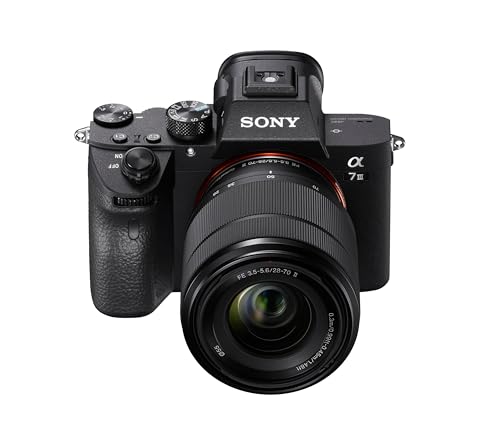
The best sony mirrorless cameras for video are not simply Sony’s best cameras with a record button; they are bodies whose design decisions — sensor resolution chosen for clean low-light footage, cinema-line ergonomics, log shooting and LUT handling stated in the listing — serve moving images first. Sony’s range makes the split unusually visible. Three of the six bodies here are video-first instruments: the ZV-E1 built around a 12.1MP full-frame sensor and 4K up to 60p, the a7S III from the sensitivity-led S line, and the FX3 from the Cinema Line. The FX30 carries the Cinema Line idea down to a Super 35 sensor. The a7 IV and a6700 are hybrids, stills cameras whose video capability is strong enough to anchor a mixed practice.
Choosing among them starts with an honest account of the work. A solo creator filming product pieces and travel films at a desk and on location needs different things from a wedding videographer shooting long ceremonies in dim halls, and both differ from a hybrid photographer who films client clips between stills. Sensor size, stated recording figures and body philosophy divide this set more meaningfully than price tier does, and the reviews below argue from what each listing title actually states — no invented bit depths, no assumed recording limits, no frame rates the title does not print.
That discipline matters especially in video, where marketing vocabulary runs ahead of specification. Where a title states a figure — the ZV-E1’s 4K up to 60p and 5-axis IBIS, the FX30’s 20.1 MP effective-for-movies sensor, the a6700’s log shooting and LUT handling — the review builds on it. Where a title is silent, the spec box records the silence with the verification line, and the review discusses the body’s documented positioning instead. Readers comparing across brands as well should look at our wider survey of dSLR and Mirrorless Cameras for Video, which sets these Sony bodies against the DSLR tradition and rival mirrorless systems.
Key Takeaways
- Three bodies are video-first by design: ZV-E1, a7S III and the Cinema Line FX3; the FX30 brings the Cinema Line approach to Super 35.
- The ZV-E1 title states the most complete video brief here: 12.1MP full-frame Exmor R CMOS, Bionz XR, 4K up to 60p and 5-axis IBIS.
- The a6700 is the only title here stating log shooting and LUT handling outright, a grading-workflow signal in a 26MP APS-C body.
- The a7 IV is the hybrid anchor: a full-frame interchangeable lens body whose title leads with stills language, suiting mixed practices.
- All six are body-only E-mount listings, so lens choice — and the crop behaviour of APS-C versus full-frame — shapes every kit.
- Titles for the a7S III and FX3 state positioning rather than recording figures, so their exact video specifications need verification in Sony documentation.
Quick Picks
| Pick | Badge | Why it made the cut |
|---|---|---|
| Sony ZV-E1 Body Black | Full-frame creator flagship | 12.1MP full-frame sensor, 4K up to 60p, 5-axis IBIS and the Bionz XR processor in a video-led body. |
| Sony a7S III Body | Low-light video specialist | The S-line full-frame body with an Exmor R BSI CMOS sensor, built around sensitivity-led video work. |
| Sony Alpha FX3 Cinema Line Camera | Cinema Line full-frame body | Sony’s full-frame Cinema Line camera, designed for film sets rather than photo assignments. |
| Sony FX30 Body | Cinema Line on Super 35 | 20.1 MP Exmor R APS-C sensor effective for movies, in a Cinema Line body at a smaller format. |
| Sony a7 IV Body | The hybrid all-rounder | Full-frame interchangeable lens body for practices that split time between stills and video. |
| Sony a6700 Body | Compact APS-C hybrid | 26MP sensor, 4K video, log shooting, LUT handling and vlog friendly functions. |
How the picks were chosen
Sony’s video range rewards a structural reading. The company sells video capability in three distinct philosophies: the ZV line, designed for creators who film themselves and their subjects at close range; the Cinema Line, designed for film production habits; and the Alpha hybrid line, designed for photographers who also film. This selection includes the strongest representative of each philosophy at full-frame, then adds the two APS-C bodies — FX30 and a6700 — that bring the same philosophies to a smaller, lighter, less expensive format. The result is a set where the real question is never which body is best, but which philosophy matches the work.
Listing titles were treated as the evidentiary ceiling. The ZV-E1 and a6700 titles are generous with figures and features, and their reviews are correspondingly specific. The a7S III, FX3 and a7 IV titles are terse, and their reviews say so, arguing from documented line positioning — S for sensitivity, FX for cinema, the IV as the hybrid anchor — while directing readers to Sony’s documentation for the exact recording figures. That asymmetry is honest: a buying guide should reflect what a listing actually tells a buyer standing at the point of purchase.
One further selection principle deserves stating: no body was included merely for being new or merely for being expensive. Video capability does not improve in a straight line with price, because the money buys different things in different lines — sensitivity in the S line, production design in the Cinema Line, versatility in the hybrids, creator ergonomics in the ZV line. A cheaper body in the right line routinely out-films a costlier body in the wrong one for a given brief, and the reviews argue in those terms throughout, treating tier as a fact about positioning rather than as a ranking of worth.
Stills capability was not ignored, because many video-led buyers still shoot photographs for thumbnails, behind-the-scenes galleries and client extras. The hybrids carry that argument most strongly, but even the video-first bodies here are interchangeable lens cameras on the E mount, sharing one of the deepest lens catalogues in the industry — a structural advantage that compounds over years of kit building. Budget readers should also know the stabilised entry end of the wider market exists; our guide to mirrorless Cameras With Image Stabilization for Less Than $500 covers the older bodies that bring in-body stabilization to tight budgets, though none of them matches the video depth of the Sony bodies reviewed here.
Sony ZV-E1 Body Black — full-frame creator flagship
Badge: Full-frame creator flagship
Spec box
- Format: Full-frame Exmor R CMOS sensor
- Sensor resolution: 12.1MP
- Processor: Bionz XR
- Video: 4K up to 60p
- Stabilization: 5-axis IBIS
- Mount: E-mount
- Body configuration: Body only, black
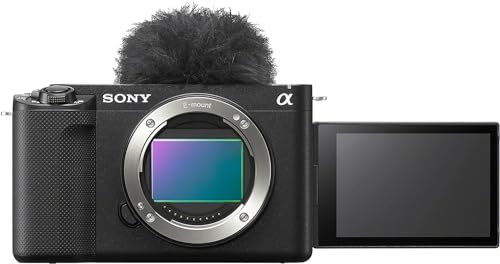
The ZV-E1 title is the most complete video brief in this guide: a 12.1MP full-frame Exmor R CMOS sensor, the Bionz XR processor, 4K up to 60p, E-mount and 5-axis IBIS, all stated outright. Start with the sensor resolution, because 12.1MP on a full-frame sensor is a deliberate video decision rather than a compromise. A 4K frame needs roughly eight megapixels; a sensor in this class devotes large photosites to each pixel of the image, which is the physical basis for clean footage in dim light and for the gentle highlight behaviour filmmakers prize. Photographers counting megapixels will find the number low. Videographers who have fought noise in a dark reception hall will find it exactly right.
4K up to 60p, as stated, covers the two frame-rate worlds most creators live in: standard rates for delivery and 60p for smooth slow motion when conformed to a slower timeline or for high-fluidity content. The 5-axis IBIS stated in the title supports the handheld, walking, desk-side way creators actually film, steadying the small movements that make unstabilised footage feel amateur. Combined with the ZV line’s creator-first design philosophy — a body conceived around filming yourself and your subjects at conversational distances — the ZV-E1 presents the most coherent solo-creator proposition in this set: full-frame image character, stated stabilization, stated 4K range, no stills-first compromises demanded.
The honest limits follow from the same choices. Twelve megapixels is a video resolution; stills from this body will serve web and social delivery comfortably but will not support the aggressive cropping or large printing that a high-resolution hybrid allows, so a practice that sells stills should read the a7 IV review below with care. The title also states no higher frame rates and no recording figures beyond 4K 60p, so filmmakers whose work demands more should verify the full specification in Sony’s documentation and compare the Cinema Line bodies, whose titles trade stated figures for production positioning.
As a body-only E-mount purchase, the ZV-E1 invites a lens plan built for video: a versatile standard zoom for run-and-gun days and a fast prime for interviews and low-light pieces covers most creator work. Its black body listing keeps the decision simple. For the creator whose output is overwhelmingly moving images and whose stills needs are incidental, this is the body in the set designed from a blank page for exactly that shape of work.
Strengths
- Stated 12.1MP full-frame sensor is sized for video, favouring clean low-light footage over stills resolution.
- 4K up to 60p and 5-axis IBIS are both stated in the title, covering delivery rates, slow motion and handheld work.
- ZV-line creator-first design suits solo filming at close range.
Trade-offs
- 12.1MP limits stills cropping and large-print work compared with the hybrids here.
- The title states no recording figures beyond 4K up to 60p, so advanced video specifications need verification.
- Body only, so the first E-mount lens is a separate purchase.
Best for: video-led creation centres on this body’s stated 12.1MP full-frame sensor, 4K 60p and 5-axis stabilization.
Not suited for: high-resolution stills as a co-equal output sit outside the brief, since the sensor is specified for video first.
Creators filming full-frame can Check price on Amazon for the ZV-E1 body in black and budget a fast E-mount prime beside it.

Sony a7S III Body — low-light video specialist
Badge: Low-light video specialist
Spec box
- Format: Full-frame
- Sensor: Exmor R BSI CMOS sensor
- Body configuration: Body only, black
- Sensor resolution: Not stated in the listing title – verify with the manufacturer documentation
- Video specification: Not stated in the listing title – verify with the manufacturer documentation
- Stabilization: Not stated in the listing title – verify with the manufacturer documentation
Sony’s title for the a7S III states almost nothing: Alpha a7S III, full-frame mirrorless camera body in black, Exmor R BSI CMOS sensor. No resolution, no frame rate, no codec. What the title does state, through the model name itself, is lineage. The S line in Sony’s Alpha range is the sensitivity line — the bodies whose sensors are specified for low-light video rather than for stills resolution — and the a7S III is that line’s full-frame flagship expression. Buyers who know the line need no further introduction; buyers who do not should understand that the S badge is a promise about behaviour in the dark, and that every other figure should be verified in Sony’s documentation before purchase.
The working case for a sensitivity-led body is concrete. Weddings move into candlelit halls. Documentary interviews happen in available light because lighting them would change them. Music, theatre and evening events punish cameras that turn shadow detail into noise, and a sensor designed around large photosites and clean high-sensitivity output is the difference between footage that grades gracefully and footage that fights the editor. The BSI designation in the title — backside-illuminated sensor architecture — is the one technical detail Sony chose to print, and it belongs to the same story, since BSI designs support the light-gathering efficiency the S line is built on.
Because the title withholds the recording specification, this review will not recite frame rates or bit depths from memory. The practical consequence for the buyer is a two-step decision. First, decide whether the S philosophy — video sensitivity prioritised over stills resolution — matches the work; for low-light video practices it usually does, emphatically. Second, verify the exact recording figures, stabilization details and media requirements in the manufacturer documentation, because a body bought for professional video must match the production’s delivery specification precisely, and the listing alone does not document it.
Within this set, the a7S III is the specialist’s specialist: less of a creator’s desk camera than the ZV-E1, less of a set camera than the FX3, and the body whose reputation rests on what it sees in the dark. Stills photographers should note that the S philosophy trades stills resolution away; hybrid practices should compare the a7 IV. But for the videographer whose defining problem is light — its absence, its awkward colour, its refusal to be controlled — the a7S III remains the Sony body built around that exact problem.
Strengths
- The S-line positioning commits the body to low-light video sensitivity above all else.
- Exmor R BSI CMOS sensor is stated in the title, supporting the light-gathering brief.
- Full-frame format delivers the shallow depth of field and low-light character filmmakers expect.
Trade-offs
- The title states no recording figures, so the full video specification must be verified before purchase.
- The S philosophy trades stills resolution for sensitivity, limiting stills-led use.
- Body only, with E-mount lenses a separate investment.
Best for: low-light video work is the home ground of this sensitivity-led S-line body on a full-frame sensor.
Not suited for: documented recording figures are absent from the listing itself, since this title states positioning and sensor type only.
Videographers who live in dim venues can Check price on Amazon on the a7S III body and confirm its full recording specification in Sony’s documentation in parallel.

Sony Alpha FX3 Cinema Line Camera — cinema line full-frame body
Badge: Cinema Line full-frame body
Spec box
- Format: Full-frame
- Line: Cinema Line camera, ILME-FX3
- Sensor resolution: Not stated in the listing title – verify with the manufacturer documentation
- Video specification: Not stated in the listing title – verify with the manufacturer documentation
- Stabilization: Not stated in the listing title – verify with the manufacturer documentation
- Body configuration: Camera body, per the listing title
The FX3 title is even terser than the a7S III’s: Sony Alpha FX3, model ILME-FX3, full-frame Cinema Line camera. Three facts, and the middle one carries the meaning. Cinema Line is Sony’s designation for bodies designed around film production rather than photography — bodies whose ergonomics, mounting points, tally behaviour and workflow assumptions come from sets, where a camera is rigged, caged, monitored and operated as part of a crew’s system rather than held to a photographer’s eye. The FX3 is the compact full-frame expression of that idea, and its natural comparison in this guide is not the hybrids but its smaller sibling, the FX30.
What does the Cinema Line philosophy buy a working videographer? It buys a body that expects to be built out: mounted to gimbals and tripods, fitted with external monitoring and audio, and operated in configurations a stills body tolerates awkwardly. It buys colour and workflow continuity with larger cinema cameras, which matters on productions where the FX3 serves as a second or third angle beside bigger bodies and the footage must intercut without a grading fight. And it buys a design that treats video as the only job, which frees it from compromises — viewfinder-centric layouts, stills-first menus — that hybrid bodies must carry.
The title’s silence on figures should be read in context. Cinema buyers specify cameras from production requirements — delivery resolution, frame rates, colour pipeline — and verify them against manufacturer documentation as a matter of professional routine, so this review follows the same routine and invents nothing. What can be said from the title is the format and the line: full-frame imaging with the depth-of-field character and lens behaviour that implies, inside Sony’s cinema ecosystem, on the E mount that the FX3 shares with every other body in this guide.
For solo creators, the FX3 asks an honest question: is your work a production, or is it content? A creator filming alone at a desk may extract more from the ZV-E1’s creator-first design, while a videographer shooting client films, music videos and commercial pieces — work that is rigged, lit and crewed, even by a crew of two — will feel the FX3’s design assumptions working for them on every setup. That distinction, more than any figure, is the FX3 decision.
Strengths
- Cinema Line design centres the body on rigged, monitored, production-style filming.
- Full-frame format matches the imaging character of larger cinema bodies for intercut footage.
- E-mount sharing with the Alpha line keeps lens investment portable across bodies.
Trade-offs
- The title states no recording figures, so production specifications must be verified in Sony documentation.
- Cinema-first design offers little to stills-led or hybrid practices.
- The body expects rigging and accessories, raising the true working cost beyond the body.
Best for: rigged cinema production gets a compact full-frame body designed for that work.
Not suited for: a stills-capable hybrid is a different purchase altogether, since the Cinema Line brief is video only in intent.
Production shooters can Check price on Amazon for the FX3 and price the cage, monitoring and audio their rig plan requires alongside it.

Sony FX30 Body — cinema line on Super 35
Badge: Cinema Line on Super 35
Spec box
- Format: Super 35, APS-C image sensor
- Sensor: 20.1 MP Exmor R APS-C image sensor, effective for movies
- Line: Cinema Line, FX30
- Body configuration: Body only, gray
- Video frame rates: Not stated in the listing title – verify with the manufacturer documentation
- Stabilization: Not stated in the listing title – verify with the manufacturer documentation
The FX30 title makes its pitch in one careful phrase: a Cinema Line Super 35 camera with a 20.1 MP Exmor R APS-C image sensor, effective for movies. That last qualifier is the tell of a serious video body — the resolution is quoted the way filmmakers need it, as the effective pixel count for motion work, not as a stills headline. Super 35 is the historic cinema format, the frame size generations of films were shot on, and the FX30 brings Sony’s Cinema Line design — the rigging-friendly, production-minded philosophy of the FX3 — to that format at a smaller, lighter scale.
The format choice has practical consequences a buyer should weigh deliberately. APS-C and Super 35 lenses are smaller and generally less costly than full-frame equivalents, and the crop factor extends the reach of any given lens, which wildlife-adjacent and event filmmakers can exploit. Depth of field at a given aperture runs deeper than full-frame, which many filmmakers quietly prefer: more of the scene stays in focus, focus pulling is more forgiving, and solo operators filming themselves keep their faces sharp across small movements. The trade is the familiar one — less light gathered per frame than the full-frame bodies here, and a different rendering character that is a matter of taste as much as of quality.
Within Sony’s own range, the FX30 is the entry into cinema discipline. A young production company, a film-school graduate building a first serious kit, or a hybrid shooter adding a dedicated video body beside a stills camera will find the Cinema Line habits — bodies that expect rigs, monitoring and production workflows — taught by this camera at the format’s friendlier scale. It also pairs naturally as a second body to an FX3 on small productions, sharing the line’s working assumptions while covering a different angle or a longer lens.
The title states no frame rates and no stabilization figure, so both belong on the verification list before purchase, alongside recording formats and media. What the title does establish — Cinema Line membership, Super 35 format, a movie-effective 20.1 MP Exmor R sensor — is enough to place the FX30 precisely: the cinema body for filmmakers whose budgets and lens plans live at Super 35 scale, and who would rather own the right philosophy in a smaller format than the wrong philosophy in a larger one.
Strengths
- Cinema Line design at Super 35 scale brings production ergonomics to a smaller, lighter kit.
- The title quotes 20.1 MP effective for movies, a filmmaker-first way of stating resolution.
- APS-C lenses keep the lens budget and the bag weight below full-frame equivalents.
Trade-offs
- Super 35 gathers less light than the full-frame bodies here in the darkest venues.
- The title states no frame rates or stabilization figure, so key video figures need verification.
- Cinema-first design serves stills work poorly compared with the hybrids below.
Best for: filmmaking with Cinema Line working habits comes on a Super 35 sensor with movie-effective resolution stated.
Not suited for: full-frame low-light reach stops at the sensor, since this sensor is APS-C format.
Super 35 filmmakers can Check price on Amazon on the gray FX30 body and build a compact cinema lens set around it.

Sony a7 IV Body — the hybrid all-rounder
Badge: The hybrid all-rounder
Spec box
- Format: Full-frame
- Body configuration: Mirrorless interchangeable lens camera, body
- Sensor resolution: Not stated in the listing title – verify with the manufacturer documentation
- Video specification: Not stated in the listing title – verify with the manufacturer documentation
- Stabilization: Not stated in the listing title – verify with the manufacturer documentation
The a7 IV title is the plainest in this guide — Sony Alpha 7 IV, full-frame mirrorless interchangeable lens camera — and the plainness is itself the positioning. This is the generalist seat in Sony’s full-frame line, the body the company aims at the enormous middle of serious practice: photographers who film, videographers who photograph, and working creators whose week contains weddings, products, portraits and video deliverables in no fixed proportion. Where the ZV-E1, a7S III and FX3 each optimise for one shape of video work, the a7 IV refuses to optimise, and that refusal is its value.
For video specifically, a hybrid body changes the working pattern rather than the spec sheet. The same camera that shot the morning’s stills rolls the afternoon’s interview; the same lenses, batteries and muscle memory serve both; the kit bag carries one system instead of two. Productions at the scale most working creators actually run — one or two operators, natural light plus one lamp, delivery to the web — rarely stress a modern hybrid’s video ceiling, and they constantly benefit from its stills depth when a client asks for photographs from the same session. Our trail-oriented companion guide to mirrorless Cameras With Interchangeable Lenses for Hikers makes a similar point about single-system kits in a different context: the body that covers both jobs is the body that gets carried.
The title states no figures at all, so the verification burden here is total: sensor resolution, video specification, stabilization and autofocus details all live in Sony’s documentation rather than in this listing, and a careful buyer will read them there before purchase. That is a genuine inconvenience of this listing, and this review will not disguise it by reciting remembered numbers. What the title does document is the format and the class — full-frame, Alpha line, interchangeable lens — which is enough to frame the decision even if it cannot close it.
Judged as a purchase, the a7 IV is the risk-reduction option in this set. The video-first bodies are better at their specialities; the a7 IV is better at not being wrong for anything. A practice that cannot yet say whether next year’s income leans stills or video — which describes most practices at the moment of a body purchase — is rationally served by the body that keeps both futures open, and can specialise later by adding a dedicated second body once the work itself declares a direction.
Strengths
- Full-frame hybrid positioning covers stills and video in one body, one lens set, one workflow.
- The generalist seat in the Alpha line suits practices whose work mix shifts across the year.
- E-mount depth lets the same lenses serve this body and any future specialised Sony body.
Trade-offs
- The title states no figures whatsoever, so every specification must be verified in Sony documentation.
- Specialists will find the video-first bodies here stronger at their specific crafts.
- Body only, so the hybrid advantage still requires a lens investment.
Best for: mixed stills and video coverage comes from one full-frame body without specialising in either.
Not suited for: stated video figures at the point of listing cannot guide the choice, since this title prints none.
Hybrid shooters can Check price on Amazon for the a7 IV body and verify its documented video specification against their delivery needs.

Sony a6700 Body — compact APS-C hybrid
Badge: Compact APS-C hybrid
Spec box
- Format: APS-C
- Sensor resolution: 26MP
- Video: 4K video
- Colour workflow: Log shooting, LUT handling
- Design notes: Vlog friendly functions
- Body configuration: Body only, black
The a6700 title packs a surprising amount of workflow information into one line: a 26MP APS-C sensor, 4K video, log shooting, LUT handling and vlog friendly functions. The middle two items are the significant ones. Log shooting means the camera records a flat, low-contrast image that preserves the widest practical range for colour grading — the working method of filmmakers who finish their footage in an edit rather than accepting the camera’s baked-in look. LUT handling means the camera can apply or preview those grading looks, so what the operator sees on the day resembles what the edit will deliver. A title that states both is describing a grading pipeline, not just a recording mode, and that is a professional signal in a compact APS-C body.
The format and resolution complete the picture. Twenty-six megapixels on APS-C is a stills-credible figure — this is a genuine hybrid, not a video body tolerating photographs — while the smaller sensor keeps body and lenses compact enough for the travel, vlogging and everyday-carry work the title’s vlog friendly note points at. For creators who film in public, on trails and in transit, the difference between an APS-C kit and a full-frame kit is the difference between a camera that comes along and a camera that needs a reason. The a6700’s proposition is that serious colour workflow no longer requires the larger format’s bulk.
Honesty requires the format trades to be stated. APS-C gathers less light than the full-frame bodies here, so the darkest venues will push this body harder, and the depth-of-field character at a given aperture is deeper, which filmmakers seeking the full-frame look should weigh. The title states 4K video without frame rates, so the exact motion specification belongs on the verification list. And the body-only listing means the compact advantage depends on choosing compact APS-C lenses rather than adapting large full-frame glass that would erase it.
Set against the FX30 — the other APS-C body here — the a6700 is the hybrid to the FX30’s cinema specialist: stills matter here, vlogging matters here, and the body expects to be hand-held and carried rather than rigged and crewed. A creator whose week mixes photography, graded video and filming on the move will find this the most complete small-format answer in Sony’s part of this guide.
Strengths
- Log shooting and LUT handling are stated in the title, documenting a real grading workflow.
- 26MP APS-C sensor keeps stills credible while the kit stays compact for travel and vlogging.
- 4K video is stated, covering the delivery format most creators publish in.
Trade-offs
- APS-C low-light headroom trails the full-frame bodies in this guide.
- The title states no video frame rates, so motion specifications need verification.
- Body only, and the compact advantage depends on choosing APS-C-sized lenses.
Best for: on the road, this compact 26MP hybrid brings stated log shooting and LUT handling.
Not suited for: APS-C format by design rules out full-frame rendering from this body.
Creators building a light kit can Check price on Amazon on the a6700 body and pair it with compact E-mount APS-C lenses.
Taken together, the six titles map Sony’s video strategy with unusual clarity: two bodies state their figures proudly, the ZV-E1 and the a6700, because their buyers shop by specification; three bodies trade on line reputation, because their buyers shop by production role; and one, the FX30, does a little of both, stating its sensor in filmmakers’ terms while leaving its rates to the documentation. The comparison table records only what the titles state, so its empty cells are information too — they mark exactly where a careful buyer must read further before money moves.
Comparison Table
| Camera | Format | Resolution stated | Video stated | Design brief | Configuration |
|---|---|---|---|---|---|
| Sony ZV-E1 Body Black | Full-frame | 12.1MP | 4K up to 60p, 5-axis IBIS | Creator-first video body | Body only |
| Sony a7S III Body | Full-frame | Not stated in the listing title | Not stated in the listing title | Sensitivity-led video line | Body only |
| Sony Alpha FX3 Cinema Line Camera | Full-frame | Not stated in the listing title | Not stated in the listing title | Cinema Line production body | Camera body |
| Sony FX30 Body | Super 35 / APS-C | 20.1 MP effective for movies | Frame rates not stated in the listing title | Cinema Line, smaller format | Body only |
| Sony a7 IV Body | Full-frame | Not stated in the listing title | Not stated in the listing title | Hybrid all-rounder | Body only |
| Sony a6700 Body | APS-C | 26MP | 4K video, log shooting, LUT handling | Compact hybrid for creators | Body only |
Which Sony body fits your kind of video work?
Begin with the shape of the shoot rather than the specification sheet. Solo creation — one person, a desk or a location, a camera that must frame, focus and steady itself while its operator performs — is the ZV-E1’s stated home ground and the a6700’s secondary one. Crewed production, where the camera is one instrument among lights, audio and monitoring, is the Cinema Line’s home ground, full-frame in the FX3 and Super 35 in the FX30. Mixed professional practice, where stills pay half the bills, belongs to the a7 IV and a6700. Naming your shape honestly eliminates half this table before a single figure is compared.
Then weigh light. The darkest working environments — evening events, candlelit venues, available-light documentary — argue for the full-frame video specialists, the a7S III by line design and the ZV-E1 by its stated 12.1MP sensor, whose large photosites serve exactly that condition. Controlled environments, daylight exteriors and lit sets neutralise much of that advantage, which is when the APS-C bodies’ size and lens economics come into their own. A filmmaker who lights every scene gains little from a sensitivity flagship and loses nothing on Super 35.
Colour workflow is the third filter, and the a6700’s title states it most explicitly: log shooting with LUT handling is the working method of footage that will be graded. If your delivery is graded — client films, narrative work, anything colour-matched across cameras — prioritise bodies whose documentation confirms the log and monitoring tools you use, and treat the a6700’s stated workflow as the benchmark the others must match in their full specifications. If your delivery is straight from camera to publication, that pipeline matters less than handling, stabilization and speed of turnaround.
Handling deserves a filter of its own, because video handling differs from stills handling in ways that only appear on a shoot. A video body is operated for minutes at a time, often at arm’s length or on a rig, with attention divided between framing, focus, audio levels and the subject’s performance. Controls that fall naturally under stills habits can fight video habits, and monitoring — how the image, the audio and the recording state are displayed — becomes part of the camera’s real specification. Cinema Line and ZV bodies exist precisely because Sony’s designers weighted these video-handling questions differently from the Alpha hybrids; handle finalists in the posture you actually film in, not the posture you photograph in, before deciding.
Renting before buying is underused advice in this category. A weekend with a finalist body on a real shoot — your lights, your lenses, your delivery pipeline — answers questions no guide can: whether the menus slow you down, whether the colour pleases you after grading, whether the body’s size suits your rig. For bodies at these tiers, a rental fee is cheap tuition compared with a resale loss, and several of these six will reveal themselves as obviously right or obviously wrong within one working day.
Finally, consider the second-body future. Sony’s shared E mount means today’s choice does not trap tomorrow’s: a hybrid owner can add a Cinema Line body later and keep every lens, and a cinema owner can add a compact hybrid for travel. Buy for the work you have, in the philosophy that matches it, and let the system grow sideways when the work demands it.
Log footage, LUTs and an honest colour workflow
Log recording confuses more buyers than any other video term, so it deserves a plain explanation. A log image is deliberately flat and desaturated as recorded, because it preserves more of the scene’s brightness and colour range for the edit, where the filmmaker shapes the final look. The cost is that log footage looks wrong until it is graded, which is why LUT handling matters: a lookup table applies a preview or a finished look, letting the operator judge exposure and colour on the day in terms of the final image rather than the flat recording. The a6700’s title states both halves of that workflow, which is why its review treats them as the body’s headline.
The practical question is whether your delivery pipeline grades footage at all. A creator publishing daily gains little from log and much from a camera whose standard colour is pleasing immediately, because grading time is publishing delay. A filmmaker delivering client work gains the opposite: log’s flexibility rescues mixed lighting, matches cameras to each other and gives the final film a deliberate look that standard colour cannot. Neither workflow is more professional; they are different trades, and the body should be chosen for the trade you actually practise, with the titles’ stated features as the first evidence.
There is a middle path worth naming for creators who publish fast but want a better look: record in the camera’s standard colour with a carefully chosen in-camera profile, expose it correctly, and treat grading as an occasional tool for problem footage rather than a step in every edit. This is not a lesser craft — it is the craft of getting the image right at capture, which log workflows were invented partly to relax. Buyers should be suspicious of advice that treats one pipeline as the only professional one; the professional pipeline is the one that delivers the intended look on the deadline the work actually has.
Whichever bodies you shortlist, verify the colour tools in the manufacturer documentation rather than assuming them from the line’s reputation, because log profiles, monitoring options and recording formats vary by model and sometimes by firmware. The listing titles in this guide state what they state; the documentation settles the rest.
Rigging, audio and the production around the body
A video body is the centre of a small production system, and the accessories around it decide as much footage quality as the sensor does. Audio is the first example: audiences forgive soft images far sooner than bad sound, so every body here should be budgeted with its audio plan — the microphones, the recording path, the monitoring — rather than treated as a complete purchase. Cinema Line bodies are designed expecting that external ecosystem; creator bodies assume a lighter one; hybrids sit between. Match the body’s assumptions to the production you actually run.
Support and power form the second ring. Stabilization stated in a title, like the ZV-E1’s 5-axis IBIS, covers handheld and walking shots, but locked-off interviews, long ceremonies and product work still belong on tripods and gimbals chosen for the body’s weight. Long recording days consume batteries and media at rates stills photographers find startling, and a working video kit budgets spares of both as essentials, not accessories. None of these costs appear in a body listing, and all of them belong in the purchase decision.
Monitoring is the ring buyers most often under-budget. Filming from a body’s own screen works for solo creation, but production work quickly asks for a larger external view — for focus judgement, for a director’s sightline, for client confidence on set. Bodies should be evaluated with the monitor they will actually wear, because the combination’s weight, power draw and cable behaviour become the working tool. The same logic applies to audio monitoring: the ability to hear what is being recorded, continuously, is a professional baseline that shapes which accessories a body needs on day one.
The third ring is light itself. The sensitivity-led bodies in this guide exist because some work cannot be lit, but most work can be lit a little, and a modest lighting kit improves footage from any body here more than a body upgrade improves unlit footage. Buyers choosing between a higher body tier and a lower tier plus lights should usually choose the lights, then revisit the body when the work outgrows it.
Frame rates, slow motion and delivery formats explained plainly
Frame rate vocabulary decides more purchases than it should, so the terms deserve untangling. Footage is normally delivered at the frame rate of the audience’s screens and the project’s style — commonly the mid-twenties for a filmic feel or higher for sports, gaming and high-fluidity content. Recording at a higher rate than delivery, such as the 60p the ZV-E1’s title states, buys two things: smooth slow motion when the footage is slowed to the delivery rate, and cleaner motion when it is not. Recording at still higher rates buys more dramatic slow motion at greater cost in light, storage and sometimes resolution, which is why those figures belong on the verification list for any body whose title does not state them.
Delivery format disciplines the whole question. A filmmaker delivering in 4K needs a body whose stated or documented 4K specification covers the frame rates the work uses; a filmmaker delivering in high definition for social platforms may find a 4K recording valuable mainly as editing headroom for reframing and stabilising in post. The bodies in this guide all live in the 4K conversation where their titles speak at all, and the honest differences between them lie in format, colour workflow and design philosophy rather than in headline resolution. Buyers should therefore resist ranking these six bodies by a single video figure and instead match the whole documented specification to the delivery specification of their actual projects.
Slow motion deserves a creative caution as well. High frame rates are seductive in the edit, and beginning filmmakers overuse them until every gesture arrives wrapped in the same dreamy deceleration. The filmmakers whose slow motion lands are the ones who reserve it for the moments that earn it — the impact, the reveal, the expression that passes too quickly at real speed. A body’s higher frame rates are therefore best understood as vocabulary rather than as a default setting, and a body whose stated range covers your delivery rate plus one slow-motion option covers most real vocabularies. Chasing the highest available rate at the cost of the colour workflow or handling you use daily inverts the right priorities.
Storage and media deserve a sentence in the same breath, because higher frame rates and richer colour formats multiply file sizes, and a production that upgrades bodies without upgrading cards, readers and archive space discovers the bottleneck on its first long shoot day. The body purchase is the visible decision; the media pipeline behind it is the working one.
Common Mistakes
The commonest mistake in video body buying is purchasing stills logic: chasing the highest megapixel count in a guide like this one, when video resolution is fixed by the delivery format and the lowest-resolution body here, the 12.1MP ZV-E1, is specified that way on purpose for low-light quality. The second mistake is the reverse — buying a cinema or creator specialist for a practice that still earns from photographs, then discovering the stills compromises only after the return window closes.
A third mistake is treating the listing title as the specification. Several titles in this set state positioning rather than figures, and a professional purchase made without reading the manufacturer documentation for recording formats, frame rates and media requirements is a gamble dressed as a decision. Verify the figures your delivery specification depends on, every time. A fourth mistake is budgeting the body and forgetting the production: lenses, audio, support, power and media routinely add half again to a working video kit’s cost.
The final mistake is buying for a future genre at the expense of the current one — the cinema body bought for films not yet commissioned, while the creator work that pays today struggles with production-first ergonomics. Buy for the work on the calendar; Sony’s shared mount makes later specialisation cheap when the work actually arrives. A camera matched to present work also teaches faster, because every shoot exercises the exact skills the next shoot will need, and that compounding practice is worth more than any single feature on a specification sheet.
Frequently Asked Questions
Which Sony body here is best for low-light video? The a7S III by line design — the S range is Sony’s sensitivity line — and the ZV-E1 by stated specification, with its 12.1MP full-frame sensor built around large photosites. Verify the a7S III’s full figures in Sony documentation, since its title states sensor type and positioning only.
What is the difference between the FX3 and the FX30? Format and scale. Both are Cinema Line bodies; the FX3 is full-frame and the FX30 is Super 35 with a 20.1 MP APS-C sensor stated as effective for movies. The FX30’s smaller format brings smaller, less costly lenses and deeper depth of field.
Which body suits a hybrid stills and video practice? The a7 IV at full-frame and the a6700 at APS-C. The a6700’s title additionally states log shooting and LUT handling, which graded video workflows should note.
What does log shooting with LUT handling actually give me? Log records a flat image preserving range for grading; LUT handling previews or applies the graded look so you can judge the final image while filming. The a6700 states both in its title.
Do these listings include lenses? No. All six are body-only listings on the E mount, so a first lens is a separate purchase in every case. Budget the lens with the body rather than after it, because a video body’s real character only appears once a lens is mounted, and the lens you choose will shape low-light performance, focus behaviour and handling as much as the body itself does.
Is APS-C good enough for professional video? The FX30’s existence answers the question: Sony sells a Cinema Line body on Super 35, the format much of film history was shot on. APS-C trades some low-light headroom and depth-of-field character for smaller lenses and deeper focus; for lit, controlled production work that trade is often free.
Should I buy a video-first body if I also sell stills? Only if video clearly dominates the income. The hybrids — a7 IV and a6700 — exist for mixed practices, and the video-first bodies’ stills compromises are real even where they are acceptable for web delivery.
Which body is the solo creator’s choice? The ZV-E1, whose title states the fullest creator brief here: 12.1MP full-frame sensor, 4K up to 60p and 5-axis IBIS in a video-first body.
Final Recommendation
Let the shape of the work decide. Solo creators filming in available light should start with the ZV-E1 and its stated full-frame video brief. Low-light specialists should verify the a7S III’s documentation and buy the S line’s sensitivity with confidence once the figures check out. Production filmmakers should choose their Cinema Line format — FX3 for full-frame, FX30 for Super 35 economics — and hybrid practices should take the a7 IV for full-frame flexibility or the a6700 for a compact body whose stated log and LUT workflow punches above its size.
One last discipline applies whichever body you choose: verify the silent figures in Sony’s documentation, budget the audio, support and media the body assumes, and handle the finalist in filming posture before the purchase. Video bodies reveal themselves in use faster than in any specification table, and an afternoon of real shooting with a rented finalist is worth a month of comparison charts.
Every route here shares the E mount, so no choice strands your lenses; choose the philosophy that matches the filming you actually do this year, and the footage will show the difference long before the specification sheet does.
Related guides
- Best Small Body Cameras
- Best Used Full-Frame Mirrorless Cameras: Second-Hand Bodies Worth Buying in 2026
- Best Thermal Imaging Cameras Hunting: Six Handheld Thermal Monoculars for Night Observation
- Best Mirrorless Cameras for Bird Photography: Crop Reach, Fast Bursts and the Lens Question Answered First