Our Top Picks


What's inside
As an Amazon Associate I earn from qualifying purchases. This post may contain affiliate links at no extra cost to you.
Disclosure: This article contains Amazon affiliate links for the speakers discussed below, and WidgetVerdict may earn a commission if you buy through those links, at no extra cost to you.
A guitar speaker is not a neutral playback device. It is the final voice of the amplifier, the part that turns an electrical signal into moving air, and it shapes how much bite, warmth, punch, and breakup you hear before a microphone or an audience ever gets involved. Swapping a speaker is therefore one of the most direct ways to change the character of a combo or cabinet without replacing the amplifier itself. When that replacement speaker uses a neodymium magnet instead of a traditional ferrite, often called ceramic, magnet, the change comes with a second benefit that has nothing to do with tone on paper and everything to do with real life: weight. A lighter speaker can make a combo easier to carry to rehearsal, a cabinet easier to load into a car, and a long evening of moving gear noticeably less tiring.
This guide gathers seven neodymium guitar speakers from Eminence and Celestion, two makers with long histories in guitar amplification. Every model in the list is a 12-inch driver or part of a 12-inch family, because that is the size most guitar combos and cabinets are built around. Our research focused on what matters when you are choosing a replacement: magnet type, stated size, stated impedance where the listing gives it, stated power handling where the listing gives it, and the kind of amplifier or cabinet each speaker is described for. Where a listing does not state a figure, this guide does not invent one. Instead, the buying advice explains the principle you should apply, so you can check the specification sheet for the exact variant you are considering and match it to your own amplifier with confidence.
You will find a plain explanation of why neodymium is lighter, a careful walk through impedance and power handling, guidance on sensitivity and voicing in general terms, a step-by-step overview of fitting a replacement speaker, and then a separate section for each product. Two of the Celestion entries are impedance variants of the same model, and two of the Eminence Platinum entries are power variants of the same line, and this guide says so openly rather than pretending they are unrelated products. That honesty matters, because choosing between an 8 ohm and a 16 ohm version, or between two power ratings in one family, is a real decision that depends on your amplifier, not a detail to hide.
Why neodymium speakers are lighter
Neodymium is a rare-earth material used to make very strong magnets from a relatively small amount of material. In a guitar speaker, the magnet sits at the back of the driver and forms part of the motor that moves the voice coil and cone. A traditional ferrite magnet needs to be larger and heavier to produce a comparable magnetic field. A neodymium magnet can do its work in a more compact assembly, so the finished speaker usually weighs less, sometimes by a margin you feel immediately when you lift the driver out of its box.
That difference multiplies quickly. One replacement speaker in a small 1×12 combo saves a modest amount of weight. Two speakers in a 2×12 cabinet save twice as much. Four speakers in a 4×12 cabinet can turn a two-person lift into something far more manageable, and can also reduce the strain on handles, casters, and the cabinet joinery itself over years of transport. For players who carry their own gear up stairs, across car parks, or through venues with no easy loading access, weight is not a cosmetic detail. It decides whether a rig gets used or left at home.
Lightness does not automatically mean a speaker sounds thin, quiet, or fragile. Magnet material is only one part of a design that also includes the cone, surround, dust cap, voice coil, basket, and the way the maker voices the finished driver. Eminence and Celestion both offer neodymium models that are presented as full guitar speakers for real amplifiers, not as novelty parts. The sensible approach is to treat neodymium as a weight-saving magnet choice, then judge each model on its intended voicing, its stated power handling, its impedance, and whether its size and mounting pattern suit your cabinet.
Neodymium compared with ferrite and alnico
Ferrite, or ceramic, magnets are the workhorses of guitar speakers. They are proven, widely available, and used in countless classic designs, but they add weight. Alnico magnets appear in many vintage-inspired speakers and are valued for their own tonal character, yet alnico models are a separate category with their own cost and design trade-offs. Neodymium sits in a different place in the conversation: its headline advantage is a strong motor in a lighter package. If your main problem is that a combo is too heavy to enjoy moving, neodymium deserves attention first. If your main problem is purely tonal and weight does not matter to you, the wider speaker market, including ferrite designs, may still be worth exploring alongside the models here.
Heat and handling are worth a brief, honest note. Like any speaker magnet, a neodymium assembly should be treated with care, protected from hard knocks, and kept within the power and operating conditions the maker specifies. Do not drop a driver onto a hard floor, do not let loose screws or tools snap onto the magnet, and do not store a bare speaker where metal debris can collect around the motor. Those habits protect any replacement speaker, whatever its magnet is made from.
Check prices on Amazon
Live listings for the shortlist in this guide are pulled from Amazon below, so prices and availability are always current at the moment you look.
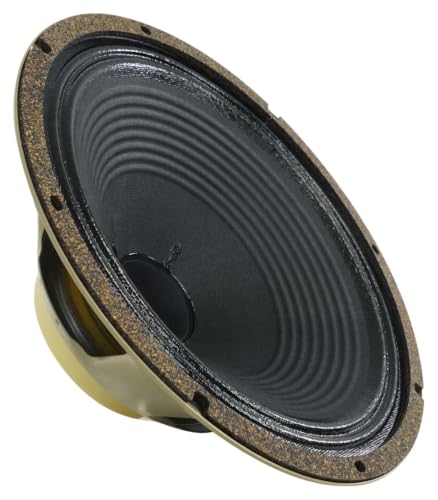
CELESTION G12 Neo Creamback Guitar Speaker

CELESTION G12 Neo Creamback 16 ohm Guitar Speaker
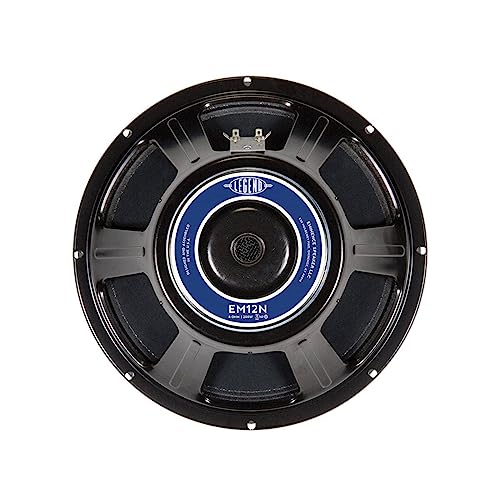
Eminence 12" Legend EM12N Neodymium Guitar Speaker

CELESTION NEO V Type 8 OHM Guitar WOOF
How to choose a neodymium guitar speaker
Start with size and mounting fit
All of the speakers in this guide are built around the 12-inch format that dominates guitar combos and cabinets. Even within that format, you should confirm the cutout diameter, the number and spacing of mounting holes, the depth of the driver from the mounting surface to the back of the magnet, and the clearance inside your cabinet. A combo amplifier may have tubes, a reverb tank, a chassis, or a power transformer close behind the speaker. A neodymium motor is often more compact than a large ferrite motor, which can help with clearance, but compact does not mean universal. Measure before you order, compare those measurements with the drawing or specification for the exact model, and leave room for the speaker cable and for the cone to move without touching anything.
If your cabinet uses a different driver size, a 12-inch speaker is not a simple drop-in substitute. Cutting a baffle or using an adapter changes how the driver couples to the cabinet and can create rattles or air leaks. Readers comparing other formats for separate projects can also see best 10 inch guitar speakers for the smaller guitar format, while this guide stays focused on 12-inch replacement drivers.
Match impedance exactly
Impedance, measured in ohms, is the load the speaker presents to the amplifier. This is the rule that allows the least improvisation: the speaker load should match what your amplifier expects, or fall within the options the amplifier maker explicitly provides. Many guitar amplifiers have a selector or separate outputs for different loads, and many cabinets are wired to present a single total load even though they contain more than one driver. What matters is the total load at the amplifier output, not just the number printed on one speaker.
In a single-speaker combo, the job is simple in principle. If the original speaker is 8 ohms and the amplifier is designed for an 8 ohm load, choose an 8 ohm replacement. If the original is 16 ohms, choose a 16 ohm replacement unless the amplifier manual clearly offers another safe option and you are also changing the output setting to match. In multi-speaker cabinets, drivers can be wired in series, in parallel, or in series-parallel combinations, and each arrangement changes the total. Two 8 ohm speakers in parallel present 4 ohms. The same two speakers in series present 16 ohms. Four speakers introduce more combinations, which is why you should draw the wiring, calculate the total, and check it twice before powering up.
A mismatch is not a tone experiment. A load that is too low can strain an amplifier, and a load that is far too high can also create problems, particularly with valve amplifiers, which should never be run without a proper speaker load connected. If you are unsure, stop and consult the amplifier manual or a qualified technician. The two Celestion Neo Creamback listings in this guide exist precisely because impedance is a variant you must select deliberately: one is the 8 ohm version and the other is the 16 ohm version of the same model.
Compare power handling with amplifier output
A speaker power rating describes how much power the driver is designed to handle, not how loud it will be and not a promise that any amplifier is safe at any setting. As a general principle, the combined power handling of the speakers connected to an amplifier should comfortably cover the amplifier output you will actually use, with sensible headroom for peaks and for the way a driven guitar amplifier can produce more than a clean sine-wave figure suggests. A single speaker in an open-back combo used at modest volume faces a different workload from the same speaker pushed hard for a full set.
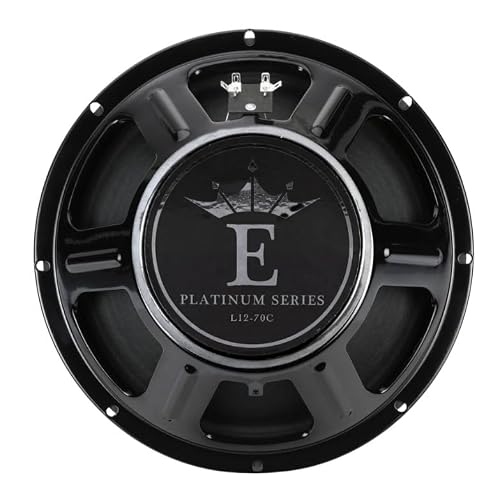
Where a listing in this guide states a rating, that figure is given in the product section. The Eminence GA-SC-X Signature is listed at 60 watts. One Eminence Platinum model is listed at 70 watts and another Platinum variant at 60 watts. Where a listing does not state a rating in the information provided for this guide, no rating is assigned here, and you should read the current specification for that exact model and impedance variant before matching it to a powerful amplifier. Never assume that two speakers with similar names share the same rating, and never assume that an impedance variant changes or preserves a rating without checking.
Headroom cuts both ways. A speaker rated far above the amplifier output is not automatically better, and a speaker chosen only because its rating is high may not give the breakup character you want. Some players prefer a speaker that stays composed when the amplifier is loud. Others like the point where the speaker begins to contribute its own compression and edge. Power handling should first keep the rig safe and reliable, and only then become part of a voicing decision.
Understand sensitivity without chasing a single number
Sensitivity describes how efficiently a speaker converts input power into sound pressure, usually expressed under a defined measurement condition. In general terms, a more sensitive speaker will sound louder than a less sensitive speaker when both receive the same power in a comparable setup. That can help a lower-powered amplifier hold its own in a rehearsal room, or it can make a powerful amplifier harder to keep at a neighbour-friendly volume in a small room.
This guide does not assign sensitivity figures to the products below, because those figures were not part of the listing information supplied for them. The principle still helps you shop: when you compare specification sheets, make sure any sensitivity figures were measured in a comparable way, remember that cabinet design and placement change what you hear, and do not treat a small numerical difference as a guarantee of a dramatic real-world gap. Your ears, your room, and your amplifier controls will have the final say.
Think about voicing, cabinet, and playing style
Speaker voicing is the balance of lows, mids, and highs, the speed and firmness of the low end, the presence that helps a guitar sit in a mix, and the way the top end behaves when the amplifier is driven. An open-back combo spreads sound into the room and often feels airy and spacious, while a closed-back cabinet tends to project forward with a tighter, more focused low end. The same speaker can feel different in each enclosure, so judge a model as part of a system rather than as an isolated part.
Clean players often care about headroom, clarity between notes, and a top end that sparkles without turning harsh. Blues and rock players may care about midrange push and the way chords break up. Heavier styles often need low-end control so fast passages stay defined. None of those preferences maps neatly onto magnet type alone. Use the product descriptions, the maker positioning, and your own amplifier as the guide, and be wary of any advice that promises one speaker will suit every guitar, every pedal chain, and every genre equally well.


