What's inside
- Key Takeaways
- Quick Picks
- How We Chose These Picks
- The 15-inch class compared: which bag carries your kind of day?
- How do you measure your laptop for a 15-inch backpack sleeve?
- What should a daily commuter pack around the laptop, and where?
- How do you keep a laptop backpack alive for years?
- How does a 15-inch laptop bag behave on a bicycle or a motorbike?
- What separates a student semester bag from an office career bag?
- Why does back-panel design matter more than strap padding?
- Common Mistakes When Buying a 15-Inch Laptop Backpack
- Final Recommendation
- Frequently Asked Questions
- Related Guides
As an Amazon Associate I earn from qualifying purchases. This post may contain affiliate links at no extra cost to you.
widgetverdict.com is reader-supported. When you buy through links on our site, we may earn an affiliate commission.
The best 15-inch laptop backpacks solve a deceptively specific problem: a 15-inch-class laptop is the largest machine most people carry daily, and the bag around it has to protect that machine without turning its owner into a removal van. Fifteen-inch laptops — most of them really 15.6-inch displays in bodies of slightly varying footprint — live in the commuter sweet spot: big screens for real work, carried on trains, across campuses, through airport security, and into cafés. The backpack that serves them must be a padded vault at the back panel, an organised office in the middle, and a shape that still fits under an airline seat or between a student’s knees on a bus.
This category is crowded with near-identical black rectangles, so the differences that matter are specific. How is the laptop suspended — does the sleeve hold the machine off the bag’s floor, so a set-down thump lands on foam instead of on your computer’s corner? Where does the water bottle actually fit, and does it fit when the main compartment is full? Which pocket can your hand find blind, on a moving train, for the one cable you need? The six backpacks below were chosen because each answers those questions with a distinct personality rather than a copied template.
Three carry verified links: a featherweight Lenovo daypack that treats simplicity as a feature, a black MATEIN business bag with the organisational layout that made the brand a commuter staple, and its slimmer grey sibling aimed at students and lighter loads. Three more are prose-only entries from heritage and design-led makers — a campus classic with a suede bottom, a Swedish icon adapted with a laptop compartment, and a work-focused commuter from a messenger-bag specialist — included because a guide to this category that ignored them would be pretending the market is narrower than it is.
The linked three sit on Amazon with verified listings, and you can check price on Amazon in your chosen colour. The prose-only bags are fixtures of their makers’ stores and outdoor retailers. With every pick, check your laptop’s actual dimensions against the sleeve rather than trusting the headline size — most “15-inch” sleeves swallow a 15.6-inch machine, but thick gaming laptops and older workstation bodies deserve a tape measure’s verdict.
Key Takeaways
- The Lenovo B210 is the featherweight answer: a simple, light daypack with a padded 15.6-inch sleeve for people who carry a laptop and little else.
- The black MATEIN Business is the organiser’s pick, with a separate laptop compartment, an anti-theft pocket against your back, and a luggage strap for travel days.
- The grey MATEIN Travel trims the same idea slimmer for students and light commuters who move fast and pack less.
- Herschel, Fjällräven, and Timbuk2 entries cover the style-led and heritage end, where looks and materials lead and organisation follows.
- Sleeve fit is a measurement, not a label: confirm your machine’s width and thickness before ordering any bag in this guide.
- For daily commuting, pocket choreography — what your hand can reach without taking the bag off — matters more than raw litre count.
Quick Picks
| Pick | Badge | Why it is here |
|---|---|---|
| Lenovo Casual Backpack B210 | Featherweight daypack | A light, water-repellent bag with a padded sleeve that keeps the daily carry simple and cheap to replace. |
| MATEIN Business Backpack 15.6 | Commuter organiser | Separate laptop compartment, hidden back pocket, and a suitcase strap in a sober black work bag. |
| MATEIN Travel Backpack (Grey) | Slim student carry | A trimmer, lighter take on the same formula for campus loads and quick trips across town. |
| Herschel Little America | Campus classic | Heritage styling with a padded 15-inch sleeve, magnetic straps, and a signature striped liner. |
| Fjällräven Kånken Laptop 15 | Icon with a sleeve | The square Swedish classic reworked with a padded laptop compartment and hard-wearing fabric. |
| Timbuk2 Authority Laptop Backpack | Work-first commuter | A structured office bag from a messenger specialist, with a rear-access laptop compartment. |
How We Chose These Picks
We started with the machine. A 15-inch-class laptop is heavy enough that how a bag carries it decides whether your shoulders forgive you by Friday, so the first test was the sleeve: padded on both faces, ideally suspended or at least bottom-buffered, and placed against the back panel where the load rides closest to your centre of gravity. Bags that treated the laptop as just another item in a big open sack were cut, however handsome. The second test was the load around the machine — charger, bottle, book, lunch, a layer for the evening — and whether the bag’s compartments divide that load into findable places rather than a single jumble.
Commuter reality shaped the rest of the scoring. A luggage strap matters if your week includes airports. A hidden pocket against the back panel matters if your commute includes crowded carriages. Water resistance matters because laptops and rain are enemies and commuters do not get to reschedule weather. We also weighed how each bag behaves half-empty, because a daily bag spends much of its life carrying only the laptop and a charger, and a structure that collapses into a slouch when unloaded annoys its owner daily in small, cumulative ways.
Style was allowed to matter, but only after function cleared the bar. The prose-only three are here because their makers sell enormous numbers of bags to people who choose with their eyes — and because, examined closely, each hides a competent laptop system inside the styling. A guide that pretended otherwise would fail the reader standing in a shop holding one. Finally, we kept the price-of-entry spectrum honest without printing figures: there is a pick here for the buyer who treats a backpack as a consumable and a pick for the buyer who treats it as a five-year companion, and the sections say plainly which is which.
One more consideration ran quietly through the selection: repairability and replaceability of the small parts. Zips, sternum straps, and shoulder-strap stitching are where backpacks actually die, and the makers below have track records — spare parts, warranty desks that answer, or prices low enough that replacement is a shrug. A daily bag is a working tool, and we judged its makers as toolmakers, not as fashion houses with a laptop sleeve sewn in as an afterthought.
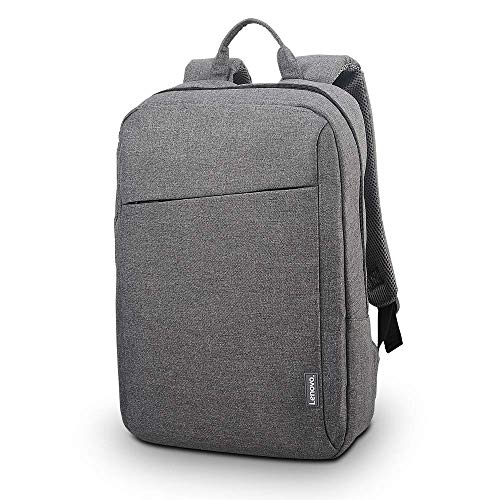
Lenovo Casual Backpack B210 — Featherweight daypack
The B210 is the backpack equivalent of a reliable hatchback: unglamorous, sensibly priced in its tier, and so light that you notice its absence of weight before anything else. Lenovo designed it as a casual laptop bag rather than a travel system, and that modesty is its strength. The main compartment holds the day — laptop in its padded sleeve, charger, a book or tablet in the secondary padded slot, a light jacket if you roll it with intent — while a front pocket swallows the small chaos of keys, earbuds, and pens. Nothing is over-engineered, and nothing important is missing.
The sleeve is the headline: padded, sized for 15.6-inch machines, and set against the back where it belongs. The fabric is a durable, water-repellent polyester that shrugs off drizzle and wipes clean after a platform spill, and the whole bag in grey reads neutrally in an office, a lecture hall, or an airport queue. Shoulder straps are padded adequately for laptop-weight loads; this is not the bag for a 10-kilogram expedition, and it does not pretend otherwise. Its honesty about its load class is refreshing in a category full of expedition styling on daypack bones.
Daily life with the B210 has a particular rhythm: it is the bag you stop thinking about. Students adopt it because it survives semesters of floor drops and cafeteria floors; office workers adopt it because it is light enough that the walk from the station stops registering as exercise. When a zip finally tires after years, the replacement decision is painless, which is a legitimate ownership model — not every tool must be an heirloom, and a bag this light and this simple earns its keep by disappearing.
Its limits are equally clear. There is no luggage strap, no hidden security pocket, no USB pass-through, and the organisation is two compartments deep rather than a filing system. Travellers and heavy organisers should read the next section. But for the enormous population whose carry is a laptop, its charger, and a day’s small necessities, the B210’s restraint is not a lack of features. It is the feature.
One practical check before ordering: the B210’s sleeve is sized for mainstream 15.6-inch laptops, which covers most office and student machines, but a thick gaming laptop with a protruding rear hinge deserves a measurement against the compartment before you commit. Owners of slim machines will find the fit reassuringly snug rather than sloppy, which keeps the computer from swimming inside the bag on a run for the train — a small mercy your hard drive’s descendants will appreciate.
- Fit: padded sleeve for laptops up to 15.6 inches
- Fabric: durable water-repellent polyester
- Compartments: main compartment plus front organiser pocket
- Carry: padded shoulder straps, top handle
- Character: among the lightest bags in this guide
Strengths
- Featherweight build keeps the commute’s focus on the laptop, not the bag
- Padded sleeve and tablet slot cover the essential protection
- Simple layout is fast to pack and impossible to mislearn
Trade-offs
- No luggage strap or hidden security pocket
- Organisation is basic compared with the business picks
- Not built for heavy, expedition-style loads
Best for: students and office commuters carrying a laptop and a light day kit.
Not suited for: frequent flyers and heavy organisers with many small items.

MATEIN Business Backpack 15.6 — Commuter organiser
If the B210 is a hatchback, the black MATEIN Business is the estate car: same job, more compartments, everything with a labelled place. Its layout is the one that made this style of bag a commuter default. A separate rear compartment opens for the 15.6-inch laptop alone, so the machine never shares space with a leaking bottle or a set of keys. The main compartment takes clothes or files, the front organiser panel arrays pens, cards, and cables, and a hidden pocket flat against your back keeps a phone or wallet out of a crowd’s reach. A luggage strap across the back slides over a suitcase handle, converting the bag into a travel system at the airport.
The details hold up under daily use. The fabric is water-resistant, the zips run with the confidence of hardware chosen a grade above the minimum, and the back panel and straps carry enough padding for a fully loaded walk without crossing into hiking-bag bulk. The bag’s size is calibrated to the personal-item envelope on many airlines, which frequent travellers exploit ruthlessly: laptop, change of clothes, and toiletries in a bag that slides under the seat while the overhead bins fill with other people’s optimism.
In the office the bag’s sober black profile does quiet diplomatic work — it looks like business equipment in a meeting room and like nothing in particular on the train, which is exactly the camouflage a commuter wants. The anti-theft back pocket becomes a habit faster than expected; commuters find their hand going there for the phone at the ticket barrier without conscious thought, which is the definition of good pocket design. A USB charging pass-through features on this style of MATEIN, letting a power bank inside feed a phone in your hand — check the exact configuration at purchase, because the range’s details evolve.
Where the B210 wins on weight, this bag wins on readiness: it is the pick for the person whose bag is a mobile office and whose day can pivot from desk to airport without a repack. The cost is a little more structure, a little more weight, and a look that says “work” even on a Saturday. For the commuter it was designed for, that trade settles itself.
Long-term owners tend to praise the same unglamorous thing: the bag ages in an orderly fashion. The fabric scuffs without tearing, the laptop compartment’s padding keeps its loft, and the whole thing still presents respectably in a client meeting after years of platforms and pavements. In a category where many bags look tired by their second winter, orderly ageing is a genuine specification, and this MATEIN’s popularity with repeat buyers suggests the wider commuting public has noticed.
- Fit: separate rear compartment for 15.6-inch laptops
- Layout: main compartment, front organiser, hidden back pocket
- Travel: luggage strap for suitcase handles
- Fabric: water-resistant, business-weight construction
- Size class: personal-item friendly for many airlines
Strengths
- Dedicated laptop compartment keeps the machine isolated and safe
- Hidden back pocket becomes second nature on crowded commutes
- Luggage strap makes it a genuine one-bag travel option
Trade-offs
- More structure and weight than the minimalist picks
- All-business styling gives little weekend personality
- Front organiser rewards tidiness and punishes stuffing
Best for: commuting professionals whose bag doubles as a mobile office and travel bag.
Not suited for: ultralight carriers and buyers wanting a casual, slouchy look.

MATEIN Travel Backpack (Grey) — Slim student carry
The grey MATEIN takes the business bag’s formula and puts it on a diet. The profile is slimmer, the weight lower, the styling softer — a daypack silhouette rather than a briefcase with straps — while the bones remain commuter-serious: a padded compartment for a 15.6-inch laptop, a main section for books and a layer, an organiser front, and the anti-theft pocket against the back that this brand’s owners become quietly evangelical about. In grey it reads as a student or creative’s bag first and an office bag second, which inverts its black sibling’s priorities in a way that suits campus life.
Students will recognise the design brief immediately. The bag fits the rhythm of a day built from lectures, library, and a part-time job: laptop and notebooks in the morning, a gym layer or a grocery stop folded in by evening, and nothing about the bag complaining. The slim profile is the difference on a crowded bus, where the bag rides between knees without annexing a neighbour’s space, and in a packed lecture hall, where it slides under the seat instead of colonising the aisle. Water resistance handles the dash between buildings in rain that was not in the forecast when you dressed.
The luggage strap survives the slimming, so the bag still pairs with a suitcase for the term-time trips home and the occasional flight, and the overall construction shares the family standard — zips and fabric a grade above the disposable end of the market. What the slimming removes is volume for bulk: a thick textbook stack plus a change of shoes will test it, and heavy organisers will find the front panel smaller than the business model’s. It is a bag tuned for the laptop-plus-essentials load, and it is at its best exactly there.
Choosing between the two MATEINs is the most common decision this guide will provoke, so here is the honest divider: carry weight and wardrobe. If your day is files, chargers, a packed lunch, and a spare shirt, take the black business bag. If your day is a laptop, two notebooks, and momentum, take the grey. Both protect the machine properly; they differ in how much of your life they volunteer to carry alongside it.
The grey fabric earns one more practical note: it hides the dust and scuffs of daily floors better than black, which shows every chalk mark and pavement kiss, while looking less formal in a hoodie-and-jeans context. For a bag that will live under café tables and lecture seats, that camouflage is a small daily kindness, and owners of the grey version mention it with the satisfaction of people who chose with their eyes open.
- Fit: padded compartment for 15.6-inch laptops
- Profile: slim daypack silhouette in grey
- Layout: main compartment, organiser front, anti-theft back pocket
- Travel: luggage strap retained from the business model
- Fabric: water-resistant, campus-weight construction
Strengths
- Slim profile suits buses, lecture halls, and crowded spaces
- Keeps the hidden back pocket and luggage strap of its sibling
- Grey finish hides daily scuffs and dresses down happily
Trade-offs
- Less volume for bulky loads than the business model
- Smaller organiser panel for heavy small-item carriers
- Casual look may underdress formal offices
Best for: students and light commuters who value a slim, quick-moving bag.
Not suited for: travellers packing clothes and kit for multi-day trips.
Herschel Little America — Campus classic
The Little America is the backpack as campus folklore: a mountaineering silhouette shrunk for the city, with magnetic strap closures over a drawstring main compartment, a contoured back, and the brand’s signature striped liner that makes the inside of the bag feel like a place rather than a void. Tucked inside is a padded, fleece-lined sleeve for a 15-inch laptop, which is the detail that earns it a section here — this is a style purchase that happens to protect your computer properly, and thousands of students have built their degree around exactly that combination.
Daily use has a ritual quality the zipped commuter bags do not offer. The flap-and-strap opening is slower than a zip, deliberately so, and the drawstring beneath keeps the weather and casual hands out. An internal media pocket with a headphone port dates the design’s origins charmingly, while the front pocket with its key clip handles the small daily inventory. The padded straps and back panel carry laptop-weight loads in comfort, though the bag’s structure is soft — it slouches when empty, which its owners read as character and minimalists read as a flaw.
We cover it as prose-only because it sits outside this guide’s verified listing pool; it is sold through Herschel’s own channels and fashion and outdoor retailers everywhere, in colourways that rotate seasonally. Buy it knowing what it is: the bag for the owner who wants their laptop protection wrapped in a design with genuine heritage, and who will accept a slower opening ritual and a softer structure as the price of not looking like an IT department. Judged as a commuter tool it is good; judged as an object you will enjoy owning for years, it is better than good.
Durability reports follow the brand’s reputation: the synthetic suede bottom and reinforced base take the floor abuse that campus life dishes out, and the straps’ hardware is metal where rivals use plastic. It is a bag that ages into its owner, softening and personalising, which is a quality no specification table captures and every long-term owner mentions.
One honest limitation for the security-minded: the drawstring-and-flap closure, while weatherproof and handsome, is not the equal of a lockable zip for leaving the bag unattended, and the laptop sleeve’s access is through that same leisurely opening. In a library-commons lifestyle that is a fair trade; in a high-theft commute, the MATEINs’ hidden pockets argue louder. Know which life yours is.
- Fit: padded fleece-lined sleeve for 15-inch laptops
- Closure: magnetic straps over drawstring main compartment
- Liner: signature striped fabric with media pocket
- Base: reinforced synthetic suede bottom
- Carry: padded contoured shoulder straps
Strengths
- Heritage design with a genuinely protective laptop sleeve
- Materials and hardware age gracefully
- Striped liner makes contents easy to see and find
Trade-offs
- Flap-and-drawstring access is slower than a zip
- Soft structure slouches when carried nearly empty
- No hidden security pocket or luggage strap
Best for: students and creatives choosing laptop protection inside a design classic.
Not suited for: speed-focused commuters and high-security travel.
Fjällräven Kånken Laptop 15 — Icon with a sleeve
The Kånken is one of the most recognisable objects in the backpack world — a square, upright Swedish design from the late 1970s, drawn originally to spare schoolchildren’s backs — and the Laptop 15 version answers the obvious modern question by building a padded laptop compartment into its back, accessible by its own zip. The main compartment keeps the classic’s cavernous single space and wide opening, the fabric is the brand’s hard-wearing Vinylon F that softens and strengthens with use, and the whole bag weighs remarkably little for its toughness. It is an icon that happens to carry a 15-inch laptop properly, and for a certain owner that sentence is the entire review.
The carrying experience is distinctively upright: the bag holds its boxy shape, sits flat, and loads from the top like a small crate, which devotees find makes packing oddly satisfying — books and laptop stand in order rather than slumping. The straps are the classic’s simple webbing, padded inserts available, and honest for laptop-weight loads rather than expeditions. Front and side pockets take a phone, a bottle at a squeeze, and the day’s small debris. In a sea of technical black commuter bags, the Kånken’s colours and silhouette are a deliberate refusal, and its owners are loyal in the way people are loyal to objects with a point of view.
No link accompanies it here, because it lives outside the verified pool, sold through Fjällräven’s stores and outdoor retailers. Its limitations are the classic’s own: minimal internal organisation beyond the laptop compartment and a removable seat pad that doubles as back padding, thin straps by modern ergonomic standards, and a premium for the design and fabric story. Buyers who need an organiser’s filing system should look at the MATEINs. Buyers who want a bag they will still be carrying, and still be recognised by, in ten years are precisely who this square little Swede is for.
There is an environmental thread in the brand’s story — durable fabric, repair services, a design intended to be handed down — that resonates with buyers tired of replacing bags. A Kånken bought for a 15-inch laptop today is plausibly the bag a younger sibling inherits for school, and that cascade gives its premium a different arithmetic from the fashion items it is sometimes shelved beside.
Practical fit note: the laptop compartment is tailored to slim 15-inch machines, and a thick gaming laptop will not be happy here even if its screen size matches. Measure thickness as carefully as width with this one. For the ultrabook and mainstream laptop crowd the fit is trim and secure, and the separate zip access means the machine slides out at security without opening the main compartment’s whole world to the tray.
- Fit: separate padded compartment for 15-inch laptops
- Fabric: hard-wearing Vinylon F
- Shape: upright boxy main compartment, top loading
- Carry: webbing straps, foam seat pad as back padding
- Extras: front pocket, side pockets, huge colour range
Strengths
- Iconic design with a genuinely separate laptop compartment
- Fabric and construction built for decade-scale use
- Light for its toughness, with a hand-me-down future
Trade-offs
- Minimal internal organisation
- Thin straps by modern padded standards
- Sleeve suits slim machines, not thick gaming laptops
Best for: design-conscious carriers of slim 15-inch laptops who keep bags for years.
Not suited for: heavy organisers and owners of thick workstation laptops.
Timbuk2 Authority Laptop Backpack — Work-first commuter
Timbuk2 built its name on messenger bags that couriers could not kill, and the Authority applies that DNA to the office backpack: a structured, professional silhouette, a rear compartment that swallows a 15-inch laptop with rear or side access for security queues, and an internal organisation system that treats cables, notebooks, and a water bottle as citizens with assigned housing. It is the most deliberately “work” bag in this guide’s prose-only half, aimed at the commuter whose backpack must walk into a client meeting without apologising.
The details are commuter-literate. A luggage pass-through integrates it with rolling cases, the back panel breathes better than most in summer, the bottle pocket is sized for real bottles, and the materials and zips carry the brand’s warranty-backed confidence. The laptop compartment’s padding and separation are up to the standard the linked picks set, and the bag’s structure holds its shape in a meeting room corner — a small thing that reads as professionalism in a way slouching bags cannot fake. Reflective touches acknowledge the cyclist-commuter branch of its family tree.
Timbuk2’s own store and retailers carry it outside this guide’s verified listing pool, so it appears here without a link, where its price sits at the premium end of this category. The honest trade for that premium is specialisation: it is less charming than the Herschel, less iconic than the Kånken, and more bag than a light carrier needs. But for the professional whose backpack is effectively their office — files, machine, gym layer, and a day of meetings riding on two straps — the Authority is the prose-only pick that competes with the linked business bags on their own turf, and often wins the argument in person.
Owners upgrading from the MATEIN class usually cite two differences: the structure, which keeps the bag presentable and self-standing through years of use, and the organisation, which survives contact with a genuinely complicated working life — two chargers, a notebook stack, presentation handouts — without collapsing into the single-sack jumble. If your carry has outgrown a daypack’s simplicity, this is the direction of travel.
A final note for the air-travelling professional: the rear laptop access on bags of this design earns its keep in security lines outside your home country, where the machine must come out fast and go back faster while a queue breathes behind you. It is a five-second saving that feels like five minutes, twice per trip, forever — the kind of arithmetic that quietly justifies a premium bag to the person who lives that queue.
- Fit: rear compartment for 15-inch laptops, quick access
- Layout: structured internal organisation system
- Travel: luggage pass-through for rolling cases
- Panel: ventilated back panel, reflective touches
- Build: warranty-backed, work-grade materials
Strengths
- Professional structure that holds its shape and dignity
- Organisation deep enough for a genuinely mobile office
- Quick laptop access built for security queues
Trade-offs
- Premium tier pricing in its category
- More structure than light carriers want
- All-business looks offer little weekend character
Best for: professionals whose backpack is their mobile office and meeting-room companion.
Not suited for: minimalists and buyers seeking a casual campus style.
The 15-inch class compared: which bag carries your kind of day?
The six bags divide by philosophy more than by size. Two optimise for lightness and simplicity, two for organisation and travel, and two for character — and the laptop, identical in each, is somehow the least important variable in the choice.
| Pick | Laptop fit | Layout style | Travel strap | Notes |
|---|---|---|---|---|
| Lenovo Casual Backpack B210 | 15.6-inch sleeve | Simple two-compartment | No | The featherweight daily default |
| MATEIN Business Backpack 15.6 | 15.6-inch separate compartment | Full organiser system | Yes | The mobile office in black |
| MATEIN Travel Backpack (Grey) | 15.6-inch compartment | Slim organiser | Yes | The campus-speed version |
| Herschel Little America | 15-inch fleece sleeve | Flap and drawstring | No | Heritage looks, ritual opening |
| Fjällräven Kånken Laptop 15 | 15-inch rear compartment | Single main space | No | The square icon, built to hand down |
| Timbuk2 Authority Laptop Backpack | 15-inch rear compartment | Structured work system | Yes | The meeting-room professional |
If you read the table and feel pulled toward two rows at once, that is normal: most commuters are a weekday version and a weekend version of themselves. The honest tiebreak is frequency — buy for the four-day-a-week self, and let the occasional self borrow.
How do you measure your laptop for a 15-inch backpack sleeve?
Ignore the screen diagonal printed on your laptop’s box; sleeves care about the body’s width, depth, and thickness. Measure the closed machine across its widest points, front edge to hinge, and at its thickest point including any protruding feet or hinge barrel. Compare those three numbers with the sleeve’s internal dimensions where the maker publishes them, and leave a small margin — a sleeve that requires force will eventually cost a zip its life, while a sleeve with a centimetre of ease still protects perfectly well because the padding, not the tightness, does the protecting.
Two machine families routinely break the “15-inch” label. Gaming laptops wear 15.6-inch screens in bodies closer to older 17-inch machines, with rear cooling protrusions that defeat slim sleeves like the Kånken’s. Mobile workstations add thickness that slim daypacks resent. Owners of either should start from the MATEIN business class or the Timbuk2’s compartment and verify with a tape, not with hope. Conversely, the new generation of slim 15-inch machines floats in sleeves cut for older, thicker bodies — a soft laptop sleeve or a folded garment in the compartment restores a snug, rattle-free fit.
Finally, measure with the machine you own, not the machine you plan to buy next year. Bags outlast laptops regularly in this category, and a sleeve bought for a hypothetical future computer serves the present one badly for years. When the next laptop arrives, its dimensions can join the decision then — most households find the old bag fits the new machine anyway, because 15-inch-class bodies change more slowly than the marketing suggests.
What should a daily commuter pack around the laptop, and where?
Pack by reach. The laptop lives against your back, heaviest and flattest where it belongs. The charger — the second-heaviest item — belongs low and central, ideally in the main compartment’s base, so its brick does not swing at the top of the bag. The items your hand seeks in motion — travel card, phone, earbuds, keys — belong in the pockets your specific bag offers for blind access: the MATEINs’ back pocket and front organiser, the B210’s front pouch, the Herschel’s front pocket with its key clip. Rehearse the reach at home once, and the commute becomes choreography instead of excavation.
Water deserves its own rule: never above the laptop, never loose beside it. Use the bag’s bottle pocket if it has one, and if it does not, put the bottle upright in the main compartment inside a sealed sleeve of its own, on the side away from the machine. More laptops are killed by their owner’s hydration than by drops, and the separate-compartment designs in this guide — the MATEINs, the Kånken, the Timbuk2 — are best understood as plumbing safety as much as organisation.
Leave slack. A bag packed to structural failure every day dies by its zips within a couple of years, and it also cannot absorb the day life adds a book, a parcel, or a colleague’s forgotten charger. The right daily bag is the one that closes easily on your worst normal day, not the one that just barely closes on your lightest.
How do you keep a laptop backpack alive for years?
Empty it weekly. Crumbs, ticket stubs, and grit migrate to the laptop compartment’s corners and abrade the machine’s finish and the sleeve’s lining alike; a shake-out over a bin is the cheapest maintenance in this entire guide. Wash according to the maker’s instructions — most of these bags accept a gentle hand wash and air dry — and never tumble-dry a bag whose padding and coatings you value. Zips live longer when their tracks are brushed free of grit and when you close the bag by pulling the slider rather than forcing the sides together to meet it.
Set the bag down like it contains a computer, because it does: on its base or against a wall, not dropped from shoulder height onto concrete, however good the sleeve is. Rotate the load between shoulders on long walks if you habitually sling one strap, both for your spine and for the straps’ even wear. And store the bag unzipped and uncrushed, so the padding keeps the loft that is its whole profession. A backpack maintained this way does not merely last longer; it protects at year five the way it did at month one, which is the point of owning it.
How does a 15-inch laptop bag behave on a bicycle or a motorbike?
Two-wheeled commutes rewrite the backpack brief in ways shop trials never reveal. On a bicycle, the bag’s centre of gravity should sit low and close, because a tall load sways against your steering in crosswinds and at every glance over a shoulder. The structured bags here — the MATEIN Business and the Timbuk2 Authority — keep their shape and their manners at cycling speeds, while soft daypacks like the B210 and the Herschel need their loads packed deliberately flat to avoid the pendulum effect. None of the six is a dedicated cycling bag with a hip belt, so the honest advice is to keep two-wheeled loads light: laptop, charger, and a layer, not the full mobile office.
Visibility and weather join the brief outdoors. Dark bags vanish at dusk, so a light or a reflective accessory is not decoration on a cycling commute; it is equipment. Rain arrives horizontally on a bike, which defeats the water resistance that suffices for a walk from the station — a rain cover, or the laptop in a waterproof sleeve inside the bag, is the difference between an anecdote and an insurance claim. Riders who do this daily eventually buy the cover once and stop thinking about it, which is the correct ending for every safety habit.
Motorbike riders add one more demand: nothing loose. Dangling strap ends get tied or tucked, the bag’s profile stays tidy at speed, and the chest strap — where a bag offers one — stops being an accessory. If your commute is motorised and fast, favour the structured picks, cinch every strap, and treat the ride as the load test your bag must pass before its looks are even discussed.
What separates a student semester bag from an office career bag?
Time horizon, mostly. A semester bag is bought against a known end date — the course, the school year, the internship — and its virtues are lightness, price sanity, and the ability to survive being treated as furniture. The B210 and the grey MATEIN live here, and their owners replace them the way they replace trainers: without grief, when the term of service ends. A career bag is bought against an unknown horizon and judged by different accounting: cost per year, presentability in year four, and a maker who answers warranty emails. The Timbuk2 and, in the linked class, the black MATEIN Business live on that side of the line.
The trap is buying across the line in either direction. A student who buys the career bag spends money the semester will not repay and gains weight they will curse on every staircase. A young professional who keeps replacing semester bags discovers, three bags in, that they have spent career money in instalments and own nothing with four years left in it. The honest question is not “which bag is best?” but “how many years is this purchase for?” — and this guide’s six were chosen so that both answers have a worthy recipient.
There is a middle path the organised quietly take: buy the career-grade bag second-hand. Structured commuter bags survive their first owners well, and the used market in the business class is deep. A checked zip, sound straps, and a clean laptop compartment are the whole inspection — the same three checks, incidentally, that predict any bag’s remaining life, new or used.
Why does back-panel design matter more than strap padding?
New buyers squeeze shoulder straps in the shop and call it a comfort test, but the back panel is where a loaded bag’s comfort is actually decided. A panel with some structure and a channel for air keeps the load flat against you, stops the laptop’s corners from printing through into your spine, and reduces the sweat patch that a solid slab of foam guarantees by August. The structured picks in this guide invest exactly there, and their owners notice the investment on the first hot commute rather than in the showroom.
Straps matter second, and their real job is geometry: wide enough to spread load, curved enough to stay on a moving shoulder, and anchored so the bag rides high rather than sagging into the small of the back. A sagging bag multiplies its felt weight cruelly — the same load carried high and close feels like a different, lighter bag. When you try any of these six loaded, adjust the straps until the bag’s top sits near your shoulder blades, then walk. If it still feels heavy, the problem is the load or the bag’s class, and no strap foam in the world will legislate it away.
Smaller carriers should pay one extra moment of attention here, because a 15-inch laptop bag is dimensioned around an average adult frame. If the bag’s back panel is longer than your own back, the laptop’s weight lands on your hips at an angle no adjustment fixes. Several makers in this category offer the same designs in smaller sizes — measure your torso the way you measured the laptop, with the same unsentimental tape.
Common Mistakes When Buying a 15-Inch Laptop Backpack
The headline mistake is trusting the size label. “Fits 15-inch laptops” spans machines from slim ultrabooks to gaming slabs, and the sleeve’s internal dimensions are the only version of the truth that matters. Measure your computer, compare, and let the tape overrule the title. The second mistake is buying volume you do not need: a cavernous bag invites overpacking, and every unnecessary kilogram is carried by your shoulders and by the bag’s stitching, daily, for years.
Third, shoppers test bags empty in shops, where every bag feels wonderful. The honest test is loaded — laptop, charger, bottle, book — walked around the block, because strap padding and back panels confess their real quality only under the load they were bought for. Fourth, ignoring the commute’s specifics: the bag without a luggage strap on a travelling life, the bag without a hidden pocket on a packed-train life, the white bag on a building-site-adjacent life. Match the bag to the route, not to the showroom.
Finally, do not buy a second bag to solve a packing problem. Most “my backpack is too small” stories are actually “my backpack is one compartment” stories, and an organiser pouch or a packing cube inside a bag you already own costs a fraction of a replacement. Upgrade the bag when its protection or its carry fails you, not when your packing system does.
Airport behaviour is the last audition worth rehearsing before you buy, because a daily bag that travels twice a year still has to survive those journeys gracefully. Practise the security motion at home: laptop out with one hand while the other holds the tray, bag onto the belt without its straps staging a jailbreak, everything repacked on the far side in under a minute while a queue flows around you. The separate-compartment bags perform this ballet natively, the sleeve-in-main bags perform it adequately with the laptop pre-staged at the top of the compartment, and the flap-closed Herschel performs it at its own stately tempo — which is fine, provided you arrive with tempo to spare. Knowing your bag’s choreography before the airport is the difference between a traveller and an obstacle, and it costs one rehearsal in your hallway.
There is a small, telling detail to check in the first week with any new bag: where does it want to live in your home? The bag that gets a hook by the door, unpacked of perishables and left packed with the permanent kit — charger, cable, card — becomes part of the morning’s machinery. The bag that migrates to a bedroom floor becomes a daily packing project. Design your storage for the bag you chose, and the bag will repay you by making leaving the house a two-minute act instead of a treasure hunt with a train to catch.
Gift buyers appear in this category every September and December, usually purchasing for a student or a new graduate whose laptop they know better than whose commute they do not. For them, the safe generosity is the middle of this guide: the grey MATEIN for the student whose taste you cannot predict, the black MATEIN Business for the graduate entering offices, and the B210 when the gift is one item among many and lightness is the kindness. Include the receipt without embarrassment. A backpack is fitted equipment, like shoes, and the option to exchange a size of life is worth more than the surprise of a perfect guess.
Final Recommendation
Most commuters should start with the black MATEIN Business and interrogate their own day for reasons to move. Move down to the Lenovo B210 if your load is honestly just the laptop and its charger and your shoulders value lightness over systems. Move sideways to the grey MATEIN if your life runs through campuses and crowded buses and your wardrobe dresses down. Move up to the Timbuk2 Authority if the bag must perform in client meetings and security queues like professional equipment.
The Herschel and the Kånken answer a different question — not “what carries best?” but “what will I love carrying?” — and that question is legitimate, because a bag you love gets used, maintained, and kept, while a merely optimal bag gets replaced on a whim. Both protect a 15-inch laptop properly; choose them with open eyes about access speed and organisation. Whichever of the six ends up on your back, the test of the choice arrives quietly, around the third rainy Tuesday, when you realise you have stopped thinking about the bag at all. That is what the best 15-inch laptop backpacks do: they disappear, and let the day happen. Buy for the commute you actually have, measure the machine you actually own, and the disappearance will take care of itself — quietly, daily, for years, which is all any of us ever asked a backpack to do in the first place, and all the best of them have ever really done.
Frequently Asked Questions
Will a 15.6-inch laptop fit in a bag sold for 15-inch laptops?
Usually, because most sleeves in this class are cut for 15.6-inch machines — all three linked picks here are. But slim design bags like the Kånken Laptop 15 are tailored tighter, and thick gaming laptops can fail on depth even when the width fits. Check the sleeve’s internal dimensions against your machine’s body, not its screen size.
Is a separate laptop compartment really better than a sleeve inside the main compartment?
For protection and speed, yes. A separate compartment isolates the machine from bottles, keys, and chargers, and lets you remove it at security without opening the whole bag. A sleeve inside a main compartment, like the B210’s and Herschel’s arrangements, still protects well for daily commuting — the difference is convenience and isolation, not safety versus danger.
How much should a loaded daily laptop backpack weigh?
As a working guide, keep the total — bag, laptop, charger, and day kit — near or below a tenth of your body weight for a walking commute, and notice that the bag’s own weight is the part you choose. The B210’s lightness is a genuine health feature on a long walk; a heavier structured bag earns its weight only if you use its organisation daily.
Can these backpacks handle rain?
All six use water-resistant fabrics or coatings that shrug off showers and platform drizzle. None is a dry bag: in sustained heavy rain, seams and zips eventually admit water, and a laptop deserves a rain cover or an inner waterproof sleeve as backup. Water resistance buys you the walk from the station, not a swim.
What is an anti-theft back pocket actually for?
It sits flat against your back where a pickpocket cannot reach it while you wear the bag, making it the right home for a phone, wallet, or passport on crowded transport. Both MATEIN picks include one. It does not make a bag theft-proof — no pocket does — but it moves your most-lifted items to the hardest address on your body.
Should I choose the black or grey MATEIN?
Choose by load and by wardrobe. The black business model carries more, organises deeper, and dresses up for offices. The grey travel model is slimmer and lighter, suits campus and casual days, and hides scuffs better. The laptop protection is comparable; the life around the laptop is what differs.
Related Guides
Carrying a bigger machine, or shopping the next size of problem? Continue with best 17-3 laptop backpacks for measuring your way into bags that swallow 17.3-inch laptops, best 17-inch laptop backpacks for the everyday 17-inch class, and best 18-inch laptop backpacks at the top of the size range. The measuring habits in this guide will serve you in all three. Take the tape measure with you into each of them, and leave the guesswork at home where it belongs, next to the umbrella you only remember when it rains.



[…] for designers covers ready-made boards for visual work if assembly is not your weekend plan, best 15-inch laptop backpacks will carry a compact kit and a laptop together, and best 17-3 laptop backpacks handles the larger […]