Our Top Picks
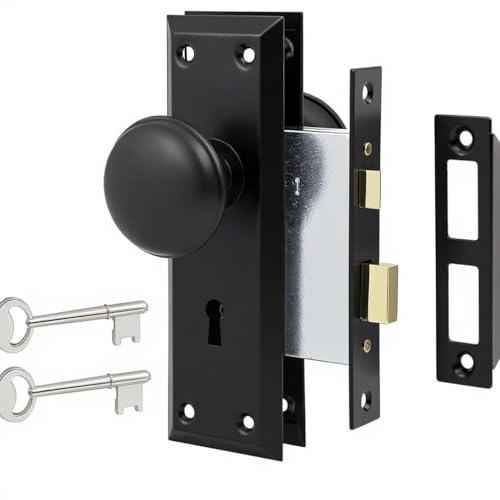
 newliplace Mortise Lock Set for Interior DoorMortise Lock 1 Pack5.9 x 2.9 x 2.9 inches1.6 poundsCheck on Amazon


What's inside
- What separates a true mortise lock from a cylindrical lock
- Reading ANSI and BHMA grades without guesswork
- The lock body, where quality is easiest to verify
- Backset, explained as a measurement rather than a guess
- Door thickness, handing, and the swing of the door
- Functions: entry, passage, privacy, and storeroom
- The deadlatch and why it matters more than it sounds
- Cylinders, keyways, and rekeying reality
- Trim: levers, knobs, escutcheons, and finishes
- Installation: the pocket decides the outcome
- Strikes, gaps, and the frame side of security
- Comparing sets on paper before comparing them in person
- Retrofitting older doors and reproduction hardware
- Maintenance that keeps a good lock good
- Budget thinking without a price tag
- Common specification mistakes and how to avoid them
- Who should choose mortise, and who should not
- Check prices on Amazon
- A short measuring checklist to complete before any order
As an Amazon Associate I earn from qualifying purchases. This post may contain affiliate links at no extra cost to you.
When you shop through links on this page, a small commission may come back to support this guide at no added cost to you, which is how detailed hardware comparisons like this one stay free to read.
A mortise lock set is built around a rectangular steel body that disappears into a deep pocket cut into the edge of a door. Only the trim shows on the faces: levers or knobs, roses or escutcheons, a thumb turn where the function calls for one, and the narrow faceplate flush with the door edge. Everything that does the work, the latch bolt, the deadbolt where fitted, the hub that turns with the handle, and the springs that return the lever to level, lives inside that hidden body. That arrangement is why mortise hardware feels different the first time a hand closes around the lever. The mechanism is larger, the parts move through longer travel, and the door itself becomes part of the structure rather than a thin shell holding a small bored lock.
Choosing well matters more here than with simpler hardware because the commitment is physical. A cylindrical lock needs two round holes that a hole saw makes in minutes. A mortise installation asks for a routed or chiseled pocket, precise mortises for the faceplate and strike, and alignment that has to survive years of seasonal wood movement. Swapping to a different footprint later is rarely clean. This guide therefore treats the purchase as a specification exercise: grade, backset, body dimensions, bolt design, function, handing, door thickness, and trim compatibility, each checked against the door in front of you before any cutting begins.
What separates a true mortise lock from a cylindrical lock
The distinction starts with where the mechanism lives. A cylindrical lock carries its latch and locking parts inside a compact round chassis that passes through a cross bore, usually two and one eighth inches across, with a smaller edge bore for the latch. It is quick to fit, easy to replace, and entirely adequate for many interior doors. A mortise lock, by contrast, spreads its mechanism through a tall, flat body seated inside the door stile. The latch, deadbolt, and auxiliary mechanisms sit stacked in one housing, driven by a spindle through a hub and by a cylinder or thumb turn through a separate cam.
Size brings mechanical advantages that specifications make visible. A larger body leaves room for a heavier latch spring, a longer bolt throw, and a hub built to resist the sag that high lever use eventually produces in lighter hardware. It also allows functions that a small chassis struggles to package, such as a deadbolt and latch that both retract from the outside with one key turn, or an anti-lockout feature that prevents a door from being locked while open. None of this makes cylindrical hardware obsolete. It means the two families solve different problems, and a buyer comparing them on appearance alone misses the structural story.
Imitation products blur the picture, so the body tells the truth. Some decorative sets borrow the long escutcheon plates and heavy levers of traditional mortise trim while hiding a standard cylindrical chassis behind the door faces. The giveaway is the preparation: if the door needs only round bores and no deep edge pocket, the lock is cylindrical regardless of styling. A true mortise set ships with a substantial rectangular body, a faceplate roughly eight inches tall on many residential models, and instructions that begin with routing a pocket. Checking the template drawing before purchase settles the question in seconds.
There is also a middle category worth naming. Narrow-profile mortise locks serve aluminum storefront doors, where the stile is too slim for a full body, and they use a pivoting hook or swinging bolt rather than a conventional latch. European profile mortise locks, common on multipoint doors, follow different dimensional standards again, with centers measured between handle and cylinder in millimeters. This guide concentrates on the North American style full-body lock used on wood and hollow metal doors in homes, offices, schools, and hospitality buildings, because that is the format most buyers in this market will measure, order, and fit.
Reading ANSI and BHMA grades without guesswork
The ANSI/BHMA A156.13 standard governs mortise locks, and its grades give buyers a shared language for durability and security. Grade 1 sits at the top, written for heavy public use where doors cycle constantly and abuse is expected. Grade 2 addresses lighter commercial and heavy residential duty. Grade 3, where it appears in this family, targets ordinary residential service. The grade is not a marketing label a brand awards itself; certification involves cycle counts, torque resistance, bolt strength, and material requirements verified through the BHMA certification program and its published directory of certified products.
Cycle testing illustrates the gap between grades in concrete terms. A Grade 1 mortise lock must survive far more lever and latch operations than a Grade 2 unit before its performance degrades beyond the standard limits. In a corridor door serving a busy office, that difference decides whether hardware still returns crisply after a decade or develops the droop and looseness that maintenance teams dread. In a quiet house, a Grade 2 lock may never approach its tested life, which is why honest guidance matches grade to traffic rather than declaring one grade correct for everyone.
Security testing runs alongside endurance. The standards probe how the bolt and body respond to force applied at the latch, how the trim resists attack, and how the assembly behaves under load at the door edge. A steel body, a deadlatch that resists shimming, and a deadbolt with a full one inch throw all contribute, but the grade captures the assembly as a system. Buyers who need documented performance for a specification, an insurer, or a building code submittal should confirm the exact model appears in the BHMA directory rather than relying on packaging language that borrows grade terminology loosely.
Fire ratings add a separate layer that grade alone does not cover. A lock fitted to a fire door must carry its own listing for that use, matched to the rating of the door assembly, and the latch must hold the door closed under fire conditions without a deadbolt being thrown. That is why passage and entry mortise sets for rated openings use positive latching and listed trim. Anyone replacing hardware on a labeled door in a corridor, stairwell, or garage separation should treat the listing as non-negotiable and keep the door label legible after the work is done.
The lock body, where quality is easiest to verify
Manufacturers describe the body, sometimes called the lock case in older literature, by its material, its dimensions, and the gauge of its construction. Heavy steel bodies dominate serious Grade 1 and Grade 2 offerings, and the weight of the bare body in hand is a crude but honest signal. A body that feels like folded tin will flex under screw tension and wear at its pivot points sooner than a body milled and formed from substantial stock. Stainless steel bodies appear in coastal and healthcare settings where corrosion resistance matters more than raw cost.
Dimensions decide fit before features matter. Body height, depth, and the distance from the door edge to the hub center vary between makers, and a replacement lock dropped into an existing pocket may need shimming or fresh woodwork if its footprint differs from the original. Historic homes complicate this further, because early twentieth century mortise pockets were often cut for bodies smaller than current production. Measuring the existing pocket height, depth, and faceplate recess, then comparing those numbers against the new body drawing, prevents the common heartbreak of a beautiful set that cannot enter the door.
Internal construction deserves attention in the specification sheet. Look for a hub made from forged or cast material rather than thin stamped steel, springs that can be serviced, and a latch bolt with a solid head instead of a hollow shell. Some bodies allow the latch to be reversed in the field by rotating the bolt or moving a small screw, while others are handed permanently and must be ordered for the correct swing. Field-reversible designs forgive ordering mistakes and simplify stocking for property managers who keep spares for many doors.
The faceplate and armor front protect the body and finish the edge. On quality sets the faceplate is thick, flat, and available in the same finish as the trim, held by screws that thread into the body rather than into wood alone. Beveled fronts accommodate beveled door edges, typically three degrees, and ordering a square front for a beveled edge leaves a visible gap and a latch that meets its strike at the wrong angle. Small details like this separate a careful specification from a hopeful one, and every one of them is printed in a proper dimensional drawing.
Backset, explained as a measurement rather than a guess
Backset is the horizontal distance from the edge of the door to the centerline of the hub and cylinder. For full-size mortise locks in North America, two and three quarter inches is the prevailing standard, deeper than the two and three eighth or two and three quarter inch options familiar from cylindrical hardware. That deeper setback places the lever further from the door edge, gives knuckles clearance against the frame on the pull side, and matches the body depth the mechanism requires. Ordering a mortise set without confirming backset is the single most common specification error in this category.
The measurement takes less than a minute on an existing door. Hook a tape on the door edge, or on the faceplate center if the old lock remains fitted, and read to the center of the lever spindle or the key cylinder. On a new door with no preparation, the backset follows the chosen lock, but it must also suit the width of the door stile. A narrow stile door, such as a French door with slim rails around glass, may not have enough wood to accept a deep body plus the pocket walls it needs. Stile width therefore belongs in the same conversation as backset, and door makers publish minimum stile dimensions for mortise preparation for exactly this reason.
Backset interacts with trim in ways catalog photographs hide. Wide escutcheon plates and large lever roses need flat door surface around the hub, and a deeper backset moves that trim away from raised panels, glazing beads, and applied moldings that crowd the edge of many traditional doors. On a paneled door, measure from the edge to the nearest panel molding and compare it with the trim footprint in the catalog. A set that fits the pocket can still collide with the panel, and that collision is only visible on paper before it becomes visible in wood.
Replacement work adds one more check. Older mortise locks sometimes used a two and a half inch backset, and antique rim and mortise hybrids follow no modern pattern at all. If the measured backset matches nothing in current catalogs, the realistic options are a specialist reproduction maker, a conversion that fills and re-mortises the door, or keeping the original body and refreshing its trim and springs. Each path has a cost in money or originality, and knowing the number early keeps the project honest.
Door thickness, handing, and the swing of the door
Standard mortise sets are built around doors one and three quarter inches thick, the norm for exterior and commercial doors. Thinner interior doors at one and three eighth inches need sets whose trim, spindle, and cylinder lengths adjust down, and not every commercial body suits them. Thicker doors, two inches and beyond on custom work, need extension kits or longer through-bolts and cylinders. The specification sheet lists a thickness range for the trim even when the body itself fits the pocket, because the body centers in the door while the trim must reach it from both faces.
Handing describes which side of the door the hinges sit on and which way it swings, and it governs lever shape, latch bevel, and sometimes the internal function setup. A curved lever handed the wrong way points its return toward the floor instead of the door, and a latch beveled for the opposite swing slams against its strike instead of gliding in. Many modern bodies reverse in the field, and many levers mount on either hand, but cylinders, thumb turns, and some function assemblies still care. Standing in the opening, noting hinge side and swing direction, and recording left hand or right hand on the order prevents the most avoidable return in hardware buying.
Reverse bevel and handedness language confuses buyers because suppliers abbreviate it. The reliable method is physical rather than verbal: face the door from the side where the hinges are visible or where the door pulls toward you, note the hinge side, and match that picture to the handing chart in the catalog instead of trusting memory. Photographing the door with a phone before ordering sounds trivial until a project involves twelve doors in three swings, at which point the photographs become the specification.
Door material shapes the fitting plan as well. Solid wood accepts a routed pocket cleanly and holds faceplate screws well. Stave core and engineered doors need care so the pocket does not break into hollow sections or delaminate veneer at the edge. Hollow metal doors use reinforcements and through-bolted trim, and their preparation usually happens at the factory. Fiberglass doors with wood lock stiles can take mortise work when the stile is wide and deep enough, which the door maker must confirm. The lock cannot rescue a door that lacks the substance to hold it.
Functions: entry, passage, privacy, and storeroom
Function describes what the lock does in daily use, and mortise catalogs organize it with standardized function numbers under the same A156.13 framework. The classic entry function pairs a latch with a deadbolt in one body. From outside, a key retracts both; from inside, a thumb turn throws the deadbolt while the lever always retracts the latch. Toggle buttons or a rocker on the faceplate, on older designs, could lock the outside lever, a feature modern entry sets often replace with the deadbolt alone for clearer operation and safer egress.
Passage function carries a latch and no locking at all. Both levers always retract the bolt, which suits closets, corridors, and rooms where the door must close positively but never secure. Privacy function adds a thumb turn or emergency release for bathrooms and bedrooms, locking the outside lever while keeping inside egress free, and it usually omits a deadbolt. Office and classroom functions lock the outside lever by key, with variations in whether the key also retracts the latch or whether the inside lever can lock the door behind an occupant.
Storeroom function deserves special attention because its behavior surprises people. The outside lever stays locked at all times, a key retracts the latch for entry, and the inside lever always opens the door. The door relocks the moment it closes. That logic protects supply rooms, electrical closets, and records storage without relying on anyone remembering to lock up. Fitting storeroom hardware on a room people expect to enter freely creates confusion and propped doors, so the function belongs only where controlled entry is genuinely the point. Readers comparing door hardware for a whole property may also find the security camera coverage in best 10 security ip cameras useful context for how entry points are monitored.
Dormitory, asylum, and institutional functions exist at the specialized end of the catalog, along with electrified variants that release the outside lever under access control power. Electrified mortise locks integrate with card readers and schedules while keeping mechanical key override, and they demand coordination between the hardware supplier and the access control installer on voltage, fail safe versus fail secure behavior, and fire alarm interface. For a conventional home or small office, the practical shortlist stays short: entry at perimeter doors, passage where no lock is wanted, privacy at bathrooms and primary bedrooms, and storeroom only for true storage.
The deadlatch and why it matters more than it sounds
A deadlatch, also called an auxiliary latch, is the small secondary plunger that rides beside the main latch bolt. When the door closes, the strike depresses the plunger while the main bolt extends into its hole. Held in that position, the plunger blocks the main bolt from being pushed back by a thin card or shim slipped between door and frame. It is an old, quiet idea, and it remains one of the most effective anti-shim features in mechanical hardware. A mortise set intended for any door that secures a space should include it, and the specification should say so plainly.
The deadlatch only works when the door and strike align correctly. If the gap between door and frame grows too wide, or the strike sits misaligned so the plunger falls into the latch hole alongside the bolt, the protection vanishes while everything still appears to work. Installers check this by closing the door and confirming the plunger rests on the strike plate surface, depressed, while the main bolt projects fully. Seasonal movement in wood doors can undo that alignment over a year, which is why a mortise installation includes a follow-up check after the first heating season rather than ending at the final screw.
Latch throw and bolt material complete the picture. A longer latch throw engages deeper into the strike box, tolerating wider gaps and racking that shallow bolts cannot. Solid brass or stainless latch heads resist the sawing and spreading forces that hollow heads surrender to, and an anti-friction insert or a curved latch face reduces the push needed to close the door, which matters on doors with closers. On a door with a closer, latch speed and seal compression fight the final inches of travel; a well shaped latch and a correctly adjusted closer end that fight without slamming.
Where a deadbolt shares the body, its throw and construction carry the security load once the door is locked. One inch of throw is the widely cited benchmark, measured from the faceplate to the bolt tip when extended. The bolt should be steel, ideally with a hardened insert that resists cutting, and the strike should be a reinforced box strike anchored by long screws into the framing, not just the jamb. A strong bolt in a weak strike is a chain with a documented weak link, and upgrade kits for strikes cost little compared with the lock itself.
Cylinders, keyways, and rekeying reality
Most mortise locks accept a threaded mortise cylinder, a round metal barrel that screws into the body and is secured by a set screw through the faceplate. Its length must match door thickness plus trim, so the cylinder face sits flush or slightly proud of its collar or escutcheon. Too short, and the key cannot seat or the cylinder sits recessed and vulnerable; too long, and it stands out as a lever for attack and looks unfinished. Ordering cylinders by measured length, in quarter inch increments, is standard practice that online listings sometimes obscure behind generic sizing.
The cam on the back of the cylinder does the actual work, rotating to drive the locking mechanism, and cam shapes differ between lock makers. A cylinder with the wrong cam may thread in beautifully and then fail to throw the bolt or jam the mechanism. When replacing a cylinder alone, matching the cam profile to the body brand matters as much as matching the thread. Locksmiths keep cam assortments for this reason, and a buyer ordering parts separately should photograph the existing cam and compare it against the catalog drawing before assuming compatibility.
Keyway choice decides who can copy keys and how the lock integrates with other doors. Common residential keyways allow easy duplication at any hardware counter, which is convenient and insecure in equal measure. Restricted keyways, distributed through locksmith channels with authorization records, suit landlords, offices, and anyone who has ever wondered how many copies of a house key exist. Small format interchangeable cores appear on commercial mortise bodies, letting maintenance swap a core in seconds when a key goes missing. For a household, the simpler question is whether the new mortise set can be keyed alike with existing doors, and that answer depends on matching the cylinder family, a detail to confirm before ordering rather than at the locksmith counter afterward.
Smart and electronic overlays now exist for mortise platforms, from keypad trim to cylinders with electronic credentials. They add audit trails and scheduled access, and they add batteries, firmware, and failure modes that a purely mechanical body avoids. A property that already runs battery powered doorbell cameras, as compared in best battery powered doorbell cameras, will find the maintenance rhythm familiar. The mechanical specification underneath still matters most, because electronics mounted on a weak body inherit its weaknesses, while a sound Grade 1 body gives any access layer a solid foundation.
Trim: levers, knobs, escutcheons, and finishes
Trim is the visible and tactile half of the set, and its construction varies as widely as the bodies behind it. Solid forged or cast levers carry weight and resist flex at the spindle connection, while hollow levers can feel tinny and loosen where the lever meets its post. Lever return springs, housed either in the body or in the trim roses, hold levers level over years of use. Heavy levers on weak springs droop, and droop is the most common cosmetic failure in lever hardware, so a set whose springs are rated for its lever weight is worth seeking in the specification.
Knobs remain available for traditional interiors and for doors where lever clearance against a wall or door frame fails, but levers dominate for good ergonomic reasons. A lever opens with an elbow, a wrist, or a handful of groceries, and accessibility standards in commercial work effectively require lever or push operation on many doors. Grip shape matters in daily use: a return lever whose end curves back toward the door prevents clothing snags and meets stricter commercial codes, while a straight decorative lever may suit a quiet residence. Gloved hands, arthritic hands, and children’s hands all vote for generous, smooth lever geometry.
Escutcheon plates spread the visual presence of the lock across the door face and protect the surface around the cylinder and hub. Sectional trim, with separate round roses for lever and cylinder, reads more contemporary and tolerates slight misalignment between hub and cylinder centers. Full plates demand accurate layout but reward it with the formal look associated with historic mortise installations. Through-bolting, where trim screws pass through the door and clamp both faces together, produces the firmest feel and resists the rotation that surface screwed roses can develop on soft wood.
Finishes are chemistry as much as color. Lacquered polished brass will age and eventually show handling patterns, while living finishes such as oil rubbed bronze are designed to change with touch. Physical vapor deposition finishes on premium trim carry strong resistance to corrosion and ultraviolet exposure, which matters on exterior doors that face sun and weather. A finish warranty in the documentation tells a buyer how the maker expects the surface to behave, and matching the lock finish to existing hinges and strikes in the same room keeps the installation looking deliberate. Exterior sets should pair the finish with corrosion resistant body and bolt materials, because a beautiful plate over a rusting edge helps no one.
Installation: the pocket decides the outcome
Fitting a mortise lock into an unprepared door is joinery, not just hardware mounting. The pocket must match the body dimensions with small clearance, flat walls, and a square bottom, so the body seats without rocking and the faceplate lands flush. Traditionally the work is done with a router and a mortising jig, or with drill and chisel by a patient hand. Dedicated mortise machines and router templates exist for trade use and produce repeatable results across many doors. For a single door, many buyers reasonably hand the cutting to a locksmith or joiner who owns the jig and has made the mistakes before on other people’s doors.
Layout accuracy governs everything downstream. The hub centerline height, commonly around thirty six to thirty eight inches from the floor for levers in residential work and set by accessibility rules in commercial work, must transfer to both faces and the edge without drift. The faceplate mortise depth sets how flush the plate sits; too shallow and the plate stands proud and catches, too deep and the latch geometry shifts against the strike. The strike mortise in the frame needs equal care, with a box or dust cup behind it so the bolt and deadlatch plunger each find their correct positions.
Sequencing protects the door. Dry fit the body before the trim, cycle the latch and bolt with the door open, confirm the deadlatch plunger behavior against the strike as the door closes, and only then set final screws and adjust the closer if one is fitted. Rushing to hang trim first hides mechanical problems behind finished surfaces. On a retrofit into an existing pocket, cleaning out old debris, checking for split wood at the faceplate screws, and gluing in hardwood repairs where the pocket walls have crushed will repay the hour it takes every time the lever turns for the next twenty years.
There are doors where the honest answer is not to proceed. A hollow core door cannot hold a mortise body. A door with a stile narrowed by previous cylindrical bores may lack sound wood where the pocket needs walls. A labeled fire door cannot be field mortised beyond its listing without voiding the label. Recognizing those limits before ordering saves both the door and the budget, and a reputable supplier will ask about the door before celebrating the sale. Homeowners planning broader entry upgrades can weigh how a new lock relates to the camera and lighting choices surveyed in best 1080p outdoor security cameras so the whole entry reads as one plan.
Strikes, gaps, and the frame side of security
Every lock discussion eventually arrives at the frame, because the strongest body made cannot outperform a strike held by short screws into a soft jamb. A quality mortise set includes a strike plate with a formed box that receives the latch and bolt fully, and the screws supplied should reach through the jamb into the wall framing. Where the supplied screws fall short, longer hardened screws are a trivial upgrade with an outsized effect on forced entry resistance. On metal frames, the strike is often a prepared opening with reinforcement, and matching the lock’s bolt positions to that preparation is a factory coordination task rather than a site improvisation.
Door gap, the reveal between door edge and frame, controls both deadlatch function and weather sealing. Gaps around one eighth of an inch suit most mortise latches and their strikes. Wider gaps invite shimming attempts and let the deadlatch plunger drop where it should ride, while gaps that are too tight cause binding as the building moves. Measuring the gap at top, middle, and bottom reveals racking that a single measurement hides. Correcting a racked frame with hinge adjustment or shimming belongs before strike placement, not after, because the strike location simply records wherever the door actually closes.
Weatherstripping and thresholds interact with latch effort on exterior doors. Compression seals push back during the last portion of closing, and a latch that barely catches in summer may fail to engage in winter when seals stiffen. Installers account for this by setting the strike so the latch catches positively without requiring a slam, and by choosing closer power or latch speed that suits the seal package. A mortise lock with a well shaped latch face and generous throw forgives more of this seasonal variation than a shallow latch, which is one more reason the specification matters on exterior doors specifically.
Comparing sets on paper before comparing them in person
A disciplined comparison starts with documents rather than photographs. Pull the dimensional drawing, the function list, the grade certification, and the finish warranty for each candidate set, and lay them against a written door schedule: thickness, material, handing, backset, function, fire label, and existing preparation for every opening. Candidates that cannot answer a line on that schedule with a published number leave the shortlist. This paperwork stage feels slow, yet it removes the mismatches that generate returns, and it is the stage where differences in hub construction, bolt throw, and cylinder options become visible side by side.
Weight and material declarations help separate heavy duty bodies from lighter interpretations of the same silhouette. Makers of serious hardware publish body material, bolt material, and often the trim base metal. Silence on those points is information too. Where a listing describes only finish color and style names, the buyer is being sold appearance, and appearance is the one attribute a photograph already conveyed. The sets worth their premium can explain, in specifications, where the money went: forged trim, steel body, solid bolt, certified cycles, and a finish process with a name and a warranty behind it.
Parts availability decides how the lock ages. Mortise installations often stay in service for decades, and the brands that support that lifespan sell replacement springs, latch bolts, cylinders, and trim parts long after a model leaves the front of the catalog. Checking that a parts diagram exists for the exact body under consideration is a five minute task with a long shadow. A lock that can be repaired in place by a locksmith with stocked parts will outlast several generations of sealed, disposable hardware, and that longevity belongs in any honest value calculation even though it never appears in a feature bullet list.
Retrofitting older doors and reproduction hardware
Houses built before the Second World War often carry original mortise locks whose bodies still work after a century, because the format rewards mass and simplicity. When such a lock fails, the failure is usually a broken spring, a worn hub, or a lost key rather than total collapse, and a locksmith can often restore it for less than the cost of conversion. Keeping the original body preserves the door, which was mortised for exactly that footprint, and reproduction trim can refresh the appearance without touching the pocket. This path suits historically sensitive interiors and anyone who values the dense, deliberate action of old hardware.
When replacement is unavoidable, measure everything about the old body before shopping: height, depth, thickness, faceplate dimensions, backset, hub size, and the spacing between hub and cylinder centers. Reproduction and retrofit makers design bodies for common vintage footprints, and a close match can slide into the existing pocket with minor fitting. Where no match exists, a joiner can glue in a hardwood block, often called a Dutchman repair, and cut a fresh pocket, restoring the door to full strength. That repair, done well, is invisible under the faceplate and stronger than the patched wood it replaces.
Modern life safety rules occasionally force the issue. A vintage lock that traps occupants behind a keyed deadbolt on both sides conflicts with current egress expectations in many jurisdictions, and insurers may object to it on a primary exit. A modern mortise body with single cylinder deadbolt action and free inside lever egress resolves the conflict while keeping the door and its character. The conversation with the local inspector or insurer should happen before the purchase, because requirements differ and the cost of guessing wrong is a second replacement.
Maintenance that keeps a good lock good
Mortise locks ask for little maintenance, but the little they ask for matters. Dry lubricant, graphite or a modern synthetic dry film, suits the cylinder and the bolt mechanisms; wet oils attract grit inside a body that cannot be wiped clean, and they gum the small clearances around the deadlatch plunger. A short annual routine, cycling the bolt, checking faceplate and trim screws for snugness, confirming the deadlatch plunger still rides the strike correctly, and verifying that levers return level, catches nearly every developing problem while it is still an adjustment rather than a repair.
Lever droop, latch failure to catch, and keys that begin to resist are diagnostic messages. Droop points to tired return springs or a worn hub. A latch that misses its strike after years of service usually reports hinge wear that has let the door sag a fraction, which hinge screw tightening or a longer screw into the framing can correct. A key that needs jiggling reports cylinder wear or a key copied from a worn original; cutting a fresh key to code often restores smooth action. Reading these signals early is the practical advantage of a mechanical system: it complains audibly and visibly long before it fails outright.
Exterior installations add corrosion to the watch list. Coastal air works into the pocket through the faceplate edges, and a body that was not specified for that exposure can rust in place until removal becomes destructive. Stainless or specially coated bodies, stainless bolts and screws, and a bead of care around the faceplate during fitting extend service life dramatically in those settings. The same logic applies at pool houses, locker rooms, and commercial kitchens, anywhere humidity is a permanent resident rather than a seasonal guest.
Budget thinking without a price tag
Value in this category hides in service life and avoided woodwork. A certified Grade 1 set fitted once, correctly, into a door that will carry it for thirty years costs less over that span than two cycles of lighter hardware plus the labor of adapting the pocket each time. Installation labor itself often rivals the hardware cost on a single door, which argues for buying the body you will not need to revisit. Conversely, a Grade 2 set on a low traffic interior door is not a compromise at all; it is the correct specification, and spending beyond it buys capacity the door will never use.
Where budgets tighten, protect the invisible parts first. Body grade, bolt construction, and strike reinforcement deliver security and durability that no observer will ever admire, while trim can start simpler and upgrade later because trim swaps without disturbing the pocket. The reverse strategy, ornate trim over a light body, spends the money where it shows and borrows against the years. Experienced specifiers also standardize on one body platform across a property, so springs, cylinders, and strikes stock once and fit everywhere, a quiet economy that only appears on the maintenance ledger.
Finally, count the whole project when comparing quotes: the set, the cylinder and keying, the strike reinforcement, the jig work or locksmith time, patching and touch up around a changed footprint, and disposal of the old hardware. A set that reuses an existing pocket in a retrofit can beat a nominally cheaper set that forces new mortising on every door. The cheapest line on a product page is rarely the cheapest line on the project, and mortise work, with its joinery component, makes that gap wider than in almost any other hardware category. For a wider view of how entry hardware sits alongside connected door devices, the roundup at best 1080p wireless security cameras covers the camera side of the same doorway decisions.
Common specification mistakes and how to avoid them
The recurring errors in mortise orders form a short, learnable list. Wrong handing leads it, followed by cylinders ordered without regard to door thickness, square faceplates sent for beveled doors, and functions chosen by name rather than behavior. A storeroom function fitted to a linen closet that residents expect to open freely, or a privacy function specified where a deadbolt was actually wanted, generates complaints that no build quality can answer. Writing the desired behavior in plain words, who locks what from which side and how a person exits, and then mapping those words to the function chart, eliminates the entire class of error.
Assuming all mortise bodies share one footprint is the second great trap. They do not, and the variance hides in body height and in the hub to cylinder spacing that trim plates must match. Mixing a body from one maker with trim from another occasionally works within a brand family and frequently fails across brands, because spindle sizes, hub rotations, and cylinder cam actions differ. Buying body and trim as an engineered set from one catalog page is not brand loyalty; it is geometry. Where a project deliberately mixes, the mock up of one complete door before the full order is the cheapest insurance available.
The third trap is ignoring the keying plan until the boxes arrive. Doors that should share one key need cylinders from the same family, master keyed commercial projects need a keying schedule drawn before hardware ships, and construction cores protect a building during the build before permanent cores go in. Retrofitting a keying plan onto delivered hardware costs locksmith hours that a ten minute conversation at ordering would have saved. None of these mistakes involves the lock being bad. All of them involve a good lock arriving as the wrong answer to an unasked question.
Who should choose mortise, and who should not
Mortise hardware suits owners who plan to stay, buildings that see real traffic, doors with the substance to hold a body, and anyone who values the way a substantial mechanism feels every single day. It suits historic renovations where the doors were born for it, and commercial spaces where certification and cycle life are contractual rather than aspirational. It also suits security minded households that want a deadlatch, a full throw deadbolt, and a reinforced strike working as one system inside one body, maintained by any competent locksmith with parts that remain obtainable.
It does not suit hollow doors, tight timelines, or projects where doors change frequently. A rental turnover unit that needs a lock swapped between tenants in twenty minutes belongs to the cylindrical world, and there is no shame in that match. Thin stile glass doors need their own narrow hardware family. Temporary and budget driven installations gain little from a body designed to outlive the door around it. Honest matching of hardware to situation is the theme underneath every section of this guide, and it cuts in both directions.
For the doors where mortise belongs, the decision sequence is stable: confirm the door can take the pocket, fix the function in plain words, choose the grade that matches the traffic, verify backset and thickness and handing from the actual opening, select a body with a steel build and a working deadlatch, pair it with the correct cylinder and cam, reinforce the strike, and plan the fitting as joinery rather than assembly. A set chosen in that order rarely disappoints, because each step removes a way for the project to go wrong before money moves.
Stand at the doorway once more before ordering and run a hand over the edge where the faceplate will sit, picturing the pocket, the strike, and the lever height as one connected system rather than a product in a box. That small act of imagination, backed by the measurements gathered along the way, is what turns a mortise purchase from a gamble on a handsome photograph into a specification you can defend, and it is why a well chosen set tends to be the last lock that door ever needs.
Check prices on Amazon
Live listings for the shortlist in this guide are pulled from Amazon below, so prices and availability are always current at the moment you look.


A short measuring checklist to complete before any order
Everything recommended in this guide condenses into a single sheet of paper that can be filled in at the door with a tape, a pencil, and five unhurried minutes. Record the door thickness at the edge, away from any bevel. Record the width of the stile if glass or panels sit nearby. Swing the door and write down the handing using the hinge side method, then photograph the opening from both faces. If an old lock is present, pull one faceplate screw only when the door can stay supervised, measure the pocket and the existing backset, and note the spacing between the lever center and the cylinder center so a replacement trim plate can be compared honestly.
Next, write the function in ordinary language rather than catalog shorthand. State who should be able to open the door from outside, whether a key is involved, whether the inside side ever locks, and what must happen during an emergency exit. Add whether the door carries a fire label, whether a closer is fitted, and whether the frame is wood or metal, because each answer narrows the catalog in a different direction. Note the finish of nearby hinges and the direction the finished room faces, since sun and weather will work on an exterior set every day of its service life.
With that sheet complete, the comparison between candidate sets becomes almost mechanical. Any model whose published body dimensions, backset, thickness range, function behavior, and grade do not line up with the recorded facts can be set aside without regret, however handsome its photographs may be. The models that remain deserve a closer read of their bolt construction, cylinder and cam details, parts support, and finish warranty. Choosing among survivors on those grounds produces the kind of purchase that installers approve of when they open the box, because nothing inside it will surprise them.
Keep the completed sheet after the fitting as part of the house or building record. Years later, when a spring tires, a cylinder needs changing, or a matching set is wanted for a neighboring door, that single page will answer questions that memory will have blurred. Good hardware rewards documentation, and a mortise installation, built to serve for decades, rewards it more than most. The sheet is a small artifact, yet it closes the loop between careful buying and long ownership in a way that a receipt alone never can.
One last consideration belongs to the people who will live with the result rather than the person who specifies it. Lever height, grip shape, key stiffness, and the effort needed to pull a sealed exterior door onto its latch are experienced by every household member and every visitor, including children, older relatives, and anyone carrying shopping or luggage. A specification that looks perfect on paper can still fail at the doorway if a stiff cylinder or a heavy closer turns entry into a daily wrestling match. Where possible, handle a sample lever, turn a sample key, and judge the action with the weakest hands in the household in mind. Hardware is touched more often than almost any other object in a building, and a mortise set chosen with that human arithmetic included tends to be praised quietly for years instead of cursed daily.