Our Top Picks
 Casio Men's AE-1500WH-5AVCF Digital Sports WatchStandard4.29 x 3.43 x 2.76 inches0.37 poundsCheck on Amazon
 Timex Men's Expedition Rugged Metal Field 45mm WatchOne Size5 x 3 x 5 inches0.18 poundsCheck on Amazon
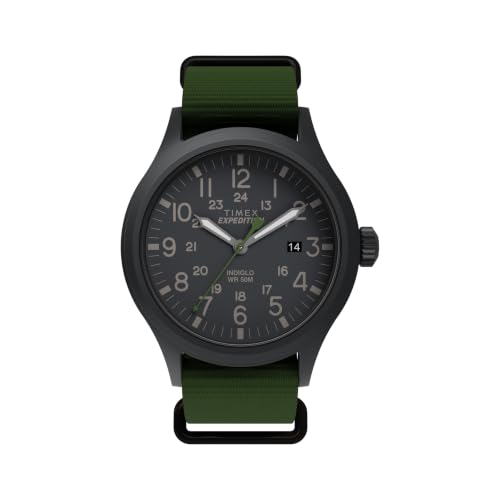
 Timex Men's Expedition Rugged Core Analog 43mm WatchOne Size5.1 x 5.1 x 5.1 inches0.1 poundsCheck on Amazon
What's inside
- What a Workshop Actually Demands From a Watch
- Casio G-Shock GA100-1A1 — Analog-Digital Toughness With Magnetic Resistance
- Casio G-Shock DW5600UE-1CR — The Classic Square Digital G-Shock
- Casio AE-1500WH-5AVCF — Extra Large Display and a 10-Year Battery Claim
- Timex Expedition Scout 40mm — A Rugged Field Watch With INDIGLO
- Timex Expedition Rugged Metal Field 45mm — Larger Field Dial With a Date Window
- Timex Expedition Rugged Core Analog 43mm — Partial Numerals, Sized for an 8-Inch Wrist
- Timex Expedition 41mm Digital — 100-Hour Chronograph, Three Alarms, 100m
- COSSINIGE Men’s Digital Waterproof Military Watch — Minimalist and Ultra-Thin
- Buying Guide: Matching a Rugged Watch to Your Kind of Workshop Work
- Comparison Summary: The Eight Watches Side by Side in Words
- Care and Use in an Oily, Gritty Environment
- Check prices on Amazon
- FAQ
As an Amazon Associate I earn from qualifying purchases. This post may contain affiliate links at no extra cost to you.
A workshop is one of the least forgiving places a watch can spend its working life. A wrist that reaches into an engine bay knocks against brackets, hose clamps, and sharp casting edges. The same wrist then slides under a vehicle where light is poor, space is tight, and a dropped fastener can cost twenty minutes. Add oil, grease, brake cleaner, coolant, vibration from air tools, and the magnetic fields around alternators and motors, and an ordinary dress watch or a delicate fashion piece starts to look like the wrong tool for the job.
This guide looks at rugged watches for mechanics through that specific lens. Rather than chasing luxury features or smartwatch notifications, our research focused on the listings for eight work-oriented watches and on what their published details actually say: shock resistance, water resistance as stated by the maker, backlights for low-light reading, display size and layout, alarms and timers that can help pace a job, and strap types that behave differently when they get covered in oil. Where a detail is not in a listing title, we do not invent it, and where advice is general workshop knowledge, we present it as general guidance rather than as a claim about a single model.
Disclosure: this site is a product research site. Some links on this page go to Amazon, and the site may receive a commission on qualifying purchases made through those links. As an Amazon Associate we earn from qualifying purchases. That relationship does not change the order in which watches appear here, and it does not add features to a watch that its listing does not describe. Readers should always confirm the current listing, seller, and specifications on Amazon before buying, because listings, bundles, and strap options can change.
There is also a safety conversation that belongs at the start, not buried at the end. Working around a car battery, a metal watch band or a loose metal bracelet can create a short-circuit risk if it bridges terminals or contacts live connections. Many mechanics remove metal jewellery entirely around batteries and electrical work, and that habit is worth copying regardless of which watch you choose. Several watches in this roundup use resin, fabric, or leather straps rather than metal bracelets, which changes the risk picture but does not remove the need for care. No watch makes electrical work safe by itself. Follow your shop procedures, disconnect power where the job requires it, and take the watch off when the task calls for bare, unencumbered wrists.
What a Workshop Actually Demands From a Watch
Shock resistance matters because knocks are not rare events in a shop; they are the background noise of the day. A watch gets clipped reaching past a strut tower, bumped when a breaker bar slips, and rattled when an impact wrench is running nearby. Listings that explicitly describe a watch as shock resistant or tough are therefore more relevant here than listings that only talk about style. Two Casio G-Shock models lead this list precisely because shock resistance is in their core description, while the Timex Expedition models lean on a rugged field-watch tradition and the COSSINIGE entry positions itself for work, tactical, and sports use.
Readability is the second demand. Under a vehicle, in a wheel arch, or inside a dark engine bay, you do not have time to angle your wrist toward a distant shop light and squint. A backlight — LED on the Casio digital models, INDIGLO on the Timex models in this list — turns a guess into a quick glance. Large displays help too, which is why the Casio AE-1500, described with an extra large display, earns attention even though it sits in a different part of the Casio range from the G-Shock models. Full Arabic numerals on several Timex dials serve the same purpose in analog form: numbers you can read without translating tick marks in your head.
The third demand is tolerance for mess. Oil and grease do not just make a watch dirty; they work into fabric weaves, soak into leather, and leave films on cases and crystals. As a general rule for this category, a resin band is usually easier to wipe down and rinse than a fabric or leather strap, which can hold grime and shop smells for longer. That does not make fabric or leather a bad choice — many mechanics prefer how they feel and adjust — but it does mean the cleaning routine, and the willingness to replace a strap, should be part of the buying decision from day one.
Casio G-Shock GA100-1A1 — Analog-Digital Toughness With Magnetic Resistance
The Casio G-Shock GA100-1A1 is described in its listing as a men’s tough analog-digital watch that is 200M water resistant and both shock and magnetic resistant. For a mechanic, that combination is the headline. Analog hands give an at-a-glance read in bright light, the digital side supports the functions digital displays handle well, and the stated magnetic resistance speaks directly to a workshop concern: the fields around alternators, starter motors, and other electrical equipment are part of daily life in a bay, even if no watch should be treated as immune to every field it might meet.
Shock resistance is the other half of its appeal. G-Shock as a line is built around surviving knocks, and this listing states that protection plainly rather than implying it through styling. A mechanic who regularly reaches into tight bays, works around lifts, and sets tools down hard will value a watch whose listing leads with toughness over decoration. The 200M water resistance stated in the listing is also the joint-highest figure in this roundup, which gives confidence for hand-washing, splashes, rain on a recovery job, and the general wet reality of coolant and screenwash work — again, within whatever guidance Casio gives for that model.
Who is it best suited to? In our research, this is the pick for the mechanic who wants one watch that leans hardest into protection: shock resistance for knocks, magnetic resistance named in the listing for an electrically busy environment, and an analog-digital layout for readers who like hands but still want digital information. It is also a sensible choice for someone who has already broken a slimmer watch and wants to move up a toughness tier rather than sideways.
What should you check before buying? Confirm the exact variant on the listing, because G-Shock model codes cover many colour and regional versions. Check how the analog-digital layout suits your eyes — some readers love the layered look, others prefer a plain digital readout. And think about bulk as a general category point: tough watches often wear larger, and a larger watch can catch more often in tight spaces, so if you spend your days wrist-deep in compact engine bays, balance protection against clearance.
Casio G-Shock DW5600UE-1CR — The Classic Square Digital G-Shock
The Casio G-Shock DW5600UE-1CR listing describes a classic digital square watch that is shock resistant, 200M water resistant, and fitted with an LED backlight. The square digital format is one of the most recognisable shapes in work watches, and its appeal for a mechanic is straightforward: a digital readout with no hands to interpret, a compact and purposeful profile, and the same headline water resistance figure as the GA100 above.
The LED backlight deserves emphasis for under-vehicle work. When you are on a creeper with a torch clamped between your teeth or balanced on a chassis rail, a wrist backlight you can trigger quickly is a small feature that saves repeated small frustrations. Digital time also suits jobs where you want an exact minute rather than an approximate hand position — timing how long an engine has been cooling, for example, or noting when a diagnostic cycle started.
Compared with the GA100, the DW5600 makes a different trade. It gives up the analog-digital combination in favour of a purely digital, classic square presentation. Readers who want the cleanest possible glance, or who simply prefer the original square G-Shock idea, will likely prefer this one. Readers who want hands for quick reads in bright sunlight may lean the other way. Neither answer is wrong; it is a layout preference layered on top of a shared foundation of stated shock resistance and 200M water resistance.
In a buying shortlist, we checked this model against the rest of the list on three points: stated protection, backlight provision, and simplicity. It scores its place by being the distilled version of the idea — a shock resistant digital watch with a backlight and a high stated water resistance, without extra dial complexity. For a first rugged work watch, or for a mechanic who wants a backup watch kept in a toolbox drawer, that simplicity is a genuine virtue. Confirm the suffix and region code on the listing before ordering, since similar-looking DW5600 variants exist across markets.
Casio AE-1500WH-5AVCF — Extra Large Display and a 10-Year Battery Claim
The Casio AE-1500WH-5AVCF listing is unusually detailed, and several of its stated details map neatly onto workshop life. It is described as a digital sports watch with an extra large display, a khaki resin band, 100M water resistance, a 10-year CR2032 battery, dual time, an LED backlight, a stopwatch, a countdown timer, and 5 alarms. Start with the display: extra large digits are exactly what tired eyes want at the end of a long shift, in poor light, at arm’s length under a ramp.
The resin band matters here too. Following the general guidance earlier in this guide, resin is typically the easiest strap material in this roundup to wipe clean after contact with oil and grease, and the khaki colour described in the listing will also show workshop grime less starkly than a bright or white strap would. The stated 10-year battery life, tied in the listing to its CR2032 cell, speaks to a different kind of convenience: fewer battery changes over the life of a work watch means fewer openings of the case and fewer interruptions, although readers should still follow maker guidance when a change is eventually due.
The timing suite is where this watch quietly becomes a shop assistant. A stopwatch and countdown timer, both named in the listing, cover everything from timing a drain to counting down a curing window. Five alarms is more than most people use for waking up; in a shop they can mark the start of a shift, a mid-morning parts call, a lunch break, a timed check on a vehicle left running a cycle, and an end-of-day reminder. Dual time helps anyone ordering parts or speaking with suppliers in another time zone. None of that requires inventing features — it is all in the listing description we were given to work from.
Its stated water resistance is 100M, lower than the 200M figures on the two G-Shock models, and its listing does not use the G-Shock name or describe it with the same shock language. That is the honest trade to weigh: this model leans toward display size, battery life, alarms, and strap practicality, while the G-Shock models lean toward stated toughness. For many mechanics, especially those whose main enemies are poor light, grease, and forgotten timers rather than heavy knocks, that trade will make complete sense.
Timex Expedition Scout 40mm — A Rugged Field Watch With INDIGLO
The Timex Expedition Scout 40mm listing describes a watch with a black dial, a green fabric strap, a rugged field design, full Arabic numerals, an adjustable strap, an INDIGLO backlight, and 50m water resistance. This is the analog field-watch entry point in the roundup, and its character is different from the Casio digitals: a traditional dial, clear numerals, and a strap you adjust like a classic field watch.
Full Arabic numerals are a practical feature, not a styling footnote. In a quick glance — checking whether you have ten minutes or forty before the next booked job — a dial that shows the numbers directly removes a step of mental translation. The INDIGLO backlight addresses the analog watch’s traditional weakness in the dark, giving the dial a way to be read under a vehicle or in an unlit corner of a workshop. The listing states 50m water resistance, the lowest figure in this group, so this is the model where following maker guidance about water exposure matters most; it is positioned for splashes and everyday work rather than for readers who want the highest stated rating.
The green fabric strap needs an honest discussion. Fabric straps are comfortable, adjustable as the listing notes, and suit the field-watch look, but as general category guidance, fabric will absorb oil and workshop grime more readily than resin and will take longer to clean and dry. A mechanic who loves the Scout’s dial may simply accept a strap-replacement routine, or keep this watch for lighter duties and front-of-shop work. That is not a flaw in the watch; it is a matching exercise between material and environment.
We see the Scout as the choice for the mechanic who wants an analog watch that still respects workshop reality: rugged field design in the listing, numerals that read fast, and a backlight for dark spaces. It is also a natural pick for someone who dislikes digital displays on principle and wants their work watch to look like a traditional watch at the end of the day. Check the listing for the exact strap and dial variant, since Expedition names cover a wide family of similar models.
Timex Expedition Rugged Metal Field 45mm — Larger Field Dial With a Date Window
The Timex Expedition Rugged Metal Field listing describes a 45mm watch with a gray case, a cream dial, full Arabic numerals, a date window at 3 o’clock, an adjustable leather strap, and an INDIGLO backlight. At 45mm as stated, it is one of the larger watches in this roundup, and that size is its main argument: a bigger dial gives numerals and hands more room, which can make a glance faster for readers who prefer analog information presented generously.
The cream dial with full Arabic numerals is a readability choice in bright conditions. In a well-lit bay, a light dial with clear numerals can be read without triggering a backlight at all, while the INDIGLO backlight named in the listing covers the darker moments. The date window at 3 o’clock is a small but real workshop convenience — paperwork, warranty notes, service records, and parts orders all run on dates, and having the date on the wrist saves reaching for a phone with dirty hands just to fill in a form correctly.
The adjustable leather strap is the point that needs the most thought for this audience. Leather, as general guidance for work gear, does not love oil, solvents, or repeated soaking; it can stain, stiffen, and hold smells, and it usually needs more gentle care than resin. A mechanic who works mainly in diagnostics, inspection, service reception, or lighter mechanical tasks may find that trade perfectly acceptable for the comfort and appearance leather offers. A mechanic who spends all day in oil changes and drivetrain work should weigh it more carefully, or plan on strap care and eventual replacement as part of ownership.
Size cuts both ways, too. A 45mm field watch is easy to read and feels substantial, but in a tight engine bay a larger case has more chance of catching on looms, brackets, and covers. Our research notes therefore place this model as a strong choice for readers who prioritise dial clarity and a traditional field-watch presence, and who work in roles where the watch is slightly less likely to be dragged across castings all day. As with every model here, verify the exact case, dial, and strap combination on the live listing, because product photography and variant names can differ between sellers.
Timex Expedition Rugged Core Analog 43mm — Partial Numerals, Sized for an 8-Inch Wrist
The Timex Expedition Rugged Core Analog listing describes a 43mm watch with a black case, an adjustable black 20mm strap, a fit for up to an 8-inch wrist, and partial Arabic numerals. That wrist-size detail is more useful than it first appears. Mechanics with larger wrists often find standard straps run short, especially over a sleeve cuff or when a watch is worn a little loose to stay comfortable through a shift, so a listing that states its fit range up to 8 inches answers a real buying question directly.
Partial Arabic numerals give this dial a different reading style from the full-numeral Scout and Rugged Metal Field models. Some readers prefer the cleaner, less crowded face that partial numerals create, using markers for the remaining hours. Others, especially when reading at speed in poor light, prefer every hour numbered. There is no universal winner; it depends on how your eyes work and how often you read the watch in genuinely dark conditions. This listing does not name a backlight in the details provided for this guide, so readers for whom a backlight is essential should check the live listing carefully and compare with the INDIGLO-equipped models elsewhere in this roundup.
The black case and black strap combination suits workshop life in one simple way: it hides the visual evidence of the job. Grime that would shout on a cream dial surround or a light strap is less obvious here, although hiding dirt is not the same as removing it, and the cleaning advice later in this guide still applies. A dark, understated watch also moves easily between the workshop and everywhere else, which matters for a watch bought to be worn all day rather than only on shift.
In shortlist terms, we checked this model as the larger-wrist analog option: stated 43mm size, stated fit to 8 inches, an adjustable 20mm strap as described, and a rugged core positioning in its name and listing. If you have been frustrated by straps that only just fasten, start your comparison here and with the other adjustable-strap models, and measure your wrist before ordering rather than guessing from photographs.
Timex Expedition 41mm Digital — 100-Hour Chronograph, Three Alarms, 100m
The Timex Expedition 41mm listing describes a watch with a green case, a digital dial, a black strap, a 100-hour chronograph with lap and split times, three alarms, an INDIGLO backlight, and water resistance to 100m. This is Timex’s digital answer in the roundup, and its chronograph is the standout stated feature: a 100-hour range is far beyond a lunch-break timer, and lap and split times are named explicitly in the listing.
Why would a mechanic want lap and split timing? Consider a diagnostic session with several stages, an intermittent fault you are logging by intervals, or a series of timed checks across multiple vehicles in a day. A chronograph that records laps lets you mark stage times without stopping the overall count, which is a cleaner way to build a picture than a phone timer buried under gloves and grease. Three alarms, also stated, give enough reminders for shift landmarks without the five-alarm depth of the Casio AE-1500. The INDIGLO backlight keeps the digital dial usable in the dark spaces where digital watches otherwise depend entirely on ambient light.
Its stated water resistance to 100m matches the Casio AE-1500 figure and sits above the Scout’s stated 50m, which will matter to readers who wash hands constantly, work around coolant, or get caught in rain on outdoor jobs. The green case and black strap combination, as described, also follows the practical dark-colour logic discussed above: a work watch that does not advertise every splash of grime is easier to live with between cleans.
Choosing between this and the Casio digitals comes down to emphasis. This model leans on its long chronograph with lap and split functions and its three alarms. The AE-1500 leans on an extra large display, dual time, five alarms, and a stated 10-year battery. The DW5600 leans on G-Shock shock resistance and a higher stated water resistance. All three are digital, all three have backlights as described, and all three solve the same basic problem — telling and timing the day in a hard environment — with different priorities that the listings state clearly enough to choose between.
COSSINIGE Men’s Digital Waterproof Military Watch — Minimalist and Ultra-Thin
The COSSINIGE listing describes a men’s digital waterproof military wrist watch in black, positioned for work, tactical, and sports use, with a minimalist ultra-thin design. That last phrase is what separates it from everything else in this roundup. Most rugged watches answer the toughness question by adding bulk; this one, as described, answers a different workshop problem — clearance — by going thin and minimalist.
Think about the jobs where bulk hurts. Sliding a wrist past a loom to reach a connector, working inside a dashboard, or reaching along a bulkhead where a thick case scrapes and catches on every edge: in those moments, a slimmer watch is simply less in the way. A minimalist digital layout also suits readers who want time and basic digital clarity without layered analog-digital dials or crowded field-watch faces. The black colour described in the listing keeps it understated and, as with the other dark watches here, forgiving about the appearance of everyday grime between cleans.
Honesty about information matters with this entry. The listing details provided for this guide describe it as digital, waterproof, and military in positioning, but they do not state a specific water resistance figure, a shock resistance claim, or a backlight in the way the Casio and Timex listings do. We therefore do not assign it any of those figures or features here. Readers considering it should read the live listing in full, check exactly what the seller states, and weigh that against the more specifically described models above — especially if shock resistance or a named backlight is a must-have rather than a nice-to-have.
Where does it fit, then? As the low-profile option for mechanics whose work is heavy on tight-access jobs, electronics-adjacent tasks, and general work, tactical, and sports wear as the listing positions it — and for readers who simply dislike wearing a large watch all day. Its minimalist, ultra-thin description is a legitimate design answer to a real problem, provided you buy it with eyes open about what its listing does and does not claim, and provided you apply the same battery-area safety habits as with any watch.
Buying Guide: Matching a Rugged Watch to Your Kind of Workshop Work
Start by naming your dominant problem, not by naming a brand. If your dominant problem is knocks — dropped watches, clipped cases, work around lifts and heavy components — begin with the listings that state shock resistance directly: the two G-Shock models. If your dominant problem is darkness — under-vehicle work, night shifts, unlit storage areas — begin with the models whose listings name a backlight, and decide whether you prefer an LED digital backlight or the INDIGLO approach on the Timex dials. If your dominant problem is reading the time quickly at arm’s length, the extra large display of the AE-1500 and the full-numeral analog dials deserve first attention.
Next, be honest about mess. Oil-heavy work favours straps you can wipe and rinse, which as general guidance points toward resin, and toward dark colours that tolerate the look of a working week. Fabric and leather straps bring comfort, adjustability, and appearance that many readers genuinely prefer, but they ask for more cleaning patience and a realistic replacement plan. Neither route is a character test; the mistake is buying a strap material without thinking about what your specific job will do to it in the first month.
Then match the timing tools to your routine. Heavy timer users — sealants, curing products, timed diagnostics, soak periods — should value a countdown timer and stopwatch or chronograph as named in the listings. Readers running their day by reminders should count the alarms: five on the AE-1500 as described, three on the Timex Expedition digital. Anyone coordinating across time zones should note the AE-1500’s stated dual time. And anyone who has suffered a dead watch at an annoying moment should weigh the AE-1500’s stated 10-year battery claim, while remembering that every battery claim depends on usage patterns the maker defines.
Fit deserves its own paragraph because it is so often skipped. Measure your wrist, read any stated fit range — the Rugged Core Analog listing’s up-to-8-inch note is the clearest example here — and think about whether you wear a watch over a cuff, under gloves, or loose enough to slide away from a hot or sharp surface. Think about clearance, too: larger stated sizes such as 45mm and 43mm read beautifully but catch more easily, while the ultra-thin positioning of the COSSINIGE exists precisely for readers who have the opposite experience. There is no correct size, only a correct size for your wrist and your bays.
Finally, apply the safety and replaceability checks. Around batteries and electrical systems, follow shop procedure, remove metal jewellery risks, and remember that strap material is only one part of electrical safety. And buy within a replaceability mindset: a work watch is a consumable tool with a long life, not a heirloom. Choosing a model you could replace without dread encourages you to actually wear it for the worst jobs, which is the entire point of a rugged watch for mechanics.
Comparison Summary: The Eight Watches Side by Side in Words
For stated protection, the two G-Shock models lead the conversation: both listings state shock resistance and 200M water resistance, and the GA100-1A1 adds magnetic resistance and an analog-digital layout, while the DW5600UE-1CR adds an LED backlight and the classic square digital format. For stated water resistance, the next tier in the listings is 100 metres or 100M, shared by the Casio AE-1500 and the Timex Expedition 41mm digital, followed by the Scout’s stated 50m. The COSSINIGE listing describes its watch as waterproof without a figure in the details provided here, so it sits outside that numeric comparison.
For readability, each model takes a different route. The AE-1500 bets on an extra large digital display. The Scout and the Rugged Metal Field bet on full Arabic numerals, with the Rugged Metal Field adding a cream dial, a larger stated 45mm size, and a date window. The Rugged Core Analog offers partial numerals in a stated 43mm black case. The digitals — DW5600, AE-1500, Timex Expedition digital, and COSSINIGE — offer the directness of numbers on a screen, with backlights named for the first three of those in their listings.
For timing depth, the Timex Expedition digital’s stated 100-hour chronograph with lap and split times is the longest-range timing tool named here, the AE-1500 counters with a stopwatch, countdown timer, dual time, and five alarms, and the Timex digital offers three alarms. For strap practicality in oil, the AE-1500’s stated khaki resin band is the easiest-cleaning proposition as a general category judgement, the fabric Scout strap and leather Rugged Metal Field strap ask for more care, and the black straps on the Rugged Core Analog and Timex digital hide grime visually. For tight access, the ultra-thin COSSINIGE is the outlier by design.
No single watch wins every column, which is exactly what you would expect from honest listings. The right answer is the watch whose stated strengths line up with your stated problems: protection, darkness, mess, timing, fit, or clearance. Use the comparison above to narrow to two, then read both live listings completely before deciding.
Care and Use in an Oily, Gritty Environment
Clean the watch the way you would clean a tool that has to keep working. Wipe oil and grease off the case and strap regularly rather than letting it build up, rinse where the maker’s guidance allows it, and dry the watch properly instead of leaving it damp in a locker. Resin generally tolerates this routine most easily; fabric needs washing and real drying time; leather needs gentler handling and should not be soaked. Whatever the material, grit is the enemy — a strap cleaned of oil but still holding grit will wear against your skin and against itself.
Protect the watch during the worst jobs rather than relying on toughness claims. Solvents, brake cleaner, and strong chemicals are harsher than the water and splashes that water resistance figures describe, so removing the watch for heavy chemical work is sensible general practice. The same applies to welding, grinding sparks, and battery work: shop procedures come first, and a watch is never protective equipment. When you do wear it, check periodically that spring bars, strap holes, and adjustment points are not clogged or damaged, because a watch lost inside an engine bay or under a vehicle is a problem far bigger than a dirty strap.
Check prices on Amazon
Live listings for the shortlist in this guide are pulled from Amazon below, so prices and availability are always current at the moment you look.


Casio G-Shock DW5600UE-1CR Classic Digital Square Watch Shock Resistant 200M Water Resistant LED Backlight 5-Year Battery


FAQ
Which of these watches is the toughest on paper? Based only on the listing details used for this guide, the two Casio G-Shock models make the strongest stated case: both describe shock resistance and 200M water resistance, and the GA100-1A1 also states magnetic resistance. That is a comparison of published claims, not a promise that any watch survives every impact.
Which watch is easiest to read in the dark? Look for a named backlight. The Casio DW5600 and AE-1500 listings name an LED backlight, and the Timex Scout, Rugged Metal Field, and Expedition digital listings name an INDIGLO backlight. The AE-1500 also adds an extra large display, which helps in poor light even before the backlight is used.
Which strap is best around oil and grease? As general category guidance, resin is usually the easiest to wipe down and rinse, which favours the AE-1500’s stated khaki resin band for oil-heavy work. Fabric and leather can be comfortable and attractive, but they absorb more grime and need more care, so plan cleaning and eventual replacement accordingly.
Is it safe to wear a watch around a car battery? Wear one cautiously and follow your shop’s procedures. A metal band or bracelet can create a short-circuit risk around battery terminals, which is why many mechanics remove metal jewellery for electrical work. The resin, fabric, and leather straps in this roundup change that specific risk, but they do not make any watch a safety device.
What do the water resistance numbers mean for workshop use? They are maker-stated ratings from each listing — 200M on the G-Shock models, 100M or 100m on the AE-1500 and Timex digital, and 50m on the Scout. Treat them as guidance for splashes, washing, and wet work, and always follow the individual maker’s instructions about buttons, heat, steam, and chemicals rather than assuming a number covers every situation.
Which watch suits larger wrists? The Timex Expedition Rugged Core Analog listing explicitly states a fit up to an 8-inch wrist with an adjustable black 20mm strap, making it the clearest starting point here for larger wrists. Whichever model you choose, measure your wrist and read the listing’s fit information before ordering.
Do I need a smartwatch instead? That depends on whether you want notifications and connected features more than simplicity and durability. This guide deliberately focuses on traditional rugged watches whose listings emphasise toughness, backlights, and timing tools. Readers who want connected features should compare those categories separately and weigh battery routine, screen durability, and cost of replacement in a workshop setting.
Our closing research note is simple. A rugged watch for a mechanic is not bought on a single headline feature; it is bought on the match between stated protection, readable light, a strap that tolerates your mess, timing tools you will actually use, and a fit that survives a full shift. The eight watches above cover that space from the shock resistant G-Shock square to the ultra-thin minimalist digital, and the best choice is the one whose listing claims line up most honestly with the work you do every day.