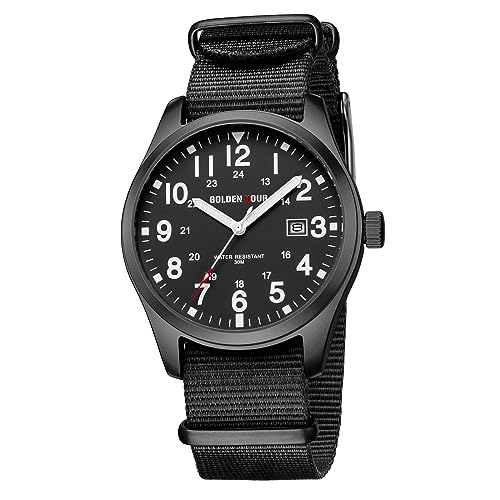
Our Top Picks

What's inside
- Why a second hand still earns its place at the bedside
- The pulsometer scale: a dial that does arithmetic for you
- Twenty-four-hour markings and military time on the dial
- Legibility: the specification that decides everything else
- Water resistance and surviving alcohol, gel, and disinfectant
- Bare below the elbows, and choosing between wrist and fob
- Quartz accuracy and the battery cycle
- Strap materials under hygiene rules
- Case size and small wrists
- Examinations, OSCE stations, and clinical placements
- Choosing on clinical criteria, not on price
- More timed tasks than the pulse count
- Second-hand behaviour: stepping, sweeping, and subdials
- Cleaning a fob or watch properly
- Materials, skin, and allergies
- Time, documentation, and the rhythm of a shift
- What experienced nurses actually look for
- Special settings that reshape the choice
- Check prices on Amazon
- Handing the watch its place in a wider kit
As an Amazon Associate I earn from qualifying purchases. This post may contain affiliate links at no extra cost to you.
This site is reader-supported in a specific, limited way: when a clinician follows one of our links and buys through the retailer, a referral fee comes back to us, and that fee never changes the clinical criteria applied below. As an Amazon Associate we earn from qualifying purchases. Analogue watches survive in modern wards and clinics for reasons that have nothing to do with nostalgia. A sweeping or stepping second hand turns the watch into a timing instrument for pulse and respiration counts, a fob on a pin removes the watch from the wrist entirely where infection-control policy demands bare skin below the elbow, and a quartz movement keeps dependable time through years of shifts without winding, charging cables, or software updates. This guide evaluates analogue watches for nurses against published clinical practice, nursing examination requirements, manufacturer specifications, and infection-control guidance, so the choice rests on legibility, hygiene, and timing function rather than on fashion or price tags.
It helps to state plainly what an analogue watch cannot do in a clinical setting. It will not record observations, transmit alerts, count steps, or integrate with an electronic chart. What it does, it does with unusual purity: it shows elapsed seconds against a fixed scale, readable at arm’s length, in steam, under gloves-adjacent conditions, and at the end of a battery that lasts years. Nurses who also want connected features for life outside the ward often keep two instruments for two worlds, and our guides to best analog smartwatches and best hybrid smartwatches explore that hybrid territory for readers weighing a second, smarter companion piece.
Why a second hand still earns its place at the bedside
Counting pulse and respiration against a moving hand
Manual pulse assessment remains a core nursing skill because a fingertip on a radial artery reports qualities no quick glance at a monitor conveys as directly: rhythm regularity, amplitude, and the character of the beat. Standard clinical teaching times the count against a second hand, counting beats for thirty seconds and doubling, or for a full sixty seconds when the rhythm is irregular, the patient is a child, or the reading will drive a decision. An analogue second hand supports this task in a way digital numerals do not, because the clinician watches position rather than reading changing digits: the hand sweeping from the twelve to the six is thirty seconds, judged peripherally while the eyes stay on the patient and the fingers stay on the pulse. That peripheral readability is the deepest reason the format persists.
Respiratory rate is counted the same way and benefits even more, because the observation must be discreet. Patients who know their breathing is being watched alter it, so experienced nurses count respirations immediately after the pulse, fingers still positioned as if the pulse count continues, eyes moving between chest rise and the second hand. A clear analogue dial lets that count happen in fifteen or thirty second windows with a confidence that a tiny digital counter, demanding direct gaze and mental arithmetic under interruption, rarely matches on a busy ward. Clinical skills textbooks describe exactly this sequence, pulse then respiration under one continuous posture, and it presumes a legible second hand as the timing reference. When educators specify equipment for practice labs, a visible second hand is the requirement that eliminates most fashion watches from consideration.
The fob watch and infection control
The second survival route for analogue timekeeping is the fob watch: a small dial inverted on a pin or clip, worn on the chest or tunic, read by lifting and tilting it toward the face. Its clinical logic is infection control. Hands and wrists are the most contaminated surfaces a nurse carries between patients, and a wristwatch obstructs thorough hand hygiene at the wrist line, harbours moisture and organisms under its case and strap, and breaches bare-below-the-elbows policies outright. A fob moves timekeeping off the body part that touches patients and sinks, keeping the dial visible for counts while leaving wrists and forearms completely bare for washing and for alcohol gel application up to the elbow. Many uniform policies that ban wristwatches explicitly permit or even supply fobs, which is why the format dominates student nurse kit lists in several health systems.
The pulsometer scale: a dial that does arithmetic for you
Some analogue watches carry a pulsometer scale, a graduated track printed around the dial or bezel, calibrated to a stated number of pulse beats. The clinician starts the second hand, or a chronograph hand where fitted, at the first beat, counts the calibration number of beats, and reads the heart rate directly from the scale where the hand points when the count completes. A scale graduated for thirty beats is common: count thirty beats, and the hand indicates beats per minute without any doubling or mental division at the bedside. The mechanism is pure geometry, converting an elapsed-seconds measurement into a rate through the printed spacing of the graduations, and it appears on watches designed for medical use precisely because it removes arithmetic from a task performed under interruption, fatigue, and time pressure.
Using a pulsometer correctly requires knowing its calibration base, which is printed on the dial, and counting discipline: begin timing on a beat counted as zero, not one, or the rate reads systematically high. The scale assumes a reasonably regular rhythm across the counted beats; with an irregular pulse, clinical guidance still favours a full sixty-second count, and the pulsometer should be treated as a convenience for regular rhythms rather than a shortcut around assessment. Legibility of the scale itself matters, since the graduations crowd together at the high-rate end of the track, exactly where a tachycardic reading needs precision. Nurses who rarely use the scale lose nothing by its presence, but those on observation-heavy wards, post-anaesthetic recovery, and triage find that a well-printed pulsometer converts a two-step task into a single glance several dozen times a shift.
Twenty-four-hour markings and military time on the dial
Clinical documentation runs on the twenty-four-hour clock. Drug rounds, observation charts, fluid balance records, and handover notes all express time unambiguously as 14:00 or 23:30, because a misread twelve-hour entry can displace a medication by half a day. Analogue dials that print the twenty-four-hour equivalents inside or outside the main hour numerals, thirteen through twenty-four alongside one through twelve, quietly reinforce that system every time the wearer glances down. For students still internalising the conversion, the printed inner track removes the small daily friction of translating an analogue face into charting time, and it reduces the classic early-placement error of documenting a morning observation in evening hours. Examiners and mentors notice such details less than the errors they prevent, which is the nature of good design in safety-critical routines.
The twenty-four-hour subdial found on some watches serves a different purpose: it displays the hour in a separate small register, useful for staff working nights who track whether an ambiguous glance means early morning or late afternoon during disrupted sleep cycles. For most ward purposes the printed inner numerals are the more valuable feature, since they cost nothing in weight or complexity and never need setting. When comparing dials, check that the twenty-four-hour figures are large enough to read but subordinate to the main hour track, because a dial that shouts both scales equally creates the very ambiguity it exists to remove. Crisp hierarchy, main hours dominant, military equivalents present but quieter, is the hallmark of dials designed with charting practice in mind rather than decorated with numerals for their own sake.
Legibility: the specification that decides everything else
Numerals, contrast, and dial layout
A clinical watch is read in bad conditions by default: at an angle, in motion, under mixed lighting, sometimes through tired eyes at the end of a night shift. Legibility research and dial design practice converge on a few robust rules. Full Arabic numerals outperform baton indices for speed of reading, because a numeral names the hour directly while an index requires positional interpretation. High contrast between dial and markings, most reliably black on white or white on black, beats every coloured fashion combination under ward lighting. A second hand in a contrasting colour, frequently red in medical designs, separates the timing element from the hour and minute hands at a glance, which matters when the count, not the hour, is the reason for looking. Luminous material on hands and hour markers supports night observation rounds where lights stay low for sleeping patients.
Dial clutter is legibility’s enemy. Date windows, decorative subdials, brand text, and printed slogans all compete with the numerals and the second hand for the eye’s first fixation. Clinical dials tend toward austerity: twelve numerals, a minute track with individual minute marks, a clean second hand, and nothing else that does not earn its space. The minute track deserves specific attention, because timing a thirty-second count means reading the second hand against minute divisions, and a track printed with clear subdivisions lets the clinician confirm start and end positions precisely. Nurses assessing watches in a shop or from photographs should perform the glance drill described in human-factors guidance: look away, glance for one second, look away, and state the time and the second-hand position. A dial that survives that drill will survive a ward round.
Lume and night-shift readability
Luminous compounds divide into two families. Paint-based phosphorescent material charges under light and glows for hours, with modern strontium aluminate compounds glowing far longer and brighter than older zinc sulphide paints. Tritium gas tubes, sealed glass capsules lined with phosphor and filled with a minute quantity of tritium, glow continuously without charging and keep working through a long windowless night shift, at the cost of a finite service life measured in years as the gas decays. For ward use, paint-based lume recharged under corridor lighting between rounds is usually sufficient, because observation rounds pass through lit spaces regularly. The practical check is whether the second hand carries lume as well as the hour and minute hands; many watches omit it, and a glowing hour hand alone does nothing for a respiratory count in a darkened bay at three in the morning.
Water resistance and surviving alcohol, gel, and disinfectant
Ward life exposes a watch to water and chemicals in a pattern unlike any sport. Hands are washed dozens of times per shift, alcohol-based gel is applied constantly, surfaces and equipment are wiped with disinfectant, and a fob or a permitted wristwatch sits in the splash zone of all of it. Water-resistance markings need translating: a watch marked for thirty metres of static pressure is splash-resistant only and should not be immersed, fifty metres tolerates showering-level exposure, and one hundred metres indicates gaskets and a case construction suited to swimming-level immersion. The ratings derive from static laboratory pressure, not from the dynamic pressure of a hand under a tap, so conservative interpretation is the professional habit. For a fob watch, which never goes under a tap, the rating matters less than the case sealing against ambient humidity, steam, and the occasional splash during bed bathing.
Chemical resistance is the less advertised half of the story. Alcohol and disinfectant wipes attack materials selectively. They dry and crack leather, degrade some polyurethane straps over time, cloud certain plastic crystals, and strip printed dial details if a case leaks. Stainless steel cases shrug off alcohol wiping indefinitely, which is one reason steel dominates clinical designs. Silicone straps tolerate alcohol and dilute disinfectants well and rinse clean under a tap. Acrylic crystals scratch but can be polished; mineral glass resists scratching better; sapphire resists nearly everything a ward offers but appears on costlier cases. Manufacturer care instructions for medical-market watches commonly specify wiping the case with a soft cloth and mild solution and avoiding solvent contact with straps and seals, and following that guidance preserves the gaskets on which the water rating depends, because alcohol repeatedly soaking a crown gasket ages the rubber compounds that keep moisture out.
Readers who spend their off-duty hours in very different environments sometimes ask how clinical watches compare with connected pieces for daily wear, and our overviews of best fashionable smartwatches for women and best round smartwatches map those style-led categories for anyone building a two-watch rotation.
Bare below the elbows, and choosing between wrist and fob
Bare-below-the-elbows policy, embedded in the infection-control guidance of many hospital systems, requires short sleeves or sleeves rolled above the elbow, no wristwatch, no bracelets, and no rings beyond a plain band, whenever staff are in direct patient contact. The reasoning is mechanical as much as microbiological: hand hygiene technique requires washing and gelling the wrists and forearms, and anything worn there either blocks the technique or becomes a contaminated surface pressed against the next patient. A nurse working under such a policy does not have a wristwatch choice to make at all during clinical hours. The choice becomes which fob, pendant, or belt-clip format delivers the second hand the work requires while complying fully with the uniform code of the employing organisation.
Fob designs vary in attachment and orientation. The classic brooch pin fastens through a reinforced tab on the uniform; silicone fob holders stretch over a round case and pin on, adding wipe-clean protection and a colour choice; clip and retractable-reel versions hang from a belt loop or pocket. The dial faces outward upside down relative to the wearer, so lifting the bottom edge tilts the numerals upright to the wearer’s view, a small ergonomic detail that cheap copies sometimes get wrong by printing the dial for an observer instead. Pin sharpness, clasp security, and the ability to remove the watch from its holder for separate cleaning all matter in daily use. Silicone holders score well on hygiene because holder and watch can be separated and each washed properly, whereas a permanently mounted fob accumulates grime at the case edge that no surface wipe reaches.
Where wristwatches are permitted, typically in community, outpatient, administrative, or private-duty settings with their own dress codes, the hygiene obligations follow the watch. It must tolerate being wiped down at every hand-hygiene moment it might compromise, sit high enough not to slide into the wash zone, and come off instantly when a task demands full barrier precautions. Many nurses in mixed settings adopt a personal rule stricter than policy: fob on the ward, wristwatch everywhere else. That division also protects the wristwatch itself from the chemical exposure described above, extending the life of straps and seals that were never designed for forty alcohol applications a day.
Quartz accuracy and the battery cycle
Quartz regulation is what makes an inexpensive analogue watch a dependable clinical instrument. A battery drives a current through a quartz crystal cut to vibrate at 32,768 cycles per second; the circuit divides that frequency down to one pulse per second and steps the motor that advances the hands. Published specifications for ordinary quartz movements put accuracy within roughly fifteen to twenty seconds per month, far tighter than any observation schedule requires, and temperature-stable enough that ward conditions do not disturb it. Mechanical movements, by contrast, drift by seconds per day and need winding or constant wear, which is why they are essentially absent from clinical buying guides despite their craft appeal. For a nurse, quartz accuracy means the watch set against the ward clock on Monday is still trustworthy for medication timing on Friday without a second thought.
Battery life in standard quartz watches runs from about two to five years depending on the cell and movement, with second-hand-heavy use patterns making little difference because the stepping motor dominates consumption. The end of a cell announces itself in some movements through an end-of-life indicator: the second hand advances in two- or four-second jumps while keeping correct time overall, a deliberate signal that replacement is due within days. Nurses should treat that signal seriously, because a watch that stops mid-shift during a count is worse than no watch, tempting estimation where measurement belongs. Battery replacement is a jeweller or watch-counter task involving the correct cell, a fresh case-back gasket where specified, and a pressure check if the water rating is to be preserved; a competent service replaces the gasket rather than reusing the compressed original. Keeping a note of the replacement date, many nurses write it inside the case back or in a phone reminder, converts a surprise stoppage into a scheduled errand once every few years.
Solar-charged quartz movements remove the battery cycle almost entirely by storing light energy in a rechargeable cell rated for a decade or more of service, and they suit staff who dislike maintenance errands. Their one clinical caveat is charging behaviour: a watch living under sleeves in artificially lit wards still receives adequate light in practice, but a fob kept in a pocket between uses may not, so pocket-stored fobs are better served by conventional cells. Kinetic and automatic movements occupy a middle ground and share the mechanical drift disadvantage. For the core clinical tasks, plain battery quartz remains the reference standard against which the alternatives must justify themselves.
Strap materials under hygiene rules
Leather is the strap material clinical life treats worst. It absorbs water and sweat, cannot be immersed or disinfected, develops odour as its pores load with organic material, and cracks as alcohol and repeated wetting strip its oils. Uniform and infection-control guidance in many organisations excludes leather straps from clinical areas for exactly these reasons, and even where a wristwatch is allowed, leather fails the wipe-down test that every other component must pass. A leather-strapped watch is a perfectly good off-duty instrument and a poor ward one, and no amount of careful intention changes the material’s porosity. Nurses attached to a leather-strapped watch usually solve the problem by moving that watch to days off and giving clinical hours to a fob or a synthetic strap.
Metal bracelets sit at the opposite pole for cleanability, with one caveat. Stainless steel links tolerate soap, water, alcohol wipes, and disinfectant without degradation, and a bracelet can be scrubbed with a soft brush to clear the link joints where grime accumulates. The caveat is weight and fit discipline: a bracelet loose enough to slide toward the hand during washing becomes a contamination bridge, so it must be sized to sit firmly above the wrist bone. Mesh Milanese bracelets clean even more easily than linked ones and adjust infinitely, though their fine weave deserves the same brush attention. Silicone and quality rubber straps match metal for chemical tolerance, weigh far less, flex comfortably through a shift, and rinse under the tap in seconds; their weakness is eventual tearing at the buckle holes and spring-bar ends after years of flexing, an honest wear pattern that announces itself visibly before failure. Woven nylon straps wash well in principle but dry slowly, and a strap that stays damp against skin through a shift fails the comfort test even if it passes the hygiene one.
Spring bars and strap attachment deserve a sentence of their own, because a strap is only as secure as its bars. Standard spring bars are replaceable and cheap; quick-release bars allow tool-free strap swaps, which supports a genuine hygiene strategy of rotating two straps so one is always freshly washed and fully dry. Nurses permitted wristwatches who adopt that rotation effectively remove the damp-strap problem from their working lives. Fob users sidestep the entire question, one more entry in the fob format’s long ledger of quiet clinical advantages.
Case size and small wrists
Case diameter shapes both legibility and comfort, and the two pull in opposite directions for smaller wrists. A larger dial carries larger numerals and a longer second hand, both easier to read in the glance drill, but a case that overhangs the wrist catches on gloves, cuffs, and bed rails, and its weight fatigues a slim wrist across twelve hours. Clinical designs cluster in a middle band, roughly thirty to thirty-eight millimetres for wrist models, where numerals stay generous without the case dominating the arm. The lug-to-lug length matters as much as diameter: a watch whose lugs extend past the edges of the wrist will rock and catch regardless of its nominal size. Trying a watch with sleeves and gloves, or at least miming the hand-washing motion while wearing it, reveals fit problems that a static glance in a mirror conceals.
Weight compounds the fit question. A steel case on a steel bracelet can exceed one hundred grams, noticeable on a small wrist by hour ten of a shift, while a resin or aluminium case on silicone may weigh a third of that. Fob watches remove wrist load entirely, which is why some nurses with wrist strain or repetitive-strain histories prefer them even in settings where wristwatches are permitted. Dial size in fobs runs smaller than wrist models, so the legibility checks matter doubly: full numerals, strong contrast, and a coloured second hand compensate for the reduced scale. A fob read at chest distance is actually closer to the eyes than a wristwatch at arm’s length, a geometric fact that offsets its smaller dial more than most buyers expect before trying one.
Examinations, OSCE stations, and clinical placements
Objective Structured Clinical Examinations formalise the equipment expectations that ward culture teaches informally. In OSCE stations assessing vital signs, candidates are timed and observed while taking a pulse and respiratory rate manually, and the station instructions or the school’s equipment list typically specify a watch or fob with a second hand, or provide one at the station. Smart devices are excluded from examination rooms under the same rules that exclude phones, because a connected watch is a communication device regardless of the wearer’s intent. An analogue watch or fob is therefore not merely permitted but functionally required equipment for nursing students, and arriving with a familiar, legible one removes a small but real source of examination-day friction: counting against an unfamiliar wall clock across the room while maintaining patient contact and appearing composed.
Placement mentors assess professional presentation alongside technique, and uniform compliance, including the watch format the placement area requires, forms part of that judgement. Students rotating between areas with different policies, a fob-only ward and a community team relaxed about wristwatches, benefit from owning a fob first, since it complies everywhere, and adding a wristwatch later if their eventual workplace allows it. Schools sometimes supply a basic fob with the uniform; its dial quality varies, and upgrading to full numerals and a smoother second hand is one of the few equipment purchases whose benefit a student feels in the very first skills laboratory session. The same watch then follows the graduate into preceptorship, which makes durability and a replaceable battery worth more than decorative refinement at this career stage.
Choosing on clinical criteria, not on price
A disciplined selection sequence keeps the decision anchored to the work. First, settle format from policy: read your organisation’s uniform and infection-control documents and determine whether a wristwatch is permitted in your area at all; if not, every subsequent question applies to fobs. Second, settle the timing features: a clearly visible second hand is mandatory, a pulsometer is valuable if your work is observation-heavy, and twenty-four-hour markings help if charting conversions still cost you thought. Third, judge legibility with the glance drill under lighting like your ward’s, including a low-light check if you work nights. Fourth, match materials to your hygiene reality: steel or silicone where wiping is constant, no leather in clinical areas, a case sealed well enough for your exposure pattern. Fifth, confirm fit on your wrist or uniform, with gloves and sleeves in play. Only after those five gates does appearance get a vote, and by then the field has usually narrowed to a handful of honest instruments.
Longevity thinking completes the picture. A nurse’s watch is a tool used thousands of times a year, and the relevant economy is cost per reliable year, not the number on a tag. Replaceable straps, standard batteries, available gaskets, and a movement shared across many models all extend service life and keep repair simple. A watch that survives five years of shifts, two battery changes, and one strap replacement has done its job regardless of what it cost on the day it was bought. Conversely, a beautiful dial that cannot be wiped down, a strap that stays damp, or a second hand too faint to count against will be quietly abandoned in a locker, and an abandoned watch helps no patient at all.
The analogue watch endures in nursing because it answers the ward’s actual questions with the least possible machinery: how many beats, how many breaths, what time exactly, readable now, cleanable always, and compliant with the rules that keep patients safe. Choose the format your policy demands, the dial your eyes can trust at a glance, and the materials your hygiene routine cannot destroy, and the instrument will repay that care on every round, in every bay, through every long night when a steady second hand and a steady hand taking the pulse are exactly what the patient in front of you needs.
More timed tasks than the pulse count
Timing intravenous drip rates by eye
Where infusion pumps are unavailable, being serviced, or deliberately not used for a simple gravity infusion, nurses still verify drip rates against a second hand. The arithmetic is taught in every medication calculation course: the flow rate in drops per minute depends on the prescribed volume, the infusion time, and the drop factor of the giving set, commonly twenty drops per millilitre for standard sets and sixty for microdrip sets. Verification at the bedside means counting drops in the drip chamber for fifteen or thirty seconds against the watch and comparing the result with the calculated rate, then adjusting the roller clamp and counting again. A legible second hand and a steady minute track are the entire instrument set for this task, and a fob serves it as well as a wristwatch because the drip chamber sits at eye level beside the bed, close to where a chest-worn dial hangs. Errors here are not academic: a free-flowing line or a stalled one both declare themselves first to a nurse who counts rather than assumes.
Capillary refill, pain reassessment, and other short timings
Clinical assessment is full of short intervals that a second hand measures gracefully. Capillary refill time is assessed by pressing a nail bed or fingertip for about five seconds, letting go, and timing the return of colour, with return within roughly two seconds considered the expected finding in a warm, well-perfused adult. Pain reassessment after an intervention follows documented intervals that must be timed honestly rather than estimated. Bladder scanner routines, timed urine output checks, seizure observation, and the observation windows after a fall or a first dose of a new medicine all convert nursing attention into timed attention. None of these tasks justifies a stopwatch pulled from a pocket with contaminated hands, and all of them are served by a dial that is already visible. This quiet ubiquity explains why experienced nurses describe the watch as part of the uniform rather than an accessory: it is consulted dozens of times per shift for intervals too small to feel important and too numerous to improvise.
Paediatric and irregular-rhythm counting
Children change the counting rules in ways that make the second hand more important, not less. Paediatric heart and respiratory rates are higher, vary more with crying and fever, and are assessed against age-specific ranges, so a full sixty-second count is the taught standard for infants and for any child whose rhythm feels irregular. Respiratory counting in a sleeping infant, watching the abdomen rise while a parent holds the child, demands a timing reference that does not require looking away to a phone or a wall clock across the room. The same full-minute discipline applies to an adult with an irregular pulse, where thirty-second doubling can badly misstate the rate because the beats included in a short window may not represent the minute as a whole. Apical pulse assessment with a stethoscope, used when the radial pulse is weak or a pulse deficit is suspected, is likewise a full-minute, eyes-on-the-dial task. In each case the analogue format supports the method exactly as the textbooks describe it.
Second-hand behaviour: stepping, sweeping, and subdials
Not all analogue second hands move alike, and the differences matter for counting. Most quartz watches step once per second, landing crisply on each marker; that discrete landing is actually ideal for counting work, because the start and end of a fifteen- or thirty-second window are unambiguous. High-beat quartz and mechanical movements sweep smoothly, which looks luxurious but blurs the exact boundary of a timed window by a fraction of a second, an error too small to matter clinically yet worth knowing about. A more practical concern is alignment: on some watches the stepping hand does not land precisely on the printed markers due to gear backlash or assembly tolerance, drifting a fraction off the mark around parts of the dial. For pulse counting this is cosmetic, but nurses who notice it often find it quietly irritating for years, so it belongs on the in-hand checklist when a purchase can be inspected before commitment.
Small second subdials, where the seconds register sits in a tiny circle at the six or nine position, are the one layout clinical buyers should treat with suspicion. They shrink the timing element to a size that fails the glance drill, force the eyes to hunt for the hand, and make a thirty-second window genuinely hard to judge at the bedside. Fashion design loves them; ward work does not. The same caution applies to watches whose second hand is thin, black on a dark dial, or missing a counterweight tail that helps the eye track its position. A centre seconds hand in a contrasting colour, long enough to reach the minute track, is the configuration that clinical practice keeps selecting, and its persistence across decades of medical-market designs is evidence rather than coincidence.
Cleaning a fob or watch properly
A cleaning routine matched to the materials keeps a clinical watch hygienic without destroying it. For a fob in a silicone holder, separate the watch from the holder, wash the holder with soap and water, dry it fully, and wipe the watch case with a cloth lightly dampened with the disinfectant your organisation approves for equipment surfaces, keeping liquid away from the crown and case-back seams. For a permitted wristwatch on steel or silicone, the same wipe-down applies at the end of a shift, with a soft brush worked around the case back and strap fittings where skin cells and gel residue collect. The watch should be completely dry before it goes into a locker or pocket, because trapped moisture under a case back edge is what eventually defeats gaskets from the outside. Cleaning products intended for jewellery, ultrasonic baths, and steam cleaners belong to dress watches, not to ward instruments, and solvents strong enough to strip adhesive will also attack dial printing if they ever reach it through a tired seal.
Pins and clips need inspection as part of the routine. A brooch pin that no longer closes crisply can open against bedding and lose the watch during a bed change, and a fob dropped on a ward floor should be treated as contaminated until cleaned, however sentimental its value. Retractable reels wear at the cord; a fraying cord is replaced before it snaps, not after. These are thirty-second checks performed weekly, and they belong in the same mental category as checking that a stethoscope diaphragm is intact: small inspections that protect the reliability of tools the whole shift quietly depends on. Nurses who keep a spare fob, even an inexpensive one, in their locker convert a lost pin or a flat battery from a working problem into a minor inconvenience, which is the correct scale for such events.
Materials, skin, and allergies
Skin contact introduces a materials question that specification sheets answer only partially. Nickel release from some stainless alloys and plated cases can provoke contact dermatitis in sensitised wearers, appearing as itching and redness exactly under the case or buckle after long shifts. Higher-grade surgical steels release less nickel, titanium cases are effectively nickel-free and notably light, and a fob sidesteps skin contact with the case almost entirely. Strap linings, dyes in leather, and the accelerators used in some rubber compounds are other documented irritants, which is one more reason silicone straps dominate clinical recommendations: medical-grade silicone is chosen across healthcare precisely for its low reactivity against skin. A nurse who develops a wrist rash mid-placement should suspect the watch and strap before suspecting the ward’s soap, because the watch is the one exposure that stays in a single place for twelve hours at a stretch.
Magnetic closures and strong magnetic clasps deserve a caution in the opposite direction: they are convenient, but staff who work around imaging suites follow local rules about ferromagnetic items near scanners, and any watch, analogue included, comes off before entering controlled magnetic environments. Analogue quartz watches can also be temporarily disturbed by strong magnetic fields, which may magnetise components and disturb timekeeping until demagnetised by a watchmaker; the symptom is a watch that suddenly gains minutes. None of this is a reason to avoid analogue watches in ordinary ward areas, where such fields are absent, but it is a reason the pre-shift routine in specialist areas includes pockets emptied and wrists and chest cleared of personal instruments altogether.
Time, documentation, and the rhythm of a shift
Beyond individual timed tasks, the watch structures the shift itself. Medication rounds run to scheduled windows, observations fall due at set frequencies under early-warning scoring systems, and escalation depends on recognising that a repeat observation is now due rather than roughly due. A nurse glancing at a personal dial dozens of times a day builds an internal map of the shift’s obligations that wall clocks, placed for visitors as much as for staff, do not provide at the bedside, in the sluice, or halfway down a corridor with a medicine cup in hand. Documentation then converts those glances into record: times written on charts must match the times observations were actually taken, and the professional standards governing nursing records treat accurate timing as part of accurate recording. An analogue dial read carelessly, mistaking the minute hand’s position by one marker, introduces a five-minute error that a quick second glance prevents, which is why dial clarity around the minute track was given so much weight earlier in this guide.
Night shifts sharpen every one of these points. Staffing is thinner, patients sleep, lights stay low, and the nurse’s own circadian rhythm argues against precision at exactly the hours when observation rounds matter most. Lume that covers the second hand, a dial that reads correctly at a sleepy glance, and a fob that can be tilted toward a corridor light without waking a bay are not luxuries in that context. Experienced night nurses also develop the habit of cross-checking a personal watch against the ward clock at the start of a shift, because a watch that stopped at some point during days off announces itself cheaply at handover rather than expensively at a medication round. The habit costs ten seconds and belongs to the same family of small verifications as counting a controlled drug stock with a second nurse present.
What experienced nurses actually look for
Asking experienced staff what they value in a clinical watch produces a strikingly consistent list, and it is worth recording because it validates the criteria used throughout this guide. They name a second hand they can see without thinking. They name numerals rather than markers. They name a watch that has survived being dropped on ward flooring, because every clinical watch is dropped eventually, and resin or steel cases with recessed crystals survive falls that crack proud, decorative glass. They name a strap or holder they can clean without ceremony. They name a battery that lasted years and a replacement that took minutes. Decorative features, complications, and brand heritage appear on almost nobody’s list, not because nurses lack aesthetic sense but because the ward applies a ruthless filter: anything that does not help at three in the morning, with gloves half on and a patient asking a question, is weight without value.
That filter also explains the second-hand market in the honourable sense: retiring nurses hand fobs and watches to students, and certain plain, legible models circulate through cohorts for years. A watch designed for this life should therefore be judged partly on whether it deserves to be handed on: standard battery, standard strap fittings, a case that polishes up respectably, and a dial that will still be readable when its second owner qualifies. Buying with that horizon in mind is the opposite of disposable buying, and it aligns the economics with the ethics of a profession that measures value in dependable service rather than novelty. When the day comes to pass it on, a watch that still keeps honest time and still wipes clean carries its whole history of night rounds with it, which is more than can be said for most equipment a nurse will ever own.
Special settings that reshape the choice
Theatres, scrub roles, and sterile fields
Operating theatres impose the strictest version of the bare-arms logic. A scrubbed practitioner cannot touch a personal watch at all once gloved and gowned, so theatre timekeeping leans on wall clocks and the circulating staff, while the nurse’s own fob stays with non-scrubbed duties before and after the list. Anaesthetic and recovery areas restore the fob’s value immediately, because post-anaesthetic observation is among the most timing-dense work in the hospital: respiratory rate, pulse, and consciousness checks at short, documented intervals during the first phase of recovery. A fob that has been wiped down between patients, with a dial readable under the recovery unit’s bright lights and a second hand that does not wash out against a white face, earns its place there daily. Theatre footwear, hats, and masks all follow single-purpose design logic, and the clinical watch belongs to the same family of unglamorous, exactly-right equipment.
Mental health, learning disability, and safety-aware formats
Some care settings add a safety dimension to attachment design. In mental-health and learning-disability services, risk assessment may rule out sharp brooch pins or long chains on staff, favouring breakaway clips, short silicone holders, or watches kept in a pocket and produced for the count. Local policy governs, and it varies more between these services than anywhere else in healthcare, so the professional habit is to ask rather than assume on the first day in a new area. The timing functions themselves remain identical: observations, medication rounds, and timed de-escalation reviews all run against a second hand. A nurse who owns both a pinned fob and a plain pocketable watch with a strong dial can comply with almost any local rule without buying anything new, which is a practical argument for versatility in format as well as in features.
Community and home visiting
Community nurses work in kitchens, front rooms, and care homes where no ward clock exists and uniform policies relax in some respects while tightening in others. A wristwatch returns to practicality in many community roles because the nurse works alone, needs both hands free, and cannot rely on a fob staying visible under coats and cardigans carried between visits in all weather. The hygiene discipline travels with the role: hand hygiene before and after each visit, a watch that tolerates wiping between households, and a strap that does not carry the previous home’s environment into the next. Timekeeping also acquires a logistical layer in community work, since visit windows, insulin timing relative to meals, and timed dressings all depend on a watch that is simply there, accurate, and readable in a dim hallway. Quartz reliability over months without attention suits a role with no ward routine to cross-check against, provided the start-of-week glance against a phone or radio time signal becomes habit.
Check prices on Amazon
Live listings for the shortlist in this guide are pulled from Amazon below, so prices and availability are always current at the moment you look.

TWOPTION Nurse Watch for Women Waterproof Analog Silicone Watch with Second Hand Easy Read Dial (Black)

TWOPTION Nurse Watch for Women Waterproof Analog Silicone Watch with Second Hand Nursing Easy Read Dial Nurse Watches(White)

Handing the watch its place in a wider kit
A clinical watch sits inside a small personal kit that nurses assemble over their first years: stethoscope, pen torch, fob or watch, and a pocket notebook in most accounts. The items share design values that this guide has applied throughout: single clear function, cleanable surfaces, replaceable consumables, and no dependence on charging infrastructure. Judged by those values, the analogue watch is not a surviving antique but the kit’s most finished member, the one whose design stopped changing because it reached the shape the work required. Students choosing a first watch are therefore not buying a placeholder until something better arrives; they are buying the mature form of an instrument, and the criteria in this guide, policy first, timing function second, legibility third, materials fourth, fit fifth, are how that maturity is recognised in a shop full of dials competing on decoration.
There is also a human detail worth honouring at the end of a technical guide. Patients notice a nurse’s watch more than nurses expect, because it is one of the few personal objects visible in a uniformed environment, and an older patient in particular may read a plain analogue dial as a small sign of continuity with the care they remember. That is not a selection criterion, and it should never outweigh hygiene or legibility, but it is a reminder that clinical instruments live in a social world as well as a technical one. The watch that counts a pulse is also the watch a worried patient watches while it happens, and a calm, clear dial, read with unhurried confidence, quietly tells them the person taking their pulse knows exactly what they are doing.
Before a first shift with a new watch or fob, run one short rehearsal at home: take your own pulse for a full minute, count your resting breaths for thirty seconds without looking at your chest, read the dial in a dim room, and wipe the case down exactly as your workplace protocol will require. That ten-minute rehearsal exposes a faint second hand, a pin that fights the fabric, a strap that traps water, or a dial your eyes cannot parse at speed, while every one of those faults is still a returns-desk problem rather than a ward problem. Repeat the rehearsal after a battery change, because a replaced case-back gasket and a reseated movement deserve the same verification as a new purchase. Nurses build careers on checking the small thing before it matters; the instrument on the wrist or the chest deserves, and rewards, precisely that professional courtesy.
Keep the rehearsal honest by timing it against a known reference, because a watch that rehearses well but runs four minutes fast will quietly corrupt a week of charted times. One comparison at the start of each working week, logged nowhere and costing seconds, keeps personal time and ward time walking in step together, which is all that documentation ever really asks of an instrument.