Our Top Picks



What's inside
- Why a humble steel surplus can became the RC world’s storage box
- How a LiPo failure behaves inside a closed container
- The gasket debate: the seal that protects and the seal that pressurises
- Dedicated LiPo containers and what the extra engineering buys
- LiPo-safe bags: a useful layer, not a container substitute
- Storage voltage: the habit that decides how packs age
- Sorting packs: healthy, suspect and finished
- Where the container lives in a house or garage
- Sizing the container to the fleet you actually own
- Transport rules and the limits of any container
- Buying routes: surplus, replica and purpose-built
- The charging equipment that completes the storage system
- The chemistry in plain language: why pouch cells demand respect
- Fire behaviour in a room: smoke, gas and the order of events
- Building the container: a practical walk-through for the ammo-can route
- Club fields, shared workshops and other people’s packs
- When the fleet changes: revisiting size, chemistry and assumptions
- Check prices on Amazon
- A weekly rhythm that keeps the system honest
As an Amazon Associate I earn from qualifying purchases. This post may contain affiliate links at no extra cost to you.
When you buy through links on this page, WidgetVerdict may receive a small commission from the retailer; that income keeps these storage and charging guides online and does not influence which containers are discussed.
Why a humble steel surplus can became the RC world’s storage box
Lithium polymer packs power modern drones, helicopters, cars and aircraft with an energy density that lead and nickel chemistries never approached, and that density carries a responsibility the hobby learned through garage fires and lost models. A damaged or ageing LiPo can enter thermal runaway, venting hot gas and flame with little warning. Storing packs inside a strong steel container does not prevent that event, but it can contain flame, shield neighbouring packs and furniture, and buy the minutes that separate a frightening incident from a house fire. That containment idea is the entire foundation of this guide.
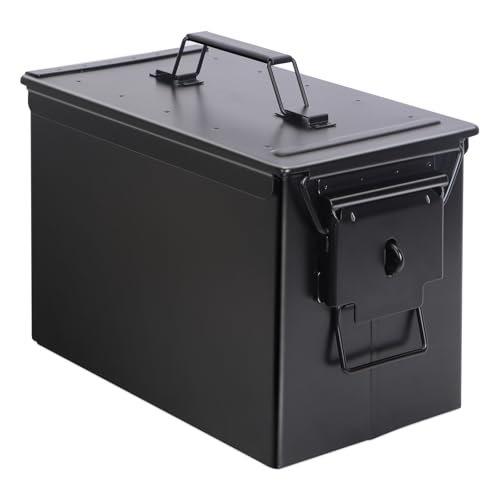
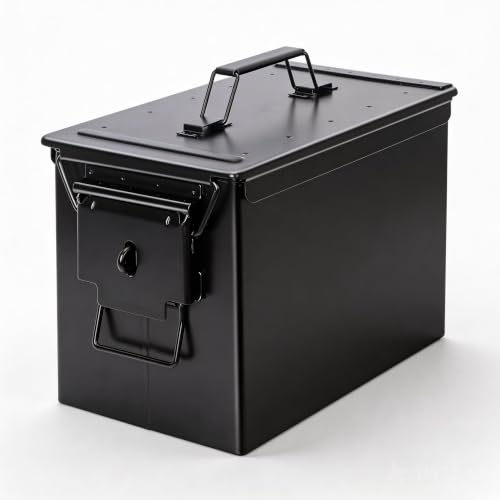
The metal ammunition can entered RC culture because it solved several problems at once for very little complexity. Surplus and replica cans are made of folded, welded steel with a hinged lid, a carrying handle and a shape that stacks neatly on a shelf. They are widely available in sizes originally meant for cartridges, which happen to suit rectangular flight packs remarkably well. Model shops noticed, community forums shared the practice, and within a few years the ammo can had become the default answer to a question every multirotor pilot eventually asks: where do these packs live between flying days?
It is important to state the limit of the concept before praising it further. A storage container contains; it does not extinguish, neutralise or make a failing pack safe. Manufacturers of dedicated lithium storage products are explicit on this point, and fire guidance published for lithium batteries says the same. The can is one layer in a system that also includes charging discipline, storage voltage, inspection, sensible location and a plan for packs that swell or suffer crash damage. Treating any box, however sturdy, as a licence to ignore those other layers misunderstands what the steel is for.
How a LiPo failure behaves inside a closed container
Thermal runaway begins inside a cell when damage, internal defect, overcharge or overheating starts an exothermic reaction that feeds itself. The cell vents gas, temperature climbs sharply, and neighbouring cells in the same pack are driven into the same reaction in sequence. Published safety research on lithium cells describes vent gas as hot and flammable, sometimes igniting as it leaves the pack and sometimes accumulating first. Inside a sealed space, burning gas raises pressure quickly, which is why the sealing of a storage container is a safety question rather than a detail of dust protection.
A container’s job during those minutes is mechanical and thermal. The walls must resist flame and hot gas long enough for the event to burn itself out, the lid must stay in place rather than becoming a projectile, and the exterior must not immediately ignite whatever the box stands on. Steel performs well on the first two counts and adequately on the third when the box sits on a non-combustible surface. Plastic storage tubs, by contrast, soften and burn, which is why community guidance has consistently steered stored packs away from ordinary household storage boxes regardless of how tidy they look on a shelf.
Containment is not suppression
Owners sometimes imagine a heavy lid smothering a fire by starving it of oxygen. Lithium cells undermine that intuition because the reaction inside a failing cell generates its own oxidising species and continues without relying entirely on outside air. A closed can may reduce flame spread to the room and will certainly stop sparks and burning fragments travelling, but the pack inside should be expected to burn to completion. Planning around that expectation, rather than around a hopeful smothering theory, leads to better choices about where the can lives and what stands near it.
The aftermath also belongs in the plan. A container that has held a burning pack will be hot, possibly for a long while, and opening it immediately releases smoke and possibly renewed flame as air reaches hot material. Safety guidance for lithium incidents generally counsels distance, ventilation and time, and letting emergency services handle anything beyond a small, contained event. The can earns its value precisely in that scenario: the fire stayed in a steel box on a concrete floor while people left the room, instead of spreading through a workbench.
The gasket debate: the seal that protects and the seal that pressurises
Most ammunition cans carry a rubber gasket in the lid that seals the contents against water and dust, a feature designed for cartridges stored outdoors. For LiPo storage, that same gasket creates the central controversy of the ammo-can method. A fully sealed steel box holding a venting pack can accumulate pressure faster than the lid latch can safely manage, and community accounts describe lids forced open violently in exactly that configuration. The widely shared response in RC forums and retailer guidance is to remove the gasket, or remove part of it, so gas can escape gradually while the lid remains seated.
Removing the whole gasket is the simplest version of the modification and the one most often recommended in published hobby guidance. The lid still closes on steel, flame and fragments remain contained, but the imperfect seal vents pressure instead of storing it. Some owners remove only a section of gasket at one end, reasoning that a smaller vent path preserves more of the seal’s protection against a neighbouring fire while still relieving pressure. Both approaches appear in community practice; what responsible guidance consistently warns against is the unmodified, fully sealed can used with the latch firmly down.
Reading the disagreement honestly
The gasket question has no laboratory standard behind it for this improvised use, because ammunition cans were never certified as lithium battery containers. That absence explains the range of opinion. Dedicated container manufacturers solve the same problem with engineered pressure-relief valves and published venting behaviour, which is their strongest argument. Ammo-can users answer that a de-gasketed steel box has contained many real pack fires in community reports without the lid leaving the box. A careful buyer should understand that they are choosing between an improvised solution with a long community track record and an engineered solution with defined design intent, not between a safe option and a reckless one.
Whichever route is chosen, the latch and hinges deserve inspection. A bent lid, a latch that closes loosely, or hinges corroded from years of surplus storage all weaken the container at the moment it is needed. Test the closure empty, confirm the lid sits evenly, and reject cans with deep rust inside, because flaking corrosion also makes a poor neighbour for battery leads and balance connectors. Cosmetic wear on the outside is irrelevant; structural soundness and a lid that stays put are the entire specification.
Dedicated LiPo containers and what the extra engineering buys
Purpose-built lithium storage and charging containers start from the same steel-box idea and add features the surplus can lacks. The most significant is controlled venting: a valve or filtered vent path designed to release gas and smoke while retaining flame and particles. Some designs add intumescent or ceramic fibre lining that insulates the walls, slowing heat transfer to the surface the box stands on and to packs stored in adjacent compartments. Others add internal dividers, cable pass-through ports for charging leads, and lids engineered to stay closed under pressure rather than relying on a surplus latch.
Published specifications for these products usually describe the cell capacity or total energy they are designed to contain, which gives buyers a sizing language the surplus market never provides. That matters because a container’s ability to manage an event depends partly on how much energy is inside it. A small vented box holding two receiver packs is a different proposition from the same box crammed with large flight packs for a helicopter fleet. Respecting the maker’s energy or pack-count guidance is the dedicated-container equivalent of removing the ammo can’s gasket: the unglamorous instruction that makes the system work.
Linings, insulation and the surface underneath
Heat through the base is an under-discussed path of damage. A steel box in direct contact with a wooden bench transfers the temperature of an internal fire to that bench quickly, and community incident accounts include scorched surfaces under containers that otherwise performed well. Insulated bases, internal linings and the simple habit of standing any container on concrete, stone, tile or a metal tray all interrupt that path. Some dedicated products build the insulation in; ammo-can users achieve a version of it with the surface they choose and, in some builds, a layer of non-combustible board or sand inside the base, a modification described widely in hobby sources.
Sand deserves a balanced mention. A shallow layer in the bottom of a can absorbs heat, steadies packs and keeps them from sliding, and generations of modellers have used it. It also adds weight, traps moisture if stored damp, and can hide a leaking or swelling pack from casual inspection. Owners who use it should keep it dry, keep it shallow, and lift packs out for inspection rather than admiring them through the grit. Like every modification in this area, it is a trade with two sides, not a ritual that guarantees anything.
LiPo-safe bags: a useful layer, not a container substitute
The woven, flame-retardant bag sold for charging and short-term handling is the most misunderstood accessory in lithium storage. Manufacturer descriptions frame these bags as a way to reduce the consequences of a pack failing while charging or being carried, buying time and containing flame briefly. Their construction, typically glass-fibre fabric with a hook-and-loop closure, cannot match a rigid steel wall, cannot be sealed against pressure, and degrades with heat exposure and age. Community guidance is nearly unanimous that a bag alone is not a storage system for a collection of packs kept in a home.
Used as intended, bags earn their place. A pack inside a bag inside a steel can has two layers between it and the room, and a bag is the natural way to carry a suspect pack from a flying field to a quarantine container without holding it in a bare hand. Bags also separate packs from each other inside a larger box, reducing the chance that one failing pack immediately ignites its neighbours and limiting connector shorts during transport. Buy bags sized to the pack so the closure actually closes, replace bags that are scorched, torn or contaminated, and never interpret the word safe in a product name as a promise the maker did not make.
Charging inside bags and boxes
Charging is statistically the moment of greatest risk in a pack’s life, which is why so much storage equipment is also marketed for charging. A container or bag used during charging must allow the charger leads and balance lead to reach the pack without crushing cables in a lid, and the owner must remain present and attentive, a condition every charger manual repeats. Cable ports on dedicated containers exist precisely to avoid the pinched-lead problem. With an ammo can, many owners charge with the pack in the open can and the lid ajar or removed, accepting that arrangement consciously rather than forcing a seal shut over trapped wires.
Storage voltage: the habit that decides how packs age
A lithium polymer pack left fully charged is a pack ageing at its fastest rate and storing its maximum energy for any accident. A pack left nearly empty risks falling below the voltage from which it can safely recover. Between those poles sits the storage charge that manufacturers and charger makers converge on: roughly 3.8 volts per cell, with published guidance from battery makers commonly placing the acceptable storage band a little either side of that figure depending on chemistry variant. Modern chargers automate the target through a storage programme that raises or lowers each pack to that level, balance leads connected, in a fraction of the time manual methods once took.
The reasoning is chemical as much as it is about safety. At high states of charge, side reactions inside the cell proceed faster, internal resistance climbs, capacity fades and the tendency to swell grows, especially in warmth. Owner reports from drone and RC communities repeat the pattern so consistently that it functions as field evidence: packs stored full through a winter return with puffed cases and diminished flight times, while packs stored at the recommended level wake in spring close to their autumn performance. Storing at the proper level is therefore both the fire-conscious choice and the economy-conscious choice, a rare alignment in this hobby.
Building the storage routine around real flying patterns
Routines survive when they fit the day they are meant for. The workable pattern for most pilots is to return home, inspect each pack while it is still in hand, and run the storage programme the same evening for any pack that will not fly again within a few days. Packs used daily by commercial drone operators may reasonably stay closer to readiness, balanced against faster ageing that professional use already accepts. The failure mode to avoid is the indefinite postponement: packs left full in a flight case for a month because the storage session always felt like tomorrow’s job.
Labelling helps more than memory. A small tag, a marker line on a storage list, or a simple rule that packs in the can are at storage level and packs outside it are not, removes ambiguity when several family members or club mates share equipment. Balance connectors should be checked during the same routine, because a damaged balance lead undermines both storage charging and the per-cell monitoring that keeps a pack honest. Any pack that will not balance within a reasonable spread, or that drifts noticeably between sessions, has announced itself as a candidate for retirement rather than continued storage among healthy packs.
Sorting packs: healthy, suspect and finished
A single container for everything a pilot owns ignores the different risks different packs present. Healthy packs at storage charge, inspected and balanced, belong together in the main container. Packs that have been crashed, punctured, bent, exposed to water, or that have begun to swell belong apart, in a separate quarantine container, ideally in a more isolated location, while their owner decides on disposal. Mixing a swelling pack among the good fleet risks the whole fleet in a single event and makes inspection harder, because one bad smell or hiss in a crowded can is difficult to attribute.
Swelling, often called puffing, is the most visible retirement signal. A small amount of softness in an old pack is common discussion material in owner communities, but manufacturer guidance treats gas generation inside a sealed pouch as degradation that does not reverse. A pack that is visibly distorting its case, forcing a drone’s battery door, or growing between checks should leave service. The same applies to packs with torn wrapping that exposes pouch material, corroded or heat-discoloured connectors, and any pack involved in a hard crash that later behaves oddly on the charger, including taking charge unusually fast or finishing with cells far apart.
Disposal routes for retired packs
Retired lithium packs are hazardous waste in most jurisdictions and should travel the route local authorities publish for lithium batteries: dedicated battery recycling points, hazardous-waste collections or retailer take-back where offered. Guidance commonly advises taping terminals, keeping damaged packs in a non-combustible container during transport, and never placing them in household rubbish or general recycling where compaction machinery can puncture them. Some hobby guidance describes fully discharging packs before disposal using methods the battery makers specify; owners should follow the instructions of their local disposal service first, because requirements differ and a damaged pack should not be experimented on at home.
Quarantine needs a time limit or it becomes permanent storage by another name. Decide when a suspect pack enters the separate container what decision will be made and by when: monitored for a defined period after a minor incident, or disposed of at the next hazardous-waste opportunity after clear swelling or damage. Writing the date on a tag attached to the pack turns a vague intention into a visible commitment. Clubs and commercial operators formalise this with logs; a home pilot can achieve the same discipline with a notebook page taped inside the container lid.
Where the container lives in a house or garage
Location multiplies or divides the value of every other precaution. The recurring advice in fire-safety and manufacturer guidance is a cool, dry place away from living spaces where possible, on a non-combustible surface, clear of exits, and away from flammable household stores such as fuel, solvents, paint and cardboard stockpiles. A garage corner on a concrete floor, a metal shelf in a utility area, or a hearth-like slab in a workshop all fit that description. A bedroom wardrobe, a cupboard under the stairs that also holds the escape route, or a bench buried in balsa and tissue do not.
Temperature at the storage location matters for ageing as well as safety. Published manufacturer storage ranges favour moderate conditions, and both a freezing outbuilding and a sun-baked shed push packs outside the conditions their makers describe. Heat is the more common enemy: a container standing where afternoon sun strikes it through a window can hold packs at temperatures that accelerate swelling through a summer. Moving the can a metre into shade is the cheapest performance upgrade in this entire guide, and the same logic applies to keeping it away from heaters, boilers and the warm exhaust side of appliances.
Smoke detection and household awareness
A smoke alarm within hearing of the storage location is a layer no container replaces, because the earliest warning of a venting pack may be smell or sound while the container is still doing its job. Other household members should know where the packs live, that the steel box is not a toy chest or a toolbox, and that a hissing, smoking or sweet-smelling container is a reason to leave and call for help rather than to open the lid and investigate. That conversation takes two minutes and is the difference between equipment and a household safety practice.
Children and pets add a final location filter. Packs and containers should sit out of casual reach, balance leads and connectors should not dangle as invitations, and charging should never happen in a child’s room or overnight in sleeping areas. These are not reflections on any family’s care; they are the ordinary precautions that published lithium guidance repeats because the audience for storage advice includes every kind of household, and the packs do not know whose shelf they are on.
Sizing the container to the fleet you actually own
Ammo cans are sold by their original cartridge designations, most commonly the smaller can associated with 5.56 ammunition and the larger, taller can associated with .50 calibre rounds, alongside several intermediate surplus sizes. In practical terms the smaller can suits a modest collection of small to medium flight packs laid flat or standing on edge, while the larger can swallows big helicopter and large multirotor packs and the collections of pilots who fly several classes. Dedicated containers state their intended pack capacity or energy directly, which removes the guesswork that surplus sizing requires.
Cramming defeats the purpose in two directions. Packs wedged tightly together transfer heat to each other instantly if one fails, stress each other’s pouches and leads, and make the weekly visual inspection so awkward that it stops happening. A container loaded to perhaps two-thirds of its physical volume, with packs separated by bags or dividers and leads arranged without sharp bends, preserves both the containment logic and the inspection habit. When a fleet outgrows that comfortable density, the correct purchase is a second container, which also allows healthy and quarantine storage to separate physically rather than by a hopeful divider.
Arrangement inside the box
Stand packs so their labels can be read without unloading the box, keep the largest packs at the bottom where their weight cannot crush smaller ones, and route balance leads away from lid edges and hinges. Some owners add a simple inventory card inside the lid listing each pack, its cell count and the date it entered storage, updated with a pencil as the fleet changes. That card quietly solves the most common storage error of all, which is forgetting what is in the box until a pack has sat at full charge, or sat damaged, for far longer than anyone intended.
Weight is the forgotten sizing constraint. A large steel can filled with big packs is a heavy object that will be moved rarely and reluctantly, which argues for placing it permanently rather than planning to carry it to a charging bench weekly. Two smaller cans often serve a big fleet better than one heroic container, because each remains liftable, each can live near its own category of packs, and a single incident involves only the energy in one box. Portability also matters for pilots who store packs at home but charge at a club field, where a manageable can doubles as the transport box.
Transport rules and the limits of any container
Moving packs introduces rules that storage at home does not. Airlines and aviation authorities publish strict conditions for lithium batteries in baggage, generally requiring packs in cabin baggage, terminals protected, damaged or recalled batteries excluded entirely, and capacity limits per pack and per passenger. Those rules change and vary by carrier, so any pilot flying to an event must read the current published conditions of the airline and the relevant aviation authority rather than relying on community habit. A steel ammo can, notably, belongs to ground transport thinking; it is heavy, it alarms security screening, and it is not the container air travel guidance describes.
Ground transport in a private vehicle is simpler but not thoughtless. Packs should travel at or near storage charge for longer journeys, protected from short circuit, secured so the container cannot slide or tip, and kept out of a hot parked cabin where summer temperatures climb far beyond any storage range. Retailer and manufacturer guidance for transporting damaged packs is stricter still, and some disposal services will advise on the spot once told a pack is swollen. The principle running through every version of the rules is that a damaged pack is not cargo to be casually moved around; it is a problem being taken, carefully and directly, to its disposal point.
What no box can do
The honest closing boundary of the container discussion is that a sufficiently large event defeats modest equipment. Several big packs failing in sequence inside one container generate more heat and gas than a small vented box was designed to manage, which is why energy limits, separation and quarantine recur throughout this guide. Containers also do nothing for the pack that fails in the model, on the charger outside the box, or in the flight bag at a field. Storage equipment covers one chapter of lithium safety, the quiet months between flights, and it covers that chapter well only when the other chapters, charging supervision, inspection and retirement, are also being read.
Buying routes: surplus, replica and purpose-built
Surplus cans vary because their previous lives varied. Inspect before buying where possible, or buy from a seller whose grading descriptions are detailed: look for straight lids, sound hinges, a latch that pulls the lid down evenly, and interiors free of deep rust and old residue. New-manufacture replica cans remove the grading lottery and often arrive with clean paint and fresh gaskets, at the cost of thinner steel in some budget examples, so wall rigidity and hinge construction are worth a squeeze and a second look. A can that flexes noticeably in the hand is telling its buyer something about the moment it will be asked to contain pressure and flame.
Purpose-built containers remove the modification questions and add documented venting, insulation and capacity guidance, and their makers publish the reasoning in a way surplus sellers cannot. For pilots storing large fleets indoors, for commercial operators who must show a safety method to insurers or clients, and for anyone uneasy about improvising, that documentation is itself part of the product. The choice between routes is therefore partly about temperament and accountability, not only about steel. Both routes, followed properly, leave the packs far better housed than the flight case, drawer and cardboard box arrangements they replace.
Questions to settle before ordering anything
Count the fleet honestly, including the packs currently in models and the ones ordered but not yet arrived, and note the dimensions of the largest pack with its leads folded as they naturally lie. Decide where the container will stand before choosing its size, because a box that does not fit the safe location will migrate to an unsafe one. Decide also how quarantine will work: a second small container bought at the same time costs little and prevents the first damaged pack from creating an improvised arrangement on a bad day. Finally, confirm what will stand under the container, and add a non-combustible base to the same order if the chosen shelf or bench is wooden.
The charging equipment that completes the storage system
Storage discipline depends on chargers that can measure per-cell voltage, run a proper storage programme and handle balance leads gently, so the charging shelf and the storage shelf should be planned as one system. Pilots reviewing dedicated charging options for individual lithium cells and small packs will find that the same per-cell accuracy that protects a pack during charging also makes storage sessions quick and trustworthy, because the storage target is meaningless if the device applying it cannot read each cell honestly.
The chemistry in plain language: why pouch cells demand respect
A lithium polymer pack is built from pouch cells in which layered electrodes are separated by a polymer-based separator and sealed inside a flexible foil laminate rather than a rigid metal cylinder. That construction saves weight and lets manufacturers shape packs to fit airframes and chassis, which is why the format conquered flight. It also means the outer skin of each cell is comparatively delicate: a crease, a puncture from a stone in a crash, or repeated swelling pressure can compromise layers that a steel-cased cell would protect. Handling packs as precision components rather than as bricks is the first storage skill, practised long before any container is bought.
Energy density frames every other fact. A modern flight pack stores, in a few hundred grams, enough energy to fly a heavy camera platform for half an hour against gravity and wind. Released in seconds instead of minutes, that same energy becomes heat and flame. Safety researchers describe thermal runaway as a chain reaction because each stage triggers the next: separator failure allows internal shorting, shorting generates heat, heat decomposes more material, and decomposition releases more heat and gas. Interrupting the chain early is what charging supervision attempts; containing its consequences is what storage equipment attempts. Neither role can substitute for the other.
Ageing, cycles and the slow change in a stored fleet
Packs age even when nobody flies them. Calendar ageing proceeds fastest at high charge and high temperature, cycle ageing accumulates with every charge and discharge, and the two combine in ways that make two identical packs diverge after a season of different treatment. Internal resistance rises, voltage under load sags earlier, and the margin between normal operation and stress narrows. A storage routine that holds packs at moderate charge in a cool place slows the calendar component to its minimum practical rate, which is why manufacturers publish storage conditions at all. The fleet a pilot inspects each month is not the fleet bought last year, and treating it as changing equipment, rather than as fixed possessions, keeps expectations and retirement decisions realistic.
Swelling sits at the visible end of this ageing story. Gas generated by side reactions inflates the pouch gradually, and while a mildly puffed pack may still perform, its internal layers are under mechanical stress they were not designed to carry indefinitely. Community debate often circles the question of how much puff is acceptable, but manufacturer guidance is conservative for a reason that has nothing to do with selling replacements: a stressed pouch is less tolerant of the next insult, whether that insult is a hard landing, a hot car boot or an imperfect charge. Storage cannot reverse swelling, and a container’s role for a swelling pack is quarantine, not rehabilitation.
Fire behaviour in a room: smoke, gas and the order of events
Owners planning storage should understand what a venting pack actually produces, because the hazard is not flame alone. Published fire research on lithium cells describes vent gas containing flammable and irritating components, released sometimes before any flame appears, accompanied by a sharp chemical smell that many incident accounts mention as the first warning. Smoke from burning pouch materials and surrounding plastics adds a toxic burden that makes lingering to watch a poor decision. These facts explain the consistent shape of official advice: distance first, ventilation when safe, emergency services for anything beyond the smallest contained event, and no re-entry for belongings until the space is cleared.
The sequence also explains detector placement and household briefing. A venting pack inside a closed steel container may produce smell and a thin escape of smoke before any dramatic sign, and a person who recognises that smell as a battery event gains the minutes that matter. Conversely, the worst outcomes in incident reporting often involve someone opening a container, a flight bag or a model to investigate, converting a contained event into an exposed one at arm’s length. The container and the household rule are designed together: the box holds the event, and the rule keeps people away from the box while it does so.
Extinguishers and their honest limits
Households often ask which extinguisher belongs beside the storage shelf, and fire guidance gives a nuanced answer. Cooling is central to stopping lithium cell reactions, and water in quantity is what fire services typically apply to lithium incidents, while a small domestic extinguisher may knock down surrounding flames without cooling the cells enough to end the event. An extinguisher appropriate for ordinary household fires is still worth having for the materials around a battery incident, but owners should not imagine it converts a runaway pack into a manageable inconvenience. The container, the location and the evacuation rule remain the primary equipment; suppression tools are supporting players with defined limits.
Sand and fire blankets appear in workshop practice for the same reason: they can smother small surrounding flames and protect surfaces, and a metal bucket with a lid has a long history as a resting place for a suspect pack outdoors. None of these measures should delay leaving a space that is filling with smoke. Pilots who fly at club sites will recognise the same hierarchy in field rules, where a smoking pack is moved only if it can be done without risk, isolated on bare ground, and watched from distance until long after it appears finished, because re-ignition after apparent calm is documented in lithium incident literature.
Building the container: a practical walk-through for the ammo-can route
Start with the empty can on a bench and inspect it as if it were a piece of safety equipment, because in this role it is one. Work the latch repeatedly, check that the lid closes evenly along its whole rim, look along the hinge for distortion, and examine the interior for rust scale, old sand or residue that could abrade pouch surfaces. Wash and dry a dirty surplus interior thoroughly; grit inside a battery box is an abrasive stored with the very objects it can damage. A can that fails any structural check should return to ordinary tool storage and never graduate to battery duty.
Address the gasket deliberately rather than by default. Following the widely published community approach, remove the rubber seal entirely or remove a substantial section, and keep the removed piece with workshop spares rather than refitting it absent-mindedly later. Mark the can clearly as a battery container, including a note that the seal was removed intentionally, so that another household member does not helpfully restore it or borrow the box for waterproof storage. Paint pens and adhesive labels both survive garage life; the marking also prevents the can being mistaken for ammunition storage by visitors, movers or emergency responders, a confusion worth avoiding in both directions.
Interior arrangement and separation
Line the base with a non-combustible, non-abrasive layer if one is used, keep it thin, and arrange packs in individual bags or divided sections so that pouches never rest directly against each other’s connectors. Balance leads should be tucked where the lid cannot pinch them, and no pack should sit where the hinge side of the lid descends. Leave headroom below the rim: a pack that protrudes turns the lid into a press. The finished arrangement should allow every pack to be lifted out individually without excavating the others, because an arrangement that fights inspection will quietly abolish inspection.
Finally, place the loaded can in its permanent location and rehearse its removal: can it be reached without climbing, is the path out of the building clear, and does anything flammable share its shelf? The rehearsal sounds theatrical until it is done once, at which point most owners discover one ordinary improvement, a torch within reach, a shelf edge that catches the handle, a stored solvent that should move. Storage safety is mostly this kind of unglamorous tidying, performed before it matters.
Club fields, shared workshops and other people’s packs
Storage discipline becomes social at a club. Shared charging benches and clubhouse shelves hold packs belonging to many owners at different states of charge and condition, and a container system that works at home needs explicit rules to work there. Clubs commonly require packs to be attended while charging, damaged packs to leave the building rather than enter a shared box, and storage containers to be labelled with an owner’s name. A pilot storing packs at a shared facility should ask what the facility expects rather than assuming home rules travel, because insurers and landlords often stand behind those expectations.
Commercial drone operators face the documented version of the same problem. Fleet storage appears in operating procedures, insurers ask how batteries are kept and transported, and clients in sensitive locations may require evidence of a storage method. For those operators, purpose-built containers with published specifications, written quarantine and disposal logs, and staff briefings are not gold-plating; they are the paperwork of a defensible operation. The home pilot can borrow the structure at smaller scale, a labelled container, a dated inventory, a disposal habit, and gain most of the safety benefit without the filing cabinet.
Teaching younger pilots
Many pilots inherit the hobby across generations, and storage habits are part of the inheritance. A young pilot who learns to storage-charge after flying, to report a swollen pack rather than hide it, and to treat the steel can as the packs’ home has learned the core curriculum. Adults teach it best by visible routine rather than by lecture: the container opened and closed in the same place, the charger running its storage programme on the same evening, the damaged pack quarantined without drama. Safety culture in this hobby is transmitted at benches and kitchen tables, and it lasts longer than any single container.
When the fleet changes: revisiting size, chemistry and assumptions
Fleets drift. A pilot who began with small park flyers acquires a large helicopter; a drone operator adds high-capacity packs whose total stored energy dwarfs the original collection; a household gains a second pilot. Each change quietly invalidates the sizing and location decisions made for the earlier fleet. The container that was two-thirds full becomes packed tight, the quarantine box becomes overflow storage, and the shelf that was clear gains neighbours. A seasonal review should therefore ask not only whether packs are healthy but whether the system still fits the fleet it now holds, and should treat a second container or a larger dedicated unit as a normal consequence of growth rather than an admission of failure.
Chemistry drift deserves the same attention. Newer lithium variants and high-voltage packs carry their own storage guidance from their makers, and the storage target printed for one variant should not be assumed for another. When a new pack type enters the fleet, its manufacturer’s storage voltage and temperature guidance enters the routine with it, even if that means the storage session runs two programmes instead of one. The container does not care about these distinctions, but the packs inside it do, and the inventory card is the right place to record which packs follow which rule.
Humidity, dust and the quieter enemies of a stored pack
Fire dominates storage thinking, but the everyday enemies of a stored fleet are moisture and grit. A container that lives in a damp garage breathes humid air each time it opens, and balance connectors, exposed terminals and charger contacts corrode slowly in that environment, raising resistance and confusing chargers months later. Silica gel packs inside the container, renewed or dried periodically, are a common and harmless countermeasure, provided they cannot be mistaken for anything edible by children and are kept clear of pouch surfaces. Dust and grit deserve the same housekeeping: wipe packs before they go back into the box, because a grain trapped between two pouches under the weight of a stack is a slow puncture looking for time.
Rodents are the hazard nobody puts in a buying guide and many garage owners eventually meet. Mice explore warm, sheltered boxes and chew cable insulation with enthusiasm, and a container with its lid closed is already good protection, which is one more argument against storing packs in open trays or flight cases left ajar. Where a container must live in an outbuilding, check leads during the monthly inspection specifically for gnaw damage, and treat any pack with a chewed balance lead as a repair-or-retire decision rather than a tape-and-forget inconvenience.
Records that pay for themselves after an incident
If a pack ever does fail in storage, the owner who kept simple records is in a far stronger position with insurers, manufacturers and landlords than the owner reconstructing events from memory. A dated inventory, purchase receipts kept with it, and a note of any incident involving a pack before its failure turn a stressful conversation into a factual one. Manufacturers investigating a reported failure ask which charger was used, at what settings, and what happened to the pack beforehand; the notebook inside the container lid can answer all three. Record keeping is therefore not bureaucracy for its own sake but the memory of a system whose whole purpose is to be ready on a day when nobody is thinking clearly.
Photographs help in the same spirit. A quick photograph of the fleet in its container at the seasonal review documents condition, arrangement and labels in a way no written list matches, and comparing photographs across seasons reveals slow swelling that daily familiarity hides. The human eye adapts to gradual change and calls it normal; last spring’s photograph does not. Several careful owners in community forums credit exactly this comparison with catching a pack on its way to quarantine while it still looked, to its owner, precisely as it always had.
One last habit separates tidy storage from thoughtful storage: telling somebody else where the container is and what the household rule is before anything goes wrong. A partner, a housemate or an older child who knows that the steel box holds aircraft batteries, that it stays closed, and that a strange sweet smell near it means leaving the room and making a phone call, extends the safety system beyond the person who bought the equipment. Knowledge weighs nothing, takes two minutes to share, and is the only layer of protection that still works when the owner is away from home.
Maintainers and float-style devices belong to the lead-acid world of the other batteries in a workshop, and keeping the two chemistries’ equipment conceptually separate prevents a common and dangerous confusion. A device intended to float a sealed lead-acid battery must never be connected to a lithium pack, and labelling chargers, leads and shelves by chemistry is a small organisational habit with an outsized safety return in a garage that holds motorcycles, cars and aircraft on the same bench.
Automatic chargers for vehicle batteries sit in that same lead-acid category, useful for the workshop’s other machines and irrelevant to lithium packs except as a reminder of the labelling point above. Households that run both chemistries benefit from storing the equipment apart, with the lithium charger living beside the LiPo container and the vehicle chargers beside the vehicles, so that a hurried helper, a visiting friend or a tired owner at midnight is guided by geography as well as by memory.
best automatic battery chargers
Drone pilots have an additional charging landscape of hubs and parallel boards built for their specific packs, where several batteries charge in sequence or together under the control of equipment designed for those connectors. Choosing that equipment with the same care as the storage container matters, because a hub that charges every pack to full and leaves them there quietly undoes the storage programme unless the pilot’s routine sends packs to the container at the right moment. The container, the charger and the routine are one purchase decision wearing three hats.
Check prices on Amazon
Live listings for the shortlist in this guide are pulled from Amazon below, so prices and availability are always current at the moment you look.
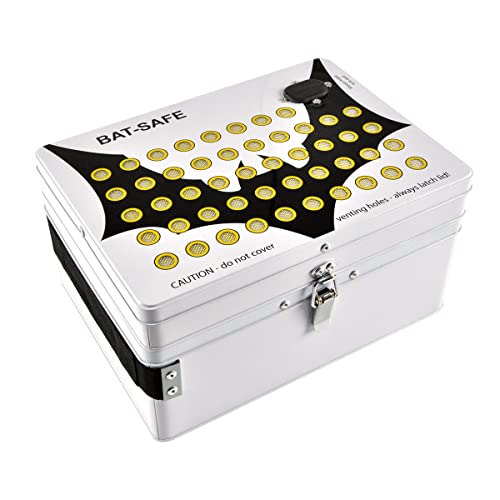
Lipo-Lithium Battery Charging Safe Box M Size


A weekly rhythm that keeps the system honest
Systems fail quietly when nobody looks at them, so build a short rhythm: a glance inside the container when packs are added or removed, a monthly lift-out inspection under good light, and a seasonal review where every pack is balance-checked and the inventory card is corrected. Note packs approaching retirement, confirm the quarantine container holds nothing that should already have gone to disposal, and check the storage location for new hazards that crept in, such as a paint tin or a heater that migrated during a garage tidy. Ten unhurried minutes is the usual cost.
Incident readiness belongs to the same rhythm. Keep the route out of the storage area clear, know where the nearest extinguisher rated for the household’s risks stands even though a lithium event may not respond to it in the way a wood fire does, and rehearse the household rule once: smell, hiss or smoke from the container means people leave and help is called, not that the lid gets lifted for a look. Storage equipment is bought for the worst day in a pack’s life; the routine exists so that on that day, the box is closed, correctly vented, standing on stone, and holding only packs that were inspected, storage-charged and meant to be there.
Give your packs a steel home with a vented lid, a storage charge in every cell and a shelf away from heat, and the quiet months between flights will finally carry the same care as the minutes in the air.