Our Top Picks


What's inside
- Field use defines every portable antenna decision
- Packed weight and collapsed size in real kits
- Setup time, teardown, and repeatability outdoors
- Coil-loaded portable verticals and telescopic whips
- End-fed portable wires for low weight and flexibility
- Linked dipoles that pack small and perform predictably
- Portable magnetic loops for small spaces and directionality
- Radials, counterpoise, and ground conditions
- Power handling, connectors, and feed line choices
- Temporary weather tolerance and wind behavior
- Choosing by activation profile and building the kit
- Check prices on Amazon
- A field tuning workflow that prevents wasted activations
As an Amazon Associate I earn from qualifying purchases. This post may contain affiliate links at no extra cost to you.
Portable operating rewards preparation long before the first call sign leaves a summit or picnic shelter. This guide contains affiliate links, and this site may earn a commission when readers purchase through those links, at no additional cost to the reader. Comparisons below rely on manufacturer specifications, published product documentation, and owner reports from field activations rather than on any claim of personal product trials.
A portable ham antenna earns its place through field behavior, not through performance on a permanent tower. Height is temporary, ground conditions change hourly, supports depend on terrain, and every connector must survive packing, transport, and repeated assembly. A design that looks efficient on paper can become frustrating when wind rises, soil turns rocky, or daylight fades during teardown. The useful question is therefore practical: how small does the system pack, how quickly does it radiate, how easily does it change bands, and what compromises follow each choice.
Four broad families dominate serious portable work. Coil-loaded verticals built around products in the style of Wolf River Coils and the Chameleon MPAS concept offer compact transport and ground-level deployment. End-fed wires in the PackTenna tradition trade a support requirement for low weight and excellent packability. Linked dipoles provide predictable patterns and strong efficiency when two supports or one tall mast are available. Portable magnetic loops deliver directional behavior and narrow bandwidth in a small footprint, with careful tuning as the price of admission.
No single family wins every activation. A Parks on the Air operator working from a vehicle-accessible shelter faces different constraints than a Summits on the Air climber counting grams above treeline. A camper staying three nights can justify a heavier mast and longer setup than a lunchtime operator with forty minutes total. Reading the categories through packed size, deployment rhythm, radial needs, and weather tolerance makes the tradeoffs visible before money changes hands.
Field use defines every portable antenna decision
Activation style should narrow the shortlist before any specification table does. Drive-up portable work tolerates a vertical system carried in a padded case with a tripod, ground spike, radial bundle, and telescoping whip stored separately. Backpack portable work punishes every extra adapter and rewards antennas that share parts with trekking poles, guy lines, or a lightweight mast already in the pack. Bicycle portable sits between those poles, favoring flat coils of wire and compact mounts over rigid sections.
Band goals shape the decision just as strongly. An operator focused on 20 meters during daytime park activations can choose a simple resonant wire or a short vertical tuned for that single band. A camper planning evening contacts on 40 meters needs either considerably more wire, a loading coil with enough inductance, or a linked dipole cut for lower frequencies. Multiband flexibility sounds attractive until its costs appear as extra clips, coil taps, tuning steps, and opportunities to misconfigure the system under pressure.
Operating mode matters because power, duty cycle, and tuning tolerance interact. Sideband voice tolerates brief retuning between bands and modest efficiency losses when conditions are strong. Digital modes run longer transmissions at lower power, placing steady thermal demands on small coils and matching units. Continuous wave operation rewards narrow, predictable setups that experienced operators can adjust by ear and feel. Manufacturer power ratings should therefore be read alongside mode, ambient temperature, and ventilation rather than treated as a single headline number.
Terrain quietly dictates which paper advantages survive contact with reality. Open grassland accepts ground spikes, radial wires, and guy stakes without complaint. Desert activations offer few natural supports but abundant space for wire antennas laid out carefully. Forested summits provide trees for end-fed wires while complicating vertical clearance and radial layout. Rocky ridges reject stakes, expose equipment to wind, and make a self-supporting vertical or loop unusually valuable despite added weight.
Time budget is the final filter that many buyers ignore. A thirty-minute activation window leaves little room for a linked dipole requiring two supports, careful height adjustment, and methodical band changes by clip. A weekend camp can absorb that same ritual as part of the pleasure. Honest accounting of available minutes, including teardown and packing, prevents the common error of buying maximum theoretical flexibility that rarely gets deployed in practice.
Packed weight and collapsed size in real kits
Published antenna weight often describes only the radiating element, leaving the operator to discover the true kit weight later. A complete field system includes the mount, whip or wire, coil, matching unit, radial set, support mast, guy material, adapters, and a bag that keeps those pieces organized. Comparing headline weights across brands without that inventory produces misleading conclusions. Manufacturer specifications list component weights for many systems, and adding those figures together gives a far more realistic trail figure.
Coil-loaded vertical kits usually pack into a long, narrow bundle rather than a cube. The telescoping whip collapses to a fraction of its extended length, the coil forms a rigid cylinder, and the mount adds a flat or L-shaped piece that slides beside a pack. Owner reports describe these kits riding well in vehicle cases and exterior pack pockets, though the whip tip deserves protection because a bent final section changes both length and tuning behavior noticeably.
End-fed wire systems win the flatness contest decisively. A winder holding the radiator, a compact matching unit, a short feed line, and a throw weight can disappear into a pouch smaller than a paperback book. That advantage compounds on summit hikes where volume, not just weight, limits what fits beside water, layers, and safety gear. The hidden volume cost is the support: a collapsible mast adds a long item even when the wire itself nearly vanishes.
Linked dipoles occupy a middle position that depends on wire gauge and insulator bulk. Thinner wire winds tighter and weighs less, but it tangles more readily and demands patient handling with cold fingers. Heavier wire resists kinking, survives abrasion against bark, and pays for that durability in coil diameter. Two winders, a center insulator, and clip leads create a kit that packs flat yet still needs a mast or trees to reach useful height outdoors.
Magnetic loops present the opposite geometry problem. Their frames collapse or disassemble into arcs, yet the assembled shape and the tuning capacitor housing resist truly flat packing. Many loop kits ship with dedicated bags because loose transport risks bending the loop element or stressing the capacitor connection. For vehicle-based portable work that bulk is trivial; for technical climbs it can disqualify an otherwise elegant design before weight even enters the discussion.
A useful personal test is the single-trip carry. Lay out everything required for one complete activation, including feed line and supports, then carry it from vehicle to operating position in one trip. If the antenna system alone demands two trips, its real portability differs sharply from its catalog description. Operators who activate alone, far from the car, feel that distinction immediately, while campground operators beside a vehicle may never notice it at all during a relaxed weekend stay.
Setup time, teardown, and repeatability outdoors
Setup time deserves measurement in stages rather than as a single optimistic number. Arrival, site selection, support placement, element deployment, radial layout, connection, tuning, and logging readiness each consume minutes. A vertical that stands in five minutes but needs fifteen minutes of radial adjustment and analyzer sweeps is not a five-minute antenna in any honest accounting. Manufacturer setup claims generally assume practiced hands, prepared components, and cooperative ground, so field expectations should add margin generously.
Repeatability separates satisfying systems from fiddly ones across a season. Coil tap positions marked clearly, whip lengths recorded per band, and radial sets pre-cut to known dimensions let an operator reproduce yesterday’s configuration without starting analysis from zero. Owner reports frequently praise antennas whose settings can be written on a small card taped inside the kit lid. That humble habit converts a tunable system from a puzzle into a routine, especially when gloves, darkness, or insects discourage experimentation.
Vertical systems usually lead on raw deployment speed at drive-up sites. Drive a spike or unfold a tripod, thread the coil, extend the whip to a marked length, spread radials, and connect the feed line. Each step happens at ground level with no throwing, climbing, or support hunting. The speed advantage shrinks on pavement or rock where spikes fail and tripods need ballast, and it vanishes entirely when high winds demand guying that the base kit never anticipated.
Wire antennas trade throwing time for placement freedom. A skilled operator with a good throw weight and a clean tree can hang an end-fed in minutes, while a tangled winder or a snagged line can consume half an activation. Arborist-style throw techniques, bright line that resists knotting, and disciplined rewinding after every use all shorten future deployments. Linked dipoles double the support problem but reward the effort with balanced performance that needs no radial field at all once both legs reach reasonable height.
Loops assemble quickly yet tune slowly, a distinction buyers should understand clearly. Setting the loop on a small tripod takes moments; finding resonance, checking the match, and repeating that process after each band change requires patience throughout the session. Remote tuning motors on some models ease the reach problem when the loop sits away from the operating position. Without remote control, every frequency move becomes a short walk, which matters during contests or rapid band-condition checks across an afternoon.
Teardown discipline affects the next activation more than the current one. Radials coiled loosely become bird nests, whip sections collapsed while gritty wear internally, and wet wire sealed into a bag invites mildew and corrosion. Operators who build two extra minutes into teardown for wiping sections, shaking out debris, and winding each element separately report far fewer failures later. A kit that packs in a specific order, with each piece visible when missing, also prevents the classic discovery of a forgotten adapter miles from the trailhead.
Coil-loaded portable verticals and telescopic whips
The coil-loaded vertical is the workhorse image of modern portable operating: a base mount, an adjustable loading coil, and a long telescoping whip. Systems in the Wolf River Coils style pair a sliding or tapped coil with a collapsible stainless whip, letting the operator shorten the electrical radiator while keeping physical height manageable. Chameleon MPAS-style systems modularize the concept further, combining a matching unit, spike or clamp mount, and sections that reconfigure between vertical and other field arrangements.
Band flexibility is the headline strength of this family. Moving a coil tap or sliding a contact changes inductance, whip extension sets the remaining length, and the combination covers many bands from one radiator. Published documentation for representative systems describes coverage spanning the high-frequency amateur allocations most portable operators use, with the lowest bands demanding the most coil and the greatest efficiency compromises. That breadth suits operators who chase changing propagation without carrying separate antennas for each band.
Efficiency is the honest weakness that specifications and owner reports both acknowledge. A physically short vertical on 40 meters, heavily loaded, radiates less effectively than a full-size dipole at height, particularly over poor ground. On 20 meters and above, the same whip approaches natural resonance, coil losses shrink, and performance becomes genuinely competitive for portable contacts. Buyers should therefore match the design to their favorite bands instead of expecting identical results across the entire dial.
The whip itself deserves close reading in any product documentation. Section count, extended length, collapsed length, and material determine both tuning range and fragility. Long stainless whips flex in wind and survive casual knocks, but their thinnest upper sections bend when caught during packing. Replacement availability matters for a part that lives exposed; systems built from standard, replaceable whip sections age better than proprietary elements that a single accident can retire permanently.
Mounting choices multiply the usefulness of the same coil and whip. A ground spike suits parks and campsites with penetrable soil. A tripod serves patios, rock, and frozen ground where spikes refuse entry. Clamp and jaw mounts attach to picnic tables, fence posts, or vehicle fixtures when soil access is restricted by park rules. Checking which mounts a given system supports, and whether adapters are included or separate purchases, prevents the disappointment of a capable antenna stranded by an incompatible base.
Field reports from portable vertical users converge on a few practical lessons. Keeping the coil contact clean restores consistent tuning after dusty trips. Marking whip lengths with a paint pen survives better than tape flags in rain. Carrying one spare radial and one spare clip lead costs almost nothing yet rescues activations from single-point failures. None of these lessons appears in headline specifications, yet together they explain why experienced operators describe the same antenna as either dependable or temperamental depending on preparation habits.
End-fed portable wires for low weight and flexibility
End-fed half-wave wires earned their portable following through an unmatched ratio of performance to packed bulk. A thin radiator, a small matching transformer at the feed point, and a support line produce an antenna that resonates on its design band and, for many configurations, on harmonic bands as well. PackTenna-style systems popularized the format with lightweight winders, integrated matching units, and wire chosen for low visibility and easy handling during summit and park activations.
The support requirement defines every end-fed deployment. One end rises into a tree, mast, or trekking pole arrangement while the feed point stays near the operator. Height at the far end improves the pattern and reduces ground interaction, so throw skill directly becomes antenna performance. In open terrain without trees, a collapsible mast of sufficient height is not an accessory but a prerequisite, and its packed length belongs in any fair comparison against self-supporting verticals.
Counterpoise needs for end-fed designs are modest compared with verticals, which simplifies layout on crowded or sensitive sites. Many configurations use the feed line itself as part of the counterpoise arrangement, sometimes with an inline choke placed at a documented distance. Manufacturer instructions for specific models describe these details precisely, and following them matters because small changes in feed line routing can shift tuning noticeably. Operators should route the line away from the radiator and avoid coiling excess length randomly beside the matching unit.
Multiband behavior is the quiet advantage of the harmonic relationship. A wire cut for a lower band often presents usable matches on its even harmonics, giving the operator several bands with no mechanical adjustment at all. That property pairs beautifully with small radios lacking internal tuners, provided the match on each intended band is verified in documentation or with an analyzer at home first. Surprises belong in the backyard learning phase, not on a summit with weather approaching and a schedule to keep.
Wind and wire interact differently than wind and whip. A long end-fed sways, changes height, and can swing its far end toward branches or neighboring campsites. Lightweight wire reduces the load on supports and minimizes damage when something gives way, which is a genuine safety virtue in gusty conditions. The same lightness makes the radiator nearly invisible at dusk, so flagging the line near head height protects passersby and preserves goodwill at shared parks and campgrounds.
Readers comparing listening options for camp often pair radio planning with other comforts, and a guide to best am fm radios headsets can help round out a non-transmitting entertainment kit for evenings after the bands close. Within the transmitting kit itself, though, the end-fed wire remains the gram-counter’s benchmark: nothing else in this roundup delivers comparable radiated performance per ounce carried, provided the landscape cooperates with at least one trustworthy support point.
Linked dipoles that pack small and perform predictably
A linked dipole replaces electronic or coil adjustment with simple physical links along each leg. Opening or closing connectors at pre-measured points lengthens or shortens the radiator, setting resonance for a chosen band with no coil losses and no matching unit. The concept is old, rugged, and transparent: the antenna is exactly as long as its wire says it is. Portable versions wind both legs onto flat winders with the center feed point protected between them during transport.
Predictability is the linked dipole’s strongest argument in the field. Once links are cut and verified, band changes follow a written sequence that behaves the same in a meadow as on a ridge. There is no coil contact to oxidize, no slider to slip, and no transformer ratio to misunderstand. Owner reports value that determinism during winter activations, multi-operator events, and any outing where troubleshooting time competes with rapidly changing weather or limited summit windows.
The cost arrives as labor at every band change. Lowering the antenna, walking to each link point, opening connectors, and re-raising the wire can take several minutes, multiplied by two sides. Some operators change bands once per activation for exactly this reason, planning sessions around a primary band instead of hopping freely. Others accept the ritual because the efficiency gained over a loaded vertical on lower bands shows up clearly in completed contacts during marginal propagation.
Height transforms dipole behavior more than any other variable in this entire comparison. A linked dipole strung low over ground loses its theoretical pattern, interacts with soil and vegetation, and can still make regional contacts while disappointing on longer paths. Raised toward a half wavelength on the operating band, the same wire delivers the textbook performance that made dipoles the reference standard. Portable masts tall enough for 20 meters are common; expecting equivalent height for 40 meters from a backpack kit is unrealistic, and expectations should adjust accordingly.
Connector choice at the link points deserves scrutiny before purchase or home construction. Clips must resist accidental opening under wire tension yet remain operable with numb or gloved fingers. Insulation at each link prevents the unused outer wire sections from interacting unpredictably with the active portion. Published build guides and commercial documentation describe folding the disconnected tails back along the leg or letting them hang, and the chosen method should be consistent because it influences tuning slightly on some bands.
Support geometry offers one more creative dimension. A linked dipole can fly flat between two trees, slope from a single mast, or bend into an inverted V over one central support. Each shape changes feed point impedance and pattern modestly while preserving the fundamental resonance set by the links. That adaptability lets a thoughtful operator fit a full-size antenna into awkward sites where a vertical’s radial field or a loop’s tripod footprint would create more problems than the wire ever will.
Portable magnetic loops for small spaces and directionality
A portable magnetic loop compresses the radiator into a circle roughly a meter across, tuned by a variable capacitor that brings the high-Q circuit to resonance. The result is an antenna that fits a balcony-sized clearing, a rocky summit knob, or a campsite corner where wires cannot run. Commercial portable loops disassemble into curved sections or flexible elements that reassemble around a small support, with the tuning control placed for seated operation beside the radio.
Narrow bandwidth defines the loop operating experience from first principles. The same high Q that enables a small loop to radiate also means resonance spans only a small slice of any band, so retuning accompanies nearly every significant frequency change. Manufacturer specifications list tuning ranges and typical bandwidth figures that make this plain. Operators who enjoy deliberate, slow-paced contacts adapt happily; operators pursuing fast-moving pileups or scanning widely should understand the rhythm before committing funds.
Directionality gives the loop a tool no wire in this roundup can match. Rotating the loop changes its null orientation, which can reduce a specific interfering station or a local noise source while preserving the desired signal. That null is sharp, physical, and free, requiring no electronics beyond the antenna itself. Portable operators near power lines, campground generators, or urban noise at park edges report using loop rotation as a genuine operating control rather than a curiosity.
Power handling in small loops demands respect for component limits. High circulating currents stress the capacitor and joints even at modest transmitter output, and published ratings for portable models are consequently conservative compared with verticals or dipoles. Exceeding those ratings risks capacitor arcing and permanent damage, not merely a poor match. Buyers planning higher-power portable work should read the exact rating for their intended mode and treat digital duty cycles as the demanding case they are.
Placement rules for loops differ from wire intuition in helpful ways. Loops perform respectably close to the ground, require no radials, and tolerate nearby soil variations that would detune a vertical. Metal objects inside or immediately beside the loop distort its behavior, so a clear bubble around the element matters more than raw height. A small nonconductive tripod, a photo stand, or a pack-frame mount can all serve, provided the loop stays stable enough that its tuning does not wander with every breeze.
Cost per capability is the loop’s final consideration. Precision capacitors, rigid elements, and sometimes motorized tuning place portable loops in a premium tier relative to wire antennas of similar band coverage. What the premium buys is independence: no trees, no radials, no mast, and a directional null in a bag. For operators whose sites routinely deny every other option, that independence is not a luxury but the difference between operating and going home silent.
Radials, counterpoise, and ground conditions
Every ground-mounted vertical completes its circuit through the earth or through wires the operator provides in place of earth. Radials are therefore not an optional garnish but half of the antenna system, and their count, length, and layout shape efficiency measurably. Manufacturer radial kits for portable verticals typically supply several pre-cut wires meant to spread evenly around the base. Adding more radials generally improves consistency across soil types, with diminishing returns arriving as the field becomes dense.
Soil conductivity writes the rest of the story beneath any vertical. Wet meadow soil after rain behaves generously, dry sand and fractured rock behave poorly, and frozen ground changes again with season. The same antenna and settings can produce different analyzer readings across those surfaces, which explains conflicting owner reports that blame the antenna for geography. Carrying enough radials to impose a known counterpoise on unknown ground is the portable answer to that variability.
Radial layout technique matters at the margins that portable operators can actually control. Wires should radiate outward without overlapping coils, sharp doubling back, or large bunched sections near the base. On grass, short pins or the wire’s own weight keep lines in place; on pavement, tape or small weights substitute. Elevating a vertical and its radials on a tripod changes the system into a ground-plane arrangement with its own documented requirements, so mixing ground-level radial advice with elevated configurations leads to confusing results.
End-fed wires and dipoles relax these demands in different degrees. A balanced dipole needs no radial field because both halves of the antenna are present in the air. An end-fed half-wave needs only a modest counterpoise effect, often supplied through its feed arrangement as its documentation specifies. Loops ignore the ground question almost entirely. Buyers whose favorite sites feature rock, boardwalks, or manicured lawns where stakes and sprawling wires are unwelcome should weight this section heavily in their decision.
Site stewardship belongs in the radial discussion as well. Long wires spread across a public park create trip hazards and invite complaints that can end portable privileges for everyone. Brightly colored radial wire, compact layouts, and operating positions set back from paths reduce that friction. Some operators choose elevated or loop systems specifically for busy parks, accepting their compromises as the price of remaining a welcome guest in shared spaces used by families, runners, and dog walkers.
Operators planning vehicle-supported camps sometimes research power resilience alongside antennas, and the roundup at best car battery chargers and jump starters covers a different but complementary layer of field readiness. Antenna ground systems and station power systems share one principle: both fail quietly at the worst moment when their least visible component was treated as an afterthought during packing at home.
Power handling, connectors, and feed line choices
Power ratings in portable antenna documentation assume the antenna is correctly tuned and operating within its intended configuration. A coil tap set near its limit, a matching transformer feeding a badly mistuned wire, or a loop capacitor near its voltage ceiling all shrink the safe margin below the headline figure. Conservative operators treat published maximums as ceilings for emergencies rather than targets for routine sessions, particularly during long digital transmissions in hot, still air where cooling is minimal.
Connector quality quietly determines whether a system survives its second season. Common portable interfaces include threaded studs, banana jacks, wing-nut terminals, and coaxial fittings in several sizes. Each interface should be judged by gloved-hand usability, corrosion resistance, and strain relief rather than by familiarity alone. A connector that requires a small tool at every setup invites lost hardware in grass; a tool-free connector that loosens under wire tension invites intermittent faults that masquerade as propagation failures.
Feed line selection balances loss, weight, and handling in cold weather. Thin lightweight coax packs beautifully and suits short portable runs at moderate frequencies, while heavier cable wastes pack space for negligible benefit over a few meters. Stiff cable fights the operator during winter setups and stresses small matching units when it twists. Documentation for many portable systems specifies an intended feed line length range, and respecting that guidance matters most for end-fed designs where the line participates in the antenna system itself.
Common-mode current is the invisible complication behind several portable mysteries. An unbalanced antenna fed without adequate choking can return current along the feed line shield, shifting tuning when the line moves and introducing noise or erratic behavior at the radio. Inline chokes sized for portable use add modest weight and remove a whole category of intermittent problems. Their placement follows the antenna maker’s guidance, since end-fed, vertical, and dipole systems each interact with feed line current differently.
Adapters deserve an inventory line of their own in every kit list. A single missing barrel, reducer, or stud adapter can silence an otherwise complete station, and portable radios, analyzers, and antennas do not share one universal connector standard. Experienced operators standardize their personal ecosystem where possible, then seal the remaining adapters in a bright pouch that never leaves the antenna bag. That pouch weighs almost nothing compared with the activation it has saved more than once, according to recurring owner accounts.
Communication accessories travel in the same bag for many field stations, and readers sorting out spoken-word clarity for pileups may consult best truck bluetooth headsets for headset ideas that also serve long drives to trailheads. The antenna remains the station’s decisive component, yet a feed line, choke, and connector kit chosen with equal care determine whether its published performance ever reaches the radio intact.
Temporary weather tolerance and wind behavior
Portable antennas are temporary structures, and their weather ratings should be read as short-exposure tolerance rather than permanent installation endurance. A system that shrugs off a passing shower may still suffer when left assembled through a stormy night. Manufacturer language about water resistance usually covers the matching unit or coil housing, not every exposed contact and whip joint in the system. Operators should assume that moisture changes tuning temporarily and that drying the kit afterward is part of ownership.
Rain affects each family through a different mechanism. Water films on a coil can shift its effective behavior and invite corrosion at sliding contacts. Wet wire insulation and soaked support lines alter the environment around dipoles and end-feds modestly, usually shifting resonance slightly downward. Loops with exposed capacitor plates or controls need shelter most urgently because moisture inside the tuning mechanism creates erratic behavior that persists after the rain stops. A small cover carried for the matching components earns its space quickly.
Wind loading scales with exposed area and height, which is why tall whips and masts dominate the risk discussion. Telescoping sections flex and oscillate, guy lines sing and loosen, and ground spikes work themselves free in softened soil. Lowering a vertical by one section during gusts sacrifices a little performance for a large gain in survival margin. Wire antennas present less rigid area but transfer their loads to supports, where a failed branch or slipping knot ends the session just as completely.
Cold weather rewrites handling rules for every material in the kit. Plastic winders grow brittle, cable jackets stiffen, bare fingers lose the dexterity that coil taps and small clips demand, and condensation forms when cold gear enters a warm vehicle. Operators in northern climates favor antennas whose adjustments use large, positive motions over fine sliding contacts for winter work. Summer heat reverses some concerns while adding coil heating during long transmissions and sun-softened ground that releases spikes under steady radial tension.
Lightning policy is not a product feature and should never be treated as one. Portable antennas come down and operators move away from exposed high points when thunderstorms approach, regardless of any grounding arrangement in the kit. Radials and ground spikes serve radio-frequency purposes, not personal protection. Building a teardown sequence that can be executed quickly, in a practiced order, is therefore part of weather readiness, and the fastest safe teardown belongs in the same planning conversation as the fastest setup.
Salt air deserves a final mention for coastal park activations. Spray accelerates corrosion on whip sections, coil contacts, and connector threads, sometimes within a single season of regular use. Rinsing or wiping components after beach operations, then drying them before storage, preserves tuning consistency. Stainless and sealed designs tolerate this environment better than plated or open-contact alternatives, a distinction that coastal operators should weigh more heavily than inland buyers reading the same specification sheets.
Choosing by activation profile and building the kit
Profile matching turns the preceding tradeoffs into a purchase decision. The drive-up park operator who values speed and band agility over ultimate efficiency will usually land on a coil-loaded vertical with a generous radial set and both spike and tripod mounts. The summit hiker who counts every gram will usually choose an end-fed wire and accept the support hunt. The camper with time and trees can exploit a linked dipole’s clean efficiency, while the noise-plagued or space-limited operator gains unique tools from a loop.
Budget should be calculated at the system level rather than the antenna level. A modestly priced wire that requires a tall mast, throw kit, and choke may cost more complete than a vertical bundle that includes its mount and radials. Conversely, an operator who already owns a mast and feed line can enter the end-fed or dipole families for very little additional outlay. Premium pricing in this category generally buys machining quality, sealed components, replaceable sections, and documentation thorough enough to shorten the learning curve.
Learning curve is a real cost that specifications never list. A first portable antenna should reward early outings with contacts and confidence, not demand mastery before it radiates. Highly adjustable systems delight experienced operators yet can overwhelm a beginner who cannot tell a tuning error from poor propagation. Starting with a documented configuration, verifying it at home, and changing one variable at a time in the field builds the diagnostic intuition that makes advanced systems enjoyable later.
Kit organization multiplies the value of whichever antenna is chosen. A dedicated bag, a laminated settings card, pre-cut radials, spare clips, a small analyzer or known-good radio settings, and a headlamp for teardown form the invisible half of portable success. Connectivity for logging and spotting is a separate layer, and readers who operate from fringe-coverage parks may find best wifi boosters and extenders relevant to the camp network rather than the radio station itself. Each subsystem stays in its lane, packed and ready before the drive begins.
A sensible growth path avoids buying the entire hobby in one order. Begin with one antenna family matched to the most common site type, learn its settings across seasons, and add a complementary family only when a recurring limitation appears. The vertical owner frustrated by rocky summits adds a wire; the wire owner tired of support hunting adds a self-supporting option. This sequence keeps spending tied to experienced problems and produces a two-antenna kit that covers nearly every landscape a portable operator realistically encounters.
Documentation habits close the loop between purchase and proficiency. Recording band settings, radial counts, support heights, and site notes after each activation builds a personal reference more valuable than any generic chart. Over a season, those notes reveal which compromises actually matter for an individual’s operating style. The antenna that gets carried, deployed, and understood deeply will outperform a theoretically superior system that stays home because its setup feels like an exam.
Choose the antenna whose compromises match the places you actually go, carry it often, learn its settings until they feel boring, and let a season of ordinary activations teach you more than any specification sheet ever promised.
Check prices on Amazon
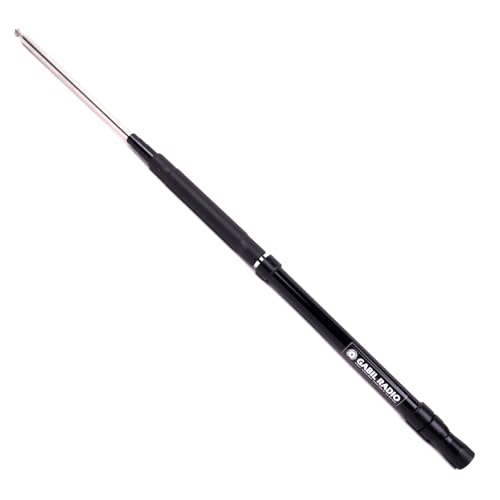
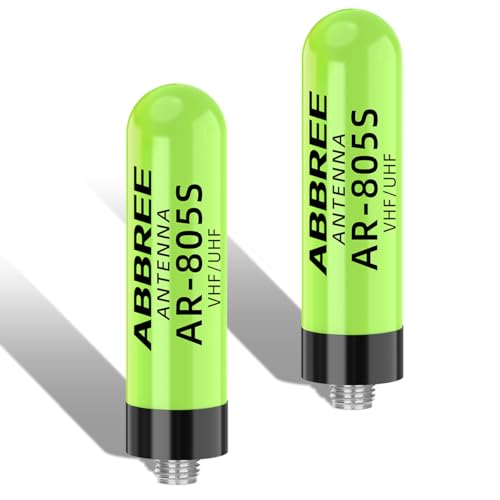
Live listings for the shortlist in this guide are pulled from Amazon below, so prices and availability are always current at the moment you look.


A field tuning workflow that prevents wasted activations
Tuning should begin at home, in a clear space, with notes taken before the first trip outdoors. Set the antenna up exactly as it will be used in the field, including mount, radials, feed line, and choke, then record the settings that produce an acceptable match on each intended band. Those baseline figures will shift somewhat on real ground, but they transform field adjustment from open-ended searching into small corrections around a known starting point, which is a profoundly different and calmer experience.
An analyzer earns its pack weight during the first months with any new system. Sweeping slowly while changing one variable, such as whip length or coil position, shows the operator how that control moves resonance and how sharply the match responds. Manufacturer documentation often suggests starting settings per band, and comparing measured results against those suggestions reveals assembly errors early. A whip section left unextended or a radial bundle left coiled announces itself immediately on a sweep, quietly at home instead of loudly on a summit.
Field adjustment order matters because variables interact. Experienced vertical operators set the mount firmly first, spread the full radial set second, extend the whip to the recorded length third, and only then trim the coil position in small steps. Changing radial layout after tuning can move the result again, so completing the physical layout before touching the match prevents circular adjustments. Wire antenna users follow a parallel discipline: finalize height and routing first, then adjust length or links, then verify at the operating position with the actual feed line.
Band changing during an activation benefits from a written sequence kept with the kit. The sequence should state coil position, whip length, radial notes, and any choke or link changes for each band in the order the operator usually visits them. Laminated cards survive rain and repeated handling better than phone notes when batteries fade or gloves make screens awkward. Over time the card becomes personalized, annotated with site-specific corrections that generic charts could never predict for a particular antenna and landscape pairing.
Troubleshooting in the field follows a hierarchy from physical to electrical. Inspect every connection by hand before suspecting propagation, because a cross-threaded fitting or a clip resting on insulation explains most sudden failures. Confirm that no radial has been kicked into a coil, that no wire section hangs against a metal fence, and that the feed line connector is fully seated. Only after that physical pass should settings be questioned, and even then the operator should return to the recorded baseline rather than improvising a completely new configuration under time pressure.
Noise awareness completes the workflow because an antenna can be perfectly matched and still deliver a miserable receiver experience. Portable sites near shelters often contain lighting, chargers, and vehicle electronics that raise the noise floor on lower bands. Moving the antenna even a short distance, rotating a loop, or rerouting a feed line away from a shelter wall can change readability more than another hour of match refinement. Owner reports repeatedly describe location adjustments within a single campsite producing larger improvements than equipment swaps between trips.
Safety and courtesy checks belong inside the same routine rather than after it. Radiators and support lines should be flagged where people walk, kept clear of paths and play areas, and lowered when children or pets move through the operating space. Transmitting should pause while anyone handles the antenna, both for radio-frequency exposure prudence and because a moving element invalidates careful tuning anyway. A station that respects its surroundings gets invited back to shared sites, which is a long-term performance advantage no specification can quantify.
Packing the return trip is the final tuning step nobody sees. Coiling radials in sequence, collapsing whip sections from the tip with a twisting wipe, and noting any setting that behaved unexpectedly all take minutes that repay themselves at the next site. A small repair roll containing tape, spare clips, a short jumper, and a printed settings card weighs little and resolves the majority of field failures described in owner accounts. Preparedness of this ordinary kind is what experienced portable operators actually mean when they call an antenna reliable.
Skill compounds quietly across a season of regular portable work. The operator learns which soil steals resonance, which mast bends first in rising wind, which coil mark belongs to a favorite evening band, and which campsite corner stays electrically quiet after dark. That accumulated local knowledge turns a competent commercial antenna into a personal system tuned to real places and real habits. Manufacturers supply hardware and honest specifications; the operator supplies repetition, notes, and judgment, and contacts follow from the combination rather than from any single purchase decision made in isolation at a desk.
Comparing published resonance claims across brands requires care because measurement conditions differ quietly. One maker may specify settings over a radial field on average soil, another over a vehicle body, and a third in an open test range with elevated radials. Those contexts produce different numbers from identical hardware, so direct chart-to-chart ranking misleads. The better use of documentation is internal: confirm that a given system covers the intended bands in the configuration actually being purchased, with the mount and radial set actually included, rather than in an expanded configuration assembled from optional accessories.
Accessory ecosystems influence long-term satisfaction more than first-week impressions suggest. Spare whips, replacement coil contacts, additional radial kits, alternative mounts, and protective cases determine whether a system stays in service after its first accident. A slightly heavier antenna with readily available sections often outlasts a lighter proprietary design whose single damaged element cannot be sourced quickly. Buyers should scan the maker’s accessory list before purchase with the same attention given to band coverage, treating repairability as a specification in its own right.
Multi-operator events reveal another layer of portable antenna behavior. At club field operations, several stations share a site, and antennas interact through proximity, shared noise, and simple physical crowding. Verticals with compact radial fields fit between other stations more politely than sprawling wire arrays, while loops offer nulls that can reduce a neighboring transmitter’s impact on a receiver. Planning documents for group events usually assign antenna types by band and position, and individual operators benefit from owning a system that cooperates with neighbors instead of demanding the entire field.
Transport protection deserves the same specificity as electrical planning. Whip tips puncture soft bags, coil housings crack when loose tools shift in transit, and wire winders abrade against metal mounts during long drives. Dividing a kit into a rigid section for coils and mounts plus a soft section for wires and radials prevents most transit damage described in owner reports. A padded sleeve for the telescoping whip alone costs little space and protects the component whose straightness most directly governs repeatable tuning across every band the system covers.
Expectations about contact distance should be set by band and season rather than by antenna marketing language. A well-deployed portable vertical on an upper band during strong solar conditions can work intercontinental stations with modest power, while the same station on a lower band in summer static may struggle regionally regardless of antenna choice. Portable operating rewards patience with propagation, and judging an antenna by one difficult afternoon confuses conditions with equipment. A fair personal evaluation spans several outings, varied sites, and honest notes about what the sky was doing each time.
Resale and lending behavior offer a final, revealing quality signal. Antennas that hold settings, survive lending to club members, and return from field day weekends without mysterious faults tend to circulate for years within local groups. Their documentation gets photocopied, their settings cards get shared, and their quirks become common knowledge. That community familiarity is worth real money to a buyer who values advice from nearby operators over anonymous specifications, because a locally understood antenna comes with an informal support network no retailer can bundle into a box.
When the last radial is rolled and the whip slides home under a darkening sky, the best portable antenna is simply the one already looking forward to the next ridge, the next shelter, and the next quiet frequency waiting beyond the trailhead.
Regional operating culture shapes antenna choice in ways catalogs never mention. Desert groups favor ground systems that tolerate sand, heat, and wide-open wind without shade structures for support. Mountain clubs prize wire kits that vanish into packs and deploy between pines above rocky soil where spikes refuse to enter. Coastal operators talk about corrosion first and band coverage second, because salt decides service life there. Listening to nearby portable operators describe their own terrain teaches a buyer which compromises local experience has already priced in, and that conversation often redirects a purchase more wisely than another evening of specification comparison alone.
A first activation plan should be deliberately modest. Pick one familiar site, one primary band, and a generous time window, then treat the outing as rehearsal for the system rather than a performance for an audience. Bring the settings card, lay out every component in order, and note each friction point while it is fresh: the clip that fights gloves, the radial that tangles, the mount that needs a different surface. Correcting those small frictions at home between trips is how a portable station matures, and a modest first plan makes the lessons legible instead of burying them under the pressure of a rare summit or a special event schedule.
Carry the antenna that fits your landscape, trust its documented settings, respect the weather without arguing with it, and every ordinary park bench becomes a station worth returning to.
Storage between trips quietly preserves everything the field workflow built. Coils stored dry, whips stored straight, wires stored loosely wound, and connectors stored capped will greet the next outing in the same condition they left the last one. A kit pulled from a shelf and trusted immediately is the product of those unglamorous habits, repeated without exception across wet meadows, dusty ridges, frozen trailheads, and warm campground evenings alike, season after season, year after year, without drama or surprise.
Pack light, tune patiently, mark every setting worth remembering, and the horizon itself starts to feel like part of your station.