Our Top Picks


What's inside
- How to read the comparisons in this guide
- Frequency coverage from HF through UHF, explained plainly
- Telescopic dipole kits and why they remain the default starting point
- Active loop antennas in the YouLoop style
- Wideband magnetic mount whips for desks, vehicles, and quick deployments
- Accessory bundles from Nooelec and the value of a matched ecosystem
- A 9:1 balun with a long wire for serious HF reach
- SMA connectors, adapters, and the overload problem
- Indoor placement and escaping computer and USB noise
- When a low noise amplifier helps and when it only hurts
- Matching the antenna to your listening goal
- Check prices on Amazon
- Dedicated antennas for ADS-B, satellites, and other single purpose listening
As an Amazon Associate I earn from qualifying purchases. This post may contain affiliate links at no extra cost to you.
Reading a guide like this one should cost you nothing extra, so here is the arrangement up front: this article contains affiliate links, and if you buy through one of them the site may earn a commission while the price you pay stays exactly the same.
A portable antenna often decides whether a software defined radio feels like a revelation or a disappointment. The receiver itself, whether an RTL-SDR dongle, an SDRplay unit, or an Airspy model, only works with whatever signal and noise the antenna delivers to its input. New listeners frequently blame the dongle for a silent band, when the real problem is a short whip trying to cover wavelengths measured in tens of metres. Matching antenna size, pattern, and connection to the frequencies you actually want to hear changes everything.
This guide stays firmly inside the SDR world. Every recommendation framework here assumes a wideband SDR dongle or desktop SDR receiver fed through a coaxial input, not a dedicated shortwave portable with its own internal ferrite bar and tuned front end. That distinction matters because SDR front ends are deliberately wide open, which brings both flexibility and vulnerability. A good portable antenna for this job must balance capture area against overload, convenience against noise pickup, and price against mechanical durability.
How to read the comparisons in this guide
Each antenna family below is judged on published manufacturer specifications, stated frequency ranges, connector types, element dimensions, and patterns in owner reports rather than on any claim of laboratory measurement. Manufacturer specifications list the numbers that matter most for a first comparison: usable frequency span, gain figures where quoted, impedance, connector, cable length, and physical size. Owner reports describe the practical side of those numbers, such as how often telescopic sections loosen, how a magnetic base behaves on a thin filing cabinet, or how much patience a loop demands during rotation.
Five criteria run through every section. First comes frequency coverage, because an antenna that cannot resonate or at least present a usable match near your target band will leave the waterfall empty. Second is noise behaviour, since indoor SDR listening is usually limited by interference rather than by raw sensitivity. Third is connection integrity, covering connector type, cable quality, and adapter count. Fourth is portability in the honest sense, meaning packed size, setup time, and fragility. Fifth is overload risk, the tendency of a large efficient antenna to push a simple dongle front end into distortion when strong local signals are present.
Readers who mainly chase one service should still read the coverage section carefully. A listener focused on aviation transmissions around 120 megahertz faces completely different antenna geometry from a listener copying amateur stations near 7 megahertz. Wavelength explains the gap: a quarter wave at airband frequencies is roughly sixty centimetres, while a quarter wave on the forty metre band stretches close to ten metres. Portable products bridge that gap with telescoping elements, loading, active amplification, or sheer compromise, and each bridge involves a trade the buyer should understand before spending money.
One more habit helps before any purchase. Open your SDR software, set the gain to a moderate manual value, and note which strong signals already dominate your location using whatever antenna you currently own. That baseline tells you whether your problem is weak desired signals, excessive noise, or an already crowded spectrum. Readers comparing home networking gear face a similar baseline exercise with guides such as best 4g routers, where placement and local conditions shape results as much as headline specifications do.
Frequency coverage from HF through UHF, explained plainly
High frequency, the range from roughly 3 to 30 megahertz, rewards sheer conductor length. Signals there arrive after ionospheric reflection, often from other continents, and a few metres of wire can capture them surprisingly well after dark. The challenge is that many SDR dongles either stop below these frequencies or hear them through an upconverter or direct sampling mode with modest filtering. An antenna cannot fix a receiver range limit, so checking the stated lower edge of your specific dongle or SDRplay or Airspy model comes before any antenna decision.
The VHF range from 30 to 300 megahertz includes FM broadcast, airband, amateur two metre activity, weather satellite downlinks near 137 megahertz, and marine traffic. Here portable antennas become physically reasonable, because resonant elements shrink to lengths a telescopic whip can actually achieve. Most general purpose SDR whips perform their most honest work in this region. Polarisation also starts to matter noticeably: aviation and amateur repeaters generally use vertical polarisation, while FM broadcast in many regions favours horizontal or circular arrangements.
UHF, from 300 megahertz upward, includes the 70 centimetre amateur band, ADS-B aircraft signals at 1090 megahertz in a specialised sense, and various telemetry services. Wavelengths are short, cable losses climb, and connector quality starts to influence results in ways that barely matter at HF. A long thin coaxial lead that behaves acceptably at 10 megahertz can waste a meaningful share of a weak UHF signal before it reaches the receiver. Short cable runs and direct dongle mounting become genuine advantages rather than neatness preferences.
No single passive portable antenna is truly excellent across all three regions. Products advertised as covering everything from longwave to UHF rely on compromise, usually a small active stage or a very forgiving match that delivers something everywhere and excellence nowhere. That compromise can still be the right purchase for a traveller sampling many bands from a hotel room. A listener with one clear target, however, gains more from a narrower antenna designed near that target, even if the box lists a smaller frequency span.
Gain figures deserve scepticism when comparing across families. A passive dipole has a predictable reference gain, while an active loop quotes system gain that includes its amplifier. Comparing those two numbers directly misleads, because the active product may raise noise and strong signal levels alongside the wanted station. What matters for SDR work is signal to noise ratio at the receiver display, and owner reports consistently describe quiet antennas with modest gain beating loud antennas with impressive headline figures in interference filled homes.
Telescopic dipole kits and why they remain the default starting point
The telescopic dipole kit bundled with many RTL-SDR packages has earned its place as the universal first antenna. Two extendable elements mount on a central block, usually with a suction cup, tripod thread, or magnetic option, and a length of thin coaxial cable ends in an SMA connector. By sliding the elements in or out, the listener approximates a half wave dipole for a chosen frequency. Manufacturer charts typically map element length against frequency, turning abstract wavelength maths into a quick mechanical adjustment.
At VHF this arrangement works genuinely well. Set both elements near sixty centimetres total span considerations for airband, orient the dipole vertically, and aircraft transmissions that were marginal on a random whip become readable. Rotating the dipole broadside to a distant repeater can also sharpen a two metre signal. Owner reports describe the same ritual repeated worldwide: extend, rotate, watch the waterfall, nudge again. The kit teaches antenna fundamentals simply because every adjustment produces a visible response on screen.
On HF the story changes. Fully extended elements, often reaching a little over a metre each, still fall far short of resonance on the main shortwave bands. Reception continues, because a sensitive receiver hears strong broadcasters through almost any conductor, but weak amateur signals sink toward the noise. Some owners drape additional wire from the element tips to stretch the effective length, an improvisation that helps when done symmetrically and hurts when one side simply becomes a noise collecting tail near household wiring.
Mechanical quality separates the kits more than electrical design does. Thin telescopic sections develop play at the joints, and a loose joint introduces intermittent crackle whenever a desk vibrates or a cable shifts. Central blocks with firmer element sockets hold adjustment better over months of use. Cable strain relief matters too, since the supplied lead is usually lightweight and its connector end carries the stress whenever the dipole gets repositioned on a window.
Placement advice for dipoles is consistent across owner reports. Height helps, distance from the computer helps more, and a window facing the target region helps most of all indoors. A dipole taped to glass often outperforms the same dipole on a taller metal shelf surrounded by power supplies. Keeping the two elements in a straight line preserves the intended pattern; bending one element around a curtain rail creates an unpredictable shape that may still work but cannot be reasoned about or repeated.
For travellers, the dipole kit packs flat, survives baggage handling better than rigid whips, and raises few questions at a hotel window. Its weakness is setup time. Every band change invites another round of measuring and rotation, which suits exploratory listening but frustrates someone who wants to monitor one frequency while working. That frustration is exactly what pushes many listeners toward a second, dedicated antenna for their favourite service while keeping the dipole for roaming.
Active loop antennas in the YouLoop style
The passive-looking circle of coaxial cable known through the YouLoop design represents a different philosophy. A small loop, typically around sixty centimetres across, feeds a balun arrangement that transfers signal to the receiver while rejecting much of the electric field noise dominating indoor environments. The design originates from published work associated with the Airspy ecosystem, and manufacturer specifications list a broad HF and lower VHF span with notably directional behaviour. Its null, the direction where reception drops sharply, becomes a tool rather than a flaw.
Loops respond primarily to the magnetic component of a radio wave. Household interference from dimmers, chargers, and switching supplies radiates strongly in the electric field near its source, so a magnetic loop placed even a metre or two away can deliver a calmer band display than a long wire in the same room. Owner reports from apartment listeners repeatedly highlight this quietness as the reason a loop stays in use after larger antennas disappoint. Weak signals that never rose above wire antenna noise become copyable once the background falls.
Directionality demands participation. Rotating the loop a few degrees can deepen a noise null or peak a desired station, and the sharpest null often points toward a specific interference source inside the building. Listeners describe keeping a small notebook of rotation angles for favourite evening frequencies, because the best orientation at 7 megahertz rarely matches the best at 15 megahertz. This is an antenna for people who enjoy tuning the aerial as part of the hobby, not for unattended monitoring.
Construction variants include rigid aluminium loops, flexible cable loops shipped coiled, and amplified derivatives that add a low noise amplifier at the feed point. The original passive approach suits strong and medium signal environments and avoids overload almost entirely. Amplified versions extend usefulness to very quiet rural locations and small indoor loops starved of signal, but they reintroduce the overload and power questions the passive design sidesteps. Checking which variant a listing describes matters, because photographs of the two can look nearly identical.
Mounting a loop indoors usually involves a camera tripod, a plastic stand, or a hook near a window. Metal window frames distort the pattern when the loop hangs directly against them, so a modest standoff distance improves consistency. Balcony use brings a clear step up in performance for many owners, provided the loop stays clear of metal railings. Even a hallway position away from the computer can beat a window position crowded with mains powered devices, a reminder that for loops the quietest spot outranks the highest spot.
Frequency limits deserve respect. The classic small loop concept targets HF and the lower VHF region; it is not an airband or UHF tool. Buyers hoping one loop will cover every interest will be disappointed above its design range. Within its range, though, few portable antennas offer the same combination of small footprint, noise rejection, and repeatable directional control for SDR listening at home.
Wideband magnetic mount whips for desks, vehicles, and quick deployments
A magnetic mount whip answers a different question: how fast can a usable antenna be standing in a new place. The base grips any ferrous surface, the vehicle roof being the classic example and the top of a filing cabinet or radiator cover being the indoor equivalent. Manufacturer specifications for these wideband models usually quote a VHF and UHF span, a vertical element of modest length, several metres of coaxial cable, and an SMA or adapter terminated feed. The ground plane beneath the base forms part of the antenna, which is why the same whip behaves differently on a car roof, a biscuit tin, and a bare wooden desk.
Ground plane size explains many contradictory owner reports. On a large steel surface the whip presents a reasonable match and a fairly omnidirectional pattern. On a tiny metal plate the pattern skews and the match shifts, yet reception often remains adequate for local repeaters, airband, and strong utility signals. Owners who add a simple metal sheet under the base frequently describe an immediate improvement on lower VHF frequencies. The lesson is that the mount location is an electrical component, not merely a convenient parking spot.
Cable length cuts both ways. A generous lead lets the whip sit on a high cabinet while the dongle stays at the desk, but every extra metre adds loss that matters most at UHF. Thin cable types supplied with budget whips show this loss earliest. Where the receiver can travel with the antenna, plugging the dongle close to the base through a short lead and running a USB extension back to the computer usually gives cleaner results at high frequencies and moves the noisy computer away from the element at the same time.
Wideband claims for these whips need the same caution applied earlier. A short vertical cannot be resonant across the entire quoted span, so designs rely on loading and a forgiving match. For receiving, that compromise is acceptable across much of VHF and UHF, since a modest mismatch costs less than scanner folklore suggests. Below about 50 megahertz, however, performance falls away quickly, and no magnetic whip of this size substitutes for wire or a loop on HF.
Durability is a genuine strength. There are no telescopic joints to loosen, no loop to keep circular, and no orientation ritual beyond choosing the mounting surface. Rental properties and shared offices suit this style well because installation leaves no mark. Readers who already optimise small spaces for networking hardware, as in best mesh wifi 6 routers, will recognise the same principle: the least invasive placement that still clears local obstructions usually wins day to day.
Vehicle use adds one caution. A whip rated for stationary or low speed use may not tolerate highway airflow, and cable routed through a door seal suffers pinch damage over time. Owner reports from mobile listeners recommend checking the stated speed guidance and inspecting the cable entry point after the first few trips. As a receive only antenna the electrical side is forgiving; the failures that end its life are almost always mechanical.
Accessory bundles from Nooelec and the value of a matched ecosystem
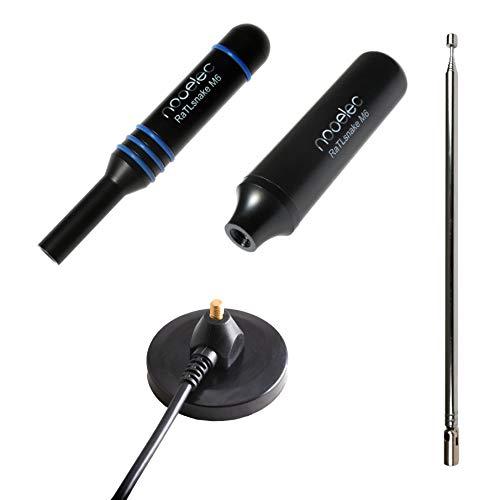
Nooelec occupies a distinctive place in the SDR hobby as a maker of dongles, upconverters, amplifiers, and antenna accessories designed to work together. Its bundles typically combine a small magnetic whip or telescopic elements with adapters, extension cable, and sometimes a low noise amplifier module. Manufacturer specifications list component level detail that generic bundles omit, including amplifier gain and noise figure ranges, filter options, and the exact connector fitted to each part. For a newcomer, that documentation reduces the adapter guessing game considerably.
The practical appeal is compatibility. An SMA terminated kit bought alongside a dongle from the same catalogue avoids the surprise of discovering a reverse polarity variant or an unexpected gender at the receiver socket. Owners upgrading step by step describe starting with a bundled whip, adding an upconverter for HF, and later inserting a filtered amplifier for a favourite band. Each addition follows a documented signal path, which makes troubleshooting methodical rather than superstitious.
Bundle economics require a clear head. A kit containing adapters and cable you already own charges you twice for the same drawer contents. Inventory your existing SMA leads, barrel adapters, and attenuators before ordering, then compare the bundle against the single antenna bought alone. The reverse also holds: a first time buyer with an empty parts drawer often saves money and weeks of waiting by accepting the bundle premium once.
Small whips in these ecosystems perform within the limits already described for their size. Where the ecosystem earns its reputation is the supporting cast: upconverters that open HF to dongles lacking direct sampling, distribution amplifiers for feeding two receivers, and band specific filters that tame broadcast interference. Owner reports treat the antenna itself as the starting point and the surrounding modules as the reason to stay within the range.
Support documentation is another differentiator worth weighing. Published setup guides that name exact gain starting points for a given dongle save beginners from the common error of maximum gain everywhere. SDR software makes gain seductively easy to raise, and an ecosystem guide that explains when to lower it teaches the single most valuable operating skill in the hobby. Antennas deliver signals; gain discipline decides whether those signals stay intelligible.
A 9:1 balun with a long wire for serious HF reach
When portable stops meaning pocket sized and starts meaning deployable, the classic answer is a length of wire matched through a 9:1 unun, often loosely called a balun in product listings. The transformer lets an end fed wire of roughly eight to sixteen metres present a manageable impedance across several HF bands without a tuner. Manufacturer specifications list the transformation ratio, power handling that matters mainly to transmitters, connector type, and recommended wire lengths. For receive only SDR work, the wire length guidance and build quality matter far more than any power figure.
Setup usually involves throwing or clipping the wire along a fence, through a tree, around a balcony, or in a slope from a window. Each geometry changes the pattern, yet even an imperfect run transforms HF reception compared with a metre of telescopic whip. Distant broadcasters multiply after sunset, amateur sideband becomes intelligible rather than suggestive, and time signal stations appear on schedule. Owner reports from suburban listeners describe this as the single largest HF improvement available without a permanent outdoor installation.
The wire hears everything, including the neighbourhood. Mains borne interference, solar inverter hash, and a neighbour’s faulty appliance all arrive efficiently. A 9:1 setup therefore pairs naturally with the noise strategies covered later: distance from buildings where possible, a choke on the feedline, and realistic expectations on the lowest bands during local evening electrical activity. Some owners run two antennas, the wire for quiet rural trips and the loop for noisy home evenings, switching according to conditions rather than loyalty.
Counterpoise and grounding questions follow this design everywhere. A short counterpoise wire or the coaxial outer itself completes the antenna system, and changing its routing changes reception. Indoor deployments draped along a ceiling can work after a fashion, though the building wiring couples in strongly. Balcony and garden deployments widen the gap from indoor noise and consistently earn better reports. Renters should also consider visibility and trip hazards, since sixteen metres of wire crosses spaces other people use.
Wind, ultraviolet exposure, and connector strain decide lifespan. A transformer box with a proper strain relief loop for the wire survives seasons that crack a soldered joint in weeks. Stainless or insulated copper wire resists the green corrosion that raises resistance at connection points. None of this is glamorous, but portable HF antennas live outdoors in temporary rigging, and mechanical honesty separates a season of listening from a single good weekend.
SMA connectors, adapters, and the overload problem
Nearly every product in this guide terminates in SMA, the small threaded connector standard across RTL-SDR dongles, SDRplay units, and Airspy receivers. Threaded connections stay put, repeat well, and handle UHF frequencies gracefully. Confusion begins with variants: standard SMA against reverse polarity SMA inherited from wireless networking gear, male against female, and the larger PL-259 world of traditional radio equipment. Each adapter between antenna and receiver adds a small loss and a potential intermittent point, so the shortest adapter chain that fits is the best one.
Pigtail leads solve a mechanical problem that specifications rarely mention. A heavy coaxial cable screwed directly onto a lightweight dongle levers against its socket whenever the cable moves. A short flexible pigtail absorbs that stress and lets the dongle rest flat. Owners who skipped the pigtail sometimes report cracked solder joints presenting as mysterious intermittent reception. Protecting the receiver input is part of antenna selection, even though it appears on no antenna box.
Overload deserves its own discussion because wideband SDR front ends invite it. A simple dongle has limited filtering before its tuner and converter stages. A strong FM broadcast station, a nearby television transmitter, or a powerful local amateur signal can raise the overall level until weak signals across unrelated bands distort, multiply, or vanish behind phantom images. Symptoms include stations appearing at wrong frequencies, a noise floor that rises when gain increases, and reception that improves when an antenna is made smaller, a result that baffles newcomers until overload is explained.
Defences layer sensibly. Reduce gain first, since SDR software defaults often exceed what a good antenna needs. Add a broadcast FM notch filter if phantom stations cluster around that band. Insert a modest attenuator when a large wire feeds the dongle in a city. Choose a less efficient antenna for strong signal environments, which is why the small passive loop performs so calmly in apartments. Readers extending network coverage face an analogous lesson in best wifi boosters and extenders: more amplification in the wrong place degrades the very signal it promises to help.
Static and surge awareness complete the connection picture. Outdoor wires accumulate static charge, and a direct path into a dongle during a thunderstorm threatens the receiver and anything attached to it. Disconnecting outdoor antennas before storms is the habit every experienced listener recommends. A gas discharge or bleed arrangement offers partial everyday protection, but no accessory turns a temporary wire into a lightning safe installation, and treating it as one invites damage.
Indoor placement and escaping computer and USB noise
The computer running the SDR is usually the loudest radio source in the room. USB cables radiate, monitor supplies buzz, and the dongle sits at the centre of that electrical weather by design. Moving the antenna even two metres from the desk, using a decent USB extension or a longer coaxial run as appropriate to the band, regularly produces a larger improvement than upgrading the antenna itself. Owner reports describe noise floors dropping visibly the moment a dipole moves from desk edge to window frame.
Ferrite chokes earn their small cost here. Clip on chokes around the USB lead and the coaxial feedline suppress common mode currents that otherwise turn cables into unintended antennas for household interference. Placement near the receiver end of the cable usually gives the clearest effect. Several owners describe a diagnostic ritual of adding one choke at a time while watching the spectrum, keeping only the positions that visibly help. That empirical approach beats scattering ferrites at random and hoping.
Windows deserve their reputation, with one exception. Modern low emissivity glass carries a metallic coating that attenuates radio signals, sometimes severely at UHF. An antenna pressed against coated glass may perform worse than the same antenna a metre inside the room. Testing both positions takes minutes and settles the question for your specific building. Plain glass, open windows, and balconies remain excellent, which is why so many portable setups migrate toward them over time.
Height interacts with noise in a useful way indoors. Interference from ground floor wiring and appliances often weakens on an upper floor, while desired VHF signals improve with elevation at the same time. A whip on top of a bookcase can outperform a technically better antenna at desk level. Conversely, a loft space crowded with a solar inverter or heating controller may be the noisiest place in the house. The waterfall display arbitrates every such guess quickly and honestly.
Listening schedules matter more indoors than newcomers expect. Evening brings cooking appliances, lighting dimmers, and chargers into simultaneous use, raising the HF noise floor across whole neighbourhoods. Early morning sessions frequently reveal a calmer band on identical equipment. Logging the quiet hours for your own home turns antenna comparisons fair, because judging a new loop at noisy eight in the evening against a wire heard at quiet six in the morning credits the clock rather than the hardware.
When a low noise amplifier helps and when it only hurts
A low noise amplifier, or LNA, boosts weak signals before cable loss and receiver noise can bury them. The classic case for one is a small antenna feeding a long cable run at UHF, where loss arrives before amplification inside the receiver can help. Mounted at the antenna feed point and powered through the coaxial cable by a bias tee or a USB lead, a decent LNA preserves signals that would otherwise fade in transit. Manufacturer specifications list gain, noise figure, frequency span, and the maximum input level the device tolerates.
The same amplifier hurts in a strong signal city apartment. It raises powerful broadcast and utility signals by the same amount as weak targets, pushing a simple dongle closer to overload while contributing its own noise. Owner reports split predictably along location lines: rural and suburban listeners praise the extra reach on satellites and distant repeaters, while urban listeners often remove the amplifier after a week of phantom signals. Geography, not product quality, explains most of the disagreement.
Bias tee powering deserves a compatibility check. Some SDRplay and Airspy models supply suitable voltage on the antenna port, some dongles offer it through a hardware option, and others need an external injector. Feeding the wrong voltage, or shorting a powered port with a DC grounded antenna, risks damage. Reading the power specification for both amplifier and receiver before connecting anything is unglamorous and essential. A separate USB powered amplifier sidesteps port power questions at the cost of one more cable.
Filtering and amplification belong together. An amplifier placed after a band filter boosts a cleaned slice of spectrum, which is the arrangement satellite listeners favour around 137 megahertz and ADS-B enthusiasts use near 1090 megahertz. Wideband amplification of everything from a big antenna is the arrangement most likely to disappoint. Readers assembling a listening desk alongside audio gear, as discussed in best sound cards for headphones, will recognise the same signal chain discipline: clean first, amplify second, and keep levels modest throughout.
A simple decision rule follows. If your noise floor rises when you connect the antenna, your receiver already hears environmental noise and an amplifier adds little. If connecting the antenna barely changes the display on a band where signals should exist, and cable loss is significant, an amplifier may genuinely help. That two minute observation, made with your own equipment in your own home, predicts satisfaction better than any specification table.
Matching the antenna to your listening goal
For HF exploration from a flat or small house, choose between the loop and the wire according to your noise environment. Quiet locations reward the 9:1 wire with reach and simplicity across many bands. Noisy buildings favour the loop, whose directional null becomes a daily tool against interference. Both outperform any short whip on these frequencies by a margin no software setting can close. Budget for the mounting hardware and cable your chosen design needs, because an antenna without its supports stays in a drawer.
For airband and local VHF monitoring, the telescopic dipole adjusted to the band gives the cleanest portable results, with the magnetic whip close behind when speed matters more than the last increment of clarity. Vertical orientation, a window position, and distance from the computer complete the setup. Listeners near an airport may find even the supplied whip adequate, while those forty kilometres from the field will feel every placement improvement directly in controller readability.
For satellite passes and UHF services, specialisation wins. A purpose built antenna for the target frequency, a short low loss feed, and an amplifier only where the earlier rule supports one will outperform every general purpose product in this guide on that specific job. The general antennas remain valuable for discovering interests; the dedicated antenna serves the interest once discovered. Many mature listening desks end up as exactly that pairing, one flexible antenna for roaming and one narrow antenna for a beloved service.
For travel, the dipole kit and a small loop cover most hotel room scenarios between them. The dipole handles VHF and UHF sampling, the loop opens HF in the evening, and both pack without rigid length. A magnetic whip joins the bag only when a vehicle is part of the trip. Whatever travels, include spare adapters and a short pigtail, because the part that fails or mismatches on the road is never the antenna element itself.
Buying order matters for beginners working to a budget. Start with the dipole kit your dongle may already include, learn gain control and placement on it, then add the antenna that serves the band you actually revisit. That sequence spends money in response to evidence from your own waterfall rather than in anticipation of interests that may never develop. The hobby rewards this patience, because antennas accumulate quickly and storage fills with good intentions.
Ultimately the best portable SDR antenna is the one whose compromises align with your rooms, your bands, and your patience for adjustment, so let your own listening log, rather than any headline specification, cast the deciding vote.
Check prices on Amazon
Live listings for the shortlist in this guide are pulled from Amazon below, so prices and availability are always current at the moment you look.

Scanner SDR Antenna Tripod Portable Collapsible by Super Antenna SR1 UHF VHF broadband


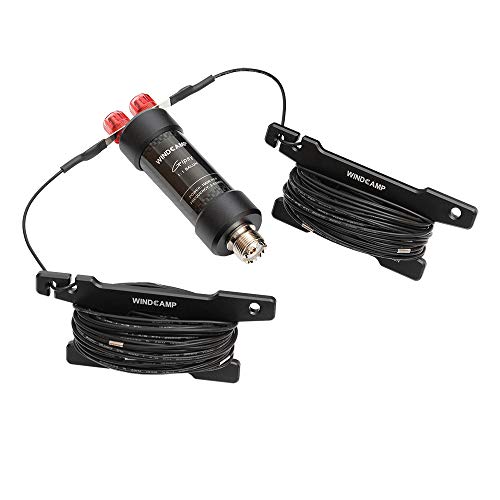
WINDCAMP Gipsy 5-50MHz HF Horizontal Dipole Antenna Ant for Ham Radio Waterproof Balun
Dedicated antennas for ADS-B, satellites, and other single purpose listening
General purpose antennas introduce the spectrum, but single purpose designs reward listeners who settle on one service. ADS-B reception at 1090 megahertz illustrates the point sharply. Aircraft transponders send short bursts that decoding software assembles into positions, and range depends on an unobstructed view toward the horizon plus a feedline that wastes little of a very short wavelength signal. Manufacturer specifications for ADS-B antennas list a narrow tuned span, modest gain directed toward the horizon, and weatherproof construction for rooftop or window ledge mounting. Owner reports describe indoor whips decoding nearby traffic adequately, while a tuned antenna near a window multiplies the aircraft count and extends the map outward in every direction the building allows.
The feedline decision dominates ADS-B results more than amplifier marketing does. Several metres of thin cable at this frequency can consume much of what a better antenna gains. Mounting the dongle itself beside the antenna, then running USB back to the computer, sidesteps that loss elegantly and explains why so many dedicated receiving posts look like a small receiver taped near a window with a long data cable trailing away. Weather protection for the dongle and a drip loop for the cable complete an arrangement that owner reports describe as stable for months at a time.
Weather satellite reception near 137 megahertz imposes a different geometry. The satellites pass overhead, their signals polarised in a rotating fashion that favours antennas designed for skyward coverage, such as turnstile or quadrifilar designs. A vertical whip hears the middle of a pass strongly and loses the low elevation edges where the picture lines accumulate. Published designs and commercial equivalents both exist for SDR listeners, and owner reports consistently rank antenna pattern above receiver sensitivity for complete images. A portable listener can start with the dipole arranged horizontally and later graduate to a dedicated skyward pattern once the decoding routine becomes familiar.
Marine AIS traffic near 162 megahertz, by contrast, behaves like other terrestrial VHF services. A vertical dipole or whip near a window facing the water hears vessels far beyond visual range on good days. Coastal apartment listeners report that height matters more than any other variable, because the radio horizon expands directly with elevation. The same antenna one floor higher can add shipping lanes that no amplifier at the lower position ever revealed, a pattern repeated across many coastal owner accounts.
Pagers, telemetry, and utility data services scattered through VHF and UHF reward patience more than exotic hardware. Their signals are often strong, intermittent, and narrow, so a general whip plus diligent frequency logging finds them reliably. The dedicated investment here is time spent cataloguing local frequencies, after which antenna choice becomes a simple matter of the band each service occupies. Listeners who build that local catalogue gradually stop shopping for antennas and start planning schedules, which is usually a sign the receiving station has matured.
Portable operating away from home rearranges priorities once more. A field, hilltop, or holiday rental removes the building attenuation and household noise that dominate home listening, and modest antennas suddenly perform like larger ones. The telescopic dipole on a camera tripod at a rural cottage can deliver airband and amateur reception that an expensive city installation struggles to match. Owner reports from travelling listeners emphasise bringing mounting options, spare cable ties, and adapter variety over bringing additional antenna elements, because improvisation at the site decides what any antenna achieves.
Maintenance habits quietly protect all of this equipment. Telescopic elements wiped before collapsing shed the grit that scores their plating. SMA threads kept clean and never forced preserve the fine machining that UHF performance depends on. Coaxial cable stored in loose coils avoids the kinks that become loss points and intermittent faults. Loops stored flat keep their shape, and wire antennas inspected at the transformer joint reveal corrosion before it silences a band. None of these habits costs meaningful money, yet owner reports of premature failure almost always trace back to one of them being skipped.
A final buying discipline ties the whole guide together. Write down your three target services, the rooms or places you will listen from, and the connector your receiver presents, then let those three facts eliminate most of the catalogue before price comparisons begin. An antenna surviving that filter and matching the guidance in the relevant section above will serve well, because it was chosen against your circumstances rather than against an abstract ranking. Listeners who buy in that order rarely accumulate the drawer of mismatched whips and adapters that impulse ordering guarantees.
So take the antenna that fits your bands, your building, and your habits, set it up carefully beside a quiet window, and let the waterfall itself show you how much of the spectrum has been waiting within reach all along.
Software settings interact with antenna choice in ways that deserve explicit attention before any money moves. Every SDR package exposes gain controls, sometimes as a single slider and sometimes as separate tuner and intermediate frequency stages. Raising gain lifts weak signals and the noise floor together until the converter saturates, after which additional gain only manufactures distortion. Owner reports from new dongle owners show the same learning curve repeatedly: the breakthrough evening arrives not with a new antenna but with gain reduced by several steps, revealing signals that saturation had buried. Treat gain as part of the antenna system, because the best element feeding an overdriven input still produces an ugly waterfall.
Bandwidth and sample rate choices carry a similar hidden cost. A wide sample rate displays a generous slice of spectrum, inviting the strong broadcast station at the edge of the window into the receiver alongside your weak target. Narrowing the view, centring the target away from the edges, and engaging any available preselection in SDRplay or Airspy models all reduce the burden on the front end. Antenna selection and software configuration therefore solve overload together, and blaming either alone usually misdiagnoses the problem.
Recording and decoding workflows add one more selection criterion: stability over hours. An antenna for unattended satellite recording or overnight HF monitoring must hold its position and connection without the small drifts that a listener corrects unconsciously during an evening session. Suction cups creep, lightweight tripods get knocked, and magnetic bases slide on painted surfaces. Owners running scheduled recordings favour clamped, taped, or weighted mounts and describe checking the installation weekly rather than daily once a robust mounting method is found.
Households with several listeners or several receivers introduce sharing questions that a distribution amplifier or a simple antenna switch can answer. Two dongles on one good antenna through a proper splitter lose a few decibels each yet often outperform two mediocre antennas in separate noisy spots. The reverse arrangement, one receiver switching between a loop and a wire, suits the listener whose interests alternate by evening. Either way, planning the signal path on paper before ordering splitters and switches prevents the adapter pile from growing again.
Seasonal change alters reception enough to justify a twice yearly review of any installation. Foliage growth attenuates UHF paths, winter heating appliances rewrite the indoor noise map, and propagation on HF shifts with the changing ionosphere. An antenna judged disappointing in July may prove entirely adequate in January without any modification. Experienced listeners keep brief dated notes for exactly this reason, and those notes, accumulated patiently, become the most trustworthy buying guide any individual SDR owner possesses.
Children, pets, and cleaning routines belong in the placement calculation for shared homes. A loop at toddler height invites curious hands, a wire across a hallway will eventually meet a vacuum cleaner, and a whip on a radiator cover gets moved by whoever dusts. Antennas that survive domestic life are the ones whose positions respect how the household actually moves, and owner reports from family homes rate robustness and unobtrusiveness far higher than single travellers do. Choosing the second best electrical position that nobody disturbs beats the perfect position that lasts one afternoon.
Documentation supplied with better antennas shortens every one of these learning curves. A length chart for a dipole, a rotation diagram for a loop, or a clear statement of which port expects power tells the buyer that the maker understands real installations. When two products look electrically similar, the one with honest documentation and reachable support usually delivers the better year of listening, and that consideration closes the comparison framework this guide opened with.
Budget allocation across a whole receiving station deserves the same realism as antenna selection itself. A listener who spends the entire allowance on a premium loop while keeping a damaged feedline and no mounting hardware owns an excellent antenna that cannot be deployed properly. Reserving a modest share of any budget for cable, chokes, adapters, and a stable stand consistently produces better reception than concentrating every unit of currency on the antenna element alone. Owner reports rarely celebrate an adapter purchase, yet the stations that stay on air month after month are invariably the ones whose owners funded the unglamorous parts.
Second hand markets change the calculation for patient buyers. Loops, baluns, and quality whips appear regularly as other hobbyists upgrade or leave the hobby, and passive devices age gracefully when their connectors and joints remain sound. Inspecting telescopic sections for smooth travel, checking transformer boxes for water ingress, and confirming that an active loop includes its correct power arrangement protects a used purchase. Amplified products carry more second hand risk than passive ones, because a damaged amplifier stage may pass some signal while quietly ruining the noise performance that justified the design.
Gifts and starter kits for newcomers follow a simpler rule. Give the antenna that teaches the most per evening of use, which in practice means the adjustable dipole for VHF curiosity or the small loop for HF patience. Either pairs with any of the common receivers discussed throughout this guide, and either leaves the recipient a clear next step once their favourite band emerges. Accessories that demand immediate further purchases make poor gifts, however impressive their specification sheets appear.
Environmental responsibility is a small but real part of antenna ownership. Cheap telescopic kits that snap within a season become landfill, while a repairable dipole with replaceable elements can serve for a decade. Wire offcuts, failed adapters, and exhausted batteries from active accessories deserve proper disposal routes rather than the household bin. Buying one durable antenna instead of three disposable ones is both the economical and the ecological choice, and the reception usually improves alongside the conscience.
Community knowledge completes what specifications begin. Local radio clubs, online SDR communities, and the shared receivers published by other listeners all reveal what propagation and interference look like in your region before you spend anything. Comparing your home waterfall against a shared receiver across town separates antenna problems from band conditions instantly. A listener embedded in that community chooses antennas with regional evidence, borrows before buying, and contributes observations that help the next newcomer skip the expensive mistakes.
With those habits in place, the equipment lists in this guide reduce to a short personal shortlist shaped by your rooms and your favourite frequencies, and the remaining decision becomes the pleasant one of which evening this week the new antenna first goes by the window.
Safety around windows and balconies closes the practical checklist. Temporary antennas should never obstruct a fire escape route, dangle where passers by can snag them, or invite anyone to lean beyond a railing while adjusting an element. Indoor alternatives exist for nearly every goal described in this guide, and a slightly weaker signal from a safe position always outranks a marginal improvement bought with physical risk. Building managers and landlords also deserve consideration before anything is fixed outside a window, since a removable indoor setup avoids disputes that no reception gain can justify.
Finally, remember that listening itself is the point of every purchase discussed here. An evening spent copying a distant broadcaster through a modest dipole teaches more than a week of reading specifications, and the notes from that evening will steer the next decision better than any ranking could. Start with what you can deploy tonight, record what the spectrum shows you, adjust one variable at a time, and allow your own evidence to accumulate into confidence about the next step for your station.
Keep one small notebook page for each antenna you own, recording its best positions, favoured bands, and the gain settings that behaved well with each receiver in the house. Months later, when a band sounds wrong, that page separates a genuine equipment fault from a forgotten adjustment in seconds. Owners who keep such notes describe troubleshooting sessions shrinking from an evening of guesswork to a few methodical checks, and the habit costs nothing beyond the discipline of writing down what the waterfall already showed you during a successful session.
That notebook also settles future buying arguments with yourself, because a disappointing session can be compared against recorded good evenings on identical settings before any replacement antenna gets ordered in frustration late at night after a noisy band.