Our Top Picks
 Wokyo 4PCS 312 Rechargeable Hearing Aid Batteries4pcs 312 Rechargeable Batteries4.72 x 3.94 x 3.94 inchesCheck on Amazon


What's inside
- The three sizes and what each one actually holds
- Three chemistries, three different bargains
- Hours per charge, stated carefully
- Chargers, docks and drying functions
- Compatibility with behind-the-ear and in-ear instruments
- The overnight charging habit
- Travel, spares and power away from home
- Lifespan, fading cells and replacement timing
- Handling, dexterity and everyday confidence
- Choosing between removable cells and a sealed design
- Troubleshooting mornings when an aid starts empty
- Running costs in concept, without a price tag
- Care details that quietly extend battery life
- What a realistic week of use looks like
- Check prices on Amazon
- Safety notes for homes with children and pets
As an Amazon Associate I earn from qualifying purchases. This post may contain affiliate links at no extra cost to you.
Rechargeable power changes the daily rhythm of wearing hearing aids more than any single specification suggests. Instead of peeling a coloured tab from a tiny zinc-air cell, waiting a minute for air to activate it, and then fumbling that cell into a small door every few days, the wearer places both instruments into a dock at night and lifts them out again the following morning with a full charge waiting. That simple exchange of habits is the real subject of this guide, because the batteries themselves differ sharply in chemistry, voltage, capacity and lifespan, and a poor match between cell, charger and instrument can turn a convenient idea into a frustrating routine.
Three sizes dominate the removable-cell world. Size 13, marked orange on disposable packaging, size 312, marked brown, and size 675, marked blue, cover everything from slim receiver-in-canal instruments to powerful behind-the-ear models built for severe losses. Rechargeable versions borrow those familiar footprints, yet the numbers printed on a disposable packet do not transfer directly. A zinc-air size 13 cell may carry roughly 290 to 310 milliamp-hours, while a rechargeable nickel-metal hydride cell in the identical shell holds far less stored energy and still delivers a useful day because its voltage stays steadier under load. Understanding that gap, calmly and in plain terms, helps a wearer judge claims about hours per charge without guesswork.
Many newer instruments remove the question of loose cells altogether. Their makers seal a lithium-ion module inside the housing, rate that module at a nominal 3.7 volts, and charge it through gold contacts or an inductive surface inside a desktop case. Other instruments keep a conventional battery door and accept rechargeable cells built to drop into the same space, usually nickel-metal hydride at about 1.25 volts or silver-zinc cells designed for a compatible door and charger. Both routes are legitimate, both carry trade-offs, and neither suits every ear, hand or household.
This guide works through those trade-offs in order. It explains each size, compares rechargeable chemistries against the zinc-air concept without printing prices, examines chargers and drying docks, looks honestly at streaming and its effect on runtime, and finishes with travel planning, spare power, storage habits and the point at which a fading cell deserves professional attention. Every runtime figure below comes from the technical literature each manufacturer releases for the relevant platform, and real-world results will vary with hearing loss, program settings, wireless use and the acoustic environment of a given day.
The three sizes and what each one actually holds
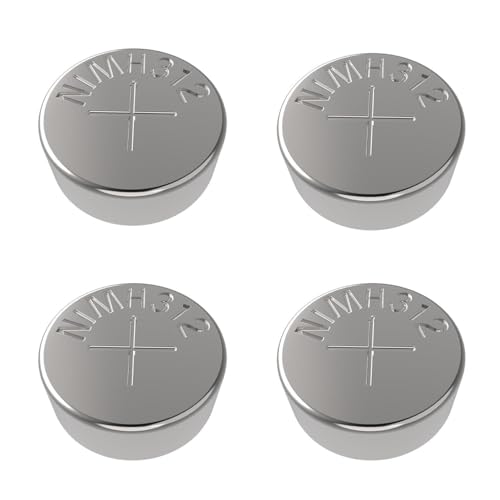
Size 312 is the workhorse of discreet instruments. The cell measures about 7.9 millimetres across and 3.6 millimetres tall, a shallow disc that slides easily into the slim body of a receiver-in-canal design or a compact behind-the-ear housing. In disposable zinc-air form it typically offers between 160 and 180 milliamp-hours at a nominal 1.4 volts, enough for roughly three to six days depending on daily wearing time and streaming. Rechargeable nickel-metal hydride versions of the same footprint hold far less, commonly in the region of 25 to 35 milliamp-hours, because the chemistry stores energy less densely and needs internal structure that a single-use cell can omit.
That capacity gap sounds alarming until voltage behaviour enters the picture. A zinc-air cell begins near 1.4 volts once activated and gradually declines, whereas a nickel-metal hydride cell holds close to its nominal 1.25 volts through most of the discharge and then falls away quickly near the end. Hearing instruments draw modest, fairly steady current, often only one to two milliamps in quiet conditions, so a smaller rechargeable reservoir can still cover a normal waking day. The wearer simply returns the cell to its charger each night rather than expecting a week from one insertion.
Size 13 sits one step larger, at roughly 7.9 millimetres wide and 5.4 millimetres tall. Disposable versions commonly list 290 to 310 milliamp-hours, and the extra height gives rechargeable equivalents more room as well, with nickel-metal hydride examples often quoted around 40 milliamp-hours or slightly above. Instruments using size 13 include fuller in-ear shells, which have internal space to spare, and mid-power behind-the-ear models whose receivers draw more current than a miniature design. For a wearer choosing between two otherwise similar instruments, the larger cell usually buys headroom on long, noisy, streaming-heavy days.
Size 675 dwarfs both, measuring about 11.6 millimetres across and 5.4 millimetres tall. Zinc-air versions reach roughly 600 to 650 milliamp-hours, feeding power behind-the-ear instruments, some cochlear implant processors, and instruments prescribed where maximum output matters more than discretion. Rechargeable equivalents exist but remain less common in retail channels, partly because high-drain instruments expose the capacity limits of rechargeable chemistry sooner, and partly because makers of powerful modern instruments now prefer a sealed lithium-ion pack sized for the housing rather than a standardised disc.
Colour coding still helps at the pharmacy shelf and in a kitchen drawer. Orange means 13, brown means 312 and blue means 675 across nearly every disposable brand, a convention rechargeable packaging often echoes even though the cells inside work differently. A wearer should nevertheless read the size printed on the charger tray, not rely on colour alone, because a charger built for one footprint will not accept another, and forcing a mismatched cell into a door or dock risks bent contacts and a damaged seal.
Three chemistries, three different bargains
Nickel-metal hydride is the longest-serving rechargeable option for removable doors. Its nominal voltage of about 1.25 volts sits close enough to the operating range instruments expect from zinc-air that many, though not all, models run correctly on it. Makers of these cells commonly quote several hundred charge cycles, often in the 300 to 500 range, which translates to roughly a year of nightly charging before capacity fades noticeably. The cells also tolerate being topped up without a strict schedule, although leaving them flat for months in a drawer shortens their useful life.
Silver-zinc arrived later as a retrofit idea, pairing a higher energy density with a voltage near 1.6 volts at full charge that settles toward the range instruments tolerate. Because that starting voltage exceeds what some battery doors and circuits accept, silver-zinc systems were sold with specific compatible doors and a dedicated charger, never as a casual drop-in for any instrument on the market. Published guidance for those systems suggested replacing cells after a few months of daily cycling, and the ecosystem has narrowed since, so a wearer considering second-hand silver-zinc equipment should confirm that fresh cells and chargers remain obtainable before committing.
Lithium-ion dominates new premium instruments, and its appeal is easy to state. A nominal 3.7 volts, high energy density for its weight, and a sealed construction let designers build slim housings without a door, which removes a common entry point for moisture and dust. Makers of sealed platforms commonly promise four to six years of service from the internal pack, with total cycle counts well beyond a thousand full charges. The compromise is equally clear: when that pack eventually fades, only a clinic or service centre can replace it, and the instrument goes away for repair rather than accepting a fresh cell at the kitchen table.
Zinc-air, the disposable benchmark, deserves a fair description rather than a caricature. It delivers excellent capacity for its size, stores well for years while its tab remains sealed, and draws on air from outside the cell as part of its reaction. Its weaknesses are procedural rather than electrical. Each cell works once, activation begins the moment the tab lifts, output suffers in cold or very dry air, and a wearer with limited dexterity must handle a disc smaller than a fingernail under time pressure, often in poor light, often while the other ear is also unaided. Rechargeable systems exist largely to remove that handling burden, not because zinc-air performs badly in the ear.
Environmental arithmetic follows from the same facts. A two-ear wearer using disposable 312 cells might open a hundred or more individual cells across a year, each one a small piece of metal and chemistry entering household waste or a recycling stream where facilities accept them. One pair of rechargeable cells cycled nightly replaces most of that flow for months, and a sealed lithium-ion instrument replaces it for years, at the cost of a larger single battery that eventually needs professional handling. Neither ledger is spotless, yet the reduction in sheer unit count is real and easy to verify from a wearer’s own packet drawer.
Hours per charge, stated carefully
Published runtime figures for sealed lithium-ion instruments cluster in a reassuring band. Several leading platforms quote up to 24 hours of use from a full charge when streaming occupies a modest share of the day, and some quote figures approaching 28 or 30 hours for efficient receiver-in-canal models worn in quieter settings. Those numbers assume a typical prescription gain, a fresh battery and a wearing day that mixes conversation, silence and media rather than continuous wireless audio. A wearer whose day is wall-to-wall phone calls should expect the lower edge of any quoted range, or a little beneath it.
Streaming is the single largest variable under a wearer’s control. Bluetooth audio holds the radio active, raises current draw severalfold compared with quiet listening, and can trim a quarter or more from the total hours available. Television streamers, remote microphones and long video calls all count toward the same budget. Makers who publish detailed tables often separate the figures explicitly, listing one number for hours without streaming and a shorter number for hours with a stated block of streamed audio, which is why comparing two brands requires matching the footnotes rather than the headline numbers alone.
Removable rechargeable cells promise less and should be judged on their own terms. A nickel-metal hydride 312 cell in good health commonly covers a full waking day of around 12 to 16 hours in a moderate instrument, with size 13 equivalents stretching further thanks to their larger reservoir. Heavy streaming, high gain or an ageing cell can pull those figures down toward a single working shift, which is precisely why experienced wearers keep a charged spare pair ready rather than treating the published figure as a guarantee carved in stone.
Charge time matters as much as discharge time when a routine slips. Sealed lithium-ion instruments generally need about three hours in the dock to go from empty to full, and several platforms offer a quick top-up in which roughly 30 minutes restores around six hours of use. Nickel-metal hydride cells in a dedicated charger often need longer, sometimes most of an evening, because their chemistry accepts current more gently and their chargers prioritise cell life over speed. Silver-zinc systems historically sat between those poles, refilling overnight comfortably but rarely offering a meaningful fast boost.
Warning behaviour differs in ways that affect confidence. Most modern instruments play a gentle chime or spoken prompt when roughly an hour of power remains, then repeat the alert before shutdown. A wearer who learns that personal timeline, noting when the first warning arrives on an ordinary day, gains a practical gauge no brochure can supply. Keeping a short diary for the first fortnight, jotting the hour of the first alert beside a note about streaming that day, turns vague anxiety about running flat into a pattern the wearer can plan around.
Chargers, docks and drying functions
A charger is not an accessory in this category; it is half of the system. Desktop docks for sealed instruments usually cradle each aid in a shaped well, align charging contacts or an inductive coil automatically, and show a small light per side so the wearer can confirm that both instruments registered before bed. Some cases add a fan or gentle heat cycle that dries moisture collected during the day, while others include a ultraviolet lamp aimed at the outer surfaces. Those extras help hygiene and reliability, although they do not replace the wax guards, brushes and domes that routine care still requires.
Contact charging depends on cleanliness more than owners expect. Skin oils, hair product and ordinary dust gather on the small metal pads at the base of an instrument, and a film invisible in daylight can interrupt the connection enough that one aid sits in its well all night without gaining charge. Wiping contacts with a dry cloth each evening, before placing the aids down, takes seconds and prevents the most common morning disappointment in this entire category. Inductive designs forgive dirty surfaces because energy crosses a small gap, yet they still demand correct orientation inside the case.
Chargers for loose rechargeable cells look humbler but follow stricter rules. A tray for nickel-metal hydride hearing cells charges at a low current tailored to tiny capacities, nothing like the current a household cell charger pushes into large cylindrical batteries. Putting hearing cells into a general-purpose charger risks heat, swelling and ruined capacity, and putting ordinary household cells into a hearing-cell tray achieves nothing useful. Anyone curious about how larger-format charging equipment differs will find a useful contrast in our overview of best 18650 battery chargers, where cylindrical lithium cells, slots and charge rates operate on an entirely different scale.
Power supplies deserve a glance before travel or a house move. Most docks run from a USB lead or a small mains adapter, draw only a few watts, and tolerate the voltage ranges printed on their labels across many countries. A worn cable, however, can deliver enough power to light the indicator while delivering too little current to finish the job, a maddening fault that mimics battery failure. Swapping in a known-good cable and adapter, one variable at a time, should precede any conclusion that a cell has died.
Vehicle and workshop charging raise a separate set of questions, because a dock designed for a bedside table was never meant to slide around a dashboard. Readers who maintain equipment in garages sometimes ask whether an automotive unit could substitute in a pinch, and the short answer is no: anyone researching that side of charging should instead read about best automatic battery chargers to understand how those 12-volt systems target lead-acid vehicle batteries, a chemistry and voltage regime wholly unrelated to a 1.25-volt hearing cell or a sealed 3.7-volt module.
Off-grid households pose the opposite puzzle, namely how to keep a nightly dock fed when mains power is intermittent. Solar generation can certainly run a hearing aid charger through an ordinary inverter or a USB power bank kept topped up during daylight, since the dock itself sips energy compared with almost any other appliance. For background on the panels and controllers involved, our guide to best 12 volt solar chargers explains sizing in vehicle and leisure contexts, and its central lesson transfers well: store energy in a buffer battery by day, then spend that reserve calmly after dark.
Sealed gel and absorbed glass mat batteries appear in backup-power conversations for a similar reason, quietly holding charge in sheds, boats and alarm systems. They cannot charge a hearing instrument directly, and no adapter should ever be improvised between such different systems, but a maintained backup battery paired with a proper inverter can keep a bedside dock running through an outage. Those weighing that kind of reserve may appreciate the maintenance discussion inside best agm battery chargers, which covers float charging and the slow self-discharge that catches out owners who ignore stored batteries for months.
Compatibility with behind-the-ear and in-ear instruments
Behind-the-ear instruments offer the friendliest path to rechargeable power. Their housings sit outside the ear canal, carry enough volume for either a standard cell door or a sealed lithium-ion module, and place charging contacts where a dock can reach them without contortion. Receiver-in-canal variants, technically a behind-the-ear family member, dominate current rechargeable catalogues because the slim body behind the pinna hides a respectable battery while the receiver itself sits in the canal on a thin wire. Power behind-the-ear models for profound losses also thrive in sealed form, since designers can enlarge the housing slightly without affecting comfort in the canal.
In-ear instruments divide by size. A full-shell or half-shell in-the-ear model has internal room comparable to a small behind-the-ear housing, and several makers offer such shells with sealed rechargeable power and a compact dock. In-the-canal and completely-in-canal models shrink the available volume dramatically, leaving little space for either a rechargeable cell or the electronics that manage it, so many of the smallest custom instruments still rely on disposable size 10 or 312 cells. A wearer prioritising invisibility should discuss that trade-off openly at fitting, rather than discovering after purchase that discretion and rechargeability rarely peak together.
Battery doors decide whether loose rechargeable cells are even an option. Some instruments were designed and certified only around zinc-air behaviour, and their low-battery warnings, gain behaviour near depletion, or door contacts may misbehave on the slightly lower, flatter voltage curve of nickel-metal hydride. Clinics can advise model by model, and makers publish compatibility lists for their own rechargeable cells. The safe rule is simple: a cell that fits physically has passed only the first test, while electrical approval from the instrument maker is the test that actually counts.
Children’s instruments add considerations that adult fittings sometimes skip. Tamper-resistant doors, required in many paediatric fittings to keep small cells away from curious fingers, interact with rechargeable choices in helpful ways, because a sealed instrument removes loose cells from the household entirely. Schools also enter the calculation, since a child whose aid fades mid-afternoon needs either a charger kept on site, a spare instrument plan agreed with teachers, or enough runtime headroom that the question never arises during a school day.
Bone-conduction devices and implant sound processors follow their own power conventions, sometimes using size 675 doors, sometimes proprietary rechargeable packs with dedicated cradles. Their users should treat the guidance in this guide as background rather than instruction, and follow the processor maker’s stated cells and chargers exactly. Mixing a standard hearing aid cell into a processor that expects a specific pack, or the reverse, helps nobody and can interrupt a device someone depends on for every waking conversation.
The overnight charging habit
Nightly charging succeeds because it attaches to an existing ritual. Instruments come out before sleep anyway, since wearing them in bed invites feedback, discomfort and moisture from bedding, so placing them in a dock instead of an open dish adds almost no effort. The routine also guarantees a known starting point each morning: whatever yesterday consumed, today begins full. Wearers who charge only when an instrument dies, by contrast, recreate the disposable scramble in a new form, hunting for a cable at breakfast with one ear already silent.
Modern lithium-ion and nickel-metal hydride systems do not punish that nightly rhythm. Neither chemistry needs to be drained before recharging, and neither develops the kind of memory effect older rechargeable folklore describes. Leaving instruments in a powered dock until morning is exactly the behaviour most makers design around, with charge controllers that taper and stop rather than forcing current into a full cell for hours. Unplugging the dock the instant a light turns green, at three in the morning, would add effort without adding battery life.
Moisture management rides along with the same habit. Ears sweat, canals are warm, and a day of wear leaves humidity inside receivers and vents. A dock with a drying cycle uses the overnight hours productively, circulating air or mild warmth while the battery refills, and even a plain dock keeps instruments stored open to room air rather than sealed inside a pocket or bathroom cabinet. Wearers in humid climates or heavy training schedules benefit most, and they should still use a separate drying jar or electronic dryer during illness, swimming seasons or whenever a clinic advises deeper drying.
Sleepovers, late nights and shift work bend the routine without breaking it. A nurse finishing at dawn can charge through the morning and still begin the next shift full, because the dock needs hours, not a particular clock time. Someone who falls asleep on the sofa wearing both aids occasionally will simply start the following day with less reserve, catch up the next night, and lose nothing permanent. The system forgives irregular weeks; it only fails when charging becomes so rare that low-battery warnings turn into a daily soundtrack.
Households with two wearers should give each person a clearly separate dock station. Instruments are programmed individually, receivers differ, and a sleepy swap at a shared bedside table can send someone out wearing a partner’s prescription, which sounds comic until a morning passes in muffled confusion. Coloured stickers on cases, docks on opposite sides of the bed, and a rule that aids travel only inside their own case prevent a mistake that rechargeable convenience otherwise makes surprisingly easy.
Travel, spares and power away from home
Travel exposes every weakness in a power routine, so preparation should begin with the charger rather than the suitcase. A travel case with a built-in reserve battery, offered for several sealed platforms, can recharge a pair of instruments multiple times away from a socket, with maker figures commonly describing around three full charges stored in the case. That reserve turns a long weekend into a non-event and covers hotel rooms where the only free outlet hides behind a wardrobe. The case itself must return to mains power between trips, a step travellers forget precisely because the case performed so independently while away.
Loose-cell wearers travel differently. Their spare is not a case but a second pair of charged cells in a small rigid box, plus, as a pragmatic safety net, a packet of disposable zinc-air cells in the correct size for any instrument whose door accepts them. Disposables weigh almost nothing, store for years with tabs intact, and rescue a trip when a charger cable fails three hundred miles from home. Keeping that packet in hand luggage rather than checked baggage ensures the rescue is available in the cabin, where a flat battery during a long flight would otherwise mean hours of missed announcements and conversation.
Flying with lithium-ion instruments and cases follows the same broad rules as other personal medical electronics: carry them in the cabin, keep spare lithium packs in hand baggage, and expect security staff to treat a charging case like a small power bank. Airlines publish their own limits, and a wearer planning an unusual itinerary with multiple spare packs should read those rules before departure. Nickel-metal hydride loose cells face fewer restrictions, yet packing them in a case that prevents contact with coins and keys remains sensible on any route.
Camping and festival trips reward honest arithmetic. If a dock draws only a few watts for roughly three hours, even a modest consumer power bank holds enough energy for several nights of charging, provided the bank also is not expected to run phones, lanterns and cameras simultaneously. Testing the whole arrangement at home for one night, using only the bank, reveals connector or capacity problems while the stakes are low. A small head torch helps with the other half of outdoor life: handling domes, wires and cases inside a dim tent without dropping anything into the grass.
Time zones quietly sabotage charging routines on longer journeys. A wearer who lands in the evening, socialises until late, and plugs the dock beside an unfamiliar bed may sleep past the usual morning and begin sightseeing with instruments that charged for only part of the night. The quick top-up figures published for sealed platforms, roughly half an hour for several hours of listening, exist for exactly this scenario. Setting the dock up immediately on arrival, before unpacking anything else, protects the routine from jet lag better than any resolution made at the airport.
Lifespan, fading cells and replacement timing
Every rechargeable cell fades; the only honest questions are how fast and how the wearer notices. Nickel-metal hydride hearing cells cycled nightly commonly serve for about a year before their daily runtime shrinks enough to annoy, which aligns with the few hundred cycles their makers quote. Sealed lithium-ion packs stretch that horizon to several years, with many platforms designed around four to six years of daily use before capacity loss becomes the dominant complaint. Silver-zinc cells, where they remain in service, sit at the short end, historically needing replacement within a handful of months.
Fading announces itself gradually. The low-battery chime that once arrived during the evening news begins sounding before dinner, then during the afternoon, while morning performance stays deceptively normal because the cell still accepts a full-looking charge. Tracking that warning time across a few weeks separates genuine decline from a single heavy streaming day. A sudden collapse overnight, by contrast, points elsewhere: dirty contacts, a failing cable, a dock fault, or moisture in the instrument, each cheaper to address than a battery replacement nobody needed.
Clinics can measure what guesswork cannot. Many fitting systems report battery health or estimated remaining capacity for sealed instruments, and a clinician can compare that reading against the platform’s expected curve for its age. Booking that check before a major trip, a family wedding season or any period when hearing matters intensely is simple prudence. If a sealed pack does need replacement, the repair window should be planned around a loaner instrument where the clinic offers one, rather than discovered the week of an event.
Storage habits influence lifespan more than occasional deep discharges do. Rechargeable cells dislike heat, so a dock belongs away from radiators, sunny windowsills and the top of warm electronics, and a spare case should never live in a parked car through summer. Loose nickel-metal hydride cells stored as spares prefer a cool drawer and a refresh charge every few months, since sitting empty for a year can leave them unable to recover their former capacity. Freezing temperatures are equally unhelpful, slowing chemistry temporarily and, for lithium cells, making charging below freezing something the controller may refuse outright.
Disposal at end of life deserves the same care as purchase. Rechargeable cells and sealed instruments should enter battery recycling or the maker’s return route, not household rubbish, because their concentrated chemistry is exactly what recycling streams are built to recover. Clinics often accept spent hearing cells of every type and consolidate them for proper handling. A wearer upgrading instruments can ask about refurbishment or donation programs at the same appointment, since a previous pair with a healthy pack may serve someone else through charitable fitting schemes.
Handling, dexterity and everyday confidence
The strongest argument for rechargeable systems is often made by hands, not ears. Arthritis, tremor, reduced fingertip sensation and low vision all turn a 312 cell change into a small daily ordeal, and that ordeal arrives without warning whenever a cell expires, including away from home. Dropping both aids into a dock demands grip and placement, but the target is large, the wells guide the instruments, and the task happens once, seated, in familiar light. For many wearers that difference alone justifies the entire category, regardless of chemistry debates.
Magnetic tools and handling tricks still matter for loose-cell users. Some rechargeable cell packs include a magnetic wand that lifts and places cells without pinching, and working over a soft towel on a table catches drops before they roll under furniture. Good task lighting, a magnifier kept with the charger, and sitting down rather than standing at a bathroom mirror transform success rates. Occupational therapists who work with hearing patients often suggest rehearsing the full cell change at a clinic appointment, where dropped cells cost nothing and technique can be corrected kindly.
Confidence grows from predictable mornings. Wearers who trust their instruments to last the day join conversations earlier, volunteer for phone duty, and stop rationing streaming to save power for the evening. That behavioural change is easy to overlook in specification tables, yet families notice it quickly: the grandparent who once removed aids at lunch to preserve the cells now wears them through dinner. Any buying decision in this category should weigh that daily confidence alongside milliamp-hours, because the best battery is ultimately the one that keeps someone listening without negotiation.
Children, carers and support workers form part of the picture in many homes. A grandparent who manages a dock independently keeps control of a private routine, while a carer checking two indicator lights during an evening visit can confirm readiness for tomorrow in seconds. Written instructions taped inside a case lid, in large print, help visiting family follow the routine during respite care. The simpler the nightly ritual, the more faithfully it survives handover between people, which is an argument for docks over loose cells wherever several hands share responsibility.
Choosing between removable cells and a sealed design
Start with the instrument shortlist, not the battery catalogue, because rechargeable format follows the hearing fitting. A clinician chooses gain, receiver strength and housing style around the wearer’s audiogram, ear anatomy and handling ability, and only some of those housings exist in both sealed and removable-cell versions. Asking early, before falling for a particular model, keeps the power question inside the fitting conversation where it belongs. Wearers who arrive with a firm preference should state it plainly, since many clinics can steer toward an equivalent platform that honours it.
Removable rechargeable cells suit wearers who value independence from service centres. When runtime fades after a year, a fresh pair of nickel-metal hydride cells restores the instrument at home within minutes, and a spare pair in the drawer covers the changeover without an appointment. The same openness suits remote households far from a clinic, expedition travellers who carry spares for every essential, and anyone whose current instruments have years of acoustic life left and merely need a greener power habit. The ongoing chore is small but real: cells must be bought, rotated, stored and eventually replaced on schedule.
Sealed lithium-ion suits wearers who value the absence of chores. There is nothing to buy, rotate or drop, moisture has one less doorway, and the dock routine could hardly be simpler. In exchange, the wearer accepts dependence on the maker for the life of the pack and a repair episode, years later, when capacity finally fades. That bargain looks excellent for someone buying new instruments with a long horizon, and weaker for a bargain hunter eyeing an ageing second-hand sealed unit whose internal pack may already be deep into its service life.
Questions to ask at the fitting appointment
- Daily runtime: how many hours does the maker quote for this model, and how much streaming does that figure assume?
- Full charge time: how long does the dock need from empty, and what does a short top-up restore?
- Pack lifespan: how many years or cycles is the internal battery designed to serve, and what happens when it fades?
- Travel options: is there a case with a built-in reserve, and how many charges does that reserve hold?
- Backup plan: can this instrument accept disposable cells in an emergency, or is the dock the only route back to hearing?
- Care duties: which parts need wiping, drying or replacing weekly, and who supplies those consumables?
Answers to those six questions, written down during the appointment, prevent the most common regrets in this category. A wearer who learns only at home that a sealed instrument cannot accept an emergency disposable cell has not been misled, exactly, but the fitting conversation missed a fact that shapes travel planning for years. Clinics welcome the list; it signals a patient who will follow the care routine, charge nightly and return with useful observations rather than vague complaints.
Troubleshooting mornings when an aid starts empty
Begin with placement. Lift the silent instrument out, check that nothing, a dome, a wax guard packet, a stray hair, is trapped in the well, then reseat it slowly and watch for its indicator. Many docks light per side, and a dark indicator after reseating narrows the fault to contact, cable or cell in that order of likelihood. Swapping sides in the dock, where the design allows it, separates an instrument problem from a well problem within a minute.
Next, inspect contacts under good light. A dull film, greenish trace or visible debris on either the instrument pads or the dock pins explains many failures, and a dry cloth or the brush supplied with the instruments usually clears it. Avoid liquids unless the maker explicitly approves them, since moisture near charging contacts creates the very corrosion being cleaned. If one instrument consistently fails in both wells after cleaning, the clinic should see it; internal faults and dying packs announce themselves this way and worsen predictably.
Loose-cell wearers follow a parallel path. Try the spare pair first, because a known charged cell instantly divides the world into charger faults and instrument faults. Check that cells sit with the correct side facing outward, since a reversed hearing cell can appear to fit while delivering nothing. Confirm the tray actually received power overnight; a switched-off socket has embarrassed more households than any chemistry ever will. Finally, rotate cell pairs evenly, because a spare left uncharged for a year may greet its moment of need with almost nothing left to give.
Patterns matter more than incidents. One flat morning after a wedding, a flight and a forgotten dock is life, not decline. Three flat mornings in a fortnight, with the routine unchanged, deserve a diary, a cable swap and a clinic call in that order. Bringing notes about warning times, streaming hours and charger behaviour turns that call into a diagnosis rather than a shrug, and makers’ support teams ask for exactly those details when a warranty question opens.
Running costs in concept, without a price tag
Money enters this decision through pattern rather than sticker figures, so this guide discusses structure instead of amounts. Disposable cells spread spending thinly and endlessly, a small recurring purchase for as long as the instruments live. Removable rechargeable cells concentrate spending into periodic pairs, plus a charger bought once and replaced rarely. Sealed instruments fold battery cost into the original purchase and a possible service charge years later, with nothing spent on power in between. Which pattern feels lightest depends on budgeting habits as much as arithmetic.
Hidden costs hide in behaviour. A wearer who removes disposable-powered aids early each day to stretch cell life is paying with hearing, the one currency this entire category exists to protect. Another who buys premium instruments but skips the travel case may pay later in missed workdays and emergency appointments. Conversely, a modest instrument worn confidently for sixteen hours daily delivers more real value than a flagship rationed to special occasions. Judged that way, rechargeable power often repays its premium in participation long before any cell-counting exercise balances.
Warranty terms deserve reading before purchase, because battery coverage varies widely. Some makers treat a sealed pack’s premature fade as a warranty matter, others classify capacity loss as ordinary wear after a stated period, and clinics may bundle service visits that quietly include battery health checks. A wearer who understands those terms can time a claim sensibly rather than paying for a repair that coverage would have absorbed. Keep purchase records with the charger case; the day they are needed is never the day anyone feels like searching drawers.
Care details that quietly extend battery life
Wax management protects batteries indirectly but genuinely. A clogged receiver makes an instrument sound weak, prompting the wearer to raise volume, work the amplifier harder and drain the cell pursuing clarity that a fresh wax guard would have restored for free. Changing guards on the maker’s schedule, and whenever output dulls suddenly, keeps current draw honest. The same logic applies to domes and mould vents blocked by debris, each one a small tax on every hour of listening until cleared.
Firmware and fitting updates occasionally change power behaviour too. Makers refine streaming protocols, noise management and low-battery thresholds through software, and a clinic visit for an annual review may quietly add an hour to a familiar day. Wearers who skip reviews for years sometimes blame a battery for consumption that outdated settings caused. Keeping the fitting current, the contacts clean and the dock ventilated forms a dull trio of habits, and dull habits are precisely what long battery life is made of.
Finally, respect the humble indicator light. Glancing at the dock while brushing teeth, confirming two steady lights before sleep, catches nearly every charging failure while it can still be fixed in seconds. That two-second glance, repeated nightly, outperforms any accessory, any premium tier and any clever workaround discussed in this guide. Rechargeable hearing only asks for consistency, and it repays consistency with mornings that simply begin, fully powered, without thought.
What a realistic week of use looks like
Consider a retired teacher wearing receiver-in-canal instruments with sealed lithium-ion power for fifteen hours daily. Her morning begins at half past six, the aids leave their dock as she makes tea, and a typical weekday mixes quiet reading, a streamed radio drama after lunch, two phone calls and an evening walk with a neighbour. The manufacturer’s own data sheet for her platform quotes up to 24 hours for that pattern, and her low-battery chime almost never sounds before bed. On Saturdays, when a video call with grandchildren stretches past an hour and a film follows dinner, the warning arrives during the closing credits, which she treats as information rather than failure.
Contrast her brother, a keen amateur musician using size 13 nickel-metal hydride cells in fuller in-ear shells. His rehearsals place him in a loud hall three evenings weekly, where his instruments work harder against background noise and his volume settings sit higher than hers. His cells, rated by their maker for a full day of moderate use, carry him through each rehearsal with a modest margin, and he swaps in his spare pair before concerts as a deliberate ritual rather than a response to warnings. Two wearers, two chemistries, two definitions of enough, both entirely successful because each routine was matched honestly to a real week.
New wearers often misjudge their first fortnight for a predictable reason: everything is novel, so listening effort, streaming curiosity and adjustment appointments all peak together. Runtime during those weeks sits at the low end of what the same instruments will deliver once settings settle and novelty fades. Judging a battery harshly on day three, or praising it extravagantly, both mistake a settling period for a permanent character. Clinics know this pattern well, which is why follow-up appointments ask about the second week rather than the first impressions formed in the car park outside.
Seasonal shifts leave fingerprints on runtime as well. Winter brings hats that press aids against the head, dry heated rooms that change zinc-air behaviour for disposable users, and holiday gatherings where several conversations compete across a table. Summer adds sweat, garden noise, open windows and long bright evenings that stretch the wearing day by an hour or more. A rechargeable routine absorbs those swings gracefully because each night resets the account to full, whereas disposable users notice seasons in their packet consumption, opening cells noticeably faster during the sociable months.
Workplaces test power in their own ways. A call-centre employee streaming audio for most of a shift lives at the demanding edge of every published runtime table, and deserves a fitting conversation that starts with that fact, possibly favouring a platform with a generous quick top-up for the lunch break. A warehouse worker in a dusty hall needs contacts wiped more often and a dock kept in a clean office rather than beside a loading bay. Naming the actual working day, hour by hour, gives a clinician the material to recommend a battery system that survives it, instead of one that merely survives a brochure.
Partners and families can help without hovering. Agreeing that the dock lives in one fixed place, that nobody unplugs it to charge a phone overnight, and that the travel case returns to a named drawer after each trip protects the system from the small accidents that cause most failures. A spare USB cable kept with the dock, bought before it is needed, removes the temptation to borrow the original for other gadgets. These arrangements sound trivial in a showroom and prove decisive across five years of ordinary domestic life.
Check prices on Amazon
Live listings for the shortlist in this guide are pulled from Amazon below, so prices and availability are always current at the moment you look.




Safety notes for homes with children and pets
Button cells of every chemistry demand respect in a family home, because a swallowed cell can injure a small child or animal quickly and quietly. Rechargeable systems reduce the number of loose cells circulating through drawers, handbags and coat pockets, which is a genuine safety advantage, yet they do not abolish the risk while spare pairs and emergency disposable packets remain in the house. Those spares belong in a closed container, on a high shelf, treated with the same seriousness as medicines rather than as harmless stationery.
Charging equipment itself is benign when used as designed, running cool at low voltages on a stable surface. Docks should sit where curious toddlers cannot pull them down by the cable, and spare cables should be tidied rather than left trailing across a bedroom floor. A case with a reserve battery contains a lithium pack comparable to a small power bank, so it deserves the same treatment: no punctures, no prolonged heat, and prompt attention if the casing ever swells, cracks or smells unusually sweet or chemical.
Dogs present a hazard in the opposite direction, since a hearing instrument left on a coffee table smells interestingly of its owner and fits neatly into a chewing mouth. Clinics replace aids damaged this way often enough that many mention it during fitting, half in jest and wholly in earnest. The dock habit protects against this too, because instruments stored in a closed case on a dresser are neither on the table nor in the dog’s evening plans. Building that storage reflex may save more money and heartache across an instrument’s life than any other single piece of advice in this guide.
Finally, anyone in the household who wears a pacemaker or similar implanted device and handles inductive chargers should follow the guidance supplied with both products, keeping charging cases at the modest distance their literature recommends. For the overwhelming majority of homes this is a footnote rather than a concern, but footnotes exist to be read once and remembered, which takes less time than worrying vaguely for years.
Affiliate disclosure: This page is reader-supported through affiliate links, which means the publisher may earn a commission when a reader buys through a link on this page, at no additional cost to the reader. That support funds our research into specifications published by the maker, comparison work across platforms and the upkeep of guides like this one. It never buys a recommendation, a ranking or a favourable description, and readers should confirm fit, compatibility and clinical suitability with their own hearing professional before buying any instrument, cell or charger discussed above.
Whichever format ends up beside your bed, the measure of success is an ordinary morning six months from now, when charging your hearing has become as forgettable, and as essential, as locking the front door at night.