Our Top Picks
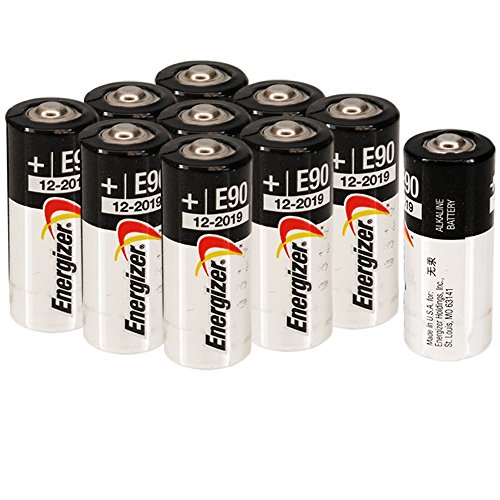
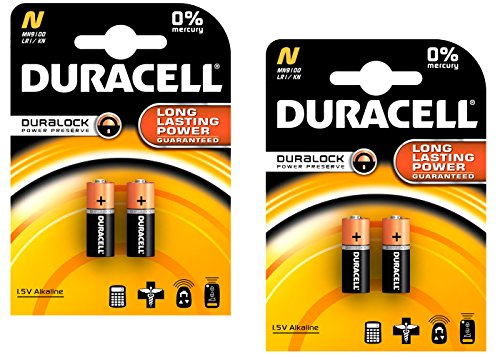 Duracell MN9100/E90/LR1 Medical Battery 1.5 V Card 22 Count (Pack of 2)2.8 x 1.18 x 0.48 inches0.08 poundsCheck on Amazon

What's inside
- A small battery that never quite disappeared
- Exact dimensions and electrical basics
- One cell, many names: decoding the labels
- Where N cells still earn their keep
- Alkaline: the default chemistry for this size
- Lithium options and their limits in N format
- Rechargeable N cells: nickel-metal hydride reality
- Voltage behaviour under load, explained plainly
- Shelf life and date codes
- Storage practices that preserve a rarely used cell
- Leakage: causes, cleanup, and prevention
- Substitutes, spacers, and improvisation risks
- Buying channels and avoiding stale or counterfeit stock
- Pairing N cells with a sensible household charging strategy
- Testing a suspect cell before blaming the device
- Environmental handling and disposal
- A brief history of the format
- How capacity translates into real runtimes
- Temperature effects on a small cell
- N cells in vintage toys and collecting
- Comparing the N cell with neighbouring sizes
- Inside the cell: construction in plain language
- Reading a datasheet like an engineer
- Multi-cell devices and matched sets
- Travel, shipping, and keeping spares on the move
- When a device still fails with fresh cells
- Cost of ownership across years of occasional use
- A glossary for the battery drawer
- Setting up a household spares kit that actually works
- Frequently asked questions about the N size
- Check prices on Amazon
- Choosing the right purchase, summarised
As an Amazon Associate I earn from qualifying purchases. This post may contain affiliate links at no extra cost to you.
A small battery that never quite disappeared
The N cell occupies a curious position in the battery world: too specialised for supermarket racks, too useful for manufacturers to abandon. Measuring roughly twelve millimetres in diameter and just over thirty millimetres long, this compact cylinder delivers one and a half volts from a package about half the length of a familiar AA. Devices designed around it assumed the cell would remain available for decades, and many of those devices still work daily in clinics, workshops, and homes, which keeps demand alive long after mainstream electronics moved elsewhere.
Shoppers hunting for a replacement usually discover the size through confusion. A device stops working, its compartment reveals a short cylinder resembling a shrunken AA, and the printed label carries a code the owner has never encountered. That code might read LR1, E90, MN9100, or simply the letter N, depending on which naming system the manufacturer followed. Understanding those labels, and the chemistry hiding behind them, turns a frustrating search into a straightforward purchase.
This guide explains the N format from first principles: its dimensions, voltage behaviour, competing designations, the equipment that depends on it, and the practical differences between alkaline, lithium, and rechargeable versions. Storage, shelf life, safe substitution, and disposal receive equal attention, because a rarely used cell often sits in a drawer for years before its moment arrives, and its condition on that day decides whether a medical light or a laser tool works when needed.
Exact dimensions and electrical basics
Standard references define the N cell at approximately 12.0 millimetres diameter and 30.2 millimetres in overall length, including the small raised positive terminal, or button, at one end. Weight for an alkaline example typically falls near nine grams. The flat negative end and modest button follow the conventions of other cylindrical primary cells, so polarity markings on the device compartment remain essential, since a cell this small can be inserted backwards by a hurried user working in poor light.
Nominal voltage for alkaline and carbon-zinc versions is 1.5 volts, matching the AA, AAA, C, and D family. Fresh alkaline cells often measure slightly above that figure on a multimeter, around 1.55 to 1.6 volts with no load applied, then settle toward the nominal value once a device draws current. Capacity depends heavily on drain rate; published figures for quality alkaline N cells cluster around 800 to 1,000 milliamp-hours under light continuous loads, dropping considerably when a device pulls heavy current in short bursts.
The IEC designation LR1 encodes useful information for anyone who learns the system. The letter L identifies an alkaline manganese dioxide chemistry, R denotes a round cylindrical shape, and the number assigns the size within the standard series. Its older carbon-zinc counterpart carried the code R1, delivering the same dimensions at lower capacity and poorer leak resistance. North American ANSI nomenclature calls the size 910, with suffix letters distinguishing chemistry, so documentation from equipment makers may cite 910A for the alkaline version.
One cell, many names: decoding the labels
Brand-specific codes multiply the confusion. Energizer sells the size as E90, Duracell uses MN9100, Panasonic has offered it under LR1 and AM5 markings in different markets, and various industrial suppliers label it 910A, GP910A, or simply N. Medical and laboratory catalogues sometimes list the cell as a Lady battery, a legacy European nickname, or as AM5, the Japanese JIS designation for the alkaline version. All of these describe the same physical cylinder, provided the chemistry and voltage match the device requirement.
Cross-reference charts published by battery makers exist precisely because this naming tangle confuses buyers. A reliable method is to match three attributes rather than a single code: physical dimensions, nominal voltage, and chemistry family. If a proposed substitute agrees on all three, it belongs in the compartment. If any attribute differs, particularly voltage, the substitution deserves deeper scrutiny before installation, however similar the cylinder looks beside the original.
Beware near-miss sizes. The A23 battery, common in garage remotes, is slightly narrower and shorter and delivers twelve volts from a stacked internal construction, making it dangerous to confuse with an N cell despite superficial resemblance. The CR2 lithium photo battery is wider and shorter, with a three-volt output. A AAA cell shares the voltage but stretches nearly fourteen millimetres longer, so it will not fit a compartment machined for N dimensions, and forcing a lid closed can crack vintage plastic housings.
Where N cells still earn their keep
Medical and clinical devices
Penlights used by clinicians for pupil assessment frequently run on N cells or on paired smaller button cells, depending on the model. Certain older glucose meters, diagnostic lights, and examination tools adopted the format during decades when it was a standard catalogue item at hospital suppliers. Medical equipment changes slowly because validation and procurement cycles reward stability, so a device purchased years ago may still specify this size in its manual, and facilities keep small stocks on hand accordingly.
Laser pointers, sights, and optical tools
Compact laser pointers from earlier generations, laser boresighters, and some rifle or pistol laser sights chose the N cell for its short length, which kept housings slim. Boresighting tools live in range bags and may sit unused for months, so the cell inside faces long idle periods punctuated by short, demanding bursts of current. That duty pattern influences chemistry choice, favouring cells with low self-discharge and dependable performance after storage.
Clocks, calculators, and household gadgets
Small travel clocks, early scientific calculators, electronic thermometers, and a variety of novelty gadgets adopted the size when designers wanted more capacity than button cells offered without accepting AA bulk. Some door chimes, wireless doorbell buttons from older product lines, and garage accessories also appear on compatibility lists. Vintage toys deserve special mention: battery compartments in toys from the nineteen-seventies and eighties sometimes specify N cells, delighting collectors who discover that fresh replacements remain in production.
Photography and specialist instruments
Certain light meters, remote shutter releases, and interval timers used the format, as did select hearing-assistance accessories and early wireless microphones. Industrial inspection lights and fibre-optic illuminator accessories occasionally appear in catalogues with N power. The pattern across all these niches is consistent: low-to-moderate current draw, compact housing, and a product lifespan measured in decades rather than product cycles, which is why a supposedly obsolete battery continues to ship from factories every year.
Alkaline: the default chemistry for this size
Alkaline manganese dioxide construction dominates N cell production, and for most owners it remains the correct choice. The chemistry offers a good balance of capacity, shelf stability, and availability, with a discharge curve that slopes gradually from about 1.5 volts toward 1.0 volt across its working life. Devices with low-battery indicators calibrated for that slope behave predictably, warning the user in time to source another cell before a clinic shift or a range session.
Capacity ratings deserve careful reading. A figure quoted at a tiny continuous drain, such as ten milliamps, flatters the cell compared with pulsed service in a laser sight. Reputable datasheets publish discharge curves at several loads, letting engineers estimate runtime honestly. Our research approach leans on those datasheets, since specifications released by manufacturers provide the only comparable basis across brands whose marketing language otherwise varies wildly.
Carbon-zinc N cells, where still sold, cost less and deliver substantially less. Their capacity may reach only a third of an alkaline equivalent, their voltage sags earlier under load, and their steel cans corrode more readily, raising leak risk inside valuable vintage equipment. For a disposable toy the saving might tempt, but for medical lights or inherited instruments the alkaline upgrade protects both performance and the device itself.
Lithium options and their limits in N format
Primary lithium chemistry transformed AA and AAA buying, yet its presence in the N size is far more limited. A handful of specialty producers have offered lithium iron disulfide or lithium manganese dioxide cells in near-N dimensions for industrial and medical contracts, but retail availability is sporadic and labelling demands attention. Some lithium variants output 1.5 volts and suit direct substitution; others deliver three volts from a same-size can, which would damage a device expecting half that figure.
That voltage trap is the single most important caution in this entire guide. Lithium coin and cylinder families include many three-volt products whose shapes echo smaller one-and-a-half-volt cells. Before installing any lithium cylinder, read its printed voltage twice and compare it with the device manual. A correct lithium cell brings genuine advantages: extremely low self-discharge, strong cold-weather output, and a shelf life that can stretch beyond a decade. An incorrect one ends the device’s life instantly.
Where a verified 1.5-volt lithium N cell is unavailable locally, fresh alkaline stock from a reputable maker is the safer practical answer. Chasing obscure imports with unclear labelling introduces counterfeit risk, and counterfeit cells in any chemistry deliver unpredictable capacity and questionable sealing. Buyers serving clinics or maintaining safety equipment should source through authorised distributors whose lot codes and date markings can be traced.
Rechargeable N cells: nickel-metal hydride reality
Rechargeable versions exist in nickel-metal hydride chemistry, typically rated near 500 milliamp-hours and a nominal 1.2 volts. That lower voltage matters. Devices with generous operating ranges, such as simple penlights and toys, run happily, perhaps with slightly reduced brightness near the end of a charge. Precision instruments expecting a full 1.5 volts may report low-battery warnings early or behave erratically, so the manual’s stated voltage tolerance decides suitability.
Charging these small cells requires a charger whose slots accept the short N length or a suitable adapter arrangement described by the charger maker. Many universal smart chargers handle the size with spacers, analysing capacity and terminating on voltage-drop detection appropriate for nickel-based chemistry. Readers comparing charging equipment for larger cylindrical formats can start with best 18650 battery chargers for an overview of smart-charger features, then confirm N-size compatibility separately, since lithium-ion chargers must never be used for nickel-metal hydride cells.
Self-discharge shapes the rechargeable decision. Conventional nickel-metal hydride cells lose charge steadily on the shelf, a poor match for a boresighter used twice a year. Low-self-discharge variants retain most of their charge across twelve months and suit standby roles better. Even so, a device kept for emergencies usually deserves a primary cell, with rechargeables reserved for equipment in weekly rotation where their cost per cycle becomes compelling.
Voltage behaviour under load, explained plainly
A battery’s open-circuit voltage, measured with nothing connected, tells only half the story. Under load, internal resistance pulls the working voltage down, and that resistance rises as the cell depletes and as temperature falls. An N cell powering a bright LED penlight may show a healthy figure on a multimeter yet dim noticeably in service because the light draws enough current to expose the cell’s internal losses.
Pulse loads complicate prediction further. Laser devices draw brief, relatively heavy pulses, letting the cell recover between activations. Alkaline chemistry tolerates this pattern reasonably well when fresh, but an aged cell may deliver a bright first pulse and fade within seconds. Judging a suspect cell therefore works best under a representative load, or with a tester that applies resistance during measurement rather than reading voltage alone.
End-of-life voltage for most 1.5-volt devices sits near 0.9 to 1.0 volt per cell under load. Equipment designed thoughtfully keeps working down to that floor, extracting most stored energy. Equipment with a higher cutoff wastes capacity but protects against the deep-discharge conditions that encourage leakage in primary cells, a trade-off that matters for devices stored with cells installed.
Shelf life and date codes
Modern alkaline N cells commonly carry a printed use-by or best-before date five to ten years beyond manufacture, reflecting slow self-discharge of roughly two to three percent per year at room temperature. Storage heat accelerates that loss dramatically; a cell kept in a hot vehicle ages far faster than the same cell in a cool drawer. Date codes may appear as a year-month stamp on the wrapper or as an expiry year printed on retail packaging, and buying the freshest stock available costs nothing extra when ordering from high-turnover suppliers.
On retail blisters, the expiry printing often sits along the sealed edge or across the back card, while the cell wrapper itself may carry only a short lot code. That code usually combines a factory identifier with month and year digits, though each maker orders those characters differently, so the packaging remains the clearest reference. Photographing the card before discarding it preserves the date alongside the lot number, which helps clinics log replacements, trace a weak batch, and prove that installed spares were still within their stated storage period.
Lithium primary cells, in the verified 1.5-volt versions, extend storage expectations further thanks to exceptionally low self-discharge and robust seals. Nickel-metal hydride rechargeables invert the logic: their clock runs from the last charge rather than the factory date, and a cell stored discharged for years may refuse to recover full capacity. Anyone stocking spares for a rarely used medical light should therefore favour primary cells and rotate stock by date, installing the oldest first.
Rotation discipline prevents the classic failure where a drawer holds six cells, all purchased together, all expiring together. Mark purchase dates on packaging with a pen, store new stock behind old, and check the spares each time daylight saving changes or during another memorable twice-yearly routine. The same habit protects larger battery inventories across a household.
Storage practices that preserve a rarely used cell
Cool, dry, and stable describes ideal storage. A drawer away from radiators, a closet shelf, or a sealed box with a desiccant packet all serve well. Refrigeration offered little benefit even in older battery guidance and introduces condensation risk when cold cells meet humid air, so modern manufacturer guidance generally recommends ordinary room conditions. Avoid loose storage where terminals can touch other cells, coins, or keys, because a short circuit drains the cell and generates heat inside a pocket or junk drawer.
Original packaging solves the contact problem neatly, and small plastic cases designed for cylindrical cells work when packaging has been discarded. Storing cells upright, grouped by purchase date, simplifies rotation. For devices kept in vehicles, heat remains the enemy; a glovebox in summer can exceed temperatures that manufacturers assume, shortening life regardless of chemistry, so vehicle spares deserve more frequent replacement on the calendar.
Devices themselves make poor long-term storage vessels. Leaving a primary cell inside equipment for years invites the slow seal failure that leaks potassium hydroxide, the alkaline electrolyte, onto contacts and circuit boards. The white or greenish crust that results corrodes springs and traces, sometimes destroying a repairable instrument. Removing cells from seasonal equipment, or slipping an insulating tab between cell and contact, prevents that damage while keeping the pairing obvious.
Leakage: causes, cleanup, and prevention
Alkaline leakage usually follows deep discharge, heat exposure, or simple old age as internal gas pressure stresses the seal. A cell left powering a forgotten clock for years after exhaustion sits in exactly the danger zone. Periodic inspection catches early swelling or residue before corrosion spreads. Any cell showing a bulged negative end, rust spots, or crystalline deposits should be removed promptly and recycled rather than coaxed through further service.
Cleanup of a mildly affected compartment involves gloves, a cotton swab barely dampened with white vinegar or lemon juice to neutralise alkaline residue, followed by a dry swab and gentle abrasion of contacts with a pencil eraser or fine abrasive pad. Severe corrosion reaching circuit boards may need professional attention, particularly for medical equipment whose reliability carries consequences. Never allow cleaning fluid to pool inside a device, and let the compartment dry fully before installing a fresh cell.
Prevention returns to basics: remove cells from idle equipment, avoid mixing ages, and replace a full set together rather than pairing a fresh cell with a tired partner in multi-cell devices. In a two-cell penlight, the stronger cell can drive the weaker one into reverse conditions that provoke leakage, a failure mode entirely avoidable by treating the pair as a unit throughout its life.
Substitutes, spacers, and improvisation risks
Owners occasionally ask whether smaller button cells stacked together can impersonate an N cell. Four LR44 button cells approximate the length and sum to a similar voltage in series, a trick sometimes suggested in hobby forums for vintage toys. The stack delivers far less capacity, makes unreliable contact, and can shift or short inside a compartment never designed for it. Treat such improvisation as a momentary diagnostic at most, never as a working replacement in medical or safety equipment.
Commercial adapters exist that hold a smaller cell inside an N-sized shell for certain rechargeable conversions, sold by specialist suppliers with explicit voltage guidance. These differ from forum improvisation because the adapter fixes alignment and contact geometry. Even so, the enclosed cell’s voltage and capacity define performance, and the adapter cannot turn a 1.2-volt rechargeable into a true 1.5-volt source. Read the supplier’s compatibility notes carefully and keep adapters out of clinical devices unless the device maker approves them.
Half-AA and similar industrial sizes sometimes enter the conversation because their dimensions sound close. A half-AA measures about fourteen millimetres across and twenty-five long, which is neither the diameter nor the length required, and lithium half-AA cells commonly output 3.6 volts. Dimensional similarity in a catalogue photograph means nothing; only the three-way match of size, voltage, and chemistry qualifies a substitute, as established earlier in this guide.
Buying channels and avoiding stale or counterfeit stock
Because the N size sells slowly at general retailers, pharmacy shelves and big-box racks may hold ageing inventory. Specialist battery distributors, medical suppliers, and photography stores typically rotate stock faster and store it better. When ordering, confirm the expiry year in the product listing or with the seller, and inspect date stamps on arrival. A bargain on cells expiring within months is no bargain for a device that might not need them until next year.
Counterfeit risk rises with obscure marketplace listings using famous brand names at implausible prices. Warning signs include blurry wrapper printing, missing date codes, inconsistent terminal plating, and weight noticeably below the roughly nine grams expected. A kitchen scale offers a surprisingly effective screening tool: a cell several grams light almost certainly lacks the internal material to deliver rated capacity, whatever its wrapper claims.
Households maintaining several battery-powered systems often consolidate purchases through one reputable supplier, adding N cells to orders for more common sizes. The same supplier logic applies to charging gear for vehicles and boats; readers maintaining lead-acid batteries alongside small cells may find best 10 amp auto battery chargers useful for the automotive side of the cupboard, while best agm battery chargers covers absorbed glass-mat variants that need gentler charge profiles.
Pairing N cells with a sensible household charging strategy
Most N cell users rely entirely on primary cells, yet households increasingly mix primary and rechargeable inventories across dozens of devices. A written inventory, even a simple notebook page, prevents the classic error of placing a rechargeable cell on a shelf beside identical-looking primaries and later installing it in a device that dislikes 1.2 volts. Marking rechargeable wrappers with a coloured dot adds a visual safeguard that survives hurried battery changes.
Chargers for nickel-based cells should offer individual-slot monitoring, because cells age at different rates and a dumb paired charger overcharges the stronger partner. Temperature sensing, automatic shutoff, and clear completion indicators separate thoughtful designs from crude timers. The marine environment adds corrosion and vibration concerns for those maintaining boat systems too, a niche addressed by best automatic marine battery chargers, though its lead-acid focus differs entirely from the small-cell guidance here.
Never place a primary alkaline or lithium cell in any charger. Recharging a cell not built for it risks rupture, leakage, and fire, and no reputable charger maker sanctions the practice. Equally, never feed a nickel-metal hydride cell with a lithium-ion charger program; the chemistries demand different termination logic. Keeping one clearly labelled charger for nickel-based household cells eliminates most of these cross-chemistry mistakes before they can happen.
Testing a suspect cell before blaming the device
A basic multimeter check takes seconds. Set the meter to a direct-current voltage range covering a few volts, touch the red probe to the raised positive button and the black probe to the flat negative end, and read the figure. A fresh alkaline cell shows roughly 1.55 volts or slightly more. A reading below about 1.3 volts at rest suggests a heavily depleted cell, while anything near or under one volt indicates exhaustion for practical purposes.
Resting voltage can mislead with cells that recover superficially after rest, so a loaded check gives stronger evidence. Inexpensive battery testers apply a modest load through an internal resistor and display a graded result, which suits households unwilling to interpret raw numbers. Alternatively, install the suspect cell in a known simple device, such as a penlight, and observe brightness stability across a minute of operation rather than a momentary flash.
When a device fails with a verified fresh cell, suspicion shifts to contacts. Oxidised springs, a bent negative leaf, or residue from an earlier leak interrupt current despite adequate voltage at the cell terminals. Cleaning contacts as described in the leakage section restores many apparently dead instruments. Vintage toys in particular often need nothing more than contact attention and a fresh LR1 to return to working order after decades in a cupboard.
Environmental handling and disposal
Modern alkaline cells in many jurisdictions may legally enter household waste, yet recycling remains the better practice and collection points at retailers and civic facilities accept them widely. Regulations differ by country and sometimes by municipality, so local guidance governs. Lithium primary cells should always go to designated collection, never household bins, because residual energy and reactive materials demand controlled handling. Damaged or swollen cells of any chemistry deserve isolation in a non-conductive container before transport to a collection point.
Tape over terminals before recycling loose cells, a small step that prevents short circuits in collection drums where hundreds of discarded batteries mingle. Keep spent cells away from children, who may mistake the compact N size for a toy component, and store spares out of reach for the same reason. Although cylindrical cells present lower ingestion risk than button cells, responsible storage treats every battery as unsuitable for unsupervised handling by small children.
Manufacturers have steadily reduced mercury and cadmium in alkaline production, and modern cells from major brands are mercury-free by design. That improvement does not make littering acceptable; it simply means the recycling stream focuses on recovering steel, zinc, and manganese rather than containing heavy-metal hazards. Returning cells through collection keeps those materials in circulation and keeps electrolytes out of soil and water.
A brief history of the format
The N size emerged during the mid twentieth century, when portable electronics first shrank enough to need something smaller than the established AA yet more capable than the button cells of the hearing-aid trade. The IEC series assigned it an early number, reflecting its place among the original standardised round cells. Radio receivers, early pocket calculators, and photographic accessories of the nineteen-sixties and seventies adopted it widely enough that battery catalogues treated the size as a staple rather than a curiosity.
Two forces later pushed it toward the margins. Lithium coin cells captured the low-drain market for watches, calculators, and memory backup, offering years of service from a flat disc. Simultaneously, the AA and AAA formats consolidated their dominance through sheer manufacturing scale, encouraging designers to build around cells any shop stocked. The N survived in the niches described earlier because redesigning validated medical housings or beloved vintage products around a different cell costs more than continuing to buy a low-volume battery.
Production today concentrates among a smaller group of manufacturers, including major global brands and industrial specialists supplying original-equipment contracts. That concentration explains the patchy retail presence: a size can remain in healthy production while disappearing from neighbourhood shelves, because its buyers order through catalogues and distributors rather than petrol-station racks. Online availability has actually improved the owner’s position compared with twenty years ago, provided date codes and seller credibility receive proper scrutiny.
How capacity translates into real runtimes
Translating milliamp-hours into hours of service requires knowing the device’s appetite. A quartz travel clock drawing a fraction of a milliamp can run for years on one alkaline N cell, because the arithmetic divides roughly nine hundred milliamp-hours by a near-negligible hourly consumption. A penlight drawing one hundred and fifty milliamps exhausts the same cell in a handful of hours of continuous use, though real clinical use arrives in five-second bursts that stretch calendar life across months.
Laser devices sit between those extremes. A boresighter drawing twenty to forty milliamps during alignment sessions consumes a cell across dozens of sittings, assuming standby drain stays at zero. Owners who leave such tools switched on inside a closed case, a surprisingly common accident, return to a dead cell and sometimes to leakage. Building a habit of checking the switch before closing the case preserves both the battery and the tool’s internal contacts.
Intermittent use flatters alkaline chemistry because the cell recovers slightly between demands, depolarising during rest and presenting a higher voltage at the next activation. Continuous heavy drain denies that recovery and exposes capacity limits sooner. Datasheets reflect this by publishing separate curves for continuous and intermittent schedules, and honest runtime estimates should borrow the curve matching the actual duty pattern rather than the most flattering line on the graph.
Temperature effects on a small cell
Cold slows the chemical reactions inside every battery, raising internal resistance and trimming available capacity. An alkaline N cell asked to power a laser sight during a winter range session may deliver noticeably less than its room-temperature rating, recovering much of the apparent loss once warmed. Hunters and outdoor workers learn to carry the spare in an inside pocket, where body heat keeps it ready, swapping cells rather than discarding the chilled one that later revives indoors.
Heat inflicts permanent rather than temporary harm. Elevated temperatures accelerate self-discharge and seal ageing, quietly consuming the shelf life printed on the wrapper. A cell rated for seven years of storage at twenty degrees may surrender half that span inside a summer vehicle or a sunlit workshop window. Lithium primary variants tolerate both extremes better, one reason industrial users specify them for outdoor instruments despite higher unit cost and patchier supply.
Devices themselves impose limits too. Liquid-crystal displays in old calculators fade in cold weather regardless of battery condition, and lubricants in clock movements thicken, increasing the torque the cell must supply. Diagnosing a winter failure therefore involves warming the whole device, not merely swapping its power source, before concluding that a cell has died prematurely.
N cells in vintage toys and collecting
Collectors of battery-operated toys from the nineteen-seventies encounter the N size in robots, handheld games precursors, miniature vehicles, and novelty radios. Restoring such items begins with the compartment: decades-old cells left inside often leaked long ago, and the corrosion pattern tells the restorer how much contact repair awaits. A toy that survived with an empty compartment is a fortunate find, needing only fresh cells and perhaps a gentle contact polish to sing again.
Original packaging sometimes instructs owners to use carbon-zinc cells, reflecting the era before alkaline dominance. Modern alkaline replacements remain appropriate because voltage matches and capacity improves; the only caution concerns toys with crude voltage-sensitive mechanisms, a rarity. Collectors who display rather than operate their pieces should store cells separately, preserving both the toy and its box from the slow damage a forgotten battery eventually causes.
Documentation matters in this hobby. Photographing the compartment label, recording which code the manufacturer printed, and noting the polarity orientation saves future owners the detective work. Marketplaces for vintage toys increasingly mention battery requirements in listings, and a seller who confirms N cell operation with fresh stock demonstrates the item rather than guessing, which buyers reward.
Comparing the N cell with neighbouring sizes
- AAA: same nominal voltage, roughly fourteen millimetres longer and slightly slimmer, with about fifty percent more alkaline capacity; too long for N compartments.
- AA: double the N cell’s length and far greater capacity; the universal fallback designers choose when space allows.
- A23: similar silhouette but a twelve-volt stacked construction for remote controls; never a substitute despite the resemblance.
- CR2: a three-volt lithium photo cell, shorter and wider; wrong voltage and wrong shape simultaneously.
- Half-AA: an industrial size near fourteen by twenty-five millimetres, frequently lithium at 3.6 volts; a catalogue trap for the unwary.
- Button cells such as LR44: 1.5 volts each and useful in their own compartments, but stacking them to imitate an N invites contact failures.
The comparison clarifies why the N persists despite its neighbours. It offers meaningful capacity in a thirty-millimetre envelope at the standard voltage shared across the alkaline family. Designers working before lithium coin cells matured found that combination compelling, and the installed base of their products sustains the size long after design fashion moved on.
Inside the cell: construction in plain language
An alkaline N cell wraps the same proven chemistry as its larger siblings into a miniature steel can. Zinc powder forms the negative electrode at the core, manganese dioxide surrounds it as the positive material, and a potassium hydroxide electrolyte carries ions between them through a paper separator. A brass nail collects current from the zinc and connects to the flat negative cap, while the can itself serves the positive side, topped by the raised button that contacts the device.
Sealing that chemistry inside a twelve-millimetre can challenges engineers. The crimped seal at the negative end incorporates a nylon gasket and a safety vent designed to release gas pressure before the can could rupture under abuse. Miniaturisation leaves less room for each component, which partly explains why small alkaline cells carry proportionally less capacity than a naive scaling from AA figures would predict, and why reputable manufacture matters more at this size than branding exercises suggest.
Carbon-zinc construction differs internally, using a zinc can as both container and negative electrode with a carbon rod down the centre. As the cell discharges, its own can consumes itself, which is why exhausted carbon-zinc cells leak so readily. That single construction detail justifies the guide’s repeated advice: in any device worth keeping, choose alkaline, remove spent cells promptly, and never archive equipment with batteries still installed.
Reading a datasheet like an engineer
Manufacturer datasheets for the LR1 typically run two pages and reward close reading. The first page states nominal voltage, typical capacity at a reference drain, weight, and dimensions with tolerances. The second presents discharge curves: voltage plotted against hours of service at several constant currents, sometimes supplemented by pulse-testing results and temperature performance graphs. Those curves, rather than the headline capacity, predict behaviour in a specific device.
Service life at a stated load assumes a defined endpoint voltage, often 0.9 volts, and a controlled temperature near twenty-one degrees. Change either assumption and the delivered hours shift. A buyer comparing two brands should align the test conditions before comparing numbers, because a capacity quoted to a 0.8-volt endpoint at a gentle drain will always outshine an honest figure measured to 1.0 volt under a heavier load.
Impedance figures, where published, forecast pulse performance. Fresh alkaline N cells show internal impedance in the region of a few hundred milliohms, rising steeply with depletion and cold. Devices drawing sharp pulses, such as strobes or transmitters, care about that figure disproportionately. When a datasheet omits impedance, the pulse discharge curve offers an indirect substitute for judging whether a cell suits a demanding gadget.
Multi-cell devices and matched sets
Plenty of N-powered equipment uses two cells in series, doubling voltage to three volts while capacity stays that of a single cell. Penlights, small torches, and some medical viewers follow this pattern. Series operation demands matched partners: same brand, same chemistry, same purchase batch ideally. The weaker cell in a mismatched pair depletes first, then suffers reverse charging from its stronger companion, a condition that generates gas and invites leakage inside a sealed tube where residue does maximum harm.
Parallel arrangements, where two cells share the load side by side, appear rarely in this size but follow similar matching logic. A weak parallel partner contributes little while the strong one shoulders the demand, ageing unevenly toward the same leakage risk. The practical rule never changes: install cells as matched sets, retire them as matched sets, and resist the drawer temptation to top up a device with one fresh cell beside an old survivor.
Marking installation dates on a small label inside the battery door helps households honour that rule. When one cell of a pair fails, the date reveals the partner’s age and prompts replacing both. Clinics and workshops with several identical devices benefit from batch purchasing, which keeps every installed pair naturally matched and simplifies the rotation of spares.
Travel, shipping, and keeping spares on the move
Airlines treat spare lithium batteries with particular care, requiring cabin carriage and terminal protection, while alkaline cells face fewer restrictions. Travellers carrying N cells for a laser tool or medical light should keep spares in original packaging inside hand luggage regardless of chemistry, both for compliance simplicity and to prevent the short circuits that loose cells risk among keys and coins. Device manuals sometimes need to travel too, since security staff may ask what an unfamiliar instrument does.
Postal rules for lithium cells vary by country and carrier, and sellers of specialty lithium N variants must follow them, which partly explains delivery surcharges or regional unavailability. Alkaline orders ship without such friction, another practical argument for standardising on alkaline stock for ordinary needs. Anyone mailing a vintage toy for repair should remove its cells first; carriers dislike loose batteries, and the toy deserves protection from leakage during transit delays.
Field kits for surveyors, inspectors, and range officers often standardise a small battery caddy holding the sizes their instruments need, with the N cells in a labelled compartment beside more familiar formats. Labelling matters because, in dim light, an N cell and an A23 can be confused by touch. A caddy that separates sizes physically prevents the twelve-volt mistake that would destroy a one-and-a-half-volt instrument.
When a device still fails with fresh cells
Systematic diagnosis beats random part swapping. Confirm the fresh cell’s voltage under load, verify polarity against the compartment diagram rather than habit, and inspect the spring contacts for the green or white residue of an earlier leak. Check that the compartment lid, which often completes the circuit through a metal strip, seats fully and that its contact surfaces shine clean. Many vintage lids lose spring tension across decades, opening the circuit intermittently when the device moves.
Switches cause their share of mysteries. Rotary and sliding contacts oxidise, especially in equipment stored in humid climates, and exercising the switch through twenty cycles sometimes scrubs enough oxide away to restore function temporarily. Persistent intermittency points toward professional cleaning or switch replacement. In medical equipment, any such fault removes the device from service until cleared, since a light that flickers during an examination helps nobody.
Finally, consider that the device may have failed for reasons unrelated to power: a burnt LED module, a cracked solder joint, or a clock movement gummed by ancient lubricant. A known-good cell in a second device confirms the battery’s innocence and redirects attention honestly. That discipline, checking the power source first but not blaming it forever, resolves most N cell mysteries without unnecessary purchases.
Cost of ownership across years of occasional use
Unit pricing misleads with a size bought so infrequently. A single cell may look expensive beside an AA, yet the honest comparison spans the device’s whole service pattern. A penlight consuming two cells annually costs little to feed even at premium prices, while the expense of a leak-damaged instrument dwarfs any saving from bargain cells. Buying recognised brands from rotating stock therefore functions as insurance, and the premium over anonymous alternatives amounts to very little across a year.
Rechargeable economics invert only under frequent cycling. A toy in weekly use might repay nickel-metal hydride cells and a compatible charger within a couple of years, after which each cycle costs almost nothing. The same purchase for a boresighter used twice annually never recovers its outlay before calendar ageing retires the cells. Matching the chemistry to the duty cycle, rather than to fashion or headline capacity, is the recurring theme of sensible battery ownership.
Bulk purchasing deserves restraint. Larger packs lower unit cost but concentrate expiry dates, and a household using four cells a year gains nothing from a twenty-pack whose final members expire unused. Buy the quantity that expected consumption will absorb well inside the printed dates, then reorder. Freshness, not inventory depth, is the asset that matters when a device must work on demand.
A glossary for the battery drawer
Nominal voltage: the labelled working voltage of a cell, 1.5 volts for alkaline N, representing an average rather than a constant. Capacity: stored charge expressed in milliamp-hours, always tied to the drain rate and endpoint voltage used during measurement. Self-discharge: the slow internal loss that empties a cell on the shelf without any device attached. Internal resistance: the opposition inside the cell that drags voltage down under load and rises with age, cold, and depletion. Primary cell: a non-rechargeable battery designed for a single discharge life. Endpoint voltage: the figure at which a device or a test declares the cell finished, commonly near 0.9 volts for this family.
IEC code: the international designation system in which LR1 identifies chemistry, shape, and size in three characters. ANSI code: the North American parallel system, where 910A names the alkaline N. Best-before date: the maker’s storage guidance printed on packaging, beyond which performance is no longer assured. Parasitic drain: the small standby current some devices draw while nominally switched off. Reverse charging: the harmful condition in a series pair where a depleted cell is driven backwards by its partner. With those terms settled, datasheets, manuals, and cross-reference charts all become considerably easier to read at a glance.
Setting up a household spares kit that actually works
A functional spares kit begins with an inventory written down, not remembered. List every device in the home that depends on N cells, note how many each device holds, and record the date its current set was installed. Beside that list, keep a matching count of fresh spares, stored in original packaging inside a small box that also holds a basic tester and a pencil for marking dates. The kit lives somewhere cool and memorable, ideally beside the household’s other batteries, so a replacement hunt at midnight does not become an excavation of every drawer in the building.
Review the kit twice a year. Rotate the oldest spares into the devices that consume cells fastest, move newly purchased stock to the back, and discard anything approaching its printed date into the recycling stream rather than gambling on it. During the same review, glance inside each stored device’s compartment for early leakage, since a five-second inspection can save an instrument that a forgotten cell would otherwise ruin quietly over the following months.
Households supporting a family member’s medical equipment should treat that device’s spares with extra formality. Keep its cells in a separate, clearly labelled section of the kit, replace them on a fixed schedule rather than waiting for symptoms of weakness, and record each change. That small administrative habit converts an obscure battery size from a recurring emergency into a managed detail, which is the entire purpose of understanding the format properly.
One last organisational suggestion ties the kit together. Photograph each device beside the cell it uses, with the compartment open and the polarity markings visible, and keep those photographs with the written inventory. Months later, when a gadget fails away from home, anyone in the household can identify the correct replacement from the photograph alone, without guessing from memory or prising open compartments unnecessarily. That tiny archive also helps when ordering spares remotely, because the person holding the device and the person placing the order can compare the same image and agree on the code before money changes hands, avoiding the familiar cycle of wrong deliveries, returns, and a device sitting idle for another week while the correct cylinder makes its slow way back through the post to the right drawer at last.
Frequently asked questions about the N size
Is LR1 exactly the same as E90?
Yes, in physical and electrical terms for alkaline versions. LR1 is the IEC code and E90 is a brand model number for the same 1.5-volt alkaline cylinder. Cross-reference charts from major manufacturers list them as equivalents alongside MN9100 and 910A. As always, confirm that a specific listing describes alkaline chemistry rather than assuming, because historical carbon-zinc variants shared some naming territory.
Can a rechargeable N cell damage a medical penlight?
Damage is unlikely, since the rechargeable delivers less voltage, not more. The realistic risks are dimmer output and premature low-battery indications, which could matter during an examination. Clinical settings generally standardise on fresh primary cells for predictable performance, reserving rechargeables for training aids and non-critical gadgets around the home or workshop.
Why does my laser sight exhaust cells while stored?
Parasitic drain explains most cases: some sights draw a tiny standby current even when switched off, slowly consuming a small-capacity cell across months. Removing the cell during long storage, or fitting an insulating slip, stops the drain. A sight that empties a fresh cell within days, however, suggests an internal fault or a switch making unintended contact inside its case, both worth professional attention.
Are two N cells interchangeable with one larger battery?
Some devices stack two N cells in series for three volts, and owners wonder about single-cell substitutes of equal total length. A CR123A lithium cell approaches the combined length but differs in diameter and delivers its three volts from one unit, which may physically fit certain compartments yet changes discharge behaviour and removes the midpoint contact some circuits use. Without explicit approval in the device documentation, keep the original two-cell arrangement.
Check prices on Amazon
Live listings for the shortlist in this guide are pulled from Amazon below, so prices and availability are always current at the moment you look.
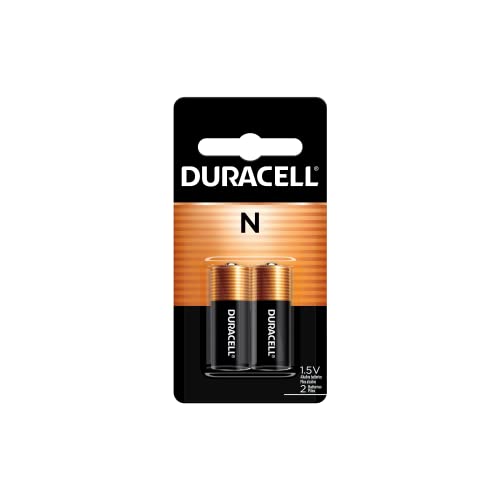
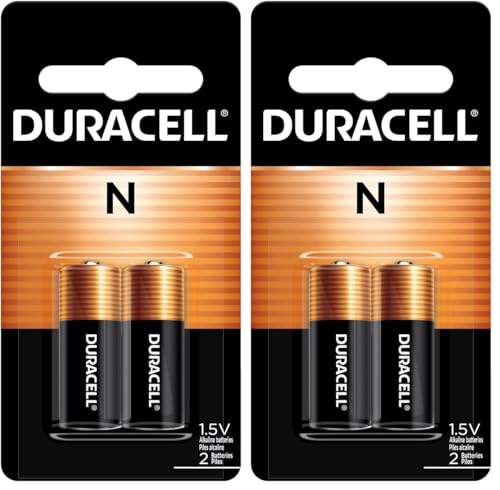
Duracell N 1.5V Alkaline Battery, 2 Count Pack, N 1.5 Volt Battery, Long-Lasting for Key Fobs, GPS Trackers, and More


Choosing the right purchase, summarised
- Match the code family: LR1, E90, MN9100, and 910A alkaline all describe the same cell.
- Verify voltage first: 1.5 volts for standard devices; treat any three-volt cylinder as a different product entirely.
- Prefer alkaline for standby roles: medical lights, boresighters, and emergency gadgets need dependable output after storage.
- Consider rechargeables only for frequent use: accept the 1.2-volt compromise where the device tolerates it.
- Buy fresh, dated stock: slow retail turnover makes expiry checking essential for this size.
- Store cells outside idle devices: leakage prevention costs nothing and saves equipment.
Readers should know that purchases made through links in this guide can generate a small commission for this site, supporting further research into niche battery formats; our research draws on manufacturer datasheets, IEC nomenclature, and equipment manuals, and no brand pays to influence the guidance above.
Keep one dated spare beside every device that depends on this quietly persistent little cylinder, and it will answer without drama on the morning, night, or emergency when nothing else in the drawer can take its place.