Our Top Picks
 Bushnell PowerView 10x50 Porro Prism Instafocus Binoculars RealtreeFull Size2.68 x 6.61 x 6.61 inches0.2 poundsCheck on Amazon


What's inside
- Why waterfowl hunting makes unusual demands on binoculars
- Reading the numbers printed on the housing
- 8×42 versus 10×42 inside a blind
- Low-light performance beyond a single number
- Coatings, glass types, and prism systems explained
- Waterproofing standards and what they actually promise
- Fogproofing in real blinds, boats, and flooded timber
- Field of view, depth of field, and tracking flying birds
- Eye relief, eyecups, and shooting glasses
- Focus systems and gloved-hand ergonomics
- Armour, grip texture, and surviving the marsh
- Carrying systems: harnesses, chest packs, and straps
- How duck glass differs from general hunting binoculars
- Matching glass to hunting styles and habitats
- Identification tasks that drive optical requirements
- Scouting with optics before the season
- Understanding price tiers without pursuing labels
- Checking a binocular before money changes hands
- Care, cleaning, and storage between hunts
- Common mistakes that cost hunters birds
- Frequently asked questions from the blind
- Relative brightness, twilight factor, and honest comparisons
- Roof prism versus Porro prism for marsh work
- Anti-fog and scratch protection on outer lenses
- Binoculars for young hunters and shared blinds
- Ethics, regulations, and responsible glassing
- Seasonal maintenance calendar for waterfowl optics
- How weather reshapes optical choices through a season
- What specifications published in manuals rarely explain
- A short glossary for first-time buyers
- Check prices on Amazon
- Pulling the decision together
As an Amazon Associate I earn from qualifying purchases. This post may contain affiliate links at no extra cost to you.
Why waterfowl hunting makes unusual demands on binoculars
Glass built for a duck blind works under conditions that would ruin casual optics within a single season. Shooting light arrives before sunrise, often through fog hanging low over decoys, while spray, sleet, and muddy gloves punish every external surface. A hunter needs to separate a hen mallard from a drake at two hundred yards, read a banded leg against dark water, and confirm species before legal light fully develops. Ordinary birding glass can resolve fine feather detail at noon, yet waterfowl work happens at the dim edges of the day, frequently from a rocking boat or a pit blind where elbows never find a rest.
Three priorities dominate every serious selection discussion. Brightness during the first and last twenty minutes matters more than midday sharpness, because identification decisions cluster around dawn flights and evening returns. Sealing must survive immersion, since a dropped binocular in flooded timber usually lands in knee-deep water rather than on grass. Handling must remain secure with insulated gloves, numb fingers, and a lanyard tangled around a call lanyard, a shell belt, and a dog whistle cord.
Magnification debates follow from those realities. Higher power narrows the visible field, exaggerates hand tremor on cold mornings, and shrinks the exit pupil unless objective diameter grows with it. Lower power steadies the image, widens the search area for incoming flocks, and keeps both eyes relaxed during long scans across a refuge line. Neither extreme suits every marsh, which explains why the middle configurations dominate blinds from Saskatchewan potholes to Arkansas timber and Louisiana coastal marsh.
Reading the numbers printed on the housing
Manufacturers stamp two figures on nearly every binocular, separated by a multiplication sign. The first figure states magnification: an 8x instrument makes a distant subject appear eight times closer than unaided vision presents it. The second figure gives objective lens diameter in millimetres, measured across the front elements facing the target. Dividing objective diameter by magnification yields exit pupil diameter, the bright disc projected behind each eyepiece toward the observer’s eye.
Exit pupil deserves attention because human pupils dilate in darkness. A healthy young eye may open near seven millimetres under full night conditions, while a fifty-year-old eye often reaches only five millimetres at the same light level. Dawn in a marsh sits between those extremes, with pupils commonly measuring four to six millimetres depending on cloud cover and surrounding glare off water. An optic delivering a five-millimetre exit pupil therefore matches many adult eyes during shooting light, wasting little brightness while avoiding unnecessary bulk.
Arithmetic clarifies the popular pairings. An 8×42 produces a 5.25 millimetre exit pupil, calculated by dividing forty-two by eight. A 10×42 yields 4.2 millimetres from the same objective size. Stepping to 10×50 restores the figure to exactly five millimetres, at the cost of larger barrels, heavier glass, and wider spacing between the tubes. A compact 8×32 shrinks the result to four millimetres, fine for midday scouting yet noticeably dimmer when teal rocket past at first legal minute.
8×42 versus 10×42 inside a blind
The 8×42 configuration has become the default recommendation for waterfowlers who hunt varied terrain. Its field of view commonly spans 7.5 to 8.5 degrees, translating roughly to 390 through 445 feet at one thousand yards depending on optical design. That breadth lets a hunter catch peripheral movement, follow a swinging flock without losing the lead bird, and relocate a crippled duck marked down among cattails. Shallow depth perception also feels natural at eight power, so judging whether birds work inside forty yards becomes less disorienting.
By contrast, 10×42 glass trades width for reach. Fields typically narrow toward 6.0 to 6.8 degrees, around 315 to 355 feet at the standard distance. The extra magnification helps separate pintail sprigs from wigeon at range, count birds in a distant raft, and inspect a far shoreline for loafing geese before committing to a move. On big open water, tidal flats, and reservoir points, that reach earns its keep despite the tighter window.
Shake separates the pair more than specifications suggest. Every tremor multiplies by magnification, so a shivering hunter in a January layout boat sees the 10x image swim sooner. Bracing forearms against knees, resting barrels on a blind rail, or leaning into a pit wall calms both formats, though eight power forgives sloppy support. Hunters who wear thick gloves also notice focus wheels turning less precisely, and small corrections overshoot more noticeably at higher power.
Low-light performance beyond a single number
Twilight factor, computed as the square root of magnification multiplied by objective diameter, offers one rough comparison tool. For 8×42 the calculation gives about 18.3, while 10×42 reaches roughly 20.5, suggesting better detail resolution under dim conditions for the stronger instrument. Experienced observers treat the figure cautiously, because it ignores transmission losses, coating quality, glass type, and the observer’s own pupil size. A superbly coated 8×42 frequently looks brighter than a mediocre 10×42 despite the arithmetic disadvantage.
Light transmission percentages published by makers describe how much incoming light survives the journey through prisms and lenses. Premium roof-prism designs claim peak transmission above ninety percent, sometimes measured at a specific wavelength rather than across the visible spectrum. Honest comparisons stay difficult because test methods differ between brands, yet the underlying principle holds: every air-to-glass surface reflects a fraction of light, and a full-size binocular may contain ten or more such surfaces per barrel.
Colour neutrality matters during those grey minutes as well. A warm yellow cast can mute the green head of a drake mallard against brown reeds, while an overly cool rendering washes out the white cheek patch on a bufflehead. Neutral transmission preserves subtle contrasts between species whose silhouettes otherwise merge. Look for descriptions referencing high-fidelity colour, flat transmission curves, or similar language in specifications published by the maker, then weigh those claims alongside exit pupil and field width.
Coatings, glass types, and prism systems explained
Anti-reflection coatings began as a single magnesium fluoride layer and evolved into complex multi-layer stacks tuned per surface. Terminology follows a ladder. Coated means at least one surface carries one layer. Fully coated indicates every air-to-glass surface received a single layer. Multi-coated adds multiple layers to selected critical surfaces, and fully multi-coated applies multi-layer treatment everywhere. For dawn hunting, fully multi-coated represents the sensible floor, because stray reflections steal contrast precisely when light runs scarce.
Phase correction addresses a subtler roof-prism problem. Light splitting through a roof prism emerges with wavefronts shifted out of phase, softening resolution unless a special coating realigns them. Silver, aluminium, and dielectric mirror coatings handle the reflective prism face, with dielectric stacks reflecting above ninety-nine percent across visible wavelengths in top designs. Product literature may abbreviate phase coating as PC or P-coating, and its absence on a roof-prism model signals a budget instrument regardless of other claims.
Extra-low dispersion glass, shortened to ED or HD in marketing, reduces chromatic aberration where dark birds cross bright sky or glittering water. Uncorrected optics fringe high-contrast edges with purple or green outlines, which can obscure the white neck ring on a drake or the speculum flash during identification. Fluorite-containing elements and lanthanum glass push correction further, at higher cost and sometimes greater weight. Porro-prism designs sidestep phase issues entirely and deliver strong depth perception, though their offset barrels grow bulky inside a crowded blind bag.
Waterproofing standards and what they actually promise
Sealing claims deserve sceptical reading. Nitrogen purging replaces internal air with dry nitrogen gas, preventing internal fog when cold glass meets warm breath or a heated truck cab. Argon purging performs the same role with a larger molecule that leaks more slowly through seals over years of service. Either gas works; construction quality of O-rings and seal seats determines longevity far more than gas selection.
Ingress ratings borrowed from electronics, such as IPX7, describe immersion in one metre of still water for thirty minutes under laboratory conditions. Japanese Industrial Standards express similar ideas on an eight-point waterproof scale, where class eight permits continuous submersion beyond one metre. Real marsh abuse differs from laboratory tanks: currents tug at a dropped binocular, silt grinds against seals, and temperature swings stress gasket materials. A reputable warranty and service network therefore matter alongside any printed rating.
External lens coatings add another defensive layer. Hydrophobic treatments cause water to bead and roll away instead of sheeting across the objective, preserving a usable view during drizzle. Some makers bond oleophobic layers that resist skin oils and sunscreen smears, simplifying cleanup after a morning of face paint and insect repellent. Rain guards linked by a flexible bridge, tethered objective caps, and a floating neck strap complete the practical protection package for boat hunters.
Fogproofing in real blinds, boats, and flooded timber
Internal fog forms when moisture sealed inside the barrels condenses on cold internal elements. Quality instruments leave the factory filled with dry gas at slight positive pressure, and that charge should last years unless seals fail or the housing suffers impact damage. External fog behaves differently: breath, steam rising from a thermos, or warm air escaping a jacket collar can cloud outer lenses instantly, and no purging prevents it. A microfibre cloth kept inside a chest pocket, warmed by body heat, clears external mist faster than a cold cloth stored in the blind bag.
Temperature shock produces the harshest fogging scenarios. Moving glass from a heated cab at dawn into minus-ten air chills surfaces below the dew point of any trapped humidity. Leaving the binocular in an unheated boat the night before a hunt equalises temperatures gradually and reduces shock. Some hunters stash optics inside an exterior pocket rather than against their torso, accepting slower access in exchange for stable acclimatisation during the walk to the blind.
Salt marsh hunters face an additional enemy. Crystallised salt spray creeps into focus mechanisms and corrodes exposed metal if rinsing gets neglected. Fresh-water rinsing under a gentle tap, followed by air drying with caps off, removes residue before storage. Silica gel packets inside the storage case absorb lingering dampness during the off-season, and a yearly inspection of rubber armour for cracks catches seal problems before autumn flights begin.
Field of view, depth of field, and tracking flying birds
Published field figures appear in two formats: angular degrees and linear width at a set distance. Converting between them helps compare brands that report differently. One degree of angular field equals roughly 52.5 feet at one thousand yards, so a 7.8-degree specification corresponds near 410 feet. Hunters scanning wide decoy spreads value generous width because incoming birds enter the frame earlier, giving extra seconds to judge species, sex, and flock composition before calling the shot.
Depth of field shrinks as magnification climbs. At eight power, birds between eighty and two hundred yards may stay acceptably sharp without refocusing, letting the observer track a working flock through several passes. At ten power the sharp zone compresses, demanding frequent wheel adjustments precisely when gloves and excitement degrade fine motor control. Centre-focus wheels with moderate gearing suit this work better than ultra-fast wheels that race past the focal point.
Close focus distance rarely headlines waterfowl discussions, yet it matters for reading leg bands on decoys, inspecting a retrieved bird held at arm’s length, or watching a drake display beside the blind. Most full-size hunting models focus down to two metres or slightly beyond. Anything longer than three metres feels limiting when a crippled bird hides in reeds a few steps away and the hunter wants confirmation before sending the dog.
Eye relief, eyecups, and shooting glasses
Eye relief measures the distance from the rear lens surface where the full field remains visible. Spectacle wearers generally need at least fifteen millimetres, preferably seventeen or more, because lenses sit forward of the eye and frames add standoff. Hunters wearing shooting glasses for eye protection at dawn face the same geometry. Twist-up eyecups with several click positions let each user dial the correct distance, while soft rubber fold-down cups on older designs wear out and tear with age.
Interpupillary distance adjustment deserves a quick check before purchase. Adult spacing typically ranges from fifty-six to seventy-two millimetres, and the hinge must cover that span smoothly without drifting under its own weight. A hinge that sags mid-hunt collapses the two circles into a single squinting view. Better hinges hold position firmly yet move deliberately when thumbs press the barrels apart.
Dioptre correction compensates for unequal eyes. The adjustment usually hides beneath the right eyepiece ring or a locking dial near the focus wheel. Setting it correctly involves focusing the left barrel with the main wheel on a distant sign, then rotating the dioptre control until the right eye matches sharpness. Locking dioptres prevent accidental drift when gloves brush the ring during a hurried lift toward incoming birds.
Focus systems and gloved-hand ergonomics
Centre-wheel focusing dominates modern hunting glass for good reason: one finger rolls both barrels into focus simultaneously while the other hand steadies a call or holds a dog steady. Wheel diameter, knurling depth, and rotational resistance decide whether the system works with insulated gloves. Oversized wheels with aggressive ribbing turn reliably under neoprene, though they may snag on brush or blind material when the binocular hangs from a harness.
Individual-focus designs, common on marine instruments, set each eyepiece once and rely on depth of field thereafter. Waterfowl distances change too rapidly for that arrangement, since birds swing from forty yards to three hundred within seconds. Internal focusing earns preference over external designs that pump air and moisture through moving seals as elements travel. Sealed internal mechanisms also keep the housing length constant, simplifying waterproof case fit.
Balance influences fatigue during long sits. A binocular that hangs nose-heavy on its strap twists eyecups away from the face, while a well-distributed instrument settles flat against the chest. Weight between six hundred and nine hundred grams covers most 42-millimetre hunting models. Heavier 50-millimetre barrels reward boat hunters who rest glass on a rail, whereas walk-in hunters carrying decoys on their backs feel every extra gram across a flooded field.
Armour, grip texture, and surviving the marsh
Rubber armour serves three functions simultaneously: it cushions impacts against blind frames and boat gunwales, it quietens contact noise that might flare working birds, and it supplies grip when surfaces run slick with rain or fish slime from handling a retrieved duck. Textured panels along the barrels, thumb rests sculpted into the underside, and a matte finish that kills reflections all contribute to field usability more than cosmetic styling does.
Colour choice sparks debate. Black armour dominates catalogues, while earth-tone and camouflage finishes appeal to hunters who already conceal every other item. Movement flares birds far more reliably than housing colour, and a disciplined hunter keeps glass below the blind lip until birds commit. Camouflage coatings can complicate warranty service if the finish wears, so buyers should confirm coverage terms before paying extra for a patterned housing.
Lens caps and tether systems reveal design maturity. Objective covers that dangle from the barrels stay attached yet swing into view if poorly positioned; covers tethered to the strap behave better. Eyepiece rain guards joined across both cups shed water when the binocular hangs face-down on a harness, and a single connecting cord prevents the guard dropping into mud during the excitement of an incoming flock.
Carrying systems: harnesses, chest packs, and straps
A bino harness distributes weight across shoulders and back, holding optics tight against the sternum where they stay dry under a jacket flap and clear of swinging shotguns. Elastic side straps, a quiet magnetic or hook closure, and a tether preventing accidental drops define a good waterfowl harness. Chest packs add enclosed protection against spray during boat rides, though zippers and buckles must open silently and operate with cold fingers.
Traditional neck straps remain adequate for short walks and permanent blinds with dry shelves. Wide neoprene straps reduce neck strain, and quick-detach swivels stop twisting. In layout boats, however, a dangling binocular dips toward bilge water every time the hunter sits up, making a harness nearly mandatory. Whichever system you choose, add a secondary tether: marsh mud swallows dropped gear without a trace, and even floating straps only help when someone notices the loss quickly.
Tripod adapters enter the conversation for long glassing sessions from permanent blinds or observation points along refuge borders. A threaded socket hidden beneath a cap on the hinge accepts an adapter post, stabilising the image for careful counts of distant rafts. Most duck hunters skip tripods during active hunts, but pre-season scouting from a levee rewards the steadiness, especially when paired with higher magnification.
How duck glass differs from general hunting binoculars
Deer and elk hunters glass across canyons, judging antler points at eight hundred yards and picking apart shaded timber for a motionless shoulder. Their priorities tilt toward resolution at extreme range, generous magnification, and tripod compatibility during stationary sessions lasting hours. Waterfowl identification happens closer, faster, and lower, against skies and water rather than mountainsides. A binocular optimised for ducks therefore emphasises field width, dawn brightness, and sealing over raw reach.
Upland hunters walking pheasant coverts favour light weight above nearly everything, since miles accumulate and shots arrive suddenly. Duck hunters travel by boat, ATV, or short wade, so they can afford heavier, brighter glass that a walking hunter would reject by noon. That weight tolerance explains the popularity of 42-millimetre objectives in blinds, while upland kits often shrink toward 32-millimetre barrels carried almost forgotten until a dog points.
Turkey hunters share the dawn emphasis but work in drier woods where waterproofing matters less and close focus matters more for spotting a gobbler slipping through underbrush at thirty yards. Marine binoculars push sealing and individual focus further than any duck hunter needs, adding compasses and rangefinding reticles useless in a blind. The waterfowl niche sits between these neighbours: fully sealed, centre-focused, glove-friendly, and biased toward the dimmest legal minutes.
Matching glass to hunting styles and habitats
Flooded timber
Timber hunters watch birds drop vertically through canopy gaps, with shots unfolding inside fifty yards and identification windows measured in heartbeats. Wide field and modest magnification win here. An 8×42 frames a mallard pair against dark trunks without losing either bird, and its generous depth of field tolerates the constant distance changes as flocks circle the hole. Compact handling also matters when a hunter leans against a tree, holding the binocular one-handed while the other hand grips a jerk-string cord.
Open marsh and big water
Coastal and reservoir hunters survey rafts anchored half a mile offshore and judge whether distant specks carry the profile of canvasbacks or scaup. Ten power earns consideration, and some hunters accept 10×50 weight for the restored exit pupil. Wind shakes layout blinds and boat hides, so image steadiness suffers; bracing technique and lower power remain honest counters. Spotting distant movement first with naked eyes, then confirming with glass, beats scanning the whole horizon through narrow fields.
Field hunting from layout blinds
Goose and field-duck hunters lie flat, popping up through spring doors when birds commit. Binoculars live inside the blind beside shell boxes, exposed to stubble dust, chaff, and the occasional spilled coffee. Enclosed chest storage keeps lenses clean until needed, and short, frequent glassing bursts check approaching flocks against the sun. Anti-reflective housing finishes prevent glint that might flare wary geese circling at eighty yards.
Jump shooting and walk-in hunts
Creek walkers and pothole jump shooters cover ground with minimal kit. A lighter 8×36 or 8×42 rides inside a jacket, emerging at each bend to scan ahead for birds loafing on the far bank. Here harness bulk annoys, strap simplicity returns, and close focus helps inspect tracks and feathers along the bank. Durability still counts because slips on muddy banks send gear tumbling regularly.
Identification tasks that drive optical requirements
Species identification carries legal weight. Seasons and bag limits distinguish hens from drakes, canvasbacks from redheads, and several similar divers whose silhouettes converge in poor light. Bill shape offers one reliable cue: the spatula profile of a shoveler, the steep forehead of a canvasback, the small dark bill of a ring-necked duck. Optics must render those outlines crisply at two hundred yards under grey skies, which is a contrast problem as much as a magnification problem.
Wing patterns flash during flight and settle arguments quickly when visible. White speculum borders on gadwall, blue patches on teal, and the chestnut head of a redhead each demand colour fidelity rather than sheer enlargement. Hunters scanning with related optics for other quarry may appreciate how camera gear handles similar dawn challenges; our research notes cross-reference guides such as best cell trail cameras when comparing remote monitoring tools used for pre-season scouting of roost ponds.
Reading jewellery, the affectionate term for leg bands, requires resolution at moderate distances on a moving bird, usually impossible until a bird is retrieved. More realistic is spotting a neck collar on a goose within a feeding flock, where steady support and patient scanning matter. Counting birds in a raft for survey purposes, or confirming a marked bird before calling a shot, similarly rewards patience and stable support over exotic specifications.
Scouting with optics before the season
Pre-season observation shapes blind placement more than any single morning of hunting. Watching flight lines at dawn across several weekends reveals preferred corridors, feeding fields, and loafing water. A binocular used from a truck window or levee road benefits from vehicle-window mounts and steady rests. Hunters documenting patterns often pair glassing with remote cameras; the category overview at best blackout trail cameras covers no-glow options suited to undisturbed roost monitoring, complementing what direct observation provides.
Action cameras have entered the blind as documentation tools, recording hunts for later review of bird reactions to calling and decoy spreads. Reviewing footage teaches more about flaring causes than memory does. Readers curious about that side of the kit can consult best 1080 sports cameras for resolution and mounting considerations, keeping in mind that recording never substitutes for legal identification before a shot.
Underwater cameras serve a different scouting purpose, revealing bottom structure, submerged vegetation, and the forage base that attracts dabbling ducks to a pond. Knowing where wild celery or sago pondweed beds grow predicts where birds will feed once seasons open. The roundup at best 10 underwater cameras explains viewing options for that below-surface reconnaissance, which pairs naturally with surface glassing from the bank.
Understanding price tiers without pursuing labels
Entry-level hunting binoculars deliver waterproof housings and multi-coated optics at accessible cost, compromising mainly on edge sharpness, phase correction, and warranty depth. Mid-range instruments add ED glass, dielectric prism coatings, locking dioptres, and magnesium housings that trim weight while resisting corrosion. Premium tiers refine everything incrementally: flatter fields, wider sweet spots, smoother focus travel, and service networks that repair rather than replace.
Diminishing returns arrive quickly for blind use. The difference between a good mid-range 8×42 and a flagship model shows most clearly during prolonged glassing, subtle colour work, and edge-of-field scrutiny, less so during the hurried thirty-second identification that decides a duck hunt. Budget saved on glass can fund better waders, a quality harness, or an extra case of shells, each improving the season more tangibly than the final few percent of light transmission.
Refurbished and previous-generation models deserve consideration when a maker supports them with full warranty coverage. Optical designs change slowly, and a discontinued flagship often outperforms a current mid-tier release. Verify seal integrity and purge status on any second-hand purchase, since a compromised unit fogs internally at the worst possible moment and repairs may exceed its remaining value.
Checking a binocular before money changes hands
Collimation describes whether both barrels point at precisely the same target. Misaligned optics force the eyes to fuse divergent images, producing headaches and fatigue within minutes. A simple check involves focusing on a distant horizontal line, then pulling the binocular slowly away from the eyes while watching whether the line stays level in both circles. Any step or tilt between the two views signals a problem worth rejecting on the spot.
Focus smoothness reveals manufacturing care. Roll the wheel through its full travel and feel for gritty patches, backlash when reversing direction, or stiffness that changes with temperature. Inspect the hinge for play, the dioptre ring for secure clicks, and eyecups for wobble at each extension stop. Shine a phone light into the objectives and look for dust, coating blemishes, or fingerprints sealed inside, which no amount of external cleaning will remove.
Edge performance can be judged against a distant brick wall or a printed chart taped across a shop. Centre sharpness flatters nearly every model; the outer third separates designs. Field flatteners keep the periphery crisp, while simpler optics blur and bend straight lines near the rim. For scanning flocks the centre matters most, but a wide usable sweet spot reduces the need to re-centre every bird that enters the frame.
Care, cleaning, and storage between hunts
Lens cleaning technique determines how long coatings survive. Blow loose grit away first with a bulb blower, because wiping sand across glass grinds permanent scratches. Follow with a clean microfibre cloth using gentle circular strokes from centre outward, breathing lightly on stubborn smears or applying a drop of lens fluid to the cloth rather than the glass. Keep a dedicated cloth in a sealed bag; a cloth stored loose in a blind bag collects the very grit it should remove.
After a wet hunt, extend the drying ritual. Loosen caps, stand the binocular upright in moving air, and let moisture escape from armour seams before closing it into a case. Never store optics inside a sealed plastic bag after a rainy morning, and never leave them on a vehicle dashboard where summer heat cooks lubricants and warps seals. A cool, dry shelf with silica gel nearby serves long-term storage better than a gun safe’s humid interior in many climates.
Professional servicing every few seasons suits heavily used instruments. Makers can re-purge nitrogen, replace worn eyecups, re-lubricate focus mechanisms, and verify collimation on an optical bench. Hunters who treat the binocular as a decade-long companion rather than a disposable gadget recover that service cost through reliability on the mornings that matter most.
Common mistakes that cost hunters birds
- Choosing magnification first: reach tempts buyers, yet field width and brightness decide more duck identifications than extra power ever will.
- Ignoring eyecup fit: blackout crescents at the frame edges usually trace back to relief mismatch rather than defective glass.
- Trusting a waterproof label alone: purge gas, seal design, and warranty support together determine survival after a dunking.
- Cleaning lenses with a shirt tail: embedded grit in fabric scratches coatings faster than any marsh hazard.
- Leaving glass hanging outside a jacket in rain: a harness tucked under an outer layer keeps eyepieces dry until the moment of use.
- Skipping the dioptre setup: an unadjusted compensator quietly blurs one barrel for an entire season.
Another frequent error involves judging brightness under shop lighting. Fluorescent brightness flatters every optic and hides transmission differences that dawn exposes ruthlessly. Whenever possible, evaluate candidates at dusk through a shop window or during an overcast evening, comparing how shadow detail holds in dark tree lines. Retailers who hunt usually understand the request and may allow a parking-lot comparison at closing time.
Frequently asked questions from the blind
Is 10×42 too much for timber hunting?
For most timber holes, yes, the narrower field and shallower depth of focus fight against the fast, close nature of the shooting. Birds appear suddenly through canopy gaps, and an 8x frame catches them sooner. Hunters who split time between timber and open water sometimes accept the compromise, bracing the stronger glass against a tree to steady the view during longer looks down a slough.
Does ED glass matter for duck identification?
It helps in the specific situation where a dark bird crosses bright water or pale sky, because fringing can swallow the thin white markings that separate similar species. In flat overcast light over brown marsh, the advantage shrinks. Budget-limited buyers should fund coatings and sealing first, then ED elements with whatever remains.
How long should a nitrogen purge last?
Factory literature seldom promises a fixed interval, because seal ageing depends on heat exposure, impacts, and storage conditions. A decade of service without internal fog is a reasonable expectation for quality construction kept away from dashboard heat. Fog appearing inside a purged instrument indicates seal failure, not normal ageing, and warrants professional attention.
Can a rangefinding binocular replace a separate rangefinder?
Combined units exist and appeal to big-water hunters judging distant rafts, though most duck shooting happens inside distances where range estimation by eye suffices for ethical decisions. Added electronics introduce battery dependence and extra weight. For pure identification work, a conventional binocular remains simpler, lighter, and quicker to deploy with gloves.
Relative brightness, twilight factor, and honest comparisons
Relative brightness offers another legacy metric, calculated by squaring the exit pupil diameter. An 8×42 scores about 27.6 on that scale, a 10×42 roughly 17.6, and a 10×50 exactly 25. The index rewards large exit pupils, which aligns with dawn priorities, yet it ignores transmission entirely. Two instruments sharing an identical score can present noticeably different images if one wastes light through mediocre coatings while the other preserves contrast with modern multi-layer treatment on every surface.
Because legacy indices ignore glass quality, seasoned buyers read them as starting points rather than verdicts. A practical comparison method involves viewing a shaded, detailed target at dusk: a distant treeline, a printed sign in shadow, or the dark side of a boathouse across a pond. The instrument that keeps bark texture, branch separation, and lettering legible longest as light fades demonstrates real low-light capability, regardless of what arithmetic predicted beforehand.
Apparent field of view adds one more specification worth decoding. Multiplying true angular field by magnification gives the apparent figure, describing how large the image circle feels to the eye. Values near sixty degrees feel immersive and help a hunter sense movement at the frame edge. Narrow apparent fields below fifty degrees can feel like looking through a tube, slowing the transfer from naked-eye spotting to binocular confirmation during fast approaches.
Roof prism versus Porro prism for marsh work
Roof-prism barrels run straight, placing objective and eyepiece along one axis, which produces the slim H-shaped silhouette familiar from modern hunting packs. Internal mirrors fold the light path within a compact housing that seals readily and shrugs off knocks. The design demands precise phase correction and mirror coatings to reach full sharpness, adding manufacturing cost that budget models sometimes avoid by quietly omitting those treatments.
Porro-prism instruments offset the objectives wider than the eyepieces, creating a zigzag light path inside a broader body. The geometry delivers natural three-dimensional depth, simpler construction, and strong light efficiency without exotic coatings. Downsides include bulk inside a blind bag, exposed prism housings that complicate sealing, and a shape that catches brush when carried through flooded willows. A few makers still offer marine-grade Porro models whose ruggedness suits boat blinds despite the size penalty.
Prism glass material influences both designs. BaK-4 barium crown glass, with its higher refractive index, produces a round exit pupil and bright edges, while BK-7 borosilicate yields a squared-off pupil visible when the binocular is held at arm’s length toward bright sky. Serious hunting models almost universally specify BaK-4 or an equivalent high-index formulation, and an exit pupil inspection remains a quick way to verify what actually sits inside the housing.
Anti-fog and scratch protection on outer lenses
Some premium instruments apply plasma-deposited coatings that actively discourage condensation droplets from forming continuous film. Others rely on hydrophobic layers measured by contact angle, where higher angles mean water beads tighter and rolls sooner when the barrel tilts. Either approach helps during the steamy moment when a hunter exhales across cold eyepieces while calling, a routine accident that blinds lesser glass for critical seconds.
Scratch-resistant hard coatings protect objectives from wind-blown sand at coastal blinds and from gritty cattail seeds that seem engineered to find exposed glass. No coating survives deliberate abrasion, so protective habits still matter: keep caps on during boat rides, store the instrument above floor level away from boot grit, and rinse salt or mud off with clean water before any cloth touches a lens surface.
Ultraviolet exposure slowly degrades rubber armour and strap materials across many seasons. Storing gear away from windows, ozone-producing motors, and garage solvents extends the life of those flexible parts. When armour loosens or cracks, makers can often re-cover a housing during a service visit, restoring grip and sealing integrity without replacing the optical core.
Binoculars for young hunters and shared blinds
Families sharing one instrument across generations face fit challenges. Narrow interpupillary settings, sometimes down to fifty millimetres, accommodate younger faces, while generous eye relief lets a teenager wearing glasses share glass with a parent who does not. Lightweight 8×32 or 8×36 models serve smaller hands during long sits, accepting reduced dawn brightness in exchange for an instrument a young hunter will actually hold steady and enjoy using.
Durability expectations rise when gear passes between several users in one blind. A floating strap, bright tether colour visible against dark water, and a case that clips to the blind frame prevent the classic loss overboard. Teaching a new hunter to loop the strap before lifting the binocular builds the habit that saves equipment later, when excitement runs high and a flock appears without warning.
Shared optics also benefit from a quick-reference card taped inside the blind: dioptre settings for each regular user, recorded as numbers from the dial. Resetting to a personal setting takes seconds and avoids the blurry fumbling that otherwise greets the second user. That small organisational touch reflects how blinds actually operate, with gear circulating among partners throughout a morning.
Ethics, regulations, and responsible glassing
Identification before shooting is both an ethical duty and a legal requirement woven through waterfowl regulations. Protected species, closed seasons on particular ducks in certain flyways, and hen restrictions all demand certainty that only adequate optics provide at distance. A hunter who cannot separate a hen pintail from a hen mallard in the available light should let the flock pass, and better glass widens the window in which certainty is honestly achievable.
Glassing etiquette extends to neighbouring blinds. Sweeping another party’s decoy spread repeatedly, or lingering on their position, reads as intrusive and can flare birds working either setup. Scan the sky, the horizon, and your own spread; give adjacent hunters the same courtesy you expect. On public refuges, optics also help read posted boundaries, closed-zone markers, and distant signage that keeps a party legal without guesswork.
Leadership in the blind includes calling the identification aloud before anyone rises to shoot. The partner with the clearest view and the most suitable glass often takes that role, narrating species and sex as birds approach. This practice reduces mistakes, builds younger hunters’ recognition skills, and turns the binocular into a safety tool rather than a personal accessory hoarded by one seat in the blind.
Seasonal maintenance calendar for waterfowl optics
Pre-season, usually late summer, calls for a full inspection: purge status, hinge tension, eyecup function, strap stitching, and case zippers. Test the instrument at dusk against a shaded treeline, confirming that both barrels still align and that focus travel remains smooth after months of storage. Replace tired silica gel, refresh the lens cloth, and confirm that rain guards and objective caps remain tethered.
Mid-season care is lighter but more frequent. Rinse salt and mud after coastal hunts, dry the housing before casing it, and check focus wheels for grit that migrates into mechanisms during field hunts in harvested grain. A soft brush clears chaff from hinge crevices. If internal fog appears even once, schedule service rather than hoping the symptom disappears, because moisture inside rarely leaves on its own.
Post-season storage closes the loop. Clean thoroughly, dry for a full day in open air, then store with caps fitted loosely in a breathable case. Remove any separate electronic accessories, note repairs needed while memory is fresh, and record the season’s observations about fit and performance. Hunters who keep such notes choose their next instrument from evidence rather than advertising, which is precisely how a blind tool should be selected.
How weather reshapes optical choices through a season
Early-season hunts for teal unfold in warmth, humidity, and biting insects, often before sunrise in September when fog sits thick over rice fields and reservoirs. Lenses pulled from an air-conditioned truck fog externally within seconds, and repellent-covered hands smear eyepieces during hurried looks. Compact glass with aggressive hydrophobic coatings earns its place here, while heavy cold-weather features matter little. Hunters also fight glare off flat water as the sun climbs quickly, making lens hoods and matte internal baffling surprisingly relevant.
Mid-season conditions swing between rain, first ice, and bright migration days when high flocks demand long looks against pale sky. Versatility peaks in value: a single 8×42 that handles a dripping October marsh and a clear November cold front alike reduces the temptation to own several specialised instruments. This is also when decoy spreads grow and calling sequences lengthen, so the binocular spends more time hanging ready on a harness than packed inside a bag.
Late-season hunting brings the harshest test. Sub-zero mornings stiffen focus lubricants in cheap mechanisms until the wheel resists gloved fingers, while breath freezes on eyepieces between looks. Quality instruments specify operating ranges down to minus twenty degrees or beyond, using lubricants that stay supple. Battery-free conventional optics hold an inherent advantage here over electronic rangefinding models whose displays fade and cells sag in deep cold.
Rain deserves separate respect because it attacks vision continuously rather than dramatically. Fine drizzle sheets across objectives, wind drives spray sideways under rain guards, and every wipe risks smearing rather than clearing. Hunters learn to shield glass beneath a cap brim, tilt objectives downward between scans, and accept slightly soft views rather than scrubbing coatings raw. A spare dry cloth sealed in a waterproof pouch becomes as valuable as the binocular itself during a day-long coastal storm.
What specifications published in manuals rarely explain
Manuals list numbers without translating them into blind behaviour. Minimum focus distance appears as a bare figure, yet its interaction with depth of field decides whether a hunter can inspect a decoy line at fifteen yards without constant wheel work. Sweet-spot diameter never appears at all, though it governs how much of the frame stays critically sharp and therefore how confidently a flock can be judged without re-centring each bird individually.
Focus travel, measured in wheel rotations from close focus to infinity, hides inside no standard specification table. A wheel needing two full turns feels precise for static observation but slow when birds swing from the decoys to the horizon. Roughly one to one-and-a-half turns suits waterfowl work, balancing speed against the fine control needed for distant raft inspection. Testing that travel with gloves reveals more than any brochure figure.
Weight distribution likewise escapes the data sheet. Two instruments of identical mass handle differently when one carries its weight in oversized objectives and the other spreads mass along magnesium barrels. The nose-heavy example tires neck muscles on a strap and twists in a harness, while the balanced example disappears against the chest. Only handling exposes the difference, reinforcing why a showroom visit with your own gloves and harness remains worthwhile.
A short glossary for first-time buyers
Objective lens: the front element facing the subject, whose diameter in millimetres forms the second number in the standard naming format. Exit pupil: the bright circle leaving each eyepiece, found by dividing objective diameter by magnification. Eye relief: the working distance behind the rear lens where the full image stays visible, critical for anyone wearing glasses. Dioptre: the per-eye correction dial compensating for vision differences between left and right eyes. Collimation: the alignment condition in which both barrels converge on exactly the same point, preventing eyestrain.
Phase coating: a treatment applied to roof-prism surfaces that restores wavefront alignment and therefore resolution. Purging: the factory process replacing humid internal air with dry nitrogen or argon to prevent internal condensation. Field flattener: an additional lens group correcting edge curvature so straight reeds stay straight across the frame. Interpupillary distance: the adjustable spacing between the two barrels, matched to the distance separating the user’s pupils. Hydrophobic coating: a surface layer causing water to bead and shed instead of filming across the glass. Keeping these definitions in mind turns a dense specification sheet into a readable description of how the instrument will behave at dawn.
One final definition deserves emphasis because sellers misuse it constantly. Waterproof describes resistance to liquid ingress under stated conditions, whereas water-resistant may mean nothing more than splash tolerance during light rain. A duck hunter should accept only the stronger claim, backed by an immersion rating or an explicit submersion depth in the documentation, because blinds, boats, and flooded fields guarantee eventual dunkings. Fogproof, similarly, should describe a purged and sealed interior rather than a marketing flourish printed on the box. Reading those two words strictly, and demanding the evidence behind them, filters out fair-weather instruments masquerading as marsh tools before money changes hands, season after season, blind after blind, in every flyway where serious waterfowlers trust their mornings to honest glass rather than hopeful labelling.
Check prices on Amazon
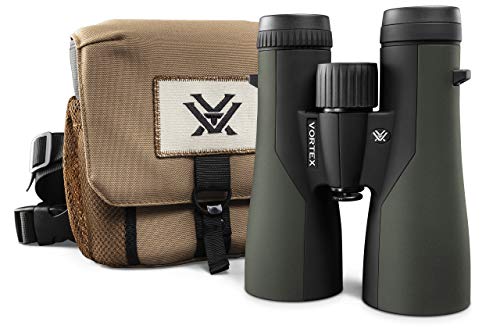
Live listings for the shortlist in this guide are pulled from Amazon below, so prices and availability are always current at the moment you look.


Pulling the decision together
Start with habitat. Timber and small marsh hunters should default to 8×42, open-water and field hunters may justify 10×42 or 10×50, and walk-in hunters can trade objective size for portability while accepting dimmer dawn views. Next, filter by sealing: full waterproof construction, gas purging, and hydrophobic outer coatings form the non-negotiable baseline for gear that rides in boats. Then handle candidates with the gloves you actually wear, because ergonomics invisible in a showroom decide performance at minus five degrees.
Within a chosen configuration, spend on coatings and prism treatment before cosmetic finishes. Fully multi-coated optics, phase-corrected roof prisms, and honest transmission figures deliver visible gains during legal-light identification. Confirm eye relief against your glasses, set the dioptre, and test hinge tension. Finally, plan the carry system alongside the purchase, since the best glass in the marsh is worthless sitting in the truck because its strap tangles with everything else you wear.
As an affiliate publication, this site may receive a commission from qualifying purchases made through links in this guide, at no additional cost to the reader; that income supports continued research into hunting optics, and our research process relies on specifications published by the maker, standards documents, and aggregated owner reports rather than any payment from brands mentioned.
Choose the glass that lets you name every bird on the wing before it reaches the decoys, and the marsh will reward that patience season after season.