Our Top Picks
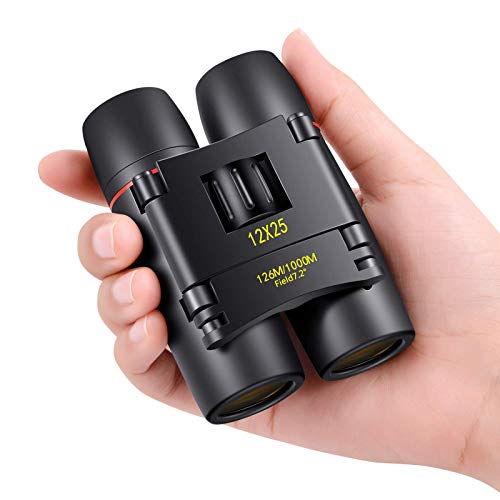 POLDR 12X25 Small Pocket Binoculars Compact for Adults12X253.7 x 2.2 x 0 inches0.4 poundsCheck on Amazon


What's inside
- Affiliate disclosure
- What compact actually means in practice
- Magnification: why more power often shows you less
- Field of view and the work of finding your subject
- Focus wheel feel decides whether you keep up
- Glass, coatings, and honest brightness
- Weather sealing and fog resistance
- Carrying systems that people actually use
- Matching the optic to each kind of outing
- Mistakes that waste money most often
- Care that keeps a small optic honest
- Questions buyers ask once the basics settle
- Understanding brightness claims without being misled
- Accessories worth considering, and those to skip
- A note on buying used or refurbished compacts
- Check prices on Amazon
- Putting the decision together
As an Amazon Associate I earn from qualifying purchases. This post may contain affiliate links at no extra cost to you.
A compact binocular earns its place in a bag only if you actually carry it. That simple fact should govern every other choice in this guide. Full-size optics gather more light and often feel steadier, yet they stay home when luggage is tight, when a walk turns long, or when you only want a quick look at a distant sign, a shoreline bird, or action at the far end of a field. The models gathered under the lightweight compact label promise a different bargain: small folded barrels, modest weight, and a view that is good enough for the moments you would otherwise miss entirely. Whether that bargain works depends less on headline magnification than on a handful of measurable details that listings tend to bury.
This comparison is written for three overlapping buyers. The first packs for travel and needs an optic that survives being tucked beside clothing, chargers, and a paperback without dominating a daypack. The second watches birds opportunistically rather than on dedicated dawn outings, so quick handling and a wide view matter more than squeezing out detail in near darkness. The third attends concerts, theatre, and outdoor sport, where distance varies, light changes quickly, and an instrument that is fiddly to focus becomes a distraction. If you recognise yourself in any of those descriptions, read the sections on field of view, eye relief, and focus travel before you look at styling, colour, or the shape of the carry case.
Our research for this piece stayed at the level of categories and published specification conventions, because compact binoculars differ enough between production runs and regional variants that a single headline figure rarely tells the whole story. Instead of ranking glass by a slogan, the comparison below explains how to interpret each number, what trade-off hides behind it, and how to verify the figure on the exact unit you intend to order. Buyers report that disappointment usually traces back not to terrible optics but to a mismatch: the wrong magnification for unsteady hands, eyecups that fight spectacle frames, or a hinge that loosens until the two barrels no longer agree. Each of those failures is predictable from the specification sheet if you know where to look.
Affiliate disclosure
This page contains affiliate links, and the publisher may earn a commission when a reader follows a link and completes a purchase, at no additional cost to that reader. That relationship does not change the criteria set out here, which are drawn from our research into specification sheets, manufacturer guidance, and recurring themes in buyer feedback. No maker supplied the wording of this guide, and no commission rate determined which optical trade-offs were described as important. Readers who prefer to buy elsewhere can still use the checklists below in any shop, because every check described here relies on published figures and on handling steps you can repeat yourself.
What compact actually means in practice
Manufacturers use compact loosely, so ignore the word on the box and measure three things instead: folded dimensions, weight without the strap, and barrel diameter. A double-hinge roof-prism design folds the barrels inward until the instrument sits almost flat, which is why that layout dominates travel ranges. A single-hinge design folds less tightly but often feels more secure in larger hands, because the bridge keeps a consistent grip. Reverse-porro models keep the objective lenses closer together than the eyepieces; they look stubbier, resist slipping into a pocket, yet frequently deliver a surprisingly natural sense of depth for near subjects such as butterflies or carved details behind a museum barrier.
Weight deserves scepticism. Some listings quote the body alone, others include caps and strap, and a padded case can add more bulk than the marketing photograph suggests. Think in terms of total carried weight across a full day, not the figure that looks best in a comparison table. An optic that feels featherlight for five minutes can still drag on a neck strap by late afternoon, which is why many travellers switch to a harness, a cross-body sling, or a belt pouch. If you plan to carry the binocular in a jacket pocket, check the folded width against that pocket rather than assuming compact guarantees a fit. Pockets vary, zips snag on rubber armour, and protruding focus wheels catch on linings.
Roof prism or porro prism, without the mythology
Roof-prism barrels look straight because the prism folds the light path inside a narrow tube. That straight profile is the main reason travel models favour it: the instrument slides into narrow spaces and presents fewer edges to knock out of alignment. Porro designs offset the objectives outward, giving a wider stance and a stronger impression of three-dimensional separation. Neither layout is automatically sharper. At compact sizes, manufacturing tolerance, prism coating quality, and collimation accuracy matter far more than the family name printed in the brochure. A well-made porro can outperform a careless roof design, and a well-sealed roof model can survive weather that would fog an open porro bridge.
Phase correction is worth understanding because it appears only on roof-prism models. Light reflecting inside a roof prism splits into components that can fall out of alignment, softening contrast unless a phase coating brings them back together. When a roof-prism listing omits any mention of phase correction, treat resolution claims cautiously and prioritise a generous returns route. Porro models do not need that particular coating, so its absence from a porro specification is not a warning sign. Learning which features apply to which layout prevents you from penalising a design for lacking something it never required.
Magnification: why more power often shows you less
Magnification tells you how much larger a subject appears, not how much more you will actually see. Raising power narrows the field of view, shrinks the exit pupil when the objective stays the same size, and magnifies every tremor in your hands by the same factor. For handheld travel use, moderate power remains the pragmatic centre of the range because it balances reach against steadiness. Stepping up in power suits seated viewing, braced elbows, and subjects that stay still. Stepping down suits scanning, following movement, and venues where you sit closer than expected. Readers who also weigh camera reach may find it useful to compare optical magnification here with the zoom logic discussed in our guide to best 10x optical zoom cameras, since both formats punish shaky handling in similar ways.
Hand shake is not a character flaw; it is physics interacting with fatigue, cold fingers, and awkward posture. A binocular that looks crisp while you lean on a shop counter may wobble badly when you stand on a windy promenade. Before committing to higher power, consider where you will stand, whether you can brace against a railing or a door frame, and how long you expect to hold the view. Short glances forgive a lot. Sustained watching of a nest, a scoreboard, or a distant headland rewards restraint. If your hands are naturally unsteady, choosing lower magnification is not settling for less; it is choosing the configuration that resolves more detail in real conditions.
Reading the two numbers in a model name
Compact binoculars are usually described by a pair of numbers separated by a multiplication sign. The first figure is magnification. The second is the diameter of the front objective lenses, expressed in millimetres. Divide the second number by the first and you get the exit pupil diameter, a quick indicator of how the instrument will feel as light fades. A larger result generally means a brighter, more forgiving view and easier eye placement, because your own pupil does not need to align as precisely with a tiny bright disc. A smaller result can still be perfectly serviceable in daylight, at midday events, or under stadium lighting, but it leaves less margin at dawn, at dusk, and beneath tree cover.
Do not treat exit pupil as a brightness guarantee on its own. Coatings, glass quality, and internal baffling decide how much of the gathered light reaches your eye without scattering into glare. Two instruments with identical headline numbers can look noticeably different when you point them toward a bright sky or across sunlit water. The calculation is still valuable because it exposes the structural limit of a compact design: small objectives cannot feed high magnification generously. When a listing pairs ambitious power with tiny front lenses and promises brilliant low-light performance, that combination deserves doubt rather than excitement.
Field of view and the work of finding your subject
Field of view describes how wide a scene you see at a stated distance, expressed either as a linear width or as an angular measurement. A wider field makes it easier to locate a bird that moved, to follow a player cutting across a pitch, or to scan a harbour without constantly sweeping the barrels. A narrower field can feel more immersive once the subject is centred, yet it punishes slow acquisition. Beginners often blame focus when the real problem is that the subject never entered the frame in the first place. For that reason, field of view deserves priority for birdwatching and sport, while theatregoers seated far from the stage may accept a tighter view in exchange for extra reach.
Comparing field figures requires care because brands do not always present them identically. Angular field and linear field describe the same property from different angles, and apparent field is a third figure derived from magnification. When two listings seem far apart, convert them to the same basis before concluding that one optic is dramatically wider. Also distinguish real field from the sweet spot within it. Many compact models stay sharp across the central portion and soften toward the edges, which matters if you like to let a subject drift across the frame but matters less if you habitually centre everything. Edge softness is a compromise, not automatically a defect, provided the centre remains clean and the softening does not arrive as distracting colour fringing.
Eye relief, eyecups, and spectacle wearers
Eye relief is the distance from the rear lens at which the full view remains visible. Spectacle wearers need enough of it to hold their glasses between eye and eyecup without cropping the edges into a tunnel. Twist-up eyecups help because they offer repeatable positions: extended for bare eyes, retracted for glasses, and sometimes intermediate stops for sunglasses. Push-down rubber cups cost less and work adequately, but they can fold unevenly and they wear faster at the crease. If everyone who shares the binocular wears glasses, prioritise generous relief over almost any cosmetic feature. If nobody does, shorter relief is rarely a problem and may even feel more stable.
Interpupillary distance adjustment is the other fit check that listings underplay. The barrels must hinge inward or outward until the two circular views merge into one. Adults vary, children vary more, and a compact model whose hinge range stops too wide will leave a child seeing double crescents instead of a single image. When buying for a family, look for the stated adjustment range and favour a design that narrows far enough for younger faces. The hinge should move with firm, even resistance. A hinge that swings freely will drift mid-view, while one that requires force discourages quick sharing between people with different eye spacing.
The diopter dial and why it drifts
Most binoculars focus both barrels together with a central wheel and then fine-tune one side with a diopter control, compensating for the difference between your eyes. Set it once, correctly, and the central wheel should handle everything afterward. Problems begin when the diopter ring sits exposed and turns accidentally in a bag, or when it moves so loosely that ordinary handling shifts it. Buyers report headaches and a vague sense that one eye is working harder, then blame their vision rather than a dial that crept. Prefer a diopter that locks, clicks into detents, or at least resists casual rotation. After any knock, recheck it before assuming the optics have failed.
Setting the diopter properly takes a minute and repays patience. Cover the side controlled by the diopter, focus the other barrel on a distant, detailed target with the central wheel, then swap the cover and adjust only the diopter ring until that side matches. Keep both eyes open and relaxed during the process, because squinting distorts the result. Note the final position if the scale is marked. That small record saves frustration later, especially when several people share one instrument and each person quietly readjusts it to suit themselves.
Focus wheel feel decides whether you keep up
A focus wheel can ruin an otherwise capable compact binocular. The wheel must move the image from near to far quickly enough to follow a subject, yet slowly enough that you do not overshoot focus with every touch. Designers describe this balance as focus travel: the amount of rotation required to cover the full distance range. Very short travel feels fast but twitchy. Very long travel feels precise but exhausting when a bird hops between branches at different depths. Neither extreme suits everyone, which is why handling reports matter. Buyers report that gritty, uneven wheels and wheels that stick after a cold morning are among the earliest reasons a compact pair gets left behind.
Wheel size and placement matter just as much as gearing. On a small body, a narrow wheel forces fingertip control, while a broader wheel lets a gloved finger roll it without hunting. In winter, thin gloves reduce sensitivity, and a wheel with shallow knurling becomes guesswork. In summer, sunscreen and sweat create the opposite problem. Look for a wheel you can locate without lowering the binocular from your eyes. That sounds trivial until you miss a fleeting subject because your finger searched for the control while the moment passed. Centre wheels suit most people; bridge-mounted alternatives on some porro designs take practice, so factor in a learning period if you switch layouts.
Close focus for gardens, museums, and insects
Close focus distance is the nearest point at which the image stays sharp. For pure distance viewing it barely matters, but compact binoculars often serve double duty at close range: reading a plaque across a gallery, watching a dragonfly settle on a reed, or studying detail on a stage set during an interval. A shorter close focus widens those uses considerably. Check the figure if you garden, volunteer outdoors, or travel with children who notice small things first. Remember, though, that very close viewing through two barrels can feel strained because your eyes converge strongly. Some observers prefer a monocular for extreme close work and reserve the binocular for everything beyond a few paces.
Close focus also interacts with field of view. At short distances the two barrels overlap less completely, so the usable shared area shrinks. Manufacturers rarely highlight that quirk, yet it explains why an insect can look crisp in one barrel and clipped in the other. Stepping back slightly restores the overlap and often improves comfort more than refocusing does. Treat headline close-focus numbers as a capability boundary rather than a promise that viewing at exactly that distance will feel effortless for minutes at a time.
Glass, coatings, and honest brightness
Coating language fills listings with adjectives, so translate it into a simple hierarchy. Uncoated glass reflects a meaningful share of light at each surface. Single-coated glass treats some surfaces. Multi-coated glass treats several surfaces with multiple layers, reducing reflections and improving contrast, especially when you look toward bright backgrounds. Fully multi-coated means every air-to-glass surface received that treatment, which is the specification worth seeking at compact sizes where light is already scarce. The wording must be exact: a listing that says multi-coated optics without the word fully may be describing a partial treatment that still leaves major surfaces untreated.
Extra-low dispersion glass, often shortened to an abbreviation on the specification sheet, addresses colour fringing rather than brightness. High-contrast edges — a dark branch against a pale sky, white lettering on a black sign — can show coloured halos when ordinary glass bends different wavelengths unevenly. Dispersion-controlled elements reduce that effect and keep plumage edges cleaner. Whether you need it depends on your subjects and your sensitivity to fringing. Some viewers barely notice it; others find it ruins every backlit view. If you photograph through optics or spend hours distinguishing similar species by subtle markings, the upgrade earns serious consideration. Travellers who glance occasionally can often accept standard glass and spend attention on fit and sealing instead.
Prism material adds another layer. Higher-grade prism glass transmits light more cleanly than entry-grade alternatives, and silver, dielectric, or aluminium prism coatings differ in reflectivity and colour neutrality. Listings sometimes trumpet a prism coating while staying silent about lens coatings, or the reverse. Read the full optical description as a system. A chain is only as clean as its most reflective surface, and stray light inside poorly blackened barrels washes out contrast no matter how impressive one named component sounds. When a seller cannot clarify what is coated, assume the modest interpretation and judge value accordingly. That caution pairs well with the broader travel-optics thinking in our coverage of best 1 inch sensor travel zoom cameras, where sensor and lens claims likewise need to be read as a complete system.
Glare, baffling, and looking toward the light
Compact barrels have little room for internal baffling, the ridges and matte surfaces that trap stray light. Weak baffling shows up as milky patches when the sun sits just outside the frame, as ghost reflections during evening events, and as a general loss of snap in scenes that should look punchy. You cannot measure baffling from a specification sheet, but you can reduce risk by favouring makers who describe internal blackening and by reading buyer comments for repeated mentions of flare. Hoods are rare at this size, so your free hand becomes the shade: cupping it above the objectives helps more than squinting and costs nothing.
Lens caps influence glare discipline more than people expect. Tethered objective caps that dangle in front of the barrels create reflections and noise, while caps that fold back against the body stay out of the way. Eyepiece covers, often a single joined rain guard, protect the rear glass when the binocular hangs on your chest during a shower. If the included covers fit loosely and fall off in a bag, you will stop using them, and unprotected glass collects dust and scratches. Budget mentally for replacement caps or a snug pouch if the supplied set feels like an afterthought.
Weather sealing and fog resistance
Water resistance language ranges from vague splash tolerance to full immersion ratings, and the difference matters for travel. A model described only as weather resistant may survive drizzle if you wipe it promptly. A sealed, nitrogen-filled or argon-filled model resists internal fogging when you move between air-conditioned interiors and humid streets, because the dry gas inside leaves no moisture to condense on the prisms. Fog on an external lens can be wiped away; fog inside the barrel ends your viewing until it clears, if it clears cleanly at all. For coastal trips, boat outings, and winter spectating, sealed construction is not a luxury feature. It is the feature that keeps the instrument usable.
Check the sealing claim alongside the temperature range and the depth-and-duration wording of any waterproof statement. A rating without conditions tells you little. Also remember that sealing ages. Gaskets compress, armour cracks after drops, and a focus wheel that was watertight when new may admit moisture years later. Rinsing salt spray off with gentle fresh water, drying the body before storage, and avoiding leaving the binocular on a hot dashboard all extend the life of those seals. Never use pressurised water, solvents, or household glass cleaner on coated lenses; makers consistently advise air first, then a soft brush, then lens tissue with proper fluid only when necessary.
Armour, hinges, and the drop you did not plan
Rubber armour does three jobs: it improves grip, quiets knocks against railings and buckles, and absorbs part of the shock when the binocular slips. Thick armour adds weight and bulk, so compact models balance protection against pocketability. Examine the hinge area and the bridge in photographs, because those junctions concentrate stress. A metal chassis beneath the armour generally holds collimation better after a fall than an all-polymer frame, though modern engineering plastics perform respectably when the design is sound. What you want to avoid is a hinge that develops play. Even slight looseness lets the barrels point in marginally different directions, forcing your eyes to fuse images that no longer align. The result is fatigue that arrives quickly and lingers.
Collimation problems announce themselves subtly. Horizontal lines may appear doubled at one edge, or you may feel a pulling sensation behind your eyes after a few minutes. Tilting your head or blinking seems to help briefly, which misleads many owners into blaming tiredness. If a new binocular produces that sensation while a borrowed pair does not, return it rather than adapting to it. Alignment is a manufacturing outcome, not a user skill. Keeping the instrument in a padded case, avoiding swinging it by one barrel, and never forcing a stiff hinge all reduce the chance of knocking a good pair out of true.
Carrying systems that people actually use
The strap in the box is rarely the strap you will love. Thin cords cut into the neck, wide padded straps slide off narrow shoulders, and short straps tangle with camera straps and bag handles. Decide early how the binocular will travel: around the neck for immediate access, cross-body for security in crowds, inside a pouch for protection between stops, or clipped to a pack strap for walks. Each method favours a different strap length and attachment style. Split rings and quick-release connectors add versatility, but every connector is also a potential failure point, so inspect stitching and hardware rather than trusting a product photograph.
For birdwatching walks, a lightweight harness distributes weight across the shoulders and keeps the barrels from bouncing against your chest at every step. For city travel, discretion matters more; a plain pouch that looks like an ordinary accessory draws less attention than tactical styling. Event-goers often prefer the shortest practical carry, because seats, programmes, and drinks compete for hand space. Whichever system you choose, practise raising the binocular one-handed until the motion feels automatic. Fumbling with a twisted strap draws your eyes downward at exactly the moment you wanted them raised, and no optical specification can compensate for that delay.
Matching the optic to each kind of outing
Birdwatching rewards a wide field, honest colour, and focus that keeps pace with movement through layered branches. Compact models will not match the dawn performance of larger birding optics, and accepting that limit leads to better buying decisions. Choose the configuration that finds the bird fastest during ordinary daylight, because most casual birding happens on walks, in parks, and along coasts rather than at first light in deep woodland. Close focus helps with warblers that settle nearby and with butterflies on the same outing. Neutral colour rendering helps with identification, since a warm or cool cast can shift the perceived tone of plumage. If identification is your priority, treat colour neutrality as a functional requirement, not an aesthetic preference.
Travel viewing is more varied and more forgiving. Architecture, landscapes, harbour traffic, and distant viewpoints all favour a general-purpose balance rather than a specialised extreme. Here the folded size and the robustness of the case rise in importance, because the binocular competes for space with everything else you carry and endures the knocks of transit. A traveller who also packs a camera may appreciate the overlap in thinking with our guide to best 4k cameras travel: in both cases the best equipment is the equipment that remains comfortable on day six of a trip, not the equipment that impressed you most during an unboxing on day one.
Concerts and theatre invert several priorities. You sit still, often in low but controlled light, at a known distance from a lit stage. Extreme weather sealing matters less indoors, while eye relief and a steady, narrow view gain value. Very wide fields can feel wasted when the stage itself defines the scene, and excessive magnification turns small head movements into sweeping pans across faces. Outdoor sport returns to movement and weather: rain, glare, and rapidly shifting play reward sealing, a generous field, and focus gearing that a cold finger can still operate. Naming your dominant venue honestly prevents the common error of buying for the rarest outing and suffering through the frequent ones.
Children, sharing, and second pairs
Households often buy one compact binocular and discover that sharing creates friction. Different eye spacing, different diopter needs, and different ideas about where the instrument lives all generate small arguments. A modest second pair, chosen for durability and a wide adjustment range, can serve children or guests better than lending a carefully adjusted primary pair. For younger users, prioritise a hinge that narrows sufficiently, a strap that cannot slip off easily, and armour that tolerates drops onto grass and gravel. Optical perfection matters less than an instrument that survives to be used again next weekend.
Teaching a child to use binoculars goes faster when you start with naked-eye spotting. Ask them to fix their gaze on the target first, then raise the barrels without looking down, so the target lands inside the field. That single habit eliminates most early frustration, which usually comes from staring through the lenses while hunting blindly. Set the diopter for the adult who uses the pair most, and accept that a child sharing it briefly will manage with the central wheel alone. Perfection for every user in rotation is unrealistic; comfort for the primary user should win.
Mistakes that waste money most often
The costliest mistake is chasing maximum magnification in a minimum body. The specification looks impressive, the view disappoints in ordinary hands, and the binocular joins the drawer of good intentions. The second mistake is ignoring spectacle fit until the first outing, when tunnel vision reveals that eye relief was never adequate. A third error is trusting a waterproof headline without checking whether the model is merely splash tolerant, then watching internal fog bloom during a boat trip. Each mistake shares a pattern: a single attractive claim displaced a cluster of duller, decisive checks. Slow down at the specification table and the disappointments become avoidable.
Another recurring error is comparing prices across bundles without comparing contents. One package includes a harness, a proper case, and cleaning supplies; another includes a flimsy pouch and a strap you will replace immediately. The cheaper headline can become the dearer purchase once you add the accessories you actually need. Similarly, extended warranties and accident cover vary in value depending on how and where you travel. A careful owner who stores optics at home needs less cover than a field volunteer whose gear rides in a shared kit bag. Match the bundle and the protection to your handling reality rather than to a generic sense of caution.
Buyers also overlook the returns process for optics specifically. Alignment, focus smoothness, and eyecup comfort are difficult to judge from photographs, so a seller with a clear, fair returns route reduces risk more than a marginal saving elsewhere. Keep packaging until you have checked the pair outdoors in varied light, confirmed that both barrels focus evenly, and confirmed that the diopter holds its setting after a night in its case. A binocular that passes those checks in week one will usually serve for years. A binocular that nags at you in week one rarely improves with familiarity; small annoyances compound with use.
A specification checklist to use before ordering
- Configuration: confirm magnification and objective size, then calculate the exit pupil yourself instead of trusting a marketing paraphrase.
- Field: note the field figure and its basis, converting angular and linear values so comparisons rest on the same footing.
- Fit: verify eye relief, eyecup style, and the full interpupillary adjustment range against everyone who will use the pair regularly.
- Focus: record the close focus distance and look for buyer comments about wheel smoothness, stiffness in cold weather, and diopter drift.
- Sealing: distinguish splash tolerance from sealed, gas-filled construction, and note the exact conditions attached to any waterproof claim.
- Carry: add case, caps, and strap weight to the body weight, and picture the folded size inside the bag you genuinely use.
Work through that list in order and patterns emerge quickly. Models that looked identical separate into clear candidates and clear rejections. If a listing cannot supply one of those figures, treat the omission as information. Reputable makers publish complete optical data because informed buyers are their natural customers. Vague listings that substitute lifestyle photography for numbers are asking you to fund uncertainty. There are enough fully documented compact models that nobody needs to accept that bargain.
Care that keeps a small optic honest
Cleaning technique decides whether lenses stay clear or accumulate a haze of micro-scratches. Start with air: a blower removes grit that a cloth would otherwise drag across the coating. Follow with a soft brush for stubborn dust, and only then use lens tissue with a drop of proper optical fluid, working gently from the centre outward. Breathing on a lens and wiping with a shirt is the habit most likely to damage coatings over time, because clothing fibres trap abrasive particles. Keep caps fitted whenever the binocular rides in a bag, and store it dry, away from prolonged heat, in a place where other gear cannot press against the focus wheel.
Salt air deserves special attention after coastal use. Wipe the body with a slightly damp cloth to lift salt residue from armour and hinges, then dry everything thoroughly before casing it. Sand requires patience rather than force: blow it from crevices, never grind it out with a fingertip. If internal fog appears and persists, stop trying home remedies involving heat or desiccants beyond gentle airing, and contact the maker or a service centre. Opening a sealed body yourself destroys the gas fill and the sealing you paid for. Treat the instrument as a closed optical system whose exterior you maintain and whose interior belongs to specialists.
Periodically, run a short health check. Focus on a distant vertical edge and confirm that both barrels render it identically. Swing the hinge through its range and listen for looseness. Roll the focus wheel end to end and note any new grit or tight spot. Twist the eyecups and confirm they still hold position. These checks take two minutes and catch developing faults while warranty or returns options still exist. Owners who build that habit rarely face a ruined outing caused by a defect that had been announcing itself quietly for weeks.
How to judge value without a single headline figure
Value in this category is the ratio between how often the binocular gets used and how completely it satisfies you during that use. A technically superior model that feels awkward will be carried less, delivering less total value than a humbler model that fits your hands, your glasses, and your bag. That is why this guide keeps returning to fit, handling, and sealing rather than crowning a specification champion. Readers comparing image quality across travel gear more broadly may also enjoy our discussion of best 5 compact cameras by image quality, where a similar lesson applies: real-world handling routinely outweighs laboratory margins once you are actually travelling.
Set a priority order before you shop and let it arbitrate every tie. If birding dominates, field and focus lead. If travel dominates, folded size and sealing lead. If events dominate, eye relief and steadiness lead. Write that order down, because listings are engineered to reorder your priorities mid-scroll with a striking photograph or a temporary bundle. A written order is a small defence, but it works. The buyers who report lasting satisfaction are rarely those who found a perfect binocular; they are those who knew which compromises they had chosen on purpose.
Questions buyers ask once the basics settle
Is higher magnification ever the right call in a compact body?
Yes, in narrow circumstances. If you mostly view from seated positions, brace your elbows reliably, and watch subjects that hold still — harbour shipping, distant architecture, a performer on a far stage — extra reach can reveal detail that moderate power leaves suggestive. The condition is honesty about stability. The moment your typical viewing involves standing in wind, walking between viewpoints, or tracking movement, the advantage reverses. Choose for the posture you actually adopt, not the posture you imagine adopting with a new purchase in hand. Enthusiasm improves many things; it does not steady your arms.
Can one compact pair serve both birding and theatre well?
A sensible middle configuration serves both adequately, which is precisely what most households need. Birding asks for field and daylight clarity; theatre asks for comfortable eye placement at a fixed distance. A moderate magnification with generous relief and a smooth wheel crosses between those worlds without embarrassing itself in either. What a single pair cannot do is excel simultaneously at dawn birding and distant stadium detail, because those tasks pull objective size and magnification in opposite directions. Accept adequacy across your real mix of outings and you will spend less while carrying more often — the exchange this entire category exists to offer.
How long should a decent compact binocular last?
With ordinary care, years of regular use is a reasonable expectation. The failure points are seldom the glass itself. Hinges loosen, eyecups tear, diopter rings wear smooth, straps fray, and seals age. Models with replaceable eyecups and straps extend their own lifespan, because the parts that perish can be renewed without replacing the optics. When you evaluate two otherwise similar options, ask which one the maker still supports with spares and servicing. Longevity is a specification too, even though it never appears in the headline table. A binocular repaired once and used for a decade beats a disposable bargain replaced three times.
What should you check in the first week of ownership?
Use the pair outdoors in bright, overcast, and fading light. Confirm that straight edges look straight and identically placed in both barrels. Focus on near and distant targets in quick succession and note whether the wheel travels smoothly throughout. Wear the strap for a sustained walk and judge the carry honestly, not hopefully. Leave the diopter set overnight in its case and verify the setting held. Finally, fold and unfold the barrels repeatedly to confirm hinge resistance stays even. Any fault found now is a returns conversation; the same fault found after a season becomes a repair bill and a story you did not want.
Understanding brightness claims without being misled
Relative brightness and twilight factor appear in older catalogues and still surface in listings, so it helps to know what they can and cannot tell you. Relative brightness is simply the exit pupil squared, which means it adds no information beyond the calculation you already performed. Twilight factor combines magnification and objective size into a single index that favours higher power, sometimes misleading buyers into thinking a shaky, dim compact will excel at dusk because its index looks respectable. Neither figure accounts for coatings, prism quality, or your own eyes. Treat both as historical curiosities. Your exit pupil arithmetic, plus honest coating language, tells a fuller and less flattering truth.
Your eyes impose their own limit, and that limit changes with age and conditions. In bright daylight the pupil constricts, so an oversized exit pupil offers comfort in eye placement rather than extra visible brightness. As light falls the pupil widens, and the compact objective becomes the bottleneck sooner than a larger instrument would. No coating can repeal that geometry. What coatings can do is preserve contrast as brightness declines, keeping a dim image legible instead of washed out. When you compare two compacts for evening events, prioritise the one with complete coating treatment and clean internal blackening over the one advertising a fractional advantage in a derived index. Legibility, not a catalogue number, is what you will actually perceive from your seat.
Why sample variation makes returns policy an optical feature
Two units of the same model can differ. Focus wheels vary in smoothness, hinges vary in tension, and alignment sits within a tolerance band rather than at a single perfect point. Premium makers narrow that band through inspection; budget production widens it. You cannot control which unit arrives, so you control the remedy instead: a clear returns window, retained packaging, and a prompt inspection routine during the first week. In that sense the returns policy functions as part of the optical specification. A slightly better sheet figure from a seller who resists returns may deliver a worse real instrument than a modest figure bought through a retailer willing to exchange a rough sample without argument. Experienced buyers weigh that difference instinctively, and newcomers should learn to weigh it deliberately.
Inspection needs no special equipment. A distant building with straight edges and fine detail serves as a target. A plain wall reveals whether the two fields overlap cleanly. A bright doorway against a dark interior exposes flare and internal reflections. Spend twenty unhurried minutes across two different days, because first impressions formed under a single lighting condition can mislead in either direction. If the second session confirms the first, keep the pair with confidence. If doubts grow between sessions, trust the trend. Optics should settle your eyes, not give them homework, and a sample that demands constant micro-adjustment is telling you something worth hearing early.
Accessories worth considering, and those to skip
A small number of accessories genuinely improve compact ownership. A comfortable strap or harness changes carry behaviour more than any other purchase. A microfibre pouch that doubles as a cleaning cloth protects glass inside a crowded bag. A rigid case earns its bulk when the binocular travels in checked luggage or shares space with tools and bottles. Replacement eyecups and caps, bought while the model is current, insure against the small losses that otherwise retire a healthy instrument. Each of these items solves a named problem you have already experienced or can clearly foresee, which is the correct test for any addition.
Other accessories promise more than they deliver. Tripod adapters for pocket binoculars solve a stability problem that a railing, a beanbag, or braced elbows usually solve without extra hardware, and the adapter itself becomes one more object to carry. Lens filters marketed for glare reduction steal light that compact objectives cannot spare. Elaborate cleaning kits duplicate what a blower, a brush, and proper tissue already accomplish. Before adding anything, ask whether the accessory increases how often you carry the binocular or merely increases how much you carry alongside it. The distinction sounds pedantic until a supposedly streamlined travel kit quietly regains the weight you bought a compact model to escape. Restraint, applied consistently, is the accessory strategy that never becomes obsolete.
A note on buying used or refurbished compacts
Second-hand compact binoculars can represent excellent value, because optics age slowly when they have been stored dry and handled gently. The risks concentrate in alignment and sealing rather than in scratches on the armour. Ask the seller directly whether the image merges cleanly, whether the hinge holds position, and whether any internal fog has ever appeared. Vague answers to precise questions should lower what you are willing to pay. If you can inspect in person, bring the same distant-edge check described earlier in this guide and allow yourself several quiet minutes rather than a hurried glance. Refurbished units sold with a defined warranty occupy the safer middle ground: the saving remains meaningful, while alignment faults discovered early still have a remedy. For a gift, or for a trip with fixed dates, that protection usually outweighs the extra saving of an informal sale.
One further precaution applies to any pre-owned purchase: confirm that both eyecups, the objective caps, and a usable strap are included, or price their replacements into your decision from the start. Small fittings for discontinued models can be surprisingly difficult to source, and an apparently cheap pair that arrives without eye relief adjustment hardware may prove unusable for a spectacle wearer in the household. Photographs of the actual unit, rather than catalogue images, resolve most of these uncertainties before money changes hands. Sellers who provide clear photographs of the lenses, the hinge markings, and the diopter scale are demonstrating the same transparency you should expect from a new listing. Where photographs reveal heavy coating scratches, cloudy edges, or a bent bridge, walk away regardless of the discount offered, because optical repairs on compact bodies frequently approach the cost of a sound replacement.
Check prices on Amazon
Live listings for the shortlist in this guide are pulled from Amazon below, so prices and availability are always current at the moment you look.


Putting the decision together
Start with use, not with glass. Name your two most frequent outings and let them set the magnification ceiling, the field requirement, and the sealing standard. Then filter by fit: eye relief for glasses wearers, hinge range for the smallest regular user, and wheel size for gloved or ungloved hands. Only after those filters should coatings, prism grade, and dispersion glass arbitrate between survivors, because optical refinement cannot rescue an instrument that fights your face or your bag. That ordering feels unglamorous, yet it mirrors how satisfaction actually forms during ownership. People forgive modest optics they handle happily; they do not forgive excellent optics they dread picking up.
Resist the urge to future-proof by buying beyond your outings. A traveller does not need expedition sealing for city parks, and an occasional concertgoer does not need the widest field ever folded into a pocket body. Overspecifying adds weight, cost, and complexity that tax every ordinary use to subsidise a rare one. The compact category rewards restraint more honestly than almost any other optical purchase. Its whole philosophy is sufficiency carried lightly. Honour that philosophy in your shortlist and the right model usually identifies itself without drama: it is the one whose specification sheet answers every question on your checklist in plain numbers.
Finally, remember that a binocular is an invitation as much as an instrument. The pair you carry changes what you notice — the kestrel above the car park, the inscription above the doorway, the second act detail everyone else missed. Choosing well means protecting that invitation from friction: no tunnel view through your glasses, no fogged prisms at the harbour, no strap that saws at your neck until you leave the barrels behind. Get fit, field, focus, and sealing right, and even a modest compact will repay you on outings you have not planned yet, in places you have not visited, at moments you cannot predict. That unpredictability is the point. Buy the pair you will carry, and the views will find you.