Our Top Picks
 Weize Platinum AGM Battery Group 94R H7 AutomotiveGroup Size 94R6.89 x 12.4 x 7.48 inches50.93 poundsCheck on Amazon
 Platinum AGM Car Battery Group Size 94R H7Group 94R6.89 x 12.4 x 7.48 inches50 poundsCheck on Amazon
 Interstate Batteries Car Battery 12V 80Ah 850CCA GroupGroup Size 94R12.44 x 6.94 x 7.5 inches22 poundsCheck on Amazon
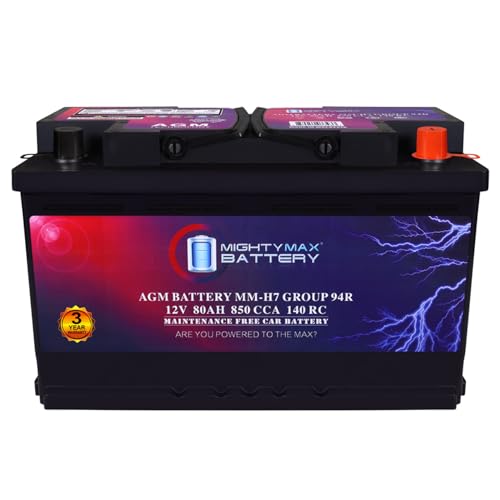 Mighty Max Battery MM-H7 Start and Stop CarGroup 94R12.5 x 6.88 x 7.48 inches50.95 poundsCheck on Amazon

What's inside
- What the 94R code actually describes
- Which vehicles call for a 94R battery
- Flooded, EFB, and AGM inside the same case
- Reading CCA, reserve capacity, and the rest of the label
- Verifying fitment before money changes hands
- Charging, maintainers, and stored vehicles
- Installation and safety, step by step in spirit
- Climate, lifespan, and the signs that precede failure
- Check prices on Amazon
- The buying checklist and the mistakes that cost owners twice
As an Amazon Associate I earn from qualifying purchases. This post may contain affiliate links at no extra cost to you.
Most battery purchases go wrong in the first thirty seconds, long before anyone thinks about cranking power or warranty terms. A driver walks into a parts store, names the vehicle, hears a group number read back from a lookup screen, and assumes the job is done. Sometimes it is. Often, though, the battery that reaches the counter is the near twin of the correct one: same length, same width, same height, and terminals on the wrong sides. That single difference can leave a positive cable stretched tight across the case top, a negative lead that will not reach at all, or a hold-down clamp pressing on a lid it was never shaped to grip. Group size exists to prevent exactly that kind of expensive guesswork, and for vehicles that specify group 94R, the letter at the end matters as much as the numbers in front of it.
A battery group size is a fitment code before it is anything else. It describes the outside of the battery: how long the case is, how wide, how tall, where the terminals sit, and what kind of terminals they are. It says nothing, by itself, about how strong the battery is, how long it will last, or whether its internal chemistry suits a modern start-stop vehicle. Two batteries can share the 94R label and differ a great deal in cold cranking amps, reserve capacity, plate design, and expected service life. Matching the group number only settles whether the case drops into the tray at all. Everything else decides whether it belongs in your vehicle once it is there.
Ignore the group code and the failures stack up quickly. A case that is a few millimetres too tall can foul the underside of a closed hood or press against a brace the maker routed above the tray. A case that is slightly too short can slide under braking if the clamp cannot take up the slack. Terminals placed for the opposite layout force cables into bends they were not formed for, and a stretched cable is not a minor annoyance: tension at a terminal post works the connection loose over time, heat builds at a poor contact point, and the resulting voltage drop shows up as slow cranking that owners often blame on the starter motor. In the worst layout errors, a reversed battery brings the positive post close to a grounded bracket or body panel, which is a short circuit waiting for one careless wrench movement.
There is also the quieter problem of the vent. Many vehicles that take a 94R battery mount it in the engine bay, but some place it in a trunk, under a seat, or in a sealed compartment where a vent tube carries gases away from the cabin. A replacement that lacks the correct vent port, or that puts the port on the wrong end, leaves that tube dangling or kinked. The battery will still start the car on day one, which is why this mistake slips past so many buyers, yet the installation is incomplete in a way that matters over months rather than minutes.
So treat group size as the first filter, not the last word. Confirm 94R, confirm the terminal layout that the R promises, and only then move on to chemistry, ratings, and charging. The sections that follow take that order seriously: fit first, then the numbers on the label, then the habits that decide whether a correctly chosen battery lasts three years or six.
What the 94R code actually describes
The group size system used in North America comes from the Battery Council International, usually shortened to BCI. BCI publishes dimensional standards for automotive batteries so that a maker in one country and a vehicle builder in another can work to the same tray, the same clamp, and the same cable routing. Each group number corresponds to a defined case footprint and height, a terminal configuration, and a terminal type. When a parts catalogue lists a battery as group 94R, it is making a claim about geometry that any other maker can be measured against, which is why a tape measure remains one of the most useful tools in this whole purchase.
For group 94R, the nominal case dimensions are about 315 mm long, 175 mm wide, and 190 mm tall, or roughly 12.4 inches by 6.9 inches by 7.5 inches. Small tolerances exist between brands because case ribs, lid steps, and handle mouldings differ, but the working footprint is fixed. That footprint is long and relatively narrow, a shape that suits the trays of many European-designed vehicles where the battery sits in a defined well rather than on a flat open shelf. If you measure your old battery and get a length near 278 mm, you are probably looking at a smaller group such as 48 or H6. If the length is near 353 mm, the vehicle likely takes a group 49 or H8. The 315 mm length is the quickest single check that you are in 94R territory at all.
The R is the part buyers most often overlook. In BCI naming, an R suffix means the terminal layout is reversed compared with the standard version of that group. Group 94 and group 94R share the same case dimensions, yet their positive and negative posts trade sides. Stand in front of the battery with the terminals nearest you: on the reversed layout, the positive post sits on the right. That sounds trivial until you picture the cables in a real engine bay. Vehicle makers route the positive lead, often with a fused distribution block attached, to reach one specific corner of the tray. Fit the non-R twin and that lead may be 175 mm of case width away from where it needs to land, with no slack to spare.
European catalogues rarely say 94R at all. They use the DIN-derived size code H7, and a 94R battery is the North American counterpart of an H7 case: same approximate 315 by 175 by 190 mm envelope, same low hold-down ledge along the base, same general role in the vehicle range. You will also see EN and other regional codes printed on labels, and some batteries carry several fitment codes at once. When a listing shows both 94R and H7, that is not two different claims; it is one case described in two naming systems. When a listing shows H7 without 94R, check the terminal layout in a photograph or diagram before you assume equivalence, because the terminal side is the detail that decides whether your cables reach.
Terminal type on 94R batteries is the familiar top post design, tapered lead posts sized to standard cable clamps, positive slightly larger in diameter than negative so the two cannot easily be swapped. Some cases add recessed or stepped lid areas around the posts to clear distribution blocks and covers. Hold-down style is just as standardized in practice: most 94R installations clamp a ledge moulded along the bottom edge of the case, using a bracket and bolt at the base rather than a strap over the top. That bottom clamp is why the lower few millimetres of the case matter, and why a battery with a smooth base or the wrong ledge profile can feel seated while the clamp has nothing solid to bite.
One more physical detail separates careful buyers from hopeful ones: the lifting handle and the lid profile. Many 94R batteries weigh between roughly 22 and 27 kg depending on chemistry and capacity, and the handle is not decoration. It is the safe way to lower a heavy, awkward case into a deep tray without dropping it onto a terminal or pinching a cable. A lid that carries a tall handle moulding or a raised cover can also change the effective height, so measure to the highest point that will sit under the hood line, not just to the flat of the lid.
Which vehicles call for a 94R battery
The 94R fitment list reads like a tour of European badges sold in North America. Audi, BMW, Mercedes-Benz, Volkswagen, Porsche, Volvo, Land Rover, and Jaguar models account for a large share of the applications, across sedans, wagons, crossovers, and larger SUVs. The H7 case suits these makers for a practical reason: their electrical loads grew steadily through the 2000s and 2010s, with heated screens, electric power steering, extensive lighting, and long lists of control modules drawing current before the engine even turns. A case in the 315 mm class holds enough plate area and acid volume to support those loads without stepping up to the very long H8 case reserved for the largest models.
Plenty of domestic and Asian nameplates adopted the size as platforms globalized. Certain Ford, Chevrolet, Jeep, Dodge, Chrysler, and Ram models specify 94R in particular trims or engine options, and the same vehicle line can list different groups for different years, engines, or factory packages. A crossover with a diesel option, a towing package, or a start-stop system may take 94R while its base petrol sibling takes a smaller case. That is why year, engine, and trim all belong in any fitment lookup, and why a battery that fit your neighbour’s example of the same model may be wrong for yours.
Makers chose this case for packaging as much as for capacity. The long, narrow footprint slides into trays moulded between structural members, and the bottom-edge hold-down keeps the top of the battery clear for covers, intake parts, or a brace. In several European designs the battery sits under a cowl panel at the back of the engine bay, a location that rewards a defined case shape and punishes improvisation. Access in those bays can be tight enough that removing trim is part of the job, which is another reason to get the fitment right the first time: few owners want to repeat a fiddly installation because the replacement turned out to be the non-reversed twin.
Some 94R applications place the battery outside the engine bay entirely. Trunk-mounted and under-seat installations appear in performance sedans and luxury models built for weight distribution, and cabin-adjacent locations raise the venting requirement from a nicety to a rule. If your battery lives in the trunk, the replacement must accept the factory vent tube, and the chemistry discussion in the next section becomes stricter, because a sealed or low-gassing design is strongly preferred where the case shares air with the passenger space.
Do not rely on memory or on a single catalogue line when you confirm fitment. The owner’s manual usually prints the recommended group size, and the label on the battery already in the vehicle is direct evidence of what the maker or a previous owner fitted. Cross-check at least two sources, and where they disagree, trust the physical evidence in front of you: measure the case, note the terminal sides, and photograph the installation before you remove anything. A photograph taken before disassembly has settled more installation arguments than any catalogue ever written.
Flooded, EFB, and AGM inside the same case
Three chemistries compete inside the 94R envelope, and they are not interchangeable in the casual way their shared dimensions suggest. The traditional option is the flooded lead-acid battery, sometimes called a wet battery, in which lead plates sit immersed in liquid electrolyte. Flooded designs are the least costly to build, tolerate the charging systems of older vehicles well, and have served conventional engines for decades. Their limits are equally well known: they lose water over time in serviceable designs, they dislike deep discharge, and repeated partial-charge operation shortens their life.
The middle option is the enhanced flooded battery, or EFB. An EFB keeps the liquid electrolyte but adds stronger plate construction, improved active material support, and better charge acceptance so the battery survives the shallow cycling that start-stop traffic imposes. In a start-stop vehicle, the engine may shut down and restart dozens of times on one trip, and the battery must accept charge quickly during short bursts of driving, then deliver another start from a partial state of charge. A plain flooded battery in that duty fades early, often within a couple of years, even though it starts the car convincingly when new.
At the top sits the absorbed glass mat battery, or AGM. In an AGM design the electrolyte is held in fibreglass separators pressed between the plates, the case is sealed and valve-regulated, and internal resistance is low. The practical results are strong cranking delivery, good charge acceptance, low self-discharge in storage, and far better resistance to vibration. AGM is also the chemistry most likely to be specified from the factory in a 94R application with start-stop, regenerative braking, or a trunk-mounted location. Many such vehicles also manage charging through a battery sensor on the negative terminal and software that expects AGM behaviour; fitting a flooded battery in their place can confuse charge control and shorten the life of the cheaper part so much that the saving evaporates.
The rule that keeps this simple is like-for-like, or one step up. If the vehicle left the factory with AGM, replace it with AGM. If it left with EFB, fit EFB or AGM. Downgrading chemistry to save money at the counter is the most common false economy in this group size, because the vehicle cannot tell you it dislikes the substitution; it simply cycles the battery harder than the design allows and the failure arrives early, usually blamed on bad luck. Upgrading from flooded to AGM in an older vehicle without start-stop is generally workable, provided the charging voltage suits AGM limits, a point covered in the charging section below.
Weight tells part of the chemistry story at a glance. AGM versions of 94R commonly sit at the heavier end of the range, since dense plate packs and mat construction add mass, while flooded versions of the same case are often a little lighter. Weight alone proves nothing about quality, yet a suspiciously light battery claiming top-tier ratings deserves a second look at its specification sheet. Capacity, cranking figures, and warranty terms should move together; when one number looks heroic and the rest look ordinary, believe the ordinary ones.
Start-stop duty also changes what failure looks like. In a conventional car, a tired battery announces itself with a slow morning crank. In a start-stop car, the system often disables the stop function first, quietly, to protect starting ability, so the earliest symptom may be nothing more dramatic than the engine no longer switching off at lights. Owners who notice that change and act on it usually replace the battery on their own schedule. Owners who miss it meet the problem later, in a car park, with no warning they recognized.
Reading CCA, reserve capacity, and the rest of the label
Cold cranking amps, printed as CCA, is the headline number on nearly every 94R label, and it deserves both respect and suspicion. CCA describes the current a fully charged battery can deliver for 30 seconds at minus 18 degrees Celsius while holding at least 7.2 volts. It is a cold-weather starting measure, defined by a standard test, and it matters most to drivers who start engines on winter mornings. Typical 94R batteries fall somewhere in the broad 730 to 900 CCA band depending on chemistry and design intent, with AGM versions often toward the upper part of that range. Meeting the vehicle maker’s minimum CCA figure is a genuine requirement. Seeking the largest number on the shelf is not.
The suspicion is warranted because CCA says nothing about durability. A maker can design plates for strong short bursts of current without building in the reserve or cycle tolerance another design carries, and two batteries with identical CCA can age very differently in the same vehicle. Treat CCA as a threshold to clear, not a score to maximize. Once a candidate meets the maker’s specification with a sensible margin for cold climates, move your attention to the figures that describe endurance.
Reserve capacity, printed as RC and measured in minutes, describes how long a fully charged battery can deliver 25 amps before voltage falls to 10.5 volts at about 27 degrees Celsius. In plain terms, it is the battery’s ability to keep essential loads alive if the alternator stops charging: lights, wipers, engine management, and the fuel pump drawing from stored charge alone. RC also hints at how gracefully a battery handles the small daily deficits of short-trip driving. Many 94R batteries publish RC figures roughly in the 130 to 170 minute region, and a higher figure within the same chemistry is generally a meaningful advantage, because the test reflects sustained delivery rather than a brief burst.
Amp-hour capacity, usually quoted at the 20-hour rate and written as Ah, is the figure European labels emphasize. A rating near 70 to 92 Ah spans most of the 94R market, with the exact value depending on chemistry and plate design. Amp-hours and reserve capacity describe related strengths from different test traditions, so do not be surprised when a battery strong in one is strong in the other. What matters is consistency: if a vehicle’s maker specifies a minimum Ah figure, respect it, because modern load management and start-stop logic are calibrated around expected capacity, and a much smaller capacity battery can trigger charging behaviour the system was never tuned for.
Date codes are the quiet deal-breaker on the label. Batteries age on the shelf through self-discharge and gradual sulfation, so a battery that has sat in a warehouse for a year begins its service life already diminished. Makers stamp or sticker a manufacturing or shipping date, often as a month and year, sometimes in a coded letter and digit format explained on the maker’s own site. As a working rule, prefer a battery made within the last six months, and ask the seller to confirm the date before the part is brought to the counter. A fresh mid-range battery will usually outlast a stale premium one, and freshness costs nothing to check.
Warranty language needs the same careful reading. A free-replacement period is worth more than a long prorated tail, because prorated credit shrinks with age and often applies only toward the same brand at the same seller. Note where the warranty can be claimed: a national chain honours its promise on the road, while a small seller’s promise may be hard to use two states away. Keep the receipt, record the serial or date code, and photograph the label after installation. Warranty claims live or die on paperwork, and paperwork kept in a glovebox photograph folder survives better than a thermal receipt fading in a door pocket.
Finally, learn what the label cannot tell you. No printed figure describes the state of your charging system, the parasitic drains in your vehicle, or the driving pattern the battery must endure. A battery is one component in a system, and the ratings only predict performance when the rest of that system does its part. That is why the buying decision continues past the label into fitment checks, charging habits, and the diagnosis habits covered later in this guide.
How the figures behave together in real service
The ratings interact in ways a shelf comparison rarely shows. A battery with generous reserve capacity but modest CCA will start a healthy engine reliably for years in a mild climate, because the starter draws its current briefly and the reserve figure reflects deep, well-built plates. The same battery in a northern winter, turning a large engine with cold oil, may fall short on the one morning that defines the season. Climate therefore decides which figure deserves priority: cold regions weight CCA heavily, hot regions weight reserve and construction quality, and start-stop vehicles weight capacity and charge acceptance above both, since their batteries work hundreds of shallow cycles between full charges.
There is also a difference between the cranking figure families printed in different markets. Some labels quote a cranking amps figure, often marked CA or MCA, measured at 0 degrees Celsius rather than minus 18, and that warmer test always yields a larger number for the same battery. A CA figure is not a CCA figure, and treating the two as equal flatters the battery by a wide margin. European labels may quote an EN cranking current, tested under yet another defined procedure. When you compare candidates from different naming traditions, convert your attention back to the one figure your vehicle maker specified, in the standard they used, and compare like with like.
Self-discharge belongs in the same conversation even though it rarely earns a headline on the box. All lead-acid batteries lose charge while standing, flooded designs faster than AGM, and the rate roughly doubles with each sustained rise in storage temperature. A vehicle parked for a month can hand its battery back at 80 percent charge without anything being faulty, and a battery stored discharged is a battery being damaged. This is the quiet arithmetic behind both the date code rule and the maintainer advice later in this guide: freshness at purchase and fullness in storage are the same principle seen at different points in the battery’s life.
Verifying fitment before money changes hands
Measure the tray and the old case
Start with a tape measure, not a catalogue. Measure the old battery at its widest points: length along the top, width across the case, and height to the top of the lid, then note the height to the top of the posts as well. Compare those figures with the nominal 315 by 175 by 190 mm envelope of group 94R. Then measure the tray itself, including any raised ribs or a battery box with fixed walls, because a replacement must fit the tray as it exists today, complete with the corrosion, old shims, or forgotten spacer blocks left by earlier installations. If a previous owner fitted an incorrect battery with a wooden block or a folded mat beneath it, remove that improvisation from your measurements and from the vehicle.
Check terminal orientation against cable reach
Stand where the cables stand. With the battery in place, note which side carries the positive post and whether the positive cable, often the shorter and more heavily dressed of the two, reaches its post without strain. On a correct 94R installation the cables settle onto the posts with a little natural slack and the protective cap or distribution block sits flat as designed. If you are comparing candidates in a store, use the post positions printed on the lid or shown in the maker’s diagram, and mentally place the battery in the tray with the posts toward the cables. Reversed in this context is not a defect; it is the specification. The defect is buying group 94, the non-reversed twin, because the shelf label looked close enough.
Vent tube, hold-down, and hood clearance
Look for the vent provision your vehicle uses. Engine-bay batteries may vent through a port on the side of the case or simply sit in open air, while trunk and cabin installations route a tube from a specific port to the outside of the body. Confirm the candidate has a port in the right place, and confirm that any unused port on the opposite side can be plugged with the cap the maker supplies. A vent tube left unconnected because the new case lacked the port is not a completed installation, however confidently the engine starts.
Test the hold-down with your hands before you pay. The bottom clamp should engage the case ledge along its full width, and the bolt should draw the bracket down onto the ledge rather than onto a rib or a hollow section. If the vehicle uses a top strap or a frame instead, check that the lid profile clears it and that the strap does not cross a filler cap, a handle recess, or a label ridge that will let it wander. A battery that can rock when pushed firmly at the top corner is not secured, and vibration from a loose installation is a slow, reliable way to damage plates and loosen internal connections.
Clearance above the case closes the checklist. Close the hood slowly on a trial fit if there is any doubt, watching for contact with a cover, a brace, or the insulation pad. Terminal posts and cable ends need air between them and any metal panel; the positive terminal cover should be present and intact, especially where a strut brace passes near the tray. Height errors of a few millimetres hide until the first firm hood close, and they are far cheaper to catch in a driveway than on a road shoulder.
Covers, insulation, and the sensor on the negative lead
Many 94R installations include parts that owners mistake for packaging: a fabric or foam insulation jacket around the case, a plastic cover over the top, or a heat shield facing the exhaust side of the bay. These pieces moderate temperature swings and shield the case from radiant heat, and they belong on the new battery, transferred carefully even when they look worn. A jacket sized for the H7 case will fit the replacement exactly because the envelope is standardized; if the old jacket is torn or oil-soaked beyond cleaning, replace it rather than discarding the function along with the part.
Look, too, at the small module often clipped to the negative terminal or built into its clamp. That is the battery sensor, reporting current, voltage, and temperature to the engine and body computers so the charging system can adapt its output. Its connector is fragile, its wiring is short, and it must be transferred or reconnected exactly as found. A sensor left unplugged after a battery swap can produce charging warnings, disabled start-stop, or a battery that never receives the profile its chemistry expects. Before you lift the old battery out, note how the sensor sits; after the new one is clamped down, confirm the connector clicks home and the lead routing matches your photograph.
Charging, maintainers, and stored vehicles
A 94R battery rarely dies from one dramatic event. It fades through hundreds of small deficits: a week of short trips, a month of airport parking, a winter of starts that each took a little more than the drive repaid. Charging is where owners repay those deficits deliberately, and the right approach depends on chemistry. Flooded batteries accept a straightforward profile and, in serviceable designs, allow electrolyte levels to be checked and topped up with distilled water. AGM batteries want a controlled profile with a voltage ceiling that respects their sealed construction; sustained overvoltage dries an AGM out through its valves, and since no water can be added, that loss is permanent.
Most modern smart chargers handle both profiles through a mode selection, and the mode matters more than the brand on the housing. Use the AGM or sealed setting for an AGM battery and the standard setting for a flooded one, and let a smart unit finish its full cycle rather than disconnecting it the moment the engine will start. A battery that reads ready after an hour on a charger may still sit well below full charge in its deeper plates; the finishing stage of a proper charge cycle is slow by design, and interrupting it repeatedly is how a battery lives its whole life at 80 percent and ages accordingly.
Charge rate deserves a calm hand. For a battery in the 70 to 92 Ah class, a charger delivering around 10 amps is a sensible workshop ceiling for routine recovery, while smaller units suit overnight topping and maintenance. Drivers comparing workshop units for regular recovery work can start with best 10 amp auto battery chargers and match the shortlist against the chemistry modes their own battery needs. Very fast charging of a deeply discharged battery builds heat and stress; a slow overnight recovery is kinder and usually more complete. If a battery has fallen below about 10.5 volts, some smart chargers will refuse to begin, reading the battery as failed; maker instructions for that situation vary, and a controlled recovery mode, where the charger offers one, is the intended route rather than improvised connections to a second battery.
Jump starting belongs in this conversation because it is so often treated as a cure. A jump start is a rescue, not a recharge: the alternator that follows it is designed to maintain a charged battery and run vehicle loads, not to refill a depleted one from near empty during a short drive home. Anyone who jumps a 94R vehicle regularly should look at the wider category covered by best car battery chargers and jump starters and then put the rescued battery on a proper charger the same day, followed by a load or conductance check if the discharge had no obvious cause such as lights left on.
Maintainers are the long game. A smart maintainer holds a stored or little-used battery at full charge with a float or monitored cycle, countering self-discharge without cooking the plates. For a second car, a seasonal vehicle, or anything parked for weeks between uses, the options gathered under best car battery smart trickle chargers describe the class of device to consider, with chemistry mode and a fused connection lead at the top of the feature list. A permanent ring-terminal lead, routed carefully away from heat and moving parts, turns each connection into a ten-second job, and maintenance that is easy is maintenance that actually happens.
Sunlight offers a slower version of the same idea for vehicles stored outdoors. A small panel on a dashboard or parcel shelf can offset daily drain where no mains outlet exists, and the selection points in best 12 volt solar chargers cover panel sizing and controller basics for that role. Be clear about the limit: a solar maintainer offsets drain, it does not resurrect a flat battery, and a panel without charge control can overcharge in strong sun. Match the panel to the job, which is holding a healthy battery steady, not performing recoveries.
Parasitic drain is the context that makes maintainers necessary. A healthy modern vehicle at rest still draws a small current for alarms, keyless entry receivers, telematics, and module memory, commonly in the range of a few tens of milliamps once the systems have gone to sleep. That draw, multiplied by weeks of standing, is arithmetic no battery wins. If a vehicle flattens a sound battery in a few days, the drain is not normal and no maintainer should be used to hide it; the fault, often a module that never sleeps or a lamp switch stuck closed, needs diagnosis with a meter and patience, one fuse circuit at a time.
Installation and safety, step by step in spirit
Removal order is the rule that protects everything else: negative terminal off first, positive terminal off second, and the reverse when fitting. The logic is simple and worth internalizing. With the negative lead disconnected and set aside, a wrench that slips from the positive post onto body metal completes no circuit. Remove the positive first and that same slip can weld the wrench, shower sparks, and damage electronics in a fraction of a second. Wrap or position each removed cable end so it cannot spring back onto its post, because cable memory is real and a lead that drifts back into contact mid-job defeats the whole precaution.
Before the old battery leaves the tray, note or photograph the cable routing, the vent tube path, and the hold-down arrangement, and keep the vehicle keys and any radio or security codes in mind: some vehicles need a code or a relearn procedure after power loss, and some battery management systems need to be told, through a scan tool or a defined procedure, that a new battery of a stated chemistry and capacity has been fitted. That registration step on modern European vehicles is not upselling theatre; the charging strategy adapts to battery age, and skipping registration can overcharge a fresh AGM or undercharge an EFB until symptoms appear months later.
Lifting is where backs and batteries both get hurt. A 94R case at 22 to 27 kg, lifted at arm’s length out of a deep bay or a trunk well, is an awkward load. Use the handle with both hands where the design allows, keep the case level so acid in a flooded battery stays where it belongs, and set the old battery down on a stable surface, never on concrete if a board or tray is available, and never where it can tip. Eye protection and gloves are proportionate precautions around any battery with vent caps or corrosion, and corrosion itself, the pale crust around posts, should be cleaned from cable clamps with a proper brush so the new connection starts as bare, bright metal on both sides.
Fit the new battery onto a clean tray, connect the vent tube, engage the hold-down before the cables so the case cannot shift while you work, then connect positive first and negative last. Tighten clamps until the cable end cannot be twisted by hand, and no further: post metal is soft, and an over-tightened clamp distorts, cracks, or loosens later. A thin layer of terminal protection, applied after the connection is made, slows the return of corrosion; products and felt washers for this are ordinary parts-store items. Finish by checking that covers and the positive terminal cap sit correctly, and that no tool has been left resting across the top of the case.
The old battery has a defined route out of your garage. Sellers of automotive batteries operate a core system: a deposit is held against the return of the old unit, and returned batteries enter a recycling stream that recovers lead and plastic at very high rates. Return the core promptly, upright and with its caps in place, and claim the deposit with the receipt. A battery left in a corner is a heavy container of acid with no upside; the recycling route is established, local, and in most places effectively universal, so use it rather than storing a hazard out of inertia.
The job ends with verification, not with the hood closing. Start the engine and watch for warnings that were not there before, then check the simple things power loss commonly disturbs: clock and date, window one-touch travel, steering angle or idle relearn prompts, and start-stop behaviour on the first drive. Some of these reset themselves within a few miles; others follow a short procedure in the owner’s manual. Take the vehicle for a drive long enough for the charging system to settle, then, if you own a meter, confirm a charging voltage in the expected range at idle with loads on. Record the installation date and the new battery’s date code in the service file the same day, while both are in front of you. That single note, written once, is what turns a warranty conversation three winters from now into a short one.
Climate, lifespan, and the signs that precede failure
Heat kills batteries quietly and cold exposes the corpse. High under-hood temperatures accelerate the chemical wear inside a lead-acid battery: grid corrosion speeds up, water loss in flooded designs climbs, and each hot summer consumes a share of service life that no winter test can restore. Drivers in hot regions often see 94R batteries retire earlier than identical units in mild climates, sometimes by a year or more, and the failure then arrives on the first cold morning, when thickened engine oil demands more cranking effort from a battery whose capacity heat already spent. Cold itself also cuts available power while raising the load, a double squeeze that explains why battery failures cluster at the first frost even though the damage accumulated in July.
Driving pattern is the second great variable. A battery in a vehicle that runs an hour a day at road speed lives an easy life: starts are repaid promptly and the battery spends most of its time near full charge, where lead-acid chemistry is happiest. The same battery in a car used for six-minute school runs may never fully recharge between starts, and chronic partial charge invites sulfation, a hardening of lead sulfate crystals on the plates that steadily removes active material from service. Sulfation is the main reason two owners can report wildly different lifespans for the same battery model; the battery is the same, the duty is not.
Expected life, stated honestly, is a range and not a promise. In temperate use with healthy charging, a quality flooded 94R might serve three to five years, an EFB somewhat longer under start-stop duty it was built for, and an AGM often four to six years, with wide variation either way from climate, mileage pattern, and vehicle condition. Any seller who quotes a single lifespan figure without asking how the vehicle is used is selling, not advising. The warranty period is a commercial term, not a lifespan forecast, and confusing the two leads owners to feel cheated by a battery that simply lived a hard life on schedule.
Failure signs arrive in a rough order for those watching for them. The earliest is often electronic rather than mechanical: start-stop quietly stops engaging, warning messages about electrical consumers appear, or a battery monitor reports state of charge trending lower week by week. Next comes the audible change, a starter that turns a fraction slower on the first start of the day, most noticeable after the vehicle has stood over a weekend. Lights that dip hard during cranking, a clock that resets, or windows that move slowly at idle with the engine off all point the same way. Treat the first slow crank after a full charge as a diagnosis appointment, not a curiosity.
Physical signs settle the question. A case that bulges at the sides has been overheated, overcharged, or frozen in a discharged state, and it should be replaced rather than nursed. Heavy corrosion returning within weeks of a thorough cleaning suggests acid venting or an overcharge condition. A battery that needs water far more often than its service history suggests the charging system deserves testing alongside the replacement. Swelling, cracked cases, and a strong rotten-egg smell during charging are stop-and-replace signals, not monitor-and-see items.
Diagnosis before replacement protects the new battery. A rested voltage reading gives a rough state of charge: about 12.6 to 12.8 volts suggests a full battery for most 12-volt designs, around 12.4 volts is roughly three-quarters charged, and readings near 12.0 volts describe a battery in trouble. Voltage alone cannot judge cranking health, which is why conductance or load testing exists at any competent parts counter, usually offered without charge as part of the sales process. Test the charging system in the same visit: a new battery fitted under a failing alternator or a slipping drive belt is a deposit on the same problem returning.
Check prices on Amazon
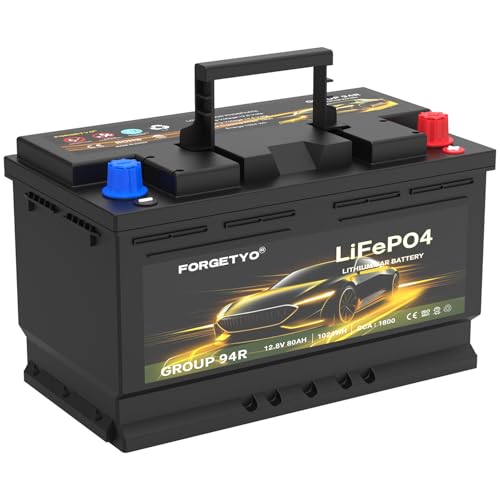
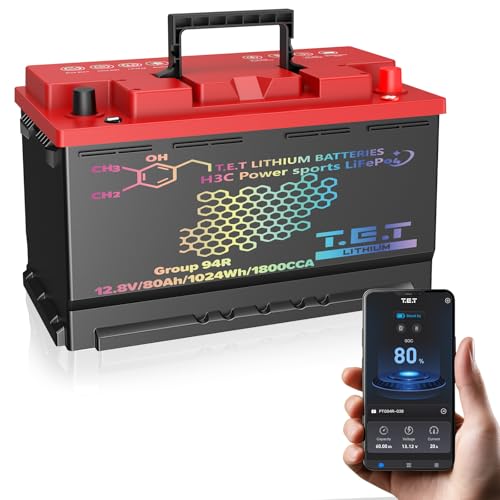
Live listings for the shortlist in this guide are pulled from Amazon below, so prices and availability are always current at the moment you look.


The buying checklist and the mistakes that cost owners twice
Bring the decision together in a fixed order and most errors become impossible. First, confirm the group: 94R, measured against the old case and the tray, with the H7 equivalence noted if the catalogue uses European codes. Second, confirm the terminal layout by eye, positive post on the side your cables expect, because the R is the whole point of this group number. Third, match chemistry to the factory specification, like-for-like or one step up, never a downgrade to save at the counter. Fourth, clear the maker’s minimum CCA and capacity figures with a sensible margin, then compare reserve capacity between the survivors. Fifth, read the date code and choose fresh stock, ideally made within the last six months. Sixth, confirm the vent port, the hold-down ledge, and the lid height against your installation. Seventh, check the warranty terms you can actually use: replacement period, where it can be claimed, and what proof you must keep.
The classic mistake heads the list because it is so understandable: buying group 94 instead of 94R. The cases match, the ratings may even match, and the error only appears when the cables will not reach or reach only under strain. Some owners force the fit by stretching leads or turning the battery around, which can place the positive post near grounded metal and strain every connection; the correct response is an exchange before installation, not ingenuity at the tray. Read the full group code aloud at the counter, letter included, and check it against the lid label before the battery leaves the store.
Trusting headline CCA alone runs second. A large CCA figure on a stale, light, or chemically mismatched battery is a number without a future, and it crowds out the reserve capacity, freshness, and chemistry checks that predict real service. The label is a panel of evidence, not a single score, and the buyers who read the whole panel are the ones who stop buying batteries every second winter.
Ignoring the date code runs third, and it is the easiest to fix because it costs nothing. Ask for the date, accept a short wait for fresh stock if the shelf unit is old, and remember that a battery begins ageing when it is made, not when it is fitted. Related errors follow the same pattern of skipped verification: assuming the previous owner’s battery was the correct specification, reusing a corroded clamp that cannot grip a new post, skipping battery registration on a vehicle that requires it, and discarding the receipt that the warranty will one day demand.
One more mistake deserves naming because it hides behind thrift: fitting the largest battery that can be forced into the space. A bigger case is not an upgrade when the tray, clamp, and hood line were designed around 315 mm. Capacity gains come from choosing a better battery within the correct group, not from defeating the fitment system that this entire guide is built on. The group code is a promise between the vehicle maker and the battery maker; keep your side of it and the rest of the purchase becomes straightforward comparison rather than repair of an avoidable error.
Keep the paperwork loop closed as deliberately as the fitment loop. Photograph the new battery’s label in place, showing the group code, the date code, and the terminal layout you verified, and file that photograph with the receipt and the old battery’s core return slip. If the vehicle needed battery registration, note the date it was performed and the chemistry and capacity values entered. These few records take two minutes to create on installation day, and they are the difference between a warranty claim handled at the counter in one visit and a dispute reconstructed from memory, bank statements, and guesswork years later, in winter, under time pressure.
This guide was put together from published maker documents, specification sheets, dimensional standards, and research notes gathered at a desk, rather than from bench handling of the batteries discussed, and its comparisons rest on those published figures and fitment records. As an Amazon Associate we earn from qualifying purchases.
Fit the right case, feed it the right charge, and a 94R battery repays the care by starting silently in the background of a thousand ordinary mornings.