Our Top Picks
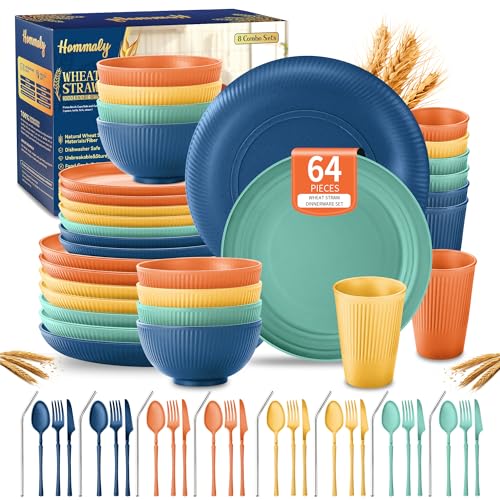
 36-Piece Reusable Wheat Straw Dinnerware Sets for 6Wheat Straw Dinnerware2 x 2 x 2 inches3.8 poundsCheck on Amazon


What's inside
- Why many families look beyond plastic
- BPA, phthalates, and how to read the concern calmly
- The material landscape at a glance
- What happens when each material hits a hard floor
- Dishwasher, microwave, and oven limits, material by material
- Divided plates and portion geometry by age
- Cup progression in non-plastic materials
- Weight, rim thickness, and grip for small hands
- Cutlery sizing and fork tine safety
- Set composition: how many pieces a family really needs
- Staining, odor retention, and care, material by material
- How to read a listing and spot a blend behind a headline
- Common buying mistakes
- Putting it together: choosing by household, not by headline
- Check prices on Amazon
- How this guide was researched and a note on links
As an Amazon Associate I earn from qualifying purchases. This post may contain affiliate links at no extra cost to you.
Choosing a dish set for a child sounds like a small errand until you stand in front of the options and realize how many different promises are competing for your attention. One set calls itself natural, another calls itself unbreakable, a third shows a smiling toddler holding a cup that looks simple enough until you read the fine print and learn the rim, the lid, and the handles are each made from something different. For parents who want to move away from plastic at the table, the real question is rarely whether an alternative exists. Alternatives are plentiful. The harder question is which material fits the way your family actually eats, washes up, drops things, reheats leftovers, and hands a bowl across a crowded kitchen on a weekday morning.
This guide works through that decision material by material, age by age, and piece by piece. It covers plates, bowls, cups, and cutlery together because a set is used together. A plate that performs beautifully means little if the matching cup tips every time a small hand reaches for it, and a bowl that survives every fall can still be the wrong choice if it cannot go in the microwave your household relies on for warming porridge. The aim here is not to declare one material correct for every child. The aim is to give you a clear picture of trade-offs so the set you bring home earns its place through months of breakfasts, snacks, spills, and second helpings.
Start with how your child eats today, not how you hope meals will look in a photograph. A baby beginning weaning needs shallow, stable pieces and tiny portions presented separately. A toddler needs edges that help food onto a spoon and a cup that does not punish an unsteady grip. A preschooler needs a plate that holds a fuller meal without mixing everything into a single pool, plus cutlery that begins to resemble adult tools while still fitting a smaller hand. Those needs shift quickly, often within the same year, so the most useful sets are the ones that remain sensible across at least two of those stages.
Why many families look beyond plastic
Plastic became common in children’s tableware for understandable reasons. It is light, cheap to shape into bright forms, quiet when it falls, and forgiving in a dishwasher. Moving away from it is not a judgment on parents who still use it, and it does not require treating every plastic object in the kitchen as a hazard. Many families make the change for a mix of practical and personal reasons. Some dislike how plastic holds the smell of old milk or tomato sauce. Some are tired of warped lids, scratched surfaces, and pieces that look tired after a season of hard use. Others prefer materials that have been used at tables for far longer and that can be repaired, recycled, or kept in service for a younger sibling.
BPA, phthalates, and how to read the concern calmly
Two terms appear in almost every conversation about plastic and food: BPA and phthalates. BPA, short for bisphenol A, has been used in certain hard plastics and in some linings, and regulators in many places have restricted its use in items such as baby bottles and infant feeding cups. Phthalates are a group of chemicals used to make some plastics more flexible, and their permitted uses in food-contact materials are also governed by rules that vary by place and by product type. Published regulatory material treats these as specific questions about specific materials and uses, not as a verdict on every object that contains any form of plastic.
That distinction matters for calm decision-making. A dish set made entirely from stainless steel, glass, or enamelled steel does not raise the same food-contact questions as a flexible plastic set, simply because the food touches a different surface. A silicone set raises different questions again, centered on whether the silicone is food-grade and how it was cured and filled. A bamboo fibre set raises the most subtle question of all, because the visible fibre is usually held together by a resin, and the food touches that composite surface rather than raw bamboo. Naming the actual surface that meets the food is the most useful habit you can build when you shop.
Avoid alarm in either direction. Claims that a product is free from a long list of substances tell you only about the substances named, and only if the claim covers the whole piece rather than one part of it. A cup body can be steel while its lid, seal, and straw are made from something else entirely. Equally, the absence of a fashionable label does not prove a piece is unsafe. Look for the material of each part, the age guidance, the care limits, and any food-contact information the maker publishes. If a listing cannot tell you what touches the food and the drink, that gap in information is itself a reason to pause.
The material landscape at a glance
Five families of material dominate non-plastic children’s tableware. Stainless steel offers strength, a clean surface, and a long service life, with almost no tolerance for the microwave. Food-grade silicone offers softness, grip, and a forgiving fall, with limits around sharp knives, strong odors, and very high heat. Bamboo fibre composites offer lightness and a matte, warm look, but they depend on a binder and they dislike prolonged soaking and high heat. Enamelware, which is a glass-like coating fused onto steel, offers a smooth and colorful surface that can chip when it strikes a hard edge. Glass, especially tempered glass, offers the most neutral surface of all, at the cost of weight and a real risk of breaking when dropped from table height onto tile or stone.
Stainless steel and what the numbers mean
Stainless steel is an alloy, and the familiar fractions describe its recipe. In 18/8 steel, the numbers refer to roughly eighteen percent chromium and eight percent nickel. In 18/10 steel, the nickel share rises to roughly ten percent. Chromium is the element that gives stainless steel its resistance to rust by forming a thin protective layer at the surface. Nickel adds further resistance to corrosion and contributes to a smoother, brighter finish. Both grades appear widely in food and drink products, and both are regarded as suitable food-contact surfaces when the steel is made and finished for that purpose.
For a child’s plate or bowl, the practical difference between 18/8 and 18/10 is modest rather than dramatic. The higher nickel grade may keep its shine a little longer and resist certain forms of corrosion a little better, especially with salty or acidic foods left sitting for long periods. The lower grade is not a poor relation; it is the workhorse of countless kitchens. What matters more in daily use is thickness, finishing, and construction. Thin steel can feel tinny, flex under a spoon, and dent at the rim. Heavier gauge steel feels calm in the hand, sits flat, and shrugs off the small knocks that would mark a thinner piece.
Some listings use a different naming system, such as 304 or 316. The 304 grade corresponds closely to the 18/8 family and is the grade most often used for tableware. The 316 grade adds molybdenum and is often chosen where corrosion resistance is a particular priority, though it is less common in children’s sets. A listing that names a grade clearly is giving you useful information. A listing that says only stainless, with no grade and no word about the interior surface of a cup or flask, is asking you to trust a headline. Prefer the maker who tells you the grade, the capacity, and whether any part of the set uses a different material for lids, seals, or handles.
Bamboo fibre composites and the binder question
Bamboo fibre tableware needs the most careful reading of any material in this guide. The plates and bowls look like pressed natural fibre, and bamboo fibre or bamboo powder is indeed a major ingredient. On its own, however, loose fibre cannot hold the shape of a plate or resist a bowl of soup. Makers therefore combine the fibre with a resin binder that hardens into a solid composite. In many products that binder has been melamine resin, the same broad family of material used in melamine tableware. Published food-contact guidance has drawn attention to this point because a product marketed on its bamboo content may still present a food-contact surface that is largely the resin system.
State the concern plainly and without exaggeration. The issue is not that a bamboo fibre plate is a trick or that every such product is unsuitable. The issue is transparency and correct use. Melamine-based tableware has long carried guidance against use in microwaves and against prolonged contact with very hot or highly acidic foods, because heat and acidity are the conditions under which migration from the material becomes a greater concern in regulatory assessments. If a bamboo fibre set uses a melamine binder, those same care limits deserve respect even if the front of the box talks only about bamboo.
Weight is the genuine attraction here. Bamboo fibre pieces are light, quiet, and pleasant to handle, and their matte surface keeps a plate from sliding as freely as polished steel can. They suit dry snacks, sandwiches, fruit, and room-temperature meals particularly well. They are less convincing as the single set for a child whose food is routinely reheated, served very hot, or left to soak in a sink until morning. Treat them as a considered choice for lighter duties rather than as a universal replacement for every plate in the cupboard.
Food-grade silicone and its limits
Silicone is a synthetic material built around silicon and oxygen, and food-grade silicone is made and tested for contact with food. It is flexible, soft at the edges, and remarkably tolerant of being dropped, squeezed, and folded into a bag. It does not rust, it does not chip, and it gives small hands a surface they can grip without the cup shooting out of a wet grasp. For trainer cups, snack bowls, and early weaning pieces, those qualities are hard to match.
Heat is where silicone needs precision rather than slogans. Many food-grade silicone products carry stated limits that allow use in ovens and microwaves within a specified range, and many tolerate dishwashers readily. Those limits vary by product, and fillers or added parts can lower them. A silicone plate with a rigid internal frame, a steel rim, or a suction base made from another material inherits the limits of its weakest part. Read the limit for the finished piece, not for silicone in the abstract, and keep sharp serrated knives away from the surface because cuts in silicone are permanent and can harbor residue.
Silicone has two everyday drawbacks. It can hold odors and flavors from strong foods, scented detergents, and dishwasher tablets, and it can attract lint and dust because of its slightly tacky surface. It also flexes, which is a virtue in a fall and a nuisance when a toddler carries a full bowl of soup with one hand. A flexible bowl that bends under its own contents will spill in a way a rigid steel or glass bowl will not. Choose silicone where softness helps, and choose a rigid material where carrying and cutting demand a firm base.
Enamelware and the reality of chipping
Enamelware begins as steel, or sometimes cast iron for heavier cookware, coated with a powdered glass mixture and fired until the coating fuses into a smooth, glossy surface. The result is colorful, easy to wipe, and pleasant to eat from, with a weight that feels substantial without reaching the heft of solid glass or stoneware. Enamel plates and mugs have served camps, schools, and family kitchens for generations, and their cheerful rims remain part of their appeal.
The weakness is written into the construction. The coating is glass-like, and glass-like surfaces chip when they strike tile, stone, concrete, or the edge of a steel sink at the wrong angle. A chip may be only cosmetic if it sits on the outside of a rim, but a chip on a food surface or a sharp exposed edge is a reason to retire the piece from a child’s use. Enamel also dislikes sudden extremes of temperature, such as a cold plate placed straight onto fierce heat, and it should not be treated as ovenware unless the maker states that the specific piece is made for that purpose.
For children, enamel suits the preschool years better than the throwing years. An older child who can carry a plate with two hands and place it down rather than drop it will get good service from enamel, and the smooth surface resists staining better than bamboo fibre or silicone. A toddler who sweeps everything off a highchair tray will produce chips at a rate that makes the set look old within weeks. Consider also that enamel over steel cannot go in a microwave, because the metal core rules that out regardless of how ceramic the surface appears.
Glass and tempered glass for older children
Glass is the most neutral eating surface in this guide. It does not hold odors, it does not stain in normal use, it does not flavor food, and it lets a child see layers of yogurt, fruit, or cereal in a way that can make a meal more inviting. Plain glass is also easy to inspect. You can see whether it is truly clean, whether a crack has started, and whether residue remains after washing. Those are humble virtues, but they matter across hundreds of uses.
Tempered glass is glass that has been treated to improve its strength and to change how it breaks, tending to crumble into smaller, less sharp pieces rather than long shards. Tempering improves the odds; it does not make a plate unbreakable. A tempered bowl dropped from a highchair onto stone can still break, and any broken glass around a child demands a careful clear-up that checks the wide area small fragments can reach. For that reason glass belongs, for most families, to older children who sit at a table, stay seated through a meal, and can be trusted not to carry a glass dish wandering around the house.
best point and shoot cameras for kids
What happens when each material hits a hard floor
Every children’s set will fall. It will fall from a highchair tray, from a low table, from small hands crossing a kitchen, and from the edge of a sink during washing. Picture the same fall onto four floors – carpet, wood, tile, and stone – and the materials separate quickly. Carpet forgives almost everything. Wood forgives most things and may itself take a dent from heavy steel or glass. Tile and stone are the honest examiners, and they are common exactly where children eat.
Stainless steel survives the fall and announces it loudly. Expect noise, a bounce, and occasionally a small dent or a rim that no longer sits perfectly flat if the piece is thin. Heavy gauge steel resists denting far better, and a dent that does not create a sharp edge or a rocking base is usually cosmetic. Steel will not crack, will not shed fragments, and can be picked up and washed and used at the next meal. For households where dropping is a daily event, that continuity is a powerful argument.
Silicone survives quietly and completely, which is why it dominates the earliest stage. It bounces without drama and without damage to itself or the floor. Bamboo fibre composites usually survive a single fall from table height, but repeated impacts can crack a rim or split an edge, and a crack in a composite is not repairable; moisture and food enter it, and the piece should be retired. Enamel survives the structure of the fall – the steel core does not break – but the coating may chip at the point of impact, so the piece survives in a diminished form. Glass is the only material in this guide where a routine fall onto a hard floor can end the piece entirely and create a hazard that must be cleared before anyone walks barefoot nearby.
Dishwasher, microwave, and oven limits, material by material
Stainless steel belongs in the dishwasher in most cases, though hard water can leave spots and strong detergents can dull a polished finish over time. It never belongs in a microwave, where metal can cause arcing and damage the appliance. In an oven, plain steel tableware is generally tolerant of heat, but children’s pieces are rarely made or warranted as ovenware, and handles, coatings, or joined parts may not share the tolerance of the body. Treat a steel plate as a serving piece rather than a cooking vessel unless the maker states otherwise.
Silicone is the most flexible citizen of the three appliances. Most food-grade silicone pieces tolerate a dishwasher, a microwave, and an oven within their stated temperature range. The cautions are practical. Place silicone where it will not flop onto a heating element, expect it to pick up the scent of strong dishwasher products, and support a full silicone dish from below when you move it hot, because the material gives no rigid help. If a silicone piece contains a rigid insert or a metal rim, the limits of that part govern the whole.
Bamboo fibre composites usually accept a dishwasher on a mild cycle and a top rack, though makers differ and some advise hand washing to preserve the surface. They should stay out of the microwave and the oven when a melamine binder is present, and even where a different binder is claimed, follow the maker’s heat limit rather than a general hope. Prolonged soaking is their other enemy. A composite bowl left full of water overnight can swell at a damaged edge and begin to degrade, so wash, rinse, and dry rather than leaving pieces to sit in the sink.
Enamelware washes well by hand and often tolerates a dishwasher, though repeated machine washing can dull the gloss and hasten damage at any existing chip. It cannot go in a microwave because of its metal core. Oven use depends entirely on the specific piece and its stated limit; some enamel dishes are made for oven heat, many children’s pieces are not presented that way, and a chipped piece should not be heated in an oven at all. Glass is the most straightforward after silicone: most tempered and borosilicate tableware tolerates a dishwasher and a microwave, oven use follows the stated limit for the piece, and sudden temperature shocks should be avoided by letting a cold dish warm a little before it meets strong heat.
Cups complicate every rule because cups have parts. A steel cup with a silicone lid is dishwasher friendly only in the sense that both parts can be washed, perhaps on different racks and perhaps with the seal removed. A glass cup with a bamboo lid brings a part that dislikes soaking into a set that otherwise washes easily. When you compare sets, list the parts – body, lid, seal, straw, handles, suction base – and check the rule for each. The set you want is the set whose parts all fit the routine you will actually follow on a tired evening.
Divided plates and portion geometry by age
Weaning: small, shallow, and separate
In the earliest stage, portions are tiny and textures are the story. A baby meeting food for the first few months needs spoonfuls, not servings, and benefits from seeing two or three foods kept apart so flavors stay distinct and a caregiver can watch which texture goes down well. Shallow sections work better than deep wells because a short spoon and an inexperienced hand need a low wall to scoop against. A very large divided plate at this stage mostly spreads a small amount of food into a thin, cooling layer and makes the meal look lost.
Toddler: deeper walls and a forgiving scoop edge
Toddlers eat more, spill more, and insist on doing it themselves. The ideal plate for this stage has deeper sections than a weaning plate, a wall high enough to stop peas from escaping yet low enough for a spoon to climb, and one larger section for the main food with two smaller sections for sides. Rounded internal corners help because food trapped in a sharp corner defeats a toddler’s spoon and ends up smeared by fingers. A plate with slightly sloped walls turns the whole section into a scoop aid.
Preschool: fuller meals and fewer walls
By preschool age, many children are ready for a plate that looks more like a family plate, with one large area and perhaps a single divider or a small separate bowl for sauce, soup, or yogurt. Meals grow, sandwiches and wraps need flat space that small sections cannot provide, and children begin to have opinions about foods touching that may run in either direction. Some still want strict separation. Others want to mix, build, and dip freely. A set that includes both a divided plate and a flat plate covers that swing without forcing a second purchase a few months later.
Cup progression in non-plastic materials
Learning to drink follows a progression that pediatric feeding guidance describes in broad stages: from supported sips of an open cup, through trainer cups that help a child manage flow, toward independent open cups and, for many children, straw cups that build a different pattern of mouth movement. Non-plastic materials can serve every stage, but not every material serves every stage equally well, and the lid and straw often decide the question more than the cup body does.
Two-handled trainer cups
Two handles let a baby or young toddler lift a cup with both hands, spread the load, and aim the rim with more control than a single handle allows. In steel, a two-handled trainer cup is sturdy and keeps a drink cool to hold if it is double-walled, but it will be heavier when full and loud when it falls. In silicone, the same design is lighter, softer, and easier to grip with wet hands, though the flexibility means a firm squeeze can push liquid up and out. Look for handles wide enough for fingers to wrap without the knuckles jamming against the cup body, and for a rim that is smooth all the way around with no seam at the point where lips will land.
Some trainer cups include a lid to slow the flow while a child learns. Read the parts list honestly. A steel or silicone body paired with a lid and seal made from another material is a mixed set, and that may be perfectly acceptable to you, but you should know it before you buy rather than discover it at the sink. Check how the lid removes, whether the seal comes out for washing, and whether milk can hide in a groove. A trainer cup that cannot be taken fully apart for cleaning will eventually smell of old milk no matter what the body is made from.
Open cups: the skill that matters most
An open cup is the destination skill, and small, sturdy open cups in steel, silicone, enamel, or glass for older children all have a place. Size is the secret. A small cup holding a modest amount limits the size of any spill while a child learns to tilt slowly, and it lets the child finish a drink and ask for more, which builds both control and confidence. A large cup filled high is heavy, tips easily, and turns a small error into a full change of clothes.
Rim shape shapes the lesson. A thin, smooth rim gives clear feedback and lets liquid flow in a controlled stream. A very thick or rolled rim can cause dribbling because a young child cannot seal lips around it as easily. Silicone rims are forgiving if a cup meets teeth or a table edge, steel rims are precise and durable, and glass rims give the clearest feel of all for an older child. Whatever the material, fill a learning cup only partway, place it within easy reach rather than at the far side of a plate, and expect a period of wet sleeves as the price of a skill that will serve at every table.
Straw cups and travel cups
Straw cups suit travel, childcare bags, and children who drink better with a straw, and they appear in steel and silicone bodies with a range of straw designs. A silicone straw is soft and chewable, which some children love and which also means it will eventually show bite damage and need replacement. A steel straw is durable and easy to clean with a narrow brush, but it is rigid, and many parents prefer a soft straw for a young child who moves around while drinking. Weighted straws that follow the liquid as a cup tilts add parts that must come apart for washing.
Leak claims deserve skepticism in every material. A cup that seals when upright may still weep from the straw when it lies on its side in a warm bag, and a valve that stops leaks can make a child work hard for every sip. Match the cup to its job. For the table, an open cup teaches most and cleans easiest. For a bag, accept a lid and valve, then check that you can dismantle, wash, dry, and reassemble the whole system without a struggle, because a travel cup that stays damp inside its valve will not stay fresh.
Weight, rim thickness, and grip for small hands
Adults judge a dish by looking at it. Children judge it by lifting it, often one-handed, often while turning to say something important about a dinosaur. Weight therefore needs to be judged full, not empty. A steel bowl that feels light in a shop display becomes a different object when it holds soup, and a glass cup that seems manageable empty can become a two-handed effort when filled to the top. Before you commit to a full set, fill one piece with water to the level you would serve and hand it to your child at a table where a spill costs nothing.
Rim thickness affects eating as well as drinking. A plate rim thick enough for fingers to grip helps a child carry and hold a plate steady while the other hand works a spoon. A bowl rim that is too thin can feel sharp under a thumb when the bowl is hot or full, while a rim that is too thick makes it hard to scrape the last food cleanly. For cups, hold the rim to your own lip and feel for seams, bumps, or a rough patch left by manufacture. A child will find any such flaw daily and may start refusing a cup for a reason that has nothing to do with the drink.
Grip is a system of surface, shape, and dryness. Silicone offers natural grip even with damp hands, though that grip fades when the surface is greasy. Polished steel can be slippery with wet or buttery fingers, while brushed steel and steel with a slightly shaped waist give a hand more to hold. Enamel sits between the two, smooth but with enough body to hold confidently. Handles help only when they fit. A handle loop too small for two fingers forces a pinch grip that fails under load, and a handle placed too close to a hot bowl body invites knuckles against heat. Let the child hold the actual shape whenever you can, and watch whether the grip looks relaxed or strained.
Cutlery sizing and fork tine safety
Children’s cutlery fails in two opposite ways. One design is so small and blunt that it cannot manage real food, and the child gives up and returns to fingers. The other is a shrunken adult set with a long handle, a narrow neck, and fork points that deserve more respect than a toddler can give them. Good children’s cutlery sits between those extremes, sized for a small hand and a small mouth while still being a working tool.
Handles come first. A young toddler grips a spoon in a fist, so a short, broad handle that fills the palm works better than a thin adult-style shaft. As children grow and move toward a more refined grip, a slightly longer and slimmer handle lets fingers find their adult positions. Sets that include two sizes, or that can be supplemented later by the next size from the same maker, ease that transition. In steel, check that handle edges are rounded and that the joint between handle and bowl of the spoon has no rough ridge. In silicone-handled designs, check what the core is made from and whether the handle covering can separate or trap water at the joint.
Spoon bowl shape matters more than decoration. A shallow, oval bowl suits soups and yogurt for a beginner, while a deeper bowl helps an older child carry peas and cereal without shedding them on the way. A spoon that is too wide will not fit comfortably in a small mouth and will scrape teeth, which can put a child off using it at all. Knives in children’s sets should be age-appropriate in edge and purpose: a young child’s knife is for spreading and for cutting soft foods with supervision, with a blunt or gently serrated edge, while sharper table knives belong to older children who have learned to cut with a fork holding the food steady.
Fork tines deserve a close look. For the youngest users, tines should be short, rounded at the tips, and spaced so they can spear soft food without posing a poking hazard when a child waves, falls, or pushes a fork toward a face. Rounded tips do not make a fork a toy; any fork should be used seated at a table, and walking with cutlery in hand or mouth is a habit to stop early in every material. As children grow, slightly longer and more defined tines make real meals easier, especially with foods such as pasta, meat, and firm vegetables. Inspect tines for even alignment and smooth finishing, and retire a fork with a bent or roughened tip rather than trying to bend it back at the table.
Set composition: how many pieces a family really needs
Sets are sold in tidy multiples that may or may not match a household’s rhythm. Count your real meals and washing intervals before you count pieces. A child who eats three meals and two snacks at home, in a household that runs a dishwasher every second day, needs more bowls than a child who eats lunch at childcare and whose dishes are washed each evening. Running short leads to hurried hand washing of a single bowl at every meal. Buying far too much leads to a cupboard of pieces that never rotate and a set that feels stale rather than generous.
A workable starting pattern for one child is two everyday plates, three bowls, two cups, and two full cutlery sets, with the third bowl earning its place because bowls serve every meal and most snacks. For two children close in age, doubling that pattern usually works better than buying one large shared set with pieces in a single color, because siblings often care intensely about whose cup is whose. Distinct colors or finishes per child can prevent more arguments than any other feature in this guide, provided the color comes from the material or a durable finish rather than a surface print that will wear where lips and spoons work.
Spare bowls deserve special emphasis. Bowls hold porridge in the morning, fruit at midday, soup in the evening, and the small portion of leftovers that will be offered again tomorrow. They are also the piece most often left behind at a grandparent’s house or in a childcare bag. A set with generous bowls and a single perfect plate is better balanced than a set with several plates and one bowl, however attractive the plates look in a row. When you compare value between sets, count bowls and cups first, then look at plates, then treat extras such as snack pots and lids as a bonus rather than the core.
Matching pieces across brands is possible if you shop by measurement rather than by hope. Record the diameter of your plates, the height and capacity of your bowls and cups, and the length of your cutlery. Steel from one maker will sit happily beside steel from another if the finish is similar, and glass mixes easily with almost everything. Enamel colors and bamboo fibre tones are harder to match across brands because each maker’s palette and surface differ, so a replacement enamel plate from another maker may look like a cousin rather than a sibling. If a uniform table matters to you, favor a maker who sells open stock – individual pieces available on their own – so a lost cup or a cracked plate can be replaced without buying a whole new set.
Staining, odor retention, and care, material by material
Glass recovers best. It releases stains and odors with ordinary washing and shows you plainly whether it is clean. Enamel is close behind while its coating is intact, though a stain can settle into a chip or a hairline crack and resist cleaning from then on. Stainless steel resists staining well, with tea and hard water leaving the most common marks, and it holds odors only lightly; a thorough wash and full drying usually restore it. Persistent smells in a steel cup usually trace to a lid, seal, or straw rather than the steel itself, which is a useful diagnostic when a set begins to smell stale.
Silicone is the material most likely to keep a smell. Strong foods, scented washing products, and sealed storage while still damp can leave a flavor that transfers faintly to the next drink of plain water, which children notice quickly. Air drying fully, storing pieces unsealed, and washing promptly after strong foods all help, and makers’ care guidance sometimes includes methods for refreshing the surface. Bamboo fibre composites sit in the middle: they can take a stain from deeply colored foods, especially once the surface has been scratched by cutlery, and they should be dried promptly rather than left wet, because their composite structure dislikes lasting moisture at any damaged point.
Daily care habits extend the life of every material. Wash pieces sooner rather than later, dry steel and enamel rather than leaving them to drip in a damp rack for days, and store cups open so air can reach the inside. Avoid abrasive scouring on enamel and on polished steel, where scratches dull the surface and give future stains a foothold. Use a narrow brush for straws and valves, pull seals out regularly, and let every part dry separately before reassembly. None of this is elaborate, but it is regular, and a set whose parts demand more disassembly than your routine can bear will quietly become the set nobody reaches for.
How to read a listing and spot a blend behind a headline
A headline names the material a maker most wants you to notice. The full listing, read patiently, tells you what the set is actually made from, part by part. Train yourself to look for the second material, the unnamed part, and the care limit that reveals more than the headline does. A plate described with a natural fibre headline whose care instructions forbid the microwave and mention a resin is telling you it is a composite. A steel cup whose lid, seal, and straw materials are listed separately is giving you an honest mixed picture. A silicone set whose stated heat limit is far below the range usually claimed for silicone may contain fillers or rigid parts that set the lower figure.
Work through a simple set of checks before you buy. First, find the material of the food-contact surface for each piece, not just the main body. Second, find the grade or type where that applies: the grade of steel, the kind of glass, the binder in a fibre composite. Third, list every part and its material, including lids, seals, straws, handles, suction bases, and decorative sleeves. Fourth, copy out the care limits for dishwasher, microwave, oven, and maximum temperature, and notice where the limits differ between parts. Fifth, look for dimensions, capacity, and weight in real numbers rather than adjectives such as large, generous, or toddler-sized.
Certain phrases should slow you down. Eco or natural used without a material breakdown is a mood, not a specification. Bamboo used for a product that is clearly a hard moulded plate, with no mention of a binder, leaves the central question unanswered. Unbreakable applied to enamel or tempered glass overstates what either material promises. Food safe or food grade used without any further detail is a starting point for questions rather than an answer to them. None of these phrases proves a product is poor; each one marks a place where you need a fact the headline has not supplied.
Common buying mistakes
The most common mistake is buying for the stage a child will reach next year while the child struggles with the set today. A large plate, a tall cup, and long cutlery bought to grow into will be set aside, and a second, smaller set will be bought in a hurry. Buy for the current stage with one eye on the next, favoring sets whose individual pieces can be added to, rather than a single grand set pitched at an older child.
The second mistake is choosing a material that conflicts with the household’s heating routine. Families who reheat on the plate and then buy steel, enamel, or melamine-bound fibre spend months decanting food into a second dish at every meal. Families who put everything in a dishwasher and then buy solid wood or delicate fibre composites spend those months washing by hand and resenting it. Name your routine honestly before you shop, including who washes up and how tired that person is at the end of the day.
A third mistake is trusting suction as a solution rather than a help. Suction bases vary with table surface, wear, and how clean the base and table are at the moment of use. A child who wants a plate off the table will eventually defeat any base, and a set bought only for its suction may disappoint in every other respect once that phase passes. Judge the plate itself – its weight, walls, and sections – and treat suction as a temporary bonus.
Other mistakes are smaller but persistent. Buying a set with no spare bowls. Choosing white or pale fibre composites for a child whose favorite foods stain deeply. Forgetting to check whether lids and seals are sold separately when they wear out. Assuming a travel cup that fits a bag will also fit a car seat holder or a pram tray. Leaving a new set unwashed and unused until a birthday, only to discover a rim flaw when no time remains to exchange it. Each is avoidable with a few minutes of checking at the moment of purchase and a first wash and inspection as soon as a set arrives.
Finally, many families buy a complete matching set when a mixed approach would serve better. Steel plates, silicone weaning bowls, a steel trainer cup, and glass for an older child at the table is not a failure of consistency; it is a recognition that each stage and each job favors a different material. A table does not need to match to work well. It needs pieces that suit the child, the food, the floor, and the washing routine in front of you.
Putting it together: choosing by household, not by headline
If your floors are hard, your child is young, and dropping is constant, steel and silicone carry the argument. Choose heavier gauge steel for plates and bowls, silicone where softness and grip help most, and expect noise as the trade for near-total continuity of service. If your child sits reliably at a table and your household values a surface that never holds a smell, glass enters the conversation for the older child, with enamel as a colorful middle path for a child who can place a plate down gently.
If reheating on the plate is central to your routine, silicone and suitable glass deserve priority, and every other material must be judged against the extra washing and decanting it will impose. If meals are mostly served fresh and at room temperature or gently warm, bamboo fibre composites can play a pleasant part for dry and light foods, provided the binder question has been answered to your satisfaction and the heat limits suit your use. If you travel often with a set, weight, nesting, and lids that dismantle easily will matter more than any single material virtue.
Whichever direction you take, run a short set of checks on the actual pieces when they arrive, in your own kitchen, before the first real meal depends on them. Fill the cup and carry it. Drop nothing on purpose, but set each piece down firmly on your table and listen and look for rocking or a rim that does not sit flat. Wash every part, take lids and seals apart, dry them, and put them back together. Scoop thick food with the spoon, spear soft food with the fork, and cut something gentle with the knife if one is included. Read the care limits one more time with the pieces in your hand. A set that passes those ordinary checks in your own home has told you more than any headline could.
Check prices on Amazon
Live listings for the shortlist in this guide are pulled from Amazon below, so prices and availability are always current at the moment you look.


How this guide was researched and a note on links
Everything in this guide comes from published material, not from handling the dishes themselves. The material comparisons, care limits, and safety points were drawn from manufacturer specification pages, food-contact material documentation, and pediatric feeding guidance, and they are presented as general information to help you question a specific listing rather than as a verdict on any single product. Where guidance varies by maker or by place, the guide says so and directs you back to the specification for the exact piece you are considering. As an Amazon Associate we earn from qualifying purchases. That relationship does not change the trade-offs described above, and it is one more reason to read each listing on its own facts – material, grade, parts, dimensions, and care limits – before deciding.
May the next family meal at your table be a little calmer, with a cup that stays upright, a plate that helps rather than hinders, and a child who is proud to carry both to the sink when the last bite is gone.