Our Top Picks
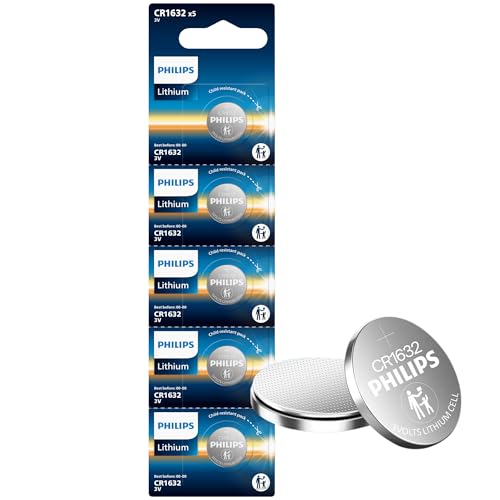
 Panasonic CR1632 3.0 Volt Long Lasting Lithium Coin4 Count (Pack of 1)0.62 x 0.62 x 0.12 inches0 poundsCheck on Amazon



What's inside
- What the CR1632 code actually means
- Where this size is used, and where it is not
- CR1632 compared with CR2032, CR2025, and CR2016
- Cross-reference codes and the BR1632 difference
- How to read a coin cell datasheet
- Brand differences without brand mythology
- Freshness, date codes, and storage
- Pack formats and what they suit
- Verifying fit and condition before and after fitting
- Rechargeable neighbours, and why they stay neighbours
- Disposal and recycling
- Buying criteria, brought together
- Common mistakes and quiet myths
- A short fitting routine to keep
- Check prices on Amazon
- Seasonal patterns and spare planning
As an Amazon Associate I earn from qualifying purchases. This post may contain affiliate links at no extra cost to you.
The CR1632 is a small battery with an outsized talent for confusion. It looks almost identical to several other coin cells on a shop shelf, it shares a voltage with cells that are wider, thinner, thicker, and built for entirely different holders, and it often fails at the least convenient moment, inside a car key fob in a cold car park or inside a glucose meter before breakfast. Yet the code stamped on its face tells you nearly everything about its size and chemistry, and the datasheets published by its makers tell you the rest, if you know how to read them. This guide works through that code letter by letter and number by number, explains where this cell belongs and where it does not, compares it honestly with the sizes it gets mixed up with, and sets out the buying criteria that matter: verified capacity at a stated load, a readable date code, a pack format that suits the device, and packaging that keeps loose cells away from children.
Coin cells reward precision because their holders leave almost no room for error. A cell that is half a millimetre too thick can bend a contact spring. A cell that is too thin can sit loose, lose contact when a fob is knocked, and produce the intermittent faults that owners often blame on the device itself. A cell with the right diameter and the wrong chemistry can deliver a voltage curve that a meter reads poorly near the end of life. None of these problems requires specialist knowledge to avoid. They require reading the engraving on the old cell, matching the full code rather than part of it, and treating brand claims as datasheet statements that can be checked rather than as slogans.
What the CR1632 code actually means
The name follows the naming system of the International Electrotechnical Commission, usually shortened to IEC, and it is a compact description rather than a marketing label. The first letter, C, identifies the electrochemical system: a lithium cell with a manganese dioxide positive electrode, the chemistry most makers shorten in their documents to lithium manganese dioxide. The second letter, R, says the cell is round. Together, CR tells a reader that the flat disc in front of them is a round lithium manganese dioxide cell, not an alkaline button cell, not a silver oxide watch cell, and not a rechargeable lithium cell. That distinction matters because each of those families has a different nominal voltage and a different discharge curve.
The numbers carry the dimensions. The first two digits, 16, give the diameter in millimetres, so a CR1632 measures about 16 millimetres across. The last two digits, 32, give the height in tenths of a millimetre, so the cell is 3.2 millimetres thick. Read that way, the whole coin cell family becomes legible at a glance. A CR2032 is 20 millimetres wide and 3.2 millimetres thick. A CR2016 is the same width and only 1.6 millimetres thick. A CR1220 is 12.5 millimetres wide and 2.0 millimetres thick. Once you see the pattern, a shelf of similar silver discs stops being a guessing game, and the code on the old cell becomes a measurement you can confirm with a ruler or a caliper.
Nominal output is 3 volts. The word nominal deserves attention, because it describes a reference value rather than a promise that the cell sits at exactly 3.0 volts from first use to last. A fresh lithium manganese dioxide coin cell typically reads a little above 3 volts with no load connected, then settles near its nominal level under a working load, and falls more steeply near the end of its stored energy. Device makers design around that shape. Low battery warnings in meters and fobs are set with the falling part of the curve in mind, which is why a cell can still light a small lamp yet already be too depleted for a radio transmitter that needs short bursts of higher current.
Published capacity for this size most often falls in a band around 120 to 140 milliamp hours, depending on the maker, the exact internal construction, and the drain at which the rating was measured. That last condition is not fine print to skip. Capacity is energy delivered under stated conditions, and a rating measured at a gentle continuous drain will not predict life in a device that sleeps for hours and then demands a pulse. Later sections return to datasheet reading in detail, but the early lesson is simple: compare capacity figures only when the load, the end voltage, and the temperature behind them are also comparable.
Where this size is used, and where it is not
Certain car key fobs and garage door remotes specify the CR1632, and the fit makes sense once you picture the inside of a fob. The maker needs a slim power source that leaves room for a circuit board, buttons, and a sealed shell that can survive pockets and drops. A 16 millimetre cell leaves more board area free than a 20 millimetre cell would, while 3.2 millimetres of thickness stores more energy than the thinner members of the 16 millimetre family. Remote designers also value the low self-discharge of lithium chemistry, because a spare fob may sit in a drawer for a year and still be expected to work on the first press.
Some wristwatches use the size, particularly models with extra functions that draw more than a basic time-only movement. A watch that adds a backlight, an alarm, or a sensor places brief extra demands on its cell, and designers pick a size that balances case thickness against service interval. Not every watch takes this cell, and many take smaller silver oxide cells instead, so the manual or the engraving on the old cell remains the authority. Guessing from the diameter of the case back alone is a reliable way to order the wrong cell.
Glucose meters and other small medical devices form another important group. Meters need a stable voltage reference, a predictable low battery warning, and a cell that tolerates long idle periods between readings. Digital thermometers, some blood pressure accessories, and small diagnostic devices use coin cells for the same reasons. In medical use, the cost of a weak cell is not mere annoyance. A reading session that fails midway, or a device that resets during use, wastes strips, time, and patience, so makers of these devices tend to name the exact cell code in their manuals and to warn against substitutes that merely fit the holder.
Calculators, bicycle computers, heart rate monitor straps, small LED novelty lights, electronic scales accessories, and a long tail of compact gadgets also appear on fitment lists. A bicycle computer lives outdoors, sees cold mornings, and must keep its settings while idle for weeks. A heart rate strap wakes for a training session, transmits in bursts, then sleeps again. A calculator may sip current so slowly that shelf ageing matters more than working drain. The shared thread is modest energy demand in a thin space, with long standby periods. That profile suits lithium coin cells well.
Just as useful is knowing where the size does not belong. The familiar motherboard clock cell in desktop computers is the CR2032, not this size, and the two are not interchangeable despite sharing voltage and thickness. A CR1632 placed in a CR2032 holder is too narrow, can shift sideways, and may lose contact or short against holder parts that were shaped for a wider disc. Likewise, many fobs that look similar across model years take different cells, so a fob for one trim level cannot be assumed to match another. Fitment follows the manual and the old cell, never family resemblance.
CR1632 compared with CR2032, CR2025, and CR2016
The CR2032 comparison causes the most trouble, so it deserves the clearest treatment. Both cells are 3 volt lithium manganese dioxide cells and both are 3.2 millimetres thick. The difference is diameter and, with it, capacity and holder geometry. The CR2032 is 20 millimetres wide and carries a notably larger store of energy, commonly rated around or above 200 milliamp hours in maker documents. The CR1632 is 16 millimetres wide and rated lower, in the band described earlier. Same voltage does not mean same cell. A wider cell will not enter a narrower holder without force, and a narrower cell in a wider holder has room to move, tilt, and break contact. Voltage is only one line of the specification.
The CR2025 sits between them in a different way. It is 20 millimetres wide like the CR2032 but only 2.5 millimetres thick, so it stores less energy than its thicker sibling. Owners sometimes discover that a CR2025 will sit in a CR2032 holder and appear to work, because the diameter matches and the spring contact can sometimes reach the thinner cell. That apparent success hides weaker contact pressure and a shorter service life, and it can turn into intermittent faults as the holder ages. The lesson transfers directly to the 16 millimetre family: close enough in one dimension is not close enough.
The CR2016 is thinner still at 1.6 millimetres, again at 20 millimetres wide. Stacking or shimming thin cells to imitate a thicker one is a practice that maker documents and device manuals consistently discourage. Two cells in a holder built for one change the voltage if they connect in series, create uneven contact surfaces, and raise the risk of leakage or a short. A single correct cell is cheaper in every sense that matters than a clever workaround, even before counting the device that the workaround may damage.
Within its own diameter, the CR1632 also has thinner relatives, and the same logic applies in reverse. If a holder was built for a 3.2 millimetre cell, a thinner 16 millimetre cell may rattle, sit below the contact, or need the contact bent down to reach it. Bending contacts is poor practice. Holder springs are formed to give a set pressure at a set cell height, and each manual bend work-hardens the metal a little and moves the spring away from its designed geometry. After a few bends, the holder that once gripped firmly becomes the source of the fault the owner was trying to fix.
Thickness governs contact pressure for a physical reason worth stating plainly. Most coin cell holders hold the cell between a flat negative contact below and a spring finger or sprung plate above, or the reverse arrangement in some designs. The spring is deflected by an amount set by the cell thickness. Too little deflection and the contact force is low, so a thin film of oxidation or a small knock can open the circuit. Too much deflection, from a thicker cell forced in, and the spring can take a permanent set, the holder side walls can crack, and the device shell may not close on its seals. Water resistance in a watch or fob often depends on that shell closing exactly as designed.
Forcing a thicker cell deserves a direct warning because the damage is usually quiet. The shell may close with extra effort, the device may work on the desk, and the harm only shows later as a distorted gasket, a cracked holder lug, or a spring that no longer holds the correct cell firmly either. If a new cell needs real force to fit, stop and read its code again. A correct CR1632 slides or clicks into its holder with modest, even pressure. Resistance is information, and in this case it is telling you the cell or the holder is not what you assumed.
Cross-reference codes and the BR1632 difference
The same physical cell appears under several codes, and a short cross-reference list prevents both confusion and double ordering. DL1632 is a Duracell designation for the same size and chemistry. ECR1632 is an Energizer designation for the same. Other makers and retailers use their own prefixes or house codes, and reputable cross-reference charts from the brands themselves are the safest way to confirm an unfamiliar one. The pattern to check is always the same: diameter, thickness, chemistry, and nominal voltage must all match, not merely the digits in the middle of the code.
One near neighbour must not be treated as an equivalent. The BR1632 shares the dimensions but uses a different lithium chemistry, lithium carbon monofluoride, described in maker literature as a system valued for stability and performance at higher temperatures, with a different discharge curve shape from the manganese dioxide family. A BR cell tends to hold its voltage in a flatter pattern for much of its life and then fall, and its behaviour under pulse loads differs as well. Some industrial and memory backup roles specify BR cells deliberately. A device whose manual names CR1632 expects the CR curve, its pulse behaviour, and its end of life signal. Treat BR1632 as a different product that happens to share a footprint, not as a premium version of the same cell.
Rechargeable lookalikes raise a similar point. Rechargeable lithium coin cells exist in related sizes under different code families, with different nominal voltages that can sit higher than 3 volts. Putting a higher voltage cell into a device designed for a primary 3 volt cell can stress components, and putting a primary cell into a device that tries to charge it is worse. The CR prefix itself is part of the safeguard: it marks a primary, non-rechargeable lithium manganese dioxide cell. If a device needs a rechargeable coin cell, its manual will name a different code, and that code should be followed exactly.
Readers who keep several devices at home often find it helps to keep a simple written list, one line per device, with the exact cell code from the manual and the date the cell was last changed. That habit removes most shelf confusion, because the list can be checked before ordering rather than after opening a device. It also reveals how many distinct sizes a household actually uses, which is usually more than expected and is a good argument for ordering by code rather than by memory of shape.
How to read a coin cell datasheet
A datasheet is the document where a maker states, in numbers that can be compared, what a cell is expected to do. Energizer, Panasonic, Duracell, Renata, Murata, and Maxell all publish specification documents for their coin cells, and while the layouts differ, the core entries repeat: nominal voltage, a capacity figure tied to a stated load and end voltage, recommended continuous and pulse current limits, an operating temperature range, dimensions with tolerances, and weight. Learning to find those entries turns brand comparison from guesswork into reading.
Start with the capacity line and look for its conditions. A typical statement gives capacity when the cell is discharged through a specified resistance or at a specified current down to a specified end voltage, often 2.0 volts, at room temperature. Change any of those conditions and the delivered capacity changes. A heavier load usually yields less total energy from a coin cell because internal resistance wastes a larger share as heat and pulls the voltage down sooner. A colder temperature has a similar effect. Two brands quoting different headline capacities may simply be quoting at different loads, and the honest comparison is the one that aligns the conditions first.
Continuous drain and pulse drain are separate ideas, and key fobs live on the difference. Continuous drain is the steady current a cell can supply over a long period. Pulse drain is the short burst it can supply for a transmission, a backlight, or an alarm without its voltage sagging below what the device needs. Maker documents often show pulse discharge curves or state a pulse capability alongside the continuous rating. A cell that performs admirably in a clock-like role can disappoint in a fob if its internal resistance is higher, because the burst pulls its voltage down for the fraction of a second that matters most.
That is the core reason two cells with the same code can behave differently in different devices. In a glucose meter or a thermometer, the load is modest and fairly steady during a reading, and capacity at a gentle drain predicts life well. In a fob or a heart rate strap, short pulses dominate, internal resistance matters more, and a brand whose datasheet shows stronger pulse behaviour may give a longer useful life even with a similar headline capacity. Neither result makes the other cell dishonest. It means the application selects which datasheet line deserves the most weight.
Temperature range is the third entry to check. Published ranges for lithium coin cells are wide, often spanning well below freezing to well above room temperature, but delivered capacity at the cold end is lower and pulse voltage sag is larger. A fob that lives on a hook by an outside door in winter, or a bicycle computer left on a bike in an unheated shed, works its cell harder than the same device kept indoors. If a device falters only on cold mornings and recovers indoors, the cell is a prime suspect, and a fresh cell from a maker whose low temperature curves are published gives you a documented basis for comparison.
Dimensions and tolerances close out the reading. Datasheets state diameter and height with small plus and minus tolerances, and they show the shape of the cell edge and the polarity arrangement, with the positive side usually the broad flat face marked with the code and the plus sign. Those tolerances explain why one brand may feel a fraction snugger in a tight holder than another while both remain within specification. They also confirm that the code digits are nominal dimensions, not guarantees to the last hundredth of a millimetre.
Brand differences without brand mythology
The established makers earn their place in this guide through documentation rather than reputation alone. Energizer publishes detailed data sheets for its coin cell range, including discharge curves at several loads. Panasonic, a long standing maker of lithium coin cells, publishes specification documents that state capacity at defined conditions and give storage guidance. Duracell sells the size under its DL1632 designation and publishes consumer facing fitment and safety information. Renata, closely associated with watch cells, documents its lithium range with the watch trade in mind. Murata, which took over a well known Japanese coin cell line, publishes engineering data with clear pulse information. Maxell likewise publishes specification sheets for its CR range. A buyer can open documents from any of these makers and compare like with like.
What separates a well documented cell from a poorly documented one is rarely a dramatic gap in the cell itself. It is the ability to verify. A maker that states capacity at a named load, shows curves, gives a temperature range, and prints a traceable date code gives the buyer and the device maker something to work with. An unbranded cell with no published datasheet, no clear maker name, and no readable date marking asks the buyer to trust a headline number with no conditions attached. In a low value, low risk gadget that gamble may seem harmless, but in a meter or a car fob the saving is small and the failure cost is not.
Counterfeit and grey market cells complicate the picture further, because a familiar brand name on the cell is not proof by itself. Sensible defences are ordinary ones: buy from a seller who can state where stock came from, be wary of loose unmarked cells sold as branded product, check that the printing on the cell is crisp and complete with maker name, code, polarity mark, and country or factory information where the maker provides it, and check that the pack printing matches the cell printing. If a deal depends on not asking those questions, it is not a deal worth taking.
Brand choice can also follow the device. Some watch owners prefer to fit the same maker the watchmaker fitted at the factory, and Renata cells are common original equipment in watches. Some meter makers name example brands in their manuals. None of that makes other documented brands unsuitable, but it does mean the manual is worth a look before ordering, because a device maker that names a cell code and a brand has usually validated the low battery warning behaviour against that cell family.
Freshness, date codes, and storage
Lithium coin cells age slowly, which is one of their strengths, but slowly is not never. Makers describe a long shelf life for this chemistry, supported by a low self-discharge rate that is often stated in datasheets as a small percentage of capacity lost per year at room temperature. That slow loss is why a cell can sit in a spare fob for years and still work. It is also why age still matters at the margins: a cell that has spent many years in a warm warehouse has given away more of its store than a recent cell kept cool, and the difference shows first under pulse load on a cold day.
Date codes are how a buyer can tell fresh stock from old stock. Makers print production or expiry information on packs, and many print a code on the cell itself, though the format varies by brand and may need the brand documentation to interpret. The practical approach is to favour packs with a clearly printed use by or expiry date well in the future, to treat a missing or illegible date as a reason to choose another pack, and to write the fitting date on your own device list when you change a cell. A cell with years of stated life remaining is the correct starting point for a device you rely on.
Deeply discounted old stock is a false economy, described here in words rather than figures for a deliberate reason: the value of a coin cell is the reliable service it gives in a device that matters, spread over months or years, and that value collapses if the cell is already part spent. A fob that fails away from home, a meter that stops during a reading, or a watch that needs opening twice in a season each cost more in time and trouble than any saving on the cell itself. Fresh documented stock from a seller with steady turnover is the economical choice in the only sense that counts.
Storage guidance in maker documents is consistent in its main points. Keep cells in their original packaging until use, at ordinary room temperature, away from heat sources and direct sun, and in a dry place. Avoid storing loose cells together where their faces and edges can touch and slowly discharge or short. Avoid the glove box of a hot car as a long term home for spares, because repeated high temperature exposure ages the cell faster than a drawer indoors. Keep spare cells in a place that is easy for an adult to reach and not easy for a small child to reach, a point the safety section below develops in full.
Rotation helps in households with several spares. Put new packs behind or below the older ones, use the oldest fresh stock first, and check dates once in a while rather than discovering during a failure that every spare in the drawer is older than the cell that just died. For devices that are critical in daily life, a sensible pattern is to keep one dated spare per device type and to replace the spare when it is used, so the chain of fresh stock never breaks.
Pack formats and what they suit
Single blister packs suit the owner with one device that uses this size and a long service interval. The cell stays sealed and protected until the moment it is needed, the pack carries the date and safety information in full, and there is no leftover stock ageing in a drawer. For a watch that goes years between changes, or a spare fob used rarely, a single fresh pack bought when needed is often the most rational format of all.
Twin packs suit the common two fob household, or an owner who wants one cell fitted and one sealed spare. The spare keeps the protection of its packaging, and both cells share a date, which makes record keeping simple. Multipacks suit households and small workplaces with several devices on the same code: a set of meters, a fleet of fobs, or a drawer of bicycle computers and straps. The condition for a multipack to make sense is genuine turnover. Stock that will be used within its dated life is economical; stock bought in bulk and left for many years is old stock in the making.
Bulk trays belong to service benches and manufacturers, where cells are fitted daily, handled by trained staff, and stored under controlled conditions. Loose cells from a tray, sold on without the original pack, lose the date context, the safety leaflet, and the protection against contact with other cells. For a home buyer, a tray cell offered loose should be a prompt to walk away and choose a sealed retail pack from a documented maker instead.
Readers comparing pack formats for several device types at home may also keep rechargeable cells for other gadgets, and the charger guides on this site cover that neighbouring topic in depth. If your household runs rechargeable cylindrical cells alongside coin cells, our roundup at best 18650 battery chargers explains chargers for the larger lithium format, while the guide at best battery nimh chargers covers nickel metal hydride charging for everyday sizes. Those rechargeable systems solve a different problem from primary coin cells, and keeping the two topics separate in your mind prevents the error of looking for a rechargeable substitute for a CR cell.
Child-resistant packaging and the loose cell hazard
Coin cells are a recognised ingestion hazard for small children, and this needs stating plainly. A shiny 16 millimetre disc is exactly the size and shape that a toddler may pick up and put in the mouth, and a swallowed lithium coin cell can cause serious internal injury in a short time, because the cell can generate a harmful reaction in contact with body tissue. This is a safety matter, not a footnote. If you suspect a child has swallowed a cell, treat it as an emergency and seek medical help at once, following local emergency guidance.
Regulators and makers have responded with child-resistant packaging rules for coin cells in many markets, requiring packs that need two simultaneous actions, or scissors, to open. That packaging can feel awkward to adult hands, and the awkwardness is the point. Keep the resistance in your routine: open the pack at the moment of fitting, fit the cell straight into the device, and dispose of the old cell safely at once rather than leaving either cell on a table or counter where small hands can find it.
Loose cells in a drawer are a hazard twice over. They endanger children who explore drawers, and they can short against keys, coins, or each other, heating and losing capacity or leaking. Store spares in their packs, in a closed box or a high drawer, and never in a bowl of mixed small items. Devices themselves deserve the same attention: check that fob shells and meter battery doors close fully and that their screws or clips are sound, because a device that can spill its cell is a risk even when the pack was stored correctly.
Verifying fit and condition before and after fitting
Begin with the old cell. Before removing it, note which face points up, because polarity in coin cell holders is not uniform across devices. Then read the engraving on the cell itself: maker name, full code, and the plus sign marking the positive face. Photographing the open device with a phone is a simple, reliable habit that settles arguments later about orientation and code. If the old cell is too worn to read, the device manual, the printing inside the battery compartment, or the device maker support pages are the next authorities, in that order.
Check the new cell against that reading before opening its pack fully. The code must match in full, the diameter should look right against the old cell side by side, and the thickness should match when the two are placed edge to edge on a flat surface. A visible step between the two edges is a warning to stop and recheck the codes. This ten second comparison catches most ordering errors while the pack can still be returned unopened.
Polarity markings deserve a slow look. On the cell, the plus sign is stamped or printed on the positive face, usually beside the code. In the holder, look for a plus mark moulded or printed near the contact, and remember that some holders contact the positive face with a side spring rather than a top spring, which can make the arrangement look unfamiliar. The manual diagram settles any doubt. A coin cell fitted in reverse usually does no dramatic harm in a simple device, but it will not work, and repeated opening to correct it wears clips and seals for no benefit.
A multimeter gives a reader a simple way to check the condition of their own cells. Set the meter to a direct current voltage range that covers 3 volts, touch the probes lightly to the two faces of the cell, positive probe to the marked face, and read the open-circuit voltage, meaning the voltage with no device connected. A fresh CR1632 will typically read a little above its 3 volt nominal value. A reading at or below nominal on a supposedly new cell suggests old or depleted stock. A reading far below nominal on a cell removed from a device confirms it was spent, which is useful information when the fault might instead lie in the device.
Interpret that reading with care. Open-circuit voltage is a health indicator, not a full capacity measurement, because a depleted cell can show a deceptively fair voltage with no load and then sag at once when asked to work. That is why a cell can measure acceptably on the bench and still fail in a fob. The meter reading is best used to sort the clearly fresh from the clearly spent, and to catch a dud in a new pack before fitting it. Hold the cell by its edges while measuring, keep the probes from bridging the edge between faces, and do not attempt to measure current by placing the meter directly across the cell.
Holder contacts repay cleaning at each change. A dry cotton bud or a soft cloth can lift dust and light oxidation from the spring and the flat contact. If a contact shows heavier tarnish, a light wipe with a bud barely dampened with contact cleaner, followed by drying, is the measured approach described in many device service notes. Keep liquids away from the rest of the device, let everything dry fully before fitting the new cell, and never scrape contacts with a blade, which removes plating and invites faster corrosion later. Bent contacts should be coaxed only if the device maker guidance allows it, and only by a small amount.
Handle the new cell by its edges as well. Fingerprints deposit moisture and skin oils on the faces, and on a small cell the contact area is small enough that a greasy print can add resistance right where the spring touches. Many watch and meter manuals advise holding coin cells with tweezers made of plastic, or with a gloved hand, for exactly this reason. Wipe a handled cell with a dry lint free cloth before fitting if it has been picked up by its faces.
After fitting, test the device in the way it will actually be used. For a fob, that means range outdoors, not just a light flashing at the desk, because range exposes pulse weakness at once. For a meter, run its own self check or a control solution procedure if the manual provides one. For a watch, check the extra functions, backlight and alarm included, since those loads reveal a weak cell that timekeeping alone would hide. A cell that passes real use on day one and carries a good date code can then be forgotten, which is the proper fate of a good battery.
Rechargeable neighbours, and why they stay neighbours
Households often meet coin cells and rechargeable cells in the same drawer, and a short separation of roles prevents muddled buying. Primary CR cells serve low drain devices that must sit ready for years. Rechargeable cylindrical cells serve higher drain devices used daily, where swapping and charging are part of the routine. If you are setting up that second system, the guide at best aa chargers covers chargers for the most common rechargeable size, and the combined guide at best battery chargers aa aaa compares chargers that handle both common sizes together. Read those for the rechargeable side of the drawer, and keep CR1632 buying on the primary cell criteria in this guide.
The separation also protects devices. A charger cannot restore a primary CR cell, and attempting to charge one is unsafe, because primary lithium cells are not built to accept charge and can vent or rupture when forced. Packaging and datasheets state that these cells are not rechargeable, and that statement should be taken literally. When a CR1632 dies, its path is replacement and recycling, never a charger.
Disposal and recycling
Spent lithium coin cells should not go into ordinary household waste where local rules provide a battery collection route, and they should never be burned. Incineration can cause a lithium cell to rupture and can release harmful fumes, and a cell with residual charge placed in a fire is a small but real fire risk in itself. The correct routes are the ones battery recycling guidance documents describe consistently: battery drop-off points at retailers, civic recycling centres, and local authority collections, which accept small lithium cells and send them into controlled recycling streams.
Before taking spent cells anywhere, tape their terminals. A short strip of ordinary non-conductive tape over each face, or a single wrap around the cell, prevents the cell from shorting against other batteries or metal objects in the collection box. Keep spent cells in a small non-metal container, out of reach of children, until the trip to the drop-off point, and treat a swollen, damaged, or leaking cell with extra care: handle it by its edges, keep it away from heat, and ask staff at the collection point to take it directly rather than leaving it in an open bin.
Recycling also recovers materials. Lithium coin cells contain metals that recycling processes can reclaim, and collection keeps those materials and the cell chemistry out of landfill. The habit costs little: a small box for spent cells, tape applied at once, and a drop-off combined with an ordinary shopping trip. Devices at end of life follow their own electrical waste routes, and their cells should be removed first where the design allows and sent through the battery route separately.
Buying criteria, brought together
The first criterion is exact code match, confirmed against the old cell and the manual, with cross-reference codes accepted only from brand charts: CR1632 itself, DL1632, and ECR1632 as documented equivalents, and BR1632 excluded as a different chemistry. No bargain justifies a near miss in diameter or thickness, because holder geometry is unforgiving and device damage costs more than cells do.
The second criterion is documented capacity. Look for a maker datasheet that states capacity at a stated load and end voltage, and give extra weight to pulse information if the device is a fob, a strap, or anything that transmits. A headline number with no conditions is not evidence. A slightly lower headline number with full conditions may describe the stronger cell for your use, and the datasheet lets you see that rather than guess it.
The third criterion is freshness you can verify. Choose packs with a clear date well in the future, from sellers whose stock turns over, and record the fitting date in your device list. Treat missing dates, loose cells, and improbably deep discounts on old stock as warnings. Shelf life is a genuine strength of this chemistry, but it is a strength to spend on years of service in your device, not on years already spent in a warehouse.
The fourth criterion is the right pack format for your real turnover: a single sealed pack for a lone long interval device, a twin pack for a pair of fobs or one fitted cell plus one spare, and a multipack only where several devices will use the cells within their dated life. Every format decision should keep cells sealed until fitting, because the pack is also the storage system and the safety system.
The fifth criterion is safety and handling integrity. Child-resistant packaging intact, a plan for storing spares away from children, tape ready for spent cells, and a known recycling drop-off route complete the purchase in a way that a bare cell in a plain bag never can. These are not extras added by cautious writers. They are part of what a responsible seller supplies and what maker safety documents describe.
The sixth criterion is seller reliability. A seller who names the maker, shows the pack rather than a loose cell, states the date information honestly, and accepts returns of an unopened wrong code is worth choosing over a seller who competes only on being the cheapest listing of the day. Coin cells are small, long lived, and device critical, which makes them a poor place to chase tiny savings and a good place to value traceability.
Common mistakes and quiet myths
One myth says any 3 volt coin cell will do if it can be made to fit. The comparisons above dismantle it: diameter, thickness, contact pressure, capacity, and chemistry all travel with the code, and fit achieved by force is damage in progress. Another myth says a weak fob signal always means the fob is failing. In practice the cell is the first suspect, range loss is its classic early symptom, and a fresh documented cell is the correct first step before any thought of replacing the fob itself.
A further mistake is storing the spare in the car it serves. The logic sounds neat until summer heat and winter cold are considered together: few storage places in daily life swing as wide in temperature as a parked car, and maker storage guidance points the other way, toward a stable indoor drawer. Keep the spare at home, and let the fob cell itself, fresh and correctly dated, be the thing that travels.
Owners also sometimes blame a new cell for a fault that lives in the holder. A spring weakened by an earlier forced thick cell, a contact filmed with oxidation, or a battery door that no longer latches will defeat any fresh cell. The verification steps in this guide, cleaning contacts, checking orientation against a photo, and measuring the new cell before fitting, separate cell faults from device faults without special equipment, and they point the repair effort where it belongs.
Finally, there is the mistake of buying for a device you have not opened. Fobs and meters change cell codes between generations that look identical from outside, and memory is a poor substitute for the engraving on the fitted cell. Open first, read, photograph, then order. That order of operations takes minutes and removes the largest single cause of wrong cell purchases.
A short fitting routine to keep
Drawn together, the routine is brief. Confirm the code from the old cell and the manual. Buy a sealed, dated pack of that code, or of a documented cross-reference, from a maker whose datasheet you can read. Store the pack indoors, out of reach of children, until fitting day. Photograph the open device, note polarity, clean the contacts gently, handle the new cell by its edges, and check its voltage with a meter if one is at hand. Fit with even pressure only, close the device fully, test it in real use, tape the old cell, and send the old cell to a battery drop-off point. Write the date in your device list, and keep any spare sealed beside that list.
That routine asks little, yet it covers every failure mode this guide has discussed: wrong size, wrong chemistry, tired stock, poor contact, unsafe storage, and careless disposal. It also builds, over a few changes, the small body of research notes that makes each later change faster than the last, because your own list records which code each device takes and when it was last fed.
Check prices on Amazon
Live listings for the shortlist in this guide are pulled from Amazon below, so prices and availability are always current at the moment you look.


Seasonal patterns and spare planning
Cold weather exposes tired coin cells in a pattern that repeats every winter. A fob that worked all autumn begins to need a second press on frosty mornings, a bicycle computer loses its display on early rides, and a meter kept in a cool room is slow to wake. The chemistry explains the timing. Low temperature raises the internal resistance of the cell, so the voltage dip during a pulse grows larger just when the device may also be working harder. A cell with plenty of life left rides through that dip. A cell near the end of its store does not, even though it may recover indoors and appear healthy by midday. Replacing a cell at the first repeat of that cold morning pattern is sound practice, and fitting the fresh cell before a trip or a cold spell is better than reacting after a failure away from home.
Warm storage has the opposite timing problem. Heat does not usually cause a sudden failure. It quietly speeds the slow self-discharge that maker documents describe, so a spare kept through several summers in a hot place may hold notably less than its date alone would suggest. The remedy is unglamorous and effective: one indoor drawer, one dated pack per device type, and a habit of noting the fitting date each time. Households that follow that pattern rarely face the double failure of a dead device and a dead spare on the same day, which is the true low point of coin cell ownership and the one this guide most wants to help you avoid.
As an Amazon Associate, we earn from qualifying purchases. This guide rests on published manufacturer documentation and datasheets, on IEC naming references for the cell code, on device manuals that name the cells their holders accept, and on battery safety and recycling guidance published by makers and public bodies, and our research drew those sources together rather than relying on seller listings or pack headlines alone. When a datasheet and a listing disagree, follow the datasheet, and when a manual and a memory disagree, follow the manual. A cell the size of a shirt button deserves that much care, because the devices it feeds are woven quietly into the safety, health, and ordinary convenience of a household day.