Our Top Picks



What's inside
- Two architectures: battery built in, or a home for your own
- Capacity in milliamp-hours and watt-hours, translated honestly
- Flying with a battery in your bag: the hundred watt-hour line
- USB-C Power Delivery against the older USB-A world
- Weather, theft features, and what neither protects
- Weight, comfort, and the arithmetic of carrying energy
- The warranty gap between cloth and circuitry
- How different travellers actually live with these bags
- Organisation: the tech pocket as a small ecosystem
- Care, cleaning, and the end of the battery’s road
- Myths the category keeps selling
- Questions buyers ask before the first trip
- A brief history of putting power in a bag
- Safety signs every owner should recognise
- When a plain backpack and a separate bank win outright
- Charging the rest of your kit from the same system
- Check prices on Amazon
- The decision, compressed
As an Amazon Associate I earn from qualifying purchases. This post may contain affiliate links at no extra cost to you.
Heads up before we get to zips, watt-hours, and cable routing: this page contains affiliate links, meaning a purchase made after following one may return a small commission to this site, and that commission supports the writing here without changing what you pay or which designs get criticised below. Everything that follows rests on manufacturer specifications, published airline and regulatory guidance, and recurring themes in owner reports, because a backpack’s charging system can be judged honestly from its documents and its users long before anyone sews a test rig into a shoulder strap.
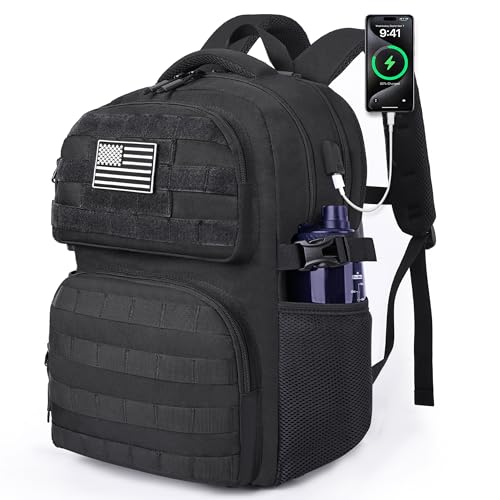
A backpack with a battery sounds like a single product category, and it is really two different ideas sharing a shelf. One design builds a rechargeable battery pack into the bag itself, wired to a port on the outside and sometimes to a second port inside. The other design builds no battery at all, offering instead an external USB socket connected by an internal cable to a pocket where your own separate power bank rides. Retail listings blur that distinction constantly, photographing both under the same language about charging on the go, and the first job of this guide is to separate them, because almost every strength and weakness in the category flows from which architecture you actually bought.
Beyond architecture, the details decide whether the feature earns its weight. Published capacity, stated in milliamp-hours or watt-hours, determines how many phone charges the system can deliver. The charging standard behind the port determines whether a modern laptop sips politely or refuses to charge at all. Internal cables flex every time the bag is packed, and owners have mapped exactly where they fail. Rain treats the electronics compartment differently from the book compartment. Airlines treat the battery as a regulated object with firm limits. And the warranty on the wires quietly expires long before the warranty on the fabric, a sentence buried in documents that deserves daylight.
Two architectures: battery built in, or a home for your own
A built-in design arrives ready. The battery sits in a padded sleeve, usually against the back panel, connected at the factory to the external port and sometimes to a small status display or indicator lights. You charge the bag itself through a port, often the same socket a phone later drains, and the appeal is the absence of decisions: nothing to buy separately, nothing to remember to drop into a pocket, nothing rattling loose in the main compartment. For gift buyers and for travellers who value a single object that simply works at the airport, that completeness is the whole argument.
The bring-your-own design asks one purchase more and returns flexibility forever. Its internal cable runs from the external socket to a mesh or zippered pocket sized for a standard power bank. Any bank that fits can serve, which means capacity becomes your choice, a failing bank can be swapped in a minute, and the bag itself contains no battery to age, swell, or fall foul of an airline rule. When the bank eventually wears out, as every lithium pack does, the backpack remains fully functional with its replacement, while a built-in bag whose sealed battery fades becomes a heavier ordinary backpack with a decorative port.
Owner reports divide along exactly that line over time. Built-in owners praise the first year loudly and go quiet later, when capacity shrinks and the manufacturer lists no replacement part. Bring-your-own owners complain briefly about the extra purchase, then praise the system for years, because every upgrade in power bank technology, faster standards, larger capacities, slimmer shapes, drops straight into a bag bought long ago. Longevity, in this category, belongs to the design that owns less.
Hybrids and marketing photographs
A middle group complicates the shelf: bags sold with a removable branded bank included in the box. These behave like bring-your-own designs in daily life, since the bank lifts out for flights and replacement, yet they are photographed and titled like built-ins. The practical test is a single question: can the battery be removed by hand, without tools, and can the bag’s port then work with a different bank? If yes, you are looking at the flexible architecture wearing integrated clothing, which is often the best of both. If the answer involves screws, seams, or a service centre, the battery is a fixture, and its lifespan is the lifespan of the feature.
Photographs deserve suspicion in this category generally. A cable emerging from a bag in a listing image may be the photographer’s own, the port may be a pass-through with no electronics behind it, and the glowing phone may be displaying a charging icon that the product cannot actually produce for that model. Specification documents, not images, settle what a port delivers, and the sections below teach the reading of those documents piece by piece.
Capacity in milliamp-hours and watt-hours, translated honestly
Manufacturers of integrated bags publish capacity in milliamp-hours, a unit inherited from phone marketing that flatters by sounding large. The honest unit is the watt-hour, because it accounts for voltage, and conversion between the two at the nominal voltage of a lithium cell shrinks the headline considerably before conversion losses shrink it again. A bank advertised with a five-digit milliamp-hour figure delivers, after the step-up to USB voltage and the losses in cable and phone, a usable amount that owners experience as roughly two to three full phone charges for typical integrated models, sometimes fewer for large phones with fast charging enabled.
Published figures also assume a new battery. Lithium cells lose capacity with every cycle and with calendar age, faster in heat, so a bag carried daily in a warm climate reports noticeably shorter service in its second year in owner accounts. None of this makes integrated capacity useless; a single reliable phone top-up during a long connection rescues more journeys than a theoretical third charge. It does mean capacity should be read as a ceiling for a young battery under kind conditions, and sized with headroom for the traveller’s real day.
Why the same bag charges one phone twice and another once
Phones differ in battery size by nearly two to one across popular models, and their charging behaviour differs more. A phone that accepts fast charging pulls hard early, converts less efficiently, and warms the bank, wasting a share as heat. A phone charging slowly overnight from the bag wastes less and finishes fuller from the same store. Owners comparing notes in forums often believe one of them received a defective unit, when the documents explain both results completely: different loads, different losses, same bag. Judging any charging backpack therefore requires naming the phone, the cable, and the charging speed before comparing outcomes.
Flying with a battery in your bag: the hundred watt-hour line
Aviation rules draw the firmest boundary in this entire category, and they draw it in watt-hours. Guidance published by international and national aviation authorities allows lithium batteries up to one hundred watt-hours per battery in cabin baggage without special approval, with a further band above that requiring airline permission and a strict count limit, and with spare batteries forbidden from checked baggage entirely. A battery must travel in the cabin, protected from short circuit, where the crew can reach it. Those three sentences govern every charging backpack that boards an aircraft.
Integrated bags meet the rules awkwardly. Their batteries usually sit far below the hundred watt-hour ceiling, so the energy itself is legal, but the battery cannot be removed, and that single fact collides with airline practices that expect spare and power-bank batteries to be removable, inspectable, and carried loose in the cabin. Policies differ between carriers and change over time, and check-in staff resolve ambiguity conservatively. Owners report outcomes ranging from no comment at all to being asked to move the bag from hold to cabin, to, in the worst accounts, surrendering the battery function by leaving the bag behind. A bag that cannot fly as checked luggage is a serious constraint on a product bought for travel.
Bring-your-own designs sail through the same checkpoint. The bank lifts out in seconds, rides in the cabin pouch with its terminals protected, and the empty bag checks in as ordinary luggage. That is why frequent flyers in owner communities treat removability as the first specification, ahead of capacity and charging speed, and why this guide repeats the point without apology: for air travel, the architecture question is not a preference, it is a compliance feature.
Reading the label before the airport
Every legitimate lithium battery carries its watt-hour rating on its casing, and travellers should photograph that label before a trip, because worn print on an integrated unit, hidden behind a lining panel, is difficult to show at a checkpoint. When the rating appears only in milliamp-hours, the conversion uses the nominal voltage printed beside it, and airline staff perform the same arithmetic. A battery with no legible rating invites the most conservative interpretation available, which is refusal. Checking the label at home, calmly, is the cheapest insurance in this whole guide.
Rail and coach travel impose none of this, which explains the category’s split personality: the same integrated bag that complicates a flight is a delight on a train, where its owner charges through a long journey with the bag in the rack above. Match the bag to the transport you actually use most, and let the minority journeys borrow a separate bank instead.
USB-C Power Delivery against the older USB-A world
The port on the strap or side panel is the visible tip of a negotiation happening in silicon. Older designs offer USB-A output at modest wattage, enough for a phone at ordinary speed, a pair of earbuds, or a small fan, and nothing more ambitious. Newer designs route USB-C with Power Delivery, a standard in which the charger and the device agree a voltage and current before power flows, allowing the same socket to serve earbuds gently and a laptop meaningfully. Published wattage for the port, not the shape of the hole, tells you which world a given bag inhabits.
Laptop owners must read that wattage with care. Many thin laptops accept a charge from a modest delivery wattage while asleep or idling, then outrun it during active work, draining slowly despite the cable. Manufacturer documents for such machines state their expected adapter wattage plainly, and a backpack port below that figure is a maintainer, not a charger, useful for stretching a battery through an afternoon rather than refilling it. Phones and tablets ask far less, and for them even mid-range port wattage feels fast, which is why phone-only travellers can ignore this section and laptop carriers cannot.
Pass-through behaviour matters in the bring-your-own architecture, because the bag’s internal cable and external socket sit between your bank and your phone, adding resistance and sometimes limiting the negotiated speed. A bank capable of rapid delivery may be throttled by a bag wired for gentler currents, and owner reports of slow charging through a bag, cured instantly by connecting the bank directly, trace to exactly this bottleneck. The documents rarely advertise the internal cable’s rating; the honest clue is the port specification printed for the bag as a whole, which describes the weakest link by design.
Cables: the part that actually wears out
Every charging backpack contains a cable that flexes each time the bag is stuffed, swung, dropped, or compressed under a seat, and flexing is what cables die of. Owner failure reports cluster at predictable points: where the internal lead bends sharply leaving the port housing, where it passes through a stitched channel between compartments, and at the connector that meets the bank inside its pocket, which works loose and strains its solder joints with every journey. The symptom is familiar across brands, charging that works when the bag sits one way and fails when it moves, the signature of conductors parting strand by strand inside intact insulation.
Designs differ in how gracefully they meet this fate. A bag whose internal cable is a standard, replaceable lead, threaded through an accessible channel and plugged at both ends, can be revived in minutes with a spare from any electronics drawer. A bag whose cable is soldered, sealed, and buried under glued lining turns the same failure into a warranty claim or a funeral. Before buying, look for photographs or manual diagrams showing the cable path, and treat a replaceable lead as a headline feature rather than a detail, because statistically it is the feature your future self will care about most.
External habits help whatever design you own. Leaving a phone cable permanently plugged into the outside port invites side loads that lever the socket against its mounting every time the bag brushes a doorway. Disconnecting for storage, avoiding tight coils at the connector, and keeping the port’s weather cap closed when fitted all extend the life of the one component that owners replace, improvise around, and complain about more than any other in the category.
Weather, theft features, and what neither protects
Water and electronics negotiate badly, and a charging backpack contains more of the latter than its silhouette admits. Manufacturers address this in layers: water-repellent fabric coatings, covered zips, a raised or shielded external port, and in better designs a genuinely sealed electronics compartment whose seams and entries keep driven rain away from the battery and its connections. Published water-resistance language deserves the same scepticism as capacity figures, because a coating that shrugs off a pavement drizzle is not a seal against a cycling commute in a storm, and no mainstream charging backpack claims submersion protection for its battery bay.
Owner reports supply the failure geography. Moisture enters at the external port first, especially when a cable is connected and the cap hangs open, then at the top zip during heavy rain, and it migratorially finds the lowest electronics, which is why some designs mount the battery high against the back panel. Corrosion on port contacts appears weeks after the soaking that caused it, presenting as intermittent charging long after the owner has forgotten the storm. Drying a soaked bag open, battery removed where the design allows, before the next charge is the advice experienced owners repeat most, and charging a damp system is the habit they warn against hardest.
Anti-theft theatre and honest security
Lockable zips, slash-resistant panels, hidden pockets, and retractable cable locks populate this category’s feature lists, and they share shelf space with the charging port in a way that invites a misunderstanding worth correcting. None of those features makes the external port safe to use in the rain, and none of them protects a phone charging in an outside pocket from the oldest theft of all, a hand that is not yours. Security features guard the bag’s contents at rest, in a café or a hostel. The charging system is a convenience for devices in motion, ideally in your hand or your sight, and conflating the two systems in a buying decision produces travellers who feel protected in precisely the situations where they are not.
There is a subtler interaction as well. Some anti-theft designs route zips against the wearer’s back and bury compartments so thoroughly that reaching the battery pocket quickly, at an airport checkpoint or to swap a bank on a platform, becomes a small performance. Travellers who fly often should rehearse that access before the first trip, because the moment a security officer asks to see the battery is the wrong moment to discover the origami your bag requires.
Weight, comfort, and the arithmetic of carrying energy
A built-in battery adds its mass to the bag permanently, along with the padding, housing, and wiring that support it, and that total rides on the wearer’s shoulders on days when no charging happens at all. Published bag weights sometimes exclude the battery, a bookkeeping choice the specification sheet reveals only in footnotes, so comparisons should use the all-in figure where the manufacturer provides it, or add the stated battery weight where it does not. On a long walking commute, the difference between architectures is not trivial: the bring-your-own owner leaves the bank at home on light days, while the integrated owner carries the full system to buy a sandwich.
Placement matters as much as mass. A battery mounted flat against the back panel, close to the wearer’s centre of gravity, is felt least, and better designs put it exactly there. A battery low in the base pulls the load backward and downward, encouraging the slouch that gives commuters their evening shoulder ache. Owner comfort reports track mounting position more faithfully than total weight, and shoppers comparing two integrated bags of similar mass should favour the one whose battery hugs the back panel, a detail visible in cutaway diagrams and in the bulge pattern of photographs.
The warranty gap between cloth and circuitry
Read the warranty document of almost any charging backpack and a quiet asymmetry appears. The fabric, stitching, and zips may carry a long guarantee, sometimes described in language approaching lifetime coverage, while the battery, port, and internal cable carry a far shorter term, commonly a small fraction of the bag’s coverage, with capacity fade explicitly excluded as wear rather than defect. Legally the distinction is defensible; batteries are consumables. Commercially it tells the buyer where the manufacturer expects failure, and it reframes the price: you are buying a durable bag and renting its electronics on a short fuse.
Practical consequences follow. Keep the purchase record for the electronics term specifically, register the product if the maker asks, and photograph the battery label and port while they are new, because a claim inside the term needs exactly those artefacts. When the electronics fail outside their term, the bring-your-own owner replaces a bank and continues; the integrated owner asks the manufacturer about a battery service that often does not exist at any price, and the bag continues as luggage with a port that lights nothing, a small monument to the architecture decision made years earlier.
Repairability as a buying criterion
A short pre-purchase investigation predicts most ownership pain in this category. Search the manufacturer’s support pages for replacement batteries, replacement internal cables, and a port repair service, and note which of the three exist. Check whether the manual shows the battery compartment opening with ordinary fasteners or warns against opening it at all. Read owner discussions for the specific model’s second year, not its first month. A company that sells the parts expects its bags to be repaired; a company that sells none expects them to be replaced, and prices its warranty accordingly.
How different travellers actually live with these bags
The daily rail commuter is the category’s natural citizen. Their phone works hard on the platform and harder on the train, where signal hunting drains it, and a port on the strap turns a dead zone of time into a refill without opening the bag in a crowded carriage. Commuter reports emphasise routine over capacity: the same cable, the same pocket, the same overnight refill at the same hallway socket. When the routine holds, even a modest integrated battery feels generous, because it never faces a surprise, only a schedule.
The student lives differently, in bursts. A bag charged on Sunday night must survive library sessions, lectures where sockets are contested territory, and a part-time job reached by bus. Students in owner discussions value the external port for a less obvious reason: borrowing. A friend whose phone is dying can plug into the outside of a bag on a bench without the bag being opened, emptied, or handed over, a small social feature no specification sheet records. Their complaint, equally consistent, is weight during the long walk between campus buildings, which returns the discussion to battery placement every time.
The photographer and the field worker load the system hardest. Cameras, lights, a phone running location services, and sometimes a small monitor all draw from the same store, and these users gravitate to the bring-your-own architecture with the largest bank the pocket accepts, because their working day punishes any ceiling sewn in by a manufacturer. Their reports also contain the category’s most practical cable wisdom, since a cable failure mid-assignment is a professional problem, and many carry a spare internal lead the way they carry spare memory cards.
The festival and campsite traveller tests weather claims that commuters never meet. Days outdoors, dew overnight, dust in every zip, and no socket for a weekend: here the sealed electronics compartment earns its description, the bank is rationed by a rota among friends, and the bag’s job is less about speed than about keeping a torch, a phone, and a speaker alive until Monday. Owners in this group speak warmly of simple systems with one port and no display, because every extra feature is another thing for damp and grit to argue with.
The school run and the family day bag
Parents running a family day bag describe a quieter use case that manufacturers rarely photograph. The bag carries snacks, spare clothes, a tablet for the train, and two phones belonging to adults whose batteries were spent by cameras at the zoo. A charging port reachable without unpacking that cargo, in a queue, in the rain, with a child holding the other hand, justifies the category in a single afternoon. The family’s reports also stress washable linings and ports that survive sticky fingers, specifications that matter more to them than any delivery wattage, and a useful reminder that every buyer’s hierarchy of features is written by their own life.
Organisation: the tech pocket as a small ecosystem
Behind the port sits a pocket that must hold the bank, the cable slack, and often the wearer’s other small electronics in a truce. Good designs give the bank its own sleeve so it cannot migrate, route the cable through a grommet or channel so it cannot tangle with keys, and leave the remaining space shaped for earbuds and a coiled lead rather than a shapeless void. Poor designs drop everything into one compartment and let gravity arbitrate, and owner photographs of those pockets, a knot of cables around a scuffed bank, explain half the intermittent-charging complaints in the category before any electronics are blamed.
Cable length is the ecosystem’s quiet variable. Too short, and the bank must sit in one exact orientation, straining its connector whenever the pocket is overfilled. Too long, and the surplus forms the loop that catches every zip. The better manufacturers size the internal lead to the pocket with a little generosity and finish its ends with strain relief, and they say so in the manual, a sentence worth searching for. Owners who replace a failed internal cable should measure the original before ordering, because a universal lead of the wrong length recreates both failure modes in a brand-new part.
Heat inside a closed pocket
Charging generates warmth, and a bank working hard inside a padded, closed pocket on a summer day sheds that warmth slowly. Manufacturers’ documents carry operating temperature ranges for their batteries, and owner reports from hot climates describe banks pausing or slowing in mid-afternoon bags, then recovering in the evening cool, behaviour the protection circuits are designed to produce. Leaving the tech pocket’s zip partly open in extreme heat, keeping the bag out of direct sun on a dashboard or a beach towel, and avoiding fast charging inside a fully packed bag are small courtesies that extend both the session and the battery’s life.
Care, cleaning, and the end of the battery’s road
A charging backpack asks for two kinds of care that ordinary bags never meet. The textile side wants what every bag wants: crumbs shaken out, spills sponged promptly, zips freed of grit, and storage away from damp. The electronic side wants its own short liturgy. Port contacts inspected for the green bloom of corrosion and cleaned dry with a soft brush. The internal cable flexed gently along its length twice a year, feeling for the crunch or dead spot that announces failing strands. The battery cycled rather than abandoned, because a lithium pack left flat for a year may never wake, while one stored partly charged and refreshed each season survives to serve for years.
When a built-in battery finally fades beyond usefulness, the bag’s story need not end, but its disposal story forks. The bag itself is textiles and can follow ordinary routes, while the battery inside is regulated waste that belongs at a battery collection point, removed by a repair service where the design forbids owner access. Manufacturers’ end-of-life instructions, printed in the same manual as the warranty, describe the intended route for each model, and following it keeps a useful object from becoming a small environmental problem at the exact moment it stops being useful.
Second-hand buyers inherit all of this history invisibly, which is why used charging backpacks deserve extra questions. How old is the battery, how was the bag stored, does the port work with the bag in motion or only at rest, and does the internal cable show a kink near the housing? A seller who can answer has maintained the bag; a seller who cannot is offering a lottery ticket with shoulder straps, priced accordingly.
Myths the category keeps selling
The first myth equates the printed milliamp-hour figure with phone charges by simple division, as if energy moved from bag to phone without loss or voltage change. It does not, and owners who expect arithmetic perfection meet disappointment that the manufacturer’s own fine print predicted. Read watt-hours, allow for conversion, allow for the phone’s own appetite, and the honest expectation lands where owner reports have always placed it.
The second myth treats the external port as a promise of speed. A port is a doorway, not an engine; the engine is the battery and its delivery circuitry, and a handsome metal-rimmed socket wired to a modest output charges modestly. Speed lives in the specification table, in the delivery standard and the wattage, and nowhere else, however the photography glows.
The third myth assumes a battery bag is automatically the modern choice and a separate bank the dated one. The industry’s own behaviour argues otherwise: the most repairable, flight-friendly, and upgradeable system in this guide is the one where the battery is a commodity the owner controls. Newness in this category is measured by standards support and cable design, not by how permanently the battery is sewn in.
Solar panels and other variations on the theme
A neighbouring design mounts a small solar panel on the bag’s face, feeding the battery or the port directly. Published panel wattages for bag-sized surfaces are modest, and the honest role of such a panel is extension rather than supply: it slows a battery’s decline across a sunny day outdoors and can keep a phone’s messaging alive on a trail, but it does not refill a large bank between breakfast and lunch unless the sun, the angle, and the latitude all conspire generously. Owners who understand that bargain report satisfaction; owners promised a personal power station report the predictable sequel. For most buyers the panel is a niche answer to a trail problem, not a substitute for capacity carried from a socket.
Hard-shell designs form another branch, trading fabric flexibility for a rigid back that protects electronics and holds a battery in a precise cradle. They suit motorcyclists and cyclists, whose reports praise the stability and weather shedding, and they punish anyone who overstuffs, because a shell does not bulge. As with every branch of this family, the documents and the owners agree once both are read: the design is excellent inside its intended motion and awkward outside it.
Questions buyers ask before the first trip
Can the bag charge a phone while the bag itself is charging? Some systems support that pass-through arrangement and some forbid it in the manual, and the distinction matters to travellers who get one socket and one night to refill everything. Check the document rather than the listing, because the listing rarely knows.
What happens when the battery dies completely on the road? In a bring-your-own design, any borrowed or newly bought bank restores the system in minutes, which is the architecture’s finest hour. In an integrated design, the port rests until a socket appears, and the bag continues as luggage. Neither answer is shameful, but they are different products wearing one name, which has been this guide’s refrain from its first section.
Will the port charge a laptop on a train? Read the delivery wattage, compare it with the laptop maker’s stated adapter expectation, and believe the smaller number’s implications. Many owners carry the laptop’s own adapter for the train’s socket and let the bag serve the phone, a division of labour that plays to every component’s strength.
How long should the battery last? Calendar life for a lithium pack in daily service is measured in a small number of years before capacity fade becomes noticeable, with cycle count, heat, and storage habits moving any individual unit around that expectation. The warranty term for the electronics, discussed earlier, is the manufacturer’s own estimate wearing legal clothing, and it is rarely the optimistic one.
A short checklist before paying
Confirm the architecture by finding whether the battery removes by hand. Read the watt-hour rating and check it against the flight rules if you fly. Read the port’s delivery standard and wattage and compare them with your hungriest device. Trace the internal cable in the manual’s diagrams and ask whether it can be replaced. Compare the electronics warranty with the fabric warranty and note the gap. Check the battery’s mounting position against the back panel, weigh the all-in figure rather than the shell figure, and rehearse reaching the battery pocket quickly. A bag that passes those eight checks will not surprise its owner in any of the ways this category specialises in, and surprises, in luggage, are never the good kind.
A brief history of putting power in a bag
The idea predates the smartphone’s dominance. Early versions served the portable music players and handheld consoles of the two thousands, when a long journey could strand a device far from its proprietary charger and a bag with a battery felt like science fiction that worked. Those pioneers used the connectors of their day and capacities that would embarrass a modern earbud case, yet owner nostalgia for them is genuine, because they solved the same problem with the tools available and proved the demand existed.
The category matured when USB standardised the plug and lithium cells standardised the store. Bags gained the familiar external socket, capacities climbed into territory that could refill a phone completely, and designs split into the two architectures this guide opened with. The most recent chapter belongs to USB-C delivery, which raised the ceiling from phones toward laptops and forced manufacturers to publish honest wattage figures at last, since a laptop either negotiates a charge or visibly does not. Each generation’s documents read more precisely than the last, and learning to read them remains the buyer’s core skill.
Indicator lights, displays, and knowing what remains
How a bag reports its remaining energy shapes how confidently it can be used. The simplest systems offer a row of small lights near the port or inside the pocket, each light standing for a rough quarter of the store. Better systems add a small numeric display, and bring-your-own owners inherit whatever gauge their bank provides, which is often the most accurate in the building. Owners consistently prefer any honest gauge to none, because a battery that cannot report itself forces the phone to become the gauge, usually at the least convenient moment. When comparing models, check where the indicator lives: a gauge readable without opening the bag serves the platform use case, while one buried in the pocket serves only the packing stage at home.
Safety signs every owner should recognise
Lithium batteries announce serious trouble in ways that should never be ignored, and a bag is a place where the early signs can hide behind fabric. A battery pocket that begins to bulge, a bank that no longer sits flat, a section of the back panel that feels warmer than the rest during ordinary charging, a sweet chemical smell from the tech pocket, or a port that works only when the bag is pressed in one spot: each is a stop sign. The correct response is to stop charging, remove the battery if the design allows, keep the bag away from heat and bedding, and contact the manufacturer or a battery collection service for the next step. No journey is improved by negotiating with a swelling cell.
Routine safety is quieter. Charge on a hard surface rather than a sofa when the system is new to you, so its normal warmth becomes familiar. Do not leave a charging bag in a hot car, where cabin temperatures exceed every battery document’s comfort. Keep metal objects out of the bank pocket, where loose keys and coins have no business beside terminals and cable ends. These habits, repeated in manufacturer safety pages with a weariness that suggests long experience, cost nothing and prevent the category’s rarest and worst stories.
Children, school bags, and shared family systems
Battery bags marketed for schoolchildren add a further consideration: the system will be used by someone who did not read the manual. Designs for that audience should favour the simplest possible arrangement, one port, automatic behaviour, a battery that an adult can remove and inspect, and cables with no detachable small parts to lose. Parents in owner discussions report that the bring-your-own architecture suits family life for an unexpected reason, because the adult owns the bank, charges it on the family station, and hands it over as a deliberate act, keeping the battery’s care in experienced hands while the child enjoys the convenience.
Gift buying without the guesswork
Charging backpacks are bought as gifts often enough that their failure modes deserve a section. The giver sees a single, complete, impressive object; the recipient inherits every maintenance relationship described in this guide. A gift succeeds when the architecture matches the recipient’s life rather than the giver’s taste, which usually means the flexible design for a traveller, the integrated design for a rail commuter, and, for anyone whose habits are unknown, a fine ordinary backpack with a separate bank tucked inside as the surprise. That last option reads as two gifts and behaves as the most forgiving system of all, because each half can be upgraded, replaced, or rehomed independently as tastes change.
Wrapping in the purchase record matters more than wrapping paper here. A recipient who receives the warranty documents, the battery’s specification, and a note naming the architecture can maintain the system properly from the first day. Owners who were gifted bags without documents form a recognisable thread in support forums, asking strangers to identify a battery that a single kept page would have named, and their experience is the strongest argument for treating paperwork as part of the product.
What a second season reveals
Almost every charging backpack pleases in its first season, when the battery is young, the cable is supple, and the port is tight. The second season is the honest one. Capacity has settled to its mature level, the internal lead has survived or announced itself, the fabric has met its first storm, and the owner has learned the bag’s checkpoint routine by heart. Reviews and reports written at that age are the ones a buyer should weight most heavily, and a model whose second-season reports remain warm has passed the only examination this category truly sets. Shoppers who read for longevity rather than launch excitement will find the pattern quickly, because it repeats across brands with unusual consistency: removable batteries, replaceable cables, honest gauges, and modest promises, praised late and therefore believed.
Packing order for a charged day
Experienced owners pack the power system first and the rest of the bag around it, a small ritual that prevents most field failures. The bank goes into its sleeve and is connected before anything else can crowd the pocket. The internal cable is given its natural curve rather than a fold. The phone lead is routed and its free end parked where the hand expects it, because a system that must be assembled in a crowd will eventually be assembled wrongly in a crowd. Then books, bottles, and jackets fill the remaining space without pressing on the pocket, since a battery squeezed all day by a hard bottle works its connector with every step. Arriving home, the ritual reverses: bank out or bag plugged in, before the post and the kettle claim attention, so the overnight refill is a habit of the doorway rather than a resolution made at midnight. Travellers who describe their charging backpack as effortless almost always describe some version of this choreography, and those who describe theirs as fussy almost never do, which suggests the category rewards choreography more than it rewards capacity.
One more setting deserves mention before the verdict: the office that has quietly become a second home. A bag that charges at a desk-side socket during the working day, then carries a topped-up phone through the evening commute, lives the gentlest life in this category, spared storms, checkpoints, and overstuffed pockets alike. Owners in that pattern report the longest battery service of any group, which confirms the guide’s recurring theme from a new angle: these systems rarely fail from use, they fade from conditions, and the kindest conditions are a routine, a socket, and a hook by the desk.
Climate writes the final footnote to that office story. The same bag carried through a tropical wet season, a desert summer, or a northern winter meets three different ageing regimes for its battery, its coatings, and its cable insulation, and manufacturers’ storage guidance, cool, dry, and out of sun, reads like a description of none of them. Owners cannot change their weather, but they can change their storage: indoors rather than in a car boot, unzipped rather than sealed damp, and charged before a trip rather than after a month of neglect in the heat. Small mercies, faithfully repeated, are what separate the bags still charging in year four from the ports that gave up in year two.
When a plain backpack and a separate bank win outright
For a large group of travellers, the honest recommendation is no charging backpack at all. A well-made ordinary backpack plus a modern power bank in an inside pocket delivers more capacity, faster charging, easier flights, cheaper replacement, and full freedom to change bags without abandoning a battery investment. The integrated product’s genuine advantages are narrower: a port reachable without opening the bag, a phone charging in a side pocket while both hands stay free, and the tidiness of a system with no loose components. Those advantages are real on a crowded platform or a festival field. They are worth little at a desk, in a car, or on any journey where opening a zip costs nothing.
The deciding questions are therefore behavioural. Do you charge while walking, weekly, with the phone stowed? Do you fly with checked luggage more than rarely? Do you keep bags for many years or replace them with the seasons? Do you carry a laptop that drinks deeply, or only a phone and earbuds? Answers pointing toward motion, longevity, and modest devices justify the category. Answers pointing toward flights, desks, and heavy laptops point toward the separate bank, possibly inside a bag that merely offers it a good pocket and a cable route.
Readers who land on the separate-bank side will want the largest capacities surveyed first.
best 40000 mah portable chargers
Banks at that end of the market turn an ordinary backpack into a multi-day power system for a group, not just a person, and they underline how far the flexible architecture stretches when the bag imposes no ceiling of its own.
At the opposite end, modest banks serve the daily commuter who needs one rescue charge and nothing more.
best 20 dollar portable chargers
Pairing a small bank with a pass-through bag keeps the total carried weight honest, and replacement, when the small bank eventually fades, is a minor errand rather than a product funeral.
Charging the rest of your kit from the same system
A backpack rarely powers a phone alone. Earbuds, a watch, a camera, a handheld console, and a laptop all compete for the same stored energy, and the port count and delivery wattage of the system decide whether that competition is orderly. Single-port bags force a queue and reward planning: the phone first at the station, the earbuds during the ride, the watch at the desk. Owners who accept the queue describe a calmer relationship with their batteries than owners of multi-port systems who drain everything by noon in parallel enthusiasm.
Wall charging at the destination completes the system, because every architecture in this guide ultimately refills from a socket at home, in a hotel, or at an office. A capable travel adapter that can refill a laptop and a bank simultaneously overnight turns the backpack from a ration into a rhythm, emptying by day and filling by night.
Those comparing high-output wall adapters for exactly that overnight refill can start here.
An adapter at that level of output handles a modern laptop and a phone together without negotiation, which is the combination most commuters actually carry, and it travels in the bag’s own tech pocket without complaint.
Homes and desks with a whole family of devices to refill benefit from a different shape of solution.
A multi-port station on the desk absorbs the evening tangle, phone, watch, earbuds, console, and the backpack’s own battery or bank, so that the morning departure begins with every gauge full and every cable already home.
Check prices on Amazon
Live listings for the shortlist in this guide are pulled from Amazon below, so prices and availability are always current at the moment you look.



The decision, compressed
Choose the bring-your-own architecture if you fly, if you keep bags for years, or if you already own a bank you like; it wins on compliance, longevity, and upgradeability, and it loses only on shelf tidiness. Choose a genuinely integrated bag if your charging happens on foot, your journeys run on rails and roads rather than runways, and you accept that the electronics carry a shorter promise than the cloth around them. Choose no charging bag at all if your devices feed mainly at desks, because a separate bank inside an ordinary backpack outperforms the category at its own game whenever a zip is easy to open.
Whichever route you take, read the watt-hour label, favour a replaceable internal cable, keep the port capped and dry, and save the warranty paperwork for the electronics separately from the bag’s. Do those few things and a backpack stops being a gadget with straps and becomes what the best owners describe: quiet infrastructure that keeps a phone alive on the last train home, when the city is dark, the battery icon is red, and your bag, unhurried, still has something left to give.