Our Top Picks
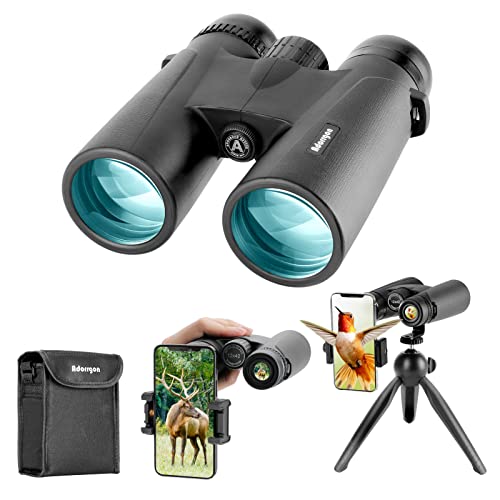 Adorrgon 12x42 High Powered Binoculars for Adults12x425.75 x 4.95 x 2.1 inches1.1 poundsCheck on Amazon


What's inside
- Alaska rewards patience, distance, and the right glass
- Magnification, objective size, and the exit pupil equation
- Field of view, depth, and following moving animals
- Prisms, glass, and coatings that shape the image
- Fogproofing, inert gas, and sealing against the North
- Operating binoculars in genuine cold
- Safe distances: bears, whales, eagles, and the ethics of a longer lens
- Weight, carry systems, and surviving a full day outside
- Eye relief, eyecups, and fitting the instrument to the observer
- Care in salt spray, rain, and gritty beach landings
- Matching configurations to signature Alaskan itineraries
- Accessories that genuinely earn their pack space
- A pre-purchase checklist grounded in specifications
- Twilight factor, relative brightness, and other catalogue mathematics
- Identifying what you found: field marks at binocular distance
- Packing optics for bush planes, ferries, and rough roads
- Seasonal timing and light across the Alaskan year
- Reading waterproof claims with a sceptical eye
- Check prices on Amazon
- Night skies, aurora displays, and dual-purpose glass
As an Amazon Associate I earn from qualifying purchases. This post may contain affiliate links at no extra cost to you.
Affiliate disclosure: This guide is reader-supported; purchases made through certain links here may return a commission to the publisher, which funds further research into outdoor optics while leaving the recommendations themselves independent.
Alaska rewards patience, distance, and the right glass
Wildlife viewing in Alaska happens across a scale that defeats casual optics. A brown bear working a sedge meadow may be three hundred metres away and separated from observers by a river channel. Dall sheep appear as pale commas against scree slopes high above the road corridor through Denali. Humpback whales surface where they choose, not where a boat happens to drift, and bald eagles quarter tidal flats beneath weather that changes between one headland and the next. Binoculars suited to this country must gather generous light, survive cold rain and salt spray, focus smoothly through gloves, and remain comfortable against the chest across a full day outside.
The guidance below rests upon manufacturer specification sheets, park and agency viewing rules, and recurring themes inside owner reports from northern field use. It deliberately avoids naming favourite models, because configurations matter more than badges: magnification, objective diameter, exit pupil, sealing method, prism treatment, and carry system decide whether a given instrument serves a traveller well. Photographers planning to pair glass with a camera body can also consult best cameras to shoot wildlife later; this page stays focused upon handheld viewing optics and the judgement calls surrounding them.
Magnification, objective size, and the exit pupil equation
Every binocular designation pairs two numbers, and dividing the second by the first yields exit pupil diameter in millimetres. An 8×42 instrument therefore delivers a 5.25 millimetre beam, a 10×42 narrows that beam to 4.2 millimetres, and a 10×50 restores it to a full 5 millimetres. That beam is the circle of light projected toward the eye, and it governs how bright the scene appears when ambient illumination falls. Human pupils dilate toward roughly two or three millimetres in bright midday conditions, expand through five millimetres at dusk for many adults, and may reach seven millimetres in youth under genuine darkness, contracting somewhat with age.
Matching exit pupil to expected viewing hours clarifies most purchasing decisions. Dawn bear activity along salmon streams, evening whale watching under heavy cloud, and forest birding beneath spruce canopy all push observers toward pupils at or above five millimetres. Midday glacier overlooks and open tundra scanning tolerate smaller beams comfortably. An exit pupil larger than the observer’s own dilation wastes no quality — the eye simply samples the centre of a well-corrected beam — but it usually arrives attached to heavier objectives, so travellers should claim extra diameter only where dim conditions genuinely dominate their itinerary.
Why ten power tempts and eight power forgives
Ten-power instruments enlarge distant detail seductively: ear tags on caribou, talon posture on an eagle, the notch pattern along a humpback fluke. They also magnify hand tremor, narrow the visible field, shorten depth of focus, and demand steadier support during prolonged sessions. Eight-power alternatives sacrifice some reach yet reward users with calmer images, broader scenes that keep moving animals inside the frame, and easier tracking of birds crossing between perches. Twelve-power designs belong mainly to tripod use at sheep slopes or seabird colonies, where support removes shake and stationary subjects tolerate a narrow window.
Boat-based viewing tilts the balance further toward moderation. Vessel motion multiplies every tremor, decks vibrate through engine ranges, and spray interrupts viewing rhythm. Experienced whale-watch passengers often settle upon eight power with wide fields, accepting smaller whale images in exchange for keeping surfacing animals located as the hull rolls. Shore-based observers on stable ground, braced against a railing or seated with elbows upon knees, can exploit ten power more honestly. The correct magnification is therefore partly a question of platform, not merely eyesight ambition.
Field of view, depth, and following moving animals
Manufacturers express field width in feet at one thousand yards or in angular degrees, and conversion between those conventions occasionally confuses comparison shoppers. Wider fields simplify initial acquisition: sweeping a shoreline until a moose enters the edge, then centring without losing the animal during its next step. Narrow fields frustrate beginners because the instrument must already point almost exactly at the subject. Apparent field, calculated by multiplying true angle by magnification, shapes the immersive sensation, yet true field determines practical tracking utility in the field.
Depth of field shrinks as magnification rises and as focus distance shortens. Forest trails where warblers move at eight metres punish slow focusing and shallow depth alike, while distant shorelines forgive both. Close-focus capability, often listed between two and three metres on versatile models, matters surprisingly in Alaska: butterflies on alpine flowers, ptarmigan crouched beside a trail, and intertidal life in rock pools all reward instruments that focus nearer than a typical spotting distance. Travellers combining wildlife with wildflower study should treat close focus as a headline feature rather than a footnote.
Focus mechanisms and diopter discipline
Central focus wheels drive both barrels together, while a diopter ring — usually on the right barrel — compensates for differences between an individual’s eyes. Correct setup begins with the diopter at zero, focusing upon a distant textured target using the left eye alone, then switching eyes and refining with the diopter until both views match in sharpness. Owners who skip that ritual often blame optics for softness actually caused by uncorrected asymmetry. In cold conditions the procedure deserves repetition after arrival, since heavy gloves change handling and eyecup positions shift against hoods or balaclavas.
Focus travel speed divides opinion. Rapid gearing jumps from meadow distances to nearby birds quickly but overshoots fine adjustments at long range, whereas slow gearing feels luxurious at overlooks and tedious inside forests. Alaska itineraries usually span both environments within one trip, favouring middle gearing with smooth, backlash-free motion. Wheel diameter matters as much as ratio once gloves enter the equation, a subject the cold-weather section below treats in detail.
Prisms, glass, and coatings that shape the image
Two prism architectures dominate production. Porro designs offset the objective lenses wider than the eyepieces, using folded light paths inside generous housings that historically delivered excellent depth perception at moderate manufacturing cost. Roof designs align barrels straight, packing Schmidt-Pechan or Abbe-Koenig prisms into slimmer tubes that travel well and seal more easily against weather. Modern roof instruments have largely closed the historical performance gap through phase-correction coatings that realign light waves split by roof edges; without that treatment, contrast and resolution suffer measurably, so its presence on a specification sheet signals serious intent.
Prism glass grades, commonly described through barium crown formulations, influence transmission and internal reflection efficiency. Mirror coatings on Schmidt-Pechan roof surfaces add another layer of engineering: aluminium coatings serve entry tiers, silver improves reflectance, and dielectric stacks push reflectivity highest across the visible spectrum. Abbe-Koenig systems avoid mirrored surfaces entirely through total internal reflection, at the cost of longer barrels. Shoppers need not memorise every trade name, but recognising that prism type, coating stack, and glass grade jointly determine brightness prevents overvaluing objective diameter alone.
Dispersion control and colour honesty
Extra-low dispersion elements suppress chromatic aberration, the purple or green fringing that outlines high-contrast edges such as eagle silhouettes against bright sky or sheep against snowfields. Fluorite-containing glass and proprietary ED formulations pursue the same goal through different chemistries. Benefits grow with magnification and with the contrast of northern light, where low sun angles rake across water and ice for hours. Observers scanning gull colonies or distinguishing subtle plumage tones among shorebirds notice cleaner edges and truer colour separation through well-corrected objectives.
Lens coatings complete the optical chain. A single coated surface reduces reflection modestly; fully coated optics treat every air-to-glass interface once; multi-coating applies several layers to selected surfaces; and fully multi-coated construction extends that treatment throughout. Each uncoated interface surrenders a few percent of incoming light to reflection and scatter, so cumulative losses separate dim, veiled images from bright, contrasty ones during twilight. Hydrophobic outer coatings, marketed under varied names, cause rain to bead and roll rather than sheeting across objectives, an everyday advantage along the Gulf of Alaska where drizzle accompanies much of the viewing season.
Fogproofing, inert gas, and sealing against the North
Internal fogging occurs when moist air sealed or trapped inside barrels condenses upon cooler internal glass surfaces. Manufacturers prevent it by assembling instruments in dry conditions, purging air, and filling the interior with inert gas — nitrogen most commonly, argon in some lines — before sealing with O-rings. The gas itself matters less than the dryness and seal integrity, since either fill excludes the humidity that feeds condensation. Waterproof ratings accompany fogproof construction because the same seals block liquid entry during rain or accidental immersion in shallow water.
External fogging is a separate phenomenon no purge can prevent. Cold glass meeting warm, humid breath or cabin air collects surface condensation exactly like bathroom mirrors. Alaska travellers encounter it when stepping from a heated tour vehicle into freezing air with binoculars warmed against the body, or when exhaling upward while glassing in still cold. Management techniques appear in the cold-operations section below, but the distinction matters during purchase: a fogproof claim addresses the interior, and owners who misunderstand that scope sometimes return healthy instruments believing the seals failed.
Pressure changes, elevation, and travel realities
Sealed optics tolerate ordinary pressure variation during flights and mountain drives, although extreme altitude differences can stress seals on marginal construction. Quality instruments vent or flex within design limits and return to equilibrium without admitting moisture. Travellers flying between sea-level Anchorage and high trailheads rarely approach those limits, yet repeated floatplane trips, unpressurised cabins, and rapid elevation gains argue for reputable sealing rather than bargain construction. After any accidental drop onto rock or dock planking, seals deserve suspicion even when the image remains clear; internal moisture may announce itself weeks later during the first cold morning.
Rubber armouring contributes quietly to weather survival. It cushions impacts, improves grip with wet hands, and shields housing joints from direct spray. Armour thickness varies between sleek travel models and heavily clad marine designs, and buyers expecting boat work or bush-plane handling should favour substantial coverage around objective rims and bridge areas where knocks concentrate.
Operating binoculars in genuine cold
Low temperatures attack usability through lubricants before they threaten optics. Focus mechanisms rely upon greases whose viscosity climbs as mercury falls, turning silky wheels stiff or gritty below freezing. Premium cold-rated designs select lubricants that remain pliable across wider ranges, and owner reports from winter use consistently separate instruments that stay civilised at minus twenty from those that resist every adjustment. Metal focus wheels transmit cold through thin gloves, while polymer or rubber-coated wheels insulate fingertips and enlarge grip surfaces. Travellers planning aurora-season trips, winter moose viewing, or early-spring bear emergence should weight these details heavily.
Gloves reshape every control interaction. Bulky expedition mittens defeat small diopter rings and narrow focus wheels entirely, pushing sensible users toward liner gloves for glassing sessions or toward instruments with oversized central wheels and pronounced knurling. Some observers attach a short cord loop to the focus wheel area as a tactile landmark, letting fingers locate controls without looking down. Eyecups must extend and retract positively while wearing shells or hoods, and click stops that can be felt through glove material prevent the slow collapse that plagues friction-only designs during a long watch.
Condensation discipline when moving between temperatures
The riskiest moment for any cold-climate optic is re-entering warmth. Binoculars chilled during hours outside will collect condensation across every surface when carried into a heated lodge, potentially drawing moisture toward seal interfaces as air inside the housing warms and expands unevenly. Seasoned northern travellers place instruments inside a sealed plastic bag before stepping indoors, letting them warm gradually while room humidity condenses upon the bag exterior instead. The same trick protects gear leaving air-conditioned vehicles during summer humidity, although Alaska itineraries invoke the winter direction far more often.
Breath management during viewing sounds trivial until a promising bear vanishes behind fogged eyepieces. Exhaling downward, turning the head slightly during long exhales, and keeping eyepieces capped until the moment of use all preserve clarity. Objective caps dangling from tethers beat pocketed caps that collect lint and moisture, and rain guards spanning both eyepieces shed the drizzle that otherwise pools in eyecups during scanning pauses. A clean microfibre cloth stored inside a chest pocket stays warm and dry enough to rescue lenses without smearing salt residue across coatings; paper tissues and shirt tails risk abrasive grit, especially after beach landings where sand clings to everything.
Safe distances: bears, whales, eagles, and the ethics of a longer lens
Binoculars exist, in large part, to keep wild animals wild and observers unharmed. United States park guidance commonly asks visitors to remain at least one hundred yards from bears and wolves and at least twenty-five yards from moose, caribou, and other large animals, with some parks and viewing areas imposing wider buffers or platform-only access. Moose deserve particular respect despite their placid reputation: cows defending calves and bulls during the autumn rut charge faster than most people can retreat, and their size turns a bluff into a genuine emergency at close range. Distances are minimums, not targets; if an animal alters its feeding, travel direction, or attention because of human presence, observers are already too close regardless of yardage.
Designated bear-viewing locations such as the platforms at Brooks Falls operate under ranger direction, fixed walkways, and food-storage rules refined across decades. Elsewhere — tidal flats around Cook Inlet, salmon creeks along the coast, alpine valleys in the Brooks Range — judgement replaces infrastructure. Glassing from a stable position well outside an animal’s comfort zone lets natural behaviour continue: bears keep fishing, cubs keep playing, and viewers collect longer, richer observations than any rushed approach produces. Photographers face identical obligations, and those building a combined kit may find the distance discussion inside best mirrorless cameras for bird photography a useful companion read.
Whales and marine mammals from shore and deck
Federal guidance under marine mammal protection rules asks vessels to stay at least one hundred yards from humpback whales in Alaskan waters, with larger separations applying to certain other species and to mothers with calves in designated areas. Approach angles matter as well: operators should never position ahead of a travelling whale, surround a group, or separate companions. Shore-based viewers at places like Beluga Point or the Seward waterfront avoid vessel rules entirely and rely upon patience as tides concentrate feeding activity. Binoculars with generous exit pupils serve these sessions well because whale activity often peaks during the long, dim shoulders of subarctic summer days.
Sea otters, harbour seals, and Steller sea lions haul out on rocks and floats where approach by kayak or small boat can flush entire groups into the water, costing animals energy and exposing pups to predators. Viewing from established distances with mid-power glass preserves the scene for everyone. Spotting scopes outperform binoculars for static colony study, yet handheld instruments remain the tool people actually carry between viewpoints, which makes their comfort and weather tolerance decisive.
Eagles, nests, and raptor etiquette
Bald eagles concentrate spectacularly around salmon runs and coastal carrion, but nesting birds warrant wide berths. Federal guidance around active nests commonly recommends buffers measured in hundreds of feet, varying with visibility and existing human activity, and local land managers post specific closures during breeding season. An eagle flushing from a nest exposes eggs or young to cold rain and opportunistic ravens within moments, so observers should glass from beyond posted boundaries and move on if adults show agitation. Winter congregations along the Chilkat River tolerate viewing from established areas where birds have habituated to predictable human positions; staying inside vehicles or designated pullouts keeps that tolerance intact.
Weight, carry systems, and surviving a full day outside
Published weights for versatile full-size instruments cluster between roughly six hundred and nine hundred grams, with compact travel models shedding several hundred grams by shrinking objectives toward thirty or thirty-two millimetres. That reduction costs low-light reach, which Alaska itineraries often prize, so most wildlife travellers accept full-size mass and solve the carrying problem instead. A padded neck strap alone concentrates load upon a narrow band of muscle, producing the familiar late-afternoon ache that shortens viewing sessions precisely when evening animal activity improves.
Chest harnesses redistribute weight across shoulders and back through elastic or webbing systems that hold binoculars snug against the sternum. Benefits compound across a day: the instrument stops swinging into camera bodies and boat railings, stays accessible when a whale surfaces without warning, and remains tethered if hands slip on wet rock. Enclosed harness pouches add weather protection and silence fabric noise during approaches to overlooks, though they slow deployment slightly and can trap moisture if wet gear is sealed inside overnight. Open tether-style harnesses dry faster and suit travellers who prioritise immediate access during boat excursions.
Support options when magnification climbs
Tripod adapters thread into the front hinge of many roof and Porro designs, transforming ten or twelve power instruments into patient scanning tools for sheep bands, seabird cliffs, and shorebird flats. A lightweight monopod with a small tilt head offers a middle path for trail use, steadying the view during long bear watches while doubling as a walking aid across tussock terrain. Even without hardware, technique helps: seated positions with elbows braced upon knees, packs used as rests, and railings padded by a folded jacket all extend comfortable magnification. Image-stabilised binoculars cancel tremor electronically and mechanically, delivering uncannily still views at high power, but they add weight, cost, battery dependence in freezing conditions, and complexity that many travellers prefer to avoid.
Rain covers, objective tethers, and harness choices should be rehearsed at home before departure. Fumbling with unfamiliar straps while a lynx crosses a clearing is a small tragedy repeated across many trips. A short evening of practice — adjusting harness tension over the exact jacket layers planned for the trip, setting diopter, memorising focus direction — pays dividends throughout the journey.
Eye relief, eyecups, and fitting the instrument to the observer
Eye relief measures the distance from the rear lens surface at which the full field remains visible, and spectacle wearers generally need at least fifteen millimetres, preferably more, to avoid tunnel vision through their glasses. Twist-up eyecups retract for glasses and extend for uncorrected viewing, while fold-down rubber designs serve older or simpler models adequately. Sunglasses compound the requirement during bright snowfield or water-glare days, which in Alaska can arrive in any month. Shoppers who wear corrective lenses should evaluate instruments while wearing their actual frames, since frame depth and lens curvature alter effective relief noticeably.
Interpupillary distance adjustment sets barrel spacing to match the observer’s eyes, typically spanning the mid-fifties to mid-seventies in millimetres across adult populations. Children and smaller adults should confirm the minimum setting collapses narrowly enough to fuse both circles into one clean image. Black edges creeping into the view, often called kidney-beaning when caused by eye placement, signal misalignment or relief mismatch rather than defective optics. Patient fitting at a shop counter, followed by a written note of personal diopter and eyecup settings, shortens setup after every travel day.
What to scan for in different Alaskan habitats
Coastal rainforest edges reward wide fields and close focus, as varied thrushes, Steller’s jays, and foraging deer appear at modest ranges beneath dripping canopy. Tundra demands reach and stability, with grizzlies, caribou herds, and jaegers occupying distances where heat shimmer over sun-warmed ground can limit useful magnification by midday. Alpine country mixes both registers: marmots and pikas whistle from nearby boulder fields while sheep occupy opposing ridgelines. River corridors concentrate everything during salmon season, and observers who arrive early, claim a stable seat, and let animals move through the field of view generally see more than restless walkers covering extra miles.
Marine excursions add glare management to the checklist. Polarised sunglasses beneath binoculars are impractical, so lens coatings, deep eyecups that block side light, and a brimmed hat become the glare toolkit. Kittiwakes, murres, puffins, and auklets occupy cliff ledges and wave troughs in constant motion, favouring moderate magnification and generous fields from tour boats. Travellers assembling shore kits for trail cameras and optics together might also browse best blackout trail cameras for the overnight half of a wildlife kit, since what passes a campsite after dark often explains the tracks found at dawn.
Care in salt spray, rain, and gritty beach landings
Salt residue corrodes quietly. After boat excursions, droplets dry upon objective surfaces and hinge hardware, leaving crystalline deposits that attract further moisture. Manufacturers generally advise rinsing sealed instruments briefly under gentle fresh water, then blotting — never rubbing — with a clean cloth before air drying away from direct heat. Loose grit demands removal before any cloth touches glass, because a single sand grain dragged across coatings can score them permanently. A blower bulb kept inside the harness pouch handles most field cleaning, reserving wet cleaning for evenings at the lodge.
Storage between outings matters as much as cleaning during them. Instruments sealed inside airtight cases while still damp invite fungal growth upon internal surfaces over long periods, a failure mode that announces itself as filmy patches and demands factory-level disassembly. Breathable storage, silica gel canisters inside the travel case, and a final hour of open air drying after wet days prevent most trouble. Travellers heading home should resist packing optics at the bottom of checked luggage; cabin carriage inside a padded harness or wrap protects alignment from baggage handling, and collimation knocked askew by impacts reveals itself as double images or eyestrain during the next outing.
Alignment, collimation, and when to seek service
Well-made binoculars align both optical axes parallel to each other and to the hinge axis, so the eyes fuse images without muscular effort. Minor misalignment produces headaches, fatigue, or a subtle pulling sensation long before obvious doubling appears. Owners can screen roughly by focusing upon a distant horizontal line, then alternately closing each eye while noting whether the image jumps vertically between sides. Suspected faults belong with authorised service centres that use collimation fixtures, since home adjustment of prism screws usually trades one error for several others. Warranty terms for alignment vary, and documenting a drop incident honestly helps technicians target inspection rather than guessing.
Service intervals for quality instruments stretch across many years when seals remain intact and mechanisms feel smooth. Preventive attention makes sense before a major expedition rather than after a failure in the field: eyecup replacements, armour repairs, and gas re-purging after seal work all require lead time. Travellers departing on once-in-a-decade journeys should schedule any inspection months ahead, leaving room for shipping delays to distant service depots.
Matching configurations to signature Alaskan itineraries
A Denali road itinerary emphasises distance. The park road crosses open tundra where caribou, grizzlies, and sheep may appear anywhere from a few hundred metres to beyond a kilometre, and scheduled bus stops provide stable platforms for higher magnification. Here a 10×42 or 10×50 earns its keep, ideally with a tripod adapter for the longest watches. Hikers leaving the road corridor for trailless tundra must weigh every gram, yet the same distances argue against compact glass; many walkers accept a mid-weight 8×42 as the honest compromise and rely upon patience when animals drift closer.
Kenai Fjords boat days invert those priorities. Surging decks, breaching whales, and darting alcids reward eight power, wide fields, and armour that shrugs off spray. Exit pupils near five millimetres help beneath the overcast that defines much of the Gulf coast summer. Brooks River and other salmon venues sit between the extremes: bears fish at platform distances where moderate magnification frames whole animals plus their river context, and excessive power crops the splashing action that makes the venue famous. Inside Passage cruising mixes all registers within single days, which is why versatile 8×42 and 10×42 configurations dominate rental fleets and guide kits across the region.
Bird-focused travel and the spring migration
Spring migration through Alaska staging sites — the Copper River Delta, Kachemak Bay, and the Stikine flats among them — confronts observers with shorebird flocks numbering in the thousands and constant motion between mudflat zones. Identification hinges upon brief views of leg colour, bill shape, and wing pattern during flight, so bright optics with fast, precise focus outperform reach alone. Festival conditions also mean shared scopes and crowded boardwalks, where a personal binocular that acquires birds quickly prevents dependence upon a queue. Birders often carry camera gear as backup documentation, and the packing discussion inside best cameras to take hiking complements the optics-first approach described here for mixed walking itineraries.
Forest songbirds during June demand the opposite discipline: short distances, dim understory, and sound-led searching. A guide calls out a Townsend’s warbler, heads tilt upward, and the observer who pre-focused near the expected canopy distance finds the bird while companions still hunt through focus travel. Close focus, generous exit pupils, and moderate magnification converge as the forest specification, reinforcing why a single versatile instrument outperforms specialised extremes for travellers whose trips cross several habitats.
Accessories that genuinely earn their pack space
Beyond the harness, a short list of extras consistently proves useful in northern conditions. Tethered objective covers protect the most exposed glass during brushy approaches. A spare microfibre cloth sealed inside a small waterproof pouch backs up the primary cloth after an inevitable drop into wet grass. A compact blower handles grit at beach landings. Lens pens divide opinion — their tips can accumulate abrasive particles — so many careful owners reserve them for emergencies and prefer cloth discipline at camp. A lightweight dry bag swallows the entire harness during river crossings or open-skiff transfers, cheap insurance against the one wave that arrives over the gunwale.
Headwear functions as optical equipment in disguise. A stiff-brimmed hat shades objective lenses from overhead drizzle and cuts veiling glare when scanning toward low sun across water. Neck gaiters and hoods alter eyecup geometry, so travellers should finalise eyecup extension while wearing the layers they expect at dawn. Finally, a simple notebook or phone note recording where animals appeared, at what tide or hour, sharpens subsequent days: wildlife viewing rewards pattern recognition, and yesterday’s caribou meadow often produces again under similar light and wind.
Renting, borrowing, and buying on arrival
Anchorage and Fairbanks outfitters rent capable optics for travellers unwilling to purchase before a single expedition, and rental fleets reveal which configurations local guides trust. Renting also functions as an extended fitting session: a week of carrying a particular weight class teaches more than any shop-counter trial. Borrowed instruments deserve the same diopter and strap setup care as owned ones, plus a photograph of their condition at handover. Buying after arrival narrows selection to whatever regional shops stock, which can be perfectly adequate for mainstream configurations but risky for travellers with unusual fitting needs such as very narrow interpupillary distance or strong prescription eyewear.
Second-hand purchases follow logic familiar to any precision instrument: inspect focus smoothness through the entire travel range, check hinge tension, examine objective coatings at an angle for cleaning marks, and confirm that both barrels deliver matched brightness. A view toward a bright, plain surface exposes internal dust or fungus quickly. Serial numbers and proof of legitimate ownership matter for warranty transfers, which some manufacturers honour and others restrict to original purchasers.
A pre-purchase checklist grounded in specifications
Shoppers can compress this entire guide into a disciplined sequence. First, fix the magnification by platform: eight power for boats and forests, ten for open-country platforms, twelve only with support. Second, choose objective diameter so the resulting exit pupil reaches roughly five millimetres when dim viewing dominates. Third, confirm fogproof construction with inert-gas purging and sealed waterproofing from a maker with accessible service. Fourth, verify eye relief against personal eyewear and interpupillary range against personal anatomy. Fifth, handle the focus wheel wearing the thickest gloves realistically planned, rejecting any instrument whose controls demand bare fingers in January conditions.
Sixth, read the coating and prism specification completely: phase correction on roof designs, fully multi-coated optics, and dispersion-controlled elements where budget allows. Seventh, plan the carry system at purchase time rather than as an afterthought, since harness comfort determines whether the instrument attends the moments that matter. Eighth, budget for the unglamorous companions — dry storage, cleaning supplies, and eventual servicing — that keep northern optics performing across the decade of trips a good instrument should serve. A binocular chosen through that sequence rarely disappoints, because every criterion traces back to a physical demand Alaska actually imposes.
Watching well: the skill half of the equation
Equipment ceilings arrive quickly; technique keeps improving for a lifetime. Scan with unaided eyes first, using peripheral motion detection that binoculars cannot match, then raise the instrument only after a target area is chosen. Pre-focus near the expected distance whenever habitat suggests where animals will appear — a river bend, a berry slope, a tide line. Move the binocular, not the head, during fine scanning, and rest the instrument during long waits instead of holding it at the ready until arms tremble. Share sightings with companions using clock-face directions referenced to landmarks, a courtesy that multiplies every observer’s success.
Above all, let distance do its quiet work. The traveller who settles at a respectful remove, glass ready and patience stocked, watches bears fish undisturbed, eagles stoop upon salmon, and whales roll through kelp lanes as though no audience existed. That is the standard a binocular for Alaska should serve — not closeness purchased by pressure, but clarity granted to those willing to stay back and look carefully.
Twilight factor, relative brightness, and other catalogue mathematics
Two derived figures appear on European-style specification sheets and confuse many shoppers. Relative brightness squares the exit pupil, so a five-millimetre beam scores twenty-five while a 4.2 millimetre beam scores near seventeen point six; the comparison conveys how much brighter one configuration should appear under dim conditions, assuming equal transmission quality. Twilight factor takes the square root of magnification multiplied by objective diameter, rewarding both reach and aperture for detail recognition at dusk. A 10×50 yields a twilight factor near twenty-two point four, an 8×42 lands close to eighteen point three, and those gaps describe resolving power trends rather than guarantees, since coating quality and glass correction can overturn arithmetic expectations between individual models.
Light transmission percentages deserve similar care. Honest makers publish transmission across the visible spectrum or at specified wavelengths, and figures in the high eighties or low nineties characterise strong modern instruments. A single headline percentage without wavelength context may flatter a design that transmits well in green light — where human vision peaks — while sagging toward the blue and red extremes that colour plumage and pelage. Spectrum curves, when published, tell the fuller story. Observers comparing two finalists should weigh measured transmission alongside exit pupil rather than treating either number as decisive alone.
Resolution, contrast, and why sharpness is a system property
Centre sharpness impresses in shops, where targets sit close and lighting flatters every instrument. Edge performance separates serious optics during real scanning, because animals rarely pose at frame centre while observers sweep a hillside. Field flatteners and sophisticated eyepiece designs extend the sweet spot outward, letting users detect movement near the periphery without constant recentring. Astigmatism, coma, and pincushion distortion each degrade that experience differently, and rolling-ball effects during panning bother some observers in strongly corrected wide-field designs. Personal sensitivity varies, which argues for trying finalists outdoors across varied distances rather than judging solely through a storefront window.
Contrast under backlight decides many Alaskan encounters: bears rim-lit by low sun across a river, eagles against bright cloud, seals upon glittering water. Internal baffling, blackened lens edges, and disciplined coatings suppress the veiling glare that washes such scenes into grey. Specification sheets rarely quantify flare resistance, so owner reports from coastal and snowfield use carry unusual weight for this trait, consistently praising instruments that hold shadow detail when pointed near the sun’s neighbourhood.
Identifying what you found: field marks at binocular distance
Optics deliver the image; knowledge converts it into an identification. Brown bears and black bears overlap across much of coastal and interior Alaska, and colour misleads — brown bears range toward blond, black bears toward cinnamon. Shoulder humps, dished facial profiles, and longer front claws distinguish the brown bear at responsible viewing distances, while the black bear shows a straighter profile and shorter, curved claws suited to climbing. Moose and caribou separate by antler architecture, body mass, and neck features, with bull moose carrying broad palmate antlers and a distinctive bell of skin beneath the throat.
Immature bald eagles complicate raptor identification because their mottled brown plumage lacks the white head and tail that arrive across several years of moult. Golden eagles, by contrast, show a smaller bill, feathering down the legs, and a warm nape tone visible in good light. At long range, flight style assists: bald eagles soar upon flat wings, golden eagles often hold a shallow V. Whale identification leans upon fluke shape, dorsal profile, and surfacing rhythm, and naturalists aboard tour vessels log fluke photographs to match individuals against regional catalogues maintained by researchers. Binocular users contribute by noting notch patterns and pigmentation during the brief seconds a fluke rises before a deep dive.
Group viewing, guides, and shared etiquette on platforms and boats
Guided excursions concentrate expertise and logistics, yet they also concentrate people around fleeting sightings. Passengers who keep harnesses snug, avoid swinging instruments near neighbours’ faces, and step back after a satisfying look earn goodwill quickly. On railings, resting elbows rather than leaning full weight preserves stability for everyone sharing the structure. Guides appreciate observers who report bearings precisely — distance estimated in familiar units, direction tied to a headland or channel marker — rather than pointing vaguely toward open water. Quiet voices carry surprisingly far across calm bays, and hushed communication protects both the wildlife encounter and fellow travellers’ concentration.
Children participating in family trips benefit from lighter compact instruments they can actually hold steady, adjusted patiently by an adult before wildlife appears. Expecting a young observer to manage a heavy full-size instrument guarantees frustration and dropped gear. Several families adopt a relay approach: adults locate and describe, children confirm with their own glass, and everyone shares the spotting scope or the adult binocular briefly for the closest study. Those small systems turn boat rides and platform waits into collaborative searches rather than endurance contests.
Packing optics for bush planes, ferries, and rough roads
Small aircraft impose strict baggage allowances measured in pounds per passenger, and soft-sided luggage rules exist because cargo holds in bush planes accept duffels more readily than rigid suitcases. Binoculars belong on the person or inside the cabin bag, never surrendered to cargo compartments where temperature extremes and stacking loads threaten alignment. A harness worn during boarding solves the problem elegantly: the instrument counts as worn clothing on many operations and stays protected against the traveller’s chest during bumpy landings on gravel strips.
Ferry decks along the marine highway expose gear to wind-driven spray even during casual sightseeing, reinforcing the case for sealed instruments and tethered caps throughout the voyage. Rental vehicles on gravel highways such as the Denali Highway or the Dalton Highway corridor vibrate contents relentlessly; optics stored inside padded wraps within a daypack survive far better than instruments left loose in door pockets. Dust infiltrates everything on dry stretches, so zipped pouches earn their keep between viewpoints, and a blower session each evening prevents grit from migrating into focus mechanisms.
Insurance, documentation, and loss prevention
Travellers carrying premium optics should photograph serial numbers, retain purchase records digitally, and confirm whether household or travel policies cover accidental damage and theft in remote settings. A discreet label inside the harness pouch with contact information reunites more lost instruments than any tracking gadget, because finders at lodges and tour desks respond to simple honesty cues. Brightly coloured tape on a strap — a single wrap, tastefully placed — distinguishes identical black instruments during group outings and discourages accidental swaps on crowded boats.
Loss prevention also includes habit design. Assign the binocular one home — the harness — and return it there after every use without exception. Most field losses trace back to a single improvisation: an instrument set upon a rock during lunch, left on a vehicle roof during a map consultation, or balanced on a railing while a jacket is shed. The harness habit eliminates those moments entirely, which is why guides who glass daily treat carry systems as safety equipment rather than convenience accessories.
Seasonal timing and light across the Alaskan year
Summer solstice brings near-continuous usable light to much of the state, stretching viewing into hours when animals feed actively and crowds have retired. That abundance relaxes exit-pupil demands slightly, though coastal cloud cover restores them without warning. Autumn compresses daylight while concentrating moose and caribou activity around the rut, and low sun angles create the backlit, glare-prone scenes where flare control earns admiration. Winter viewing narrows toward hardy species — moose in willow bottoms, ravens, eagles near open water — and cold-weather handling traits dominate purchasing logic for residents.
Spring returns migratory spectacles and rapidly lengthening days, with bears emerging lean and focused upon sedges and carrion. Each season rearranges the hierarchy of desirable features, which is precisely why versatile configurations outsell specialised ones for travellers visiting once. Residents building a kit across years may eventually own two instruments — a compact travel piece and a full-size low-light specialist — but visitors should resist that temptation and commit to one well-chosen configuration matched to their itinerary’s dominant conditions.
Whatever the season, the observers who return home with indelible memories share a pattern: they chose glass suited to their platform and light, carried it comfortably enough to keep it present, respected distances that let animals behave naturally, and practised the small disciplines of focus, breath, and patience until those habits disappeared into the background. Alaska supplies the spectacle generously; the right binocular simply ensures nothing essential stands between the traveller and the moment a wolf crosses the far braid of the river, silver in the evening light.
Reading waterproof claims with a sceptical eye
Water resistance language in optics marketing ranges from precise engineering disclosures to vague reassurance. Some makers cite immersion depth and duration survived during internal evaluation, others reference Japanese Industrial Standard grades that classify protection from dripping water through sustained submersion, and many simply print the word waterproof without parameters. None of these claims licenses deliberate underwater use; they describe survival margins against rain, spray, and brief accidental drops into shallow water. Seals age, armour cracks, and a decade-old instrument should not be trusted to the standard it met when new, which returns responsibility to the maintenance habits described earlier.
Practical shoppers translate claims into questions. Does the maker describe O-ring sealing and gas purging together, or does fogproof language appear without any sealing explanation? Does warranty coverage include internal moisture defects, and for how long? Are eyecups and caps replaceable as spare parts, since those small components fail or vanish years before optical systems do? Answers reveal whether weatherproofing represents a design philosophy or a brochure adjective, and for Alaskan travel that distinction decides whether an instrument survives its first genuinely wet week.
Check prices on Amazon
Live listings for the shortlist in this guide are pulled from Amazon below, so prices and availability are always current at the moment you look.


Night skies, aurora displays, and dual-purpose glass
Autumn and winter visitors often discover that their wildlife binocular also serves the aurora. Wide exit pupils and moderate magnification suit celestial sweeping: star fields along the Milky Way, the Pleiades, and the slow curtains of northern lights all reward bright, wide views rather than extreme power. Red-light discipline preserves night vision at viewing sites, and cold-soaked instruments brought outside early avoid the internal air currents that shimmer high-magnification views. The same condensation discipline that protects optics at lodge doors applies doubly after midnight sessions, when gear returns to warm rooms at its coldest.
Dual-purpose travellers should note that astronomy exposes optical flaws differently — pinpoint stars reveal aberrations that forgiving daylight scenes conceal — yet a binocular chosen honestly for wildlife will still deliver memorable night performance. Chasing perfection for both pursuits leads toward heavy, specialised instruments that serve neither journey comfortably. Accept the wildlife-first compromise, enjoy the sky as a bonus, and let a future dedicated purchase handle deep-sky ambitions if they develop.
Choosing between two finalists without regret
Most purchases end as a contest between near-equals: perhaps an 8×42 with superior coatings against a 10×42 with broader service coverage, or a lighter roof design against a brighter Porro alternative. Resolution begins by revisiting the itinerary rather than the spec sheet. Count the boat days against the platform days, the forest mornings against the tundra afternoons, and let the dominant environment break the tie. Then weigh ownership realities — warranty responsiveness, local dealer presence, eyecup comfort during a ten-minute continuous hold — because those factors operate every day, while marginal optical differences appear only during rare side-by-side comparisons nobody performs on a moving deck.
Finally, consider the traveller’s honest habits. An observer who leaves gear behind when it feels burdensome should choose the lighter finalist even at some optical cost, since the best binocular is the one present when a bear emerges. A meticulous planner who rehearses equipment and maintains it carefully can exploit the heavier, brighter instrument fully. Matching the purchase to temperament, itinerary, and physique — in that order — produces decisions that still feel correct years later, long after the spec-sheet details that once seemed decisive have faded into the background of actual mornings spent watching wildlife under northern light.
Before departure, assemble the complete kit on a table and rehearse one full cycle: harness over outerwear, caps off, diopter confirmed, focus swept from near brush distance to a far rooftop, caps replaced, instrument stowed inside its dry bag. That five-minute ritual exposes every missing tether and stiff adjustment while solutions remain available at home. Travellers who skip it tend to discover shortcomings at the first viewpoint, where improvisation replaces preparation. With the rehearsal complete and the reasoning in this guide absorbed, the remaining task is simply to go — to stand quietly at the edge of a salmon river or a silent bay, raise well-chosen glass, and give Alaska the unhurried attention it so reliably rewards.
Keep one modest expectation through it all: weather will cancel some plans, animals will occasionally refuse every prediction, and even excellent optics cannot shorten a fog bank. The travellers who cope best treat those hours as part of the territory rather than failures of preparation, pour another coffee, and keep the binocular ready against their chest. In Alaska, conditions turn quickly, and readiness during the unpromising interval is frequently what separates an ordinary trip from the sighting retold for decades afterward.