Our Top Picks

What's inside
- What a thermostat actually does inside a petrol or diesel engine
- What makes a thermostat high flow
- Opening temperatures: 160, 170, 180 and the factory 195
- When a high flow thermostat genuinely helps
- High flow is not the same as removing the thermostat
- Fail safe designs and what happens when thermostats fail
- Brand and product lines worth knowing
- Fitment: housings, gaskets and the details that decide success
- Comparison table: ratings and roles
- Supporting hardware: pumps, fans and radiators in the same conversation
- Installation workflow in outline
- Integrated housing units and electronic thermostats: know what your engine has
- Coolant temperature, oil temperature and the relationship between them
- Reading real data: how to tell whether the upgrade worked
- Common myths, examined one by one
- Buying checklist for a high flow thermostat
- Frequently asked questions
- Seasonal and regional judgement
- Classic engines and sympathetic modification
- Thermostat behaviour in traffic, on grades and at idle
- A note on warranties and modified vehicles
- Check prices on Amazon
- How this guide was assembled
As an Amazon Associate I earn from qualifying purchases. This post may contain affiliate links at no extra cost to you.
Readers should know how this page supports itself: qualifying purchases made through links here may return a small commission to the publisher, which funds the editorial work behind guides like this one. Recommendations below rest on manufacturer engineering data, published flow specifications and cooling system references, never on payment from any parts brand.
What a thermostat actually does inside a petrol or diesel engine
An engine thermostat is a temperature operated valve sitting between the engine and the radiator, most often inside a housing at the end of the upper radiator hose on the cylinder head or intake manifold. Cold, its wax pellet element holds the valve shut, so coolant circulates only inside the block and through the cabin heater loop. That restricted circulation lets the engine reach efficient operating temperature quickly after a cold start, thinning the oil, tightening piston to bore clearances to their designed values and giving the fuel system the warm conditions its calibration expects.
As coolant temperature climbs toward the rating stamped on the thermostat flange, the wax inside the copper pellet expands, pushing a piston that lifts the valve disc off its seat. Opening is progressive rather than sudden: a unit rated at 180 degrees Fahrenheit typically begins to crack open near that figure and reaches full lift, often around 8 to 9 millimetres, some 15 to 20 degrees higher. At full lift, coolant flows freely to the radiator, where airflow and the fan shed the heat the combustion process keeps generating.
The valve also modulates continuously during driving. Climbing a long grade adds heat load, the pellet expands further, and flow rises to match; coasting downhill reverses the process. This self regulating behaviour, powered purely by the physics of expanding wax, is why a component costing very little governs the thermal health of an engine worth a great deal. Understanding that modulating role matters for everything that follows, because a high flow design changes how much coolant the valve can pass at a given lift, not the fundamental job it performs.
Most original equipment thermostats also carry a small jiggle valve or bleed hole in the flange. That tiny passage lets trapped air escape past the closed valve during a coolant refill, preventing an air lock that would otherwise leave the pellet sensing steam rather than liquid and delaying opening dangerously. Performance replacements keep a similar bleed feature, sometimes as a small drilled hole owners can orient to the highest point of the housing during installation.
What makes a thermostat high flow
Flow through a thermostat depends on the annular gap between the lifted valve disc and its seat, the diameter of that disc, and how much restriction the surrounding cage and spring hardware place in the stream. High flow designs attack all three. They use a larger diameter valve, a redesigned bridge and cage with wider windows, and in many cases a stronger return spring profile that still permits generous lift. The result, measured on manufacturer flow benches, is a coolant volume increase commonly quoted in the region of thirty to fifty percent at full lift compared with a standard replacement of the same fitment.
Mishimoto, Gates, Stant, MotoRad and Mr. Gasket all publish performance thermostat lines built on this principle, though their terminology differs: racing thermostat, high performance thermostat and high flow thermostat describe the same engineering intent. The housings remain dimensionally standard, so the part drops into the factory location with the factory gasket or O ring, and the change lives entirely in the valve geometry and the calibration of the wax element.
Materials receive attention in performance lines as well. Stainless steel valve components resist the corrosion that etches brass and mild steel parts in neglected coolant, and some designs use a heavier gauge flange that resists warping when a housing is torqued down. None of this changes the opening temperature, which the wax charge alone determines, but it decides how consistently the valve survives years of thermal cycling in a hard working engine.
A useful mental model compares the thermostat to a doorway. A standard valve opens a door wide enough for everyday traffic; a high flow valve fits a wider door on the same hinges. The temperature rating is the timetable deciding when the door starts to swing. Confusing those two variables, flow capacity and opening point, causes most of the misinformation around this upgrade, so the sections below treat them separately and in depth.
Opening temperatures: 160, 170, 180 and the factory 195
Many modern engines ship with thermostats rated at 192 to 196 degrees Fahrenheit, a calibration chosen for emissions compliance, cabin heat output and fuel efficiency rather than maximum cooling headroom. Performance catalogues then step downward through 180 and 170 to 160 degree options. Each step lowers the temperature at which full radiator circulation begins, and therefore lowers the equilibrium temperature the engine settles toward under sustained load, provided the radiator and fan can shed heat as fast as the engine makes it.
The 180 degree rating is the mildest departure and the one our research finds most defensible for street driven modified cars. It opens roughly fifteen degrees earlier than stock, trimming peak temperatures during towing or summer traffic, while still letting the engine run warm enough for the engine control unit to stay in its normal fuel and ignition maps, for the oil to evaporate accumulated moisture, and for the cabin heater to blow properly hot air in winter.
A 170 degree unit pushes further toward track priorities. Engines tuned for forced induction, where intake charge heating and knock margins dominate the calibration, often pair a 170 with revised fan switch points in the tune so the whole cooling strategy moves together. Fitted alone to a stock calibration car, a 170 may keep coolant below the threshold some control units use to declare the engine fully warm, which can hold the system in a warm up enrichment strategy longer than intended and illuminate a diagnostic code for insufficient coolant temperature on some platforms.
The 160 degree rating belongs mainly to dedicated competition engines and older carburetted builds whose calibrations were designed around cooler operation from the start. In a modern fuel injected street car, a 160 frequently overshoots the goal: oil temperature sags, moisture and fuel dilution accumulate in the sump during short trips, heater output disappoints, and efficiency drops measurably. Cooler is not automatically safer. Metal temperatures far below design intent wear bores and rings faster, a fact engine builders repeat because the drag racing folklore of earlier decades still circulates as advice.
Owners of classic V8 engines meet a middle path in the Robertshaw style balanced sleeve designs sold under several brands, which combine high flow geometry with 180 degree calibration and a pressure balanced valve that resists being pushed open by high water pump pressure at sustained high rpm. That pressure behaviour, invisible in catalogue temperature numbers, explains why two thermostats sharing a rating can behave differently at the top of the rev range in a hard driven car.
When a high flow thermostat genuinely helps
Towing and hauling create the clearest case. A pickup pulling a loaded trailer up a long grade at low road speed combines maximum engine output with minimum natural airflow, so the cooling system lives on fan capacity and coolant circulation rate. Once the thermostat reaches full lift it becomes the narrowest point in the circuit; widening that point lets the radiator receive the full volume the water pump can deliver, and coolant temperature stabilises a few degrees lower at exactly the moment headroom matters most.
Modified engines make the second case. A turbocharger conversion, a supercharger kit or a stroker build adds heat rejection demand the original cooling specification never anticipated. Builders typically upgrade the radiator core, fan shrouding and coolant capacity together, and the thermostat belongs in that package: fitting a larger radiator behind a restrictive standard valve leaves part of the new capacity stranded. High flow geometry completes the chain from pump to core.
Hot climate operation forms the third case, with a caveat. In regions where summer ambient temperatures sit above 40 degrees Celsius for months, every component runs closer to its limit, and extra flow capacity at full lift provides real margin during traffic jams with the air conditioning condenser adding its own heat load ahead of the radiator. The caveat is that a thermostat cannot create cooling capacity the radiator lacks; it can only stop throttling capacity that already exists. Diagnosis should therefore confirm the radiator, fan clutch or electric fans and water pump are healthy before the thermostat is blamed for a hot running engine.
Motorsport use rounds out the legitimate cases. Circle track, rally and endurance engines spend long periods at high rpm where the water pump spins fast and coolant velocity through the block is already high. In that environment a pressure balanced high flow valve prevents the flutter and partial closure that pump pressure can induce in a standard disc valve, keeping circulation stable lap after lap. Several sanctioning approaches also use the thermostat, or a restrictor plate in its place, to maintain slight system pressure inside the block, which raises the local boiling point at hot spots around exhaust ports.
High flow is not the same as removing the thermostat
An old paddock myth claims deleting the thermostat entirely cools an engine best. The physics says otherwise for most systems. Without any restriction, coolant can move through the radiator too quickly for orderly heat exchange in some layouts, but the larger problems are control and warm up: the engine may never reach proper temperature in cool weather, the control unit stays in enrichment, oil never sheds its moisture load, and cabin heat vanishes. Temperature also swings widely with load and road speed instead of settling at a regulated point, and thermal cycling of that amplitude fatigues gaskets and castings.
Worse, on many engines the thermostat disc doubles as the component that closes off the internal bypass passage when open. Remove it and a share of coolant short circuits through the bypass forever, never visiting the radiator at all, so the engine can paradoxically overheat with no thermostat fitted. Engine families differ in bypass architecture, which is why removal stories contradict each other, but the safe generalisation stands: a valve engineered for the system beats an empty housing in every street application and most competition ones.
A high flow thermostat preserves everything the factory valve does, warm up rate, bypass management, regulated minimum temperature, while relaxing only the ceiling on circulation at full lift. That is the honest framing of the upgrade: not a colder engine by decree, but a cooling circuit whose bottleneck moves from the valve to the radiator, where capacity can be assessed and upgraded rationally. Owners pursuing lower gauge readings should remember the gauge reports the regulated system working; the goal is stability under load, not the lowest number achievable.
Fail safe designs and what happens when thermostats fail
Thermostats fail in two directions with opposite consequences. Stuck closed, the valve blocks radiator circulation and temperature climbs toward overheating within minutes of sustained driving, risking warped cylinder heads and breached head gaskets. Stuck open, the engine warms slowly, runs cool on the highway, returns poor economy and weak heater output, and may log a temperature plausibility fault. Both failures are common enough at high mileage that the thermostat belongs on the preventive replacement list whenever the cooling system is opened for other work.
Fail safe designs, popularised by MotoRad, address the dangerous direction. A secondary mechanism locks the valve open permanently if coolant temperature exceeds a calibrated emergency threshold, sacrificing the thermostat to save the engine: the car then runs cool and needs a replacement valve, but the head gasket survives. For vehicles that tow far from assistance, that asymmetry of outcomes makes a fail safe high flow unit a rational choice, provided its normal opening rating matches the intended calibration.
Recognising a failing valve early saves engines. Warning signs include a temperature gauge that climbs at idle but falls with road speed, suggesting marginal circulation; a gauge that never reaches its customary position on a familiar journey; heater air that turns lukewarm at highway pace; and visible coolant temperature oscillation as a sticking valve frees and catches in cycles. A scan tool reading of live coolant data, compared against the rating stamped on the fitted part, confirms suspicion before any spanners come out. Engines that support data rich diagnostics reward this check, and drivers of older vehicles can substitute an infrared thermometer reading on the upper hose and housing.
Brand and product lines worth knowing
Mishimoto racing thermostats
Mishimoto builds its reputation in the sport compact and modern muscle segments, offering application specific racing thermostats for platforms from the Subaru WRX to the Ford Mustang and Chevrolet Camaro. Ratings commonly sit at 160 or 170 degrees for track oriented fitments, with housings and gaskets matched to each engine family. The company’s documentation emphasises activation temperature and fitment precision, and its catalogue pairs thermostats with silicone hose kits and larger radiators as a system, which reflects the package thinking this guide recommends.
Gates and Stant: the established replacement giants
Gates and Stant supply enormous shares of the standard replacement market, and both extend into performance territory. Gates lists high performance variants within its thermostat range for popular domestic V8 applications, while Stant’s SuperStat line uses a larger heat motor and refined valve geometry to deliver steadier temperature control and strong flow, a design aimed at reducing the temperature swing that basic valves allow. For owners who want improved flow behaviour without a dramatic temperature step, these mainstream engineering lines often represent the balanced choice.
MotoRad fail safe and high flow options
MotoRad differentiates on safety engineering. Its Fail Safe range, described earlier, locks open after an overheat event, and the company also supplies original equipment thermostats, including electronically assisted map controlled units, to vehicle makers. Shoppers should distinguish those map controlled factory parts, whose opening is partly commanded by the engine computer through a heating element in the wax, from simple performance valves: fitting a plain lower temperature unit in place of a map controlled original will fight the calibration the computer expects, and fault codes usually follow.
Mr. Gasket and the classic V8 market
Mr. Gasket serves the traditional American V8 audience with high flow thermostats in the balanced sleeve style, offered in the familiar 160, 180 and 195 degree steps for Chevrolet, Ford and Mopar engines. These units suit carburetted and early injected builds whose cooling strategies were designed in an era of generous radiator sizing. Their appeal lies in flow capacity and pressure stability at rpm, and their documentation states plainly that the 180 remains the street recommendation, with the 160 reserved for competition.
Fitment: housings, gaskets and the details that decide success
Thermostats are application specific in flange diameter, depth, bypass arrangement and jiggle valve position. Two engines from the same manufacturer may use valves differing by a few millimetres, close enough to tempt a careless swap and different enough to leak or mis-seat. Always match by engine code and model year rather than by platform name alone, and compare the new part physically against the removed one before the housing closes: flange diameter, spring cage length and the presence of any rubber sealing ring should all correspond.
Gasket strategy varies by design. Older housings seal with a paper or composition gasket and a thin film of suitable sealant on clean faces; many modern housings use a moulded rubber seal that sits in a groove on the thermostat flange itself, installed dry. Mixing the approaches, adding sealant where a rubber seal belongs, creates squeeze out that can migrate into the cooling circuit. Torque the housing bolts evenly and modestly; cast housings crack under enthusiasm, and alloy housings distort, either way producing the slow seep that owners then misdiagnose as a failed part.
Orientation errors cause a surprising share of comebacks. The wax pellet and spring side faces the engine, sensing coolant as it leaves the block; fitted backwards, a valve responds late and partially. The jiggle valve, where present, belongs at the highest point so air can pass during filling. After refilling, the system needs a proper bleed: heater set to hot, engine run through a full thermostat cycle with the cap off where the design permits, level topped as air purges, then a road test watching live temperature settle near the new rating under cruise and climb modestly under load.
Coolant itself deserves a sentence in any thermostat discussion. Mixing incompatible coolant chemistries gels and coats internal surfaces, and a coated wax pellet responds sluggishly regardless of its flow rating. A thermostat upgrade performed alongside a full coolant renewal, using the specification the vehicle maker lists, protects the new part and the rest of the circuit in one labour visit. Drivers maintaining older vehicles with green conventional coolant should respect its shorter service interval rather than extending it to match modern long life formulations.
Comparison table: ratings and roles
| Opening rating | Typical origin | Flow character | Sensible application | Main risk if misapplied |
|---|---|---|---|---|
| 195 degrees F | Factory fitment on most modern engines | Standard or high flow variants exist | Stock street vehicles, cold climates | Least headroom for towing or added power |
| 180 degrees F | Performance catalogues and classic V8 lines | Commonly paired with high flow geometry | Modified street cars, towing, warm regions | Slightly cooler cabin heat in deep winter |
| 170 degrees F | Forced induction and track focused lines | High flow geometry standard | Tuned engines with matched fan settings | Warm up fault codes on some stock calibrations |
| 160 degrees F | Competition ranges | Maximum flow designs | Dedicated race engines, older carburetted builds | Oil moisture, wear, poor heater output on the street |
The table compresses a nuanced decision into four rows, so read it as a map rather than a verdict. Notice that flow character and opening rating vary independently: a 195 degree high flow unit exists for owners who want circulation headroom without touching calibration, an option catalogue browsing often hides because the colder ratings attract more attention. Starting from the factory rating and stepping down only one grade at a time, while monitoring real temperature data, remains the disciplined path for any street vehicle.
Supporting hardware: pumps, fans and radiators in the same conversation
A thermostat never works alone, and honest buying advice must place it within its system. The water pump sets the maximum circulation the valve can pass; a pump with eroded impeller vanes, common after years on neglected coolant, starves even the widest valve. Cooling system work on related rotating hardware follows the same preventive logic as the parts surveyed in best aftermarket cpu coolers for a different kind of machine: flow and heat exchange are system properties, never single component virtues, whether the coolant loop cools a processor or a V8.
Electric fans and fan clutches decide airflow at low road speed, which is where towing and traffic stress peaks. A thermostat that opens earlier gains little if the fan strategy still waits for the old temperature threshold, so tuned applications should align fan switch on points with the new rating, either through the engine calibration or an adjustable fan controller. Viscous fan clutches that no longer lock firmly announce themselves with a roar that never arrives on a hot climb, and no thermostat choice compensates for that failure.
Radiator condition caps everything. Internal scale, external debris between the air conditioning condenser and the core, and collapsed lower hoses that flatten under pump suction at rpm all masquerade as thermostat faults. A methodical owner verifies the radiator temperature drop across its core, confirms both hoses firm up as the valve opens, and only then credits a new high flow thermostat with the improvement a clean system delivers. Electrical health supports the same work: the charging system that keeps fans and pumps performing is the territory of best 10 amp auto battery chargers and its related maintenance guides, because a weak battery and tired alternator quietly undermine every electric component in the cooling strategy.
Coolant hoses and clamps complete the circuit. Spring clamps lose tension across decades of heat cycles, worm drive clamps can cut ageing rubber, and a hose that feels crunchy under squeeze has reinforcement failing inside. Replacing the thermostat with the housing off is the natural moment to renew the short hose sections and clamps within reach, turning one labour session into a system refresh rather than a single part swap that leaves the next failure scheduled for the following month.
Installation workflow in outline
Work begins on a cold engine, without exception, because a pressurised hot system scalds. Drain enough coolant to drop the level below the housing, catching it for proper disposal or clean reuse. Unbolt the housing, noting bolt lengths if they differ, and lift it clear; the old thermostat sometimes sticks to the housing or the head, and gentle persuasion with a plastic tool protects the sealing faces. Clean both faces to bright, flat condition, since old gasket residue is the leading cause of post repair seeps.
Seat the new valve with its sensing element toward the engine and its bleed feature uppermost, fit the correct seal for the design, and lower the housing squarely. Tighten bolts progressively in a cross pattern to the vehicle maker’s specification, which for small housing bolts is a modest figure easily exceeded by feel alone. Refill with the specified coolant mixed to the climate appropriate concentration, bleed air patiently, and pressure test if a tester is available before the first drive.
Verification separates a finished job from a hopeful one. Watch live coolant temperature rise smoothly, feel the upper hose turn hot as the valve opens near its rating, and confirm the heater blows warm. Then road test through a cycle resembling the vehicle’s hardest normal duty, a long grade or sustained highway run, checking that temperature settles and holds rather than creeping. Recheck the coolant level the following morning when fully cold, since final air pockets often surrender overnight. Owners who keep a maintenance log, the same habit encouraged for charging equipment in best car battery chargers and jump starters, will thank themselves when the next cooling question arises years later and the rating fitted is a matter of record rather than memory.
Integrated housing units and electronic thermostats: know what your engine has
Many late model engines no longer use a standalone metal thermostat dropped into a simple housing. Instead the valve, housing, seals and sometimes a temperature sensor arrive as one plastic or cast unit that bolts to the head, and replacement means renewing the assembly. Performance options for these engines are thinner on the ground, because the aftermarket must reproduce the whole housing rather than a simple valve. Owners of such engines should search by the assembly part number and accept that a genuine or reputable branded unit, rather than a catalogue performance valve, may be the correct purchase.
Map controlled thermostats add another layer. A heating element embedded in the wax pellet lets the engine computer nudge opening earlier under high load or later during gentle cruising for efficiency, so the effective opening point floats across a range the engineers chose. These systems deliver much of what owners seek from a colder thermostat, anticipating load instead of merely reacting to it, and they punish naive modification: a fixed cooler valve defeats the strategy and typically triggers plausibility diagnostics comparing coolant behaviour against the modelled expectation.
Diesel engines present their own variation. Compression ignition produces less waste heat at idle and light load, so diesels warm slowly and depend on the thermostat holding a firm minimum temperature for clean combustion and for the aftertreatment systems that need hot exhaust to regenerate. High flow diesel thermostats exist for towing applications, where sustained load reverses the problem and heat rejection peaks, but dropping the rating on a diesel used for short urban trips invites regeneration failures and oil dilution. Application context, not catalogue enthusiasm, should drive the diesel decision.
Twin thermostat systems appear on some larger diesels and a few performance petrol engines, with separate valves managing flow to different parts of the circuit or opening at staggered temperatures for progressive control. Replacing only the easier of a pair, or mixing ratings between them, unbalances a carefully staged system. Service information for the specific engine governs here, and our research found these layouts documented thoroughly in factory manuals while general retail listings barely mention them, one more reason fitment research must start with the engine code.
Coolant temperature, oil temperature and the relationship between them
Dashboard gauges report coolant temperature, yet the fluid whose condition decides engine longevity is oil, and the two temperatures track each other imperfectly. Oil lags coolant during warm up, often by several minutes, and under sustained load oil can run considerably hotter than coolant, especially in turbocharged engines where the turbocharger bearing housing feeds heat into the sump supply. A thermostat change that trims ten degrees from coolant may trim only a few from oil at cruise, which is why builders who genuinely need cooler oil fit an oil cooler with its own thermostatic control rather than leaning ever harder on the coolant valve.
The moisture argument deserves quantification. Oil needs sustained temperatures near the boiling point of water within the crankcase environment to evaporate the condensation and fuel that accumulate during cold operation. Engines run persistently cool because of an over cold thermostat or a valve stuck open show the evidence as a pale emulsion under the oil filler cap and a rising dipstick level from fuel dilution on direct injection models. Neither symptom appears after one short trip; both accumulate across a winter of them, which is why the damage from an excessively cold thermostat is real yet easy to miss until wear has been done.
At the other extreme, coolant run persistently at the top of its range ages everything polymer in the system. Hose rubber hardens, plastic radiator end tanks embrittle, and head gasket fire rings endure wider thermal swings between cold starts and hot shutdowns. A high flow valve that stabilises temperature under load, even without lowering the cruise figure, reduces those peak excursions, and longevity benefits follow from stability as much as from any absolute number on the gauge.
Reading real data: how to tell whether the upgrade worked
Before changing anything, log a baseline. A inexpensive diagnostic dongle and a phone application can record coolant temperature across a repeatable route: cold start, urban crawl, sustained highway, and the longest local grade. Note ambient temperature alongside, because comparisons across seasons mislead. After fitting the new valve, repeat the same route in similar weather and compare stabilised cruise temperature, peak temperature on the grade, and the time the system takes to settle after the climb ends.
Healthy outcomes have a recognisable signature. Warm up time to the regulated zone stays close to standard, cruise temperature sits at or modestly below the baseline, and peaks under load flatten, with the system recovering quickly once the load passes. Unhealthy signatures are equally clear: temperature that saws up and down in a regular rhythm suggests a valve hunting or air still trapped; temperature that matches the baseline exactly under load suggests the radiator, not the valve, was always the binding constraint, a finding worth knowing because it redirects spending to the component that will actually help.
Track drivers can extend the method with lap by lap logging. A car whose coolant creeps a degree per lap until the driver backs off has a capacity problem no thermostat will cure, while a car that spikes on corner exit as pump speed and load surge, then recovers on straights, may genuinely benefit from wider valve geometry. Data separates those stories in a single session, and the same discipline of measuring before modifying applies to cooling work on any machine, from a competition engine to the processor loops discussed in best cpu coolers ryzen 3600.
Common myths, examined one by one
Myth: a colder thermostat adds horsepower
Power claims for cold thermostats descend from carburetted drag racing, where a cool intake manifold kept the fuel air charge dense and the calibration was set for those conditions. A modern engine with electronic control targets its designed temperature window; run it colder and the computer may add fuel, retard nothing, gain nothing, and simply waste energy. Where a genuinely overheating modified engine recovers lost power after cooling work, the credit belongs to restored headroom, not to coldness itself. The thermostat is a supporting part in a power story, never the headline.
Myth: the gauge dropping means the engine is safer
A lower stabilised reading can mean a healthier system or an over cooled one, and the gauge alone cannot distinguish them. Many factory gauges are also heavily damped, sitting at centre across a broad band of real temperatures, so the needle may not move at all despite a rating change. Judgement requires actual numbers from a scan tool, interpreted against how the vehicle is used: a tow vehicle peaking lower on grades is safer, a commuter that never fully warms in winter is worse off, and both truths can hide behind the same reassuring needle position.
Myth: all thermostats with the same rating behave identically
Rating describes only where opening begins. Lift height, flow area at full lift, response speed of the wax element, pressure balance behaviour and manufacturing tolerance all vary between brands sharing a number. Two 180 degree units can differ by several degrees in stabilised cruise temperature and by far more in peak control, which is why this guide treats manufacturer engineering data and design type as primary selection criteria and the stamped number as merely the entry requirement.
Myth: a high flow thermostat fixes overheating
Overheating has many authors: failed fan clutches, clogged radiator passages, slipping water pump impellers, collapsed hoses, blown head gaskets pressurising the system, even a missing air dam under the front bumper that once directed air through the core. A wider valve cures only the narrow case where circulation at the valve was the binding constraint in an otherwise healthy system. Fitting one to a car with a failing pump buys a brief illusion of action while the real fault matures, which is why the diagnostic sections of this guide precede the product sections in importance, if not in order.
Buying checklist for a high flow thermostat
Confirm the exact engine application, including displacement, engine code and model year range, and prefer listings that state flange diameter and whether a seal is included. Choose the rating by use case: factory rating with high flow geometry for stock vehicles wanting headroom, one step cooler for modified street and towing duty, deeper cuts only with matching calibration and fan strategy. Decide whether a fail safe mechanism suits your risk profile, particularly for vehicles travelling far from help.
Check what the package contains. Some performance valves arrive with a quality moulded seal; others expect a separate gasket purchased alongside, and discovering that at the workbench with the housing off is the classic avoidable delay. Read the maker’s own documentation for any note about drilling a bleed hole, orienting a jiggle valve or incompatibility with specific coolant types. Reputable brands publish installation sheets; anonymous parts with no documentation ask the buyer to supply all the engineering judgement personally.
Budget for the supporting consumables in the same order: coolant of the correct specification in sufficient quantity for a full refill, the housing gasket or seal kit, and any housing bolts known to be single use on the application. Consider whether the water pump, driven by the same labour access on some engines, is due on age or mileage; combining the work is the cheapest the pump replacement will ever be. Finally, plan the disposal of drained coolant before opening the system, because ethylene glycol is toxic to animals and must never reach drains or soil.
Frequently asked questions
Will a 180 degree thermostat harm a modern engine in winter?
In most applications, no, provided the rest of the system is healthy. The engine still warms promptly, the control unit reaches its fully warm thresholds on the great majority of platforms, and cabin heat remains strong, if fractionally less fierce than with a 195. Drivers in severe northern climates making only short trips are the exception who should stay at the factory rating, because their usage already strains warm up margins before any modification enters the picture.
How long does a thermostat last?
Service life varies with coolant maintenance, but a decade or roughly one hundred thousand miles is a fair expectation for a quality unit in a clean system, with wax elements gradually losing stroke and accuracy rather than failing suddenly in most cases. Because access labour dwarfs part cost, experienced technicians renew the thermostat whenever the system is drained for a water pump, timing belt service on engines where that applies, or radiator replacement, treating it as scheduled insurance.
Can I test a thermostat before fitting it?
Yes, with a pan of water, a thermometer and patience. Suspend the valve so it touches neither pan bottom nor sides, heat the water gradually, and note the temperature where the valve begins to open and where it reaches full lift; compare both against the rating and an expectation of full opening roughly twenty degrees above it. The test confirms calibration but cannot measure flow capacity, which is where trust in manufacturer bench data and design geometry must carry the decision.
Does a high flow thermostat change fuel economy?
At the same rating as factory, any economy change is negligible, because regulated temperature, the variable the engine calibration cares about, is unchanged. Stepping to a colder rating can cost a small but real amount through prolonged enrichment and lower thermal efficiency, visible over a winter of commuting rather than on any single tank. Owners optimising purely for economy should keep the factory calibration and spend their attention on tyre pressures and driving style, where the returns are larger.
What about electric water pumps and split cooling systems?
Newer designs in greater measure manage temperature electrically, with pumps that vary speed on demand and split circuits that warm the head and block at different rates. In such systems the mechanical thermostat may be simplified, relocated or supervised electronically, and the performance aftermarket for them is still developing. Owners of these engines should treat cooling modification as a calibration project undertaken with platform specialists, not as a Saturday parts swap, and should value the factory strategy, which often already delivers load anticipating control that older systems cannot match.
Seasonal and regional judgement
Climate should modulate ambition. A driver in a Gulf state or the Australian interior, where the cooling system spends half the year near its ceiling, gains more from flow headroom and a modest rating step than a driver in Scandinavia ever will, and loses less, because winter warm up penalties shrink where winter barely exists. The mirror image holds in cold regions, where the factory calibration earns its keep daily and the wisest upgrade is flow geometry alone at the standard rating, preserving every degree of hard won warmth while still widening the passage for summer climbs.
Altitude adds a subtlety rarely discussed. At elevation, atmospheric pressure falls and with it the boiling point of the coolant mixture, even inside a pressurised system whose cap rating is expressed relative to ambient. Mountain towing therefore stresses a cooling system twice, once through load and once through physics, and vehicles living at altitude benefit disproportionately from healthy pressure caps, correct coolant concentration and the circulation headroom a high flow valve provides. A cap that no longer holds its rated pressure quietly cancels much of what a good thermostat contributes, so test or renew it during the same service.
Classic engines and sympathetic modification
Owners of older vehicles balance originality against usability. Many classics left the factory with marginal cooling by modern traffic standards, designed for roads where a jam meant two cars at a junction. In contemporary congestion those cars idle for long stretches in heat their designers never modelled, and a high flow thermostat in the original rating is among the most sympathetic upgrades available: invisible from outside, reversible in an hour, and targeted at the exact weakness. Paired with a correct fan shroud, which owners often discover is missing entirely, it returns the car to the behaviour its maker intended rather than transforming it into something else.
Documentation matters doubly on classics because previous owners may already have fitted unknown parts. Before ordering, remove and identify the existing valve, read its stamped rating, and bench test it in heated water as described earlier. More than one overheating classic has been cured by discovering a decades old thermostat of entirely the wrong rating, fitted during a forgotten repair, and the lesson generalises: measure what is actually in the engine before theorising about what should replace it.
Thermostat behaviour in traffic, on grades and at idle
Different driving patterns stress the valve in different ways, and recognising them helps owners interpret what the gauge reports after a change. In stationary traffic the engine produces modest heat but the vehicle provides no ram air, so the fans carry the entire burden and coolant temperature oscillates gently between fan switch points. A high flow valve changes little here, because at idle the pump turns slowly and total circulation is low regardless of valve area; an owner whose problem exists only in traffic should examine fan operation before any thermostat purchase.
On a long motorway grade the picture inverts. Pump speed is high, airflow is strong, and heat production peaks, so the valve sits at full lift for minutes at a time and its flow area becomes a genuine governing factor. This is the scenario where owners most consistently report improvement after fitting wider geometry: the temperature that once crept upward minute by minute now plateaus, and the plateau holds for the whole climb. If your driving includes regular loaded grades, weight this scenario heavily; if your routes are flat and unhurried, expect correspondingly modest change.
Cold start behaviour in the first kilometre also tells a story worth hearing. With the valve shut, the temperature trace should rise smoothly and steadily, then pause and stabilise as opening begins. A trace that overshoots noticeably before settling suggests a sluggish or sticking element, while a trace that rises painfully slowly on a cold morning points to a valve leaking past its seat or stuck partly open. Both patterns are visible on a scan tool graph and both justify replacement regardless of any upgrade ambitions, because a valve that cannot regulate the simple moments will not manage the demanding ones either.
Shutdown heat soak completes the picture. After a hard run ends and the engine stops, circulation halts while metal temperatures equalise, and coolant in the head can rise briefly above the running figure. Systems in good health absorb this gracefully, but marginal ones may burp coolant into the expansion tank or, in extremes, boil locally. A wider valve does not operate after shutdown, yet the lower and more stable running temperatures it helped maintain during the preceding climb leave the system further from that edge when the key turns, one more indirect benefit of headroom bought upstream.
A note on warranties and modified vehicles
Owners of vehicles still under factory warranty should think before fitting any non standard cooling component. A thermostat with a lower opening rating is a visible calibration change, and a dealer investigating an engine fault may reasonably ask whether altered operating temperature contributed to it, particularly for emissions related claims where temperature governs catalyst and aftertreatment behaviour. Keeping the removed factory part, the packaging of the replacement and a dated note of the rating fitted costs nothing and preserves options if questions arise later. None of this makes the modification improper; it simply recognises that documentation protects the owner in any technical dispute.
Insurers and inspection regimes in some regions also take an interest in engine modifications, though a thermostat swap sits at the mildest end of that spectrum, well below forced induction or internal engine work. The practical advice mirrors the warranty point: choose a reputable branded part, keep records, and ensure the vehicle still warms fully and behaves correctly on the road. A cooling system that regulates temperature properly, holds its level between services and shows no fault codes is, by every observable measure, a system in good order, and that observable health is the strongest answer to any later scrutiny.
Workshop access varies enormously between vehicles and shapes the real cost of this job more than the part itself. On a longitudinal V8 the housing may sit in plain sight at the front of the intake manifold, reachable in minutes, while a transverse four cylinder can bury it beneath intake plumbing, brackets and wiring looms that multiply the labour several times over. Checking a service manual or a model specific guide before ordering sets honest expectations, and owners facing the buried layout often sensibly combine the thermostat with every other service item sharing that access path, from coolant hoses to drive belts and tensioners.
Check prices on Amazon
Live listings for the shortlist in this guide are pulled from Amazon below, so prices and availability are always current at the moment you look.

Mr. Gasket 4364 High Performance/High Flow Thermostat – 180 Degrees
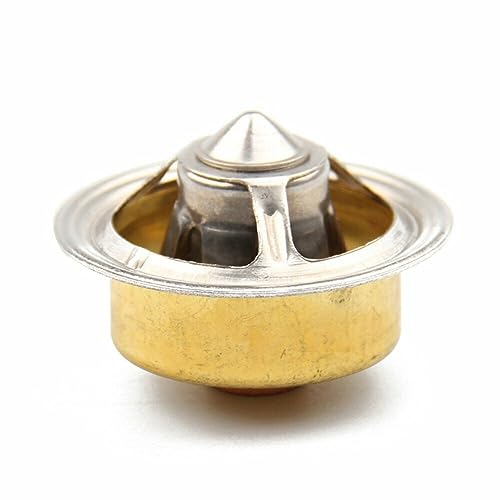
High Performance/High Flow Thermostat-160 Fahrenheit Degrees For GM/Ford/AMC

Edelbrock 8603 High Flow Thermostat 053 mm / 2 3/32 in. 160 Deg. High Flow Thermostat

Edelbrock 8604 High Flow Thermostat 053 mm / 2 3/32 in. 180 Deg. High Flow Thermostat


How this guide was assembled
Our research drew on the published catalogues and technical literature of Mishimoto, Gates, Stant and MotoRad, on the installation documentation supplied with Mr. Gasket performance thermostats, and on standard automotive engineering references describing wax element behaviour, bypass architecture and cooling system design. Flow improvement figures are reported as the ranges manufacturers themselves publish from bench measurement, and temperature guidance reflects the calibration steps those makers offer across their ranges. Where folklore and engineering sources disagreed, the engineering sources governed, which is why several popular beliefs receive direct correction in the myths section above.
That documentary basis also defines the limits of this guide. Cooling behaviour is ultimately specific to each engine, radiator and climate combination, so the recommendations here frame decisions rather than dictating part numbers for individual vehicles. A reader who logs a baseline, chooses a rating by use case, verifies fitment against the engine code and checks the result with real data afterwards has applied the guide as intended, whatever specific brand ends up bolted into the housing.
Fitted thoughtfully, a high flow thermostat is less a performance trophy than a quiet widening of margins: the grade that no longer frightens the gauge, the summer jam that passes without a glance at the temperature needle, the tow that ends with the engine as composed as it began, and that composure, earned by one small valve opening wider at exactly the right moment, is the real product being bought.