Our Top Picks
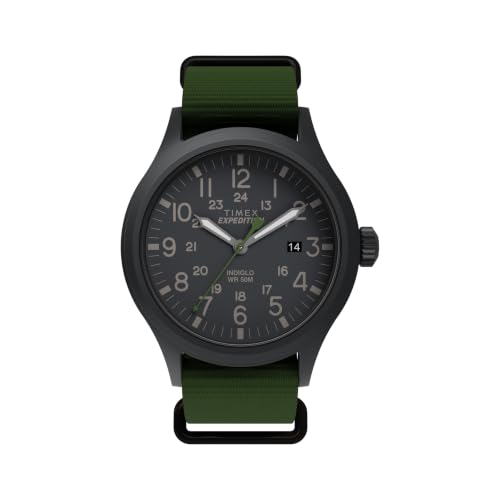
 Timex Men's Expedition Rugged Metal Field 45mm WatchOne Size5 x 3 x 5 inches0.18 poundsCheck on Amazon
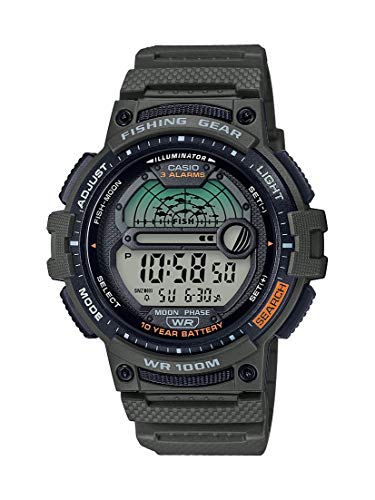
 Casio FT500WC-3BVCF Men's Forester Sport Watch with NylonAdult4 x 1 x 1.5 inches0.3 poundsCheck on Amazon

What's inside
- Why anglers ask more of a watch than the time
- Tide graphs: the headline feature, examined
- Moon phase and solunar thinking
- Barometers: pressure trend as a fishing instrument
- Compasses, thermometers, and the supporting sensor cast
- Water resistance: what 100 and 200 meters really buy
- Displays that survive noon on open water
- Dedicated tide watches versus smartwatches with tide apps
- Timers, alarms, and catch logging
- Fit, bulk, and the casting arm
- Matching the watch to the water you fish
- Setup day: configuring a fishing watch properly
- Care, corrosion, and making one watch last a decade
- How the comparisons behind this guide were framed
- Common mistakes when buying a fishing watch
- Safety roles a watch quietly performs
- Reading the spec sheet like an angler
- A short history of time and tide on the wrist
- Night fishing and the dark-hours specification
- Freshwater depth: rivers, reservoirs, and ice
- Value tiers and where the money goes
- Environmental notes for conscientious anglers
- How different coasts change the specification
- Teaching the next angler: watches as mentoring tools
- When the watch should stay home
- Accessories and small upgrades that punch above their weight
- What a season of data teaches
- Buying for someone else: the angler gift problem
- Warranty, support, and the maker’s long memory
- A note on trusting predictions
- Check prices on Amazon
- Final selection advice
As an Amazon Associate I earn from qualifying purchases. This post may contain affiliate links at no extra cost to you.
If you purchase through a link on this page, we may receive a small commission from the seller, which funds further guide research at no added cost to you.
Why anglers ask more of a watch than the time
On the water, time is not a single number. It is a stack of overlapping cycles: the tide rising over a flat, the moon pulling that tide higher or letting it fall slack, pressure sliding ahead of a weather front, light fading toward the evening rise. A fishing watch earns its place by compressing that stack onto the wrist, where it can be consulted with wet hands, in spray, under a noon sun so bright that an ordinary screen turns to a mirror. The models in this category range from single-purpose tide instruments to connected watches running angling applications, and the right choice depends on how an individual actually fishes.
Boat anglers, kayak fishers, surf casters, and pier regulars stress a watch differently. The boat angler glances between electronics and needs the wrist as backup when the chartplotter is busy with sonar. The kayak angler sits close to the water, drips on everything, and cannot risk a phone. The surf caster wades waist-deep in salt water, reads the beach with polarized lenses, and times casts to the push of a flooding tide. A watch that delights one of them can annoy the other two, which is why this guide treats features as tools matched to styles rather than as a ladder from basic to best.
Three promises define the category. First, environmental prediction: tide state, moon phase, and pressure trend presented clearly enough to act on. Second, survival: sealing, materials, and construction that shrug off salt, sand, sunscreen, fish slime, and the occasional knock against a gunwale. Third, legibility under hostile light, from pre-dawn gloom at the ramp to glare off open water at midday. A watch that nails prediction but dies after a season of salt exposure has failed, as has a tank of a watch whose tide display needs a menu dive to reach.
Tide graphs: the headline feature, examined
A tide graph plots predicted water height across the day, usually as a curve or a rising-and-falling bar display, with markers for high and low water and an arrow or readout for the current state. The underlying predictions come from harmonic models built on astronomical cycles, stored in the watch for a library of locations. Dedicated fishing watches typically carry hundreds of preset ports and beaches, and the user selects the nearest station during setup. Accuracy then depends on how representative that station is of the exact creek, inlet, or flat being fished, a caveat no display can remove.
Semidiurnal coasts, with two highs and two lows of similar height each day, suit simple graphs beautifully. Mixed tides, where the two highs differ markedly, reward watches that label higher high and lower high water distinctly. Diurnal regions with a single daily cycle compress the graph’s drama but not its usefulness, since the timing of the one flood still governs when bait moves. Anglers on the Great Lakes or landlocked reservoirs can ignore tide functions entirely and should redirect budget toward barometric and durability features instead.
Update behavior separates thoughtful designs from lazy ones. Better watches let the user offset the station prediction by a chosen interval, compensating for the lag between a reference port and an upriver creek where high water arrives later. Some store multiple favorite locations for anglers who rotate among launches. A few connected models refresh predictions from current harmonic data when paired, while standalone units rely on their stored tables, which remain valid for years because tides are astronomy, not weather.
Reading a tide display at a glance
The test of a tide screen is the two-second read: gloves off or on, can the angler tell whether the water is flooding or ebbing, how far through the cycle it sits, and when the next turn comes? Curve displays answer the first two questions intuitively, since slope direction and position read like a landscape. Numeric countdowns to the next high or low answer the third. Designs that split these across separate screens force button presses with wet fingers, and every extra press is a small tax paid repeatedly across a season.
Sunrise and sunset data usually share the tide screen or sit one press away, and their placement matters because dawn and dusk anchor most fishing plans. Moonrise and moonset appear on richer models. When comparing candidates, simulate the morning routine: from the home screen, count the presses needed to see tide state, next high water, sunrise, and pressure trend. The watch with the lowest total usually wins the season, whatever its other specifications claim.
Moon phase and solunar thinking
Moon phase displays show the lunar age and illumination, information anglers use on two levels. The practical level is tidal: spring tides near new and full moons run higher and stronger, neap tides near the quarters run weaker, and current strength in passes and inlets follows that rhythm. The traditional level is solunar theory, which holds that fish activity peaks around moonrise, moonset, and the moon’s upper and lower transits, modulated by sunrise and sunset. Watches that compute solunar periods package this into activity forecasts, sometimes rendered as a simple fish-icon rating for each hour.
Skepticism is healthy here. Fisheries science supports tide and light as genuine drivers of feeding behavior, while solunar tables rest on thinner evidence and plenty of anglers treat them as entertainment. A balanced approach uses moon data primarily for its tidal and illumination implications: a full moon lighting a flat at midnight changes night fishing entirely, and bright moonlit nights often shift feeding toward dawn. Buy the moon phase display for those concrete uses, and let any activity rating serve as a tiebreaker between two otherwise equal launch times rather than as gospel.
Display quality varies. A simple icon wheel showing eight phases suffices for tide planning. Precise lunar age in days helps anglers who keep logs and correlate results across a season. Southern hemisphere users should confirm the display flips correctly, since the moon’s appearance mirrors below the equator and not every manufacturer bothers to account for it.
Barometers: pressure trend as a fishing instrument
A barometer measures atmospheric pressure, and its trend over the past hours is the signal anglers actually use. Falling pressure ahead of a front is widely associated with a feeding window as fish sense change coming, while the bright, cold high-pressure days after a front often fish slowly until pressure stabilizes. The watch cannot judge the fishing, but it can draw the curve: better models graph pressure across the last twelve to twenty-four hours and sound or display a storm alert when the drop rate crosses a threshold.
Sensor placement and venting decide real-world accuracy. The sensor needs air access, which conflicts with sealing, and manufacturers solve this with protected ports that resist water entry while admitting air slowly. Readings lag behind sudden changes accordingly. Altitude confounds pressure at elevation, so mountain reservoir anglers should value models with altimeter compensation or manual calibration against a known reference, otherwise weather trend and elevation change blur into one misleading line.
Storm alerts deserve both credit and restraint. A rapid-drop warning on open water is a safety feature with genuine value for small-boat and kayak anglers who may be focused on the fishing and slow to notice a darkening horizon. It supplements, never replaces, a forecast checked before launch and eyes kept on the sky. Watches that let the user adjust alert sensitivity reduce false alarms in climates where afternoon pressure dips are routine.
Compasses, thermometers, and the supporting sensor cast
A digital compass steadies navigation when a creek braids into identical channels or fog erases the shoreline. Wrist compasses need calibration away from metal and motors, and they drift if the wearer stands beside an outboard or a steel hull, yet as a backup that points roughly home they have settled many uneasy moments. Declination adjustment, available on better models, aligns magnetic and true north for map work. Anglers already carrying a chartplotter may rank compass low; paddle anglers in marsh country often rank it near the top, close behind the tide graph itself, as the survey of best gps smartwatches also reflects for navigation-first buyers.
Thermometers on watches measure the air at the wrist, not the water, and body heat biases them upward while worn. Off the wrist for twenty minutes they approximate air temperature honestly. Water temperature, the figure anglers truly want, still comes from a sonar unit, a handheld probe, or a boot in the shallows. Treat the watch thermometer as a comfort and safety gauge for the angler rather than a fish-finding input, and its limitations stop being disappointments.
Depth ratings and fish-depth alarms appear on a few specialist models aimed at divers and spearfishers more than rod-and-line anglers. For most readers here, the relevant depth question is simpler: whether the watch tolerates repeated immersion, pressure from a wading fall, and the shock of cold water on a sun-heated case. Those stresses are covered by the water resistance discussion below rather than by headline depth numbers.
Water resistance: what 100 and 200 meters really buy
Water resistance ratings describe static pressure in laboratory conditions, expressed as meters or atmospheres. In practice, a rating suitable for swimming and snorkeling begins around the level commonly marked 100 meters, which tolerates wading, launching, rain, and repeated dunking while handling fish. The higher 200-meter class adds margin for surfing casts, whitewater, and the pressure spike of hitting the water during a fall, and it usually arrives with a screw-down crown and caseback that seal more positively than push-in designs.
Buttons are the weak point. Many manufacturers warn against pressing buttons underwater regardless of rating, because a button stroke can momentarily break a seal. Fishing watches designed for the surf sometimes certify their buttons for underwater use, a specification worth hunting for if the angler intends to log catches or start timers while standing in the wash. After saltwater exposure, a freshwater rinse is not optional folklore; salt crystals form in bezel tracks and button shafts, and dried brine under a rotating bezel grinds like sandpaper.
Gaskets age, sunscreen attacks some rubber compounds, and hot showers stress seals with heat and soap. A watch that fishes hard deserves a pressure check and gasket service on the maker’s recommended cycle, and any fogging under the crystal after immersion means immediate service rather than hopeful waiting. Fog is water already inside, and movements corrode quietly from that moment onward.
Straps and hardware for salt duty
Silicone and resin straps dominate this category because they ignore salt, rinse clean, and stay flexible in cold water. Ventilation channels molded into the underside reduce the rash that a sealed wet strap can raise during a long summer day. Fluoroelastomer, used on premium sport straps, resists sunscreen and fuel better than basic silicone and keeps its surface finish longer. Nylon webbing dries slowly and holds odor; leather has no business near a launch ramp; steel bracelets trap grit in their links and add weight that a casting arm notices by evening.
Buckles and spring bars are small parts with outsized failure consequences. Marine-grade stainless hardware resists the pitting that cheap plated buckles suffer within a season. Shoulderless spring bars or drilled lugs make strap swaps tool-light for cleaning. Some anglers add a one-piece pass-through strap so that if one spring bar fails, the watch stays on the wrist instead of sinking, an inexpensive insurance policy borrowed from dive practice. Quick-release pins trade a little of that security for convenience, and the trade should be a conscious one.
Displays that survive noon on open water
Sunlight legibility is where fishing watches separate from ordinary digitals. Transflective memory-in-pixel screens grow clearer as light brightens, reflecting ambient light back through the display, and they sip power while doing it. Conventional backlit LCDs remain readable if their contrast is strong, though direct sun can wash weaker panels. Full-color smartwatch screens fight the sun with brightness, win for a few hours, and pay for the victory in battery life, which becomes the defining compromise of that entire branch of the category.
Polarized sunglasses complicate every screen technology. Polarization axes can clash between lens and display, darkening or rainbow-shifting the readout at certain wrist angles. Anglers who fish behind polarized lenses all day should test a candidate watch while wearing their actual glasses, tilting through casting and paddling angles. Some displays orient their polarizers to minimize the conflict; others go nearly black at the worst angle, which tends to be exactly the angle of a raised forearm during a retrieve.
Night legibility runs the other way. A backlight bright enough for the ramp at 4 a.m. should not blast night vision needed to spot a subtle surface take. Red or dimmable backlights, and electroluminescent panels with even low output, preserve adaptation better. Lume on analog-digital hybrids helps for the hour hand at least. Night surf and dock anglers also value a light that can be triggered by a large button found by touch, since looking down to hunt for a tiny pusher wastes the dark adaptation the light was meant to protect.
Dedicated tide watches versus smartwatches with tide apps
The dedicated instrument makes one argument: reliability through simplicity. Its tide database lives onboard, its battery runs for years or recharges by sunlight, its buttons work with gloves, and a dunking changes nothing. It asks for no phone, no account, and no updates, and it will present the same tide screen in year five that it presented on day one. For anglers who fish the same coast repeatedly, that stability is not a limitation but the entire point.
The smartwatch counters with breadth. Tide applications draw on extensive station networks and can layer wind, swell, water temperature from networked buoys, and radar. Notifications warn of weather changes, and the same device logs the trip, plays the ramp-side podcast, and answers a call from the marina. Buyers comparing that route will find the field surveyed in best outdoor smartwatches, where rugged connected models are the focus. The costs are charging discipline measured in days, screens that dim to save power, touch interfaces that misbehave under spray, and app subscriptions or phone dependencies that can strand data at the worst moment.
A middle path has emerged in connected outdoor watches with onboard tide data and physical buttons alongside their touchscreens. These keep working when the phone stays in the truck, and their batteries stretch to weeks in restrained modes. They suit anglers who want mapping and logging without surrendering the standalone virtues. The honest summary is that dedication wins on trust, smartwatches win on information volume, and hybrids split both differences at a higher purchase cost.
Battery strategies for a full season
Solar charging changes the ownership experience for watches that live on sunny wrists and dashboards; a solar tide watch can run indefinitely through a season without a cable, provided it sees light between trips. Coin-cell digitals trade that freedom for slim cases and multi-year intervals, with a jeweler visit or a careful home swap at the end. Rechargeable smartwatches demand a rhythm: top up after each trip, carry a cable on overnighters, and learn which features, such as constant satellite tracking, drain the cell fastest.
Cold is the silent variable. Lithium cells lose capacity in winter, and an ice-fishing or steelhead angler may see a smartwatch surrender hours earlier than its summer performance suggested. Dedicated digitals with coin cells tolerate cold more gracefully. Whichever chemistry a watch uses, storing it half-charged rather than flat, and out of a hot vehicle, extends the battery’s working life across seasons.
Timers, alarms, and catch logging
Tournament anglers live by the clock in a different way: lines-in and weigh-in times, culling decisions, and runs back to the dock all ride on alarms that must be unmistakable over outboard noise. Vibration alarms earn their keep here because an audible beep vanishes under engine and wind, while a buzzing wrist registers instantly. Multiple daily alarms serve medication, check-in calls, and ramp meetings for recreational anglers as well.
Countdown timers assist everything from chum slick intervals to soaking cut bait on a schedule and rotating baits in a spread. A regatta-style timer with big digits and one-button restart suits repetitive cycles. Stopwatch functions time a drift, a retrieve cadence, or the run between spots. These are humble features, present on nearly every candidate, yet their button ergonomics decide whether they get used with fish-slimed hands or abandoned by the second trip.
Catch logging is the smartwatch’s strongest angling-specific claim. A couple of presses can stamp time, position, and conditions onto a record later enriched with species and lure, building a private dataset that reveals patterns across seasons. Dedicated watches mostly leave logging to notebooks and phones. Anglers who already keep a disciplined log elsewhere gain little; those who never quite write things down may find the wrist prompt finally makes the habit stick, and the multisport models in best multisport smartwatches show how mature that logging ecosystem has become.
Fit, bulk, and the casting arm
Fishing watches trend large because their screens carry graphs, but bulk has a cost on the water. A tall case catches fly line, snags cast-net mesh, and bangs rod blanks during a scramble. Low-profile designs with recessed buttons slide under cuffs and gloves in cold weather. Left-handed casters who wear the watch on the rod wrist should check button placement against the reel handle’s arc; a proud crown digging into the back of the hand during a long retrieve becomes a genuine grievance by midday.
Weight interacts with repetition. Thousands of casts in a day magnify every gram on the wrist, and resin cases earn their popularity here as much as for price. Balance matters too: a heavy head on a loose strap migrates around the wrist, so the screen faces sideways at the moment of the glance. A strap with micro-adjustment, or a second keeper that locks the tail, keeps the display parked where the eyes expect it.
Skin under a wet strap all day needs consideration. Rinsing the strap, rotating wrists occasionally, and choosing ventilated designs prevent the itchy rash that can sour a week’s trip. Anglers with nickel sensitivity should confirm buckle composition, since prolonged damp contact worsens reactions that dry office wear never provokes.
Matching the watch to the water you fish
Surf casters should weight sealing, button usability in the wash, and tide offset features most heavily, because their entire method is scheduled by the flood. Kayak and paddle anglers add compass backup, one-glance tide state, and a strap system that cannot lose the watch in a capsize. Offshore crews, surrounded by vessel electronics, often value the watch as an independent storm alert and sunrise reference, plus a timer for trolling rotations.
Freshwater specialists can skip tide hardware entirely. Bass and walleye anglers get more from barometric trend, sunrise data, and durable construction, while river anglers add current-relevant timing from dam release schedules that no watch predicts, making alarms and timers their core tools. Ice anglers prioritize cold-tolerant batteries, glove-friendly buttons, and displays that stay responsive when lesser screens grow sluggish in deep cold.
Fly anglers, wading with deliberate quiet, tend to prefer slim analog-digital hybrids or restrained digitals that do not flash or chime over spooky fish, with vibration silenced and backlights dimmed. Pier and jetty regulars split the difference: tide and moon data for session timing, strong sealing for spray, and a screen readable while holding a rod in the other hand. The exercise is always the same: list the three decisions the watch must inform on your water, then buy the model that informs them fastest.
Setup day: configuring a fishing watch properly
Most disappointment in this category is born during setup, not on the water. Tide location selection deserves ten unhurried minutes: find the station nearest the actual fishing grounds, then check its predicted highs against a published local table or a trusted tide calendar for the coming weekend. If the watch allows an offset, set it from local knowledge, since creeks behind barrier islands can lag the inlet station substantially. Write the chosen station name in the trip notebook so a later battery change does not silently reset the watch to a default port hundreds of miles away.
Calibrate the compass outdoors, away from vehicles and docks full of steel, using the figure-eight or rotation routine the manual describes. Set the barometer against a known local reading from an official weather station report, and confirm whether the watch displays station pressure or sea-level pressure, because mixing the two corrupts trend interpretation. Configure sunrise and sunset for the home port, and decide in advance which alarms earn vibration and which stay silent.
Then rehearse the glances. With the watch on the wrist it will fish from, run through tide state, next high water, pressure trend, and sunset time until the button sequence is muscle memory. Doing this at the kitchen table, rather than discovering a submenu while a school of fish works a rip, is the cheapest performance upgrade available in the entire category.
Care, corrosion, and making one watch last a decade
Salt is patient. It creeps into bezel assemblies, button shafts, and strap hardware, then crystallizes as water evaporates, expanding and abrading as parts move. The countermeasure is boring and total: rinse the watch in fresh water after every salt session, work the bezel and buttons gently under the rinse where the maker permits, and let the watch dry fully before storage. A soft brush lifts grit from strap channels. None of this takes three minutes, and all of it separates a ten-year tool from a two-season regret.
Ultraviolet light ages resin cases and straps, turning surfaces chalky and eventually brittle. Storing the watch out of dashboard sun, and rotating straps so no single band absorbs every hour of exposure, slows the process. Sunscreen and insect repellent deserve respect as solvents; some repellent formulas craze plastic crystals and soften strap finishes on contact, so apply sprays before the watch goes on and let them dry.
Battery changes on sealed fishing watches are best done by a watchmaker who replaces gaskets and pressure-checks the case afterward. A home swap that saves a small fee but skips the gasket can convert a surf-rated instrument into a fair-weather watch without any visible sign. Keep the service receipt with the manual; a documented pressure check also reassures a future buyer if the watch is ever sold on.
How the comparisons behind this guide were framed
Candidates were assessed on published specifications and documentation: tide station libraries and offset options, moon and solunar data presentation, barometer graphing windows and alert thresholds, stated water resistance and button-use policies, display technology, strap materials and hardware, case dimensions and weight, and battery system. Manufacturer manuals, tide prediction references from national hydrographic offices, and materials data for strap compounds informed the criteria and the cautions.
Weight in the scoring went to the speed of the essential glances and to survival traits, because those decide satisfaction across a season. Feature count alone earned little; a watch with twelve functions buried in menus loses to one with six functions surfaced properly. That editorial stance mirrors how the watches are actually lived with, and it is why some spec-sheet champions rank below simpler instruments in the discussion above.
Common mistakes when buying a fishing watch
The first mistake is buying tide capability for water that has none, or skipping it for a coast where the tide is the whole game. The second is trusting a headline depth figure while ignoring the maker’s button policy, then cheerfully logging a catch underwater and flooding the case. The third is choosing a touchscreen-only model for a style of fishing that keeps hands wet from launch to landing, and spending the season wiping the screen on a shirt that is also wet.
A fourth mistake hides in station libraries: assuming the nearest listed port predicts a backcountry creek accurately, then blaming the watch when the flat floods an hour behind the graph. The instrument reported its station faithfully; the mismatch belonged to geography. A fifth is neglecting the strap until it fails over deep water. Straps and spring bars are wear items, and inspecting them each spring is cheaper than watching a favorite watch spiral into the channel.
Finally, many buyers over-purchase connectivity. If the phone stays sealed in a dry bag all day, a watch whose best features depend on that phone delivers a fraction of its promise. Honest reflection about the actual trip, rather than the imagined one, sorts the shortlist faster than any comparison chart. The rugged end of the connected market, covered in best adventure smartwatches, suits anglers whose trips genuinely blend navigation, logging, and communication; everyone else can let a dedicated instrument do fewer things flawlessly.
Safety roles a watch quietly performs
Beyond fish, a fishing watch is safety equipment. The storm alert has already been mentioned, but the humbler functions matter as well: a reliable sunset time disciplines the run home, a countdown timer can ration a drift away from the ramp, and a compass bearing taken on the outbound leg gives a fog-bound angler a line to follow back. Some connected models add incident detection and location sharing, which carry real value for solo anglers, provided the features are configured before they are needed and the battery budget accounts for them.
Man-overboard and solo-wading scenarios reward simplicity. A watch that keeps displaying the time and tide without interaction is a small anchor of orientation for someone who has taken a fall, gotten cold, and needs to think clearly. This is another argument for physical buttons and against deep menus: under stress, fine motor skills and patience are the first capacities to leave, and the interface should already know that.
Reading the spec sheet like an angler
Translate every claim into a trip moment. Tide database size matters only if your grounds are covered, so search the station list for your actual launch rather than admiring the total count. Battery figures quoted in time-only mode flatter connected watches; look for the number with satellite tracking active if logging matters, or with the tide screen used hourly if it does not. Water resistance should be read alongside the button policy and the warranty’s water-damage language, which together describe the maker’s real confidence.
Case dimensions deserve the same translation. Diameter tells only part of the story; thickness decides cuff and line behavior, and lug-to-lug length decides whether the case overhangs a narrow wrist and catches on everything. Weight quoted without the strap understates what the casting arm will feel. Where a retailer lists full specifications, compare them against a watch already owned and liked, and let that anchor object arbitrate the numbers.
The first trip audit
After the maiden outing, interrogate the watch while the memory is fresh. Did the tide graph match the water at the launch, and if not, by how much and in which direction? Was the screen readable at the brightest moment without removing sunglasses? Did any button get pressed accidentally by a cuff, a rod butt, or a net handle? Did the strap stay parked or migrate? Each answer converts directly into a setting change, an offset correction, or a strap adjustment, and a watch audited this way after one trip performs like a seasoned tool by the third.
Keep notes across the first season, especially the offset that finally aligns predictions with your creek and the pressure pattern that preceded your best morning. Those two personal data points are worth more than any generic forecast the watch ships with, because they describe your water rather than the average coast in a database.
A short history of time and tide on the wrist
Mariners carried tide tables in printed almanacs for centuries before electronics shrank the predictions onto a wrist. Early digital tide watches appeared once harmonic data for major ports could be stored in modest memory, and they were revelations for surf anglers who had been copying tables into waterproof notebooks. Each generation since has widened the station library, sharpened the graph, and hardened the case, while the underlying astronomy has not changed at all: the moon still runs the schedule, and the watch is merely its most convenient messenger.
Barometric fishing lore is older than the wristwatch itself. Nineteenth-century angling writers advised watching the glass before a trip, and the falling-glass feeding window entered folk knowledge long before sensors could graph it. The modern watch unites these two inheritances, tide table and barometer, in one sealed case. Appreciating that lineage clarifies the product: it is not a gadget that happens to suit fishing, but the current form of instruments anglers have consulted for generations.
Night fishing and the dark-hours specification
After dark, the priorities reshuffle. Tide state still governs, but the interface must serve eyes adapted to darkness and hands busy with rod, net, and lamp. A backlight that fires from a big tactile button, in a color that spares night vision, outranks almost every daytime virtue. Lume plots on hybrid dials give a silent hour check without any light at all, useful when a headlamp beam would scatter baitfish or spook a working flat.
Moon phase data earns a second salary at night, because moonlight itself becomes a fishing variable: bright nights favor sight-feeding predators and shift tactics toward silhouettes and surface work, while dark new-moon nights reward glow lures and sound. A watch that shows illumination percentage alongside phase helps plan which nights deserve the effort of a 2 a.m. launch. Vibration alarms, set for the tide turn, let an angler resting in a anchored boat wake for the window without an audible alarm carrying across still water.
Freshwater depth: rivers, reservoirs, and ice
River anglers read a different clock. Dam releases, not tides, move their water, and the schedule arrives by utility hotline or app, which makes the watch’s job the disciplined timing of the rise: alarms for the release window, timers for the wade back to the bank before current strengthens. A barometer still informs the day, and a compass still settles arguments in braided channels, but the tide graph sits idle, which is why river specialists should buy the strongest sealing and the clearest timer interface rather than the largest station library.
Reservoir anglers chase wind and light more than current. For them sunrise data, storm alerts, and a stopwatch for timing a drift across a point carry the day. Ice anglers form the extreme case: batteries sag, screens slow, straps stiffen, and buttons must answer mittened thumbs. Models proven in cold, with coin cells or generous lithium reserves and displays rated for low temperatures, are not a preference in that world but a threshold requirement, and a watch that dies at midday on the ice takes its storm warning with it.
Value tiers and where the money goes
Without naming figures, the shelf sorts into honest bands. Entry tide watches deliver the core graph, moon phase, alarms, and solid sealing in a resin case, and for a single-coast angler they may be the whole answer. Mid-range models add barometric graphing, compass, solar charging, and better screens, the cluster where most serious recreational anglers find their long-term watch. Premium connected instruments layer satellite positioning, mapping, logging ecosystems, and superior materials, charging for an information platform rather than for any single fishing function.
The right question is not which band is best but which functions will still be used in the third season. Solar charging pays every sunny week. A compass pays on the one foggy morning it settles. An activity-forecast gimmick that amuses for a month and is ignored thereafter was decoration wearing a feature’s clothing. Anglers who keep a season log, even a rough one, learn their own usage honestly and buy their second watch far more wisely than their first.
Environmental notes for conscientious anglers
A durable watch is itself an environmental choice: a decade-long instrument beats a stream of disposable electronics, and replaceable straps and batteries extend that arithmetic. Solar models cut battery waste further. When a watch does retire, its lithium cell belongs in battery recycling rather than household trash, and several makers and jewelers accept spent units at the counter.
The data these watches surface can also serve the resource. Anglers who log catches with time, tide, and pressure build the kind of local knowledge that supports careful release decisions and honest reporting to creel surveys. A watch that makes logging effortless quietly contributes to the datasets fisheries managers use, which is a respectable second career for a piece of wrist gear.
How different coasts change the specification
Geography rewrites the checklist more than brand loyalty ever will. On macrotidal coasts, where the range between high and low water can expose or drown entire flats within hours, the tide graph is a safety instrument as much as a fishing one, and its accuracy and offset handling deserve the largest share of the budget. Anglers there also learn to respect current predictions where offered, since a flooding tide across a bar can run harder than an unprepared wader expects.
Microtidal regions invert the emphasis. Where the astronomical tide barely stirs the water, wind-driven levels matter more, and barometric trend plus local knowledge outperforms the graph. Gulf and lagoon anglers in such country often choose watches for storm alerting, sunrise precision, and sheer toughness, treating the tide screen as a minor character. Neither coast is wrong; each simply exposes which features are load-bearing and which are luggage.
High-latitude anglers add twilight arithmetic: long dawns and dusks stretch the golden hours, and some watches display civil twilight times that refine launch planning beyond a bare sunrise figure. Tropical anglers trade that concern for heat management, where ventilated straps, pale case colors that absorb less sun, and displays immune to heat shimmer earn their place. Reading a spec sheet through the lens of latitude is a habit worth forming before the first order, not after the first disappointment.
Teaching the next angler: watches as mentoring tools
A fishing watch quietly teaches. A young angler given tide and moon data on the wrist starts asking why the creek fishes on the flood and rests at slack, and the answers build the observational habit that separates lifelong anglers from occasional ones. Solunar ratings, whatever their scientific standing, start conversations about light and feeding windows. Barometric curves make weather literacy tangible in a way a forecast paragraph rarely does.
For mentors, the watch also standardizes plans: meet at the ramp by a stated time, fish the stated tide, run home by the stated sunset. Shared reference points reduce the friction of coordinating a trip across experience levels. Several clubs and school programs issue simple tide watches for exactly this reason, finding that a common instrument gives beginners and veterans a shared vocabulary for the day’s decisions.
When the watch should stay home
Honesty requires a closing counterpoint in this section: some water is better fished unwatched. A rising creek that punishes distraction, a surf with a shore break that demands full attention, or a first trip whose purpose is simply to be present with a child may all go better with the instrument left in the truck. The data will keep; attention will not. Experienced anglers recognize the days when the schedule matters and the days when it is the obstacle, and a mature relationship with any tool includes knowing when to set it down.
That judgment also guards against data theater, the habit of consulting screens to feel prepared while the water offers clearer evidence to anyone watching it. Birds working, bait showering, current lines forming: the watch should sharpen attention to those signs, never replace them. Bought and used in that spirit, it remains what it was designed to be, a servant of observation rather than a substitute for it.
Accessories and small upgrades that punch above their weight
A screen protector cut for the case costs little and absorbs the scratches that rod butts, cooler latches, and granite jetty rocks would otherwise carve into the crystal, preserving both legibility and resale value. A spare strap in a contrasting color serves a practical purpose beyond style: it lets one band dry fully while the other fishes, which extends the life of both and keeps skin happier across a long trip. A small dry pouch in the tackle bag gives the watch a safe place during the messiest tasks, such as cleaning fish or handling fuel, when removal is wiser than exposure.
Charging and service accessories deserve the same forethought. A dedicated cable kept in the boat bag prevents the dawn discovery that the only cord is at home, and a printed card noting the tide station, offset, and calibration settings turns a battery change from a research project into a five-minute restoration. Anglers who travel to fish add one more item: a screenshot or notebook entry recording the home-port settings before reconfiguring the watch for a destination coast, so the return home does not begin with an hour of menu archaeology.
What a season of data teaches
Anglers who pair the watch with even a minimal log discover patterns that memory alone smooths away. The creek that seems to fish on the last of the ebb may, across twenty recorded trips, actually produce on the first of the flood under falling pressure. The flat written off at neap tides may hold its best window precisely then, when stronger currents elsewhere scatter bait. None of this requires a connected ecosystem; a pocket notebook and a watch that reliably reports tide, moon, and pressure at the moment of each catch supply the raw material.
The deeper lesson is humility about single-trip conclusions. Weather, tide, and light conspire differently every outing, and the watch’s contribution is to make those variables visible enough to learn from rather than to promise outcomes. Over seasons, that visibility compounds into the local expertise that newcomers mistake for instinct. The instrument does not create the expertise, but it shortens the apprenticeship, trip by recorded trip.
Buying for someone else: the angler gift problem
Fishing watches are frequent gifts, and they fail as gifts in one specific way: the giver buys for the fishing they imagine rather than the fishing the recipient does. A surf caster handed a delicate connected watch with a two-day battery will smile, wear it twice, and return to a battered tide digital that has survived six seasons. The corrective is a single question about where and how the recipient actually fishes, asked early enough to steer the purchase, plus a receipt kept without embarrassment.
Pre-configuring the gift multiplies its value. Setting the home tide station, calibrating the compass, and silencing the alarms the recipient will not want transforms the first morning from a manual-reading exercise into a fishing trip. Include a note, in plain language, listing what was set and how to change it. That small courtesy respects the recipient’s independence far more than a surprise left sealed in its box, however generous the intention behind it.
Warranty, support, and the maker’s long memory
A fishing watch lives a harder life than most consumer electronics, so the support behind it matters. Makers who publish tide station lists, firmware notes, and gasket service intervals treat the product as an instrument with a lifespan; makers who publish only launch marketing treat it as a seasonal accessory. Warranty language about water damage deserves a careful read before purchase, because exclusions there reveal how confidently the case was engineered. A brand that sells replacement straps, buckles, and bezels years after launch is also telling you it expects the watch to still be fishing then.
Community knowledge fills the gaps manuals leave. Owner forums for long-lived tide models accumulate offset figures for obscure creeks, battery-change walkthroughs, and strap combinations no retailer lists. A model with that kind of following offers a support network that outlasts any single company’s help desk, and for anglers far from a watchmaker, that network can be the difference between a retired watch and a repaired one. Longevity, in the end, is a feature like any other, and it belongs on the checklist beside the tide graph and the depth figure.
A note on trusting predictions
Every figure a fishing watch displays is a model of the world rather than the world itself. Tide predictions assume average weather; a strong onshore wind can hold water in a bay well past the predicted low, and a hard offshore blow can drain a flat early. Barometric trend describes the air mass, not the fish. Moon phase is exact astronomy applied to inexact biology. None of this diminishes the instrument; it defines the skill of using it, which is to hold the prediction in one hand and direct observation in the other, and to let the water arbitrate whenever the two disagree. Anglers who internalize that relationship stop being disappointed by forecasts and start being educated by them, because every mismatch carries information about how local water answers regional forces, and that information, accumulated quietly, is the real treasure a season with a good watch can bank.
Check prices on Amazon
Live listings for the shortlist in this guide are pulled from Amazon below, so prices and availability are always current at the moment you look.


Final selection advice
Write down your water, your style, and your three essential glances. Shortlist the watches that answer those glances fastest, verify their station library covers your launch, confirm the button and sealing policies match how wet your fishing truly gets, and choose the strap system you would trust over the deepest channel you cross. Then set it up slowly, audit it after the first trip, and let a season of small corrections tune it into an instrument that feels personally calibrated.
One habit separates satisfied owners from serial returners: they judge the watch across a month of varied trips rather than a single outing. A screen that seemed dim on a gray morning may prove perfect at noon; a strap that felt stiff in the shop may break in by the third launch; a tide offset that missed on a windy day may prove exact in calm weather. Give the instrument a fair sample of your real fishing before verdicts harden, and record those impressions alongside the trip notes so the judgment rests on evidence rather than on the mood of one difficult morning when the fish, for their own reasons, declined every offering regardless of what any dial or graph had promised.
The best fishing watch is the one still on your wrist, still trusted, when the light goes strange and the tide turns, because that is the moment it was bought for.