Our Top Picks


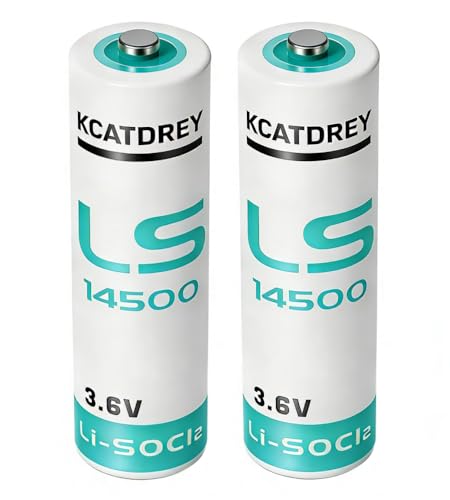
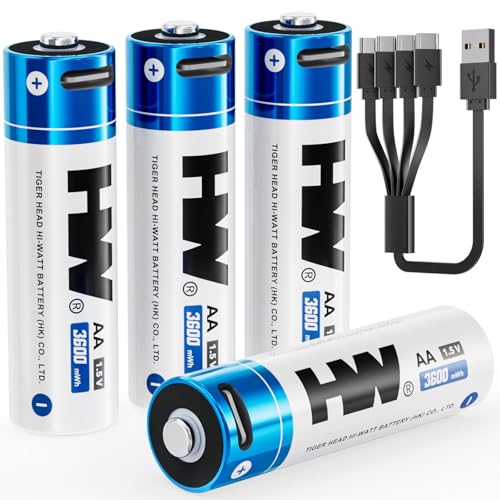

What's inside
- The core warning: same size, different voltage
- Anatomy of a 14500: what the numbers mean
- Protected versus unprotected: the circuit that changes the cell
- Capacity: real numbers versus wrapper fiction
- Discharge ratings: feeding high-output lights
- Charging: the CC/CV discipline
- Where the 14500 belongs: flashlights first
- Safety: the habits that make lithium boring
- Storage and everyday management
- Buying checks that actually protect a purchase
- Myths and recurring mistakes
- Check prices on Amazon
- Questions owners ask repeatedly
As an Amazon Associate I earn from qualifying purchases. This post may contain affiliate links at no extra cost to you.
A note on how this page is funded before any cell is discussed: some links that leave this page are affiliate links, and following one to a purchase may earn a commission, while the commission has no influence on which cells are covered or what is said about them. Everything below is grounded in manufacturer datasheets, published discharge graphs, charger makers’ documentation and recurring themes in owner reports, with capacities and limits quoted from those sources rather than from promotional wrapper copy.
The 14500 is the most misunderstood small battery in common circulation because it wears the exact silhouette of an AA cell while behaving like nothing of the sort. Inside the familiar 14 millimetre diameter can sits a lithium-ion cell with a nominal voltage of 3.7 volts and a full-charge voltage of 4.2 volts, roughly two and a half times the voltage of the alkaline AA it impersonates. Every benefit and every hazard in this guide flows from that single fact, so it will be repeated until it cannot be forgotten.
Used in equipment designed for it, the 14500 is superb: compact flashlights reach outputs impossible on a single AA, and small devices gain rechargeable economy without growing in size. Used as a casual substitute in equipment designed for 1.5 volt cells, the same cell can destroy electronics in seconds, overdrive motors and lamps into failure, or turn a child’s toy into a repair bill. This guide therefore spends as much effort on where the cell must never go as on which versions deserve money, because in this category the negative knowledge protects more property than the positive knowledge.
The structure mirrors that priority. Voltage and compatibility come first, then the protected-versus-unprotected divide that decides whether a given cell even fits a given device, then honest capacity, discharge ratings, charging discipline, the flashlight applications where the format shines, safety and storage, and finally the buying checks and myths that separate a sound purchase from a drawer of regrets. Readers who came only for a quick answer should at least absorb the compatibility section whole. best 18650 battery chargers
The core warning: same size, different voltage
An AA alkaline cell delivers about 1.5 volts fresh and slides toward 1.0 volt as it empties. A nickel-metal hydride AA rechargeable runs near 1.2 volts for most of its cycle. A 14500 lithium-ion cell starts at 4.2 volts off the charger, sits near 3.7 volts through its working life, and should be considered empty around 3.0 volts. Any device whose electronics, lamp or motor were designed around the first two profiles receives a violent overvoltage from the third, with no warning from the shape of the battery compartment, which accepts the cell gratefully and betrays the owner afterwards.
Failure modes from this substitution are documented across owner reports with dreary variety. LED drivers without wide input ranges burn out or run far beyond their thermal design until solder joints suffer. Small DC motors spin at multiples of their intended speed, wear brushes rapidly and overheat windings. Incandescent bulbs in older torches flash brilliantly and die. Radio and toy circuits with components rated for 3 volts from two AA cells face 8.4 volts when two 14500 cells replace them in series, a mistake that doubles the error and usually ends the device on first switch-on.
The series point deserves emphasis because multi-cell devices multiply everything. A two-AA device expects roughly 3 volts; two 14500 cells hand it 8.4 volts fully charged. A four-AA device expects 6 volts and receives nearly 17. Owners sometimes reason that one 14500 plus a dummy spacer in a two-cell device gives a modest boost, and in a narrow set of tolerant flashlights that arrangement is a known hobbyist practice, yet as a general habit it still feeds a device fifty percent more voltage than its designer chose, with the spacer itself adding a failure point if it shifts or is forgotten during a later cell change.
Devices that legitimately accept both chemistries exist and say so explicitly. Dual-fuel flashlights are the main example, with manuals stating AA or 14500 compatibility and drivers designed for the full 0.9 to 4.2 volt span. The wording matters: a light that accepts a 14500 was engineered for it, with output and heat managed accordingly. Silence in a manual is not permission. If the documentation lists only AA, the engineering answer is that the question has already been decided, whatever the cell’s inviting shape suggests at the battery drawer.
A related impostor problem runs in the opposite direction. Some devices built for 14500 cells, particularly high-output flashlights, will physically accept an AA but produce only a feeble fraction of their designed output, because 1.5 volts cannot drive their boost circuits as intended. Owners occasionally conclude the light is faulty when the real fault is the cell choice. Reading the specified voltage range printed near the battery tube or in the manual resolves both directions of the confusion, which is why this guide treats that one printed line as the most important specification in the entire format.
Anatomy of a 14500: what the numbers mean
The name encodes dimensions in the convention shared with larger lithium cells: roughly 14 millimetres in diameter and 50 millimetres in length, with the final zero denoting a cylindrical cell. An AA cell is nominally 14.5 by 50.5 millimetres, close enough that the two share compartments, and different enough that small variations decide fit in tight tubes. That trailing length figure is where the protected-cell complication begins, because adding a protection circuit board and a button top stretches many 14500 cells to 52 or 53 millimetres, a growth some devices tolerate and others flatly refuse.
Inside, the cell is a conventional lithium-ion construction: a wound or stacked electrode assembly, separator, electrolyte and a steel can, using cathode chemistries of the lithium cobalt, lithium manganese or blended families depending on whether the maker optimised for capacity or for discharge rate. That internal choice explains the format’s central trade-off. A cell tuned for maximum milliamp-hours uses electrodes that dislike heavy current; a cell tuned for high continuous discharge sacrifices some capacity to keep voltage steady and temperature controlled under load. No single 14500 tops both charts at once, whatever a listing implies.
The positive terminal comes in two forms that matter mechanically. Button-top cells carry a small raised nipple that mimics the AA profile and makes contact in devices designed around that shape, including many flashlights with physical reverse-polarity protection. Flat-top cells end flush, suiting devices with recessed contacts or spring arrangements designed for them, and they sit slightly shorter. Neither is electrically superior; the correct choice is dictated entirely by the device maker’s contact design, and forcing the wrong one produces either no contact at all or a crushed spring and a dented cell top.
Wrappers carry information of wildly varying honesty. Reputable manufacturers print the model, nominal capacity, nominal voltage and often a date or batch code, and publish a datasheet whose discharge curves match what independent measurements find. Rewrap brands buy cells from factories, add their own sleeve and marketing, and range from scrupulously honest to fantastical. The buying section returns to this divide in detail, because in the 14500 size the gap between a genuine 900 milliamp-hour cell and a relabelled 400 milliamp-hour cell wearing a 2800 milliamp-hour costume is the single largest source of disappointed owners.
Protected versus unprotected: the circuit that changes the cell
A protected 14500 carries a small printed circuit board, usually at the negative end, that watches the cell and disconnects it when conditions leave the safe envelope. Typical protection functions include cutting output when voltage falls below roughly 2.4 to 2.75 volts during discharge, interrupting overcurrent or short circuits, and preventing charging above about 4.25 volts. The board adds length, a little resistance and a modest cost, and in exchange it forgives the two commonest owner errors: running a light until the cell is dragged into damaging deep discharge, and leaving a cell in a careless charger too long.
Unprotected cells omit that board entirely. They are shorter, cheaper, offer marginally lower internal resistance, and place the entire burden of voltage discipline on the device and the owner. Flashlights with their own low-voltage warning or cutoff make unprotected cells reasonably safe in practiced hands, because the light itself performs the guarding. Devices with no such electronics, and owners with no habit of checking cell voltage, are where unprotected cells go to be ruined one deep discharge at a time, or worse, to be recharged after damage in ways that invite venting.
The length penalty of protection is the format’s most practical daily friction. A protected button-top 14500 commonly measures 52 to 53 millimetres against the AA’s 50.5, and flashlight tubes, battery carriers and sealed device compartments designed tightly around AA dimensions may refuse the longer cell or accept it only with springs compressed to their limit, which stresses contacts and can crack plastic carriers over time. Manufacturers of dual-fuel lights usually publish a maximum cell length; measuring a candidate cell with calipers before ordering a handful is a two-minute habit that prevents the commonest return in this category.
Protection boards also cap current, which collides with high-output flashlights. A board set to trip at 3 or 4 amps will shut the cell down, or throttle it, exactly when a turbo mode demands 5 amps or more, and the owner experiences a light that steps down instantly or blinks off on its highest setting. High-drain protected cells with boards rated at 7 to 10 amps exist for this reason, and matching the board’s trip rating to the light’s appetite is as important as matching the bare cell’s discharge rating. A premium cell strangled by a cheap board performs like a cheap cell.
There is also a middle species worth naming: unprotected cells with a PTC element or other passive safety features inside the cap, which blunt some abuse without providing voltage cutoffs. Marketing sometimes blurs these into the word protected, so buyers who specifically need over-discharge cutoff should look for explicit mention of a PCB or protection circuit with stated thresholds, not adjectives. When a listing cannot say what its protection does, the prudent assumption is that it does little, and the cell should be priced and treated accordingly. best li ion battery chargers
Choosing between the two families reduces to three questions. Does the device have its own low-voltage cutoff or warning? Does it physically fit the longer protected cell? Does its highest mode draw more than a typical protection board allows? A device answering yes, yes and no is a protected-cell home. A high-output light with its own voltage guard and a tight tube points to quality unprotected button-tops. Owners who cannot answer the first question should default to protected cells and accept the fit checks, because the board forgives ignorance that an unprotected cell invoices immediately.
Capacity: real numbers versus wrapper fiction
Genuine 14500 capacity, from manufacturers whose datasheets survive independent measurement, clusters between about 600 and 1,000 milliamp-hours. High-capacity models from established cell makers sit near 900 to 1,000 milliamp-hours at gentle discharge rates; high-drain models trade down to roughly 600 to 800 milliamp-hours in exchange for their current ability. In energy terms a 900 milliamp-hour cell at 3.7 volts nominal stores about 3.3 watt-hours, roughly double a nickel-metal hydride AA, which is the honest reason the format delivers such striking flashlight performance despite its modest milliamp-hour headline.
Against that reality, listings advertising 14500 cells at 1,800, 2,500 or 3,000 milliamp-hours describe a physical impossibility in this can size with current lithium-ion energy density, and independent measurements of such cells routinely find 300 to 500 milliamp-hours of actual capacity. The fiction persists because buyers compare wrapper numbers and sellers who print honest figures look worse in a search-results table. Experienced buyers invert the heuristic: in this format, a modest printed number from a known maker is a credibility signal, and a spectacular number is a confession printed in large type.
Capacity also depends on how the cell is used, which honest datasheets show as a family of discharge curves. At a gentle 0.2C rate a good cell may deliver its full rated figure down to a 2.8 or 3.0 volt cutoff; at a 3 amp draw the same cell reaches cutoff sooner, delivering perhaps 80 to 90 percent of the gentle figure, with more energy lost as heat through internal resistance. Owners comparing runtime expectations against a datasheet should match the curve to their device’s actual draw, or they will accuse a healthy cell of underperforming a number that was never promised at their load.
Cycle life frames the long-term capacity story. Quality lithium-ion cells typically retain about 80 percent of initial capacity after 300 to 500 full cycles under kind conditions, fewer under deep discharge, high heat or habitual storage at full charge. A flashlight used nightly may consume a cycle every week or two, giving years of service; a cell abused to cutoff weekly and stored brim-full in a hot car can feel tired within a season. Capacity complaints in owner reports frequently trace to treatment history rather than to the cell’s birth quality, which is unglamorous and true.
Measuring capacity at home is possible with analysing chargers that discharge a cell at a set rate and count milliamp-hours delivered, and such a measurement, run once when cells are new, creates a baseline that later checks can be compared against. The figure will vary a few percent with rate and temperature, so consistency of method matters more than hunting decimal places. Cells that arrive measuring half their printed claim should go back to the seller promptly, while the return window and the evidence are both fresh, rather than into service where their weakness becomes someone else’s problem mid-task.
Discharge ratings: feeding high-output lights
Continuous discharge rating, expressed in amps, is the specification that decides whether a 14500 can feed a modern high-output flashlight without sagging or cooking itself. Small pocket lights demanding 2 to 3 amps on turbo are served by almost any quality cell. Lights extracting 5 to 7 amps from a single 14500 need cells explicitly rated for that service, with internal resistance low enough to hold voltage up under load. Pushing a high-capacity cell rated for 2 amps into a 6 amp light produces dim output, rapid heating and accelerated wear, a mismatch owners often misread as a faulty light.
Internal resistance is the mechanism behind the rating. Every cell resists current flow slightly, converting some energy to heat and dropping voltage in proportion to current. A fresh quality 14500 might present 40 to 80 milliohms; a tired or counterfeit cell can exceed 200 milliohms, at which point a 5 amp draw throws away a full volt inside the cell before the light sees anything. Chargers that display internal resistance give a rough health trend, and a cell whose resistance has doubled since purchase is announcing retirement even if its capacity figure still looks respectable on paper.
Heat is the hard boundary under all of this. A cell working near its continuous rating warms noticeably; a cell worked beyond it can grow hot enough to damage its own separator over time or trigger protection shutdowns that strand a user in darkness at the exact moment maximum output was requested. Flashlight makers who specify high-drain cells are not upselling; their turbo modes are timed thermal events even with the right cell. Respecting the discharge rating is therefore both a performance choice and the core of thermal safety in this small format.
Pulse ratings in listings deserve a sceptical read. Some sellers headline a pulse figure, the current a cell can deliver for a few seconds, in type larger than the continuous rating, and careless buyers spec their light against the wrong number. A turbo mode that runs for a minute is a continuous load for battery purposes. The datasheet’s continuous figure, at a stated temperature, is the only number that should be matched against a device’s sustained draw, and any listing that hides it behind pulse claims is telling the buyer how the rest of its specifications should be weighed.
Charging: the CC/CV discipline
Lithium-ion cells charge by a two-phase algorithm every proper charger follows: constant current first, feeding a set rate while voltage climbs, then constant voltage, holding 4.2 volts while current tapers until it falls to a small termination threshold. This CC/CV profile is not a preference; it is how the chemistry accepts charge without plating metallic lithium onto the anode, the degradation and hazard mechanism that sloppy charging accelerates. A charger that cannot describe its algorithm, termination and voltage accuracy should not be entrusted with cells, however cheerful its price or colourful its display.
Charge rate for a 14500 should be chosen with its small capacity in mind. Half the capacity in amps, the classic 0.5C, means roughly 0.35 to 0.5 amps for typical cells, and many makers specify 0.5 amps as a sensible standard rate with 1 amp as a maximum for cells that allow it. Smart chargers with selectable current exist precisely because one rate cannot suit a 14500 and a fat 26650 in neighbouring bays. Slamming a small cell at a big cell’s default rate will not usually cause instant drama, but it shortens cycle life measurably across months of repetition.
A charger intended for nickel-metal hydride AA cells must never be used for a 14500, even though the cell fits its bays perfectly. NiMH chargers detect fullness by voltage behaviour and temperature cues tuned to 1.2 volt chemistry, and their voltage ceiling and termination logic are meaningless for lithium-ion; outcomes range from chronic undercharge to dangerous overcharge depending on the unit’s design. The reverse error, a lithium charger meeting a NiMH cell, usually ends in refusal or confusion rather than damage, but the safe rule is symmetrical: chemistry and charger are a matched pair, verified by the charger’s printed supported list, not by whether the cell physically drops in. best aa chargers
Slot independence and voltage accuracy separate serious chargers from toys. A good unit treats each bay as its own channel, terminates at 4.20 volts within a tight tolerance, and does not trickle indefinitely after termination, since holding lithium-ion at full voltage with a continuing trickle ages it and, in poor designs, risks overcharge. Display of charged milliamp-hours, voltage and ideally internal resistance turns charging into monitoring, letting owners spot a fading cell across months. Given that a sound charger outlives many sets of cells, this is the component where spending up pays compound interest.
USB-powered travel chargers for lithium-ion cells have matured into legitimate tools, with single-bay units that sip from a power bank and still execute a proper CC/CV profile. Their convenience tempts owners to charge in bags, cars and tents, which returns attention to basics: charge on a hard, non-flammable surface, out of direct sun, where a rare cell failure vents heat rather than bedding. No chemistry in this guide’s scope demands fear, but lithium-ion’s energy density rewards a charging spot chosen with thirty seconds of thought rather than none.
Where the 14500 belongs: flashlights first
The single-cell flashlight is the format’s showcase application. A dual-fuel light on an alkaline AA might produce 100 to 200 lumens; the same light on a 14500, its driver finally fed the voltage it was designed around, commonly produces 500 to 900 lumens on its highest mode, with the trade-off of shorter runtime at that output and real heat to manage. This transformation, same tube, same switch, multiples of light, is why the enthusiast community adopted the cell so completely and why so many AA lights now ship dual-fuel by design.
Runtime expectations should be set by mode discipline rather than by turbo headlines. That same light will run for many hours on its low and medium modes from a 900 milliamp-hour cell, because LED efficacy at modest currents is excellent and 3.3 watt-hours is a meaningful reservoir. Owners who live on medium and visit turbo briefly experience the 14500 as a runtime upgrade over AA in every respect. Owners who camp on turbo experience physics instead, in the form of step-downs as the light defends its own temperature limits, a behaviour of the light, not a defect of the cell.
Headlamps using the format follow the same pattern with an ergonomic bonus: a 14500 weighs noticeably less than the battery arrangements it replaces in some designs, and forehead weight is felt across a whole evening. Trail runners, mechanics working overhead and campers all trade in this currency. The headlamp-specific caution is fit and contact reliability under motion; a cell a millimetre short, losing contact when the wearer looks down sharply, is worse than a slightly dimmer cell that never blinks, so button-top length and spring tension deserve checking before a night run rather than during one.
Beyond lights, legitimate 14500 homes include devices designed from the schematic up for 3.7 volt lithium power in an AA-shaped bay: certain compact fans, specialised measuring instruments, hobby electronics, some electric toothbrushes and shavers with documented lithium cells, and radio gear whose manuals name the format. The unifying trait is documentation. Each of these devices expects the voltage, manages the discharge floor, and was thermally designed for the energy involved. The format’s legitimate world is wide; it is simply bounded by print, and the boundary is the entire point.
Battery carriers and adapters add a nuance for multi-cell devices designed for 14500 cells in series or parallel packs. Cells sharing a device should be the same model, bought together, aged together and charged together, because a weak cell in a series string gets dragged below safe voltage by its stronger partners while the device still sees a plausible total. Married sets, in the hobbyist phrase, are not superstition; they are how series strings avoid reverse-charging their weakest member. A single-cell light forgives mixing; a three-cell pack invoices it.
Safety: the habits that make lithium boring
Lithium-ion’s failure mode, thermal runaway, is rare with quality cells treated properly and unforgiving of specific abuses: charging a cell that was deeply overdischarged or physically damaged, short-circuiting terminals, crushing or puncturing the can, or exposing cells to high heat. Each abuse has a corresponding habit in this section, and the habits are cheap. Retire swollen, dented or torn-wrapper cells. Never carry loose cells against metal objects; a plastic case for spares costs almost nothing and weighs grams. Keep cells out of parked-car summer heat. None of this requires expertise, only consistency.
The loose-cell warning deserves its own emphasis because the 14500’s AA disguise encourages AA habits. Alkaline AAs rattling in a drawer are a minor nuisance; a lithium cell shorted by keys or coins can heat violently in a pocket. Cases, or at minimum individual sleeves, are the standard carry method among experienced users, and flashlight holsters with a spare-cell tube solve the problem elegantly. Retailers who ship cells loose in a padded envelope without terminal protection are signalling how they regard the rest of their obligations, and buyers should listen.
Deep discharge is the quiet cell-killer this guide keeps returning to. Dragging a lithium-ion cell below about 2.5 volts dissolves copper from internal components; recharging such a cell can then create internal shorts that manifest later, which is why quality chargers refuse or only cautiously attempt recovery of cells found under roughly 2 volts, and why protected cells cut off early enough to prevent the state entirely. A cell discovered at very low voltage after months in a forgotten light should be recycled, not heroically revived, whatever its purchase price argues.
Counterfeit and rewrapped cells concentrate risk because their true origins, ages and internal quality are unknown, and their wrappers may claim protection that does not exist. Buying from established distributors who name the underlying manufacturer, avoiding marketplace listings with impossible capacities, and weighing a cell, since a genuine 14500 typically weighs around 19 to 21 grams while fakes stuffed with lesser innards often weigh far less, filters most of the danger before it reaches a charger. A kitchen scale is a surprisingly effective fraud detector in this category.
End-of-life handling closes the safety loop. Tape the terminals of spent cells, use battery recycling collection points rather than household waste, and never burn or dismantle a cell out of curiosity. A cell that vents, hisses, swells or grows hot unprovoked should be moved, if safely possible, to a non-flammable surface away from combustibles and allowed to cool undisturbed; handling a hot cell barehanded is an injury mechanism, so tools and distance come first. These instructions appear in every manufacturer’s safety sheet, and they are reprinted here because almost nobody reads those sheets.
Storage and everyday management
Lithium-ion ages by calendar as well as by cycles, and storage conditions set the calendar’s speed. The kindest regime is a partial charge, roughly 40 to 60 percent, which for a 14500 means resting near 3.7 to 3.8 volts, in a cool dry place. Stored brim-full at 4.2 volts in a warm drawer, a cell can lose a fifth of its capacity in a year without a single use; stored half-charged in the cool, the same cell loses a small fraction of that. Owners with more cells than lights should rotate stock through devices rather than maintaining a museum of slowly expiring spares.
Self-discharge in service is low, a few percent per month for a healthy bare cell, but protection boards add a tiny parasitic drain of their own, and a protected cell stored for many months can arrive at its own cutoff and need a charger’s wake-up nudge. Checking stored cells twice a year with a voltmeter or an analysing charger, and topping to storage charge rather than to full, keeps a reserve genuinely in reserve. The twice-yearly rhythm aligns conveniently with clock changes, the same mnemonic households already use for smoke alarm batteries.
Labelling defeats most management failures. A fine marker on the wrapper with purchase month and a set letter for married cells turns a drawer of identical cylinders into an inventory. Owner forums are full of mysteries that labelling would have prevented: the cell that dies young was bought three years before its supposed twin, the weak cell in a pack was a stranger substituted during a trip. In a format where age and history determine safety margins, anonymity is the enemy, and a marker pen is professional equipment.
Temperature in daily use matters at the extremes. Lithium-ion delivers reduced capacity and voltage in deep cold, recovering as it warms, and should not be charged below freezing, because charging a cold-soaked cell plates lithium internally even at modest currents. Winter users warm cells in an inside pocket before charging and accept shorter runtimes outdoors as physics rather than failure. Summer users keep spares out of sun-baked dashboards. These are the same rules larger lithium devices follow, scaled down to a cell small enough to forget it deserves them.
Buying checks that actually protect a purchase
Start with the device, not the cell: confirm in the manual that 14500 is supported, note any maximum cell length, note the highest mode’s current appetite if published, and decide protected or unprotected from those facts. Then choose a cell whose datasheet, from a manufacturer that publishes datasheets, matches on length, terminal style, discharge rating and protection where required. This order of operations sounds obvious and is violated constantly, because marketplaces present cells first and questions later. Buyers who reverse the sequence become owners of excellent cells for devices they do not own.
Vendor selection carries unusual weight in this category. Established flashlight and battery distributors stake their repeat business on genuine stock, date freshness and honest ratings, and their prices for a quality 14500 are modest in absolute terms. The saving offered by an unknown seller is typically small money against the risk of a rewrapped cell of unknown provenance performing unknown chemistry tricks inside a sealed metal tube held in a hand. Where a deal looks dramatic, the discount is usually being taken out of the cell rather than out of the margin.
On arrival, inspect before first charge: wrapper intact with no nicks at the edges where shorts begin, terminal clean and undented, weight plausible, length as advertised. Run an analysing charge if the equipment exists and compare capacity against the datasheet’s figure at a similar rate, allowing a few percent of grace. Cells failing arrival checks should be returned, not rationalised, because a cell that begins life as a question mark rarely improves under workload, and the return window is the buyer’s only period of true leverage.
Bundles of light plus cell deserve a specific glance. Reputable light makers bundle cells that suit the light’s draw and length, often their own branded protected high-drain models, and these are generally sound. No-name bundles sometimes pair a demanding light with a gentle cell that cannot feed it, producing instant disappointment that attaches unfairly to the light’s reputation in reviews. Reading the bundled cell’s rating before judging the combination saves both products from a verdict neither earned, and occasionally reveals that the bundle’s value was negative all along. best battery chargers aa aaa
Finally, buy the charger in the same decision, not as an afterthought. A household adopting 14500 cells needs a lithium-ion charger with appropriate rates for small cells, and households also running NiMH AA and AAA cells for other devices should look at quality multi-chemistry units that handle each chemistry on its own terms. The charger is the safety system, the diagnostic bench and the capacity referee for every cell in the drawer; economising there while spending freely on cells is the category’s most reliably backwards budget.
Myths and recurring mistakes
Myth: a 14500 is just a stronger AA, so it upgrades any AA device. This is the founding error of the category, and the compatibility section exists to bury it. Voltage is not a quality tier; it is a design parameter, and exceeding it by 180 percent is not an upgrade path but a destruction mechanism with good marketing. The devices that benefit from the cell were designed for it, and the honest sentence manufacturers print, use only the specified battery type, is engineering communication rather than legal decoration.
Myth: higher milliamp-hours on the wrapper always means longer runtime. Runtime follows real capacity at the device’s actual draw, and a genuine 800 milliamp-hour high-drain cell will outrun a fictitious 2,800 milliamp-hour cell, actually holding 400, in every device ever made, while also holding its voltage higher and cooler. The wrapper number is a claim; the datasheet number is a measurement with conditions attached. Buyers who learn to ask at what rate, to what cutoff, measured by whom, become immune to most of this market’s fiction in a single habit.
Myth: protected cells are always the safe choice, full stop. Protection prevents over-discharge and gross overcurrent, but a protected cell that is too long for its device creates mechanical stress, a board that trips below a light’s turbo demand creates sudden darkness, and no board protects against a charger determined to apply the wrong algorithm or against physical damage to the can. Safety in this format is a system property: right cell, right device, right charger, right habits. The board is one layer, valuable and insufficient, exactly like every other single layer in every other safety system.
Mistake: charging 14500 cells in whatever charger has a free bay. The NiMH charger error has already been covered, and its mirror also appears: lithium chargers with fixed high currents chosen for large cells quietly shortening small cells’ lives. Mistake two is storing cells inside lights for seasons, where parasitic drain from an electronic switch can pull an unprotected cell below recovery while nobody watches. Mistake three is mixing a fresh cell with an aged one in a multi-cell device. All three mistakes share a theme: the cell was treated as inert hardware rather than as a small chemical system with preferences.
Check prices on Amazon
Live listings for the shortlist in this guide are pulled from Amazon below, so prices and availability are always current at the moment you look.

JOZELNK 4 X LS14500 3.6V Li-SOCl2 Batteries Use for Smart Oil Gauge, Non Rechargeable
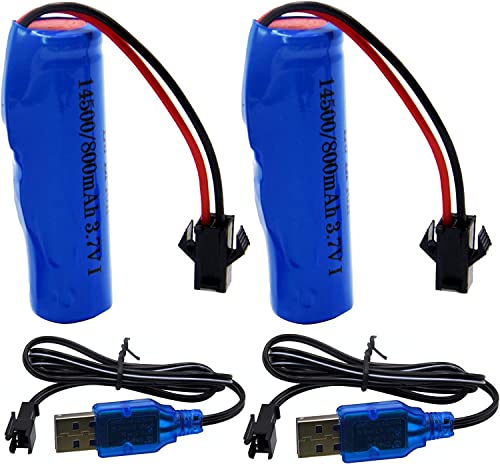
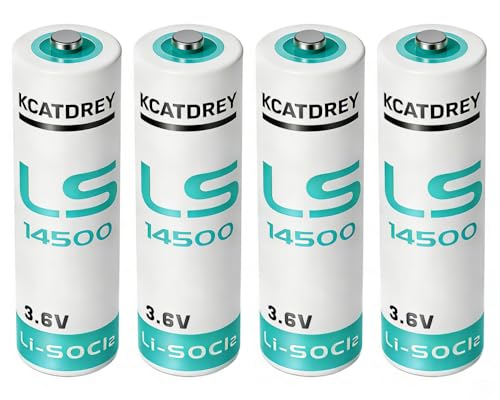
KCATDREY 4 x LS14500 3.6V AA Battery 2600mAH Use for Smart Oil Gauge
Questions owners ask repeatedly
Why does a light step down from turbo so quickly on a 14500? Because turbo is a thermal sprint. The LED and driver convert much of the cell’s energy to heat in a small host, the light’s thermal regulation cuts output to protect itself, and the cell’s voltage also sags under the heavy draw, which the driver reads as a reason to ease off. Step-down within a minute or two on maximum is normal design behaviour across the category. Judging a light or a cell by sustained turbo output misunderstands both products simultaneously.
Can a 14500 be charged inside the light? Many current lights offer USB charging with the cell installed, using the light’s own charge circuitry, which is legitimate when the maker designed it and specifies which cell types it accepts. Some lights charge only protected cells safely because their circuitry relies on the board as a backstop, and manuals say so. The convenience is real and the documentation is the authority; a light that charges an unprotected cell it was not designed to charge converts a tidy feature into the exact scenario protection boards were invented to prevent.
How long should a 14500 last in storage inside a spare light kept in a car? Between parasitic drain, self-discharge and automotive temperature swings, a car light is the harshest posting a cell can draw. Protected cells may cut themselves off after months; unprotected cells may be dragged low by an electronic switch. Checks every few months, or choosing a mechanical-switch light with the cell stored in its case beside it, are the practical answers, and in deep-winter or high-summer regions many experienced owners simply accept a seasonal cell rotation as the cost of a dependable emergency light.
Is a slightly dented cell still usable? The conservative manufacturer answer is no, and this guide repeats it without dilution. The can’s interior layers are separated by a membrane thinner than paper; a dent can bring electrodes closer, damage the separator or create a latent internal short that declares itself during a later charge. The economic value of one small cell never justifies the tail risk. Recycle it, note how the dent happened, since dropped lights and over-compressed springs repeat their lessons, and treat the replacement cost as tuition already discounted by not having a worse day.
Why do two cells of the same model report different capacities on an analysing charger? Small spreads of a few percent are normal manufacturing variance, and measurement conditions, especially discharge rate, cutoff voltage and temperature, move the figure further. A spread beyond roughly ten percent between siblings bought together suggests one cell is ageing faster or began life weaker, and in a married set that cell sets the retirement date for the group. Tracking the numbers across a year turns this from trivia into an early-warning system, which is the entire reason analysing chargers exist.
A word about terminology in listings will save buyers real money. The word rechargeable in a 14500 listing is redundant, since every lithium-ion 14500 is rechargeable, and its prominent display often signals a listing aimed at AA shoppers who should not be buying the cell at all. Similarly, cells marketed with USB ports built into the cell, or voltage-reducing circuits that output 1.5 volts, are a separate species, lithium cells with internal regulation pretending to be AA cells; they have their own uses and quirks, including lower usable capacity, and should not be confused with the true 3.7 volt cells this guide covers, nor substituted for them in a 14500 device.
The 14500 also appears in small battery packs for hobbies, where two or three cells are welded into a receiver pack or a cordless device’s cartridge. Owners tempted to rebuild such packs from loose cells should respect that the original pack included matched cells and often a protection board sized for the string, and that spot-welding, not soldering, is the correct joining method because soldering heat damages cells. For most owners the sensible route is a professionally built replacement pack; the loose-cell skills in this guide apply to single-cell and carrier devices, and knowing where one’s competence ends is a safety feature, not a limitation.
Shipping and travel rules treat these cells as the lithium products they are. Airlines permit spare lithium cells in cabin baggage only, in cases or original packaging, and forbid them in checked luggage; postal services impose their own packaging and quantity rules that reputable sellers follow automatically. A seller willing to ship bare cells loose in an envelope is breaking conventions designed around real incident history. Buyers planning to travel with lights and spares should pack cells as they would larger lithium batteries, because regulators classify by chemistry and energy, not by whether the cell resembles something harmless from the kitchen drawer.
For owners migrating from larger lithium cells, the adjustment is mostly one of scale and humility. A 14500 holds roughly a quarter of the energy of a common 18650, so runtimes divide accordingly and turbo modes drain it with a speed that surprises people calibrated on the bigger format. Its advantage was never endurance; it is the ability to put lithium performance into devices sized for the world’s most familiar battery shape. Judged on that mission the little cell is remarkable, and judged on any other it will keep generating the disappointed reviews that fill its listings.
One more application family deserves a careful sentence: small medical-adjacent and assistive devices occasionally specify lithium cells in AA-shaped bays, and there the documentation rule becomes absolute, because a device that monitors, doses or alerts is not a place for inference. If the manual names a specific cell model, that model, or a manufacturer-confirmed equivalent, is the entire shopping list. The general guidance in this guide about capacity and discharge never overrides a device maker’s named specification, and owners should treat any temptation to improvise in this corner as a signal to contact the maker instead.
Voltage checking is the owner’s most useful daily skill in this format, and a basic digital multimeter makes it trivial. A cell fresh off a correct charger reads about 4.15 to 4.20 volts; a cell near 3.6 to 3.7 volts is roughly half spent; a cell at 3.2 volts is nearly empty for practical purposes and should be charged soon; anything at or below 3.0 volts has been worked too hard or left too long, and anything near 2.5 volts belongs to the protected-cutoff story or to the recycling conversation. Readings taken immediately after heavy use read low and recover somewhat after rest, so a rested reading is the honest one for judging state of charge.
The relationship between voltage and remaining charge is not linear, which surprises owners migrating from alkaline habits. Lithium-ion spends a long plateau between about 3.9 and 3.6 volts where most of the usable energy lives, then falls ever more quickly below 3.5 volts. A flashlight that seems to run forever and then fade rapidly is displaying that curve faithfully, not malfunctioning. Devices with battery-level indicators calibrated for lithium-ion translate the curve into bars or percentages; indicators designed for alkaline cells misread a 14500 completely, another small reason the two chemistries should never be treated as interchangeable guests in the same compartment.
Dual-fuel drivers deserve a closer explanation because they perform a quiet trick. On an alkaline AA they boost roughly 1.2 to 1.5 volts up to what the LED requires, accepting modest output; on a 14500 they may run the LED almost directly or with light regulation, unlocking the high modes. That is why the same light’s mode spacing, runtime graph and even tint behaviour can differ between chemistries, and why serious makers publish two separate specification tables, one per fuel. Comparing a light’s AA numbers against a rival’s 14500 numbers, a common review-reading error, produces conclusions that are arithmetically tidy and practically useless.
Cell age can sometimes be read from codes printed under the wrapper or on the negative terminal area, though formats vary by maker and rewrappers obscure them entirely. Freshness matters because lithium-ion ages on the shelf at the distributor as surely as in a drawer at home, and a cell that sat for years at full factory charge in a warm warehouse arrives with part of its life already spent. Reputable sellers rotate stock and can state approximate manufacture periods; sellers who cannot are asking buyers to absorb an invisible depreciation that no discount on the listing honestly reflects.
Environmental conditions in use separate careful owners from careless ones in measurable ways. A cell asked for turbo current at minus ten degrees delivers a fraction of its room-temperature performance and may trip a protection board that would behave perfectly indoors, because cold raises internal resistance sharply. Mountaineers and winter workers carry spares warm against the body and rotate them through the light. At the other extreme, a light left on a sunny dashboard can push a cell toward temperatures where ageing accelerates dramatically and safety margins narrow, a scenario no protection board was designed to rescue anyone from.
The economics of the format reward a whole-system view. A quality cell costs a few multiples of an alkaline AA and returns hundreds of cycles, so cost per hour of high-mode flashlight use falls to a small fraction of the disposable route within the first months of regular use. The charger, shared across every lithium cell in the household, amortises similarly. Where the economics fail is sporadic use: a light touched twice a year gains little from rechargeables ageing in its tube, and there an alkaline or a lithium primary AA, stored properly, is the rational fuel, a conclusion this guide reaches without any sense of betrayal toward its own subject.
Owners stepping up from AA NiMH rechargeables often ask whether the 14500 simply replaces them in a dual-fuel light’s diet, and the nuanced answer is that it complements rather than replaces. NiMH remains the safer loaner fuel, the cell to hand a child with a borrowed light or to use where a light may be drained completely by forgetfulness, because NiMH forgives deep discharge that wounds lithium-ion. Many experienced households run both: NiMH for lending and low modes, 14500 for the owner’s own light where output matters and charging discipline is guaranteed by habit rather than by hope.
Firmware and mode memory in modern lights interact with cells in ways worth one paragraph. Some lights calibrate their low-voltage warnings for whichever chemistry they detect at switch-on, and swapping chemistries without the light noticing can leave warnings mismatched until the cell is removed and refitted. Others remember a turbo timer or a thermal calibration. None of this is dangerous, but it explains occasional owner reports of a light behaving oddly for one session after a fuel change, and the universal cure, remove the cell, wait a few seconds, refit, is worth knowing before concluding that a good light or a good cell has failed.
Respect the voltage, buy the datasheet rather than the wrapper, charge the chemistry the way it demands, and the 14500 rewards its owner with AA-sized convenience at a performance level no AA can approach.