Our Top Picks


What's inside
- Three architectures, three different personalities
- Pulse energy: the dial that actually decides weld quality
- Nickel strip: thickness ratings and the plated-steel impostor
- Electrodes, pens and the ergonomics of a hundred small fires
- Duty cycle, heat and the long afternoon of pack building
- Where these machines earn their keep: pack building and pack rescue
- Electrical safety: the section nobody should skim
- What arrives in the box, and what you will buy anyway
- Inside a weld nugget: what the pulse is really doing
- Electrode materials and why tips are consumables
- Triggering systems: pedals, pens and automatic pulses
- Designing the pack layout before touching the welder
- After the last weld: protection boards and verification
- Why soldering cells directly remains a bad inheritance
- Troubleshooting weak and violent welds
- The economics of owning versus borrowing
- Learning curve and the first pack that matters
- Preparing strip: cutting, cleaning and staging the work
- Sequence inside a group: welding order that avoids live traps
- Grading cells before they ever meet strip
- Harder metals: copper, aluminium and realistic expectations
- Maintenance rhythms for the machine itself
- Knowing when a job belongs to someone else’s bench
- Choosing by project rather than by headline
- Check prices on Amazon
- Care, calibration and the habits of builders whose packs last
As an Amazon Associate I earn from qualifying purchases. This post may contain affiliate links at no extra cost to you.
A quick note on how this page supports itself: certain outbound links are tagged as affiliate links, and if you buy through one, the seller funds a modest commission that adds nothing to the price you pay at checkout. The judgements below are assembled from manufacturer specification sheets, manuals and published support material, together with themes that recur across owner reports and builder discussions, because weld quality is governed by pulse energy, metallurgy and heat rather than by brand charisma. No claim of personal product trials underpins any recommendation here, so every figure quoted can be traced back to documentation you can request or download yourself.
Building a battery pack means persuading thin metal strip to fuse onto cell terminals dozens or hundreds of times in a row, with every joint strong enough to carry serious current yet gentle enough to leave the cell beneath unharmed. A spot welder built for that work delivers a brief, controlled surge through two copper electrodes, and the resistance at the contact points converts that surge into a localised nugget of molten metal. The category spans pocket devices powered by internal cells, bench units storing energy in capacitor banks, and heavier transformer machines descended from industrial practice, and choosing among them depends on strip thickness, pack volume and how much workshop you actually have.
Three architectures, three different personalities
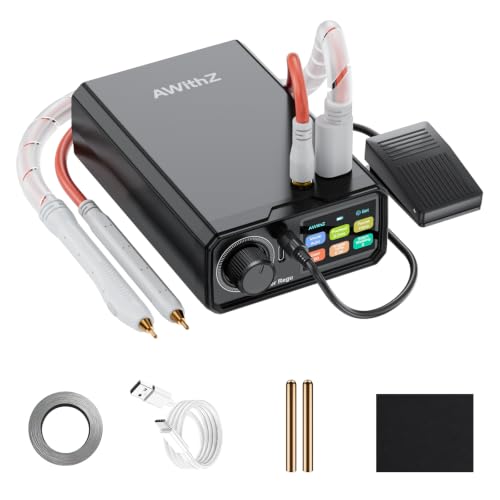
Capacitor-based welders charge a bank of high-discharge capacitors, then dump that stored energy through the electrodes in a pulse measured in milliseconds. Because the energy reservoir sits inside the machine, output stays remarkably consistent from weld to weld regardless of what the wall socket is doing at that instant, and the pulse shape can be tuned with genuine precision. Makers of these units publish energy settings in joules or graded levels, and the better designs recharge the bank quickly enough that a builder can settle into a rhythm. Their weaknesses are price and patience: quality capacitor banks cost money, and a depleted bank still needs its moment before the next full-strength pulse is ready.
Transformer welders take the opposite route, drawing mains power through a hefty step-down transformer that trades voltage for enormous current at the secondary winding. The classic workshop version rewires a salvaged microwave oven transformer, while commercial units wrap the same principle in a case with a timer board and proper controls. These machines deliver abundant energy for thicker strip and shrug off long sessions without an internal reservoir to exhaust, but their pulse control tends to be coarser, their cases heavier, and their behaviour more sensitive to how firmly the operator presses the electrodes. Published guidance for transformer builds dwells heavily on insulation and enclosure discipline, because mains voltage lives inside the box alongside the low-voltage output.
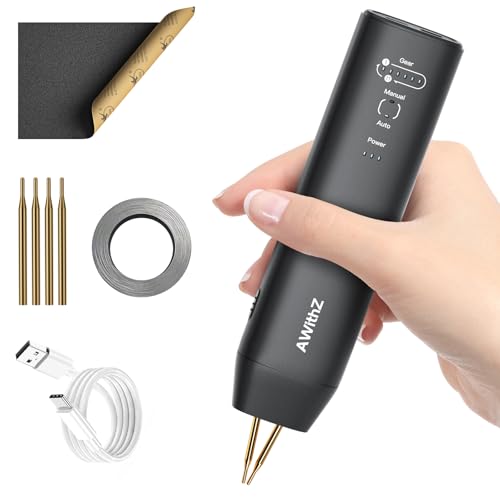
Handheld battery-powered welders shrink the whole apparatus into something resembling a chunky power bank with two electrode pens on leads. An internal lithium pack, sometimes supplemented by supercapacitors, supplies the pulse, and the appeal is obvious: no bench, no mains lead, no setup ceremony before repairing a single broken tab on a tool pack. The compromises arrive as finite energy per charge, output that softens as the internal battery drains, and strip thickness ceilings lower than bench machines claim. Owner reports consistently frame these devices as repair and small-pack tools rather than production equipment, a distinction that keeps expectations honest and purchasers satisfied far more often than marketing superlatives do.
Pulse energy: the dial that actually decides weld quality
Every spot weld is a negotiation between too little energy and too much. Starve the joint and the strip peels away with a fingernail, leaving a pack that looks assembled until vibration or a modest drop separates connections inside a sealed enclosure. Flood it and the pulse blows a hole through the strip, scorches the cell’s insulating ring, or in the worst case damages the terminal seal that keeps the cell’s contents where they belong. Manufacturer documentation therefore expresses control as adjustable pulse duration, graded energy steps, or both, and the useful machines let you change settings in increments fine enough to creep up on a good weld rather than leaping past it between adjacent detents.
Dual-pulse programmes, offered on many capacitor and better transformer units, fire a short pre-pulse before the main event. Maker literature explains the logic plainly: the first pulse seats the strip against the terminal, burns through light surface oxidation and preheats the contact patch, so the second, stronger pulse flows through a prepared interface and forms a more uniform nugget. Single-pulse machines can still produce excellent joints on clean material, yet the pre-pulse earns its keep when strip has been handled, terminals carry factory coatings, or you are reworking a pack whose surfaces have seen service. Treat the feature as a refinement worth having rather than a licence to skip cleaning and preparation.
Dialling in a new combination of machine, strip and cell follows a ritual that experienced builders refuse to shortcut. Sacrifice a dead cell or a proper practice coupon, start below the maker’s suggested setting for your strip thickness, and weld, then attempt to peel the strip away with pliers. A correct joint tears the strip itself or leaves the nugget buttons attached to the terminal; a weak one releases cleanly with the strip intact and smug. Raise energy in small steps, repeat the peel, and write the winning setting on tape stuck to the machine, because memory is a notoriously unreliable lab notebook when the next pack build arrives three months later.
Nickel strip: thickness ratings and the plated-steel impostor
Specifications for battery welders almost always headline a maximum strip thickness, commonly somewhere between 0.1 and 0.3 millimetres, and that number deserves interrogation before it deserves trust. Some makers rate their machines on nickel-plated steel, which welds more readily, while others publish figures for pure nickel, the material serious builders prefer for its corrosion resistance and conductivity. A machine that manages 0.2 millimetres of plated steel may struggle honestly with 0.15 millimetres of pure nickel, so comparing headline numbers across brands without checking which alloy sat under the electrodes is a reliable route to disappointment. Product documentation, or a direct question to the maker, settles which basis a rating uses.
Distinguishing the two strip materials at the bench is refreshingly low-tech. Pure nickel is non-magnetic or nearly so, while nickel-plated steel snaps eagerly to a magnet through its thin cosmetic coating. The salt-water soak comparison circulates widely in builder communities: plated steel freckles with rust where pure nickel stays bright, though sacrificing a sample takes days you may not have. Grinding a strip edge reveals a silvery layer over darker steel on plated stock, whereas pure nickel shows uniform colour through its thickness. Buying strip from suppliers who state composition plainly, and verifying with a magnet on arrival, protects a pack from conductors that corrode quietly inside a sealed enclosure.
Strip dimensions also carry current, not just weldability. The cross-section of the conductor, width multiplied by thickness, determines how many amps a series link can haul before it becomes the hottest component in the pack. Builder guidance published alongside cell datasheets commonly pairs modest strip with low-draw packs and prescribes doubled layers or wider strip where a high-drain tool pack expects sustained heavy current. Welding two stacked layers demands more pulse energy than a single layer and exposes the limits of handheld machines quickly, which is why pack ambition and welder capability must be planned together rather than discovered together halfway through a Saturday build.
Electrodes, pens and the ergonomics of a hundred small fires
The business end of every design is a pair of copper or copper-alloy electrode tips, chosen because copper carries the pulse while resisting the urge to weld itself to the workpiece. Tip geometry concentrates current into two small spots, and as tips oxidise, mushroom or pick up nickel deposits, that geometry drifts and weld quality drifts with it. Manufacturer maintenance notes recommend dressing tips with fine abrasive or a file until bright metal and the original profile return, and treating tips as consumables with a finite life rather than permanent fixtures. Spares in the box are therefore a meaningful specification, not packing filler, especially for builders whose nearest replacement is a fortnight of shipping away.
Bench machines divide into fixed-head designs, where the cell is brought to stationary electrodes, and pen-based designs, where two handheld probes travel to the work. Fixed heads reward repetition: pressure stays consistent, alignment becomes muscle memory, and long production runs proceed with metronomic regularity. Pens reward access, reaching into assembled tool housings, awkward pack geometries and repair situations where the workpiece cannot come to the machine. Pen leads and their connections must carry the full pulse current, so cable gauge and connector quality on pen systems matter electrically, not merely mechanically; a skinny, warm lead is quietly taxing every weld you make through it.
Pressure is the invisible setting no dial controls. Published technique guidance converges on firm, steady electrode force: enough to seat strip intimately against the terminal and contain the nugget, never so theatrical that the cell can dents or the strip squeezes out sideways. Inconsistent hand pressure explains a large share of mysterious weld-to-weld variation blamed on machines, because the same energy pulse behaves differently across interfaces of differing resistance. Builders who struggle with scatter often fix it by slowing down, bracing their hands, and letting each placement settle before triggering, a reminder that a spot welder is a hand tool wearing electrical clothing, and craft still counts.
Duty cycle, heat and the long afternoon of pack building
A cylindrical pack of any ambition consumes welds by the hundred: every cell needs connections at both ends, multi-row layouts multiply joints, and a 4-parallel by 13-series arrangement passes two hundred individual fusions before balancing leads enter the conversation. Duty cycle describes how hard a machine can work before heat, in electrodes, transformer windings, capacitor banks or an internal battery, demands a pause. Specification sheets express this variously as welds per minute, a percentage at a given setting, or a simple instruction to rest the unit after a stated count, and exceeding the guidance rarely causes instant failure; it causes drift, weakening joints precisely when the builder has settled into confident rhythm.
Thermal behaviour differs by architecture in ways worth planning around. Transformer units warm their windings and electrodes steadily and may incorporate fans or thermal cut-outs that impose rest without asking permission. Capacitor machines stay cooler electrically but still heat their electrode holders during rapid work, and hot tips change contact resistance enough to matter. Handheld units face the double bind of warming electronics and a draining internal battery, so their hundredth weld is rarely the equal of their tenth. Scheduling builds in blocks, rotating between welding, layout, inspection and insulation tasks, keeps both machine and operator inside their comfortable envelopes without idle standing around.
Ventilation and workspace heat deserve a mention beyond the machine itself. Welding strip produces tiny sparks, hot spatter occasionally ejects from an over-energised joint, and the workbench accumulates offcuts of sharp nickel that migrate toward bare feet with malicious patience. Maker safety sheets advise eye protection, a clear non-flammable work surface and respect for cells as stored-energy devices that resent being shorted by stray strip clippings. A magnetic tray for offcuts, insulation rings on every positive terminal and Kapton tape where conductors pass near can edges are the unglamorous accessories that separate builders whose packs survive years from builders whose packs feature in cautionary forum threads.
Where these machines earn their keep: pack building and pack rescue
The canonical job is assembling fresh packs from 18650 or 21700 cells for e-bikes, scooters, power tools and storage projects. Larger 21700 terminals and the heavier strip that high-current designs demand push builders toward bench machines with published pure-nickel ratings and headroom to spare, while modest 18650 packs for low-draw applications sit comfortably within handheld territory. Series-parallel layouts must be planned so every parallel group is welded into a genuinely equipotential block before series links join groups together, and builders are advised to verify cell voltages match closely before welding, because the strip will faithfully marry cells at whatever mismatched potentials you present to it.
Repair work writes a different brief. A cordless tool pack usually fails by one parallel group, and opening the case to replace tired cells needs a welder that handles a handful of joints in cramped geometry rather than a production line. Pens and handheld units shine here, and the economics are persuasive: a modest machine can resurrect several expensive tool packs across its life. The discipline lies in replacing like with like, matching replacement cells to the survivors by capacity and internal resistance as closely as documentation allows, and refusing to weld fresh cells against exhausted partners that will drag the rebuilt group down within a season.
Prototyping and one-off fabrication form the third territory: custom packs for robotics clubs, field equipment, cosplay props with serious lighting budgets, and the long tail of devices whose original batteries vanished from catalogues years ago. Here the welder’s adjustability matters more than raw pace, because each project arrives with different strip, different cells and different current demands. A machine with fine energy steps and honest published ratings adapts; a machine with three mystery settings and heroic marketing adapts less. Builders in this space also value footswitch or automatic triggering options, which free both hands for holding strip and cell in alignment while the pulse fires on cue.
Electrical safety: the section nobody should skim
A spot welder is deliberately a controlled short circuit, which makes respect for its energies a professional obligation rather than a personality trait. Transformer machines connect to mains power, and any unit, commercial or home-converted, deserves an intact enclosure, sound insulation and a healthy suspicion of modifications you cannot verify. Capacitor banks hold their charge after switch-off, so maker instructions about discharge waiting periods before opening a case exist for sound reasons. On the output side, the pulse itself will not shock you through intact skin at these voltages, but it will cheerfully weld a ring, a watch strap or a stray tool into a circuit if conductive jewellery meets the electrodes mid-pulse.
The cells demand equal respect. Shorting a high-discharge cylindrical cell with a strip offcut produces heat fast enough to vent the cell, and venting inside a partially built pack can cascade. Published pack-building guidance is monotonous on the subject for good reason: insulate positive terminals with fibre rings, keep the work area free of conductive debris, weld in an order that never leaves a live assembly resting against loose strip, and check group voltages with a meter as the build progresses. If a cell ever hisses, swells or grows hot without load, stop, move it to a fire-safe place with tongs, and let that project wait while chemistry settles its argument.
Fire preparation is the final layer, and it is mundane: a bucket of dry sand or a suitable extinguisher within reach, no solvent bottles sharing the bench, and a rule that welding stops when attention wanders. Most incidents recounted in builder communities begin with haste or distraction rather than defective equipment, a pattern entirely within the operator’s power to break. Children and pets stay out of the work zone, not because the machine is temperamental, but because a startled elbow during a pulse can turn a tidy joint into a burnt terminal or worse. Calm, methodical sessions build good packs; theatrical ones build anecdotes with singed edges.
What arrives in the box, and what you will buy anyway
Accessory bundles reveal how a manufacturer imagines your first month with the machine. A sensible kit includes spare electrode tips, a sample roll or sheets of strip, a file for tip dressing, and leads or pens with connectors that match the unit without adaptors. Sample strip is genuinely useful for the calibration ritual, saving your good stock for real packs, although you should confirm whether the sample is pure nickel or plated steel before drawing conclusions from its behaviour. Holder fixtures that cradle cylindrical cells in neat rows appear in some bundles and are worth real money to anyone building beyond a single pack, because alignment errors compound across a large layout.
Beyond the box, budget for consumables and companions: strip in the thicknesses your projects actually use, insulating rings and fish-paper, heat-shrink wide enough for finished packs, and a multimeter you trust. Charging the cells you are about to weld belongs on proper equipment too, and the roundup of best 18650 battery chargers covers analysing chargers that report capacity and resistance, exactly the figures that help you group matched cells before committing them to strip. Balanced, documented cells going into a build are worth more than any single welder feature, because no pulse setting can rescue a pack assembled from strangers.
Lithium packs assembled on your new welder will eventually need their own charging arrangements, which is why the companion guide to best li ion battery chargers sits naturally beside this one for readers planning complete battery systems rather than bare assemblies. Likewise, anyone whose bench also serves model aircraft or airsoft replicas will find the survey of best lipo balance chargers relevant, since pouch packs impose balance discipline that cylindrical cells handle through different hardware. Keeping each chemistry on its intended charger is a theme that recurs across every corner of this hobby, and spot-welded packs are no exception to the rule.
Older nickel-based packs have not vanished from workshops either; cordless phones, garden tools and legacy equipment still arrive needing tab repairs or full rebuilds with nickel-metal hydride cells. The dedicated overview of best battery nimh chargers addresses charging those chemistries correctly once the welding is done, because a beautifully rebuilt pack charged on the wrong profile ages like it was never repaired. Welding technique transfers across chemistries with modest energy adjustments, but charging absolutely does not, and confusing the two stages is a quiet way to undo an afternoon of careful work.
Inside a weld nugget: what the pulse is really doing
When the electrodes close on strip layered over a cell terminal, current prefers the path through the contact interfaces, and resistance at those interfaces converts electrical energy into heat exactly where fusion is wanted. The strip surface softens, then melts locally, alloying with the terminal plating beneath while electrode pressure contains the molten zone and forges it as it cools. A sound nugget is a small, dense lens of joined metal; a failed one is either an unfused sandwich pretending to be a joint or a crater where excessive energy ejected material sideways in sparks. Everything a welder advertises, from pulse shaping to tip material, exists to make that tiny lens form identically hundreds of times.
Terminal construction sets boundaries no setting can repeal. The positive cap of a cylindrical cell is a thin formed component with a vent mechanism beneath it, designed to open if internal pressure ever demands an exit. Excessive heat or mechanical force at that cap risks compromising a safety device you cannot inspect afterwards, which is why published technique insists on the minimum energy that achieves a tear-out joint, never the maximum the machine can deliver. The negative end, a more substantial expanse of the steel can, tolerates comparatively generous treatment, though scorching its surface still invites corrosion to begin its slow work under the strip.
Electrode materials and why tips are consumables
Pure copper tips conduct beautifully yet soften and mushroom under repeated thermal punishment, gradually widening the contact patch and diluting current density until welds weaken for reasons builders misdiagnose as failing electronics. Copper alloys hardened with chromium or zirconium trade a whisper of conductivity for tips that hold their profile far longer, and some heavy-duty systems employ molybdenum or tungsten-faced electrodes where heat concentration is fiercest. Maker catalogues specify which material ships with each model and what replacements cost, a detail worth reading before purchase because a machine orphaned by unavailable tips becomes sculpture. Dressing restores geometry only while enough material remains to dress.
Oxidation is the slower enemy working between sessions. A tip left bright after Friday’s build can carry a dull film by the following weekend, and that film adds resistance at precisely the interface where consistency matters most, scattering weld strength across the first dozen joints until the surface cleans itself through work. Experienced operators make a few sacrificial welds on scrap at the start of every session, both to season the tips and to confirm settings before good cells enter the fixture. Skipping the ritual saves ninety seconds and occasionally costs a parallel group, an exchange rate that flatters nobody’s schedule once rework begins.
Triggering systems: pedals, pens and automatic pulses
How a weld starts shapes how repeatable it feels. Foot pedals let both hands manage cell and strip while a toe commands the pulse, a division of labour production builders swear by after their first hundred joints. Pen switches place the trigger under the operator’s thumb, suiting repair work where the other hand is busy holding a housing together, though a flinch at the wrong moment can skate a tip across the terminal. Automatic modes sense electrode contact and fire after a brief delay, removing switch timing from the equation entirely; their documentation usually warns that the delay must be long enough to settle pressure, or the machine will faithfully automate your inconsistency.
Displays and setting memory sound like luxuries until a workshop hosts several strip gauges and cell formats in rotation. A unit that recalls the last energy level, or offers savable profiles, prevents the classic accident of welding thin strip at the previous session’s heavyweight setting and perforating the first joint of the day. Analogue dials without detents invite drift whenever a sleeve brushes the panel, while digital controls with lockable settings suit shared benches in clubs and classrooms. None of these interface questions appears in headline specifications, yet they decide whether calibration survives contact with real human habits across months of intermittent use.
Designing the pack layout before touching the welder
A welder can only execute the layout it is given, and layout errors weld just as permanently as correct ones. Planning begins with the electrical map: which cells stand in parallel, where series bridges cross, and how the balance harness will reach each group junction without lying across sharp strip edges. Paper templates cut to the footprint of the cell block let you rehearse strip runs, mark cut lengths and discover collisions between bridges and terminals while mistakes still cost only card stock. Photographing the finished plan creates a reference that keeps a long build coherent after interruptions, which long builds reliably attract.
Cell holders and spacers earn their modest price by enforcing geometry. A honeycomb frame keeps cylindrical cells at uniform spacing, presents every terminal in one plane for the electrodes, and adds mechanical resilience that glue alone never quite achieves. Builders skipping holders often rely on hot adhesive between cells, which works until heat, vibration and time negotiate a separation inside a sealed pack. Where holders are unavailable, at minimum keep cells aligned in a jig during welding, because a strip run fused across terminals sitting at slightly different heights will flex with every thermal cycle until a joint tires of the arrangement.
Insulation strategy belongs to the design phase rather than the apologetic phase. Fibre rings shield every positive terminal from the strip that passes near its shoulder, gasket paper lines the areas where series bridges cross cell cans, and the finished block receives an overall wrap before any enclosure closes. The negative can of most cylindrical cells is electrically live as the cell’s negative terminal, so a bridge chafing through its wrapper against a can wall creates a short with the full pack behind it. Builders who treat insulation as architecture sleep better than builders who treat it as decoration applied where convenient.
After the last weld: protection boards and verification
Welding finishes the power path but not the pack, because most lithium assemblies need a protection or management board watching over charge and discharge long after the bench work ends. Connecting that board means soldering sense leads to the correct group junctions in the correct order, a sequence manufacturer diagrams specify precisely because a transposed lead can damage the board instantly at first power-up. The welder’s role ends before this stage, yet planning lead routes during layout prevents the miserable archaeology of excavating a finished block to reach a buried junction. Leave access, label polarities, and let the future maintainer, usually yourself, inherit a legible machine.
Verification closes every build. Measure each parallel group’s voltage and confirm the series total equals their sum, then inspect every joint visually for discolouration patterns suggesting excess heat, and tug each strip run firmly enough to expose a pretender joint while repair is still easy. A first charge conducted on a suitable charger, attended and observed, reveals balancing behaviour across groups and catches wiring errors while they are still merely embarrassing. Logging the build, cell batch, strip specification and final group voltages creates the baseline against which the pack’s health will be judged at every future service, turning guesswork into comparison.
Why soldering cells directly remains a bad inheritance
Newcomers regularly ask why they cannot simply solder strip to terminals with a large iron, since the tools already live in the workshop. Cell manufacturers answer in their handling documents: sustained soldering heat conducts into the cell, degrading seals, separator and electrolyte long before the joint looks finished, and the damage stays invisible until capacity fades or worse. Spot welding’s entire appeal is temporal, delivering greater peak heat for milliseconds rather than moderate heat for seconds, so fusion happens at the surface while the cell interior remains near ambient. The technique is not tradition or snobbery; it is thermal arithmetic that soldering loses every time the numbers are written down honestly.
Exceptions exist at the margins, chiefly factory-fitted solder tabs applied by cell makers using their own controlled processes, and low-heat specialist methods described in some industrial documentation. Neither exception licenses a hobby iron against a bare terminal, and packs assembled that way announce themselves later through swollen cells and mysterious self-discharge. If a project truly cannot accommodate welding, pre-tabbed cells purchased from reputable suppliers move the thermal event back into a factory where it belongs. Choosing those cells costs slightly more and risks dramatically less, which is the recurring bargain this entire category keeps offering in different clothing.
Troubleshooting weak and violent welds
When strip releases too easily, work through causes in order of probability rather than turning the energy dial in frustration. Contaminated or oxidised tips lead the list, followed by insufficient electrode pressure, strip surfaces carrying oil from handling, and only then a genuinely inadequate energy setting. Clean, dress, press firmly, degrease the strip, and retest on scrap before concluding the machine lacks strength. Most weak-weld sagas end at one of those mundane stations, and builders who change three variables simultaneously never learn which one mattered, guaranteeing an encore of the same mystery at the next build.
Violent welds that blow holes or shower sparks carry the opposite diagnosis. Energy may be excessive for the strip in use, tips may have worn to needle points concentrating current brutally, or the strip may be thinner than its packaging claims, a discrepancy a micrometer settles in seconds. Back the setting down in steps, inspect tip geometry under good light, and verify material dimensions before blaming the machine’s character. An occasional ejected spark during calibration is workshop weather; a continuous fireworks display is the equipment requesting a conversation you should not postpone until a cell vents its opinion.
Intermittent behaviour, strong welds alternating with weak ones at identical settings, usually implicates connections rather than electronics. Pen leads loosen at their plugs, electrode holders accumulate debris in their tapers, and mains voltage in a workshop sags when other heavy loads cycle. Capacitor machines largely immunise themselves against supply fluctuations, which is one reason their owners report eerie consistency, while transformer units faithfully mirror whatever the building wiring delivers. Tighten, clean and observe patterns against other workshop activity before condemning a machine whose only crime was honesty about its environment.
The economics of owning versus borrowing
A welder justifies itself across a horizon of packs rather than a single project. One e-bike battery built at home can undercut a commercial equivalent by enough to cover a mid-range machine, and every subsequent tool-pack rescue, scooter refresh or club project arrives nearly free of tooling cost. Against that, a builder with exactly one modest pack in their future may find a makerspace membership or a friend’s bench the rational route, since idle equipment depreciates in a cupboard just as surely as busy equipment wears at a bench. The honest calculation includes consumables and the strip, holders and insulation a serious build consumes, not merely the headline price of the machine itself.
Resale and community soften the ownership risk further. Tidy machines from recognised makers hold value among local builders, and clubs frequently pool a good bench unit whose cost per member becomes trivial. Borrowing, however, teaches an underappreciated lesson: an afternoon on someone else’s capacitor unit reveals your true production ambitions far more reliably than specification sheets do. Many handheld owners discovered, mid-build on a borrowed bench machine, that their project list had quietly outgrown their pocket-sized purchase, while just as many bench owners realised their actual workload was six repairs a year dressed in industrial clothing.
Learning curve and the first pack that matters
Competence arrives faster than apprehension predicts. The first session belongs to scrap: dead cells, offcuts, deliberate experiments at wrong settings to learn what failure looks like while failure is free. By the second session most builders produce tear-out joints consistently on their chosen strip, and by the first real pack the motions of align, press, pulse and inspect settle into a rhythm that feels closer to craft than to hazard. Keeping those early sacrificial joints in a labelled row, dated like geological strata, provides a private record of progress that no tutorial can hand you second-hand.
Choose the first real project with mercy: a small, low-voltage pack whose failure would disappoint rather than devastate, built from documented cells and strip you have already calibrated against. Success there funds confidence for the large traction pack or the expensive tool rescue waiting in the queue. Builders who begin with the most demanding project in the house tend to meet every beginner mistake at maximum price, a curriculum nobody needs. The machine will still be on the bench next month, entirely willing to weld the ambitious pack once its operator and it understand each other properly.
Preparing strip: cutting, cleaning and staging the work
Strip preparation begins long before the first pulse, with cutting lengths staged in the order the layout will consume them. Sharp shears or a proper strip cutter leave edges free of burrs that could pierce insulation or lift a corner away from the terminal, and handling cut pieces by their edges keeps skin oils off the surfaces about to be fused. Builders working through a large pack often pre-form gentle bends where runs turn corners, so the metal lies naturally against the cells instead of springing upward against the electrodes. Time spent staging feels unproductive only until a build starts flowing without pauses to hunt for the next piece while a half-finished group waits.
Cleaning deserves its brief ceremony. Strip arriving with a dull film, fingerprints from a previous session, or residue from its protective packaging welds inconsistently until the surface is wiped with a suitable solvent and allowed to dry fully. Cells deserve the same attention at their terminals, where factory coatings and handling grime accumulate invisibly. None of this requires a laboratory; it requires acknowledging that fusion joins surfaces, and surfaces carry their history into every joint. Skipping preparation to save four minutes, then diagnosing mysterious scatter for forty, is a trade the workshop offers daily and wise builders eventually refuse.
Sequence inside a group: welding order that avoids live traps
The order in which joints are made shapes the electrical landscape the builder must navigate. Completing parallel groups first keeps voltages modest while the largest number of connections is established, and only then should series bridges elevate the assembly toward its full potential. Within a group, working systematically from one end prevents the disorientation of scattered finished joints hiding an unfinished one, which final inspection then has to hunt. Some builders mark each completed connection with a fine paint pen as they go, converting memory into visible evidence and making the end-of-build audit a confirmation rather than an investigation.
Partially built packs deserve physical respect proportional to their growing energy. Keep the assembly on an insulating mat, park loose strip in a tray rather than on the cell block, and never lay tools across terminals while reaching for something else. As series links accumulate, the voltage between distant points of the unfinished pack climbs toward levels that make accidental shorts genuinely violent. Treating a half-built pack with the same ceremony as a finished one feels excessive exactly until the day it prevents the incident that would have rewritten your opinion of ceremony permanently.
Grading cells before they ever meet strip
A pack is a committee, and committees perform to their least committed member, so grading cells before assembly is where longevity is truly decided. Capacity figures from an analysing charger, internal resistance readings and resting voltage after a settling period together sketch each cell’s character. Grouping near-identical cells in parallel lets them share current evenly, while a weakling hidden among strong partners gets dragged through every cycle at a pace its chemistry cannot sustain. Manufacturers of reputable cells hold tolerances tight, yet even good batches contain a distribution, and the builder who measures owns the distribution rather than being surprised by it.
Date codes and batch consistency add another layer to the same discipline. Cells produced together tend to age together, which is why experienced builders buy a project’s full complement, plus spares, in a single order from one supplier, rather than assembling a pack from orphans collected across seasons. Mixing a fresh cell into a group of veterans asks the newcomer to adopt the veterans’ diminished capacity as its own ceiling, wasting its youth, while the veterans receive no benefit whatsoever. Matched age, matched batch, matched measurements: the trinity is unglamorous and absolutely decisive for packs expected to serve for years.
Harder metals: copper, aluminium and realistic expectations
Sooner or later a builder meets a project demanding copper conductors, prized for carrying heavy current in thinner cross-sections than nickel allows, and discovers that ordinary battery welders struggle to fuse copper strip reliably. Copper’s conductivity, the very quality that makes it desirable as a conductor, whisks heat away from the weld zone and reflects the pulse’s effort. Specialist machines, composite copper-nickel sandwich strip and hybrid approaches that weld a nickel layer as a fusion aid all exist because the base problem is physical, not a failure of operator enthusiasm. Consulting manufacturer guidance before promising a copper build prevents an expensive education delivered by ruined strip.
Aluminium presents a parallel story in weight-critical projects, welding reluctantly and demanding equipment and technique beyond the scope of typical battery benches. For the overwhelming majority of cylindrical-cell work, nickel and its plated relative remain the rational conductors, available in every useful dimension with decades of accumulated builder knowledge behind them. Ambition in pack design is better spent on layout, insulation and cell selection, where gains are real and repeatable, than on exotic metallurgy whose difficulties multiply quietly. The mature workshop knows which frontiers are worth its weekends and which are traps wearing the costume of sophistication.
Maintenance rhythms for the machine itself
A welder kept on a rhythm outlives a welder kept on apologies. After each substantial session, brush debris from the electrode area, inspect pen leads for nicks where they flex, and confirm that holder screws remain snug against the vibration of transport. Monthly, or after any move, run a calibration row on scrap and compare it against your logged settings; drift discovered at leisure is information, while drift discovered mid-pack is damage. Capacitor units benefit from the maker’s guidance on long storage, and transformer units from occasional inspection of their cooling paths, since dust accumulates in fan intakes with the patience of geology.
Record keeping closes the maintenance loop. A notebook page per machine, noting tip changes, settings per strip batch and any session where behaviour seemed off, builds the evidence base that turns future troubleshooting from archaeology into arithmetic. When a weld problem eventually appears, and one eventually appears for everyone, the log tells you what changed and what did not, which is ninety percent of every diagnosis ever performed. Workshops run on such small fidelities; the romantic image of the intuitive genius builder dissolves quickly beside a dated entry that simply states what the machine did last March.
Knowing when a job belongs to someone else’s bench
Maturity includes recognising the edges of your equipment and appetite. A commercial fleet order, a pack whose failure could endanger property, or a chemistry outside your documentation all argue for professional assembly with insured processes and industrial quality control. There is no dishonour in commissioning such work; there is only dishonour in pretending a hobby bench is a factory because a deadline is loud. Many builders split the difference, prototyping at home and handing validated designs to professionals for production, keeping the creative joy while exporting the repetitive risk to benches built and staffed to absorb it.
Similarly, a machine that develops electrical faults beyond tips, leads and settings belongs with a qualified repairer rather than under a hopeful screwdriver. Mains-connected equipment and charged capacitor banks do not grade their dangers by the owner’s confidence, and a repair bill is cheaper than the alternatives on every axis that matters. Knowing where your competence ends is itself a workshop skill, arguably the one that keeps all the others available for decades. The packs will keep coming, the strip will keep shining, and the bench will still be there next month for builders who respect its boundaries today.
Documentation deserves one more word, because photographs of a finished pack, taken before the enclosure closes, become priceless during any later service. A clear image records strip routing, insulation placement, lead colours and board orientation more faithfully than memory ever will, and sharing that image with whoever next opens the pack, even if that person is simply you in three years, turns archaeology into reference. Builders who photograph, label and log as reflexes rarely meet the sinking moment of opening their own work and finding a stranger’s decisions inside. Habits like these accumulate quietly, project after project, until the workshop’s output carries a recognisable signature of care that no single specification can claim credit for.
Consider also the humble matter of bench layout: welder on a stable surface, cells staged to the left, strip tray to the right, finished groups leaving by a route that never crosses the work zone. Arrangements like this sound fussy in print and feel invisible in practice, which is exactly the point, because attention saved on logistics is attention available for the joints themselves, where it has always belonged.
Choosing by project rather than by headline
Let your next three projects, not an imagined factory career, nominate the machine. A reader planning two e-bike packs and occasional repairs belongs on a capacitor bench unit with published pure-nickel capability around the strip thickness those packs require, dual-pulse control and electrodes that can be dressed or replaced cheaply. A reader whose ambitions stop at resurrecting tool packs and building the odd torch battery can defend a handheld unit with a clear conscience, accepting its thickness ceiling in exchange for cupboard-friendly size. A reader contemplating regular commissions or club builds should weight duty cycle and thermal behaviour above almost everything, because throughput, not peak energy, will decide their weekends.
Specifications worth lining up side by side include the energy adjustment range and its step size, the alloy basis behind the thickness rating, recharge or recovery time between full-energy pulses, electrode and pen construction, and whatever the maker publishes about continuous operation. Warranty terms and spare-part availability separate tools from toys over a five-year horizon; a slightly dearer machine with obtainable tips and responsive support usually costs less than a bargain replaced twice. Reviews and owner threads then serve as a sanity check on whether published behaviour survives contact with real benches, real strip and real deadlines.
There is also wisdom in buying for the strip you can source reliably. Exotic thicknesses that only one distant supplier stocks will stall projects regardless of machine quality, while common sizes flow from many sellers with consistent composition. Standardise your workshop on one or two strip gauges, calibrate the welder for them obsessively, label the settings, and your joints will become boringly predictable, which is the highest compliment battery work accepts. Novelty belongs in the devices your packs will power, not in the metallurgy holding those packs together at two in the morning before a ride.
Check prices on Amazon
Live listings for the shortlist in this guide are pulled from Amazon below, so prices and availability are always current at the moment you look.


Care, calibration and the habits of builders whose packs last
Machines repay small attentions. Keep electrode tips bright and correctly profiled, snug every high-current connection during periodic inspections, and store pens or heads where their tips cannot knock against hard objects and deform. Capacitor units appreciate being exercised rather than abandoned for years, and handheld units follow the storage customs of the lithium cells inside them, resting at partial charge in a cool drawer rather than baking full in a sunny workshop. None of this is arduous; it is the ordinary housekeeping that separates equipment which behaves identically every session from equipment that develops a personality nobody requested.
Recalibrate whenever anything in the chain changes: new strip from a different supplier, a fresh batch of cells with different terminal plating, replacement tips, even a different season if your workshop swings between cold winters and humid summers. The peel ritual on a sacrificial cell takes five minutes and converts guesswork into knowledge, and logging the result beside your earlier settings builds a private reference more valuable than any generic chart. Builders who keep such notes stop relearning the same lessons, and their packs show it in uniform nuggets, tidy strip runs and groups that age together instead of staging individual protests.
In the end, a battery spot welder is judged by the joints nobody ever thinks about again: the strip that never lifts inside a sealed e-bike pack, the tool battery that returns to work and stays there, the custom build that simply delivers its current season after season. Match the architecture to your ambitions, interrogate the thickness rating until it confesses its alloy, calibrate on scrap before touching good cells, and let safety habits run on rails. Do those things and the machine fades into the background of your workshop, which is precisely where the best tools spend their lives.