Our Top Picks



What's inside
- Dye ink and pigment ink: the central choice
- The products in this roundup
- Washable pads for kids: what washable really means
- Archival, waterproof, and permanent pads
- Pad size, format, and stamp compatibility
- Stamping on paper, wood, and fabric
- Technique basics for a clean impression
- Storage and re-inking basics
- Choosing the right set for your projects
- Frequently asked questions
- Check prices on Amazon
- Final thoughts
As an Amazon Associate I earn from qualifying purchases. This post may contain affiliate links at no extra cost to you.
A good stamp ink pad set turns a simple rubber stamp into color, pattern, and personality. With one press you can label a card, decorate wrapping, mark a classroom worksheet, personalize a wooden tag, or add a fingerprint keepsake to a family project. Yet pads that look similar in a photograph can behave very differently on the page. Some dry in seconds and wash off small hands with soap and water. Others sit on the surface longer, hold fine detail, and are chosen precisely because they resist fading and moisture. Understanding those differences before you buy saves money, saves projects, and saves a good deal of frustration.
This guide covers the main ink families found in craft pad sets, the washable pads made for children, archival and waterproof options, pad sizes and formats, and the surfaces crafters ask about most often: paper, wood, and fabric. It also describes each product named in the listings for this roundup using only what its title states, plus general knowledge about how these kinds of pads are normally used. Storage and re-inking basics close the guide, because a pad set that is stored well will still be ready months after a set that was left open on a desk has dried out.
A note on how this guide was prepared: it is based on published listings, product documentation, and general craft references, and the writer did not personally use any of the pads described here, so no first-hand impressions are presented as fact. As an Amazon Associate we earn from qualifying purchases.
Dye ink and pigment ink: the central choice
Most craft ink pads fall into two broad families. Dye-based inks are generally thinner, soak into porous paper, and dry quickly. Because the colorant penetrates the fibers, dye inks tend to give a clean, flat impression that works well for everyday stamping, classroom use, and projects where speed matters. Many washable children’s pads use water-based dye-style formulations, which is why they clean up easily, although washable is a specific claim that should always be checked on the individual product rather than assumed from the ink family alone.
Pigment inks are generally thicker and sit more on top of the surface. They are often chosen for rich, opaque color, for embossing work where the ink needs to stay wet a little longer, and for stamping on surfaces where a thin dye might sink in and look faint. The trade-off is drying time. A pigment impression may need patience, and on glossy or coated stock it may need considerably more time or heat setting, depending on the paper and the project. Neither family is better in the abstract. Dye suits fast, porous-paper work. Pigment suits slower, richer, more surface-focused work.
Other ink types you may meet
Beyond the two main families, crafters encounter archival pads, waterproof pads, distress-style pads, and specialty fabric inks. Archival in this context generally refers to ink formulated to resist fading and to be acid-free in intent, which matters for scrapbooks and keepsakes meant to last. Waterproof claims generally mean the dried impression resists water once set, which matters for coloring over a stamped outline with water-based markers or light watercolor. Distress-style and oxide-style pads are generally used for blended, layered, and aged effects rather than for a single crisp impression. Each of these is a different tool, and the listings in this roundup include examples described with several of these words, which is why reading the exact title wording matters.
Many crafters eventually keep more than one type. A fast washable set handles children’s projects and everyday cards, a pigment set handles richer color work, and a single reliable black pad handles outlines and office-style marking. Readers who print their own card bases, inserts, or photo references before stamping may also find it useful to look at best 100 dollar printers as a companion topic, because the paper you print and the ink you stamp interact: a porous printed sheet and a coated photo sheet will receive the same pad in noticeably different ways.
The products in this roundup
The ten listings below include large multi-color washable sets for children and classrooms, rainbow finger ink pads, a single black felt pad, a well-known children’s brand pad, mini archival and waterproof pads, pigment sets, a very large forty-color set, an office-style four-pack in classic colors, and a mini pigment set that mentions archival use. They are presented in the order given for this roundup, with each description limited to the facts in its title.
15 Colors Craft Ink Pads, Washable Stamp Pads for DIY Stamping
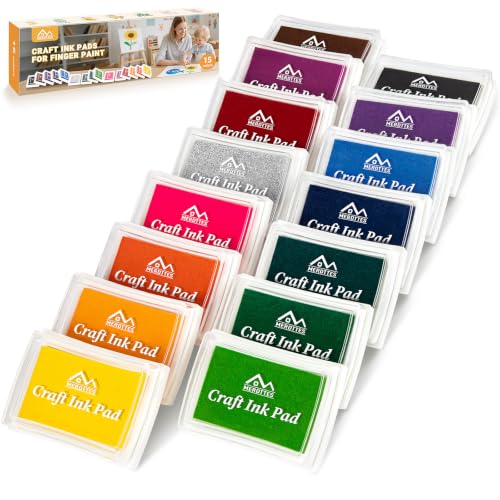
The first listing is titled 15 Colors Craft Ink Pads, Washable Stamp Pads for DIY Stamping, and its wording adds that the pads are for Rubber Stamps and Finger Painting, and for Crafts on Paper, Wood, Fabric, and Scrapbooking. Three facts anchor this entry: the set contains fifteen colors, the pads are described as washable, and the intended uses named in the title span rubber stamps, finger painting, and several surfaces including paper, wood, and fabric.
A fifteen-color washable set is a classic starter and classroom format. Fifteen colors are enough to cover a rainbow, skin-tone-adjacent browns in many sets, and the extra shades children reach for when a basic six-color set feels limiting, without becoming so large that storage turns into a project of its own. The finger painting mention signals that the pads are sized and formulated with direct hand use in mind, as stated in the title, which is a different use pattern from a pad intended only for a stamp block. As always with washable claims, washable generally describes cleanup from skin and many fabrics under normal washing, not a guarantee for every material, so an apron or craft mat remains a sensible precaution.
MERDTTES 15 Colors Ink Pads, Washable Stamp Pads for Kids Crafts
The second listing is titled MERDTTES 15 Colors Ink Pads, Washable Stamp Pads for Kids Crafts, with additional wording stating 15 Vibrant Colors and that the set Works with Rubber Stamps, Paper, Wood, Fabric and DIY Crafts. Like the first entry, this is a fifteen-color washable set, and its title frames it specifically around kids crafts. The word vibrant in the title is the seller’s description of the color range, and it is reported here as listing language rather than as a measured color claim.
Comparing the first two listings shows why small wording differences matter. Both state fifteen colors and washable pads. The first names finger painting and scrapbooking explicitly. The second names kids crafts in its main title and lists paper, wood, and fabric among its working surfaces. A buyer choosing between sets like these should look at the individual pad size, the case style, and the exact color list on the product page, because those practical details, rather than the headline color count, usually decide which set fits a particular table, classroom, or craft shelf.
Lsushine Craft Ink Pads, 20 Colors Rainbow Finger Ink Pads for DIY Stamping
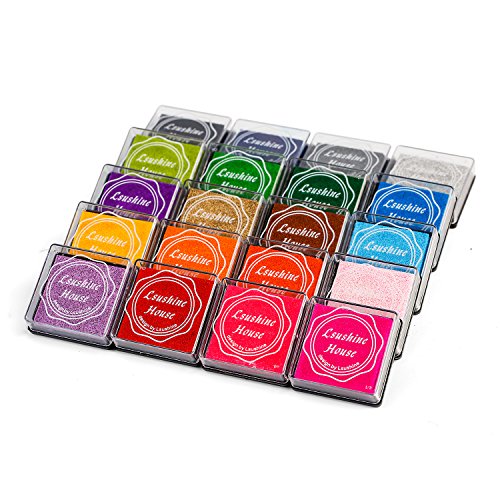
The third listing is titled Lsushine Craft Ink Pads, 20 Colors Rainbow Finger Ink Pads for DIY Stamping, and its wording adds that the pads are for Rubber Stamps and Finger Painting, and for Paper, Wood, Fabric, and Scrapbooking. The headline difference from the first two entries is the count: twenty colors, described as a rainbow range, in a finger ink pad format.
Twenty colors open up blending and shading possibilities that smaller sets cannot offer as easily. Children can move from primary colors into intermediate shades without mixing, and adult crafters gain extra tones for leaves, skies, and layered floral stamps. The cost of a larger count is organization. Twenty pads need a storage plan, a way to keep lids matched to bases, and a habit of closing each pad promptly, because a larger set left open across a long crafting session exposes more pads to drying air. None of that is difficult, but it is worth planning before the set arrives rather than after the first weekend of use.
Black Stamp Pad, 4 x 2.5 Inch Ink Pad for Stamps, All-Purpose Felt Pad
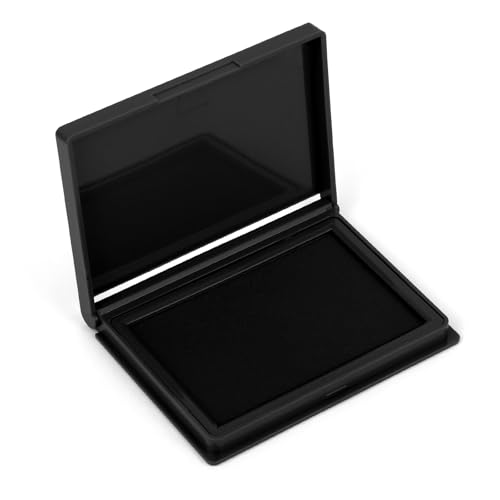
The fourth listing changes the pattern entirely. It is titled Black Stamp Pad, 4 x 2.5 Inch Ink Pad for Stamps, All-Purpose Felt Pad, with further wording stating Quick-Dry and Reusable, and that it Works with Rubber, Wooden, and Metal Stamps. This is a single-color pad in black, with a stated size of 4 x 2.5 inches, made as a felt pad. Those are the facts the title provides, and they describe a workhorse rather than a rainbow set.
A dedicated black pad earns its place in almost every stamping collection. Black is the color for outlines that will be colored in, for text stamps, for dates and labels, and for office and household marking. The stated size tells you the working area: a stamp larger than the pad can still be inked by pressing the stamp and moving it or by bringing the pad to the stamp, but a pad that covers the stamp in one press is faster and more even. The quick-dry wording in the title will appeal to anyone stamping stacks of envelopes or cards, while the reusable wording points to the general felt pad pattern of a pad that can be used repeatedly and, for many felt pads, re-inked when it eventually lightens, subject to the maker’s guidance for that specific pad.
Melissa & Doug Rainbow Stamp Ink Pad 6 Washable Colors
The fifth listing is titled Melissa & Doug Rainbow Stamp Ink Pad 6 Washable Colors, with wording adding that it is a 6-Color Washable Ink Pad for Finger Painting and Arts and Crafts Supplies for Kids, Ages 4 and up. The stated facts are a single rainbow pad format with six washable colors, a finger painting and arts and crafts purpose, and an age guidance of four years and older as printed in the listing title.
A multi-color single pad is a different format from a set of separate pads. Several colors share one case, which keeps the footprint small and the setup simple for young children: open one lid and every color is available. The trade-off is that colors sit close together, so a large stamp may pick up neighboring colors, and careful users press smaller stamps or stamp edges into one color zone at a time. For its stated audience of young children doing finger painting and general arts and crafts, that simplicity is often the point. Parents and teachers should still follow the age guidance and supervision notes on the actual product packaging, which are the authority for safe use.
16 Pcs Mini Archival Ink Pad for Stamp Multicolor Waterproof Ink Pad
The sixth listing is titled 16 Pcs Mini Archival Ink Pad for Stamp Multicolor Waterproof Ink Pad, with further wording naming Distress Oxide Ink Pads and describing the set as for Scrapbooking and Card Making, and as an Archival Permanent Stamp Pad. The stated facts are sixteen pieces, a mini format, multiple colors, and the words archival, waterproof, distress oxide, and permanent in the listing’s own description. This entry therefore sits at the keepsake end of the roundup, aimed by its wording at scrapbooking and card making rather than at washable children’s play.
That distinction matters for expectations. A pad described as archival and permanent is not the pad to hand to a toddler for finger painting, and a washable children’s pad is not the pad to choose for a scrapbook page meant to be kept for decades. Mini pads also suit detail work: a small pad can ink a small stamp precisely, can be dabbed onto part of a larger stamp for multi-color effects, and stores in a fraction of the space of full-size pads. Crafters interested in this listing should confirm on the product page how the archival and waterproof descriptions are defined by the seller, because those words cover a range of formulations across the industry and the specific guidance belongs to that product.
Artscent Craft Ink Pads for Stamps, Pigment Rainbow Stamp Pad Set, 6-Color
The seventh listing is titled Artscent Craft Ink Pads for Stamps, Pigment Rainbow Stamp Pad Set for Scrapbook Supplies, Paper, Wood, Rubber Stamping, Card Making, DIY Crafting, Fabric, and it is identified as a 6-Color set. The key stated fact is the ink family: pigment. The title also names scrapbook supplies, paper, wood, rubber stamping, card making, general DIY crafting, and fabric among its uses.
As the only listing in this roundup whose title explicitly names pigment ink as its headline type, this set is the natural reference point for the pigment discussion earlier in this guide. A six-color pigment rainbow is a compact way to explore slower-drying, richer, more surface-sitting color without committing to a very large set. It suits card makers who want strong color on a range of papers and who are willing to allow drying time. If your projects are usually fast classroom activities with young children, a washable dye-style set will usually be the more practical first purchase, and a pigment set can be the second step when your projects start to demand it.
40 Color Craft Ink Stamp Pads Set
The eighth listing is titled 40 Color Craft Ink Stamp Pads Set, with wording adding Ink Pads for Rubber Stamps, Washable Stamp Ink Finger Paint for DIY Cards, Scrapbooking, Paper, and Painting. The headline fact is scale: forty colors, described as washable, and framed for rubber stamps, finger paint use, DIY cards, scrapbooking, paper, and painting activities.
Forty colors is a library rather than a starter set. For a classroom, a craft club, or a family that stamps weekly, that breadth means almost any shade a project calls for is already on the shelf, and children can choose exact colors for animals, flowers, and seasonal scenes instead of approximating. For an occasional crafter, the same breadth can become storage burden and decision overload. An honest self-assessment helps: if you stamp monthly or more and enjoy color choice, a large set can be good value in use terms; if you stamp twice a year for holiday cards, a smaller set in the colors of the season will serve you better and stay fresher.
4 Pack Ink Pad, Red, Blue, Black, Green, felt stamp pads
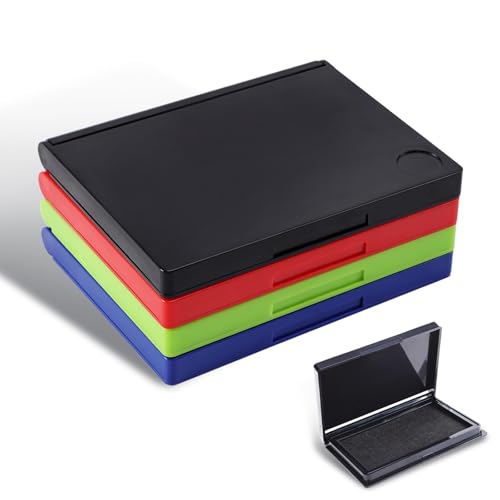
The ninth listing is titled 4 Pack Ink Pad, Red, Blue, Black, Green, with a stated size of 4.7 x 3.6 Inch and a description as a Felt Stamp Pad, for Office, Crafting, Rubber and Clear Stamps. The stated facts are four pads in four classic colors, red, blue, black, and green, a larger stated pad size than the single black pad earlier in this roundup, a felt construction, and office use named alongside crafting.
This is the practical, multi-purpose end of the market. Red, blue, black, and green are the traditional colors of office marking, teaching, and administration, as well as reliable craft staples for holiday and nature themes. The larger stated size suits bigger stamps and faster coverage of standard rubber stamps, and the mention of clear stamps in the title broadens the stated compatibility beyond rubber alone. A household that stamps school papers, labels, cards, and the occasional office document may find a classic four-pack more useful, week in and week out, than a rainbow set bought for colors that are rarely opened.
CraftyManor Mini 8 Color Pigment Ink Pads for Stamps, Fingerprint InkPads
The tenth listing is titled CraftyManor Mini 8 Color Pigment Ink Pads for Stamps, Fingerprint InkPads, with wording adding that the set is for Scrapbook Paper and Wood and Clothing and Letter use, and naming Archival among its purposes. The stated facts are a mini format, eight colors, pigment ink, a fingerprint pad purpose, and a surface and use list that includes scrapbook paper, wood, clothing, and letters, with archival mentioned in the title.
Mini pigment pads in eight colors occupy a useful middle ground. They are small enough for fingerprint art, guest book trees, and keepsake crafts where each guest or child adds a colored print, and pigment ink as a class offers the richer surface color discussed earlier. The clothing mention in the title should be read carefully on the product page, because stamping on fabric that will be washed is a specific use with specific setting and care instructions across the industry, and the maker’s directions for this exact set are the ones to follow. As with the other archival mention in this roundup, confirm what the seller means by the term for this product before relying on it for a long-term keepsake.
Washable pads for kids: what washable really means
Washable is the word that sells most children’s pad sets, and it deserves a calm explanation. In general industry usage, a washable ink is formulated to come out of skin with soap and water and out of many washable fabrics in a normal wash. It is not a promise that ink will vanish from every surface, including unfinished wood, grout, upholstery, or a favorite shirt that was not meant for crafting. The listings here that state washable include the fifteen-color sets, the twenty-color Lsushine set, the Melissa & Doug six-color pad, and the forty-color set, each in its own title wording.
Good practice makes washable ink live up to its name. Set up on a washable mat or a covered table, dress children in play clothes or aprons, keep wipes or a damp cloth within reach, and wash hands promptly after the session rather than letting ink dry on skin through lunch. Teach children to press rather than grind a stamp into a pad, which keeps ink on the pad surface and off the pad edges and case. These habits are simple, they protect furniture better than any ink formulation alone, and they turn cleanup from a negotiation into a routine. Crafters who also print activity sheets at home may want to compare paper choices in guides such as best 11×17 inkjet printers when larger worksheets and posters are part of the same family craft table.
Ages, supervision, and classroom use
Only one listing in this roundup states an age in its title: the Melissa & Doug pad, at ages four and up. For every other set, check the product page and packaging for age guidance rather than assuming a set is intended for toddlers because it is colorful or washable. Small lids, small mini pads, and stamp accessories can present ordinary small-part considerations for very young children, and adult supervision is the standard expectation for craft ink with any child who still puts objects in their mouth.
In classrooms, the practical questions are throughput and sharing. Separate pads in a shared color set let several children work at once, while a single multi-color pad creates a queue at one case. Washable sets reduce laundry worries for teachers sending art home. A class set also benefits from a labeling habit: mark each lid and base with the color name, because lids get swapped during busy sessions and a blue lid on a green pad will confuse the next group and contaminate colors over time.
Archival, waterproof, and permanent pads
At the opposite end from washable play sits the keepsake category. The mini archival listing and the CraftyManor mini pigment listing both use archival language in their titles, and the mini archival listing also states waterproof and permanent. In general terms, archival inks are chosen for scrapbooks, family history pages, and documents where fading over years is the enemy. Waterproof inks, once fully dry, are chosen when a stamped outline will be colored with wet media, because the outline should stay put instead of bleeding into the coloring.
Two cautions keep this category honest. First, archival quality is a system, not a single product: an archival ink on acidic paper in a sunny frame will still age faster than the same ink on acid-free paper stored in the dark. Pair keepsake ink with suitable paper and storage if longevity is the goal. Second, permanent and waterproof pads demand more care in use. They can stain stamps, clothing, and work surfaces more readily than washable inks, and they should be stored and handled with the maker’s instructions in mind. Choose them deliberately for projects that need their properties, rather than as a default for every stamping task.
Pad size, format, and stamp compatibility
Pad size decides how a stamping session feels. The single black pad in this roundup states 4 x 2.5 inches, and the four-pack states 4.7 x 3.6 inches, giving two concrete anchors. A pad should ideally cover your most-used stamp in one press. When a stamp is larger than the pad, you can ink it by placing the stamp face up and pressing the pad down onto it in sections, a technique many crafters prefer for large background stamps because it gives better control and coverage. Mini pads, such as the sixteen-piece archival set and the eight-color CraftyManor set, trade coverage for precision and portability.
Format matters as much as size. Separate single-color pads are easy to share, replace, and re-ink individually. Multi-color rainbow pads, like the six-color Melissa & Doug format, are compact and exciting for children but require care to keep colors from mixing on the pad surface. Raised felt pads, named in the black pad and four-pack listings, present an inked surface that a stamp meets from above, which is the classic office and craft arrangement. Foam-based pigment pads, as a general class, feel softer and hold thicker ink. Across all formats, a lid that closes firmly is not a minor detail; it is the main defense against drying, dust, and accidental contact with papers stored nearby.
Compatibility wording in the listings is worth noting exactly as written. The black felt pad states that it works with rubber, wooden, and metal stamps. The four-pack states rubber and clear stamps. Most other listings name rubber stamps. Clear stamps, which are used on acrylic blocks, work with most craft pads as a general matter, but some inks bead on clear polymer surfaces or stain them, and pigment inks as a class are often chosen for clear stamps because their thicker consistency coats the surface more evenly. When a project matters, a small trial impression on scrap paper of the same type is the crafter’s standard safeguard, whatever pad and stamp combination is being used.
Stamping on paper, wood, and fabric
Paper is the home surface for almost every pad in this roundup, and several listings name it directly. Porous papers such as cardstock drink dye ink quickly and give crisp results with washable and dye-style pads. Coated and glossy papers hold ink on the surface, so pigment impressions need longer to dry and can smudge if handled early. Textured papers such as watercolor stock add character but can break up a fine-lined stamp image where the surface dips. The general rule is to match the paper to the ink family and to allow for drying time as a real step in the project, not as an afterthought when cards are stacked too soon.
Wood appears in the titles of the fifteen-color sets, the Lsushine set, the Artscent pigment set, and the CraftyManor set. Unfinished wood is porous, so inks soak in and colors can look softer and more muted than they do on paper, which many crafters enjoy for rustic tags, signs, and ornaments. Sealed or painted wood behaves more like a coated surface, with ink sitting on top and needing more drying care. Grain can interrupt fine detail, so bold stamp designs generally suit wood better than delicate line work. A trial stamp on the back of the piece or on a spare piece of the same wood is the standard way to preview the result.
Fabric is named in the titles of the fifteen-color sets, the Lsushine set, and the Artscent set, and clothing is named in the CraftyManor title. Fabric stamping divides into two very different projects. Decorative stamping on a tote, apron, or banner that will rarely be washed is one thing, and many craft inks can serve it with careful drying. Stamping on clothing that will be washed repeatedly is another, and across the industry it generally calls for ink and setting steps intended for laundering, following the specific product’s directions. Washable children’s pads, by design, are the opposite of laundry-permanent: they are made to come out. Keeping that distinction clear prevents the classic disappointment of a hand-stamped shirt fading at the first wash because a washable pad was chosen for a permanent job.
People who combine printing and stamping, for example printing a background or a name and then stamping a design over it, should let printed sheets dry fully before stamping and should expect laser and inkjet prints to receive stamp ink slightly differently. If large photo-based projects are part of your crafting, background reading in best 12 x 12 photo printers and best 13×19 photo printers can help you think about paper size and coating before you bring an ink pad anywhere near a finished print, because a stamp pressed onto a coated photo print is one of the easiest ways to learn about slow drying the hard way.
Technique basics for a clean impression
Most stamping problems come from pressure and ink load, not from the pad itself. Ink a stamp with a few light taps rather than one hard press into the pad, which floods the recessed areas of the design and fills in fine lines. Then press the stamp to the paper with even, steady pressure, without rocking, and lift it straight up. Rocking blurs edges, and sliding smears wet ink. On a hard table the impression will be crisper than on a soft surface, while a thin stamping mat or a sheet of foam under the paper can help large stamps make full contact in the center, a well-known general technique for big background designs.
For multi-color effects, mini pads shine. Dab each color onto its own area of the stamp, overlap slightly where a blend is wanted, breathe lightly on the inked stamp if a maker or teacher recommends refreshing the moisture, and press once. For finger stamping and fingerprint art, which several listings name directly, press the fingertip flat onto the pad, check that the whole fingertip is inked, and print with a single firm press and a straight lift. Wipe or wash between colors to keep pads clean, because a fingertip carrying blue into a yellow pad will change that pad for every later user.
Troubleshooting faint, blotchy, or smudged results
A faint impression usually means the pad is drying out, the stamp was under-inked, or the paper is very absorbent. Try re-inking the stamp with several light taps, and if results stay faint across several stamps, the pad itself may need re-inking or replacement. A blotchy impression often means uneven pressure or an uneven surface under the paper. A smudged impression usually means the ink was still wet when touched, which points back to ink family and paper coating: pigment on coated stock is the classic slow case, and the cure is time, thinner application, or a different paper for that project.
Color contamination is the slow problem that ruins sets, so clean stamps between colors and keep a scrap sheet beside the pads for off-stamping excess ink before changing colors.
Storage and re-inking basics
Store pads closed, flat, and away from heat and direct sunlight. Many crafters store pads upside down, following a common industry habit based on the idea that ink settles toward the surface of the pad, although maker guidance for a specific pad should win over general habit. Keep sets in their case or in a shallow box where lids stay matched to bases, and keep washable children’s pads in a separate, clearly labeled container from archival and permanent pads, so that no one grabs a permanent pad for a toddler activity by mistake.
Re-inking extends the life of many felt and foam pads. The general method across the industry is to apply a few drops of the matching refill ink for that pad type, spread it evenly if the maker suggests doing so, close the pad, and let it rest so the ink distributes before use. Matching matters: a refill should be the same ink family and color as the pad, and mixing families in one pad produces unpredictable results. Not every pad is designed to be refilled, and mini pads and inexpensive children’s sets are often treated as replaceable when they fade. Check the product information for your set, keep refills for the pads you use most, especially a hardworking black pad, and retire pads that have become contaminated or torn rather than fighting them through an important project.
How long pads last and when to replace them
Pad life depends on use, storage, and ink family more than on the calendar. Replace a pad when impressions stay faint after any supported re-inking, or when its surface has become hard, cracked, or badly contaminated.
Choosing the right set for your projects
Start with the user and the surface, not with the color count. For young children and finger painting, the washable listings lead: the Melissa & Doug six-color pad for a compact single-case start with stated ages four and up, the fifteen-color sets for separate pads and broader choice, the twenty-color Lsushine set for a larger rainbow, and the forty-color set for classrooms and craft groups that will truly use the breadth. For general card making and scrapbooking with richer color, the Artscent six-color pigment set is the listing whose title names pigment directly, and the CraftyManor mini pigment set adds a fingerprint and keepsake angle in a mini format.
For keepsake and outline work, look to the specialized listings. The sixteen-piece mini archival set is described with archival, waterproof, distress oxide, and permanent language for scrapbooking and card making. The single black felt pad, at its stated 4 x 2.5 inch size with quick-dry and reusable wording, is the outline and labeling workhorse. The four-pack in red, blue, black, and green, at its stated 4.7 x 3.6 inch size, covers office and crafting marking in classic colors. A thoughtful collection often combines one set from each group rather than seeking a single set that claims to do everything.
Frequently asked questions
Can washable pads be used for scrapbooks?
They can be used, in the sense that they will stamp on scrapbook paper, but they are not the natural choice for pages meant to last for many years. Washable inks are formulated for cleanup, not for fade resistance, and the archival listings in this roundup exist for the keepsake purpose. Match the ink to the lifespan you want for the project: washable for play and everyday fun, archival-minded choices for heritage pages.
Why does pigment ink smudge on some cards?
Pigment ink sits on the surface and dries more slowly than dye ink as a general class, and coated or glossy card slows it further. Give pigment impressions real drying time, handle them by the edges, and avoid stacking finished cards until they are fully dry. If a project must be finished and stacked quickly, a faster-drying pad is usually the better tool for that job.
Can one pad work on paper, wood, and fabric?
Several listings name all three surfaces, and a pad can certainly make an impression on each of them. The honest qualification is permanence and appearance. The same ink will look bolder on smooth paper, softer on unfinished wood, and, if it is a washable formulation, will come out of fabric in the wash by design. Decide whether each project needs a lasting result or a playful one, and choose the pad accordingly, following the maker’s directions for the surface in question.
Check prices on Amazon
Live listings for the shortlist in this guide are pulled from Amazon below, so prices and availability are always current at the moment you look.



Final thoughts
Stamp ink pad sets reward buyers who read titles carefully. Color count tells you breadth, words such as washable, pigment, archival, waterproof, and permanent tell you behavior, and a stated size tells you how the pad will handle your stamps. The listings in this roundup cover nearly every common need, from a toddler’s first fingerprint flower to a scrapbook outline that must hold its line under watercolor, from a teacher’s classroom rainbow to an office drawer four-pack in the classic colors of marking and correction.
Choose the family first, the format second, and the colors last, store every pad closed and matched to its lid, and let each project dry in its own good time. Do that, and a modest set of pads will quietly support years of cards, tags, lessons, and keepsakes, each clean press a small reminder that the simplest tools, understood well, are often the ones a craft table reaches for most.