Key takeaways
- Replacement speakers for a 2001 Mercedes E430, matched to W210 dash, door and rear deck sizes, Bose impedance, mounting depth and harness adapters.
What's inside
- Why a 2001 E430 needs a different kind of speaker search
- The factory layout, position by position
- Standard audio and Bose are not interchangeable starting points
- Reading a fitment guide like an engineer
- Component or coaxial, decided by location
- Why the originals failed: foam, heat, and time
- Mounting depth, magnets, and the life behind the door card
- Wiring without wounds: harness adapters and polarity
- Sensitivity and the factory head unit
- Tweeters, the dashboard, and the windscreen effect
- Sound deadening and the door as an enclosure
- The rear of the car: doors, deck, and honest fill
- A staged upgrade path that respects budget and trim clips
- Measuring before ordering: a field routine
- Installation judgement calls worth making slowly
- Choosing materials: cones, surrounds, and tweeters in a damp door
- Troubleshooting the symptoms owners actually report
- Check prices on Amazon
- What to expect, and what no replacement can promise
As an Amazon Associate I earn from qualifying purchases. This post may contain affiliate links at no extra cost to you.
Reader support keeps this guide independent: As an Amazon Associate, this site earns from qualifying purchases. That single sentence covers the arrangement, and the rest of this page is devoted to fitment facts drawn from manufacturer documentation, published specifications, and vehicle fitment guides for the W210 chassis.
Why a 2001 E430 needs a different kind of speaker search
A 2001 Mercedes-Benz E430 is now a quarter-century-old car, and its loudspeakers have lived through heat cycles, door slams, damp winters, and long summers that no paper cone or foam edge was ever expected to survive gracefully. Most owners do not start this project because they crave spectacle. They start because a door speaker buzzes on news broadcasts, a rear channel has gone silent, or the whole system sounds thin and tired compared with memory. The sensible goal is restoration first and improvement second: drivers that fit the factory openings, work with the factory electronics, and return the cabin to clear, balanced sound at ordinary listening levels.
That goal sounds modest until the W210 layout enters the picture. The second-generation E-Class spreads its speakers across the dashboard, both pairs of doors, and the rear parcel shelf, and each position carries its own diameter, depth, and mounting pattern. A driver that drops neatly into a front door may foul a window regulator, while a unit that suits the rear deck may demand a tweeter position the trim never provided. Fitment guides exist precisely because a headline diameter tells only half the story, and this guide treats those guides, rather than retail headlines, as the starting point.
Trim variation adds a second layer of caution. Cars left the factory with a standard audio system or with the optional Bose package, and the two systems do not ask the same things of their speakers. Bose-equipped examples use low-impedance drivers driven by a dedicated amplifier, so a conventional four-ohm replacement can behave very differently there than the same part behaves in a standard car. Identifying which system a particular E430 carries is therefore not trivia. It is the decision that shapes every later choice, from impedance to wiring method to realistic expectations of volume.
A third caution concerns the car itself rather than any catalogue. Production changes, prior repairs, and earlier owner modifications mean two E430 sedans of the same model year can present different connectors, different spacer rings, and occasionally a driver that a previous repairer substituted years ago. Everything below therefore frames sizes as documented fitment-guide values for the W210 and urges verification on the actual car before money changes hands. A tape measure, a trim tool, and twenty patient minutes protect a buyer far better than confidence borrowed from a forum post about a different trim level.
The factory layout, position by position
Fitment references for the W210 sedan describe a system built around separate locations rather than a single pair of full-range drivers. Small speakers occupy the outer ends of the dashboard, the front doors carry the principal woofers, the rear doors hold smaller full-range or midrange units depending on system, and the rear deck carries woofers that support the low end from behind the seats. Exact complements differ between standard and Bose cars, which is why a count of grilles in one car should never be treated as a promise about another.
The dashboard positions sit beneath grilles at the base of the windscreen and are commonly served by small drivers in the three-and-a-half-inch class, a size shared with many European cars of the period. Their job is presence and clarity rather than bass: they lift voices, cymbals, and the upper harmonics of strings into the windscreen reflection zone, where the glass helps spread that energy across the front seats. Because the location is shallow and reached from above or below depending on the guide consulted, depth and connector orientation deserve as much attention as diameter.
Front doors do the heavy lifting. Fitment guides most often list a six-and-a-half-inch class woofer for this position, mounted low in the door ahead of the occupant, behind a perforated section of the door card. The driver works into the volume of the door itself, which acts as a rough enclosure, and its output defines the warmth and body of the whole system. Readers comparing front-door options will find the broader category surveyed in our guide to best 6 5 inch car speakers, though only units whose depth and mounting pattern suit the W210 belong on an E430 shortlist.
Rear doors contribute fill rather than focus. Their speakers sit where rear passengers hear them at close range, so tonal balance matters more than sheer output, and a driver that sounds exciting on a demonstration board can turn intrusive a foot from a passenger knee. Published guides list smaller diameters here than at the front, and the mounting is again specific to the door pressing. Treating the rear doors as a scaled copy of the front is a common ordering error, and it usually surfaces only after the trim is off and the new driver plainly will not seat.
The rear deck, the shelf beneath the rear window, holds woofers whose output reaches the cabin through grilles in the shelf trim. In Bose cars this position takes on a larger share of low-frequency duty, working with the system amplifier and enclosure considerations that a standard car distributes differently. Access typically involves the rear seat and shelf trim rather than a door card, so labour planning differs, and the shelf itself must be handled gently because sun-aged trim clips grow brittle. A rattling shelf after reassembly often traces back to a clip broken during removal, not to the speaker at all.
Standard audio and Bose are not interchangeable starting points
The standard system drives its speakers from the head unit and associated factory amplification at impedances familiar across the car audio world, with four ohms the common reference point in published documentation. Replacement drivers in that familiar range present the load the electronics expect, reach useful volume on modest power, and keep the arithmetic of sensitivity simple. For a standard car, the replacement task is mostly mechanical: match the opening, respect the depth, connect with the correct polarity, and choose a tonal balance the owner enjoys.
Bose cars rewrite that arithmetic. Documentation and specialist references for the W210 Bose option describe drivers of notably low impedance, in some positions around two ohms or lower, paired with an amplifier and equalisation tuned for those exact units. A low-impedance driver draws more current for a given voltage, which is how the system extracts its output, and the amplifier voicing assumes the response of the original parts. Fitting a higher-impedance conventional driver in one position usually produces a quieter channel rather than damage, yet the balance between positions shifts, the equalisation no longer matches, and the result can sound thinner than the worn original it replaced.
The reverse mistake carries more risk. A very low-impedance aftermarket driver hung on electronics designed for a higher load can demand current the amplifier was never built to supply, bringing heat, protection shutdowns, or distortion that owners misread as a faulty speaker. This is why responsible fitment material separates Bose and non-Bose applications instead of merging them under one cheerful compatibility line. Before ordering anything, an owner should confirm the system from the build data, the amplifier presence, the labelling on the original drivers, or a combination of all three.
There is also an honest middle path for Bose owners. Some replace only the failed driver with a documented equivalent that preserves impedance, some adopt a full system plan that retires the factory amplifier along with its speakers, and some repair the original units where surround replacement is practical. What rarely works is the casual middle: one fashionable driver dropped into one Bose location while everything else remains tuned for the original complement. The system was engineered as a set, and changes read most clearly when they respect that fact or deliberately replace the set as a whole.
Reading a fitment guide like an engineer
A good fitment entry gives more than a diameter. It states the location, the nominal size, the mounting depth available, the cutout or basket constraints, and notes about adapters or trimming. Each figure answers a different failure mode. Diameter decides whether the basket enters the opening. Depth decides whether the magnet clears whatever lives behind the panel. The mounting pattern decides whether screws land in material that can hold them. Notes about polarity and connector style decide whether the job ends with sound or with a second disassembly.
Nominal size deserves special scepticism because the industry rounds generously. Two drivers both sold as six and a half inches can differ in basket diameter, flange width, and screw spacing by enough to matter in a Mercedes door pressing designed around one specific original part. Component manufacturers publish dimensional drawings for current models, and those drawings, not the box headline, should be compared against the factory opening. Where a drawing shows a protruding surround or a tall tweeter post, that projection belongs in the clearance calculation as surely as magnet depth does.
Depth is the figure owners most often skip and most often regret. Behind a W210 door card sit the window glass in its lowered position, the regulator mechanism, wiring runs, and the inner door structure, all competing for the same few centimetres. A deep magnet or a thick adapter ring can push the basket into that traffic. Published maximum-depth figures in fitment guides assume the factory spacer arrangement, so adding a thicker ring consumes clearance that the guide already spent. Measuring from the mounting face to the first obstruction, with the window fully down, turns a guess into a number.
Sensitivity figures need the same careful reading. Manufacturers state sensitivity under defined conditions, commonly with a one-watt input measured at one metre, though some car audio brands quote at a fixed voltage that flatters the result when impedance is low. Comparing two published figures is fair only when the method matches. For an E430 keeping its factory head unit, sensitivity matters more than headline power handling, because the factory electronics deliver modest wattage and a driver that converts that wattage efficiently will sound composed long before a power-hungry unit wakes up.
Component or coaxial, decided by location
A component set separates woofer and tweeter into individual drivers joined by an external crossover network, while a coaxial design mounts the tweeter within the woofer, usually on a post through the cone or suspended above it. Neither arrangement wins everywhere. The right answer in an E430 depends on where the factory put its tweeters, how much mounting depth the position allows, and whether the owner wants to run new wiring or stay close to the original scheme. Location by location reasoning beats a blanket preference.
At the front, the factory already separates the high-frequency work toward the dashboard, so a component approach follows the architecture Mercedes chose. The woofer handles the door position, the tweeter serves the upper location, and the crossover divides the signal at a frequency the manufacturers document for their sets. Readers drawn to that arrangement can compare formats in our survey of best 6 5 component speakers, keeping in mind that crossover boxes need a dry, secure home inside the door or behind trim, away from the window mechanism and away from the damp lower door where condensation gathers.
Coaxial drivers earn their place where simplicity protects the result. In a rear door, a coaxial unit replaces one factory driver with one new driver, keeps the connector count low, and avoids finding space for a crossover in a panel that was never shaped for one. The tweeter sits close to the woofer, which suits a fill role heard off axis by rear passengers. Many coaxial models offer a pivoting tweeter, and a slight aim toward the cabin centre can help, though the adjustment range is small and the grille must still clear the trim without contact through the full travel of the cone.
The dashboard positions reward restraint. A small full-range driver or a dedicated tweeter, chosen to match the documented size and depth, preserves the factory intent of lifting detail without drawing attention to the corners of the windscreen. Oversized or unusually deep units risk fouling the ducting and structure beneath the dash top, and bright tweeters at windscreen distance can sound glassy because the screen reflects their output straight at the listeners. Published frequency response and the crossover provisions in the documentation help predict that behaviour better than any adjective on a retail page.
Rear deck woofers ask a different question again: not tweeter placement but low-frequency behaviour in a shelf. A driver intended for door use may still serve here if its parameters suit the mounting, yet documentation about intended enclosure type deserves a read, because a woofer voiced for a sealed door volume behaves differently on an open shelf communicating with the boot. In Bose cars the deck position is more specialised still, and the earlier warning about impedance and system tuning applies with full force. Matching the documented application matters more than matching a brand across all four corners.
Why the originals failed: foam, heat, and time
Open a failed W210 door speaker and the diagnosis is usually visible before any meter comes out. The foam surround, the flexible ring that lets the cone move while keeping it centred, crumbles at a touch after decades of heat and ozone. With the surround gone, the cone flops, the voice coil rubs, and the sound turns to buzz and rattle at levels that once played cleanly. Paper-based cones can also soften where door moisture reached them, and dust caps detach as their adhesive ages. These are material failures, not electronic mysteries, and they explain why several speakers in the same car often fail within a short span: they share a birthday.
That shared birthday shapes buying strategy. Replacing only the single noisiest driver leaves neighbours of identical age in place, and the next failure is a matter of time and weather rather than luck. A staged plan, addressed later in this guide, still makes sense for budget and labour, yet the owner should plan it as a sequence with an end, not as a hope that the remaining originals will recover. Inspecting every accessible driver during the first disassembly costs little and turns the sequence into an informed order of work.
Surround repair kits exist for some driver sizes and can suit an owner determined to preserve original Bose units whose impedance is hard to duplicate. Refoaming demands patience, careful centring of the cone, and honest assessment of the cone and coil condition underneath. Where the coil has rubbed long enough to damage its winding, fresh foam restores appearance without restoring sound. Documentation from kit suppliers describes the process and its limits, and those limits deserve respect: repair is a conservation choice, not a shortcut around diagnosis.
Moisture deserves a mention of its own because doors are wet places by design. Rainwater passes the window seal, travels down inside the door, and exits through drain holes, and factory vapour barriers exist to keep that water away from trim and hardware. A barrier torn during an earlier repair, or drain holes blocked by debris, will shorten the life of any replacement. Checking drains and resealing the barrier with proper butyl cord during speaker work is unglamorous, cheap, and arguably worth more years of service than the difference between two competing driver models.
Mounting depth, magnets, and the life behind the door card
The W210 door is a busy structure wearing a tailored card. Behind the speaker opening, the descending window glass sets the hardest limit, and it must be checked in the fully lowered position because a driver that clears raised glass can meet the pane at the bottom of its travel. Regulator arms sweep through part of the same space, and wiring looms run in clipped channels that should not be pinched by a magnet or trapped under a mounting screw. Fitment guides condense all of this into a maximum depth figure, and exceeding it by a few millimetres is still exceeding it.
Magnet diameter matters alongside depth. Modern drivers often use compact high-energy magnets, while some traditional designs carry wide ferrite rings that can strike the inner door skin or the glass run channel even when total depth looks safe. Manufacturer dimensional drawings give magnet diameter as well as depth, and both belong on the comparison sheet. Where a drawing is unavailable for an older model, the physical driver and a ruler settle the question before installation day, provided the buyer measures the car first and keeps the receipt until the fit is proven.
Adapter rings solve the Mercedes mounting pattern, which does not follow the simple four-screw circle many aftermarket baskets assume. A ring matched to the W210 opening presents the factory holes on one face and a standard pattern on the other, spaces the driver correctly, and gives the basket a flat, rigid seat. Rigidity is not a nicety: a flexing mount lets the basket move in sympathy with the cone, wasting energy and adding colouration that owners often blame on the driver. Rings in dense plastic or properly sealed fibreboard both serve, though anything porous inside a door should be protected against the damp described earlier.
Foam gasket tape between ring, basket, and door metal closes the small leaks that rob a door woofer of its low end. The door volume only works as an enclosure when the front and rear waves of the cone stay separated, and a gap at the mounting face is a direct leak between them. The same tape, applied where the driver meets the door card grille area, reduces buzzes that appear only on particular bass notes. These details appear throughout installer documentation for good reason: they cost almost nothing, they are easiest during the one disassembly already planned, and they separate a tidy result from a merely functioning one.
Wiring without wounds: harness adapters and polarity
Factory Mercedes wiring terminates in connectors shaped for the original drivers, and the cleanest replacement path preserves them. Harness adapters bridge the factory plug to the standard spade terminals found on aftermarket speakers, which means the job can be reversed, the loom keeps its weather sealing, and no copper strands are left twisted and taped inside a damp door. Adapter listings specify the model years and positions they serve, and matching that listing to the actual plug in hand remains the buyer responsibility, since a previous repair may have altered what the catalogue expects.
Cutting the factory loom should be the last resort rather than the default. Cut wires invite corrosion at the joint, complicate any return to original drivers, and create fault-finding misery when a later owner chases a dead channel. Where cutting truly is unavoidable, soldered and properly insulated joints, or sealed crimp connectors of the correct gauge, stand a chance in door conditions; household twist connectors and bare tape do not. The modest price of the right adapter, set against an afternoon of remedial wiring, settles most arguments before they start.
Polarity is the quiet detail that decides whether the system sounds full or hollow. A speaker wired in reverse still plays, still measures continuity, and still passes a casual listen, yet its cone moves inward where its partner moves outward, cancelling bass and smearing the centre image. Factory wire colours and adapter documentation identify positive and negative at each position, and a small battery test or a polarity checker confirms the result before the door card returns. Consistency across every position is the requirement; a single reversed rear driver can undo the low-frequency gains the front work bought.
Owners adding component crossovers face one more wiring decision: where the network lives and how its leads are protected. Inside the door, the crossover must sit high, dry, and clear of the glass, fixed so it cannot migrate onto a regulator arm. In the cabin, behind trim, it stays drier but demands longer runs through the door jamb conduit, which is the most labour-intensive route on the car. Installer guides for the chassis describe both paths. Whichever is chosen, grommets and loom protection at every metal edge are part of the job, because a chafed lead shorting to the door structure will silence a channel and can trouble the amplifier behind it.
Sensitivity and the factory head unit
The factory head unit in a standard E430 was built for refinement rather than brute output, and its modest wattage sets the terms for speaker choice. A driver with higher published sensitivity converts each of those watts into more sound, which means the volume control lives in its comfortable middle range and the electronics stay clear of the strained region where distortion climbs. A driver with low sensitivity and grand power-handling claims asks for an amplifier the standard car does not provide, and delivers its worst behaviour precisely on the factory power available.
Reading sensitivity honestly requires the method behind the number. Documentation that states decibels at one watt and one metre gives a comparable figure. Documentation quoting at a fixed voltage without stating impedance can flatter a low-impedance driver, because that voltage drives more power into a lower load. Shoppers comparing across brands should normalise where the data allows, treat unexplained figures with suspicion, and remember that a difference of three decibels represents a doubling or halving of required power for the same loudness. Small printed differences carry real consequences in a car keeping factory electronics.
Power handling, by contrast, is mostly a ceiling rather than a target. Published ratings describe what a driver can tolerate under stated test conditions, not what it needs, and a speaker rated well beyond the head unit output is simply unbothered by factory power. The practical risks run the other way: an owner who adds a large amplifier later must respect those ceilings, and an owner who hears distortion at high volume should recognise it as the electronics reaching their limit, since driving a clean speaker with a clipped signal damages tweeters faster than clean power at a higher level would.
Balance between positions follows from sensitivity too. If new front drivers are markedly more efficient than tired rears, the sound stage collapses toward the doors and the fader spends its travel compensating. Choosing replacements with published sensitivities in a similar band keeps the factory fader useful and the deck woofers audible in their supporting role. This is one more reason a planned set, even when installed in stages, outperforms a series of unrelated bargains gathered whenever a single channel failed loudly enough to demand attention.
Tweeters, the dashboard, and the windscreen effect
High frequencies are directional in a way bass is not, so tweeter position shapes what front occupants actually hear. The W210 dash locations fire upward into the windscreen, and the glass reflects that energy toward the seats, broadening the apparent source and softening the pinpoint quality a direct-facing tweeter can produce. The arrangement flatters voices and gives the stage a sense of width, provided the tweeter itself is smooth in its upper range. A driver with a ragged peak near the top of its band will announce that peak on every sibilant, reflected faithfully by the screen.
Replacement choices for the dash divide into dedicated tweeters fed through a crossover and small full-range drivers that cover the upper midrange as well. The documented size for the location, often grouped with the compact class compared in our guide to best 3 5 car speakers, is a starting filter rather than a guarantee, since basket shape and terminal position vary within the class. A full-range unit can ease integration in a standard system whose original dash drivers carried a broad share of the programme, while a component tweeter suits a planned set whose crossover already defines the division of labour.
Crossover provisions decide how safely a tweeter can be used. A bare tweeter connected without high-pass filtering receives low-frequency energy it cannot reproduce, and excursion demands at those frequencies can damage it quickly even at modest volume. Component sets include the network, coaxial and full-range drivers carry built-in provisions, and simple in-line capacitors serve some factory-style replacements, with values documented by their makers for the impedance in question. Skipping that protection to save a few minutes is among the most expensive economies available in this entire project.
Level matching completes the dash work. Some crossovers and tweeter kits provide attenuation settings, described in their manuals as steps that reduce tweeter output relative to the woofer. In a reflective dash location, a restrained setting often reads as the more natural balance, especially with metal-dome tweeters whose published response stays energetic to the top of the band. Textile domes are frequently described as gentler in character, though material alone does not dictate behaviour; the response curve in the documentation is the evidence, and two textile domes can differ more from each other than either differs from a well-behaved metal design.
Sound deadening and the door as an enclosure
A car door is a compromised loudspeaker cabinet: thin steel, large apertures for the window mechanism, and a trim card that was styled before it was acoustically considered. Constrained-layer deadening material, applied to the outer skin and around the speaker aperture on the inner panel, lowers the resonance of that steel and reduces the buzz that colours midrange notes. Manufacturer application guides describe coverage patterns and roller techniques, and partial coverage of the largest flat areas delivers much of the benefit without turning the door into a noticeably heavier structure.
Restraint matters here as much as coverage. Deadening belongs on panels, not on regulator mechanisms, drain paths, or the moving glass, and excess material at the bottom of the door can trap the moisture the drains exist to release. The vapour barrier must return intact over any treated inner panel, sealed at its edges, because its job in moisture management outranks any acoustic ambition. Owners who treat deadening as part of the speaker job, done once while the door is open, gain a quieter panel and protect the new driver in the same afternoon.
Decoupling is the companion idea. Foam or butyl rope between the door card and the panel, fresh clips where old ones have lost their grip, and gasket tape at the speaker mount all attack the small relative movements that become rattles on rough roads. An E430 cabin was notably hushed when new, which means small noises stand out against a low background; a single loose clip can dominate the listening experience after every speaker has been renewed. A bag of replacement clips matched to the chassis, ordered alongside the drivers, is cheap insurance against a second disassembly.
Expectations should stay proportionate. Deadening will not turn a door into a sealed studio monitor, and it cannot add low-frequency extension the driver and volume do not possess. What it reliably offers, per installer documentation and the physics of panel resonance, is cleaner midrange, fewer sympathetic buzzes, and bass that sounds tighter because the panel stops singing along. Judged on those terms, an hour with a roller during speaker replacement is among the best-value hours in the whole project.
The rear of the car: doors, deck, and honest fill
Rear speakers in a sedan serve the listeners behind and fill the cabin volume so the front stage does not sound stranded. Their replacement follows the same rules of size, depth, and impedance, with one difference in emphasis: tonal smoothness outranks brilliance, because rear passengers sit close to the drivers and hear them well off the axis the designers intended for the front seats. A coaxial with a well-behaved tweeter and a published off-axis response that stays orderly will please the rear bench longer than a brighter unit chosen from front-seat impressions.
Owners sometimes meet an unfamiliar size while researching the rear positions, and the broader market includes oval formats such as those compared in our guide to best 6 by 8 car speakers. The W210 positions follow their own documented dimensions, so an oval driver belongs in an E430 only where a fitment guide for this chassis names it or an adapter arrangement is documented for the specific opening. Size families from other cars, however popular, do not transfer on enthusiasm alone, and forcing an unfamiliar basket into a Mercedes pressing usually ends with cut metal that the next owner inherits.
The rear deck deserves a methodical afternoon rather than a hurried hour. Shelf trim, seat components, and in Bose cars the specialised woofer arrangement all sit in the same neighbourhood, and sun-weakened plastic rewards slow hands. Photographing each stage of removal, a habit every workshop manual quietly assumes, turns reassembly from archaeology into reversal. While the shelf is open, the same inspection applied to door drivers applies here: surround condition, cone condition, connector corrosion, and the state of any foam seals between driver and shelf.
Deck woofers also invite a check of what feeds them. In amplified systems, a silent deck can trace to a channel of the system amplifier or its wiring rather than to the driver, and swapping a healthy speaker into a dead feed wastes both money and trim clips. Basic continuity and signal checks, described in general service documentation, separate a driver fault from a feed fault before ordering. The discipline is unglamorous and universal: confirm the failure lives in the part about to be replaced, then replace it once.
A staged upgrade path that respects budget and trim clips
Front doors first is the sequence most experienced owners recommend, and the reasoning is structural rather than fashionable. The front woofers carry the largest share of the music, their failure is usually the most advanced, and their renewal transforms the driver experience in a single stage. Pair that stage with the dashboard units where a component plan links them, and the front of the car becomes a coherent system again: matched sensitivity, a defined crossover point, and tweeters whose level was chosen for the windscreen location rather than inherited from decay.
Stage two addresses the rear doors once the front has settled. By then the owner knows the tonal direction the chosen product family takes, can match rear drivers within a similar published sensitivity band, and has fresh memory of the trim techniques the car rewards. Rear doors also give a second chance to apply the quiet lessons of stage one: fresh clips bought in advance, drains checked, barriers resealed, and polarity verified before the card goes on rather than diagnosed through it afterwards.
The rear deck comes last in most plans because its access is the most involved and its contribution, while real, supports rather than leads. Leaving it until the rest of the car is known also clarifies the decision there: a standard car may need only sound renewal of tired woofers, while a Bose car forces the wider conversation about preserving system impedance or replanning the electronics. Either way, the choice is made with a working system as reference, which is a far better position than guessing at the whole car from silence.
Some owners will reasonably stop after stage one. If the rear originals remain intact and the car mostly carries front occupants, the money held back can fund deadening, clips, adapters, and the small parts that make stage one excellent instead of merely adequate. A staged plan is a tool for ordering work, not an obligation to complete every stage, and the honest test at each point is whether the remaining weakness actually bothers the people who use the car.
Measuring before ordering: a field routine
Begin with identification. Confirm the model year and chassis from the vehicle documents, establish whether the Bose option is fitted using build data and the physical evidence of the amplifier and driver markings, and count the speaker positions actually present in the car. Write those findings down, because memory edits them later. A photograph of each grille location and, once trim is off, of each original driver label preserves details that retail listings will ask about in vocabulary the owner may not yet speak fluently.
Remove one front door card first and treat it as the survey. Note the original driver diameter across the basket, the depth from mounting face to magnet back, the magnet diameter, the connector shape, and the spacer arrangement Mercedes used. Measure the available depth with the window fully lowered, from the mounting face to the glass and to any regulator part that sweeps nearby. Repeat the essential checks at one rear door and, if confidence allows, note the deck access route. One careful survey prevents the classic outcome of four new drivers and one car that accepts only two of them.
Compare measurements against manufacturer drawings rather than retail summaries. The product pages maintained by the retailer can cross-check a published specification, but the dimensional drawing and the specification sheet govern when numbers disagree. Record the candidate driver basket diameter, cutout requirement, depth, magnet width, sensitivity with its stated method, impedance, and crossover provisions in a single table. A candidate that fails any hard dimension leaves the table regardless of reputation, because the door pressing will not negotiate.
Order the small parts in the same basket as the drivers: harness adapters for each position, mounting rings matched to the chassis, gasket tape, panel clips, and any tweeter mounting hardware the chosen set expects. Delivery day should find the project complete on paper, with trim tools, a panel clip remover, a multimeter, and a polarity method ready. The difference between a satisfying Saturday and a car that spends a week wearing one door card in the boot is almost always this preparation, not the choice between two competent drivers.
Installation judgement calls worth making slowly
Door card removal on a car of this age is an exercise in stored clips and hidden fixings, and workshop documentation for the W210 shows the sequence that releases them without bending the card. Work around the perimeter in order, support the card once free, and disconnect its wiring with the card rested rather than dangling. Screws hide behind trim inserts and inside handle recesses, so a card that resists at one point is announcing a missed fixing, not requesting greater force. Every clip that breaks should be counted and replaced, because the count is the reassembly quality forecast.
Speaker mounting rewards torque restraint. Screws driven hard into adapter rings or ageing plastic distort the basket flange, and a distorted basket can pull the voice coil out of true centre, adding the very rub the project set out to cure. Even, progressive tightening in a cross pattern, with the gasket compressing uniformly, seats the driver flat and keeps it that way. A driver that rocks on its mount is telling the installer that the surface or the ring is wrong, and shimming or re-seating at this moment is far cheaper than diagnosing a buzz at motorway speed.
Before any trim returns, run the system at moderate level and listen at each position in turn. Check for rattles by sweeping familiar music with strong bass content, confirm that left and right match in character, and verify that the fader and balance controls move the image in the directions their labels promise. A channel that plays but sits oddly quiet invites a polarity and connector check while access remains free. Ten minutes of methodical listening at this stage is the cheapest diagnostic session the car will ever offer.
Finally, give new drivers a fair settling period in judgement if not in mechanism. Owners fresh from a silent or buzzing system often set tone controls to the positions the old speakers demanded, then judge the replacements through that inherited equalisation. Returning bass and treble to their centre positions and living with the car for a week of ordinary journeys gives a truer baseline. Small adjustments made after that week, one control at a time, reflect the new system rather than the memory of the failed one.
Choosing materials: cones, surrounds, and tweeters in a damp door
Material choice in a car door is a durability question wearing an acoustic costume. The door environment cycles between cold nights and cabin heat, admits the moisture described earlier, and exposes the driver to ultraviolet light whenever the window is down. Manufacturer literature describes cone and surround materials in exactly these terms, and the descriptions help a buyer weigh a twenty-five-year replacement horizon rather than a showroom afternoon. A driver built for a sheltered home cabinet and a driver built for automotive duty may share a diameter while sharing little else.
Polypropylene and treated composite cones dominate automotive documentation for good reason: they shrug off humidity that would soften untreated paper, and their behaviour stays consistent across the temperature swings a parked car endures. Paper cones, especially coated variants, carry their own long record in quality drivers and can sound excellent, yet the coating and the door moisture management together decide their lifespan in this application. The specification sheet usually states cone material plainly, and that line deserves as much attention as the sensitivity figure printed beside it.
Surrounds divide mainly between rubber and foam, and the original Mercedes drivers demonstrate the foam failure mode at full length. Butyl rubber surrounds generally age more slowly in heat and ozone, which is why so many automotive replacements specify them, while foam can offer compliance advantages that designers exploit in particular models. For an owner who intends to keep an E430 for another decade, the documented surround material is a legitimate deciding factor between otherwise similar drivers, because the surround is the component whose decay ended the first set of speakers.
Tweeter dome materials follow the same evidence-first logic. Metal domes, commonly aluminium or titanium in published specifications, hold their shape to high frequencies and can extend cleanly when the motor and crossover are designed around them. Textile domes, often silk or treated fabric, tend to show gentler breakup behaviour in their response curves. Neither material guarantees a character, and the response graph remains the honest witness, but material does predict durability and, in a dash location baked by sun through the windscreen, resistance to heat belongs in the decision alongside sound.
Terminals and baskets complete the durability picture. Plated terminals resist the corrosion that plain steel invites in a door, and a basket finish that survives damp air keeps mounting points sound for the next service. Glass-filled polymer baskets appear in many current specifications and avoid rust entirely, while stamped steel remains perfectly serviceable when its coating is intact. These unglamorous lines describe parts an owner will inspect in fifteen years.
Troubleshooting the symptoms owners actually report
Buzz on bass notes, the most common E430 complaint, has three usual authors: a surround that has parted from cone or basket, a loose mounting or trim part moving with the panel, and debris that has fallen into the gap around the cone. Removing the grille evidence in that order saves money, because the second and third causes cost clips and cleaning rather than a driver. A surround that sheds crumbs at a fingertip touch has already confessed, and no adjustment elsewhere will restore it.
One silent channel invites a different sequence. Swap thinking begins at the feed: confirm signal at the connector with a meter or a known-good test speaker, inspect the factory plug for green corrosion or a pin pushed back in its housing, and check continuity along the door jamb run where flexing concentrates. Drivers do fail open-circuit when a coil burns or a tinsel lead fractures at the cone, and a resistance reading across the terminals, compared with the impedance class in the documentation, separates that failure from a wiring fault in under a minute.
Distortion across every channel at once rarely indicts the speakers collectively. Shared causes sit upstream: a head unit output stage in decline, a system amplifier channel common to the feed, or a poor ground that all channels share. Replacing four drivers to cure an electronics fault is the most expensive diagnostic method available, and the staged approach protects against it, because stage one results reveal whether renewed drivers reproduce the same distortion on a clean feed or leave it behind with the failed originals.
Rattles that appear only after renewal usually belong to the installation rather than the parts. A clip reused past its life, a crossover resting against a panel, a harness left unclipped across a metal edge, or a door card screw omitted behind a handle insert will each announce itself on a particular road surface or bass line. The cure is patient localisation with a helper varying the programme while the owner listens at each panel, followed by one more careful disassembly. Treating that return visit as part of the job, rather than as a defeat, is how tidy installations are actually achieved.
Weak bass after otherwise successful work points first to polarity and sealing, the two themes that recur throughout this guide because they govern low-frequency summation. A reversed driver cancels where it should reinforce, and a leaking mount lets the rear wave undo the front. Both faults hide from a casual listen at low volume and both yield to method: verify each connection against the adapter documentation, confirm every gasket sits compressed and even, and only then consider whether the drivers themselves lack the extension the owner hoped for.
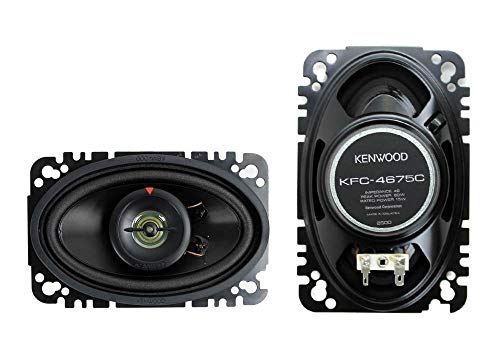
Check prices on Amazon
Live listings for the shortlist in this guide are pulled from Amazon below, so prices and availability are always current at the moment you look.
What to expect, and what no replacement can promise
A well-matched renewal gives an E430 back its clarity at conversational volume, restores bass definition that rotten surrounds had smeared into buzz, and lets the factory electronics work within their comfortable range. Voices on spoken programmes become intelligible without raised volume, the front stage regains its width at the windscreen, and rear passengers stop being the audience for a single rattling door. These are meaningful gains, and for most owners they are the whole point: a grand touring sedan that sounds composed again.
Equally, no driver swap repeals the limits of the factory architecture. The head unit output, the door volumes, and the system equalisation in Bose cars remain what they are, and a replacement chosen inside those limits will outperform a flagship driver fighting them. Owners who want a fundamentally larger system face a different project involving amplification, signal sourcing, and the Bose integration questions in full, and that project deserves its own planning rather than growing accidentally out of a speaker renewal that was supposed to take a weekend.
Documentation remains the thread through every stage of this work: fitment guides for dimensions, manufacturer sheets for electrical behaviour, workshop references for trim, and adapter listings for wiring. Where those sources conflict with a retail headline, the sources win. Where they conflict with each other, the car itself is the referee, measured carefully and believed. That order of trust, applied patiently, is what separates a shortlist that fits from a pile of returns.
For the E430 owner standing in a quiet garage with one door card off and a crumbling surround in hand, the path forward is genuinely simple: identify the system, measure the openings, honour the depth and impedance the documents state, wire with adapters, verify polarity, and let the front doors sing first before the rear deck joins them in its own good time.


