What's inside
As an Amazon Associate I earn from qualifying purchases. This post may contain affiliate links at no extra cost to you.
Professional recording is a job where the monitor has to be right, with a flat response that shows the recording as it is, a detail that reveals every problem, and a reliability that lasts for years, and the best studio monitors for professional recording are the pro nearfields and midfields that deliver that accuracy, with a sound that is detailed, a bass that is deep, and a stereo image that is stable. A monitor that is coloured will lie about the recording, and a recording made on it will sound good in the studio and bad everywhere else, while a monitor that is flat will tell the truth, and this guide covers six pro monitors that suit professional recording, from the Genelec 8030C that is the standard compact pro monitor to the HEDD Type 07 MK2 that is the best AMT option.
The reason a monitor matters for professional recording is that a professional recording has to translate to every system, from a phone to a cinema, and a monitor that is accurate will show the recording as it is, while a monitor that is coloured will hide the problems, so the recording will sound good in the studio and bad everywhere else. The monitors in this guide are all pro nearfields, with a flat response, a clear stereo image, and a bass that is tight, and they are the monitors that the community recommends for professional recording, with the differences being in the size, the tweeter, and the price, and the buying guide explains how to choose between them, how to position them, and how to treat a professional room.
The six monitors in this guide cover the whole professional range, from the Genelec 8030C that suits a small professional room to the HEDD Type 07 MK2 that suits a larger room, and each one is judged on the same things: flatness, detail, bass, and whether it works in a treated room. A five-inch monitor is the right choice for a small room, a seven-inch monitor is the right choice for a larger room, and a monitor with a ribbon or AMT tweeter is the right choice for a detailed treble, and the buying guide at the end explains how to choose between them, how to set up the triangle, and how to calibrate the room.
The monitors in this guide are all studio monitors that a professional can use for recording, with a sound that is accurate, a bass that is deep, and a stereo image that is stable, which is the sound that a professional recording needs. A professional monitor is not a luxury, it is a tool, and a professional who buys a pro monitor is buying accuracy, because a recording that is made on a pro monitor will translate, and a recording that translates is a recording that can be trusted, which is the reason the pro monitor matters.
Quick picks: best studio monitors for professional recording
| # | Product | Where to buy |
|---|---|---|
| 1 | Genelec 8030C | Check on Amazon |
| 2 | Neumann KH 120 II | Check on Amazon |
| 3 | Focal Shape 50 | Check on Amazon |
| 4 | Adam Audio A7V | Check on Amazon |
| 5 | Dynaudio LYD 7 | Check on Amazon |
| 6 | HEDD Type 07 MK2 | Check on Amazon |
Quick Comparison
| Product | Key Specs | Best For |
|---|---|---|
| Genelec 8030C | 5-inch nearfield, 50W, compact, Iso-Pod stand | Best overall studio monitor for professional recording |
| Neumann KH 120 II | 5.25-inch nearfield, 145W, DSP, MA 1 calibration | Best Neumann studio monitor for professional recording |
| Focal Shape 50 | 5-inch nearfield, 60W, flax woofer, passive radiator | Best Focal studio monitor for professional recording |
| Adam Audio A7V | 7-inch nearfield, 110W, X-ART tweeter, DSP | Best Adam studio monitor for professional recording |
| Dynaudio LYD 7 | 7-inch nearfield, 96W, DSP, boundary EQ | Best Dynaudio studio monitor for professional recording |
| HEDD Type 07 MK2 | 7-inch nearfield, 300W, AMT tweeter, DSP | Best HEDD studio monitor for professional recording |
Genelec 8030C
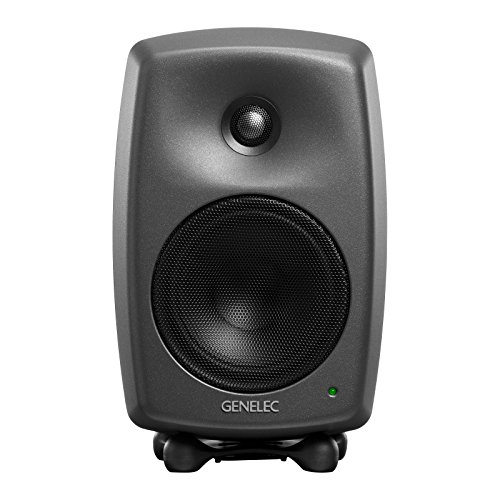
The Genelec 8030C is the best overall studio monitor for professional recording in this guide, and it is the monitor that professional rooms reach for first, because Genelec built the 8030C as a five-inch nearfield with a 50-watt amplifier, a compact cabinet, and an Iso-Pod stand, with a sound that is clear and a size that fits anywhere. The 8030C is the monitor for a professional room, and it is the reason it is the best overall in this guide.
The size is the reason the 8030C is the standard compact pro monitor, with a five-inch woofer that fits on a crowded desk, and a three-quarter-inch tweeter that is clear, and a 50-watt amplifier that gives the monitor enough power for a small room, and a compact cabinet that does not take up much space. The 8030C has an Iso-Pod stand that isolates the monitor from the desk, and angles it toward the listener, and it has a directivity control waveguide that makes the stereo image stable, and it has a bass that is tight, because the small woofer does not excite the room modes. The 8030C is the monitor that a professional buys when the goal is a compact monitor that is accurate, and it is the monitor that proves a five-inch monitor can still be a pro tool.
The practical details are built for a professional room. The 8030C is a five-inch monitor, which fits on a crowded desk, and it has a compact cabinet that does not take up much space, and it has a power switch on the back, with an auto-standby mode. The 8030C is the monitor that a professional buys when the desk is tiny, and the goal is a monitor that will not overwhelm the room, and it is the monitor that is the best value for a compact Genelec.
The trade-offs are that the 8030C is a five-inch monitor, so the bass does not go as low as a larger monitor, although a subwoofer can be added, and it is a compact monitor, so the sound is less detailed than a larger monitor, although it is clear enough for a nearfield. But as a studio monitor for professional recording, the 8030C is the best in this guide, and it fits a professional room, a small studio, and anyone who wants a compact pro monitor.
Check price on Amazon: Genelec 8030C

Neumann KH 120 II
The Neumann KH 120 II is the best Neumann studio monitor for professional recording in this guide, and it is the monitor to choose when the goal is a five-inch monitor with DSP and calibration, because Neumann built the KH 120 II as a 5.25-inch nearfield with a 145-watt amplifier, a DSP, and an MA 1 calibration system, with a sound that is accurate, a bass that is deep, and a stereo image that is stable. The KH 120 II is the monitor for a professional who wants a Neumann, and it is the reason it is the best Neumann option in this guide.
The DSP is the reason the KH 120 II is the standard, with a digital processor that lets the monitor be tuned to the room, and an MA 1 calibration system that measures the room and adjusts the monitor to it, so the sound is flat in any room, and a 145-watt amplifier that gives the monitor enough power for a professional room. The KH 120 II has a 5.25-inch woofer that is rigid, so the bass is clean, and a one-inch tweeter that is clear, so the high frequencies are detailed, and it has a Mathematically Modelled Dispersion waveguide that controls the dispersion, so the image is stable. The KH 120 II is the monitor that a professional buys when the goal is a calibrated monitor, and it is the monitor that proves a DSP can make a monitor better.
The practical details are built for a professional room. The KH 120 II is a 5.25-inch monitor, which fits on a desk or on a stand, and it has a sturdy cabinet that does not resonate, and it has a power switch on the back, with a standby mode. The KH 120 II is the monitor that a professional buys when the budget is generous, and the goal is a monitor that will translate, and it is the monitor that is the most recommended Neumann in its class.
The trade-offs are that the KH 120 II is a premium monitor, so it is expensive, although it is the best Neumann option in this guide, and it needs a treated room, because a premium monitor in a bad room will still sound bad, although the calibration helps. But as a Neumann studio monitor for professional recording, the KH 120 II is the best in this guide, and it fits a professional room, a mastering studio, and anyone who wants a calibrated monitor.
Check price on Amazon: Neumann KH 120 II

Focal Shape 50
The Focal Shape 50 is the best Focal studio monitor for professional recording in this guide, and it is the monitor to choose when the goal is a five-inch monitor with a flax woofer, because Focal built the Shape 50 as a five-inch nearfield with a 60-watt amplifier, a flax woofer, and a passive radiator, with a sound that is detailed, a bass that is tight, and a stereo image that is stable. The Shape 50 is the monitor for a professional who wants a Focal, and it is the reason it is the best Focal option in this guide.
The flax woofer is the reason the Shape 50 is the standard, with a cone made from flax fibre, which is rigid and light, so the bass is clean and the midrange is detailed, and a passive radiator that extends the bass without a port, so the monitor can sit against a wall without the bass becoming boomy, and a 60-watt amplifier that gives the monitor enough power for a professional room. The Shape 50 has a tweeter that is clear, so the high frequencies are airy, and it has a sturdy cabinet that does not resonate, and it has a low-frequency control that adjusts the bass, and a high-frequency control that adjusts the treble. The Shape 50 is the monitor that a professional buys when the goal is a Focal monitor with a flax woofer, and it is the monitor that proves a passive radiator can be the best for a small room.
The practical details are built for a professional room. The Shape 50 is a five-inch monitor, which fits on a desk, and it has a passive radiator, so it can sit against a wall, and it has a power switch on the back, with an auto-standby mode. The Shape 50 is the monitor that a professional buys when the budget is moderate, and the goal is a monitor that will translate, and it is the monitor that is the most recommended Focal in its class.
The trade-offs are that the Shape 50 is a five-inch monitor, so the bass does not go as low as a larger monitor, although a subwoofer can be added, and it is a premium monitor, so it is more expensive than a budget monitor, although it is more accurate. But as a Focal studio monitor for professional recording, the Shape 50 is the best in this guide, and it fits a professional room, a home studio that wants a pro sound, and anyone who wants a flax woofer.
Check price on Amazon: Focal Shape 50

Adam Audio A7V
The Adam Audio A7V is the best Adam studio monitor for professional recording in this guide, and it is the monitor to choose when the goal is a seven-inch monitor with an X-ART tweeter and DSP, because Adam built the A7V as a seven-inch nearfield with a 110-watt amplifier, an X-ART ribbon tweeter, and a DSP, with a sound that is detailed, a bass that is deep, and a treble that is airy. The A7V is the monitor for a professional who wants an Adam, and it is the reason it is the best Adam option in this guide.
The X-ART tweeter is the reason the A7V is the standard, with a ribbon tweeter that moves air faster than a dome, so the high frequencies are more detailed, with a clarity that a dome cannot match, and a seven-inch woofer that is rigid, so the bass is deep and clean, and a 110-watt amplifier that gives the monitor enough power for a professional room. The A7V has a DSP that lets the monitor be tuned to the room, with a voicing control that adjusts the sound, and a room adaptation control that adjusts the bass, and it has a sturdy cabinet that does not resonate. The A7V is the monitor that a professional buys when the goal is a seven-inch monitor with a ribbon tweeter and DSP, and it is the monitor that proves a ribbon tweeter can be the best for professional recording.
The practical details are built for a professional room. The A7V is a seven-inch monitor, which fits on a desk or on a stand, and it has a front-facing volume control, which is convenient, and it has a power switch on the back, with an auto-standby mode. The A7V is the monitor that a professional buys when the budget is generous, and the goal is a monitor that will translate, and it is the monitor that is the most recommended Adam in its class.
The trade-offs are that the A7V is a seven-inch monitor, so it is larger than a five-inch monitor, and it needs more desk space, although it has more bass, and it is a premium monitor, so it is more expensive than a budget monitor, although it is more accurate. But as an Adam studio monitor for professional recording, the A7V is the best in this guide, and it fits a professional room, a mastering studio, and anyone who wants a ribbon tweeter with DSP.
Check price on Amazon: Adam Audio A7V
Dynaudio LYD 7
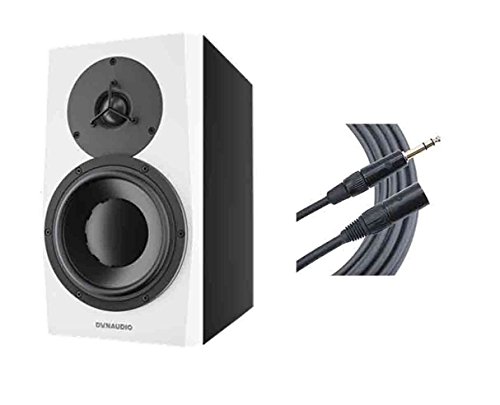
The Dynaudio LYD 7 is the best Dynaudio studio monitor for professional recording in this guide, and it is the monitor to choose when the goal is a seven-inch monitor with DSP and boundary EQ, because Dynaudio built the LYD 7 as a seven-inch nearfield with a 96-watt amplifier, a DSP, and a boundary EQ, with a sound that is detailed, a bass that is deep, and a treble that is smooth. The LYD 7 is the monitor for a professional who wants a Dynaudio, and it is the reason it is the best Dynaudio option in this guide.
The DSP is the reason the LYD 7 is the standard, with a digital processor that lets the monitor be tuned to the room, and a boundary EQ that adjusts the bass for a desk against a wall, a desk in the open, or a monitor on a stand, and a seven-inch woofer that is rigid, so the bass is deep and clean, and a 96-watt amplifier that gives the monitor enough power for a professional room. The LYD 7 has a tweeter that is clear, so the high frequencies are detailed, and it has a sturdy cabinet that does not resonate, and it has a bass extension control that adjusts the low end. The LYD 7 is the monitor that a professional buys when the goal is a seven-inch monitor with DSP, and it is the monitor that proves a Danish monitor can be among the best in the world.
The practical details are built for a professional room. The LYD 7 is a seven-inch monitor, which fits on a desk or on a stand, and it has a volume control on the back, and a power switch on the back. The LYD 7 is the monitor that a professional buys when the budget is generous, and the goal is a monitor that will translate, and it is the monitor that is the most recommended Dynaudio in its class.
The trade-offs are that the LYD 7 is a seven-inch monitor, so it is larger than a five-inch monitor, and it needs more desk space, although it has more bass, and it is a premium monitor, so it is more expensive than a budget monitor, although it is more accurate. But as a Dynaudio studio monitor for professional recording, the LYD 7 is the best in this guide, and it fits a professional room, a mastering studio, and anyone who wants a DSP monitor.
Check price on Amazon: Dynaudio LYD 7
HEDD Type 07 MK2
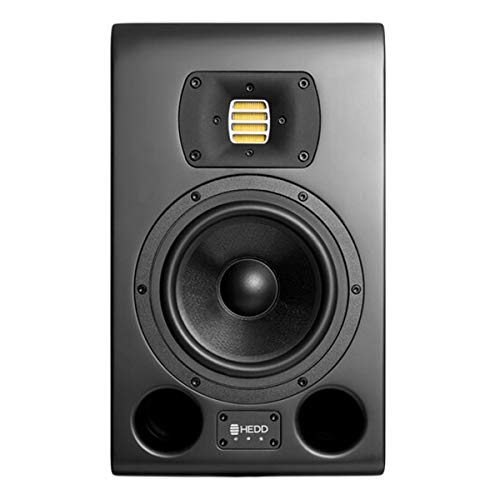
The HEDD Type 07 MK2 is the best HEDD studio monitor for professional recording in this guide, and it is the monitor to choose when the goal is a seven-inch monitor with an AMT tweeter and DSP, because HEDD built the Type 07 MK2 as a seven-inch nearfield with a 300-watt amplifier, an AMT tweeter, and a DSP, with a sound that is detailed, a bass that is deep, and a treble that is airy. The Type 07 MK2 is the monitor for a professional who wants a HEDD, and it is the reason it is the best HEDD option in this guide.
The AMT tweeter is the reason the Type 07 MK2 is the standard, with an Air Motion Transformer that moves air faster than a dome tweeter, so the high frequencies are more detailed, with a clarity that a dome cannot match, and a seven-inch woofer that is rigid, so the bass is deep and clean, and a 300-watt amplifier that gives the monitor enough power for a professional room. The Type 07 MK2 has a DSP that lets the monitor be tuned to the room, with a desk filter, a shelf filter, and a lineariser that corrects the phase, and it has a sturdy cabinet that does not resonate. The Type 07 MK2 is the monitor that a professional buys when the goal is a seven-inch monitor with an AMT tweeter and DSP, and it is the monitor that proves an AMT tweeter can be the best for professional recording.
The practical details are built for a professional room. The Type 07 MK2 is a seven-inch monitor, which fits on a desk or on a stand, and it has a volume control on the back, and a power switch on the back, with a standby mode. The Type 07 MK2 is the monitor that a professional buys when the budget is generous, and the goal is a monitor that will translate, and it is the monitor that is the most recommended HEDD in its class.
The trade-offs are that the Type 07 MK2 is a seven-inch monitor, so it is larger than a five-inch monitor, and it needs more desk space, although it has more bass, and it is a premium monitor, so it is more expensive than a budget monitor, although it is more accurate. But as a HEDD studio monitor for professional recording, the Type 07 MK2 is the best in this guide, and it fits a professional room, a mastering studio, and anyone who wants an AMT tweeter with DSP.
Check price on Amazon: HEDD Type 07 MK2
Buying Guide
Calibrate the monitors to the room, or the room will lie
A pro monitor in an untreated room will sound boomy, because the room will reflect the sound, and the bass will build up in the corners, while a pro monitor that is calibrated to the room will sound flat, because the calibration measures the room and adjusts the monitor to it, so the sound is accurate. The Neumann KH 120 II has an MA 1 calibration system that does this, and the other monitors can be calibrated with a measurement microphone and software, and a professional room should be calibrated on the first day, and re-calibrated when the room changes, because a monitor that is calibrated will tell the truth, and a monitor that is not will lie, and the calibration is the most important step after the treatment.
Treat the room first, then buy the pro monitor
A pro monitor should be bought after the room is treated, not before, because a pro monitor in a bad room will sound bad, and a budget monitor in a good room will sound good, so the room should be treated first, with absorption at the first reflection points, bass traps in the corners, and a rug on the floor, and the pro monitor should be bought second, when the room is ready. A professional who buys a pro monitor before treating the room will be disappointed, and a professional who treats the room first will be happy, because the room matters as much as the monitor, and a pro monitor is wasted in a bad room.
A DSP monitor can be tuned to the room
A monitor with a DSP can be tuned to the room, with a digital processor that adjusts the bass, the treble, and the phase, so the sound is flat in any room, while a monitor without a DSP cannot be tuned, and the room will colour the sound. The Neumann KH 120 II, the Adam A7V, the Dynaudio LYD 7 and the HEDD Type 07 MK2 all have a DSP, and a professional who buys a DSP monitor can tune it to the room, while a professional who buys a non-DSP monitor must treat the room instead, and a DSP monitor is the right choice for a room that cannot be treated fully, because the DSP can compensate for the room.
A ribbon or AMT tweeter gives the most detailed treble
A ribbon or AMT tweeter moves air faster than a dome tweeter, so the high frequencies are more detailed, with a clarity that a dome cannot match, and a monitor with a ribbon or AMT tweeter, such as the Adam A7V or the HEDD Type 07 MK2, is the right choice for a professional who listens to the treble, while a monitor with a dome tweeter is the right choice for a professional who wants a warmer sound. A ribbon or AMT tweeter is more fragile than a dome, so it should be handled carefully, although it is durable enough for normal use, and a professional who wants a detailed treble should choose a ribbon or AMT tweeter.
Check the bass extension, and do not assume it is enough
A pro monitor should have a bass that goes deep, with a low-frequency extension that is the best in its class, and a professional should check the specification before buying, because a monitor with a bass that does not go low enough will not show the low end, and a recording made on it will have too much bass, or too little. The monitors in this guide all have a deep bass, with the Adam A7V, the Dynaudio LYD 7 and the HEDD Type 07 MK2 having the deepest, and a professional who checks the bass extension will know, and a professional who does not will be surprised, and a subwoofer can be added later, when the bass has to go lower, although a pro monitor should not need one.
Test the pro monitor in the room, and listen for a week
A pro monitor should be tested in the room for a week, with a check that the bass is deep, the midrange is clear, the treble is detailed, and the stereo image is stable, because a pro monitor that works will make an audible difference, and a pro monitor that does not will not. Play a familiar track, listen for the bass, the image and the clarity, and compare it with the previous monitors, because the difference is the reason the pro monitor was bought, and a pro monitor that makes no difference should be returned, and a pro monitor that makes a difference should be kept, because the ear is the best judge of a pro monitor.
Frequently Asked Questions
What is the best studio monitor for professional recording?
The Genelec 8030C is the best overall studio monitor for professional recording, because its five-inch nearfield has a compact cabinet, an Iso-Pod stand, and a directivity control waveguide that makes the stereo image stable, with a sound that is clear. The Neumann KH 120 II is the best Neumann, the Focal Shape 50 is the best Focal, the Adam Audio A7V is the best Adam, the Dynaudio LYD 7 is the best Dynaudio, and the HEDD Type 07 MK2 is the best HEDD, and the right choice depends on the room size, the budget, and whether the goal is a DSP monitor or a ribbon tweeter.
Do I need a treated room for professional monitors?
Yes, because a pro monitor in an untreated room will sound boomy, and the room will reflect the sound, while a pro monitor in a treated room will sound clear, because the treatment absorbs the reflections, and the bass is controlled. A room should have absorption at the first reflection points, bass traps in the corners, and a rug on the floor, and a pro monitor should be bought after the room is treated, not before, because a pro monitor is wasted in a bad room, and a budget monitor in a good room will sound good, so the room matters as much as the monitor.
What is a DSP monitor?
A DSP monitor is a monitor with a digital signal processor that lets the monitor be tuned to the room, with a processor that adjusts the bass, the treble, and the phase, so the sound is flat in any room, while a monitor without a DSP cannot be tuned, and the room will colour the sound. The Neumann KH 120 II, the Adam A7V, the Dynaudio LYD 7 and the HEDD Type 07 MK2 all have a DSP, and a professional who buys a DSP monitor can tune it to the room, while a professional who buys a non-DSP monitor must treat the room instead, and a DSP monitor is the right choice for a room that cannot be treated fully.
Is a ribbon tweeter better than a dome tweeter for recording?
A ribbon tweeter is better for detail, because it moves air faster than a dome tweeter, so the high frequencies are more detailed, with a clarity that a dome cannot match, while a dome tweeter is better for warmth, because it has a softer sound, and a monitor with a ribbon tweeter, such as the Adam A7V, is the right choice for a professional who listens to the treble, while a monitor with a dome tweeter is the right choice for a professional who wants a warmer sound. A ribbon tweeter is more fragile, so it should be handled carefully, although it is durable enough for normal use.
Should I buy a pro monitor or treat my room first?
Treat the room first, because a pro monitor in a bad room will sound bad, and a budget monitor in a good room will sound good, so the room should be treated with absorption, bass traps and a rug, and the pro monitor should be bought second, when the room is ready. A professional who buys a pro monitor before treating the room will be disappointed, and a professional who treats the room first will be happy, because the room matters as much as the monitor, and a pro monitor is wasted in a bad room, while a treated room makes any monitor sound better.
How long do professional studio monitors last?
A pro studio monitor can last for decades, because it is built with high-quality drivers, a sturdy cabinet, and an amplifier that is designed for professional use, and a monitor that is looked after will outlast several computers, several interfaces, and several rooms. The Genelec 8030C, the Neumann KH 120 II, the Focal Shape 50, the Adam A7V, the Dynaudio LYD 7 and the HEDD Type 07 MK2 are all built to a professional standard, with a construction that is precise and durable, and a professional who buys a pro monitor is buying a monitor that will be used for many years, which is the reason the cost is justified.
Do professional monitors need a subwoofer?
Not usually, because a pro monitor has a bass that goes deep, with a low-frequency extension that is the best in its class, and a subwoofer is only needed when the bass has to go lower, such as for film, electronic music, or a large room, and a subwoofer can be added later, when the budget allows. A subwoofer should be placed carefully, and calibrated to the monitors, because a subwoofer that is too loud will make the mix boomy, and a subwoofer that is too quiet will not help, and a professional who adds a subwoofer should calibrate it with the monitors, so the bass is balanced, and the recording translates, because a bass that is balanced is a bass that can be trusted, and a pro monitor that is paired with a subwoofer will show the low end clearly.
Conclusion
The best studio monitor for professional recording is the pro nearfield that tells the truth in a treated room, and in this guide the Genelec 8030C is the best overall choice, because it is the standard compact pro monitor. The Neumann KH 120 II is the best Neumann, the Focal Shape 50 is the best Focal, the Adam Audio A7V is the best Adam, the Dynaudio LYD 7 is the best Dynaudio, and the HEDD Type 07 MK2 is the best HEDD. Calibrate the monitors to the room, treat the room first, choose a DSP monitor when the room cannot be treated fully, and test the pro monitor for a week, because a recording that is made on a pro monitor will translate, and a recording that translates is a recording that can be trusted.


