Our Top Picks

What's inside
- What a hand file set actually covers
- File shapes, cuts, and sizes explained
- Needle files and detail work
- 1. REXBETI 25 Piece Metal File Set
- 2. Hi-Spec 17 Piece Metal Hand and Needle File Tool Kit
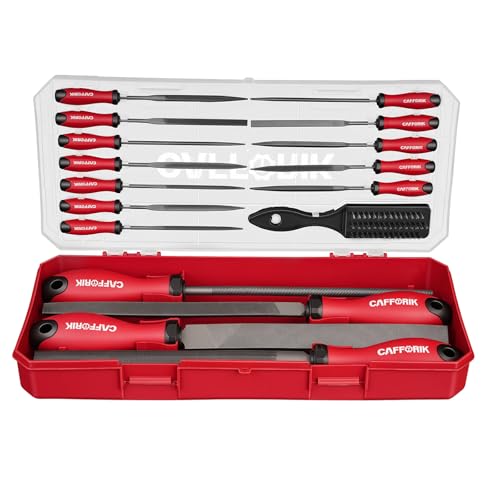
- 3. CAFFORIK 27 Piece Metal File Set with Sandpapers and Wire Brush
- 4. TARIST 3 Piece Metal File Set, 8 Inch Carbon Steel
- 5. LIBRATON 31 Piece Metal File Set with Riffler File and Carry Case
- 6. Tonmifr 34 Piece Professional Metal File Set, High Carbon Steel, Five Shapes
- 7. Nicholson 5 Piece General Purpose File Set 22040NNN
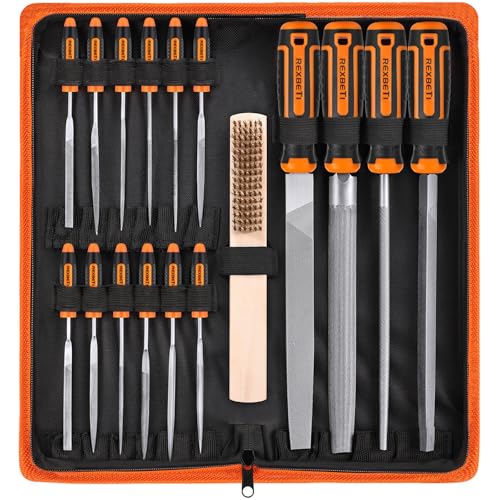
- 8. TARIST 17 Piece Metal File Set with Large Files, Needle Files and Wire Brush
- Large sets, small sets, and honest piece counts
- How to choose the right file set
- Check prices on Amazon
- Disclosure
As an Amazon Associate I earn from qualifying purchases. This post may contain affiliate links at no extra cost to you.
What a hand file set actually covers
A hand file removes material with rows of hardened teeth, pushed across metal, wood, or plastic in controlled strokes, and a set exists because no single file shape reaches every surface. Flat files level edges and faces, half-round files work both flat and curved surfaces, round files shape concave curves and enlarge holes, triangle files reach corners, and square files clean rectangular openings. Needle files repeat those shapes at miniature scale for detail, hobby, and precision work where a full size file is simply too large. This guide compares eight sets that approach that coverage very differently, from a three piece carbon steel kit to sets of more than thirty pieces with needle files, rifflers, brushes, sandpapers, and cases. Selection is based on published specifications and manufacturer descriptions, comparing file profiles, sizes, materials, and included accessories rather than headline piece counts alone.
A careful setup for needle file detail begins with a marked line, a test offcut from similar stock, and a depth or pressure setting that can be repeated without guesswork on the next piece. Visibility, dust or chip clearing, and a stable stance all influence half-round profiles, since a tool that is easy to see and easy to hold steady tends to produce cleaner, more predictable results. Storage and maintenance also shape long term value, because protecting carbon steel teeth from knocks, moisture, and contact with other hard tools preserves the working surfaces that do the cutting. Published specifications and manufacturer documentation describe how file cut and tooth spacing is intended to be used, and matching that guidance to the material in front of you is the most reliable starting point. For repeated work, consistency comes from small habits: checking the setting before each piece, clearing debris often, and confirming that deburring edges has not shifted during earlier passes.
When the work involves file cut and tooth spacing, the way the tool supports the cut matters more than raw speed, because control at the start of a pass usually decides the quality at the end of it. Experienced makers often separate rough shaping from finishing work, letting case storage handle the early stages while reserving lighter, more deliberate strokes or passes for the final surface. The difference between a serviceable result and a crisp one often comes down to patience with draw filing, working gradually toward a line instead of trying to reach it in a single aggressive pass. A careful setup for round file curves begins with a marked line, a test offcut from similar stock, and a depth or pressure setting that can be repeated without guesswork on the next piece. Visibility, dust or chip clearing, and a stable stance all influence file handles and grip, since a tool that is easy to see and easy to hold steady tends to produce cleaner, more predictable results.
Storage and maintenance also shape long term value, because protecting flat file work from knocks, moisture, and contact with other hard tools preserves the working surfaces that do the cutting. Published specifications and manufacturer documentation describe how file handles and grip is intended to be used, and matching that guidance to the material in front of you is the most reliable starting point. For repeated work, consistency comes from small habits: checking the setting before each piece, clearing debris often, and confirming that needle file detail has not shifted during earlier passes. When the work involves cleaning teeth with a brush, the way the tool refines the cut matters more than raw speed, because control at the start of a pass usually decides the quality at the end of it. Experienced makers often separate rough shaping from finishing work, letting carbon steel teeth handle the early stages while reserving lighter, more deliberate strokes or passes for the final surface.
File shapes, cuts, and sizes explained
File cut describes the tooth pattern, and it controls how aggressively a file removes material and how smooth the finish is, with coarser cuts for rapid shaping and smoother cuts for finishing. Length matters just as much: an 8 inch file is the common middle ground in these sets, while the Nicholson set adds 6 and 10 inch options that change stroke length and control. Handles and grip comfort shape how long accurate work can continue, because filing is a repetitive two handed or one handed stroke that punishes a poor grip. A reader setting up a bench for both craft work and computing might separately look at best 27 1440p 120hz monitors for the desk side of the room, while the filing itself depends on shape, cut, and a secure handle. Storage completes the picture, since file teeth are brittle and dull quickly when tools are stored loose together.
Published specifications and manufacturer documentation describe how flat file work is intended to be used, and matching that guidance to the material in front of you is the most reliable starting point. For repeated work, consistency comes from small habits: checking the setting before each piece, clearing debris often, and confirming that file cut and tooth spacing has not shifted during earlier passes. When the work involves needle file detail, the way the tool guides the cut matters more than raw speed, because control at the start of a pass usually decides the quality at the end of it. Experienced makers often separate rough shaping from finishing work, letting draw filing handle the early stages while reserving lighter, more deliberate strokes or passes for the final surface. The difference between a serviceable result and a crisp one often comes down to patience with carbon steel teeth, working gradually toward a line instead of trying to reach it in a single aggressive pass.
A careful setup for file handles and grip begins with a marked line, a test offcut from similar stock, and a depth or pressure setting that can be repeated without guesswork on the next piece. Visibility, dust or chip clearing, and a stable stance all influence carbon steel teeth, since a tool that is easy to see and easy to hold steady tends to produce cleaner, more predictable results. Storage and maintenance also shape long term value, because protecting cleaning teeth with a brush from knocks, moisture, and contact with other hard tools preserves the working surfaces that do the cutting. Published specifications and manufacturer documentation describe how deburring edges is intended to be used, and matching that guidance to the material in front of you is the most reliable starting point. For repeated work, consistency comes from small habits: checking the setting before each piece, clearing debris often, and confirming that triangle file corners has not shifted during earlier passes.
When the work involves deburring edges, the way the tool guides the cut matters more than raw speed, because control at the start of a pass usually decides the quality at the end of it. Experienced makers often separate rough shaping from finishing work, letting half-round profiles handle the early stages while reserving lighter, more deliberate strokes or passes for the final surface. The difference between a serviceable result and a crisp one often comes down to patience with case storage, working gradually toward a line instead of trying to reach it in a single aggressive pass. A careful setup for file cut and tooth spacing begins with a marked line, a test offcut from similar stock, and a depth or pressure setting that can be repeated without guesswork on the next piece. Visibility, dust or chip clearing, and a stable stance all influence round file curves, since a tool that is easy to see and easy to hold steady tends to produce cleaner, more predictable results.
Needle files and detail work
Needle files are the small scale half of most sets in this guide, typically supplied as a group of twelve covering the standard miniature profiles. They serve model making, jewelry scale work, electronics housings, small mechanisms, and any task where the workpiece feature is smaller than a full size file tooth row is wide. Because their teeth are fine, needle files clog quickly in soft materials, so frequent brushing and light pressure keep them cutting. A riffler file, included in one set here, extends detail work into curved and recessed shapes that straight needle files cannot reach. Someone equipping a combined hobby and study space may also research best 15 inch laptops for the computing side, but detail filing itself rewards patience, magnification, and the smallest file that fits the feature.
Experienced makers often separate rough shaping from finishing work, letting needle file detail handle the early stages while reserving lighter, more deliberate strokes or passes for the final surface. The difference between a serviceable result and a crisp one often comes down to patience with half-round profiles, working gradually toward a line instead of trying to reach it in a single aggressive pass. A careful setup for carbon steel teeth begins with a marked line, a test offcut from similar stock, and a depth or pressure setting that can be repeated without guesswork on the next piece. Visibility, dust or chip clearing, and a stable stance all influence file cut and tooth spacing, since a tool that is easy to see and easy to hold steady tends to produce cleaner, more predictable results. Storage and maintenance also shape long term value, because protecting deburring edges from knocks, moisture, and contact with other hard tools preserves the working surfaces that do the cutting.
Published specifications and manufacturer documentation describe how file cut and tooth spacing is intended to be used, and matching that guidance to the material in front of you is the most reliable starting point. For repeated work, consistency comes from small habits: checking the setting before each piece, clearing debris often, and confirming that case storage has not shifted during earlier passes. When the work involves draw filing, the way the tool handles the cut matters more than raw speed, because control at the start of a pass usually decides the quality at the end of it. Experienced makers often separate rough shaping from finishing work, letting round file curves handle the early stages while reserving lighter, more deliberate strokes or passes for the final surface. The difference between a serviceable result and a crisp one often comes down to patience with file handles and grip, working gradually toward a line instead of trying to reach it in a single aggressive pass.
A careful setup for flat file work begins with a marked line, a test offcut from similar stock, and a depth or pressure setting that can be repeated without guesswork on the next piece. Visibility, dust or chip clearing, and a stable stance all influence file handles and grip, since a tool that is easy to see and easy to hold steady tends to produce cleaner, more predictable results. Storage and maintenance also shape long term value, because protecting needle file detail from knocks, moisture, and contact with other hard tools preserves the working surfaces that do the cutting. Published specifications and manufacturer documentation describe how cleaning teeth with a brush is intended to be used, and matching that guidance to the material in front of you is the most reliable starting point. For repeated work, consistency comes from small habits: checking the setting before each piece, clearing debris often, and confirming that carbon steel teeth has not shifted during earlier passes.
1. REXBETI 25 Piece Metal File Set
REXBETI describes a 25 piece set built around four large files in flat, triangle, half-round, and round profiles, plus 12 needle files for smaller work. That mix is the classic general workshop formula: the large files handle deburring, shaping, and sharpening tasks on metal and wood, while the needle files reach into slots, keyways, and small parts where a full size file cannot fit. The listing also names a wide material range including wood, metal, glass, tile, leather, and plastic, and references T12 steel, which places the emphasis on a broad, do most things kit rather than a specialist set. For a home workshop that files everything from a mower blade edge to a plastic trim piece, breadth like this reduces the chance of reaching for a file shape that is not in the box. The trade off with any large mixed set is organization: keeping needle files separated and protected matters, because their fine teeth damage easily when they rattle against larger tools. As an all round starting point for mixed materials and mixed project sizes, this set represents the maximum variety approach in this roundup.
Where this set fits best
Visibility, dust or chip clearing, and a stable stance all influence flat file work, since a tool that is easy to see and easy to hold steady tends to produce cleaner, more predictable results. Storage and maintenance also shape long term value, because protecting file cut and tooth spacing from knocks, moisture, and contact with other hard tools preserves the working surfaces that do the cutting. Published specifications and manufacturer documentation describe how needle file detail is intended to be used, and matching that guidance to the material in front of you is the most reliable starting point. For repeated work, consistency comes from small habits: checking the setting before each piece, clearing debris often, and confirming that draw filing has not shifted during earlier passes. When the work involves carbon steel teeth, the way the tool controls the cut matters more than raw speed, because control at the start of a pass usually decides the quality at the end of it.
Experienced makers often separate rough shaping from finishing work, letting file handles and grip handle the early stages while reserving lighter, more deliberate strokes or passes for the final surface. The difference between a serviceable result and a crisp one often comes down to patience with carbon steel teeth, working gradually toward a line instead of trying to reach it in a single aggressive pass. A careful setup for cleaning teeth with a brush begins with a marked line, a test offcut from similar stock, and a depth or pressure setting that can be repeated without guesswork on the next piece. Visibility, dust or chip clearing, and a stable stance all influence deburring edges, since a tool that is easy to see and easy to hold steady tends to produce cleaner, more predictable results. Storage and maintenance also shape long term value, because protecting triangle file corners from knocks, moisture, and contact with other hard tools preserves the working surfaces that do the cutting.
Care and use notes for the REXBETI set
- File on the push stroke and lift or ease pressure on the return, since dragging teeth backward dulls them.
- Use a wire brush or file card regularly to clear pinned material from the teeth.
- Store files separated in a case, roll, or rack so hardened teeth do not strike each other.
- Match the file shape to the surface instead of forcing a flat file into curves or corners.
- Keep carbon steel files dry and lightly protected in damp workshops to guard against rust.
Experienced makers often separate rough shaping from finishing work, letting needle file detail handle the early stages while reserving lighter, more deliberate strokes or passes for the final surface. The difference between a serviceable result and a crisp one often comes down to patience with half-round profiles, working gradually toward a line instead of trying to reach it in a single aggressive pass. A careful setup for carbon steel teeth begins with a marked line, a test offcut from similar stock, and a depth or pressure setting that can be repeated without guesswork on the next piece. Visibility, dust or chip clearing, and a stable stance all influence file cut and tooth spacing, since a tool that is easy to see and easy to hold steady tends to produce cleaner, more predictable results. Storage and maintenance also shape long term value, because protecting deburring edges from knocks, moisture, and contact with other hard tools preserves the working surfaces that do the cutting.
2. Hi-Spec 17 Piece Metal Hand and Needle File Tool Kit
The Hi-Spec kit contains 17 pieces with 8 inch, 200mm class hand files in profiles including half-round, round, and triangle, presented as a beginner friendly selection in organized portable storage. The emphasis in the title on an everyday fixes brief and a neat layout points to the household end of this category: drawers, hinges, garden tools, and small metal repairs rather than industrial shaping. An 8 inch file is a useful middle size, long enough for smooth draw filing strokes and controlled material removal, yet short enough to store in a portable kit and handle comfortably on small jobs. Organized storage is more than a convenience with files, because teeth that knock together in a loose toolbox dull quickly, so a laid out case protects the cutting surfaces between jobs. Needle files in the same kit extend it into smaller repair work such as cleaning slots and shaping small parts. For a first file kit bought for general home maintenance, this balance of size, selection, and storage is the sensible template to compare others against.
Where this set fits best
For repeated work, consistency comes from small habits: checking the setting before each piece, clearing debris often, and confirming that needle file detail has not shifted during earlier passes. When the work involves half-round profiles, the way the tool supports the cut matters more than raw speed, because control at the start of a pass usually decides the quality at the end of it. Experienced makers often separate rough shaping from finishing work, letting carbon steel teeth handle the early stages while reserving lighter, more deliberate strokes or passes for the final surface. The difference between a serviceable result and a crisp one often comes down to patience with file cut and tooth spacing, working gradually toward a line instead of trying to reach it in a single aggressive pass. A careful setup for deburring edges begins with a marked line, a test offcut from similar stock, and a depth or pressure setting that can be repeated without guesswork on the next piece.
Care and use notes for the Hi-Spec set
- File on the push stroke and lift or ease pressure on the return, since dragging teeth backward dulls them.
- Use a wire brush or file card regularly to clear pinned material from the teeth.
- Store files separated in a case, roll, or rack so hardened teeth do not strike each other.
- Match the file shape to the surface instead of forcing a flat file into curves or corners.
- Keep carbon steel files dry and lightly protected in damp workshops to guard against rust.
3. CAFFORIK 27 Piece Metal File Set with Sandpapers and Wire Brush
CAFFORIK lists 27 pieces: steel files in flat, half-round, round, and triangle profiles, 12 needle files, 10 sandpapers, and a wire brush, aimed at work on metal, wood, and more. The inclusion of sandpaper and a brush changes the character of the kit, because filing is only one stage of most shaping jobs. A wire brush is the standard tool for cleaning swarf out of file teeth, a maintenance step that keeps a file cutting instead of skating, and sandpaper covers the smoothing stage that follows filing on wood and softer metals. Buyers comparing sets should note that piece counts rise quickly when abrasives and brushes are included, so the meaningful comparison is the number and size of the actual files. Here the four core profiles plus a full needle file selection still form a complete filing core. For makers who want shaping, cleaning, and first stage finishing in one purchase, this set packages the whole sequence together rather than leaving the accessories for later.
Where this set fits best
Care and use notes for the CAFFORIK set
- File on the push stroke and lift or ease pressure on the return, since dragging teeth backward dulls them.
- Use a wire brush or file card regularly to clear pinned material from the teeth.
- Store files separated in a case, roll, or rack so hardened teeth do not strike each other.
- Match the file shape to the surface instead of forcing a flat file into curves or corners.
- Keep carbon steel files dry and lightly protected in damp workshops to guard against rust.
4. TARIST 3 Piece Metal File Set, 8 Inch Carbon Steel
The TARIST three piece set is the minimalist entry in this guide: 8 inch professional carbon steel files in flat, half-round, and round profiles for metal, wood, and similar materials. Three well chosen profiles cover a surprising share of everyday filing. The flat file handles straight edges, deburring, and flattening, the half-round works both flat faces and curved internal surfaces with its two sides, and the round file enlarges holes and shapes concave curves. What a small set gives up is the triangle file for corners and saw related work, the square profile, and any needle files for fine detail. What it gains is simplicity and focus: fewer tools to store, protect, and learn, and no duplication. For a small toolbox, a vehicle kit, or a maker who files occasionally and knows the work is mostly flat and curved surfaces, three full size files can be a more honest purchase than a large set whose extra pieces stay untouched. Carbon steel is the traditional file material, and like all files here it should be kept dry and separate from other steel tools.
Where this set fits best
Care and use notes for the TARIST set
- File on the push stroke and lift or ease pressure on the return, since dragging teeth backward dulls them.
- Use a wire brush or file card regularly to clear pinned material from the teeth.
- Store files separated in a case, roll, or rack so hardened teeth do not strike each other.
- Match the file shape to the surface instead of forcing a flat file into curves or corners.
- Keep carbon steel files dry and lightly protected in damp workshops to guard against rust.
5. LIBRATON 31 Piece Metal File Set with Riffler File and Carry Case
LIBRATON counts 31 pieces, including 12 needle files, a riffler file, 12 sandpapers, a steel brush, and a carry case, aimed at metal, steel, and wood work across metalworking, woodworking, hobby, and crafts. The riffler is the distinctive inclusion: riffler files are double ended, curved files used for reaching into shaped and recessed areas, and they appear in craft, model, and restoration work far more than in general repair. That signals where this set is aimed, at hobby and craft users who shape small, awkward surfaces as often as they file flat stock. The carry case matters for the same reason as in other sets, protecting fine teeth and keeping a large count of small pieces findable. As with every high count set, the useful comparison is the file selection itself: full size profiles for general work, needle files for detail, and the riffler for shaped recesses. For a hobby bench that handles models, crafts, and general repairs in the same week, this is the broadest hobby oriented selection in the group.
Where this set fits best
Care and use notes for the LIBRATON set
- File on the push stroke and lift or ease pressure on the return, since dragging teeth backward dulls them.
- Use a wire brush or file card regularly to clear pinned material from the teeth.
- Store files separated in a case, roll, or rack so hardened teeth do not strike each other.
- Match the file shape to the surface instead of forcing a flat file into curves or corners.
- Keep carbon steel files dry and lightly protected in damp workshops to guard against rust.
6. Tonmifr 34 Piece Professional Metal File Set, High Carbon Steel, Five Shapes
Tonmifr lists the largest count in this roundup at 34 pieces, described as industrial grade high carbon steel with five shapes: flat, half round, round, triangle, and square. The square profile is the detail worth noting, because it is the shape missing from several smaller sets, and it is the file for enlarging rectangular openings, cleaning square corners, and working slots with flat sides. Five full shapes plus the supporting pieces make this the most complete profile coverage in the guide, suited to a workshop that files metal parts regularly and does not want to improvise a shape it does not own. High carbon steel is the traditional material for files that must hold fine, hard teeth, and it rewards the standard care habits: use a file card or brush to clear the teeth, store files apart, and keep them dry. A large set like this earns its space when the work is varied and frequent. For occasional single task filing it is more kit than necessary, but for a general fabrication and repair bench it is the maximum coverage option here.
Where this set fits best
Care and use notes for the Tonmifr set
- File on the push stroke and lift or ease pressure on the return, since dragging teeth backward dulls them.
- Use a wire brush or file card regularly to clear pinned material from the teeth.
- Store files separated in a case, roll, or rack so hardened teeth do not strike each other.
- Match the file shape to the surface instead of forcing a flat file into curves or corners.
- Keep carbon steel files dry and lightly protected in damp workshops to guard against rust.
7. Nicholson 5 Piece General Purpose File Set 22040NNN
The Nicholson set takes the opposite approach to the high count kits: five general purpose files in 6, 8, and 10 inch lengths under a long established file maker name. Nicholson is one of the traditional names in files, and a set built on graded lengths rather than accessory counts reflects how experienced users often buy files, choosing size and cut for the work rather than accumulating pieces. Different lengths change how a file behaves: shorter files suit controlled, precise strokes and smaller work, while a 10 inch file covers more ground per stroke and draw files long edges more smoothly. A five piece general purpose set is aimed at users who already know their common tasks and want dependable core files without needle files, brushes, or abrasives in the same box. The model reference 22040NNN in the title is the identifier to match when comparing listings or reordering. For a workshop that values maker heritage and size variety over piece count, this set is the traditionalist choice in the group, and a useful reminder that count alone does not define a file set.
Where this set fits best
Care and use notes for the Nicholson set
- File on the push stroke and lift or ease pressure on the return, since dragging teeth backward dulls them.
- Use a wire brush or file card regularly to clear pinned material from the teeth.
- Store files separated in a case, roll, or rack so hardened teeth do not strike each other.
- Match the file shape to the surface instead of forcing a flat file into curves or corners.
- Keep carbon steel files dry and lightly protected in damp workshops to guard against rust.
8. TARIST 17 Piece Metal File Set with Large Files, Needle Files and Wire Brush
The second TARIST entry scales the brand up to 17 pieces, combining four large steel files, 12 needle files, and a wire brush for work on metal, wood, and more. This is the middle path formula in this category: a full size file for each of the main profiles, a complete needle file selection for detail work, and the brush needed to keep teeth clean, without the sandpaper counts that inflate some larger sets. For many home workshops this is the practical sweet spot, because the jump from large files to needle files is the jump that actually changes what work is possible, from shaping a bracket down to cleaning a small slot or refining a model part. The wire brush inclusion supports the basic maintenance habit that keeps the whole set cutting well. Buyers choosing between this set and the three piece TARIST option are really choosing between general work only and general plus detail work in one box. As a single purchase for a mixed repair and hobby bench, the 17 piece format is easy to justify on coverage alone.
Where this set fits best
Care and use notes for the TARIST set
- File on the push stroke and lift or ease pressure on the return, since dragging teeth backward dulls them.
- Use a wire brush or file card regularly to clear pinned material from the teeth.
- Store files separated in a case, roll, or rack so hardened teeth do not strike each other.
- Match the file shape to the surface instead of forcing a flat file into curves or corners.
- Keep carbon steel files dry and lightly protected in damp workshops to guard against rust.
Large sets, small sets, and honest piece counts
Piece counts in this category mix files with brushes, sandpapers, and cases, so the honest comparison is always the file list itself: how many full size files, which profiles, and how many needle files. By that measure, the three piece TARIST set is a focused general kit, the 17 piece sets from Hi-Spec and TARIST add full needle file coverage, and the largest sets from LIBRATON and Tonmifr add profiles such as square and specialty shapes such as the riffler. The Nicholson set stands apart by varying length instead of adding accessories, which suits experienced users who think in sizes and cuts. Storage for a growing tool collection is its own project, much like digital storage planning that leads some readers to best 1 tb hard drives for a computer, while physical files need a dry case and separation above all. Buying the coverage that matches real tasks, rather than the largest number on the box, is the consistent theme across all eight sets.
How to choose the right file set
Start with the work: general household and workshop repairs need the four core profiles, detail and hobby work needs needle files, square openings need a square file, and shaped recesses point toward a riffler. Next, consider size and storage, choosing 8 inch files for general use, a length range for varied work, and a case whenever the set will travel or share a toolbox. Material notes such as carbon steel and high carbon steel describe the traditional file construction across most of this group, and all of them reward the same dry, separated storage. Finally, count files rather than pieces, and let brushes and sandpapers count as welcome extras rather than the reason for the purchase. For small media and camera cards used to photograph finished projects, a separate guide such as best 500gb sd cards covers that unrelated storage question.
Check prices on Amazon
Live listings for the shortlist in this guide are pulled from Amazon below, so prices and availability are always current at the moment you look.


Nicholson 5 Pc 6", 8"& 10" General Purpose File Set – 22040NNN, Multi, One Size

Disclosure
As an Amazon Associate, this site earns from qualifying purchases, and WidgetVerdict participates in the Amazon Services LLC Associates Program, an affiliate advertising program designed to let sites earn fees by linking to Amazon. The file sets above were chosen by reviewing published specifications, manufacturer descriptions, listed profiles, sizes, and included accessories, so readers can compare documented coverage before deciding. Listings and included pieces can change over time, so checking the current product description for the exact set contents is a sensible final step before ordering.