Our Top Picks
 AIRMuch Biometric Gun Safe for Handguns10.83"x 8.66"10.83 x 8.66 x 2.76 inches2.64 poundsCheck on Amazon


What's inside
- How the Mechanical Push Button Lock Works
- Access Speed and Lid Mechanics
- Steel and Construction
- Interior Layout and What Fits Inside
- Mounting and Placement
- Mechanical, Electronic Keypad, and Biometric Compared
- Compliance and Household Rules
- Fit Checks Before Buying
- Care and Maintenance
- Buying Checklist Summary
- Frequently Asked Questions
- Check prices on Amazon
- Closing Thoughts
As an Amazon Associate I earn from qualifying purchases. This post may contain affiliate links at no extra cost to you.
A bedside or vehicle handgun safe exists for one moment. That moment is rarely calm, rarely bright, and rarely convenient. The owner needs to open the box fast and with certainty, while everyone else in the house, in the car, or passing through the room needs to be denied access just as certainly. A battery free mechanical safe is built around that single tension. It removes the dead battery, the corroded contact, the failed circuit board, and the silent electronic fault from the list of things that can go wrong at the worst time. What remains is steel, springs, buttons, and a combination held in memory and in muscle.
That simplicity is not the same as crudity. The best known mechanical pistol boxes use a push button lock with a long record in doors, cabinets, and commercial storage. The mechanism has been refined over decades, yet the user facing idea stays plain. Press the right buttons in the right order, turn a knob or thumb turn, and the lid opens. Press the wrong sequence, clear the lock, and nothing opens. There is no screen to light up, no fingerprint reader to wipe clean, no keypad that needs power before it will listen. For many owners that absence is the point.
This guide is based on published specifications, maker documents and publicly available guidance. The writers did not handle or use the products in secret trials, and no claim in these pages should be read as a report from private trials. As an Amazon Associate we earn from qualifying purchases. Where a fact matters for safety or fit, the guide points back to maker documents, lock maker instructions, and public authority guidance so a reader can check the current version before buying or before relying on a box for storage at home or on the road.
A no battery safe also asks something from the owner. You must learn a combination well enough to enter it by touch. You must mount or secure the box so it cannot simply be carried away. You must check interior size against the actual handgun, with its sights, optic, light, and grip taken into account. None of that work is hard, but none of it can be skipped. A strong lock on a loose box, or a roomy box with a combination the owner fumbles in the dark, fails the one moment the product was bought for.
Readers will find the sections below ordered by the decisions that matter most. First comes the lock itself, then speed and lid design, then steel, layout, and mounting. Later sections compare lock types without hype, cover storage law in general terms, and give fit checks and care steps drawn from maker guidance. The aim is not to push a single model family. V-Line, Fort Knox, and other makers of Simplex type pistol boxes differ in size, steel, foam, and mounting options, and the right choice depends on the handgun, the place, and the household.
How the Mechanical Push Button Lock Works
The heart of most battery free pistol boxes sold in the United States is the Simplex type mechanical push button lock. In its best known form it has five buttons arranged in a row or a compact pattern on the top or front of the box. Each button can be pressed once in a code sequence. Buttons can also be used more than once in maker approved patterns, and half presses form part of how many combinations are set and entered. Lock maker documentation describes the system as fully mechanical. Inside, a set of chambers, gears, and control parts records which buttons have been pressed and in what order, and only the correct order moves the internal parts into the open position.
Because there is no electric power in the design, there is nothing to charge and nothing to wake up. The lock is ready at the same level at noon and at three in the morning. That readiness is one reason the same family of locks has seen long use on commercial doors, utility cabinets, and residential boxes. A door lock and a pistol box do not face identical duties, yet they share a need for repeatable entry by authorized users and steady refusal for everyone else, day after day, without a service call for a battery swap.
Setting and Changing the Combination
Maker instructions for Simplex type locks follow a careful sequence. The box is opened, the existing code is cleared, and a change tool or internal change mechanism is used while the correct current code is entered. Then the new code is set, the change step is reversed, and the new code is tried several times with the lid open before the box is trusted in real use. Exact steps vary by lock version, so the printed sheet that ships with a given box controls. The general lesson is constant across versions. Never close and lock a box on a new code you have not entered correctly more than once with the lid open.
Combinations are built from button numbers, often written as a short sequence for learning, then memorized and the written note destroyed or stored far from the box in a sealed place the owner controls. Half presses matter here. In many Simplex instructions, a button pressed only part way can count as a distinct step when setting certain codes, which expands the number of usable sequences beyond a simple one press per button count. Lock documentation puts the total number of possible combinations in the thousands. That number is large enough that random button pushing is not a practical entry method, yet small enough that the owner must still protect the code from observation and from guessable patterns.
Avoid codes built from birth years, house numbers, or a straight run across the buttons. Avoid sharing the code as a party trick. Children are observant, guests are curious, and a code seen once can be remembered longer than the owner expects. If a code may have been seen, change it. The change takes minutes with the maker sheet in hand, and it restores the margin the lock was meant to provide.
Clearing the Code and the Factory Setting
Most of these locks include a clear function. After a failed entry, the user works a clear control or turns the knob in the clear direction described by the maker, which resets the internal chambers so a fresh entry can begin. Without that reset, leftover button presses would corrupt the next try. Learning the clear step is as vital as learning the code itself. In a dark room, under stress, a fumbled first try is normal. The owner who knows how to clear calmly and start again will open the box. The owner who keeps adding presses on top of an error will not.
Every new box ships with a factory setting, and maker documents state plainly that the owner must change it. Factory codes are printed in manuals, shared in videos, and known to anyone who has owned the same lock. Leaving a factory code in place turns a security box into a container with a public key. Change the code on the first day, before a handgun goes inside, before the box is mounted, and before anyone else knows the box is in the house. Then enter the new code repeatedly until the sequence feels automatic.
The lock also gives a quiet kind of feedback that electronic keypads do not copy well. Buttons move with a firm mechanical travel. The knob resists when the code is wrong and turns when the code is right. Over time the owner learns the sound and feel of a correct entry. That learned feel, repeated in calm practice, is what carries into a hard moment.
best 1080p outdoor security cameras
Access Speed and Lid Mechanics
Speed in this category does not mean reckless haste. It means a short, reliable path from closed box to handgun in hand, with no extra steps that can fail. Published specifications for leading mechanical boxes highlight spring loaded lids, gas strut assisted lids, and top opening designs that present the handgun grip first. Each approach tries to solve the same problem. Once the lock releases, the lid should move out of the way on its own, fully, every time, without the owner prying at an edge with fingertips.
A spring loaded lid uses stored mechanical energy to pop open when the latch releases. A gas strut lid uses a small sealed strut to lift and hold the lid in a controlled arc. Both are mechanical in daily use and neither needs a battery. The strut tends to feel smoother and can hold the lid open while the owner reaches in. The spring tends to feel faster and simpler, with fewer parts. Maker documents note that struts and springs are wear items over very long service, so the care section later in this guide returns to checking lid action as part of routine review.
One Handed Use in the Dark
A bedside box should open with one hand. The other hand may hold a phone, a flashlight, a child, or a door. Mechanical buttons suit one handed use because they sit in a fixed pattern that the hand can find by touch. The owner can slide fingers across the lock face, locate the first button by its position relative to the box edge, and enter the code without looking. There is no smooth glass surface where every number feels the same, and no reader that needs a precise finger angle.
Button feel matters more than brochure language suggests. Good mechanical buttons have clear travel, a defined stop, and enough spacing that a fingertip can tell one button from the next. In the dark, that spacing prevents the double press and the missed press that force a clear and restart. Owners should practice entry with eyes closed, in the actual room, from the actual side of the bed where the box will live. Practice is not a trial claim by a writer. It is a reader directed step that public safety guidance and maker sheets both support in spirit. Learn the box before you need the box.
Lid clearance is part of speed too. A lid that opens only part way, or that strikes a shelf above the nightstand, slows access and can knock the box out of position. When choosing a spot, open the lid fully and leave it open. Check the arc. Check that bedding, books, or a lamp base do not crowd the path. A top opening box on a crowded nightstand may serve worse than the same box in a clear drawer or on a lower shelf.
Why Touch Memory Works
Human hands learn fixed patterns well. A five button lock in a fixed place becomes a pattern the fingers can run the way they run a familiar light switch or a door handle at home. That is muscle memory in the plain sense, built by repetition. Electronic keypads with flat keys can also be learned, yet the tactile edge of a mechanical button gives the fingertip more to confirm. Biometric readers ask for a different kind of trust, in a sensor and in skin condition. The mechanical route asks for practice, and practice is fully in the owner control.
Speed claims should be read with care. No honest guide can promise a number of seconds for every owner, every handgun, and every room. Published material can describe lid type, lock type, and opening direction. The rest depends on mounting, practice, and code choice. A shorter code is faster but offers fewer combinations. A longer code is slower but harder to guess. Many owners settle on a code length the maker recommends, then practice until the time feels steady rather than seeking a stopwatch figure.
Steel and Construction
Steel gauge confuses many first time buyers because the scale runs in reverse. A lower gauge number means thicker steel. A higher gauge number means thinner steel. Reference tables for sheet steel put each gauge at a set thickness in inches and in millimeters, with small variation by steel type and standard. When a maker lists a pistol box body in a heavy gauge and a door in the same or heavier gauge, that listing tells the reader the box aims at forced entry resistance, not merely at keeping a lid shut. When a low cost container lists no gauge at all, or lists a very thin gauge, that silence or number tells a story too.
Typical mechanical pistol boxes from established makers use steel that feels closer to a small safe than to a cash tin. Bodies and doors in the range used by well known lines resist prying at the seam, drilling at the lock area, and bending at the corners far better than thin stamped containers. Exact gauges differ by model and by maker, and specifications change over product generations, so readers should check the current spec sheet for the exact box under review. The pattern to look for is disclosure. A maker proud of steel thickness prints it. A maker selling a light storage tin often speaks only of a steel look finish.
Seams, Hinges, and Pry Resistance
Thickness alone does not make a box secure. Welded seams join panels so a pry tool cannot peel a corner open. A continuous hinge, sometimes called a piano hinge, spreads load along the full door edge and removes the gaps that exposed hinge knuckles create. Concealed hinges move that hardware inside the body, where a saw or hammer cannot reach it easily. Anti pry design adds bent flanges, recessed doors, and tight seams so a flat bar finds no easy purchase. Maker cutaway drawings and spec sheets show these features more clearly than marketing copy, and they deserve close reading.
Look at the door gap with the lid closed. A well built box shows an even, narrow gap all around. Look at the latch. A solid latch that engages deep into the body holds better than a thin tab. Look at the lock mounting. The lock should sit in a reinforced area, not in a thin panel that flexes when the knob is forced. None of these checks needs special tools. They need light, patience, and a willingness to compare two boxes side by side on paper before money changes hands.
Powder coat finishes serve two jobs. They protect steel from rust in homes, garages, and vehicles where humidity and salt air work on bare metal. They also cut glare and give the box a low profile look that suits a bedroom or a vehicle console area. A good powder coat is even, hard, and free of thin spots at edges. A poor coat chips at corners and lets rust start where hands and holsters rub. Finish will never stop a determined attack, yet it decides whether the steel under it stays sound over years of ordinary use.
Security Box Versus Storage Tin
The line between a security box and a lockable storage tin is not price alone, though price often hints at it. A security box combines a real lock with no default code left in place, thick steel, welded build, a pry resistant door, and mounting holes meant for bolts. A storage tin combines a latch, thin walls, exposed hinges, and a lock that mainly signals keep out to an honest person. Both can keep a toddler from lifting a lid in a quiet moment, but only one is built to slow a teen or adult who has time and a tool. Buyers should name their threat honestly. If the goal is child access prevention plus theft delay, buy the security box and mount it. If the goal is only to keep dust off a range gun in a locked room, a lesser container may serve, but it should not be sold to oneself as a safe.
Weight tells part of the truth as well. Steel has mass. A compact pistol box that feels surprisingly light for its size likely uses thin material or a small lock. A box that feels dense, with a door that closes with a solid sound, likely uses the steel its sheet claims. Weight also affects mounting. A heavy box on a weak drawer bottom needs reinforcement. A heavy box bolted to solid wood or metal becomes part of the furniture or vehicle, which is exactly the point.
best battery powered doorbell cameras
Interior Layout and What Fits Inside
Inside most mechanical pistol boxes the layout is simple by design. A foam lined floor and lid, an open cavity shaped for one or two handguns, and little else. That simplicity helps access. There are no trays to lift, no inner doors to open, and no compartments that hide the grip when the owner reaches in. Foam choices vary. Some makers use thick pluck style or layered foam that cushions the finish. Others use a thinner bonded foam that leaves more room for tall sights or a mounted light. Public product documents describe foam type and interior dimensions, and those two facts should be read together.
Foam protects finish, quiets movement, and keeps the handgun from sliding when a vehicle box goes over rough roads. Foam can also hold moisture if a wet handgun is stored for long periods, so long term storage inside a quick access box deserves thought. Many owners use the pistol box for ready storage and a larger safe with humidity control for collection storage. The quick access box is a working tool, not an archive.
One Handgun, Two Handguns, Revolvers and Semi Autos
A single handgun box gives the fastest, clearest reach. The grip sits in a known place, the muzzle points in a known direction, and the hand finds the same shape every time. A two handgun box suits a couple with two duty or carry guns, or an owner who keeps a primary and a backup in one place. The cost is crowding. Two grips near each other can tangle, and a hurried grab can strike one gun against the other. Makers that sell two gun layouts often show photos with both guns placed, and readers should study those photos against the dimensions of their own guns.
Revolvers and semi automatic pistols use space differently. A revolver cylinder adds width at the middle, and a long barrel adds length that a compact box may not accept. A semi auto adds width at the slide and, with a spare magazine stored beside it, needs a flat zone the magazine can occupy without lifting the pistol. A mounted weapon light adds length below the barrel and height that can press into lid foam. A red dot optic adds height on top. Each addition is small on its own. Together they can turn a box that fits on paper into a box that strains its latch in real life.
Room for a spare magazine, a small flashlight, or an extra set of hearing protection at the range end of use is a bonus, not a core need. Bedside boxes should stay focused. The more loose gear shares the cavity, the more the hand must sort in the dark. If a flashlight lives in the box, it should sit in a fixed spot, perhaps in a strap or a foam cutout, never loose on top of the grip. Some makers and third party sellers offer holster panels, hook and loop straps, and foam inserts shaped for these boxes. Those add ons can help, provided they do not slow the draw or cover the grip.
Holster Panels, Straps, and Presentation
Presentation means the angle and position in which the handgun waits. A good presentation puts the grip high, clear of foam, and turned toward the owner hand. Some boxes achieve this with shaped foam. Others use a holster panel that holds the gun at a set angle. A strap that must be ripped free adds a step, and that step should be weighed honestly. For vehicle use, a strap may keep the gun in place over bumps. For bedside use, the same strap may cost time. Maker photos and manuals show the intended presentation for each model, and buyers should picture their own hand entering the box from the side where they will actually stand or lie.
Interior lighting is rare in battery free boxes, for the obvious reason that lights need power. A few designs leave room for a separate small light the owner supplies, but the core box stays mechanical. Owners who want light can keep a flashlight on the nightstand rather than inside the box. That choice keeps the box simple and keeps the light available even when the box stays closed.
Mounting and Placement
A pistol box that can be carried away is a gift wrapped problem for a thief. Mounting turns the box from a portable object into a fixed obstacle. Most established mechanical boxes ship with pre drilled holes in the base or back, sized for bolts or lag screws into wood or for machine bolts through metal. Maker instructions list hole patterns and recommended fasteners, and they warn against mounting methods that warp the body or block the lid. Follow the pattern for the exact model. A warped box can bind its latch and defeat the speed the owner paid for.
Nightstands, drawer bottoms, closet shelves, and bed frame rails are common home mounting points. Each has trade offs. A nightstand top is fastest to reach but most visible. A drawer hides the box and still keeps it near, yet the drawer must open fully and the lid arc must clear the drawer front. A closet shelf hides the box well but adds steps in the dark. A floor mount near the bed is discreet and solid, though reaching down may suit some owners poorly. The best spot is the one the owner can reach, open, and clear from the position they actually sleep in, without crossing the room.
Vehicle Mounting and Security Cables
Vehicle use adds vibration, heat, cold, and the risk of a smash and grab theft. Bolting to a vehicle floor, under a seat frame, or inside a sturdy console gives the strongest result when the vehicle structure allows it and when local law allows a handgun in that place and manner. Professional fitting may be wise where drilling could strike wiring, fuel lines, or structural parts. Maker vehicle guidance and vehicle maker documents both matter here, and neither should be guessed at.
A security cable looped through the box and around a seat frame or trunk hinge is a lesser option. It stops a quick grab and forces a thief to bring a cutter or take time, but it does not equal bolts. Cables fray, locks on cables vary, and a cable mounted box can slide and bang in transit. For an owner who moves one box between home and vehicle, a cable may be a practical compromise. For a box that will live in one vehicle, bolts are the better answer where lawful and feasible.
Permanent versus portable use should be decided early. A portable box that travels to a range, a hotel, or a relative home serves a different duty than a fixed bedside box. Portable use values a handle, moderate weight, and a cable point. Fixed use values bolt holes, low profile, and a lid that can stay clear in one known spot. Some owners buy two simpler boxes rather than one box asked to do both jobs badly. That choice can cost less than a single premium box moved so often that it ends up mounted nowhere.
best 1080p wireless security cameras
Mechanical, Electronic Keypad, and Biometric Compared
An honest comparison helps more than loyalty to one lock type. Mechanical push button locks need no power, hold their code through heat and cold that would drain a battery, and can be worked with gloves or wet hands as long as the buttons can be felt. They offer thousands of combinations rather than millions, they take practice to enter fast, and they give no audit trail, no multiple user codes in most pistol box forms, and no remote alerts. Those limits are real. For a single owner or a couple sharing one code, they may not matter.
Electronic keypad safes need batteries, though many add a key backup or an external power contact. They can offer longer codes, multiple codes, lockout periods after wrong entries, and interior lights. Their failure modes include dead batteries, worn keypad membranes, and circuit faults. Good designs warn of low battery well in advance, and owners who swap batteries on a schedule can run them for years. The risk is not that every electronic safe fails. The risk is that its failure depends on a power source the owner must maintain.
Biometric safes read a fingerprint and can open very fast for an enrolled finger in good condition. They also need power. Readers can struggle with wet, dirty, cut, or very cold fingers, and with gloves they do not work at all in most designs. Enrollment quality matters, and multiple finger enrollment helps. For an owner whose hands stay clean and who values one touch entry, a biometric box can suit. For an owner who works outdoors, wears gloves, or wants a box that can sit unused for months and still open on the first try, the mechanical design holds a clear edge.
Lockout Behavior and Stress Use
Lockout behavior differs in ways brochures understate. A mechanical lock that gets a wrong code simply does not open. Clear it and try again. There is no timed penalty in the classic Simplex pistol box form, which means a fumbled entry costs seconds, not minutes. Some electronic safes impose a lockout after a set number of wrong tries, which deters guessing but can punish a stressed owner. Biometric units may fall back to a keypad or key after failed reads, adding a step at the worst time. Readers should check the manual for the exact fallback path of any electronic model they weigh against a mechanical one.
Cold, dark, and gloved use favors big mechanical buttons. Cold drains batteries and stiffens fingers. Darkness removes visual cues from flat keypads, though backlit keys help while power lasts. Gloves blunt fingerprint reads and small key presses, while a large button can still be found and pressed through a work glove. None of this makes electronic options poor. It defines the setting where each type earns its keep.
Cost over time also differs. A mechanical box has no battery budget and no reader to replace, but a worn spring or strut may need service after long use. An electronic box may need batteries yearly and may face parts limits sooner as boards age out of production. A biometric box adds sensor care. Buyers who plan to keep a box for a decade or more often lean mechanical for that reason alone.
Compliance and Household Rules
Safe storage law varies by state, by city in some places, and by country outside the United States. Some jurisdictions set a duty to store a firearm so a child cannot gain access. Some set duties that apply when a child is present in the home, or when the owner knows a prohibited person may be present. Some offer a safe harbor when the firearm sits in a locked container or carries a locking device. Public authority guidance, including material from state attorneys general and national safety bodies, repeats one core point. Owners must check the law where they live, and where they travel, because a method that satisfies one place may not satisfy another.
This guide does not assert that a named box holds a specific approval in a specific place. Approved device rosters exist in some jurisdictions, and they change as devices are added, removed, or retested under new standards. Readers should check the current official roster for their jurisdiction before buying for a legal duty, and should keep the maker, model, and roster entry matched exactly. A similar name or an older printout is not enough. If a roster lists a box under a prior model name, ask the maker in writing how the current model maps to that entry.
Child Access Prevention at Home
Law aside, household rules carry the daily weight. A locked box is one layer. Ammunition storage choices, code secrecy, and a clear rule that children never handle a handgun without an adult present form the other layers. Teach children, in age fitting words, to stop, leave the area, and tell an adult if they find a firearm. Teach teens that the code is never shared, never shown, and never entered for a friend to see. When guests stay over, review the setup again. A box that was secure in a quiet house may sit in a guest room during a holiday visit unless the owner moves it or locks the room.
Households where one adult does not want code access need a frank talk before a box is bought. A shared bedside box with a code known to only one partner changes night time duties and emergency plans. Households with an older relative, a babysitter, or a home aide need the same clarity. Write the household rule down, keep it with other home safety papers, and revisit it when the household changes. A new baby, a visiting grandchild, or a teen new friend group can all change the risk picture.
Transport in a locked container follows its own rules, which may differ for a vehicle trunk, a truck cab, and air travel. Airline and federal transport rules are strict and detailed, and they change in wording over time. Owners should read the current carrier and authority pages before any trip, declare as required, and use a hard sided locked container that meets the current wording. A bedside pistol box may or may not meet a given travel rule. Do not assume it does.
Fit Checks Before Buying
More returns and regrets in this category come from fit than from lock quality. Interior dimensions in a spec sheet are usable space, not outer size, and even those numbers need care. Foam compresses. A lid may carry foam that steals height when closed. A handgun listed by barrel length alone hides total length, which includes slide, frame, beavertail, and any mounted light that runs past the muzzle. Height includes grip base, magazine plate, tall sights, and an optic. Width includes cylinder, slide levers, and an ambidextrous safety.
Measure at home before ordering. Lay the handgun, in the exact form it will be stored, on paper. Trace its outline. Mark total length, total height with magazine inserted if it will be stored that way, and total width at the widest point. Measure any optic height above the slide and any light length past the frame. Compare those numbers to the interior length, width, and depth on the maker sheet, leaving margin for foam and for fingers to grip and lift. A box that fits with zero margin will fight the owner every night.
Sights, Optics, Lights, and Grip Size
Suppressor height sights stand tall by design, to see over a suppressor or through an optic window lower edge. In a shallow box they press hard into lid foam and can lift the lid enough to strain the latch. A slide mounted red dot adds a similar load, plus a fragile glass face that should not carry the lid weight. If the maker shows a box holding an optic equipped pistol, note the exact optic and slide in the photo. A micro dot and a large duty optic do not use the same space.
Grip size changes reach inside the box. A compact grip leaves room for fingers to wrap. A full size grip with a flared magazine well fills the cavity and may need a wider box. A revolver with target grips can be wider at the base than the cylinder. Holster storage inside the box, which some owners prefer so gun and holster move as one unit, adds thickness on one side and length at the muzzle. If a holster will stay on the gun in the box, measure the pair as one object.
Lid clearance completes the check. Open and close the chosen spot in your mind, then with a cardboard mock up if the spot is tight. A simple box made from cardboard at the outer size of the candidate safe, with a flap for a lid, reveals shelf strikes, drawer conflicts, and cable snags before money is spent. That low effort step, done at the actual nightstand or console, prevents the most common placement regrets.
best hard drives for surveillance video
Care and Maintenance
A battery free box removes battery swaps from the care list, which leaves a short and manageable set of duties. Keep the mechanism clean. Keep the interior dry. Check latch, spring or strut, and foam on a regular rhythm. Enter the code during those checks and open the empty box, so a fault is found on a calm afternoon rather than at night. Maker care documents for Simplex type locks give the controlling word on cleaning and on what, if anything, should be applied to the mechanism.
Lubrication deserves care because advice differs by lock. Many mechanical lock makers state that their locks should run dry, or should receive only a specific dry lubricant or a named product, and that wet oils can attract grit and gum the small internal parts. Other metal parts of a box, such as a hinge, may have separate guidance. Do not spray a general oil into a push button lock on instinct. Read the sheet for the exact lock, and if the sheet says dry, keep it dry. If dust or lint builds up, use the method the maker names, often dry compressed air or a soft brush, with the box empty and the lid open.
Combination Changes and Routine Checks
Change the combination when a code may have been seen, when a household member who knew it moves out, when a box returns from service, and on a calm yearly rhythm if the owner wishes. After each change, enter the new code several times with the lid open, then close and open the empty box several times, then only load the handgun when every entry has worked. Keep no written code in the same room as the box. If a written backup must exist, seal it and store it in a separate secure place, such as a larger safe or a bank box, with no label that names the pistol box.
Check the latch for full engagement. A latch that catches only at its edge can pop under a drop or a pry. Check the lid spring or strut for smooth, full travel. A lid that sags, sticks, or needs a pull has told the owner it needs service or a part. Check mounting bolts for tightness, since vehicle vibration and drawer slamming loosen fasteners over time. Check foam for tears, deep compression, and damp odor. Replace foam that no longer holds the handgun steady or that stayed wet after a leak or a spill.
Exterior care is plain work. Wipe powder coat with a damp cloth, dry it, and touch up deep chips with a maker approved method if rust risk is real in your climate. Keep the box out of standing water, off a damp garage floor, and away from chemicals that attack foam. A box in a vehicle in a hot climate should be checked more often, because heat cycles work on foam, struts, and finish even when the lock itself stays indifferent to temperature.
Buying Checklist Summary
- Lock type confirmed as fully mechanical push button, with no battery needed for daily entry.
- Factory code will be changed on day one, following the exact maker sheet for that lock version.
- Steel gauge for body and door printed by the maker, with welded seams and a pry resistant door design.
- Hinge type checked, with a preference for continuous or concealed hinges on a security box.
- Interior length, width, and depth measured against the actual handgun, optic, light, sights, and grip.
- Foam type and presentation reviewed, so the grip sits clear and the hand finds it without sorting loose gear.
- Mounting plan set before purchase, with bolt holes, fasteners, and lid arc checked at the real spot.
- Vehicle plan, if any, checked against current local law and against the vehicle structure.
- Approved device roster checked on the current official list when a legal duty drives the purchase.
- Household code rule agreed, including who knows the code and when it will be changed.
- Care sheet read, including the maker word on dry running locks and on approved cleaning methods.
- Fallback plan set for a forgotten code, using maker support steps rather than force.
That list can be worked in an evening. Spec sheets answer most of it. A tape measure and a cardboard mock up answer the rest. The few items that need an outside source, the legal roster and the transport rules, are best checked on the day of purchase rather than from memory, because those pages are the ones most likely to have changed since a friend bought a similar box last year.
Price should be weighed last, after fit and build. A low cost box that fails fit will be replaced. A well built box that fits, mounts solidly, and opens by touch for years spreads its cost across a long service life. Since this guide prints no prices, readers can compare current offers at sellers with the checklist in hand, and can walk away from any listing that hides gauge, interior size, or lock details behind vague claims.
Frequently Asked Questions
How many combinations does a five button mechanical lock offer?
Lock maker documentation puts the count in the thousands when button sequences and maker approved half press use are counted. The exact count depends on code length rules for the lock version. What matters for security is less the headline count and more the owner habits around it. A code of fair length, not drawn from dates or house numbers, kept secret, and changed when it may have been seen, uses the lock as designed. A short or guessable code wastes the mechanism no matter what the total count says.
What happens if I forget the combination?
There is no battery to pull and no reset button that opens the box, by design. Maker support paths for a forgotten code are narrow and may require proof of ownership, the serial record, or service through an authorized channel, and some cases end with a lock change by a qualified locksmith. That strictness is the security working as intended. Prevent the problem by memorizing through practice, by keeping any sealed backup far from the box, and by never changing a code in a hurry. Enter a new code many times with the lid open before trusting it.
Can a child open a mechanical pistol box by pushing buttons at random?
Random pushing is a poor entry method against a lock with thousands of combinations and a clear function that must be used between tries. The greater risks are an unchanged factory code, a code a child has watched an adult enter, and a code built from a family date. Change the factory code, shield entry with your body and hand, keep the code out of conversation, and mount the box where small children cannot sit and work at it unseen for long periods. No box replaces supervision, and public guidance on child access prevention treats the locked container as one layer among several.
Will a mechanical lock work after years without use?
A clean, dry mechanical lock that was working when stored tends to keep working, because it holds no battery that drains and no board that needs power. Dust, damp, and a wet oil that gathered grit are the usual enemies, along with a lid spring or strut that aged while shut. Owners who open the empty box and run the code a few times each season will catch stiffness early. That small habit, done on a calm schedule, is the whole service plan for many boxes of this type.
Is a cable enough for a vehicle box?
A cable is better than a loose box and weaker than bolts. It delays a grab and forces a thief to cut or to take the seat hardware with the box, but a determined theft with time and tools defeats most cables. Where law and vehicle structure allow, bolting the box to solid structure is the stronger choice. Where a box must move between vehicles or between home and travel, a quality cable through a maker provided point may be the practical choice, paired with a rule never to leave the box in view.
Should I store a spare magazine inside the same box?
Many owners do, and many boxes leave room for one magazine beside the handgun. Keep it in a fixed spot where the hand will not confuse it with the grip, and keep it from sliding under the handgun during vehicle travel. Some households store ammunition apart from the firearm under their own rules or under local law, and that duty or choice controls over convenience. Check your local rule first, then set the box layout to match it, rather than copying a photo from a listing.
Owners who share a home with a partner should also agree on a practice rhythm that keeps both users fluent without turning the code into casual talk at the dinner table or in front of guests during visits and holidays at home. A short practice session each season, with the box empty and the room lit, keeps the pattern fresh and reveals stiff buttons early before they matter in real use at night.
Check prices on Amazon
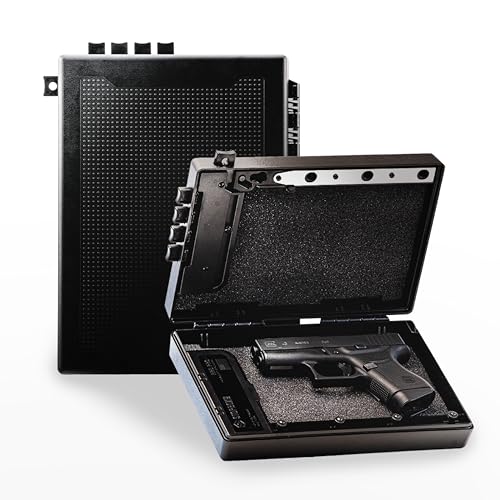
Live listings for the shortlist in this guide are pulled from Amazon below, so prices and availability are always current at the moment you look.



Closing Thoughts
A battery free handgun safe earns its place by doing less, better. No power to manage, no sensor to coax, no screen to read. Steel thick enough to matter, a door built to resist a pry, a lock that answers to touch, and a mounting plan that keeps the box where the owner left it. The trade offs are plain. The owner gives practice, code discipline, and careful fit checks, and in return gets a box whose readiness does not depend on a small cell hidden inside a lid.
Buyers who work through the checklist, read the maker sheet for the exact model, and check the current roster and storage law for their own place will choose well among the Simplex type boxes, the V-Line style top opening designs, the Fort Knox style heavy door boxes, and the other mechanical lines that publish full specifications. The right box is the one that fits the gun, fits the room or vehicle, and opens for its owner without a second thought.
When the house is quiet and the code lives in your fingers alone, a simple steel box that needs nothing but memory is ready in a way no charged device can promise.