Our Top Picks
 cotsoco Handheld Massager Mini Portable Vibrating Body MassagerMini3.6 x 1.8 x 5.4 inchesCheck on Amazon
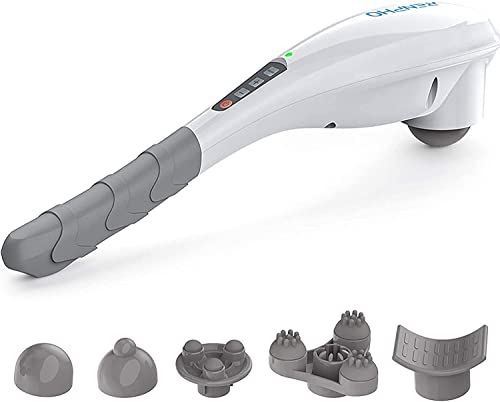 RENPHO Cordless Handheld Back Massager1 Count (Pack of 1)15 x 3 x 4.5 inches1.8 poundsCheck on Amazon


What's inside
- What counts as a hand held massager with batteries
- Percussion, vibration and kneading: three different sensations
- Amplitude, speed and stall force, explained without hype
- Heads and attachments: what each shape is for
- Battery systems: sealed lithium packs versus loose cells
- Charging details: USB-C, barrels and docks
- Weight, grip and hand fatigue
- Noise: what the decibel numbers mean at home
- Feel: cushioning, air and why harder is not better
- Travel and airline rules for battery massagers
- Safety and situations where a massager is the wrong tool
- Cleaning, storage and looking after the pack
- Reading a spec sheet with a cool head
- Choosing by situation: routines that actually happen
- A simple session pattern to build on
- Troubleshooting the common annoyances
- Value, kits and the extras worth paying attention to
- Check prices on Amazon
- Questions buyers ask most
As an Amazon Associate I earn from qualifying purchases. This post may contain affiliate links at no extra cost to you.
This page is a document research site: the writer works from published manuals, maker spec sheets, battery safety guidance and retailer listings, and did not personally hold or use the devices described here. If you buy through a shopping link on this page, the site may earn a small commission as an Amazon Associate, at no extra cost to you, and that income helps fund the time spent reading documentation most buyers never open.
A battery powered hand held massager promises something a plug-in model cannot: you can work on a tight calf in a hotel room, a stiff shoulder in a parked car before a long drive, or a sore forearm at a desk without hunting for an outlet or dragging a cord across your body. That freedom is real, but it comes with trade-offs that corded models never face. Runtime drops as speed climbs. Sealed lithium packs age whether you use them or not. A compact body that feels light for two minutes can feel clumsy after ten. This guide works through those trade-offs in plain terms, so you can match a device to the job you actually have rather than to the loudest claim on a box.
The category covers more ground than most shoppers expect. At one end sit percussion massage guns, which drive a head back and forth in a straight line to deliver repeated taps into muscle. At the other end sit wand and palm style vibrators for massage, which buzz at high frequency with very little travel. Between them are mini guns, heated pads with motors inside, air compression sleeves you hold or wear, and simple twin-node kneading devices with rechargeable cells. They share a battery and a handle, but they do not do the same work, and buying the wrong type is the most common reason these devices end up in a drawer.
What counts as a hand held massager with batteries
Start with the power source, because it shapes everything else. Most percussion guns use a sealed lithium-ion pack built into the handle or clipped to its base. The pack cannot be opened by the user, it charges through a port or a dock, and when it wears out after a few years the whole device often has to be replaced or sent in for service. Smaller vibrating massagers split into two camps: sealed rechargeable models, and simple models that run on AA or AAA cells you can swap in seconds. That split matters for travel, for long term cost, and for how the device behaves when the charge runs low mid-session.
Hand held also implies a limit on size and weight, though makers stretch the term. A full size gun may weigh 900 grams to 1.1 kilograms, which is fine when gravity helps you press down into a thigh but tiring when you hold it up to your own neck or shoulder. A mini gun at 400 to 550 grams trades depth and runtime for reach and ease. A wand style device may weigh under 300 grams and run for a long time on a small cell, because a vibration motor draws far less power than a motor driving a piston against resistance. Weight, motor type and cell size are linked, and you cannot judge one without the others.
Cordless does not always mean usable while charging. Some models lock out the motor when a cable is attached, for safety and heat reasons. Others allow low speed use while plugged in, which can save a session when the pack is flat. Manuals state this clearly if you look for a line about operation during charging, and it is worth checking before you buy, especially if the device will live in one room where a cord would not bother you. A model that cannot run while charging demands more planning: charge it after use, not right before you need it.
Percussion, vibration and kneading: three different sensations
Percussion is a mechanical tap. A motor, often brushless in mid-range and premium guns, drives a shaft forward and back. The distance the head travels is called amplitude or stroke length, and typical values run from about 6 mm on mini guns to 10, 12 or even 16 mm on full size models. Each tap pushes tissue down and lets it rebound. Lower speeds feel like a firm, rhythmic press; higher speeds blur into a strong buzz with depth. Percussion suits large, dense muscle groups – glutes, quads, hamstrings, calves and the broad muscles of the back – where surface buzz alone feels like it skims over the problem.
Vibration is different in kind. A small unbalanced motor or a voice coil shakes the head side to side or in tiny circles thousands of times per minute, with travel often under 2 mm. There is little depth, but the sensation spreads wide and can feel soothing on smaller or more sensitive areas: forearms, hands, feet, the front of the shin, or around – never directly on – a joint. Wand style massagers and the flat heads of some guns work this way in practice even when they are sold under the percussion label. If a spec sheet lists very high speed and very low amplitude, expect vibration character whatever the marketing says.
Kneading and rolling devices use rotating nodes that mimic thumbs circling under a cover. Battery versions are usually pillow or wrap shaped rather than gun shaped, and some are held against a chair back. Their motors turn slowly, draw modest power and pair well with heat. They suit the lower back and neck for people who dislike tapping altogether. The limit is pressure control: your body weight sets the force, not your arm, so it is easy to overdo it against a hard chair. A hand held gun, by contrast, lets you back off in a fraction of a second, which is one reason guns suit beginners who are still learning how much pressure a sore spot can take.
Air compression adds a fourth mode. A small pump inflates chambers in a sleeve or a hand held wrap in cycles, squeezing and letting go. Battery hand and leg massagers built on this idea feel nothing like a gun: the work is slow, even and broad, and there is no tapping at all. They appeal to people who want a gentle routine while reading or watching television. Check the pump noise, because a quiet motor paired with a clicking valve can still be distracting, and check how the sleeve is cleaned, since fabric that wraps a sweaty leg needs more care than a wipe-clean plastic head.
A quick way to choose the mode
Match the mode to the tissue and the goal. Deep, post-workout soreness in large muscles points to percussion with real amplitude. General tension, small areas and sensitivity point to vibration at modest intensity. A wish to sit back and let the device work points to kneading or compression. Many buyers end up with two smaller devices rather than one flagship: a mini gun for the gym bag and a simple wand for the desk drawer covers more situations than a single heavy gun that is annoying to lift. Budget and storage both favor that split more often than brand lineups suggest.
Amplitude, speed and stall force, explained without hype
Amplitude is the single most useful number on a gun spec sheet, and the one most often buried. It tells you how far the head travels on each stroke. A 7 mm mini gun and a 13 mm full size gun at the same speed do not feel like stronger and weaker versions of one sensation; they feel like different tools. The longer stroke moves more tissue, reaches deeper layers, and needs a stronger motor and a bigger cell to sustain it. The shorter stroke feels busier and more surface level, closer to strong vibration. If a listing hides amplitude and shouts about speed alone, treat that silence as information.
Speed is usually given in percussions per minute, with common ranges from about 1,200 to 3,200 across four to six levels. Low levels near 1,200 to 1,800 suit warming up, sensitive areas and winding down before sleep. Middle levels do most everyday work. Top levels are for brief passes over large muscles, and they drain the pack fastest while making the most noise. More levels is not automatically better: six well spaced levels beat eight levels where the bottom three feel identical. Look for a low first level in particular. A gun whose gentlest setting is already intense is a poor fit for necks, forearms and anyone new to percussion.
Stall force describes how much pressure you can apply before the motor slows or stops. Makers quote it in kilograms or pounds, and the numbers are hard to compare because there is no single shared method behind them. Still, the concept matters. A mini gun may stall under firm pressure on a glute, which teaches you to let the device float rather than lean on it. A stronger gun keeps its stroke under load, so the sensation stays even. In practice, good technique uses less force than most beginners expect: hold the grip, let the head rest on the muscle, and move slowly, roughly 2 to 3 cm per second, letting the taps do the work.
Heat and vibration in the handle are the hidden costs of power. A motor working hard warms the body of the gun, and a hard plastic shell passes motor buzz into your palm. Better designs isolate the grip with rubber overmolding and keep the motor mount damped. Published spec sheets rarely mention any of this, so look at photos of the grip, read the manual for duty cycle limits – some models ask for a rest after 15 or 30 minutes of continuous use – and take long session claims with care. A device rated for short sessions with rests can still serve you well if your routine is ten minutes after training.
Heads and attachments: what each shape is for
Most guns ship with four to six heads, and most owners use two. The round ball head is the general purpose choice: its curved foam or rubber surface spreads force, forgives angle changes and works on nearly every large muscle. The flat head suits broad, flat areas such as the chest wall muscles and the front of the thigh, and it doubles as a gentle option because its area lowers pressure per square centimeter. Keep both in the case; between them they cover the bulk of normal use.
The bullet or cone head concentrates force into a small point. That focus helps around – not on – the shoulder blade, in the arch of the foot, or in the thick muscle of the palm, but it is easy to press too hard and bruise tissue. Short passes, low speed and constant movement are the rules. The fork or U-shaped head straddles a tendon or the spine: the two prongs rest on the muscles either side of the Achilles tendon or along the back, so the bony ridge itself is not struck. Never place any head directly on bone, on the front of the throat, or over the spine itself; the fork exists precisely to keep contact off the bone.
Softer heads change the character of any gun. An air filled or cushion head has a hollow, springy cap that absorbs part of each stroke, lowering peak force and making the device friendlier for sensitive users and bony areas such as the shoulder top. Some brands sell metal heads that can be chilled or warmed, adding temperature contrast to the session; if you consider one, confirm it fits your gun shaft standard, because head stems are not universal. Friction fit stems, threaded stems and quick lock collars all exist, and a head that wobbles in the socket will rattle and wear the mount.
Wand and vibrating massagers use heads differently. Their tips are often fixed, with texture or shape doing the work: smooth domes for general use, ridged or node covered caps for the scalp and feet, flexible necks that bend so pressure stays light. Because travel is tiny, material matters more than shape; medical grade silicone covers feel softer and clean more easily than porous foam. Whatever the type, inspect heads monthly. Cracked foam, torn silicone and split cushion caps should be replaced, since damaged surfaces harbor grime and can pinch skin.
Battery systems: sealed lithium packs versus loose cells
Sealed lithium-ion packs dominate percussion guns for good engineering reasons. The maker can shape the pack to the handle, add protection circuits, balance the cells and rate the whole device as one unit. Capacity is quoted in milliamp hours or watt hours; guns commonly carry packs in the 2,000 to 2,600 mAh range at their internal voltage, which translates to roughly 15 to 25 watt hours. Treat milliamp hours with caution when comparing brands, because the figure depends on the pack voltage. Watt hours, when given, compare cleanly across models and are also the number airlines care about.
Runtime claims need the most skeptical reading of any line on the box. A claim of six or even ten hours almost always refers to the lowest speed with no load. Real sessions mix levels and involve pressure, which raises current draw. A practical expectation for a full size gun is two to four hours of mixed use per charge, spread across many short sessions – which is still weeks of normal use for most people. Mini guns carry smaller packs and often deliver one and a half to three hours. Vibrating wands sip power and can run far longer. Judge runtime against your routine: fifteen minutes a day makes even a modest pack feel generous.
Loose cell models trade that integration for flexibility. A massager that runs on AA cells works with alkaline disposables in a pinch, or with rechargeable nickel metal hydride cells for lower running cost, and a flat battery never cancels a session if spares are in the drawer. If that route appeals to you, a decent standalone charger matters as much as the device, which is why many households keep one of the setups covered in best battery chargers aa aaa next to the drawer where small devices live. Voltage sag is the downside: as loose cells drain, vibration weakens gradually, while a lithium device holds its pace and then stops with a clearer low charge warning.
Some mid size devices historically used removable cylindrical lithium cells, and second hand listings still mention them. For context on the chargers that ecosystem used, see best 18650 battery chargers, but do not open a sealed gun to hunt for cells inside: modern guns are not built for user cell swaps, opening one voids support and risks damaging the pack, and a damaged lithium pack is a genuine fire hazard. If a sealed pack swells, smells sweet or chemical, or makes the shell bulge, stop using the device, keep it away from bedding and soft furnishings, and follow local hazardous waste guidance for disposal.
How long a charge really takes
Charge time is the other half of battery life that listings underplay. A big pack on a slow bundled adapter may need three to five hours from empty. USB-C models that support higher wattage input can cut that sharply, but only with a cable and adapter that deliver the rate; the thin cable in a junk drawer may not. Dock charging guns are convenient – drop the device in the cradle and it is always ready – yet a dock ties the device to one room and one outlet. For a gym bag device, a cable wins. For a bedside device, a dock wins. Decide by where the massager will actually live.
Charging details: USB-C, barrels and docks
USB-C has become the port most buyers want, and for good reason: one cable can serve a phone, a tablet and a massager, and a power bank can rescue a flat gun on a trip. Check two details before assuming convenience. First, some USB-C ports on budget devices accept only slow 5 volt input, so a fast phone adapter gives no speed gain. Second, a few models use the port shape but a nonstandard wiring scheme that dislikes certain cables. The manual’s charging section, dull as it is, settles both questions in a paragraph. Keep the bundled cable in the case even if you plan to use your own; it is the fallback that removes doubt when charging misbehaves.
Barrel plug adapters persist on older and larger guns. They charge reliably and often faster than basic USB, but the adapter is unique to the device, easy to leave behind and annoying to replace. If you buy a barrel plug model, photograph the adapter label – voltage, current and polarity – and store the photo with the manual PDF. Replacement adapters must match voltage exactly and meet or exceed the current rating; a close enough adapter from another gadget is a common way to damage a charging circuit or overheat a pack.
Charge indicators range from a single LED that changes color to four or five segment gauges and small percentage screens. A percentage display is genuinely useful on a gun, because runtime at high speed falls steeply and a rough gauge invites surprise shutdowns. Whatever the display, build a habit: return the device to its charger when it shows roughly a quarter charge left rather than running it flat. Lithium packs age faster when deeply drained often, and a partly charged pack kept in rotation will outlast one that is flattened and then charged to full every cycle.
Weight, grip and hand fatigue
Fatigue is the quiet reason many guns gather dust. Holding a kilogram device against your own shoulder means your arm works at an awkward angle while absorbing vibration, and the effort adds up over a ten minute routine. Handle design decides how fast that happens. A long handle lets you reach the middle of your back and gives leverage on legs. A short, thick mini gun grip suits small hands and travel but offers less reach. An angled or T-shaped body changes the wrist position entirely and can be the difference between comfort and strain for people with limited shoulder mobility.
Grip diameter and surface matter as much as raw weight. A handle around 40 to 50 mm across fills most adult hands without forcing a tight squeeze; rubber texture helps when palms are damp after training. Buttons deserve attention too. A single button that cycles speed with a long press for power is simple but easy to bump mid-session; separate controls or a dial are harder to hit by accident. If you can, judge control placement from photos: controls under the gripping fingers will be pressed unintentionally, and a speed change against a sore spot is an unpleasant surprise.
Technique protects your hands. Let the weight of the device supply pressure on downward facing muscles such as thighs and calves, guiding rather than pushing. For your back and shoulders, shorten the session, swap hands, and rest the device between areas. Two to three minutes per muscle group is a sensible working pattern drawn from maker guidance, with the head kept moving slowly rather than parked on one point. If your hand tingles or your grip aches afterward, the session was too long or the device too heavy for that angle; a lighter mini gun used more often beats a heavy gun used rarely and reluctantly.
Seated options solve the reach problem in a different way, and for some households they are the better spend: a chair does the holding while you sit back. Readers weighing that route can compare it with the devices gathered under best reclining massage gaming chairs, keeping in mind that a chair treats the back and seat well but does nothing for calves, forearms or feet, which is where a hand held device earns its keep. The two categories complement rather than replace each other, and many routines use a chair for the back and a small gun for everything else.
Noise: what the decibel numbers mean at home
Noise decides whether a massager gets used in a shared home, an office or a hotel room with thin walls. Makers quote figures commonly between about 35 and 55 dB, measured at some distance under conditions that are rarely stated, so compare numbers loosely and prize brushless motors, which tend to run smoother and quieter than brushed designs. Percussion noise has two parts: motor hum, which rises with speed, and the tapping sound made where the head meets tissue and clothing, which no motor design can remove. A gun that is quiet in free air still thumps against a thigh.
Practical reference points help more than raw figures. Normal conversation sits near 60 dB. A device in the low 40s at arm’s length can be used while someone watches television in the same room without complaint. In the low 50s it becomes the loudest thing in a quiet room. Apartment dwellers and anyone planning late evening sessions should weight noise heavily in the choice, and should also consider the surface they sit or lie on: a hollow wooden floor or a springy bed frame can amplify vibration into a drum. A folded towel under the limb, or working on a carpeted floor, cuts transmitted noise surprisingly well.
Mini guns are not automatically quieter. Their motors spin fast and their light bodies have less material to absorb sound, so some produce a high pitched whine that carries further than the deeper note of a full size gun. Wand style vibrators vary widely too; a rattly housing at high speed can be louder than a well built gun at low speed. If noise is your top concern, favor models whose manuals publish a measured figure with a stated distance, favor lower top speeds, and plan routines around middle settings rather than the maximum.
Feel: cushioning, air and why harder is not better
New users often equate stronger sensation with better results, then press harder and raise the speed until a session leaves them sore in the wrong way. Muscle responds to rhythmic pressure and movement; bruising is not a sign of progress. The cushion head described earlier exists to soften peak force, and some guns add a layer of compliance in the drive itself, so the stroke shortens slightly under load instead of hammering through resistance. That give makes a device feel less aggressive on paper specs while often feeling better on the body, especially over ribs, shoulder blades and other places where muscle lies thin over bone.
Start every new area at the lowest setting, with the ball or cushion head, for thirty seconds. If the sensation feels like a firm, pleasant press, step up one level or change to a firmer head. If you find yourself tensing against the device, bracing or holding your breath, it is too much for that spot today. Soreness from training fluctuates; the calf that loved level three on Monday may want level one on Thursday after a long run. Treating the controls as a dial to tune daily, rather than a badge to max out, is the habit that keeps these devices useful for years.
Heat is a common add-on in wand and kneading models and appears in some gun heads. Gentle warmth around 40 degrees Celsius can make a session feel more relaxing and helps stiff hands in winter. Heat draws extra power, shortening runtime noticeably, and it raises the care bar: never fall asleep with a heated device pressed against one spot, keep heat off areas with reduced sensation, and let a heated head cool before it goes back in a closed case. If heat is a minor feature for you, a model without it usually gives you more battery and less weight for the same money.
Travel and airline rules for battery massagers
A hand held massager is one of the easier wellness devices to travel with, provided the battery is handled the way airlines require for all lithium devices. The general pattern worldwide is simple: devices with lithium batteries belong in carry-on baggage, not checked baggage, because crew can respond to a battery problem in the cabin. Spare loose lithium batteries, if your device even uses them, also travel in the cabin with terminals protected. Most massager packs sit far below the 100 watt hour threshold above which airline approval enters the picture, so a normal gun or wand raises no capacity issue at all.
Rules vary by carrier and country, and security staff have discretion at the checkpoint, so treat the details here as orientation rather than a guarantee. Pack the device in its case with heads detached or locked, so a bump cannot switch it on; a device buzzing inside a bag will draw attention and drain itself. Some models have a travel lock – often a long press of the power button – and using it is worthwhile. Keep the charger cable in the same case, and if you carry a power bank for it, that bank follows the same carry-on rules.
At a hotel, travel exposes the runtime question honestly. A device that manages a week of home sessions may face two users, longer routines after walking heavy sightseeing days, and no convenient outlet near the bed. Charging from a power bank overnight solves most of it for USB models. For barrel plug models, confirm the adapter accepts the local voltage before the trip; most modern adapters are dual voltage, but the label is the authority, and a plug shape adapter does not convert voltage. A quick label check at home beats a dead device abroad.
Safety and situations where a massager is the wrong tool
This section is general information from maker warnings and common clinical guidance, not medical advice for any individual. A massager is a consumer device for everyday muscle tension in healthy adults. It is not a treatment for injury, disease or unexplained pain, and pain that is sharp, new, worsening, or paired with numbness, weakness, swelling or fever deserves professional assessment rather than stronger percussion. When in doubt, the cautious choice is to skip the device and ask a qualified professional.
Standard warnings repeat across nearly every manual for good reason. Do not use a percussion or vibrating device on the head, face, front of the throat, chest over the heart, abdomen during pregnancy, directly on the spine, on joints themselves, or on areas with varicose veins, recent surgery, fractures, open wounds, rashes or unexplained lumps. Keep clear of implanted medical devices unless the implant maker’s guidance and a clinician both say otherwise; vibration and magnets in motors are not things to experiment with near a pacemaker. Stop at once if you feel dizziness, sharp pain, or tingling that spreads.
Certain groups should get individual advice before using one at all: people who are pregnant, people with a history of blood clots or who take blood thinning medication, people with diabetes related sensation loss in the feet, and anyone recovering from surgery or a recent muscle tear. Children should not use adult percussion guns; the forces involved are scaled for adult tissue and adult judgment. None of this makes the devices dangerous in normal use – it defines normal use. Staying inside those lines, keeping sessions moderate, and letting sore tissue rest between sessions covers the great majority of safe practice.
Electrical safety is simpler but not optional. Charge on a hard, dry surface away from bedding, never charge a device that is wet, and unplug a charger that becomes hot, smells of hot plastic, or shows a damaged cable. Use the adapter supplied or one that matches its specification. Keep devices and chargers away from bath water entirely; a massager used on feet after a bath belongs on a dry floor with dry hands, not balanced on the tub edge. These habits are mundane, and they are also the whole of battery safety for a well made device.
Cleaning, storage and looking after the pack
Heads and tips touch skin, sweat and lotion, so clean them after use with a cloth slightly dampened with mild soap solution, then dry them before storage. Follow the manual where materials differ: silicone tolerates more than foam, foam should never be soaked, and alcohol based cleaners can crack some plastics and dry out rubber. The body of the device gets a dry or barely damp wipe; no massager in this category should be rinsed under a tap unless its rating explicitly says so, and charging ports must be dry before a cable goes in.
Storage shapes battery life more than most owners realize. Lithium packs age slowest when kept cool and partly charged – roughly half charge is the commonly cited storage level – rather than full or empty. A device used weekly does not need special handling beyond normal charging. A device being put away for months deserves a half charge, a cool drawer away from radiators and sunny windows, and a top-up every few months. Heat is the main enemy: a gun left in a hot car through summer will lose capacity permanently, and may swell.
For loose cell devices, storage rules split by chemistry. Alkaline cells should come out of a device stored for months, because leaks can destroy contacts. Nickel metal hydride rechargeables hold up well in rotation with a smart charger that stops at full rather than cooking cells on a timer; the roundups under best battery nimh chargers explain the difference between basic and analyzing chargers for readers who keep a stable of cells for several devices. Whichever chemistry you use, do not mix old and new cells, brands or charge levels in one device, and recycle dead cells rather than binning them.
Reading a spec sheet with a cool head
Spec sheets reward a slow reader. Begin with amplitude, weight, battery watt hours and charge time – the four numbers that predict daily satisfaction – and only then look at speed range and head count. Ask what a headline number was measured against. Runtime at which speed, under what load? Noise at what distance, at which setting? Stall force by what method? A maker who answers those questions in the manual is telling you something about the whole product. A listing built on adjectives, athlete photos and countdown timers is telling you something too.
Watch for quiet substitutions. A gun may advertise a high speed that it can only hold for a minute before thermal limits cut power. A pack may be described by the sum of its cell ratings rather than usable capacity. A kit may count a storage case, a cable and a wrist strap as pieces to inflate the contents number. None of these tricks make a device bad, but they distort comparisons, and the manual PDF – usually available on the maker’s support page before you buy – is the antidote. Download it, read the specifications table and the warnings, and check that replacement heads and chargers are sold separately; a device with no spare parts path is a device with a short life.
Warranty and support deserve the same calm attention. A two year warranty from a maker with a real support address outweighs a longer promise from a seller who may vanish. Battery coverage is often shorter than the main warranty or excluded as a consumable, so read that line specifically. Keep the receipt and the serial number, which is usually on a label near the charging port. If a pack fades within the first year under normal use, that is a support conversation, not an accepted cost, and having the paperwork ready makes it a short one.
Choosing by situation: routines that actually happen
After training is the classic case, and it favors a full size or strong mid size gun. You have ten to twenty minutes, large muscles to cover and no patience for a device that stalls when you press into a glute. Prioritize amplitude of 10 mm or more, a pack that shrugs off daily use, and a ball head you like, because you will use it for most of every session. Weight matters less here because gravity helps on legs and you can sit for calves and feet. Noise matters if the gym is a garage at dawn; otherwise it is a secondary concern.
Desk and office use flips those priorities. The targets are forearms, hands, shoulders and the upper back, the sessions are short, and other people are nearby. A quiet mini gun or a wand with a soft head fits the drawer and the setting. Low first speed matters more than top end power, and USB charging matters because the device can share the phone cable already on the desk. Five minutes at lunch on forearms that type all day does more for comfort than a heroic session once a month, and a small device kept within reach is the one that gets those five minutes.
Travel routines favor the smallest device that still does real work. A mini gun around 400 to 500 grams with a 7 to 9 mm stroke handles calves after long flights, feet after long walks and shoulders after bad hotel pillows. Check that its case is genuinely compact, because some mini guns ship in cases sized for their full size siblings. Battery size is rarely the limit on a trip of a week; charge access is, which again points to USB-C. Leave the full head set at home and carry ball and flat heads only – they cover nearly everything and the case closes without a fight.
Sensitive users, older adults and anyone who found a friend’s gun too intense should shop from the gentle end. Look for a low starting speed, a cushion head in the box, modest amplitude and a weight your weaker hand can manage. A wand style device may honestly suit better than a gun, and there is no virtue in owning the fashionable tool if it hurts. Start with shorter sessions, keep the device moving, and build up over weeks. Comfort is the metric; a device that feels kind will be used, and use is where any benefit lives.
Sharing a device between partners or family members adds hygiene and handling notes. Heads should be cleaned between users, spare heads are worth having so each person can keep a ball head of their own, and controls should be simple enough that nobody needs the manual for a quick session. A mid size model with clear speed steps and a readable battery gauge is the household sweet spot. Agree on where it lives and charges; a shared device that is always in someone else’s room or always flat quickly becomes nobody’s device.
A simple session pattern to build on
Begin with the device off the body while you set the lowest speed, then rest the head lightly on the first muscle. Move slowly, spending roughly half a minute on each area before drifting to the next, and let the head float rather than dig. Work the large muscles first – thighs, glutes, calves – then smaller ones, stepping the speed up only where the tissue feels like it wants more. Two minutes per major area is a reasonable ceiling for everyday routines. Finish by lowering the speed for the last thirty seconds; the contrast makes the end of a session feel deliberate rather than abrupt.
Breathing and posture sound unrelated to a battery device, but they decide how much good a session does. Sit or lie somewhere supported so the muscle you are working can actually relax; a calf cannot soften while it is holding you upright. Breathe slowly and keep the hand holding the device loose, shaking it out between areas. If you are working on your own back with a long handle, change sides halfway so one shoulder does not do all the reaching. These small habits separate a routine that leaves you looser from one that trades leg tension for a tired arm.
Frequency beats intensity over time. Short sessions on most days suit recovery and general tension better than a single long session each week, and they are kinder to the battery too, since shallow discharge cycles are gentler than deep ones. Keep the device where the routine happens – gym bag, bedside, desk – because a massager stored in a hallway closet will be skipped on exactly the tired evenings it would help most. Charge it during a fixed point in your week, such as while you clean the gym bag, and the flat battery surprise mostly disappears.
Troubleshooting the common annoyances
A gun that stops mid-session is usually reporting heat or a flat pack rather than a fault. Let it cool for fifteen minutes, charge it fully and try again at a lower speed. If it stops whenever you press firmly, you are exceeding its stall limit; lighten the pressure and let the stroke do the work. A head that rattles has either a worn stem, debris in the socket or a cracked mount – clean the socket, try another head, and stop using a head that sits loose, because a head ejected at speed is a small but real hazard.
Charging problems follow a pattern worth working through in order. Try the bundled cable and adapter first, then a different outlet, then inspect the port for lint, which pockets and gym bags supply generously; clear it gently with a wooden toothpick while the device is off. A device that charges but drains overnight may have been left in a standby mode with Bluetooth active if it has an app connection, or its pack may be aging. App connected models add firmware and pairing quirks that have nothing to do with massage quality, and most users can skip app features entirely without losing anything they value.
Shortened runtime after a year or two is normal lithium aging, sped up by heat and by storage at full charge. You can slow it, not stop it. When runtime falls to the point where the device no longer fits your routine, weigh replacement honestly: a new pack service, where offered, against a new device with a fresh warranty. For loose cell models the fix is cheaper – retire tired cells, which often masquerade as a failing device, and fit a fresh set before judging the motor. Many a wand has been thrown away when only its cells were done.
Value, kits and the extras worth paying attention to
Price bands in this category map loosely to motor quality, pack size and build, but the step from a basic device to a mid range one usually matters more than the step from mid range to flagship. The first step tends to buy a brushless motor, a readable battery gauge, better grip damping and heads that fit without rattling. The second step often buys smaller gains: a prettier case, an app connection, extra heads you may never open, or a slightly longer stroke. Spend first on the things your hands and ears notice every session, and let the accessory count fall where it may.
Kits deserve a cold look at the contents list. Count the heads you will truly use – ball and flat for most people, plus fork or cushion where your routine calls for them – and treat the rest as storage burden rather than value. A hard case earns its shelf space if the device travels or shares a home with children and pets; a soft pouch is enough for a bedside drawer. A spare charging cable in the kit is worth more than a novelty head, because a lost proprietary cable can sideline an otherwise healthy device for days while a replacement ships.
Refurbished and open box units appear often for popular models, and they can be sensible buys when the seller states the battery condition and keeps the full warranty. Batteries are the wear item here, so a deep discount on a unit with an unknown charge history is less attractive than the same discount on a corded device would be. Ask how returns work if the pack will not hold a useful charge, and run the device through two full charge and use cycles soon after it arrives, while the return window is still open and the paperwork is still on the counter.
Check prices on Amazon
Live listings for the shortlist in this guide are pulled from Amazon below, so prices and availability are always current at the moment you look.


Questions buyers ask most
How many times a day can I use one?
Maker guidance commonly allows a few short sessions a day on different muscle groups, with a modest per area limit each time and rests built in. The body gives the clearest feedback: tissue that feels bruised or more tender the next day was overworked, whatever the clock said. Reduce duration or intensity, skip a day for that area, and let comfort set the schedule rather than a target number of minutes.
Is a mini gun enough, or will I outgrow it?
A mini gun covers travel, desk use and moderate leg work well, and many owners never need more. You will feel its limits on dense muscle if you train hard, press firmly and want deep work on glutes and hamstrings several times a week. If that description fits, start with a full size model. If it does not, a mini is not a compromise; it is the right tool, lighter in the bag and easier on the holding hand.
Can I use one before exercise as well as after?
Short, light sessions before activity are a common part of warm up routines: a minute or two per muscle at low to middle speed while you do the rest of your normal preparation. Keep it brief and gentle; the goal is to feel awake and loose, not worked. Save longer, slower sessions for afterward or for rest days, and never use percussion to push through pain that is changing how you move – that pain needs assessment, not amplitude.
What should I do with a device I no longer use?
If it still works, clean it, charge the pack to about half, and pass it on with its manual and charger, telling the new owner the safety basics from this page. If it is dead or the pack has failed, take it to electronics recycling; lithium devices do not belong in household trash. Remove loose cells first and recycle those through a battery collection point. A device kept as a spare should get the half charge storage treatment and a check every few months.
Hand held battery massagers reward buyers who think in routines rather than superlatives: the right mode for the muscle, a pack that matches the week, a weight the holding hand forgives, and noise the household can live with. Get those four things right and the device stops being a gadget and becomes part of how the evening ends – shoes off, calves attended to, charger humming quietly in the corner.