What's inside
- Key Takeaways
- Quick Picks
- How We Chose These Picks
- How Do Sensor Size and Zoom Reach Really Trade Off?
- Why Does the Lens Aperture Matter More Than Megapixels Here?
- How Should You Pack and Carry a Travel Zoom?
- What Settings Should You Dial In Before a Trip?
- Which Accessories Earn Their Space in a Small Bag?
- How Do These Cameras Handle Night Markets and Old Towns?
- What About Rain, Dust and Beach Days?
- How Do You Choose Between Two Cameras You Like Equally?
- How Well Do They Photograph People on the Road?
- What Should Wildlife and Safari Travellers Know?
- How Long Will a Camera Like This Stay Relevant?
- What Do Travel Insurers and Airlines Think of Your Camera?
- How Should Beginners Grow Into These Cameras?
- Which Camera Suits Which Classic Itinerary?
- How Do Prints and Albums Judge These Cameras?
- What About Video Diaries and Family Films?
- How Do You Test a Travel Zoom in the Shop?
- What Is the Sensible Upgrade Path From Here?
- Common Mistakes
- Final Recommendation
- Frequently Asked Questions
- Related Guides
As an Amazon Associate I earn from qualifying purchases. This post may contain affiliate links at no extra cost to you.
widgetverdict.com is reader-supported. When you buy through links on our site, we may earn an affiliate commission.
Where to buy: the four current models below are sold on Amazon as described — check price on Amazon for each — while the two classics appear prose-only because their stock now lives mainly on the used market. Travellers hunting the best 1 inch sensor travel zoom cameras are really hunting freedom: one pocketable camera that handles a dawn landscape, a distant chapel spire and a candlelit dinner without a bag of lenses.
The 1-inch sensor is the enabling compromise. It gathers roughly four times the light of the tiny sensors in old superzooms, which transforms evening and indoor travel photography, while staying small enough for bodies that slip into coat pockets. Marry that sensor to a serious zoom and you have the defining travel camera of the past decade.
Six cameras map the territory. Sony chases speed and video, Panasonic stretches reach furthest in two different sensor sizes, Canon woos creators with bright glass, and two beloved classics wait on the used market for patient bargain hunters. One entry, the ZS99, deliberately breaks the 1-inch rule, and its review explains exactly why it still belongs in this conversation.
Key Takeaways
- Sony’s RX100 VII is the most complete 1-inch travel zoom, with tracking autofocus rivals envy.
- Panasonic’s ZS300 carries the long-reach 1-inch formula furthest, succeeding the ZS200.
- Canon’s G7 X Mark III trades zoom length for the brightest lens and creator-first video.
- The ZS99 reaches 720mm equivalent but uses a smaller sensor — a daylight reach bargain, not a 1-inch camera.
- Used shoppers should hunt the ZS200 and RX100 VA, the classics that defined this category.
Quick Picks
| Pick | Badge | Why it made the cut |
|---|---|---|
| Sony RX100 VII | Best 1-inch travel zoom overall | Tracking autofocus and 200mm reach in a jacket pocket. |
| Panasonic Lumix ZS300 | Best long-reach 1-inch zoom | The ZS formula updated, with the farthest 1-inch reach here. |
| Canon PowerShot G7 X Mark III | Best for creators | Bright lens, flattering colour and streaming-ready video. |
| Panasonic Lumix ZS99 | Best far-reaching zoom, smaller sensor | 720mm equivalent reach; sensor is smaller than 1-inch. |
| Panasonic Lumix ZS200 | Prose-only: the original favourite | The classic 15x 1-inch zoom, now a used-market gem. |
| Sony RX100 VA | Prose-only: the bright-lens classic | f/1.8 glass for evenings, if 70mm reach suffices. |
How We Chose These Picks
Reach, brightness and sensor size form a triangle every travel zoom must negotiate, because physics forbids maximising all three in a pocket body. Our shortlist deliberately samples different corners of that triangle so readers can choose which corner matches their itineraries, rather than pretending one camera escapes the trade entirely.
Handling evidence came from the way travellers actually shoot: one-handed on viewpoints, gloved in mountain cold, hurried in markets. Cameras with viewfinders scored for bright-day usability, tilting screens scored for crowds and low angles, and USB charging scored for anyone who has rationed a single hotel socket among phone, watch and camera.
Video counted, but as a supporting act. Most travel cameras record family footage and social clips rather than cinema, so stabilisation, microphone options and screen flexibility outweighed exotic codecs. The Sony and Canon pull ahead there, while the Panasonics answer with photographic reach and clever frame-grabbing modes.
Finally, we insisted on honesty about the ZS99. Search results constantly mingle it with 1-inch models because its zoom dwarfs theirs, and a guide that quietly let readers assume sensor parity would betray them at their first night market. It stays in the list — labelled, explained and recommended only for the daylight reach role it genuinely fills.

Sony RX100 VII — Best 1-inch travel zoom overall
Seven generations of refinement show in every corner of the RX100 VII. Sony kept the pocketable body that defined the line, then stuffed it with a stacked sensor and autofocus intelligence borrowed from its flagship mirrorless cameras. The result is a travel zoom that does not merely keep up with your itinerary; it anticipates the photograph you are about to attempt.
Autofocus is the headline act. Real-time tracking locks onto a face, an eye, a dog mid-sprint, and clings on while the 24–200mm lens reaches across a plaza or a safari track. Burst shooting at remarkable speed freezes wings, wheels and water without the spray-and-pray anxiety lesser compacts inspire. For family travel, where moments refuse to repeat themselves, that reliability is worth more than any single specification.
Image quality honours the 1-inch sensor’s promise. Daylight files are crisp edge to edge, colours render naturally, and dusk shots at moderately high sensitivity stay clean enough for generous prints. The lens loses some brightness as it zooms, as all travel zooms do, yet the sensor’s size compensates by tolerating the higher sensitivities that small-sensor rivals cannot touch.
Video creators are properly served: 4K recording, a microphone socket for clean audio, and stabilisation that smooths walking shots into watchable footage. The tilting screen flips for presenters, the pop-up viewfinder rescues bright-day composition, and the whole package still vanishes into a jacket pocket at the café.
Gripes are real but bounded. Sony’s menus remain a labyrinth for newcomers, battery endurance trails the Panasonics here, and the price sits at the summit of the category. Owners who learn the custom buttons tame the menus within a week. Travellers wanting the most capable 1-inch compact ever made will consider the tuition fair.
Months of ownership reveal smaller kindnesses: the lens ring can drive zoom or focus with a satisfying mechanical feel, the touchscreen drag-to-focus works while your eye is at the viewfinder, and firmware support from Sony has historically kept the VII feeling current. This is the rare compact that rewards growing skill instead of punishing it.
- 1-inch stacked 20.1MP sensor
- 24–200mm zoom, f/2.8–4.5
- Real-time eye autofocus and subject tracking
- 4K video with microphone input
- Pop-up electronic viewfinder and tilting touchscreen
Long-term ownership flatters the VII in ways spec sheets cannot. The pop-up viewfinder, feared as fragile by newcomers, proves sturdy across years of pockets, and the lens mechanism has a reliability record that rental houses respect. Sony’s accessory ecosystem — grips, cages, underwater housings — extends the camera into hobbies its buyer may not yet have, from diving to deliberate filmmaking. Resale values also hold unusually well, so the premium partly returns if you eventually upgrade. Travellers who keep cameras for five years rather than two will find the arithmetic kinder than the sticker suggests, and the photographs sharper than any phone taken on the same journey.
Strengths
- Autofocus hunts down birds, kids and street action relentlessly
- 200mm reach covers wildlife and distant architecture alike
- Video tools rival cameras costing far more
Trade-offs
- Menu system rewards patience rather than intuition
- Battery life demands a spare on heavy days
- Premium pricing among 1-inch compacts
Best for: travellers who shoot moving subjects and want one camera for everything
Not suited for: menu-phobes and anyone who leaves cameras on full auto forever
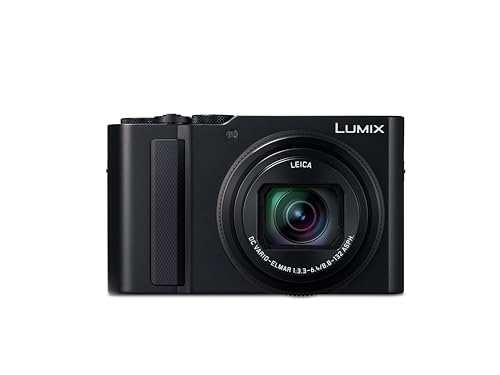
Panasonic Lumix ZS300 — Best long-reach 1-inch zoom
Panasonic’s ZS line practically invented the travel zoom formula — a big sensor married to a lens that reaches across valleys — and the ZS300 carries that lineage forward as the successor to the much-loved ZS200. Where rivals compromised reach for slimness, Panasonic kept faith with travellers who photograph distant bell towers, shy wildlife and performers on far stages.
The Leica-branded zoom is the soul of the camera. It sweeps from wide establishing shots of a harbour to tight portraits of a gull on a distant piling, all from one fixed lens that never needs swapping in dusty or drizzly conditions. Optical stabilisation steadies the long end admirably, though bracing against a railing still improves keeper rates when the light fades.
That 1-inch sensor transforms what the long zoom can achieve after sunset. Small-sensor travel zooms smear night markets into watercolour; the ZS300 keeps neon signs legible and faces recognisable at sensitivities its predecessors feared. Daylight colour leans natural, with Panasonic’s pleasing skin tones doing quiet work in family photographs.
4K Photo deserves its cult following among travellers. By extracting frames from short video bursts, it rescues the exact instant a wave breaks or a grandchild laughs — moments a single frame so often misses by a blink. Post Focus and focus stacking add creative toys that reward experimentation on rainy afternoons in rented apartments.
Handling balances the lens’s ambition. The body is the largest here, more coat-pocket than jeans-pocket, and the viewfinder, while welcome, is smaller than the Sony’s. In return you get honest controls, USB charging from a power bank on long train days, and a camera that feels engineered by people who actually travel with one body and no bag of lenses.
Compared directly with its ZS200 ancestor, the ZS300’s appeal rests on continuity refined rather than revolution: the same beloved formula, updated processing and connectivity for today’s sharing habits. Travellers upgrading from any earlier ZS will feel instantly at home, which on a once-in-a-decade trip is worth more than novelty.
- 1-inch high-sensitivity sensor
- Long-reach Leica DC zoom lens
- 4K video and 4K Photo modes
- Electronic viewfinder plus tilting touchscreen
- USB charging for travel convenience
ZS300 ownership suits a particular temperament: the planner. This is the camera for travellers who research viewpoints, arrive for golden hour and photograph the distant campanile because they noticed it on yesterday’s walk. Its zoom rewards foresight, letting you compose from the café table a shot others must hike toward. Panasonic’s colour profiles, especially the natural and landscape settings, need little editing before sharing, which keeps holiday evenings free for dinner rather than laptops. If your travel style is deliberate and your subjects distant, few machines at any price serve you better per gram carried.
Strengths
- Zoom reach stretches further than the Sony’s 200mm
- Leica lens renders travel scenes with pleasing contrast
- 4K Photo plucks perfect frames from busy moments
Trade-offs
- Larger and heavier than pocket-first rivals
- Autofocus trails Sony’s tracking for fast subjects
- Low-light ceiling sits below the brightest-lens models
Best for: travellers whose subjects stay far away: wildlife, stages, landmarks
Not suited for: street photographers who prize invisibility above reach

Canon PowerShot G7 X Mark III — Best 1-inch zoom for creators
Canon’s G7 X Mark III understands its audience with unusual clarity. Creators who film their travels wanted three things — a bright lens for moody interiors, flattering colour without editing, and painless publishing — and Canon built precisely that camera, accepting a shorter zoom as the honest price of the brightness.
That f/1.8–2.8 lens changes evening photography. Where f/4.5 rivals push sensitivity into noise, the Canon gathers enough light to keep faces clean in restaurant glow and street-lamp pools. The trade is reach: 100mm frames portraits and details beautifully but will not isolate a distant lighthouse, so itinerary planning matters more with this pick in your pocket.
Video tools headline the creator pitch. Uncropped 4K, a microphone input for proper audio, live streaming when paired with a network, and vertical recording for phone-first platforms cover the modern publishing checklist. The tilting touchscreen flips fully upward for presenters, although a mounted microphone can crowd the screen’s edge — a quirk regulars solve with a small bracket.
Still photography remains thoroughly respectable. The stacked sensor fires fast bursts for market scenes and street gestures, Canon’s colour science keeps skin tones honest under mixed lighting, and the compact body disappears into a crossbody bag. JPEG shooters who dislike editing will love how finished the files look immediately.
Absences define the boundaries: no viewfinder, autofocus that occasionally hunts when light drops, and that modest telephoto ceiling. Creators filming people, food and places at conversational distance will rarely brush those limits. Travellers chasing distant wildlife should look at the Panasonic entries instead and accept their dimmer lenses as the reciprocal bargain.
Battery behaviour suits creator rhythms — short clips across a day rather than continuous recording — and USB charging keeps the camera alive from the same power bank as a phone. As a single-device travel studio for someone whose audience lives on social platforms, the Mark III remains remarkably hard to argue with.
- 1-inch stacked 20.1MP sensor
- 24–100mm lens, bright f/1.8–2.8
- 4K video without a crop
- Live streaming support plus microphone input
- Vertical video recording for social formats
Creator workflows reveal the Mark III’s polish. Files transfer to a phone quickly for same-day posting, vertical clips arrive correctly oriented, and the touchscreen interface feels designed by people who film themselves rather than merely tolerate the practice. The lens’s brightness also flatters food photography, that underrated travel genre, keeping restaurant dishes appetising without flash. Where the camera asks compromise — reach and viewfinder — its audience rarely travels there anyway. Judge it as a publishing tool first and a camera second, and its design decisions align beautifully.
Strengths
- Bright lens drinks in café and evening light
- Canon colours flatter skin straight from the camera
- Streaming and vertical video suit modern creators
Trade-offs
- 100mm reach is the shortest in this group
- Autofocus can hesitate in dim interiors
- No viewfinder for bright-day purists
Best for: vloggers and social creators who travel light and publish fast
Not suited for: wildlife watchers and anyone needing serious telephoto reach

Panasonic Lumix ZS99 — Best far-reaching zoom, smaller sensor
Honesty first, because this camera demands it: the ZS99 does not have a 1-inch sensor. Its sensor is the much smaller 1/2.3-inch type found in classic superzooms, and it earns its place in a guide about the best 1 inch sensor travel zoom cameras precisely because many shoppers cross-shop it against them, seduced by a zoom figure the 1-inch models cannot match. Understanding what that trade buys and costs is the whole point of including it.
What it buys is reach that borders on the absurd for a pocket camera: a 30x zoom stretching to a 720mm equivalent view. Safari animals, distant footballers, moonrises over harbours and architectural details on cathedral roofs all become photographable from where you stand. No 1-inch travel zoom reaches half as far, and for daylight sightseeing that advantage is not subtle — it is the difference between a speck and a subject.
What it costs appears when light fades. The small sensor gathers less light, so dusk images grow noisy sooner, fine textures like feathers and foliage render less delicately, and video after dark looks grainy beside the Sony or Canon files. In bright holiday sunshine, the gap narrows dramatically; in a candlelit taverna, it yawns.
Everything else follows the proven Panasonic travel formula: 4K Photo for plucking moments, a tilting screen for awkward angles, stabilisation that makes the long zoom usable handheld, and USB-C charging that simplifies packing. The body is the most pocketable here despite its lens, a small engineering marvel.
Buy the ZS99 with clear eyes and it delights: a daylight reach machine for travellers who rank distant subjects above evening purity, at a price that leaves room in the budget for the trip itself. Buy it expecting 1-inch quality because it sat in this guide, and the previous paragraphs exist to stop you making exactly that mistake.
One more consideration seals its role: as a second camera beside a phone, the ZS99 covers precisely what phones do worst — genuine optical reach in good light. Travellers who shoot mostly between breakfast and golden hour will find its compromises theoretical and its zoom transformative.
- Compact 1/2.3-inch sensor — smaller than 1-inch
- 30x zoom reaching a 720mm equivalent view
- 4K video and 4K Photo extraction
- Tilting touchscreen for selfies and low angles
- Pocketable body with USB-C charging
ZS99 keepers develop a distinctive album: moons with visible craters, surfers framed from the pier, footballers identifiable from the cheap seats, eagles that were rumours to everyone else’s cameras. That album exists only because the zoom invited attempts other cameras forfeited. The trick is curating honestly — deleting the soft, heat-hazed failures that extreme magnification invites — and shooting multiples at long range so stabilisation and luck can collaborate. Owners who learn burst discipline at the long end produce galleries that genuinely surprise friends told the camera cost less than their phone.
Strengths
- 720mm equivalent reach dwarfs every 1-inch rival here
- Genuinely pocketable despite the enormous zoom
- Price sits well below the 1-inch models
Trade-offs
- Smaller sensor trails badly after dark
- Fine detail softens at the longest zoom settings
- Low-light video looks noticeably grainier
Best for: travellers who value reach and price above low-light purity
Not suited for: night photographers and print-makers needing clean files
Panasonic Lumix ZS200 — Prose-only: the original 1-inch long-zoom favourite
Every category has an elder statesman, and for 1-inch travel zooms it is the ZS200. When Panasonic stretched a Leica zoom to a 360mm equivalent view in front of a 1-inch sensor, sceptics predicted mush; instead the camera became the default recommendation for travellers who refused to carry interchangeable lenses, and it held that crown for years.
We list it prose-only for a simple reason: Panasonic’s own ZS300 now carries the formula forward, and new-stock availability of the ZS200 has thinned to the point where steering readers to a specific listing would be a disservice. The used market, however, is full of carefully owned examples, often bundled with cases and spare batteries from travellers upgrading within the family.
Owners praise the same virtues today that reviewers praised at launch. The viewfinder is properly usable, the lens reaches genuinely far without collapsing into softness, and the sensor keeps evening streets handsome. Controls follow Panasonic’s logical layout, so the learning curve is an afternoon, not a month.
Shoppers considering a used ZS200 should inspect the lens for dust, cycle the zoom through its full travel listening for grit, and confirm the viewfinder diopter adjusts cleanly. Batteries are the other consumable: budget for a fresh one and the camera’s second life will feel indistinguishable from its first.
Set against its successor, the ZS200 trades newer processing, fresher connectivity and a full warranty for a lower entry price and proven reliability. For a traveller funding one big trip, that exchange can be entirely rational — the photographs from either camera will hang happily side by side.
There is also a sentimental argument no spreadsheet captures: the ZS200 taught a generation of travellers that one small camera could do everything. If you find a good one, you are buying into the machine that defined the category the other five picks now compete in.
- 1-inch 20.1MP sensor
- 24–360mm 15x Leica zoom
- Electronic viewfinder built in
- 4K video and 4K Photo
- Bluetooth and Wi-Fi sharing
ZS200 prices on the used market fluctuate with season and successor news, so patient hunters set alerts rather than impulse-buying the first listing. Bundles including the original box, both caps and a second battery usually signal a careful first owner. Ask sellers for a recent photograph taken at full zoom; a clean, contrasty result says more about lens health than any description. With those checks passed, the ZS200 remains the smart-money route into 1-inch travel photography, full stop.
Strengths
- Proved the long-zoom 1-inch formula for a generation
- 360mm reach with genuine low-light ability
- Used prices can undercut newer models
Trade-offs
- Superseded by the ZS300 in Panasonic’s line
- Ageing connectivity compared with current models
- Availability now depends on remaining stock
Best for: used-market hunters who want the classic formula for less
Not suited for: buyers wanting the newest processing and warranty coverage
Sony RX100 VA — Prose-only: the bright-lens classic
The RX100 VA represents the road Sony travelled before reach became fashionable: a short, bright zoom in front of a superb sensor, optimised for the photographs travellers actually take most — streets, interiors, meals, faces. Its 24–70mm lens opens to f/1.8, gathering evening light that the longer zooms in this guide simply cannot.
That brightness buys creative freedom. Portraits gain gentle background separation at 70mm, museum pieces stay sharp without flash, and night markets render with atmosphere instead of noise. Photographers who grew up on fast prime lenses feel immediately at home; the VA behaves like three small primes fused into one pocketable barrel.
We keep it prose-only because Sony’s line has moved on — the Mark VII above is the current flagship — and fresh VA stock appears only sporadically. On the used market it remains plentiful and keenly priced, a favourite of street photographers who value its size and lens over telephoto bragging rights.
Video exists and looks good, yet the missing microphone input marks the VA as a stills-first tool from a slightly earlier era. Hybrid shooters should choose the Mark VII; photographers who shoot stills ninety percent of the time sacrifice almost nothing and gain the brighter glass.
Handling mirrors its siblings: pop-up viewfinder, tilting screen, dense menus that reward customisation. Battery appetite is similarly modest, so a spare belongs in the travel kit. None of this diminishes the camera; it merely dates its priorities.
Consider the VA the connoisseur’s answer in this guide — the pick for travellers whose favourite photographs happen after dark and close to the subject. Reach is a genuine virtue, but so is light, and no camera here gathers more of it per cubic centimetre.
- 1-inch stacked 20.1MP sensor
- 24–70mm lens, bright f/1.8–2.8
- Fast hybrid autofocus with eye detection
- Pop-up electronic viewfinder
- 4K video with picture profiles
VA hunters should know its quirks before bidding. The model shares batteries and many accessories with other RX100 generations, easing the used transition, and its lens is widely considered the sweetest of the line for stills. Check that the pop-up viewfinder springs crisply and that the lens extends without hesitation, the two mechanical movements age touches first. Priced fairly, a healthy VA delivers low-light photographs that embarrass newer, longer-zoomed rivals — a trade street photographers make gladly every single time.
Strengths
- Bright lens excels in museums, cafés and evenings
- Compact even by RX100 family standards
- Superb stills quality that still impresses
Trade-offs
- 70mm reach is the shortest in this entire guide
- Older model; new stock is scarce
- No microphone input for serious video audio
Best for: low-light stills specialists who shoot wide and bright
Not suited for: travellers needing telephoto reach or modern video audio
How Do Sensor Size and Zoom Reach Really Trade Off?
| Pick | Sensor | Zoom range | Suits |
|---|---|---|---|
| Sony RX100 VII | 1-inch stacked | 24–200mm | Fast subjects, video, premium budget |
| Panasonic Lumix ZS300 | 1-inch | Long Leica zoom beyond 200mm | Distant subjects in mixed light |
| Canon PowerShot G7 X Mark III | 1-inch stacked | 24–100mm f/1.8–2.8 | Creators, evenings, portraits |
| Panasonic Lumix ZS99 | 1/2.3-inch (smaller) | 24–720mm equivalent | Daylight reach at a friendly price |
| Panasonic Lumix ZS200 | 1-inch | 24–360mm | Used value with real reach |
| Sony RX100 VA | 1-inch stacked | 24–70mm f/1.8–2.8 | Low-light stills, street work |
The table’s lesson is blunt: reach and sensor size pull opposite ends of the same rope. Every millimetre of extra zoom in a pocket body is paid for with a slower lens or a smaller sensor, and the interest comes due at dusk. Choose which currency your travel spends — distant subjects in daylight, or clean files after dark — and the correct row selects itself.
Why Does the Lens Aperture Matter More Than Megapixels Here?
All six cameras cluster around twenty megapixels, a figure that stopped mattering years ago for travel prints and screens. Aperture, by contrast, decides your evening. An f/1.8 lens gathers several times the light of an f/4.5 lens at the same setting, which translates directly into lower sensitivity, cleaner shadows and faster shutter speeds that freeze a dancer instead of blurring her.
Zoom lenses complicate the story because their aperture narrows as they extend. The Canon is bright throughout its short range; the Sony starts respectably and dims toward 200mm; the long Panasonics dim further still. This is why two cameras with identical sensors produce different night photographs — the lens, not the pixel count, wrote the result.
Depth of field follows aperture too. Bright lenses let a portrait subject separate gently from a busy square, while small-aperture zooms keep everything uniformly sharp — sometimes a blessing for landscapes, sometimes a curse for faces. Knowing which look your travel album favours points straight at the Canon and Sony VA, or away from them.
How Should You Pack and Carry a Travel Zoom?
These cameras earn their keep by being present, so carry systems matter. A wrist strap suits city wandering and keeps the camera ready without neck fatigue; a slim crossbody pouch protects the lens during transit days; a spare battery and a small cloth complete a kit that still weighs less than a paperback novel. Resist the urge to add a miniature tripod unless night landscapes are a stated goal — stabilisation covers most travel needs.
Charging logistics deserve one evening of thought before departure. USB-chargeable models sip from the same power bank as your phone, simplifying cables, while the Sonys reward a dedicated spare battery on safari or festival days. Format memory cards in the camera, not the computer, and back up each night to a phone or drive; a lost card should cost a day of photographs, never the whole journey.
What Settings Should You Dial In Before a Trip?
Spend one afternoon at home teaching the camera your preferences. Set the lens ring or control dial to the function your fingers seek most, programme a custom mode for low light with sensible sensitivity ceilings, and decide whether you shoot raw, JPEG or both. Travellers who make these choices at home photograph decisively abroad; those who postpone them fiddle in menus while the light dies.
Autofocus deserves rehearsal too. Practise tracking a pet or a passing cyclist until switching between single-point, zone and tracking feels automatic. Learn where the exposure compensation dial lives without looking. These small rehearsals convert a sophisticated compact into an extension of intention, which is the entire promise of the category.
Which Accessories Earn Their Space in a Small Bag?
A spare battery tops the list for the Sonys, whose performance drinks power, while Panasonic owners may prefer a compact power bank that also serves their phone. A quality wrist strap, a microfibre cloth and a blower for beach sand cover protection. Filters and add-on lenses mostly stay home; the fixed-lens philosophy is the point of these cameras, and honouring it keeps the kit honest.
How Do These Cameras Handle Night Markets and Old Towns?
Evening is where the 1-inch advantage stops being theoretical. A sensor gathering four times the light of a classic superzoom’s holds shutter speeds that freeze a busker’s hands and sensitivities that keep stone walls textured rather than smeared. The Canon and the VA, with their bright lenses, lead this scenario outright; the Sony VII follows closely thanks to its modern processing; the long Panasonics manage respectably at their wide ends and struggle as you zoom into the dark.
Technique multiplies hardware. Brace elbows on a café table, lean against a doorway, and let stabilisation work from a stable platform. Shoot at the wide end and crop later rather than zooming into dimness. Expose for the highlights of neon and lantern light, letting shadows fall where they may, and your travel album gains the moody contrast that flat, over-brightened night modes destroy.
The ZS99 deserves its honest sentence here: it will record the night market, recognisably and shareably, but its files will not match the 1-inch cameras for cleanliness or detail. Travellers whose trips are daylight-led lose little; night owls should pay for sensor area. No marketing department will tell you that as plainly as this guide just did.
What About Rain, Dust and Beach Days?
None of these cameras claims serious weather sealing, so travel conditions demand small rituals. A zip bag in the pocket handles sudden rain, a blower clears beach sand before it reaches the zoom mechanism, and retracting the lens before wiping grit from the barrel prevents the scratches that haunt extending lenses. Silica gel sachets in the camera pouch fight hotel-room humidity on tropical trips.
Temperature swings deserve respect too. Moving from air-conditioned rooms into humid streets fogs lenses instantly; keeping the camera in an outer bag pocket to equalise gradually reduces the misting. Cold mountain mornings stiffen batteries, so the spare rides in an inside pocket, warmed by your body, ready to swap when the first fades early.
How Do You Choose Between Two Cameras You Like Equally?
When specifications deadlock, interrogate your last holiday album. Count how many favourite frames were wide scenes, portraits, distant details or night shots; the distribution is a fingerprint of your real style, and it will point at one camera embarrassingly clearly. Most travellers discover their albums are eighty percent wide-to-portrait, which is why bright short zooms satisfy more owners than extreme reach does.
Then handle both, if a shop allows. Ten minutes of holding reveals grip comfort, dial placement and menu temperament that no review can transmit. The camera your fingers understand becomes the camera you carry, and the carried camera — as every travel photographer eventually learns — outperforms the superior camera left in the hotel safe.
How Well Do They Photograph People on the Road?
Travel portraits live or die on background control and skin colour, two areas where these six diverge more than resolution charts suggest. The Canon’s bright lens and beloved colour science produce the most flattering strangers-and-family files with the least editing, while the Sony VII answers with eye autofocus so tenacious that market portraits stay sharp even when your subject laughs mid-frame. Panasonic’s pair render skin honestly, slightly cooler, which suits documentary tastes.
Focal length etiquette matters abroad. Longer settings flatter faces and let you keep a respectful distance from performers and elders, while wide lenses demand proximity that not every culture welcomes. Asking permission, showing the screen afterwards and sharing the file by phone afterwards turns a photograph into an exchange rather than an extraction — and the tilting screens here make that sharing moment easy.
Group photographs on viewpoints benefit from the flip screens and self-timers across the range, plus remote control through phone apps on the newer models. Set the camera on a wall, frame generously, and let everyone be in the picture for once; the travelling photographer deserves to exist in the album too.
What Should Wildlife and Safari Travellers Know?
Serious wildlife work belongs to interchangeable-lens systems, yet travel zooms earn a place on safari for honest reasons: they are silent, instant and always ready when the leopard crosses between lodge and breakfast. The ZS99’s extraordinary reach and the ZS300’s 1-inch quality bracket the realistic options, one favouring identification shots in bright savanna light, the other favouring cleaner files at dawn game drives when animals move most.
Technique compensates for aperture. Rest the camera on a beanbag or vehicle door, shoot bursts as the animal turns toward light, and favour the moment of stillness every creature grants between movements. Accept higher sensitivities on the 1-inch models rather than dropping shutter speed into blur; grain can be beautiful, motion blur at a once-in-a-lifetime sighting cannot.
Birders should temper expectations most of all. Small, fast, distant subjects defeat every camera in this guide regularly, and the correct attitude is opportunism: photograph the heron at the waterhole gratefully, and leave the canopy warblers to the specialists with lenses like telescopes. Your album will still astonish everyone who stayed home.
How Long Will a Camera Like This Stay Relevant?
Compact camera development has slowed to a dignified pace, which paradoxically makes buying one safer than it was a decade ago. A 1-inch travel zoom bought today will not be humiliated by next year’s model, because sensor physics and lens design have plateaued at this size. The RX100 VII and ZS200 prove the point, remaining recommendable years after launch.
Phones will keep improving their wide-angle tricks, but optical reach and real controls age slowly. Budget for five years of service, protect the lens mechanism from sand, keep one spare battery in rotation, and the cost per photograph becomes almost absurdly small. That longevity is the quiet argument for buying the better model now rather than the adequate one twice.
What Do Travel Insurers and Airlines Think of Your Camera?
Practicalities nobody glamourises: a camera of this value belongs on your travel insurance schedule or at least in a photographed inventory at home, because pockets and café tables are where compacts vanish. Keep the purchase receipt and serial number in cloud storage; a police report plus those details turns a theft from a ruined trip into a paperwork exercise. None of this is pessimism — it is the difference between replacing the camera in the next city and mourning it for a year.
Air travel treats these cameras kindly. They ride in cabin bags without the lithium restrictions drama of larger kits, spare batteries travel in hand luggage inside a simple case, and the whole kit passes security without unpacking theatre. Photographers switching from mirrorless systems often cite this frictionless transit as the unexpected joy of the travel zoom life.
How Should Beginners Grow Into These Cameras?
Start on intelligent auto without shame for the first week, studying what the camera chooses and why. Then graduate one control at a time: aperture priority for portraits and landscapes, shutter priority for waterfalls and traffic, exposure compensation for snow and backlit scenes. The scene modes on the Panasonics and Canon are genuinely instructive training wheels, not marks of failure.
Review your photographs each evening with a ruthless kindness — delete the failures, star the successes, and ask what single change would improve tomorrow’s keeper rate. A travel zoom rewards this loop quickly because it removes equipment excuses; every lesson is about seeing, timing and light, which are the lessons that actually compound across a lifetime of trips.
Resist accessory fever during the learning months. A spare battery, a wrist strap and a pouch complete the honest kit. Money saved from gadgets buys the experiences worth photographing, which remains the healthiest equation in all of travel photography.
Which Camera Suits Which Classic Itinerary?
Picture four journeys. A rail trip through old European cities, all museums, cafés and evening concerts, belongs to the bright lenses: the Canon for its colour and streaming, the VA for a stills purist, because subjects stay close and light stays low. A self-drive safari with lodge downtime suits the ZS300, whose reach and sensor split the difference between dawn drives and midday rest-camp portraits, while a budget backpacking route through bright southern latitudes is where the ZS99’s daylight reach and friendly price stop looking like compromise and start looking like design.
A family beach-and-city holiday, arguably the most common trip of all, is the RX100 VII’s home turf: fast children, rented bicycles, aquarium dimness and a parent filming everything with one hand while holding an ice cream in the other. Its tracking autofocus and video stabilisation were practically specified by that itinerary. Notice how no itinerary picked two cameras; the discipline of one body is what makes the travel zoom philosophy work, and each of these six honours a different version of the journey.
Your own itinerary, written honestly, is therefore the finest buying tool in this entire guide. Lay the six against it row by row, forgive each camera its irrelevant weaknesses, and the decision usually announces itself before the comparison table is even consulted.
How Do Prints and Albums Judge These Cameras?
Screens forgive; paper cross-examines. A 1-inch file printed at album and moderate wall sizes holds texture in stone, foliage and fabric that small-sensor files surrender, and that difference compounds across a printed travel book you will handle for decades. The Sony and Canon files take enlargement most gracefully, the Panasonics follow closely at their wider settings, and the ZS99’s daylight frames print happily at album sizes while its dusk frames prefer the screen.
Printing also disciplines shooting. Travellers who know an album awaits them compose more carefully, shoot fewer duplicates and back up religiously, which improves the journey’s photographic yield regardless of camera. If a printed book is your goal, favour the 1-inch models and their calmer files; if the family group chat is the final destination, every camera here already exceeds the requirement by a comfortable margin.
Colour consistency across a trip matters for albums too. Pick one colour profile per camera and resist switching mid-journey, so the printed pages feel like one story rather than a sampler. That small discipline, free to apply on all six, elevates an album more than any single upgrade on this page.
What About Video Diaries and Family Films?
Most travel video is memory, not cinema, and these cameras serve memory beautifully. Stabilised 4K from the Sony and Canon turns walking tours into watchable keepsakes, Panasonic’s 4K Photo trick doubles as a moment-rescue tool for stills, and every model here records better audio than a wind-blasted phone when you stay close to your subject. Add a pocket microphone to the Sony or Canon and quality leaps again, which is why their input sockets matter.
Keep clips short and deliberate: ten seconds of a market stall beats four wandering minutes nobody will rewatch. Film faces reacting, hands working, food arriving — the human details that photographs freeze and films animate. Back at the hotel, a two-minute nightly edit on a phone preserves the day while it is fresh, a habit that turns raw footage into a finished family film by the flight home.
How Do You Test a Travel Zoom in the Shop?
Bring a mental checklist rather than wandering the aisles zooming at ceiling tiles. Photograph the darkest corner of the store at your most-used focal lengths and inspect faces at full magnification; softness that hides on the rear screen announces itself honestly at pixel level. Cycle the zoom end to end twice, listening for grit and watching for hesitation, then test the viewfinder against a bright window to judge whether you will actually use it under a summer sky.
Work the controls with one hand, because travel photography is one-handed more often than brochures admit — the other hand holds a rail, a map, a child or a gelato. Change exposure compensation, switch focus modes and review an image without lowering the camera from your eye. Whichever model your fingers learn during a ten-minute audition is the one your holiday photographs will thank you for choosing.
What Is the Sensible Upgrade Path From Here?
Some travellers will outgrow any compact, and recognising the moment honestly saves money. If you return from trips wishing for shallower depth of field, cleaner high-sensitivity files or specialised lenses, the mirrorless world awaits — and your travel zoom remains the perfect second body for days when the big kit stays behind. Nothing in this guide becomes obsolete in that future; the cameras simply change jobs.
Until that day, invest in experiences over accessories. The finest upgrade for a travel zoom is a better viewpoint: the earlier alarm, the longer walk, the return visit at dusk. Cameras record where you stand, and standing somewhere extraordinary with a modest compact beats standing somewhere ordinary with a flagship, on every trip ever taken.
Common Mistakes
Assuming every camera in a travel-zoom roundup shares a sensor size is the costliest error, and the ZS99 exists in this guide partly to inoculate readers against it. Always read the sensor line before the zoom line; marketing leads with the bigger number, but the sensor decides your evenings. The second mistake is buying reach you will never use — a 720mm view of a subject you could simply walk toward helps no one.
Leaving the camera on full auto for an entire trip wastes the machine you paid for. Aperture priority with auto sensitivity covers most travel scenes intelligently, and one custom button for exposure compensation rescues backlit landmarks. Finally, travellers routinely forget the humble lens cloth, then shoot a day of hazy photographs through sunscreen smears and blame the optics.
Final Recommendation
Buy the RX100 VII if one camera must do everything brilliantly and the budget stretches; buy the ZS300 if your subjects live far away and light is usually kind; buy the G7 X Mark III if your travels become videos and streams. Treat the ZS99 as a daylight reach specialist, and hunt the ZS200 or RX100 VA used if value guides you. For the traveller boarding a train with a single pocket free and a continent of subjects ahead, the Sony’s blend of tracking focus, honest reach and serious video makes it the camera we would zip into that pocket.
Frequently Asked Questions
Is a 1-inch sensor really that much better than a phone?
For zoomed and low-light photographs, yes. Phones excel at wide, bright scenes with computational help, but their tiny sensors and digital cropping collapse when you zoom across a valley or shoot a dim interior. A 1-inch sensor with real optical reach produces files that survive printing and cropping.
Why is the ZS99 in a 1-inch guide if its sensor is smaller?
Because shoppers meet it in every search for travel zooms, and its 720mm equivalent reach tempts direct comparison. We include it with its sensor size stated plainly, so readers can choose its daylight reach knowingly rather than discovering the compromise after a disappointing night shoot.
How much zoom do most travellers actually need?
Somewhere between 100mm and 250mm covers portraits, details and moderately distant landmarks. Beyond that, you are photographing wildlife, sport or architecture you cannot approach — legitimate needs, but be honest about how often they occur on your itineraries before sacrificing brightness for reach.
Should you buy the ZS200 or save for the ZS300?
A clean used ZS200 delivers most of the experience for less money, and its lens and sensor remain genuinely capable. The ZS300 adds fresher processing, current connectivity and warranty peace. If the price gap funds an extra night of travel, the older camera is the romantic and rational choice.
Do these cameras need a separate charger?
The Panasonics and Canon charge over USB, which simplifies travel kits. Sony’s models traditionally favour dedicated battery charging for speed, so pack the small charger or a spare battery. Either way, one evening routine — camera on charge beside the phone — keeps everything ready.
Can a travel zoom replace a mirrorless camera?
For most holidays, honestly yes. You surrender lens swapping, the shallowest depth of field and some low-light headroom, and you gain a camera that is actually with you at the unplanned moment. Photographers with specific artistic projects will still want the bigger system; travellers will not miss it.
Is raw worth shooting on a compact?
For high-contrast scenes — bright squares with shaded arcades, sunsets over water — raw files rescue highlights and shadows that JPEGs surrender. The cost is editing time and storage, so many travellers shoot raw plus JPEG and process only the keepers. All six cameras offer the option; the discipline is yours to supply.
How do you keep an extending lens safe?
Never force a retracted lens, never wipe grit across the barrel while it is extended, and always let the camera finish its startup before pointing it into a bag corner. A slim hard pouch during transit prevents the accidental power-on crush that bends mechanisms in soft pockets.
One habit ties every recommendation in this guide together: shoot the same scene two ways before moving on. Take the wide establishing frame and the tight telephoto detail, the bright exposure and the moody one, because travel rarely grants a return visit and storage costs nothing beside regret. Owners of all six cameras name that discipline, not any specification, as the change that most improved their albums — and it is available free, tonight, on whichever of these machines you choose to carry.
Finally, remember that the lightest camera kit is the one already in your hand when the light turns golden over an unfamiliar street. Every model in this guide was chosen to be that camera for somebody — the differences lie in which somebody you happen to be, which street you find yourself wandering down, and which hour of the changing day you love photographing most of all on your travels.
Whichever model you choose, give it one full local weekend before any big departure: a market, a family lunch, an evening walk. Use that weekend to learn the dials and menus by touch, so the camera already feels familiar before you travel. Photographs abroad improve when your hands know the camera and your eyes are free to watch the evening light change.
Related Guides
Continue planning your kit with best compact cameras for travel photography, best vlogging cameras for beginners and best cameras for safari and wildlife trips.



[…] exploring our audio coverage: best wireless earbuds for Android phones, best noise cancelling headphones for travel and best earbuds for running and workouts continue the […]