What's inside
- Key Takeaways
- Quick Picks
- How Did We Draw the Line Around This Category?
- What Separates a Hi-Fi Wireless Headphone From a Travel Headphone?
- How Much Does Noise Cancelling Quality Still Matter Here?
- How Does Each Pick Justify Its Place on a Short Shelf?
- How Do the Six Selections Stack Up Against Each Other?
- How Do You Get the Best Sound From a Wireless Headphone at Home?
- What Mistakes Do Buyers Make in This Thin Category?
- Final Recommendation
- What Do Codecs Actually Decide, and What Do They Not?
- How Should You Think About Battery Life Beyond the Headline Number?
- Which Pick Fits Which Listening Life?
- How Do These Headphones Handle Calls, Meetings, and Workdays?
- How Should You Care for a Wireless Flagship So It Ages Gracefully?
- What Should You Test in the First Fortnight With a New Flagship?
- How Does the Wired Alternative Frame Every Choice in This Guide?
- What Does Multipoint and Everyday Usability Add That Reviews Underrate?
- How Do You Decide Between the Two Hi-Fi Flagships Without Hearing Either?
- Frequently Asked Questions
- Related Guides
As an Amazon Associate I earn from qualifying purchases. This post may contain affiliate links at no extra cost to you.
[widgetverdict.com] is reader-supported. When you buy through links on our site, we may earn an affiliate commission.
Where to buy: Five picks below link to verified Amazon listings at their names; the sixth, a luxury reference, is covered without a link and says why. The best audiophile bluetooth headsets occupy the thinnest shelf in personal audio, and this guide will not pretend otherwise. Genuinely hi-fi wireless headphones — designs where the maker cared about tuning, codecs, and materials as much as about noise cancelling — can be counted without running out of fingers, which is why this shortlist has five linked picks and one prose-only reference rather than a padded dozen. What fills the shelf instead, at every price, is travel headphones with audiophile adjectives. The five linked designs here are the real article: a French hi-fi house’s flagship, a British luxury build, the class-defining noise canceller at its most refined, a transparent newcomer tuned by a famous loudspeaker name, and a cinema-focused veteran that predates the fashion. DAC adapters and Bluetooth receivers are deliberately excluded — they are accessories for wired headphones, not headphones themselves.
Key Takeaways
- This class is genuinely small: five linked picks represent the real retail shelf, plus one luxury reference covered without a link.
- The Focal Bathys is the hi-fi-first flagship, built by a loudspeaker and headphone house that treats Bluetooth as a delivery method, not an excuse.
- The Bowers & Wilkins Px8 competes on materials and tuning, with 30-hour battery life and 15-minute quick charging named in its listing.
- The Sony WH-1000XM6 is the noise-cancelling benchmark refined further — 12 microphones and a new HD noise cancelling processor, per its listing title.
- The Nothing Headphone (1) brings KEF-tuned sound, hi-res audio, and an 80-hour playtime claim at a disruptive price position.
- The Mark Levinson No. 5909 remains the luxury LDAC reference, covered in prose because no clean current listing could be verified at writing time.
Quick Picks
| Pick | Badge | Why it made the list |
|---|---|---|
| Focal Bathys Hi-Fi Bluetooth Wireless Headphones | Best sound-first flagship | Active noise cancellation wrapped around a tuning philosophy that starts with hi-fi and adds wireless. |
| Bowers & Wilkins Px8 Over-Ear Wireless Headphones | Best luxury build | Advanced noise cancellation, 30-hour battery, and quick charging in the most materially lavish design here. |
| Sony WH-1000XM6 Noise Cancelling Wireless Headphones | Best noise cancelling | Twelve microphones, a new processor generation, and studio-quality ambitions from the class benchmark. |
| Nothing Headphone (1) Hybrid Active Noise Cancelling Headphones | Best disruptive value | KEF-tuned hi-res audio, spatial sound, and 80 hours of playtime from the design-led newcomer. |
| MEE audio Matrix Cinema Bluetooth Wireless Over-Ear Headphones | Best for film and TV | aptX Low Latency for lip sync and CinemaEAR enhancement aimed at dialogue clarity in movies. |
| Mark Levinson No. 5909 | Luxury reference (no link) | The LDAC luxury benchmark, covered without a link because no clean current listing could be verified. |
How Did We Draw the Line Around This Category?
We required the headphone itself to be the hi-fi product. That single rule excluded the long tail of Bluetooth receivers, DAC dongles, and adapters that search results love to blend into this category; those accessories serve wired headphones and are reviewed elsewhere on their own merits. We required wireless listening with serious codec support or a demonstrable tuning pedigree — a hi-fi house behind the design, a reference collaboration, or a track record in the enthusiast community. And we required active noise cancelling competence, because a wireless headphone in this era travels, and travelling without ANC is a hardship no tuning survives.
The result is a short shelf, honestly presented. Five linked designs, one prose-only reference, and no filler wearing audiophile adjectives it has not earned. Readers who want the wider wired world behind this category — where the shelf is deep and the amplifiers matter — will find it in the studio and broadcast families surveyed in our guide to best audio technica headsets, a useful reminder of how young the wireless hi-fi shelf still is.
We also weighted ownership realities: battery longevity, whether the headphone still plays wired when the battery is flat, and whether the maker’s support culture treats a flagship price as a flagship obligation. Wireless flagships are computers as much as headphones, and computers age; the picks below were chosen partly on how gracefully each maker seems prepared to let them age.
What Separates a Hi-Fi Wireless Headphone From a Travel Headphone?
Intent, audible in the tuning. A travel headphone is voiced to impress in an airport shop: bass forward, treble brightened, a sound that cuts through noise and fatigue. A hi-fi wireless headphone is voiced the way its maker’s wired models are voiced — balanced, textured, willing to sound unremarkable on a dull recording because accuracy is the point. The Bathys and the Px8 carry their houses’ wired signatures into the wireless domain; that continuity is the category’s whole claim to existence.
Codec support is the second separator. Beyond the baseline codecs every Bluetooth headphone speaks, the serious designs add higher-bandwidth options that preserve more of a lossless file’s content, and several here add wired USB or analogue listening that bypasses Bluetooth entirely for a home session. A headphone that can only ever speak Bluetooth is a closed system; a headphone that also takes a cable is a listening instrument with a wireless mode, and audiophiles reliably prefer the second philosophy.
Materials and service form the third. Leather, aluminium, and replaceable pads signal a maker expecting a long service life; sealed plastic and glued construction signal a product designed around a replacement cycle. At flagship prices, that signal is not vanity — it is the difference between an instrument and an appliance.
How Much Does Noise Cancelling Quality Still Matter Here?
Enormously, and the Sony in this guide is the reason the others must try. Noise cancelling has become the price of admission for any wireless headphone that travels, and the XM6’s listing — twelve microphones, an HD NC Processor QN3, an adaptive optimizer — describes the current state of that art. In a cabin or a carriage, superior cancelling is not a feature beside sound quality; it is a component of sound quality, because the quieter the background, the more of the music survives at safe listening levels.
The hi-fi houses answer differently. Focal and Bowers & Wilkins offer cancelling that is genuinely good while spending their engineering drama on tuning and build; Sony spends its drama on the cancelling and voices the headphone to a polished, widely loved signature. Neither allocation is wrong. The frequent flyer should weight Sony’s advantage heavily; the home-and-garden listener, who uses cancelling against a dishwasher rather than a jet, may never hear the gap and should buy on tuning instead.
Microphone quality for calls follows the same split. Multi-microphone arrays with wind handling make the flagship travel models credible call tools, while the hi-fi-first designs handle calls perfectly adequately and return to their real work. Know which half of the product you will use daily, and buy that half.
How Does Each Pick Justify Its Place on a Short Shelf?

Focal Bathys Hi-Fi Bluetooth Wireless Headphones — Best sound-first flagship
Focal makes loudspeakers that cost as much as cars and wired headphones that anchor this category’s homebound end, and the Bathys is that company’s answer to a pointed question: how much of the house sound survives Bluetooth? Its listing title is admirably blunt — hi-fi Bluetooth wireless headphones with active noise cancellation, black and gray. The design philosophy shows in the priorities. The tuning comes first, balanced and textured in the Focal manner; the cancelling is present and capable rather than class-crushing; and the whole product feels engineered by people who expect it to be judged against wired headphones, because their customers own wired headphones.
The Bathys also respects the wired escape hatch: it can serve as a USB DAC-driven headphone at a desk, which transforms it from a travel accessory into a genuine second listening station. Listeners who divide life between a main rig and everywhere else find that duality persuasive — one headphone, two honest modes, no apology in either. Build and materials sit at the level the price promises, with the heft that tells you metal rather than wishes are involved.
Its compromises are the mirror of its virtues. The cancelling trails the Sony below in raw cabin silence, the case and the headphone itself are substantial travelling companions, and the price asks flagship money without flagship travel features. Buy the Bathys when the listening matters more than the journey, and it will not occur to you to regret it.
- Category: Hi-Fi Bluetooth wireless with active noise cancellation, per the listing title
- Finish: Black/Gray, per the listing title
- Model reference: FBATHYS, per the listing title
- Maker profile: French hi-fi house with wired flagship heritage
- Wired mode: USB DAC listening is part of this model’s established design
Strengths
- Tuning with genuine hi-fi lineage rather than travel-shop voicing.
- Wired USB mode makes it a legitimate desk listening station.
- Materials and finish match the flagship commitment.
Trade-offs
- Noise cancelling is capable but not the class benchmark.
- Size and case bulk tax light travellers.
- Price competes with excellent wired headphones plus a portable DAC.
Best for: Wired-headphone owners who want one wireless flagship that speaks their library’s language at home and away.
Not suited for: Ultralight travellers who rank packability and cabin silence above tuning.

Bowers & Wilkins Px8 Over-Ear Wireless Headphones — Best luxury build
If the Bathys is the engineer’s flagship, the Px8 is the tailor’s. Its listing title specifies advanced active noise cancellation, 30-hour battery life, and 15-minute quick charging, in a tan finish — and the numbers sit inside a product whose real argument is material: leather, cast aluminium, and a wearing experience designed to feel like an object you keep. Bowers & Wilkins voices its headphones with a warmer, more romantic signature than Focal’s, and listeners who find the Bathys analytical often find the Px8 generous; neither is wrong, and the pair of them define this category’s taste axis.
The battery figures deserve their framing. Thirty hours covers a week of ordinary listening or the longest travel day with margin, and the quick-charge figure matters precisely on the mornings a traveller discovers a flat headphone at the door — a short charge buying hours of play is the difference between a saved flight and a silent one. The cancelling, while not the headline, is thoroughly modern and entirely sufficient outside the noisiest cabins.
Where the Px8 asks for faith is in the intangibles: that you value build as part of sound’s pleasure, that its warmer voice suits your library, and that a luxury object maintained well will serve longer than an appliance replaced twice. Readers who share that faith rarely return from the Px8; readers who do not should save the difference toward the Sony or the Nothing below without a backward glance.
- Battery life: 30 hours, per the listing title
- Charging: 15-minute quick charging, per the listing title
- Noise cancelling: Advanced active noise cancellation, per the listing title
- Finish: Tan, per the listing title
- Design class: Over-ear wireless flagship
Strengths
- The most materially luxurious build in this guide.
- Warm, generous tuning flatters long listening and older recordings.
- Quick charging rescues flat-battery travel mornings.
Trade-offs
- Luxury pricing buys materials some listeners do not value.
- Cancelling trails the Sony benchmark in extreme noise.
- Warmer voice is a taste commitment, not a neutral default.
Best for: Listeners who treat a headphone as a kept object and prefer a warm, enveloping signature.
Not suited for: Specification maximalists who want every feature chart topped at once.

Sony WH-1000XM6 Noise Cancelling Wireless Headphones — Best noise cancelling
Sony’s XM line defined this category’s mainstream, and the XM6 listing title reads like a coronation address: the best noise cancelling wireless headphones, an HD NC Processor QN3, twelve microphones, an Adaptive NC Optimizer, mastering-engineer involvement, studio-quality claims, and up to 30 hours of battery. Strip the ceremony and the substance remains formidable. Twelve microphones feeding a new processor generation is the current frontier of cabin silence, and Sony’s tuning, polished across six generations of feedback from millions of listeners, is the most broadly agreeable signature in this guide.
The studio-quality framing signals Sony’s awareness of this guide’s exact reader: the traveller who started caring about sound. The XM6 is voiced and built to be the best single answer for a person who flies weekly, calls daily, and listens seriously in between — a breadth no rival here matches. Its ecosystem maturity, from multipoint behaviour to app equalisation, reflects a product line that has been refined in public for years.
Why is it not simply the top pick for everyone? Because breadth is its own compromise. The hi-fi-first rivals offer tuning characters with stronger individual identities and materials built for a longer arc, and the XM6’s plastic-forward construction, however well executed, speaks the language of a replacement cycle. If your life is measured in flight segments, buy it first and think later; if your life is measured in albums, audition the two flagships above before deciding.
- Noise cancelling: HD NC Processor QN3 with Adaptive NC Optimizer, per the listing title
- Microphones: 12 microphones, per the listing title
- Battery: Up to 30 hours, per the listing title
- Tuning note: Mastered by engineers; studio-quality positioning, per the listing title
- Colour: Black, per the listing title
Strengths
- The strongest noise cancelling proposition in this guide.
- Six generations of refinement in controls, calls, and comfort.
- A signature tuned to please the widest range of listeners.
Trade-offs
- Materials speak appliance more than heirloom at this price.
- Character is polished rather than distinctive for hi-fi purists.
- Feature depth lives in the app, which not every listener enjoys.
Best for: Frequent flyers who want the quietest cabin and a serious sound in one purchase.
Not suited for: Purists building a decade-long listening heirloom around one headphone.

Nothing Headphone (1) Hybrid Active Noise Cancelling Headphones — Best disruptive value
Nothing built its name on transparent design and specification bravado, and its first over-ear headphone arrives with a listing title to match: hybrid active noise cancelling, six microphones, 80 hours of playtime, hi-res audio, KEF tuning, spatial sound, comfort fit, and fast charging, in white. The KEF credit is the headline that matters. KEF is a loudspeaker house with sixty years of acoustic seriousness, and its involvement moves this headphone out of the gadget conversation and into this guide — a newcomer buying credibility the honest way, by hiring it.
The 80-hour playtime figure reframes ownership. A headphone charged monthly rather than weekly changes habits: it lives on a hook rather than a cable, travels without its charger on most trips, and forgives the forgetful. Combined with hi-res codec support and spatial sound, the package undercuts the flagships on price while matching or beating them on the specification sheet — the classic disruptor pattern, executed with unusual acoustic help.
The open questions are the disruptor’s usual ones. Long-term support, pad and part availability in five years, and the durability of a young product line are promises rather than records, and the transparent aesthetic divides opinion as firmly as any design choice can. Listeners who buy on present value and present sound will find this the easiest recommendation in the guide to justify; listeners who buy on track record know which sections to reread.
- Playtime: 80 hours, per the listing title
- Tuning: KEF-tuned, per the listing title
- Audio: Hi-Res Audio and spatial sound, per the listing title
- Microphones: 6 mics, per the listing title
- Noise cancelling: Hybrid active noise cancelling, per the listing title
Strengths
- KEF tuning gives a newcomer genuine acoustic credibility.
- Exceptional playtime changes charging habits entirely.
- Flagship-adjacent specifications at a disruptive position.
Trade-offs
- Young product line without a long service record.
- Transparent styling is a taste statement not everyone wants.
- Parts depth in later years is a promise, not a history.
Best for: Value hunters who want hi-res wireless and serious tuning without flagship pricing.
Not suited for: Buyers who need a decade of proven manufacturer support behind the purchase.
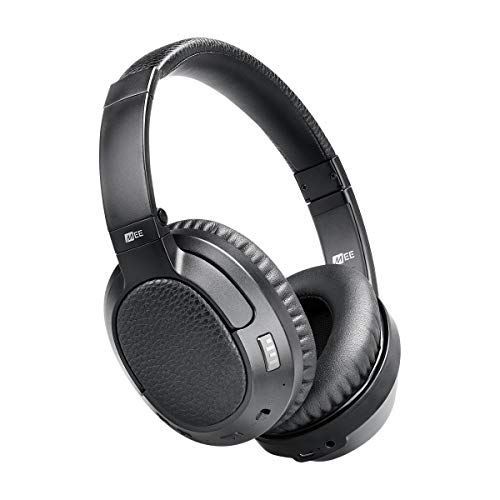
MEE audio Matrix Cinema Bluetooth Wireless Over-Ear Headphones — Best for film and TV
The Matrix Cinema is the elder of this guide, and its listing title explains its survival: high-resolution stereo sound, aptX Low Latency for improved lip sync, and CinemaEAR audio enhancement for clearer sound in movies and TV shows. Every other pick here is music-first; this one is cinema-first, designed around the living room’s actual problem — dialogue buried under effects, and Bluetooth delay smearing speech against lips. Low-latency transmission fixes the second; the CinemaEAR enhancement modes attack the first by reshaping the sound toward vocal clarity.
Age brings honest limitations. There is no modern flagship noise cancelling here, the codec and Bluetooth generation trail the newcomers, and the build belongs to an earlier, more plastic era of the category. What the Matrix Cinema offers instead is focus: a headphone that knows its room, its screen, and its job, at a price that lets a film lover dedicate it to the sofa permanently.
That dedication is the point. A household that watches films late, in an apartment, with a partner asleep nearby, has a specific problem that the flagships solve expensively and this veteran solves directly. Not every pick in a guide must aspire to everything; some earn their place by being the right tool left within reach of the right chair.
- Latency: aptX Low Latency for improved lip sync, per the listing title
- Enhancement: CinemaEAR audio enhancement for clearer movie and TV sound, per the listing title
- Audio class: High-resolution stereo, per the listing title
- Design: Over-ear Bluetooth wireless, per the listing title
- Primary use: Film and television listening at home
Strengths
- Low-latency link keeps dialogue married to the picture.
- CinemaEAR modes target the dialogue clarity film fans actually need.
- Affordable enough to live permanently beside the sofa.
Trade-offs
- No flagship-grade noise cancelling for travel.
- Older platform trails the newcomers in codecs and refinement.
- Music-first listeners will find its priorities point elsewhere.
Best for: Film and TV devotees who listen at home, late, and often.
Not suited for: Travellers needing modern cancelling and flagship music tuning in one headphone.
Mark Levinson No. 5909 — Luxury reference (no link)
The No. 5909 is what happens when a storied American luxury audio house decides wireless deserves its full attention: a reference-grade LDAC-capable headphone in premium materials, priced without apology, and treated by the enthusiast press as the benchmark for what Bluetooth listening can be. We cover it as that reference — without a purchase link, stated plainly, because no clean current listing could be verified when this guide was written. Readers pursuing one should buy through authorised luxury audio channels and verify warranty terms directly.
Its role here is to mark the ceiling honestly. Above the Bathys and the Px8 there exists one more tier, where the money buys the last increments of refinement and a badge with genuine hi-fi history. Whether those increments are worth their price is the oldest argument in audio, and this guide takes no side beyond insisting the tier exists and that its exemplar is this headphone rather than a marketing invention.
Practically, the 5909 also clarifies the value beneath it. If a prose-only luxury reference defines the summit, then the linked flagships in this guide are the high camps — most of the experience, most of the engineering, at prices that leave money for the music itself. Readers cross-shopping the German studio tradition will find its wireless-adjacent arguments continued in our guide to best beyerdynamic headsets, where another heritage house balances the same scales.
- Listing status: covered without a link because no clean current listing could be verified at writing time
- Class: Luxury reference wireless headphone with LDAC support
- Maker profile: Mark Levinson luxury audio house
- Role in this guide: The ceiling reference for the category
- Purchase route: Authorised channels only, with terms verified by the buyer
Strengths
- The recognised luxury benchmark for wireless sound quality.
- Materials and finish at the genuine summit of the category.
- LDAC support serves lossless-leaning wireless listening.
Trade-offs
- Luxury pricing far beyond the linked flagships here.
- No verified listing in this guide, so all homework is the buyer’s.
- Diminishing returns are steepest exactly at this altitude.
Best for: Committed listeners for whom the last increment of wireless refinement is the entire point.
Not suited for: Anyone measuring value per hour of listening, where the linked flagships win easily.
How Do the Six Selections Stack Up Against Each Other?
| Pick | First priority | Battery headline | Link status |
|---|---|---|---|
| Focal Bathys | Hi-fi tuning | Check listing for current figure | Linked |
| Bowers & Wilkins Px8 | Materials and warmth | 30 hours, per its listing title | Linked |
| Sony WH-1000XM6 | Noise cancelling | Up to 30 hours, per its listing title | Linked |
| Nothing Headphone (1) | Value and playtime | 80 hours, per its listing title | Linked |
| MEE Matrix Cinema | Film dialogue and latency | Home-use design; check listing | Linked |
| Mark Levinson No. 5909 | Luxury reference | Verify via authorised channels | Prose only |
The priority column is the honest one. Every headphone here is competent at everything; each is devoted to something. Buy the devotion that matches your listening life and the competence takes care of itself. If two devotions both describe you — the flyer who is also a film devotee, the home listener who is also a specification hunter — rank them by hours per week rather than by intensity of feeling, because the headphone serves your hours, and the devotion that owns more of them should own the purchase.
How Do You Get the Best Sound From a Wireless Headphone at Home?
Feed it the best signal it accepts. Where a pick supports higher-bandwidth codecs and your phone or player speaks them, enable them in settings rather than assuming they are on; where the headphone offers a wired USB or analogue mode, use it at your desk, because a cable quietly removes the entire wireless question from the session. Keep the source volume high and control loudness at the headphone where the design allows, which preserves digital resolution through the chain. And check the humble settings everyone skips: the equaliser left over from a previous headphone, the volume limiter set for a child, the spatial mode engaged by accident — more flagship disappointments trace back to a forgotten toggle than to any transducer ever built.
Then set the room up as you would for any serious listening: cancelling on against household noise, equalisation flat until you know the headphone’s own voice, and your reference recordings as the judge. Give a new flagship a week of varied listening before reaching for the equaliser, because most early dissatisfaction is unfamiliarity wearing a disguise — the hi-fi signatures here differ from the travel voicing most ears are trained on, and the adjustment is the education the purchase was for.
What Mistakes Do Buyers Make in This Thin Category?
The first is padding their own shortlist with accessories — receivers and DAC dongles dressed as headphones — and comparing unlike products until confusion chooses for them. The second is buying cancelling specifications for a listening life lived at home, where tuning would have mattered daily and the extra silence never arrives as an experience. The third is the mirror error: buying a hi-fi-first flagship for a life lived in aircraft cabins, where the Sony’s cancelling advantage is worth more than any tuning nuance at altitude.
Fourth, buyers forget the battery’s mortality. A wireless flagship is a rechargeable device with a finite cell life, and a maker whose service culture supports battery-era ownership is worth real money over one that treats the product as sealed and disposable. Fifth, they ignore the wired fallback: the headphone that still plays beautifully on a cable when its battery dies at year six is a fundamentally better purchase than the one that becomes e-waste on schedule. Sixth, they chase the prose-only summit before exhausting the linked flagships, when the honest sequence is to live at the high camps first.
Finally, do not let the category’s thinness push you into the wrong category entirely. If your listening is anchored to one chair and one amplifier, the wired world remains deeper and better value — a truth this guide’s aviation-minded readers will recognise from our shortlist of best aviation anr headsets, where the wired tool also outlasts the fashionable one.
Final Recommendation
Choose by devotion. The Bathys for the listener whose wired rig sets the standard everything must meet; the Px8 for the listener who wants that standard wrapped in leather and warmth; the XM6 for the traveller whose silence must be total and whose calls must be flawless; the Headphone (1) for the listener who wants the modern specification sheet, KEF’s blessing, and a battery that forgets what weekly charging felt like; the Matrix Cinema for the film lover whose kingdom is the sofa after dark. The No. 5909 stands above them as the reference that proves how far the category can go. Whichever you choose, use its wired mode when you are home, give its tuning a week before judging, and notice the first evening the wireless stops feeling like a compromise — because that evening, usually somewhere in a familiar song heard from an unfamiliar chair, is when this thin little category justifies every penny of its existence.
What Do Codecs Actually Decide, and What Do They Not?
A codec is the language in which your phone and your headphone agree to exchange music, and like any translation it can be faithful or approximate. The baseline language every Bluetooth device speaks is serviceable and lossy; the higher languages supported across this guide’s flagships carry more of the original file, and with a lossless source the difference is audible on revealing headphones in quiet rooms. That conditional clause matters — codecs decide nothing when the source file is already heavily compressed, and they decide little in a roaring cabin where the cancelling is doing the day’s real work.
Latency is the codec family’s other axis, and the Matrix Cinema’s presence in this guide is its monument. Music forgives delay entirely; film and games do not, because the eye catches speech drifting from lips with embarrassing ease. A headphone can therefore be simultaneously excellent for albums and wrong for cinema, and buyers whose listening splits between the two should check both axes rather than assuming a flagship covers every base by altitude alone.
The practical advice is unglamorous: match the codec to your phone’s capabilities before purchase, enable the best shared option in settings after purchase, and keep the wired mode in reserve for the sessions where you want the question closed rather than managed. Codec charts start arguments; listening settles them.
How Should You Think About Battery Life Beyond the Headline Number?
The figures in this guide span a wide range — up to 30 hours on the Sony, 30 hours on the Px8, 80 hours claimed for the Nothing — and they describe different ownership rhythms rather than a simple ranking. Thirty hours is a travel week or a fortnight of evening listening; eighty hours is a month of evenings and a headphone that effectively lives off its charger. Both are sufficient for their owners; neither number survives contact with maximum volume, constant cancelling, and high-bandwidth codecs unchanged, so treat every headline as a fair-weather figure and your real rhythm as somewhat shorter.
Charging behaviour matters as much as capacity. Quick charging, named in the Px8’s listing, is the feature that rescues real life — the flat headphone discovered at the airport door — while slow full charges merely schedule it. Storage habits matter too: a wireless flagship stored flat for months ages its cell faster than one kept partially charged and used regularly, which is a genuine argument for using a flagship as your main headphone rather than reserving it for special occasions.
Finally, plan for the cell’s whole life at purchase time. Ask how the headphone behaves wired, whether the maker services batteries, and whether pads and parts will exist when the cell is old. The flagships that answer those questions gracefully are the ones still being recommended, second-hand, years from now.
Which Pick Fits Which Listening Life?
The weekly flyer belongs to the XM6 almost by definition: the cancelling leads, the calls lead, the ecosystem is the most practised, and the sound is good enough that the travel choice stops feeling like a compromise. The home listener who travels twice a year should invert that logic entirely and buy the Bathys or the Px8 on tuning and build, accepting merely good cancelling as the price of a headphone that will be loved daily and flown rarely. Taste decides between those two — Focal’s clarity against Bowers’ warmth — and a single evening with your own library decides it faster than any review.
The specification-driven buyer who charges a headphone monthly in their imagination and weekly never should take the Nothing seriously: KEF’s tuning credit, hi-res support, and that enormous playtime figure compose the strongest value argument in the guide. The film devotee has the easiest decision of all, because only one pick here was designed around a sofa and a screen. And the collector, the listener for whom this category is a passion rather than a purchase, already knows the prose-only name at the top of the page is the one they are saving toward — the guide merely confirms the summit is real.
Notice that no scenario above begins with price. In a category this thin, the listening life sorts buyers first, and the budget then selects within the sorted row. That is the correct order of operations, and reversing it is how flagship money ends up serving the wrong life beautifully.
How Do These Headphones Handle Calls, Meetings, and Workdays?
The modern flagship wireless headphone is quietly becoming the workday headset, and this guide’s picks divide on that job exactly as they divide on travel. The XM6’s microphone array and processing make it the credible all-day professional: voice isolated from room noise, multipoint hopping between laptop and phone, and controls refined by generations of feedback. The Nothing’s six microphones stake the same claim at its price. The hi-fi-first flagships take calls perfectly respectably and then return to their priorities; nobody buys a Bathys for a stand-up meeting, and nobody should be embarrassed that it handles one anyway.
Comfort over a workday is the hidden specification. A headphone worn for music is worn for an album; a headphone worn for work is worn through back-to-back calls, and clamp, heat, and weight accumulate accordingly. The lighter, cooler designs here earn an advantage no specification table prints. If your workday and your listening day are the same day, weight the wearing experience as heavily as the tuning, and test across hours rather than minutes before committing.
One caution for the workday buyer: transparency modes and call features live in software, and software lives at the maker’s pleasure. Buy the headphone for what it verifiably does on the day of purchase, and treat promised future features as windfalls rather than as part of the price.
How Should You Care for a Wireless Flagship So It Ages Gracefully?
Case it when it travels, without exception. Flagship wireless headphones fold into cases designed around their hinges, and the case is not packaging — it is the difference between a headphone that survives a thousand bag journeys and one retired by a single crushed yoke. At home, a stand that supports the headband without compressing the pads keeps seals and cushions in shape, and a hook near the charger builds the charging habit that the battery’s longevity quietly depends on.
Pads and batteries are the two clocks every wireless flagship runs on. Pads compress and skin oils degrade them; replace them when comfort or seal fades, and prefer makers whose pad supply is a catalogue item rather than an archaeological quest. Batteries prefer partial charges and regular use to long flat storage, so the flagship you actually use daily will usually outlive the one saved for best. Firmware updates deserve a calm moment at home rather than a departure lounge — most are uneventful, and the few that are not are much easier to resolve with time and a cable at hand.
Clean with restraint: a dry or barely damp cloth for cups and band, nothing solvent near leather or coatings, and no compressed air blasted at microphone ports. These are instruments built from transducers, sensors, and radios in close quarters, and the care they reward is the gentle, regular kind rather than the occasional heroic kind.
What Should You Test in the First Fortnight With a New Flagship?
Run the journeys you actually take. Wear it on your real commute or your real flight if one falls in the window, because cancelling quality is a property of environments, not of specification sheets, and your environment is the one that counts. Take calls in your real rooms, with your real background noise, and ask the other end honestly how you sound. Live with the controls until they are reflexes, and note whether the app earns its place on your phone or merely occupies it.
Then run the listening test this category exists for: your five most familiar recordings, in the wired mode if the headphone offers one and then wirelessly, at the volumes you truly use. The comparison teaches you what your own ears think of the codec question, which is worth more than any chart. Check comfort at the two-hour mark rather than the two-minute one, and check the case in your real bag rather than on the shop counter.
Decide inside the return window and commit to the decision. A flagship that passes your fortnight has earned years; a flagship that fails it will not be argued into passing by another month of hope. The discipline is the same one this guide applied to its own shortlist — honest evidence, plainly recorded, over hopeful padding.
How Does the Wired Alternative Frame Every Choice in This Guide?
Every pick here should be judged against the standing alternative: a wired headphone and, where needed, a small portable DAC, at similar money. That combination still wins on pure sound per unit of currency, never needs charging, and ages at the pace of its pads rather than its battery. The wireless flagship wins on freedom — the garden, the kitchen, the train, the dog walk — and on the integrated cancelling and calling machinery that no wired setup assembles as neatly. Neither victory is total, which is why so many serious listeners own both and why the flagships that offer a wired mode are quietly the best-hedged purchases in the guide.
The honest question is therefore not which technology is better but which hours of your listening life dominate. Count them roughly for a week. If most of your listening happens within cable’s reach of one chair, the wired world deserves your flagship money and this guide’s five linked picks become your second system someday. If most of it happens in motion, in shared spaces, or in the small liberated corners of the day, the wireless flagship is not a compromise at all — it is the only form in which that listening happens, and its sound quality should be judged against silence, the thing it actually replaces.
What Does Multipoint and Everyday Usability Add That Reviews Underrate?
Specifications photograph well; usability compounds silently. Multipoint connection — the headphone holding a laptop and a phone at once and hopping between them without a settings expedition — decides whether a flagship integrates into a workday or interrupts it. Control schemes decide the same: a physical button or a confident swipe surface that works with cold fingers and gloved hands beats a clever gesture that fails twice a week. Wear detection that pauses when you lift a cup is a small mercy multiplied by a thousand lifts.
These qualities are why mature product lines punch above their specifications. The XM6’s controls and connection behaviour have been debugged by millions of users across generations; a newcomer, however gifted its tuning partner, is debugging in public. None of this condemns the newcomer — the Nothing’s proposition remains the guide’s value standout — but it prices the risk correctly: early adopters trade polish for price and novelty, and should make that trade with their eyes open.
When two finalists tie on sound, let usability break the tie. You will touch the controls every day and contemplate the tuning only sometimes, and ownership happiness is built disproportionately from the touches.
How Do You Decide Between the Two Hi-Fi Flagships Without Hearing Either?
Most buyers of the Bathys or the Px8 will order unheard, so borrow the decision structure this guide used to separate them. Ask first about your library’s centre of gravity: recordings that reward clarity, separation, and a certain French coolness point one way; recordings that reward warmth, weight, and a romantic glow point the other. Ask second about your objects: whether leather and cast metal give you daily pleasure or daily indifference. Ask third about your travel: how many cabin hours a year will actually test the cancelling gap between them, and be honest if the answer is four.
Then use the return window as the audition it legally is. Keep the packaging pristine, run the same five recordings through both if fortune allows sequential trials, and write down where each headphone put the singer, how the bass behaved on the track you know best, and which one you reached for on the third evening without thinking. The reach is the verdict. Listeners who run this process rarely choose wrong, because they have replaced the internet’s taste with their own evidence — which is, in the end, the only definition of audiophile that this guide fully trusts.
One last word on the shelf’s smallness, because readers sometimes mistake it for a lack of ambition in this guide. A shortlist that fits on one page is a category telling the truth about itself in 2026: wireless hi-fi is real, it is excellent at its best, and it is still young enough that its best can be enumerated. Buy from the enumeration with confidence, keep the wired mode warm for the quiet room, and revisit the shelf in a few years — it will have grown, and so, if the listening goes as it should, will your certainty about what you want from it.
Frequently Asked Questions
Is Bluetooth sound quality really audiophile grade now?
With the higher-bandwidth codecs these flagships support, and lossless files as the source, the wireless link is no longer the weakest part of most listeners’ chains. A wired mode, where offered, still removes all doubt for home sessions, which is why this guide favours headphones that provide one. The fairest test is your own: take the recording you know best, listen once wirelessly and once wired in a quiet room, and notice whether what changes is the music or merely your anxiety about the music. Most listeners in that test discover the gap has narrowed below the threshold of their actual enjoyment, which is the threshold this entire category was built to cross.
Why are there only five linked picks?
Because the genuine hi-fi wireless shelf is that small once accessories and travel headphones with audiophile adjectives are excluded. A longer list would be padding, and this guide prefers an honest short shelf to a long dishonest one. The shelf will grow — a famous loudspeaker name has already lent its tuning to a newcomer in this very guide, and other heritage houses are watching the same market — but a buying guide must review the shelf that exists at the moment of writing, not the one a press release promises for next year. When the shelf grows, this shortlist should grow with it, one verified design at a time.
Which pick is best for phone calls?
The Sony XM6, whose twelve-microphone array and mature call processing lead the guide, with the Nothing Headphone (1)’s six-microphone setup the value alternative. The hi-fi-first flagships handle calls well without making them a headline. Test any finalist in your own noisiest regular environment before the return window closes, because call quality is a negotiation between the headphone’s processing and your room’s acoustics, and a kitchen with a kettle and a extractor fan defeats more expensive microphones than a quiet office defeats cheap ones.
What happens when the battery eventually wears out?
That depends on the maker’s service culture, which is why this guide weighs it in the picks. Headphones with wired listening modes remain useful instruments even with a tired battery; sealed designs without them face a harder old age. In practice, most flagship cells outlast their owners’ upgrade curiosity, and the second-hand market absorbs well-kept examples readily — another reason to case the headphone, keep its pads fresh, and store it charged rather than flat, so that its eventual next owner inherits an instrument instead of a project.
Can these replace a wired audiophile setup?
For many listeners, yes — especially the flagships with wired DAC modes. Listeners with serious amplifiers and demanding wired headphones will still find the home rig ahead, and most owners treat wireless as the liberating second system rather than the only one. The replacement question is really a question about which listening hours matter most to you: the wireless flagship replaces the wired rig for the hours spent cooking, travelling, gardening, and drifting between rooms, and complements it for the hours spent in the chair. Households that frame it that way rarely feel they have compromised at all; they feel they have two instruments where they once had one and a silence where the other used to be.
Is the Mark Levinson worth hunting down?
For the committed few, it is the category’s summit and a legitimate object of desire. For everyone else, its function in this guide is calibration: it shows what the ceiling costs, and how close the linked flagships land beneath it. Hunt it through authorised channels if you hunt it at all, because luxury audio attracts grey-market listings with unclear warranty standing — the very reason this guide links nothing it could not verify and advises the same discipline to its readers at every price, from the sofa-bound cinema veteran to the summit itself.
Related Guides
The heritage arguments behind half this shelf — how old houses with wired reputations behave when the cable disappears — continue in the studio-focused guides linked within the sections above, and readers choosing between a wireless flagship and a wired system will find the two philosophies weighed there in full. Keep this guide’s short shelf in mind as the honest map of a young category: five linked designs and one verified-by-reputation reference, each devoted to a different listening life, and not one of them padded into place.
Related guide: Best Bluetooth Headsets For Hard Of Hearing


