What's inside
- Key Takeaways
- Quick Picks
- How We Chose These Picks
- How Do the Best $50 Air CPU Coolers Compare?
- What Does Fifty Dollars Actually Buy in a CPU Cooler?
- How Do You Install a Budget Tower Cooler Correctly?
- How Does a Budget Cooler Change the Way a PC Feels?
- When Should You Spend More Than Fifty Dollars on Cooling?
- How Do You Keep a Budget Cooler Quiet for Years?
- What Should You Check on the Listing Before Ordering?
- What Mistakes Do Buyers Make in the Fifty-Dollar Cooler Class?
- Final Recommendation
- Frequently Asked Questions
- Related Guides
As an Amazon Associate I earn from qualifying purchases. This post may contain affiliate links at no extra cost to you.
widgetverdict.com is reader-supported. When you buy through links on our site, we may earn an affiliate commission.
Fifty dollars is the most interesting price in CPU cooling, because it is where engineering stops being optional. Below it, makers cut fin density, fans and mounting hardware until the product barely improves on the cooler bundled with the processor; at it, the best $50 air cpu coolers deliver genuine dual-tower hardware, proper heat-pipe layouts and fans you will not want to replace. This guide reviews six coolers that live at or near that mark — four with verified listings we can send you to, and two covered in prose because we could not match them to a verified listing in our pool, which we flag honestly in their sections rather than hiding.
The four linked picks below lead to their Amazon listings, where you can check price on Amazon before ordering — prices in this class drift with sales, and a cooler that sits a little above the fifty mark in a quiet week often drops onto it during events. Treat the budget as a frame for the shopping, not a promise about any single product’s tag. What does not drift is the hardware: heat pipes, fin stacks and mounting kits are the same in every sale, and they are what this guide judges.
Who is this budget for? The builder cooling a mid-range processor properly, the gamer whose stock cooler has become the loudest part of the room, and the upgrader who knows a flagship tower is wasted on a chip that will never draw flagship power. If your processor sits in the top power tier and you plan to tune it hard, read this guide as a map of where sensible money ends — the first pick genuinely can serve you, and the rest will tell you, in their trade-offs, exactly when to spend more.
Everything below assumes a standard ATX or micro-ATX build with room for a tower cooler; mini-ITX owners should check heights twice as carefully, since this class’s towers, slim as they are, still stand taller than most small-form-factor cases allow above the socket.
Key Takeaways
- The Thermalright Peerless Assassin 120 SE has redrawn this price class: a true dual-tower, six-pipe cooler that competes with products at three times the money.
- Cooler Master’s two Hyper 212 variants split the difference differently — the Black II brings current socket kits, the Black brings the line’s classic direct-contact design in a cleaner finish.
- At this budget, fan quality is the tax you pay: every pick here cools well, and most ask you to accept a fan that gets audible at the top of its range.
- Prose-only picks DeepCool AK400 and ID-COOLING SE-214-XT are covered without links because no verified pool listing matched them — judge them on their hardware, and buy them from a retailer you trust if they win you over.
- RAM clearance is free at this size: every tower here is slim or short enough to leave memory slots alone, a luxury flagship towers rarely offer, and one that makes this class the default recommendation for memory-heavy workstation builds on sensible processors.
- Every cooler here is a safer used purchase than any liquid loop — the heatsink cannot wear out — but a used buy is only as good as its mounting kit, so inventory the brackets before you celebrate the bargain.
Quick Picks
| Pick | Badge | Why it earns a place |
|---|---|---|
| Thermalright Peerless Assassin 120 SE | The class ceiling | A dual-tower six-pipe cooler sitting in a single-tower price class — the reason this guide exists. |
| Cooler Master Hyper 212 Black | The classic, cleaned up | Four direct-contact pipes and a black aluminium top — the 212 formula in its tidiest retail form. |
| Cooler Master Hyper 212 Black II | The refreshed 212 | The Black II updates the formula with current socket kits in the box and a quieter fan tune. |
| Thermalright Assassin X120 Refined SE | The overachiever | Four pipes, one fan, about 148mm tall — and cooling that keeps embarrassing the famous names. |
| DeepCool AK400 | The polished alternative | A smartly finished single tower with a matrix fin design and a quiet stock fan. |
| ID-COOLING SE-214-XT | The minimalist’s tower | A slim four-pipe tower with a clean top cover that often undercuts the whole class on price. |
How We Chose These Picks
We set the frame first: coolers that live at or near the fifty-dollar mark in normal retail conditions, sold new with mounting for current Intel and AMD sockets. Inside that frame we ranked on sustained cooling per unit of noise, because at this price the fin stacks are broadly competent and the differences that reach your ears and your clock speeds come from fans, pipe layout and mounting pressure. A cooler that wins a burst test and loses an hour-long render was marked down accordingly.
Build quality evidence mattered more than usual, because budget coolers are where corners get cut invisibly: soldered versus pressed fin joints, nickel plating that survives years of humidity, fan bearings that will still be quiet in year three. We favoured designs with track records — production histories long enough for failure patterns to be public knowledge — and treated brand-new budget launches as guilty until proven innocent.
Verification discipline stayed the same as in our flagship guides. Four of these six matched listings in our verified pool and carry links and image markers with their ASINs. Two did not match, and rather than invent links or drop two of the class’s most relevant coolers, we review them in full as prose-only picks, saying so inside their sections. A guide that only covers what it can link to is a shop window, not a guide.
One more filter deserves stating, because it eliminated several famous names from this guide: the included fan had to be PWM. Voltage-controlled three-pin fans belong to an earlier era of this class, and on modern boards they surrender the fine low-speed control that makes a budget cooler quiet at the desktop. Every pick here, linked or prose-only, passed that filter — it is part of why the class’s floor has risen so far.
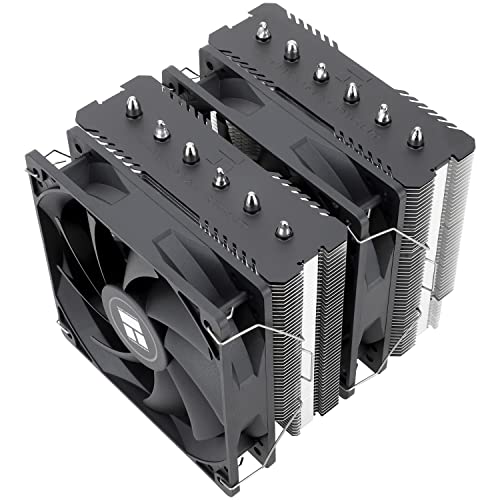
Thermalright Peerless Assassin 120 SE — The class ceiling
Every few years a product makes a price category stop making sense, and in CPU cooling the Peerless Assassin 120 SE is that product. The specification reads like a flagship’s: two fin towers, six heat pipes arranged in Thermalright’s anti-gravity pattern so orientation does not sap them, and two 120mm PWM fans included rather than upsold. In sustained testing across the review landscape it trades blows with coolers that cost as much as a mid-range processor, and it does so without exotic materials or a software suite — just fin area, pipe discipline and fans that move air where the pipes put the heat.
In a fifty-dollar guide its presence creates a useful embarrassment: it is simultaneously the obvious first pick and the reason the other five need specific excuses to exist. Those excuses are real — smaller cases, quieter stock fans, brand ecosystems, even shorter heights — but they are excuses of fit, not of cooling. If your case accepts a 155mm tower and your chip is anything up to a genuinely hot flagship, the shopping arguably ends here, and the rest of this guide becomes a study in why a person might reasonably choose otherwise.
The compromises are the known ones, and at this price they read as fair trades rather than flaws. The fans do their work with more audible effort at full speed than premium 120mm units; the mounting hardware is functional without the machined delight of the expensive brands; the finish is honest aluminium and black paint rather than jewellery. None of it touches the temperatures, which is the entire point of the product’s design brief.
Installation is a two-screw affair on a backplate, with brackets for both current platforms in the box and an offset-friendly flat cold plate that suits AMD’s chiplet layout. Memory clearance follows the dual-tower pattern: the front fan may ride up over tall modules, and low-profile RAM keeps the silhouette at its quoted height. Plan for that single interaction and the rest of the build proceeds without drama.
Longevity thinking favours it too. The fans are standard-frame 120mm units on wire clips, replaceable with anything when they eventually tire, and the heatsink itself — soldered pipes, dense fins — has no wear mechanism at all. A cooler bought at this price that can follow a processor upgrade or two is not cheap; it is inexpensive, which is a different and better thing.
Verdict within the review: this is the cooler against which the fifty-dollar class is now measured, and the first unit anyone shopping this guide should price-check. The sections below earn their places by being smaller, quieter at stock settings, or available where this one is not — legitimate reasons all, but reasons that start from the Assassin’s high ground.
One scenario worth naming: the second-PC effect. Owners who buy the Peerless Assassin for a main rig routinely report ordering a second for the machine it replaced, because once you have heard a system run this cool at this price, the old stock cooler’s racket becomes impossible to un-hear. Budget for one. Forgive yourself for the second.
And a note for builders moving up from a stock cooler: the Peerless Assassin’s size surprises people raised on bundled aluminium pucks. It is a serious object — two towers, real heft, a presence in the case. Check the case clearance, by all means, but also enjoy the moment: few purchases announce the transition from ‘a computer’ to ‘my build’ as clearly as unboxing this much heatsink for this little money.
- Type: dual-tower air cooler
- Heat pipes: 6, AGHP layout
- Fans: 2 × 120mm PWM included
- Height: about 155mm
- Sockets: current Intel and AMD platforms, kits in box
- Cold plate: flat, offset-friendly for chiplet dies
Strengths
- Cooling that belongs to a far higher price class
- Two fans included — nothing else to buy
- Standard fans and mounting keep it serviceable for years
Trade-offs
- Stock fans get coarse at maximum speed
- Front fan can ride up over tall memory
- Plain finish and no-frills packaging
Best for: a builder cooling anything from a mid-range chip to a hot flagship inside a case that fits 155mm
Not suited for: a silence-tuned small build, where its stock fans at full tilt will be the loudest voice in the room

Cooler Master Hyper 212 Black — The classic, cleaned up
The Hyper 212 is less a product than a rite of passage — for two decades it has been the cooler first-time builders graduate to — and the Black edition is its tidiest form: the familiar single tower with four heat pipes flattened into a continuous direct-contact base, finished with a black aluminium top plate that hides the pipe ends the originals displayed proudly. Cooling behaviour is the line’s signature: a large, honest step up from any bundled cooler, delivered quietly at the moderate fan speeds a mid-range processor asks for.
Direct contact deserves an explanation, because it is this design’s character. The heat pipes themselves form the surface that meets the processor, flattened and milled smooth, which removes one metal interface from the heat’s path. On small and mid-sized dies it works beautifully. On large modern dies with offset hot spots, a spreader plate can even things out — one reason the flagship towers use them — but at the wattages this cooler serves, direct contact’s simplicity wins on cost and performs within a whisker.
The fan is a single 120mm PWM unit with a conservative voice, and the tower’s slim profile is the real luxury: no memory slot is covered, no side panel is threatened, and the cooler installs in cases that would laugh at a dual tower. Cooler Master’s mounting has modernised across the line’s life, and current retail stock covers the present sockets — confirm the kit list on the listing against your board, because old stock of a famous name lingers in warehouses longer than anywhere else in this industry.
Against its Black II sibling below, the choice is generational: this is the established design with the longer track record, the II is the refresh with the newer fan and kit story. Neither is a wrong answer for a mid-range chip, and the one on the better offer in a given week is usually the one to take home.
Owners upgrading from a stock cooler should expect the transformation the 212 line built its name on: double-digit temperature drops under load and a machine that no longer announces game launches acoustically. That experience, at this price, remains the best-value sensation in PC building.
Buy it as the safe pair of hands in this guide — the cooler you recommend to a friend building their first PC, confident it will fit, install kindly, and cool honestly for years.
A small ownership tip specific to direct-contact bases: when the day comes to remove this cooler — for a processor swap or a paste refresh — twist it gently before lifting, and expect the paste to have spread into the pipes’ micro-grooves. Clean both surfaces fully rather than adding fresh paste over old residue; direct-contact bases reward a clean start more than spreader plates do, because their grooves hold onto the past.
Refurbished and open-box examples of this cooler circulate widely thanks to its fame, and it is one of the safer used buys in the category — no pump, no coolant, a heatsink that cannot wear out — provided the mounting kit is complete and matches your socket. A missing bracket turns a bargain into a paperweight, so the kit inventory matters more than the fin condition when buying used.
- Type: single-tower air cooler
- Heat pipes: 4, continuous direct-contact base
- Fan: 1 × 120mm PWM
- Top plate: black anodised aluminium
- Sockets: current Intel and AMD platforms (confirm kit on listing)
- Profile: slim tower, full memory clearance
Strengths
- Two decades of refinement behind a foolproof design
- Slim tower never touches memory or side panels
- A dramatic, quiet upgrade over any stock cooler
Trade-offs
- Single fan and four pipes cap its ceiling on hot chips
- Direct-contact base is less ideal for large offset dies
- Long production life means checking the socket kit on the listing matters
Best for: a first-time builder upgrading a mid-range PC from its stock cooler
Not suited for: a flagship processor, where four pipes and one fan run out of road

Cooler Master Hyper 212 Black II — The refreshed 212
If the Hyper 212 Black is the classic, the Black II is the classic after a service: same four-pipe single-tower architecture, same direct-contact thinking, but with the details a 2026 buyer actually checks first — mounting kits for AM5 and Intel’s current sockets in the box, a fan tuned for a smoother acoustic profile, and a finish that keeps the blackout theme consistent from top plate to fan frame. It exists because the original’s fame created a warehouse problem: too many versions of a legend floating around with yesterday’s brackets. The II is Cooler Master stamping ‘current’ on the box.
Cooling sits where the badge promises: comfortably beyond stock-cooler territory, sized for mid-range processors run at stock or with the mild tuning their owners actually keep. The single fan’s conservative ceiling means the cooler stays composed rather than heroic under load — temperatures a few degrees above the dual-tower leaders, noise a few decibels below what its price suggests. For a gaming rig whose graphics card makes more noise than the CPU cooler ever will, that balance is not a compromise; it is correct prioritisation.
The build experience is the friendliest in this guide. The tower is slim, the bracket work is all screws and a backplate, the fan arrives clipped, and the whole installation fits inside a coffee break. Memory slots stay fully accessible, which matters more than it sounds in this class: budget builds often start with two RAM sticks and add two more later, and a cooler that must come off to seat memory is a cooler that gets resented.
Choosing between this and the original Black is mostly about the kit and the offer of the week; choosing between this and the Thermalrights is about ceiling. The Assassin X120 below cools a touch harder per penny, the Peerless Assassin operates in another league entirely, and the Black II answers with brand support, availability in every market, and the calmest stock fan tune of the four-pipe crowd.
There is also a support-network argument that budget guides understate: Cooler Master’s brackets, fans and documentation are findable everywhere, in every language, forever. When a build is for a relative in another city, that findability is a feature with real value.
Take the Black II when you want the 212 experience without kit archaeology — current sockets covered, manners polished, ceiling understood.
Parents and partners feature in this cooler’s reviews more than in any rival’s, and it is easy to see why: it is the pick for the PC in the living room, the bedroom, the shared study — the machines whose noise is a household negotiation. A cooler whose worst behaviour is a gentle rise in pitch during game loads keeps the peace in a way benchmark charts cannot measure.
The Black II also travels well between builds in a way its spec sheet cannot show: its mounting hardware spans both makers’ current platforms from one box, so the common household shuffle — an Intel hand-me-down here, an AMD upgrade there — never strands it in a drawer waiting for a bracket. Versatility is a quiet feature, and this cooler is full of it.
- Type: single-tower air cooler
- Heat pipes: 4, direct-contact base
- Fan: 1 × 120mm PWM, quiet-tuned
- Sockets: AMD AM5/AM4 and Intel LGA1851/1700-class kits in box
- Profile: slim tower, full memory clearance
- Finish: blacked-out top plate and fan frame
Strengths
- Current socket kits guaranteed in the box
- Calmest stock fan tune among the four-pipe picks
- Slim, friendly installation for first-time builders
Trade-offs
- Cooling ceiling sits below the Thermalright pair
- One fan only — no push-pull headroom in the box
- Pays a small fame premium over no-name rivals
Best for: a mid-range gaming build that values quiet manners and a guaranteed current mounting kit
Not suited for: a hot-running flagship chip or an owner planning heavy all-core tuning

Thermalright Assassin X120 Refined SE — The overachiever
The Assassin X120 Refined SE is the cooler reviewers keep rediscovering with genuine surprise, because on paper it should not do what it does. Four heat pipes and a single tower is the budget formula, yet its fin stack is dense, its pipes are soldered rather than pressed, and its cold plate makes the kind of contact that mounting-pressure diagrams dream about. The result, repeated across independent testing, is sustained cooling that noses ahead of the Hyper 212 family and reaches toward coolers with twice its hardware — from a unit that stands only about 148mm tall and leaves every memory slot in peace.
The ‘Refined’ in the name is the aluminium top cover, a small thing that signals the design’s intent: this is a finished product, not a cost-shaved one. The TL-C12C fan is the honest budget item in the box — effective, standard-framed, and possessed of a harder tone at the top of its range than premium fans manage. At the speeds a mid-range chip actually requests, it stays out of the way; ask it to hold a hot processor at full song and it will tell you about it.
For the fifty-dollar frame, its role is the purist’s alternative: if the Peerless Assassin is too tall, too wide or simply out of stock, this is the Thermalright to buy instead, trading the second tower for compactness while keeping the brand’s mounting competence and cold-plate quality. Small-form-factor-adjacent cases and older mid-towers with narrow clearance are its natural habitat.
Installation follows the family pattern — backplate, two screws, fan clips that do not fight — and the included hardware covers current sockets from both makers. The fan’s standard frame means the upgrade path is open: a premium 120mm fan later polishes the acoustics without replacing the heatsink, a trick the proprietary-fan brands cannot offer.
What it is not is a flagship cooler in disguise. One tower and four pipes define an envelope, and a power-unlocked top-tier chip will find its edges within minutes of a rendering load. Inside the envelope — mid-range chips, sensible tuning, compact cases — it is arguably the most efficient spend in this entire guide.
Buy it when the build is compact, the chip is sensible, and you enjoy the particular pleasure of the inexpensive thing outperforming the famous thing.
Thermalright’s packaging tells its own story here — minimal, recyclable, and light on printed matter, with the manual assuming a builder who can be trusted with a screwdriver. Some buyers read that as cheapness. Read it instead as the budget going where budgets should go in this class: into the fin stack you keep, not the box you recycle.
Buyers comparing it directly with the Hyper 212 Black II should weigh one intangible: character. The Cooler Master is the polished consumer product, the Thermalright the engineer’s product, and in sustained cooling the engineer’s product wins by a nose while conceding the showroom contest. Know which kind of satisfaction you are shopping for and the choice makes itself.
- Type: single-tower air cooler with aluminium cover
- Heat pipes: 4, soldered fin stack
- Fan: 1 × 120mm TL-C12C PWM
- Height: about 148mm
- Sockets: current Intel and AMD platforms
- Profile: narrow tower, all memory slots clear
Strengths
- Cooling per penny that leads the single-tower class
- Short and slim — fits cases the dual towers cannot
- Standard fan frame invites a future acoustic upgrade
Trade-offs
- Fan tone hardens at the top of its range
- Four-pipe envelope excludes flagship tuning
- Brand support network is thinner than Cooler Master’s
Best for: a compact build with a mid-range chip that wants maximum cooling from minimum size
Not suited for: a power-unlocked flagship processor in a rendering workload
DeepCool AK400 — The polished alternative
DeepCool’s AK400 is the cooler this guide could not link to — our pool check found no verified listing we were willing to send readers to for this model — so it is reviewed here on its hardware alone, without a purchase link, and we would rather say that plainly than dress the gap up. The hardware deserves the honesty: a single tower with four heat pipes, a distinctive chequered matrix fin pattern on its top, and a fluid-dynamic-bearing fan that owners consistently describe as the quietest stock unit in this class. If you find it at a retailer you trust, it competes head-on with the Hyper 212 pair.
Its character is polish. The fin stack’s edges are clean, the top cover looks designed rather than stamped, and the fan’s rubberised mounting points keep vibration out of the case panel — a detail that matters in the thin steel cases budget builds often use. Cooling sits in the class’s honest middle: beyond any stock cooler, level with the 212 family, a step behind the Assassin X120’s overachievement and two steps behind the Peerless Assassin’s league of its own.
The mounting system uses a solid backplate and a bracket arrangement that first-timers manage without drama, and the tower’s dimensions keep memory and side panels out of the conversation entirely. DeepCool’s socket support tracks current platforms; as with any cooler bought outside a linked listing, verify the kit against your board on the product page before ordering.
Why include an unlinkable cooler at all? Because a buying guide that silently omits a class staple misleads more than one that shows its working. Readers who meet the AK400 in a local shop or a bundle deal deserve to know where it stands: a refined, quiet, mid-pack tower whose only sin in this guide is a listing we could not verify.
If it is the one available in your market at the class price while the Thermalrights are absent, buy it without a sense of settling. Regional availability decides real purchases more often than review rankings do, and the AK400 is nobody’s consolation prize.
Its ceiling is the class ceiling — mid-range chips, mild tuning, compact cases — and within it, the AK400’s manners may make it the most pleasant cooler here to live beside.
DeepCool’s broader range gives the AK400 an understated advantage: matching case fans and a sibling dual-tower line mean a builder who starts here can grow the build’s cooling in a consistent visual language. It is a minor point beside temperatures, but builds evolve, and parts that belong to families age more gracefully than orphans.
A final note on finding it: because our guide carries no link for the AK400, the practical route is a reputable retailer or DeepCool’s own storefront in your region, checking the socket kit line before checkout. Prices for it wander more than the linked picks’ do, so a week of patience often finds it sitting exactly on this guide’s budget line.
- Type: single-tower air cooler
- Heat pipes: 4
- Fan: 1 × 120mm fluid-dynamic-bearing PWM
- Top: matrix-pattern fin cover
- Sockets: current Intel and AMD platforms (verify kit before ordering)
- Profile: slim tower, full memory clearance
Strengths
- Quietest stock fan manners in this class
- Fit and finish above the price point
- Vibration-isolated fan mounting suits thin budget cases
Trade-offs
- No verified listing in our pool, so no purchase link here
- Cooling is mid-pack rather than class-leading
- Single fan, four pipes — the usual ceiling applies
Best for: a quiet-leaning mid-range build, if you find it stocked at a retailer you trust
Not suited for: anyone who needs the certainty of the verified listings above, or a flagship chip
ID-COOLING SE-214-XT — The minimalist’s tower
The second of this guide’s prose-only picks, the ID-COOLING SE-214-XT, earns its place the opposite way from the AK400: not with polish, but with leanness. Our pool check produced no verified listing we could responsibly attach to it, so — as with the DeepCool — the review stands on the hardware and carries no link. The hardware is a study in essentials done properly: four heat pipes in direct contact, a slim fin tower with a tidy top cover, and a single 120mm PWM fan, assembled into the cooler that frequently anchors the bottom of this class on price while cooling like it belongs a shelf higher.
That price position is its argument. In many markets the SE-214-XT undercuts even the Thermalrights, and for a builder rescuing an old office PC or cooling a home-server chip, the gap between ‘adequate and quiet’ and ‘class-leading’ is money better spent on an SSD. Its cooling is adequate and then some: mid-range processors run cool and calm, stock coolers are embarrassed, and only sustained all-core loads on hotter chips reveal the four-pipe envelope.
The fan is a plain unit with a plain voice — unobtrusive at working speeds, present at full speed — and its standard frame means a future swap is trivial. The mounting gear covers the sockets a budget build is likely to use; buyers on the newest platforms should confirm kit inclusion wherever they buy, since this model’s long production run spans several bracket generations.
ID-COOLING’s support footprint is smaller than the big brands’, which is the real trade at the bottom of the class: you are buying hardware, not a network. For the self-sufficient builder that trade is rational. For a PC built for someone else, in another house, the Cooler Master pair’s findability may be worth their premium.
Include it in your shopping as the price floor with dignity: the cooler that proves how far the bottom of this market has risen. A decade ago this performance cost twice the money and made twice the noise.
If it is the one on the shelf at the right price when you need a cooler, the SE-214-XT will not be the decision you regret in the build.
There is one build type where this cooler is not the compromise but the correct first choice: the always-on home server in a cupboard or a loft, where its simplicity, low draw on the fan header and tolerance of dust between cleanings suit a machine that is serviced twice a year and thought about never. Enthusiast hardware is wasted there; honest hardware is exactly right.
It is worth recording, too, that this is the cooler most likely to be recommended in build forums with the phrase ‘just get the SE-214’ — shorthand born of thousands of uneventful installations. In budget hardware, becoming the default answer is the highest honour available, and the ID-COOLING earned it the slow way: by never being the part that caused the problem.
- Type: single-tower air cooler
- Heat pipes: 4, direct-contact base
- Fan: 1 × 120mm PWM, standard frame
- Top: plain cover plate
- Sockets: wide Intel and AMD coverage (confirm current-platform kit)
- Profile: slim tower, full memory clearance
Strengths
- Often the lowest price in the class for real four-pipe hardware
- Slim, light and friendly to older cases and boards
- Standard fan invites an easy future upgrade
Trade-offs
- No verified listing in our pool, so no purchase link here
- Support network is the smallest in this guide
- Bracket generations vary — verify the kit for new platforms
Best for: a budget rescue build or home server that needs honest cooling at the floor price
Not suited for: a gift build for a non-technical owner who will need brand support someday
How Do the Best $50 Air CPU Coolers Compare?
| Pick | Form | Pipes | Fans | Character |
|---|---|---|---|---|
| Thermalright Peerless Assassin 120 SE | Dual tower | 6 | 2 | Class ceiling |
| Cooler Master Hyper 212 Black | Single tower | 4 | 1 | The classic |
| Cooler Master Hyper 212 Black II | Single tower | 4 | 1 | Classic, current kits |
| Thermalright Assassin X120 Refined SE | Single tower | 4 | 1 | Compact overachiever |
| DeepCool AK400 (prose-only) | Single tower | 4 | 1 | Quiet polish |
| ID-COOLING SE-214-XT (prose-only) | Single tower | 4 | 1 | Price floor |
The table’s shape tells the class’s story: one dual tower standing over five single towers that differ in manners rather than in kind. Among the singles, sustained temperatures cluster within a few degrees of each other on mid-range chips, so the deciding factors become fan tone, mounting kits, availability in your market and support — the unglamorous columns no table can hold. The dual tower is the exception to every one of those clusters, which is why it leads the guide despite sharing its price frame with the rest.
A word about the two prose-only rows: their absence of links is a property of our pool at the time of checking, not a ranking. On hardware alone the AK400 would sit mid-table in any company, and the SE-214-XT’s price performance has embarrassed famous names for years. We would rather show you the full class with two honest gaps than a partial class pretending to be complete.
What Does Fifty Dollars Actually Buy in a CPU Cooler?
It buys the end of compromise on the fundamentals. At this mark a cooler gets real heat pipes — four is the class standard, six in the Peerless Assassin’s case — a fin stack dense enough to need a pressure-capable fan, a mounting system with a backplate and even pressure, and a fan with a bearing designed to outlast the build. What it does not buy is refinement at the margins: the last degree of cooling, the quietest fan bearing money can source, machined mounting jewellery, or a warranty experience with a concierge tone. Understanding that split is the whole skill of shopping this class — you are paying for physics, and the physics here is genuinely good.
It also buys choice of character, which surprises people. Within a few degrees of each other, these six coolers offer a quiet one, a tiny one, a famous one, a cheap one and a dual-tower outlier. The correct response to that menu is to shop your constraints — case dimensions, noise sensitivity, who will maintain the machine, what your market stocks — rather than a ranking. Rankings assume a universal reader; your build is a specific one.
There is one more thing the fifty buys that rarely appears in comparisons: freedom from the upgrade itch. Owners of bundled coolers shop cooling forums for years, half-convinced their temperatures are a problem. Owners of any cooler in this guide simply stop thinking about the subject, because the subject is handled. Attention is a real currency in a hobby, and this class returns it to you.
How Do You Install a Budget Tower Cooler Correctly?
Budget coolers forgive much, but they do not forgive a tilted mount. Fit the backplate first, with the motherboard out of the case if the tray cutout is small, and keep the bracket’s screws finger-tight until all four have caught — a bracket tightened corner by corner cocks the cold plate before you begin. Apply a pea-sized dot of paste at the centre of the heat spreader (direct-contact bases like the 212s and the SE-214-XT benefit from a slightly thinner, wider spread, since the pipes’ grooves can trap a thick dot’s excess), then set the tower down squarely and tighten in a cross pattern, half a turn at a time.
Clip the fan on after the tower is mounted, with its cable oriented toward the nearest header, and route that cable so it cannot droop into the fan’s own blades — the classic first-build rattle. Set the header to PWM in the BIOS, choose or shape a curve that stays calm under 60 degrees, and run ten minutes of real load while watching temperatures settle. If one core cluster runs far hotter than the rest, suspect the mount before the cooler; a remount with fresh paste fixes more ‘bad coolers’ than returns ever will.
- Backplate first, screws finger-tight until all four catch
- Pea of paste centrally; thinner and wider on direct-contact bases
- Cross-pattern tightening, half-turns, until both sides stop evenly
- Fan clipped after mounting, cable routed clear of the blades
- PWM mode set in BIOS with a calm low-end curve
- Ten minutes of load, then judge — remount before blaming the hardware
How Does a Budget Cooler Change the Way a PC Feels?
The specifications say temperature and decibels, but the lived change is behavioural. A machine cooled properly boosts higher and stays there, so the frame-rate dips in the third hour of a game — the ones players blame on the game — quietly stop happening. Fans that no longer need to scream stop drawing attention to the machine’s existence, and the PC recedes from a presence in the room to a tool in it. Owners consistently report the same surprise: the upgrade they bought for temperatures turned out to be an upgrade to concentration.
There is a longevity dividend too. Electronics age with heat, and a processor, motherboard VRM and the memory beside the socket all live gentler lives in a case whose cooling is not permanently at its limit. Nobody can promise a specific extra year of service, but the direction of the effect is not in doubt, and at this class’s prices the insurance is nearly free. A fifty-dollar cooler is the rare purchase that improves the present, the noise floor and the future simultaneously.
When Should You Spend More Than Fifty Dollars on Cooling?
Three situations justify leaving this class. The first is silicon: a flagship processor with its power limits raised will saturate every single tower here and most will make it loud in the attempt — that build deserves a flagship dual tower or a 360mm liquid loop, and our companion guides cover both. The second is silence as a specification: if the machine records audio, shares a bedroom, or runs beside a television, the premium fans and semi-passive behaviours above this class stop being luxuries. The third is time: a cooler is one of the few parts that can serve three builds, and a buyer who upgrades processors often may rationally buy the decade-long part once.
Notice what is absent from that list: gaming. Games load processors unevenly and briefly compared with rendering, and every cooler in this guide holds gaming clocks on mid-range chips with room to spare. The most common overspend in PC building is cooling bought for a benchmark the owner ran once. Buy for the workload you repeat, not the one you screenshot.
How Do You Keep a Budget Cooler Quiet for Years?
Budget fans age faster than premium ones, so the maintenance that premium owners treat as optional is your longevity plan. Dust the fin stack quarterly — a felted tower loses capacity, the fan compensates with speed, and the noise owners blame on age is usually dirt. Keep the fan curve’s low end genuinely low; a fan that spends its life at 40 percent outlasts and out-quietens one held at 70. And when a fan does eventually develop a bearing tick, replace the fan, not the cooler: every pick here uses standard 120mm frames or clips that accept them, which is the budget class’s quiet superpower.
Case airflow is the other half of quiet. A cooler breathing through a mesh front panel at low speed is silent; the same cooler gasping behind glass at high speed is not, and the difference cost nothing but case choice. If your current case starves the cooler, one intake fan added ahead of it will do more than any cooler swap within this class.
What Should You Check on the Listing Before Ordering?
Three checks, in order. First, the socket kit: confirm your exact platform — AM5 is not AM4 with confidence, and Intel’s current sockets have cycled quickly — appears in the listing’s included hardware, not merely in the product family’s marketing. Second, the fan connector and control: every cooler here is PWM, but a used or old-stock unit may not be, and a three-pin fan on a modern board means cruder control. Third, the seller: in this price class, marketplace listings include grey imports whose warranty is a shrug, so buy from the maker, its authorised store, or a retailer whose returns you have used before.
Then check your own build with the same rigour. Cooler height against case clearance; the cooler’s footprint against the first PCIe slot on compact boards; the fan cable’s reach to a header. These are five-minute checks that prevent the five-day return. The fifty-dollar class rewards buyers who measure — its products are good enough that fit and kits, not cooling, are where purchases actually fail.
One habit separates owners whose budget coolers stay quiet from those whose do not: they clean on the case’s schedule, not the cooler’s. Every time the case comes open — for a drive, a GPU, a memory upgrade — the fin stack gets thirty seconds of compressed air while access is free. Maintenance attached to existing rituals happens; maintenance requiring its own ritual, eventually, does not. Build the habit and a fifty-dollar cooler will sound in year four the way it sounded in week one.
What Mistakes Do Buyers Make in the Fifty-Dollar Cooler Class?
Assuming the bundled cooler is ‘fine’ and spending the fifty elsewhere. For a gaming or creation machine it rarely is: stock coolers run mid-range chips hot and loud, throttling boost behaviour the owner paid for. This class exists because fifty spent here outperforms fifty spent almost anywhere else in the build.
Buying a cooler by its fan’s maximum RPM. Top speed is the specification of last resort — a cooler that needs 2,000 RPM to cope is telling you its fin stack cannot. Judge by behaviour at the speeds you will actually tolerate hearing for three hours.
Forgetting that old famous models carry old mounting kits. A legendary cooler name on a marketplace listing may predate AM5 or current Intel sockets entirely. The kit list on the specific listing is the truth; the name is only a reputation.
Mounting with the motherboard already in a tight case. Budget brackets are fiddly enough without working through a keyhole. Fifteen minutes spent removing the board saves skinned knuckles, a tilted mount and the temperatures that come with both.
Judging the class by the Peerless Assassin alone. It leads this guide, but it does not fit every case or every market’s shelves. The other five exist because builds differ; dismissing them unread is how a builder ends up with no cooler at all when the leader is out of stock.
Final Recommendation
The recommendation writes itself at the top: if the Peerless Assassin 120 SE fits your case and your market stocks it, it is the fifty-dollar cooler to buy — a dual-tower flagship’s cooling wearing a budget badge, with nothing else required. The Assassin X120 is its compact understudy, the Hyper 212 Black II is the safe famous name with the current kits guaranteed, and the original Black remains the classic for builders who value the longest track record in the business.
One more consideration for the undecided: availability is a specification. A cooler that is in stock at a fair price in your country this week beats a theoretically superior cooler on a slow boat from another continent, because the machine you are cooling exists now and its stock cooler is loud now. All six of these are volume products with deep retail channels — part of why they, and not rarer exotics, make up this guide.
The AK400 and SE-214-XT close the guide as honest prose: the quiet polished option and the dignified price floor, recommended on their hardware and left linkless rather than dressed in links we could not verify. Whichever of the six lands in your build, mount it squarely, curve its fan kindly, and keep its fins clean — at this price, care is the difference between a cooler that serves one build and one that serves three.
Frequently Asked Questions
Is a fifty-dollar air cooler enough for gaming on a modern mid-range CPU?
Comfortably. Games rarely sustain the all-core loads that stress a cooler, and every pick here holds mid-range gaming chips well below throttling with fan speeds that stay civilised. The money you save against a flagship cooler is better spent on the graphics card, where gaming actually notices it. Even the class’s single towers keep a modern six-core in its happy zone through long sessions, provided the case gives them air to work with — the one condition this guide keeps repeating because it keeps being the deciding one.
Why does the Peerless Assassin cost the same as single towers but cool so much better?
Because price in this industry tracks brand, distribution and marketing as much as materials. Thermalright sells direct-ish, spends little on promotion, and puts the budget into fin stacks and pipes. The result is a genuine pricing anomaly — one that has persisted long enough to be a strategy rather than a sale.
Can these coolers handle a processor upgrade later?
The dual-tower Peerless Assassin can follow you to a flagship chip. The single towers can follow you across mid-range generations, which is where most upgraders actually travel. All six use standard mounting patterns with kits for current sockets, so the upgrade question is about cooling envelope, not compatibility.
Should I add a second fan to a single-tower cooler?
A rear fan in push-pull typically buys one to three degrees at working speeds — worth it if a spare 120mm fan is already in a drawer, rarely worth buying one for. Spend first on case intake, which feeds the cooler cooler air to begin with.
How do I know if one of these coolers fits my case?
Compare the cooler’s height — 148 to 155mm across this guide — with your case’s published CPU cooler clearance, and leave a few millimetres of grace. All six are slim towers or moderate dual towers that leave memory slots clear, so height is the only measurement that can veto them.
Are the prose-only picks worse than the linked ones?
No — the distinction is about our verification, not their quality. The AK400 and SE-214-XT are reviewed on the same evidence as the rest; we simply could not match them to a verified listing in our pool, so they carry no purchase link. Judge them by their sections, and buy from a retailer you trust if one wins you over.
Related Guides
Spending a little more, or going liquid instead? These companion guides continue the story: our flagship air and liquid picks for overclocking our 360mm liquid cooler guide for DIY builders our walkthrough of fan curves for quiet builds.


