What's inside
- Where to Buy
- Key Takeaways
- Quick Picks
- How We Chose These Picks
- Comparison Table
- How to Choose a Projector to Use as a TV
- Does a Laser TV Really Work in Daylight?
- What Size Screen Should a Living Room Actually Choose?
- Laser TV or a Very Large Television — Which Ages Better?
- Common Mistakes When Replacing a TV With a Projector
- Final Recommendation
- Frequently Asked Questions
- Related Guides
As an Amazon Associate I earn from qualifying purchases. This post may contain affiliate links at no extra cost to you.
[SITE_DOMAIN] is reader-supported. When you buy through links on our site, we may earn an affiliate commission.
Where to Buy
A projector replacing a television will be judged every day, so verify the living-room details on each page. AWOL Vision’s LTV-3000 Pro listing is where to confirm the 150-inch maximum and the Dolby Vision wording against the screen you plan to buy. Formovie’s Theater page rewards a read of its built-in speaker description, since its sound is part of its television claim. Hisense’s PT1 listing should be checked for the 80-to-150-inch range against your wall width. WEMAX’s Nova Pro page is the place to verify the Google Assistant and Dolby Audio wording for a household run by voice. The Aetherion Max listing deserves attention to its daytime viewing claim if your room has serious windows. ViewSonic’s LS740HD page must be read with clear eyes: it is a standard-throw machine, and its listing is where to confirm the throw distance your ceiling allows.
Television used to mean a glass rectangle that owned one wall and one job. The best projectors to use as a TV challenge that arrangement with a proposition that sounds like a party trick and behaves like a lifestyle: a screen of 100, 120 or 150 inches that appears when the evening begins and vanishes when it ends, in a room that gets its wall back every morning. Five of the six machines here are ultra short throw designs — laser TVs in the trade’s language — that sit centimetres from the wall they fill. The sixth is something else entirely, and this guide keeps it honest.
That sixth machine matters, so its label comes early. ViewSonic’s LS740HD is a standard-throw laser projector: it belongs on a ceiling or a rear shelf, projecting across the room in the traditional geometry, with a stated 5,500 lumens built for bright spaces. It is not an ultra short throw model and it is not a laser TV, and it appears here because some households asking the TV question actually need a bright, permanent, big-screen television substitute in a sunlit room, and are willing to mount a machine across the room to get it. Readers who want the console-under-the-screen laser TV shape should stay with the other five.
What makes a projector a television, rather than a projector used occasionally for television, is a checklist of domestic behaviours. It must start fast, because nobody schedules turning on the news. It must carry its own streaming platform and sound, because a television is one remote and no ceremony. It must survive daylight, because televisions are watched at breakfast and during afternoon sport, not only in cinematic darkness. And it must sit where a television sits, which is why ultra short throw geometry — a low console, a short cable, no ceiling work — dominates this guide.
Screen pairing is the purchase hiding inside the purchase. An ultra short throw projector throws its image upward at a steep angle, and the ambient light rejecting screens designed for that angle are what make daytime television plausible: they accept the projector’s light from below and refuse the room’s light from above. Every review below should be read with a screen budget in mind, because a laser TV on a bare wall is a promise half kept, and the same machine on its proper surface is a different product.
Sound follows the same logic. A television’s speakers are part of its identity, and the laser TV class knows it: built-in speakers, Dolby Atmos and Dolby Audio claims recur through these titles. Households with soundbars and receivers will bypass them, but the households this category is converting — the ones trading a television for a wall of light — will live on the built-in audio for months, and the reviews weigh it accordingly.
Key Takeaways
- Five picks are ultra short throw laser TVs; the ViewSonic LS740HD is a standard-throw laser and is labelled as such throughout.
- AWOL Vision’s Aetherion Max states 3,300 ISO lumens and a 200-inch maximum, the largest claims in this guide.
- Hisense’s PT1 states 2,500 lumens, a 3,000:1 contrast and a 240 high refresh rate with Google TV aboard.
- Formovie’s Theater carries a showdown pedigree in its title, plus Dolby Vision and built-in speakers.
- WEMAX’s Nova Pro states 2,100 ISO lumens from an ALPD laser with Google TV and Dolby Audio.
- The LS740HD’s stated 5,500 lumens make it the bright-room alternative for households that can mount across the room.
Quick Picks
| Pick | Badge | Why it is here |
|---|---|---|
| AWOL Vision LTV-3000 Pro | The Complete Laser TV | 4K triple laser UST with Dolby Vision and Atmos, HDR10+ and a stated 150-inch ceiling. |
| Formovie Theater | The Showdown Pedigree | A 4K UST laser with Dolby Vision and built-in speakers, carrying a Laser TV Showdown distinction in its title. |
| Hisense PT1 | The Specified All-Rounder | Triple laser, Google TV, a stated 2,500 lumens, 3,000:1 contrast and 240 refresh wording. |
| WEMAX Nova Pro | The Voice-Run Option | 4K UST with Google TV, a stated 2,100 ISO lumens, ALPD laser and Dolby Audio. |
| AWOL Vision Aetherion Max | The Daylight Flagship | RGB triple laser at a stated 3,300 ISO lumens, a 200-inch maximum and a daytime viewing claim. |
| ViewSonic LS740HD | The Bright Standard-Throw Alternative | A 1080p laser at a stated 5,500 lumens for ceiling-mounted television in bright rooms — not a UST. |
How We Chose These Picks
Television duty was defined by domestic behaviour rather than by cinema specification. A candidate needed a credible answer to four questions a television answers daily: How fast does the picture arrive? Where does the content come from? What does it sound like with nothing else switched on? And how does it cope with a room at 2 p.m.? Ultra short throw models with streaming platforms and stated audio claims scored naturally; the standard-throw ViewSonic was admitted under a separate, clearly labelled argument about brightness and permanence.
Brightness figures were handled with dialect discipline. ISO lumens and plain lumens both appear in these titles, measured under different rules, and the reviews never blend them into a single ranking. What can be compared honestly is intent: figures around the low two thousands are aimed at controlled living rooms, while the higher claims — and the ViewSonic’s 5,500 in its own category — are aimed at daylight. A buyer should match intent to their own windows before comparing numbers across dialects.
Screen size claims were read as ceilings, not recommendations. A stated 150-inch or 200-inch maximum describes the largest image the maker will claim, in the darkest conditions, and everyday television happiness usually lives a size or two below the ceiling, where brightness per inch is generous and the picture forgives afternoon light. The reviews repeatedly convert those ceilings into realistic living room sizes.
Gaming claims were credited where titles print them — a 240 high refresh rate here, 1080p at 240Hz with a 1ms lag claim there — because a television replacement inherits the household console by default. A projector that cannot keep a game feeling responsive will be forgiven for films and resented for football of the interactive kind, and the reviews keep the two duties separate.
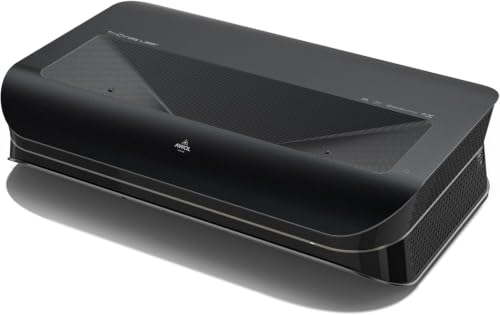
AWOL Vision LTV-3000 Pro — The Complete Laser TV
AWOL Vision’s LTV-3000 Pro states the laser TV proposition in its most complete form: 4K, 3D, ultra short throw, a triple laser light source, Dolby Vision and Dolby Atmos, HDR10+, and a maximum image of 150 inches. That is a television specification written by somebody who intends the machine to be the only screen in the house. Triple laser architecture promises wide colour; the format pair covers the premium streaming conversation from both directions; and the UST geometry puts the whole apparatus in a low console where a television stand has always lived.
Daily behaviour is where this class earns or loses its name, and the Pro’s specification anticipates the daily questions. A television is switched on for the weather, left on for the match, and asked for a film at night, and a laser light source that starts at full brightness and shrugs at cycling suits that rhythm in a way lamp machines never did. The household stops rationing the big screen, which is the moment a projector genuinely becomes the television rather than its understudy.
The 150-inch ceiling should be translated into furniture. At that size the image is a wall, and the room needs the wall: width, a console deep enough for the throw, and seating far enough back for comfort. Most living rooms will settle at 100 to 120 inches, where the same machine looks brighter, sharper and more television-like, and the Pro’s headroom becomes insurance rather than obligation. Buyers should measure the wall before falling for the ceiling figure, because the console position for a UST is set by the screen size chosen.
3D support, unfashionable and persistent, serves the households whose collections still include it, and its presence signals a maker refusing to prune features the television audience might miss. Sound via the Atmos claim should be read as capable built-in audio for daily viewing, with a soundbar or receiver remaining the upgrade path for film nights; the machine’s job is to make the television hours effortless and the cinema hours possible.
What the title does not state is a brightness figure, and for a daytime-critical purchase that omission must be repaired on the listing before ordering. A north-facing room and a shaded wall may need little; a sunlit open-plan space needs the number in writing, compared against the stated figures of the Hisense and the Aetherion Max below, in their respective dialects.
- Throw: ultra short throw, per title
- Resolution claim: 4K, per title
- Light source: triple laser
- Formats: Dolby Vision, Dolby Atmos and HDR10+ stated
- Maximum image: 150 inches stated
- 3D: stated in the title
- Brightness: Not stated in the listing title — verify with the manufacturer documentation
Strengths
- Dolby Vision and HDR10+ together cover both premium streaming formats.
- Triple laser colour suits a machine asked to be the household’s only screen.
- A stated 150-inch ceiling gives large rooms genuine headroom.
Trade-offs
- No brightness figure is printed in the title, so daylight performance needs the listing.
- The largest sizes demand a wide, uninterrupted wall and a deep console position.
- Built-in audio remains a television convenience beside a real sound system.
Best for: households replacing the main television outright, with a wide wall and a console-friendly room.
Not suited for: a sun-drenched open-plan space committed before any documented brightness figure is obtained, since the title prints none.
The Pro is the pick that treats laser TV as a finished category rather than an experiment, and its title reads like the category’s founding document.
Children change the laser TV calculation in ways brochures never mention. A screen that vanishes means no glass panel at toddler height, no fingerprints polished off a display, and a wall that can survive a thrown toy with nothing worse than a scuff. The console still needs respecting — small hands and a precisely aligned projector are natural enemies — but the class’s safety geometry is a genuine, unadvertised argument in family rooms.

Formovie Theater — The Showdown Pedigree
Formovie’s Theater carries an unusual credential in its title: a top placing at a named Laser TV Showdown across two consecutive years, as the listing tells it. Showdown language in a title is marketing, certainly, but it is marketing of a specific kind — an invitation to judge the machine by picture quality in a room full of rivals, which is exactly the arena a television replacement must win. Beneath the credential, the specification is the class standard done properly: ultra short throw, 4K, laser light, Dolby Vision and built-in speakers.
Built-in speakers deserve more than the usual dismissive sentence here, because Formovie built its reputation in this class partly on audio that households actually keep. A laser TV whose sound satisfies daily viewing — news intelligibility, drama dialogue, sport commentary — removes the soundbar from the mandatory budget and the console from the clutter equation. Film nights may still graduate to a separate system, but a television that sounds complete out of its own cabinet changes the first year of ownership.
Dolby Vision support places the Theater inside the premium streaming pipeline, where a growing share of the programmes a television exists for are mastered. The UST geometry follows the class pattern: console against the wall, image rising above it, no ceiling work, no long cable runs, and a room that returns to being a room when the screen is off. For renters and for households allergic to installation projects, that reversibility is a feature with real monetary value.
Restraint applies to the gaps. The title states no brightness figure and no maximum image size, so both belong on the buyer’s listing checklist, weighed against the room’s light and the wall’s width. Nor does the title name a streaming platform, which matters for households that want the television to be self-contained; a platform may well be present, but this guide credits only what titles print, and a buyer for whom the platform is decisive should confirm it before ordering.
The Theater’s constituency is the picture-first household: the one that reads showdown results, cares which machine won the dark-room comparisons, and will pair the projector with a proper ambient light rejecting screen to let its picture argue at full strength. In a controlled living room, that combination is the class’s purist expression.
- Geometry: ultra short throw, console against the wall
- Picture claim: 4K
- Light source: laser
- HDR: Dolby Vision stated
- Sound: built-in speakers stated
- Distinction claimed in the title: a top placing at the 2022 and 2023 Laser TV Showdown, as the listing states it
- Brightness: Not stated in the listing title — verify with the manufacturer documentation
Strengths
- A showdown pedigree in the title signals picture-first engineering.
- Built-in speakers are central to its design rather than an afterthought.
- Dolby Vision covers the premium streaming pipeline.
Trade-offs
- No brightness figure or screen ceiling is printed in the title.
- No streaming platform is named, so self-containment needs confirming.
- Its picture talents ask for a proper UST screen to be believed.
Best for: picture-first households building a laser TV around a quality ambient light rejecting screen.
Not suited for: households that need a platform and a brightness figure confirmed in the title itself, since this one states neither.
Some machines win specifications; the Theater’s title claims it won rooms full of rivals, and a television replacement is ultimately judged in exactly that arena.
Alignment is the laser TV’s one recurring chore, and it is worth describing honestly: the console must sit at a precise distance and height for the chosen size, and a bumped cabinet or a swapped screen means ten minutes with a test pattern. Households that treat the console as furniture — placed once, then left alone — will do this rarely; households that vacuum enthusiastically behind it will do it monthly, and should choose their screen size with that ritual in mind.

Hisense PT1 — The Specified All-Rounder
Hisense builds televisions for a living, and the PT1’s title reads like a television maker’s idea of what a laser TV listing should contain: ultra short throw, triple laser, 4K UHD, Google TV, an 80-to-150-inch range, a stated 2,500 lumens, a stated 3,000:1 contrast, IMAX Enhanced, Dolby Vision and Atmos, 3D, and a 240 high refresh rate. Where rival titles specialise in mystery, this one specialises in answers, and a buyer can shortlist the PT1 from its title alone with more confidence than most of the class allows.
The size range is the detail television buyers should dwell on. Eighty inches at the bottom of the range acknowledges the room where a laser TV replaces a large television rather than a wall; 150 at the top covers the dedicated media room. A stated range, unlike a single ceiling figure, tells the buyer the sizes the maker is willing to stand behind, and it frames the console position and screen purchase as a decision within known borders.
Google TV aboard makes the machine a television in the operational sense: one remote, the household’s services signed in once, recommendations and live guides behaving as the family expects from the object it replaced. IMAX Enhanced adds a certification-flavoured promise for compatible content, and the Dolby pair covers premium streaming and audio in the usual division of labour. The 240 refresh wording, meanwhile, courts the gaming household — the console under the television is assumed, and its needs are printed rather than implied.
Brightness at a stated 2,500 lumens, in the plain dialect, calibrates the room honestly: a living room with curtains and sense, not a glass box at noon. Paired with a proper UST screen, that figure serves daytime viewing of the ordinary kind — news, sport, children’s programmes — while reserving the machine’s best contrast for the evening, which is the same compromise every television in history has made.
Hisense’s television heritage carries a service implication worth naming. A maker whose core business is the object being replaced understands remote controls, electronic programme guides, firmware updates and the thousand small behaviours a household calls television. The PT1 is the pick for households that want the laser TV idea executed by a company that has shipped the conventional version at enormous scale.
- Placement: ultra short throw
- Light source: triple laser
- Resolution claim: 4K UHD, per title
- Size range: 80 to 150 inches stated
- Brightness figure in the title: 2,500 lumens
- Contrast: 3,000:1 stated
- Platform: Google TV stated
- Formats: IMAX Enhanced, Dolby Vision and Atmos, 3D stated
- Refresh wording: 240 high refresh rate stated
Strengths
- The most completely specified title in this guide, including a stated size range.
- Google TV makes it operationally a television from the first evening.
- A stated 3,000:1 contrast gives buyers a real figure to weigh.
Trade-offs
- A stated 2,500 lumens asks for curtains in seriously bright rooms.
- The 240 refresh wording needs the listing to explain its modes precisely.
- Triple laser colour claims carry no gamut percentage in the title.
Best for: households wanting a laser TV specified like a television, with platform and sizes in writing.
Not suited for: a glass-walled daytime room, where 2,500 lumens is the binding limit however good the screen.
The PT1 is the guide’s easiest recommendation to explain at a kitchen table, because its title has already done most of the explaining.
Television heritage shows in small behaviours that specifications cannot capture: how the electronic guide feels, how quickly the last channel returns, whether the remote’s buttons fall where a thumb expects them. Buyers comparing the PT1 against less televisual rivals should weigh those behaviours during any demonstration, because a household touches them a dozen times a day, long after the brightness argument has been forgotten.

WEMAX Nova Pro — The Voice-Run Option
WEMAX’s Nova Pro speaks to the household that runs its television by voice and expects the replacement to keep up. Its title assembles a 4K ultra short throw machine on Google TV, a stated 2,100 ISO lumens, a 150-inch ceiling, an ALPD laser, a stated 3,000:1 contrast, Dolby Audio, WiFi and Bluetooth, and Google Assistant for 3D home theatre use. Read as a domestic brief rather than a cinema one, that list is coherent: platform, voice, wireless, adequate light, and a screen ceiling sized for a generous living room.
ALPD is the light-source detail worth a sentence, because it names the laser phosphor architecture family that much of the UST class is built on, in this maker’s implementation. For the television buyer the practical translation is maturity: a light engine pattern produced at scale, with the instant-on, long-service behaviour the daily television rhythm requires. The Nova Pro’s specification is not chasing the flagship figures elsewhere in this guide; it is chasing reliability in the role.
Brightness quoted at 2,100 ISO lumens belongs to the ISO dialect, and honest comparison keeps it there: within its dialect it describes a machine for controlled living rooms, especially once a UST screen is doing its share of the daylight work. A household whose viewing peaks in the evening, or whose room has honest curtains, will find the figure sufficient at sensible sizes; a household screening sport at noon in a bright extension should look at the Aetherion Max’s higher stated figure or at the standard-throw ViewSonic’s different geometry altogether.
Voice control via Google Assistant is easy to mock and hard to give up. The television that finds a programme, dims nothing, answers a child’s question and starts a film without a remote hunt becomes domestic infrastructure, and the Nova Pro’s title leans into that role deliberately. Dolby Audio rather than Atmos trims the audio ambition to a sensible built-in level, with Bluetooth offering the escape route to a soundbar or headphones for late viewing.
The 150-inch ceiling follows the class pattern: available, impressive, and best treated as headroom. At 100 to 120 inches in a curtained room, the Nova Pro’s specification coheres into exactly the television replacement its title describes — big, immediate, voice-run and unbothered by the daily cycle of news, sport and streaming.
- Form: ultra short throw cabinet
- Resolution claim: 4K
- Light source: ALPD laser, as named in the title
- Brightness figure in the title: 2,100 ISO lumens
- Maximum image: 150 inches stated
- Contrast: 3,000:1 stated
- Platform: Google TV with Google Assistant stated
- Audio: Dolby Audio stated; WiFi and Bluetooth stated
Strengths
- Google Assistant voice control suits households that run the television hands-free.
- ALPD laser architecture is a mature, scale-produced light engine pattern.
- A stated 3,000:1 contrast matches the Hisense figure in this guide.
Trade-offs
- A stated 2,100 ISO lumens is the most modest output claim among the UST picks.
- Dolby Audio rather than Atmos caps the built-in sound ambition.
- Daylight sport in a bright extension will stretch its figure thin.
Best for: voice-led households in curtained living rooms wanting a 100-to-120-inch daily television.
Not suited for: a bright, undimmed daytime room, where its stated ISO figure runs out before the flagship picks do.
The Nova Pro understands something its louder rivals occasionally forget: a television is judged on Tuesday afternoons, not only on film nights.
Rental households form a quiet constituency for this class, and the Nova Pro’s specification suits them: no mount holes, no landlord negotiations, a cinema that packs into its box when the tenancy ends. The reversibility cuts the other way too — nothing about the installation commits the room — which makes the laser TV the rare big-screen purchase that can be trialled in a life rather than merely in a showroom.

AWOL Vision Aetherion Max — The Daylight Flagship
AWOL Vision’s second entry in this guide takes the flagship argument and aims it at the laser TV class’s weakest hour: daytime. The Aetherion Max states 3,300 ISO lumens from an RGB triple laser, a 200-inch maximum image, Google TV, Dolby Vision, an explicit daytime viewing claim, and a gaming line — 1080p at 240Hz with a stated 1ms input lag — that treats the household console as a first-class citizen. That is a specification built to answer the two objections laser TV sceptics raise first: it will wash out by day, and it will lag by night.
Daylight viewing is a system claim, and the title’s figure is only its beginning. Three thousand three hundred ISO lumens feeding a proper ambient light rejecting screen is the combination that makes afternoon sport and breakfast news honest at large sizes; on a bare white wall in a bright room, even this output will look humbled, and the review says so because the screen is part of the purchase whether the buyer budgets for it or not. With the screen, the Max is the UST pick whose daytime case needs the least apology.
The 200-inch ceiling is the largest in this guide and should be read as a statement about the machine’s light budget rather than as a furniture plan. Almost no living room should run 200 inches for daily television; the figure matters because a machine that can claim it has lumens to spare at the 120-to-150-inch sizes ambitious rooms actually choose, and spare lumens are what daylight consumes. Ambition, correctly read, is a proxy for headroom.
Gaming receives unusual respect in this title. A dedicated 1080p mode at 240Hz with a stated 1ms lag acknowledges that competitive play trades resolution for response, and offers the trade explicitly instead of pretending one mode serves all masters. A household whose television doubles as a gaming display — which is to say, most households with teenagers or a console — should weigh that line heavily, because it is the only title here that prints a lag figure at all.
RGB triple laser architecture returns as the colour foundation, with the same honest caveat as elsewhere: no gamut percentage is printed, so colourists must verify in documentation, while the architecture’s reputation for wide reach is a matter of design rather than a stated figure. Google TV completes the domestic brief, making the Max a platform-complete television as well as the class’s daylight flagship.
- Positioning: ultra short throw
- Resolution claim: 4K
- Light source: RGB triple laser
- Brightness figure in the title: 3,300 ISO lumens
- Maximum image: 200 inches stated
- Platform: Google TV stated
- HDR: Dolby Vision stated
- Gaming: 1080p at 240Hz with a stated 1ms input lag; daytime viewing claimed in the title
Strengths
- The highest stated ISO brightness among the UST picks, aimed at daytime rooms.
- A printed 1ms lag claim at 240Hz serves competitive gaming properly.
- A stated 200-inch ceiling signals light headroom at realistic sizes.
Trade-offs
- Daylight performance still depends on a proper ambient light rejecting screen.
- No gamut percentage is printed for the triple laser colour claim.
- Flagship ambition is wasted on a small, dark room that cheaper picks serve equally.
Best for: bright living rooms and gaming households wanting the largest credible UST television.
Not suited for: a compact dark media room, where its daylight headroom would never be called upon.
If the laser TV idea has a sceptic in your household, this is the machine to demonstrate it with — at two in the afternoon, with the curtains open.
Energy and heat deserve a practical sentence in a daylight discussion. Driving a large image against ambient light is work, and a machine doing it daily in a warm room should be given ventilation and a mount position that respects its cooling. None of that diminishes the Max’s claim; it simply reminds the buyer that a flagship’s supporting arrangements — airflow, screen, cable runs — are part of what the flagship’s figure assumes.

ViewSonic LS740HD — The Bright Standard-Throw Alternative
Label first, for the third and final time in this guide: the LS740HD is not an ultra short throw projector and not a laser TV. It is a standard-throw laser machine — ceiling or rear shelf, projecting across the room — stating 1080p resolution and 5,500 lumens, with optical zoom, keystone and corner adjustment, 360-degree projection and quick setup, framed by its maker for home theatre alongside classrooms, auditoriums and golf simulation. Its presence in a television guide is a deliberate exception, and the exception has a name: daylight.
Consider the household that defeats every UST in this guide: an open-plan room with glass on two sides, a wall that cannot host a fixed screen, seating that faces the light. For that household, the television question becomes a brightness-and-permanence question, and a ceiling-mounted laser throwing a stated 5,500 lumens across the room is a legitimate answer — the traditional projector geometry, run at television brightness, with a light source built for daily cycling. It asks for installation the USTs avoid, and returns a picture the bright room cannot argue with.
Resolution is the honest cost. At 1080p, the LS740HD concedes the pixel argument to every 4K machine above, and on a very large screen with 4K sources the concession is visible. Television, however, is substantially broadcast, streamed at mixed resolutions, sport and news — content at ordinary seating distances where brightness and size carry the experience. A buyer whose viewing is mostly 4K film should not make this trade; a buyer whose viewing is mostly the daily television cycle, in a bright room, may make it gladly.
Placement tools suit the permanent installation it imagines: optical zoom and corner adjustment forgive the mount point the ceiling offered, 360-degree projection widens the mounting orientations, and quick setup language promises a machine that returns to readiness fast after the household’s inevitable power cut or rearrangement. This is infrastructure television — fitted once, like a boiler, and expected to disappear into the house’s routines.
What it will never be is furniture. There is no console elegance, no vanishing act, no screen that appears from a low cabinet; the machine lives overhead and the screen — or the wall — is a permanent commitment. Households charmed by the laser TV disappearing trick should stay with the five USTs. Households who simply want the biggest, brightest daily picture their difficult room allows, and who accept a mount and a cable run as the price, have found their pick.
- Throw: standard throw — this is not an ultra short throw model
- Resolution: 1080p Full HD, stated in the title
- Light source: laser
- Brightness figure in the title: 5,500 lumens
- Placement tools: optical zoom, keystone and corner adjustment stated
- Orientation: 360-degree projection and ceiling mount stated
- Named settings: home theatre, golf simulation, classroom and auditorium, per title
Strengths
- A stated 5,500 lumens outmuscles every UST figure in this guide for bright rooms.
- Laser light suits the daily on-off rhythm of television duty.
- Corner adjustment forgives the mount positions real ceilings offer.
Trade-offs
- Standard throw geometry requires a ceiling or rear mount and a cable run.
- 1080p resolution concedes fine detail to the 4K picks at large sizes.
- No console-based laser TV convenience: the installation is permanent and visible.
Best for: bright, difficult rooms where a mounted projector must serve as the daily television.
Not suited for: a household wanting the low-console laser TV shape, since this machine mounts across the room by design.
Guides earn trust by labelling their exceptions, and this one is labelled in its heading, its badge and its verdict: a superb bright-room television substitute that happens to throw from the far wall.
The standard-throw route has one more household in its corner: the one that already owns a screen and a ceiling mount from a previous projector era. For that household the ViewSonic is not an exception but an upgrade path, reusing the room’s existing geometry while multiplying its brightness and retiring its lamp. Installed bases are real, and a guide that ignored them would be tidier and less useful.
Comparison Table
| Pick | Headline facts from its listing title | Television role |
|---|---|---|
| AWOL Vision LTV-3000 Pro | 4K UST triple laser, Dolby Vision and Atmos, HDR10+, 150-inch ceiling | The complete main-screen replacement |
| Formovie Theater | 4K UST laser, Dolby Vision, built-in speakers, showdown distinction claimed | Picture-first laser TV |
| Hisense PT1 | 4K UST triple laser, Google TV, 2,500 lumens, 80-to-150-inch range | The fully specified all-rounder |
| WEMAX Nova Pro | 4K UST, Google TV, 2,100 ISO lumens, ALPD laser, Dolby Audio | Voice-run daily television |
| AWOL Vision Aetherion Max | 4K UST RGB triple laser, 3,300 ISO lumens, 200-inch ceiling, 1ms lag claim | Daylight and gaming flagship |
| ViewSonic LS740HD | 1080p standard-throw laser, 5,500 lumens, corner adjustment | Bright-room mounted alternative |
The table’s last row is its most important lesson: five machines share one geometry and the sixth rejects it, and both arrangements can be the right answer to the television question once a room’s light and furniture have been honestly described.
How to Choose a Projector to Use as a TV
Describe the room at its worst hour first. A laser TV bought for evening films and judged at Sunday noon will disappoint exactly once a week, forever; a machine bought for the noon will thrill every evening. Note the windows, their direction, and whether curtains are a realistic daily habit or a fantasy, then match the brightness intent of the titles — controlled-room figures, daylight claims, or the standard-throw ViewSonic’s different bargain — to that honest description.
Measure the wall and choose the screen size before the projector. The console position of a UST is dictated by the image size, the screen must match the throw angle, and the seating distance should suit the size rather than the maker’s ceiling figure. Most households land between 100 and 120 inches and stay happy there; the stated 150-inch and 200-inch ceilings are headroom for unusual rooms, not targets for ordinary ones.
Decide how the household actually watches. Platform completeness — Google TV aboard, voice control, the services your family opens daily — determines whether the projector feels like a television by the second week. Gaming households should read the refresh and lag lines as seriously as the brightness ones. Households with a soundbar or receiver can discount built-in audio; households without should weigh the Formovie’s speaker emphasis and the Dolby claims accordingly.
Consider the household’s five-year horizon before choosing the geometry. Families expecting to move, reconfigure the room or hand the screen down to a games room should favour the console USTs, whose installation is a morning and whose departure leaves no holes. Households settled for a decade can amortise the ViewSonic’s installation across years of bright, permanent service. The right answer is partly a prediction about your own life, and it is worth making that prediction out loud.
Finally, budget the system, not the machine: the UST screen, the console or mount, the cable concealment, and for the ViewSonic a proper installation. A laser TV purchased as a system delights daily; purchased as a bare machine against a painted wall, it spends its life being compared unfavourably with the television it replaced, through no fault of its light engine.
Does a Laser TV Really Work in Daylight?
Within limits that physics sets and screens negotiate. Ambient light falling on any projected image lifts its blacks, and no lumen figure in this guide repeals that; what brightness and an ambient light rejecting screen together achieve is a picture that stays watchable, colourful and legible for the content daylight hours actually contain — news, sport, children’s programmes, casual streaming. The Aetherion Max’s stated figure and explicit daytime claim represent the class’s strongest answer, and even it reserves its best contrast for the evening.
Films at noon remain the hardest case, and honest guides say so. A household whose identity is built on daytime cinema should either control its light like a cinema or choose the standard-throw ViewSonic’s brute brightness and a permanent screen. Every other daytime duty, the laser TV class now handles as a matter of routine.
What Size Screen Should a Living Room Actually Choose?
Smaller than the ceiling figure and larger than the television being replaced is the honest corridor. Between 100 and 120 inches, every UST in this guide operates inside its comfort: brightness per inch stays generous, seating distances in ordinary rooms suit the image, and the console sits at a natural depth. The stated ranges — Hisense’s 80 to 150, the 150-inch ceilings, AWOL’s 200 — describe possibility, and possibility is a poor interior designer.
Viewing distance should arbitrate the final number. Sit the household at its real distance, project the candidate sizes if a demo allows, and choose the largest size at which the picture still looks composed rather than overwhelming. A television is watched for hours daily; the size that thrills in a ten-minute demonstration can fatigue across a season of evenings, and restraint at purchase is repaid nightly.
Laser TV or a Very Large Television — Which Ages Better?
The laser TV’s advantages compound quietly: no panel to burn or fade unevenly, a screen size no television at comparable commitment can reach, and a room that reclaims its wall daily. Its risks are equally specific: the platform inside will age on a software schedule, the alignment depends on furniture staying put, and a bumped console means a re-squared image. Households that move furniture rarely and value the vanishing screen will find the trade heavily in their favour.
Guests reveal the category’s social transformation most clearly. A television, however large, is furniture that guests have seen before; a wall becoming a cinema at the press of a remote still produces a small ceremony of surprise, years into ownership. Households that entertain often should count that effect honestly — it is frivolous, it is real, and for some buyers it is quietly the entire reason for the purchase.
A conventional large television counters with simplicity and daylight certainty. The honest comparison is therefore about the household’s habits rather than the technologies’ worth: rooms that host daily, varied, communal viewing at large sizes are the laser TV’s home ground, and the six machines here — five in the console shape, one across the room — divide that ground between them by light, by platform and by gaming intent.
Common Mistakes When Replacing a TV With a Projector
Projecting onto a bare wall and judging the category by the result is the founding error. Ultra short throw geometry on an ordinary wall shows every texture and wastes the light the screen was designed to direct; the same machine on its proper ambient light rejecting surface is visibly a different product. Buyers who skip the screen have not saved its cost — they have spent the projector’s cost at a discount on its performance.
Choosing the ceiling size is the second seduction. A 150-inch image in a room whose seating sits at television distance produces neck-craning, visible softness and brightness spread too thin, and the household quietly shrinks the image in the settings and feels vaguely cheated. The makers’ maximum figures are engineering headroom; the right size is the one the room’s geometry recommends.
Forgetting the audio path embarrasses film nights. Built-in speakers vary from the Formovie’s deliberate emphasis to arrangements meant only for news, and a household that discovers dialogue drowning in a Friday film will blame the whole category. Decide before ordering whether the projector’s own sound is the plan, a soundbar is the plan, or a receiver is the plan — and let the titles’ audio claims arbitrate accordingly.
Treating a standard-throw machine like a laser TV is the mistake this guide was built to prevent. The ViewSonic is an excellent bright-room instrument, but it needs a mount, a throw distance and a permanent screen commitment; a buyer who orders it expecting console convenience will be disappointed by geometry, not by quality. Read the throw line of any title first, and let it tell you where the machine intends to live.
Final Recommendation
For most households making the trade, the Hisense PT1 is the balanced answer: fully specified, platform-complete, honestly bright for a curtained living room, and sized in writing from 80 to 150 inches. Picture purists should audition the Formovie Theater on a proper screen; daylight rooms and gaming households belong to the Aetherion Max; voice-run homes will settle happily with the Nova Pro; and the LTV-3000 Pro serves the household wanting the complete format checklist in one console. The ViewSonic LS740HD stands apart, correctly, as the mounted answer for rooms too bright for any of them.
Whichever machine arrives, give it its screen, its console position and one evening of honest setup before judging it. A laser TV aligned, paired and fed properly stops being a projector within a week; it becomes the television, with a wall that happens to be a hundred inches wide and a room that gets its mornings back.
Neighbours, finally, are part of the laser TV equation in attached housing: a 120-inch image with capable audio is a social instrument, and the household that screens sport at midnight in a thin-walled terrace should budget for the soundbar’s night mode and the subwoofer’s diplomacy setting. The technology’s domestic triumph is real, and like every domestic triumph it comes with a duty to the people on the other side of the wall.
Frequently Asked Questions
Is the ViewSonic LS740HD a laser TV?
No. It is a standard-throw laser projector that mounts on a ceiling or rear shelf and projects across the room. It appears in this guide as a bright-room alternative at a stated 5,500 lumens, and it is labelled as a standard-throw machine in its heading, spec box and verdict.
Do I need a special screen for an ultra short throw projector?
For the daytime performance this category promises, yes — an ambient light rejecting screen designed for UST angles directs the projector’s light to the audience and refuses much of the room’s light. On a bare wall the same machines look visibly weaker.
Which of these is best for gaming?
The Aetherion Max prints the strongest gaming line: 1080p at 240Hz with a stated 1ms input lag. The Hisense PT1 also states a 240 high refresh rate, though without a lag figure in its title.
How big should I actually go?
Most living rooms settle between 100 and 120 inches regardless of the ceiling figures in the titles. Choose by seating distance and wall width, and treat stated maximums like the 200-inch figure as headroom rather than as a target.
What happens when the console gets bumped?
The image shifts with it, because UST alignment is geometric: a few millimetres at the console become visible distortion at the wall. The fix is a test pattern and ten patient minutes, and the prevention is a console treated as a fixture rather than as a coffee table. Households with enthusiastic cleaners or toddlers should plan the console position defensively from the first day.
Can a laser TV be the only screen in the house?
Yes — that is the design brief of the five UST picks here, with streaming platforms, built-in audio claims and instant-on laser light arranged around daily use. The household habits that decide success are light control and a proper screen, not the projector alone.
One last domestic test separates a television from a demonstration: the weekday morning. Switch the finalist on, half awake, and ask whether the news arrives without a ceremony of remotes, inputs and waiting. The machines in this guide were chosen because their platforms, light sources and geometry were designed for exactly that unglamorous moment. A projector that passes the weekday morning test has become a television in every way that matters to the household living with it, and the specification that achieved it will be forgotten by the second week — which is the highest compliment domestic technology can earn.
Measure twice, project once: the console, the screen and the seating form a triangle that forgives no arithmetic errors, and a household that respects that triangle on installation day will spend the following years thinking about programmes rather than about geometry, which is precisely the exchange this entire category exists to offer.
Related Guides
Television replacement sits between two neighbouring questions: our guide to projectors for events, where several of these brightness lessons travel to halls and gatherings, and our SXRD projector guide, for the dedicated cinema rooms that a laser TV household may one day build.


