What's inside
- Key Takeaways
- Quick Picks
- How did we select chargers for a category where fit is everything?
- Why is hearing aid charging so strictly model-specific?
- Which charging format suits your routine, desktop, case or multifunctional?
- What happens when a charger is lost, fails or is left behind?
- How do chargers fit into the wider life of a hearing aid?
- The six hearing aid chargers, reviewed in detail
- How do the six hearing aid chargers differ in fit and format?
- What mistakes do wearers make when buying a replacement charger?
- How should you build a charging routine that never strands you?
- Final Recommendation
- Frequently Asked Questions
- Related Guides
As an Amazon Associate I earn from qualifying purchases. This post may contain affiliate links at no extra cost to you.
widgetverdict.com is reader-supported. When you buy through links on our site, we may earn an affiliate commission.
Where to buy: Amazon carries the branded chargers and the independent replacements below, which matters because hearing aid chargers are model-specific parts rather than generic accessories, and the listing title is where the compatibility promise lives. Read your hearing aid’s exact model name off the device or its paperwork first, then shop; in this category the name is the specification.
The best hearing aid chargers are, before anything else, an exercise in matching. A rechargeable hearing aid and its charger are designed as a pair: the charging contacts, the seating shape, the charge behaviour for that model’s battery are all decided by the maker for specific instruments, and a charger built for one family of aids will generally not serve another, however similar it looks on a nightstand. This guide therefore treats compatibility as the whole subject. It discusses charging and model fit only, exactly as the listing titles state them, and it makes no claims about hearing itself, because a charger cannot improve hearing; it can only keep the instrument that your audiologist fitted powered and ready.
The six picks divide into three kinds. Four are chargers or charging cases tied to named hearing aid families: Starkey, Phonak, Oticon through an Otto Tech replacement, and GN ReSound’s Linx Quattro case. One is a desktop charger for Signia Pure Charge&Go instruments from Connexx. And one is a different species altogether: a charging station for rechargeable size 312 hearing aid batteries themselves, for aids that take disposable-style cells. Every compatibility statement below is bounded by the models printed in the titles; where a title does not name your instrument, we say the fit is unstated rather than probable.
Key Takeaways
- Compatibility is model-specific and decided by the listing title: Starkey’s charger names its families and excludes ITE models outright, and every other pick likewise bounds its fit in print.
- RIC and BTE instruments dominate the rechargeable world these chargers serve; in-the-ear models are a different charging story and are explicitly not served by the Starkey pick.
- Formats differ: desktop chargers for the nightstand, a charging case from ReSound for travel and storage, and a multifunctional Phonak unit that cleans as well as charges per its title.
- Replacement chargers, like the Otto Tech Oticon unit, exist for lost or second-location charging, and their titles name the instrument style they fit, miniRITE R in that case.
- The ELICTECH station charges size 312 rechargeable batteries rather than instruments, a separate route for aids built around that cell size.
- No charger here changes how an aid sounds or performs; the purchase is about power, fit and routine, and hearing questions belong to your audiologist.
Quick Picks
| Pick | Badge | Why it earns its place |
|---|---|---|
| Starkey Premium Standard Charger | Starkey RIC and BTE families | The branded charger naming Evolv AI, Livio Edge AI, Livio AI, Livio and Muse IQ RIC and BTE aids, with ITE models explicitly excluded. |
| Phonak Combi 2 Charger | Charge and clean in one | A multifunctional Phonak charger whose title promises cleaning and charging wherever you are, the travel-minded format in this group. |
| Otto Tech Oticon Charger 1.0 | Replacement desktop charger | A desktop replacement charger compatible with miniRITE R instruments from Oticon, Sonic and Bernafon per its title. |
| GN ReSound Linx Quattro Charging Case | Charging case format | The charging case for the ReSound Linx Quattro family, combining storage, protection and charging in one portable unit. |
| Connexx Desktop Charger for Signia Pure Charge&Go | Signia Pure Charge&Go desktop | A desktop charger for Signia Pure Charge & Go iX, iX BCT and AX RIC aids, also naming TruHearing 7 BCT, 7 and 6 RIC instruments. |
| ELICTECH Size 312 Rechargeable Battery Charger Station | Charges 312 cells themselves | A charger station supplied with four rechargeable size 312 batteries, in a travel case format aimed at seniors. |
How did we select chargers for a category where fit is everything?
We started by refusing the generic. Any charger whose title could not name the hearing aids it serves was excluded, because in this category an unnamed fit is an unfit product. The survivors were then arranged by ecosystem, Starkey, Phonak, Oticon-compatible, ReSound, Signia, so that a reader can enter the guide at their own brand and find the relevant pick without wading through incompatible hardware. One slot was deliberately reserved for the size 312 battery station, because a meaningful share of wearers use aids built around that cell, and their charging question is about batteries, not instruments.
One more selection pressure deserves recording: the audience’s vulnerability to confident nonsense. Hearing aids are essential medical-adjacent equipment bought disproportionately by older consumers, and this category’s listings include universal chargers claiming to fit everything, which in a model-locked category is a claim that should end the conversation. We excluded every such listing. The six that remain share a trait more valuable than any feature: each one’s title can be proven wrong, because each states its fit narrowly enough to be checked. A claim that cannot be falsified cannot be trusted, and in a category where the wrong dock can leave a wearer without their instruments, falsifiability is the first feature.
We also held a strict line on claims. These are chargers; the guide evaluates them on compatibility evidence, format, and the practicalities of daily charging, and on nothing medical. Where a title adds a function, the Phonak’s cleaning claim, we report it as a title claim. Where a title is silent, about charge times, cable types or power sources, the spec boxes record the silence. Readers managing several powered devices at once will recognise the same fit-before-features discipline in Best Solar Trickle Chargers and Best DeWalt 20V Chargers, applied there to batteries and tool packs rather than instruments worn behind an ear.
Why is hearing aid charging so strictly model-specific?
Because the instrument and charger are engineered together. A rechargeable hearing aid carries its battery sealed inside, with charging contacts placed for that model’s shell, and it expects the charge behaviour its maker designed for that battery. The charger is therefore less an accessory than a dock for one product family, shaped by the instrument’s physical design. This is why the Starkey title reads like a family tree, Evolv AI, Livio Edge AI, Livio AI, Livio RIC and Muse IQ, and then draws a hard line: RIC and BTE hearing aids only, not compatible with ITE Starkey hearing aids. The exclusion is as much a part of the specification as the inclusions.
Style vocabulary matters when you shop, so it is worth fixing the terms. RIC, receiver-in-canal, and BTE, behind-the-ear, are the two styles the rechargeable ecosystem overwhelmingly serves, and they are the styles named across these titles. ITE, in-the-ear, instruments fill the ear itself and follow different charging arrangements where they are rechargeable at all. An owner who knows their aid’s family name but not its style should check the paperwork from fitting, because the style word is often the deciding token in a charger’s title, as the Otto Tech pick shows by naming the miniRITE R style explicitly.
The same rule governs charging far beyond this category. Boat owners matching banks in Best Marine Deep-Cycle Battery Chargers are performing the identical act, one charger output per battery, specified in print, at a scale a thousand times larger. The hearing aid version is stricter only because the pairing is designed rather than configured: there is no setting to change, no profile to select, just the right dock or the wrong one.
The practical consequence is a shopping rule with no exceptions in this guide: match the full model name, not the brand alone. Two Starkey aids from different generations may need different chargers; a Phonak charger implies nothing about a ReSound instrument; and a replacement charger compatible with Oticon miniRITE R, like the Otto Tech, is a statement about that style across the brands its title lists, Oticon, Sonic and Bernafon, not about every aid those brands sell. Read titles the way pharmacists read labels, completely and literally.
Which charging format suits your routine, desktop, case or multifunctional?
The desktop charger is the nightstand anchor: aids out at bedtime, seated in the charger, ready at waking. The Connexx unit for Signia and the Otto Tech replacement are this format, and its virtues are stability and habit, the charger lives in one place and the routine never migrates. Its weakness is travel, which is why second chargers are a real pattern in this category: one at home, one at the office or the holiday place, so the routine survives geography. The replacement positioning of the Otto Tech title speaks directly to that pattern, and to the simpler emergency of a lost or failed original.
The charging case, represented by the ReSound Linx Quattro unit, trades the nightstand for the pocket and the suitcase. A case protects the instruments while they charge, suits wearers who are away from home base often, and keeps aids, charger and enclosure as one object that is harder to leave behind. For many wearers the case becomes the primary format rather than the travel accessory, because hearing aids live dangerously on open surfaces and a case is also armour. What the Linx Quattro title does not do is enumerate other ReSound families, so the case’s fit should be read as bounded by its name.
A fourth consideration cuts across all three formats: hands. Hearing aid wearers skew older, and the charger that wins on paper can lose at the nightstand if its seating demands precision that arthritic fingers resent. Open desktop docks with generous seating are generally the most forgiving; cases add a lid and a smaller target but repay it with protection; and the 312 station’s cells are the fiddliest objects in this guide, which its case organisation only partly redeems. Where possible, a wearer should handle the format, or have a family member who knows their hands judge it, before the return window becomes the teacher. Dexterity is a specification too, even though no title in this guide is able to print it.
The multifunctional format, Phonak’s Combi 2, adds a second job to charging: its title promises clean and charge wherever you are. Hearing aids accumulate wax and moisture as a condition of their employment, and a charger that builds cleaning into the nightly seat attacks the maintenance chore at the moment the aids are already docked. We report that as the title’s claim and note that the title names no specific Phonak models, which makes the Combi 2 the one pick here whose precise fit must be confirmed against your instrument’s documentation before ordering, a point its spec box states plainly.
What happens when a charger is lost, fails or is left behind?
It is the small catastrophe of rechargeable hearing aid ownership: the aids are fine, the wearer is fine, and the two grams of plastic that connect them to the mains are in a hotel room in another city. The first lesson of that moment is that the charger is a critical spare part, as essential as the instruments themselves, and it deserves the same forward planning. Wearers who travel should treat the charger like a passport, counted out and counted back, and wearers with two residences should stop carrying one charger between them and simply station one at each address, using the replacement picks in this guide.
The second lesson is about substitution under pressure. A stranded wearer will be offered, by helpful relatives and optimistic shops, chargers that almost match: the same brand, a similar case, a dock the aid physically sits in. This guide’s position is absolute, because the engineering is absolute: an unlisted charger is the wrong charger, and a night or two managed with loaned disposable-cell aids from an audiologist, or with the aids simply rested, is a better outcome than a sealed instrument charged on hardware its maker never specified for it. If your model is one of the named ones here, a correctly matched replacement is an ordinary online order away, which is precisely why we weighted title-level compatibility evidence so heavily in the selection.
Prevention deserves the last word in this section. Photograph your charger’s label and your aids’ model paperwork, and keep the images with your phone’s documents. The photograph converts a future emergency from archaeology into a search: the exact family, generation and style, readable in seconds, from anywhere. Audiologists’ offices can also confirm the correct charger for a model over the phone when the paperwork is lost, and that call, made before an order rather than after a disappointment, is the cheapest compatibility check in the entire category.
How do chargers fit into the wider life of a hearing aid?
A hearing aid’s life is a partnership between the instrument, its fitting and its power. The audiologist owns the second of those; the charger owns the third; and the wearer owns the routine that connects them. It is worth being clear about the division, because charger shopping sometimes absorbs anxieties that belong elsewhere. An aid that sounds wrong needs its fitting reviewed. An aid that dies by afternoon despite a full night on a correctly matched charger may have a battery at the end of its service life, a matter for the maker or the clinic. The charger’s own report card is narrower: does the aid seat properly, charge fully by morning, and do so every night without drama.
That narrowness is liberating once it is accepted. It means a wearer evaluating the six products here needs exactly three kinds of information: is my instrument named, does the format suit my geography of home and travel, and does the maker’s documentation fill the operational silences the titles leave. Everything else, the hopes and worries about hearing itself, belongs to a different conversation with a different professional. Guides like this one serve best when they keep the boundary bright, and we have kept it bright deliberately: this is a guide to keeping instruments powered, written for the people who depend on them daily.
The six hearing aid chargers, reviewed in detail

Starkey Premium Standard Charger — The named-family charger with an explicit exclusion
Starkey’s own charger is the most completely specified listing in this guide, and its title does the reader the rare favour of saying no as clearly as it says yes. It is the Starkey Premium Standard Charger for Evolv AI, Livio Edge AI, Livio AI, Livio RIC and Muse IQ, for RIC and BTE hearing aids only, and it is not compatible with ITE Starkey hearing aids. An owner of any named family can order with genuine certainty; an ITE owner is saved a return by two lines of honest print. This is what compatibility evidence is supposed to look like.
The word Premium and the word Standard sit together in the name, which we read as positioning rather than specification: this is the maker’s standard desktop solution for its rechargeable families, presented as the reference charger for those instruments. For a Starkey wearer replacing a lost unit or adding a second at another address, the branded charger removes the compatibility gamble entirely, because the maker is warranting the fit in the title itself. No third-party inference is required, and none should be attempted for unlisted Starkey generations.
There is a household scenario this charger quietly serves better than any other here: two wearers under one roof on different Starkey generations. Because the title spans Evolv AI through the Livio families and Muse IQ, a couple whose aids were fitted years apart may find both instruments named on one charger, halving the nightstand hardware. That breadth across generations is unusual enough to be worth checking for before assuming two chargers are needed, and it is discoverable only by reading the family list as carefully as this guide keeps recommending.
Its limits are the category’s limits, stated more honestly than most. It serves the named families and styles, nothing else; it will not help a Phonak or ReSound wearer, and it will not help a Starkey ITE wearer. Within its fence, though, it is the definitive pick, and owners of Evolv AI or Livio instruments who are shopping this category at all almost certainly need exactly this object or its maker’s current equivalent.
- Maker: Starkey, branded charger
- Families named in title: Evolv AI, Livio Edge AI, Livio AI, Livio RIC, Muse IQ
- Styles named in title: RIC and BTE hearing aids only
- Explicit exclusion in title: not compatible with ITE Starkey hearing aids
- Charge time and power source: neither figure appears in the title, so consult the manufacturer documentation for the nightly routine numbers
- Fit for unlisted Starkey generations: the title is silent here, so do not assume coverage beyond the printed families
Strengths
- The fullest compatibility statement here, inclusions and exclusion both in print.
- Maker-branded fit removes third-party guesswork for the named families.
- Covers several Starkey generations in one charger, helpful for households with two wearers.
Trade-offs
- ITE Starkey owners are explicitly unserved and must look to their own model’s solution.
- Unlisted Starkey families cannot assume fit from brand alone.
- Desktop format is implied by the class; travellers may still want a case-style second unit.
Best for: Starkey Evolv AI, Livio and Muse IQ wearers with RIC or BTE instruments needing the reference charger or a spare.
Not suited for: Starkey ITE wearers, or any other brand’s instruments, regardless of similar appearance.
If your Starkey family is printed in its title, the decision is already made; confirm your model name, then order the Starkey Premium Standard Charger on Amazon with the paperwork beside you.
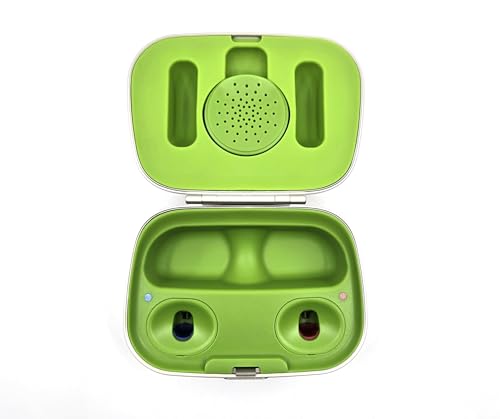
Phonak Combi 2 Charger — Charge and clean, wherever you are
Phonak’s Combi 2 takes a different editorial line from Starkey’s: where Starkey enumerates models, Phonak’s title sells a function set. It is the Phonak Combi 2 hearing aid charger, a multifunctional charger that will clean and charge wherever you are. The portability phrase and the cleaning claim together describe a unit aimed at wearers whose aids lead mobile lives, in and out of ears, pockets, weather and work, accumulating the wax and moisture that are the daily enemies of tiny receivers and vents.
Building cleaning into the charging seat is a genuinely thoughtful merger, because the nightly dock is the one moment the aids are guaranteed to be stationary, accessible and already in the owner’s hands. A routine that cleans while it charges removes a separate maintenance task that wearers, honestly, skip. We report the cleaning as the title’s claim; its mechanism and cycle are documentation questions, and no claim about hearing outcomes attaches to it, a cleaner aid is a maintained aid, and maintenance is as far as a charger’s virtues extend.
Consider the wearer this format flatters most: the one whose aids work in the world rather than resting in a quiet house. Musicians on tour, tradespeople on sites, grandparents rotating between grandchildren’s homes, all dock their aids in unfamiliar places where a charger that also cleans earns its space twice. Moisture and debris are occupational for such instruments, and a nightly seat that addresses both power and cleanliness is a small, sensible consolidation of two maintenance anxieties into one object that travels.
The title’s silence must be weighed with equal care: no specific Phonak models are named. Phonak’s rechargeable range spans generations whose chargers are not interchangeable, so the Combi 2’s fit for your exact instrument must be established from Phonak’s compatibility documentation or your audiologist before purchase. That verification step is the price of this pick’s broader positioning, and buyers who complete it gain the most functionally ambitious charger in the guide; buyers who skip it are gambling in the one category where gambling is pointless.
- Maker: Phonak, branded charger
- Format: Combi 2, multifunctional
- Functions named in title: cleaning and charging
- Portability claim in title: use wherever you are
- Specific compatible models: the title names none, so fit for your instrument must be confirmed in Phonak’s documentation before ordering
- Cleaning method and consumables: undescribed at title level, so check the manufacturer documentation for what the clean cycle needs
Strengths
- Merging cleaning into the nightly charge removes a routinely skipped chore.
- Travel-minded positioning suits wearers away from a fixed nightstand.
- Branded Phonak hardware for the maker’s rechargeable ecosystem.
Trade-offs
- No models are named in the title, so verification homework is mandatory.
- The cleaning system’s consumables and method are undocumented at title level.
- Owners wanting a plain, single-purpose dock may find the multifunction brief unnecessary.
Best for: Phonak wearers whose instruments are confirmed compatible and who value built-in cleaning.
Not suited for: purchases made without checking the maker’s compatibility list first, or instruments from any other brand.
Verify your Phonak model against the maker’s compatibility list first; then the Combi 2 on Amazon becomes a confident, genuinely useful upgrade to the nightly routine.

Otto Tech Oticon Charger 1.0 — A replacement desktop charger for miniRITE R instruments
The Otto Tech unit occupies the replacement niche with unusual precision. Its title describes an Oticon Charger 1.0, a desktop charger replacement, compatible with miniRITE R Oticon, Sonic and Bernafon rechargeable hearing aids, a desk charger. Three brands in one compatibility line will surprise readers new to the industry, but the title states it plainly, and the shared thread is the instrument style: miniRITE R, the rechargeable mini receiver-in-the-ear format common to those makers’ lines. Style, here, is the compatibility key, and the title hands it to you.
Replacement is the operative word. This pick exists for the lost charger, the failed charger, the second desk, the charger left at the lake house, and its value proposition is restoring an exact function rather than adding a new one. Owners of the named instruments who face a dead original face a specific anxiety, that a non-original unit might not seat or charge their aids correctly, and the title answers it with a defined style and brand set rather than a vague universal promise. That bounded claim is exactly what a replacement buyer should want to read.
The desk-bound nature of the replacement deserves a practical note: a desktop charger earns its keep in one fixed place, so site it where the aids come off, not where a socket happens to be free. Wearers who dock at a dressing table rather than a nightstand, or in a bathroom-adjacent routine their audiologist has approved for their model, should place the Otto Tech there permanently and let the original, if it survives, become the traveller. Fixed placement is what converts a replacement into a routine, and routine, in this category, is the entire game.
The boundaries follow from the same print. Instruments outside the miniRITE R style, including other Oticon families, are not claimed; nor are brands beyond the three named. Owners should also note this is a third-party replacement rather than an Oticon-branded unit, which some wearers will weigh against warranty considerations in their own documentation. Within its stated fence, though, it is the clearest replacement proposition in this guide, and the desk-charger format suits the fixed nightly station most wearers keep.
- Type: desktop charger replacement, third-party (Otto Tech)
- Style named in title: miniRITE R rechargeable instruments
- Brands named in title: Oticon, Sonic, Bernafon
- Model line in title: Charger 1.0
- Other instrument styles: unclaimed in the title, so BTE or custom-style owners should not assume fit
- Charge performance figures: the title prints none, so compare behaviour with your original charger through the manufacturer documentation
Strengths
- Style-based compatibility is stated precisely, miniRITE R across three named brands.
- Replacement positioning answers the lost-or-second-charger need directly.
- Desktop format matches the fixed nightly station most wearers use.
Trade-offs
- Third-party unit, which some owners will weigh against maker warranty terms.
- Styles beyond miniRITE R are outside the stated fit.
- No performance figures are offered at title level for comparison with the original.
Best for: Oticon, Sonic or Bernafon miniRITE R wearers replacing a charger or adding a second station.
Not suited for: other instrument styles, or owners who require the aid maker’s own branded charger.
Lost chargers should not mean uncharged aids; match your miniRITE R style against the Otto Tech Charger 1.0 on Amazon and restore the routine.

GN ReSound Linx Quattro Charging Case — The case-format charger for one named family
GN ReSound’s entry is the minimalist listing of the six: a GN ReSound Linx Quattro charging case. The title says the maker, the family and the format, and nothing else, and there is a kind of confidence in that brevity. A Linx Quattro wearer needs no further specification to recognise their charger; everyone else should recognise that the product is not addressed to them. The case format is the substance: storage, protection and charging unified in a portable enclosure, the format that treats hearing aids as the small, precious, easily misplaced objects they are.
Case charging changes the daily geography of ownership. The aids’ home becomes a thing that can sit in a handbag, a car console or a bedside drawer interchangeably, and the wearer charges wherever the case happens to rest. For travellers and for wearers whose homes lack a dignified nightstand station, that portability is not a garnish; it is the difference between a routine that survives real life and one that requires furniture. The case also imposes a tidiness that loose desktop docks cannot: lids close, contacts are sheltered, and the instruments are never left exposed on a surface.
There is also an dignity argument for the case that wearers mention and spec sheets ignore. A pair of hearing aids in a closed case is medical equipment stored properly; the same pair loose on a hotel nightstand is two small, beige, losable objects among the chargers and coins. The case gives the instruments a home that reads as intentional, and for wearers who are still negotiating their relationship with the devices, that tidiness is not trivial. GN ReSound sells the case as a charger; many owners will experience it as the aids’ home first and its charger second.
The honest caveat is scope. The title names the Linx Quattro family only, and ReSound’s range extends well beyond it; wearers of other ReSound lines should not extrapolate fit from the shared brand, exactly as Starkey’s exclusions taught earlier in this guide. Equally, the title offers no figures, no internal battery claims, no charge counts, so a buyer comparing case behaviour against a desktop dock must consult ReSound’s documentation for the operational details. What the listing certifies is identity: the maker’s own case for this family. For the wearer it names, that certification is the purchase.
- Maker: GN ReSound, branded charging case
- Family named in title: Linx Quattro
- Format: charging case, portable enclosure
- Other ReSound families: unnamed in the title, so fit beyond Linx Quattro is unstated and should not be assumed
- Case battery or charges-per-case figures: the title gives none, so check the manufacturer documentation for travel endurance details
- Power connection type: absent from the title
Strengths
- Maker’s own case for the Linx Quattro family, with fit carried in the name.
- Case format protects instruments while charging, at home or away.
- Portability suits wearers without a fixed charging station.
Trade-offs
- Family scope is narrow and explicitly bounded to Linx Quattro.
- No operational figures are given at title level.
- Case format may feel less immediate than an open desktop dock for arthritic hands.
Best for: ReSound Linx Quattro wearers wanting protected, portable charging in the maker’s own case.
Not suited for: other ReSound families or other brands, whatever the case’s resemblance to theirs.
For the family it names, this is the definitive case; find the ReSound Linx Quattro charging case on Amazon and confirm your instruments’ family name matches.

Connexx Desktop Charger for Signia Pure Charge&Go — Desktop charging across the Pure Charge&Go generations
Connexx’s desktop charger addresses the Signia ecosystem with a title that rewards close reading: a Connexx Pure desktop charger for Signia Pure Charge & Go iX, iX BCT and AX RIC hearing aids, also compatible with TruHearing 7 BCT, 7 and 6 RIC hearing aids. Two brand worlds meet in that sentence, Signia’s own Pure Charge&Go generations, iX, iX BCT and AX, and the TruHearing instruments named alongside them, united by the RIC style the title specifies. A wearer from either world can find their exact designation in print, which is the standard this guide asks of every pick.
Generation coverage is the quiet strength here. Signia’s platform names turn over, iX succeeding AX in the maker’s line, and a charger whose title spans both generations serves households and upgraders whose instruments straddle the change, as well as wearers buying a spare for an aid they intend to keep for years. The desktop format suits the fixed nightly station, and Connexx is a name Signia wearers will recognise from the fitting ecosystem, which lends the listing a professional context distinct from anonymous replacements.
The TruHearing half of the title deserves emphasis, because those wearers are the most likely to be stranded by assumption. TruHearing instruments reach their owners through programmes and providers rather than the high-street route, and their owners sometimes discover that accessory shopping requires knowing which underlying platform their aid belongs to. This title does that work for them, naming the 7 BCT, 7 and 6 RIC designations outright. If your paperwork carries one of those names, the search for a spare desktop charger ends here, with the designation in print rather than inferred.
Reading discipline still applies. The title’s fit is for the named Pure Charge&Go generations and the named TruHearing models, in RIC style; other Signia families, other styles, and other TruHearing designations are outside the printed claim. Nor does the title print charge times or power details, so the operational comparison with the charger supplied at fitting belongs to Signia’s documentation. Within its fence, this is a thoroughly specified desktop pick for a large installed base.
- Type: desktop charger (Connexx)
- Signia models named in title: Pure Charge & Go iX, iX BCT and AX, RIC style
- Also named in title: TruHearing 7 BCT, 7 and 6 RIC hearing aids
- Style named in title: RIC
- Other Signia families: unclaimed here, so Motion, Silk or other lines should not assume fit
- Charge time and cable details: the title omits both, so use the manufacturer documentation for routine planning
Strengths
- Spans two Signia platform generations plus named TruHearing models in one title.
- Exact designations are printed, letting owners verify letter for letter.
- Desktop format suits the permanent nightly station.
Trade-offs
- Fit stops at the named generations and models, however close another model seems.
- No travel-case function for wearers away from the desk.
- Operational figures are absent at title level.
Best for: Signia Pure Charge&Go iX, iX BCT or AX wearers, and TruHearing 7 BCT, 7 or 6 RIC owners.
Not suited for: other Signia families or styles, or wearers wanting a portable case format.
Check your designation against its title word for word; then the Connexx desktop charger on Amazon is a straightforward spare or replacement.

ELICTECH Size 312 Rechargeable Battery Charger Station — Charging the batteries, not the instruments
The final pick breaks the pattern of the other five, and understanding why is the key to this whole category. Its title describes an ELICTECH hearing aid battery charger station supplied with four rechargeable size 312 batteries, a 312 rechargeable battery and hearing aid charger travel case for seniors. This unit does not dock an instrument at all. It charges removable size 312 cells, the small button batteries that a large population of hearing aids run on, for owners who prefer rechargeable cells to a stream of disposables.
That is a legitimate and distinct ownership model. Aids built for size 312 cells are everywhere, including many instruments that predate the sealed rechargeable era, and their wearers face a battery ritual rather than a docking ritual: cells out, cells in, spares ready. A station that keeps four rechargeable 312s cycling, in a travel case format the title aims at seniors, converts that ritual from consumable management into a recharge routine, with the case keeping cells, charger and presumably the daily pair organised in one place. The compatibility question also simplifies beautifully: the fit is the cell size, 312, printed on every battery door and packet in this world.
For senior wearers, the audience the title names, the station’s virtue is the consolidation of fiddly things. Size 312 cells are small enough to defeat unsteady fingers when they are loose in a drawer; a travel case that holds the charger and four cells in defined places turns a scattered ritual into a seated, repeatable one. Family members setting up a parent’s routine should note that advantage: the product is not merely a charger but a small organising system for the least dexterous task in hearing aid ownership, and its case format is the feature, as much as its electronics.
The boundaries are equally clear. This station does nothing for sealed rechargeable instruments, the Starkey, Phonak, Oticon, ReSound and Signia aids above, whose batteries cannot be removed and must never be treated as removable. And rechargeable 312 cells behave differently from the disposables they replace, so wearers should set expectations from the product’s documentation rather than from disposable habits. As the representative of the cell-based world in a guide dominated by docks, it earns its slot by serving the wearers the other five cannot.
- Type: battery charger station for removable cells, not an instrument dock
- Cell size: size 312 rechargeable batteries
- Included per title: 4 rechargeable size 312 batteries
- Format: travel case, positioned for seniors in the title
- Instrument compatibility: any aid taking size 312 cells; sealed rechargeable instruments are outside this product’s purpose entirely
- Cell runtime and cycle life figures: absent from the title, so set expectations from the manufacturer documentation rather than disposable-cell experience
Strengths
- Serves the large population of size 312 cell aids the docks cannot.
- Four included rechargeable cells start the rotation immediately.
- Travel case format keeps the small parts of the routine in one place.
Trade-offs
- Useless to sealed rechargeable instruments, by design.
- Rechargeable cell behaviour differs from disposables and needs expectation-setting.
- Small cells remain fiddly for wearers with limited dexterity.
Best for: wearers whose aids take size 312 cells and who want a rechargeable rotation in a travel case.
Not suited for: any sealed rechargeable hearing aid, which must use its own model charger.
If your aids open for 312 cells, this station replaces the disposable routine; look at the ELICTECH 312 charger station on Amazon with your battery size confirmed.
How do the six hearing aid chargers differ in fit and format?
| Charger | Serves | Format | Fit evidence in title |
|---|---|---|---|
| Starkey Premium Standard | Evolv AI, Livio families, Muse IQ | Maker’s standard charger | Families + RIC/BTE named, ITE excluded |
| Phonak Combi 2 | Phonak rechargeable aids | Multifunctional, portable | Clean + charge claimed; models not named |
| Otto Tech Charger 1.0 | Oticon, Sonic, Bernafon miniRITE R | Desktop replacement | Style + three brands named |
| ReSound Linx Quattro Case | Linx Quattro family | Charging case | Family named in product name |
| Connexx Desktop | Signia Pure Charge&Go iX/AX, TruHearing | Desktop | Generations + models named |
| ELICTECH 312 Station | Any aid using size 312 cells | Battery station, travel case | Cell size is the fit |
What mistakes do wearers make when buying a replacement charger?
Brand-only matching is the founding error: a charger that says the right maker’s name but belongs to another generation or style, bought in a hurry after the original was lost, and discovered to be wrong at bedtime. The titles in this guide show how much information a correct purchase requires, family, generation, style, and the mistake is skipping any one of the three. The second error is the opposite panic, assuming a lost charger means an unusable aid for weeks, when replacement and second-station options like the Otto Tech exist precisely for that week.
A fifth mistake is disposing of the paperwork. The fitting documents that record your exact model feel like clutter in the first month and become the most valuable paper in the house in the third year, when a charger fails on a Sunday. Keep them with the aids’ case, photograph them as this guide recommends, and write the model name inside the charger’s lid in marker if the maker permits it. Future purchases, including every pick in this guide, become thirty-second verifications instead of evenings of archaeology.
Third, wearers treat chargers as interchangeable because the aids look alike. Sibling instruments from one maker can share a silhouette across generations while changing their charging arrangements, and the eye is not a compatibility instrument; the printed model name is. Fourth, cell-world and dock-world buyers cross-shop accidentally, ordering a 312 station for a sealed aid or hunting for a dock for an aid whose battery door opens. Knowing which world your instrument inhabits, sealed rechargeable or removable cell, is the first question of the category, and it is answered by the aid itself, not by preference.
How should you build a charging routine that never strands you?
Households with two wearers should formalise what single wearers can leave informal. Two chargers on one nightstand invite the dawn swap, aids in the wrong dock, discovered when one wearer is already dressed; labels, separated stations, or the multi-generation Starkey pattern where both instruments share one named charger, all solve it, but only if chosen deliberately. Carers setting up for a parent should apply the same thinking: one charger, one place, one obvious seat, and a label in large print naming the aids it serves. In assistive routines, clarity is kindness.
Anchor the routine to sleep. Aids out, into the charger, every night, in the same place, with the charger kept powered and its seating checked by feel until the gesture is automatic. Wearers who travel should replicate the anchor rather than improvise it: the case or second charger goes where the nightstand would be, and the aids dock there with the same inevitability. The routine’s enemy is the exceptional night, the late return, the different room, so design for it in advance with the spare charger placed where exceptions happen.
Power cuts and trips test the routine in ways worth rehearsing mentally. A charger displaced by a cleaner, unplugged by a grandchild, or left behind in a holiday rental should be discovered by a morning check, aids seated and charging state confirmed as part of waking, rather than by an aid dying at noon. Wearers who build that two-second glance into the morning have effectively insured themselves against the commonest charging failures, none of which are electrical in origin. The hardware in this guide is reliable; it is the human loop around it that benefits from design.
Keep the contacts and the aids’ seating area clean and dry, following the maker documentation for your model, and treat a charger that suddenly behaves differently, an aid uncharged by morning, a seat that no longer holds, as a prompt to inspect both halves of the pairing rather than blaming one. Chargers are long-lived but not immortal, and the replacement picks in this guide exist because the routine must survive the hardware. A wearer whose charging never fails is not lucky; they are systematic, and the system is nothing more than the right charger, in the right place, used the same way every night.
Final Recommendation
Enter at your ecosystem and the choice is short. Starkey’s named families take the maker’s own charger, with its exclusion respected. Phonak wearers who verify their model gain the Combi 2’s clean-and-charge convenience. Oticon, Sonic and Bernafon miniRITE R owners have a precisely bounded replacement in the Otto Tech. Linx Quattro wearers take ReSound’s case. Signia Pure Charge&Go and the named TruHearing owners take the Connexx desktop unit. And the size 312 world takes the ELICTECH station, a different product for a different kind of aid. A hearing aid charger is a small object with an outsized duty, keeping an essential instrument ready every morning, and the right one is never a guess: it is the charger whose title prints your instrument’s name, checked twice, before the order is placed. Keep the paperwork, photograph the labels, station the charger where the aids come off at night, and this most failure-prone link in the hearing aid’s daily life becomes the most reliable one, night after night, year after year, through travel, through house moves, through the small disruptions that defeat every routine that was left to memory instead of being built into the furniture of the day, which is where durable habits have always lived, quietly, without asking to be remembered at all, even once, by anyone in the house, on any ordinary morning of the year ahead of them.
Frequently Asked Questions
Can I use another brand’s charger if the aid fits in it?
No. Physical fit is not compatibility. Charging contacts, seating and charge behaviour are designed per model family, and every title here bounds its fit to named instruments or styles. Use the charger whose listing names your aid, or the maker-documented equivalent.
My hearing aid is rechargeable but old. Will a current charger work?
Only if your generation is named. The Starkey title lists specific families, the Connexx title lists specific generations, and unlisted generations are unstated fits, not probable ones. Check your fitting paperwork for the exact model name and match it in print.
What is the difference between the charger picks and the 312 station?
The five docks and cases charge instruments with sealed built-in batteries. The ELICTECH station charges removable size 312 cells for aids designed around replaceable batteries. The two worlds never substitute for each other.
Does a better charger improve how my hearing aids work?
A charger keeps your aids powered and ready; it does not change their sound or performance, and this guide makes no hearing claims for any pick. Questions about how your aids perform belong with your audiologist, who fitted them.
How do I find my hearing aid’s exact model name?
Check the fitting paperwork first; it records the family, generation and style your audiologist dispensed. The instrument itself usually carries a model marking, and your clinic can confirm the designation from your file in one call. That exact name, not the brand alone, is what must appear in a charger’s title or the maker’s compatibility documentation.
Should I buy a second charger?
Many wearers do, for travel, a second home or insurance against loss, and the replacement-positioned picks here, the Otto Tech especially, exist for that pattern. A second charger must meet the same title-matching standard as the first.
Related Guides
Model-matching discipline appears across the charging world. Continue with Best Solar Trickle Chargers for battery maintenance outdoors, Best DeWalt 20V Chargers for platform-matched tool charging, and Best Marine Deep-Cycle Battery Chargers for bank-by-bank charging at boat scale.


