What's inside
- Key Takeaways
- Quick Picks
- How We Chose These Picks
- Side-by-Side Comparison
- How to Choose a Nylon Printer
- How Should Nylon Filament Be Dried and Stored?
- Which Nylon Parts Justify the Effort?
- What Does a Sensible First Nylon Project Look Like?
- How Do Carbon-Fibre Blends Change the Calculation?
- Common Mistakes When Buying a Nylon Printer
- Final Recommendation
- Frequently Asked Questions
- Related Guides
As an Amazon Associate I earn from qualifying purchases. This post may contain affiliate links at no extra cost to you.
[SITE_DOMAIN] is reader-supported. When you buy through links on our site, we may earn an affiliate commission.
Purchasing route for this category: each machine below links to its Amazon listing, and because several of these printers sell in multiple bundle configurations — with or without their brand’s multi-material unit — the listing title is where you confirm exactly which configuration a given offer contains before ordering.
The best nylon 3d printers are defined by two numbers and a door. The numbers are nozzle temperature and chamber temperature, because nylon filament melts high and warps enthusiastically when the air around a print cools unevenly. The door is the enclosure that keeps that warm air in place. A machine missing any of the three can be coaxed into printing small nylon parts on a lucky day, but production nylon — gears, brackets, functional prototypes that must survive real loads — demands all three working together, print after print.
Nylon earns its difficulty honestly. Properly printed, it produces parts with a toughness and abrasion resistance that PLA and PETG cannot approach: living hinges that flex thousands of times, gears that mesh without shredding, clips and mounts that absorb knocks in workshops, garages and engine-adjacent environments. That performance is why engineers tolerate nylon’s demands — high temperatures, dry filament, a warm chamber — and why this guide reads titles strictly, crediting each machine only with the temperatures and chamber hardware its own listing actually states.
The six machines below divide into three QIDI models with fully stated thermal figures, a Bambu Lab flagship bundle built for professional engineering work, a large Creality combo with multi-colour hardware, and a Sovol whose open-source Voron architecture comes with a lower stated hotend ceiling and an enclosure status its title leaves unstated. That last point is handled openly in its review rather than smoothed over, because nylon buying is precisely where an assumed enclosure does the most damage.
Filament drying runs through this whole category like a watermark. Nylon absorbs moisture from room air faster than almost any common filament, and wet nylon prints with bubbles, roughness and layer bonds weak enough to defeat the material’s entire purpose. Every owner in this guide’s audience needs a drying routine — a dedicated dryer or equivalent — and the how-to section below treats drying as part of the printing process rather than an optional refinement.
Cost honesty belongs at the front of this category too. Engineering printers ask more of a budget than PLA machines, and the spending does not end at the printer: drying hardware, sealed storage, abrasive-resistant consumables for filled blends and the filament itself all belong in the first-year ledger. None of that makes nylon printing poor value — a single printed replacement part can retire a machine’s whole running cost argument — but buyers who plan the full ledger choose better machines, because they stop asking one purchase to cover a system’s worth of needs.
Key Takeaways
- All three QIDI picks state the same thermal headline: a 370°C nozzle and a 65°C heated chamber.
- The QIDI Max4 Combo carries the largest stated build volume here at 390x390x340mm; the QIDI Q2 is the compact option at 270x270x256mm.
- Bambu Lab’s X1E Combo states active chamber heating and AI print detection, aimed at professional and engineering users.
- Creality’s K2 Plus Combo adds multi-colour printing through its CFS system to a 13.78-inch-cube build volume.
- The Sovol SV08 states a 300°C hotend; its enclosure status is not stated in its title, so treat that as a point to verify, not an assumption.
- Dry filament is non-negotiable with nylon — budget for drying alongside the printer.
Quick Picks
| Pick | Badge | Why it earns a place |
|---|---|---|
| QIDI Max4 Combo | Largest heated chamber build | 390x390x340mm volume with a 370°C nozzle and 65°C heated chamber for big engineering parts. |
| QIDI Plus5 | Mid-size thermal specialist | The same 370°C and 65°C figures in a 320x320x300mm format with linear guide rails. |
| QIDI Q2 | Compact PPS-CF capable | Heated chamber, 370°C nozzle and ultra air filtration in the smallest QIDI footprint here, printing within ten minutes of unboxing. |
| Bambu Lab X1E Combo | Professional AMS bundle | Active chamber heating, AI print detection and the AMS in one bundle aimed at engineering work. |
| Creality K2 Plus Combo | Colour plus size | Multi-colour CFS printing, dual AI cameras and a 13.78-inch build cube at 600mm/s. |
| Sovol SV08 | Open-source Voron platform | Voron 2.4 architecture, a 300°C clog-free hotend and four independent Z motors on a large frame. |
How We Chose These Picks
Screening for nylon started with a thermal audit of listing titles. A credible nylon machine must state, or at least clearly support, the two capabilities the material demands: a hotend comfortably above nylon’s melting range and a chamber strategy that keeps printed layers warm. Titles were read literally. Where a figure appears — 370°C nozzles, 65°C chambers, a 300°C hotend — the review uses it. Where a title stays silent, most notably on the SV08’s enclosure, the review says the figure is not stated and tells you to verify it, because guessing wrong about an enclosure wastes more money than any other mistake in this category.
Build volume formed the second filter, since engineering parts skew larger than decorative ones. The shortlist spans from the Q2’s compact 270-millimetre class up to the Max4’s 390x390x340mm, with the Creality and Sovol entries occupying the large middle. Owners printing drone frames, machine guards or automotive clips will feel those differences on real projects, and the comparison table keeps the stated volumes side by side.
Finally, we weighted the working details that separate laboratory specifications from production machines: AI cameras for monitoring long engineering prints, filtration for the fumes hot materials produce, optional cooling and material systems named in the titles, and levelling systems that hold calibration across big beds. Nylon printing sessions run long and hot; the machines below were chosen because their titles describe hardware that respects that reality.
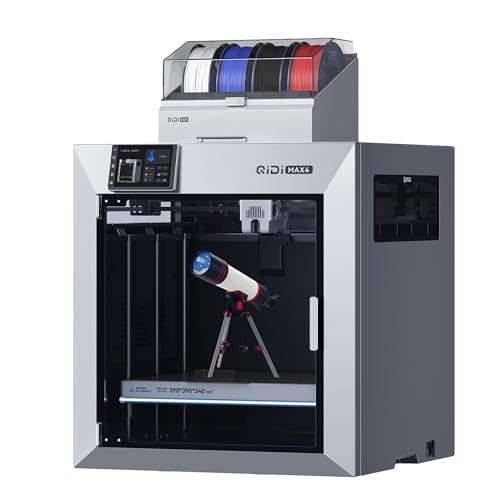
QIDI Max4 Combo — Largest heated chamber build
The Max4 Combo states the full nylon recipe at the largest scale in this guide: a build volume of 390x390x340mm, a heated chamber rated at 65°C, and a nozzle ceiling of 370°C. Size changes what nylon is for. At this volume, machine guards, ducting, large gears, drone and robotics structures, and multi-part assemblies printed as single pieces all enter the catalogue — parts that smaller machines force into glued sections with seams exactly where strength matters most. The heated chamber is what makes those large prints survivable, because big nylon parts warp hardest at their corners, and warm still air is the countermeasure.
Supporting hardware in the title reads like an engineer’s checklist rather than a marketer’s: dual Z lead screws keeping the tall gantry honest, auto-leveling across the big bed, an AI camera watching long prints, and a stated maximum speed of 800mm/s that owners of large parts will appreciate on the long straight runs where big prints spend their hours. Multi-material capability is claimed in the title, and the Polar Cooler is listed as optional — a distinction the review keeps visible, because optional hardware is a future purchase, not a feature in the box.
Combo configuration matters at purchase time. QIDI sells this platform in variants, and the listing title for the exact offer you open is the authority on whether the bundle matches the combo described here. Owners should also plan the physical side honestly: a printer with a near-400-millimetre build volume plus chamber and clearance is furniture, demanding a bench with real depth and a room that tolerates a warm appliance running for many hours. Given that home, the Max4 Combo is the guide’s clearest answer for large, serious nylon work.
- Build volume: 390x390x340mm stated
- Chamber: 65°C heated chamber stated
- Nozzle ceiling: 370°C stated
- Motion: Dual Z lead screws; max 800mm/s high speed stated
- Monitoring: AI camera stated; auto-leveling stated
- Extras: Polar Cooler listed as optional, not included by default
Strengths
- Largest stated build volume in this guide, with chamber heat to protect it.
- 370°C nozzle covers nylon and hotter engineering blends.
- Dual Z lead screws suit the tall, heavy gantry.
Trade-offs
- Physical footprint demands a deep, dedicated bench.
- Polar Cooler is an optional extra, not bundle content.
- Large heated prints consume serious time and filament per part.
Best for: an engineering workshop seeking large nylon parts inside a 390-millimetre heated build volume. Not suited for: a small desk corner, given the bench depth a near-400mm-class machine requires.
Workshops speccing the flagship can check price on Amazon for the Max4 Combo and confirm the combo configuration and the 390x390x340mm volume line in the listing title they open.
Production rhythm on a machine this size rewards batching. Owners who group several nylon parts onto one plate amortise the chamber’s warm-up across many pieces, and the AI camera lets those long combined jobs run with supervision from the next room. Keep a drying routine running in parallel — a big plate of nylon parts represents a lot of filament, and discovering damp material halfway through a plate is the most expensive lesson this category teaches. The Max4’s hardware assumes an owner who plans; meet it halfway and it produces parts that smaller machines simply cannot attempt.
Ventilation planning belongs in the same paragraph as bench planning. A heated chamber printing engineering materials for hours deserves a room with air movement and an owner who respects the filtration question. The title does not claim a filtration system for this model, so treat room ventilation as your own responsibility, site the machine accordingly, and the Max4’s considerable virtues can be enjoyed without borrowing trouble.
Material logistics scale with the machine. Large nylon parts consume filament by the hundreds of grams, so owners should keep at least one full spare spool dried and ready before starting a major plate — running dry mid-part on a machine this size wastes the whole plate, not just an evening. The combo’s multi-material capability also invites a standing arrangement: nylon loaded for structure, a second material for supports or contrast, each with its own drying history tracked. Big machines reward owners who think in systems, and the Max4 is the most system-demanding pick in this guide.

QIDI Plus5 — Mid-size thermal specialist
The Plus5 keeps the thermal headline of its larger sibling — a 370°C nozzle and 65°C chamber heating — and wraps it around a 320x320x300mm build volume that fits more benches and more budgets of space. For the majority of nylon work, that volume is the sweet spot: gears, brackets, housings, functional prototypes and jigs almost never need the Max4’s extra reach, and the smaller chamber heats its air more efficiently around the parts owners actually print. Choosing the Plus5 over the Max4 is not settling; it is matching the machine to the real distribution of part sizes.
Motion hardware gets unusual specificity in this title: a linear guide rail and a 9mm 1.5GT belt are named outright, alongside a maximum speed of 600mm/s. Linear rails are the detail experienced builders look for, because rail-guided motion stays precise as machines age and belts stretch, and a wider belt resists the elasticity that blurs corners at speed. Auto-leveling and an AI camera carry over from the flagship formula, and both the QIDI BOX and Polar Cooler appear as optional accessories — named as options, and treated as options in this review.
The Plus5’s identity is the disciplined middle: flagship temperatures, mid-size volume, rail-guided motion, and a purchase decision that stays simple. Owners whose nylon ambitions are serious but whose parts are hand-sized will find nothing essential missing. Owners whose parts regularly exceed 320 millimetres in an axis should step up to the Max4 without regret, because no slicer setting invents volume. Between those two honest cases sits the majority of engineering printing, and the Plus5 serves it with the least excess hardware in the QIDI trio.
- Build volume: 320x320x300mm stated
- Chamber: 65°C chamber heating stated
- Nozzle ceiling: 370°C stated
- Motion: Linear guide rail and 9mm 1.5GT belt named; max 600mm/s stated
- Monitoring: AI camera stated; auto-leveling stated
- Extras: QIDI BOX and Polar Cooler both listed as optional
Strengths
- Flagship thermal figures in a bench-friendlier format.
- Named linear rail and wide belt promise durable precision.
- Chamber size suits the parts most nylon owners actually print.
Trade-offs
- Both the material box and cooler are optional extras.
- Parts beyond 320mm in an axis need the larger sibling.
- Thermal capability is wasted on PLA-only workloads.
Best for: an engineering hobbyist seeking 370°C and heated-chamber nylon printing in a mid-size format. Not suited for: single-piece parts longer than the stated 320mm build axis.
Buyers comparing the QIDI pair can check price on Amazon for the Plus5 and verify the 320x320x300mm line and the optional-accessory wording in the listing before choosing their size.
One ownership pattern suits the Plus5 particularly well: the dedicated engineering bench. Because its chamber and nozzle cover the hot materials, owners tend to reserve this machine for nylon and its engineering relatives while friendlier materials live on a second, simpler printer. That division of labour keeps the Plus5’s calibration and setup tuned for hot work, keeps abrasive and high-temperature wear concentrated on the machine built for it, and turns the Plus5 into a specialist tool that is always ready in the configuration its hardest jobs need.
The optional accessories deserve a decision framework rather than a shrug. The QIDI BOX addresses material handling, and owners running several engineering filaments will feel its absence as manual spool shuffling; the Polar Cooler addresses chamber climate in the other direction for materials that want cooling control. Neither is required for a first nylon programme. Buy the printer, print nylon well for a month, and let the friction you actually experience choose which option earns its place — accessory money spent against real friction is never wasted, while accessory money spent against imagined friction usually is.
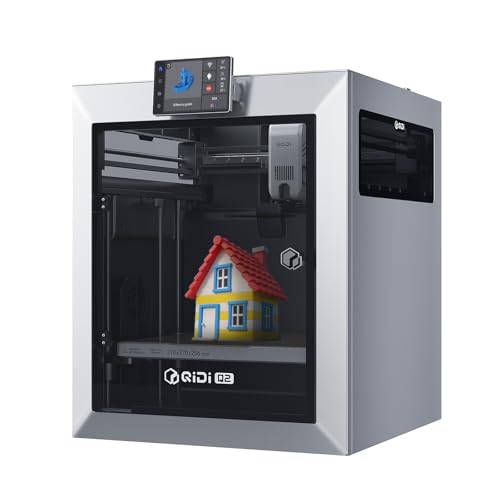
QIDI Q2 — Compact PPS-CF capable
The Q2 compresses the QIDI thermal formula into the smallest footprint of the trio — 270x270x256mm — without surrendering the numbers that matter: a 65°C heated chamber and a 370°C nozzle, with the title explicitly claiming that combination unlocks PPS-CF, a carbon-fibre engineering material a class beyond nylon. Ultra air filtration is stated as well, which matters more as materials get hotter and more industrial; a compact machine printing engineering blends in a home workshop needs to manage its own exhaust, and the Q2’s title says it does.
Speed and convenience round out the pitch: 600mm/s high speed, an AI camera, full auto leveling, and a claim of going from unbox to print in ten minutes. That last figure will please owners who buy machines to print parts rather than to assemble furniture, and it signals the intended audience — engineers and serious hobbyists who want a compact hot machine on a side bench, ready quickly, printing materials that most desktop printers cannot touch. Nylon sits comfortably inside that envelope, with headroom above it for the day a project demands PPS-CF’s stiffness and heat resistance.
The trade is volume, stated plainly. At 270x270x256mm the Q2 handles the gears, mounts, brackets and housings that dominate engineering printing, and excludes the large guards and ducts its bigger siblings swallow. Buyers should measure their ambitions literally: sketch the three largest parts on the project list and compare. If they fit, the Q2’s compactness becomes pure advantage — less bench, faster chamber warm-up around small parts, filtration included. If they do not fit, no amount of thermal excellence compensates, and the Plus5 or Max4 is the honest destination.
- Build volume: 270x270x256mm stated
- Chamber: 65°C heated chamber stated
- Nozzle ceiling: 370°C stated, with PPS-CF named in the title
- Filtration: Ultra air filtration stated
- Speed and setup: 600mm/s stated; unbox to print in 10 min claimed
- Monitoring: AI camera and full auto leveling stated
Strengths
- Full thermal specification in the smallest QIDI footprint here.
- Stated filtration suits hot materials in home workshops.
- PPS-CF capability gives a growth path beyond nylon.
Trade-offs
- 270mm-class volume excludes large single-piece parts.
- Compact chamber suits small parts, not batch plates.
- Engineering focus is excess for decorative printing.
Best for: a home engineer seeking heated-chamber nylon and PPS-CF printing on a compact bench. Not suited for: parts exceeding the stated 270x270x256mm build volume.
Engineers short on bench space can check price on Amazon for the Q2 and confirm the filtration line and the 270-millimetre volume in the listing title before ordering.
The Q2 also makes a thoughtful second machine for owners whose main printer is a large, friendly PLA workhorse. Engineering materials punish casual setups — they want heat, dryness and filtration — and dedicating a compact specialist to them keeps the big machine free for everyday work while the Q2 sits configured for hot filaments permanently. That two-machine pattern is how many small workshops actually organise themselves, and the Q2’s footprint was clearly designed by people who understood the assignment: flagship temperatures, minimum bench.
Filtration changes the siting conversation for the Q2 in a way owners should exploit. A compact machine with stated ultra air filtration can live in the workshop corner or the spare room that a hotter, unfiltered machine would be exiled from, provided the room still has ordinary ventilation. That siting freedom matters because engineering printers earn their keep through long, frequent jobs; a machine banished to a cold outbuilding prints less, and its nylon absorbs the outbuilding’s damp between sessions. The Q2’s whole design — compact, filtered, quick to start — is an argument for keeping hot printing close to daily life, responsibly.

Bambu Lab X1E Combo — Professional AMS bundle
Bambu Lab’s X1E Combo is the ecosystem play in this guide: an X1E printer bundled with the AMS, described in its title as a CoreXY high-speed machine with AI print detection and active chamber heating, ideal for professional and engineering work. Active chamber heating is the phrase nylon buyers should underline. Rather than relying on the bed and nozzle to warm a passive box, an actively heated chamber holds its set temperature as a controlled environment, and nylon’s warping instinct is exactly what that control exists to defeat.
The AMS bundle changes the engineering workflow in a way single-spool machines cannot imitate. Engineering printing uses support strategies, purge materials and multi-material combinations that benefit from several loaded filaments, and the AMS keeps those filaments organised, identified and fed without manual swaps mid-print. Combined with AI print detection — a watching system for the failures that ruin long engineering jobs silently — the X1E Combo describes a machine meant to run production work while its owner does something else. Professional positioning in a title is usually decoration; here the supporting features genuinely sketch a professional tool.
Discipline requires noting what this title does not state: no nozzle temperature figure, no chamber temperature figure and no build volume appear in it. Bambu Lab publishes those numbers in its documentation, and the review’s spec box directs you there rather than borrowing figures from sibling models or general knowledge. For a buyer comparing the X1E against the QIDI trio’s fully stated thermal headlines, that verification step is part of the purchase. What the title does establish — active heating, detection, AMS, engineering intent — is the architecture; the documentation supplies the digits.
- Colour / material system: AMS included in the combo bundle
- Chamber: Active chamber heating stated
- Monitoring: AI print detection stated
- Motion system: CoreXY, high-speed described
- Positioning: Professional and engineering use stated
- Nozzle and chamber temperature figures: Not stated in the listing title — verify with the manufacturer documentation
Strengths
- Active chamber heating targets nylon warping directly.
- AMS bundle streamlines multi-material engineering workflows.
- AI print detection guards long professional jobs.
Trade-offs
- Key thermal figures require a documentation check before ordering.
- Combo bundle carries the AMS unit’s extra footprint.
- Ecosystem depth rewards commitment to one brand’s workflow.
Best for: a professional user seeking active chamber heating with an AMS bundle for engineering materials. Not suited for: a buyer wanting every thermal figure confirmed from the listing title alone.
Professionals weighing the ecosystem can check price on Amazon for the X1E Combo and then confirm the temperature figures in Bambu Lab’s documentation, since the listing title itself leaves those digits unstated.
The X1E’s natural home is the small engineering office or the serious prototyping bench where prints are deliverables. A client-facing prototype in nylon, a jig that a production line is waiting on, a replacement part with a deadline — those jobs justify detection, active heating and a managed material system in a way hobby printing never will. Owners in that setting should still run the drying discipline this category demands; the AMS organises filament beautifully, but organisation is not dryness, and nylon pulled damp from any storage system prints badly in any machine.
Workflow integration is the X1E’s quieter strength. A managed material system, detection and active heating compose into a printer that slots into a professional day: jobs queued in the morning, monitored passively, collected as deliverables. Engineering teams measure tools by the attention they consume, and every feature in this title is an attention-saving device. Buyers should weigh that against the verification homework the title leaves — a one-time documentation read is a small price for a machine designed to save attention daily, but it is a step the QIDI shortlist simply does not ask of you.

Creality K2 Plus Combo — Colour plus size
Creality’s K2 Plus Combo brings a combination none of the QIDI machines claim: multi-colour printing through the new CFS system, on a large build volume stated as 13.78×13.78×13.78 inches, at 600mm/s with full auto-leveling and a next-generation direct drive extruder watched by dual AI cameras. Colour in an engineering guide needs justifying, and the justification is real: colour-coded prototypes, labelled machine parts, safety markings printed into the part rather than painted on, and multi-material assemblies where the CFS feeds more than decoration. Engineering teams prototype in colour because assemblies explain themselves faster that way.
The direct drive extruder matters for the material at the centre of this guide. Nylon and its flexible engineering relatives feed more reliably when the drive gears sit close to the melt zone, and a next-generation extruder paired with full auto-leveling across a big bed addresses the two chores — feeding and first layers — that decide whether large nylon prints start well. Dual AI cameras extend the monitoring story: engineering prints run long, and two watching angles on a big build area is a sensible match of supervision to scale.
Thermal candour is required here as it was for the Bambu: the K2 Plus title states neither a nozzle ceiling nor a chamber temperature, and this review does not invent them. Creality positions the machine for large, fast, colourful work, and buyers whose nylon programme is demanding should verify the thermal figures in the manufacturer documentation before treating it as their engineering centre. What the title guarantees — size, speed, colour system, direct drive, dual-camera monitoring — already defines a substantial machine; the documentation check decides whether it is also your nylon machine.
- Colour system: CFS multi-colour printing, combo configuration
- Build volume: 13.78×13.78×13.78inch stated
- Top speed: 600mm/s high-speed stated
- Extruder: Next-gen direct drive extruder stated
- Monitoring: Dual AI cameras stated; full auto-leveling stated
- Nozzle and chamber temperature figures: Not stated in the listing title — verify with the manufacturer documentation
Strengths
- Multi-colour CFS printing on a genuinely large build volume.
- Direct drive suits nylon and flexible engineering filaments.
- Dual AI cameras match the monitoring to the scale.
Trade-offs
- Thermal figures are unstated in the title and need verifying.
- Colour purging adds waste on multi-material jobs.
- Large combo footprint claims serious bench space.
Best for: a prototyping team seeking large-format multi-colour printing with direct drive feeding. Not suited for: a nylon buyer needing stated chamber temperatures from the listing before shortlisting.
Teams drawn by the colour system can check price on Amazon for the K2 Plus Combo and confirm the CFS bundle contents in the listing, then verify thermal figures in Creality’s documentation.
Where the K2 Plus earns lasting loyalty is iteration speed. A team can print a housing in the morning with colour-coded mounting points, discover the fit issue by lunch, revise, and print the corrected version in an accent colour that afternoon so nobody confuses revision two with revision one on a crowded bench. That colour-as-version-control habit sounds small and reorganises a prototyping workflow completely. Add the large volume — assemblies printed whole rather than in pieces — and the Creality becomes the guide’s iteration machine, provided its verified thermal figures suit your materials.
There is a team-size consideration hidden in the dual cameras. Monitoring matters in proportion to how far the humans are from the printer, and a K2 Plus working in a shared studio or a school technology room, supervised by whoever walks past, benefits from camera coverage its owner can check from anywhere. Solo owners in a home workshop, standing beside their machine, will value the same cameras less. Match the monitoring hardware to your actual supervision pattern, and remember that cameras never substitute for the thermal verification this machine’s nylon buyers still owe themselves.

Sovol SV08 — Open-source Voron platform
The SV08 arrives from a different tradition: it is a factory-built machine on Voron 2.4 architecture, the open-source CoreXY design that the enthusiast community developed and Sovol productised. Its title states a 700mm/s high speed, a 300°C clog-free hotend with a camera, auto leveling driven by four independent Z motors, and a large print size of 13.8×13.8×13.6 inches. Four independent Z motors are a connoisseur’s detail — the gantry can true itself against the bed at four points, which is how big CoreXY frames hold calibration across their full area.
Now the disclosure this pick demands. Nylon wants an enclosure and high temperatures, and the SV08’s title states a 300°C hotend — adequate headroom above nylon’s needs — but says nothing about an enclosure or chamber. This review therefore does not claim one. Buyers considering the SV08 for nylon must verify the machine’s enclosure situation in the manufacturer documentation and plan accordingly: some owners add enclosures to open-architecture machines, and the Voron tradition positively encourages such modification, but a modification you plan and buy is a different thing from a chamber included in the box.
Judged within that honesty, the SV08 offers something unique here: a large, fast, open-source platform whose every behaviour can be inspected, tuned and modified by its owner, at a 300°C ceiling that covers nylon’s thermal demands at the hotend. Owners from the Voron community will feel at home immediately. Owners wanting a sealed, heated, warranty-simple nylon appliance should choose from the QIDI trio or the X1E instead. The SV08 is the tinker’s nylon route — capable, transparent, and dependent on its owner to close the enclosure question deliberately.
- Architecture: Voron 2.4 open-source design, CoreXY
- Hotend: 300°C clog-free hotend stated, with camera
- Levelling: Auto leveling with 4 independent Z motors stated
- Print size: 13.8×13.8×13.6in stated
- Top speed: 700mm/s high speed stated
- Enclosure / chamber: Not stated in the listing title — verify with the manufacturer documentation
Strengths
- Open-source Voron architecture invites tuning and modification.
- Four-motor Z system trues the gantry across a large area.
- 300°C hotend covers nylon’s hotend requirement.
Trade-offs
- Enclosure status is unstated — nylon buyers must verify and plan.
- No chamber temperature is claimed in the title.
- Open-architecture ownership suits tinkerers more than appliance buyers.
Best for: a Voron enthusiast seeking a large factory-built CoreXY platform with a 300°C hotend. Not suited for: a buyer needing a stated heated chamber in the box for nylon production.
Tinkerers evaluating the platform can check price on Amazon for the SV08 and then verify the enclosure situation in Sovol’s documentation before committing it to nylon duty.
The community dimension completes the SV08’s case. Voron architecture means thousands of owners have documented modifications, profiles and fixes in public, and a nylon programme built on this machine inherits that library — including, prominently, enclosure projects other owners have already engineered for this exact frame. An owner comfortable following those footsteps can end with a nylon setup tailored precisely to their bench. An owner who wanted the chamber on day one, sealed and warranted, was never this machine’s audience, and the QIDI reviews above are waiting for them.
Cost accounting on the SV08 route should be honest about the whole programme. The printer’s price is the beginning; an enclosure solution, drying hardware and the owner’s time all belong in the ledger before comparing against a sealed QIDI. For a Voron enthusiast, that time is recreation and the comparison favours the Sovol easily. For a buyer pricing their own hours like a business, the sealed machines often win on total cost despite higher stickers. Neither answer is wrong — they are answers for different owners, which is precisely why this guide keeps the SV08 in the shortlist with its caveat printed in daylight.
Side-by-Side Comparison
| Pick | Nozzle / hotend ceiling | Chamber | Build volume | Top stated speed |
|---|---|---|---|---|
| QIDI Max4 Combo | 370°C | 65°C heated chamber | 390x390x340mm | 800mm/s |
| QIDI Plus5 | 370°C | 65°C chamber heating | 320x320x300mm | 600mm/s |
| QIDI Q2 | 370°C | 65°C heated chamber | 270x270x256mm | 600mm/s |
| Bambu Lab X1E Combo | Not stated in the listing title | Active chamber heating | Not stated in the listing title | Not stated in the listing title |
| Creality K2 Plus Combo | Not stated in the listing title | Not stated in the listing title | 13.78×13.78×13.78in | 600mm/s |
| Sovol SV08 | 300°C hotend | Not stated in the listing title | 13.8×13.8×13.6in | 700mm/s |
The table is this guide’s argument in miniature. QIDI states everything, so its three machines can be shortlisted from the page alone, differentiated purely by volume. Bambu and Creality state their architectures and leave thermal digits to documentation — a verification errand, not a disqualification. The SV08 states its hotend and size while leaving the chamber question open, which is the single most important cell in the table for a nylon buyer to resolve before ordering.
How to Choose a Nylon Printer
Verify the thermal pair first: nozzle ceiling and chamber strategy. For nylon itself, a stated ceiling around 300°C covers the material, and the 370°C QIDI figures buy headroom for hotter blends and PPS-CF ambitions. The chamber matters as much as the nozzle — active heating on the X1E, stated 65°C chambers on the QIDI machines — because warping is a chamber failure, not a nozzle failure. Any machine whose chamber story you cannot verify should be treated as an open machine until proven otherwise.
Size the volume against real parts, then stop. Engineering buyers chronically overbuy volume, paying in bench space, warm-up time and purchase price for dimensions their parts never use. Sketch your five largest intended parts; the machine whose stated volume swallows them with margin is your size. For most owners that is the Plus5’s class. For machine guards and ducts it is the Max4. For bench-tight specialists it is the Q2, with room to spare for the gears and housings that dominate real workloads.
Finally, budget the support system, because nylon printing is a system. A filament dryer, sealed storage, and — for the SV08 route — a deliberate enclosure plan are not accessories to this purchase; they are half of it. A mid-range machine with dry filament will out-print a flagship fed damp spools every single week, and the reviews above cannot protect an owner skipping the drying discipline. Price the whole system before choosing the printer, and the category becomes far less intimidating.
Room planning deserves equal weight with budget planning. Heated chambers run for hours, engineering materials produce odours that deserve ventilation, and big machines claim benches permanently. The Q2’s stated filtration relaxes its siting; the larger machines ask for a workshop corner with air movement. Decide the room before the machine arrives, confirm the bench depth against the stated volumes and the printer’s own dimensions in its documentation, and the first nylon print becomes a planned event rather than a furniture emergency.
Support expectations finish the checklist. Engineering printing generates questions that community forums answer unevenly across brands; QIDI’s engineering focus, Bambu’s managed ecosystem and the Voron community behind the SV08 are three very different support worlds. An owner who values a single accountable manufacturer should weight the first two; an owner who trusts public documentation and peer knowledge may find the Voron world deeper than any helpdesk. Buy the support culture you will actually use.
How Should Nylon Filament Be Dried and Stored?
Dry it before printing, keep it dry during printing, and store it dry between sessions. Nylon pulls moisture from ordinary room air within hours to days, and the symptoms of wet nylon are unmistakable once seen: popping and hissing at the nozzle, a rough foamy surface, and layers that peel apart under loads the material should laugh at. A dedicated filament dryer that can feed the printer while running is the cleanest solution for long prints, because a spool dried on Monday can reabsorb meaningful moisture during a three-day print in a humid room.
Storage discipline is simpler: sealed containers with desiccant, one spool per container where practical, and a habit of returning spools to storage the day a job finishes rather than the week after. Label each spool with the date it was last dried. Owners new to engineering filaments often blame the printer for their first failed nylon parts; nine times in ten the spool was the culprit, and the fix cost less than the failed print did. Treat drying as a printing step with the same seriousness as slicing, and nylon’s reputation for difficulty shrinks to its true size.
One refinement separates adequate drying from excellent drying: verify by behaviour, not by timer alone. A spool that has sat open through a humid month needs more than a spool opened yesterday, and the honest test is a short purge — dried nylon extrudes quietly and smoothly, while damp nylon crackles and steams at the nozzle. Build that ten-second check into the start of every engineering print and the mystery failures that haunt this category mostly vanish, because the variable that caused them gets caught before the first layer rather than diagnosed after the last one.
Which Nylon Parts Justify the Effort?
Gears are the classic answer, because nylon’s self-lubricating toughness suits meshing teeth that would shred PLA and squeak in PETG. Living hinges and snap clips follow, exploiting flex that survives thousands of cycles. Workshop and automotive environments supply the rest of the list: brackets that absorb vibration, mounts near warmth, cable management that gets knocked daily, replacement parts for machines whose originals were nylon from the factory.
The negative list matters too. Decorative objects gain nothing from nylon and cost drying effort and chamber time. Simple static brackets in cool, dry rooms are usually served perfectly well by PETG at a fraction of the fuss. Nylon justifies itself where toughness, flex, abrasion or warmth enter the requirements — and a project list containing none of those should send its owner toward a gentler material instead.
Replacement parts deserve a special mention, because they convert sceptics. When a nylon gear inside a household appliance fails, the original was often nylon precisely because the manufacturer needed its toughness; printing the substitute in PLA produces a part that fits and then fails early, while printing it in nylon restores the appliance properly. Workshops that keep one engineering machine ready for exactly these rescues find the printer pays its way in avoided replacements — a washing-machine knob here, a power-tool gear there — long before any ambitious prototyping programme begins.
What Does a Sensible First Nylon Project Look Like?
Small, thick and useful. A gear with generous teeth, a bracket with real wall thickness, a clip designed to flex — parts that exploit nylon’s virtues while forgiving the small dimensional lessons every new engineering setup teaches. Avoid thin-walled shells and huge flat plates as first projects; they are warping examinations that even good machines find demanding, and failing one teaches discouragement rather than skill. A modest gear printed in dry nylon on a well-chosen machine succeeds, gets used, and calibrates its owner’s expectations with evidence.
Second and third projects should stretch one variable at a time: a larger footprint, a longer print duration, a part with an overhang that tests support strategy. Keep notes on chamber behaviour, drying time and any corner lift, because nylon setups reward recorded evidence over memory. By the fourth project, the owner of any machine in this guide should know their system’s honest envelope — and that knowledge, more than any specification, is what engineering printing actually consists of.
How Do Carbon-Fibre Blends Change the Calculation?
Carbon-fibre filled nylons and related blends raise stiffness and dimensional stability while adding two demands: abrasion resistance in the hotend path, and respect for the fibres themselves during handling. A chopped-fibre filament wears soft nozzles quickly, so owners planning a steady diet of filled materials should confirm the fitted nozzle and extruder gear materials in the manufacturer documentation of whichever machine they choose — another figure titles rarely state and this guide therefore does not invent. The Q2’s explicit PPS-CF claim signals that QIDI engineered that model with filled materials in mind, which is why it headlines the growth path in this shortlist.
Dimensional behaviour is the blends’ real gift. Filled nylons shrink and warp less than unfilled nylon, which makes them the pragmatic choice for large flat parts and precise housings — sometimes an easier print than the plain nylon this guide is named for. Owners struggling with a warping unfilled part should consider whether the filled version of the same polymer solves the geometry before blaming the machine. Material selection is a design tool, and the heated chambers in this guide exist to widen the menu it selects from.
Common Mistakes When Buying a Nylon Printer
Assuming an enclosure is the costliest error in this category, and it usually arrives disguised as a reasonable inference — the machine looks enclosed in photographs, a sibling model has a chamber, the architecture is famous for enclosures. Titles and documentation are the only authorities. The SV08 review in this guide models the correct habit: enclosure unstated means enclosure unverified, full stop. Carry that habit to every listing in this category and it will save you exactly once, which is enough.
Buying by nozzle temperature alone runs a close second. A 370°C ceiling with no chamber control still warps large nylon parts, because warping is driven by uneven cooling in the printed object, not by melt temperature. Judge machines on the pair — nozzle and chamber together — and treat any listing that shouts one while whispering the other as a prompt to read its documentation before its price.
Skipping the dryer completes the trio of classic errors. Owners budget precisely for the printer, print their first nylon part with a spool that sat open for a month, and conclude the machine is faulty. The machine is rarely faulty. Dry the filament, then judge the printer; that order of operations would erase most of this category’s disappointed reviews across the internet.
Final Recommendation
For most nylon buyers, the QIDI Plus5 is the balanced answer: flagship 370°C and 65°C figures, rail-guided motion, and a volume that covers the real distribution of engineering parts without eating the whole bench. Step up to the Max4 Combo when parts genuinely approach its 390-millimetre class, and choose the Q2 when bench space is tight but materials ambition is not. The X1E Combo suits professionals who want active chamber heating inside Bambu’s managed ecosystem, the K2 Plus Combo serves teams iterating large colour prototypes — pending their thermal verification — and the SV08 rewards Voron-minded tinkerers who will close its enclosure question themselves. The best nylon 3d printers share one trait: their thermal claims survive scrutiny, so verify the pair of numbers, dry the filament, and nylon will repay the discipline with the toughest parts desktop printing can make.
One tie-breaker serves buyers hesitating between two verified finalists: choose the machine whose stated figures you had to do the least work to confirm. A manufacturer that prints its chamber temperature in the title is telling you how it will communicate for the life of the product, and in a category where documentation questions multiply — nozzle materials, belt spares, chamber behaviour — that communication style is a genuine ownership feature. It is the quiet reason the fully stated QIDI trio anchors this guide’s recommendations.
Frequently Asked Questions
What nozzle temperature does nylon actually need? Comfortably within the ceilings stated here — the SV08’s 300°C hotend covers nylon, and the QIDI trio’s 370°C adds headroom for hotter engineering blends such as the PPS-CF the Q2 names.
Why does chamber temperature matter as much as nozzle temperature? Because warping happens in the printed part as layers cool unevenly, not in the nozzle. A heated or actively controlled chamber keeps the whole part warm and shrinking uniformly, which is why the chamber figures are headline specifications in this guide.
Can the Sovol SV08 print nylon? Its stated 300°C hotend covers the hotend requirement, but its listing title does not state an enclosure or chamber, so verify that in the manufacturer documentation and plan accordingly before relying on it for large nylon parts.
Is a filament dryer really necessary? For nylon, yes. The material absorbs moisture quickly, and wet nylon prints rough and weak regardless of machine quality. A dryer and sealed storage are part of the purchase, not accessories.
Which pick suits a small engineering office? The X1E Combo, for its active chamber heating, AI print detection and AMS bundle aimed at professional work — with its thermal figures confirmed in Bambu Lab’s documentation before ordering.
How long does nylon filament stay dry after drying? In ordinary room air, nylon begins reabsorbing moisture within hours and can print noticeably worse within days, which is why experienced owners dry before long prints and feed from a dryer during them. Sealed storage with desiccant stretches the safe window considerably, and labelling spools with their last drying date turns guesswork into routine.
Do carbon-fibre nylon blends need special hardware? They need abrasion-resistant nozzle and drive components, a detail listing titles rarely state. Confirm the fitted hardware in the manufacturer documentation of your chosen machine before running filled filaments regularly; the Q2’s explicit PPS-CF claim is the strongest filled-material signal in this shortlist.
Related Guides
Engineering printing connects to the rest of the category in three directions. Owners outgrowing even the Max4’s volume should look at the big 3d printers for large-format work. Hands-on builders who want to assemble their capability from the ground up will enjoy the kit 3d printers for makers who want control. And households balancing workshop ambitions with younger makers can compare the gentler end of the spectrum in the kid friendly 3d printers that keep starting simple.
Whichever machine from this guide lands on the bench, the discipline travels with it: verify thermal claims before trusting them, dry every spool before judging a print, and let the chamber do the slow work of keeping large parts honest. Nylon printing rewards that patience with parts that outlast the machines in many workshops — gears still meshing and clips still flexing years after the print finished, which is the entire reason this demanding category exists.
Start with one spool, one modest gear and one honest measurement of the result, and the category will teach you the rest in the order you need it. Keep the dryer beside the printer, the desiccant fresh and the project list honest, and the toughest desktop material becomes a routine workshop capability rather than an occasional gamble.


