What's inside
- Key Takeaways
- Where to Buy
- Quick Picks
- What Qualified a Camera for Family Duty
- Family Cameras, Compared
- Choosing a Camera for Family Life
- Settings That Survive the School Play
- From Camera to Family Archive Without Tears
- The Two-Camera Household: Phone Plus Mirrorless, Divided Properly
- Photographing Children Who Hate Cameras
- The Birthday Party Field Manual
- Grandparents, Godparents and the Wider Archive
- Milestone Map: Matching the Camera to the Childhood Calendar
- When the Child Becomes the Photographer
- Family Camera Mistakes
- Frequently Asked Questions
- Final Recommendation
As an Amazon Associate I earn from qualifying purchases. This post may contain affiliate links at no extra cost to you.
[SITE_DOMAIN] is reader-supported. When you buy through links on our site, we may earn an affiliate commission at no extra cost to you. Prices and availability change; check the Amazon listing for the current details.
Children do not pose; they detonate, repeatedly, in poor light, and the best mirrorless cameras for parents are the ones whose autofocus treats that chaos as a normal Tuesday. Subject detection that finds a small face in a cluttered room, stabilisation that forgives one-handed video, screens that flip so the whole family fits into the frame — those are the specifications that decide whether a camera documents childhood or merely attends it.
This page is camera gear only: no claims about children, development or safety, just six bodies judged on capturing them. Four use APS-C sensors, keeping bodies and lenses manageable for bags already full of everyone else’s supplies. Two listings revisit familiar names in parent-friendly configurations, and one full frame body, the EOS RP, waits at the end as the step-up for parents who catch the photography bug themselves.
One more test matters here and appears in every review: the partner test. A family camera succeeds when the less technical adult in the house picks it up without a briefing and returns with sharp photographs. Bodies that demand menu archaeology before the first frame fail that test regardless of their spec sheets, and the rankings below quietly enforce it.
A word about where family cameras actually live: not in padded bags, but in kitchen drawers, changing-bag pockets and the passenger footwell, within arm’s reach of the action and the occasional yoghurt incident. Durability of habit matters more than durability of chassis — the camera that survives is the one whose owner keeps reaching for it after the novelty month ends, and every pick below was weighed for that reach-for-it quality as much as for its autofocus.
Key Takeaways
- Subject-detecting autofocus is the headline feature for photographing children; every review weighs it first.
- The Sony a6400 names real-time Eye Auto Focus and a flip screen in its listing, the classic parent combination.
- Canon’s R50 and R50 V split the brief: a complete kit for stills-led families, a video-first body for streaming and vlogging households.
- The Sony ZV-E10 II lists a 26 megapixel APS-C sensor, 4K up to 60 frames per second and an articulating touchscreen.
- The Fujifilm X-T50 kit brings dial-led handling and a 15-45mm lens for parents who enjoy the process itself.
- The EOS RP is the full frame step-up, sold here as a body for parents ready to choose their own lens.
Where to Buy
Canon EOS R50 with 18-45mm Lens — Check price on Amazon
Sony Alpha a6400 with 16-50mm Lens — Check price on Amazon
Sony ZV-E10 II — Check price on Amazon
Canon EOS R50 V — Check price on Amazon
Fujifilm X-T50 with 15-45mm Lens — Check price on Amazon
Canon EOS RP (Body Only) — Check price on Amazon
Quick Picks
| Pick | Best for | Sensor / Format | Kit Configuration | Check |
|---|---|---|---|---|
| Canon EOS R50 with 18-45mm Lens | Complete family kit, stills and video | APS-C, 24.2MP CMOS | RF-S 18-45mm kit included | Check price on Amazon |
| Sony Alpha a6400 with 16-50mm Lens | Eye autofocus and a flip screen | APS-C | 16-50mm lens included | Check price on Amazon |
| Sony ZV-E10 II | Video-led creator body for family channels | APS-C, 26MP Exmor R | Body in this listing | Check price on Amazon |
| Canon EOS R50 V | Vlogging and live streaming focus | APS-C, 24.2MP | Body only | Check price on Amazon |
| Fujifilm X-T50 with 15-45mm Lens | Dial-led kit with film-style colour | Mirrorless kit | XC 15-45mm lens included | Check price on Amazon |
| Canon EOS RP (Body Only) | Full frame step-up body | Full frame | Body only | Check price on Amazon |
What Qualified a Camera for Family Duty
Autofocus behaviour under domestic conditions decided the shortlist. School halls, kitchens and back gardens share the same photographic weather: mixed light, moving subjects, cluttered backgrounds. Bodies whose listings name eye autofocus, fast autofocus or subject-friendly design earned their places, and the reviews keep returning to that single question — did the camera find the child before the moment closed?
Configuration variety was deliberate. Three kits arrive ready to shoot, which suits families buying their first real camera; three bodies assume a lens decision, which suits households upgrading or specialising. Mixing the two without labels would punish exactly the readers this page serves, so every review states its box contents early and plainly.
Video earned equal billing because family archives are now moving pictures as much as stills. Listings that state 4K video, articulating screens or streaming intent were weighted accordingly, while stills-led bodies were judged on how gracefully they handle the occasional clip rather than punished for lacking a creator’s full toolkit.
Garden parties and sports days punish screen-only shooting in bright sun, so parents may also want the finder discussion in our roundup of mirrorless cameras with viewfinders before choosing.

Canon EOS R50 with 18-45mm Lens
Best for: a first family camera that arrives complete, with a 24.2 megapixel APS-C sensor and 4K video covering birthdays through school concerts
Not suited for: low-light gymnastics halls every weekend, where the kit zoom’s modest apertures push the sensor hard and a fast prime becomes necessary
- Sensor: 24.2 megapixel CMOS (APS-C)
- Lens included: RF-S 18-45mm f/4.5-6.3 IS STM
- Video: 4K
- Positioning: vlogging, content creation and photography, per the listing
- Finish: black
- Further specifications: Not stated in the listing title — verify with the manufacturer documentation
The R50 kit is the family camera reduced to its essentials: a 24.2 megapixel APS-C sensor, a useful 18-45mm zoom in the box, 4K video when the moment moves, and handling friendly enough that either parent can grab it cold. Canon pitches it across vlogging, content creation and photography, and that breadth suits households whose camera must cover a toddler’s breakfast, a school play and a parent’s side project in the same week.
In practice, the kit lens defines the experience. Its range frames whole rooms and modest portraits without a lens change, which matters when the other hand holds a juice box. The sensor size delivers the subject separation phone cameras fake, so birthday candles and garden portraits gain the depth that makes family photographs worth printing. As children grow into sports and stages, the RF-S system leaves room for a longer zoom to join the bag.
The ceiling arrives with indoor action. Dim halls plus a variable-aperture zoom equal high sensitivities and soft frames, and no menu setting repeals that physics. Families who live at evening events should budget for a fast prime as the planned second purchase; everyone else gets a complete, confidence-building camera from the first charge.
The R50’s quiet superpower is how it treats the second month. The first month belongs to any new camera; the second is where gadgets are abandoned. Canon’s friendly menus and the kit’s completeness keep the R50 in daily rotation, because there is always a lens mounted, always a mode that works, and never a research project standing between the parent and the photograph. Families report the pattern in every generation of this class: the simple complete camera archives the childhood, while the ambitious body-only purchase archives good intentions. Grandparent-proofing is a fair test, and the R50 passes it: hand the kit over with one sentence of instruction and the photographs come back sharp, exposed and joyful. That intergenerational usability multiplies the archive, because the camera collects perspectives the parents would never have shot themselves, from the far end of the garden and the middle of the dance floor.
Strengths
- Complete kit with lens, ready for family life immediately
- APS-C sensor delivers real depth phones cannot match
- 4K video covers the moving half of the family archive
Trade-offs
- Kit zoom apertures struggle in dim halls and gyms
- Growing children may demand a longer lens sooner than expected
- Black finish only in this listing, for those who cared
Families buying their first mirrorless camera can verify the R50 kit’s lens contents on the listing and check price on Amazon before the next birthday forces the issue.

Sony Alpha a6400 with 16-50mm Lens
Best for: parenting through playground chaos with real-time Eye Auto Focus holding a child’s face, plus a flip screen for family selfies
Not suited for: handing to a partner who refuses any learning curve at all, since Sony’s menu depth rewards a short familiarisation session first
- Format: compact APS-C interchangeable lens camera
- Autofocus: real-time Eye Auto Focus, per the listing title
- Video: 4K
- Screen: flip screen
- Lens included: 16-50mm, E mount
- Model code: ILCE-6400L/B, black
- Further specifications: Not stated in the listing title — verify with the manufacturer documentation
No listing on this page speaks parent more fluently than the a6400’s: real-time Eye Auto Focus, 4K video, a flip screen and a 16-50mm lens, in a compact APS-C body. Eye autofocus is the feature that changes family photography from hopeful to reliable, because the camera clings to a child’s eye while the child does everything except hold still. Parents stop chimping focus and start watching the moment.
The flip screen completes the domestic brief. It angles for low shots at toddler height without kneeling on wet grass, and flips for the family selfie where the photographer parent finally appears in the archive. The 16-50mm kit lens collapses the camera into coat-pocket territory, which is where family cameras must live to be present at unplanned moments.
Sony’s depth cuts both ways: the system offers enormous growth, and the menus ask a little study in return. One evening of setup — eye autofocus assigned, a couple of custom settings saved — converts the a6400 into a point-and-trust tool that either parent can use. That evening is the price of the most proven autofocus story on this page.
Playground fieldwork reveals the a6400’s character best. A child on a swing crosses the frame’s focus zones twice a second, laughing, backlit, partially hidden by chains — and the eye autofocus simply stays with her, frame after frame, while the parent watches the scene instead of the screen. That trust changes behaviour: bursts get shorter, chimping disappears, and the photographer parent rejoins the afternoon. Technologies earn their price when they return attention to the family, and this one does it literally. Sports day is the a6400’s other examination hall. From the roped line, the kit zoom reaches as far as kit zooms do, and the eye autofocus keeps the right child sharp among thirty identical kits — a discrimination task that defeats lesser systems and every phone ever made. Parents on the fence should imagine that single afternoon, repeated for a decade, and price the feature accordingly.
Strengths
- Real-time Eye Auto Focus named in the listing, ideal for children
- Flip screen serves low angles and family selfies alike
- Compact kit fits the bags parents already carry
Trade-offs
- Menus reward an initial setup session
- Kit lens range ends before school-stage distance
- Design generation is mature, so newest video tricks live elsewhere
Parents prioritising focus reliability should read the a6400 listing’s autofocus description closely, then check price on Amazon for the 16-50mm kit.

Sony ZV-E10 II
Best for: families running a channel or filming milestones seriously, with 4K up to 60 frames per second and an articulating touchscreen for self-framing
Not suited for: a first camera purchase with no lens at home, because this listing is the creator body and the first E-mount lens is a separate step
- Sensor: 26 megapixel APS-C Exmor R
- Mount: Sony E mount
- Video: 4K up to 60 frames per second
- Screen: articulating touchscreen (three-inch class, per the listing title)
- Configuration: body, black finish
- Further specifications: Not stated in the listing title — verify with the manufacturer documentation
The ZV-E10 II is the family camera for households where video leads: birthday films, grandparents’ highlight reels, perhaps a small channel documenting it all. Its title promises a 26 megapixel APS-C Exmor R sensor, 4K recording up to 60 frames per second for smooth motion and gentle slow-downs, and an articulating touchscreen that makes self-framing and parent-and-child two-shots straightforward.
Creator bodies earn their keep in the small mercies: controls arranged for filming, a screen that shows the frame from in front of the lens, and autofocus heritage from Sony’s line that parents can trust with moving children. Stills remain strong at 26 megapixels, so the camera does not force a household to choose between the film and the photograph of the same afternoon.
The body-only format is the friction. Households new to interchangeable lenses must choose glass before the first frame, and the natural pairing — a compact standard zoom — adds a decision and a cost that kit listings absorb silently. Families already holding E-mount lenses, or ready to choose deliberately, get the most video-forward body on this page.
Grandparents are the ZV-E10 II’s secret constituency. The articulating screen and creator-grade video turn a Sunday call into a small production the whole street can join, and the 4K footage at up to 60 frames per second gives milestone films a smoothness that phone clips rarely match in the same light. For families separated by oceans, that production quality is not vanity; it is presence, delivered weekly, and it justifies the body-only lens homework many times over. One caution belongs to this body’s strengths: 4K footage at high frame rates fills cards and drives with real enthusiasm. Budget storage as part of the purchase, adopt the archive routine from this guide on day one, and the ZV-E10 II’s video generosity stays a blessing rather than becoming a hard-drive emergency by the second birthday.
Strengths
- 4K up to 60fps suits milestone films and family channels
- Articulating touchscreen makes self-framed video simple
- 26 megapixel sensor keeps stills fully credible
Trade-offs
- Body-only listing requires a lens decision first
- Video-first layout may puzzle stills-only parents initially
- No kit lens means no shooting on delivery day
Video-led households can confirm the ZV-E10 II body listing details and check price on Amazon, then pair it with the E-mount lens that matches their filming style.
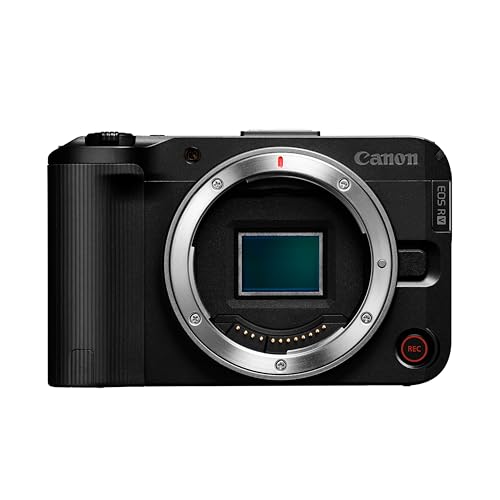
Canon EOS R50 V
Best for: parents who vlog or live stream family life, where fast autofocus and a video-first body anchor a desk or kitchen-counter setup
Not suited for: a grab-and-go stills kit out of the box, because this body-only listing is a video-first foundation that needs a lens chosen for it
- Sensor: APS-C, 24.2 megapixels
- Autofocus: fast autofocus, per the listing title
- Positioning: vlogging and live streaming kit for content creators
- Configuration: body only
- Further specifications: Not stated in the listing title — verify with the manufacturer documentation
Flag the format first, as its review must: the R50 V is a video-first body, sold in this listing as a body only, designed as the foundation of a vlogging and live streaming kit. For the growing number of families whose archive is a channel — weekly vlogs, streamed school events for distant grandparents — that specialisation is the point, and fast autofocus keeps faces locked while the parent presenting also operates the camera.
The title’s mention of ultra-wide zoom thinking hints at the intended lens pairing: wide glass that fits a room, a presenter and a child or two into the frame from a countertop tripod. Built outward from that body with a deliberate lens, a microphone plan and the family’s existing lights, the R50 V becomes a small studio that also walks outside for stills at 24.2 megapixels when the day demands.
Stills-led families should choose the standard R50 kit instead and save the complexity. The V rewards households who know video is the main act; for everyone else its body-only, streaming-shaped brief solves problems they do not have while postponing the first photograph by one lens purchase.
Consider the R50 V as infrastructure rather than as a camera purchase. A streaming household’s real product is reliability: the body that connects, focuses and frames the same way every Saturday, while the parent presenting manages children, comments and chaos simultaneously. Fast autofocus is the feature doing the invisible labour, holding faces while hands are busy elsewhere. Built once, on a shelf or counter with its chosen lens, the V disappears into the family’s routine — which is the highest compliment infrastructure can earn. The V also gives streaming families a growth path that kits cannot: lights, audio and lenses can be upgraded one piece at a time around the same body, so the Saturday broadcast improves monthly without a disruptive replacement. Infrastructure that grows by accretion suits family budgets, which arrive in small approvals rather than annual grants.
Strengths
- Video-first design serves vlogging and live streaming directly
- Fast autofocus supports solo presenting with children in frame
- 24.2 megapixel APS-C sensor keeps stills fully viable
Trade-offs
- Body only, and shaped around a streaming setup
- Stills-first families are better matched by the R50 kit
- Full value emerges only with lens and audio planning
Streaming households can review the R50 V body listing’s creator positioning and check price on Amazon as the first line of a deliberate kit budget.

Fujifilm X-T50 with 15-45mm Lens
Best for: parents who enjoy photography itself, wanting dial-led handling and film-style colour in a complete silver kit with a 15-45mm lens
Not suited for: pure point-and-shoot households, because the dials invite involvement that automation-first parents may never want to give
- Lens included: XC 15-45mm f/3.5-5.6 OIS PZ
- Configuration: lens kit
- Finish: silver
- Further specifications: Not stated in the listing title — verify with the manufacturer documentation
The X-T50 kit is the aesthete’s family camera. Silver dials, Fujifilm’s film-style colour and a compact 15-45mm power-zoom lens make a body that parents reach for partly because using it feels good — and a camera that feels good gets carried, which is the first law of family photography. The photographs benefit twice: once from the sensor and lens, and again from colour that leaves the camera looking finished.
The 15-45mm range starts usefully wide for interiors and group shots, where family life actually happens, and the power zoom keeps video framing smooth. Dial-led handling teaches the exposure basics almost by osmosis, so the parent who starts on automatic often graduates to aperture control within a season, lifting the whole archive’s quality as the children grow.
Involvement is the toll and the reward. Households wanting a camera that disappears into pure automation will find the dials ornamental, and action specialists should weigh the autofocus conversation in the buying guide below. For parents who suspect they might love photography, this kit is the one most likely to prove it.
There is a long game being played by the X-T50 kit, and it is about who the children become. A beautiful, dial-led camera in the house normalises photography as a craft rather than a phone reflex; children grow up watching a parent set an aperture deliberately, and some of them ask to try. The silver kit on the kitchen shelf is thus partly an heirloom strategy. Even if that future never arrives, the film-style colour will have made the intervening decade of family photographs unusually handsome. School concerts test this kit’s colour as much as its lens: mixed stage light that turns phone footage green stays handsome under Fujifilm’s film-style rendering, and parents notice the difference in the first shared clip. A camera that flatters the worst light in the family calendar earns its place on the shelf between performances.
Strengths
- Complete kit with a wide-starting 15-45mm zoom
- Film-style colour finishes family photos in camera
- Dials teach exposure naturally over a season of use
Trade-offs
- Dial-led handling asks more involvement than full automation
- Power zoom feel divides photographers used to manual rings
- Silver finish shows family-life scuffs honestly
Parents who linger over photographs can inspect the silver X-T50 kit listing and check price on Amazon for the 15-45mm bundle.

Canon EOS RP (Body Only)
Best for: the affordable full frame step-up for a parent whose family photography has become a genuine hobby, in a compact and lightweight body
Not suited for: a complete first purchase on its own, since the body-only format needs an RF lens before the first family photograph exists
- Format: full-frame interchangeable lens camera
- Design: compact and lightweight, per the listing title
- Positioning: travelling and vlogging
- Configuration: body only
- Further specifications: Not stated in the listing title — verify with the manufacturer documentation
Every family-camera journey has a fork where the parent realises the photographs have become the hobby, and the EOS RP body is this page’s signpost at that fork. Full frame brings the depth, low-light grace and lens character that APS-C approximates, in a body the listing calls compact and lightweight — small enough, crucially, to keep attending family life rather than only formal occasions.
As a body-only purchase, the RP asks for a lens decision that shapes everything: a versatile zoom for general duty, or a fast prime that transforms evening indoor portraits of children. That choice is the step-up’s real content. Parents arriving from the R50 kit should note the mounts differ in lens families, so the upgrade is a system move, planned rather than impulsive.
Judged as a destination rather than a starting point, the RP earns its place. It keeps the family archive’s ceiling rising for years, travels without resentment, and introduces full frame at the friendliest position Canon offers. First-time buyers should start with a kit above; returning photographers will understand exactly why this body closes the page.
The RP’s step-up logic sharpens with one observation: children photograph differently at ten than at two. The toddler years reward speed and completeness; the school years reward portraits, stage light and depth — precisely the full frame virtues. Parents who feel the archive’s centre of gravity shifting that way will find the RP body, paired with one well-chosen RF lens, a purchase timed to the children rather than to the market. Its compact manners ensure it still attends the everyday, not only the occasions. Choose the RP’s first lens as a family decision, not a solo indulgence: the zoom that covers holidays will be borrowed by everyone, while the fast prime becomes the portrait instrument the hobbyist parent grows into. Either order works; what matters is that the body-only box becomes a working camera within the week, before the step-up’s momentum cools.
Strengths
- Full frame files lift portraits and low-light family work
- Compact, lightweight body still attends everyday life
- The friendliest step into Canon’s full frame RF world
Trade-offs
- Body only, so the lens decision and cost come first
- A system move for APS-C owners, not a simple body swap
- Travel-first design is not an action specialist
Parents ready for full frame can study the EOS RP body listing and check price on Amazon, then choose the RF lens that will define the step up.
Family Cameras, Compared
Kits across the top, bodies across the bottom: configuration explains more of the ownership experience than any single feature, so the table keeps it in its own column.
| Pick | Best for | Sensor / Format | Kit Configuration | Check |
|---|---|---|---|---|
| Canon EOS R50 with 18-45mm Lens | Complete family kit, stills and video | APS-C, 24.2MP CMOS | RF-S 18-45mm kit included | Check price on Amazon |
| Sony Alpha a6400 with 16-50mm Lens | Eye autofocus and a flip screen | APS-C | 16-50mm lens included | Check price on Amazon |
| Sony ZV-E10 II | Video-led creator body for family channels | APS-C, 26MP Exmor R | Body in this listing | Check price on Amazon |
| Canon EOS R50 V | Vlogging and live streaming focus | APS-C, 24.2MP | Body only | Check price on Amazon |
| Fujifilm X-T50 with 15-45mm Lens | Dial-led kit with film-style colour | Mirrorless kit | XC 15-45mm lens included | Check price on Amazon |
| Canon EOS RP (Body Only) | Full frame step-up body | Full frame | Body only | Check price on Amazon |
Choosing a Camera for Family Life
Forget the spec race for a moment. These are the questions that predict whether a camera becomes the family’s memory machine or an expensive guest at two birthdays.
How fast must the autofocus really be?
Faster than a running seven-year-old in a dim hall is the honest benchmark, and it is met by systems that detect eyes and faces rather than hunting for contrast. Listings naming eye autofocus or fast autofocus deserve priority, and in-store tests should use a moving, turning subject rather than a cooperative adult portrait. A camera that locks calmly in the shop’s light may still hesitate in a school gym, so favour the bodies whose focus reputation was built on exactly that chaos.
Kit today or body plus chosen lens?
Kits win for first cameras because the family photographs start the same afternoon and the zoom range teaches what focal lengths the household actually uses. Body-only purchases win for upgrades and specialisations — the streaming R50 V, the video-led ZV-E10 II, the full frame RP — where the lens choice is the strategy. The error is buying a body-only listing by accident, so read the configuration line twice before checkout, every time.
How much video does the archive need?
Decide by looking at the last year of family media. Households filming weekly should weight articulating screens, 4K frame rates and microphone plans heavily, favouring the creator bodies. Stills-led families need video that is merely good and instant, which every kit here provides. There is no virtue in paying for a streaming foundation to film two clips a year, and no economy in starving a family channel of the tools it uses daily.
When the family photographer starts taking on styled sessions for friends, the expectations change, and our guide to pro-level lifestyle photography gear maps that next step honestly.
Will the other parent actually use it?
Apply the handover test ruthlessly. Charge the camera, set it to its friendliest mode, and imagine your partner capturing a birthday while you are in another city. Bodies that pass — clear screens, trustworthy automation, a lens already mounted — become shared tools and double their photographic output. Bodies that fail become one person’s hobby equipment, which may still be right, but should be bought knowingly under that description.
How important is stabilisation for family video?
Very, because family video is handheld by definition — filmed while walking backwards ahead of a toddler, or one-handed while the other hand steadies a scooter. Stabilisation, whether in the body, the lens or both, is the difference between footage grandparents can watch comfortably and footage that induces seasickness. The listings here state stabilisation only in places, so check the manufacturer documentation for the exact system on any body you shortlist.
What about photographs for school and club portfolios?
As children collect sports, music and drama commitments, the family camera starts producing evidence for portfolios and applications: clean stage frames, sharp action, honest portraits. That work rewards the autofocus and lens-growth arguments made throughout this guide, and it is where a fast prime or longer zoom stops being a hobbyist’s indulgence and becomes the family’s documentation budget, well spent.
Settings That Survive the School Play
Prepare the camera before the house lights fall. Set eye or face detection as the default focus behaviour where the body offers it, choose a shutter speed floor that freezes small movement, and let sensitivity climb rather than accepting blur — a grainy sharp frame of a first solo beats a clean smear every time. Photograph the rehearsal if one exists; the exposure lessons are identical and the stakes are not.
Printing those archives at home raises its own equipment questions, covered in our roundup of bluetooth laser printers for household printing and everyday documents.
Position beats equipment. An aisle seat near the front, chosen early, improves photographs more than any lens upgrade, and arriving early also lets the camera acclimatise and the parent scout the light. During the performance, shoot in short, considerate bursts and keep the screen brightness low; the archive matters, and so does everyone else’s evening.
From Camera to Family Archive Without Tears
The finest family camera fails if its files die on a memory card. Build the dullest possible routine: transfer after every significant event, keep two copies in different places, and name folders by date and occasion while the occasion is still memorable. Phones have trained families to expect automatic backup; a dedicated camera demands a manual habit, and the habit is easier than the regret.
Print something every season. A handful of small prints on the fridge teaches children that photographs are objects, not just screen weather, and it quietly quality-controls the whole system — soft focus and missed moments are forgiven on a phone screen and obvious on paper, which is exactly the feedback that makes next season’s photographs better.
The Two-Camera Household: Phone Plus Mirrorless, Divided Properly
Stop asking the mirrorless camera to beat the phone at everything; assign territories instead. The phone owns the unplanned — the first steps in the hallway, the rainbow on the school run — because it is always present. The mirrorless owns the deliberate: weekends, portraits, performances, holidays, and any photograph destined for a frame. That treaty ends the guilt about the camera left at home, because leaving it becomes a decision rather than a failure.
Shared custody rules keep the peace. One card, one transfer routine, one archive, regardless of which device captured the file, so the family’s memory lives in a single library. The mirrorless earns its drawer space by winning its assigned occasions decisively, and the phone stops being the archive’s weakest link because its files join the same backup habit.
Photographing Children Who Hate Cameras
Some children perform; others vanish at the sight of a lens. For the vanishers, the technique is patience with a long-ish kit zoom: photograph from across the room during genuine play, let the camera become furniture, and accept candids as the portrait style. Flip screens help from the hip, and quiet, compact bodies like the kits here attract a fraction of the attention a professional rig draws.
Consent grows with the child, and the family archive should grow with it. Older children earn a say in what is photographed and shared, and a parent who honours that boundary keeps a willing subject for the teenage years, when the photographs become rarer and more precious. The camera skills in this guide serve the archive; the relationship decides whether there is an archive to serve.
The Birthday Party Field Manual
Arrive with the camera already set: face detection on, a shutter floor that freezes candle-blowing chaos, and the screen brightness tamed for indoor light. Photograph the room before the guests arrive — the decorations have a half-life measured in minutes once six-year-olds land — then work the party in rings: wide scenes of the whole glorious mess, mid shots of games, and close frames of the small negotiations adults never see.
The cake moment deserves choreography. Claim the spot facing the birthday child with the window behind you, pre-focus on the chair, and shoot the song in short bursts rather than one heroic frame. Hand the camera to another adult for the one photograph the parent must appear in, with the settings already made; a family archive where one parent is a rumour is a curatorial failure, whatever the image quality.
Grandparents, Godparents and the Wider Archive
A family camera quietly serves relatives who never touch it. The photographs it makes become the grandparent’s phone wallpaper, the godparent’s framed print, the cousin group chat’s shared memory — which argues for sharing routines as deliberate as shooting routines. A monthly handful of favourites, sent properly sized with names and dates attached, does more for the wider family than a thousand-file dump at Christmas.
Consider, too, the relatives who photograph back. A household camera that grandparents can operate during their visits doubles the archive’s viewpoints and gives children photographs of their parents laughing, unposed, from across the room — images no selfie culture produces. The kits on this page were chosen partly for that hand-over-ability, and it may prove their most-used feature across a childhood.
Finally, print for the relatives who do not live on screens. A small stack of prints posted monthly costs less than the camera’s strap and lands with a weight no link achieves. The mirrorless investment justifies itself in those envelopes as much as in any gallery: sharp, well-exposed files print kindly, and the archive escapes the phone’s amnesia into houses where it will be kept for decades.
Milestone Map: Matching the Camera to the Childhood Calendar
Childhood arrives in photographic seasons, and a wise purchase anticipates the next two rather than commemorating the last one. The newborn season rewards low-light manners and quiet operation at home; the toddler season rewards autofocus and readiness above all; the school season adds stages, sports lines and the first performances under bad hall lighting. Each season argues for a slightly different strength, which is why the reviews here weigh growth room beside day-one performance.
The practical translation is a lens roadmap sketched at purchase time. Note which season arrives next for your family, and let that note — not a sale, not a forum thread — schedule the second lens. Families who buy ahead of the calendar in this calm way rarely make the panicked, mismatched purchases that fill the used market with nearly new regrets.
When the Child Becomes the Photographer
Somewhere around the middle of childhood, the archive’s direction reverses: the child asks for the camera, and the parent becomes the subject — blurred, laughing, photographed from knee height with total sincerity. Prepare for that promotion gracefully. Teach the strap habit first, the holding posture second and the family rule that the camera returns to its shelf, and let the young photographer’s frames enter the archive unedited beside your own.
Those reversed frames become disproportionately precious. They are the only honest record of how the parents looked while all the other photographs were being made, and they exist because a camera in the house was treated as a shared instrument rather than a fragile possession. Every body on this page is sturdy enough for that destiny; the household’s attitude decides whether it happens.
Family Camera Mistakes
Buying for the photographer you wish you were
A streaming foundation helps a family that streams. Everyone else needs a kit that works at breakfast. Match the purchase to the last year’s actual photographs and clips, not to an aspirational channel that exists only in the checkout basket.
Undervaluing the flip screen
Screens that articulate put the parent in the picture, frame low toddler shots without gymnastics and make video framing honest. Skipping the feature to save a little money is the classic false economy of family cameras.
Letting the kit lens verdict arrive too early
A kit zoom in good light produces lovely family photographs. The upgrade itch usually comes from dim halls, which a fast prime solves directly; replacing the whole system in frustration wastes the learning the kit already delivered.
Forgetting the second battery and the card routine
Family events do not pause for charging. A spare battery and a card-transfer habit cost little and prevent the two failures parents actually remember: the camera that died before the candles, and the card that was formatted before the files were copied.
Handing over a body-only box as a gift
A body-only listing given as a present is a camera that cannot take a photograph. If the gift is a body, include the lens in the plan and the budget, or choose one of the complete kits and give a camera that works at the unwrapping.
Chasing every tantrum with a burst
Continuous firing at every wobble produces thousands of near-identical frames and a parent who experiences childhood through a viewfinder’s tunnel. Shoot the peaks, then put the camera down and be in the day; the archive needs a present parent more than it needs eleven versions of the same tears.
Keeping the good camera for good occasions only
Childhood’s best photographs hide inside ordinary Tuesdays, and a camera rationed to birthdays and holidays archives a fiction of constant celebration. Let the family camera live where weekdays happen, accept the scuffs as documentation, and the archive will tell the truth beautifully.
Frequently Asked Questions
Which of these is best for a very first family camera?
The Canon R50 kit and the Sony a6400 kit are the natural starting points: both arrive with lenses, both handle stills and video, and the a6400 adds named real-time Eye Auto Focus. Choose Canon for the friendlier all-round kit feel, Sony for the autofocus headline.
Is full frame worth it for family photographs?
For most families, APS-C is the sweet spot of size, cost and quality. Full frame through the EOS RP body rewards the parent whose hobby is growing, especially for indoor portraits, but it arrives body-only and starts a new lens conversation, so it is a step-up rather than a starting point.
What does eye autofocus change in practice?
It lets the camera hold focus on a child’s eye while the child moves, turns and plays, instead of locking onto the nearest high-contrast object. The parent composes and watches; the camera does the tracking labour. For moving children it is the single most valuable feature named on this page.
Why are two bodies here video-first?
Because many families now keep a channel or stream events to relatives, and the ZV-E10 II and R50 V are built for exactly that work. Both are body-only listings in this guide, so they suit households ready to choose lenses deliberately rather than first-time buyers.
Can these cameras replace a phone entirely?
For deliberate photography, yes; for the photograph that happens while the camera is at home, the phone still wins by presence. Most families end up with a partnership: phone for the unplanned, mirrorless for the occasions and portraits that deserve printing.
Which lens should follow a kit purchase?
Let the frustration log decide, as with any system: dim indoor events point to a fast prime, distant stages and sports point to a longer zoom. Buying the second lens from evidence rather than advertising keeps the family kit lean and used.
What if neither parent knows photography?
Start with a complete kit — the R50 or the a6400 — and live in its friendliest modes without embarrassment. Modern automation plus eye-level autofocus delivers most of the archive’s value immediately, and the dials, menus and manual modes will be there in month six when curiosity arrives. The camera that teaches gradually beats the camera that examines strictly.
Is it worth insuring a family camera?
Household contents policies often cover cameras, and a quick check of the policy wording costs nothing. The more practical protection is behavioural: a wrist strap habit, a padded pocket in the family bag, and the backup routine from the archive section, because the irreplaceable item is never the camera — it is the card inside it.
How do I keep a family camera ready at all times?
Charge on a fixed day each week, keep the kit lens mounted and the card below half full, and store the camera where life happens rather than where equipment lives. Readiness is a routine, not a feature, and the families with the richest archives are simply the ones whose camera was never in the wrong room, the wrong bag or the wrong state of charge.
Should the family camera be waterproof?
None of the listings here claim waterproofing, so treat every body on this page as water-shy and plan around weather with covers, towels and common sense. Beach and pool photographs are a phone’s natural territory in most households; the mirrorless attends under a canopy and captures the portraits the phone cannot, which is a fair division of risk.
When should children get a camera of their own?
When the interest survives a season of borrowing the family camera under supervision — and the family camera’s survival of that borrowing is itself diagnostic. A simple, sturdy compact of their own protects the household’s main instrument while giving the young photographer genuine ownership, and the two-camera household discovers the joy of photographing each other photographing.
What is the best first setting to change on a family camera?
Whatever makes faces the priority: set the autofocus to its face or eye detection behaviour, confirm the camera saves the largest, finest files it offers, and assign the friendliest automatic mode as the household default. Those three decisions, made once on the first evening, quietly govern thousands of photographs, while every other setting can wait for the curiosity that arrives in its own time.
Final Recommendation
Most families should start with the R50 kit for its completeness or the a6400 kit for its eye autofocus, and either choice will transform the archive within a month. Video-led households step to the ZV-E10 II, streaming households to the R50 V, and parents who feel the photography pull itself will smile at the X-T50 kit every time they pick it up.
The EOS RP body waits patiently at the end of that road, the full frame reward for the parent the hobby claims. Whichever body comes home, charge it, mount the lens, and set the focus to find faces — because the next unrepeatable expression is already scheduled, and it will not sit still for anyone.
Set one small tradition with the new camera: a photograph in the same doorway, on the same day each month, whatever the weather of family life. The bodies above will handle the technique; the tradition guarantees the archive has a spine, and in twenty years that doorway sequence will be the most valuable thing the camera ever made.
And charge the camera tonight, before the first full day begins. Tomorrow’s breakfast, in tomorrow’s ordinary light, is exactly the photograph this purchase was for — not the birthday three weeks away, not the holiday next season, but the unrepeatable, unremarkable morning that turns out, decades later, to have been the whole point.
A small storage ritual protects the growing archive’s future: once a year, on the camera’s purchase anniversary, migrate the family library to fresh storage and retire the oldest drive to a relative’s house as the off-site copy. Drives fail on their own schedule, indifferent to birthdays, and the annual migration converts a catastrophe-in-waiting into a fifteen-minute errand. The children will never know it happened, which is precisely the point of every good safety habit.
Start tonight, with whatever light the kitchen offers, and let the first frame be an ordinary one — the archive’s greatness was never going to come from occasions, but from attendance.


