What's inside
- Key Takeaways
- Quick Picks
- How We Chose the Best 3.5 Back Up Cameras
- Comparison
- What screen size do you actually need for reversing?
- How does installation differ between the wired and wireless routes?
- Can a backup camera feed a screen you already own?
- How did the market move from 3.5 inches to here?
- What should you check on the first evening?
- Which kit fits which vehicle?
- How do guidelines, mirrors, and sensors share the job?
- Common Mistakes
- Final Recommendation
- Frequently Asked Questions
- Related Guides
As an Amazon Associate I earn from qualifying purchases. This post may contain affiliate links at no extra cost to you.
widgetverdict.com is reader-supported. When you buy through links on our site, we may earn an affiliate commission.
Where to buy: The kits below are sold through Amazon, where you can check price on Amazon and — critically in this category — confirm whether the box contains a camera only or a camera and monitor, because listings mix the two freely. One pick appears in prose without a link, as its listing could not be confirmed against the pool.
Let us begin with the honest sentence this search deserves: if you go looking for the best 3.5 back up cameras today, you are hunting a screen size the market has largely retired. The 3.5-inch monitor — once the standard little square perched on dashboards everywhere — has been displaced by 4.3-inch screens as the small end of the range, with most current kits shipping 4.3, 5, or 7-inch monitors, and a large share of listings selling the camera alone to feed a head unit you already own. That is not a reason to close the tab. It is a reason to read this guide the way it was written: as a map of the small-screen end of the backup camera market as it actually exists now, with every kit’s screen situation stated plainly — size where a monitor is included, and an explicit “no screen in the box” where it is not — so the buyer who wants a compact display gets one, knowingly, instead of a surprise.
Why did the screens grow? Partly cost: small LCD panels converged in price until the bigger one was barely dearer. Partly vehicles: modern dashboards and the rear views they must show — a trailer hitch, a wide bumper line, a bike rack — reward the extra width every time you reverse. And partly the camera-only trend: as factory infotainment screens spread, the aftermarket split into kits with monitors for older vehicles and bare cameras for newer ones. The six picks below cover that whole landscape: two camera-only units of genuine quality, one classic plug-and-play kit with a compact monitor, two full kits with 7-inch screens for the trailer crowd, and one prose-only representative of the true 3.5-inch class that survives at the budget fringe. Screen size is stated in every review’s first lines, because in this category that is the review.
Key Takeaways
- True 3.5-inch monitors are now a budget-fringe survivor; the modern small screen is 4.3 inches, and most kits ship 4.3, 5, or 7-inch displays — or no display at all.
- Half the listings in this category are camera-only: they feed an existing head unit or a monitor bought separately, and the reviews below flag every one.
- Screen sizes in this guide, stated up front: PixelMan — no monitor included. Plug & Play kit — compact monitor in the 4.3-inch class. RAAYOO — no monitor included. Wireless Magnetic kit — 7-inch monitor. 2K kit — 7-inch monitor.
- A smaller screen is not a worse reversing aid if the camera’s image and guidelines are good; it is a worse one only when the driver needs to read fine detail — a hitch ball, a trailer coupler — at a glance.
- Wired kits answer instantly with zero lag; wireless kits install in minutes and suit trailers and borrowed vehicles.
- Judge the camera and the screen as separate purchases wearing one box: image quality lives in the camera, readability lives in the display.
- Calibrate on the first evening — darkness, glare, and a measured-distance walk — because a reversing camera becomes trustworthy only after its owner has learned its margins.
Quick Picks
| Pick | Badge | Why it earns its place |
|---|---|---|
| HD 1080P Backup Camera Plug & Play Kit | Closest to the classic small-screen kit | A complete camera-plus-monitor kit with a compact 4.3-inch-class display and a genuinely simple install. |
| PixelMan AHD 1080P Backup Camera | Best camera-only unit | A metal-bodied 1080P camera with strong night vision — bring your own screen or head unit. |
| RAAYOO AHD 1080P Backup Camera | Best sensor-first camera-only pick | A CCD-sensor camera with a metal housing for drivers feeding an existing display. |
| Wireless Magnetic Backup Camera Kit | Best one-minute install | A magnetic, solar-assisted wireless camera with a 7-inch monitor — no wiring at all. |
| 2K Backup Camera Kit with Monitor | Sharpest complete kit | A wired 2K camera with a 7-inch monitor and zero-lag feed for detail-critical reversing. |
| Podofo 3.5-Inch Backup Camera Kit | The true 3.5-inch survivor | A representative of the remaining genuine 3.5-inch kits at the budget fringe. |
How We Chose the Best 3.5 Back Up Cameras
The first filter was candor about the box. Every candidate listing was read for one fact before any other: what display, if any, does the buyer actually receive? Kits that blurred that answer — camera photographs staged beside monitors sold separately, titles that implied a screen the description withdrew — were set aside, because a guide answering a screen-size search has one job before all others. What remained was then graded as two products in one: the camera, on image quality, night performance, viewing angle, and weather sealing; and the display path, on size, brightness, and how the feed reaches it — wired instantly, or wirelessly with the small delays that wireless brings.
Installation honesty came next. Backup cameras divide into those that tap the reversing-light circuit so the image appears when reverse is selected, those that run a cable the length of the vehicle to a dash monitor, and the wireless designs that skip the run entirely. Each route was matched to the vehicles it suits — the older sedan with no screen at all, the newer car whose head unit accepts a camera input, the truck-and-trailer combination that changes vehicles weekly. Night testing mattered more than daytime sharpness, because reversing happens in unlit driveways and rainy car parks, and a camera whose night image collapses is a fair-weather accessory. Finally, guidelines: whether they can be switched, adjusted, or cut away entirely, since a driver who cannot disable a misleading guide line will eventually stop trusting the true ones.
Resolution claims were read with the category’s usual discount. Several listings wear “1080P” the way the PixelMan and the plug-and-play kit do — as the camera’s sensor class — while the little monitors that display the feed resolve less, and the honest buyer should expect the system’s clarity to be set by the weaker of the two. Where a kit’s real behavior differs from its headline, the review says so in plain words. That standard cut several tempting candidates: a kit whose “monitor included” dissolved into a phone app on inspection, and a camera whose waterproof claim stopped at a rating suited to splashes rather than the pressure of road weather. In a category where the buyer’s core question is “what exactly is in the box,” a guide that cannot answer it for a product has no business recommending the product, whatever its price.

HD 1080P Backup Camera Plug & Play Kit — Closest to the classic small-screen kit
Screen first, as promised: this kit includes a monitor, and it is a compact dash display in the 4.3-inch class — the size that inherited the 3.5-inch kit’s job. If your mental picture of this category is a small square screen on a suction mount that wakes when you select reverse, this is that product, modernized: a 1080P camera, a bright little monitor, and a wiring scheme simple enough that the maker advertises the install in minutes rather than hours. The camera’s feed is wired, so the image is live with none of the wireless pause, and the maker claims smooth 60fps-class motion, which in practice means the picture does not smear as the car swings into a space — the moment when a reversing camera earns its keep.
The kit’s character is convenience engineered honestly. Power comes from the reversing-light circuit or a cigarette-lighter feed depending on how you wire it, the monitor mounts on dash or windscreen, and the whole system asks nothing of the car’s electronics beyond a 12-volt supply — which makes it the pick for older vehicles, first cars, and the family runabout whose dashboard predates screens entirely. Night vision is LED-assisted and adequate at bumper distances; the housing is weatherproofed for life on a number plate or boot handle. Guideline lines are present and the image is wide enough to catch the low wall and the wandering toddler alike, though at 170-degree-class angles the edges bend, as all such lenses do.
Its limits are the small screen’s own: at 4.3 inches, the picture is a reversing aid, not a detail instrument, and the driver aligning a tow ball will lean forward in a way the 7-inch kits below spare them. But measured against the search that brought you here — a compact, complete, inexpensive kit — this is the modern answer wearing the old answer’s clothes, and it earns the top line of this guide on that honesty.
Ownership reports for this class of kit share a pattern worth passing on: the buyers who love it wired the monitor to wake with reverse and mounted the screen low, near the mirror’s sightline, where a glance lands naturally; the buyers who grumble mounted it high in the sun and fed it from a socket that left it glowing at midnight. The hardware permits both installs, and the difference in satisfaction is entirely the installer’s. Spend the extra twenty minutes on the reversing-light feed and the shaded position, and this little kit behaves like equipment rather than an accessory — the highest state a reversing aid can reach.
- Screen: compact monitor included, 4.3-inch class
- Camera: 1080P, wide-angle, LED night vision
- Connection: wired feed, zero lag
- Power: 12V, reversing-light or accessory feed
- Install: plug-and-play positioning, dash or windscreen mount
Strengths
- A complete kit — camera and screen — in one box.
- Wired feed means the picture is instant and unbroken.
- Suits screenless older vehicles perfectly.
Trade-offs
- Small screen limits fine detail for hitching.
- Cable run the length of the car is part of the install.
- Monitor resolution trails the camera’s sensor class.
Best for: older cars and simple installs wanting a compact dash screen. Not suited for: trailer hitching or drivers wanting a large display.
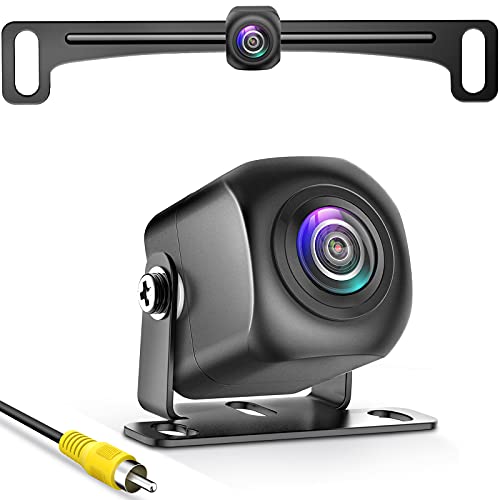
PixelMan AHD 1080P Backup Camera — Best camera-only unit
Screen first: there is none. The PixelMan is a camera and only a camera — a metal-bodied AHD 1080P unit with a 170-degree lens, clear night vision, and an IP69 waterproof rating — sold to feed a display you already own: a head unit with a camera input, an Android stereo, or a standalone monitor bought to your own size preference. That last point is why a camera-only unit belongs near the top of a screen-size guide: the buyer who wants a genuinely small display, or a genuinely large one, is best served by choosing the screen separately, and this is the camera to pair with that freedom. Its metal housing is the detail owners notice first, in a category of plastic shells, and it shrugs off the pressure washers and road grit that the IP69 rating promises it can.
As a camera, it is the strongest pure imager among the linked picks. The AHD signal carries a cleaner picture over the cable than the composite feeds of budget rivals, night clarity is a stated design goal rather than an afterthought, and the wide lens covers the bumper corners that narrower cameras crop. It mounts at the number plate or under a handle, wires into the reversing circuit so the host screen wakes on cue, and its guidelines can be configured at install. Vehicles with a factory screen that accepts an input — through the head unit’s own camera port or an interface — get a near-factory result from a part that costs like an accessory.
The trade is arithmetic the buyer must do themselves: camera plus screen plus any interface the car needs, against a complete kit’s single price. For a car with a suitable screen already glowing on the dash, the arithmetic is not close — the PixelMan wins. For a screenless car, the complete kits above and below are the honest comparison, and this pick’s role is to show what the camera half of those kits should be judged against.
One more virtue of the metal build deserves emphasis, because it compounds quietly: vibration. A camera lives on the part of the car that slams — the boot lid, the tailgate — and plastic housings loosen, fog, and drift out of aim across a few winters of slams, while a metal body on a firm bracket holds its aim and its seal. Owners choosing between this and a cheaper plastic unit are really choosing how many times they intend to buy the camera. The PixelMan is priced and built like the second and final purchase, and in a category full of first purchases that distinction is the review.
- Screen: none included — feeds head unit or separate monitor
- Camera: AHD 1080P, 170° lens, metal housing
- Rating: IP69 waterproof
- Night: clear night vision design
- Signal: AHD over wired connection
Strengths
- Metal body and top-tier sealing outlast plastic rivals.
- Clean AHD picture for cars with a real display.
- Lets the buyer choose any screen size separately.
Trade-offs
- No monitor in the box — a display is a second decision.
- Head-unit compatibility must be verified per car.
- Wired install, with the cable run that implies.
Best for: cars with an existing screen or owners choosing a display separately. Not suited for: screenless vehicles wanting one box and done.

RAAYOO AHD 1080P Backup Camera — Best sensor-first camera-only pick
Screen first, again: none included. The RAAYOO is a camera-only unit like the PixelMan, and it earns its separate place on a difference most listings bury — its sensor. Where the budget field uses CMOS sensors, the RAAYOO uses a CCD sensor, the older technology that low-light photography long preferred, and the maker claims starlight-class night performance from it. In the reversing world that claim translates to the situations that matter: the unlit driveway, the rainy multi-storey, the farm track at midnight, where a camera that holds an image a stop longer is the difference between seeing the low wall and meeting it. The housing is metal, the rating is IP69K — the sterner sibling of the PixelMan’s seal — and the 170-degree lens can be mounted at the plate or on a bracket, front or rear facing.
Choosing between this and the PixelMan is a genuine fork, so let us draw it cleanly. The PixelMan is the balanced all-rounder with the broader owner base; the RAAYOO is the night specialist’s pick, trading a little of the mainstream polish for a sensor chosen for darkness. Both feed the same universe of head units and standalone monitors, both wire into the reversing circuit, and both let the screen be a separate, deliberate purchase — which, for the reader who arrived via a 3.5-inch search and discovered the size now lives mostly in standalone monitors, may be the most useful realization in this guide: the small screen did not die, it emigrated to the monitor-only listings, and cameras like this one are how you feed it.
Installation is the standard wired discipline, with one RAAYOO-specific grace: the camera’s wiring allows the guideline and image-flip options to be set by loop wires at install, so front-mounting on a grille — increasingly popular for tight parking — is a configuration, not a hack. Verify your display accepts the AHD signal or switch the output as the manual directs, and the pairing behaves.
The CCD choice also colors the RAAYOO’s manners in mixed light — the half-lit car park, the driveway at dusk where headlights sweep the frame — where it holds shadow detail that budget CMOS units crush to black. Drivers whose reversing is mostly crepuscular, the commuters home after dark all winter, are this camera’s natural constituency, and they will forgive its one real demand: that the buyer do the display homework the camera-only format requires. In return they get the only pick in this guide whose sensor was chosen by someone thinking about midnight first.
- Screen: none included — feeds head unit or separate monitor
- Camera: AHD 1080P with CCD sensor, 170° lens
- Rating: IP69K waterproof, metal housing
- Night: starlight-class night vision claim
- Mounting: plate or bracket, front or rear use
Strengths
- CCD sensor chosen for low-light reversing.
- IP69K sealing is the sternest in this guide.
- Configurable for front or rear mounting.
Trade-offs
- Display is a separate purchase, again.
- Signal mode must match the host screen.
- Night-first tuning favors darkness over daylight punch.
Best for: night-heavy reversing on cars with a display. Not suited for: one-box shoppers or screenless dashboards.

Wireless Magnetic Backup Camera Kit — Best one-minute install
Screen first: 7 inches — this kit’s monitor is the joint-largest in the guide, an anti-glare display that pairs wirelessly with a magnetic camera. Hold that contrast, because it is the story of the category in one product: the buyer searching for a tiny screen is offered, by the most convenient kit on the market, a large one, because the wireless trailer crowd — this kit’s true audience — reads its screens at a glance across a truck cab. The camera mounts magnetically in seconds, carries a solar-assisted battery rated for long service between charges, and asks for no wiring whatsoever: stick it to the trailer, the tailgate, the steel bumper, and the picture appears on the dash.
For its actual jobs, the design is close to perfect. Hitching a trailer alone becomes a one-person task with the camera on the tailgate looking at the coupler. A borrowed truck, a rental, a farm vehicle that changes implements weekly — all get a reversing camera for exactly the days they need one, then the kit comes off and lives in a drawer. Night vision is infrared and honest at working distances, and the wireless link at trailer lengths is the use case the system was tuned for. Owners should know the two taxes: a breath of wireless latency compared with the wired kits, and a battery that, solar help notwithstanding, wants an occasional charge across a dark winter.
Why is a 7-inch kit in a 3.5-inch guide? Because guides owe readers the market as it is, and because the reader whose real need is “a reversing camera I can fit myself this afternoon” — a need that often hides inside the small-screen search — is served by this kit better than by any survivor of the 3.5 era. If the screen must be small, the picks above are yours; if the install must be painless, it is this one, and the big bright monitor turns out to be the part owners praise most.
The magnetic mount invites one discipline the wired kits never need: a pre-departure glance. Owners of this kit build a two-second habit — camera present, lens wiped, battery indicator sane — into the same walk-around that checks the coupler and the safety chains, because a camera that can be removed in seconds can also be forgotten in a drawer in seconds. The kit rewards that tiny ritual with years of service across vehicles no wired system could follow, and it has quietly become the default recommendation among trailer owners for a reason no specification captures: it is the only reversing camera whose installation story makes people smile.
- Screen: 7-inch anti-glare monitor included
- Camera: 1080P wireless, magnetic mount
- Power: rechargeable battery with solar assistance
- Connection: wireless, trailer-length range
- Install: minutes, no wiring or drilling
Strengths
- Moves between vehicles and trailers freely.
- Big monitor is the easiest to read at a glance.
- Solar top-up stretches the charging interval.
Trade-offs
- Wireless latency versus the wired kits’ instant feed.
- Battery still wants occasional charging in dark months.
- Magnetic mount needs a steel surface to grip.
Best for: trailers, trucks, rentals, and one-person hitching. Not suited for: permanent installs on plastic-bumpered cars or small-screen seekers.

2K Backup Camera Kit with Monitor — Sharpest complete kit
Screen first: 7 inches, included, wired to a 2K camera — the highest-resolution complete kit in this guide. If the magnetic kit is the convenience pole, this is the clarity pole: a cabled feed with zero lag, a camera recording above the 1080P class the other picks wear, and a monitor large enough to spend that detail on. The combination serves the reversing tasks where detail is the entire job — sliding a tow ball under a coupler without a spotter, threading a long vehicle between a wall and a post, reading the ground behind a motorhome. On a 7-inch screen, the 2K feed’s extra information is visible rather than theoretical, which cannot be said of high-resolution cameras paired with the little monitors of the 3.5 era.
The wired discipline is the price, and it is the familiar one: a cable run from the camera’s mount to the cab, power tapped from the reversing circuit so the system wakes with the gear selector, and an afternoon’s patience with trim panels. In exchange the feed never buffers, never waits for a pairing handshake, and never flattens a battery — the three failure modes of the wireless designs are simply absent from its life. Night vision is LED/infrared-assisted and, paired with the sensor’s resolution, holds the bumper-line detail that hitching at dusk demands.
For the reader keeping score on the guide’s founding question: this kit is the clearest evidence of where the category’s center of gravity now sits. The volume sellers are no longer small screens with adequate cameras; they are generous screens with sharp ones, sold to drivers of trucks and SUVs whose reversing is work. The 3.5-inch seeker who test-drives this kit’s picture rarely goes back — and the guide’s job is to make that discovery a choice rather than an accident of marketing.
There is a fleet angle to this kit that private buyers can borrow: operators who fit the same wired kit across several work vehicles gain a uniformity no mixed fleet matches — every driver finds the same screen, the same guidelines, the same behavior in every cab — and the zero-lag wired feed is the only design that never needs a pairing conversation with a new driver. Households with two cars can steal the trick at smaller scale. Fit the same kit to both, and the reversing skill a driver builds in one car transfers intact to the other, which is a safety feature no brochure will ever list.
- Screen: 7-inch monitor included
- Camera: 2K class, wired zero-lag feed
- Power: reversing-circuit tap, wakes with reverse gear
- Night: assisted night vision for dusk hitching
- Install: full cable run, permanent fit
Strengths
- Sharpest picture on the largest included screen.
- Zero lag, no batteries, no pairing — ever.
- Detail-critical reversing (hitching, threading) is its home ground.
Trade-offs
- The cable run is the longest install in the guide.
- Permanent fit does not travel between vehicles.
- Big monitor needs dash space smaller cars begrudge.
Best for: trucks, SUVs, and motorhomes doing detail reversing. Not suited for: renters, multi-vehicle households, or minimal dashboards.
Podofo 3.5-Inch Backup Camera Kit — The true 3.5-inch survivor
Screen first, and for once the answer is the one in the search: 3.5 inches. Budget brands such as Podofo still sell complete kits built around a genuine 3.5-inch TFT monitor — a small wired camera, a palm-sized screen on a suction or dash mount, and a price that undercuts everything else in this guide. This pick stands in prose, without a confirmed pool listing, as the honest representative of that surviving class, because a guide answering this search owes the reader a clear-eyed account of what the true article offers in the current market rather than a pretense that it vanished entirely.
The account is mixed, and both halves matter. In its favor: the kit is complete, cheap, compact enough for the smallest dashboard, and entirely sufficient for the core task of seeing the low obstacle behind a hatchback in a lit car park. Against it: the little TFT panels in this class are dimmer and lower in resolution than the monitors in the kits above, viewing angles are narrow enough that the mount’s aim matters, the cameras are basic composite units whose night image is a suggestion rather than a description, and build quality across the no-name fringe varies from acceptable to disposable. The buyer for whom this class still makes sense is narrow and real — a second car, a tight budget, a small dash, modest expectations — and that buyer deserves the class described accurately rather than dismissed. There is no condescension in that sentence: a working reversing camera at the budget fringe prevents the same bent bumper and worse that the flagship kits prevent, and a guide that sneered at it would be serving its own taste instead of its readers’ driveways.
Set beside the Plug & Play kit at the top of this guide, the survivor’s dilemma is visible: for a modest step up, the screen grows to the 4.3-inch class, the camera to a genuine 1080P unit, and the night image to something trustworthy. Most readers should take that step. The 3.5-inch kit remains in this guide, and in the market, for the rest.
A closing note on expectations, offered in the survivor’s defense: judged against the reversing aids of its own era, the 3.5-inch kit was a revelation, and judged against walking back to look — still the alternative for the screenless driver — it remains one. The guide’s sterner judgments apply to buyers choosing fresh in the current market with current prices in front of them. The reader who already owns one of these little kits and finds it working has no errand here at all, and the reader replacing one now knows precisely what the upgrade buys, in inches, in night detail, and in years.
- Screen: 3.5-inch TFT monitor included — the genuine article
- Camera: basic wired unit, composite class
- Power: 12V accessory or reversing feed
- Night: basic LED assistance
- Install: simple wired fit, suction/dash mount
Strengths
- The only true 3.5-inch complete kits still sold.
- Lowest cost and smallest dash footprint in the guide.
- Complete in one box for screenless cars.
Trade-offs
- Dim, low-resolution panel by current standards.
- Night image is the weakest here.
- Build quality varies across the budget fringe.
Best for: tight budgets, second cars, and the smallest dashboards. Not suited for: night-heavy use, hitching, or buyers wanting a five-year fit.
Comparison
| Pick | Screen included | Screen size | Camera class | Connection |
|---|---|---|---|---|
| Plug & Play Kit | Yes | 4.3-inch class | 1080P | Wired |
| PixelMan | No | Your choice | AHD 1080P | Wired |
| RAAYOO | No | Your choice | AHD 1080P CCD | Wired |
| Wireless Magnetic Kit | Yes | 7-inch | 1080P | Wireless |
| 2K Kit | Yes | 7-inch | 2K | Wired |
| Podofo 3.5 Kit | Yes | 3.5-inch | Basic composite | Wired |
What screen size do you actually need for reversing?
Work backward from the hardest thing you reverse toward. If the answer is a wall, a bollard, or another car — big, high-contrast, forgiving targets — then any screen in this guide, including the true 3.5-inch survivor, does the job, because the task is detection rather than reading. If the answer is a tow ball meeting a coupler, a trailer’s jockey wheel finding its patch, or a narrow gate post at dusk, the task becomes alignment, and alignment is read in fine detail at a glance: that is the 7-inch kits’ home ground, with the camera’s resolution finally earning its headline. The middle case — family cars, supermarket car parks, a driveway with children and bicycles — is where the 4.3-inch class quietly lives, big enough to judge distances, small enough to sit on any dash.
Two modifiers apply to every size. Brightness beats inches in sunlight: a dim 7-inch panel loses to a bright 4.3 at noon in July, so anti-glare claims and real brightness deserve as much attention as the diagonal. And distance beats both: a screen mounted far across a truck cab needs to be larger than the same screen at a hatchback’s elbow. Measure your own cab, name your hardest reversing task, and the size chooses itself — which is why this guide states sizes first and apologizes for none of them. One more consideration belongs to drivers who wear their years in their eyesight, stated without delicacy because it matters: a larger, brighter screen at a comfortable distance is an accessibility feature, and the household buying for an older driver should weight the 7-inch kits’ readability as a safety specification, not a luxury. The 3.5-inch era assumed young eyes at close range; the modern shelf, to its credit, no longer does.
How does installation differ between the wired and wireless routes?
The wired route is a single honest project with three acts: mount the camera at the plate, handle, or bumper; run its cable forward along the car’s existing looms, through a grommet, to the dash; and tap power from the reversing-light circuit so the screen wakes with the gear. Budget an afternoon, trim tools, and patience with one stubborn panel. The reward is permanence — zero lag, no charging, no pairing, a system that behaves like factory equipment for the life of the car. The camera-only picks follow the same route with the head unit as the destination, plus a compatibility check before the trim comes off.
The wireless route deletes the middle act. The magnetic kit’s camera sticks to steel, its monitor plugs into the accessory socket, and the install is measured in minutes — which is why it owns trailers, rentals, and multi-vehicle households, where a wired kit’s permanence is a liability rather than a virtue. The taxes are the small wireless delay, a battery to mind, and a link that long metal trailers occasionally argue with. Choose by tenure: the car you will keep for a decade deserves the cable; the trailer you borrow twice a year deserves the magnet. There is a middle tenure worth naming — the car kept for two or three years, the lease, the teenager’s first vehicle — and it argues for the complete wired kits at the modest end: real installation, real reliability, and a total outlay that the car’s remaining years can justify without the flagship kits’ ceremony. The Plug & Play pick was chosen with exactly that middle tenure in mind, and its popularity among first-car buyers suggests the market agrees.
Can a backup camera feed a screen you already own?
Often, yes — and the camera-only picks exist for exactly this. The requirements are a display with a composite or AHD camera input and a way to trigger it: many aftermarket head units offer both natively, some factory systems accept a camera through their settings or an interface module, and standalone monitors of every size — including the small 3.5 and 4.3-inch class — are sold separately for a modest sum. The homework is compatibility: signal type, connector, and trigger behavior, checked against your exact head unit before ordering. Budget the homework honestly — an hour with the head unit’s manual and the camera’s specification saves the restocking fee and the weekend — and note that some factory systems need the camera input enabled by a dealer or a settings menu, a five-minute task that owners forums for your exact model will document better than any general guide can. The reward for that hour is the most factory-feeling result in this entire category: select reverse, and the screen you already own simply shows you the ground behind the car. Get those three right and the result is the most tailored system in this guide — a serious camera behind a screen of precisely the size you chose, which is, in the end, the grown-up answer to the search that named this page.
How did the market move from 3.5 inches to here?
The short history explains the present shelf. The first aftermarket reversing kits were built around the smallest cheap TFT panels the electronics market offered — 3.5 inches, the size of the era’s pocket televisions — and for a decade that diagonal defined the category. Three forces then moved it. Panel economics collapsed the price difference between small and mid-size screens until makers gained nothing by staying small. Vehicles themselves grew screens: as factory infotainment spread, the aftermarket’s remaining customers were drivers of older cars who wanted a proper display, and drivers of trucks who wanted a bigger one. And the camera-only format split the market in two, letting the display become a separate decision — a head unit, a mirror monitor, or a standalone screen of any size, including, for the determined, the surviving 3.5-inch class.
Understanding that history protects the buyer from two opposite errors: assuming a small screen means an old, bad product — the 4.3-inch class kits are current and good — and assuming a large screen means a better system, when the 7-inch kits’ real advantage is confined to detail work. The diagonal is a fit decision, like a shoe size. This guide’s insistence on printing it first is not pedantry; it is the lesson the category’s own history teaches anyone who reads the shelf carefully.
What should you check on the first evening?
Every pick in this guide deserves the same three-part first evening, because reversing cameras fail their owners at night and in glare long before they fail mechanically. First, the darkness test: reverse toward a low, soft obstacle — a cardboard box is the traditional volunteer — in the darkest conditions the car regularly meets, and confirm the image shows it early enough to matter. Second, the glare test: with low sun behind the car, check whether the screen remains readable from the driver’s seat at its mounted angle; adjust the mount now, not after the first bright morning. Third, the calibration walk: place objects at measured distances behind the car and learn, physically, where the guideline colors change and what the lens’s wide edges do to distances.
That half hour converts a gadget into an instrument. Drivers who skip it treat the screen as television and trust it approximately; drivers who do it know their own system’s margins — how much closer the wall is than it looks, which corner of the frame lies, where the blind sliver behind the bumper begins. No kit in this guide, at any screen size, can give the driver that knowledge from the box. It is the owner’s contribution, and it is worth more than the price difference between every pick on this page.
Which kit fits which vehicle?
Match by dashboard before matching by budget. The screenless older car — the one this category was invented for — takes a complete kit: the Plug & Play for a compact dash, the 2K kit where the cab is large and the reversing is serious, the true 3.5-inch survivor where the budget rules. The modern car with a willing head unit takes a camera only, and the choice narrows to temperament: the PixelMan’s all-round build, or the RAAYOO’s night-first sensor. The truck-and-trailer household takes the magnetic kit unless the pairing is permanent, in which case the wired 2K kit’s zero lag earns its afternoon of installation every single hitching thereafter.
The misfits are predictable and worth naming. A 7-inch monitor suctioned to a small hatchback’s windscreen eats the view it was bought to improve. A camera-only unit ordered for a car whose factory screen refuses outside inputs becomes a return label. A wireless kit fitted permanently to a steel-free plastic bumper has nothing to hold on to. Every one of those errors is visible before purchase, in the vehicle’s own facts — which is why this guide keeps returning the reader to the car, the dash, and the hardest reversing task, rather than to the listings.
How do guidelines, mirrors, and sensors share the job?
A reversing camera is one witness among three, and the drivers who use it best keep the others employed. The mirrors still own the periphery — the cyclist approaching from the side lives outside every camera’s frame — and the parking sensors, where fitted, still own the last half-meter, where the camera’s wide lens compresses distances the most. The camera’s unique testimony is the low center: the toddler, the low wall, the tow ball, the patch of ground the mirrors geometry denies you. Kits differ in how honestly they support that division: guidelines that can be switched off when they mislead, images that do not crop the bumper’s own edge (the driver’s one true reference), and screens that wake fast enough to be part of the maneuver rather than a report on it.
Judge any kit in this guide by that integration test on the first drive. If the screen wakes as the gear engages, shows the bumper’s edge, and leaves the mirrors worth glancing at, the system has joined the car’s existing safety habits instead of competing with them. That, more than any diagonal measurement, is the difference between a reversing aid and a dashboard ornament — and it is achievable at every screen size on this page, which is the most encouraging sentence the category currently offers.
Common Mistakes
Ordering a camera-only unit for a screenless car. The most common error in the category, and the reason this guide states the box contents in every review’s first line. Judging by the camera’s resolution alone. The system’s clarity is set by the weaker half — a 1080P camera behind a dim budget panel looks like the panel, not the sensor. Mounting the screen where the sun lives. A monitor in direct noon glare is unreadable at any size; shade and angle are part of the install. Trusting guidelines without a calibration check. Place a known object at a measured distance and learn what the lines mean on your car before trusting them near a wall. Skipping the night test. Reverse toward a low object after dark on the first evening; the camera you can trust at midnight is the only kind worth owning. Forgetting the camera at the car wash. High ratings forgive a lot, but a pressure lance at point-blank range is beyond any seal’s promise — keep the jet at a respectful distance. Buying the screen before the car. The order of operations is vehicle, then hardest reversing task, then screen size, then kit; reversing that order — falling for a listing first — is how 7-inch monitors end up in hatchbacks and camera-only units end up in screenless cars, the two signature errors of the category.
Final Recommendation
Decide the screen first, because the screen is what you will actually look at for the life of the fit. If a compact complete kit is the goal, the Plug & Play kit is the 3.5-inch idea grown sensibly up — a 4.3-inch-class monitor, a real 1080P camera, one box, one afternoon. If your car already has a display, spend the whole budget on the camera half: the PixelMan for all-round quality, the RAAYOO when nights dominate. If reversing is work — trailers, hitching, long vehicles — take the 7-inch kits and do not look back: the wireless magnetic kit when the camera must travel, the wired 2K kit when it must not. And if the budget is the whole story and the dash is tiny, the true 3.5-inch survivors remain, honestly described above, for exactly that reader. The size in the search has retired; the need behind it has not, and every pick here answers that need with its screen size printed where it belongs — at the top.
One last counsel for the buyer who arrived determined to leave with 3.5 inches exactly: the size is available, it is in this guide, and it will do the basic job. But spend one minute with the comparison table before deciding, because the market moved for reasons — panel prices, brighter screens, better cameras — that benefit the buyer who moves with it. Loyalty to a diagonal is not a virtue in a reversing aid; loyalty to a clear view behind the car is, and that view now comes in several sizes, each honestly labeled above. Choose once, install carefully, calibrate on the first evening, and the argument about inches will not cross your mind again for years.
Frequently Asked Questions
Are true 3.5-inch backup camera kits still made?
Yes, but only at the budget fringe, from brands such as Podofo — basic wired kits with a genuine 3.5-inch TFT monitor. They work, they are cheap, and their panels and night images trail current standards by a wide margin. The mainstream small kit is now the 4.3-inch class, which is where most former 3.5 buyers land. Availability of the true size fluctuates with the budget brands’ production runs, so a buyer set on exactly 3.5 inches should expect to shop the fringe listings carefully, verify the monitor’s size in the description rather than the title, and accept the class’s compromises with open eyes.
Does a bigger monitor make reversing safer?
It makes detail easier to read, which helps alignment tasks like hitching. The honest hierarchy of reversing safety runs: a camera at all, then a camera whose guidelines the driver has calibrated, then night performance, and only then screen size — which is why this guide can recommend a 4.3-inch kit without reservation to a family car while steering the hitching truck to seven inches. Size serves the task; it does not substitute for the habits around it. For obstacle detection — the core safety job — camera quality, guidelines, and the driver’s habit of checking mirrors matter more than inches. Buy size for the tasks you perform, not as a safety proxy.
Can I use one of these cameras at the front of the car?
The RAAYOO explicitly supports front or rear mounting with its image-flip configuration, and other wired cameras can be adapted, though the reversing-circuit trigger must be rethought for a front fit — a manual switch or accessory feed is the usual answer. Front cameras earn their keep in tight parking and off-road approaches. The combination — a rear camera for reversing, a front camera for the nose-in maneuver against a low wall — is increasingly the complete answer for long-bonnet vehicles, and a driver fitting the rear unit today does well to choose a display path that can accept the second camera tomorrow, whether that is a head unit with two inputs or a monitor with a spare channel.
Why do some listings say 1080P but the picture looks soft?
Because the system’s clarity is set by the weaker half: a 1080P sensor behind a low-resolution monitor, or a composite signal path, delivers less than the headline. The test that cuts through every claim is a number plate at ten paces in daylight and a low obstacle at five paces after dark; a kit that passes both is honestly specified whatever its box says, and a kit that fails the second should be returned while the returning is easy, because no setting will teach its sensor to see in the dark. Match the display to the camera — or choose a complete kit whose halves were designed together — and judge any kit by its displayed image, not its sensor alone.
Will a wireless kit work through a long trailer?
The magnetic kit here is designed for trailer use and handles typical truck-and-trailer lengths well. Very long metal trailers can weaken any wireless link; a test placement before the trip — camera on the trailer, monitor in the cab, engine running — is the honest check, and wired kits remain the fallback for extreme lengths. Owners of long rigs also report a placement trick worth borrowing: mounting the wireless camera high on the trailer’s rear, rather than at plate height, clears both the coupler view and the worst of the signal shadow the trailer’s own body casts.
Do these kits record like a dash cam?
Generally no — backup kits are live-view reversing aids, and most do not record. The distinction matters for expectations after an incident: a reversing camera shows the driver the present, and its evidence evaporates with the moment. Drivers who want the rear view kept should look at dual-channel dash cameras with a rear camera, which record both directions — a different product with a different screen story, covered in the dash camera guide linked below. If recording the road matters as well, that is the dash camera’s job; a sibling guide covers affordable dash cameras, and many vehicles sensibly run one of each.
Related Guides
From the reversing camera, the natural next reads are our affordable dash camera picks for the front of the car, the trail and game cameras that watch where vehicles cannot go, and our guide to 17-inch business laptops for the work side of the road.



[…] with our small-screen backup camera picks for the vehicle, the affordable dash cameras that record the road with the same loop discipline, and the trail and […]