What's inside
- Key Takeaways
- Where to Buy
- Quick Picks
- Shortlisting for Paid Everyday Work
- Professional Lifestyle Kits Compared
- Choosing a Lifestyle Workhorse
- Running a Day-in-the-Life Session
- Delivering Galleries Clients Rebook From
- Pricing the Hybrid Day: Stills, Film and the Bundle
- Light for Lifestyle: Windows Before Equipment
- The Consultation: Selling the Day Before Shooting It
- Portfolios That Book: Showing the Everyday at Its Best
- Saying No: Briefs a Lifestyle Practice Should Decline
- The Quiet Season: Maintaining the Practice Between Bookings
- Professional Lifestyle Mistakes
- Frequently Asked Questions
- Final Recommendation
As an Amazon Associate I earn from qualifying purchases. This post may contain affiliate links at no extra cost to you.
[SITE_DOMAIN] is reader-supported. When you buy through links on our site, we may earn an affiliate commission at no extra cost to you. Prices and availability change; check the Amazon listing for the current details.
Lifestyle photography sells the everyday back to itself, beautifully lit and honestly felt, and the best mirrorless cameras for lifestyle photography pro work are hybrid tools: stills for the grid and the print shop, video for the reels and the client’s launch, all from a body that behaves in real homes and real cafés. Paid day-in-the-life sessions punish cameras that specialise too narrowly, because the brief changes hourly — portraits at breakfast, products at noon, a moving kitchen scene by three.
Six bodies divide that working day between them. Three are full frame, three are APS-C; two arrive as Content Creator Kits with tripod grips and microphones in the box, while others are bare kits or a body alone. Kit completeness is treated here as a professional feature in its own right, because a camera that arrives ready to film a client’s morning is worth more than a marginally finer sensor that arrives as a shopping list.
Client safety threads through the later sections as general guidance: redundant recording habits, backup routines and the discipline of treating every session as unrepeatable. No performance claim in the reviews goes beyond what a listing title states, so the professional reader can trust the floor of every description and verify the rest in the manufacturer documentation before invoicing anyone.
Professional lifestyle work also runs on temperament, and clients feel it before they see a single file: the photographer whose camera is quiet, compact and ready reads as a guest, while the one wrestling a cinema rig reads as a film crew. Every body here was weighed for that social footprint alongside its sensor, because the genre’s entire value proposition — real life, beautifully kept — collapses the moment the equipment makes the life self-conscious.
Key Takeaways
- Hybrid stills and video capability is the entry ticket; every body here works both sides of a lifestyle brief.
- The Canon R50 and R10 Content Creator Kits include a tripod grip and a microphone in the box, unlike the bare camera kits.
- Sony’s ZV-E1 pairs a 12.1 megapixel full frame sensor with 5-axis stabilisation and 4K up to 60p for video-led lifestyle work.
- The Canon R6 Mark II kit brings a 24.2 megapixel full frame sensor and an RF24-105mm lens to the professional end of the page.
- The ZV-E10 kit states a 425-point autofocus system and a side flip-out touchscreen among its creator credentials.
- Backup discipline and dual-copy habits are covered as generic guidance, because client work tolerates no single point of failure.
Where to Buy
Canon EOS R8 with 24-50mm Lens — Check price on Amazon
Sony ZV-E1 — Check price on Amazon
Canon EOS R50 Content Creator Kit — Check price on Amazon
Canon EOS R10 Content Creator Kit — Check price on Amazon
Sony ZV-E10 with 16-50mm Lens — Check price on Amazon
Canon EOS R6 Mark II with 24-105mm Lens Kit — Check price on Amazon
Quick Picks
| Pick | Best for | Sensor / Format | Kit Completeness | Check |
|---|---|---|---|---|
| Canon EOS R8 with 24-50mm Lens | Full frame lifestyle kit with a compact zoom | Full frame | RF 24-50mm lens included | Check price on Amazon |
| Sony ZV-E1 | Video-led full frame creator body | Full frame, 12.1MP Exmor R | Body, 5-axis IBIS | Check price on Amazon |
| Canon EOS R50 Content Creator Kit | Complete creator box with grip and microphone | APS-C | Lens, tripod grip, microphone, remote included | Check price on Amazon |
| Canon EOS R10 Content Creator Kit | Step-up creator box for vlogging work | APS-C, 24.2MP CMOS | Lens, tripod and stereo microphone included | Check price on Amazon |
| Sony ZV-E10 with 16-50mm Lens | Compact creator kit with 425-point AF | APS-C, 24.2MP | 16-50mm OSS II lens included | Check price on Amazon |
| Canon EOS R6 Mark II with 24-105mm Lens Kit | Professional hybrid kit for client days | Full frame, 24.2MP CMOS | RF24-105mm lens kit | Check price on Amazon |
Shortlisting for Paid Everyday Work
Professional lifestyle work is a logistics problem wearing an aesthetic hat, so the shortlist balanced three currencies: sensor format, hybrid depth and what the box actually contains. A creator kit that includes a grip and a microphone can be filming a paying client the morning it arrives; a bare body with a finer sensor may still be waiting on accessories. Both kinds of value appear here, labelled, so the reader can price time as well as hardware.
The two Content Creator Kits were kept distinct rather than merged into a generic kit mention, because their contents — tripod grip, microphone, remote control on one; tripod and stereo microphone on the other — are the purchase. Bare camera kits and the body-only ZV-E1 are described with equal precision, so no reader mistakes a lens kit for a production kit or the reverse.
Every performance statement in the reviews traces to a listing title: sensor figures, frame rates, autofocus point counts and stabilisation claims are quoted only where a title states them. Professional readers deserve that discipline most of all, since their own clients will hold them to the same standard.
Once the session files are safely home, the office side of lifestyle work begins, and our roundup of bluetooth laser printers covers proofing and paperwork without the cable clutter.

Canon EOS R8 with 24-50mm Lens
Best for: full frame lifestyle sessions where a compact 24-50mm zoom keeps the kit light through a whole day-in-the-life booking
Not suited for: telephoto-heavy briefs, because the bundled zoom’s range ends where candid distance work begins and a second lens becomes essential
- Format: full frame mirrorless
- Lens included: RF 24-50mm f/4.5-6.3 IS STM
- Finish: black
- Further specifications: Not stated in the listing title — verify with the manufacturer documentation
The R8 kit understands the lifestyle brief’s first rule: the camera must survive the whole day socially as well as technically. A full frame body paired with a compact 24-50mm zoom stays unobtrusive in a family’s kitchen, quick at a maker’s bench and light enough that the photographer’s energy outlasts the session. Full frame files bring the shallow depth and tonal grace that separate paid lifestyle work from competent snapshots.
That little zoom deserves respect rather than apology. Its range covers environmental portraits, interiors and detail-with-context frames — the grammar of lifestyle storytelling — while its size keeps subjects relaxed, which is a creative feature no specification measures. Clients book lifestyle photographers for naturalness, and a modest lens pointed kindly is naturalness equipment.
The professional caveats are about growth, not quality. Serious telephoto candids, very low light and demanding video briefs will each argue for additional glass and support gear over time. As the single-kit foundation of a lifestyle practice, though, the R8’s balance of sensor, size and manners is the most persuasive on this page.
A season of bookings reveals the R8 kit’s business case. The compact zoom means the photographer arrives with one bag and no lens-change pauses, the full frame files satisfy both the print order and the social crop, and the modest presence keeps repeat clients relaxed enough to rebook. Lifestyle income is repeat income; equipment that protects the relationship is revenue equipment. The R8’s restraint, easily mistaken for a limitation on a specification table, is precisely the quality working photographers describe after a year of client days. Insurance and logistics quietly favour this kit as well: one body, one lens, a serial-number list a phone can hold. Practices working in clients’ homes carry liability in every bag, and a compact, complete kit reduces both the footprint in the house and the value at risk in the car. Unglamorous arithmetic, decisive at renewal time.
Strengths
- Full frame files with a genuinely day-long portable kit
- 24-50mm range matches lifestyle storytelling grammar
- Unobtrusive presence keeps subjects natural
Trade-offs
- Kit zoom range excludes distant candid work
- Variable apertures lean on the sensor in dim interiors
- Professional growth will demand further lenses
Lifestyle shooters building a light full frame kit can confirm the R8 bundle’s lens details and check price on Amazon for the 24-50mm package.
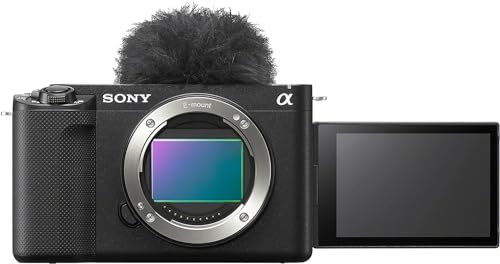
Sony ZV-E1
Best for: video-led lifestyle creators who shoot moving day-in-the-life content in low light, with 4K up to 60p and 5-axis stabilisation in a full frame body
Not suited for: stills photographers printing very large, because the 12.1 megapixel brief spends its sensor budget on video sensitivity rather than resolution
- Sensor: 12.1 megapixel full frame Exmor R CMOS
- Processor: BIONZ XR, per the listing title
- Video: 4K up to 60p
- Mount: Sony E mount
- Stabilisation: 5-axis IBIS
- Configuration: body, black finish
- Further specifications: Not stated in the listing title — verify with the manufacturer documentation
The ZV-E1 makes a deliberate professional trade and states it in numbers: a 12.1 megapixel full frame Exmor R sensor, tuned for video sensitivity, behind 4K recording up to 60p and 5-axis in-body stabilisation. Lifestyle creators whose deliverables are films first and photographs second will recognise the logic instantly — fewer, larger photosites drinking in evening light, smooth handheld movement through real homes, and a body small enough to work unnoticed.
In a day-in-the-life film, those traits compound. Kitchens at dusk, restaurants at night and workshops under mixed bulbs are the genre’s natural habitats, and they punish cameras that need bright conditions or a gimbal for every step. The ZV-E1’s stabilised, sensitive package keeps the camera handheld and the family unselfconscious, which is where the footage worth paying for lives.
Stills-led professionals should read the megapixel figure as the honest boundary it is. Twelve megapixels serve screens and modest prints gracefully and large exhibition prints reluctantly, so hybrid shooters must weigh their deliverable mix before committing. As a body-only purchase it also starts the E-mount lens conversation immediately — the professional’s normal tax, payable once and amortised across every session.
Evening sessions are the ZV-E1’s audition piece, and it passes in a way that changes what a practice can sell. Candlelit dinners, night markets and the blue hour after a family’s bedtime routine become bookable slots rather than lighting emergencies, because the sensitive full frame sensor and stabilisation keep filming graceful where other bodies reach for intrusive lights. A practice that can promise the golden and the gloaming hours doubles its diary; that, more than any frame rate, is the professional meaning of this body. Audio planning deserves a sentence beside this body’s video praise: its stabilised, sensitive filming invites location sound, and a practice built around it should budget microphones with the same seriousness as lenses. The camera will make the pictures look effortless; the sound is where amateur and professional part company, and no sensor rescues it later.
Strengths
- Full frame sensitivity serves low-light video beautifully
- 5-axis IBIS keeps handheld lifestyle footage smooth
- 4K up to 60p covers slow, graceful movement work
Trade-offs
- 12.1 megapixels limit large-print stills ambitions
- Body only, so E-mount glass is a separate investment
- Video-first tuning is wasted on stills-only practices
Video-led creators can study the ZV-E1 body listing’s sensor and recording lines, then check price on Amazon before speccing the first E-mount lens beside it.

Canon EOS R50 Content Creator Kit
Best for: starting paid lifestyle content with camera, lens, tripod grip, microphone and wireless remote working together on day one
Not suited for: established studios with grip and audio already owned, because the kit’s bundled accessories duplicate equipment on their shelves
- Camera: Canon EOS R50 mirrorless
- Lens included: RF-S 18-45mm f/4.5-6.3 IS STM
- Grip: tripod grip included
- Audio: microphone included
- Control: wireless remote control included
- Further specifications: Not stated in the listing title — verify with the manufacturer documentation
Distinguish this kit from a bare camera kit, because the distinction is the product: alongside the R50 and its RF-S 18-45mm lens, the box carries a tripod grip, a microphone and a wireless remote control. That is a production outfit, not a camera with ambitions. A lifestyle creator can unbox in the morning and film a client’s kitchen session after lunch, with grip-stabilised walkthroughs, presentable audio and remote framing for solo work.
Each accessory answers a known beginner failure. The grip fixes the wobbling handheld tour; the microphone rescues the echoing room tone that marks amateur footage instantly; the remote lets a solo creator start, stop and star in the frame without the sprint back to the tripod. For day-in-the-life work, where the creator often films alone inside someone else’s routine, those three items are the difference between a hobbyist’s reel and a bookable service.
The ceiling is the platform’s, not the bundle’s. APS-C files and a kit zoom serve social and client work handsomely, while demanding low-light or large-print briefs eventually argue for the full frame bodies on this page. As a business in a box for lifestyle content, nothing else here starts a practice this completely.
The R50 creator kit’s economics deserve a paragraph of their own. Priced as one box, it undercuts the assembled equivalent in most markets while arriving matched, warrantied as a kit and ready for a first booking within the week. For a creator converting an audience into a practice, that speed-to-first-invoice is the feature. The grip, microphone and remote also standardise the working method, so early client work looks consistent — and consistency, visible across a portfolio, is what turns one booking into a rate card. There is a confidence dividend in a matched kit that solo creators underestimate: every component was designed to work with the others, so the first client day contains no compatibility surprises. Confidence reads on camera and in the room, and clients rebook the creator who seemed unhurried. The box sells that calm as surely as it sells the camera.
Strengths
- Tripod grip, microphone and remote included in the box
- Complete filming outfit from the first morning
- R50 platform grows with RF-S lenses over time
Trade-offs
- Accessory owners pay for duplicates they will shelve
- Kit zoom apertures limit dim interior video
- APS-C format sits below the page’s full frame ceiling
Aspiring lifestyle creators can itemise the R50 Content Creator Kit’s box contents on the listing and check price on Amazon against buying each accessory separately.

Canon EOS R10 Content Creator Kit
Best for: vlogging-led lifestyle work needing a 24.2 megapixel APS-C body with tripod and stereo microphone included for location sound
Not suited for: silent, stills-only practices, because the kit’s tripod and stereo microphone budget serves moving, sounding briefs first
- Sensor: 24.2 megapixel CMOS (APS-C)
- Lens included: RF-S 18-45mm f/4.5-6.3 IS STM
- Support: tripod included
- Audio: stereo microphone included
- Positioning: mirrorless vlogging camera, per the listing
- Further specifications: Not stated in the listing title — verify with the manufacturer documentation
The R10 Content Creator Kit is the step-up sibling in Canon’s boxed ecosystem: a 24.2 megapixel APS-C vlogging camera with the same versatile 18-45mm lens family, plus a tripod and a stereo microphone in the box. Where the R50 kit’s grip favours walk-and-talk mobility, the R10 kit’s tripod and stereo pairing favours placed, composed scenes — the interview corner, the recipe demonstration, the workshop bench — where lifestyle stories are actually told.
Stereo sound is an underrated lifestyle upgrade. Kitchens clatter in stereo, markets murmur in stereo, and a stereo microphone restores the spatial honesty that mono voice-first audio flattens. Combined with a sensor that handles stills at full credibility, the kit covers the hybrid day without a mid-session equipment change, which matters when the client’s baby is finally asleep and the light is perfect for exactly four minutes.
Judge the kit against the R50’s by working style rather than by rank. Handheld, mobile creators belong with the grip kit; composed, tripod-led storytellers belong here. Both are complete, both are APS-C, and the professional mistake would be buying either while actually practising the other’s method.
The R10 kit earns a particular following among workshop and food creators, where the tripod-and-stereo formula matches the work’s geometry: overhead benches, sizzling pans, a presenter’s hands in frame and the room’s real sound in the recording. Stereo audio of a working kitchen is half the storytelling, and the kit treats it as such rather than as an upgrade path. Creators in those niches often skip the grip-led kits entirely, and this box is the reason their first professional setup feels composed rather than improvised. The R10 kit’s stills deserve their own sentence in a video-led review: 24.2 megapixels of APS-C is a fully professional stills specification for the genre’s deliverables, so the composed scenes the tripod serves can be photographed as seriously as they are filmed. Hybrid briefs stop being a compromise when both halves are this credible.
Strengths
- Tripod and stereo microphone included for composed scenes
- 24.2 megapixel sensor keeps stills client-credible
- Complete hybrid kit without accessory shopping
Trade-offs
- Tripod-led design suits mobile run-and-gun work less well
- Kit zoom range and apertures bound low-light video
- Duplicates arise for creators already owning support gear
Composed-scene storytellers can compare the R10 kit’s tripod and microphone contents on its listing and check price on Amazon for the full creator bundle.

Sony ZV-E10 with 16-50mm Lens
Best for: compact lifestyle kits for creators who frame with a side flip-out touchscreen and rely on a stated 425-point autofocus system
Not suited for: high-frame-rate video briefs, because this listing states UHD 4K at 30p rather than the faster rates the newer bodies advertise
- Sensor: 24.2 megapixel APS-C
- Video: UHD 4K 30p, per the listing title
- Screen: 3.0 side flip-out touchscreen
- Lens included: 16-50mm OSS II kit lens
- Autofocus: 425-point AF, as stated in the title
- Finish: black
- Further specifications: Not stated in the listing title — verify with the manufacturer documentation
The ZV-E10 kit is the compact professional’s compromise, and its title is refreshingly specific: 24.2 megapixel APS-C sensor, UHD 4K at 30p, a 3.0 side flip-out touchscreen, the 16-50mm OSS II kit lens and a 425-point autofocus system. That last figure is the lifestyle worker’s headline, because autofocus points spread across the frame are what let a moving family stay sharp while the composition stays intentional.
The side flip-out screen defines the working posture. It faces forward for the creator’s own pieces to camera, folds flat for discretion, and articulates for the high and low angles that lifestyle sessions demand hourly. The collapsible kit lens keeps the whole camera small enough for the tote bag that travels between client homes, and the E-mount system behind it offers a professional growth path in primes and zooms.
Its limits are printed in its own title, which is to the listing’s credit: 4K at 30p rather than 60p, so motion-hungry briefs should look at the ZV-E1 or ZV-E10 II class instead. For the enormous middle of lifestyle work — bright homes, social deliverables, steady hybrid days — the ZV-E10 kit remains the balanced, pocketable answer.
Longevity is the ZV-E10 kit’s quiet credential. The model has served as countless creators’ first professional camera, which means its quirks are documented, its accessories are everywhere and its used market is deep when a practice needs a second angle. The stated 425-point autofocus and flip-out screen remain the working core, and the E-mount lens shelf behind it stretches from kit zooms to cinema-grade primes. Buying the proven tool is a professional strategy, not a compromise, when clients are paying for reliability. Second-angle economics complete this kit’s case: when a practice grows, a ZV-E10 becomes the locked-off wide camera on video days and the backup body on stills days, roles where its compactness and E-mount compatibility shine. Equipment that demotes gracefully is worth more across a career than equipment that only knows how to be the flagship.
Strengths
- 425-point autofocus stated in the listing
- Side flip-out touchscreen suits solo creator framing
- Compact kit travels between client homes effortlessly
Trade-offs
- 4K limited to 30p in this listing
- Kit lens apertures bound evening interior work
- Newer Sony bodies refine the creator formula further
Mobile creators can verify the ZV-E10 kit’s autofocus and lens details on the listing, then check price on Amazon for the black 16-50mm bundle.

Canon EOS R6 Mark II with 24-105mm Lens Kit
Best for: professional lifestyle practices needing a full frame hybrid kit whose 24-105mm zoom covers a whole client day without a lens change
Not suited for: creators counting every gram on long travel days, because a professional full frame kit’s capability arrives with professional substance
- Sensor: 24.2 megapixel full frame CMOS
- Lens included: RF24-105mm f/4-7.1 IS STM
- Positioning: full-frame hybrid camera, photo and video capabilities
- Mount: RF mount
- Finish: black
- Further specifications: Not stated in the listing title — verify with the manufacturer documentation
This kit is the page’s professional anchor: the R6 Mark II’s 24.2 megapixel full frame sensor and hybrid photo-and-video brief, married to an RF24-105mm zoom whose range is the lifestyle day in a single barrel — room-wide establishing frames at one end, compressed candids and product details at the other. One camera, one lens, no mid-session swaps while the client’s light changes; that operational simplicity is worth money to a working practice.
Full frame files at this level carry the deliverables clients increasingly request together: stills that print, video that grades gracefully, and low-light performance that keeps evening sessions — the dinners, the golden-hour family chaos — inside the service rather than outside it. The RF mount behind the kit is Canon’s professional present and future, so every lens added compounds rather than experiments.
The investment posture is equally professional. This is the most committed purchase on the page, and its value only fully lands when the calendar holds regular paid work to amortise it. Busy lifestyle practices will find that easy; occasional shooters should let the creator kits above carry them until the bookings argue otherwise.
Studios evaluating this kit should run the two-body thought experiment. One R6 Mark II kit covers the day; a second, added when bookings justify it, creates the redundancy professional contracts quietly assume, with identical files, batteries and handling across both. That ecosystem logic — same mount, same menus, same colour — is why anchor kits are bought as platforms rather than as cameras. The 24-105mm range means the platform’s first lens may also be its hardest-working, a claim few kit zooms anywhere can sustain. Finally, consider the support ecosystem this kit enters: Canon’s professional services, rental shelves in every major city and a used lens market deep enough to solve emergencies overnight. A working practice buys that infrastructure as surely as it buys the sensor, and on the morning a lens fails before a booking, the infrastructure is the product.
Strengths
- One-lens 24-105mm coverage for entire client days
- Full frame hybrid files serve print and video briefs together
- Professional RF system depth behind the kit
Trade-offs
- The page’s most committed investment
- Variable-aperture zoom still leans on the sensor at dusk
- Capability exceeds what occasional shooters will use
Working professionals can confirm the R6 Mark II kit’s lens and contents on the listing and check price on Amazon as the anchor purchase of a lifestyle practice.
Professional Lifestyle Kits Compared
Read the kit-completeness column as a readiness clock: creator kits film on day one, bare kits need a lens decision honoured, and the body-only entry needs a small production plan.
| Pick | Best for | Sensor / Format | Kit Completeness | Check |
|---|---|---|---|---|
| Canon EOS R8 with 24-50mm Lens | Full frame lifestyle kit with a compact zoom | Full frame | RF 24-50mm lens included | Check price on Amazon |
| Sony ZV-E1 | Video-led full frame creator body | Full frame, 12.1MP Exmor R | Body, 5-axis IBIS | Check price on Amazon |
| Canon EOS R50 Content Creator Kit | Complete creator box with grip and microphone | APS-C | Lens, tripod grip, microphone, remote included | Check price on Amazon |
| Canon EOS R10 Content Creator Kit | Step-up creator box for vlogging work | APS-C, 24.2MP CMOS | Lens, tripod and stereo microphone included | Check price on Amazon |
| Sony ZV-E10 with 16-50mm Lens | Compact creator kit with 425-point AF | APS-C, 24.2MP | 16-50mm OSS II lens included | Check price on Amazon |
| Canon EOS R6 Mark II with 24-105mm Lens Kit | Professional hybrid kit for client days | Full frame, 24.2MP CMOS | RF24-105mm lens kit | Check price on Amazon |
Choosing a Lifestyle Workhorse
Sensor size opens the debate, but workflow closes it. These questions follow a real booking from first enquiry to delivered gallery, which is where cameras earn or lose their money.
Full frame or APS-C for paid everyday work?
Full frame buys low-light grace, shallow depth and print headroom, and clients feel the difference most in evening and indoor sessions. APS-C buys size, cost relief and discretion, and social-first deliverables rarely expose its ceiling. Audit your last twenty sessions honestly: if dim interiors dominate, step up; if bright homes and gardens dominate, the creator kits’ completeness may serve the business better than a sensor upgrade.
Creator kit or bare kit: what is actually in the box?
A Content Creator Kit is a production decision disguised as packaging. The R50 kit’s tripod grip, microphone and remote, and the R10 kit’s tripod and stereo microphone, remove the accessory queue between purchase and paid work. Bare kits and bodies suit professionals whose shelves already hold grips, audio and support. Price both routes completely — body plus every missing accessory — before declaring either the cheaper professional option.
How should client files be protected?
Treat every session as unrepeatable, because it is. As general guidance: record with redundancy where the work allows, copy cards before formatting anything, keep two copies of the archive in separate places, and verify the copies open before the cards return to the bag. Dual-card recording, where a body offers it, belongs to the manufacturer documentation for each model; the habit of layered backup belongs to the photographer regardless of hardware.
Practices printing proofs and invoices from a home office often graduate to shared machines, mapped in our guide to cloud-enabled laser printers for multi-room teams.
Which lens grows the practice first?
Let the delivered work vote. Lifestyle shooters usually outgrow a kit zoom’s low-light manners before its range, which argues for a fast prime as the first addition; those losing candids to distance should choose reach instead. Buy the lens that fixes the failure appearing in real galleries, and the practice grows on evidence rather than on envy of other photographers’ bags.
How much should the first year’s budget split between body and everything else?
A working rule for new practices: the body and its first lens claim roughly half, with audio, support, storage, backup drives and insurance sharing the rest. The creator kits distort that split helpfully by bundling support and audio into the body line. What must never happen is the all-body budget, where a flagship sensor records its first client day onto a single card with no microphone and no backup — the market forgives modest files and never forgives lost ones.
When does a practice need lighting more than a new body?
When the sessions are already sharp, focused and well exposed, yet the rooms still look flat — that is a light problem wearing a camera problem’s coat. One small continuous light and the window discipline in this guide’s how-to section will lift a gallery further than a sensor tier, at a fraction of the cost, and the bodies here all have the sensitivity to honour the improvement.
Running a Day-in-the-Life Session
Arrive with the session pre-walked in your head: the family’s routines, the rooms with kind light at each hour, the three moments the client named as priceless. Set the camera’s hybrid behaviour before the door opens — stills and video modes one control apart — and keep the kit on your body rather than in a bag across the house, because lifestyle gold lasts seconds and never repeats for a photographer fetching equipment.
Colour proofing for client galleries raises its own hardware questions, covered in our survey of single-function colour laser printers for studio desks.
Direct lightly and photograph honestly. Suggest positions near windows, then let life resume; the genre’s value is its truth, polished by light rather than staged by instruction. Review nothing on the camera’s screen during the session beyond exposure sanity checks, because a photographer studying a display is a photographer absent from the family’s day.
Delivering Galleries Clients Rebook From
Delivery is part of the product. Cull ruthlessly to the story, grade for consistency across the day’s changing light, and present the gallery in narrative order so the client relives the day rather than auditing files. Include a small set of print-ready favourites and the social crops in one package, and the household’s phones, walls and grandparents are all served in a single delivery.
Close the loop professionally: archive the session under the backup routine described in the buying guide, note what the next session should do differently, and ask for the testimonial while the emotion is warm. Lifestyle practices grow on rebookings and referrals, and both are earned in the delivery week as surely as in the session itself.
Pricing the Hybrid Day: Stills, Film and the Bundle
Lifestyle clients increasingly buy bundles — a gallery, a short film, a set of social crops — and the hybrid bodies here exist to serve exactly that invoice. Price the bundle by the day and the deliverables, not by the file count, and let the camera’s hybrid fluency be the margin: one body, one lens, no second shooter, no cinema rental. Practices that itemise every photograph teach clients to count; practices that sell the story teach them to rebook.
The contract deserves the same clarity as the gallery. State the deliverable formats, the delivery window, the archive period you will keep the files, and the reshoot terms if a session is rained out or a child is ill. None of that is camera equipment, and all of it is professional equipment — the bodies on this page merely make the promises affordable to keep.
Light for Lifestyle: Windows Before Equipment
The genre’s lighting secret is embarrassingly architectural: big windows, white walls and the hours when both cooperate. A lifestyle photographer scouts a client’s home for its window map the way a landscape photographer scouts a valley, scheduling the kitchen scenes for the kitchen’s light and the portraits for the room that flatters at four o’clock. Cameras with sensitive sensors and stabilisation, several of them listed here, extend those windows at both ends of the day.
Carry one small continuous light for the exceptions — the windowless hallway, the evening toast — and let it serve as a window substitute rather than a studio statement. The aesthetic clients pay for is available light, honoured; equipment that respects that hierarchy, from fast-aperture lens choices to a body that focuses surely in dim rooms, earns its place in the bag session after session.
The Consultation: Selling the Day Before Shooting It
Professional lifestyle work begins at the consultation, where the photographer learns the household’s rhythms, the rooms’ light and the moments the client fears losing. Bring example galleries that resemble the client’s actual life rather than your most exotic work, and talk about the unposed philosophy plainly: what you will direct, what you will never stage, and how the children can simply be children.
Set the practical expectations in the same conversation: how the files are backed up, when the gallery arrives, what happens if someone is ill on the day. Clients relax when the logistics sound boring, and relaxed clients produce the natural photographs both parties want. The camera conversation belongs last and lightest — by then, the client is buying trust, and the bodies in this guide are merely its instruments.
Portfolios That Book: Showing the Everyday at Its Best
A lifestyle portfolio should read like a day, not like a trophy cabinet. Sequence the work from morning light to evening warmth, mix the wide establishing frames with the details only a present photographer notices, and let two or three honest, imperfect frames prove the authenticity the genre sells. Clients booking a day-in-the-life are buying judgement about their own lives; the portfolio is where that judgement is first displayed.
Show the hybrid range without diluting it. A short film placed after the gallery it came from demonstrates the one-photographer proposition better than any rate-card paragraph, and it sets the bundle expectation that the buying guide’s pricing section builds on. Keep the portfolio current ruthlessly: last season’s work, however loved, tells this season’s clients what you were, and the bodies in this guide were bought to document what you are.
Finally, let the portfolio include the unglamorous evidence of professionalism — a sentence about backup practice, a delivery promise kept in writing, a testimonial that mentions reliability beside artistry. Lifestyle clients are entrusting a stranger with their family’s ordinary day, and the portfolio that acknowledges that trust, in its structure as much as its images, is the one that gets the booking.
Saying No: Briefs a Lifestyle Practice Should Decline
Professional maturity includes the declined booking. The session that demands heavy staging belongs to a studio photographer; the event that needs three cameras and a lighting crew belongs to a production company; the client who wants every frame retouched into advertising gloss wants a different genre wearing lifestyle’s clothes. Each declined brief protects the calendar, the portfolio’s coherence and the honest product the right clients are paying for.
Declining well is a skill with a script: gratitude for the enquiry, a plain statement of what your practice does, and a referral to the photographer whose work genuinely fits. Referrals return — the studio photographer sends the day-in-the-life enquiry back across the street within the season — and a practice known for its boundaries is trusted with bigger ones. The cameras in this guide serve a defined genre; the definition is the business model.
The Quiet Season: Maintaining the Practice Between Bookings
Every lifestyle practice has a quiet season, and professionals spend it differently from amateurs: servicing the bodies, refreshing the portfolio, shooting the personal project that next season’s clients will book from, and reviewing the year’s galleries for the recurring failure that one purchase — lens, light or lesson — should fix. The cameras in this guide are tools of that cycle as much as of the sessions themselves.
Quiet seasons also test the backup archive, and wise practices run the test deliberately: open last year’s sessions, verify the copies, migrate anything stored on ageing drives. A practice that audits its archive annually can promise clients a retrieval years later and mean it, which is the kind of unglamorous guarantee that turns a good photographer into a household institution.
Professional Lifestyle Mistakes
Mistaking a bare kit for a creator kit
The names sound alike and the boxes differ by a grip, a microphone and a remote — the exact items a solo creator needs on day one. Read the contents line of the specific listing, because the accessory difference is the price difference’s whole justification.
Spending the sensor budget before the audio budget
Clients forgive a slightly soft frame and never forgive unintelligible vows, interviews or toasts. Any lifestyle practice filming people should fund microphones and audio habits before chasing the next sensor tier; the creator kits exist precisely to enforce that order.
Treating backup as an evening chore
Cards fail, bags vanish and laptops die, usually holding the only copy of an unrepeatable day. Copy first, verify the copies, then format — in that order, every session, without the optimism that this time will be different.
Over-directing the day you were hired to witness
Lifestyle clients buy authenticity with good light, not theatre. Photographers who stage every moment deliver a prettier lie and a shorter client relationship; position people kindly, then let the real day outperform your directions.
Buying resolution the deliverables never use
A 12.1 megapixel video-tuned sensor and a 24.2 megapixel hybrid both have professional homes on this page. Match the sensor to the actual deliverables — screens, prints, films — rather than to the largest number, and the budget freed can fund the lens or audio the work genuinely lacks.
Delivering everything you shot
A gallery of eight hundred files is an editing debt transferred to the client, and it dilutes every strong frame inside it. Cull to the story — the genre’s professionals are judged by their restraint — and keep the outtakes archived privately for the day a client asks after one specific, remembered moment.
Letting the portfolio go stale
A practice marketing last year’s eye with this year’s prices confuses the market and itself. Refresh the gallery every season from real sessions, retire the frames that no longer represent the work, and let the portfolio’s discipline mirror the delivery discipline clients are actually buying.
Frequently Asked Questions
What separates the two Content Creator Kits?
Contents and working style. The R50 kit includes a tripod grip, a microphone and a wireless remote, favouring mobile, handheld creation; the R10 kit includes a tripod and a stereo microphone around a 24.2 megapixel body, favouring composed, placed scenes. Both include the 18-45mm lens family.
Is the ZV-E1’s 12.1 megapixel sensor a weakness?
It is a specialisation. The full frame sensor’s modest count serves video sensitivity and low-light filming, the ZV-E1’s stated brief, while stills at that resolution suit screens and modest prints. Photographers whose income is large prints should choose the 24.2 megapixel bodies instead.
Which body suits a first paid lifestyle practice?
The creator kits start earning soonest because the accessories are included, with the R50 kit for mobile work and the R10 kit for composed scenes. Practices with accessories already owned can start with the R8 kit and grow into full frame immediately.
Do these cameras record to two cards?
Card configuration is a per-model specification that belongs to the manufacturer documentation, and this guide does not state it for any body here. Whatever the hardware offers, the professional habit is layered: copy promptly, keep two archive copies in separate places, and verify before formatting.
Why does kit completeness matter professionally?
Because time is billable and accessories are not free. A creator kit that films on day one can beat a finer bare body to the first three bookings, while an established studio with shelves of support gear gains nothing from duplicates. Completeness is value only when it matches the buyer’s existing shelves.
Which lens should a lifestyle practice add first?
The one that repairs the failure appearing in delivered galleries: dim interiors argue for a fast prime, lost candids argue for reach. Kit zooms on this page cover the storytelling middle well, so evidence from real sessions, not catalogue longing, should direct the second purchase.
Can a lifestyle practice start on APS-C and stay there?
Many do, profitably, especially where deliverables are social-first and sessions are bright. The creator kits here are complete professional tools for that market. Full frame becomes necessary when the bookings themselves demand it — evening work, large prints, shallow-depth portraiture at scale — and the healthy practice lets signed clients, not catalogue envy, trigger the upgrade.
What should a second body be?
Ideally the same platform as the first, so files, batteries, lenses and menus match under pressure. Practices often add the second body as the backup and keep the original as the main camera, or promote the new body and retire the first to second angle duty on video sessions. Either way, platform consistency is worth more than a marginal specification advantage elsewhere.
How soon should a new practice upgrade its camera?
When the current body demonstrably loses bookings or deliverables: sessions declined for low light, prints requested beyond the sensor’s comfort, video briefs the kit cannot serve. That evidence-based trigger usually arrives later than envy suggests, and by then the practice’s cash flow, not a credit card, should be funding the step up.
Should lifestyle photographers shoot personal work with the same body?
Yes, and visibly. Personal projects keep the eye honest between bookings, test new lenses and settings at affectionate stakes, and produce the portfolio’s freshest frames more often than client work does. A body that serves both lives — several on this page are compact enough to insist on it — amortises itself in skill as well as in invoices.
How many lenses does a lifestyle booking actually need?
Most sessions are shot on one or two: the kit zoom that covers the day’s geography, and a fast prime for the dim, intimate chapters. Additional lenses earn their bag space only when a specific, recurring failure demands them, which is the same evidence rule the buying guide applies to clients of this page — the portfolio’s gaps, not the catalogue’s glamour, write the shopping list.
Should a lifestyle photographer carry insurance?
Practices working in clients’ homes should treat equipment and liability cover as part of the camera budget rather than as an optional extra, arranged through whoever insures the business. The bodies and kits here represent a working person’s capital, and the consultation-stage trust described in this guide is easier to offer when the unglamorous paperwork behind the artistry is genuinely in order.
Final Recommendation
New lifestyle practices should open with a Content Creator Kit — the R50 for mobile, grip-led work, the R10 for composed, tripod-led storytelling — because both film a paying client on day one. Video-led creators with low-light briefs belong with the ZV-E1, compact-kit travellers with the ZV-E10, and photographers ready for full frame manners with the R8 kit.
Busy practices graduate to the R6 Mark II kit, whose one-lens coverage and full frame hybrid files simplify the professional day end to end. Whichever body carries your bookings, let the backup routine be as polished as the portfolio — clients remember the photographs forever, and they remember the photographer who never lost one almost as long.
Book one unpaid day-in-the-life session with friends before the first paid one, whatever body you choose. Run the full professional routine — window scout, hybrid shooting, backup discipline, narrative delivery — and let that rehearsal expose the gaps while the stakes are affectionate. The practice that rehearses is the practice clients describe as effortless.
Set the first consultation before the camera arrives, if you can. Nothing focuses a new practice like a real household expecting you on Saturday, and nothing teaches a hybrid body’s virtues faster than a day spent earning them.
Keep one page in the practice notebook for the clients who got away, with the honest reason written beside each name. Patterns hide in those pages that no booking ledger shows: the briefs priced in fear, the consultations rushed, the genres accepted against the practice’s own definition. Reading that page each quiet season is uncomfortable and invaluable, and it is the cheapest consultancy a one-person studio will ever hire.
The diary, the portfolio and the camera bag are ready when you are; the everyday, as always, is already happening.


