Our Top Picks


What's inside
- How Magnification and Objective Size Behave at Sea
- Why Waterproof and Fogproof Wording Matters Here
- Vortex Triumph HD 10×42 Binoculars (B0C6N72X5Y)
- Bushnell H2O Xtreme 10×42 Waterproof Binoculars (B00AMPJGMG)
- Nikon PROSTAFF P3 10×42 Binocular (B0B3JSRZFJ)
- Vortex Triumph HD 12×50 Binoculars (B0GNTHY8JK)
- Bushnell H2O 10×42 Waterproof Binoculars (B09841HG7D)
- Hooway 7×50 Waterproof Fogproof Military Marine Binoculars (B01LC3D46A)
- Vortex Crossfire HD 10×42 Binoculars (B07V3LB5DN)
- Athlon Optics Midas UHD Binoculars 8×42 (B00YLTG7DA)
- Nikon Trailblazer 8x25mm ATB Binoculars (B000NO5OYA)
- How to Choose, Common Mistakes, and Care
- Disclosure
- Check prices on Amazon
- Extended Field Notes and Practical Routines
As an Amazon Associate I earn from qualifying purchases. This post may contain affiliate links at no extra cost to you.
An Antarctica cruise asks more of binoculars than a typical holiday outing. You view from a moving deck, in cold wind and salt spray, often through rapidly changing light, and you may carry the same optics ashore during zodiac landings. This guide compares nine options using only the specifications and features stated in their published product titles, so every claim below can be traced back to a title, a magnification figure, an objective size, or a widely understood principle of using optics at sea.
The range here runs from 7x to 12x magnification and from 25mm to 50mm objectives. Lower magnification is generally easier to hold steady on a rolling platform, while higher magnification brings distant detail closer at the cost of a narrower, less forgiving view. Larger objectives belong to larger bodies, and the one explicitly compact model in the list takes the opposite approach, prioritising carry convenience for landings. Readers planning photography alongside viewing may also compare the camera guides linked in this article, including best 10 underwater cameras for water-ready shooting contexts.
How Magnification and Objective Size Behave at Sea
Magnification numbers in these titles, from 7x through 8x and 10x to 12x, describe how much closer a subject appears. On land, more magnification often sounds simply better. At sea, the platform moves, your hands move with it, and every increase in magnification also increases the apparent movement in the view. That is why experienced marine viewers often value a steadier 7x or 8x image over a larger but restless 12x image during active deck scanning.
Objective size, the second number in each pairing, describes the diameter of the front lenses in millimetres. The 50mm models in this list sit at the large end, the many 42mm models occupy the middle, and the compact 25mm model stands apart. Size affects bulk and carry decisions directly, which matters when you are layering clothing, boarding a zodiac, and keeping optics protected between viewings. For readers who split time between optics and cameras, the travel zoom discussion at best 1 inch sensor travel zoom cameras covers a related portability trade-off.
Why Waterproof and Fogproof Wording Matters Here
Almost every title in this list states waterproof construction, and most also state fogproof construction or anti-fog performance. In polar cruising those words address two everyday realities: spray and splashes around boats, and the temperature shock of moving between a heated cabin and freezing deck air. Sealed optics are designed for those transitions, but careful habits still help, including capping lenses during moves and allowing time for adjustment before wiping.
Shockproof wording appears in the Vortex titles, rubber armor appears in the Nikon PROSTAFF P3 title, and non-slip rubber appears in one Bushnell H2O title. Each phrase speaks to a different kind of protection: internal resilience, external grip and armour, or surface traction. Gloves reduce fingertip sensitivity, so grip language deserves real weight in a cold-weather shortlist. Video-focused readers comparing recording gear for the same voyage can continue with best 10 bit cameras after settling their optics.
Vortex Triumph HD 10×42 Binoculars (B0C6N72X5Y)
The Vortex Triumph HD 10×42 Binoculars (B0C6N72X5Y) is presented here strictly on the terms of its published title. HD optics, tripod adaptable design, and waterproof, fogproof, and shockproof construction, supplied with an included Glasspak harness. The 10x magnification and 42mm objective size place it in the middle of this list, a balance that suits general deck viewing of ice, shoreline, and wildlife at a distance. The tripod adaptable note matters for sheltered, stationary viewing, while the harness speaks to carrying security during boarding and landing movements.
For an Antarctica cruise, judge this option by how its stated magnification, objective size, and weather sealing fit the viewing you will do most often. Deck viewing from a large ship, sheltered viewing behind glass or a windbreak, and zodiac viewing close to the water are three different tasks, and no single configuration in this list is described by its maker for all three in the same words. Match the title language to the task before deciding.
Our research approach for this guide is to stay inside the published specifications. Where a title says waterproof or fogproof, we report waterproof or fogproof. Where a title names a harness, a rangefinder, a compass, or long eye relief, we report exactly that. Readers should treat anything beyond that wording as a question to confirm on the product page for that ASIN, not as a fact established here.
Bushnell H2O Xtreme 10×42 Waterproof Binoculars (B00AMPJGMG)
The Bushnell H2O Xtreme 10×42 Waterproof Binoculars (B00AMPJGMG) is presented here strictly on the terms of its published title. Fully multi-coated lenses and anti-fog performance in a waterproof 10×42 format, described for hunting, birdwatching, and fishing. Those stated uses overlap with cruise viewing in one practical way: all involve outdoor scanning in changeable weather. The 10×42 configuration matches the most common general-purpose size in this guide, making it a useful reference point when comparing the other models.
For an Antarctica cruise, judge this option by how its stated magnification, objective size, and weather sealing fit the viewing you will do most often. Deck viewing from a large ship, sheltered viewing behind glass or a windbreak, and zodiac viewing close to the water are three different tasks, and no single configuration in this list is described by its maker for all three in the same words. Match the title language to the task before deciding.
Our research approach for this guide is to stay inside the published specifications. Where a title says waterproof or fogproof, we report waterproof or fogproof. Where a title names a harness, a rangefinder, a compass, or long eye relief, we report exactly that. Readers should treat anything beyond that wording as a question to confirm on the product page for that ASIN, not as a fact established here.
Nikon PROSTAFF P3 10×42 Binocular (B0B3JSRZFJ)
The Nikon PROSTAFF P3 10×42 Binocular (B0B3JSRZFJ) is presented here strictly on the terms of its published title. Waterproof and fogproof construction with a rubber-armored full-size body, a wide field of view, and long eye relief. The wide field of view helps when scanning open water for movement, and long eye relief is relevant for viewers who wear glasses. The rubber armor, as stated in the title, points to grip and protection in cold, gloved, or wet conditions on deck.
For an Antarctica cruise, judge this option by how its stated magnification, objective size, and weather sealing fit the viewing you will do most often. Deck viewing from a large ship, sheltered viewing behind glass or a windbreak, and zodiac viewing close to the water are three different tasks, and no single configuration in this list is described by its maker for all three in the same words. Match the title language to the task before deciding.
Our research approach for this guide is to stay inside the published specifications. Where a title says waterproof or fogproof, we report waterproof or fogproof. Where a title names a harness, a rangefinder, a compass, or long eye relief, we report exactly that. Readers should treat anything beyond that wording as a question to confirm on the product page for that ASIN, not as a fact established here.
Vortex Triumph HD 12×50 Binoculars (B0GNTHY8JK)
The Vortex Triumph HD 12×50 Binoculars (B0GNTHY8JK) is presented here strictly on the terms of its published title. HD optics, tripod adaptable design, and waterproof, fogproof, and shockproof construction with an included Glasspak harness, at 12x magnification with a 50mm objective. This is the highest magnification and largest objective pairing in the list. Higher magnification narrows the practical margin on a moving deck, so this model makes most sense for supported or sheltered viewing of distant stations, glaciers, and stationary wildlife.
For an Antarctica cruise, judge this option by how its stated magnification, objective size, and weather sealing fit the viewing you will do most often. Deck viewing from a large ship, sheltered viewing behind glass or a windbreak, and zodiac viewing close to the water are three different tasks, and no single configuration in this list is described by its maker for all three in the same words. Match the title language to the task before deciding.
Our research approach for this guide is to stay inside the published specifications. Where a title says waterproof or fogproof, we report waterproof or fogproof. Where a title names a harness, a rangefinder, a compass, or long eye relief, we report exactly that. Readers should treat anything beyond that wording as a question to confirm on the product page for that ASIN, not as a fact established here.
Bushnell H2O 10×42 Waterproof Binoculars (B09841HG7D)
The Bushnell H2O 10×42 Waterproof Binoculars (B09841HG7D) is presented here strictly on the terms of its published title. Fully multi-coated lenses, non-slip rubber, and anti-fog performance in a waterproof 10×42 format described for boating. The boating reference is directly relevant to cruise and zodiac use, and the non-slip rubber note addresses grip when gloves or spray are involved. Its stated configuration mirrors several other 10×42 options, so the distinguishing points are the boating framing and grip description in the title.
For an Antarctica cruise, judge this option by how its stated magnification, objective size, and weather sealing fit the viewing you will do most often. Deck viewing from a large ship, sheltered viewing behind glass or a windbreak, and zodiac viewing close to the water are three different tasks, and no single configuration in this list is described by its maker for all three in the same words. Match the title language to the task before deciding.
Our research approach for this guide is to stay inside the published specifications. Where a title says waterproof or fogproof, we report waterproof or fogproof. Where a title names a harness, a rangefinder, a compass, or long eye relief, we report exactly that. Readers should treat anything beyond that wording as a question to confirm on the product page for that ASIN, not as a fact established here.
Hooway 7×50 Waterproof Fogproof Military Marine Binoculars (B01LC3D46A)
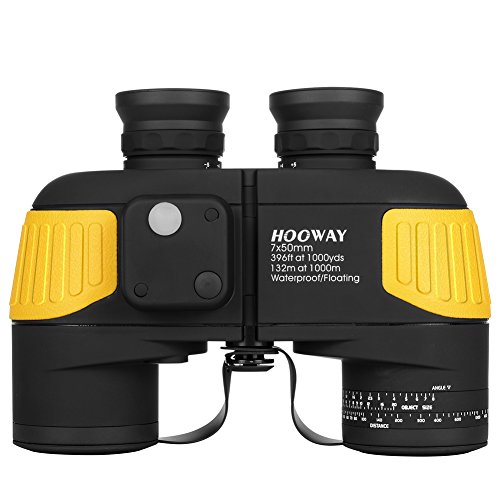
The Hooway 7×50 Waterproof Fogproof Military Marine Binoculars (B01LC3D46A) is presented here strictly on the terms of its published title. Waterproof and fogproof marine binoculars at 7x magnification with a 50mm objective, plus an internal rangefinder and compass for navigation, boating, and fishing. The 7x magnification is the lowest in this list, which generally makes the view easier to hold steady on a moving platform, while the rangefinder and compass are features named only for this model here. Readers interested in navigation context alongside viewing should note those stated additions carefully.
For an Antarctica cruise, judge this option by how its stated magnification, objective size, and weather sealing fit the viewing you will do most often. Deck viewing from a large ship, sheltered viewing behind glass or a windbreak, and zodiac viewing close to the water are three different tasks, and no single configuration in this list is described by its maker for all three in the same words. Match the title language to the task before deciding.
Our research approach for this guide is to stay inside the published specifications. Where a title says waterproof or fogproof, we report waterproof or fogproof. Where a title names a harness, a rangefinder, a compass, or long eye relief, we report exactly that. Readers should treat anything beyond that wording as a question to confirm on the product page for that ASIN, not as a fact established here.
Vortex Crossfire HD 10×42 Binoculars (B07V3LB5DN)
The Vortex Crossfire HD 10×42 Binoculars (B07V3LB5DN) is presented here strictly on the terms of its published title. HD optics, tripod adaptable design, and waterproof, fogproof, and shockproof construction with an included GlassPak harness, in the widely used 10×42 size. It shares its headline configuration with the Triumph HD 10×42 above, so readers should compare the two Vortex 10×42 entries on the exact wording of their titles and on which included accessories are named, rather than assuming the models are interchangeable.
For an Antarctica cruise, judge this option by how its stated magnification, objective size, and weather sealing fit the viewing you will do most often. Deck viewing from a large ship, sheltered viewing behind glass or a windbreak, and zodiac viewing close to the water are three different tasks, and no single configuration in this list is described by its maker for all three in the same words. Match the title language to the task before deciding.
Our research approach for this guide is to stay inside the published specifications. Where a title says waterproof or fogproof, we report waterproof or fogproof. Where a title names a harness, a rangefinder, a compass, or long eye relief, we report exactly that. Readers should treat anything beyond that wording as a question to confirm on the product page for that ASIN, not as a fact established here.
Athlon Optics Midas UHD Binoculars 8×42 (B00YLTG7DA)
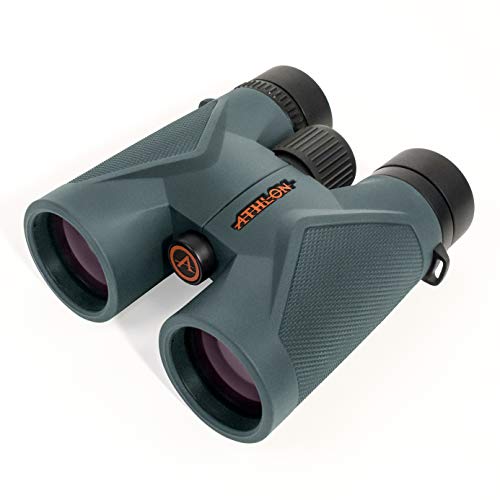
The Athlon Optics Midas UHD Binoculars 8×42 (B00YLTG7DA) is presented here strictly on the terms of its published title. ED glass and waterproof construction at 8x magnification with a 42mm objective, described for hunting and birdwatching. The 8x magnification offers a steadier handheld picture than the 10x and 12x options on a rolling deck for many viewers, while the 42mm objective keeps it in the full-size group. ED glass is the distinguishing optical term in its title and should be weighed as stated, without assuming specifications that are not listed.
For an Antarctica cruise, judge this option by how its stated magnification, objective size, and weather sealing fit the viewing you will do most often. Deck viewing from a large ship, sheltered viewing behind glass or a windbreak, and zodiac viewing close to the water are three different tasks, and no single configuration in this list is described by its maker for all three in the same words. Match the title language to the task before deciding.
Our research approach for this guide is to stay inside the published specifications. Where a title says waterproof or fogproof, we report waterproof or fogproof. Where a title names a harness, a rangefinder, a compass, or long eye relief, we report exactly that. Readers should treat anything beyond that wording as a question to confirm on the product page for that ASIN, not as a fact established here.
Nikon Trailblazer 8x25mm ATB Binoculars (B000NO5OYA)
The Nikon Trailblazer 8x25mm ATB Binoculars (B000NO5OYA) is presented here strictly on the terms of its published title. A compact, waterproof and fogproof 8×25 design with bright multilayer-coated optics and a roof prism. This is by far the smallest objective and the only explicitly compact model in the guide, which makes it the natural candidate for zodiac landings and pocket carry. The trade-off is inherent in the numbers in the title: a 25mm objective gathers a smaller front element than the 42mm and 50mm models, so it suits travel convenience first.
For an Antarctica cruise, judge this option by how its stated magnification, objective size, and weather sealing fit the viewing you will do most often. Deck viewing from a large ship, sheltered viewing behind glass or a windbreak, and zodiac viewing close to the water are three different tasks, and no single configuration in this list is described by its maker for all three in the same words. Match the title language to the task before deciding.
Our research approach for this guide is to stay inside the published specifications. Where a title says waterproof or fogproof, we report waterproof or fogproof. Where a title names a harness, a rangefinder, a compass, or long eye relief, we report exactly that. Readers should treat anything beyond that wording as a question to confirm on the product page for that ASIN, not as a fact established here.
How to Choose, Common Mistakes, and Care
Start by choosing for your most frequent viewing situation rather than your most ambitious one. If most viewing will be handheld scanning from a moving deck, the steadier end of the magnification range deserves priority. If most viewing will be sheltered and stationary, a tripod adaptable model, as named in the Vortex titles, opens a different style of use. If landings dominate your itinerary, the compact Nikon Trailblazer format deserves serious attention despite its smaller objective.
A common mistake is buying the highest magnification available and discovering at sea that the view will not settle. Another is ignoring eye relief when wearing glasses, even though one title here explicitly names long eye relief. A third is treating waterproof wording as permission to neglect care: salt residue, uncapped lenses in spray, and wiping grit across a lens will degrade any optic regardless of sealing. A fourth mistake is carrying a large optic unsecured during zodiac boarding, when a harness or strap, where included as named in the Vortex titles, is the difference between secure and sorry.
- Match magnification to platform movement first, and to subject distance second.
- Confirm waterproof and fogproof wording in the title of the exact model you choose.
- Plan carry for landings separately from carry for deck viewing.
- Use a blower before a cloth, cap lenses during transitions, and store optics dry.
- Re-read the exact title for included accessories rather than assuming a harness or case.
For storage, keep binoculars in a dry, padded place away from direct cabin heat, with caps fitted and the case left open briefly after wet outings so moisture can dissipate. Before the voyage, practise adjusting focus and eyecups with gloves on, because cold-weather handling is a skill as much as a specification. Readers documenting the trip with action footage can also review best 1080 sports cameras as a companion resource.
Disclosure
This guide was prepared for widgetverdict.com readers planning polar travel, and it relies only on published product titles and general principles of optics use at sea. As an Amazon Associate we earn from qualifying purchases. Product wording can change over time, so confirm the current title and specifications for the exact ASIN before ordering, and treat this article as research support rather than a substitute for the manufacturer description.
Check prices on Amazon
Live listings for the shortlist in this guide are pulled from Amazon below, so prices and availability are always current at the moment you look.



Extended Field Notes and Practical Routines
On a moving deck, small handling habits matter as much as the headline specifications. Keep the strap secured, brace your elbows against your torso, and pause between scans so the view can settle. A slow pan across the water reveals more than a fast sweep, because birds, seals, and distant ice features often appear first as brief changes in texture or contrast rather than as clear shapes.
Condensation is a routine challenge when moving between warm indoor air and cold outdoor air. Give the optics time to adjust before wiping any surface, keep the lens caps in place during transitions, and store the binoculars in a dry bag or padded case when spray is likely. These habits protect clarity without relying on any feature beyond the waterproof and fogproof design stated in the product titles.
Light in polar regions can be bright, flat, and changeable within the same hour. Overcast light softens contrast on white ice, while low sun can create strong glare off water. Adjust your position when possible, use the ship rail for support without resting the optics directly on a vibrating surface, and allow your eyes time to adapt before judging distance or detail.
For zodiac landings, portability and protection travel together. A compact model is easier to keep inside a waterproof layer, while a larger model may be better kept for deck viewing. Decide before each outing which role the binoculars will play, pack lens cloths in a sealed pouch, and rinse salt residue only in line with the manufacturer guidance for that specific model.
Wildlife viewing rewards patience and distance. Observe from a respectful range, let animals move naturally through the field of view, and share sightings quietly with nearby passengers. A wider field of view helps when following movement, while higher magnification helps when the subject stays still and the platform is steady enough to support it.
Planning a viewing routine helps across a long voyage. Rotate between short scans for nearby birds and longer, supported looks at glaciers, research stations, and shorelines. Note the conditions that worked well, such as sheltered deck positions or calmer morning water, and repeat those positions when similar conditions return later in the itinerary.
Eye relief and comfort matter during extended viewing. If you wear glasses, compare the long eye relief noted for some models in this list and adjust the eyecups in small steps. Take breaks, blink often in cold wind, and alternate eyes when scanning for long periods so fatigue does not narrow your attention.
Care after each day is simple and consistent. Inspect the lenses for salt spots, use a blower before a cloth, cap the objectives before storage, and keep the case open briefly in a dry cabin so trapped moisture can escape. Document any fogging or damage promptly rather than continuing to wipe a compromised surface.
On a moving deck, small handling habits matter as much as the headline specifications. Keep the strap secured, brace your elbows against your torso, and pause between scans so the view can settle. A slow pan across the water reveals more than a fast sweep, because birds, seals, and distant ice features often appear first as brief changes in texture or contrast rather than as clear shapes. Small, repeatable habits compound over many outings.
Condensation is a routine challenge when moving between warm indoor air and cold outdoor air. Give the optics time to adjust before wiping any surface, keep the lens caps in place during transitions, and store the binoculars in a dry bag or padded case when spray is likely. These habits protect clarity without relying on any feature beyond the waterproof and fogproof design stated in the product titles. Small, repeatable habits compound over many outings.
Light in polar regions can be bright, flat, and changeable within the same hour. Overcast light softens contrast on white ice, while low sun can create strong glare off water. Adjust your position when possible, use the ship rail for support without resting the optics directly on a vibrating surface, and allow your eyes time to adapt before judging distance or detail. Small, repeatable habits compound over many outings.
For zodiac landings, portability and protection travel together. A compact model is easier to keep inside a waterproof layer, while a larger model may be better kept for deck viewing. Decide before each outing which role the binoculars will play, pack lens cloths in a sealed pouch, and rinse salt residue only in line with the manufacturer guidance for that specific model. Small, repeatable habits compound over many outings.
Wildlife viewing rewards patience and distance. Observe from a respectful range, let animals move naturally through the field of view, and share sightings quietly with nearby passengers. A wider field of view helps when following movement, while higher magnification helps when the subject stays still and the platform is steady enough to support it. Small, repeatable habits compound over many outings.
Planning a viewing routine helps across a long voyage. Rotate between short scans for nearby birds and longer, supported looks at glaciers, research stations, and shorelines. Note the conditions that worked well, such as sheltered deck positions or calmer morning water, and repeat those positions when similar conditions return later in the itinerary. Small, repeatable habits compound over many outings.
Eye relief and comfort matter during extended viewing. If you wear glasses, compare the long eye relief noted for some models in this list and adjust the eyecups in small steps. Take breaks, blink often in cold wind, and alternate eyes when scanning for long periods so fatigue does not narrow your attention. Small, repeatable habits compound over many outings.
Care after each day is simple and consistent. Inspect the lenses for salt spots, use a blower before a cloth, cap the objectives before storage, and keep the case open briefly in a dry cabin so trapped moisture can escape. Document any fogging or damage promptly rather than continuing to wipe a compromised surface. Small, repeatable habits compound over many outings.
On a moving deck, small handling habits matter as much as the headline specifications. Keep the strap secured, brace your elbows against your torso, and pause between scans so the view can settle. A slow pan across the water reveals more than a fast sweep, because birds, seals, and distant ice features often appear first as brief changes in texture or contrast rather than as clear shapes. Consistency matters more than complicated technique.
Condensation is a routine challenge when moving between warm indoor air and cold outdoor air. Give the optics time to adjust before wiping any surface, keep the lens caps in place during transitions, and store the binoculars in a dry bag or padded case when spray is likely. These habits protect clarity without relying on any feature beyond the waterproof and fogproof design stated in the product titles. Consistency matters more than complicated technique.
Light in polar regions can be bright, flat, and changeable within the same hour. Overcast light softens contrast on white ice, while low sun can create strong glare off water. Adjust your position when possible, use the ship rail for support without resting the optics directly on a vibrating surface, and allow your eyes time to adapt before judging distance or detail. Consistency matters more than complicated technique.
For zodiac landings, portability and protection travel together. A compact model is easier to keep inside a waterproof layer, while a larger model may be better kept for deck viewing. Decide before each outing which role the binoculars will play, pack lens cloths in a sealed pouch, and rinse salt residue only in line with the manufacturer guidance for that specific model. Consistency matters more than complicated technique.
Wildlife viewing rewards patience and distance. Observe from a respectful range, let animals move naturally through the field of view, and share sightings quietly with nearby passengers. A wider field of view helps when following movement, while higher magnification helps when the subject stays still and the platform is steady enough to support it. Consistency matters more than complicated technique.
Planning a viewing routine helps across a long voyage. Rotate between short scans for nearby birds and longer, supported looks at glaciers, research stations, and shorelines. Note the conditions that worked well, such as sheltered deck positions or calmer morning water, and repeat those positions when similar conditions return later in the itinerary. Consistency matters more than complicated technique.
Eye relief and comfort matter during extended viewing. If you wear glasses, compare the long eye relief noted for some models in this list and adjust the eyecups in small steps. Take breaks, blink often in cold wind, and alternate eyes when scanning for long periods so fatigue does not narrow your attention. Consistency matters more than complicated technique.
Care after each day is simple and consistent. Inspect the lenses for salt spots, use a blower before a cloth, cap the objectives before storage, and keep the case open briefly in a dry cabin so trapped moisture can escape. Document any fogging or damage promptly rather than continuing to wipe a compromised surface. Consistency matters more than complicated technique.
On a moving deck, small handling habits matter as much as the headline specifications. Keep the strap secured, brace your elbows against your torso, and pause between scans so the view can settle. A slow pan across the water reveals more than a fast sweep, because birds, seals, and distant ice features often appear first as brief changes in texture or contrast rather than as clear shapes. Keep notes so the next outing starts from experience.
Condensation is a routine challenge when moving between warm indoor air and cold outdoor air. Give the optics time to adjust before wiping any surface, keep the lens caps in place during transitions, and store the binoculars in a dry bag or padded case when spray is likely. These habits protect clarity without relying on any feature beyond the waterproof and fogproof design stated in the product titles. Keep notes so the next outing starts from experience.
Light in polar regions can be bright, flat, and changeable within the same hour. Overcast light softens contrast on white ice, while low sun can create strong glare off water. Adjust your position when possible, use the ship rail for support without resting the optics directly on a vibrating surface, and allow your eyes time to adapt before judging distance or detail. Keep notes so the next outing starts from experience.
For zodiac landings, portability and protection travel together. A compact model is easier to keep inside a waterproof layer, while a larger model may be better kept for deck viewing. Decide before each outing which role the binoculars will play, pack lens cloths in a sealed pouch, and rinse salt residue only in line with the manufacturer guidance for that specific model. Keep notes so the next outing starts from experience.
Wildlife viewing rewards patience and distance. Observe from a respectful range, let animals move naturally through the field of view, and share sightings quietly with nearby passengers. A wider field of view helps when following movement, while higher magnification helps when the subject stays still and the platform is steady enough to support it. Keep notes so the next outing starts from experience.
Planning a viewing routine helps across a long voyage. Rotate between short scans for nearby birds and longer, supported looks at glaciers, research stations, and shorelines. Note the conditions that worked well, such as sheltered deck positions or calmer morning water, and repeat those positions when similar conditions return later in the itinerary. Keep notes so the next outing starts from experience.
Eye relief and comfort matter during extended viewing. If you wear glasses, compare the long eye relief noted for some models in this list and adjust the eyecups in small steps. Take breaks, blink often in cold wind, and alternate eyes when scanning for long periods so fatigue does not narrow your attention. Keep notes so the next outing starts from experience.
Care after each day is simple and consistent. Inspect the lenses for salt spots, use a blower before a cloth, cap the objectives before storage, and keep the case open briefly in a dry cabin so trapped moisture can escape. Document any fogging or damage promptly rather than continuing to wipe a compromised surface. Keep notes so the next outing starts from experience.
On a moving deck, small handling habits matter as much as the headline specifications. Keep the strap secured, brace your elbows against your torso, and pause between scans so the view can settle. A slow pan across the water reveals more than a fast sweep, because birds, seals, and distant ice features often appear first as brief changes in texture or contrast rather than as clear shapes. Share the routine with companions so everyone benefits.
Condensation is a routine challenge when moving between warm indoor air and cold outdoor air. Give the optics time to adjust before wiping any surface, keep the lens caps in place during transitions, and store the binoculars in a dry bag or padded case when spray is likely. These habits protect clarity without relying on any feature beyond the waterproof and fogproof design stated in the product titles. Share the routine with companions so everyone benefits.