Our Top Picks
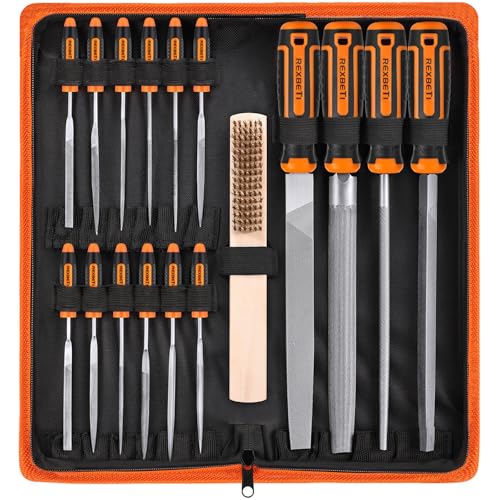
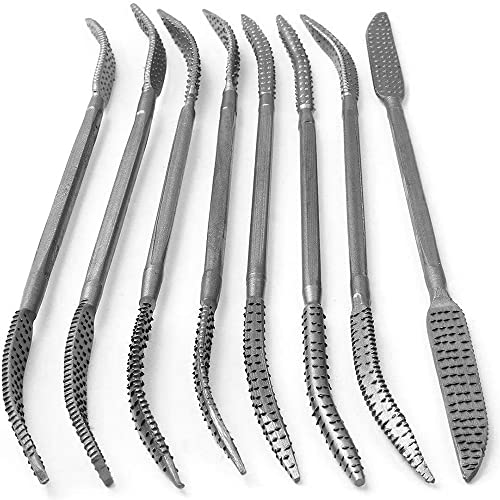


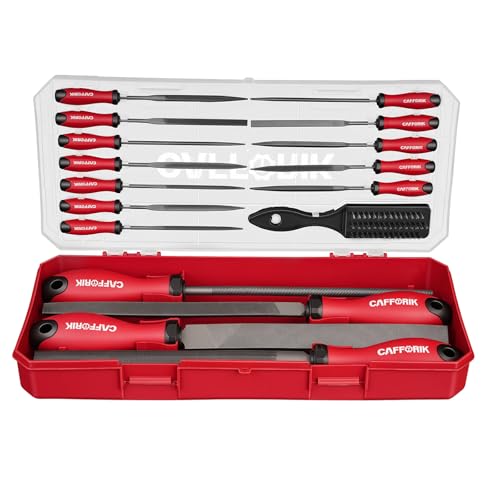
What's inside
- Anatomy of a file, part by part
- Cut grades and tooth geometry
- Set compositions decoded: profiles and their jobs
- Steel, hardness, and the handle question
- Decoding a listing: counts, lengths, and storage
- Matching files to named tasks
- Care that extends life: cards, chalk, and dry air
- Choosing a set that fits the workbench you actually have
- Stroke, stance, and workholding, as the leaflets describe them
- Safety habits beyond the handle
- Check prices on Amazon
- A short history that explains the vocabulary
As an Amazon Associate I earn from qualifying purchases. This post may contain affiliate links at no extra cost to you.
Disclosure: As an Amazon Associate, this site earns from qualifying purchases. This guide was assembled solely from documents anyone can obtain: maker specification sheets, printed catalogues, steel and hardness references, and care leaflets supplied with file sets. No file was drawn across timber during its preparation, and no judgement here leans on private bench impressions. When a figure appears below, it comes with the unit a catalogue gave it, and when a catalogue omits a figure that matters, that gap is flagged so a buyer can ask the question before money changes hands.
A hand file looks too simple to deserve seven thousand words of attention, right up to the moment it ruins a surface or saves one. Unlike a plane, which arrives with a sole, a frog, and an adjustment ritual, a file is a bar of hardened steel covered in teeth, married to a handle by nothing more grand than a tapered spike. That plainness hides a dense vocabulary. Length means one specific thing and not the obvious thing. Cut names such as bastard sound like insults and function as precise grades. Profiles multiply because wood curves in more ways than flat, and a set that bundles the wrong five profiles for the work at hand is not a bargain at any level, it is a drawer of near misses.
Woodworkers reach for files where other edge tools hesitate. A rasp roughs out the sweep of a cabriole leg without tearing grain the way a careless spokeshave pass can. A smooth flat file levels a tenon cheek by a hair, then stops, because teeth that fine remove dust rather than shavings and forgive a moment of wandering attention. Rifflers slip inside a carved bowl where no sanding block fits, worrying out tool marks one short stroke at a time. This guide walks through anatomy, grades, profiles, steel, handles, and the decoding of set listings, then matches tools to named jobs and closes with the care habits that keep teeth cutting for decades rather than skating within a year.
Anatomy of a file, part by part
Start at the end you never strike. The tang is a tapered, pointed spike forged at the rear of the blade, designed to be driven into a handle and held there by friction and by the compression of wood or plastic around its ridges. Tangs vary in length and taper, and cheap examples snap at the shoulder when a user levers sideways, which is why catalogues for serious files state tang dimensions rather than leaving the buyer to guess from a photograph. A file sold without any handle is therefore unfinished equipment, not a complete tool, and its tang is the reason why.
Between tang and teeth sits the heel, a short uncut neck of steel that marks where the toothed region begins. The heel matters during close work because it gives a fingertip a safe parking place when the other hand guides the point into a corner. Beside the heel, makers sometimes stamp the cut grade, the length, and the country or works mark; those stamps, photographed in better catalogue listings, let a buyer verify a set before delivery rather than after. A heel ground with a rounded shoulder also reduces the stress riser where blade meets tang, a small forging detail that separates files built for a trade lifetime from files built for a single project.
The face carries the teeth and does the cutting, and its width and thickness taper toward the point on most profiles. That taper is not decorative. A flat file whose blade narrows slightly and thins slightly toward the tip can enter a slot that its heel end cannot, and can work a tapered housing without binding along its whole length at once. The point itself, sometimes called the tip, may end square, slightly rounded, or drawn finer on rifflers and needle patterns. Edges deserve their own inspection: some files carry teeth on one or both edges, others leave an edge smooth and call it a safe edge, so the tool can cut into a corner without marring the adjoining wall of wood. A listing that fails to say which edges are cut leaves the most useful question about a file unanswered.
Length, finally, is measured in a way that surprises first time buyers. The stated length, 6 inches, 8 inches, 10 inches and so on, covers the blade alone, from point to heel, excluding the tang and excluding any handle fitted later. Two files both sold as 8 inch can therefore differ in overall reach once handled, and a compact set that quotes overall length including handles is using a different ruler from the trade convention. Coarseness travels with length as well, a point catalogues rarely shout about: for a given named cut, a longer file carries coarser teeth than a shorter file of the same name, because the grade describes a relationship to length rather than a fixed tooth count per inch across all sizes. A 6 inch smooth file and a 10 inch smooth file are cousins, not twins, and the finer work usually belongs to the shorter tool.
Cut grades and tooth geometry
Three grade names govern most woodworking files: bastard, second-cut, and smooth, running from coarsest to finest within a given length and pattern. Bastard cut removes stock at a pace a woodworker can see, leaving a surface scored with visible tooth tracks that later work must erase. It belongs early in a shaping sequence, when a blank still carries bandsaw marks and the outline sits a millimetre or two proud of the pencil line. Second-cut occupies the middle ground, refining what bastard left, tightening a curve, flattening a facet, preparing a surface that coarse sanding can then finish without a long struggle. Smooth cut barely seems to cut at all on first acquaintance; it shaves powder, kisses high spots, and leaves wood ready for fine abrasive with its grain direction readable and its arrises crisp.
Rasps break this tidy ladder by using a different tooth entirely. Instead of rows of chisel cut lines, a rasp carries individual teeth raised or punched one by one, each standing like a tiny gouge. That geometry tears rather than slices, which is exactly why a cabinet rasp shapes end grain and cross grain contours that would crumble under a toothed file used too early. Rasp grades run in their own vocabulary of coarse, cabinet, and fine patterns, with tooth spacing and height deciding aggression more than any single number. Hand stitched rasps, whose teeth are placed with slight irregularity by a maker with a punch and hammer, leave a notably cleaner surface than machine punched equivalents of similar spacing, because the irregular pattern avoids the rhythmic tracking that regular teeth engrave into softwood. Catalogues that describe stitching method, tooth count per unit area, and intended timber range give a buyer real material to compare; catalogues that say only premium rasp give none.
Single-cut and double-cut describe how tooth rows cross the face. A single-cut file carries one set of parallel diagonal lines, typically angled across the face, and shears wood with a slicing action that favours a smooth finish and controlled work on edges and narrow faces. A double-cut file adds a second set of lines crossing the first, the overcut laid first and the finer upcut crossing it, breaking teeth into individual points that clear waste faster and suit broader shaping. On wood, many workers favour single-cut for finishing passes because the surface it leaves needs less sanding, while double-cut earns its keep when stock must move. Neither is a quality ranking; each is a geometry with a job, and a balanced set includes both behaviours across its profiles.
Pattern names refine the story further. A flat file is the general purpose rectangle, a pillar file is narrower and thicker with parallel sides built for slots and keyways in its metalworking homeland yet handy for square mortise corners in wood, and a warding file runs thin and tapered for narrow openings, locks in its original trade, drawer and hardware fitting in ours. Cross referencing pattern, cut, and length turns a vague listing title into a tool description: an 8 inch second-cut flat file with one safe edge is a sentence a woodworker can act on, while best file set is a shrug dressed as a headline.
Set compositions decoded: profiles and their jobs
The flat profile anchors almost every set, and rightly so. Its broad faces level cheeks, flatten the soles of small boxes, true the edge of a board before glue, and knock down a ridge left by a plane iron that chattered mid pass. One safe edge, where offered, turns the flat file into a corner specialist, trimming the floor of a rebate while the smooth edge rides the wall unharmed. Width matters within the profile: a wide flat file bridges hollows and reveals high spots, a narrow one concentrates pressure and cuts faster on a small facet, and sets that include two widths of flat file understand furniture scale work better than sets that duplicate a single width under two names.
Half-round files carry a split personality that woodworkers exploit daily. One face curves in a gentle arc, the other lies flat, so a single tool fairs the inside of a shallow scoop and then flips to level its rim. The radius of the curved face decides which hollows it fits; a broad 10 inch half-round sweeps chair seat saddlings and large coves, while a slim 6 inch version enters the throat of a cabriole leg or the curve behind a drawer pull. Curved faces also roll through a stroke, presenting fresh teeth as the tool rocks, and a catalogue that states the radius, or at least the width from which radius can be judged, helps a buyer match tool to the curves in their own work rather than to curves in general.
Round files, affectionately called rat-tail in workshops for their tapered cylindrical shape, exist to enlarge, smooth, and true holes and internal curves. A dowel hole that binds by a fraction, a pierced scrollwork opening in a fret panel, the round bottom of a flute on a leg: each asks for a tool that cuts on its circumference and reaches where a drill already left. Taper is the governing trait. A strongly tapered rat-tail starts small and wedges if pushed carelessly, while a parallel round file of modest diameter keeps a hole cylindrical along its depth. Sets that include only one aggressive taper leave fine fitting work underserved, a gap worth spotting in the contents list before purchase.
Square and three-square profiles handle the angular world. A square file cleans internal corners, opens a square mortise for a through tenon, and sharpens the definition where two flat surfaces meet inside a housing. Its corners, cut with teeth right to the edge on good examples, do the real work, so blunt or rounded corners in a product photograph predict disappointment. The three-square, triangular in section, reaches into acute angles that a square file cannot enter, dresses the roots of dovetails where waste was sawn close to the line, and files the gullets in certain traditional joinery tasks. Triangular section also rolls naturally between fingers during a stroke, giving fine control at the cost of stability on broad surfaces, which is why it complements rather than replaces the flat members of a set.
Cabinet rasps sit beside these files in better woodworking sets, or in a roll of their own, and their inclusion signals intent. A half-round cabinet rasp with a fine stitch can shape a chair arm from sawn blank to a curve ready for a smooth file in a fraction of the time a file alone would need, and its flat side levels the top of the arm between curves. Coarser pattern rasps serve sculptural work, decoy and figure carving, and the roughing of laminated blanks where grain direction changes every few millimetres and slicing tools tear. Buyers should check whether a set that advertises rasp content means a true punched tooth rasp or merely a very coarse file wearing a rasp label for marketing warmth; tooth photographs at magnification, where provided, settle that question instantly.
Riffler files complete the profile tour at the smallest scale. Double ended, curved, and often shaped like tiny spoons, hooks, and knives, rifflers work inside carved detail: the hollow of a bowl, the undercut beneath a relief leaf, the shadow line around a shell carving on a drawer front. Each end carries a different small shape, so a set of six rifflers may offer twelve working ends, a counting method that is honest here because each end genuinely performs a distinct task. Riffler teeth are fine, their strokes short, their removal rate humble; they refine carving rather than create it, removing the faceted marks a gouge leaves and blending transitions that fingers will later judge in the dark. A woodworker who carves will prize them; a woodworker who builds only rectilinear furniture may never lift one, and a set priced around rifflers should be bought by the first worker, not the second.
Needle files require a firm boundary note because listings love to blur it. Needle sets, slim and fine, belong chiefly to metalwork, jewellery, and die work, where their small profiles cut steel and brass in watchmaker tolerances. On wood they clog quickly, flex under shaping pressure, and cover too little ground to matter outside model making and the tiniest repair. A woodworking set padded with a dozen needle files is borrowing count from another trade. The honest wood set spends its count on full length profiles in useful cuts, plus perhaps rasps and rifflers where the maker’s audience carves.
Steel, hardness, and the handle question
File steel is almost always a high-carbon tool steel, with carbon content commonly published in the region of 1.0 to 1.3 percent for quality examples, alloyed lightly or not at all depending on the maker. Carbon at that level lets the blade harden deeply while retaining the fine edge each tooth needs. Hardness figures in catalogues for reputable woodworking files typically land between about 58 and 64 HRC on the Rockwell C scale, hard enough that teeth bite wood, bone, horn, and many plastics without dulling quickly, yet not so glass hard that teeth chip at the first knot. That range deserves attention because it explains two common failures at once: a file far below it wears smooth in months, and a file pushed far above it sheds teeth in work that involves any twisting or side load.
Hardness also explains the skating phenomenon every experienced filer knows. A file cuts material softer than itself by a comfortable margin; dragged across hardened steel of similar HRC, such as a plane iron back or a hardened screw head, its teeth cannot bite, so it slides, polishes its own teeth, and emerges duller for the encounter. Published guidance from makers repeats the rule in plain terms: keep files for the materials they were sold for, never use a woodworking file as a pry, a scraper on hardened metal, or a substitute screwdriver. Temper colour, straw to blue hints on unground surfaces, occasionally visible near the tang, tells its own small story about heat treatment, although modern controlled furnaces leave fewer of those clues than older forge work did.
Handles turn that hardened blade into a safe tool, and the safety point is not a nicety. A bare tang is a tapered spike aligned with the palm that pushes it. If a file jams mid stroke, and files do jam when a tooth catches a knot or a stroke runs off a corner, the hand slides forward by reflex and the spike waits exactly where the palm lands. Puncture wounds from tangs are a documented workshop injury pattern, deep, dirty, and entirely preventable by a handle that costs little and takes a minute to fit. Any set that ships blades without handles should be priced and judged as incomplete until handles are added, and any storage method that leaves tangs exposed in a roll pocket invites the same accident during a hurried grab.
Handle design divides into three broad camps. Turned hardwood handles, beech and hornbeam being common European choices, ash and hickory appearing in North American supply, offer warmth, shock absorption, and a shape the hand can index without looking. A metal ferrule, a ring of steel or brass at the mouth of the handle, stops the tang from splitting the wood as it is driven home and as years of strokes work it deeper; a handle sold without a ferrule on a large file is a split waiting for a cold morning. Plastic handles moulded to a grip shed water, tolerate a damp workshop, and clean easily after glue work, though hard smooth examples can twist in a sweaty hand. Soft-grip designs layer a yielding outer over a firm core, spreading pressure across the palm during long rasping sessions, at the cost of a material that can perish or tear if stored against solvents. Hole sizing matters across all three camps: the pilot hole should suit the tang taper so the handle seats firmly at the right depth, and better handle makers publish tang size ranges beside each handle size so the match can be planned rather than forced.
Decoding a listing: counts, lengths, and storage
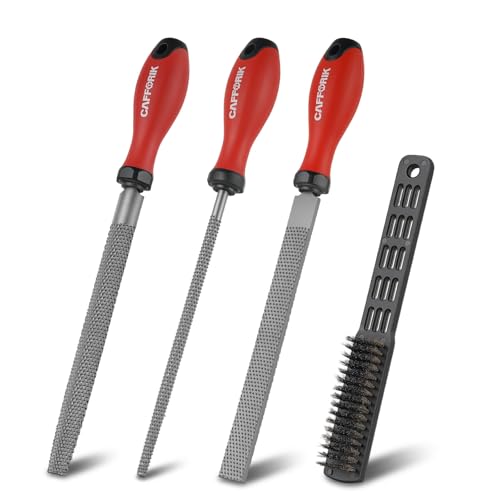
Piece counts are the most gamed number in this category, so unpack them with a cold eye. A headline count may include the storage roll itself, a small brush, spare handles counted singly, duplicate profiles in near identical cuts, and needle files borrowed from metalwork, all summed beside the four files a furniture maker will actually reach for weekly. The remedy is arithmetic on the contents list: name each true file or rasp, note its length and cut, and strike duplicates that differ only in handle colour. What remains is the working set. Compare sets by that remainder and the picture changes completely; a modest count of distinct, well graded profiles routinely outworks a swollen count assembled for the photograph.
Length choice maps to furniture scale in a fairly direct way. Six inch files suit small boxes, instrument work, model furniture, and detail fitting where a long blade bridges over the very hollow it should enter. Eight inch files form the general furniture compromise, long enough to keep a stroke honest across a chair rail or table apron, short enough to stay nimble inside a cabinet. Ten inch files earn their bench space on larger work, table legs, bed posts, wide coves, and long gentle curves where a longer stroke maintains momentum and a longer face reveals waviness that shorter tools forgive. Stroke length governs finish as much as tooth grade does, since a short file on a long surface produces a patchwork of overlapping facets that sanding must then reconcile. A set spanning two lengths, or a core set in 8 inch supplemented later by a long rasp and a short smooth file, usually serves a growing workshop better than a uniform row in one length.
Storage shapes daily behaviour more than buyers expect. A fabric or leather roll ties shut, hangs on a hook, protects teeth from clashing in transit, and suits the worker who carries tools to a bench, a boat, or a site. Its weakness appears at the bench itself, where unrolling, selecting, and rerolling adds friction to a thirty second task, and where damp fabric against steel overnight invites rust freckles. A moulded case holds each file in its own recess, presents the set at a glance, and stacks neatly, yet its hinges and latches age, its recesses fit only the original profiles, and its bulk resents a crowded drawer. A simple bench rack or a slotted block, bought separately or made from offcuts in an afternoon, often beats both for a fixed workshop because the right file can be taken and returned with one hand while the other holds the work. Workshops that also store powered shaping gear face the same presentation problem at larger scale, and readers organising a mixed bench sometimes compare storage ideas alongside guides to best 3d printers kits when a new machine competes for the same square metre of bench.
Handles included or sold separately is the final listing trap, and it hides in subordinate clauses. Photographs show every file gloriously handled; the contents list, read to the end, may reveal that handles number half the files, expecting the buyer to swap them between blades, a practice that loosens fits and wastes time. Other sets ship no handles at all and disclose that fact only in a specification table. Neither pattern is dishonest when stated plainly, since many experienced filers prefer to choose and fit their own handles, but the cost and the fitting time belong in the buying decision. The same plain reading habit helps elsewhere in a workshop budget, whether a maker is checking what a guide to best printers for craft and cardstock actually includes for card work or confirming whether a desk described in best solid wood desks arrives assembled or as flat packed boards. Contents lists reward patience in every category, and files reward it more than most because the missing item is the safety item.
Matching files to named tasks
Shaping a cabriole leg shows the full sequence in one job. The blank leaves the bandsaw with a faceted S curve, crisscrossed by saw marks and a few torn patches where grain reversed. A coarse cabinet rasp opens the campaign, its punched teeth indifferent to grain direction, knocking facets down toward the pencil line while the worker rotates the leg constantly and judges the curve by silhouette against a window. A finer rasp follows, then a half-round second-cut file whose curved face rides the concave sweep behind the knee while its flat face tidies the convex belly. Bastard cut would rush this stage and leave tracks the next tool must chase; smooth cut would polish the facets without removing them. By the time a smooth file takes over, the leg should already look right from three paces, with filing now refining light and shadow rather than inventing shape.
Flushing a proud tenon asks for the opposite temperament: restraint with a flat face. When a through tenon stands a fraction proud of its mortised leg or rail, a flat second-cut or smooth file laid across the surrounding surface trims the end grain down in controlled passes, checking with a fingertip and a straightedge after every few strokes. Pressure stays on the tenon, the safe edge, if the file offers one, rides toward any finished shoulder that must not be marked, and the stroke lifts on the return because files cut on the push and drag dulls teeth while scoring the surface on the way back. End grain files differently from long grain, standing fibres resisting and then surrendering in powder, so short strokes and frequent brushing keep the teeth clear enough to judge progress honestly.
Smoothing end grain before sanding is a quieter task with an outsized effect on finish quality. The end of a board drinks finish unevenly and shows every torn fibre under raking light; a few passes with a smooth single-cut file, worked diagonally and then along the board width, shear those fibres cleanly where torn sanding would merely bend them. The result takes stain and oil more evenly and needs less abrasive time, which matters because heavy sanding of end grain rounds edges that the design wanted crisp. Drawer sides, box lids, and the feet of small cabinets all repay this minute of filing out of proportion to its effort.
Softening an arris, the sharp edge where two faces meet, is the job beginners most often hand to sandpaper and regret. Abrasive wrapped around a finger rounds unevenly, dubbing the middle of an edge and leaving its ends sharp. A smooth file drawn lightly along the arris at a shallow angle removes a controlled micro chamfer, uniform from end to end, and a second pass with the file tilted a degree further blends that chamfer into a soft edge that hands love and eyes read as craftsmanship. The technique appears in catalogue technique leaflets under names like breaking an edge, and its virtue is repeatability: the same angle, the same stroke count, the same result on the fourth leg as on the first. Cooling and dust extraction belong to a different bench, yet workshop readers planning a combined space sometimes glance at best 360mm diy cpu coolers while laying out electronics nearby, a reminder that every craft brings its own supporting gear and its own storage claims.
Saw files enter this guide only as neighbours. Triangular saw files, slim and single purpose, exist to sharpen saw teeth, restoring the geometry of crosscut and rip patterns in a vice with a practised rhythm. They share steel and handles with woodworking files and often share a drawer, but they do not shape wood and should never be counted toward a shaping set’s value. A listing that folds two saw files into a woodworking headline count is borrowing again, this time from the sharpening trade. Keep the categories separate, buy saw files when the saws dull, and judge a shaping set by shaping tools alone.
Care that extends life: cards, chalk, and dry air
A file card is the unsung brush of this trade, a flat paddle or block set with short wire bristles angled to rake debris out of tooth rows. Wood dust, and worse, the packed mixture of dust and resin called pinning, lodges between teeth until the file rides on its own waste and cuts nothing. The remedy is mechanical and frequent: draw the card along the tooth direction, not across it, working from heel to point in short firm strokes, then tap the file edge down on the bench to shake loosened dust free. Technique leaflets from makers show the card held at a low angle so wires enter the grooves rather than skating across tooth tips, and they advise carding little and often, every few minutes in resinous pine, rather than heroically after the file has clogged solid. A brass bristled card or brush serves finer smooth files where stiff steel wires would be needlessly harsh, and a worn card with bent wires should be replaced, since it polishes pins in place instead of lifting them.
Chalking is the preventive twin of carding. Rubbing plain blackboard style chalk across the teeth before work fills the gullets with a dry powder that wood waste cannot easily bind to, so chips release instead of welding into pins, and the chalk brushes out cleanly at the end of the session. The habit costs seconds and suits resinous softwoods, oily exotic timbers, and end grain work where pinning bites hardest. It must not be confused with lubricating a file, a practice borrowed from some metalwork contexts that woodworkers should avoid, since oil on teeth carries dust into a grinding paste, stains timber, and compromises later glue and finish adhesion on the very surface being prepared. Dry teeth, chalked when the timber demands it, carded whenever the stroke feels greasy: that rhythm keeps a rasp honest through a whole set of chair legs.
Separation protects teeth better than any coating. Files stored loose in a drawer destroy each other with aristocratic efficiency, hardened teeth chipping hardened teeth at every rattle, until a set that left the factory keen arrives at the bench pre dulled by its own company. Rolls, cases, racks, or even individual cardboard sleeves break that contact, and the minute spent returning a file to its slot repays itself at the next project. Bench habits matter too: a file laid teeth down on a steel vice, dropped onto concrete, or tossed onto a pile of screws suffers damage no card can reverse. Handles should stay fitted during storage, both to guard the tang and to keep the tool grabbable without a palm ever hunting among exposed spikes in a roll pocket.
Rust is the slow enemy, and its prevention is mostly about water discipline. Files return to storage dry, wiped with a cloth after work in green or damp timber, and kept away from the corner of the workshop where a kettle, a leaking gutter, or a curing finish load the air with vapour. A light film of paste wax or a dedicated tool oil, applied sparingly to faces that will not touch show wood until wiped again, guards steel in unheated shops through winter. Silica gel packs inside a closed case help, provided they are dried or replaced on a schedule rather than forgotten as decoration. Surface freckles caught early yield to a card and a waxed cloth; deep pitting across the teeth does not yield at all, because the tooth profile itself has been eaten, and prevention is the only true cure the literature offers.
Knowing when a file has finished its life closes the care chapter honestly. A worn file skates, demands pressure, heats the work, and leaves a burnished surface that looks smooth and rejects glue. Pressure is the tell and also the trap, since pressing harder on a dull file bends teeth, snaps tangs at the shoulder, and tires the worker into sloppy angles that scar the piece. Retired files find honourable second careers in some workshops as scrapers, glue removers, or blanks for small shop made tools, provided they are marked so nobody mistakes them for cutting files again. A fresh file of the same pattern, set beside the retiree, usually shocks its owner with how little force keen teeth require, and that shock is the best argument for carding, chalking, separating, and storing dry from the first day of ownership.
Choosing a set that fits the workbench you actually have
Begin with an inventory of intentions rather than with a catalogue. A furniture maker building chairs and tables needs the flat, half-round, and square core in second-cut and smooth, a cabinet rasp in a fine stitch, and handles fitted to all of them. A carver needs rifflers and rasps first and may treat the flat file as the accessory. A restorer meeting old pine, hidden nails removed, and brittle cross grain needs smooth grades and safe edges above raw removal power, plus the discipline to card often in timber that crumbles into teeth. Writing those intentions down, even as three lines on a workshop notebook page, converts a vague hunt for a set into a specification that listings can be measured against, line by line, profile by profile.
- Profiles named individually, with length measured across the blade alone and cut grade stated for each file.
- Steel described as high-carbon tool steel, with a hardness range in HRC printed rather than implied.
- Handles counted honestly, ferrules present on wooden handles, and tang fitting guidance supplied.
- Rasp content identified as punched or stitched teeth, distinct from coarse file cuts wearing a rasp label.
- Storage that separates teeth, plus a file card included or named as the first accessory to add.
Budget thinking in this category rewards a slow build. One excellent flat file in second-cut, one half-round in smooth, one cabinet rasp, and three well fitted handles will shape more furniture in a year than a swollen bargain roll whose teeth dull by spring. Add the rat-tail when holes begin to bind, the three-square when dovetail roots demand it, the rifflers when carving enters the work. Each addition arrives because a named job called for it, fits the handles and storage already owned, and extends a system rather than restarting one. Makers who sell files singly, with stable pattern names and grades across years, support that slow build; makers who rename sets each season and sell nothing singly oppose it, and their catalogues reveal the difference to anyone who checks whether last year’s smooth flat file can still be reordered by name.
Secondhand files deserve the same clear eyed treatment as new sets. Flea market and estate finds include superb older steel, often harder and finer than modern budget output, mixed with worn out blades whose teeth shine like mirrors and cut like spoons. Published advice for judging them is consistent: look for tooth definition visible as a matte, even texture, reject blades with bright polished faces, bent points, or rust pitting across the cutting area, and test value by price per sound file rather than per bundle. Handles on old files may be loose, split, or missing entirely, which is a solvable problem with new ferruled handles and a pleasant hour of fitting. What cannot be solved is a tooth row worn smooth, since resharpening services for ordinary files are rare and costly relative to replacement, a fact that keeps the secondhand hunt honest.
Gift purchases follow the checklist or follow nothing. A file set given to a woodworker lands well when the giver knows whether handles are included, whether the recipient carves or builds, and which lengths the recipient’s bench already holds. Duplication of a core flat file in a different cut is a thoughtful gift; duplication of the exact profile, length, and grade already owned is a drawer filler. A file card and a bundle of chalk, humble as they sound, delight experienced filers precisely because consumable care gear signals that the giver understood the craft rather than merely its catalogue photographs.
Stroke, stance, and workholding, as the leaflets describe them
Published technique guidance converges on a handful of points that separate a clean cut from a scored mess, and those points repay study before a new set meets good timber. Files cut on the push stroke. The return stroke should skim lightly or lift clear altogether, because dragging teeth backward over wood dulls their fine edges and packs waste into the gullets that the next push must then clear. Both hands guide a full length file in most shaping work, one on the handle driving from the shoulder, the other resting on the point to steer and to meter pressure. That forward hand must sit on the point itself or on a fitted point guard, never wrapped around a toothed face, and leaflets repeat the warning because beginners instinctively grip the blade where control feels best and learn about tooth sharpness the memorable way.
Pressure follows a rhythm that manuals describe as firm at the start of the stroke and lighter as the file reaches the far edge of the work. The reason is geometry: a file pushed with even heavy pressure across a board end tends to rock, rounding the corners and dipping the middle, while a stroke that unloads near the edge keeps the face registered and the surface flat. Long strokes use the full toothed length and spread wear evenly; short, worried strokes concentrate wear in one band of teeth, polish that band smooth within a season, and leave the rest of the file underused. Speed stays moderate. A frantic pace heats teeth, tears grain, and shortens the moment in which a worker can feel a knot, a grain reversal, or the first whisper of a surface turning flat under the face.
Workholding decides more outcomes than tooth choice. A leg clamped low in a vice with leather or cork jaw liners can be rasped with the whole body behind the stroke, while the same leg balanced on a knee invites chatter, slips, and a rasp that jumps into finished wood. Boards being levelled on edge want support along their length so the file bridges a stable line rather than a spring. Small parts for riffler work sit best in a sandbag, a carved cradle, or a bench hook that lets the carving rotate toward the tool instead of forcing the tool around a fixed lump. Vice height matters as well; guidance aimed at trade users places the work near elbow height for filing, lower for heavy rasping where body weight joins the stroke, higher for fine riffler detail where eyes and forearms need support. None of this requires costly gear. It requires reading the two pages of technique that many buyers skip on the way to the profile chart.
Timber changes the brief in ways a set buyer should anticipate. Soft pine clogs teeth with resin and crushes under a coarse cut used carelessly, rewarding a finer grade and frequent carding. Oak, especially end grain oak, abrades teeth steadily and shows tooth tracks under finish if the sequence stops at second-cut. Tropical timbers with interlocked grain tear under a rasp stroke that runs against the local grain direction, so the worker circles the piece, reading the surface after every few strokes, and lets the file approach from whichever side the fibres surrender cleanly. Plywood edges punish files and reward them in the same pass: the alternating glue lines dull teeth faster than solid wood, yet a smooth file is still the neatest way to level an edge band without chipping its face veneer. A set bought for one timber family may feel wrong in another, not because its steel changed, but because grade spacing that suits pine leaves oak underpowered and grade spacing that suits oak brutalises pine. Honest catalogues that suggest grades by timber hardness give the buyer a fighting chance to choose the right spacing first time.
Safety habits beyond the handle
Gloves divide opinion in print, and the published guidance is more nuanced than a slogan. A glove on the guiding hand can guard against tooth nicks during long sessions, yet a loose glove near a stroke that slips can catch and pull fingers toward the work; most maker leaflets therefore favour bare hands with disciplined grip positions, plus a point guard or a wrap of tape over the tip teeth where a project demands heavy forward pressure. Eye protection earns an unqualified recommendation whenever a rasp works brittle timber, old finish, or any material that throws chips rather than dust, and whenever a wire card is flicked clean. Dust control belongs in the same paragraph: filing produces fine particles that hang in still workshop air, exotic timbers carry irritants documented in timber references, and a simple mask habit during long shaping sessions protects lungs that plan to keep working for decades.
Broken teeth and cracked blades create a hazard that storage inspections catch early. A file dropped on concrete may carry a hairline crack at the heel that only shows under a raking light; returned to work, it can snap under load and throw a hardened fragment. Leaflets advise retiring cracked blades outright rather than grinding them shorter, because the crack can run ahead of any grind line. Tangs bent during a clumsy handle removal weaken in the same invisible way and deserve the same verdict. These are dull rules, and dull rules are the kind that keep workshops unmemorable in the best sense: no story, no scar, just another shaped leg clamped in the vice by Friday.
Check prices on Amazon
Live listings for the shortlist in this guide are pulled from Amazon below, so prices and availability are always current at the moment you look.



A short history that explains the vocabulary
The odd words in this trade stop sounding odd once their origins are laid out. Bastard, in file grading, descends from an old workshop sense of irregular or intermediate, a cut that sat between recognised standards when grading was judged by eye and file makers guarded their tooth counts as trade knowledge. Pattern names carry geography and former employment: warding files served locksmiths who warded locks, pillar files served clock and instrument trades, cabinet rasps earned their name at the furniture bench rather than in the smithy. Knowing those roots helps a modern buyer read a catalogue without intimidation, because every intimidating term resolves into either a shape, a coarseness, or a former job. A seller who can explain a term plainly probably stocks sound steel behind it; a seller who hides behind unexplained jargon may be hiding the absence of any specification at all.
Manufacture leaves traces that published factory descriptions teach buyers to recognise. Teeth on quality files are cut with a chisel style process before hardening, each row raised cleanly, and the finished face shows a uniform matte texture under magnification in catalogue photographs. Cheaper production may grind or mill teeth after hardening, or harden carelessly so that tooth rows vary in height along a single face, cutting in streaks that no stroke technique can cure. Tang forging, heel grinding, and edge finishing follow the same pattern: the visible neatness of the parts that do not cut predicts the invisible consistency of the parts that do. None of this asks a buyer to become a metallurgist. It asks only that product photographs be read as evidence, stamps checked against specification tables, and returns policies noted before a set whose teeth photograph shows torn, uneven rows is allowed to reach the bench.
Regional traditions add one last layer of useful confusion. European catalogues often grade rasps by stitch density and quote lengths in millimetres beside inches, while North American listings lean on inch lengths and cut names inherited from older domestic makers. Neither system is wrong, yet mixing them in a single comparison without conversion produces phantom differences: a 200 millimetre blade is an 8 inch blade wearing metric dress, and a rasp described by a dense stitch number may match a rival described only as fine. Careful buyers convert every figure to one system on a notebook page before ranking sets, and careful makers make that conversion easy by printing both. That small arithmetic habit, dull as it sounds, prevents more mistaken purchases than any brand loyalty ever formed.
One practical test ties the whole guide together for a buyer standing in a shop with two candidate sets in hand, or comparing two specification tables side by side on a screen. Pick the job that prompted the purchase, name it out loud, then trace it through each set: which profile starts it, which grade follows, which tool finishes it, and whether every handle, card, and storage slot that sequence needs sits inside the box. A set that answers all four stages without borrowing from a future purchase earns its place. A set that answers the first stage brilliantly and leaves the last two to improvisation will feel incomplete by the second project, however handsome its roll looks in a photograph.
Keep the specification page, the contents list, and the care leaflet together in the roll or case after purchase, because the day a handle loosens, a tooth row clogs with something stubborn, or a second set is considered as a gift, those three dull sheets will answer faster than any memory of a sales page ever could.
Buy the set whose grades, profiles, and handles match the timber and the furniture in front of you, keep its teeth carded, chalked, separated, and dry, and it will still be shaping clean curves on the day a grandchild first asks why the funny saw has no teeth on its edge.