Our Top Picks

What's inside
- How a flooded battery differs from AGM and gel
- Reading cranking figures like an adult
- Group size, terminals and the discipline of fit
- Watering, hydrometers and the twice-a-year ritual
- Charging a wet cell properly
- Lifespan, climate and the honest arithmetic of years
- When flooded is the right choice, and when it is not
- Buying mistakes, core charges and the end of the road
- When the problem is not the battery at all
- Matching the battery to the vehicle you actually own
- Check prices on Amazon
- A seasonal routine you can actually keep
As an Amazon Associate I earn from qualifying purchases. This post may contain affiliate links at no extra cost to you.
A note on funding before anything else: this page carries affiliate links, and when a reader buys through one, the retailer may pay a commission that supports the site without adding anything to the price paid. Which batteries appear below, and what is said about them, owes nothing to that income.
The wet cell battery is the design that started the modern car, and reports of its death have been exaggerated for about thirty years. Under its plastic lid sit lead plates standing in liquid acid, with caps that open so the owner can look inside, check the condition of that liquid, and replace the water that charging and warm weather slowly carry away. That openness is the whole character of the type. A sealed battery treats its inner life as none of your business and asks to be swapped when it fades. A flooded battery invites a small partnership: give it clean terminals, correct fluid levels and a full charge now and then, and it will often repay the attention with years of unglamorous, dependable starts.
Choosing one well is less about hunting a miracle specification than about matching three honest things to your vehicle and your habits. The cranking figure must suit your engine and your winters. The reserve capacity must suit the electrical loads you actually run and the failures you want insurance against. The physical size and terminal layout must suit the tray, the hold-down and the cables the car already has. Get those three right, accept the modest maintenance rhythm that defines the type, and the battery largely disappears from your life, which is the highest praise any starting battery can earn.
How a flooded battery differs from AGM and gel
All three designs are lead-acid batteries, storing energy in the same basic chemistry, but they manage their acid very differently. In a wet cell, the electrolyte is a free liquid that surrounds the plates and can be inspected, tested and topped up. In an absorbed glass mat design, the acid is held inside fibreglass separators pressed between the plates, so nothing sloshes, nothing needs watering, and the case can be sealed. Gel batteries suspend the acid in a thickened form that behaves similarly from the owner’s point of view: no access, no topping up, no spilling. Each approach trades something away. The sealed designs trade serviceability for convenience and spill resistance. The flooded design trades a little convenience for transparency, repairability of small problems, and usually a lower purchase cost for a given level of cranking ability.
That transparency changes how failures unfold. A flooded battery usually declines in ways you can observe months in advance: a cell that drinks more water than its neighbours, fluid that darkens, a specific gravity reading that lags after charging. An owner who checks twice a year sees the story developing and can plan a replacement on a calm weekend. Sealed units tend to keep their secrets and then announce the ending abruptly, often on the coldest morning available. Neither behaviour makes one design morally better, but drivers who like warning signs, and who keep vehicles for a long time, tend to develop a loyalty to the battery they can open and interrogate.
Cost and availability complete the practical picture. Flooded batteries are made in enormous volumes for the most common vehicle fitments, sold in every town, and recycled through a mature system that has handled lead responsibly for decades. When a starter begins to labour in a small town on a Sunday, the battery most likely to be sitting on a shelf nearby, in the right size, at a fair figure, is a wet cell. For drivers far from specialist suppliers, that ordinariness is a feature with real value, and it explains why the design remains the default recommendation for conventional cars and trucks that live ordinary lives.
The chemistry, explained without the textbook
Inside each cell, discharge converts the surfaces of both plates toward lead sulfate while the acid grows weaker, and charging reverses the process, restoring the plates and strengthening the acid again. Two enemies exploit that cycle. The first is sulfation: when a battery sits partly discharged for weeks, the soft sulfate of normal use hardens into crystals that resist being converted back, permanently shrinking the active material available for work. The second is water loss. Charging, especially enthusiastic charging in hot weather, splits some water into gases that escape through the vents, which is why levels fall and why the lost portion must be replaced with distilled water rather than anything from a tap, whose minerals would move in and misbehave.
Understanding those two enemies explains nearly every maintenance rule in this guide. Keep the battery charged and sulfation stays soft and reversible. Keep the plates covered with fluid and the exposed portions cannot dry, harden and drop out of the game. Keep charging voltages sane and water loss stays slow. None of this requires an engineering degree; it requires a charger used occasionally, a jug of distilled water stored beside it, and the habit of looking at the battery when the bonnet is open for other reasons. Flooded batteries reward owners who understand them at exactly that household level.
Reading cranking figures like an adult
Cold cranking amps headline every battery label, and the number deserves respect without worship. It describes the current a fully charged battery can deliver for thirty seconds at a bitter standard temperature while holding its voltage above a set floor. In plain language, it is a promise about the worst morning of the year: a thick-oiled engine, a reluctant starter motor, and a battery whose chemistry has been slowed by cold. A higher figure means a larger margin on that morning. It does not mean the battery will last longer in gentle service, store more energy for accessories, or forgive months of neglect. Buyers who treat the biggest cranking number as the whole story end up owning strong batteries that die young from causes the headline figure never claimed to prevent.
Related ratings cause endless confusion because they sound interchangeable and are not. Cranking amps without the word cold are measured at a milder temperature and always look more generous, which is precisely why they appear in large type on some labels. Marine-style ratings belong to a different test again. The honest comparison method is dull but effective: line up the cold cranking figures, confirm they were measured to the same standard, and treat any label that hides which standard it used as a label that has told you something important about its maker. Regional standards differ, so a battery bought for a vehicle that will emigrate with you deserves an extra minute with the small print.
How much cranking ability is enough? The vehicle maker’s original specification is the floor, set by engineers who knew the starter motor’s appetite and the engine’s cold behaviour. Matching it is sensible; exceeding it modestly costs little and buys margin for ageing, since a battery in its fourth winter is not the athlete it was in its first. Wildly exceeding it buys almost nothing, because the starter will only draw what it needs. The exception is the heavily modified vehicle, with a high-compression engine, a winch, or a diesel conversion, where the original specification no longer describes the load. Diesel owners in cold regions sit at the demanding end of this scale and should read cranking figures the way sailors read weather forecasts, with attention and a preference for margin.
Reserve capacity: the number that saves evenings
Reserve capacity measures endurance rather than strength. It states how long a fully charged battery can carry a standard electrical load before its voltage falls below a useful level. Translate that into life and it becomes the answer to practical questions. If the alternator fails at dusk, how long will the engine and lights keep going while you drive toward help? If a door is left ajar overnight with a small lamp burning, will the morning start survive the insult? If a teenager listens to music with the engine off for an hour, who pays, and how much? A generous reserve figure quietly absorbs these ordinary disasters, and for many families it matters more across a battery’s life than a heroic cranking number used twice each winter.
Reserve capacity also interacts with driving patterns. Short-trip cars live a hard electrical life: each start withdraws a lump of charge, the brief drive replaces only part of it, and accessories take their share in between. Over weeks the battery drifts downward into the partly discharged territory where sulfation thrives. A larger reserve slows that drift and widens the window in which a corrective charge can restore order. Drivers whose routine is a school run, a supermarket stop and a short commute should weigh reserve figures heavily and plan on periodic charging as part of ownership, a theme the charging section below treats in detail. Drivers with long highway commutes can afford to care a little less, because their alternator finishes its work every day.
While comparing endurance figures, remember that they describe a new, fully charged battery at a comfortable temperature. Age, cold and chronic undercharging all tax the reserve you actually own. The figure on the label is therefore best read as a ranking tool between candidates and a rough promise about the first year, not as a guarantee about the fourth. Owners who internalise that distinction stop feeling cheated by physics and start managing the variables within their control, which are charge, temperature exposure and time spent sitting discharged.
Group size, terminals and the discipline of fit
Group size sounds like bureaucratic trivia until the day a bargain battery will not sit in the tray. The code defines the case’s length, width and height, the terminal positions, and often the terminal style, so that a replacement physically belongs in the space the vehicle provides. A case slightly too tall can meet the bonnet or a brace. A case slightly too small can shift under its hold-down, and a battery that moves in service chafes cables, stresses its own internal connections and may eventually short a terminal against whatever it slides into. Fit is not a preference. It is the foundation every electrical promise stands on, and it should be confirmed from the vehicle maker’s listing or a reputable fitment guide rather than from a tape measure and optimism.
Terminal polarity deserves the same sober check, because two batteries of identical size can mirror their posts. Cables are made to reach the correct layout and no further; a reversed layout tempts owners into stretching, crossing or improvising connections, each of which invites voltage drop, heat or a spectacular short. Before the old battery comes out, note which side carries the positive post, photograph the cable routing if it helps, and compare the newcomer on the shop floor rather than in the driveway. Side-terminal and top-post variants add another fork in the road, and adapters exist, though the cleanest installation uses the terminal style the vehicle was built around.
The hold-down is the unsung guardian of battery life. Vibration is a genuine killer of lead plates, shaking active material loose and working connections toward failure, and the clamp that pins the case firmly to the tray is the main defence most vehicles offer. When replacing a battery, inspect the tray for old acid damage, clean it, confirm the clamp hardware still exists and still tightens, and replace missing pieces instead of wedging the case with folded cardboard or hope. A battery that sits immobile, upright and clean starts its service life with advantages no label figure can confer, and the ten minutes spent on the tray will out-earn almost any other ten minutes in the whole job.
Freshness, dates and buying from the shelf
Batteries age on the shelf as surely as they age in a car, only more slowly. A flooded battery begins self-discharging the day it is filled, and a unit that has sat for many months may arrive partly discharged, with sulfation already taking an early interest. Date codes on the case or label tell the story, though their formats vary by maker and reward a quick check of the brand’s own explanation. Prefer the freshest example of the size you need, especially from slow-moving stock in small outlets, and be wary of a dusty veteran offered with a smile and no discount. Freshness is one of the few genuine bargains in battery buying, because it costs nothing to choose the younger unit standing beside the older one.
A new battery should also go onto a charger before or soon after installation if there is any doubt about its state of charge. The alternator will top it up in service, but alternators are designed to maintain charge against daily loads, not to perform deep restoration work on a battery that starts life behind. Beginning service fully charged sets the chemistry on the right side of the sulfation line from day one. Retailers with proper test equipment can confirm condition at the counter, and a seller who waves away the question entirely has provided useful information about where to shop next time.
Charging equipment is a subject of its own, and readers setting up a home routine will find our comparison of best 10 amp auto battery chargers helpful for the workshop end of the scale, where a healthy flooded battery that has been run down by lights or storage needs a thorough, controlled refill rather than a hopeful half hour.
Watering, hydrometers and the twice-a-year ritual
Maintenance is where flooded batteries ask for their rent, and the rent is genuinely small: a few minutes, a few times a year, with distilled water and a clean cloth. The fluid level should cover the plates fully and sit at the indicator the maker provides, often the bottom of the filler well or a marked line on a translucent case. Plates left exposed to air suffer damage that topping up later cannot undo, which is why level checks belong on a calendar rather than in the category of things done when starting already sounds tired. Hot climates and hard-charging vehicles drink faster; cool climates and gentle use sip. Learn your own battery’s pace at the first two checks and set the interval accordingly.
Timing matters when you add water. A discharged battery’s fluid sits lower because the acid has partly moved into the plates, so filling to the mark before charging can overflow the cell as charging restores the acid and raises the level. The tidy routine is to add just enough to cover exposed plates if any are bare, charge the battery, then top up to the mark once it is full and settled. Only distilled or demineralised water belongs in the cells. Tap water carries minerals that accumulate with every top-up, encouraging self-discharge and shortening life in ways that look mysterious until someone asks what was in the watering jug.
A hydrometer, the simple instrument that samples fluid and floats a scale or beads in it, remains the flooded battery’s great diagnostic gift. It reads the acid’s specific gravity cell by cell, which is effectively a fuel gauge for each compartment. After a full charge, healthy cells cluster close together. A cell that trails its siblings by a wide margin after charging is telling you where the battery will fail, weeks or months before the starter delivers the same news at an inconvenient hour. Temperature affects the reading and honest instruments include a correction, but even uncorrected comparisons between cells of the same battery teach an owner a great deal. Sealed batteries simply cannot offer this conversation, and many flooded loyalists would not trade it away.
Terminals, corrosion and the green crust of neglect
Corrosion at the terminals is chemistry made visible. Acid vapour escaping around the posts reacts with the metal and the air, building a crust that insulates the very connection the starter depends on. The symptoms arrive disguised as other failures: a click instead of a crank, lights that dim oddly, a start that succeeds on the second attempt after the connection warms and expands. Cleaning means removing the cables, negative first, scrubbing posts and clamps to bright metal with a proper brush, refitting them snugly, positive last in the usual order of caution, and protecting the finished joint with a suitable grease or treated felt where the maker recommends it. A connection that can be twisted by hand is not a connection; it is a future roadside story.
Repeated heavy corrosion at one post is a message rather than a nuisance. It can point to a post seal that has begun to leak vapour, to chronic overcharging that boils off more acid gas than usual, or to a case venting problem after an overfill. Wiping the crust away without asking why it returns so eagerly treats the symptom and ignores the bulletin. If a freshly cleaned terminal furs up again within weeks, have the charging voltage measured and inspect the post base closely. Flooded batteries communicate through these small signs, and owners who read them tend to replace batteries at a time of their own choosing.
For owners who also keep a sealed battery in another vehicle, the charging profiles differ enough to matter, and our guide to best agm battery chargers explains why the mat design prefers its own charging manners rather than borrowing the flooded routine wholesale.
Charging a wet cell properly
A flooded battery wants to be charged fully, gently and not forever. Modern automatic chargers earn their keep by sensing the battery’s state and tapering their output as full charge approaches, then either stopping or settling into a maintenance mode that offsets self-discharge without cooking the plates. That behaviour matters because overcharging is not a victimless excess. Push current into a full battery and the energy goes into splitting water, warming the case and corroding the positive plates, which is why a battery on a crude charger for a month can emerge with low levels and a shortened future despite having been, in the owner’s phrase, kept charged the whole time.
Charge rate is a balance rather than a contest. A very slow charge suits long storage and gentle recovery, while a moderately higher rate suits a battery that must return to service the same day. Deeply discharged flooded batteries sometimes need patience more than power: sulfated plates accept current reluctantly at first, and a charger that gives up early, declaring a full battery after minutes, may be reading surface voltage rather than true condition. Leaving a smart charger connected for its full cycle, then checking rest voltage or hydrometer readings after the battery has settled, tells a truer story. Heat is the warning sign throughout. A case that grows hot, a cell that boils vigorously while its neighbours simmer, or a smell of rotten eggs all say stop, disconnect safely, and investigate rather than persist.
Storage charging deserves its own paragraph because so many batteries die in garages rather than on roads. A vehicle parked for the season should either have its battery kept on a proper maintainer or be charged fully at intervals, in a ventilated place, with levels checked before and after. Cold storage slows self-discharge and chemical ageing, which is why a charged battery tolerates a cold garage better than a warm one, provided it is genuinely charged: a discharged battery’s weakened acid can freeze in hard weather, and a frozen case is usually a finished case. The winter rule is therefore simple to state and easy to neglect. Charge it before the cold arrives, keep it charged, and the cold becomes an ally instead of an executioner.
Safety with acid, gas and heavy things
Respect is the correct attitude, delivered calmly. The electrolyte is dilute sulfuric acid, strong enough to burn skin, blind eyes and eat cheerful holes through clothing, so eye protection and gloves belong on hands and faces before caps come off, not after the first splash teaches the lesson. Work where water is available, keep baking soda solution in mind for neutralising spills on skin-adjacent surfaces and the tray, and never lean over a battery while it is charging vigorously. That last point concerns the gas rather than the liquid: charging releases hydrogen, which collects in still air and needs only a spark to make its opinion known. Ventilation, no flames, no smoking, and care with metal tools near terminals form the whole doctrine, and it has kept careful owners uninjured for a century.
The battery itself is heavy in a way that surprises people who have only handled its photograph. A typical car unit weighs about as much as a full suitcase, concentrated in a smooth case with indifferent grip. Lift with legs, keep it upright so acid stays where it belongs, use the handle if one is fitted and trustworthy, and plan the route from bench to tray before picking it up. Dropped batteries crack, leak and occasionally injure feet with real conviction. Jump-starting follows its own careful choreography for the same family of reasons: correct order of connections, final clamp to a ground point away from the battery, and no leaning across the engine bay while a stranger’s engine roars into life. None of this is difficult. All of it rewards being done slowly the first hundred times.
Households that keep small cells for other duties sometimes ask whether one charger can serve every chemistry in the drawer, and the short answer is that dedicated tools behave better, as our look at best 18650 battery chargers shows for the little cylindrical cells that power torches and tools rather than starter motors.
Lifespan, climate and the honest arithmetic of years
Ask how long a wet cell battery lasts and the truthful answer is a range wide enough to be annoying. Heat is the great accelerator of ageing: the chemical reactions that store energy also drive the corrosion and water loss that end a battery’s life, and both run faster where under-bonnet temperatures soar. Vehicles in very hot regions routinely retire batteries years earlier than identical vehicles in cool coastal towns, and no brand escapes the arithmetic, though better plate construction and honest materials bend the curve in the owner’s favour. Cold, by contrast, mostly exposes weakness rather than creating it, cutting available cranking power at the exact moment engines demand more, which is why marginal batteries choose January mornings to resign.
Driving pattern writes the other half of the biography. A battery that spends its life fully charged, exercised by regular longer drives, ages at the chemistry’s natural pace. A battery trapped in the short-trip cycle, perpetually hovering at partial charge, ages in dog years as sulfation nibbles its capacity and each start takes a proportionally larger bite. Owners cannot always change their journeys, but they can change the ending by restoring full charge with a plug-in charger every few weeks. That single habit does more for the lifespan of a short-trip car than any premium badge on the case, and it is the closest thing battery care has to a secret.
End of life, when it comes, usually announces itself through a pattern rather than a single event: slower cranking on cold starts, a hydrometer cell that will not come up, water consumption that climbs, a case that bulges slightly at the sides. Testing at a parts counter can confirm the verdict with a load or conductance measurement, and a battery that fails honestly should be replaced before it fails theatrically. There is a particular false economy in extracting one more month from a dying unit, paid for in jump-starts, missed appointments and the risk of being stranded somewhere with weather. Batteries are among the few car parts where replacing slightly early is usually the cheaper decision once the whole picture is priced.
When flooded is the right choice, and when it is not
The case for a wet cell is strongest in a conventional vehicle with its battery under the bonnet, easy to reach, in a climate the owner understands, driven regularly or maintained willingly. There, serviceability is pure advantage, cost is low, replacements are everywhere, and the design’s century of development shows in its manners. Classic cars, work trucks, farm vehicles and family cars that live unremarkable lives all sit squarely in flooded territory. So do owners who simply enjoy understanding their machinery, because few components repay curiosity as directly as a battery that lets you measure its inner state with a floating scale.
The case weakens where the battery lives somewhere awkward or hostile to liquid acid. Some vehicles mount the battery inside the cabin or boot, where venting arrangements become critical and a sealed design is often the maker’s deliberate choice. High-vibration installations, vehicles that lean or bounce severely in off-road use, and applications demanding very high charge acceptance from regenerative braking systems all push toward mat designs built for those stresses. Start-stop vehicles in particular were engineered around batteries with different cycling duties, and substituting a basic flooded unit where the maker specified an enhanced or absorbed design invites short life and confused electronics. Respecting the original specification is not brand obedience; it is systems engineering read from the owner’s side.
Between those poles sit the interesting judgement calls. A second car used rarely might seem to beg for a sealed battery, yet a flooded unit on a maintainer, checked twice a year, can outlast it for less money. A budget-conscious driver facing a choice between a quality flooded battery and a suspiciously cheap sealed one is usually better served by the quality flooded unit, because construction quality beats category in the long run. The through-line is honesty about your own habits. A maintenance design owned by a maintainer is a bargain. The same design owned by someone who will never lift its caps is a sealed battery with extra failure modes, and it should be priced and judged as such.
Drivers setting up a simple home charging station for a mixed fleet often start with one versatile automatic unit, and the options gathered under best automatic battery chargers cover that middle ground where a charger must recognise full charge reliably and then behave itself for weeks at a time.
Buying mistakes, core charges and the end of the road
The commonest buying mistake is shopping by cranking figure alone, which produces owners with heroic labels and ordinary results. Close behind comes ignoring the group size because a different size was on promotion, followed by the creative installation work that promotion quietly required. A third mistake is buying the oldest stock at the back of the shelf because the newest units were harder to reach, a small laziness that can cost a year of service. Then there is the warranty misunderstanding: a long warranty period usually means a shorter full-replacement window followed by prorated credit, not a promise that the battery will live for the whole headline term. Reading the actual terms takes two minutes and recalibrates what a bargain means.
Core charges confuse first-time buyers and are worth demystifying. The old battery has real value as recyclable material, so sellers charge a deposit that is refunded when the spent unit comes back, ensuring the lead re-enters the manufacturing loop instead of a ditch or a shed corner. Bring the old battery when you buy, or return it promptly with the receipt, and the deposit completes its round trip. This system is one of recycling’s genuine success stories: the vast majority of a returned battery, lead, plastic and acid alike, is recovered and reused, and the new battery on the shelf very likely contains material that once started somebody else’s car.
Disposal follows from the same logic. A spent battery is never household rubbish, never a thing to abandon behind a workshop, and never a gift to leave for the next tenant of a rented garage. Parts shops, scrap merchants and municipal hazardous-waste services all accept them, usually gratefully, because the material is worth money. If a vehicle is being scrapped or stored indefinitely, removing the battery and returning it closes the account cleanly. Owners who treat the end of a battery’s life with the same care as its beginning are participating, in a small concrete way, in one of the most complete recycling systems any consumer product has achieved.
A calm checklist for the counter
Confirm the group size and terminal layout from a fitment source you trust, and compare them against the battery in the car rather than against memory. Read the cold cranking figure against the maker’s original specification, then read the reserve capacity with your own driving pattern in mind. Check the date code and choose fresh stock. Ask what the warranty actually promises in its first period and what it credits later. Plan the core return before money changes hands. Finally, price the ownership honestly: a jug of distilled water, a terminal brush, access to a decent automatic charger, and ten minutes twice a year. A battery bought through that checklist rarely surprises its owner, and boring reliability is the entire point of the exercise.
None of this requires brandishing a multimeter at dawn or developing feelings about electrochemistry. The wet cell asks for the same qualities a good neighbour asks for: occasional attention, prompt help when levels run low, and the decency not to be left discharged in the cold. Meet those terms and it will do the one job it has, on the mornings when doing that job matters most, with a steadiness that newer and cleverer designs still have to respect. Years from now, when the caps lift for the last time and the hydrometer tells its final, honest story, a well-kept flooded battery leaves its owner with the rarest verdict in motoring: no complaints worth remembering, only winters that started.
When the problem is not the battery at all
Every parts counter keeps a quiet tally of batteries replaced for crimes committed by something else. A failing alternator undercharges the battery for weeks, and the battery, blameless but exhausted, gets the blame because it is the part that finally stops performing in public. A starter motor with worn brushes draws extravagant current and makes a healthy battery sound geriatric. A glovebox lamp that never switches off, a boot light with a bent switch, or a modern module that refuses to sleep can drain a strong battery overnight with perfect innocence on the battery’s part. Replacing the battery in any of these stories buys a short honeymoon and a repeat performance, because the new unit inherits the same abuse that finished the old one.
Diagnosis does not demand a laboratory. A resting voltage check after the car has sat for several hours gives a rough state of charge, with a healthy, full battery sitting noticeably higher than a half-empty one. Voltage while cranking reveals whether the battery collapses under load or the starter is simply demanding too much. Voltage with the engine running shows whether the alternator is contributing its expected share or merely attending as a spectator. Parasitic drain testing takes more patience, measuring the small current that continues after everything should be asleep, then hunting the circuit responsible fuse by fuse. None of these checks requires exotic equipment, and any workshop that replaces a second battery within a year without performing them is treating symptoms as a business model.
The honest sequence, then, is test before replacement whenever time allows. Charge the suspect battery fully first, because testing a discharged battery convicts it of being discharged and nothing more. Let it rest, test it under load or with a conductance instrument, and only then decide. Batteries that fail a fair test deserve replacement without sentimentality. Batteries that pass deserve an investigation into their working conditions, which usually ends at a slipping belt, a corroded earth strap, a tired alternator or a lamp that burns all night in an empty boot, quietly eating the future.
Jump-starts, and what frequent ones are telling you
A jump-start is a rescue, not a repair, and a battery that needs rescuing twice in a month is delivering a message in a loud voice. The first question is whether the battery was discharged by an event, such as lights left on, or by a trend, such as weeks of short trips in cold weather. Events are forgivable once the battery receives a full, proper charge from a plug-in charger rather than a hopeful twenty minutes of idling, which restores only a fraction of what was lost. Trends require a change in routine, because no battery can survive arithmetic that withdraws more than it deposits, week after week, while its owner expresses surprise at the outcome.
Technique matters during the rescue itself. Connect in the order the vehicle handbook prescribes, keep the final connection away from the flat battery where a spark is unwelcome, let the donor vehicle run for a few minutes before asking the dead one to crank, and remove the cables in reverse order with the same care. Modern electronics add a note of caution: voltage spikes during careless disconnection can upset sensitive modules, which is another argument for slow hands and the handbook’s sequence over improvised enthusiasm. After a successful start, the story is not finished. The rescued battery needs that full charger cycle the same day if it is to avoid carrying a sulfation souvenir from the experience.
Portable jump packs have changed the social side of flat batteries, removing the need to recruit a stranger and a second car, but they have not changed the underlying bookkeeping. A pack that lives in the boot and rescues the same car monthly is not a solution; it is a subscription to a problem. Use the breathing room a pack provides to test, charge and, if the evidence demands it, replace the battery on a dry afternoon at home rather than on a wet night at a motorway service area, where the same decision will cost more in every currency including temper.
Matching the battery to the vehicle you actually own
A city hatchback that lives on short hops needs reserve capacity and charging discipline more than it needs a heroic cranking figure, because its battery spends its life repaying small debts. Choose a flooded unit with a generous reserve for its size, keep a maintainer within reach of its parking space if that is possible, and its winters will pass without drama. A rural truck that starts cold at dawn, runs a winch occasionally and sits outside in all weathers needs the opposite emphasis: cranking margin first, vibration resistance through a properly clamped fit, and levels checked more often because hard work and temperature swings both drink water. The same catalogue serves both owners, but the right page of it differs, and fitment charts cannot make that judgement for you.
Classic and lightly used cars present the storage problem in its purest form. Their batteries discharge slowly through clocks, alarms and their own internal losses while the car waits for fine weekends, and a flooded battery tolerates this life well if someone accepts responsibility for its charge. A maintainer connected during long sleeps, a level check each spring, and a hydrometer reading before the first rally of the season turn a traditional weak point of classic ownership into a non-event. Owners who disconnect the battery for storage should still charge it periodically on the bench, in a ventilated spot, because a disconnected battery self-discharges on exactly the same schedule as a connected one, merely with fewer accomplices.
Fleet and family situations add a paperwork virtue: consistency. When several vehicles share one battery group size, spares, chargers and knowledge all become interchangeable, and the person who learns to read one hydrometer has learned to read them all. Recording installation dates on the case with a paint pen, a habit borrowed from workshops, removes the guesswork from age disputes years later. None of this is glamorous, and that is rather the point. Flooded batteries belong to the school of motoring that values systems over surprises, where a small label, a dated note and a twice-yearly ritual quietly outperform a premium purchase left to fend for itself.
Myths that survive every winter
Garage folklore insists that storing a battery on a concrete floor drains it, a belief inherited from the era of wooden cases that could leak and conduct, long before modern plastic shells made the floor irrelevant. Temperature and state of charge govern storage losses now, not the material beneath the case, though a clean, dry shelf remains a kinder home for other reasons. Another durable myth promises that adding acid restores an old battery. In service, what evaporates and gases away is water; the acid largely stays, which is why only water is added, and why acid added by a hopeful owner produces an over-strong mixture that attacks plates while masquerading as rejuvenation.
Aspirin, salts and proprietary miracle additives form the myth’s commercial wing. At best they do nothing measurable; at worst they contaminate cells whose honest decline could otherwise have been managed for another season. The flooded battery’s real restoratives are unpatentable: full charging, correct levels, clean connections and time spent at proper voltage. A related exaggeration claims that a battery which once went completely flat is ruined beyond discussion. Deep discharge does real harm and shortens life, and repeated deep discharge is a genuine killer, but a single event followed promptly by a slow, complete recharge often leaves a battery with useful, if reduced, service ahead. The hydrometer and a load test, not folklore in either direction, deliver the verdict worth acting on.
Finally, there is the myth of the maintenance-free flooded battery, wearing caps that are technically present but designed to discourage visitors. Some modern flooded units minimise water loss so effectively that many owners will indeed never add a drop, and that is a legitimate engineering achievement. It does not repeal the value of inspection. Terminals still corrode, trays still collect debris, charging systems still drift, and a battery that cannot be opened can still be cleaned, tested and kept charged. Maintenance, in the end, was never only about water. It is the habit of looking, and the wet cell remains the design that rewards looking most openly, which is why, season after season, it keeps its place under more bonnets than any rival and earns the last word on a frosty morning when the key turns and the engine, without fuss or theatre, simply begins.
Check prices on Amazon
Live listings for the shortlist in this guide are pulled from Amazon below, so prices and availability are always current at the moment you look.

T-125 Trojan 6V Deep Cycle Battery X2

NEW Battery Replacement For BMW R1150GS R1150R R1150RS R1150RT R1200C R1200CL R1200RT M/C

Trojan T145 6 Volt, 260 AH Deep Cycle Battery – 6 Pack


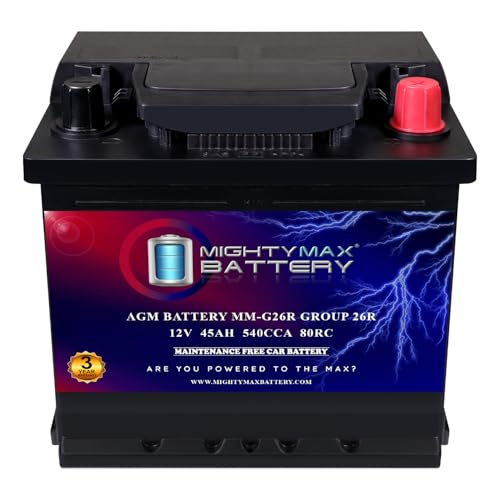
Mighty Max Battery MM-G26 BCI Group 26 12V 45AH, 80RC, 540 CCA, Rechargeable SLA AGM Battery


A seasonal routine you can actually keep
Advice fails when it asks for a level of devotion nobody can sustain, so the flooded battery’s care calendar should be built from moments that already exist. Spring, when the clocks change and the car gets its first thorough clean, suits a full inspection: levels, terminals, tray, hold-down, and a hydrometer reading written on a card kept in the glovebox. Summer asks only for vigilance during heatwaves, when water loss quickens and a battery working hard in traffic deserves a glance at its levels before a long holiday drive rather than after a hard shoulder stop. Autumn is the strategic season, the time to charge fully, test honestly and replace a doubtful unit while the weather is kind, the evenings are usable and the parts shop is not yet fielding the first frost’s harvest of desperate customers.
Winter itself then becomes a season of simple respect. Keep the battery charged, because a charged battery resists freezing and cranks with whatever strength the cold allows. Keep journeys honest where possible, combining errands into runs long enough for the alternator to repay the start. If the car must sit through a freeze, a maintainer earns its electricity many times over. Drivers who follow even half of this calendar discover that battery life stops feeling like weather, random and imposed, and starts feeling like a system they run. The card in the glovebox grows into a small history: dates, readings, water added, and the slow, legible story of a component ageing gracefully rather than plotting in secret.
That legibility is, in the end, the deepest argument for the wet cell in an age of sealed everything. It does not ask for faith. It offers evidence, in fluid levels anyone can see, in gravity readings anyone can learn, and in starts that keep arriving because somebody looked, twice a year, with a jug of distilled water in one hand and a clean cloth in the other. Choose the right size, charge it with patience, keep its plates covered and its terminals bright, and when the coldest dawn of the year puts a hand on the bonnet and dares the starter to try, your old flooded battery will answer the way loyal machinery always has: first turn, full voice, and off into the dark before the heater has even thought about warming.
There is one more audience for all of this care, and it is the next owner. A battery with its installation date marked, its levels right, its terminals clean and its service story noted on a glovebox card tells a buyer, an inheriting teenager or a family member borrowing the car that the machine has been kept by someone who paid attention. That signal travels beyond the battery itself. It suggests the oil was probably changed, the tyres probably watched, the strange noise probably investigated rather than turned up loud on the radio. Cars acquire reputations inside families, and the dependable ones are rarely accidents. They are accumulations of small, unrecorded kindnesses done on schedule, of which battery care is simply the easiest to start this weekend.
So start there, with the bonnet up on a quiet morning, a jug of distilled water waiting, and ten unhurried minutes that cost almost nothing. Look at the levels. Read a cell or two. Brighten what has dulled, tighten what has loosened, and write the date down like someone who intends to be believed later. Somewhere ahead is a cold dawn, a loaded car and a road that matters, and on that morning the whole of this long argument will narrow to a single sound: a starter turning with confidence, an engine catching cleanly, and a driver smiling at a dashboard clock that says there is still time for coffee before the journey properly begins.
Keep that appointment with the battery twice a year and the relationship stays what it should be: brief, factual and quietly rewarding. The caps will lift, the levels will speak, the charger will hum for an evening, and then the bonnet closes on a small lead box that asks for nothing more until the seasons turn again and the whole honest ritual repeats under a different sky.