Key takeaways
- Travel fork and spoon sets compared by steel grade, bamboo, titanium, protective cases, hygiene, airport rules, camping use and rust care daily.
What's inside
- Why a travel fork and spoon set deserves more thought than it gets
- Stainless steel grades: decoding 18/8, 18/10, and unlabelled metal
- Wood and bamboo: warmth, lightness, and honest limitations
- Titanium: the ultralight specialist
- Cases, rolls, and pouches: containing the clean and the dirty
- Hygiene on the move: washing when facilities are minimal
- Camping and trail meals: eating well away from a kitchen
- The office lunchbox routine
- Airport security and cabin baggage: forks, spoons, and the knife question
- Preventing rust, odours, and lingering flavours
- Matching a set to your travel style: a decision path
- Small details that separate good sets from frustrating ones
- Eating real meals: noodles, soup, salad, and everything awkward
- Children, families, and shared sets
- Dishwasher, hand washing, and finishes over years of use
- Disposable alternatives and the honest sustainability picture
- Price tiers without the numbers: what extra money actually buys
- Check prices on Amazon
- A short pre-purchase inspection you can do anywhere
As an Amazon Associate I earn from qualifying purchases. This post may contain affiliate links at no extra cost to you.
Why a travel fork and spoon set deserves more thought than it gets
A fork and spoon sound like the least complicated items in a travel bag, right up to the moment you need them. That moment might be a train carriage with a noodle pot and no cutlery at the buffet car, a campsite where the shared kitchen box holds one bent teaspoon, or an office desk where the communal drawer has been emptied by colleagues yet again. Carrying your own pair solves the problem permanently, but only if the set you carry is pleasant to eat with, easy to clean in imperfect conditions, legal to transport, and tough enough to survive years of being tossed into bags. A surprising number of sets fail on at least one of those counts, usually because they were bought for their photograph rather than their dimensions, weight, or material grade.
Transparency matters on a page about modest purchases just as much as it does for expensive equipment. Some links on this page lead to retailers, and if you buy through one of them, a commission may come back to support the research behind these comparisons while the price you pay stays exactly the same. Nothing here rests on direct personal use of the utensils discussed; the guidance draws on documented specifications, maker literature, and recurring patterns in aggregated buyer feedback. When owners across many separate purchases report that a hinge rusts, a case smells, or a fork’s tines bend in a lunchbox, that shared pattern is reported below as owner experience rather than as a laboratory finding.
Begin by naming your dominant use, because the best set for a backpacking trip is rarely the best set for a briefcase. Campers care about weight, a case that keeps mud away from clean metal, and utensils that tolerate being washed in a bowl of lukewarm water. Office workers care about a slim case that fits a lunch bag, a fork that handles salad leaves without shredding them, and a finish that still looks respectable in a shared kitchen. Frequent flyers care about cabin-baggage rules and about a set that will not trigger questions at security screening. Many travellers need one set to cover two of those lives, which is possible, but the compromise should be chosen deliberately rather than discovered at an airport tray.
Size is the specification most often misjudged from photographs. A standard table fork measures roughly 19 to 20 centimetres, and a travel version shortened to 16 centimetres changes how food is speared, how soup is balanced, and how the handle sits in an adult hand. Compact folding or telescopic designs shrink further for packing, yet every joint is a place where grime collects and wobble develops. Measure the internal length of the bag, pouch, or lunchbox where the set will live, then compare that figure with the closed case length in the listing, not with the utensil length alone. A beautiful set that protrudes from its intended pocket will migrate to a drawer at home and help nobody.
Stainless steel grades: decoding 18/8, 18/10, and unlabelled metal
The numbers stamped on stainless cutlery describe alloy proportions. In 18/8 steel, roughly eighteen percent chromium provides corrosion resistance while about eight percent nickel adds strength, lustre, and a smoother feel in the mouth. The 18/10 variant raises nickel content to around ten percent, which usually brings a brighter polish, slightly better resistance to pitting, and a higher price. Both grades belong to the same broad family used for quality tableware, and both are food-safe, dishwasher tolerant, and heavy enough to feel substantial. For travel, the practical difference is modest: 18/10 rewards people who store utensils in humid conditions or near salty coastal air, while 18/8 serves everyone else perfectly well at a gentler cost.
Unlabelled stainless steel deserves a more cautious reading. A listing that says only stainless, without a grade, may still describe a perfectly serviceable product, but it may also hide a lower-chromium alloy that spots after repeated washing or develops rust freckles where the fork’s neck flexes. Magnet behaviour offers a rough clue rather than proof, since some quality alloys are weakly magnetic and some poor ones are not magnetic at all. Weight helps too: a fork and spoon pair in solid 18/8 typically feels noticeably denser than a thin pressed pair of the same length. When a seller will not state a grade, ask directly before ordering, and treat a vague reply as information about the support you would receive if the finish failed later.
Thickness matters as much as alloy for daily comfort. Look for a stated gauge or for photographs showing the handle edge-on; quality travel sets often use stock around two to three millimetres thick at the handle, tapering elegantly rather than ending in a stamped sharp edge. Thin utensils cut into fingers when you press down on firm food, and their tines bend outward after a few encounters with frozen leftovers or dense root vegetables. Mirror-polished handles show fingerprints but wipe clean in seconds, while brushed finishes hide scratches from years of rattling against other kit. Neither finish changes hygiene when the surface is intact, so choose by temperament: the traveller who polishes gear will enjoy mirror shine, and the traveller who throws everything into one pouch will be happier with brushed metal.
Rust on stainless steel surprises owners who believed the name promised immunity. The alloy resists corrosion through a thin chromium oxide layer that repairs itself in air, but that layer struggles when utensils sit wet inside a sealed case, when salty food residue dries on the surface, or when a scratched spoon is stored touching carbon steel. Small brown spots usually sit on the surface rather than in the metal and can be lifted with a paste of bicarbonate of soda and water rubbed along the grain. Prevention is simpler than cure, and a later section covers drying and storage routines in detail. For now, remember that grade, drying, and storage together decide longevity; no alloy grade excuses packing a wet fork away for a fortnight.
Fork and spoon shapes that earn their place
Utensil geometry decides whether a set handles real meals or only snacks. A travel fork needs four tines with enough length to hold food securely, a slight curve that works for scooping as well as spearing, and gaps narrow enough that peas do not escape sideways. The spoon bowl matters even more: a shallow teaspoon frustrates soup eaters, while a deep, oval tablespoon carries broth and yoghurt without spilling at every step between kitchen and desk. Some sets include a combined spork, which saves weight and space but compromises both jobs, cutting poorly, scooping awkwardly, and annoying anyone eating noodles. Unless grams are critical on a mountain route, a separate fork and spoon outperform a spork at every meal, and the small extra bulk disappears inside a well-sized case.
Wood and bamboo: warmth, lightness, and honest limitations
Wooden utensils appeal to travellers who dislike the taste and temperature of metal, and a well-made hardwood fork and spoon do feel gentle in the hand and quiet against a bowl. Dense woods such as olive, beech, or acacia resist water better than soft pine, especially when finished with food-safe oil that fills the pores. Even so, wood remains porous in a way steel never is. Sauces stain it, strong flavours linger after washing, and repeated soaking swells the fibres until hairline cracks appear near the spoon bowl. Those cracks harbour residue, which is why food-safety guidance generally steers communal and commercial settings toward non-porous materials. For a solo traveller who hand-washes promptly and dries thoroughly, wood can serve happily for seasons, provided expectations stay realistic.
Bamboo occupies a middle ground between timber and plastic. Technically a grass, it grows quickly, which supports its reputation as a renewable choice, and laminated bamboo utensils are light, stiff, and surprisingly resistant to bending. The laminating adhesive and the surface finish decide durability more than the plant itself. Cheap bamboo sets sometimes splinter at the fork tips after a few months, and a rough tine is both unpleasant and unhygienic. Run a fingertip along every edge when a bamboo set arrives; any catch or fuzz means sanding or returning it. Bamboo should be hand-washed and dried standing up, never left in a washing-up bowl, and retired once the surface feels fibrous, because no amount of oiling restores a laminated edge that has begun to separate.
Weight comparisons flatter plant-based sets until the case enters the calculation. A bamboo pair may weigh half as much as steel equivalents, yet a padded fabric case adds back much of the saving, and a wooden set carried loose risks snapped tines. Travellers choosing wood or bamboo for environmental reasons should also weigh service life honestly. A steel set used daily for a decade usually carries a smaller footprint than three bamboo sets replaced as they split, stain, and tire. The greenest utensil is normally the one you keep, so buy plant-based materials at a quality level you will respect and maintain, rather than as a disposable gesture that lands in a bin before the year ends.
Titanium: the ultralight specialist
Titanium utensils exist for travellers who count every gram and still refuse to eat with flimsy tools. The metal is strong for its weight, resists corrosion almost completely, and leaves no taste in the mouth, which is why expedition and bikepacking communities adopted it early. A titanium fork and spoon pair can weigh roughly a third of a comparable steel set, a saving that matters when it joins a stove, a shelter, and a week of food on one person’s back. On a city break or in an office drawer, that advantage shrinks to novelty, while the higher price remains fully visible. Titanium also feels different: lighter in the hand, slightly springy at the fork neck, and prone to a faint grey tone that some owners love and others find austere.
Handling quirks deserve mention before anyone pays a premium. Titanium conducts heat far less than steel, so a spoon left in hot soup stays comfortable to hold, a genuine benefit around camp stoves. The same low conductivity means the utensil never warms up in your hand on a cold morning, which some winter campers notice. Surface hardness is lower than quality steel, so tines and bowl edges can show scratches from gritty cleaning pads, though function survives long after appearance dulls. Avoid scouring any metal travel set with sand or ash at a campsite, a traditional habit that damages finishes; a drop of biodegradable soap and a soft cloth clean adequately, and boiling water back at base camp resets hygiene when a trip ends.
Deciding between titanium and steel often comes down to how the set will travel. If it rides in a checked bag, a car boot, or a desk drawer, steel’s weight penalty is irrelevant and its price advantage wins. If it climbs mountains in a hip-belt pocket beside a water filter, titanium earns its keep daily. Travellers assembling a full lightweight kit usually research several categories at once, and those comparing storage for route maps and photographs may find best hard drives for travel relevant to the wider packing list. Keep the utensil decision in proportion, though: the difference between steel and titanium cutlery is measured in tens of grams, while footwear, shelter, and water carriage each swing hundreds, so upgrade cutlery after the big three are settled.
Cases, rolls, and pouches: containing the clean and the dirty
A case does four jobs at once: it protects tines from bending, keeps washed metal clean inside a bag, contains a used fork until washing is possible, and stops sharp edges from worrying holes in clothing or a tent stuff sack. Hard cases in metal or rigid plastic excel at protection and wipe clean inside, but they rattle and add bulk. Fabric rolls are quiet, flexible, and pleasant to open on a picnic blanket, yet they absorb spills and need laundering themselves. Slim zip pouches in coated nylon split the difference, resisting moisture while folding flat when empty. Whichever style you pick, check that the closure works one-handed and that the interior length matches your utensils with a few millimetres to spare, because a case that must be forced shut will eventually tear at its seams.
Ventilation is the case feature nobody advertises and everybody needs. A completely sealed box traps the moisture from a hastily rinsed spoon, creating exactly the warm, damp environment where odours and surface rust develop. Cases with a mesh panel, a drainage gap, or a breathable fabric section let utensils dry slowly inside a bag after a quick wipe. At a campsite or in an office, the better habit is to leave the case open for half an hour after washing whenever circumstances allow. Some travellers carry a small microfibre cloth dedicated to cutlery, stored in an outer pocket rather than inside the case, so drying never depends on finding a clean towel in an unfamiliar kitchen.
Internal organisation separates thoughtful designs from plain tubes. Individual slots or elastic loops stop fork and spoon from grinding against each other, which preserves polished finishes and prevents the spoon bowl from scratching the fork handle into a dull patch. A separate small compartment can hold a reusable straw, a pair of chopsticks, or a folded napkin without crowding the main pair. When you shop, picture the case at the end of a meal rather than the start: can a sauce-covered fork slide in without smearing the spoon’s clean slot? Designs with a removable, washable liner answer that problem elegantly, and owners mention liners with unusual gratitude in feedback, which suggests how much daily friction they remove.
Carrying a knife, chopsticks, or a straw in the same kit
Many sets add a table knife, and its presence changes both usefulness and transport rules, a topic covered fully in the airport section below. A blunt butter-style blade spreads and cuts soft food adequately for most travel meals, while a serrated edge handles crusty bread and firm fruit but draws more attention at screening points. Chopsticks extend a kit’s range for noodle bars and shared dishes, weigh almost nothing in bamboo or steel, and double as cooking stirrers at a camp stove. Reusable straws divide opinion: metal versions clean well with their included brush, silicone versions fold into smaller cases, and both demand prompt rinsing to avoid stale flavours. Add extras only when you genuinely use them weekly, because every unused piece is dead weight auditioning for a drawer.
Hygiene on the move: washing when facilities are minimal
Clean cutlery is a health matter, not a cosmetic one, and travel removes the dishwasher safety net many households rely on. The minimum effective routine is hot water, a drop of washing-up liquid, friction from a cloth or brush, and complete drying. Cold water alone mostly redistributes grease. At a campsite, wash utensils in a bowl rather than a stream, use biodegradable soap sparingly and away from the water’s edge, and scatter strained wash water as local rules direct. In a hotel room, the kettle is your ally: rinse first, wash in the bowl with soap, then pour near-boiling water over fork and spoon and let them air-dry on a clean towel rather than a bathroom surface.
Fork tines and the junction where handle meets bowl collect residue that a quick rinse misses. A small brush, even a retired toothbrush kept in the wash kit, clears those traps in seconds. Pay attention to engraved logos and brushed finishes, whose tiny grooves hold dried sauce surprisingly well. If a set has detachable or folding joints, open them fully during washing and drying; moisture sealed inside a hinge emerges days later as a musty smell and, on steel, as pinpoint rust. Sanitising wipes can bridge an emergency, such as a long train journey with no water access, but they leave flavours behind and generate waste, so treat them as a fallback and wash properly at the first opportunity.
Shared kitchens raise a different hygiene question: distinguishing your set from everyone else’s. A coloured case, an engraved initial, or a distinctive wrap of cord at the handle end prevents mix-ups in office drawers and hostel drying racks. That marking also discourages casual borrowing, which matters because a borrowed fork returned unwashed into your case undermines every routine above. Store the clean set closed and dry, and keep it away from raw-food preparation areas in camp kitchens, where splash contamination is common. These habits sound meticulous in print, yet each takes seconds, and together they explain why some travellers use the same set for years without a single stomach upset they can trace to their own cutlery.
Camping and trail meals: eating well away from a kitchen
Camp cooking imposes stresses that office use never does. Utensils stir pots, lever lids, spread paste onto crackers, and occasionally serve as improvised tent-peg extractors in weak moments. A fork that flexes while stirring thick porridge will eventually fatigue at the neck, so campers should favour one-piece construction and generous metal thickness even in lightweight materials. Long-handled spoons reach the bottom of dehydrated-meal pouches without coating knuckles in sauce, a detail that sounds trivial until you have eaten three pouch meals in a row. If your trips involve pouch meals regularly, measure spoon length against a typical pouch depth and prioritise an extra centimetre or two over a marginally prettier handle pattern.
Cold weather changes grip and comfort. Metal handles become chilly to hold at frosty breakfasts, and gloves make slim handles awkward, so winter campers often prefer slightly wider grips or a fabric wrap. In bear country and other areas with strict food-storage rules, cutlery that smells of dinner belongs in the same secure storage as food itself, never loose in a sleeping tent. Wash and dry the set before storing it for the night, both for wildlife safety and because dried egg at dawn is far harder to shift than fresh residue at dusk. A headtorch-lit wash immediately after eating feels like a chore on the first trip and becomes automatic by the third, especially once you have experienced the alternative.
Group camping benefits from mild standardisation. When every member of a party carries a similar fork and spoon in a distinctively coloured case, washing-up rotas run faster and lost items surface quickly. Leaders of youth groups often specify steel sets for this reason: they survive dishwater, campfireside drops, and the occasional use as a digging tool, and they can be boiled for thorough cleaning between users. Bamboo and wood struggle under that regime, and titanium’s price makes group loss painful. Anyone organising kit for a club should also label cases with names rather than relying on memory, because identical pouches multiply mysteriously around any shared washing bowl.
The office lunchbox routine
Desk workers form the quiet majority of travel-set owners, and their needs are specific. The set must fit inside a lunch bag beside containers, survive a daily commute without rattling loudly against a laptop, and look presentable when a colleague joins you. Slim steel sets in brushed finishes dominate this niche for good reason. A spoon sized for yoghurt and soup, plus a fork that can manage both salad and noodles, covers the standard office menu. If your lunch often includes fruit that needs cutting, revisit the knife question with the transport rules in mind, remembering that an office drawer set never faces airport screening and can therefore include a proper small blade stored safely in its case.
Washing at work fails most often through procrastination rather than lack of facilities. A fork left in an empty container until evening arrives home welded to dried sauce, and a set left in a shared kitchen invites borrowing and loss. Build the same close-down routine you would use at camp: rinse immediately, wash during the post-lunch kitchen visit, dry with a paper towel or your own cloth, and close the case only once the metal is dry. Workers who follow that sequence report their sets staying bright for years, while identical sets abandoned wet in lunch bags develop odours within months. The difference is never the alloy; it is the twenty minutes of damp storage repeated two hundred times a year.
Commuters combining several journeys into one bag will recognise the packing logic here from other gear categories. A worker who charges devices at a desk, for instance, faces the same cable-versus-space puzzle explored in best travel chargers for phones, and the utensil case obeys identical rules: dedicated pocket, consistent position, nothing loose. Keeping the fork and spoon in the same lunch-bag pocket every day builds a reach-without-looking habit, and it makes the absence of the set immediately obvious on the mornings when it sits beside the kitchen sink at home. Consistency, more than any clever case design, is what turns a travel set into an everyday companion instead of an occasional accessory.
Airport security and cabin baggage: forks, spoons, and the knife question
Rules for cutlery in hand luggage vary by country and sometimes by airport, so verify current guidance with your airline and the relevant security authority before every unfamiliar route. In broad terms, forks and spoons are widely permitted in cabin bags across many jurisdictions, because they are ordinary eating tools rather than blades. Table knives attract the restrictions. Some regimes allow short, blunt, round-ended knives below a stated blade length; others prohibit any knife in the cabin regardless of size or bluntness. A set that flies without incident from one hub may be questioned at another, and the officer at the tray has final discretion even when published guidance seems clear. Pack accordingly, and never argue a favourite knife through a checkpoint.
The safest configuration for regular flyers is a fork-and-spoon-only set in cabin baggage, with any knife travelling in checked luggage inside its case, sheathed and surrounded by clothing. Present the set openly in the tray if an officer shows interest; a tidy, obviously domestic eating kit reads very differently from a loose blade buried in a bag. Metal cases can obscure screening images, so be ready for a bag check and keep the set near the top of your luggage for quick access. Travellers who pass through several countries on one itinerary should plan for the strictest rule along the route, because a connection can involve rescreening under a different regime from the departure airport.
School trips, festivals, and venue entrances apply their own policies, often stricter than aviation rules for blades and sometimes extending to metal cutlery of any kind at large events. Disposable or bamboo sets occasionally serve as a deliberate sacrificial choice for such days: acceptable if confiscated, adequate for one afternoon. That is one of the few situations where a cheap plant-based set makes rational sense, and buying it with that expectation avoids the bitterness of losing a treasured steel kit at a gate. Keep the good set at home, note the venue policy in your trip file, and treat the substitute as part of the ticket cost rather than as a failure of planning.
Frequent travellers tend to build a small security-friendly system across all their gear, choosing items that screen cleanly and pack predictably. The same mindset guides choices like those in best small travel routers, where compact, clearly purposed equipment reduces friction at every stage of a journey. For cutlery, predictability means a consistent set, a recognisable case, and no surprise extras such as a hidden multi-tool in the pouch. If a set includes a bottle opener, a serrated edge, or any blade-like feature you had forgotten about, screening day is the worst time to rediscover it, so audit the contents of your own case before each trip as part of packing, not as an afterthought at the tray.
Preventing rust, odours, and lingering flavours
Odour problems almost always trace back to moisture and residue rather than to the utensil material itself. A spoon washed but closed wet into an airtight case will smell stale within days, and a fabric roll washed less often than the cutlery it carries becomes the true source of the problem. Launder fabric cases regularly, following the maker’s guidance, and dry them fully before reloading. Metal and hard plastic cases can be washed with hot soapy water and an occasional bicarbonate rinse. If a case smells even when empty and clean, sunlight and fresh air for an afternoon often succeed where repeated washing fails, because ultraviolet light and ventilation attack the compounds that soap leaves behind.
Flavour carry-over bothers tea and coffee drinkers most, since a spoon that stirred a curry at lunch can haunt an afternoon drink. Steel sheds flavours readily once its surface is clean, because the metal itself does not absorb them; what lingers is a film of fat carrying the earlier meal. Hot water with detergent, applied promptly, removes that film. Wood and bamboo genuinely absorb flavours into their fibres, one more reason their owners accept a patina of past meals as part of the material’s character. If you alternate between strongly spiced food and delicate drinks, carry a second small spoon dedicated to beverages, a tiny addition that solves the problem completely without replacing the main set.
Long-term storage between trips deserves the same care as daily use. Clean and dry the set, then store it with the case slightly open or with a small food-safe silica packet if your climate is humid. Avoid keeping steel utensils in contact with leather wraps for months, because some tanning chemicals can mark polished surfaces. Inspect before the next journey rather than during packing panic: check fork tines for alignment, spoon edges for burrs, case seams for fraying, and any hinge for stiffness. A five-minute inspection at a calm moment lets you straighten a tine with gentle finger pressure, smooth a burr with a fine stone, or order a replacement case in time, instead of discovering damage beside a departure gate.
Repair, replacement, and knowing when a set is finished
Most travel sets fail gradually, which gives owners time to respond. A bent tine can usually be eased back once or twice before metal fatigue makes further straightening risky. A loose folding joint, by contrast, rarely improves and can collapse mid-meal, so retire folding designs at the first sign of play that cleaning does not cure. Wooden utensils are finished when cracks reach the bowl or when splinters return after sanding. Steel sets can serve for decades, and their end usually arrives as loss rather than damage: one piece vanishes, the pair becomes a singleton, and a matching replacement cannot be found. Buying from makers who sell individual pieces, not only complete sets, protects against that mundane ending and is worth checking before the first purchase.
Travellers who carry their set inside larger luggage systems should also think about what presses against it. A fork case buried under heavy bottles will eventually bend, wherever it sits, while a case in a structured pocket survives indefinitely. The anti-crush logic behind protective packing appears again in best backpacks for travel anti theft laptop university, where rigid compartments defend fragile contents from the weight of everything else in the bag. Apply the same principle at small scale: give the utensil case a defined home, keep heavy items below or beside it rather than above it, and never use the case itself as a lever or a door wedge in a moment of improvisation, however tempting a flat metal box may look.
Matching a set to your travel style: a decision path
Narrow the field in a deliberate order and the right answer usually becomes obvious. First, decide whether a knife must be included, knowing that answer may split your kit into a cabin set and a checked-baggage set. Second, pick the material by environment: steel for versatility and easy care, titanium for serious weight saving, bamboo or wood for warmth and short, gentle trips. Third, measure your bag and choose a case that fits it with room for the closure to work. Fourth, check the spoon bowl depth and fork length against the meals you actually eat, not an imagined banquet. Fifth, confirm that replacement pieces or at least replacement cases are sold, because the best set is the one still complete in three years.
Value judgments differ by frequency of use in a way price tags hide. A commuter eating with a set two hundred times a year can justify a premium steel kit easily, since the cost per meal falls to almost nothing while daily comfort stays high. A traveller taking two flights a year may be served just as well by a modest set, provided its edges are smooth and its case is sound. Occasional users should still avoid the very cheapest stamped sets, whose sharp handle edges and bendy tines can make even ten meals a year unpleasant. The floor for acceptability is simple: comfortable in the hand, stable on the plate, cleanable without fuss, and pleasant enough that you reach for it willingly.
Gifting a travel set works best when the giver thinks about the recipient’s routine rather than the object’s charm. A new graduate starting an office job benefits from a slim steel set in a professional-looking case. A student heading for a year abroad needs durability, a knife decision made with destination rules in mind, and a case colour that will survive a hostel kitchen. A grandparent who picnics may prefer lighter utensils with wider handles that are easy to grip. Adding a handwritten note about care, especially the rule about never closing a wet set away, quietly doubles the gift’s useful life, because most early damage comes from that single habit rather than from any defect in manufacture.
Small details that separate good sets from frustrating ones
Edge finishing reveals manufacturing care faster than any specification sheet. Run a thumb along the handle edges and between the fork tines as soon as a set arrives. Quality pieces feel uniformly smooth, with no stamping burrs and no sharp inner corners where the tines meet. The spoon’s rim should be thin enough to eat from comfortably but not so sharp that it feels like a blade against the lip. Balance matters too: a spoon that is all bowl and no handle weight tips out of small cups, while an overly heavy handle slides off plates. None of these qualities appears in listings, so a generous returns policy is part of a wise purchase, letting you judge the objects in your own kitchen before committing them to your travel bag.
Noise and table manners sound like jokes until you share a quiet train carriage or a formal working lunch. Heavy steel on a ceramic plate announces every course, while wood and bamboo stay discreet, and titanium sits between the two. If your meals often happen in hushed settings, material choice affects social comfort as well as weight. Similarly, highly polished utensils under bright office lighting show every water mark, prompting unnecessary polishing from tidy-minded owners. Brushed finishes forgive the realities of travel washing, where drying cloths are improvised and water quality varies. Choosing the finish that matches your tolerance for visible wear prevents a perfectly functional set from irritating you daily.
Finally, consider how the set behaves at the very end of a trip, when everyone is tired and packing standards slip. A good case still closes when its contents are slightly damp, protecting the bag for one journey home, even though the rule about drying resumes immediately afterwards. A distinctive colour still shows up in the gloom of a hostel bunk or the bottom of a car footwell. A fork that survived being sat on, dropped on platform concrete, and washed in a station bowl has earned its place in a way no specification can capture. Buy for that tired final day as much as for the fresh first morning, and the set you choose will still be travelling with you, bright and unbent, when newer gadgets in the same bag have long since been replaced.
Eating real meals: noodles, soup, salad, and everything awkward
Judge a travel fork by the foods that defeat weak designs. Noodles demand tine length and a handle you can twirl against a spoon without the pair clashing; a short cocktail fork turns a simple bowl of ramen into a patience exercise. The classic pairing of fork against spoon, borrowed from Italian kitchens, works on the road too, provided the spoon bowl is broad enough to act as a base for twirling. Salad asks the opposite: wide outer tines that can pin leaves without tearing them into confetti, plus enough spring in the neck to lift a loaded bite without bending. Firm foods such as raw carrot, apple wedges, or a dense flapjack expose thin metal instantly, because the fork becomes a lever and the handle end digs into your palm while the neck flexes.
Soup separates spoon designs more honestly than any other course. A round, deep bowl carries broth steadily across a moving train table, while an oval bowl pours more neatly into the mouth and reaches corners of square containers better. Hot drinks add a thermal detail: a long spoon lets you stir a tall mug without scalded knuckles, and it doubles as a muddler for travellers who mix powdered drinks in bottles. Yoghurt and soft desserts reward a spoon with a polished interior, since texture clings less and a quick rinse genuinely cleans it. When you read a listing, translate its vague claims about versatility into these concrete meals from your own week, and ask whether the pictured shapes would survive each one without annoyance.
Breakfast on the move deserves its own moment, because it combines several challenges before coffee has taken effect. A spoon must cut the set top of a yoghurt pot’s contents cleanly, carry granola without shedding it, and stir porridge thick enough to test its neck. A fork may be asked to manage scrambled egg in a rail carriage, spear melon on a ferry, or hold a sausage steady in a campsite pan. Utensils that feel adequate over a calm lunch at home can feel hopeless during a swaying, one-handed breakfast, which is why experienced travellers favour slightly heavier, more deliberate designs than minimalists recommend. Comfort under mild chaos is a legitimate specification, even though no listing will ever print it.
Children, families, and shared sets
Family travel multiplies every consideration in this guide. Children need shorter handles they can control, rounded tine tips that forgive clumsy enthusiasm, and cases in colours they recognise as their own across a crowded picnic table. A set sized for a seven-year-old will frustrate a teenager within two summers, so families often buy adult-length utensils in cheerful cases for older children and reserve truly small sets for toddlers eating under close supervision. Dishwasher tolerance becomes more valuable, not less, when four sets return home from every trip; hand-wash-only wooden pieces for a whole family create a chore that guarantees corners will be cut and fibres will suffer.
Shared family kits benefit from one deliberate rule: every set returns to its own case before bags are repacked, counted aloud like tent pegs. Losses happen at the edges of trips, in holiday-home drawers, service-station bins, and the grass beneath picnic benches. A bright case reduces those losses more effectively than any amount of parental vigilance, because it converts a small metal object into a visible item on a departure checklist. Some families add a spare basic steel pair to the car glovebox, accepting its plainness as insurance. That spare set, used after motorway services and beach picnics, often becomes the most washed and most appreciated cutlery the household owns.
Dishwasher, hand washing, and finishes over years of use
Most stainless and titanium sets tolerate dishwashers well, provided they are not packed against carbon-steel knives or left sitting in salty dishwasher residue overnight. Detergent designed for machines is more alkaline than washing-up liquid, and over years it can dull mirror polish into a soft sheen that many owners actually prefer. Gold-toned, black, and other decorative coatings deserve more caution: their coloured layers, often applied as thin physical vapour deposits, can wear at edges and tine tips, especially where utensils rattle against a dishwasher basket. If a coated set charms you, commit to hand washing it, or accept a two-tone future as part of its story. Plain metal asks the least of its owner, which is precisely why plain metal dominates long-service travel kits.
Hand washing technique influences lifespan more than frequency. A soft sponge and warm soapy water clean every material in this guide; abrasive pads are reserved for removing stubborn marks from uncoated steel, worked along the grain rather than across it. Dry immediately with a cloth instead of leaving pieces to air-dry on a drainer, because evaporating droplets leave mineral spots that invite exactly the surface corrosion discussed earlier. In hard-water regions, a final rinse with a splash of clean hot water reduces spotting noticeably. These are thirty-second habits, but multiplied across years they explain why one traveller’s decade-old fork gleams while another’s two-year-old set looks retired.
Disposable alternatives and the honest sustainability picture
Reusable cutlery is often bought as an environmental statement, so its real-world impact deserves a clear-eyed look. A steel set replaces single-use plastic only when it is actually carried and used; a set forgotten at home while its owner accepts disposable forks daily achieves nothing except good intentions. This is why the earlier emphasis on case size, bag fit, and daily habit matters more than material debates. Carry statistics beat purchase statistics. Travellers who struggle to remember a set should attach the case to the lunch bag with a short loop or keep it inside the bag permanently, washing and returning it each evening as part of the unpacking ritual rather than storing it in a kitchen drawer between trips.
There remain journeys where disposables or venue-provided cutlery are the sensible answer. Hospital visits, certain festivals, and trips through regions where safe washing water is scarce all complicate the reusable routine. Compostable wooden single-use pieces suit those occasions better than plastic, provided local waste systems can actually process them; in a landfill they behave much like any other organic matter. The mature approach is situational rather than absolutist: default to your durable set, accept exceptions without guilt, and keep the durable set in such good condition that it serves for a decade or more. Longevity, not purity, is where the environmental benefit of a travel fork and spoon genuinely lives.
Price tiers without the numbers: what extra money actually buys
Since designs differ widely, think in tiers of construction rather than hunting for a particular figure. Entry-level sets earn their place when the metal is honestly graded, edges are finished smoothly, and the case closes securely; savings usually come from simpler handle patterns and thinner packaging, not from dangerous shortcuts. Mid-range sets add thicker stock, better polish, fitted cases with separate slots, and replacement support, which together translate into daily comfort rather than visible luxury. Premium sets charge for titanium, for refined balance, for coated finishes, or for craftsmanship in wood, and each of those premiums serves a narrower audience. The tier logic collapses only when a cheap set hides its alloy or a costly set sells branding over substance, which is why the inspection habits in this guide matter at every level.
Second-hand and outlet purchases can stretch a budget, particularly for steel, which survives previous ownership gracefully. Inspect used utensils under bright light for pitting inside the spoon bowl and between the tines, where corrosion starts, and reject any piece with deep scratches that catch a fingernail, because those grooves resist cleaning. Cases rarely survive as well as the metal inside them, so price a used set as utensils alone and expect to replace its pouch. Wash second-hand pieces thoroughly on arrival, with hot water and detergent followed by a careful dry, and they will serve indistinguishably from new ones. Titanium used bargains appear less often, since owners tend to keep ultralight gear, but the same inspection routine applies when they do.
Check prices on Amazon
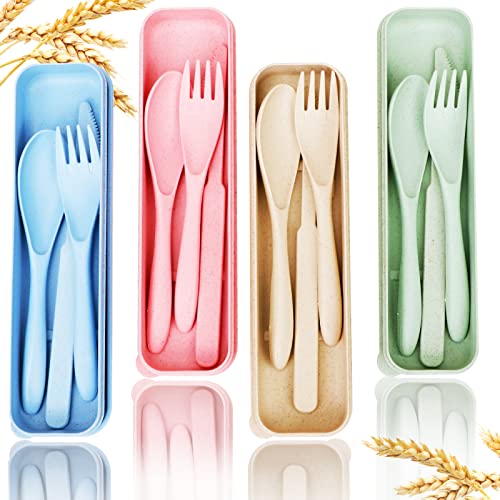
Live listings for the shortlist in this guide are pulled from Amazon below, so prices and availability are always current at the moment you look.




A short pre-purchase inspection you can do anywhere
Whether a set arrives by post or catches your eye in a shop, five quick checks predict satisfaction. Flex the fork gently by hand; it should resist and spring back without any sense of creaking at the neck. Balance the spoon on one finger near the middle of its handle; a well-made piece sits calmly rather than tipping violently toward bowl or end. Look along the fork from above to confirm the tines run parallel and level, then look along the spoon to confirm its bowl is centred on the handle’s line. Open and close the case ten times, because a closure that annoys you in a calm kitchen will defeat you beside a departure board. Finally, eat one real meal with the set before its first journey, ideally something involving soup and something involving resistance, and let that meal cast the deciding vote.
If the set passes those checks, record its details somewhere durable: material grade, closed case length, and where replacement pieces can be obtained. A photograph of the set beside a ruler sounds excessive until the day a case splits on a trip and you need its exact dimensions in a message to a supplier. Keep that record with your other travel documents, digital or paper, and update it if you add chopsticks or a second spoon. Small administrative habits like this separate travellers who maintain a trusted kit for years from travellers who repeatedly start again with whatever a station shop happens to stock, and the trusted kit is invariably cheaper, cleaner, and kinder to eat with by the time the train finally pulls away beneath a darkening sky.
One more scenario rewards preparation: the unplanned meal far from any kitchen, on a delayed service, a mountain viewpoint, or a harbour wall at dusk. In those moments a trusted set transforms whatever food is available, a bakery tart, a tub of olives, a shared portion of chips, into a civilised pause rather than a sticky improvisation with fingers and napkins. Rinse the pieces with bottled water, dry them on a clean cloth, and return them to the case before moving on, because viewpoints and benches are where single spoons most often begin their independent lives as lost property. Arriving home with the pair complete, clean, and ready for tomorrow is the quiet victory this entire category exists to deliver, sealed with the soft snap of a familiar case in a lamplit kitchen.