Our Top Picks


What's inside
- Why extra length changes stubborn fastener work
- Metric coverage, SAE coverage, and honest gap analysis
- Chrome vanadium steel and what the alloy actually buys you
- The 15-degree angled jaw and working in arcs
- Twelve-point box ends, offset bends, and hex survival
- Leverage mathematics without the lecture hall
- Handles, balance, and the long shift problem
- Trays, rolls, racks, and finding the right size fast
- Automotive work where reach pays for itself
- Agricultural machinery and the outdoor penalty
- Buying logic: count pieces last, not first
- Care routines that keep chrome and edges alive
- Pairing long wrenches with the rest of a kit
- Matching a set to three common buyer profiles
- Final judgement on going long
- Safety habits specific to high-leverage hand tools
- Calibrating your hands: learning torque by feel
- Restoration work and hardware that predates you
- Fleet maintenance and the economics of minutes
- Motorcycles, bicycles, and smaller machinery
- A short field routine for the truly immovable bolt
- Check prices on Amazon
- How climate and storage quietly decide lifespan
As an Amazon Associate I earn from qualifying purchases. This post may contain affiliate links at no extra cost to you.
Why extra length changes stubborn fastener work
A seized suspension bolt rarely surrenders to a standard-length wrench. Rust creeps into exposed threads, road salt bakes onto the hex, and years of heat cycles weld the joint tighter than the day it left the assembly line. Mechanics facing that kind of resistance reach for longer handles because leverage, not brute arm strength, usually breaks the bond first. Every additional centimetre of handle multiplies the torque your hand can deliver at the head, so a fastener that felt immovable suddenly rotates with a controlled push instead of a desperate heave.
Readers should know how this page supports itself before going further. Some links here point toward retailers, and a purchase made after following one may return a small commission that funds further research while leaving the price you pay completely unchanged. Comparisons below rest on published specifications and aggregated buyer feedback gathered across many owners, never on direct use of the tools in a private workshop. Treat the conclusions as documented analysis rather than a personal bench diary.
Combination tools earn their name honestly. One end carries an open jaw for fasteners trapped against a wall or bracket, while the opposite end closes into a ring that wraps the hex fully. Owning both profiles on a single bar removes the constant walk back to the toolbox mid-job. Extended versions stretch that familiar layout, sometimes by a quarter over catalogue-standard siblings, and the difference shows up most on axle hardware, exhaust flanges, and the frame bolts of tractors that live outdoors through every season.
Length brings trade-offs worth naming early. Longer bars sweep a wider arc, which complicates work inside crowded engine bays where a radiator hose sits two centimetres from your target. Storage grows awkward as well, since oversized sets outgrow shallow drawers designed around conventional dimensions. Weight climbs too. None of these drawbacks disqualifies the format, yet each one shapes which buyers benefit and which would be happier with ordinary proportions.
Metric coverage, SAE coverage, and honest gap analysis
Metric lineups commonly begin at 8 millimetres and climb toward 19 or beyond, though the exact ceiling separates thoughtful collections from padded ones. Small sizes handle bicycle hardware, battery terminals, and the trim fasteners scattered through modern vehicles. Mid-range dimensions between 10 and 14 millimetres dominate daily automotive work, covering brake caliper brackets, alternator mounts, and countless accessory bolts. Larger heads above 17 millimetres serve suspension arms, tow hitch plates, and agricultural implement frames.
Imperial sizing follows a different rhythm. Fractions step from a quarter inch upward through one inch and sometimes past it, matching legacy machinery, older American vehicles, and farm equipment built before metric conversion reached rural workshops. Owners of mixed fleets often keep both systems side by side because a 13 millimetre head almost fits a half-inch fastener yet rounds its corners under serious load. Almost fitting is precisely how hex damage begins.
Gaps inside a set deserve scrutiny before gaps between sets. A collection jumping from 12 straight to 14 millimetres abandons anyone facing the 13 millimetre bolts beloved by European manufacturers. Similarly, SAE assortments skipping nine-sixteenths create friction on older domestic trucks. Lay the stated sizes out in sequence on paper and hunt for missing steps, particularly in the heavily used middle band. Filling one hole later with a single loose wrench costs more per tool and breaks the storage system you paid for.
Overlap between systems occasionally rescues a job. Nineteen millimetres and three-quarter inch measure close enough that many mechanics treat them as interchangeable for moderate torque. Sixteen millimetres shadows five-eighths in the same convenient way. Relying on these near-twins for high-torque breaking work still risks slippage, so view them as emergency stand-ins rather than planned coverage. A well-planned purchase maps the fasteners you actually meet monthly, then checks the printed size list against that personal census.
Reading size markings under workshop grime
Stamped numerals behave differently from laser etchings once oil enters the picture. Deep stamps survive decades of solvent wipes and can be read by fingertip in poor light beneath a vehicle. Shallow etched figures look crisp in photographs yet vanish under a film of grease at the worst moment. Raised markings on both faces help because a wrench lying flat in a drawer still announces its size without being lifted. Consider also the font scale on the smallest members, where cramped stamping often shrinks digits into ambiguity between 6 and 8 millimetres.
Chrome vanadium steel and what the alloy actually buys you
Chromium lends hardness and corrosion resistance, while vanadium refines grain structure so the finished bar resists cracking at stress points. Forged blanks start as heated billets hammered into rough shape, forcing the internal grain to follow the wrench contour instead of cutting across it. That flow matters most at the jaw roots and around the ring, the two zones where failures concentrate when a user cheats with a pipe extension. Machining follows forging, then heat treatment sets the final balance between toughness and brittleness.
Overly hard tools snap rather than bend, and overly soft ones spread their jaws permanently on the first stubborn nut. Reputable metallurgy threads that needle by tempering after quenching, trading a sliver of peak hardness for a large gain in shock tolerance. Buyers cannot measure temper at a shop counter, which is why published conformance to dimensional standards such as ISO 691 or DIN 3113 carries weight. Those documents govern jaw opening tolerances and minimum proof torque, giving an external yardstick beyond marketing adjectives.
Surface finishing separates garage queens from working tools. Full mirror polishing sheds grime beautifully and resists rust, although the slick handle can rotate inside a sweaty palm during a hard pull. Satin or matte chrome sacrifices some sparkle for grip and hides scratches gracefully. Black oxide and industrial finishes suit oily environments where appearance ranks last, but they demand a light oil film during storage in humid climates. Whichever coating you choose, inspect the plating near size stamps, because bubbling there often signals rushed preparation underneath.
Corrosion behaviour diverges sharply between a dry suburban garage and a coastal barn. Salt air attacks microscopic plating pores, starting orange freckles that migrate under the chrome skin. Wiping tools down after exposure and storing them above concrete floors slows that creep considerably. Agricultural users face an extra enemy in fertiliser dust, which holds moisture against metal for weeks. For them, a slightly duller industrial finish that tolerates wire-brush cleaning may outlast a showroom polish that punishes every abrasive touch.
Jaw geometry on the open end
Flank-drive style jaws contact the flat sides of a hex instead of its corners. Shifting load onto the flats preserves fastener shape across repeated removals, a gift when servicing aluminium components whose bolts must survive dozens of cycles. Jaw thickness matters in the opposite direction: slim profiles slip into recessed pockets around intake manifolds, yet thin metal flexes sooner under spreading force. Manufacturers balance these tensions by tapering the head, keeping meat behind the throat while trimming the outer silhouette.
Broaching quality inside the jaw reveals itself under magnification. Clean, parallel contact faces grip evenly, whereas wavy machining concentrates force on high spots and chews corners. Shoppers examining display tools can hold the open end against a new bolt and rock it gently; excessive play at this scale predicts slippage later. A modest amount of clearance is intentional, since real fasteners carry paint, plating, and corrosion that a zero-tolerance jaw could never swallow.
The 15-degree angled jaw and working in arcs
Angling the open end by fifteen degrees solves a humble geometric problem. On a flat surface, a straight wrench handle collides with the bench after a short swing, forcing you to lift and reseat constantly. Tilting the head lets you flip the tool over after each partial turn, gaining a fresh bite offset by thirty degrees of rotation. Tight quarters beside a firewall reward that trick enormously, because the handle alternates between two planes instead of demanding one impossible sweep.
Practising the flip rhythm transforms slow jobs. Seat the jaw, pull until the handle nears an obstruction, withdraw, roll the bar over in your fingers, and reseat on the next flat. Each cycle advances the fastener a modest slice, but the slices accumulate without knuckle damage. Mechanics working above their heads on lift equipment value this cadence even more, since repositioning a dropped wrench from a ladder wastes far more time than the flip ever costs.
Angle interacts with handle length in subtle ways. Extended bars amplify the benefit when swinging across open frame rails, yet the same tilt can lever the jaw off a shallow hex if you pull carelessly at the arc extremes. Keeping your free hand near the head during the first break-loose moment steadies the engagement. Once rotation begins and resistance falls, one-handed operation becomes safe and quick. Judging that transition by feel is a skill built over hundreds of repetitions, not a specification printed on packaging.
Some designs push the concept further with reversible ratcheting rings or flex heads, but plain angled jaws retain advantages in durability and cost. Fewer moving parts means fewer failure modes when grit invades the mechanism, and a solid ring tolerates the pipe-assisted abuse that would shatter a ratchet pawl. Buyers who service muddy equipment outdoors often prefer that simplicity deliberately. Those working on clean assembly benches may trade ruggedness for speed, which is a legitimate choice rather than a mistake.
Twelve-point box ends, offset bends, and hex survival
Twelve contact points inside the ring halve the swing needed between engagements compared with six-point geometry. Thirty degrees of handle travel reseats the tool, which proves decisive above transmissions where surrounding brackets chop every arc short. The penalty is theoretical grip: more points distribute force across smaller contact patches, raising corner stress on soft or corroded fasteners. Six-point rings remain the safer surgeon for rounded salvage work, while twelve-point rings win the everyday speed contest on healthy hardware.
Offset bends lift the ring plane above the handle line, typically by a shallow angle that clears adjacent surfaces. Your knuckles ride higher as a result, scraping less against manifold castings when the fastener finally releases and the bar lurches forward. That sudden lurch causes a surprising share of workshop injuries, so clearance engineered into the bend functions as quiet insurance. Deep offsets suit recessed nuts on studs; shallow offsets preserve strength where the ring meets the neck.
Surface-drive variations reshape the twelve points into lobes that push against hex flats. Worn fasteners benefit most, because the lobes find purchase away from already-rounded corners. New hardware notices little difference during routine assembly. Deciding between classic points and lobe profiles therefore depends on fleet age: restorers wrestling fifty-year-old chassis bolts gain real value, while technicians maintaining late-model vehicles under warranty may never stress the distinction.
Ring wall thickness controls access in counterbored holes. Slim walls enter the recesses around cylinder head hardware and motorcycle engine cases, places where a chunky ring simply hovers uselessly above the nut. Thin walls, however, concentrate stress and can split when abused with hammer blows, a practice no geometry survives gracefully for long. Inspect product photographs for gradual transitions between ring and handle; abrupt steps invite cracks exactly where bending peaks.
When the box end should lead and when it should not
Breaking torque belongs to the ring whenever clearance permits, since full enclosure resists cam-out under peak load. Final tightening deserves the same treatment for consistency. The open jaw earns its keep during the long middle travel, spinning a loosened nut rapidly along exposed threads where resistance is trivial. Switching ends at the right moments halves job time without sacrificing joint integrity. Beginners often default to whichever end they grabbed first, then wonder why a simple bracket removal consumed twenty minutes.
Studs complicate the choreography. A nut travelling outward along a long stud eventually meets the ring trapped behind it, so plan the extraction path before the first turn. Open ends slide off sideways at any point, rescuing you from that trap. Similar foresight applies inside blind housings where a dropped ring-end tool can vanish into a bell housing. Anticipation, more than metallurgy, separates smooth sessions from fishing expeditions with magnets.
Leverage mathematics without the lecture hall
Torque equals force multiplied by distance from the pivot, a relationship every child on a seesaw understands intuitively. Doubling handle length doubles output at identical hand pressure, or halves the pressure needed for identical output. That second framing matters for ageing hands and for technicians repeating the motion two hundred times during a fleet service day. Reduced peak effort also improves control at the instant a fastener yields, shrinking the violent lurch that bloodies knuckles.
Control cuts both ways, though. Extended leverage makes overtightening deceptively easy on small fasteners, snapping 6 millimetre bolts whose torque window is narrow. Experienced users choke up on the handle for delicate work, gripping midway to restore sensitivity. Treating the full length as an always-on advantage misunderstands the tool; it is a reserve to deploy deliberately. Marking that mindset on day one prevents the snapped-stud tuition many learners pay later.
Body position converts theoretical leverage into real rotation. Pulling toward your centre of mass recruits back and leg muscles, while pushing away isolates the shoulder and invites slips. Bracing a knee against a tyre or frame rail stabilises the whole system. On farm machinery, standing on a secure step and pulling upward with legs driving beats dangling from the bar. Gravity can assist or betray depending on orientation, so rotate the workpiece mentally before committing your weight.
Cheater pipes deserve an honest warning here. Slipping tubing over a handle multiplies force beyond the forging design envelope, and manufacturers routinely void coverage for the resulting fractures. Long factory handles exist precisely to make that improvisation unnecessary within sane limits. If a joint still refuses a proper extended wrench, the correct escalation is penetrating oil, heat, or an impact tool, not a longer pipe. Restraint protects both the tool investment and the fastener you hope to reuse.
Handles, balance, and the long shift problem
Beam cross-sections vary from flat slabs to sculpted I-beam profiles that shed weight while preserving stiffness. Rounded edges spare palms during high-force pulls, whereas sharper slab sides can dig painfully when gloves are thin. Polished handles slide deliberately in oily hands, prompting some makers to add subtle surface texture near the tail. Evaluate grip with the gloves you actually wear, because a profile that feels perfect bare-handed may become clumsy under thick winter insulation.
Balance shifts as sizes climb. The largest members carry most mass in their heads, making the bar feel nose-heavy when carried one-handed across a yard. Smaller sizes stay nimble, almost like instruments beside their bruiser siblings. A set spanning both extremes inevitably mixes personalities, and that is normal. What matters is whether the mid-range workhorses, the sizes touching eighty percent of your jobs, feel neutral during repetitive spinning.
Fatigue accumulates through vibration as much as weight. When a rusted nut releases in stages, each micro-slip sends a jolt up the handle into wrist and elbow. Slightly thicker beams damp those shocks better than spindly ones, another quiet argument for forged mass in the larger sizes. Technicians with existing joint complaints sometimes wrap handles with removable grip tape for seasonal relief. Such improvisation costs little and can extend a career more than any single purchase decision.
Trays, rolls, racks, and finding the right size fast
Storage shapes daily behaviour more than steel quality does. A moulded tray with labelled wells turns size selection into a glance, and an empty well at cleanup time announces a missing tool before it hides inside an engine bay forever. Foam inserts cut to each silhouette serve the same accountability purpose inside drawer cabinets. Shops billing by the hour recoup tray costs quickly through these small recovered minutes.
Fabric rolls trade instant visibility for portability. Rolled bundles ride well in truck boxes and tractor toolboxes, protecting finishes from rattling damage during transport over rough ground. The compromise appears at the bench, where unrolling and re-rolling for a single size grows tedious. Field technicians accept that friction gladly; stationary mechanics usually graduate to racks. Neither answer is universally correct, which is why some collections ship with a tray while offering rolls separately.
Wall racks and magnetic rails suit fixed workstations where vertical space beats drawer volume. Hanging each wrench by size creates a visual inventory readable from across the room, handy when apprentices borrow tools. Magnets, however, can transfer weak magnetism to the steel over months, attracting metal filings that then scratch finishes. Periodic demagnetising or simple hook racks sidestep that quirk entirely.
Travellers face a different organisational puzzle, since a workshop set often donates a few members to a road kit. Anyone assembling portable spares alongside everyday carry gear might compare options through best travel chargers for phones when planning the electronic side of a trip, keeping hand tools in a separate roll so sharp edges never meet cables. That separation principle generalises: steel lives with steel, soft goods live apart, and both inventories stay auditable at a glance.
Drawer fit and the oversized surprise
Measure your deepest drawer before ordering, not after. Extended sets frequently exceed forty centimetres in tray length, colliding with drawer backs or forcing diagonal placement that wastes neighbouring space. Some owners ditch the factory tray and adopt slim rails purely to reclaim geometry. Photograph your current layout with a tape measure visible, then compare against published tray dimensions rather than wrench dimensions, since packaging routinely understates the storage footprint by ignoring the organiser entirely.
Automotive work where reach pays for itself
Belt tensioners hide behind accessories, demanding a slim, lengthy bar that snakes past pulleys without dismantling half the engine. Serpentine routing on transverse engines is notoriously hostile, and an extended open end often reaches the tensioner lug where a socket cannot align. Suspension work tells a similar story: control arm bolts span subframes, rewarding a ring on one side and a second wrench holding the nut while air tools spin the bolt. Owning matched pairs in common sizes multiplies usefulness here.
Exhaust hardware presents the corrosion final exam. Manifold studs endure thousands of thermal cycles, oxygen, and condensation, emerging as rust-scaled relics that crumble under careless force. Patient leverage from a long ring, applied after penetrant soaking and gentle thermal cycling, extracts many that impact guns would shear. The victory condition is preserving the stud, not merely removing the nut, so finesse outranks speed throughout exhaust surgery.
Brake and steering jobs add a safety dimension. Caliper bracket bolts carry thread-locking compound from the factory and resist accordingly, while tie-rod jam nuts seize from road spray. Steady, aligned pulling keeps the vehicle stable on stands; jerking a short wrench invites the whole corner to rock. Professionals develop a ritual of checking stand stability before any high-torque pull, a habit worth copying regardless of handle length.
Electric vehicles shift the fastener landscape without eliminating it. Battery enclosures, subframe assemblies, and crash structures still rely on conventional hex hardware in familiar metric sizes. High-voltage precautions govern what you may touch, yet the mechanical principles of leverage and engagement remain unchanged once a qualified technician isolates the system. A quality set bought today therefore survives the drivetrain transition, serving combustion and electric fleets alike across a working lifetime.
Agricultural machinery and the outdoor penalty
Plough shares, cultivator tines, and mower decks bolt together with hardware that lives in soil moisture and fertiliser residue. Corrosion there is not cosmetic; it consumes thread engagement and fuses assemblies that must separate seasonally for blade replacement. Long handles earn their keep during spring servicing, when every implement on the farm demands attention within the same fortnight. The mechanic who can break those joints without cutting torches saves both hardware and schedule.
Dust changes lubrication habits in the field. Grit infiltrates open toolboxes, coating every surface with abrasive paste that accelerates plating wear. Wiping a wrench before use becomes mandatory rather than fussy, because trapped grit between jaw and hex acts like lapping compound. Enclosed rolls and lidded trays justify themselves in this environment purely as contamination shields. Some operators keep a sacrificial older set for the dirtiest tasks, reserving the premium long set for assembly work.
Hydraulic fittings deserve a special caution. Many are brass or soft alloy, designed for flare wrenches that grip more flats than a standard open jaw. Applying a lengthy steel combination tool to such fittings invites distortion if enthusiasm outruns judgment. Reserve the long bars for structural steel hardware, and keep dedicated flare tools for fluid lines. Knowing where a tool category ends is as valuable as knowing where it shines.
Remote breakdowns elevate organisation into survival. A harvester stopped in a back field at dusk needs the correct size carried on the first trip from the truck, not the third. Labelled trays and disciplined rolls make that first trip count. Guides aimed at mobile professionals, much like the planning mindset behind best hard drives for travel for safeguarding data on the move, reward people who inventory critical gear before departure rather than improvising after failure.
Buying logic: count pieces last, not first
Piece counts inflate easily through duplication and filler sizes nobody requested. A lean fourteen-piece metric lineup covering every millimetre from 8 to 19 serves most drivers better than a sprawling assortment padded with rarely touched extremes. Evaluate the density of useful sizes within the band you inhabit weekly. Marketing photographs emphasise quantity because quantity photographs well; your drawer experiences only coverage and quality.
Warranty language reveals manufacturer confidence more honestly than slogans. Lifetime replacement against breakage, honoured without receipts through local dealers, signals forging margins built to survive real abuse. Limited coverage riddled with exclusions for professional use tells a different story. Read the actual terms, especially clauses about cheater bars and hammer strikes, then handle the tools accordingly. A strong warranty never licenses recklessness, but it does soften the financial risk of equipping a busy shop.
Single open-stock availability matters years later. Losing the 13 millimetre from a proprietary set with no individual replacements forces either a mismatched substitute or an entire new purchase. Established tool programmes sell every member separately, preserving tray order and handle consistency across decades. That ecosystem thinking rarely appears in comparison charts, yet it dominates total ownership experience once the honeymoon ends.
Gifting and crew buying introduce another angle. Apprentices benefit from complete, orderly sets that teach size recognition by layout, while veteran technicians may prefer upgrading only the high-wear middle sizes. Outfitting a shared workshop multiplies questions of labelling and loss prevention; engraved initials and colour tape on handles reduce walk-away confusion. Students heading to shared accommodation with a starter toolkit face similar sorting problems, and the organisational habits discussed in best backpacks for travel anti theft laptop university about keeping valuables compartmentalised translate surprisingly well to tool rolls carried between sites.
Spotting quality in photographs and in hand
Product images can betray machining shortcuts if you zoom mentally into the jaw interior. Look for uniform broach marks, symmetrical ring walls, and stamping depth consistent across sizes. Handles should taper gradually rather than necking abruptly behind the heads. In person, roll each bar across a flat surface to detect bends, then sight along the beam for twist. Engage a new bolt with both ends and feel for rocking that indicates oversized broaching.
Weight comparisons help when specifications omit mass. Two sets with identical size lists can differ by a third in total weight, reflecting either generous forging or hollow marketing. Heavier is not automatically better, since fatigue matters, but suspiciously light long wrenches deserve questions about cross-section. Balance those questions against your actual duty cycle rather than an imagined worst case.
Care routines that keep chrome and edges alive
Cleaning after use takes ninety seconds and pays compound interest. A rag dampened with light oil strips road film before it hardens, and a soft brush clears the ring teeth where grit lodges invisibly. Solvent baths suit periodic deep cleans, followed by thorough drying because trapped solvent thins protective oil films. Never store a wet set inside a closed roll; the fabric holds that moisture against the plating all night.
Inspection belongs on the calendar beside cleaning. Spread jaws, hairline ring cracks, and mushroomed handle ends all announce retirement time. A spreading jaw can be confirmed with callipers against the nominal size, and any measurable growth under no load means the steel has yielded permanently. Retiring a compromised wrench feels wasteful until you picture it slipping at full pull and converting your hand into the stopping surface.
Rust first aid should stay gentle. Fine bronze wool and oil lift surface bloom without shredding chrome, while aggressive grinding exposes bare steel that rusts faster afterward. Once cleaned, a thin preservative coat and a silica packet inside the drawer manage humidity through seasonal swings. Coastal and agricultural users may repeat this ritual monthly; desert workshops can relax to quarterly attention without consequence.
Loan discipline protects both tools and friendships. A written sign-out card in the tray well, or a photograph of the borrower holding the wrench, sounds theatrical until the first 17 millimetre vanishes during a neighbourly favour. Professionals learned long ago that most losses are administrative, not malicious. Systems that make returns effortless preserve goodwill far better than accusations after the fact.
Pairing long wrenches with the rest of a kit
Sockets will always beat wrenches for speed on accessible fasteners, so view an extended set as a complement rather than a replacement. The combination tool enters where socket walls collide with obstructions or where a through-stud defeats every deep socket on the rail. Torque wrenches still own final tightening on critical joints; long handles merely free the joint and run the hardware down. Keeping those roles distinct prevents the expensive mistake of treating leverage as measurement.
Penetrating oil, wire brushes, and a modest heat source multiply what any wrench can accomplish. Chemistry loosens corrosion bonds over hours, heat expands outer members preferentially, and brushing exposes clean hex corners for full engagement. Arriving with only muscle and chrome wastes the preparation advantages. Seasoned mechanics stage these helpers before touching a doubtful fastener, the way a traveller following advice from best small travel routers prepares connectivity before reaching a hotel with unreliable networks.
Impact tools occupy the far end of the escalation ladder. Where access allows, a rattling gun delivers repeated shocks that static pulling cannot imitate. Where access forbids, the long wrench remains the last manual argument. Understanding that ladder keeps you from forcing a hand tool into a powered tool’s job and fracturing either the fastener or your patience. Escalate calmly, reassess often, and remember that a sheared bolt converts a one-hour task into an extraction saga.
Matching a set to three common buyer profiles
Home garage owners servicing two family vehicles need metric density, moderate lengths, and a tray that fits a rollaway drawer. Their toughest encounters involve brake hardware and the occasional suspension refresh, not daily corrosion warfare. For this profile, finish quality and readable markings outweigh extreme length, because the tools may sit untouched for weeks between projects and must invite use when the moment arrives.
Independent technicians justify premium forgings through sheer cycle count. A wrench cycled forty times daily accumulates a household decade of wear in a single season, and marginal differences in jaw hardness become visible as spreading by year two. Dealer-supported replacement programmes and open-stock singles tilt the economics firmly toward established professional lines. Length selection here follows the vehicle mix: European specialists lean metric, while generalists budget for both systems without apology.
Farm and estate maintenance crews prioritise reach, corrosion tolerance, and storage that survives bouncing across fields in a steel box. Their ideal organiser is a roll or lidded case, their finish is whatever tolerates pressure washing, and their size list skews large. Gloves stay on during most repairs, so handle texture and generous proportions matter more than polished elegance. Any set evaluation ignoring gloves misreads this entire segment.
Common regrets reported after purchase
Owners most often lament skipping sizes rather than metallurgy, discovering the missing 16 or 18 millimetre during a job that cannot pause for shopping. The second regret involves trays too wide for drawers, exiling the set to a bench top where pieces wander. Third comes duplication: buying a long set whose sizes perfectly mirror an existing standard set without adding the extreme sizes that justified length in the first place. Each regret is preventable with ten minutes of inventory and a tape measure.
Another quiet complaint concerns handle comfort during winter work. Cold steel pulls heat from bare hands quickly, and long sessions on outdoor machinery become miserable without insulated gloves sized to preserve dexterity. Some mechanics rotate two wrenches, keeping the spare inside a warm cab between turns. Small rituals like these rarely appear in product literature, yet they decide whether good tools actually get used in February.
Final judgement on going long
Extended combination wrenches solve a narrow problem exceptionally well: delivering controlled, high manual torque where sockets cannot go and standard handles fall short. Buyers who regularly meet corroded, oversized, or deeply buried fasteners will feel the investment return on the first suspension job. Occasional users facing only clean, accessible hardware can safely choose ordinary lengths and spend the difference on sockets or lighting instead.
Judge candidates in this order: complete coverage of your real size band, verified steel and standard conformance, jaw and ring geometry suited to your clearances, storage that matches your workspace, and finally piece count. Reversing that order is how drawers fill with shiny redundancy. The disciplined buyer also plans replacements, cleaning supplies, and a loan policy before the first bolt turns, treating the purchase as a small system rather than a single transaction.
Ultimately, the right long set disappears into the work, surfacing only as the quiet absence of struggle when a forty-year-old manifold nut rotates on the first committed pull.
Safety habits specific to high-leverage hand tools
Pulling hard on a lengthy bar concentrates risk into a single instant: the moment resistance collapses. Prepare for that instant by clearing the space your hand will travel through after release. Radiator fins, bracket edges, and exposed studs all wait in that travel path. Repositioning the workpiece or rotating your stance by a quarter turn often moves the danger zone into empty air. Gloves with padded knuckles add a final layer when repositioning proves impossible.
Eye protection matters even without grinding or cutting. Rust scale explodes off a breaking joint in flakes that travel surprisingly far, and penetrant sprayed earlier can splash when the fastener jumps. A mechanic leaning close to watch thread movement sits directly in that trajectory. Ordinary safety glasses, worn consistently rather than hung around the neck, close this small but real exposure.
Footing deserves the same respect as grip. Oil films on concrete turn a committed pull into a skating accident, and the long bar becomes a spear as you fall. Absorbent granules swept into spills before work begins, plus footwear with intact tread, keep force travelling into the bolt instead of into a slip. Working from ladders with extended wrenches compounds every one of these hazards; whenever possible, bring the machine to ground level or use a proper platform with a rail to brace against.
Two-person jobs need explicit choreography. One pair of hands holds the ring seated while the other applies force, and both people agree beforehand on a stop word and a direction of fall. Surprise is the enemy: a helper who releases early or shifts grip mid-pull redirects energy unpredictably. Professional crews verbalise each stage out loud, a habit that sounds ceremonial until the first time it prevents a crushed finger.
Calibrating your hands: learning torque by feel
Published torque values assume a wrench or instrument that measures, yet much field work still ends by feel. Developing that feel is trainable. Practise on a scrap bracket clamped in a vice, tightening sacrificial bolts with a torque instrument first, then repeating the effort bare-handed on the long bar and checking your error. Within a few sessions, most people halve their scatter. The exercise costs a handful of cheap fasteners and repays itself every time a specification cannot be reached with measuring equipment.
Fastener size changes the feedback dramatically. Small threads stretch and yield with little warning, their resistance curve rising gently before sudden failure. Large structural bolts announce themselves through a long, honest build-up of effort that plateaus before anything breaks. Long handles compress both signals, which is why choking up on the grip for small work is more than a slogan. Treat diameter as a cue to reposition your hands automatically.
Thread condition distorts feel further. A dry, dirty thread can consume half the applied torque in friction before the joint even begins to clamp, leaving the assembly looser than your arms reported. Cleaning threads with a brush and applying the lubricant the manufacturer specifies restores the relationship between effort and clamping force. Restoration shops keep thread chasers for exactly this reason, reviving damaged pitches instead of forcing nuts across them and misreading the resistance as tightness.
Temperature plays a quieter role. Hardware assembled on a freezing morning behaves differently by a hot afternoon, and exhaust components measured cold will loosen as they heat-cycle unless the joint design accounts for expansion. None of this demands laboratory rigour from a home mechanic. It simply argues for humility: when a joint matters for safety, verify with a measuring tool rather than trusting even experienced hands.
Restoration work and hardware that predates you
Classic vehicles confront their owners with fasteners installed before modern anti-corrosion coatings existed. Zinc plating may have vanished decades ago, leaving hex corners softened by oxidation into approximate shapes. Twelve-point rings struggle here, because their many small contacts skate across the rounded remains. Patient preparation wins: wire-brush the exposed corners, soak overnight, tap the head sharply to fracture rust crystals, then attempt rotation with the best-fitting end you own, even if that means borrowing a six-point alternative.
Whitworth and other legacy sizing systems lurk in older British machinery, close to SAE dimensions yet different enough to punish assumption. Measuring the flats with callipers before applying force prevents the classic error of hammering a near-fit wrench onto an irreplaceable bolt. Replacement hardware for such machines can involve specialist suppliers and long waits, so preservation outranks progress during every removal. A snapped modern bolt is an errand; a snapped heritage bolt can become a fabrication project.
Documentation habits separate restorers from gamblers. Photograph each assembly before touching it, bag fasteners by location, and note which holes carried longer bolts. Long wrenches help during disassembly, but memory aids guarantee reassembly. Many veterans lay hardware on labelled cardboard in the pattern it was removed, punching bolts through the sheet so positions survive a kicked tray. The ten minutes invested returns hours when the puzzle goes back together months later.
Fleet maintenance and the economics of minutes
Commercial workshops measure tools in labour minutes rather than sentiment. A delivery fleet cycling thirty vans through quarterly inspections multiplies every saved motion: flipping an angled jaw instead of repositioning a vehicle, reading a size stamp through grease instead of fetching a calliper, spotting a missing wrench in its tray silhouette before the van leaves. Extended sets that shave thirty seconds per wheel-end service quietly fund themselves across a season of brake work.
Standardisation across bays compounds the effect. When every technician’s drawer holds the same layout, borrowed tools return to recognisable homes and training transfers between stations without friction. Fleet managers therefore buy sets as infrastructure, negotiating replacement singles in advance and retiring damaged members on schedule rather than after a failure mid-service. The purchasing lens shifts from individual preference toward system uptime.
Downtime accounting also reframes the length question. A single rounded subframe bolt can strand a lift for an afternoon while extraction tools come out. Paying more for flank-contact jaws and verified forgings is insurance against that scenario, priced against the revenue a blocked bay loses hourly. Home users rarely run such arithmetic, yet the underlying logic, preventing one catastrophic slip, justifies quality at any scale.
Motorcycles, bicycles, and smaller machinery
Two-wheeled machines compress fasteners into dense clusters where a car-sized bar feels like a crowbar in a jewellery box. Nevertheless, select long sizes earn a place: axle nuts, sprocket carriers, and steering head hardware all demand serious manual torque in spaces sockets sometimes cannot enter because of swing clearance. Owners often buy two or three individual long wrenches rather than a complete set, targeting the axle and chassis sizes their specific machine uses weekly.
Bicycles sit at the opposite extreme, built around small fasteners and torque values measured in single digits. A lengthy steel bar has almost no legitimate role there beyond pedal removal and some bottom bracket interfaces, where leverage genuinely helps. Applying workshop habits from motorcycles to carbon bicycle frames courts disaster, since composite structures fail silently under excess clamping. Matching tool aggression to machine fragility is a discipline in itself.
Garden and small engine equipment occupies the middle ground. Blade bolts on mowers seize with grass acids, tiller tines rust in storage, and snow blower auger hardware corrodes through idle summers. A mid-length metric set stored in the shed, wiped with oil before the off-season, handles nearly all of it. The critical habit is immobilising blades safely before applying leverage, using a wooden block rather than a free hand anywhere near the cutting edge.
For the reader who came here undecided, the honest summary is geographic: the longer your fasteners have lived outdoors, the longer your wrenches deserve to be.
A short field routine for the truly immovable bolt
Begin by cleaning, not pulling. Scrape loose scale from the exposed threads beyond the nut, because those threads must travel through the nut during removal and every ridge of rust acts as a wedge. A pick and a stiff brush accomplish more in three minutes than a heroic pull accomplishes in thirty seconds. Once the path is clear, flood the joint with penetrant and let chemistry work while you prepare everything else.
Shock comes next, applied with judgment. A firm hammer tap on the bolt head, cushioned through a brass drift, fractures the crystalline bond between threads without mushrooming the hex. Heat follows only when surrounding materials permit: paint, rubber bushings, wiring insulation, and fuel lines all impose hard limits. Where heat is forbidden, repeated penetrant applications across a full day often achieve what one impatient hour cannot.
Choose the ring end, seat it fully, and confirm engagement by rocking gently before committing weight. Apply force in a slow ramp, listening for the creak that signals movement, and stop the instant rotation begins to feel gritty rather than smooth. Back the nut off a quarter turn, advance it again, and repeat the oscillation, adding penetrant at each reversal so fresh threads stay lubricated. This patient sawing motion clears debris progressively instead of galling the surfaces into a worse seizure.
Know the surrender point in advance. If the bar flexes visibly, the hex corners begin to brighten from slipping, or the stud twists with the nut as one unit, stop and change strategy. Options remaining include nut splitters, careful cutting, drilling, or professional extraction, each cheaper than repairing a snapped stud flush inside a casting. Pride has broken more hardware than rust ever will, and recognising the boundary of hand-tool territory is a mark of experience rather than defeat.
After victory, spend two minutes on the aftermath. Chase both threads clean, inspect for stretching by spinning the nut along the full stud length, and replace any fastener whose engagement feels uneven. Coat the threads appropriately for the application, observing manufacturer guidance where locking compounds or dry assembly are specified. Record the size and location in a workshop notebook if the machine returns to you regularly, because the next encounter with that same joint will arrive sooner than memory expects.
Carry that routine in your head and the longest wrench in the drawer becomes a precision instrument instead of a crowbar with good branding.
Check prices on Amazon
Live listings for the shortlist in this guide are pulled from Amazon below, so prices and availability are always current at the moment you look.


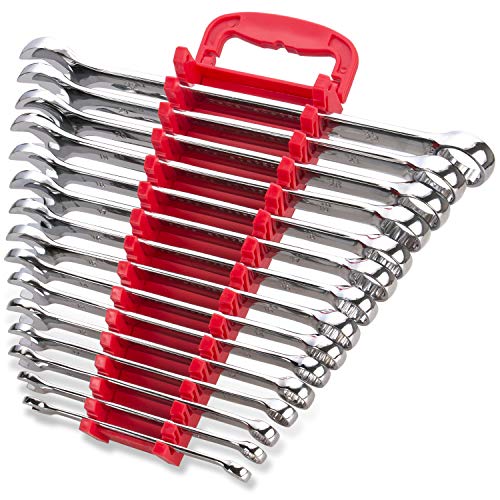
DISEN 10 PCS Extra Long Wrench Set, Double Box End Wrench Set with a Magnetic Pickup Tool


GEARWRENCH 5 Piece SAE 12 Point Long Pattern Combination Wrench Set | 81921

GEARWRENCH 18 Pc. 12 Pt. Combination Wrench Set, Long Pattern, SAE – 81917


How climate and storage quietly decide lifespan
Workshops in monsoon climates fight a different battle from those in dry continental interiors. Humidity condenses on cold steel each dawn when warm air meets tools chilled overnight, depositing an invisible water film that starts oxidation before the day begins. Insulating the toolbox, adding a low-wattage cabinet heater, or simply storing wrenches in an interior room rather than an unheated shed interrupts that cycle. Owners who blame plating quality for early rust sometimes discover the real culprit is this daily condensation rhythm.
Altitude and sun exposure play smaller parts. Ultraviolet light degrades fabric rolls and plastic tray labels left near windows, fading the size legends that organisation depends on. Rotating stored sets away from direct sun preserves those markings for years. Meanwhile, workshops handling pool chemicals, battery acid, or marine equipment should segregate hand tools from vapour sources, since airborne chlorine compounds attack chrome in storage even when the tools themselves never touch water.
Inventory rhythm ties storage back to readiness. A monthly five-minute ritual, wiping each bar, checking tray completeness, and touching up oil films, keeps a set perpetually prepared for the emergency repair that never schedules itself politely. That ritual also builds familiarity: hands learn where each size lives until selection becomes reflex during a roadside repair performed by torchlight. Preparedness of this kind is invisible in specifications, yet it is the quality owners praise most after years of ownership.
So measure a candidate set not only against the bolts you face this month, but against the climate it will sleep in, the drawer it must fit, and the decade of small rituals that will either preserve its edges or surrender them to rust.
One last practical test before committing money: borrow the size you use most, in its extended form, and perform a familiar job with it. Notice whether the extra swing clears nearby brackets, whether the handle stays comfortable through the final pull, and whether the tool returns to its storage place without a wrestling match. A single honest trial on your own machinery reveals fit in ways no specification table can, because your engine bay, your tractor, and your hands form a combination nobody else can simulate. If the borrowed bar feels like an extension of habits you already trust, the full set built around that geometry will very likely serve you for decades of weekends.
Keep the receipt, register the set if the maker offers it, and photograph the tray layout on day one; that small archive turns future warranty claims, insurance records, and replacement orders into simple paperwork instead of guesswork, and it closes the purchase with the same orderliness the tools themselves are meant to bring to every crowded, rusty, half-lit corner of your workshop life.