Our Top Picks


What's inside
- What an exhibition caseback actually is
- Exhibition back versus solid back, point by point
- How water resistance changes with a glass back
- Movement finishing that rewards a clear view
- Calibre architecture seen through the crystal
- Examples across the price spectrum
- Scratches, smudges and everyday care of the rear crystal
- Comfort and wearability consequences
- Reading a specification sheet before buying
- Servicing intervals and what happens at the bench
- Special variations worth knowing
- Comparing notable model families
- Buying pre-owned with a glass back
- Common misconceptions corrected
- How brands decide which models get the window
- Photography and sharing the view responsibly
- Decision framework for your shortlist
- Long-term ownership notes
- Questions buyers ask most often
- Check prices on Amazon
- A short glossary for the boutique visit
As an Amazon Associate I earn from qualifying purchases. This post may contain affiliate links at no extra cost to you.
Some product links on this page may earn this publication a small commission when a reader completes a purchase, and that support keeps detailed buying guides like this one freely available without changing the editorial conclusions presented here.
What an exhibition caseback actually is
An exhibition caseback replaces the usual solid metal cover on the rear of a mechanical watch with a transparent panel, most often sapphire crystal, so the movement remains visible while the watch sits in the hand or rests in a display box. Manufacturers also call the feature a display back, a sapphire back, or a transparent caseback, and the terminology describes the same construction: a crystal retained by a threaded ring, a screwed bezel, or a press-fit frame sealed against the middle case with a gasket. The front crystal protects the dial from above, while the rear crystal performs an equivalent structural role from below, which means its thickness, seating depth, and gasket compression all influence sealing performance.
Sapphire dominates this application because its hardness reaches 9 on the Mohs scale, second only to diamond among common watch materials, and a rear window made from it resists the scratches that desk surfaces, bracelet clasps, and storage trays would quickly carve into softer glazing. Mineral glass appears on lower-priced display backs, trading some scratch resistance for reduced production cost, while acrylic survives mainly on vintage-styled pieces where a warm, domed distortion is part of the aesthetic brief. Thickness commonly falls between roughly 0.8 and 1.5 millimetres on the rear crystal, depending on case diameter and the pressure rating the maker intends to certify.
The appeal is educational as much as decorative. Through the window a wearer can watch the balance wheel oscillate, typically at 21,600 or 28,800 vibrations per hour, observe the escape wheel advancing tooth by tooth, and see the automatic rotor swing in response to wrist motion. A solid back hides all of that behind steel, gold, or titanium, presenting instead an engraved emblem, a stamped medallion, or a plain brushed surface. Neither approach is inherently superior; the choice expresses whether the owner values mechanical theatre or an uninterrupted metal canvas.
Exhibition back versus solid back, point by point
Weight differs modestly between the two constructions. Sapphire weighs less than an equivalent disc of stainless steel, yet the retaining ring and deeper case architecture needed to seat the crystal often cancel that saving, so published weights for otherwise identical references usually land within a few grams of each other. Thickness tells a clearer story: a display back frequently adds between half a millimetre and a full millimetre to total case height because the crystal, its frame, and the clearance above the rotor stack vertically where a stamped solid back could curve tightly over the movement.
Magnetism protection historically favoured solid backs. A soft-iron inner cage or a thick steel cover can shield a movement from magnetic fields, whereas a sapphire window offers no such barrier, which is why older tool watches intended for engineering environments almost always shipped with closed backs. Modern hairspring materials such as silicon, along with alloys like Nivachron, have narrowed that gap considerably, and many current display-back models carry respectable anti-magnetic ratings achieved through materials rather than shielding. Readers comparing older and newer references should check whether the specification sheet quotes resistance in gauss or in A/m, since the two units are frequently mixed in marketing copy.
Engraving and personalisation separate the formats in another way. A solid back provides a broad, flat field for commemorative text, service inscriptions, or a family crest, and generations of owners have used that surface as a record of graduations, retirements, and anniversaries. An exhibition back shrinks the available metal to a narrow ring around the crystal, limiting engraving to short text curved along the rim. Collectors who prize presentation boxes and provenance sometimes prefer the closed format for exactly that documentary quality, while enthusiasts who attend movement-focused gatherings gravitate toward the open format for conversation value.
Servicing access also diverges. A watchmaker opens a solid back with a case knife, a friction wrench, or a dedicated die, inspects a plain interior surface, and closes the watch again with minimal ceremony. A sapphire back demands more care: the crystal must not be levered against its edge, fingerprints on the inner surface require cleaning before closure, and any chip along the rim means replacement rather than polishing. None of this makes display backs fragile in daily wear, but it does mean service centres handle them with an extra step of visual inspection under magnification.
How water resistance changes with a glass back
Every additional case opening introduces another sealing path, and the rear crystal is exactly that: a second large-diameter gasket joint alongside the crown tube, the front crystal, and any pusher seals. Water resistance therefore depends on gasket material, groove geometry, and assembly torque rather than on the mere presence of glass. Nitrile and silicone gaskets are common, and both compress into machined grooves to form the barrier that keeps moisture away from the movement during immersion.
Ratings illustrate the practical spread. Plenty of dress-oriented display-back models carry a 30-metre or 50-metre rating, which in real usage means splash protection and hand-washing tolerance rather than swimming. Sportier references with screwed rear bezels reach 100 metres, and a small number of dive-capable designs retain 200-metre ratings despite the rear window, proving that engineering effort, not the concept itself, sets the ceiling. The ISO 6425 standard for dive watches imposes impact, pressure, and legibility requirements that few display-back models attempt to meet, which explains their scarcity in that category rather than any absolute prohibition.
Pressure testing after service matters more for a two-crystal case. A competent workshop performs both a dry vacuum or pressure-decay check and, where equipment allows, a wet test, because a rear gasket that seats imperfectly may pass a casual inspection yet leak under load. Owners should treat published ratings as conditional on gasket age: elastomers harden over years, ultraviolet exposure accelerates that process, and a five-year-old seal no longer behaves like the fresh component fitted at the factory. Annual pressure checks are inexpensive insurance for any watch that regularly meets water, regardless of back style.
Crown position habits protect seals on both formats. Screwed crowns must be fully seated before immersion, push-pull crowns should never be operated underwater, and chronograph pushers deserve the same restraint unless the manufacturer explicitly certifies underwater operation. Thermal shock deserves mention as well: moving from a hot shower environment into cold water stresses gaskets and crystals through differential expansion, and sapphire and steel expand at different rates, so gradual temperature transitions are kinder to the rear joint than abrupt ones.
Movement finishing that rewards a clear view
A transparent back only earns its place when the movement behind it received genuine decorative attention, and the vocabulary of finishing helps buyers judge what they are seeing. Côtes de Genève, also called Geneva stripes, appears as broad parallel bands across bridges, produced by sweeping a rotating abrasive tool in overlapping passes; the stripes catch light at alternating angles and conceal minor surface irregularities beneath a deliberate pattern. Perlage, or circular graining, covers baseplates with rows of overlapping polished circles, each struck with a peg-mounted abrasive that leaves a scalloped texture visible around the edges of bridges.
Anglage refers to bevelled and polished edges on bridges and cocks, where a sharp internal corner softened by hand signals labour that machines replicate only approximately. Blued screws achieve their cornflower colour through controlled heating of steel to roughly 300 degrees Celsius, a process that also tempers the metal, while polished screw heads with chamfered slots indicate a further step of hand refinement. Sunray brushing on wheels, snailed ratchet wheels, and Geneva waves on rotors each add a distinct optical texture, and a well-composed movement layers several of these finishes without visual clutter.
The automatic rotor offers the largest single canvas. Makers engrave logos, cut skeletonised shapes, apply Côtes de Genève across the rotor surface, or finish it in a contrasting metal such as tungsten for winding mass or 21-karat gold for visual warmth. Because the rotor moves constantly, its decoration animates the view through the caseback in a way static bridges cannot, and many owners cite rotor behaviour as the detail they check first when turning a watch over. Winding efficiency relates to rotor mass distribution and bearing quality, so an attractive rotor that spins freely and reverses cleanly reflects engineering as well as styling.
Not every visible movement justifies admiration. Some entry-level calibres present plainly machined bridges, stamped lettering, and undecorated rotors whose industrial appearance prompts the fair question of why a window was fitted at all. The honest answer involves marketing: a display back signals mechanical authenticity to buyers who cannot otherwise distinguish a mechanical calibre from a quartz module at a glance. Discerning readers learn to compare finishing photographs across price tiers and to treat the window as an invitation to scrutiny rather than as proof of quality by itself. Our research approach in this guide weighs published movement specifications, finishing descriptions from manufacturers, and calibre architecture over decorative claims alone.
Calibre architecture seen through the crystal
Layout choices become legible once the back is transparent. A three-quarter plate, characteristic of Glashütte tradition, covers most of the movement with a single broad bridge, leaving the balance exposed in a cut-out and conveying an impression of structural solidity. Separate bridges for the gear train, barrel, and balance create a more open, skeletal impression and simplify some service operations because individual sections can be lifted independently. The position of the balance, the shape of its cock, and the presence of a swan-neck regulator or a free-sprung balance with timing screws all communicate the intended accuracy philosophy of the maker.
Jewel bearings appear as small red synthetic rubies, grown corundum identical in composition to natural ruby, set into plates at friction points along the gear train and escapement. Counts commonly range from 17 jewels in a basic hand-wound calibre to 25 or more in an automatic with additional complications, and the visible jewels give readers a quick authenticity check because their placement follows functional logic rather than decoration. Chatons, the gold rings sometimes surrounding jewels on high-end movements, add a traditional visual accent rooted in an era when jewels were friction-fit into softer settings.
Power reserve and frequency shape what the eye perceives. A balance beating at 36,000 vibrations per hour blurs into near-continuous motion, while an 18,000-vibration vintage-style calibre ticks with a visibly stately cadence that many collectors find charming. Long power reserves, now commonly 60 to 80 hours in modern automatic calibres, come from larger or twin mainspring barrels that occupy conspicuous real estate under the crystal. Watching a barrel’s cover slowly rotate, or noting the state of wind through a visible reserve indicator on the movement side, connects the wearer to the stored-energy reality of mechanical timekeeping.
Hand-wound movements reward the window differently. Without a rotor sweeping across the view, the full bridge layout stays visible at all times, and the daily ritual of winding the crown pairs with a clear sight of the click, crown wheel, and ratchet wheel engaging. Many purists argue that a hand-wound calibre behind sapphire represents the purest form of the exhibition concept, since nothing obstructs the architecture and the owner’s interaction with the mechanism is direct and frequent.
Examples across the price spectrum
Entry-level mechanical watches adopted display backs earlier than many luxury houses, because newer brands needed a visible argument for choosing mechanics over electronics. Japanese and Swiss entry references commonly pair an in-house or widely supplied automatic calibre with a mineral or sapphire rear window, basic striping on the rotor, and a 50-metre rating suited to daily wear. At this tier the finishing is honest rather than lavish: expect machine-applied stripes, printed or lightly engraved rotor text, and bridges with a uniform bead-blasted or brushed texture.
Mid-tier references raise the decorative standard noticeably. Bridges gain genuine Côtes de Genève with sharper stripe boundaries, rotors receive engraved brand signatures and Geneva waves, and movements may add a hacking seconds function, hand-winding capability, and a frequency of 28,800 vibrations per hour for a smoother seconds sweep. Sapphire becomes the default rear material here, anti-reflective treatment occasionally appears on the rear crystal, and case finishing improves in parallel, with polished bevels on lugs that echo the anglage inside.
Upper-tier production watches treat the caseback view as a composed scene. Expect free-sprung balances, silicon hairsprings, bridges with hand-finished bevels that catch light along their edges, and rotors in precious metal or with skeletonised profiles that reveal the gear train beneath during part of each revolution. Some makers add a sapphire bridge or a transparent element within the movement itself, extending the see-through concept beyond the caseback alone. Water resistance at this level varies widely because dress proportions and thin cases constrain gasket design, so specification sheets deserve close reading.
Independent and high-horology pieces push finishing toward sculpture. Mirror-polished steel components, black-polished balance cocks that reflect a single tone at a given angle, interior angles that no milling cutter can produce, and hand-engraved rotors all appear behind sapphire on such pieces. The exhibition back on a watch of this character functions almost like a gallery window, and owners sometimes wear the watch reversed briefly at enthusiast gatherings purely to share the movement view. Production volumes are small, waiting lists form, and service intervals stretch because few watchmakers are trained on the specific calibres involved.
Vintage-inspired reissues occupy an interesting middle ground. A maker may reproduce a mid-century dial faithfully while fitting a modern movement behind glass that the original never had, blending period styling with contemporary reliability and a view the first buyers never enjoyed. Purists occasionally object that a historically closed design should stay closed, yet the commercial success of such reissues suggests most buyers welcome the anachronism. Checking whether the reissue’s movement dimensions forced a thicker case than the original helps explain any difference in wrist feel.
Scratches, smudges and everyday care of the rear crystal
Sapphire resists scratching superbly, but the metal rim surrounding it does not, and the polished bezel ring around a display back often accumulates fine swirls from contact with desks, cufflinks, and the watch’s own bracelet when laid flat. Storing the watch on its side, on a soft cloth, or in a padded roll prevents the rear from grinding against hard surfaces overnight. Bracelet-equipped models deserve particular attention because a loose bracelet can fold under the case and let steel links rub directly across the crystal and its frame.
Fingerprints and skin oils cloud the view more often than scratches do. The rear crystal sits against the wrist, collecting moisture and natural oils throughout the day, and a quick wipe with a clean microfibre cloth restores clarity. Avoid paper tissues, which can leave lint and, on mineral glass backs, contribute fine abrasion over time. A drop of lukewarm water on the cloth handles dried residue; solvents and ultrasonic baths belong in professional hands, since chemicals can attack gasket materials even when the crystal itself is indifferent to them.
Chipping is the one structural risk sapphire carries. Its hardness comes with brittleness at the edges, so a sharp knock against a stone countertop corner or a metal door frame can flake the rim of the crystal where a softer material might merely dent. Any visible chip warrants a prompt visit to a service centre, because a compromised edge can propagate a crack under pressure changes and because the seal at that joint can no longer be trusted. Replacement rear crystals are model-specific parts, ordered by reference, and lead times vary from days to months depending on the maker’s parts policy.
Mineral glass backs scratch more readily but tolerate impacts with slightly more forgiveness, and polishing compounds exist that reduce shallow marks on mineral surfaces, whereas sapphire scratches, once present, effectively require replacement because home polishing with diamond paste is impractical for most owners. Acrylic backs, found on some retro-styled pieces, polish beautifully with dedicated plastic compounds and forgive impacts well, at the cost of frequent attention. Knowing which material a specific reference uses, information usually printed in the technical specifications, sets realistic expectations for care routines.
Comfort and wearability consequences
A display back changes how a watch sits because the crystal and its frame form a slightly domed or stepped surface against the skin, rather than the broad flat disc of a solid cover. Most wearers notice no difference after a day, but smaller wrists and prominent wrist bones can make a raised rear bezel feel more present, especially on thicker automatic cases where rotor clearance already demands height. Trying a reference in person, or comparing total thickness figures including the rear protrusion, prevents disappointment that diameter figures alone would never predict.
Temperature feel differs subtly as well. Steel conducts heat away from the skin quickly and feels cool on first contact in winter, while sapphire has a different thermal character that some wearers describe as more neutral against the wrist. The practical effect is minor, yet long-term owners of both formats often develop a preference they struggle to articulate, rooted in these small sensory details accumulated over thousands of hours of wear.
Strap choice interacts with the rear view. A transparent back invites straps that show the watch off when removed, and some enthusiasts select leather with contrasting stitching or a deployment clasp that keeps the caseback visible during fastening. Metal bracelets hide the back entirely while worn, of course, as does any strap; the exhibition feature is inherently a private pleasure, enjoyed when the watch is off the wrist, during winding, or in the moment of putting it on each morning. That private character is precisely what many owners cherish, contrasting with dial-side design that performs for an audience.
Readers who rotate among several watches may find the display back influences which piece gets chosen for travel. A solid back tolerates the knocks of a dopp kit or a hotel safe with less anxiety, while a sapphire back travels better in a dedicated watch roll with individual padded compartments. Neither format should cross oceans in checked luggage; cabin carriage in a protective pouch remains the sensible approach for any mechanical watch, and the rear crystal simply reinforces that habit.
Reading a specification sheet before buying
Manufacturers disclose the caseback type in the case section of a technical sheet, using phrases such as sapphire crystal back, transparent caseback, or solid caseback, and the same section lists the rear material where a window exists. Cross-check the water resistance figure printed there against the dial text, since discrepancies occasionally appear between marketing pages and formal specifications, and the formal document governs warranty interpretation. Case thickness should be read as a total that includes both crystals; a slim headline figure sometimes excludes the rear dome on older listings.
Movement data deserves equal scrutiny. The calibre designation, its diameter in lignes or millimetres, its jewel count, its frequency, and its power reserve all appear in manufacturer documentation and allow meaningful comparison between a display-back model and its closed-back sibling. Where a brand offers the same reference in both formats, the price difference and thickness difference are usually published, turning the choice into a concrete trade rather than a guess. Our research notes for this guide drew on such specification sheets and on finishing glossaries published by movement manufacturers.
For broader context on mechanical and hybrid designs, readers may enjoy best hybrid smartwatches for a contrast with electronically assisted timepieces, and best analog smartwatches for dial-first designs that borrow traditional styling. Those comparisons sharpen the definition of a purely mechanical exhibition piece by showing what it is not.
Warranty terms sometimes treat crystal damage as accidental rather than defective, which means a chipped rear window may fall outside coverage even on a new watch. Reading the warranty booklet’s exclusions before purchase avoids a surprise later, and authorised retailers can clarify whether the rear crystal is classified with the front crystal for coverage purposes. Service pricing menus published by several major groups list caseback crystal replacement as a distinct line item, confirming that the part is treated as a wear component rather than a lifetime element.
Servicing intervals and what happens at the bench
Mechanical movements need periodic service because lubricants migrate and degrade, and a display back lets an owner watch for early clues: a rotor that sounds gritty, visible moisture fogging the inner surface of the rear crystal, or a balance amplitude that looks sluggish compared with the watch’s younger behaviour. None of these observations replaces a timing machine, but they prompt timely attention. Recommended intervals from major manufacturers cluster around five to seven years for modern calibres, with water-exposed watches benefiting from more frequent gasket attention between full services.
At the bench, the watchmaker removes the rear bezel or the threaded crystal ring, taking care to support the sapphire so it does not flex, then inspects the gasket groove for corrosion or debris before lifting the movement out through the back on many designs. Some cases are monocoque or front-loading, where the movement exits through the dial side and the rear crystal is decorative only, never disturbed during service; the specification sheet or a service manual identifies which construction a reference uses. Knowing this distinction helps owners understand why service quotations differ between superficially similar models.
Gasket replacement at every opening is standard professional practice, because a compressed elastomer rarely reseals to its original performance after disturbance. The rear joint, being large in diameter, uses a correspondingly long gasket, and its correct seating around the full circumference is verified visually before the ring is torqued down in stages, much like tightening wheel nuts in a star pattern to distribute pressure evenly. A final pressure test closes the procedure, and reputable workshops return a printed test result with the watch.
Owners sometimes ask whether a solid back can be converted to a display back. Aftermarket conversion backs exist for a handful of popular references, machined to thread into the original case threads with a sapphire insert, but fitting one voids most manufacturer warranties, may alter the certified water resistance, and can change case thickness enough to affect bracelet end-link fit. Collectors of limited editions generally avoid conversions because originality drives resale value, while owners of common references sometimes accept the trade for the pleasure of the view. The decision should be made with full knowledge that returning to factory specification requires retaining the original back and its gasket set.
Special variations worth knowing
Some display backs incorporate a sapphire ring with printed or metallised text, brand emblems vapour-deposited onto the glass, or a tinted crystal that warms the movement’s appearance. Tints look dramatic in photographs but can mute the contrast of blued screws and ruby jewels in person, so in-hand inspection beats catalogue imagery for such models. Others use a half-window or an off-centre aperture, a style sometimes called a porthole back, which frames a portion of the movement, often the balance, while retaining more metal for engraving.
Double-sided transparency appears on a small family of watches with sapphire elements on both faces and occasionally a sapphire bridge inside, producing a floating effect where the gear train seems suspended in glass. These pieces prioritise spectacle and demand careful handling, since two large crystals double the number of edges exposed to knocks. Their water resistance ratings are usually modest, reflecting the sealing challenge, and their makers position them as dress or collector pieces rather than daily instruments.
Regulator-style and skeleton watches overlap with the exhibition theme but are distinct categories: skeletonisation cuts away dial and bridges to reveal mechanics from the front, while an exhibition back preserves a conventional dial and reveals the movement only from behind. A watch can combine both, and such combinations produce the most mechanically exposed wearing experience available short of fully openworked designs. Readers deciding between front and rear revelation should consider legibility, because heavily skeletonised dials sacrifice the quick time reading that a standard dial with a hidden movement provides.
Limited editions frequently use the rear crystal as a numbered canvas, printing the edition number and a motif around the rim while the movement inside receives upgraded decoration reserved for the run. Because the numbering sits on glass rather than metal, documentation and box papers matter greatly for proving authenticity later, and buyers of pre-owned examples should verify that the number on the caseback matches the certificate. Photographs of the rear view form part of a complete listing for any serious resale offering of a display-back model.
Comparing notable model families
| Family type | Typical rear material | Common rating | Finishing emphasis |
|---|---|---|---|
| Entry automatic dress watch | Mineral glass or sapphire | 30 to 50 metres | Striped rotor, plain bridges |
| Mid-tier Swiss automatic | Sapphire | 50 to 100 metres | Geneva stripes, engraved rotor |
| Sports watch with display back | Sapphire, screwed bezel | 100 to 200 metres | Robust bridges, signed rotor |
| Hand-wound purist model | Sapphire | 30 to 50 metres | Exposed train, bevelled cocks |
| High-horology limited piece | Sapphire, sometimes tinted | 30 metres typical | Hand anglage, black polish |
The table summarises patterns drawn from manufacturer specification sheets rather than guarantees for any single reference, and individual models depart from these patterns often enough that verification remains essential. A sports watch with a screwed sapphire bezel demonstrates that the category boundaries are conventions, not laws, and a dress watch with an unusually strong rating rewards the reader who checks rather than assumes.
Certain long-running families illustrate the concept’s evolution. Early display backs from the 1980s revival of mechanical watchmaking used mineral glass and simple snap frames, while the same families today specify sapphire, threaded retention, and movements decorated far beyond what the first revival-era buyers saw. Tracing one family’s references across decades, through archived catalogues and calibre databases, shows finishing standards rising as the window became an expected feature rather than a novelty.
Readers interested in premium mechanical-adjacent categories can also browse best high end smartwatches to see how luxury positioning works in the electronic segment, a useful foil for judging whether a mechanical piece’s price reflects finishing labour or merely branding.
Buying pre-owned with a glass back
A transparent back is an inspector’s ally in the second-hand market because the movement’s condition, originality, and service history clues are visible without opening the case. A prospective buyer can check for correct rotor engraving, look for corrosion spots on bridges, confirm the calibre number matches the reference’s documented movement, and spot amateur tool marks on screw heads that suggest inexpert servicing. Sellers who provide clear, well-lit rear photographs signal confidence, while listings that show only the dial deserve extra questions.
Ammonia-like odours are irrelevant here, but moisture history is not: faint tide lines on the movement ring or discolouration around the rear gasket groove hint at past water ingress even when the watch currently runs. A loupe with 5x magnification, or a phone macro photograph reviewed on a large screen, reveals such details adequately for a preliminary judgement, though a pre-purchase inspection by a watchmaker remains the gold standard for significant sums.
Replacement rear crystals complicate originality assessment. A service replacement fitted by the manufacturer preserves function and is documented on service papers, while an unbranded aftermarket crystal may differ in thickness or edge profile and should be disclosed by the seller. Checking that any printed text on the glass aligns with factory references for the model year helps distinguish the two situations.
Box, papers, and service receipts carry the usual weight, and for display-back models the original solid back, where a brand offered both configurations as an option, occasionally accompanies the watch as a separate part. Confirming whether such an accessory back is included can matter to collectors who value completeness, and its presence or absence should be priced accordingly.
Common misconceptions corrected
One persistent myth claims a glass back automatically halves a watch’s water resistance. The engineering record contradicts this: the rating depends on the complete sealing system, and screwed sapphire backs on sports models achieve ratings that many solid-back dress watches never attempt. The myth survives because dress watches, which often choose display backs, also choose slim cases and low ratings for unrelated reasons, creating a correlation that casual observers mistake for causation.
Another misconception holds that a visible movement must be a decorated movement. As discussed earlier, plenty of windows reveal plainly finished calibres, and the window itself is a neutral feature whose value depends entirely on what sits behind it. Conversely, some superbly finished movements hide beneath solid backs engraved with hunting scenes or observatory emblems, particularly in traditions where discretion is prized, so a closed back should never be read as evidence of an inferior calibre.
A third myth suggests the rear crystal weakens the case against shocks. Drop resistance in watches is governed largely by movement mounting, case material, and the balance staff’s shock-absorption system, such as Incabloc or Kif springs, rather than by the back material. A sapphire back can chip from a direct edge strike, as noted, but the movement behind a solid back can suffer a broken balance staff from the same fall, so neither format is immune to gravity and hard floors.
Finally, some buyers assume every automatic watch now includes a display back. In reality, many professional and military-styled models retain solid backs for engraving space, anti-magnetic shielding, or heritage accuracy, and several flagship dive references remain closed. The feature is common, not universal, and its absence on a specification sheet is a deliberate design decision worth respecting rather than a cost-cutting confession.
How brands decide which models get the window
Product planners weigh the movement’s visual merit, the case’s intended rating, and the model’s story when deciding whether a reference receives a transparent back. A newly developed in-house calibre almost always earns a window in at least one launch reference, because the development cost needs a visible showcase and retailers need a demonstration feature on the counter. Turning a watch over and seeing a proprietary calibre closes sales in a way a specification card cannot, and brands design launch events around that gesture.
Heritage lines face the opposite pressure. If the original reference from 1962 shipped with an engraved steel back, a faithful reissue may keep the closed format and reserve display backs for modern interpretations sold alongside it. This dual strategy lets a catalogue serve purists and movement enthusiasts simultaneously, and the price ladder usually places the windowed modern version a step above the heritage piece, reflecting both the crystal cost and the upgraded calibre decoration inside.
Cost accounting plays a quiet role. A sapphire rear crystal, its retaining hardware, the additional gasket, and the extra assembly and testing steps add a measurable unit cost, and the movement decoration needed to justify the window adds far more. Brands therefore concentrate display backs where margins support decoration spending, which explains why the feature clusters in mid-tier and upper-tier catalogues and appears selectively, rather than universally, at the entry level.
Regional preferences influence the mix as well. Retail feedback from markets with strong collector communities tends to favour visible movements, while markets oriented toward gift purchases sometimes prefer engravable solid backs for presentation occasions. Global brands balance these signals across a range, and limited regional editions occasionally differ from the standard catalogue purely in caseback format, a detail that matters to collectors tracking reference variants.
Photography and sharing the view responsibly
Owners love photographing display backs, and a few techniques separate a clear movement portrait from a reflective blur. Angling the watch so ceiling lights fall outside the crystal’s reflection path, using a polarising filter on a dedicated camera, or simply shading the rear with one hand while shooting with the other all reduce glare. Macro modes reveal finishing details invisible to the naked eye, including the stripe transitions of Côtes de Genève and the polish quality on screw heads, which makes photography a genuine evaluation tool during a purchase, not merely a social pleasure.
Serial numbers complicate sharing. The movement number and sometimes the case number are visible through the rear crystal or engraved around its rim, and posting unedited photographs of those numbers publicly exposes data that counterfeiters and fraudulent sellers can misuse. Prudent owners blur or crop serial digits before uploading images to forums or marketplaces, keeping full documentation for private sale negotiations instead. This habit mirrors the long-standing advice for solid-back watches, where the number sits between the lugs, but the display back makes the exposure easier to overlook because the number appears incidentally in an attractive movement photograph.
Lighting colour also misleads. Warm indoor lighting can make rhodium-plated bridges look gilt and can exaggerate the blue of heat-treated screws, while daylight-balanced light renders tones closer to what a buyer would see in a boutique. Anyone evaluating a pre-owned piece from photographs should request at least one rear image taken in neutral light, and should treat heavily filtered images as presentation rather than evidence.
Decision framework for your shortlist
- Confirm the rear material by name in the technical specifications, distinguishing sapphire from mineral glass before comparing prices.
- Match the published water resistance figure to your real exposure, remembering that ratings assume fresh gaskets and a fully seated crown.
- Study movement photographs for finishing you can identify: stripe quality, bevelled edges, blued screws, and rotor engraving depth.
- Compare total thickness, including the rear protrusion, against watches you already wear comfortably.
- Check service pricing and rear crystal replacement policy so ownership costs hold no surprises.
- Decide whether engraving space matters to you, because the window trades that canvas away permanently.
Working through that sequence converts an emotional reaction at the boutique counter into a structured judgement. The exhibition feature interacts with nearly every other attribute of the watch, from thickness to service cost, so isolating it as a simple yes-or-no preference undersells its consequences. Readers who apply the framework to two or three finalists usually find that one reference aligns cleanly while the others reveal a compromise they had not noticed.
Battery longevity comparisons belong to a different category of watch entirely, yet readers cross-shopping electronic pieces alongside mechanical ones may find best battery life smartwatches helpful for understanding how differently the two technologies treat endurance.
Budget allocation deserves a final word. Within a fixed budget, paying for a display back usually means paying for the decoration behind it, and that combined spend competes with alternatives such as a better bracelet, an additional complication, or a longer power reserve. None of those trades is wrong in the abstract; the right answer depends on whether the owner expects to delight in the movement view weekly or to forget the feature exists after the first month. Honest self-knowledge, more than any specification, predicts satisfaction here.
Long-term ownership notes
Over a decade of ownership, the rear crystal typically outlasts the gaskets around it several times over, and a watch that receives scheduled service will likely never need its sapphire replaced. The owners who do replace rear crystals are usually those who suffered an unlucky edge impact or who bought a pre-owned piece with existing damage. Budgeting for periodic service, rather than for crystal replacement, is therefore the realistic financial plan, and service receipts should be retained because they document gasket renewals that support any future water exposure.
Insurance schedules sometimes ask for photographs of insured watches, and a rear view that shows the calibre and its number strengthens a claim file considerably. Storing a dated set of front, rear, and side photographs in a secure folder costs nothing and can shorten a claims process dramatically. Display-back owners hold an advantage here, since their movement evidence is captured without opening the case or visiting a watchmaker.
Resale narratives benefit from the window as well. A listing that narrates the movement’s finishing, supported by sharp rear photographs and a recent timing result, tends to attract informed buyers who pay for verified condition. The transparency theme of the product itself thus extends into the transaction, rewarding sellers who document thoroughly and buyers who inspect carefully.
Ultimately, the exhibition caseback endures because it answers a simple curiosity that every mechanical watch provokes: what is happening inside while the hands move so calmly outside? A solid back leaves that question to imagination and to the watchmaker’s bench, while the sapphire window answers it daily, in miniature, with gears and springs performing their patient choreography. Choosing between those experiences is a matter of temperament, and the market now offers both answers at nearly every level of quality and cost. For the reader who has followed the engineering, the finishing vocabulary, and the care requirements through this guide, the next step is deliciously concrete: visit a retailer, turn a candidate over, and let the little theatre behind the glass make its case in person, because no photograph, however sharp, fully prepares you for the first time a balance wheel winks back at you from beneath sapphire in your own hand.
Questions buyers ask most often
Does the rear window need special cleaning products?
No dedicated product is required. A dry microfibre cloth handles daily smudges, lukewarm water on the cloth manages heavier residue, and the same routine suits the front crystal. Owners should keep abrasive pads, powdered cleaners, and household glass sprays away from the case, because those products can harm gaskets, polished rims, and any anti-reflective coating even though sapphire itself tolerates them chemically.
Can a display back be fitted to a watch that shipped with a solid back?
Sometimes, through a maker-offered alternative reference or a specialist conversion part, but the conversion route carries the warranty and sealing caveats described earlier in this guide. The cleaner path is choosing the windowed reference at purchase, since the factory then certifies the complete assembly and the paperwork matches the watch exactly.
Why do some expensive watches still hide their movements?
Tradition, engraving artistry, anti-magnetic shielding, and deliberate understatement all motivate closed backs at high prices. Several revered dress references present a gold cover that an owner may open or engrave, treating concealment as a luxury in itself. Price therefore signals finishing quality in both formats, and the window should be read as a preference, never as a price proxy.
How can a beginner judge finishing quality in person?
Start with three checks under bright, neutral light. First, look at stripe boundaries on bridges: crisp, parallel, and evenly spaced bands indicate careful machine work, while wavy or faded edges suggest haste. Second, tilt the watch and watch the bevels along bridge edges; a continuous ribbon of reflected light signals polished anglage, whereas dull, broken reflections suggest plain machining. Third, inspect screw heads for clean slots and, where present, an even blue tone without blotches. Those three observations, repeated across two or three candidate models side by side, teach the eye faster than any glossary.
Does a transparent back affect accuracy?
No direct effect exists. Accuracy derives from the calibre’s regulation, its balance assembly, its hairspring material, and the condition of its lubricants. The back material neither adds nor removes rate stability, although a watch that invites frequent admiration may also receive more attentive ownership, and attentive ownership correlates with timely servicing, which does protect accuracy over the years.
Beginners sometimes worry that light entering through the rear could affect lubricants, and the concern has a small factual kernel: ultraviolet exposure degrades oils, which is one reason watches are stored dial-up in dark boxes rather than displayed under lamps for months. Normal wearing keeps the rear crystal against the wrist, shielded from sustained light, so the worry belongs to storage habits rather than to daily use. A watch kept on a sunlit windowsill, whatever its back style, ages its lubricants faster than a watch kept in a drawer.
With those questions settled, the shortlist exercise becomes refreshingly simple: pick the calibre whose architecture and decoration you would still enjoy viewing in five years, verify the rating and thickness figures against your routine, and choose the back format that matches how privately or publicly you like your pleasures served.
Check prices on Amazon
Live listings for the shortlist in this guide are pulled from Amazon below, so prices and availability are always current at the moment you look.
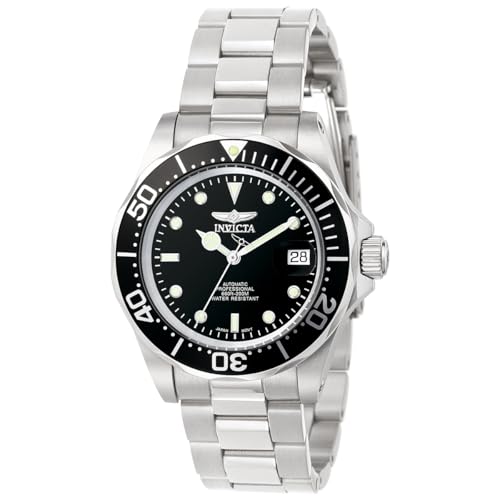
Invicta Men's 8926 Pro Diver Collection Automatic Watch
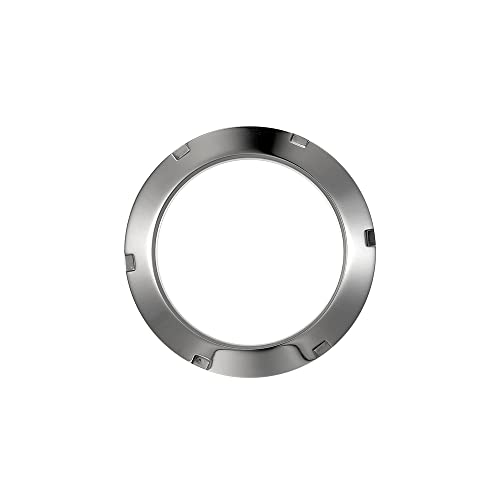
Sapphire Crystal Transparent Case Cover Back Fit For Skx 6105 007 Watch


A short glossary for the boutique visit
Caseback terminology can blur together in a sales conversation, so a compact glossary helps. The middle case is the main body holding the movement. The bezel, on the rear, is the ring retaining the crystal, distinct from any rotating timing bezel on the front of a dive watch. A screwed back threads directly into the middle case, a snap back presses into place with friction, and a screw-down arrangement with individual screws uses a set of small fasteners around the rim, a pattern common on larger sports cases.
Movement vocabulary repays equal attention. The calibre is the complete movement design, identified by a maker-specific number. The balance is the oscillating wheel governing rate, the hairspring is the fine spiral spring breathing with it, and the escapement is the mechanism metering energy to the balance in discrete impulses. The rotor is the semicircular weight winding an automatic calibre, the mainspring barrel stores that energy, and the gear train transmits it toward the hands. Seeing each named part through the crystal, and connecting the name to the component, transforms a pretty view into a readable machine.
Finishing terms round out the working vocabulary. Rhodium plating gives bridges their cool grey tone, gilt finishing gives older or vintage-styled movements a warm golden tone, and black polish describes a surface polished so flat that it reflects light as a single dark mirror at most angles. Frosted, grained, and sandblasted surfaces each scatter light differently, and makers combine them to separate visual planes inside the movement. A buyer who can name these textures can ask precise questions and can compare two movements on equal terms instead of relying on a salesperson’s adjectives.
Carry this vocabulary into the boutique, ask to handle the watch with a loupe if one is offered, and spend as long studying the rear as the dial; the format rewards patience, and a considered purchase made after that quiet inspection tends to remain satisfying long after the novelty of ownership settles into the deeper pleasure of daily familiarity.
One last practical habit separates satisfied long-term owners from disappointed ones: rotate the watch off the wrist for a few seconds each evening and actually look at the movement you paid to see. That tiny ritual reconnects ownership with curiosity, catches early signs of moisture or a loosening rotor screw before they become expensive, and reminds you why a sheet of sapphire on the underside of a steel case can feel, on the right evening, like the most honest window in the whole house of horology.
Keep the specification sheet, the service booklet, and a dated photograph of the rear view together in one envelope or folder; future you, future buyers, and any watchmaker who meets the piece will all be grateful for that small act of order.