Our Top Picks


What's inside
- Why the Right Watch Can Make Daily Life Easier
- Understanding Time Disorientation and Why Design Matters
- The Two Main Groups in This Guide, Plus One Reminder Band
- The Products in Detail
- How to Choose Between Safety, Talking, and Reminder Support
- Setting Up a New Watch Without Causing Distress
- Daily Routines That Help Any of These Watches Work Better
- Communication, Phones, and the Wider Support Picture
- Questions Families Ask Most Often
- Check prices on Amazon
- Final Thoughts
As an Amazon Associate I earn from qualifying purchases. This post may contain affiliate links at no extra cost to you.
Why the Right Watch Can Make Daily Life Easier
Choosing a watch for a person living with dementia or Alzheimer’s disease is very different from choosing an ordinary fashion watch or a standard fitness tracker. Time itself can become confusing. A person may wake during the night and believe it is morning, lose track of whether lunch has already happened, or feel anxious because they cannot tell how long a family member has been away. A clear, calm, and predictable watch does not treat or prevent memory loss, and it should never be presented as a medical solution. What it can do, when it is chosen well, is support daily living: it can state the time out loud, show the hour in large and uncluttered figures, remind the wearer about a routine task, or, in the case of a connected safety watch, help a caregiver respond when help is needed.
Our research for this guide focused on two very different kinds of support, because families rarely need exactly the same thing. The first group is made up of connected safety watches built for caregiver awareness. These models combine GPS tracking, an SOS alert, and fall detection, so the watch is as much a communication and safety tool for the family as it is a timepiece for the wearer. The second group is made up of talking watches and watches with very large numbers. These are simpler, more familiar objects. They help the wearer orient themselves to the time of day independently, without needing to read small text, interpret a complicated screen, or remember a sequence of steps.
If you are also comparing broader connected options for an older relative, our overview of best gps smartwatches explains how location-focused wearables differ from ordinary smartwatches in general terms, which can help you decide whether a dedicated safety watch is the right level of support for your family right now.
Understanding Time Disorientation and Why Design Matters
Disorientation to time is one of the most commonly discussed day-to-day challenges associated with dementia. It is not simply forgetting to check a clock. A person may be able to read the numbers and still not be sure whether the time shown belongs to morning or evening, or whether an appointment is today or tomorrow. That uncertainty can create repeated questions, anxiety, and disrupted sleep, and it can place a steady emotional load on caregivers who become the only source of reassurance. A watch cannot remove that uncertainty completely, but its design can reduce how often the wearer has to work hard just to answer a simple question.
Large, high-contrast numbers help because they reduce visual effort. Many older adults live with both memory changes and reduced vision, and the two difficulties compound each other. Small hands on a crowded dial, low-contrast digits, or a screen filled with icons, notifications, and fitness statistics all demand attention that could be spent simply understanding the hour. A jumbo display or a voice that speaks the time removes several steps at once. The wearer presses or looks, receives one clear answer, and can move on.
Voice announcement matters for another reason as well. Reading is an active task, while listening can feel more passive and reassuring, especially for someone who is blind or visually impaired. Several talking watches in this guide were designed first for blind and visually impaired users, and that heritage is an advantage here. A clear spoken time, delivered in a familiar accent, can be understood in bed, in dim light, or without glasses, and it avoids the embarrassment some people feel when they have to ask another person what the time is again and again.
The Two Main Groups in This Guide, Plus One Reminder Band
Connected safety watches for caregiver awareness
Safety watches with GPS tracking, SOS alerts, and fall detection are built around connection. Their purpose is to shorten the distance between a moment of need and a response from someone who cares. GPS tracking, as a general category feature, allows a linked caregiver to see location information through the watch’s connected service, which can matter if a wearer becomes disoriented away from home. An SOS alert gives the wearer a direct way to signal for help rather than relying on finding a phone, unlocking it, and dialing a number from memory. Fall detection, again as a category feature, is designed to notice a hard fall pattern and trigger an alert process when the wearer may not be able to press anything at all.
These watches ask more of the family in return. They are connected devices, they rely on mobile coverage, and they need a caregiver who is willing to set them up, keep them charged, and respond to alerts thoughtfully rather than treating every notification as an emergency or ignoring them altogether. They are also the only products in this guide whose main value is aimed at the caregiver as much as at the wearer. That is not a flaw. For many families, that shared awareness is exactly the point.
Talking watches and big-number watches for self-orientation
Talking watches take the opposite approach. They do less, deliberately, and they do it in a form that feels like an ordinary watch. Their value is independence in small moments: hearing the time in the night, confirming the hour before a meal, or checking the time without searching for spectacles. Big LCD numbers serve the same goal visually. These products do not offer GPS location sharing or emergency calling, and they should not be bought expecting those functions. What they offer instead is low complexity, familiar handling, and, in the battery-powered models described in their listings, freedom from the frequent charging routine that connected watches require.
A vibrating reminder wristband for routine prompts
The Tabtime wristband covered later in this guide belongs in its own category. It is a silent, vibrating alarm band that can be set with multiple personal or pill reminders across the day. It does not announce the time, it does not track location, and it does not call for help. Its job is prompting. Used alongside a care plan that a family and clinician have already agreed, a gentle vibration can remind a wearer that a routine moment has arrived, without a loud sound that might startle them or draw attention in a social setting. Keeping that role clear helps families combine tools sensibly instead of expecting one device to do everything.
The Products in Detail
1. Fajocru Fall Detection Smart Watch for Seniors with GPS Tracking and SOS Alert
The first Fajocru model in this guide is the connected safety option in its standard form. Its full listing name describes a fall detection smart watch for seniors with GPS tracking, an SOS alert, and waterproof fitness tracking, positioned for dementia and Alzheimer’s support and built around 4G safety connectivity. Read that name carefully, because it tells you almost everything about the intended role. This is not primarily a talking watch and it is not sold on the size of its numerals. It is a safety wearable for families who want location awareness and a direct emergency signal in one wrist-worn device.
For the wearer, the most important interaction is the SOS alert. In a frightening moment, complicated steps are the enemy. A dedicated emergency function means the wearer does not need to recall a phone number or navigate a handset. For the caregiver, GPS tracking changes the nature of worry. Instead of wondering where a loved one is after they have been out longer than expected, a caregiver can check location information through the connected system and decide calmly whether to call, wait, or go to them. Fall detection adds a further layer for the situation every family fears most, a fall at home or outdoors where the wearer cannot reach a phone or press a button.
The waterproof description in the listing will matter in ordinary life more than many families expect. Watches that must be removed for every hand wash, shower routine, or rainy walk are watches that get left on a shelf, and a safety device left on a shelf protects no one. Water resistance as a general category quality helps a watch stay part of the daily routine. The fitness tracker element should be understood in the same practical spirit. Gentle awareness of daily movement can help families notice changes in routine, but in this context movement tracking is a supporting feature, not the reason to buy the watch.
Who should consider this model? A family whose main concern is safety away from home, wandering risk, or falls, and who has a caregiver ready to manage a connected device. Who should look elsewhere in this guide? A family whose loved one mainly struggles to read the time, dislikes technology on the wrist, or would be distressed by a smartwatch-style device. For them, a talking watch will feel kinder and will be used more. Connected safety only works when the wearer accepts the watch, so comfort, appearance, and a calm introduction matter as much as the feature list.
- GPS tracking intended to help caregivers check location through the connected system
- SOS alert for a direct signal for help without dialing from memory
- Fall detection designed for situations where the wearer may not be able to press for help
- Waterproof build described in the listing, suited to staying on during daily routines
- 4G safety positioning, so mobile coverage where the wearer lives and walks matters
2. Fajocru Fall Detection Smart Watch with GPS Tracking, SOS Alert and HD Video Call — the Video-Call Variant
This second Fajocru listing needs an honest introduction. It is not a completely separate product line and it should not be presented as one. It is a variant of the same Fajocru fall detection safety watch described above, sharing the same core identity: GPS tracking, SOS alert, waterproof fitness tracking, dementia and Alzheimer’s positioning, and 4G safety connectivity. The difference stated in its own listing name is the addition of an HD video call function. Treat your choice between the two Fajocru models as a choice about that one added communication feature, not as a comparison between two unrelated watches.
Why might video calling matter enough to choose the variant? For some families, voice alone is not always reassuring. Seeing a familiar face can calm a confused wearer far more effectively than hearing a voice from a small speaker, and seeing the wearer can help a caregiver judge a situation more accurately. Is the wearer frightened but unhurt, or do they need someone to come immediately? Are they at home, at a neighbor’s house, or somewhere unfamiliar? A video call, as a general communication tool, gives both sides more information and more human connection in the same moment.
There are trade-offs to think about honestly. A video feature only helps if the wearer and caregiver are comfortable using it, and if the people who will receive calls are available and willing. Some wearers may find a camera on the wrist intrusive, and families should discuss privacy openly, including when video should and should not be used. If your family would realistically only ever use location checks and the SOS alert, the standard Fajocru model covers that core safety role without the extra function. If regular face-to-face check-ins are part of how your family already stays close, the variant aligns the watch with that habit.
- Same Fajocru safety-watch family and core features as the model above
- HD video call added for face-to-face caregiver check-ins
- GPS tracking and SOS alert retained as the central safety functions
- Fall detection and waterproof fitness tracking retained from the shared line
- Best judged as an upgrade in communication, not as a different category of watch
Whichever Fajocru variant a family chooses, the setup conversation is the same. Agree the contact order, practice a call on a quiet afternoon, and make sure the wearer understands, as far as they are able, what the watch does and why it is there. Trust is a feature too, even if it never appears in a product title.
3. Cirbic Big Talking Watch with Jumbo Numbers and North American Male Voice
The Cirbic moves us firmly into the second group, the talking watches designed to help the wearer themselves stay oriented. Its listing describes a big talking watch with jumbo numbers, made for visually impaired users, with a North American male voice, in black. Every element of that description points in the same direction: make the time easy to get, in two different ways, with as little effort as possible. The wearer can look at very large numbers, or listen to the time spoken aloud, depending on light, eyesight, and preference in the moment.
That dual approach is genuinely useful in dementia care, even though this watch’s design heritage is visual impairment rather than memory care specifically. A person may manage well with large print during the day and still need spoken time at night. Another may read the jumbo display at breakfast and prefer the voice when tired in the evening, when concentration and vision both dip. Having both routes to the same simple answer reduces the chance that checking the time becomes a small daily failure.
The North American male voice detail matters more than it might seem. Familiarity of accent affects comprehension, especially for listeners with hearing changes or cognitive load. A voice that sounds like the voices a person has heard around them all their life requires less decoding. Families should still listen together before relying on any talking watch, because clarity, volume, and pace are personal, and a voice that suits one wearer may not suit another. That listening session is also a gentle way to introduce the watch as a helpful object rather than a symbol of decline.
In black, with a talking function and oversized numerals, the Cirbic aims to look like a straightforward watch rather than a medical device. That normality has value. Many people resist equipment that announces their condition to the world, while accepting an ordinary-looking watch without argument. If it is worn every day without resistance, it will help every day. If a more advanced safety watch sits in a drawer because the wearer dislikes it, it helps not at all.
- Talking time announcement for checking the hour without reading
- Jumbo numbers for a large, clear visual display
- North American male voice, as described in the listing
- Designed with visually impaired users in mind, which suits combined vision and memory needs
- No GPS or SOS function, so it should be chosen for orientation, not location safety
Choose the Cirbic when the central problem is knowing the time confidently and independently. Pair it with consistent daily routines, good lighting at home, and, where needed, a separate plan for safety away from home, rather than expecting one simple watch to cover every concern.
4. Large and Clear Voice Talking Watch for Blind, Visually Impaired or Elderly Wearers
This talking watch states its purpose plainly in its name: a large and clear voice, for blind, visually impaired, or elderly wearers, in black. There is no attempt to be a miniature computer and no long list of connected features. Its promise is audibility. For a wearer who cannot reliably read a dial, or who finds small digital figures tiring and confusing, a voice that is both large in presence and clear in delivery is the entire product, and that focus is its strength.
In a dementia context, clarity of speech interacts with clarity of thought. A mumbled, quiet, or rushed announcement may be heard without being understood, leading to repeated presses and growing frustration. A clear announcement gives the wearer one clean piece of information to hold on to. Families can support that by introducing the watch in a quiet room, practicing together, and keeping background noise in mind when the watch is used most, for example in a living room where a television is often playing.
This model also illustrates an important buying principle for this whole category. A product designed for blind and elderly users has usually been shaped by people who cannot rely on visual workarounds. Buttons, announcements, and daily handling have to make sense without looking. That discipline benefits a wearer with dementia too, because it reduces dependence on reading instructions, remembering icons, or interpreting a screen. When in doubt between a feature-rich device and a simpler device that speaks clearly, many caregivers find the simpler device earns its place faster.
Because the listing focuses on the voice and the audience rather than on display details, families should set expectations accordingly. This is a spoken-time watch first. If large printed numerals are the wearer’s preferred way to check the time, the Cirbic above or the Hearkent below put display size at the center of their descriptions. If hearing the time is the main need, and hearing it clearly matters more than anything else, this watch speaks directly to that priority.
- Large and clear voice as the headline feature in the listing
- Intended for blind, visually impaired, or elderly wearers
- Simple talking-watch concept without connected safety features
- Black finish for a conventional, understated watch appearance
- Suits wearers who check the time by listening rather than reading
5. Hearkent Digital Talking Watch with LCD Big Numbers and Hourly Chime
The Hearkent listing is the most detailed of the talking watches in this guide, and it is described specifically as a digital talking watch for ladies and elderly wearers, and for people who are visually impaired or blind. It combines an LCD display with big numbers and an American accent male voice, adds an hourly chime, and is battery powered, with a choice described in the listing between a stainless steel and a nylon elastic strap. That combination makes it the most feature-complete of the simple orientation watches here, while still remaining a watch rather than a connected safety device.
The hourly chime deserves special attention in a dementia context. Most watches in this guide answer when asked. A chime works the other way around. It marks the passing of each hour without the wearer needing to remember to check. For some people, that gentle hourly structure helps the day feel divided into understandable pieces and can support routine, for example recognizing that a regular activity usually follows a particular point in the day. For others, especially light sleepers or people who find repeated sounds irritating, an hourly signal could be unwelcome. Families know their loved one best, and this is a feature to discuss and observe rather than assume.
The pairing of big LCD numbers with a spoken announcement mirrors the Cirbic’s two-route logic, with the Hearkent adding its own details. The American accent male voice is stated in the listing, which helps families who know that accent familiarity matters for their wearer. Battery power, also stated, points to a simpler ownership pattern than a rechargeable smartwatch. There is no nightly charging dock to remember, which removes a common point of failure in households where routines are already under strain. When a battery eventually needs attention, that becomes a planned caregiver task rather than a daily one.
Strap choice is not a trivial detail either. The listing describes stainless steel and nylon elastic strap options. An elastic strap can be easier for arthritic hands or for a caregiver helping with dressing, and it can feel softer for all-day wear, while a metal strap may feel more familiar and formal to someone who has worn that style for decades. Comfort decides whether a watch stays on the wrist, so involve the wearer in that choice whenever possible and check the fit again after the first few days of wear.
- Digital talking watch described for ladies, elderly, visually impaired, and blind wearers
- LCD big numbers alongside a spoken time announcement
- American accent male voice and an hourly chime, as described in the listing
- Battery powered, avoiding a daily charging routine
- Stainless steel or nylon elastic strap options named in the listing
The Hearkent suits a wearer who would benefit from both visual and spoken time, plus the structure of an hourly signal, in a watch that still feels personal and feminine in its stated positioning rather than clinical. It does not track location or send emergency alerts, and it should be chosen proudly for what it does well, orientation and routine, instead of apologetically for what it does not do.
6. Tabtime Vibrating Alarm Wristband — a Silent Reminder Band, Not a Talking Watch
The Tabtime product in this guide must be introduced with complete clarity about what it is. It is a vibrating alarm wristband that provides a silent alarm for adults and kids, with up to ten personal or pill reminders per day, as described in its listing. It is not a talking watch. It does not display or announce the time in the manner of the watches above, it has no GPS tracking, and it cannot call for help. Its entire value lies in one well-executed idea: a silent vibration on the wrist, at moments the family has chosen in advance, prompting the wearer that something in their routine is due.
Silence is the point. A loud alarm can startle a person with dementia, embarrass them in company, or disturb a spouse, a care home lounge, or a place of worship. A vibration is private. Only the wearer feels it. That privacy can make the difference between a reminder system that is accepted and one that is switched off. For medication routines, families should be careful and precise in their language. This band can prompt at a set time that a step in an agreed routine is due. It does not dispense medication, it does not confirm that anything has been taken, and it is not a substitute for a care plan, a dosette system organized by a pharmacist, or supervision where supervision is needed.
Ten reminders per day, as stated in the listing, gives families room to structure more than a single daily prompt. A day might include morning and evening medication moments agreed with a clinician, a prompt before a regular walk, a reminder linked to a meal routine, or a nudge connected to a favorite television program that anchors the afternoon. The art is restraint. Setting every possible reminder usually creates noise and confusion, while two or three well-chosen prompts, introduced one at a time, can become a calm rhythm the wearer understands. When a vibration happens, the wearer also needs to know what it means, so pair each prompt with a simple, consistent next step and, early on, with caregiver reinforcement.
- Vibrating, silent alarm rather than a sound-based reminder
- Up to ten personal or pill reminders per day, as described in the listing
- For adults and kids, in a simple wristband form
- No time announcement, GPS, SOS, or fall detection
- Works best as one prompt tool inside a wider, agreed care routine
Choose the Tabtime band when the problem is specifically about remembering moments, not about reading the time or staying safe outdoors. Introduce prompts gradually, review them with the wearer’s clinician where medication is involved, and check regularly that each vibration still has a clear meaning for the wearer. A reminder that no longer connects to an understood action should be changed or removed, not simply left to buzz.
How to Choose Between Safety, Talking, and Reminder Support
Start with the problem that worries your family most often, not the problem that sounds most dramatic. If a loved one has become disoriented outdoors, has wandered, or has fallen without being able to summon help, the connected Fajocru safety watches address that fear directly, and no talking watch can substitute for them. If the daily difficulty is repeated time checking, nighttime confusion about the hour, or frustration at not being able to read a small dial, a talking or big-number watch addresses that difficulty directly, and GPS adds nothing to it. If the difficulty is that routine moments keep slipping past unnoticed, a vibrating reminder band speaks to that specific gap.
Then consider the wearer’s relationship with technology, honestly and without wishful thinking. A connected watch needs charging, coverage, setup, and a caregiver who monitors alerts. That is manageable in many families and overwhelming in some. A battery-powered talking watch asks almost nothing new of anyone. Neither answer is more loving than the other. The loving answer is the one that will still be working, calmly and consistently, three months from now.
Battery habits deserve a moment of their own in that decision, because running out of power is the most ordinary way any wearable fails. Shoppers comparing rechargeable wearables more broadly often look at best battery life smartwatches to understand how charging routines differ across the category, and the lesson transfers directly: the right charging pattern is the one your household will actually maintain, whether that means a caregiver-managed routine for a connected safety watch or the simpler battery-powered pattern of a traditional talking watch.
Setting Up a New Watch Without Causing Distress
Introduce any new watch on a calm day, not on the morning of an appointment or during a family crisis. Sit together, explain in simple and respectful language what the watch does, and let the wearer handle it, hear it, and wear it for short periods first if a full day feels like too much. Avoid language that emphasizes surveillance or incapacity. A safety watch can be framed as a way for family to stay in touch. A talking watch can be framed as an easier way to hear the time. Both framings are true, and both preserve dignity.
Practice the key action together several times. Press the SOS control in a safe rehearsal where that is appropriate, listen to the spoken time announcement repeatedly, or feel a test vibration and talk through what it means. Repetition in a relaxed setting builds the familiarity that a stressful moment will later depend on. Write the agreed plan in plain language for other family members and any professional carers, so everyone responds to an alert or a reminder in the same way.
Daily Routines That Help Any of These Watches Work Better
A watch supports a routine, it does not create one on its own. Regular waking, meal, activity, and bedtime patterns give time-related cues something to attach to. When a talking watch announces an hour that already matches a familiar point in the day, the information lands more easily. When a reminder vibration arrives inside a predictable pattern, its meaning is clearer. Families who strengthen the routine usually get more from whichever device they chose.
Light, activity, and social contact during the day also support orientation. A morning walk, a shared lunch, and a regular afternoon activity divide the day into memorable chapters. Some families use simple shared technology as part of that structure too, for example a familiar program or family photos on a larger screen, and resources such as best affordable tablets for elderly can help when choosing an easy device for video calls, photos, and entertainment that complements, rather than complicates, the daily pattern.
At night, keep the environment consistent. A talking watch can be especially valuable in the dark, when clocks are hard to read and confusion is common on waking. Hearing a calm spoken time can reassure a wearer that it is still night and that returning to sleep is appropriate. Caregivers can reinforce that message by keeping nighttime responses brief, warm, and consistent, rather than starting full conversations that signal the day has begun.
Communication, Phones, and the Wider Support Picture
A watch is only one part of how a family stays connected. Many wearers still use a phone for calls with family, and simplifying that phone can matter as much as choosing the right watch. Larger buttons, simplified home screens, and a short list of trusted contacts reduce the same kind of confusion that a good watch reduces. Families exploring that side of the picture may find best and easiest smartphones for seniors useful as a starting point for comparing simpler handsets designed around clarity rather than features.
Questions Families Ask Most Often
Can a watch prevent wandering or falls?
No watch in this guide should be described as preventing wandering or falls. A safety watch with GPS tracking, SOS alert, and fall detection is designed to help a caregiver become aware of a situation and respond, which is different from stopping the situation happening. Home safety, supervision appropriate to the person’s stage, footwear, lighting, and advice from clinicians and occupational therapists all remain essential. Treat the watch as one layer in a wider safety plan.
Will a talking watch help if the wearer also has hearing loss?
It may, but families should listen to the specific watch together before relying on it. Voice clarity, volume, and accent familiarity all affect understanding, and hearing changes vary widely between individuals. The Cirbic describes a North American male voice, the Hearkent an American accent male voice, and the large and clear voice model puts clarity at the center of its name. If a wearer uses hearing aids, check how the announcement sounds alongside them in a normal room, not in a silent shop.
Does a reminder wristband confirm that medication was taken?
No. The Tabtime band prompts at set times with a silent vibration, up to the number of daily reminders described in its listing. A prompt is not confirmation. Families who need certainty about medication should use the systems recommended by their pharmacist and clinician, such as organized dose packaging and appropriate supervision, and use a vibrating prompt only as a supporting cue inside that plan.
Is a connected safety watch appropriate for someone who dislikes technology?
Sometimes, if it is introduced carefully and looks and feels acceptable on the wrist, but not always. Acceptance is the deciding factor. If a wearer repeatedly removes a device or becomes distressed by it, talk with family and clinicians about alternatives rather than persisting with a tool that causes daily conflict. A simpler talking watch that is worn happily may contribute more to wellbeing than a sophisticated watch that is resisted.
How should we talk about GPS tracking with the wearer?
Openly, respectfully, and as early as possible. Explain that the watch helps family know they are safe and helps them come quickly if help is needed. Involve the wearer in the decision as far as they are able, agree who can see location information, and revisit the conversation if circumstances change. Location sharing arranged with understanding and consent supports trust, and trust is what keeps the watch on the wrist.
Check prices on Amazon
Live listings for the shortlist in this guide are pulled from Amazon below, so prices and availability are always current at the moment you look.
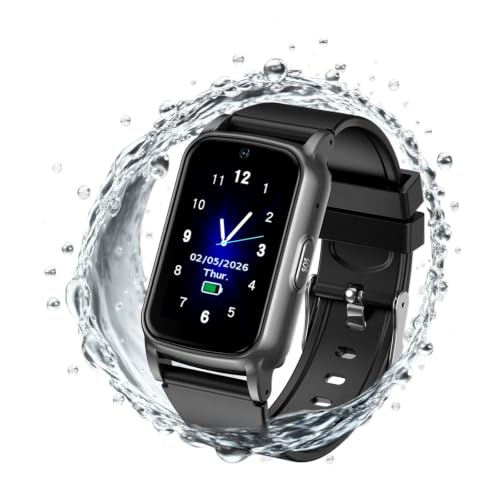

Large and Clear Voice Talking Watch for Blind, Visually impaired or Elderly. (Black)

Final Thoughts
The best watch for a person living with dementia is the one that answers your family’s real daily question, in a form the wearer accepts, and keeps answering it reliably month after month. For caregiver awareness of location, emergencies, and falls, the Fajocru safety watches, in standard form or in the HD video call variant of the same line, are the connected options in this guide. For independent orientation to the time, the Cirbic, the large and clear voice talking watch, and the Hearkent each offer spoken time and clear presentation shaped by design for blind, visually impaired, and elderly users. For silent prompting through the day, the Tabtime vibrating wristband does one narrow job and does it discreetly.
Disclosure: As an Amazon Associate we earn from qualifying purchases. Links in this guide are affiliate links, which means a purchase made through them may support our research and writing at no additional cost to you. Product names and descriptions are summarized from the listings we checked, availability can change, and inclusion here is not a medical recommendation. Please discuss care, medication, and safety decisions with the wearer’s own clinician and care team.