Our Top Picks
 Modern Chinese Watchmaking: A Century of Precision and5.5 x 0.42 x 8.5 inchesLarge PrintCheck on Amazon
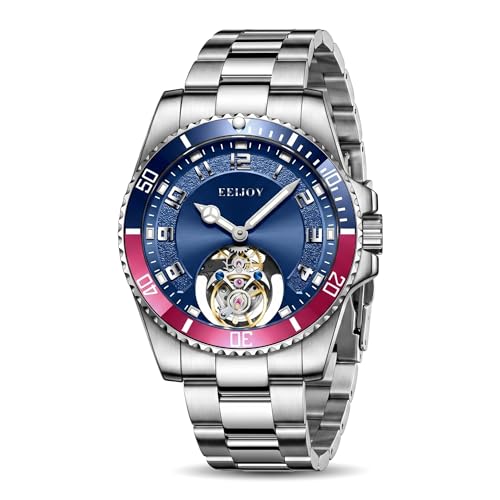


What's inside
- What a tourbillon is, mechanically
- True tourbillon or open-heart window: telling them apart
- The Chinese movement landscape, from maker catalogues
- Brands, channels, and what the name on the dial promises
- Ownership honesty: accuracy, regulation, and daily reality
- Verifying the movement code and maker before paying
- Who should buy one, and who should wait
- Care in daily wear
- A short history of the factories behind the cages
- Complications layered over the cage
- Buying second-hand without inheriting a problem
- Finishing, in the places listings rarely show
- A shortlist method that works without a boutique visit
- Check prices on Amazon
- Travel, gifting, and other real-life details
As an Amazon Associate I earn from qualifying purchases. This post may contain affiliate links at no extra cost to you.
A tourbillon is easy to admire and surprisingly easy to misidentify. The dial shows motion, a wheel turns behind an opening, and a listing uses grand words. Yet a true tourbillon is a specific mechanism with a specific structure, and many watches sold with tourbillon language show only an exposed balance wheel through a cutaway dial. Chinese makers build genuine tourbillons, some of them very good, at prices far below the Swiss norm, and they also build plenty of open-heart watches that are honest products when described honestly. This guide separates the two, explains the Chinese movement landscape from maker documents, and sets out what ownership, service, and verification really look like before money changes hands.
The appeal needs no mystery. A rotating cage carrying the escapement and balance, turning once per minute in most designs, is beautiful to watch and difficult to make well. It began as a serious attempt to average out gravity errors in a pocket watch that spent its life upright in a waistcoat pocket. In a modern wristwatch, which moves through many positions all day, the practical accuracy gain is debated by watchmakers themselves, and the tourbillon survives chiefly as a showcase of craft: a small, light, precisely finished mechanism doing difficult work in plain sight. Buying one with open eyes means valuing that craft for what it is, while holding firm expectations about accuracy, service, and value.
Context helps when comparing across a collection. The electronic and hybrid pieces covered in best hybrid smartwatches solve timekeeping with quartz regulation and sensors, a wholly different bargain from a mechanical cage that exists to display skill. Neither bargain is the wiser one by default. They answer different wants, and this guide serves the reader who wants the mechanical one and wants to know exactly which mechanism is on offer.
What a tourbillon is, mechanically
Inside an ordinary mechanical watch, the balance wheel swings back and forth, the escapement meters out the energy of the mainspring in small steps, and the gear train counts those steps into seconds, minutes, and hours. The balance and escapement stay in one place on the mainplate while the watch around them changes position as the wrist moves. A tourbillon mounts the balance, the escape wheel, and the related parts inside a light rotating cage. The cage itself turns, driven by the gear train, and the seconds hand is often fixed to the cage or read from its rotation, because one revolution per minute is the common design. As the cage turns, the escapement works through every vertical orientation in sequence, so errors tied to one fixed upright position are spread around the full circle instead of staying put.
That spreading idea made strong sense for a pocket watch. A pocket watch rests upright for hours, crown up in a pocket, then lies flat on a nightstand. Its balance staff bearings, its hairspring, and the tiny effects of gravity on the balance all settle into habits tied to those few positions. Breguet patented the tourbillon in 1801 on exactly this reasoning, and the great pocket tourbillons that followed were precision instruments as well as ornaments. Marine and observatory culture valued them, makers competed with them, and the mechanism earned its reputation in a world where a fraction of a minute per week mattered to navigation and to pride alike.
The wrist changed the argument. A wristwatch visits many positions in an hour: dial up on a desk, crown down in a pocket of motion as the arm swings, vertical at the side, tilted at a keyboard. Modern hairspring materials, modern lubricants, and careful regulation in several positions already address much of what the cage was built to average. A wrist tourbillon may rate very well, and fine examples do, but the cage alone guarantees nothing. Adjustment, finishing of the escapement, the quality of the balance and hairspring, and the care taken in final regulation decide the rate. Buy the tourbillon as craft and as theatre, in the best sense of both words, and judge its timekeeping by the same standards you would apply to any fine mechanical watch.
Standard carriage, flying design, and what the words mean
Maker documents divide tourbillons into broad families. A standard or classic carriage is supported from above by a bridge that spans the cage, and that bridge, often beautifully shaped and polished, becomes part of the dial-side view. A flying tourbillon omits the upper bridge and supports the cage from below, so the cage appears to float over its opening with nothing crossing it. The flying layout shows the mechanism more fully and demands strong support engineering from beneath, since the cage cantilevers from its base. Both are true tourbillons when the cage carries the escapement and rotates as described. Neither word, standard or flying, is a grade of honesty; they describe support architecture, and maker photographs make the difference plain once you know to look for the bridge.
Variations multiply from there. Some cages complete a revolution in a period other than one minute, though one minute dominates because it lets the cage double as a seconds display. Some designs place the cage off-center, some center it under the hands, some pair it with a second cage axis in multi-axis designs at far higher cost and complexity. Chinese catalogues concentrate on single-axis, one-minute cages in standard and flying forms, which is the sensible heart of the market: proven geometry, serviceable layout, and a view that delivers the whole point of the purchase every time the wearer glances down.
True tourbillon or open-heart window: telling them apart
The single most valuable skill in this market is telling a true tourbillon from an open-heart balance window. An open-heart watch cuts a hole in the dial to show the balance wheel swinging in its fixed position. The balance oscillates, several times per second, and the view is lively and legitimate as decoration. It does not rotate around the dial. There is no cage carrying the escapement around with it. The balance stays where a balance always stays, and the seconds hand is driven in the ordinary way from the gear train. Sellers who blur this line rely on buyers admiring motion without asking which motion it is.
Three checks settle the question from maker photos and movement descriptions. First, watch the seconds. On a true one-minute tourbillon, the cage completes a full turn in sixty seconds, and a marker, a hand, or the cage bridge itself travels around the opening like a slow seconds hand. In a video or a live view, that steady travel is unmistakable once you time it. On an open-heart watch, the visible wheel only swings back and forth and nothing completes a circuit. Second, read the movement code and the maker description. A maker building a real tourbillon names the calibre and describes the cage, its rotation period, and often its component count. Vague listings that praise a tourbillon style, a tourbillon look, or a tourbillon effect without a calibre code are describing decoration. Third, study the bridge shapes. A tourbillon cage has a distinct framed structure that carries parts within it and turns as one unit, often with a polished steel bridge across or a clear cantilevered base in flying form. A fixed cock holding a balance in place looks different: it anchors one point and the wheel swings beneath it without the frame traveling.
Price offers a rough fourth signal, never a proof. A genuine tourbillon movement costs a maker far more to build than a standard automatic with a dial cutaway, and a watch priced like an ordinary fashion automatic while claiming a true cage deserves hard questions and documentary answers. Ask for the calibre code, the maker name for the movement, a photo of the case back view if the design has one, and the stated rotation behavior. A seller who can answer all four plainly is selling something real. A seller who answers with adjectives is selling a mood.
Why the distinction matters beyond honesty
Even a buyer who cares only for looks benefits from the distinction, because the two mechanisms age differently, cost differently to service, and hold value differently. An open-heart watch uses a mainstream movement that most watchmakers can service with standard parts. A true tourbillon concentrates delicate, maker-specific parts in the cage, and service options narrow. Paying a tourbillon price for an open-heart watch overpays at purchase and again at resale, when the next buyer runs the same checks. Paying an open-heart price knowingly for a handsome open-heart watch is a perfectly good purchase. Knowledge, not the label, is what makes either deal fair.
The Chinese movement landscape, from maker catalogues
Chinese mechanical watchmaking has deep factory roots, and its tourbillon work grows from the same industrial base that produced the standard movements found in millions of affordable mechanical watches. Sea-Gull, based in Tianjin and formally Tianjin Sea-Gull Watch Group in maker materials, stands as the best documented name. Its tourbillon calibres sit in the ST80 family in catalogue language, with variants that add automatic winding, different cage presentations, and complications layered over the base idea. Sea-Gull sells movements, sells complete watches under its own name, and supplies the wider trade, which is why the same family codes appear across brands. When a listing names an ST80-series calibre, a buyer can consult Sea-Gull published material for the base architecture, stated frequency, and stated reserve, and that documentary trail is a genuine strength of this segment.
Other factory traditions matter as well. The Liaoning watch industry, linked in current trade material with the Peacock name, has produced tourbillon movements alongside its well known standard calibres, and Shanghai Watch Factory, one of the oldest names in Chinese watchmaking, has documented tourbillon work of its own. Beijing Watch, tied to the capital and to higher finishing ambitions, has presented tourbillons with strong dial and case work under its own brand. Hong Kong based Memorigin occupies a nearby but distinct place: a Hong Kong brand known for tourbillon-led design and for working with movement partners, and careful writers treat its Hong Kong identity accurately rather than folding it into a mainland factory story. Precision about who made what is not pedantry in this market. It is the buyer map.
Hand-wound and automatic tourbillons divide the catalogues cleanly. A hand-wound calibre keeps the movement thinner and the view cleaner, with no rotor crossing the case back display, and it asks the owner for a daily winding ritual that many enthusiasts enjoy. An automatic version adds a rotor, sometimes a micro-rotor at the edge in finer designs, more thickness, and the convenience of a watch that winds itself on the wrist. Maker sheets state winding type beside the calibre code. Match the choice to your habits honestly: a watch worn twice a month may suit hand winding and a long look through the back, while a daily wearer may reward the automatic every single morning it does not need attention.
Frequency, reserve, and the numbers makers publish
Two figures appear on nearly every maker sheet and repay a calm reading. Frequency, stated in vibrations per hour, tells how fast the balance swings. Many Chinese tourbillon calibres run at 21,600 vibrations per hour, a traditional rate that favors reserve and gentler wear on parts. Others run at 28,800 vibrations per hour, the modern mainstream rate, which can support strong rate stability in skilled hands and gives the seconds motion a finer step. Neither rate proves quality by itself. A well adjusted 21,600 calibre from a careful maker will out-perform a careless 28,800 build, and the sheet figure should start questions about regulation rather than end them.
Power reserve, the hours a fully wound watch runs untouched, typically lands in the range maker sheets state for each calibre, often around forty hours for hand-wound designs and longer for some automatic variants. Reserve matters practically for a tourbillon because the cage draws energy steadily and a watch near the end of its wind may lose amplitude, which can shift rate before it stops. Owners who rotate several watches often let a tourbillon run down between wears, which is normal and harmless when the watch is then fully wound and set with care. Read the stated reserve as a planning figure: it tells you whether a Friday evening removal still leaves a running watch on Monday morning, or whether a fresh wind belongs in the Monday ritual.
Jewel counts, cage materials, and component counts fill out the finer print. Makers may build cages in titanium or in steel, trading weight against tradition and finishing options. A lighter cage asks less energy to turn, which movement designers value, while a steel cage takes a high polish that collectors admire. These are documented design choices with real trade-offs, and a catalogue that explains them in plain terms is teaching you the product. A listing that stacks superlatives while omitting frequency, reserve, and calibre code is withholding the curriculum and offering only the brochure.
Brands, channels, and what the name on the dial promises
Established Chinese brands selling tourbillons under their own name give the buyer the clearest chain of responsibility. Sea-Gull own-brand tourbillons pair the movement maker and the watch brand in one house, which simplifies questions about parts and service intent. Beijing Watch presents tourbillons as flagship craft pieces, with dial work such as enamel or fine guilloche-style finishing on some models documented in brand material. Smaller brands and microbrands buy tourbillon movements from the factory makers and build design-led watches around them. That model can produce striking value and striking looks, and it shifts the service question toward the movement maker catalogue rather than the dial name, a point to verify before purchase rather than after a fault.
Buying channels shape the paperwork you receive. An authorized brand store or the brand own channel should supply a warranty card naming the watch, the calibre, and the service route. A general marketplace seller may supply a genuine watch with thinner paperwork, and the saving should be weighed against the cost of a future service hunt. Grey channels are not automatically dishonest, and many owners buy through them happily with full knowledge. The discipline is to price the risk: a tourbillon is not a quartz watch that any battery kiosk can revive, and a channel that cannot explain service in one paragraph has moved that cost onto your future self.
Readers comparing ownership models across categories will notice the contrast with the sealed, software-led products in best analog smartwatches, where service means a maker repair program and a battery cycle. A mechanical tourbillon instead enters the older economy of independent watchmakers, factory parts desks, and skills that vary by town. That economy can serve a Chinese tourbillon well, but only when the calibre is identified, documented, and common enough that parts and knowledge circulate.
Warranty, service, and the independent watchmaker question
Warranty terms in maker and brand documents state a period, a route, and exclusions, and the route matters more than the period. A two-year warranty that requires return to a factory service center abroad may involve shipping cost, customs paperwork, and months of absence. A brand with a regional service partner offers a different ownership life even at the same stated period. Ask, in writing where possible, where the watch goes for warranty work, who pays shipping each way, and what the typical turnaround is stated to be. File the answers with the warranty card. Hope is not a service plan, and a tourbillon deserves a plan.
After warranty, the independent watchmaker question decides long-term cost. Some independent watchmakers welcome Chinese tourbillon calibres, particularly documented Sea-Gull family movements, because the architecture follows familiar Swiss-derived layouts and the factory has published enough material to work from. Others decline tourbillons of any origin, or decline movements for which they cannot source gaskets, mainsprings, or cage parts. Neither stance is a judgment on the watch. It is a statement about parts access and bench risk. Before buying, an owner with a trusted local watchmaker can ask a simple, respectful question naming the calibre: would you service this movement, and if not, whom would you suggest? The answer, whatever it is, is valuable information bought for free.
Spare parts deserve their own sentence in every pre-purchase note. Crowns, crystals, gaskets, and straps are the wear items of ordinary ownership, and a brand that can supply or specify them keeps a watch wearable for decades. Cage and escapement parts are the deep water, factory territory in most cases. A maker with a stable calibre family and a long production run is a safer long-term bet than a one-off calibre built for a single limited run, however romantic the limited story sounds in a listing.
Ownership honesty: accuracy, regulation, and daily reality
Set accuracy expectations with care. A Chinese tourbillon from a reputable maker, well regulated, can keep time that satisfies daily wear, and owners report rates that stand respectably beside far costlier watches. It should not be bought as a tool to humble Swiss tourbillons on rate alone, nor judged as a failure if it runs a few seconds per day from perfect. Swiss tourbillons at many times the price buy finishing, brand service networks, and resale depth as much as they buy rate. Ordinary Chinese mechanical watches without a cage can also rate very well, sometimes matching a tourbillon from the same factory, which returns us to the honest framing: the cage buys craft, motion, and rarity at the price, and timekeeping must merely be good, which in the better examples it is.
Regulation in positions is the craft behind the rate. A watchmaker adjusts a movement so its rate across dial-up, dial-down, crown-up, crown-down, and other stated positions stays within a tight band, and the tourbillon cage, by rotating, averages the vertical positions in wear. Maker material sometimes states a rate tolerance for a calibre, and brand material for a finished watch may state a tighter figure after final regulation. Those two figures describe different moments in the watch life, the bare movement and the finished, cased, regulated product. When comparing two listings, compare like with like, and ask whether a quoted rate belongs to the movement family or to the exact finished watch on offer.
Service intervals follow ordinary mechanical logic. Maker guidance for mechanical watches commonly speaks in years rather than months, with intervals often framed around three to five years depending on use, seals, and maker policy, after which lubricants age and gaskets harden whether the watch ran daily or rested in a drawer. A tourbillon adds delicate cage work to a service, so the bill will exceed a standard three-hand service from the same bench. Budget for that reality from the day of purchase, in a small sinking fund if that helps, and the interval becomes maintenance rather than a surprise. A watch bought at a saving that ignores its service cost has not saved the full amount its price tag promised.
Case size, thickness, straps, and water
Tourbillon watches wear larger than their specifications suggest, because the cage demands dial space and the eye reads an open dial as presence. Chinese tourbillons commonly sit in cases from about forty millimeters upward, with thickness driven by the cage height and, on automatics, the rotor. A slim wrist should study lug-to-lug length and try comparable sizes locally before ordering, since return shipping on a heavy watch abroad is its own expense. Domed crystals, chosen to clear hands and to magnify the cage view, add height that a flat specification table understates. Wear the size honestly: a great mechanism in a case that fights your cuff and your wrist will spend its life in a box.
Strap quality varies more than case quality in this segment, and experienced owners budget for a replacement strap early. Factory leather straps on value-led models may be stiff, thinly padded, or finished plainly at the edges, while the watch head itself is sound. A good strap from a reputable strap maker transforms comfort and looks for a modest sum, provided lug width and buckle or deployant fit are measured correctly. Metal bracelets appear less often on Chinese tourbillons than on divers and sports models; where offered, check end-link fit and clasp action in reviews grounded in owner reports and maker photos rather than in render images alone.
Water resistance on a tourbillon should be read as protection against splashes and rain, not as an invitation to swim. Ratings stated in maker documents for dress-led tourbillons are modest, crowns are often not screw-down designs, and the cost of a water error inside a cage movement is severe. Treat the watch as you would a fine dress watch of any origin: dry hands, light rain at worst, no shower, no pool, and gasket checks at service. Readers whose daily watch must survive swimming and site work belong in a different category altogether, closer to the rugged round designs surveyed in best round smartwatches or to a proper dive watch, and a tourbillon can then be the second watch it was always meant to be.
Verifying the movement code and maker before paying
Verification is a short, orderly routine, and it works because Chinese factory tourbillons are documented products when they are genuine. Step one: obtain the exact movement code from the seller, in text, and the maker name for that movement. Step two: find that code in maker catalogue material or brand technical pages and confirm the architecture matches the listing claims: cage type, winding type, frequency, reserve, and jewel count. Step three: compare the dial and case-back photographs against maker or brand images of the same reference, looking at cage bridge shape, dial printing, hand style, crown form, and case-back engraving. Small mismatches may reflect a model year change, which a seller should be able to explain, while a different cage shape is a different watch until proven otherwise.
Step four: confirm what arrives in the box. Warranty card, instruction booklet naming the calibre, any certificate the brand issues, and the stated service route should all be listed by the seller before payment, not discovered after. Step five: agree the return terms in writing, with a window long enough to have the watch checked by a watchmaker if you plan to do so. A timing check on a watchmaker timegrapher, a look at amplitude and beat error, and a visual confirmation that the cage completes its revolution cleanly give a new owner a baseline record for the individual watch. Keep that record with the papers. It is the start of the watch service history, and future watchmakers will thank you for it.
Counterfeit and mislabel risks in this segment are real but manageable, and they concentrate where documentation is thin: unnamed movements, stock photos reused across listings, and prices that undercut the factory own channel by margins no honest channel can match. The defense is the routine above, applied without embarrassment. Legitimate sellers of documented watches answer code and service questions as a normal part of trade. Pressure tactics, vanishing listings, and refusal to show the case back are answers too, and the wise buyer hears them clearly and walks away with money intact for the next, better documented opportunity.
Reading dial text and reference numbers
Dial text tells a story when read slowly. A dial that says tourbillon should belong to a watch whose movement code supports the word. Some dials name the brand in Latin letters, some add Chinese characters, and factory brands have used both across model years, so script alone proves nothing either way. Reference numbers on the case back or between the lugs tie the physical watch to a catalogue entry, and a seller photo that hides every number while praising authenticity has the emphasis exactly backward. Ask for the reference, search it in brand material, and check that case size, dial color, and strap type in the catalogue match the watch in the photographs. Catalogues err rarely and listings err often, so a conflict is a question for the seller, not a detail to wave through.
Movement finishing visible through a display back rewards a slow look as well. Geneva-style stripes, blued screws, beveled edges, and engraved rotors all appear in this segment at various levels of care, and photographs at honest resolution reveal whether striping is brushed decoration or careful work, whether screw heads are polished or merely colored, and whether the cage bridge carries hand finishing or a stamped look. None of this decides timekeeping, and none of it should be judged from a single glamorous angle. It decides whether the craft claim, which is the heart of a tourbillon purchase, is being honored at the price asked.
Who should buy one, and who should wait
The natural buyer values mechanical craft, enjoys a winding ritual or a visible mechanism, accepts service planning as part of ownership, and finds genuine pleasure in a well made object from a factory tradition that Western marketing long overlooked. For that buyer, a documented Chinese tourbillon offers something no other segment offers at comparable cost: a real rotating cage, from a named calibre family, inside a watch that can be worn daily and serviced through a known route. The purchase rewards patience in selection far more than speed, and it rewards the buyer who reads catalogues the way earlier generations read movement books, with a pencil and questions.
Other buyers should wait without regret. Anyone needing the most accurate watch for the money should buy quartz or a high-grade standard mechanical and enjoy superb rate at a fraction of the cost. Anyone needing a watch that any town can service tomorrow should choose a mainstream calibre with global parts support. Anyone buying chiefly for resale should study auction and secondary results for the exact reference rather than trusting brand-level optimism, because tourbillon resale varies sharply by maker and model. Waiting is not failure here. It is the same discipline that makes the eventual purchase, if it comes, a good one.
Collectors adding a Chinese tourbillon beside Swiss or German pieces often report that the watch earns wrist time beyond novelty, because the cage view at breakfast never quite becomes ordinary. That report aligns with the mechanism history: built to solve a problem of a vanished carry style, kept alive because human eyes love ordered motion and human hands love making it. The premium electronic pieces in best high end smartwatches chase a different kind of wonder, through sensors and screens, and a healthy collection can admire both without confusing their promises.
Care in daily wear
Daily care is simple and mostly protective. Wind a hand-wound model at the same time each morning, turning the crown gently until resistance firms, never forcing past that point. Set the time moving the hands forward where the maker advises forward setting, and avoid quick date changes near midnight on models with a calendar, following the exact window the manual states. Keep the watch away from strong magnets where you can, since magnetism can disturb rate in any mechanical watch and presents as a sudden large error that a watchmaker can diagnose and demagnetize quickly. Store the watch dial up in a dry place, strap loosened from wrist shape, away from direct sun that ages dials and straps alike.
Shocks deserve respect without paranoia. A tourbillon cage is a light, fine structure, and while modern watches tolerate ordinary life well, a hard knock onto tile or concrete is a different order of event from a desk bump. Take the watch off for hammer work, for sport with impact risk, and for any task where you would also remove a ring. If a knock happens and the rate changes, the cage stops, or a new sound appears, stop winding, keep the watch still, and take it to a watchmaker rather than shaking it hopefully. Early, gentle professional attention after a shock is far cheaper than continued running with a bent staff or a displaced part grinding its neighbors.
Cleaning needs nothing exotic: a soft dry cloth for the case, a slightly damp cloth only where water resistance and strap material allow, and no solvents, no ultrasonic baths at home, and no polishing by enthusiasm. Polishing removes metal and softens the edges a maker worked to define, and collectors value crisp original edges over a mirror shine earned by erosion. Leave polishing decisions to service time and to a professional who can discuss what would be gained and what would be lost.
A short history of the factories behind the cages
Understanding why Chinese tourbillons exist at their prices starts with factory history. In the middle of the twentieth century, China built a watch industry from regional projects into large integrated factories that made movements, cases, dials, and hands under one roof or one group. Tianjin, Shanghai, and Beijing became watchmaking cities in the full industrial sense, with training schools, toolmaking shops, and production lines that turned out standard mechanical movements in very large numbers. The famous standard movement era gave the industry its bench skills: wheel cutting, pinion work, jewel setting, hairspring handling, and assembly at scale. A tourbillon program decades later did not appear from nowhere. It drew on machinists and assemblers whose daily work had involved the same families of parts for years, now asked to work at finer tolerance in smaller batches.
The quartz crisis and the reform era reshaped those factories, as they reshaped watchmaking everywhere. Production shifted, brands consolidated, export work grew, and the factories learned to build movements for foreign labels alongside their own dial names. That export experience mattered for tourbillons, because overseas buyers demanded documentation, consistent codes, and repeatable quality across batches. When Sea-Gull and its peers presented tourbillon calibres in the early twenty-first century, the surprise in Western coverage said more about Western attention than about factory capability. The skills had been present. The market moment, rising domestic demand for luxury mechanical watches and a global audience curious about value, finally made the cage a viable product rather than a workshop demonstration.
Domestic Chinese demand shapes the designs in ways a buyer should notice. Larger case sizes, bold dial openings, gold-tone options, and gift-ready presentation reflect a home market where a tourbillon often marks an occasion or a business milestone. Export models from the same brands may choose quieter dials and smaller cases. Neither taste is more correct, and the catalogue breadth is a strength, but a buyer ordering from overseas should confirm which market variant a listing describes, down to dial color, case finish, and strap, because photographs from one variant circulate beside text written for another. The reference number, again, is the anchor that holds a listing to a specific variant.
Complications layered over the cage
Some Chinese tourbillons add complications, and each addition changes price, thickness, and service scope. A simple calendar or a power reserve indicator helps daily use and shows movement design skill, since the reserve display must track the mainspring state honestly across the whole wind. A moonphase adds dial beauty and a long gear train of its own. Dual-time and world-time variants appear in brand flagships aimed at travelers and gift buyers. Every added function is another set of wheels, levers, and setting rules, and the manual for the exact calibre becomes essential reading rather than optional paper. Setting errors, such as forcing a calendar during its change window, can damage a complication in ways that have nothing to do with the cage, and the repair then requires parts for two systems at once.
Retrograde displays and regulator layouts appear on design-led models, moving the time display away from the classic central hands so the cage can dominate the dial. These layouts reward a buyer who enjoys reading time in a new pattern and punish nobody, provided the hands and scales are legible in real light rather than only in studio photographs. Ask how the watch reads at arm length, in shade, with aging eyes if those are your eyes. A tourbillon dial already asks attention for its opening; the time display should not need a second, harder act of attention. Legibility is a form of finishing, and the better brands treat it that way.
Openworked and skeleton variants cut away dial and bridges to show the gear train around the cage. The view can be superb, and the work exposes finishing quality with nowhere to hide, which is why honest photographs matter so much for these models. Skeleton work also removes dial material that otherwise shields the movement from light and dust at the front, making case sealing and crystal fit more than cosmetic details. None of this argues against skeleton tourbillons. It argues for buying them from makers whose documents describe case construction and water resistance plainly, rather than from listings that show only the beauty and omit the engineering.
Buying second-hand without inheriting a problem
The second-hand market for Chinese tourbillons is younger and thinner than the Swiss equivalent, which cuts both ways. Prices can be attractive because resale depth is limited, and choice can be narrow because few examples of a given reference circulate in any one country. A used purchase should therefore lean even harder on documentation than a new one. Papers naming the reference and calibre, a service record or an honest statement that none exists, and clear photographs of the actual watch, including the case back and the cage at several points in its rotation, form the minimum sensible packet. A seller video showing a full cage revolution and the watch running is worth more than a paragraph of praise.
Have a watchmaker check a used example when the price justifies the bench fee, which for a tourbillon it usually does. Amplitude, rate in positions, beat error, and the visual state of the cage and its pivots tell a trained eye whether the watch needs a routine service or a rescue. Factor a service into the used price from the start unless documents prove a recent one by a named bench. A used tourbillon priced as if freshly serviced, with no record, is priced on a hope the buyer is being asked to fund. Sellers who understand these watches expect such questions and often welcome them, because a verified sale protects their reputation in a small community where word travels.
Straps, boxes, and accessories matter less in this segment than movement state, and a buyer should not let a beautiful presentation box distract from a silent service history. Boxes can be replaced. A damaged cage cannot be made new by packaging. Equally, a watch with a worn strap, a tired box, and a strong, documented movement is often the smartest money in the room, because the previous owner spent on the part that counts. Judge in that order: movement, case, dial, papers, strap, box. Reverse order judging is how handsome mistakes happen.
Finishing, in the places listings rarely show
Finishing separates the memorable Chinese tourbillons from the merely competent, and it hides in places listing photographs rarely visit. Look at the cage bridge edges for even bevels that catch light in a continuous line. Look at screw slots for clean, centered cuts and at screw heads for flat polish rather than a dull grey. Look where the dial opening meets the cage for a clean, concentric gap that stays even as the cage turns; an uneven gap betrays alignment that no amount of dial art can conceal. On the back, look at whether striping runs in a consistent direction across plates, whether engraving is crisp, and whether the rotor, on an automatic, is shaped and finished as a designed part rather than a plain weight with a logo applied as an afterthought.
Dial work deserves the same slow reading. Applied indices should sit level and aligned, printing should hold sharp edges under magnification, and hands should be finished on their sides as well as their tops, since a tourbillon dial is viewed at angles all day. Enamel dials on flagship Beijing and Sea-Gull pieces, where documented, bring depth and a firing risk that makers accept for beauty; hairline flaws disclosed honestly are part of that craft, while a listing that borrows enamel language for a lacquered dial is borrowing value it did not earn. Ask what the dial is made of, in words, and keep the answer with the papers.
None of these checks requires handling the watch before purchase if photographs are honest and detailed, and a seller confident in the product will supply close views on request. What the checks require is time, and time is the one input this market consistently rewards. The buyer who spends an evening with catalogues and photographs will out-buy the buyer who spends a month of regret, at every price this guide covers.
A shortlist method that works without a boutique visit
Most buyers in this segment will never handle three rival tourbillons side by side before choosing, because stock sits in few shops outside China. A paper shortlist method replaces that missing counter honestly. Start with five columns on one page: calibre code and maker, cage type and winding, case size and thickness, service route in writing, and total cost including shipping, duties where they apply, and a first service reserve. Fill every cell from documents, not from listing adjectives. Any candidate with an empty calibre cell or an empty service cell leaves the list until the seller fills it. This single rule removes most poor purchases before emotion enters, because weak listings depend on those cells staying empty while the photographs do the talking.
With two or three documented candidates left, compare the ownership stories rather than the dial photographs. Which maker has built this calibre longest, with the widest installed base for a watchmaker to draw knowledge from? Which brand answered questions in plain language and in writing? Which case size matches the wrist that will actually wear it, measured honestly rather than hopefully? Which dial will still please when the novelty of motion fades, as novelty always fades, leaving design and comfort as the daily experience? A tourbillon is worn for years, and the right choice is usually the one whose answers remain good after the first week of wonder settles into ordinary mornings.
Budget discipline completes the method. Set the total before searching, including the service reserve and a replacement strap, and let listings above that total be admired and released without negotiation against your own rule. The segment is rich enough that a documented, serviceable, well sized option exists at many totals, and the search for it is part of the pleasure when it is not rushed by a countdown timer on a sales page. Real scarcity in this market is rare; most references remain available or return to availability, and a seller suggesting otherwise should be asked for production figures to support the claim. Documents, once more, separate fact from theatre.
Check prices on Amazon
Live listings for the shortlist in this guide are pulled from Amazon below, so prices and availability are always current at the moment you look.


Travel, gifting, and other real-life details
Owners travel with these watches, and a few habits protect them. Keep the watch on the wrist or in a padded travel roll inside hand luggage, never loose in a bag pocket where keys and chargers move against the crystal. Hotel safes vary, and a watch worn is often a watch safest, provided the setting suits it. Time zone changes ask nothing special of a tourbillon beyond ordinary setting care, though models with calendars deserve the forward-setting patience their manuals describe after a long flight, when tired hands make errors. A photograph of the watch, its papers, and its reference numbers stored in your phone gives you a record if loss or theft forces a report far from home.
As a gift, a tourbillon carries weight beyond its price, and the giver should transfer the full ownership packet with it: papers, service answers, strap spares, and a note of the calibre code and where service was arranged. A recipient who receives only the watch receives half the product, because the service route and the documentation are part of what was bought. Engraving a case back personalizes a gift permanently and reduces resale, which may be exactly the giver intent; decide that trade with open eyes rather than discovering it at a future valuation. Presentation matters in this segment, and a calm, complete handover honors both the occasion and the machine.
Insurance and valuation follow ordinary valuable-watch practice. Photograph the watch, record the reference and any serial the maker provides, keep the purchase record, and ask your insurer what documentation a claim would need before you need it. Replacement value in a thin market can be hard to establish, so an agreed record made in calm times serves everyone. None of this is specific to Chinese tourbillons, yet all of it matters more where a reference is uncommon in your country and a replacement cannot be ordered from a shop on the next street.
One final comparison steadies many buyers at the point of decision. Place the leading candidate beside the best ordinary mechanical watch from the same factory at a lower price, and name, in writing, what the extra money buys: the cage and its view, the finer finishing where it exists, the rarity, and the higher service cost that travels with all three. If that written list still feels worth the difference, the purchase rests on reasons that will survive ownership. If the list feels thin once written, the ordinary watch may be the wiser buy this year, and the tourbillon can wait until the reasons grow stronger. Writing the list takes five minutes and has saved more buyers from regret than any single specification in this guide, because it forces the real bargain into words where it can be judged calmly, away from photographs, countdowns, and the understandable pull of a turning cage seen for the first time in motion.
Here is the disclosure that belongs with this guide, stated in its own words for this subject. As an Amazon Associate we earn from qualifying purchases. Everything here is grounded in published documentation and research, from movement maker catalogues and brand technical pages to factory histories, and not on physically handling the watches covered, so the maker page for the exact reference you choose remains the authority for its final specifications. That documentary basis suits the central advice of the guide, because calibre codes, cage types, and service routes are facts a buyer can and should confirm on paper before any watch is worn.
When the cage turns at breakfast and the papers in the drawer name every part of why it turns, a Chinese tourbillon stops being a gamble and becomes what its makers intended: a small, honest machine for the pure pleasure of watching time being counted well.